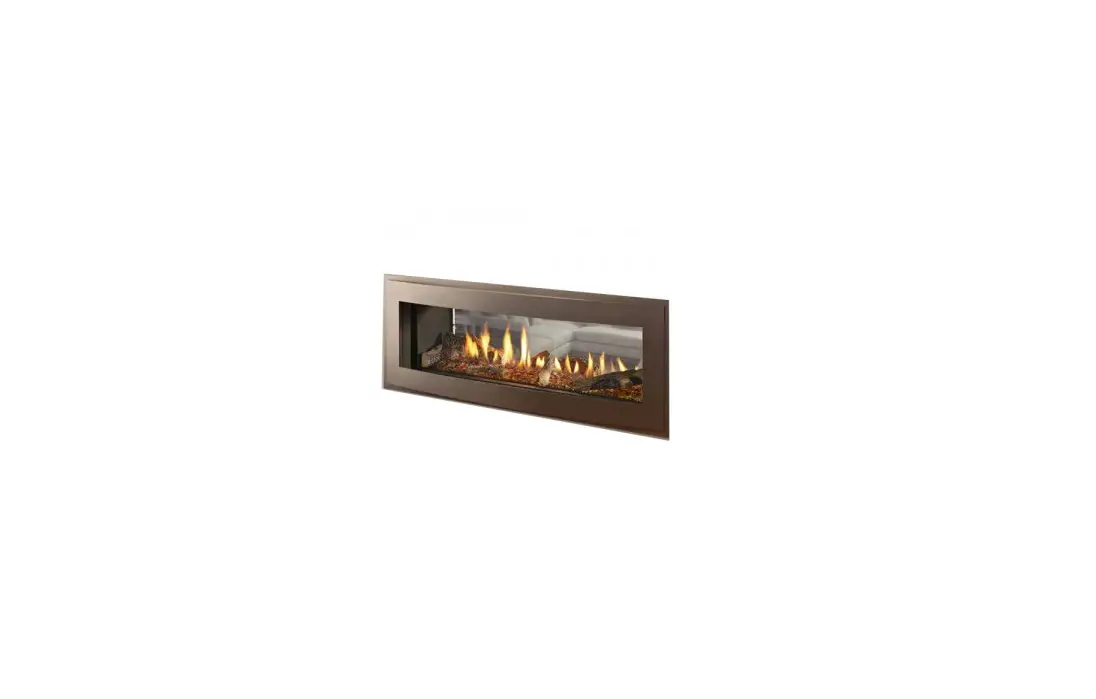
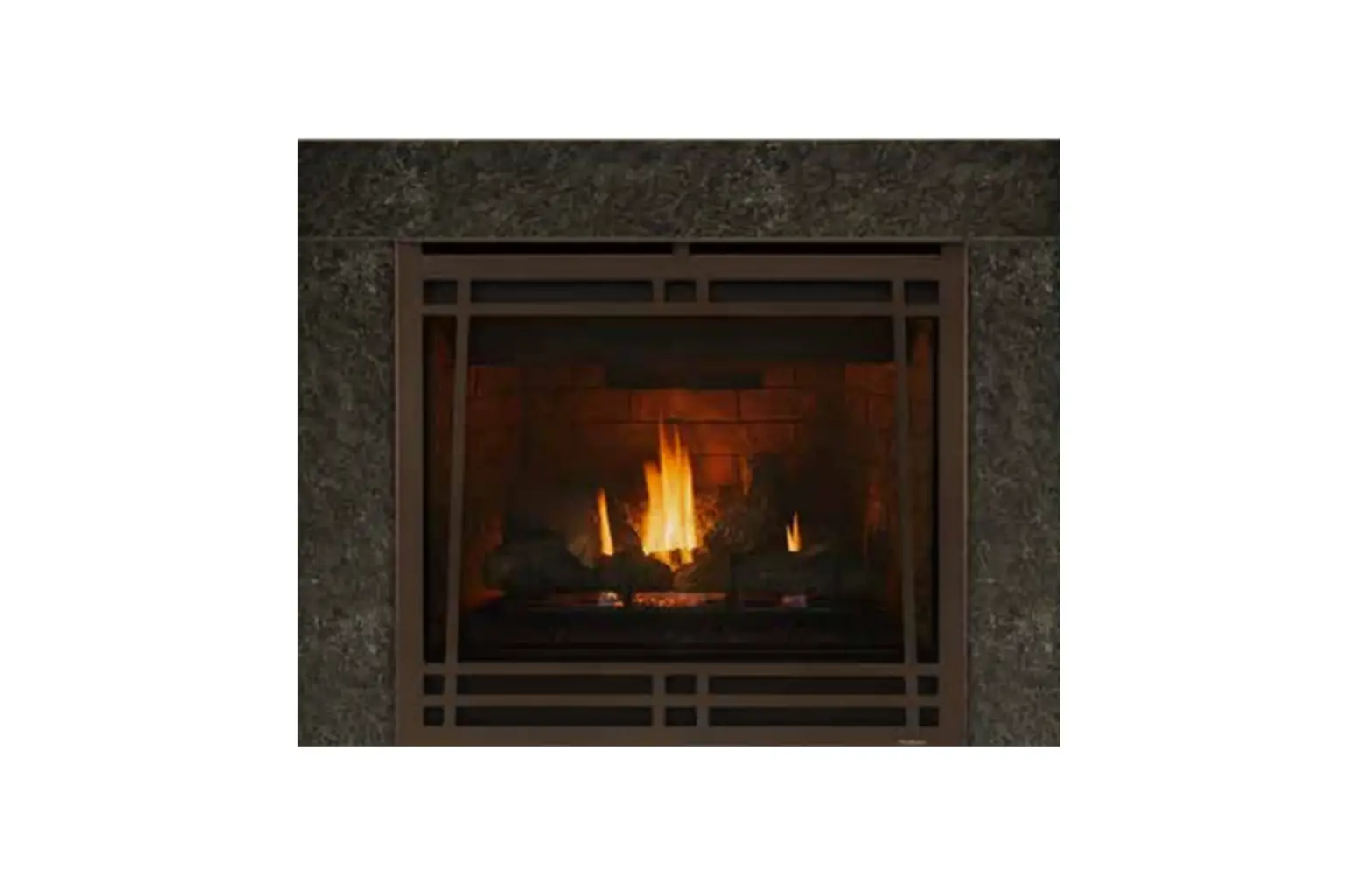
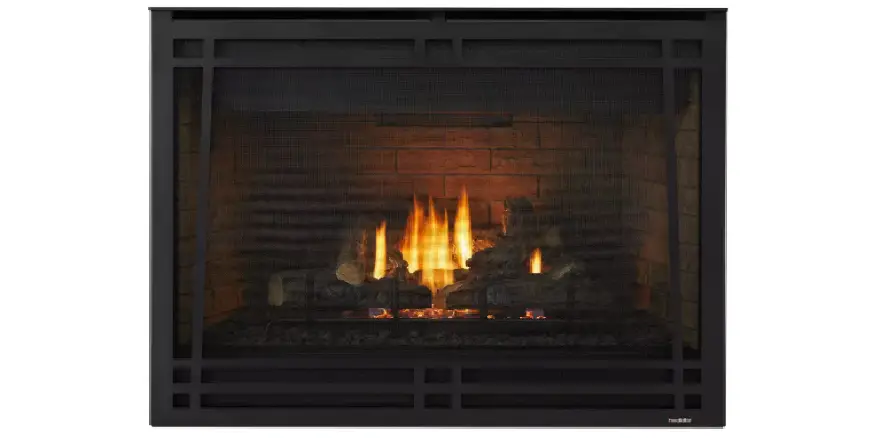
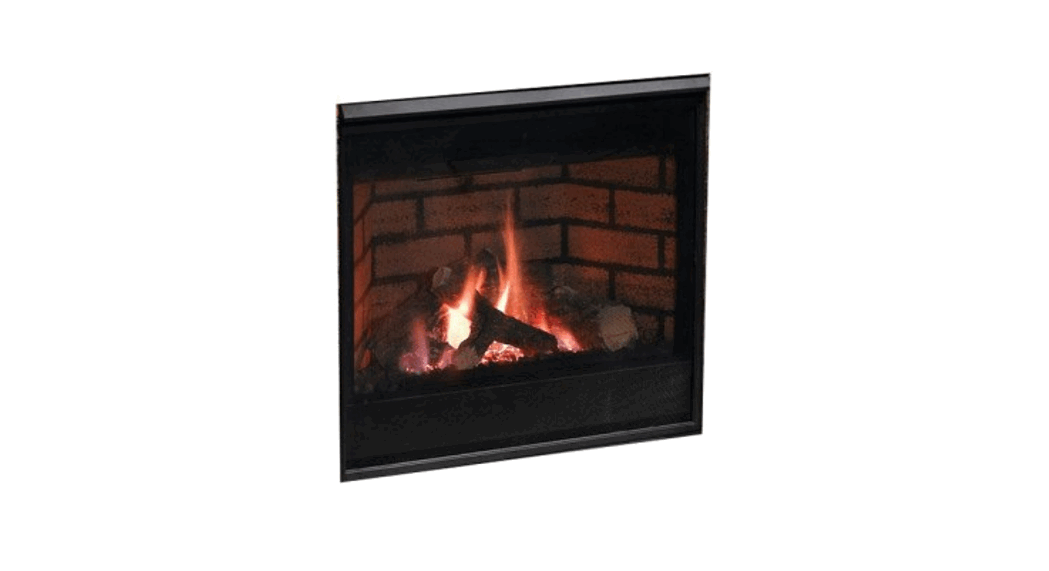
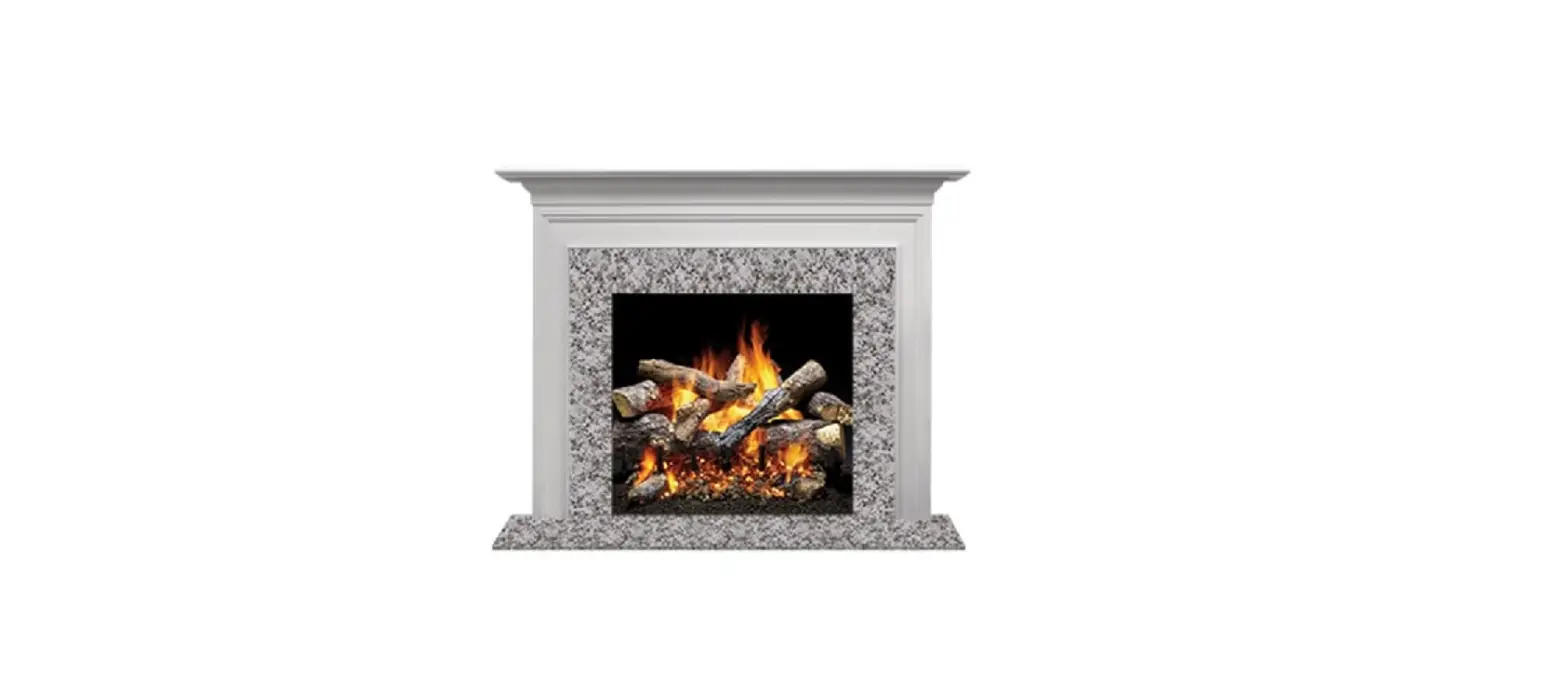
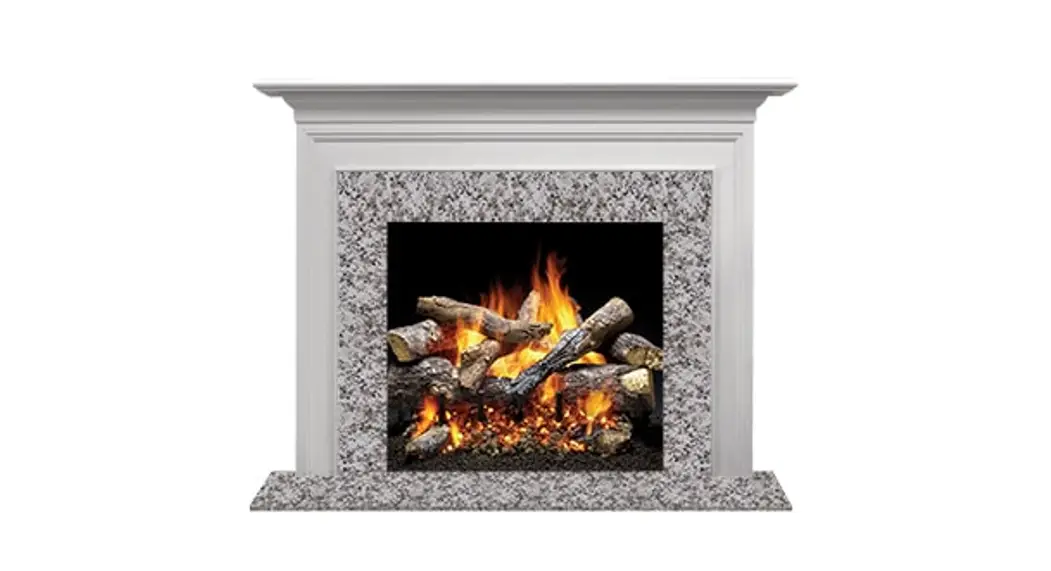
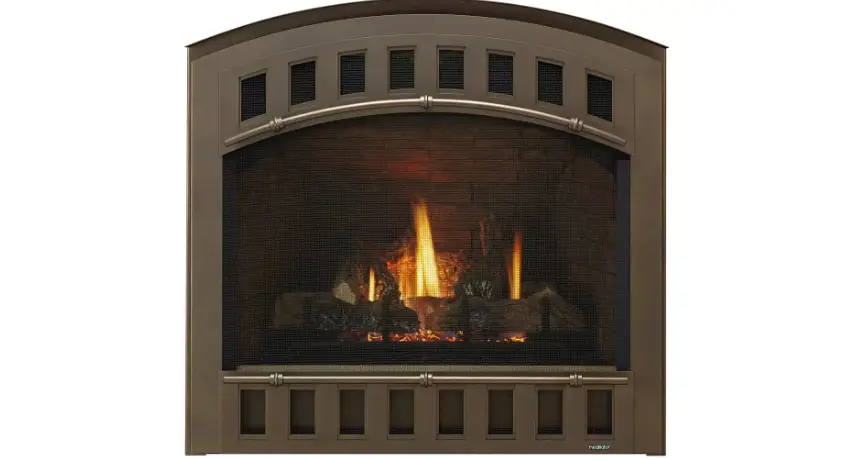
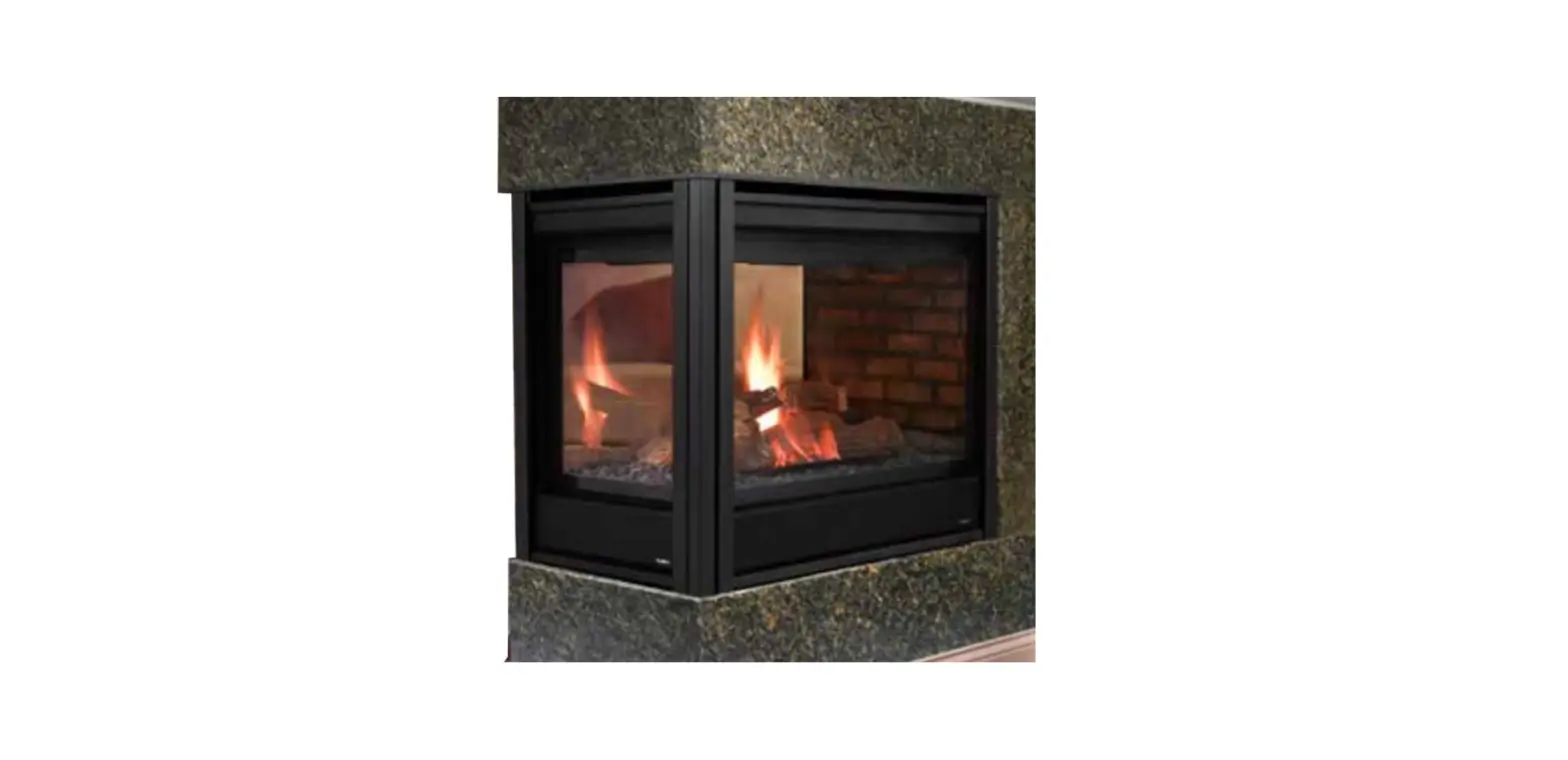
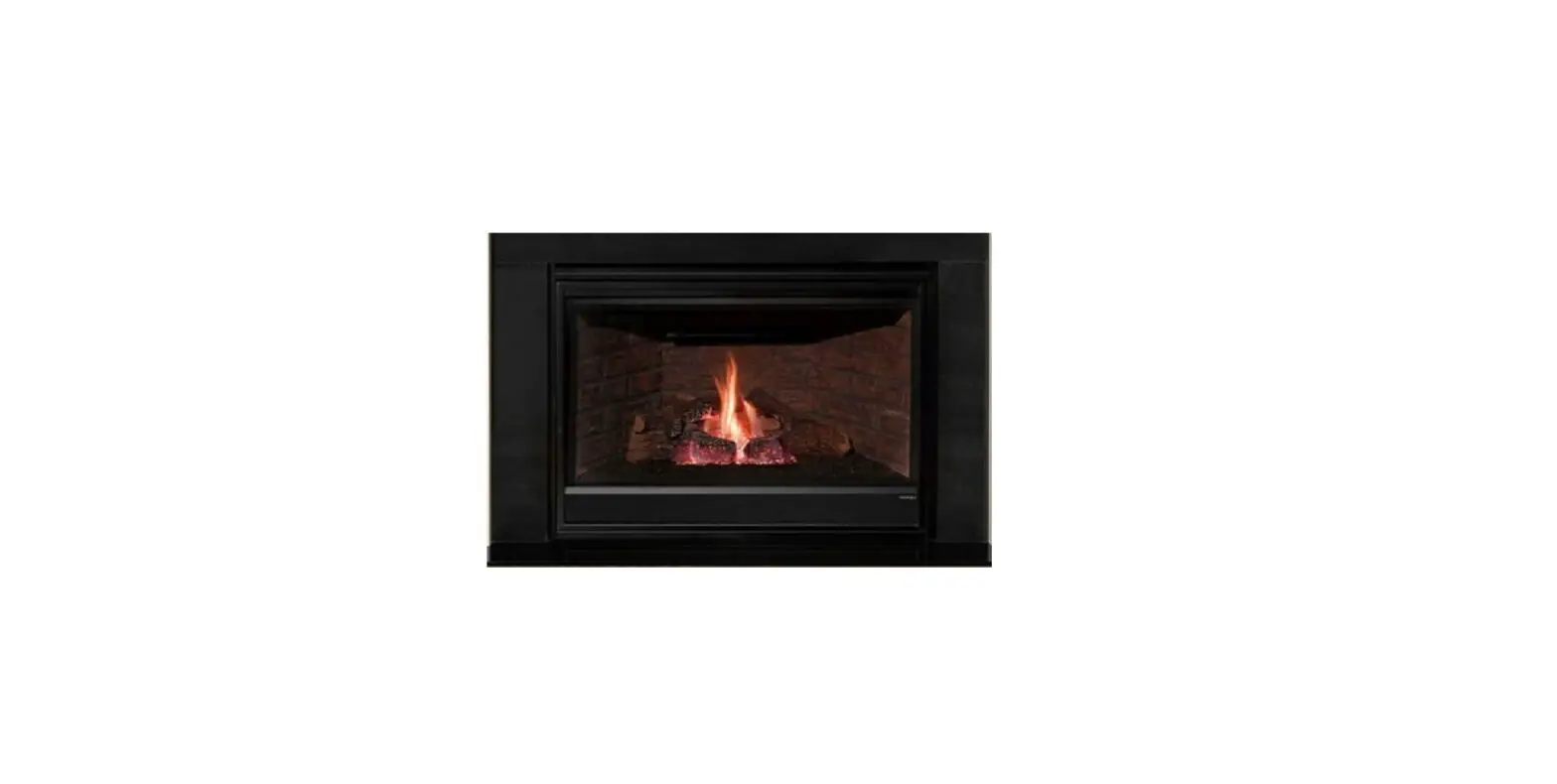
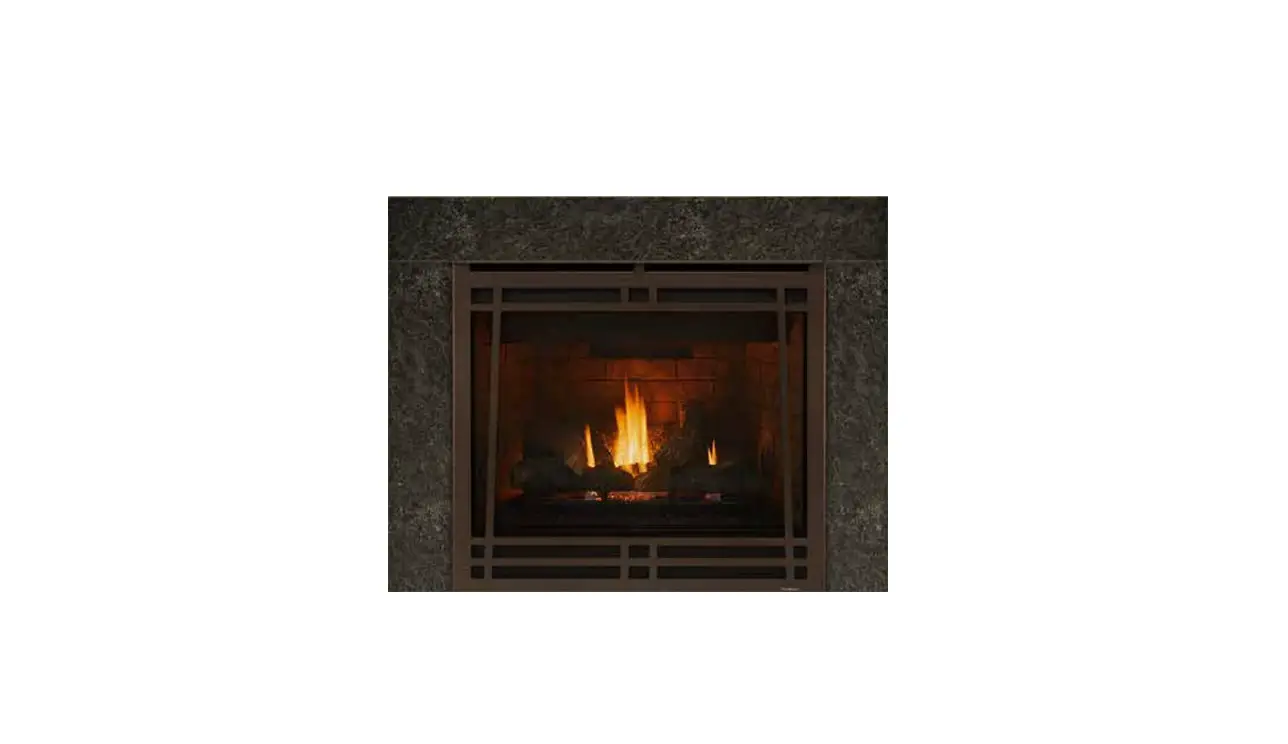
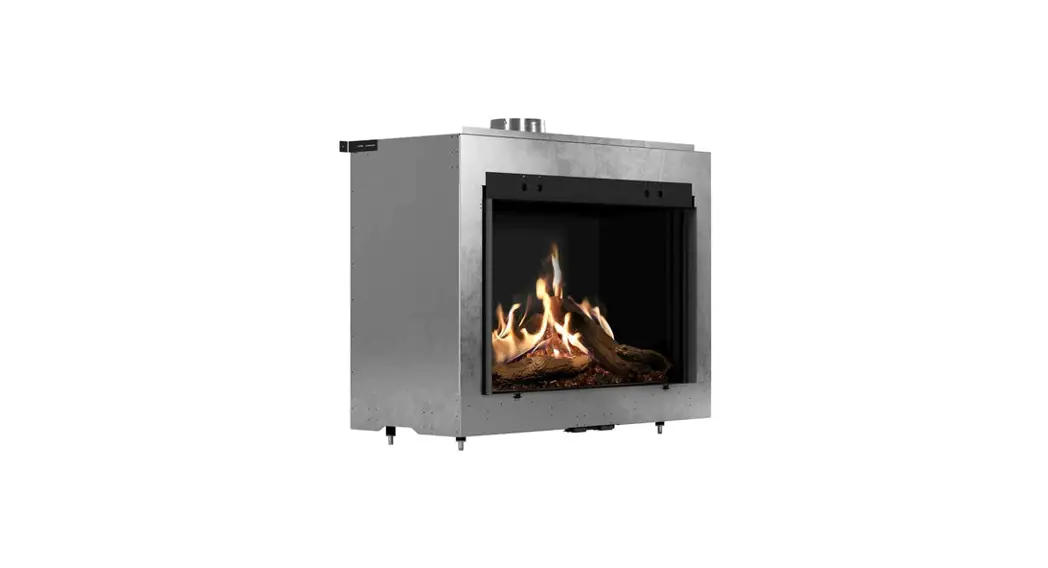
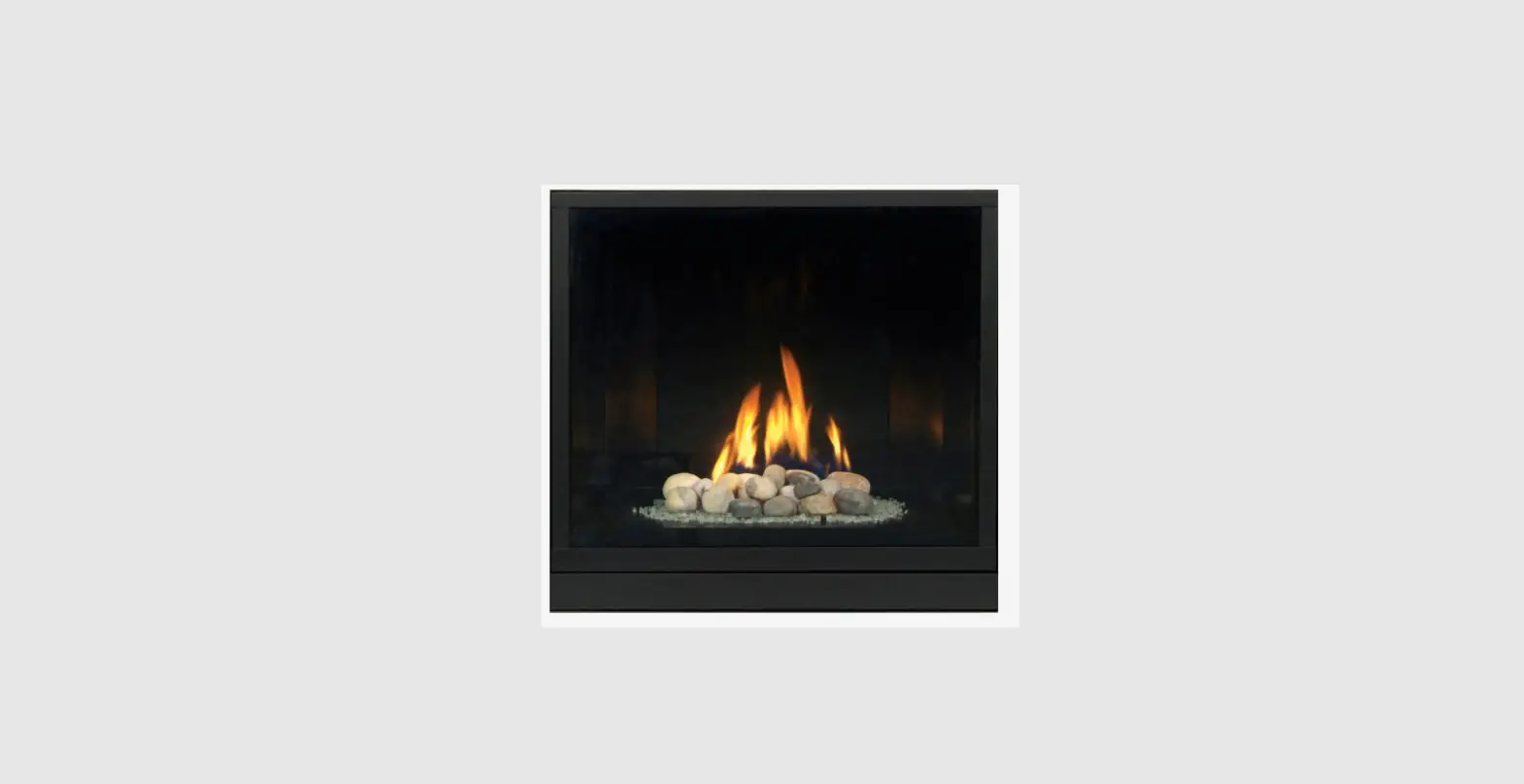
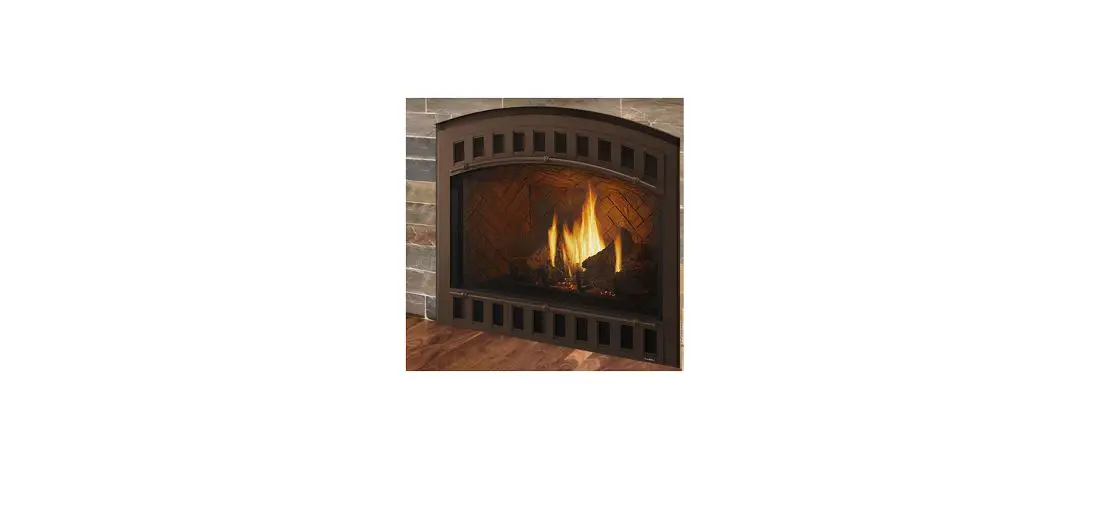
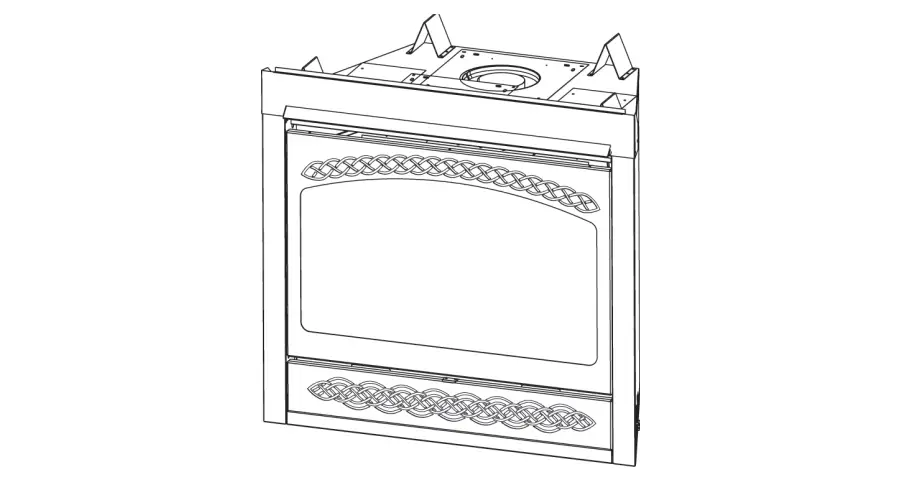
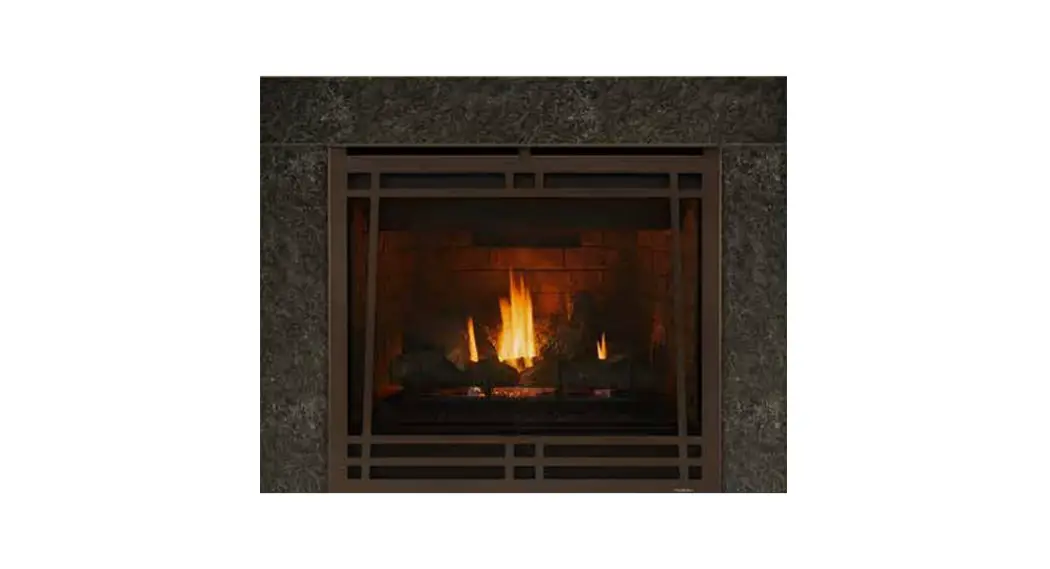
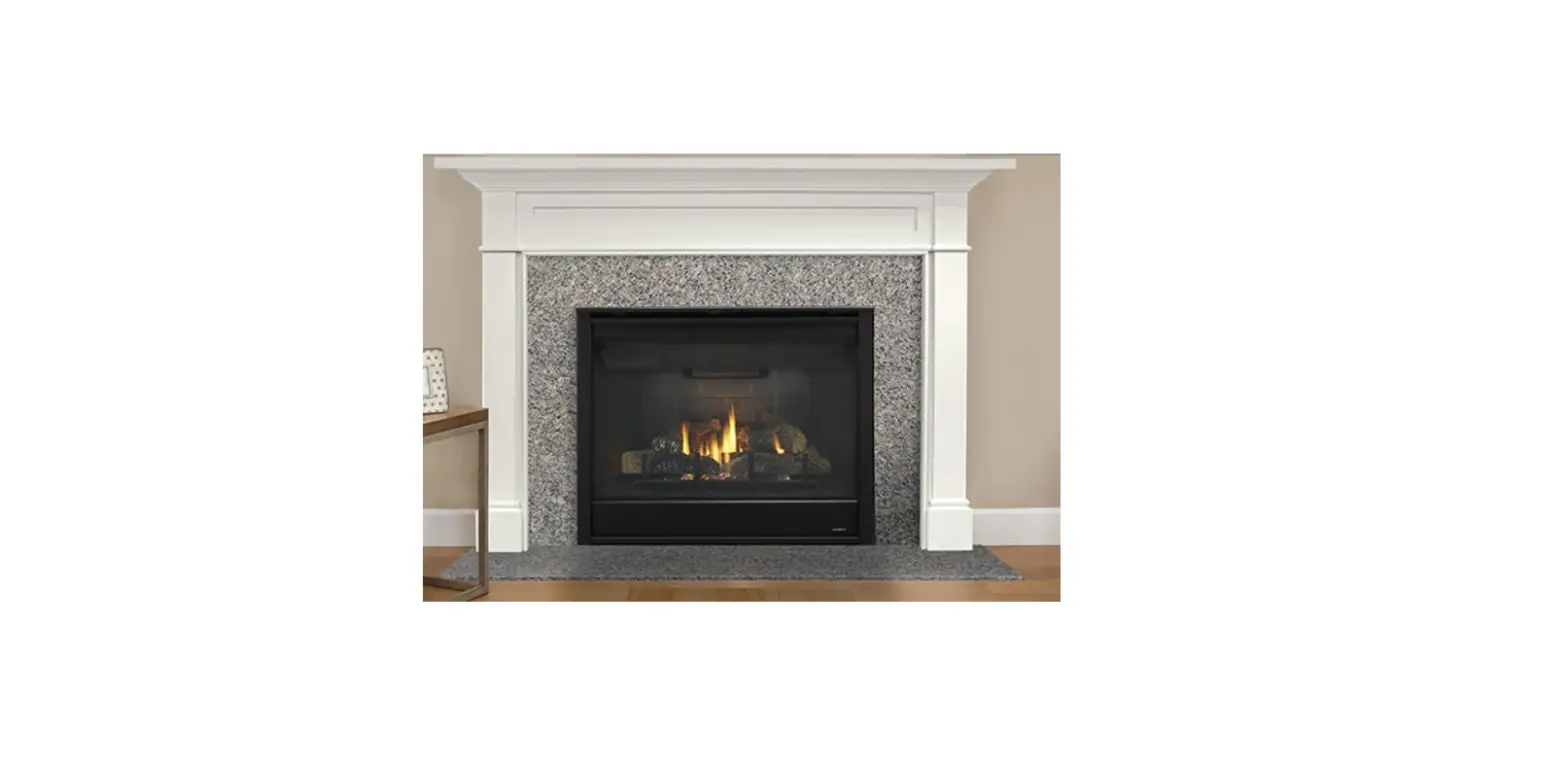
NDV3630I-B Novus Direct Vent Fireplace Series
Product Information
This product is a fireplace appliance that requires proper
installation and setup. It is available in multiple models,
including NDV3630I-B, NDV3630IL-B, NDV3933I-B, NDV3933IL-B,
NDV4236I-B, NDV4236IL-B, NDV4236I-NVR, NDV4842I-B, and
NDV4842IL-B.
It is important to follow the safety warnings and precautions to
prevent fire, explosion, and other hazards. The appliance should
only be used with the type of gas indicated on the rating plate and
is not convertible for use with other gases unless a certified kit
is used.
The appliance comes with a hot viewing glass that can cause
burns. It is crucial not to touch the glass until it has cooled
down. Children should never be allowed to touch the glass, and a
barrier must be installed for their protection.
Product Usage Instructions
Before starting the installation process, ensure that you have
read and understood the safety warnings provided in the manual.
Installation Standard Work Checklist
- Review the Design and Installation Considerations (Section
2A). - Prepare a Good Faith Wall Surface (Section 2B).
- Gather the necessary Tools and Supplies (Section 2C).
- Inspect the Appliance and Components (Section 2D).
Framing and Clearances
Follow the following steps for framing and clearances:
- Refer to the Appliance/Decorative Front Dimension Diagrams
(Section 3A) for appropriate measurements. - Consult the Decorative Barrier Front Dimensions Diagram
(Section 3B) and ensure it is ordered separately if required. - Determine the Appliance Location and Clearances to Combustibles
(Section 3C) to ensure proper ventilation and safety. - Construct the Appliance Chase (Section 3D) according to the
provided instructions. - Ensure proper Floor Protection (Section 3E) to prevent damage
to the surrounding area.
Termination Location and Vent Information
Follow the steps below for termination location and vent
information:
- Use only Approved Pipe (Section 4A) for venting purposes.
- Ensure adequate Vent Termination Minimum Clearances (Section
4B) for safe operation. - Refer to Vent Terminal Clearances (Section 4C) to prevent any
obstructions. - If needed, use Elbows (Section 4D) according to the provided
guidelines. - Refer to the Vent Diagrams (Section 4E) for proper installation
and venting configurations.
For any further questions or assistance regarding installation,
operation, or service, please contact your dealer.
Installation Manual
Installation and Appliance Setup
CAUTION! Risk of Fire! DO NOT store instruction manuals inside fireplace cavity. High temperatures could cause a fire. INSTALLER: Leave this manual with the appliance, not inside the appliance. CONSUMER: Retain this manual for future reference. Do not store inside the appliance. Contact your dealer with questions regarding installation, operation or service.
NOTICE: DO NOT discard this manual!
Models:
NDV3630I-B NDV3630IL-B NDV3933I-B NDV3933IL-B NDV4236I-B NDV4236IL-B NDV4236I-NVR NDV4842I-B NDV4842IL-B
WARNING: FIRE OR EXPLOSION HAZARD Failure to follow safety warnings exactly could result in serious injury, death, or property damage.
· DO NOT store or use gasoline or other flammable vapors and liquids in the vicinity of this or any other appliance.
· What to do if you smell gas
– DO NOT try to light any appliance.
– DO NOT touch any electrical switch. DO NOT use any phone in your building.
– Leave the building immediately.
– Immediately call your gas supplier from a neighbor’s phone. Follow the gas supplier’s instructions.
– If you cannot reach your gas supplier, call the fire department.
· Installation and service must be performed by a qualified installer, service agency, or the gas supplier.
This appliance may be installed as an OEM installation in manufactured home (USA only) or mobile home and must be installed in accordance with the manufacturer’s instructions and the Manufactured Home Construction and Safety Standard, Title 24
CFR, Part 3280 in the United States, or the Standard for Installation in Mobile Homes,
CAN/CSA Z240 MH Series, in Canada.
This appliance is only for use with the type(s) of gas indicated on the rating plate. This appliance is not convertible for use with other gases, unless a certified kit is used.
DANGER HOT GLASS WILL CAUSE BURNS.
DO NOT TOUCH GLASS UNTIL COOLED.
NEVER ALLOW CHILDREN TO TOUCH GLASS.
A barrier designed to reduce the risk of burns from the hot viewing glass is provided with this appliance and must be installed for the protection of children and other at-risk individuals.
Decorative barrier front must be ordered separately at time of appliance purchase. See Section 3.B.
Heatilator · NDV3630I-B, NDV3933I-B, NDV4236I-B, NDV4842I-B, NDV4236I-NVR Installation Manual · 2382-980 Rev. AB · 1/23
1
Safety Alert Key:
· DANGER! Indicates a hazardous situation which, if not avoided will result in death or serious injury. · WARNING! Indicates a hazardous situation which, if not avoided could result in death or serious injury. · CAUTION! Indicates a hazardous situation which, if not avoided, could result in minor or moderate injury. · NOTICE: Used to address practices not related to personal injury.
Note: The term “recommend” or “recommended” does not indicate a requirement. It is a best practice suggested by Hearth & Home Technologies®. Failure to perform the recommended task will not result in a safety concern.
Table of Contents
Installation Standard Work Checklist. . . . . . . . . . . . . . . . . . . . 3
1 Product Specific and Important Safety Information A. Appliance Certification . . . . . . . . . . . . . . . . . . . . . . . . . . . . 4 B. Glass Specifications . . . . . . . . . . . . . . . . . . . . . . . . . . . . . . 4 C. BTU Specifications . . . . . . . . . . . . . . . . . . . . . . . . . . . . . . . 4 D. High Altitude Installations . . . . . . . . . . . . . . . . . . . . . . . . . . 4 E. Non-Combustible Materials Specification. . . . . . . . . . . . . . 5 F. Combustible Materials Specification . . . . . . . . . . . . . . . . . 5 G. Electrical Codes . . . . . . . . . . . . . . . . . . . . . . . . . . . . . . . . . 5 H. California . . . . . . . . . . . . . . . . . . . . . . . . . . . . . . . . . . . . . . 5 I. Requirements for the Commonwealth of Massachusetts. . 6
2 Getting Started
A. Design and Installation Considerations . . . . . . . . . . . . . . . 7 B. Good Faith Wall Surface . . . . . . . . . . . . . . . . . . . . . . . . . . 7 C. Tools and Supplies Needed . . . . . . . . . . . . . . . . . . . . . . . . 7 D. Inspect Appliance and Components. . . . . . . . . . . . . . . . . . 8
3 Framing and Clearances
A. Appliance/Decorative Front Dimension Diagrams . . . . . . . 9 B. Decorative Barrier Front Dimensions Diagram. . . . . . . . . 10 C. Appliance Location and Clearances to Combustibles . . . 11 D. Constructing the Appliance Chase . . . . . . . . . . . . . . . . . . 14 E. Floor Protection . . . . . . . . . . . . . . . . . . . . . . . . . . . . . . . . 14
4 Termination Location and Vent Information
A. Approved Pipe . . . . . . . . . . . . . . . . . . . . . . . . . . . . . . . . . 15 B. Vent Termination Minimum Clearances . . . . . . . . . . . . . . 15 C. Vent Terminal Clearances . . . . . . . . . . . . . . . . . . . . . . . . 16 D. Use of Elbows . . . . . . . . . . . . . . . . . . . . . . . . . . . . . . . . . 17 E. Vent Diagrams . . . . . . . . . . . . . . . . . . . . . . . . . . . . . . . . . 18
5 Vent Clearances and Framing
A. Pipe Clearances to Combustibles . . . . . . . . . . . . . . . . . . 31 B. Wall Penetration Framing/Firestops . . . . . . . . . . . . . . . . . 32 C. Ceiling Firestop/Floor Penetration Framing . . . . . . . . . . . 33 D. Install Attic Insulation Shield. . . . . . . . . . . . . . . . . . . . . . . 33
6 Appliance Preparation
A. Vent Collar Preparation . . . . . . . . . . . . . . . . . . . . . . . . . . 34 B. Securing and Leveling the Appliance . . . . . . . . . . . . . . . . 36
7 Venting and Chimneys
A. Assemble Vent Sections (DVP Pipe Only) . . . . . . . . . . . 37 B. Assemble Slip Sections . . . . . . . . . . . . . . . . . . . . . . . . . . 39 C. Secure the Vent Sections . . . . . . . . . . . . . . . . . . . . . . . . . 39 D. Disassemble Vent Sections . . . . . . . . . . . . . . . . . . . . . . . 40 E. Vertical Termination Requirements. . . . . . . . . . . . . . . . . . 40 F. Horizontal Termination Requirements . . . . . . . . . . . . . . . 41 G. Shrouds . . . . . . . . . . . . . . . . . . . . . . . . . . . . . . . . . . . . . . 43
8 Electrical Information
A. General Information . . . . . . . . . . . . . . . . . . . . . . . . . . . . . 44 B. Wiring Requirements . . . . . . . . . . . . . . . . . . . . . . . . . . . . 45
9 Gas Information
A. Fuel Conversion . . . . . . . . . . . . . . . . . . . . . . . . . . . . . . . . 47 B. Gas Pressure . . . . . . . . . . . . . . . . . . . . . . . . . . . . . . . . . . 47 C. Gas Connection . . . . . . . . . . . . . . . . . . . . . . . . . . . . . . . . 47 D. High Altitude Installations . . . . . . . . . . . . . . . . . . . . . . . . . 47 E. Air Shutter Setting . . . . . . . . . . . . . . . . . . . . . . . . . . . . . . 48
10 Finishing
A. Facing Material. . . . . . . . . . . . . . . . . . . . . . . . . . . . . . . . . 49 B. Combustible Mantel and Wall Projections . . . . . . . . . . . . 49 C. Non-combustible Mantel and Wall Projections. . . . . . . . . 50
11 Appliance Setup
A. Remove the Shipping Materials . . . . . . . . . . . . . . . . . . . . 51 B. Clean the Appliance . . . . . . . . . . . . . . . . . . . . . . . . . . . . . 51 C. Install Optional Refractory Kit. . . . . . . . . . . . . . . . . . . . . . 51 D. Install Burner Mineral Wool . . . . . . . . . . . . . . . . . . . . . . . 51 E. Install Fixed Glass Assembly . . . . . . . . . . . . . . . . . . . . . . 52 F. Install Decorative Barrier Front. . . . . . . . . . . . . . . . . . . . . 52 G. Install the Log Assembly. . . . . . . . . . . . . . . . . . . . . . . . . . 53
12 Reference Materials A. Vent Components Diagrams . . . . . . . . . . . . . . . . . . . . . . 55
B. Optional Components. . . . . . . . . . . . . . . . . . . . . . . . . . . . 65 C. Accessories . . . . . . . . . . . . . . . . . . . . . . . . . . . . . . . . . . . 66
= Contains updated information.
2
Heatilator · NDV3630I-B, NDV3933I-B, NDV4236I-B, NDV4842I-B, NDV4236I-NVR Installation Manual · 2382-980 Rev. AB · 1/23
Installation Standard Work Checklist
ATTENTION INSTALLER:
Follow this Standard Work Checklist
This standard work checklist is to be used by the installer in conjunction with, not instead of, the instructions contained in this
installation manual.
Customer:
Date Installed:
Lot/Address:
Location of Fireplace:
Installer:
Model (circle one): NDV3630I-B/IL-B NDV3933I-B/IL-B
Dealer/Distributor Phone #
NDV4236I-B/IL-B NDV4236I-NVR NDV4842I-B/IL-B
Serial #:
WARNING! Risk of Fire or Explosion! Failure to install appliance according to these instructions could lead to a fire or explosion. Install ONLY components and accessories approved by Hearth & Home Technologies. Unapproved components and accessories could cause fireplace to overheat.
Appliance Install Verified that the chase is insulated and sealed. (Pg. 14) Verified clearances to combustibles. (Pg. 11-13) Fireplace is leveled and secured. (Pg. 36)
Venting/Chimney Section 7 (Pg 37-43) Venting configuration complies to vent diagrams. Venting installed, locked and secured in place with proper clearance. Firestops installed. Attic insulation shield installed. Exterior wall/Roof flashing installed and sealed. Terminations installed and sealed.
YES
IF NO, WHY? ___________________________ ___________________________ ___________________________
___________________________ ___________________________ ___________________________ ___________________________ ___________________________ ___________________________
Electrical Section 8 (Pg 44-45) Unswitched power (110-120 VAC) provided to the appliance. Switch wires properly installed.
___________________________ ___________________________
Gas Section 9 (Pg 47-48)
Proper appliance for fuel type. Was a conversion performed?
Leak check performed and inlet pressure verified. Verified proper air shutter setting for installation type.
___________________________ ___________________________
___________________________ ___________________________
Finishing Section 10 (Pg 49-50)
Combustible materials not installed in non-combustible areas. Verified all clearances meet installation manual requirements. Mantels and wall projections comply with installation manual requirements.
___________________________ ___________________________ ___________________________
Appliance Setup Section 11 (Pg 51-53)
All packaging and protective materials removed (inside & outside of appliance). Refractories, logs, mineral wool, and lava rock installed correctly. Glass assembly installed and secured.
Accessories installed properly.
Decorative front properly installed.
Manual bag and all of its contents are removed from inside/under the appliance and given to party responsible for use and operation.
Started appliance and verified no gas leaks exist.
___________________________ ___________________________ ___________________________ ___________________________ ___________________________
___________________________ ___________________________
Hearth & Home Technologies recommends the following:
· Photographing the installation and copying this checklist for your file. · That this checklist remain visible at all times on the appliance until the installation is complete.
Comments: Further description of the issues, who is responsible (Installer/ Builder/ Other Trades, etc) and corrective
action needed _____________________________________________________________________________________
_________________________________________________________________________________________________
_________________________________________________________________________________________________
Comments Communicated to party responsible ____________________ by ______________________on ___________
= Contains updated information.
(Builder / Gen. Contractor/) (Installer)
(Date)
2382-982 Rev. E 1/23
Heatilator · NDV3630I-B, NDV3933I-B, NDV4236I-B, NDV4842I-B, NDV4236I-NVR Installation Manual · 2382-980 Rev. AB · 1/23
3
1 Product Specific and Important Safety Information
A. Appliance Certification
MODELS:
NDV3630I-B, NDV3630IL-B, NDV3933I-B, NDV3933IL-B NDV4236I-B, NDV4236IL-B, NDV4236I-NVR , NDV4842I-B, NDV4842IL-B
LABORATORY: Underwriters Laboratories, Inc. (UL)
TYPE: Direct Vent Heater
STANDARD: CSA / ANSI Z21.88-2019 · CSA 2.33-2019
This product is listed to ANSI standards for “Vented Gas Fireplace Heaters” and applicable sections of “Gas Burning Heating Appliances for Manufactured Homes and Recreational Vehicles”, and “Gas Fired Appliances for Use at High Altitudes”.
NOTICE: This installation must conform with local codes. In the absence of local codes you must comply with the National Fuel Gas Code, ANSI Z223.1-latest edition in the U.S.A. and the CAN/CGA B149 Installation Codes in Canada.
NOT INTENDED FOR USE AS A PRIMARY HEAT SOURCE. This appliance is tested and approved as either supplemental room heat or as a decorative appliance. It should not be factored as primary heat in residential heating calculations.
B. Glass Specifications
Hearth & Home Technologies appliances manufactured with tempered glass may be installed in hazardous locations such as bathtub enclosures as defined by the Consumer Product Safety Commission (CPSC). The tempered glass has been tested and certified to the requirements of ANSI Z97.1 and CPSC 16 CFR 1202 (Safety Glazing Certification Council SGCC# 1595 and 1597. Architectural Testing, Inc. Reports 02-31919.01 and 02-31917.01).
This statement is in compliance with CPSC 16 CFR Section 1201.5 “Certification and labeling requirements” which refers to 15 U.S. Code (USC) 2063 stating “… Such certificate shall accompany the product or shall otherwise be furnished to any distributor or retailer to whom the product is delivered.”
Some local building codes require the use of tempered glass with permanent marking in such locations. Glass meeting this requirement is available from the factory. Please contact your dealer or distributor to order.
C. BTU Specifications
Models
(U.S. or Canada)
NDV3630I-B (NG) (0-2000 FT)
Maximum Input BTU/h
20,000
Minimum Input BTU/h
14,000
Orifice Size (DMS)
.083 in.
NDV3630IL-B (Propane)
NDV3933I-B (NG)
(0-2000 FT) (0-2000 FT)
18,500 22,000
13,500 15,000
1.25 mm #43
NDV3933IL-B (Propane)
(0-2000 FT) 20,000 14,500
#55
NDV4236I-B (NG) (0-2000 FT) 25,000 17,000 #42
NDV4236IL-B (Propane)
(0-2000 FT) 24,000 17,000
#54
NDV4236I-NVR (NG)
(0-2000 FT) 25,000 17,000
#42
NDV4236I-NVR (Propane)
(0-2000 FT) 24,000 17,000
#54
NDV4842I-B (NG) (0-2000 FT) 27,500 19,500 #39
NDV4842IL-B (Propane)
(0-2000 FT) 26,500 18,500
#53
D. High Altitude Installations
NOTICE: If the heating value of the gas has been reduced, these rules do not apply. Check with your local gas utility or authorities having jurisdiction.
When installing above 2000 feet elevation:
· In the USA: Reduce input rate 4% for each 1000 feet above 2000 feet.
· In CANADA: Input ratings are certified without a reduction of input rate for elevations up to 4500 feet (1370 m) above sea level. Please consult provincial and/or local authorities having jurisdiction for installations at elevations above 4500 feet (1370 m).
Check with your local gas utility to determine proper orifice size.
4
Heatilator · NDV3630I-B, NDV3933I-B, NDV4236I-B, NDV4842I-B, NDV4236I-NVR Installation Manual · 2382-980 Rev. AB · 1/23
E. Non-Combustible Materials Specification
Material which will not ignite and burn. Such materials are those consisting entirely of steel, iron, brick, tile, concrete, slate, glass or plasters, or any combination thereof.
Materials that are reported as passing ASTM E 136, Standard Test Method for Behavior of Materials in a Vertical Tube Furnace at 750 ºC shall be considered non-combustible materials.
F. Combustible Materials Specification
Materials made of or surfaced with wood, compressed paper, plant fibers, plastics, or other material that can ignite and burn, whether flame proofed or not, or plastered or unplastered shall be considered combustible materials.
G. Electrical Codes
NOTICE: This appliance must be electrically wired and grounded in accordance with local codes or, in the absence of local codes, with National Electric Code ANSI/NFPA 70-latest edition or the Canadian Electric Code CSA C22.1.
· A 110-120 VAC circuit for this product must be protected with ground-fault circuit-interrupter protection, in compliance with the applicable electrical codes, when it is installed in locations such as in bathrooms or near sinks.
H. California
WARNING: This product and the fuels used to operate this product (liquid propane or natural gas), and the products of combustion of such fuels, can expose you to chemicals including benzene, which is known to the State of California to cause cancer and reproductive harm. For more information go to: www. P65Warnings.ca.gov.
Heatilator · NDV3630I-B, NDV3933I-B, NDV4236I-B, NDV4842I-B, NDV4236I-NVR Installation Manual · 2382-980 Rev. AB · 1/23
5
Note: The following requirements reference various Massachusetts and national codes not contained in this document.
I. Requirements for the Commonwealth of Massachusetts
For all side wall horizontally vented gas fueled equipment installed in every dwelling, building or structure used in whole or in part for residential purposes, including those owned or operated by the Commonwealth and where the side wall exhaust vent termination is less than seven (7) feet above finished grade in the area of the venting, including but not limited to decks and porches, the following requirements shall be satisfied:
Installation of Carbon Monoxide Detectors
At the time of installation of the side wall horizontal vented gas fueled equipment, the installing plumber or gas fitter shall observe that a hard wired carbon monoxide detector with an alarm and battery back-up is installed on the floor level where the gas equipment is to be installed. In addition, the installing plumber or gas fitter shall observe that a battery operated or hard wired carbon monoxide detector with an alarm is installed on each additional level of the dwelling, building or structure served by the side wall horizontal vented gas fueled equipment. It shall be the responsibility of the property owner to secure the services of qualified licensed professionals for the installation of hard wired carbon monoxide detectors.
In the event that the side wall horizontally vented gas fueled equipment is installed in a crawl space or an attic, the hard wired carbon monoxide detector with alarm and battery back-up may be installed on the next adjacent floor level. In the event that the requirements of this subdivision can not be met at the time of completion of installation, the owner shall have a period of thirty (30) days to comply with the above requirements; provided, however, that during said thirty (30) day period, a battery operated carbon monoxide detector with an alarm shall be installed.
Approved Carbon Monoxide Detectors
Each carbon monoxide detector as required in accordance with the above provisions shall comply with NFPA 720 and be ANSI/UL 2034 listed and IAS certified.
Signage
A metal or plastic identification plate shall be permanently mounted to the exterior of the building at a minimum height of eight (8) feet above grade directly in line with the exhaust vent terminal for the horizontally vented gas fueled heating appliance or equipment. The sign shall read, in print size no less than one-half (1/2) in. in size, “GAS VENT DIRECTLY BELOW. KEEP CLEAR OF ALL OBSTRUCTIONS”.
Inspection
The state or local gas inspector of the side wall horizontally vented gas fueled equipment shall not approve the installation unless, upon inspection, the inspector observes carbon monoxide detectors and signage installed in accordance with the provisions of 248 CMR 5.08(2)(a)1 through 4.
Exemptions
The following equipment is exempt from 248 CMR 5.08(2) (a)1 through 4:
· The equipment listed in Chapter 10 entitled “Equipment Not Required To Be Vented” in the most current edition of NFPA 54 as adopted by the Board; and
· Product Approved side wall horizontally vented gas fueled equipment installed in a room or structure separate from the dwelling, building or structure used in whole or in part for residential purposes.
MANUFACTURER REQUIREMENTS
Gas Equipment Venting System Provided
When the manufacturer of Product Approved side wall horizontally vented gas equipment provides a venting system design or venting system components with the equipment, the instructions provided by the manufacturer for installation of the equipment and the venting system shall include:
· Detailed instructions for the installation of the venting system design or the venting system components; and
· A complete parts list for the venting system design or venting system.
Gas Equipment Venting System NOT Provided
When the manufacturer of a Product Approved side wall horizontally vented gas fueled equipment does not provide the parts for venting the flue gases, but identifies “special venting systems”, the following requirements shall be satisfied by the manufacturer:
· The referenced “special venting system” instructions shall be included with the appliance or equipment installation instructions; and
· The “special venting systems” shall be Product Approved by the Board, and the instructions for that system shall include a parts list and detailed installation instructions.
A copy of all installation instructions for all Product Approved side wall horizontally vented gas fueled equipment, all venting instructions, all parts lists for venting instructions, and/or all venting design instructions shall remain with the appliance or equipment at the completion of the installation.
See Gas Connection section for additional Commonwealth of Massachusetts requirements.
6
Heatilator · NDV3630I-B, NDV3933I-B, NDV4236I-B, NDV4842I-B, NDV4236I-NVR Installation Manual · 2382-980 Rev. AB · 1/23
2 Getting Started
A. Design and Installation Considerations
WARNING! Risk of Fire or Explosion! Read all instructions before starting the installation. Heatilator direct vent gas appliances are designed to operate with all combustion air siphoned from outside of the building and all exhaust gases expelled to the outside. No additional outside air source is required. Installation MUST comply with local, regional, state and national codes and regulations. Consult insurance carrier, local building inspector, fire officials or authorities having jurisdiction over restrictions, installation inspection and permits. Before installing, determine the following: · Where the appliance is to be installed. · The vent system configuration to be used. · Gas supply piping requirements. · Provisions for optional heat management system. · Electrical wiring requirements. · Framing and finishing details. · Whether optional accessories–devices such as a fan,
wall switch, or remote control–are desired.
Installation and service of this appliance should be performed by qualified personnel. Hearth & Home Technologies recommends HHT Factory Trained or NFI certified professionals.
Improper installation, adjustment, alteration, service or maintenance can cause injury or property damage. For assistance or additional information, consult a qualified service technician, service agency or your dealer.
B. Good Faith Wall Surface
APPLIANCE OPENING
110°F 115°F 120°F
123°F
48 in.
132°F
42 in.
145°F
36 in. 30 in.
170°F
24 in.
18 in. 180°F
12 in. 6 in.
MEASUREMENTS FROM TOP EDGE OF THE OPENING
APPLIANCE FRONT
Figure 2.1 Good Faith Wall Surface Temperatures Above Appliance
If installing a television (TV) above the appliance, see Section 3 of the appliance Owner’s Manual.
NOTICE: Surface temperatures listed above are taken with a temperature measuring probe as prescribed by the test standard used for appliance certification. Temperatures on walls or mantels taken with an infrared thermometer may yield increased temperatures of up to 30 °F (17 °C) or more depending on the thermometer settings and material characteristics being measured. Use appropriate finishing materials that are able to withstand these conditions. For additional finishing guidelines, see Section 10.
C. Tools and Supplies Needed
Before beginning the installation be sure that the following tools and building supplies are available.
Hand Tools
Tape measure
Level
Framing material
Manometer
Framing square
Voltmeter
Electric drill and bits (1/4 in.)
Plumb line
Safety glasses/Gloves
Wrenches
Reciprocating saw
1/4 in. nut driver
Non-corrosive leak check solution
1/2 – 3/4 in. length, #6 or #8 Self-drilling screws
Caulking material (300 ºF minimum continuous exposure rating)
Heatilator · NDV3630I-B, NDV3933I-B, NDV4236I-B, NDV4842I-B, NDV4236I-NVR Installation Manual · 2382-980 Rev. AB · 1/23
7
D. Inspect Appliance and Components
WARNING! Risk of Fire or Explosion! Damaged parts could impair safe operation. DO NOT install damaged, incomplete or substitute components. Keep appliance dry.
WARNING! Risk of Fire, Explosion or Electric Shock! DO NOT use this appliance if any part has been under water. Call a qualified service technician to inspect the appliance and to replace any part of the control system and/or gas control which has been under water. · Carefully remove the appliance and components from
the packaging. · The vent system components and decorative barrier
fronts may be shipped in separate packages. · If packaged separately, the log set and appliance grate
must be installed. · Report to your dealer any parts damaged in shipment.
Hearth & Home Technologies disclaims any responsibility for, and the warranty will be voided by, the following actions: · Installation and use of any damaged appliance or vent
system component. · Modification of the appliance or vent system. · Installation other than as instructed by Hearth & Home
Technologies. · Improper positioning of the logs/media (as applicable) or
the glass assembly. · Installation and/or use of any component part not approved
by Hearth & Home Technologies.
8
Heatilator · NDV3630I-B, NDV3933I-B, NDV4236I-B, NDV4842I-B, NDV4236I-NVR Installation Manual · 2382-980 Rev. AB · 1/23
3 Framing and Clearances
A. Appliance/Decorative Front Dimension Diagrams
Dimensions are actual appliance dimensions. Use for reference only. For framing dimensions and clearances refer to Section 5.
MEASURE TO TOP OF STANDOFF
O P
CL VENT OPENING
CL VENT OPENING
R Q
N
D
E
L
C
M
GAS LINE ACCESS
B
A
G F
S
CL VENT OPENING
K
ELECTRICAL ACCESS
J I
T
H
ALTERNATE
GAS ACCESS
Appliance Dimensions Table
Location A B C D E F G H I J K L M N O P Q R S T
NDV3630I-B/
NDV3630IL-B
Inches Millimeters
35
889
30
762
6-3/8
162
19-7/8
505
26-5/8
676
31-1/2
800
35-1/4
895
15-3/4
400
1-3/4
44
23-1/2
597
39-1/2
1003
3
76
6-1/2
165
34-1/2
876
8-5/8
219
4-3/8
110
11-5/8
295
19-1/8
486
2-3/8
60
8
203
NDV3633I-B/
NDV3633IL-B
Inches Millimeters
38
965
33
838
6-3/8
162
19-7/8
505
29-5/8
752
31-1/2
800
35-1/4
895
15-3/4
400
1-3/4
44
23-1/2
597
39-1/2
1003
3
76
6-1/2
165
34-1/2
876
11-5/8
295
5-7/8
148
11-5/8
295
19-1/8
486
2-3/8
60
8
203
NDV4236I-B/NDV4236IL-B/
NDV4236I-NVR
Inches Millimeters
41
1041
36
916
6-3/8
162
19-7/8
505
32-5/8
829
31-1/2
800
35-1/4
895
15-3/4
400
1-3/4
44
23-1/2
597
39-1/2
1003
3
76
6-1/2
165
34-1/2
876
14-5/8
371
7-3/8
186
11-5/8
295
19-1/8
486
2-3/8
60
8
203
NDV4842I-B/
NDV4842IL-B
Inches Millimeters
47
1194
42
1067
6-3/8
162
19-7/8
505
38-5/8
981
31-1/2
800
35-1/4
895
15-3/4
400
1-3/4
44
23-1/2
597
39-1/2
1003
3
76
6-1/2
165
34-1/2
876
20-5/8
524
10-3/8
262
11-5/8
295
19-1/8
486
2-3/8
60
8
203
Figure 3.1 Appliance Dimensions
Heatilator · NDV3630I-B, NDV3933I-B, NDV4236I-B, NDV4842I-B, NDV4236I-NVR Installation Manual · 2382-980 Rev. AB · 1/23
9
B. Decorative Barrier Front Dimensions Diagram
SIMON DECORATIVE BARRIER FRONTS
IMPORTANT! This fireplace requires an installed decorative barrier front to prevent direct contact with the hot viewing glass. DO NOT operate the fireplace with the barrier removed. Decorative barrier front must be ordered at time of fireplace purchase. If decorative barrier front is not present, contact dealer.
Note: See Section 10 for hearth, mantel and finishing requirements.
A B
C
G F
ED
A
B
C
D
E
F
G
in.
28-3/8
21
29-7/8
1-5/8
2-3/8
30
31-1/2
SIM-3630
mm
721
533
759
41
60
762
800
in.
31-3/8
21
32-7/8
1-5/8
2-3/8
30
31-1/2
SIM-3933
mm
797
533
835
41
60
762
800
in.
34-3/8
21
35-7/8
1-5/8
2-3/8
30
31-1/2
SIM-4236
mm
873
533
911
41
60
762
800
in.
40-3/8
21
41-7/8
1-5/8
2-3/8
30
31-1/2
SIM-4842
mm
1026
533
1064
41
60
762
800
Figure 3.2 Decorative Front Dimensions – SIMON-B
10
Heatilator · NDV3630I-B, NDV3933I-B, NDV4236I-B, NDV4842I-B, NDV4236I-NVR Installation Manual · 2382-980 Rev. AB · 1/23
C. Appliance Location and Clearances to Combustibles
When selecting a location for the appliance it is important to consider the required clearances to walls. See Figure 3.6 below and Figure 3.7 on next page.
WARNING! Risk of Fire or Burns! Provide adequate clearance around air openings and for service access. Due to high temperatures, the appliance should be located out of traffic and away from furniture and draperies. NOTICE: Illustrations reflect typical installations and are FOR DESIGN PURPOSES ONLY. Illustrations/diagrams are not drawn to scale. Actual installation may vary due to individual design preference.
* As B increases, H increases accordingly.
H*
B 1/2 in. (13 mm) min. appliance to combustibles
(1) Top Vent One 90° elbow
Horiz Term B
Drywall A
I
(2) Alcove Installation
A G
D
1/2 in. (13 mm) min.
C
appliance to
combustibles
1 in. (25 mm) min. pipe to combustibles
48 in. (1219 mm) maximum
A
L
(3) Rear vent
One 45° elbow
Horiz Term D
(4) Rear Vent One 90° elbow
Vert Term E
For optimum flame appearance in a corner installation terminating horizontally, configurations (1) and (6) are recommended instead of (3). See Figure 4.21.
In addition to these framing dimensions, also reference the following sections: · Clearances and Mantel Projections (Section 10) · Vent Clearances and Framing (Section 5)
AJ
A
K A
C
(6) Rear Vent Two 90° elbows
Horiz Term F
1 in. (25 mm)
min. pipe to
combustibles
E
Models
NDV3630I-B
in.
NDV3630IL-B
mm
NDV3933I-B
in.
NDV3933IL-B
mm
NDV4236I-B
in.
NDV4236IL-B
NDV4236I-NVR mm
NDV4842I-B
in.
NDV4842IL-B
mm
A 36 914 39 991 42 1067 48 1219
F
(5) No elbows Horiz Term
NOTE: Consider the mantel or cabinet system to be installed and comply with the necessary requirements for elevated hearth. Refer to instructions included with cabinet system.
B 33-1/2
851 35-1/2
902 37-5/8
956 41-7/8 1064
C 19-5/8
498 19-5/8
498 19-5/8
498 19-5/8
498
D 43-3/8 1102 43-3/8 1102 43-3/8 1102
N/A N/A
E 47 1194 47 1194 47 1194 47 1194
F 53-1/4 1353 53-1/4 1353 53-1/4 1353 53-1/4 1353
G 37 940 40 1016 43 1092 49 1245
H 8-1/2 216 9-1/2 241 10-5/8 270 12-3/4 324
Figure 3.3 Appliance Locations – Part 1, Columns A-H (For Columns I-L, See Figure 3.4)
Heatilator · NDV3630I-B, NDV3933I-B, NDV4236I-B, NDV4842I-B, NDV4236I-NVR Installation Manual · 2382-980 Rev. AB · 1/23
11
* As B increases, H increases accordingly.
H*
B 1/2 in. (13 mm) min. appliance to combustibles
(1) Top Vent One 90° elbow
Horiz Term B
Drywall A
I
(2) Alcove Installation
A G
D
1/2 in. (13 mm) min.
C
appliance to
combustibles
1 in. (25 mm) min. pipe to combustibles
48 in. (1219 mm) maximum
A
L
(3) Rear vent
One 45° elbow
Horiz Term D
(4) Rear Vent One 90° elbow
Vert Term E
1 in. (25 mm) min. pipe to combustibles
For optimum flame appearance in a corner installation terminating horizontally, configurations (1) and (6) are recommended instead of (3). See Figure 4.21.
In addition to these framing dimensions, also reference the following sections: · Clearances and Mantel Projections (Section 10) · Vent Clearances and Framing (Section 5)
AJ
A
KA
C
(6) Rear Vent Two 90° elbows
Horiz Term F
E
F
(5) No elbows
Horiz Term
NOTE: Consider the mantel or cabinet system to be installed and comply with the necessary requirements for elevated hearth. Refer to instructions included with cabinet system.
Models
NDV3630I-B
in.
NDV3630IL-B
mm
NDV3933I-B
in.
NDV3933IL-B
mm
NDV4236I-B
in.
NDV4236IL-B
NDV4236I-NVR mm
NDV4842I-B
in.
NDV4842IL-B
mm
I 47-3/8 1204 50-1/4 1277 53-1/4 1353 59-1/4 1505
J 66-1/2 1689 66-1/2 1689 66-1/2 1689 66-1/2 1689
K 75-3/8 1915 75-3/8 1915 75-3/8 1915 75-3/8 1915
L 61-3/8 1559 61-3/8 1559 61-3/8 1559 61-3/8 1559
Figure 3.4 Appliance Locations – Part 2, Columns I-L
12
Heatilator · NDV3630I-B, NDV3933I-B, NDV4236I-B, NDV4842I-B, NDV4236I-NVR Installation Manual · 2382-980 Rev. AB · 1/23
Note: If the inside of the framed cavity is to be finished, the framing dimensions must include the finished surface. If drywall is to be attached to the rear wall, the depth must be measured from the drywall surface.
NO COMBUSTIBLE MATERIALS IN SHADED AREA.
CLEARANCES TO COMBUSTIBLES: 1 INCH – BOTTOM & SIDES OF VENT PIPE 3 INCHES- TOP OF VENT PIPE
NO COMBUSTIBLE MATERIALS ALLOWED BELOW TOP OF STANDOFFS.
2 X 4 OR 2 X 6 FRAMING FINISH WALL COMBUSTIBLE
COMBUSTIBLE FRAMING
1/2 in. (13 mm)
1/2 in. (13 mm)
Drywall
Combustible flooring may be installed next
0 in.
to the front of the appliance. For installations
with vinyl flooring, see Section 3.D.
Clearance to Ceiling 30 in. (762 mm)
0 in. to level of standoffs
FOR MANTEL AND WALL PROJECTIONS SEE SECTION 10.B
TOP OF FIREPLACE OPENING
Combustible Object
36 in. (914 mm)
0 in. D
B
* MINIMUM FRAMING DIMENSIONS
NDV MODEL (NG/PROPANE)
A
Rough Opening (Width)
B
Rough Opening (Height)
C**
Rough Opening (Depth)
NDV30-IFT
in.
36
mm 914
34-7/8 19-5/8
886
498
NDV33-IFT
in.
39
mm 991
34-7/8 19-5/8
886
498
NDV36-IFT
in.
NDV36-IFT-NVR mm
42 1067
34-7/8 19-5/8
886
498
NDV42-IFT
in.
48
mm 1219
34-7/8 19-5/8
886
498
D
Rough Opening (DVP Pipe)
10 254 10 254 10 254 10 254
D
Rough Opening (SLP Pipe)
9 229
9 229
9 229
9 229
C
A
Elevated Hearth Systems
Some hearth systems will elevate the appliance off the floor at a given dimension. The elevation will also have to be added to the following: Wall penetration referenced in Figure 5.2 (Wall penetration) and Rough Opening Height (header height) referenced in Figure 3.5. Note: Finished floor thickness should also be considered when determining installation dimensions.
* Adjust framing dimensions for interior sheathing (such as sheetrock) C** Add 11-1/2 inches for rear vented elbow vented directly off the rear of the appliance.
Figure 3.5 Clearances to Combustibles
Heatilator · NDV3630I-B, NDV3933I-B, NDV4236I-B, NDV4842I-B, NDV4236I-NVR Installation Manual · 2382-980 Rev. AB · 1/23
13
D. Constructing the Appliance Chase
NOTICE: Install appliance on hard metal or wood surfaces extending full width and depth. DO NOT install directly on carpeting, vinyl, or any combustible material other than wood. WARNING! Risk of Fire! Maintain specified air space clearances to appliance and vent pipe: · Insulation and other materials must be secured to prevent
accidental contact. · The chase must be properly blocked to prevent blown
insulation or other combustibles from entering and making contact with fireplace or chimney. · Failure to maintain airspace may cause overheating and a fire.
A chase is a vertical box-like structure built to enclose the gas appliance and/or its vent system. In cooler climates the vent should be enclosed inside the chase. NOTICE: Treatment of ceiling firestops and wall shield firestops and construction of the chase may vary with the type of building. These instructions are not substitutes for the requirements of local building codes. Therefore, you MUST check local building codes to determine the requirements to these steps.
NOTICE: Where required by code, install only sprinkler heads with a sprinkler activation temperature classified as Extra High. · Sprinklers inside of chase: Keep sprinkler head away
from vent and chimney. · Heat Management applications: Maintain 36 inches of
clearance to openings from which heat is discharged such as convection slots, heat zone registers, etc. Refer to Section 6.B for Heat Management options allowed for this appliance.
Chases should be constructed and insulated in the same manner as the thermal envelope of the home based on the code requirements for that climate zone to prevent air leakage and draft problems. The chase is an extension of the building thermal envelope.
To further prevent drafts and air leakage, the wall shield and ceiling firestops should be sealed with caulk with a minimum of 300 ºF continuous exposure rating to seal gaps. Gas line holes and other openings should be sealed with caulk with a minimum of 300 ºF continuous exposure rating or stuffed with unfaced insulation. If the appliance is being installed on a cement surface, a layer of plywood may be placed underneath to prevent conducting cold up into the room.
Minimum height requirements for an exterior chase on a topvented appliance are shown in Figure 3.6. Reference Figure 4.4 for additional clearances.
46-1/2 IN. MIN.
3 IN. MIN.
A B
*
* 56-1/2 IN. UNVENTILATED SOFFITS 60-1/2 IN. VENTILATED SOFFITS 74-1/2 IN. VINYL SOFFITS NOTE: THESE DIMENSIONS ARE DERIVED USING DIMENSION C FROM FIGURE 4.4.
NOTE: If overhang (Dim. A) is less than 2 inches, clearance from top of termination cap to bottom of overhang (Dim. B) may be 0 inches. Dimension A is measured from the edge of the overhang to the surface the termination cap is mounted to.
Figure 3.6 Exterior Chase – Minimum Height Requirements
E. Floor Protection
Vinyl Flooring Vinyl flooring is sensitive to heat. Hearth and Home Technologies does not recommend adhesive based vinyl flooring due to thermal expansion. Floating-style flooring can be used, but will reach temperatures up to 110 °F in a room with ambient temperature of 70 °F. Consult flooring specifications to ensure compatibility.
14
Heatilator · NDV3630I-B, NDV3933I-B, NDV4236I-B, NDV4842I-B, NDV4236I-NVR Installation Manual · 2382-980 Rev. AB · 1/23
4 Termination Location and Vent Information
A. Approved Pipe
WARNING! Risk of Fire, Delayed Ignition or Asphyxiation. This appliance requires a separate vent. DO NOT vent to a pipe serving any other appliance. This appliance is only approved for use with Hearth & Home Technologies DVP or SLP venting systems. Refer to Section 12.A for vent component information and dimensions. Only use listed decorative termination caps/shrouds with Hearth & Home Technologies approved venting systems DO NOT mix pipe, fittings or joining methods from different manufacturers. The pipe is tested to be run inside an enclosed wall. There is no requirement for inspection openings at each joint within the wall.
B. Vent Termination Minimum Clearances
WARNING
A 6 in. (minimum) up to 20 in.
152 mm/508 mm
20 in. and over
B 18 in. minimum
457 mm
0 in. minimum
Wood or Fuel Oil Termination Cap
B
A *
**Gas Termination
Cap
Fire Risk.
Maintain vent clearance to combustibles as specified.
· DO NOT pack air space with insulation or other materials.
Failure to keep insulation or other materials away from vent pipe could cause overheating and fire.
HORIZONTAL OVERHANG
2 FT. MIN.
GAS DIRECT VENT TERMINATION CAP
20 INCHES MIN.
LOWEST DISCHARGE
OPENING
VERTICAL WALL
X 12
ROOF PITCH IS X/ 12
H (MIN.) – MINIMUM HEIGHT FROM ROOF TO LOWEST DISCHARGE OPENING
* If using decorative cap cover(s), this distance may need to be increased. Refer to the installation instructions supplied with the decorative cap cover.
** If two gas terminations are present, they may be level (B = 0 inches) provided A is a minimum of 6 inches.
Figure 4.2 Staggered Termination Caps
CAUTION! Risk of Burns! Termination caps are HOT, consider proximity to doors, traffic areas or where people may pass or gather (sidewalk, deck, patio, etc.). Listed cap shields available. Contact your dealer. · Local codes or regulations may require different
clearances. · Hearth & Home Technologies assumes no responsibility
for the improper performance of the appliance when the venting system does not meet these requirements. · Vinyl protection kits are suggested for use with vinyl siding. · Measure horizontal and vertical termination cap clearances as noted in Figure 4.3.
Roof Pitch
H (Min.) Ft
Flat to 6/12…………………………………………………..1.0*
Over 6/12 to 7/12………………………………………….1.25*
Over 7/12 to 8/12………………………………………….1.5*
Over 8/12 to 9/12………………………………………….2.0*
Over 9/12 to 10/12………………………………………..2.5*
Over 10/12 to 11/12 ………………………………………3.25
Over 11/12 to 12/12 ………………………………………4.0
Over 12/12 to 14/12………………………………………5.0
Over 14/12 to 16/12………………………………………6.0
Over 16/12 to 18/12………………………………………7.0
Over 18/12 to 20/12………………………………………7.5
Over 20/12 to 21/12………………………………………8.0
* H minimum may vary depending on regional snowfall.
Refer to local codes.
Figure 4.1 Minimum Height From Roof to Lowest Discharge Opening
H=Measure Horizontal Distances from H V=Measure Vertical Distances from V
Figure 4.3
V
V
C=L6EAINR. ANCE
H H
Heatilator · NDV3630I-B, NDV3933I-B, NDV4236I-B, NDV4842I-B, NDV4236I-NVR Installation Manual · 2382-980 Rev. AB · 1/23
15
C. Vent Terminal Clearances
C
V JB V
B DV
F
V
B
V A
G M
= AREA WHERE TERMINAL IS NOT PERMITTED
X = AIR SUPPLY INLET V = VENT TERMINAL
H or i
XV
E
H
V
VHV
V
A
V
L
V
K Electrical K
Service
V
C
V
U.S.A. Installations: In accordance with the current ANSI Z223.1/NFPA 54, National Fuel Gas Code. Canadian Installations: In accordance with the current CSA B149.1, Natural Gas and Propane Installation Code.
A Clearance above grade,veranda, porch, deck, or balcony
U.S.A. 12 in. (305 mm)
CANADA 12 in. (305 mm)
B Clearance to window or door that may be opened, or to permanently closed window 9 in. (229 mm)
12 in. (305 mm)
clearance below unventilated soffit C clearance below ventilated soffit
clearance below any vinyl soffits and electrical service
12 in. (305 mm) 18 in. (457 mm) 30 in. (762 mm)
12 in. (305 mm) 18 in. (457 mm) 30 in. (762 mm)
D clearance to outside corner
6 in. (152 mm)
6 in. (152 mm)
E clearance to inside corner
6 in. (152 mm)
6 in. (152 mm)
F
not to be installed above a gas meter/regulator assembly within 3 feet horizontally from the center-line of the regulator
3 ft (914 mm)
3 ft (914 mm)
G clearance to gas service regulator vent outlet
3 ft (914 mm)
3 ft (914 mm)
H
clearance to non-mechanical air supply inlet to building or the combustion air inlet to any other appliance termination (mechanical or non-mechanical)
9 in. (229 mm)
12 in. (305 mm)
clearance to a mechanical (powered) air supply inlet
I
***(All mechanical air intakes within 10 feet of a horizontal termination cap must be 3 ft (914 mm)***
a minimum of 3 feet below termination.)
6 ft (1.8 m)
On public property: clearance above paved sidewalk or a paved driveway.
7 ft (2.1 m)
7 ft (2.1 m)**
J **(A vent shall not terminate directly above a sidewalk or paved driveway which is located between two single family dwellings and serves both dwellings.)
clearance from sides of electrical service
6 in. (152 mm)
K
Location of the vent termination must not interfere with access to the electrical service.
6 in. (152 mm)
clearance above electrical service
12 in. (305 mm)
L
Location of the vent termination must not interfere with access to the electrical service.
clearance under veranda, porch, deck, balcony or overhang *(Permitted only if veranda, porch, deck, or balcony is fully open on a minimum of M two sides beneath the floor.)
vinyl or composite overhang
12 in. (305 mm) 30 in. (762 mm)
Figure 4.4 Minimum Clearances for Termination
12 in. (305 mm)
12 in. (305 mm)* 30 in. (762 mm)
16
Heatilator · NDV3630I-B, NDV3933I-B, NDV4236I-B, NDV4842I-B, NDV4236I-NVR Installation Manual · 2382-980 Rev. AB · 1/23
D. Use of Elbows
Diagonal runs have both vertical and horizontal vent aspects when calculating the effects. Use the rise for the vertical aspect and the run for the horizontal aspect. See Figure 4.5.
Two 45º elbows may be used in place of one 90º elbow. On 45º runs, one foot of diagonal is equal to 8-1/2 in. (216 mm) horizontal run and 8-1/2 in. (216 mm) vertical run. A length of straight pipe is allowed between two 45º elbows. See Figure 4.5.
Figure 4.6 shows the vertical and horizontal offsets for DVP or SLP elbows.
RISE
VERTICAL
EFLFEENCGTITVHE RUN
Y
X
Vent Type
DVP SLP
Inches 6-5/8 5-1/4
X Millimeters
168 133
Inches 16-1/2 11-3/8
Y Millimeters
419 289
X
HORIZONTAL
SLP Pipe
SLP4 SLP6 SLP12 SLP24 SLP36 SLP48 SLP6A SLP12A
Effective Length
Inches Millimeters
4
102
6
152
12
305
24
610
36
914
48
1219
3 to 6 76 to 152
3 to 12 76 to 305
Rise/Run
Inches Millimeters
2-3/4
70
4-1/4
108
8-1/2
216
17
432
25-1/2
648
34
864
2-1/8-4-1/4 54-108
2-1/8-8-1/2 54-216
DVP Pipe
DVP4 DVP6 DVP12 DVP24 DVP36 DVP48 DVP6A DVP12A
Effective Length Inches Millimeters
4
102
6
152
12
305
24
610
36
914
48
1219
3 to 6 76 to 152
3 to 12 76 to 305
Rise/Run
Inches
Millimeters
2-3/4
70
4-1/4
108
8-1/2
216
17
432
25-1/2
648
34
864
2-1/8-4-1/4 54-108
2-1/8-8-1/2 54-216
X
Vent Type
DVP SLP
Inches 16-1/4 11-1/4
X Millimeters 413 286
Figure 4.6 Vertical and Horizontal Offset for DVP and SLP Elbows
Note: Back to back 45 degree or 90 degree elbows have no additional vertical or horizontal value and are not included in determining maximum vent run lengths.
Figure 4.5
Heatilator · NDV3630I-B, NDV3933I-B, NDV4236I-B, NDV4842I-B, NDV4236I-NVR Installation Manual · 2382-980 Rev. AB · 1/23
17
E. Vent Diagrams
General Rules:
· A maximum of three 90º elbows (or six 45º elbows) may be used in any vent configuration. Some elbows may be installed horizontally. See Figure 4.15.
· A maximum of four 90º elbows (or eight 45º elbows) may be used in a top vented, vertically terminated vent configuration. See Figure 4.22.
· Elbows may be placed back to back anywhere in the system.
· Any 90º elbow may be replaced with two back to back
45º elbows.
· When penetrating a combustible wall, a wall shield firestop must be installed.
· When penetrating a combustible ceiling, a ceiling firestop must be installed.
· Horizontal runs of vent do not require vertical rise; horizontal runs may be level.
· When the horizontal termination cap is exposed to high precipitation, the cap should have a 1/4 inch downward slant to allow any moisture in cap to be released. See Figure 4.7. See Figure 4.8 for additional water infiltration prevention information.
A 3 IN. MIN.
* NOTE: If overhang (A) is less than 12 inches and there is no gutter present, the TRAP-VSS is required to prevent direct roof runoff from entering the horizontal termination cap.
Figure 4.8 Exterior Chase – Water Infiltration Prevention
1/4 in. max. (6 mm)
Figure 4.7 Water Infiltration Prevention
18
Heatilator · NDV3630I-B, NDV3933I-B, NDV4236I-B, NDV4842I-B, NDV4236I-NVR Installation Manual · 2382-980 Rev. AB · 1/23
Measuring Standards
Vertical and horizontal measurements listed in the vent diagrams were made using the following standards:
· Pipe measurements are shown using the effective length of pipe. See Section 12.A (Figure 12.1 for DVP, Figure 12.9 for SLP) for information on effective length of pipe components.
· Horizontal terminations are measured to the outside
mounting surface (flange of termination cap) (see Figure 4.9).
C
· Vertical terminations are measured to top of last section of pipe. See Figure 4.10.
· Horizontal pipe installed level with no rise.
OVERHANG WALL
MEASURE TO SHADED SURFACE (OUTSIDE MOUNTING SURFACE)
Figure 4.9 Measure to Outside Mounting Surface
E
C and E dimensions are defined in Figure 4.4.
Figure 4.11 Measure Horizontal and Vertical Termination Clearance to Trapezoid Portion of Cap
Figure 4.10 Measure to Top of Last Section of Pipe
Heatilator · NDV3630I-B, NDV3933I-B, NDV4236I-B, NDV4842I-B, NDV4236I-NVR Installation Manual · 2382-980 Rev. AB · 1/23
19
Note: The NDV series appliances can adapt to SLP series vent pipe when venting off the top of the appliance. You must use a DVP-SLP24 adapter or a DVP-2SL and two feet of SLP pipe which can only be attached to the appliance starting collar. When looking at horizontal termination diagrams, neither adapter is counted as part of the minimum vertical (V1 min.) requirements. All venting rules for the vent run must still be followed.
Top Vent – Horizontal Termination
Top Vent–Horizontal Termination–Two 45º Elbows Installation requirements to replace the first 90º elbow with two 45º elbows:
HORIZONTAL EXAMPLE (IDENTICAL VENT RUNS USING DVP AND SLP PIPE)
DVP PIPE
H1 = 11 ft. max.
V1 = 1 ft.
W A L L
25 ft max. (7.62 m)
4 ft min. (1.22 m)
H1 = 11 ft. max.
V1 = 1 ft.
2 ft. SLP AND
DVP-2SL
DVP-SLP24 OR
Figure 4.12 Minimum Installation Requirements for Two 45
Degree Elbows – Top Vent – Horizontal Termination
VERTICAL EXAMPLE (IDENTICAL VENT RUNS USING DVP AND SLP PIPE)
*Minimum vertical dimension includes
vertically oriented 45 degree elbows.
*6 ft (1.83 m) min. 60 ft (18.29 m) max.
*6 ft (1.83 m) min. 60 ft (18.29 m) max.
DVP-SLP24 Adapter
2 ft. SLP OR
AND DVP-2SL
DVP
SLP
Figure 4.13 DVP-SLP24 Adapter
20
Heatilator · NDV3630I-B, NDV3933I-B, NDV4236I-B, NDV4842I-B, NDV4236I-NVR Installation Manual · 2382-980 Rev. AB · 1/23
Top Vent – Horizontal Termination One Elbow
V 1
Minimum
HMaximum NDV3630I-B NDV3933I-B NDV4236I-B NDV4236I-NVR
H 1
Maximum
NDV4842I-B
0*
0*
24 in. 610 mm 18 in. 457 mm
4 in.
102 mm
4 ft.
1.22 m
4 ft.
1.22 m
6 in.
152 mm
6 ft.
1.83 m
6 ft.
1.83 m
12 in. 305 mm 11 ft.
3.35 m
11 ft.
3.35 m
18 in. 457 mm 18 ft.
5.49 m
18 ft.
5.49 m
24 in. 610 mm 25 ft.
7.62 m
25 ft.
7.62 m
–
–
25 ft.
7.62 m
25 ft.
7.62 m
V1 + H1 = 50 ft. (15.24 m) Maximum * You may install the elbow directly on top of the appliance (DVP only).
NOTE: A minimum venting scenario consists of a 90 degree elbow off the top of the appliance with a DVP-TRAP2 horizontal termination cap.
V1 H1
Figure 4.14
Heatilator · NDV3630I-B, NDV3933I-B, NDV4236I-B, NDV4842I-B, NDV4236I-NVR Installation Manual · 2382-980 Rev. AB · 1/23
21
Top Vent – Horizontal Termination (continued) Two or Three Elbows Installed Horizontally
V 1
Minimum
H 1
+
H 2
Maximum
H 1
+
H 2
+
H3
Maximum
6 in.
152 mm
6 ft.
1.83 m
3 ft.
.91 m
12 in. 305 mm 11 ft.
3.35 m
8 ft.
2.4 m
18 in. 457 mm 18 ft.
5.49 m
15 ft.
4.6 m
24 in. 610 mm 25 ft.
7.62 m
22 ft.
6.7 m
V1 + H1 + H2 = 50 ft. (15.24 m) Maximum V1 + H1 + H2 + H3 = 47 ft. (14.33 m) Maximum
H3
Installed Horizontally
H2
H2
Installed Vertically
H1
V1
Figure 4.15
22
Heatilator · NDV3630I-B, NDV3933I-B, NDV4236I-B, NDV4842I-B, NDV4236I-NVR Installation Manual · 2382-980 Rev. AB · 1/23
Top Vent – Horizontal Termination (continued) Three Elbows
V1 V1+V2 H1+H2 min. max. max.
12 in./305 24 ft/7.32
mm m (DVP) 19 ft/5.79 m 12 in./305 22 ft/6.71 mm m (SLP) 19 ft/5.79 m
Elbows Installed Vertically
H2
V2
H1
V1
Figure 4.16
Heatilator · NDV3630I-B, NDV3933I-B, NDV4236I-B, NDV4842I-B, NDV4236I-NVR Installation Manual · 2382-980 Rev. AB · 1/23
23
Top Vent – Vertical Termination Two Elbows
Maximum horizontal run (HTOTAL) is 100% of vertical, but cannot exceed 26 ft. (7.92 m)
V2
H1
V1
V1 + V2 6 ft (1.83 m) min.
60 ft (18.29 m) max.
Figure 4.18 Remove Flue Visor
Figure 4.17
Install Top Vent Flue Visor – No Elbow Configurations · Remove screws holding flue visor to firebox top. See
Figure 4.18. · Remove the flue visor. · Using the screws removed and the same holes, install
the top vent flue baffle and flue visor. – The top vent flue baffle will be turned to install below
the level of the firebox top for 12-30 ft. vertical runs of vent. See Figure 4.19. – The top vent flue baffle will be turned to install inside for 31-60 ft. vertical runs of vent. See Figure 4.20.
Figure 4.19 12- 30 Ft. Vertical Run
Figure 4.20 31-60 Ft. Vertical Run
24
Heatilator · NDV3630I-B, NDV3933I-B, NDV4236I-B, NDV4842I-B, NDV4236I-NVR Installation Manual · 2382-980 Rev. AB · 1/23
Top Vent – Vertical Termination (continued) Three Elbows
V2
Maximum horizontal run (HTOTAL) is 100% of
vertical, but cannot exceed 26 ft (7.92 m).
H2
V1 + V2 6 ft (1.83 m) min. 60 ft (18.29 m) max.
V1 H1
Figure 4.21
Heatilator · NDV3630I-B, NDV3933I-B, NDV4236I-B, NDV4842I-B, NDV4236I-NVR Installation Manual · 2382-980 Rev. AB · 1/23
25
Top Vent – Vertical Termination (continued) Four Elbows
Maximum horizontal run (HTOTAL) is 100% of vertical, but cannot exceed 23 ft (7.01 m).
V3 Elbows Installed Vertically
H2
V2
V1 + V2 + V3 6 ft (1.83 m) min.
60 ft (18.29 m) max.
H1
V1
Figure 4.22
26
Heatilator · NDV3630I-B, NDV3933I-B, NDV4236I-B, NDV4842I-B, NDV4236I-NVR Installation Manual · 2382-980 Rev. AB · 1/23
Rear Vent – Horizontal Termination
No Elbow
Note: Use DVP Series components only.
NDV3630I-B NDV3933I-B NDV4236I-B NDV4236I-NVR
NDV4842I-B
H1 Maximum
18 in.
457 mm
12 in.
305 mm
H1
Figure 4.23 One 45° Elbow
Note: Use DVP Series components only. WARNING! Risk of Fire! This vent configuration is not allowed with NDV4842I-B/NDV4842IL-B
Note: To achieve optimum flame appearance, the vent configurations shown in Figure 4.13 and Figure 4.24 are recommended.
NDV3630I-B NDV3933I-B NDV4236I-B NDV4236I-NVR
NDV4842I-B
H1 Maximum
9 in.
229 mm
NOT ALLOWED
H1
Figure 4.24
Heatilator · NDV3630I-B, NDV3933I-B, NDV4236I-B, NDV4842I-B, NDV4236I-NVR Installation Manual · 2382-980 Rev. AB · 1/23
27
Rear Vent – Horizontal Termination (continued) Two Elbows
V1 Minimum
1 ft. 305 mm
2 ft. 610 mm
3 ft. 914 mm
4 ft.
1.2 m
5 ft.
1.5 m
6 ft.
1.8
H1 Maximum
2 ft. 610 mm
4 ft.
1.2 m
6 ft.
1.8 m
8 ft.
2.4 m
8 ft.
2.4 m
8 ft.
2.4 m
HTotal
3 ft.
914 mm
6 ft.
1.8 m
9 ft.
2.7 m
12 ft.
3.7 m
15 ft.
4.6 m
18 ft.
5.5 m
H2
Figure 4.25
Three Elbows
V1 Minimum 1 ft. 305 mm
2 ft. 610 mm
3 ft. 914 mm
4 ft.
1.2 m
5 ft.
1.5 m
6 ft.
1.8
H1 Maximum
2 ft. 610 mm
4 ft.
1.2 m
6 ft.
1.8 m
8 ft.
2.4 m
8 ft.
2.4 m
8 ft.
2.4 m
HTotal
3 ft.
914 mm
6 ft.
1.8 m
9 ft.
2.7 m
12 ft.
3.7 m
15 ft.
4.6 m
18 ft.
5.5 m
INSTALLED HORIZONTALLY
V1 H1
H3
H2
V1
H1
Figure 4.26
28
Heatilator · NDV3630I-B, NDV3933I-B, NDV4236I-B, NDV4842I-B, NDV4236I-NVR Installation Manual · 2382-980 Rev. AB · 1/23
Rear Vent – Vertical Termination One Elbow
VTotal = 6 ft (1.83 m) min. VTotal 60 ft (18.29 m) max.
H1
H1 = 0 min. 6 ft (1.83 m) max.
Figure 4.27
Two Elbows
6 ft (1.83 m) min. 60 ft (18.29 m) max.
0 min. 6 ft (1.83 m) max.
H2
H1
Maximum horizontal run (HTotal )= 100% of vertical, but cannot exceed 26 ft (7.92 m)
Figure 4.28
Heatilator · NDV3630I-B, NDV3933I-B, NDV4236I-B, NDV4842I-B, NDV4236I-NVR Installation Manual · 2382-980 Rev. AB · 1/23
29
Rear Vent – Vertical Termination – (continued) Three Elbows
VTotal= 6 ft. (1.83 m) min. V2 VTotal= 60 ft (18.29 m) max.
Figure 4.29
H2
V1
H1
H1 = 0 min. H1 = 6 ft (1.83 m) max. HTotal = Maximum horizontal run is 100% of vertical, but cannot exceed 26 ft (7.92 m).
30
Heatilator · NDV3630I-B, NDV3933I-B, NDV4236I-B, NDV4842I-B, NDV4236I-NVR Installation Manual · 2382-980 Rev. AB · 1/23
5 Vent Clearances and Framing
A. Pipe Clearances to Combustibles
WARNING! Risk of Fire! Maintain air space clearance to vent. DO NOT pack insulation or other combustibles:
· Between ceiling firestops · Between wall shield firestops · Around vent system Failure to keep insulation or other material away from vent pipe could cause overheating and fire.
Note: Heat shields MUST overlap by a minimum of 1-1/2 in. (38 mm). · DVP heat shield – designed to be used on a wall 4 in. to 7-1/4 in. (102 mm to 184
mm) thick.
· If wall thickness is less than 4 in. the existing heat shields must be field trimmed. If wall thickness is greater than 7-1/4 in. a DVP-HSM-B will be required.
· SLP heat shield – designed to be used on a wall 4-3/8 in. to 7-5/8 in. (111 mm to 194 mm thick).
· If wall thickness is less than 4-3/8 the existing heat shields must be field trimmed. If wall thickness is greater than 7-5/8 in. a DVP-HSM-B will be required.
(DVP-SLP Pipe Shown)
3 in. (76 mm) top clearance
1 in. (25 mm) clearance around vertical sections
Heat Shield
3 in. (76 mm) top clearance *
Heat Shield
Wall Shield Firestop
1 in. (25 mm) clearance bottom & sides
WALL
Heat Shield
3 in. (76 mm) top clearance *
Heat Shield
Wall Shield Firestop
1 in. (25 mm) clearance bottom & sides
WALL
* When using SLP pipe, minimum clearances from the vent pipe to combustible materi-
als at inside wall firestops are:
Top: 2-1/2 in. (64 mm)
Bottom: 1/2 in. (13 mm)
Sides: 1 in. (25 mm)
Figure 5.1 Horizontal Venting Clearances To Combustible Materials
Heatilator · NDV3630I-B, NDV3933I-B, NDV4236I-B, NDV4842I-B, NDV4236I-NVR Installation Manual · 2382-980 Rev. AB · 1/23
31
B. Wall Penetration Framing/Firestops
Combustible Wall Penetration
Whenever a combustible wall is penetrated, you must frame a hole for the wall shield firestop(s). The wall shield firestop maintains minimum clearances and prevents cold air infiltration.
· The opening must be framed on all four sides using the same size framing materials as those used in the wall construction.
· SLP pipe – A wall shield firestop must be placed on each side of an interior wall. A minimum 1-1/2 in. (38 mm) overlap of attached heat shields must be maintained.
· DVP pipe – A wall shield firestop is required on one side only on interior walls. If your local inspector requires a wall shield firestop on both sides, then both wall shield firestops must have a heat shield (refer to Section 12.A.) attached to them.
· See Section 7.F. for information for regarding the installation of a horizontal termination cap.
Non-Combustible Wall Penetration
If the hole being penetrated is surrounded by non-combustible materials such as concrete, a hole with diameter one inch greater than the pipe is acceptable.
Whenever a non-combustible wall is penetrated, the wall shield firestop is only required on one side and no heat shield is necessary.
If your local inspector requires the wall shield firestop on both sides, then both wall shield firestops must have a heat shield attached to them.
DO NOT PACK WITH INSULATION OR
OTHER MATERIAL
10 in.
12 in. (DVP) 10 in. (SLP)
C D
A*
B*
Inches
A* 40-1/2
B* 24-1/2
C 39-1/2
D 23-1/2
* Shows center of vent framing hole for top or rear venting. The center of the hole is one (1) in. (25.4 mm) above the center of the horizontal vent pipe.
Figure 5.2 Wall Penetration
32
Heatilator · NDV3630I-B, NDV3933I-B, NDV4236I-B, NDV4842I-B, NDV4236I-NVR Installation Manual · 2382-980 Rev. AB · 1/23
C. Ceiling Firestop/Floor Penetration Framing
WARNING! Risk of Fire! DO NOT pack insulation around the vent. Maintain clearances to vent to prevent overheating.
A ceiling firestop MUST be used between floors and attics.
· DVP pipe only – Frame an opening 10 in. by 10 in. (254 mm by 254 mm) whenever the vent penetrates a ceiling/floor (see Figure 5.3).
· SLP pipe only – Frame opening 9 in. x 9 in. (229 mm x 229 mm) whenever the vent penetrates a ceiling/floor (see Figure 5.3).
· Frame the area with the same sized lumber as used in ceiling/floor joist.
· The ceiling firestop may be installed above or below the ceiling joists when installed with an attic insulation shield. It must be under joists between floors that are not insulated. Refer to Figure 5.4.
· Secure in place with nails or screws.
PIPE
DVP
D. Install Attic Insulation Shield
SLP
WARNING! Fire Risk. The use of an attic shield is required to prevent loose materials or insulation from contacting the vent causing overheating and a fire.
The International Fuel Gas Code requires an attic shield constructed of 26 gauge minimum steel that extends at least 2 in. (51 mm) above insulation.
· Attic insulation shields must meet specified clearances to combustible materials and be secured in place.
· An attic insulation shield kit is available from Hearth & Home Technologies. Contact your dealer to order. Install attic insulation shield according to instructions included with kit.
Figure 5.3 Installing Ceiling Firestop
ATTIC ABOVE A
A A 10 in. (254 mm) 9 in. (229 mm)
INSTALL ATTIC INSULATION SHIELDS BEFORE OR AFTER INSTALLATION OF VENT SYSTEM
CEILING FIRESTOP INSTALLED BELOW CEILING
Figure 5.4 Installing the Attic Shield
CEILING FIRESTOP INSTALLED ABOVE CEILING
Heatilator · NDV3630I-B, NDV3933I-B, NDV4236I-B, NDV4842I-B, NDV4236I-NVR Installation Manual · 2382-980 Rev. AB · 1/23
33
6 Appliance Preparation
A. Vent Collar Preparation
CAUTION! Risk of Cuts, Abrasions or Flying Debris. Wear protective gloves and safety glasses during installation. Sheet metal edges are sharp. NOTICE: Once appliance is set up for top or rear venting, it CANNOT be changed at a later time.
Top Vent
Figure 6.4
· Fold the center parts of the retaining band up and use to remove the vent cap.
Figure 6.1
· Remove the cover plate by removing the two screws holding it to the top of the appliance. Remove and discard the cover plate.
Figure 6.2
· Remove the center insulation plug.
Figure 6.5
· Discard the vent cap, remove and discard the insulation basket from the inner vent pipe. Note: Once the vent cap has been removed it cannot be reattached. Remove insulation from outer vent pipe.
Figure 6.3
Figure 6.6
· Attach the first vent section. It will snap into place.
· Cut the metal retaining band and fold the sides out.
Proceed to Section 6.B or 6.C.
34
Heatilator · NDV3630I-B, NDV3933I-B, NDV4236I-B, NDV4842I-B, NDV4236I-NVR Installation Manual · 2382-980 Rev. AB · 1/23
Rear Vent
NOTICE: Once appliance is set up for top or rear venting, it CANNOT be changed at a later time.
Figure 6.9
· Fold the center parts of the retaining band out and use to remove the vent cap.
NOTICE: Once the vent cap has been removed it CANNOT be reattached.
Figure 6.7
· Fold the tabs toward the center of the fire plug (90º) and remove the insulation gasket.
Figure 6.8
· Cut the metal retaining band and fold the sides out.
Figure 6.10
· Discard the vent cap, remove and discard the insulation basket.
Figure 6.11
· Attach the first vent section (it will snap into place). Slide the insulation gasket onto the vent section, up against the appliance and over the tabs.
Heatilator · NDV3630I-B, NDV3933I-B, NDV4236I-B, NDV4842I-B, NDV4236I-NVR Installation Manual · 2382-980 Rev. AB · 1/23
35
B. Securing and Leveling the Appliance
WARNING
Risk of Fire!
Prevent contact with: · Sagging or loose insulation · Insulation backing or plastic · Framing and other combustible materials
DO NOT remove standoffs or notch the framing around the appliance standoffs. Failure to maintain air space clearance could cause overheating and fire. Block openings into the chase to prevent entry of blown-in insulation. Make sure insulation and other materials are secured.
The diagram shows how to properly position and secure the appliance. See Figure 6.12. Nailing tabs are provided to secure the appliance to the framing members. · Bend out nailing tabs on each side. · Place the appliance into position. · Keep nailing tabs flush with the framing. · Level the appliance from side to side and front to back. · Shim the appliance as necessary. It is acceptable to use
wood shims underneath the appliance. · Secure the appliance to the framing by using nails or
screws through the nailing tabs. Use a minimum of one fastener per nailing tab. · Optional: Secure the appliance to the floor by inserting two screws through the pilot holes at the bottom of the appliance.
NAILING TABS (BOTH SIDES)
Figure 6.12 Proper Positioning and Securing of an Appliance
36
Heatilator · NDV3630I-B, NDV3933I-B, NDV4236I-B, NDV4842I-B, NDV4236I-NVR Installation Manual · 2382-980 Rev. AB · 1/23
7 Venting and Chimneys
A. Assemble Vent Sections (DVP Pipe Only)
WARNING! Risk of Fire or Explosion! Vent sections MUST be installed correctly. Improperly installed vent sections could leak or cause appliance to overheat.
Attach Vent to the Firebox Assembly Note: The end of the pipe sections with the lanced tabs will face toward the appliance. Attach the first pipe section to the starting collar: · Lanced pipe end of the starting collar. · Inner pipe over inner collar. · Push the pipe section until all lanced tabs snap in place. · Lightly tug on pipe to confirm it has locked.
Requirement for Commercial, Multi-family (Multi-level exceeding two stories), or High-Rise Applications
WARNING! Risk of Fire or Explosion! DO NOT break silicone seals on slip sections. Use care when removing termination cap from slip pipe. If slip section seals are broken during removal of the termination cap, vent could leak.
All outer pipe joints must be sealed using one of the methods below, including the slip section that connects directly to the horizontal termination cap.
· Apply a bead of silicone sealant (300 ºF minimum continuous exposure rating) inside the female outer pipe joint prior to joining sections. See Figure 7.1 OR
Apply a bead of silicone sealant (300 ºF minimum continuous exposure rating) to the outside of connecting joint after joining sections OR
Apply aluminum foil tape (300 ºF minimum continuous exposure rating) to the outside of connecting joint after joining sections. On horizontal pipe runs, it is recommended that the tape seam is positioned on the bottom side of the vent pipe.
· Only outer pipes need to be sealed. All unit collar, pipe, slip section, elbow and cap outer flues shall be sealed in this manner, unless otherwise stated.
Assemble Pipe Sections
Per Figure 7.2: · Start the inner pipe on the lanced end of section A into
the flared end of section B. · Start the outer pipe of section A over the outer pipe of
section B. · Once both vents sections are started, push firmly until
all lanced tabs lock into place. · Lightly tug on the pipe to confirm the tabs have locked. It is acceptable to use screws no longer than 1/2 in. (13 mm) to hold outer pipe sections together. If predrilling holes, DO NOT penetrate inner pipe. For 90º and 45º elbows that are changing the vent direction from horizontal to vertical, one screw minimum should be put in the outer flue at the horizontal elbow joint to prevent the elbow from rotating. Use screws no longer than 1/2 in. (13 mm). If predrilling screw holes, DO NOT penetrate inner pipe.
Figure 7.1 High Temperature Silicone Sealant
A
Lances
B
Figure 7.2
Figure 7.3
Heatilator · NDV3630I-B, NDV3933I-B, NDV4236I-B, NDV4842I-B, NDV4236I-NVR Installation Manual · 2382-980 Rev. AB · 1/23
37
Note: Make sure that the seams are not aligned to prevent unintentional disconnection.
CORRECT
INCORRECT Figure 7.4 Seams
Assemble Vent Sections (SLP Only)
To attach the first vent component to the starting collars of the appliance: · Attach a DVP-SLP24 adapter to the starting collar of the
appliance. · Lock the vent components into place by sliding the pipe
section onto the collar. · Align the seam of the pipe and seam of collar to allow
engagement. Rotate the vent component to lock into place. Use this procedure for all vent components. See Figure 7.5. · Slide the gasket over the first vent section and place it flush to the appliance. This will prevent cold air infiltration. Caulk with a minimum of 300 ºF continuous exposure rating may be used to hold the part in place. · Continue adding vent components, locking each succeeding component into place. · Ensure that each succeeding vent component is securely fitted and locked into the preceding component.
Required Commercial, Multi-family (Multi-level exceeding two stories), or High-Rise Applications All outer pipe joints must be sealed with 100% silicone (300 ºF minimum continuous exposure rating), including the slip section that connects directly to the horizontal termination cap. · Apply a bead of silicone sealant (300 ºF minimum con-
tinuous exposure rating) inside the female outer pipe joint prior to joining sections. See Figure 7.1. OR Apply a bead of silicone sealant (300 ºF minimum continuous exposure rating) to the outside of connecting joint after joining sections OR Apply aluminum foil tape (300 ºF minimum continuous exposure rating) to the outside of connecting joint after joining sections. On horizontal pipe runs, it is recommended that the tape seam is positioned on the bottom side of the vent pipe. · Only outer pipes need to be sealed. All unit collar, pipe, slip section, elbow and cap outer flues shall be sealed in this manner, unless otherwise stated. WARNING! Risk of Fire or Explosion! DO NOT break silicone seals on slip sections. Use care when removing termination cap from slip pipe. If slip section seals are broken during removal of the termination cap, vent could leak.
Note: Align seams to engage pipe, then rotate counterclockwise to lock
Figure 7.5 Adding Venting Components
38
Heatilator · NDV3630I-B, NDV3933I-B, NDV4236I-B, NDV4842I-B, NDV4236I-NVR Installation Manual · 2382-980 Rev. AB · 1/23
B. Assemble Slip Sections
· Slide the inner flue of the slip section into the inner flue of the pipe section and the outer flue of the slip section over the outer flue of the pipe section. See Figure 7.6.
· Slide together to the desired length.
Pilot hole
Figure 7.6 Slip Section Pilot Holes
· Maintain a 1-1/2 in. (38 mm) overlap between the slip section and the pipe section.
· Secure the pipe and slip section with two screws no longer than 1/2 in. (13 mm), using the pilot holes in the slip section. See Figure 7.7.
C. Secure the Vent Sections
· Vertical runs originating off the top of the appliance, with no offsets, must be supported every 8 ft. (2.44 m) after the maximum allowed 25 ft. (7.62 m) of unsupported rise.
· Vertical runs originating off the rear of the appliance, or after any elbow, must be supported every 8 ft. (2.44 m).
· Horizontal runs must be supported every 5 feet (1.52 m).
· Vent supports or plumbers strap (spaced 120º apart) may be used to support vent sections. See Figures 7.8 and 7.9.
· Wall shield firestops may be used to provide horizontal support to vent sections.
· SLP ceiling firestops have tabs that may be used to provide vertical support.
WARNING! Risk of Fire, Explosion or Asphyxiation! Improper support could allow vent to sag and separate. Use vent run supports and connect vent sections per installation instructions. DO NOT allow vent to sag below connection point to appliance.
120º
Figure 7.7 Screws into Slip Section
Figure 7.8 Securing Vertical Pipe Sections
· Continue adding pipe as necessary following instructions
in “Assembling Pipe Sections.”
120º
NOTICE: If slip section is too long, the inner and outer
flues of the slip section can be cut to the desired length.
NOTICE: When installing a vent system with an HRC termination cap, all pipe system joints shall be sealed using a high temperature silicone sealant (300 ºF minimum continuous exposure rating). · Apply a bead of silicone sealant (300 ºF minimum
continuous exposure rating) inside the female outer pipe joint prior to joining sections. · Only outer pipes are sealed, sealing the inner flue is not required. · All unit collar, pipe, slip section, elbow and cap outer flues shall be sealed.
Figure 7.9 Securing Horizontal Pipe Sections
Heatilator · NDV3630I-B, NDV3933I-B, NDV4236I-B, NDV4842I-B, NDV4236I-NVR Installation Manual · 2382-980 Rev. AB · 1/23
39
D. Disassemble Vent Sections
· Rotate either section (see Figure 7.10) so the seams on both pipe sections are aligned as shown in Figure 7.11.
· Pull carefully to separate the pieces of pipe.
Figure 7.10 Rotate Seams for Disassembly
E. Vertical Termination Requirements
Install and Seal Metal Roof Flashing
· See minimum vent heights for various pitched roofs (Section 4, Figure 4.1) to determine the length of pipe to extend through the roof.
· Slide the roof flashing over the pipe sections extending through the roof as shown in Figure 7.12.
· Use an elastomeric or silicone sealant with a minimum of 150 ºF temperature rating to seal the metal roof flashing.
NOTICE: Failure to properly seal the roof flashing and pipe seams could permit entry of water. · Seal the gap between the roof flashing and the outside
diameter of the pipe.
· Seal the perimeter of the flashing where it contacts the roof surface. See Figure 7.12.
· Seal the exposed pipe section seams that are located above the roof.
SEAL
Figure 7.11 Align and Disassemble Vent Sections
Figure 7.12
Assemble and Install Storm Collar
CAUTION! Risk of Cuts, Abrasions or Flying Debris. Wear protective gloves and safety glasses during installation. Sheet metal edges are sharp. · Slide the storm collar onto the exposed pipe section
and align brackets. · Insert a bolt (provided) through the brackets and install
nut. Do not completely tighten.
40
Heatilator · NDV3630I-B, NDV3933I-B, NDV4236I-B, NDV4842I-B, NDV4236I-NVR Installation Manual · 2382-980 Rev. AB · 1/23
Figure 7.13 Insert Bolt into Brackets
· Slide the assembled storm collar down the pipe section until it rests on the roof flashing (see Figure 7.13).
· Tighten nut and make sure the collar is tight against the pipe section.
· Seal around the top of the storm collar. See Figure 7.14.
Install Vertical Termination Cap
· Attach the vertical termination cap by sliding the inner collar of the cap into the inner flue of the pipe section while placing the outer collar of the cap over the outer flue of the pipe section.
· Secure the cap by driving three self-tapping screws (supplied) through the pilot holes in the outer collar of the cap into the outer flue of the pipe (see Figure 7.14).
TERMINATION CAP
F. Horizontal Termination Requirements
Heat Shield Requirements for Horizontal Termination
WARNING! Risk of Fire! To prevent overheating and fire, heat shields must extend through the entire wall thickness.
· DO NOT remove the heat shields attached to the wall shield firestop and the horizontal termination cap (shown in Figure 7.15).
· Heat shields must overlap 1-1/2 in. (38 mm) minimum.
There are two sections of the heat shield. One section is factory-attached to the wall shield firestop. The other section is factory-attached to the cap. See Figure 7.15.
If the wall thickness does not allow the required 1-1/2 in. (38 mm) heat shield overlap when installed, an extended heat shield must be used.
· If the wall thickness is less than 4 in./102 mm (DVP) or 4-3/8 in./ 111 mm (SLP), the heat shields on the cap and wall shield firestop must be trimmed. A minimum 1-1/2 in. (38 mm) overlap MUST be maintained.
· Use an extended heat shield if the finished wall thickness is greater than 7-1/4 in. (184 mm).
· The extended heat shield may need to be cut to length maintaining sufficient length for a 1-1/2 in. (38 mm) overlap between heat shields.
· Attach the extended heat shield to either of the existing heat shields using the screws supplied with the extended heat shield. Refer to vent components diagrams in the back of this manual.
· Rest the small leg on the extended heat shield on top of the pipe section to properly space it from the pipe section.
Important Notice: Heat shields may not be field constructed.
(1 OF 3) SCREWS
SEAL
STORM COLLAR
Figure 7.14
Heatilator · NDV3630I-B, NDV3933I-B, NDV4236I-B, NDV4842I-B, NDV4236I-NVR Installation Manual · 2382-980 Rev. AB · 1/23
41
Install Horizontal Termination Cap (DVP and SLP Pipe)
WARNING! Risk of Fire! The telescoping flue section of the termination cap MUST be used when connecting vent.
· 1-1/2 (38 mm) minimum overlap of flue telescoping section is required.
Failure to maintain overlap could cause overheating and fire.
· Vent termination must not be recessed in the wall. Siding may be brought to the edge of the cap base.
· Flash and seal as appropriate for siding material at outside edges of cap.
· When installing a horizontal termination cap, follow the cap location guidelines as prescribed by current ANSI Z223.1 and CAN/CGA-B149 installation codes and refer to Section 4 of this manual.
CAUTION! Risk of Burns! Local codes may require installation of a cap shield to prevent anything or anyone from touching the hot cap. NOTICE: For certain exposures which require superior resistance to wind-driven rain penetration, a flashing kit and HRC caps are available. When penetrating a brick wall, a brick extension kit is available for framing the brick.
Note: When using termination caps with factory-supplied heat shield attached, no additional wall shield firestop is required on the exterior side of a combustible wall.
WALL SHIELD FIRESTOP
HEAT SHIELD OR EXTENDED
HEAT SHIELD
HEAT SHIELD 1-1/2 IN. (38 MM) MIN.
OVERLAP
SLIP SECTION CAN BE EXTENDED
INNER VENT OUTER VENT
INTERIOR
SHEATHING EXTERIOR
Vent depth from back of appliance to outside surface of exterior wall (see chart below)
Figure 7.15 Venting Through the Wall
NDV Series
Cap Speci cation Chart (depth without using additional pipe sections)
DVP-TRAPK1 Top Vent Depth
DVP-TRAP1 Rear Vent Depth
DVP-TRAPK2 Top Vent Depth
DVP-TRAP2
SLP-TRAP1
Rear Vent Depth Top Vent Depth
4 1/2 to 6 3/8 in.
3 to 4 7/8 in.
6 7/8 to 10 7/8 in. 5 3/8 to 9 3/8 in.
2 to 3 7/8 in.
SLP-TRAP2 Top Vent Depth
4 3/8 to 8 3/8 in.
DVP-HPC1 Top Vent Depth
4 1/2 to 6 5/8 in.
DVP-HPC1 Rear Vent Depth
3 to 5 1/8 in.
DVP-HPC2 Top Vent Depth
6 5/8 to 10 3/4 in.
DVP-HPC2 Rear Vent Depth
5 1/8 to 9 1/4 in.
DVP-TRAP1 can adjust 1 1/2 in. (3 1/8 to 4 5/8) DVP-TRAP2 can adjust 4 in. (5 3/8 to 9 3/8) SLP-TRAP1 can adjust 1 5/8 in. (3 1/8 to 4 3/4) SLP-TRAP2 can adjust 4 in. (5 1/4 to 9 1/4)) DVP-HPC1 can adjust 2 1/8 in. (4 1/4 to 6 3/8) DVP-HPC2 can adjust 4 1/8 in. (6 3/8 to 10 1/2)
42
Heatilator · NDV3630I-B, NDV3933I-B, NDV4236I-B, NDV4842I-B, NDV4236I-NVR Installation Manual · 2382-980 Rev. AB · 1/23
G. Shrouds
HHT Shrouds · You may install a shroud with this fireplace. See
Section 12.B for a list of UL Listed shrouds. Follow the instructions included with these optional components
Field Constructed Shrouds
WARNING! Risk of Fire! Shrouds must be constructed as specified. Improper construction may overheat chase top. · Chase top shrouds may be field constructed where
permitted by regional building codes.
NOTICE: Some regional codes require an agencyListed shroud. Consult your local building officials.
· The following field constructed shroud designs have been tested for Hearth Technologies fireplace systems and termination caps.
· The shrouds must be constructed from a minimum .018 in. (26 ga) thick aluminized steel.
· The wire mesh is optional but recommended and must be .018 in. thick minimum, 1/2 in. mesh.
Open Top Shroud (may be used with DVP-TV, DVPTVHW, SLP-TVHW)
Mailbox Style Shroud (may be used with DVP-TV, DVP-TVHW, SLP-TVHW)
Min. Height
Min. Base Dim
Min. Base Dims.
in
20 x 20
mm 508 x 508
Min. Height
in
18
mm
457
Min. Base Dim
Figure 7.17 Mailbox Style Shroud Dimensions
Roofed Style Shroud (may be used with DVP-TV, DVP-TVHW, SLP-TVHW)
Min. Top Dim.
Min. Top Dim.
Minimum Height
Min. Opening Width
Minimum Opening Height
Minimum Base Dimension
Min. Base Dim.
Min. Base Dim.
Min. Base Dims.
in
19 x 19
mm 483 x 483
Min. Top Dims.
in
16 x 16
mm 406 x 406
Min. Base Dimension
Min. Base Dims.
in
20 x 20
mm
508 x 508
Min. Height
in
18
mm
458
Min. Opening Width
in
14
mm
356
Min. Opening Height
in
10
mm
254
Figure 7.16 Open Top Shroud Dimensions
Figure 7.18 Roofed Style Shroud Dimensions
Heatilator · NDV3630I-B, NDV3933I-B, NDV4236I-B, NDV4842I-B, NDV4236I-NVR Installation Manual · 2382-980 Rev. AB · 1/23
43
8 Electrical Information
A. General Information
WARNING! Risk of Shock or Explosion! DO NOT wire 110-120 VAC to the valve or to the appliance wall switch. Incorrect wiring will damage controls. NOTICE: This appliance must be electrically wired and grounded in accordance with local codes or, in the absence of local codes, with National Electric Code ANSI/NFPA 70-latest edition or the Canadian Electric Code CSA C22.1.
· Wire the appliance junction box to unswitched 110-120 VAC. This is required for use of optional accessories (standing pilot ignition) or proper operation of the appliance (Intellifire ignition).
· A 110-120 VAC circuit for this product must be protected with ground-fault circuit-interrupter protection, in compliance with the applicable electrical codes, when it is installed in locations such as in bathrooms or near sinks.
· Low voltage and 110-120 VAC voltage cannot be shared within the same wall box.
Junction Box Installation
If the box is being wired from the INSIDE of the appliance:
· Remove the screw attaching the junction box/receptacle to the outer shell, rotate the junction box inward to disengage it from the outer shell. See Figure 8.1.
· Pull the electrical wires from outside the appliance through the opening into the valve compartment and secure wires with a Romex connector. See Figure 8.1.
· Make all necessary wire connections to the junction box/ receptacle and reattach the junction box/receptacle to the outer shell.
NOTE: NDV4236I-NVR contains a junction box with a 6 foot 14/2 AWG wire installed at the factory.
NOTICE: DO NOT wire 110-120 VAC to wall switch.
Romex Connector
14-2 AWG
Cover Plate outside firebox
WHT
BLK
WHT BLK
GRN wire inside box
Copper ground attached to GRN screw with GRN wire
Figure 8.1 Junction Box Detail
Accessories Requirements
· This appliance may be used with a wall switch, wall mounted thermostat and/or a remote control.
Wiring for optional Hearth & Home Technologies approved accessories should be done now to avoid reconstruction. Follow instructions that come with those accessories.
Electrical Service and Repair
WARNING! Risk of Shock! Label all wires prior to disconnection when servicing controls. Wiring errors could cause improper and dangerous operation. Verify proper operation after servicing.
WARNING! Risk of Shock! Replace damaged wire with type 105º C rated wire. Wire must have high temperature insulation.
44
Heatilator · NDV3630I-B, NDV3933I-B, NDV4236I-B, NDV4842I-B, NDV4236I-NVR Installation Manual · 2382-980 Rev. AB · 1/23
B. Wiring Requirements
Intellifire Ignition System Wiring
· Wire the appliance junction box to 110-120 VAC for proper operation of the appliance.
WARNING! Risk of Shock or Explosion! DO NOT wire IPI controlled appliance junction box to a switched circuit. Incorrect wiring will override IPI safety lockout.
· Refer to Figure 8.2, Intellifire Pilot Ignition (IPI) Wiring Diagram.
· This appliance is equipped with an Intellifire control valve which operates on a 3 volt system.
· Plug the 3-volt AC transformer into the appliance junction box to supply power to the unit OR install two D cell batteries (not included) into the battery pack before use.
NOTICE: Batteries should not be placed in the battery pack while using the transformer. Remove batteries before using the transformer, and unplug the transformer before installing the batteries. Battery polarity must be correct or module damage will occur.
Pilot Assembly
Flame
Igniter
Sensor
*
GRN wire only used with optional wall switch WSK-MLT-HTL
Wall Switch
GRN*
RED WHT
Battery Pack
To Junction
Box
-+
(110-120
+-
VAC)
Control Box
ORG
3V Adapter
BLK
WHT
RED BRN
BLK ORG
GRN
Valve
Figure 8.2 Intellifire Pilot Ignition (IPI) Wiring Diagram
Heatilator · NDV3630I-B, NDV3933I-B, NDV4236I-B, NDV4842I-B, NDV4236I-NVR Installation Manual · 2382-980 Rev. AB · 1/23
45
Optional Fan Installation Methods
A fan can be added to your appliance to push more warmth into your space.
Option 1:
The optional fan can be used with the fan control module that is included in the fan kit. Fan speed is controlled through the control knob on the fan control module. See Figure 9.3.
Option 2:
The optional fan can be used in conjunction with a remotely located wall mounted switch or a BC10 (Blower Control Wall Switch).
· The power supply for the appliance must be brought into the appliance junction box.
· The wires to the remotely mounted switch or BC10 must plug into the black female terminals on harness. See Figure 9.4.
· The white wire connector on harness is not used and must be capped or terminated per local electrical code requirements.
· All wiring to remotely mounted switch or BC10 to be compliant with all local electrical code requirements.
Black/White Green Wire from Ignigtion Control
Dexen Valve
Black Ground
Fan Control Module
Black Red
Red White
Black
White
To Receptacle On Junction Box
Knockout
Figure 9.3 GFK21B or GFK4B Fan Kit Components
REMOTELY MOUNTED WALL SWTICH OR BC10
GREEN GROUND
FAN
TO FAN
BLACK
BLACK
HARNESS
WHITE NOT USED
TO JUNCTION BOX RECEPTACLE
Figure 9.4 GFK21B or GFK4B Fan Kit and Remotely Mounted Switch or BC10
46
Heatilator · NDV3630I-B, NDV3933I-B, NDV4236I-B, NDV4842I-B, NDV4236I-NVR Installation Manual · 2382-980 Rev. AB · 1/23
9 Gas Information
A. Fuel Conversion
· Make sure the appliance is compatible with available gas types.
· Conversions must be made by a qualified service technician using Hearth & Home Technologies specified and approved parts.
B. Gas Pressure
WARNING
Fire Risk.
Risk of Fire! Risk of Explosion!
Incorrect pressure will damage valve.
· Isolate gas supply piping BEFORE pressure testing gas line at test pressures above 1/2 psig.
· Close the manual shutoff valve BEFORE pressure testing gas line at test pressures equal to or less than 1/2 psig.
· Optimum appliance performance requires proper input pressures.
· Gas line sizing requirements will be determined in ANSI Z223.1 National Fuel Gas Code in the USA and CAN/ CGA B149 in Canada.
· Pressure requirements are:
Gas Pressure Minimum inlet pressure Maximum inlet pressure Manifold pressure
Natural Gas 5.0 in. w.c. 10.0 in. w.c. 3.5 in. w.c.
Propane 11.0 in. w.c. 13.0 in. w.c. 10.0 in. w.c.
· Verify inlet pressures. Verify minimum pressures when other household gas appliances are operating.
· Install regulator upstream of valve if line pressure is greater than 1/2 psig.
Note: Have the gas supply line installed in accordance with local codes, if any. If not, follow ANSI Z223.1. Installation should be done by a qualified installer approved and/or licensed as required by the locality. (In the Commonwealth of Massachusetts installation must be performed by a licensed plumber or gas fitter).
Note: A listed (and Commonwealth of Massachusetts approved) 1/2 in. (13 mm) T-handle manual shut-off valve and flexible gas connector are connected to the 1/2 in. (13 mm) control valve inlet.
· If substituting for these components, please consult
local codes for compliance.
C. Gas Connection
· Refer to Section 3 for location of gas line access in appliance.
· Gas line may be run through knockout(s) provided.
· The gap between supply piping and gas access hole may be sealed with caulk or aluminum foil tape with a minimum of 300 ºF continuous exposure rating or stuffed with non-combustible, unfaced insulation to prevent cold air infiltration.
· Ensure that gas line does not come in contact with outer wrap of the appliance. Follow local codes.
· Pipe incoming gas line into valve compartment.
· Connect incoming gas line to the 1/2 in. (13 mm) NPT connection on manual shutoff valve.
WARNING! Risk of Fire or Explosion! Support control when attaching pipe to prevent bending gas line. WARNING! Risk of Fire or Explosion! Gas build-up during line purge could ignite.
· A small amount of air will be in the gas supply lines. · Ensure adequate ventilation. · Ensure there are no ignition sources such as sparks or
open flames.
Light the appliance. It will take a short time for air to purge from lines. When purging is complete the appliance will light and operate normally.
WARNING! Risk of Fire, Explosion or Asphyxiation! Check all fittings and connections with a non-corrosive commercially available leak-check solution. DO NOT use open flame. Fittings and connections could have loosened during shipping and handling.
D. High Altitude Installations
NOTICE: If the heating value of the gas has been reduced, these rules do not apply. Check with your local gas utility or authorities having jurisdiction.
When installing above 2000 feet elevation:
· In the USA: Reduce input rate 4% for each 1000 feet above 2000 feet.
· In CANADA: Input ratings are certified without a reduction of input rate for elevations up to 4500 feet (1370 m)above sea level. Please consult provincial and/ or local authorities having jurisdiction for installations at elevations above 4500 feet (1370 m).
Check with your local gas utility to determine proper orifice size.
Heatilator · NDV3630I-B, NDV3933I-B, NDV4236I-B, NDV4842I-B, NDV4236I-NVR Installation Manual · 2382-980 Rev. AB · 1/23
47
E. Air Shutter Setting
Air shutter setting should be adjusted by a qualified installer at the time of installation.
· The air shutter is set at the factory for minimum vertical vent run. It may need to be adjusted for other venting scenarios.
· Adjust air shutter for longer vertical runs. See Figure 9.1. Turn the thumbscrew to open or close the air shutter. It may be necessary to use a pliers or crescent wrench to adjust the shutter. See chart below for correct shutter settings. The shutter measurement is taken from the bottom of the tub to the bottom of the thumbscrew. See Figure 9.1.
Note: Adjust air shutter after flame has reached full maturity (approximately 20-40 minutes).
CAUTION! Risk of Burns! Components are HOT. Wear protective gloves when adjusting shutter.
SHUTTER MEASUREMENT
SHUTTER SPRING THUMBSCREW
CLOSE OPEN
Figure 9.1 Adjusting Air Shutter
Note: The air shutter is equipped with a compression spring that helps to maintain the shutter position during transportation. It may be necessary to relieve this spring pressure on the thumb screw to adjust the shutter.
Air Shutter Settings (Factory Set to Minimum Vent Run)
MODEL NDV3630I-B NDV3630IL-B NDV3933I-B NDV3933IL-B NDV4236I-B NDV4236IL-B NDV4236I-NVR NDV4842I-B NDV4842IL-B
GAS TYPE NG
PROPANE NG
PROPANE NG
PROPANE NG NG
PROPANE
MINIMUM VENT RUN 1-3/8 IN. 1-3/8 IN. 1-3/8 IN. 1-1/4 IN. 1-1/4 IN. 1-1/8 IN. 1-1/4 IN. 1-1/8 IN. 1-1/8 IN.
MAXIMUM VENT RUN 1-1/4 IN. 1-1/4 IN. 1-1/8 IN. 1-1/4 IN. 1-1/4 IN. 1 IN. 1-1/4 IN. 1 IN. 3/4 IN.
Minimum and maximum shutter settings are set up to appear like Figure 4.22.
· Minimum vent run consists of enough horizontal vent pipe to exit 2 X 6 wall construction (approximately 8 inches).
· Maximum vent run consists of “H Maximum” on Figure 4.22.
Note: All vent runs may need to be evaluated for ideal shutter settings. Shutter distances may vary due to vent run, fuel quality, and elevation.
48
Heatilator · NDV3630I-B, NDV3933I-B, NDV4236I-B, NDV4842I-B, NDV4236I-NVR Installation Manual · 2382-980 Rev. AB · 1/23
10 Finishing
A. Facing Material
WARNING
Risk of Fire! DO NOT apply combustible materials beyond the minimum clearances. Comply with all minimum clearances to combustibles as specified in this manual. Materials overlapping into non-combustible zones could ignite and will interfere with air flow through decorative barrier fronts. · Metal front of appliance may be covered with non-
combustible materials only. · Facing and/or finishing materials must not interfere
with air flow through decorative barrier fronts, removal of decorative barrier fronts or access for service. · Facing and/or finishing materials must never overhang into the glass opening. · Observe all clearances when applying combustible materials. · Seal gaps between the finished wall and appliance top and sides using a 300 ºF minimum sealant.
NOTICE: Surface temperatures around the appliance will become warm while the appliance is in operation. Ensure finishing materials used for all surfaces (floor, walls, mantels, etc.) will withstand temperatures up to 190 °F.
B. Combustible Mantel and Wall Projections
WARNING! Risk of Fire! Comply with all minimum clearances as specified. Framing closer than the minimums listed must be constructed entirely of non-combustible materials (i.e., steel studs, concrete board, etc.).
Note: Mantel Measurement is taken from top of the opening, NOT the top of the fireplace.
Combustible Mantels
Note: All measurements in inches.
30 in. minimum to ceiling
18
17
16
16
15
15-1/4
14
14-1/2
13
13-3/4
12
13
11
12-1/4
10
11-1/2
9
10-3/4
8
10
7
9-1/4
6
8-1/2
5
7-3/4
4
7
3
6-1/4
5-1/2
5
Measured from top of hood or appliance opening (in inches). Refer to Section 3.B for additional clearances to combustibles information.
Figure 10.1 Minimum Vertical and Maximum Horizontal Dimensions for Combustible Mantels
Combustible Mantel Legs or Wall Projections
TOP OF APPLIANCE
STOP FINISHING MATERIAL FLUSH WITH OUTSIDE EDGE OF APPLIANCE.
DRYWALL
1 in. (max)
FIREPLACE OPENING
See Dimension B on Appliance Dimension Diagram.
1 in. (min)
3-1/2 in. (min)
UNLIMITED
MANTEL LEG OR PERPENDICULAR WALL
Figure 10.2 Combustible Mantel Leg or Wall Projections (Acceptable on both sides of opening)
Heatilator · NDV3630I-B, NDV3933I-B, NDV4236I-B, NDV4842I-B, NDV4236I-NVR Installation Manual · 2382-980 Rev. AB · 1/23
49
C. Non-combustible Mantel and Wall Projections
Only decorative barrier fronts certified for use with this appliance model may be used. Contact your dealer for a list of decorative fronts that may be used. The finishing material thicknesses allowed are noted below.
30 in. minimum to ceiling
18 in.
* FLUSH WITH FIREPLACE OPENING (TOP OF HOOD)
Figure 10.3 Minimum Vertical and Maximum Horizontal Dimensions for Non-Combustibles Mantels
Non-Combustible Mantel Legs or Wall Projections
TOP OF APPLIANCE
DRYWALL
** FIREPLACE OPENING
See Dimension B on Appliance Dimension Diagram.
18 in.
Figure 10.4 Non-Combustible Mantel Leg or Wall Projections (Acceptable on both sides of opening)
50
Heatilator · NDV3630I-B, NDV3933I-B, NDV4236I-B, NDV4842I-B, NDV4236I-NVR Installation Manual · 2382-980 Rev. AB · 1/23
11 Appliance Setup
A. Remove the Shipping Materials
Remove shipping materials from inside or underneath the firebox. · The splatter guard is a piece of corrugated material
used to protect the appliance during the installation process before finishing work on the whole hearth is complete. Splatter guards may be factory installed or accompany the decorative barrier front of the appliance, depending on the fireplace model. Splatter guards must be removed before appliance is fired. WARNING! Risk of Fire! Close the ball valve before installing the splatter guard to prevent accidental lighting. Remove the splatter guard before lighting the appliance.
Figure 11.1 Appliance Unwrapped
B. Clean the Appliance
Clean/vacuum any sawdust that may have accumulated inside the firebox or underneath in the control cavity.
C. Install Optional Refractory Kit
An optional refractory kit is available for the NDV models. Contact your dealer to order the kit. Install according to instructions included with kit.
D. Install Burner Mineral Wool
WARNING! Risk of Explosion! Follow mineral wool placement instructions. DO NOT place mineral wool on or near rear burner ports. Replace mineral wool material annually. Improperly placed mineral wool interferes with proper burner operation.
Note: It may be helpful to temporarily remove Log #5 to place the mineral wool. If removed, replace log according to log placement instructions. · Mineral wool is shipped with this gas appliance. · Place a small amount of 1/2 in. diameter pieces (dime-
size) mineral wool on the burner pan as shown in Figure 11.3. The mineral wool may be placed loosely over the front burner port holes in the burner pan. Do NOT press them onto or into the burner port holes. This will provide the “glowing embers” look. · It is not necessary to use the entire bag. Save the remaining mineral wool for future use. · It is permissible to place a small amount of mineral wool or lava rock over screw heads that are used to fasten the rear logs.
WARNING
RISK OF EXPLOSION!
· Place lava rock and mineral wool according to instructions.
· Do NOT place lava rock or mineral wool in a position that they may fall into pilot area.
Delayed ignition could occur. · Use ONLY Hearth & Home Technologies-approved
lava rock or mineral wool. · Some models may not require use of entire contents
of bag.
Place the Lava Rock
Place the lava rock in an even layer just heavy enough to cover the metal surface. Stay within the zone indicated in Figure 11.3. It is not necessary to use the entire bag. Save the remaining amount for future use.
Heatilator · NDV3630I-B, NDV3933I-B, NDV4236I-B, NDV4842I-B, NDV4236I-NVR Installation Manual · 2382-980 Rev. AB · 1/23
51
E. Install Fixed Glass Assembly
WARNING! Risk of Asphyxiation! Handle fixed glass assembly with care. Inspect the gasket to ensure it is undamaged and inspect the glass for cracks, chips or scratches.
· DO NOT strike, slam or scratch glass. · DO NOT operate fireplace with glass removed, cracked,
broken or scratched. · Replace as a complete assembly.
· Set the glass panel on the lower two glass assembly latches, ensuring the glass panel is centered in the opening.
· Pull out and latch the four glass assembly latches into the groove on the glass frame. See Figure 11.2.
F. Install Decorative Barrier Front
WARNING! Risk of Fire! Install ONLY doors or fronts approved by Hearth & Home Technologies. Unapproved doors or fronts could cause fireplace to overheat.
DO NOT operate the applaince with the barrier removed. Contact your dealer or Hearth & Home Technologies if the barrier is not present or help is needed to properly install one. For more information refer to the instructions supplied with your decorative barrier front.
Latches (both bottom
and top)
Glass Assembly
Figure 11.2 Fixed Glass Assembly
DO NOT PLACE LAVA ROCK OVER SLOTS IN BASEPAN
REAR BURNER PORT HOLES
DO NOT PLACE LAVA ROCK OVER SLOTS IN BASEPAN
MINERAL WOOL OR LAVA ROCK (IF DESIRED)
FRONT BURNER PORT HOLES
Figure 11.3 Placement of Mineral Wool and Lava Rock
MINERAL WOOL LAVA ROCK
MINERAL WOOL OR LAVA ROCK (IF DESIRED)
52
Heatilator · NDV3630I-B, NDV3933I-B, NDV4236I-B, NDV4842I-B, NDV4236I-NVR Installation Manual · 2382-980 Rev. AB · 1/23
G. Install the Log Assembly
LOG PLACEMENT INSTRUCTIONS
Log Set Assembly: SRV2380-070 SRV2381-070 SRV2382-070 SRV2383-070
Models: NDV3630I-B, NDV3630IL-B, NDV3933I-B, NDV3933IL-B,
NDV4236I-B, NDV4236IL-B, NDV4236I-NVR, NDV4842I-B, NDV4842IL-B
NBV3630I-B, NBV3933I-B, NBV4236I-B, NBV4842I-B
See Table 1 for corresponding log set and individual logs for each size Novus model.
SIZE ASSEMBLY
LOG 1 LOG 2 LOG 3 LOG 4 LOG 5
Table 1.
3630 SRV2380-070 SRV2380-071 SRV2380-072 SRV2380-073 SRV2380-074 SRV2380-075
3933 SRV2381-070 SRV2380-071 SRV2381-072 SRV2381-073 SRV2380-074 SRV2380-075
4236 SRV2382-070 SRV2382-071 SRV2381-072 SRV2381-073 SRV2382-074 SRV2380-075
4842 SRV2383-070 SRV2383-071 SRV2383-072 SRV2383-073 SRV2382-074 SRV2383-075
CAUTION: Logs are fragile, handle with care.
The log set is shipped from the factory with three logs already in place on the hearth pan. See Figure 1. In case of damage, the log will need to be removed from the base pan. See Figure 2 for locations of fasteners for each log.
1
2
3
Figure 1. Log Set Shown as Shipped
FLAT SPOTS FOR LOG #4
FASTENERS-LOG #1
FASTENERS-LOG #2
FASTENERS-LOG #3
Figure 2. Log Fastener Locations on Base Pan
4
1
2
Figure 3. Locations of Flat Spots for Log #4
Figure 4. Log #4 in Position
LOG #4: Place Log #4 into position by setting the left end of Log #4 into the flat spot on Log #2 and then resting the right end, or nose, of Log #4 on the flat spot on Log #1. Figure 3 shows locations of flat spots. Figure 4 shows Log #4 installed.
Heatilator · NDV3630I-B, NDV3933I-B, NDV4236I-B, NDV4842I-B, NDV4236I-NVR Installation Manual · 2382-980 Rev. AB · 1/23
53
LOG PIN
BENT LIP
Figure 5. Log Pin Location
Figure 6. Log #5 in Position
Log #5: Place Log #5 into position. The forked end of Log #5 is positioned toward the front of the appliance, with the two slots on the back side resting on the bent lip of the hearth pan. See Figure 6. Slide Log #5 toward the right until it contacts the log pin as shown in Figure 6.
4 1
2
5
3
Figure 7. Log Set Installed
2382-935
54
Heatilator · NDV3630I-B, NDV3933I-B, NDV4236I-B, NDV4842I-B, NDV4236I-NVR Installation Manual · 2382-980 Rev. AB · 1/23
12 Reference Materials
A. Vent Components Diagrams
Effective Height/Length
DVP Pipe (see chart)
Pipe
DVP4 DVP6 DVP12 DVP24 DVP36 DVP48 DVP6A DVP12A
Effective Length
Inches Millimeters
4
102
6
152
12
305
24
610
36
914
48
1219
3 to 6 76 to 152
3 to 12 76 to 305
10-1/2 in.
(267 mm)
45 °
4-7/8 in. (124 mm)
10-7/8 in. (276 mm)
DVP45 (45º Elbow)
20-3/4 in. (527 mm)
Tab=1 in. (25.4 mm)
Finished Height: 19-3/4 in./502 mm UNIV-AS2 (Attic Insulation Shield)
10 in. (254 mm)
10 in. (254 mm)
1 in. (25 mm)
10 in. (254 mm)
UP
5 in. (127 mm)
1- 1/2 in. (38 mm)
DVP-FS (Ceiling Firestop)
12 in. (305 mm)
11-3/8 in. (289 mm)
7-3/8 in. (187 mm)
9-1/4 in. (235 mm)
13-1/4 in. (337 mm)
1-1/4 in. (32 mm)
1/2 in. TYP (13 mm)
DVP90ST (90° Elbow)
DVP-HVS (Vent Support)
14 IN. (356 MM)
20 IN. (508 MM)
14 in. (356 mm)
12 in. (305 mm)
1 in. (25 mm)
8 in. (203 mm)
14 IN. (356 MM)
12 IN.
DVP-RDS
(305 MM)
ROOF DECK INSULATION SHIELD
6 in. (152 mm)
DVP-WS (Wall Shield Firestop)
Figure 12.1 DVP Vent Components
Heatilator · NDV3630I-B, NDV3933I-B, NDV4236I-B, NDV4842I-B, NDV4236I-NVR Installation Manual · 2382-980 Rev. AB · 1/23
55
A. Vent Components Diagrams (continued)
Note: Heat shields MUST overlap by a minimum of 1-1/2 in. (38 mm). The heat shield is designed to be used on a wall 4 in. to 7-1/4 in. (102 mm to 184 mm) thick. If wall thickness is less than 4 in. (102 mm) the existing heat shields must be field trimmed. If wall thickness is greater than 7-1/4 in. (184 mm) a DVP-HSM-B will be required.
12 in. (305 mm)
8 in. (203 mm)
15-1/8 in. (384 mm)
*5 in. (127 mm)
Heat Shield
* Center of the horizontal vent pipe to the vertical measuring surface.
Max Effective Length
DVP-TRAP Horizontal Termination Cap
Term Cap
Minimum Effective Length
Trap1
3-1/8 in. 79 mm
Trap2
5-3/8 in. 137 mm
Maximum Effective Length
4-5/8 in. 117 mm 9-3/8 in. 238 mm
DVP-TRAP1
DVP-TRAP2
DVP-TRAPK1
DVP-TRAPK2
DVP-HPC1 Can adjust 2-1/8 in. (4-1/4 to 6-3/8)
Figure 12.2 DVP Vent Components
DVP-HPC2 Can adjust 4-1/8 in. (6-3/8 to 10-1/2)
56
Heatilator · NDV3630I-B, NDV3933I-B, NDV4236I-B, NDV4842I-B, NDV4236I-NVR Installation Manual · 2382-980 Rev. AB · 1/23
A. Vent Components Diagrams (continued)
13-1/4 in. (337 mm)
24-5/8 in. (625 mm)
27-1/2 in. (699 mm)
RF6 Roof Flashing
24-5/8 in. (625 mm)
31 in. (787 mm)
RF12 Roof Flashing
13-1/4 in. (337 mm)
7 IN. (178 mm)
11-7/8 in. (302 mm)
5 in. (127 mm)
2-3/8 IN. (60 mm)
13-7/8 in. (352 mm)
12 IN. (305 mm)
TRAP-VSS
Vinyl Siding Shield
15/16 IN. (24 mm)
DVP-BEK2 DVP-HPC Cap Brick Extension
DVP-TRAPFL Flashing
26 in. 660 mm
DVP-HSM-B Extended Heat Shield
Figure 12.3 Vent Components
11-5/8 in. (295 mm)
7-1/8 in. (181 mm)
12-1/8 in. (308 mm)
5-3/4 in. (146 mm)
COOL-ADDM Cap Shield
13-7/8 in. (352 mm)
9-1/2 in. (241 mm)
14 in. (356 mm)
DRC-RADIUS Cap Shield
Heatilator · NDV3630I-B, NDV3933I-B, NDV4236I-B, NDV4842I-B, NDV4236I-NVR Installation Manual · 2382-980 Rev. AB · 1/23
57
A. Vent Components Diagrams (continued)
1-1/2 in. (38 mm)
14 in. (356 mm)
6 in. 152 mm
12 in. (305 mm)
DVP-TB1 Basement Vent Cap
7-3/8 in. (187 mm)
17-3/4 in. (451 mm)
3-7/8 in. (98 mm)
10-1/2 in. (267 mm) DVP-TV VerticalTermination Cap
12 in. 305 mm
7-1/4 in. (184 mm)
5-1/4 in. (133 mm)
12-1/2 in. (318 mm)
DVP-TVHW VerticalTermination Cap (Highwind)
16-7/8 in. (429 mm)
14 in. (356 mm)
12 in. (305 mm)
12-1/8 in. (314 mm)
7-1/8 in. (181 mm)
8-3/4 in. (222 mm)
1-5/8 in. (41 mm)
DVP-HPC High Performance Cap
Figure 12.4 DVP Vent Components
58
Heatilator · NDV3630I-B, NDV3933I-B, NDV4236I-B, NDV4842I-B, NDV4236I-NVR Installation Manual · 2382-980 Rev. AB · 1/23
A. Vent Components Diagrams (continued)
15 in. (381 mm)
8-1/8 in. (206 mm)
13 in. (330 mm)
Effective Length 5-3/4 to 8-3/8 in. 146 to 213 mm
5-1/2 in. 8-3/8 in. 140 mm 213 mm
87° 3°
10-1/2 in. 267 mm
10-7/8 in. 276 mm
DVP-HRC-SS NOT APPROVED FOR ALL UNITS.
DVP-HRC-ZC-SS NOT APPROVED FOR ALL UNITS.
(Not approved for NDV42-IFT)
DECORATIVE TERMINATIONS/SHROUDS
Only use listed decorative termination caps/shrouds with Hearth & Home Technologies approved venting systems. This applies to both DVP and SLP venting systems.
Decorative Terminations Caps/Shrouds
DTO134 DTO146 DTS134 DTS146 LDS33 LDS46 LDS-BV
Figure 12.5 PVI-SLP-B Vent Components
Heatilator · NDV3630I-B, NDV3933I-B, NDV4236I-B, NDV4842I-B, NDV4236I-NVR Installation Manual · 2382-980 Rev. AB · 1/23
59
A. Vent Components Diagrams (continued)
EFFECTIVE LENGTH 32 IN. (813 mm) MIN. 35 IN. (889 mm) MAX.
13-5/8 IN. 346 mm
12-1/2 IN. 318 mm
20-3/4 IN. 527 mm
Optional Wire Harness
DESCRIPTION
PART NUMBER
10 FT PV Wire Harness PVI-WH10
20 FT PV Wire Harness PVI-WH20
40 FT PV Wire Harness PVI-WH40
60 FT PV Wire Harness PVI-WH60
80 FT PV Wire Harness PVI-WH80
100 FT PV Wire Harness PVI-WH100
PVI-SLP-B Power Vent Inline
Note: Wire harnesses required to power the PVI-SLP-B connect to the appliance and are ordered separately from PVI-SLP-B. Contact your dealer to order.
Note: The PVI-SLP-B requires a PV-IPI-CK be installed on this appliance. The PV-IPI-CK is ordered separately from the PVI-SLP-B. Contact your dealer to order.
16 IN. 406 mm
9-3/16 IN. (233 mm)
4-1/2 IN. 114 mm
13-5/8 IN. (346 mm)
16-11/16 IN. 424 mm
12-1/2 IN. (318 mm)
SLP-LPC
SLP Low Profile Cap (Approved for use with PVI-SLP-B only)
Figure 12.6 PVI-SLP-B Vent Components
15 IN. (381 mm)
16-11/16 IN. (424 mm)
60
Heatilator · NDV3630I-B, NDV3933I-B, NDV4236I-B, NDV4842I-B, NDV4236I-NVR Installation Manual · 2382-980 Rev. AB · 1/23
A. Vent Components Diagrams (continued)
Top View
6-1/4 IN. 159 mm
14 IN. 356 mm
Front View 15-1/2 IN. 394 mm
11-1/2 IN. 292 mm
1-1/2 IN. 38 mm
Side View
2-1/4 IN. 57 mm
8 IN. 203 mm
4-3/4 IN. 121 mm
9-1/2 IN. 241 mm
4-3/8 IN. 112 mm
10 IN. 254 mm
PVLP-SLP Power Vent Low Profile
5-1/4 IN. 135 mm
2-1/4 IN. 57 mm
Note: Wire harnesses required to power the PVLP-SLP connect to the appliance and are ordered separately from PVLP-SLP. Contact your dealer to order.
Note: A PVLP-HS heat shield is available and sold separately. Use if the PVLP-SLP is installed in a high traffic area.
Note: The PVLP-SLP requires a PV-IPI-CK be installed on this appliance. The PV-IPI-CK is ordered separately from the PVLP-SLP. Contact your dealer to order.
PVLP-BEK Brick Kit
PVLP-HS Heat Shield
Optional Wire Harness
DESCRIPTION
PART NUMBER
10 FT PV Wire Harness PVI-WH10
20 FT PV Wire Harness PVI-WH20
40 FT PV Wire Harness PVI-WH40
60 FT PV Wire Harness PVI-WH60
80 FT PV Wire Harness PVI-WH80
100 FT PV Wire Harness PVI-WH100
Figure 12.7 PVLP-SLP Vent Components
Heatilator · NDV3630I-B, NDV3933I-B, NDV4236I-B, NDV4842I-B, NDV4236I-NVR Installation Manual · 2382-980 Rev. AB · 1/23
61
A. Vent Components Diagrams (continued)
8-3/4 in. 222 mm
6-1/2 in. 165 mm
6 in. 152 mm
6-1/2 in. 165 mm
6-1/2 in. 165 mm
9-1/4 in. 235 mm
6-5/8 in. 168 mm
SLP45 45° Elbow
Effective Height/ Length
SLP PIPE
10-7/8 in. 276 mm
8-7/8 in. 225 mm
SLP-HVS Horizontal Pipe
Support
6-5/8 in. 168 mm
9-7/8 in. 251 mm
SLP90 90° Elbow
Effective Height/Length
Pipe
inches
mm
SLP4 SLP6 SLP12 SLP24 SLP36 SLP48 SLP6A SLP12A SLP-FLEX-2 SLP-FLEX-3 SLP-FLEX-5 SLP-FLEX-10
4 6 12 24 36 48 2 – 6 2 – 12 24 36 60 120
102 152 305 610 914 1219 51 – 152 51 – 305 610 914 1524 3048
1-1/2 in. 38 mm
DVP-SLP24 Adapter
6-1/2 in. 165 mm
25-3/16 in. 640 mm
8-1/16 in. 205 mm
8-11/16 in. 220 mm
12 in. 305 mm
8-11/16 in. 220 mm
SLP-FS Ceiling Firestop
1-1/2 in. 38 mm
12 in. 305 mm
SLP-WS Wall Shield Firestop
5-1/2 in. 146 mm
Figure 12.8 SLP Series Vent Components
62
Heatilator · NDV3630I-B, NDV3933I-B, NDV4236I-B, NDV4842I-B, NDV4236I-NVR Installation Manual · 2382-980 Rev. AB · 1/23
A. Vent Components Diagrams (continued)
Note: Heat shields MUST overlap by a minimum of 1-1/2 in. (38 mm). The heat shield is designed to be used on a wall 4 in. to 7-1/4 in. (102 mm to 184 mm) thick. If wall thickness is less than 4 in. (102 mm) the existing heat shields must be field trimmed. If wall thickness is greater than 7-1/4 in. (184 mm) a DVP-HSM-B will be required.
8 in. (203 mm)
Heat Shield
15-1/8 in. (384 mm)
*5 in. (127 mm)
12 in. (305 mm)
SLP-TRAP Horizontal Termination Cap
Max Effective Length
* Center of the horizontal vent pipe to the vertical measuring surface.
Term Cap Trap1 Trap2
Minimum Effective Length
3-1/8 in. 79 mm 5-1/4 in. 133 mm
Maximum Effective Length
4-3/4 in. 121 mm 9-1/4 in. 235 mm
3-15/16 in. (101 mm)
6-11/16 in. (169 mm)
3-13/16 in. (97 mm)
8 in. (203 mm)
SL-2DVP Adapter
8-1/8 in. (206 mm)
13 in. (330 mm)
3-15/16 in. (101 mm)
5-1/16 in. (128 mm)
4 in. 102 mm
6-3/8 in. 163 mm
4-5/8 in. 117 mm
8-1/8 in. 206 mm
DVP-2SL Adapter
26 in. 660 mm
4-3/16 in. 106 mm
5-1/16 in. 128 mm
15 in. (381 mm)
DVP-HSM-B Extended Heat Shield
SLP-HRC-SS Horizontal Termination Cap
14-7/16 in. 367 mm
12-5/8 IN. (321 mm)
20 IN. (508 mm)
14-7/16 in. 367 mm
SLP-WT-BK Wall Thimble-Black
2-5/16 in. 59 mm
12-5/8 IN. (321 mm)
10-5/8 IN. (270 mm)
SLP-RDS ROOF DECK INSULATION SHIELD
Figure 12.9 SLP Series Vent Components
Heatilator · NDV3630I-B, NDV3933I-B, NDV4236I-B, NDV4842I-B, NDV4236I-NVR Installation Manual · 2382-980 Rev. AB · 1/23
63
A. Vent Components Diagrams (continued)
14 in. 356 mm
10-9/16 in. 269 mm
SLP-CCS-BK Cathedral Ceiling Support Box-Black
13 in. 330 mm
13 in. 330 mm
SLP-DCF-BK Ceiling Firestop
Black
10-11/16 in. 271mm
12 in. 305 mm
1-5/16 in. 34 mm
12-1/2 in. 318 mm
SLP-TVHW Vertical
Termination Cap
7-3/8 IN. 187 mm
28-1/2 in. 724 mm
4-1/8 in. 105 mm
13-1/2 in. 343 mm
SLK-SNKD Snorkel
Termination Cap
4-3/4 in. 121 mm
14 IN. 356 mm
12 IN. 305 mm
SLP-TB1 Basement Vent Cap
17-7/8 IN. 454 mm
Figure 12.10 SLP Series Vent Components
64
Heatilator · NDV3630I-B, NDV3933I-B, NDV4236I-B, NDV4842I-B, NDV4236I-NVR Installation Manual · 2382-980 Rev. AB · 1/23
B. Optional Components
C
D B
A LDS33/LDS46 Decorative Shroud
Catalog # LDS33 LDS46
A in. mm 36 914 48 1219
B in. mm 36 914 72 1829
C in. mm 8.5 216 8.5 216
D in. mm 11 279 11 279
E D
C B
A
LDS-BV Decorative Shroud
Catalog #
A
B
C
E
E
in.
26 12.5 15.5 22
23
LDS-BV
mm 660 318 394 533 584
LDSCP-M Shroud Leg Multipack (not shown)
20 in.
[508 mm]
17 in.
[432 mm]
9-3/8 in.
[238 mm]
TCG375 Terra Cotta Cap
See your Heatilator dealer for a complete listing of optional components.
Heatilator · NDV3630I-B, NDV3933I-B, NDV4236I-B, NDV4842I-B, NDV4236I-NVR Installation Manual · 2382-980 Rev. AB · 1/23
65
C. Accessories Remote Controls, Wall Controls and Wall Switches
Follow the instructions supplied with the control installed to operate your fireplace: For safety: · Install a switch lock or a wall/remote control with child
protection lockout feature. · Keep remote controls out of reach of children. See your dealer if you have questions.
Optional Fan
Follow the instructions supplied with the fan kit to operate your fan. See your dealer if you have questions.
Optional Refractory Kit
If desired, a refractory kit may be added. Contact your dealer to order the correct refractory kit. Detailed installation instructions are included with the refractory kit.
Heatilator, a brand of Hearth & Home Technologies 7571 215th Street West, Lakeville, MN 55044 www.heatilator.com
Please contact your Heatilator dealer with any questions or concerns. For the location of your nearest Heatilator dealer, please visit www.heatilator.com.
Printed in U.S.A. – Copyright 2023
66
Heatilator · NDV3630I-B, NDV3933I-B, NDV4236I-B, NDV4842I-B, NDV4236I-NVR Installation Manual · 2382-980 Rev. AB · 1/23
 P65Warnings.ca.gov
 Fireplaces and Inserts | Gas, Electric, and Traditional | Heatilator