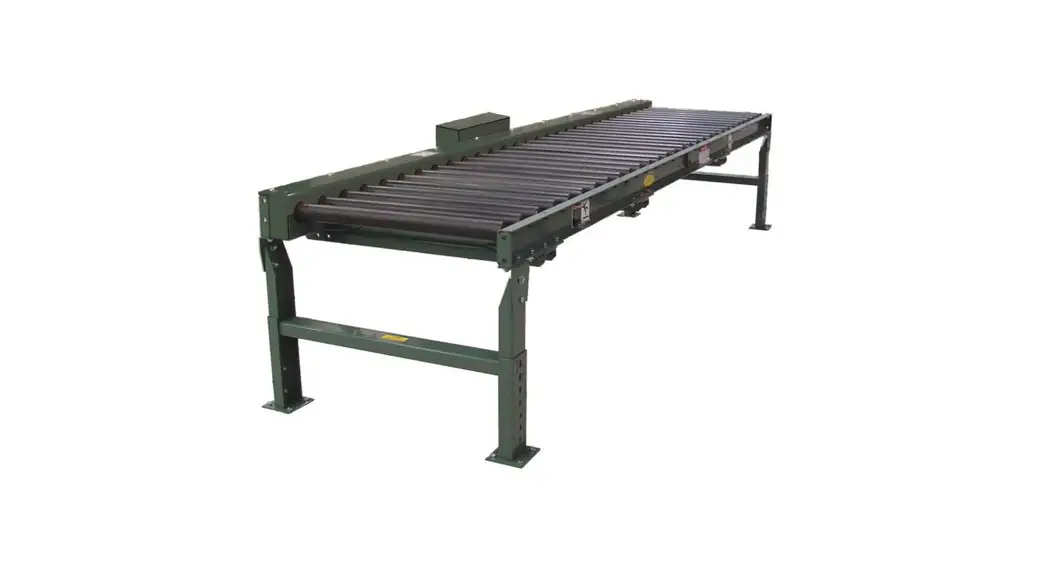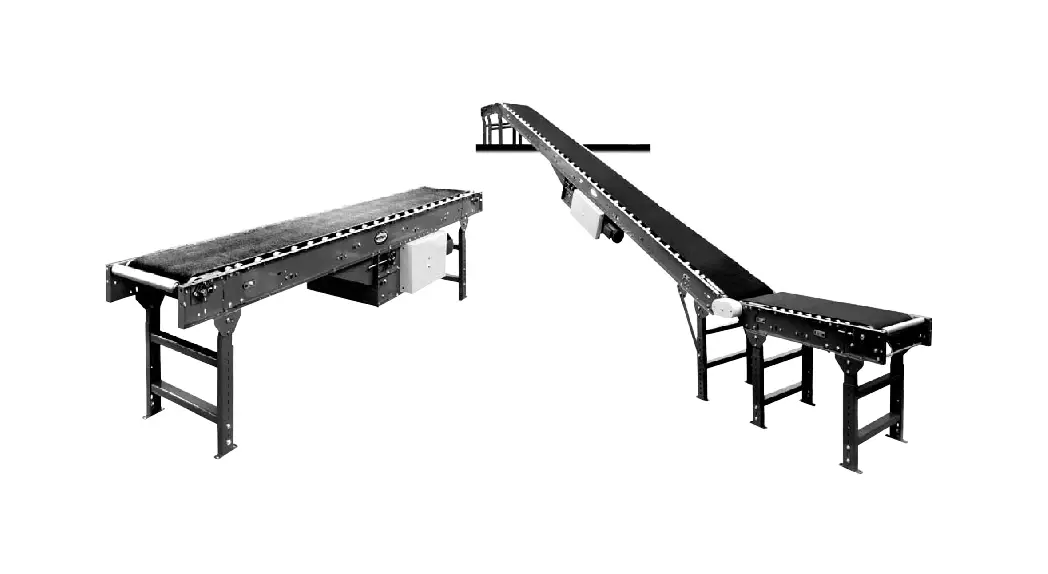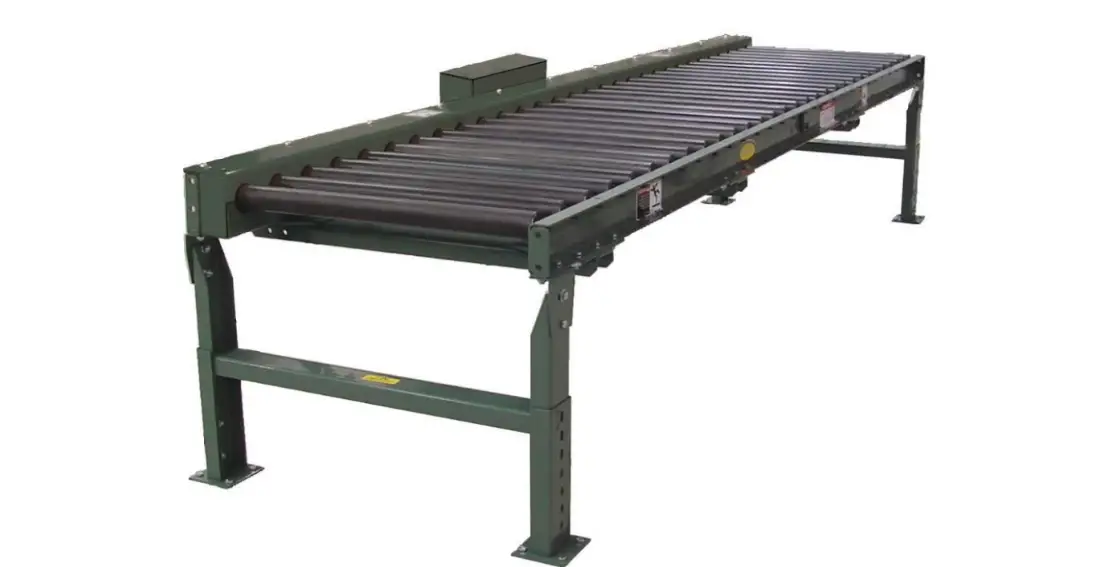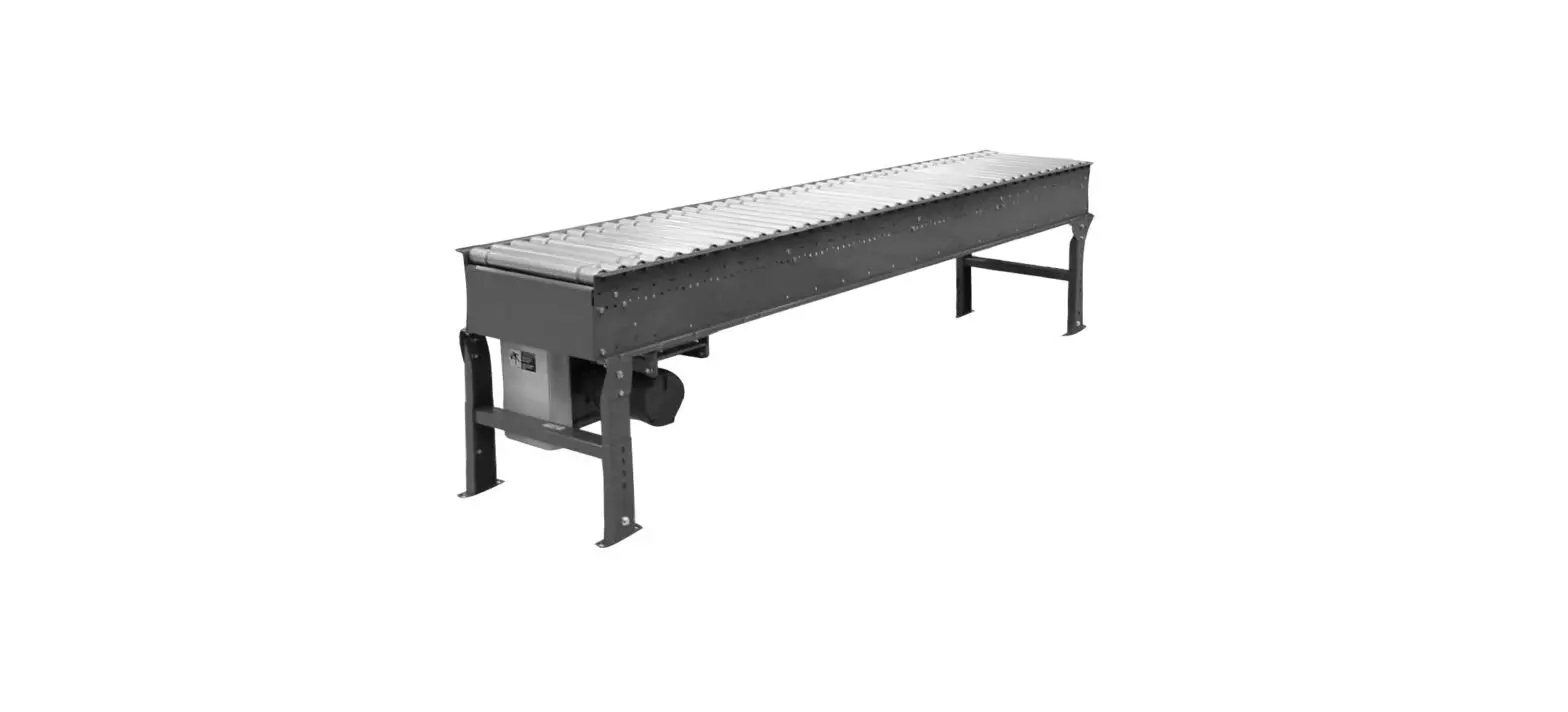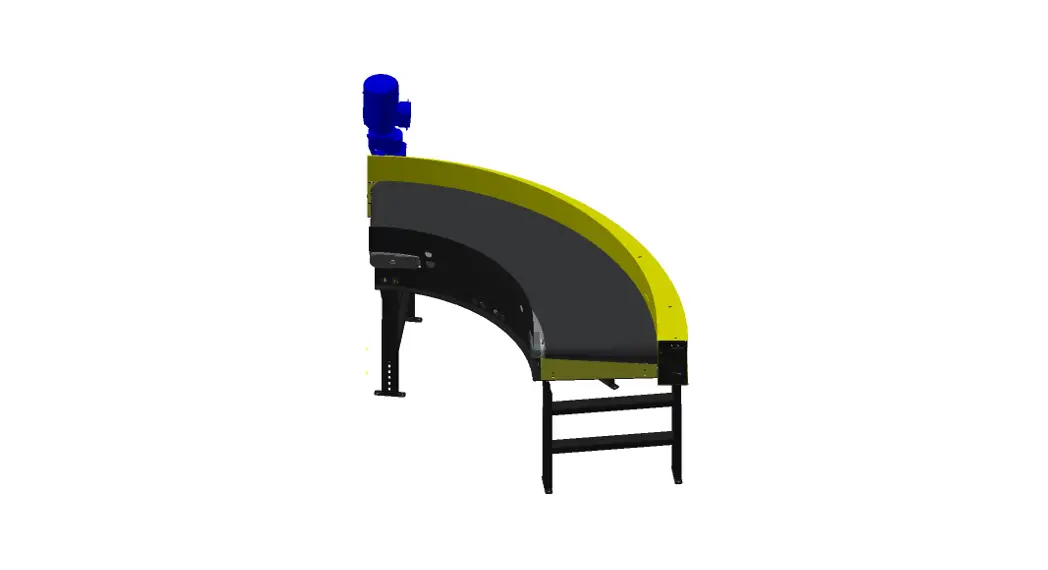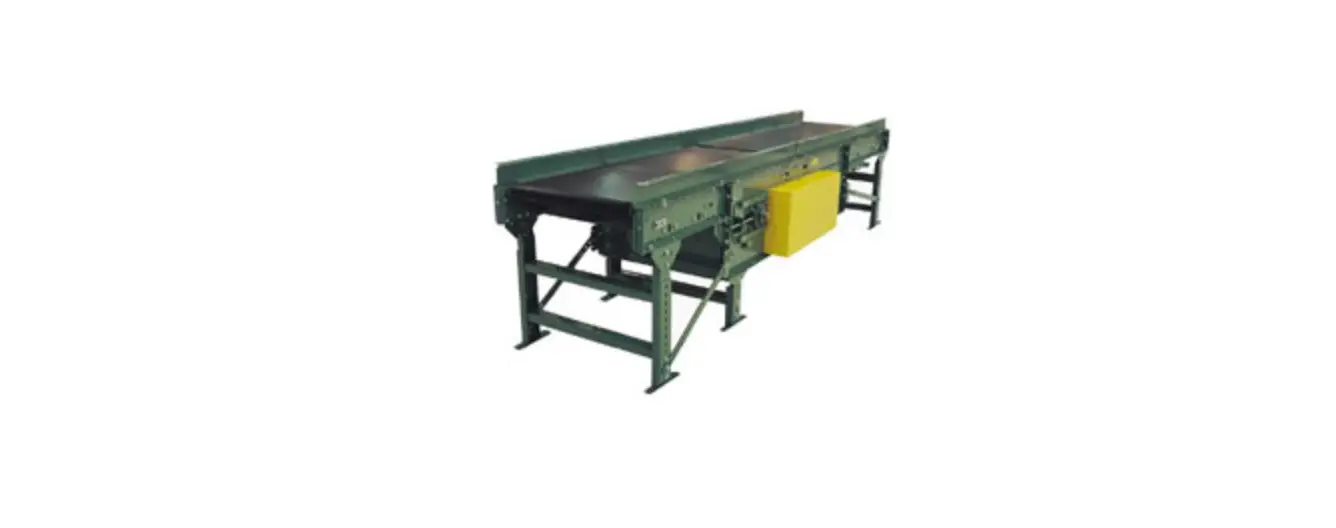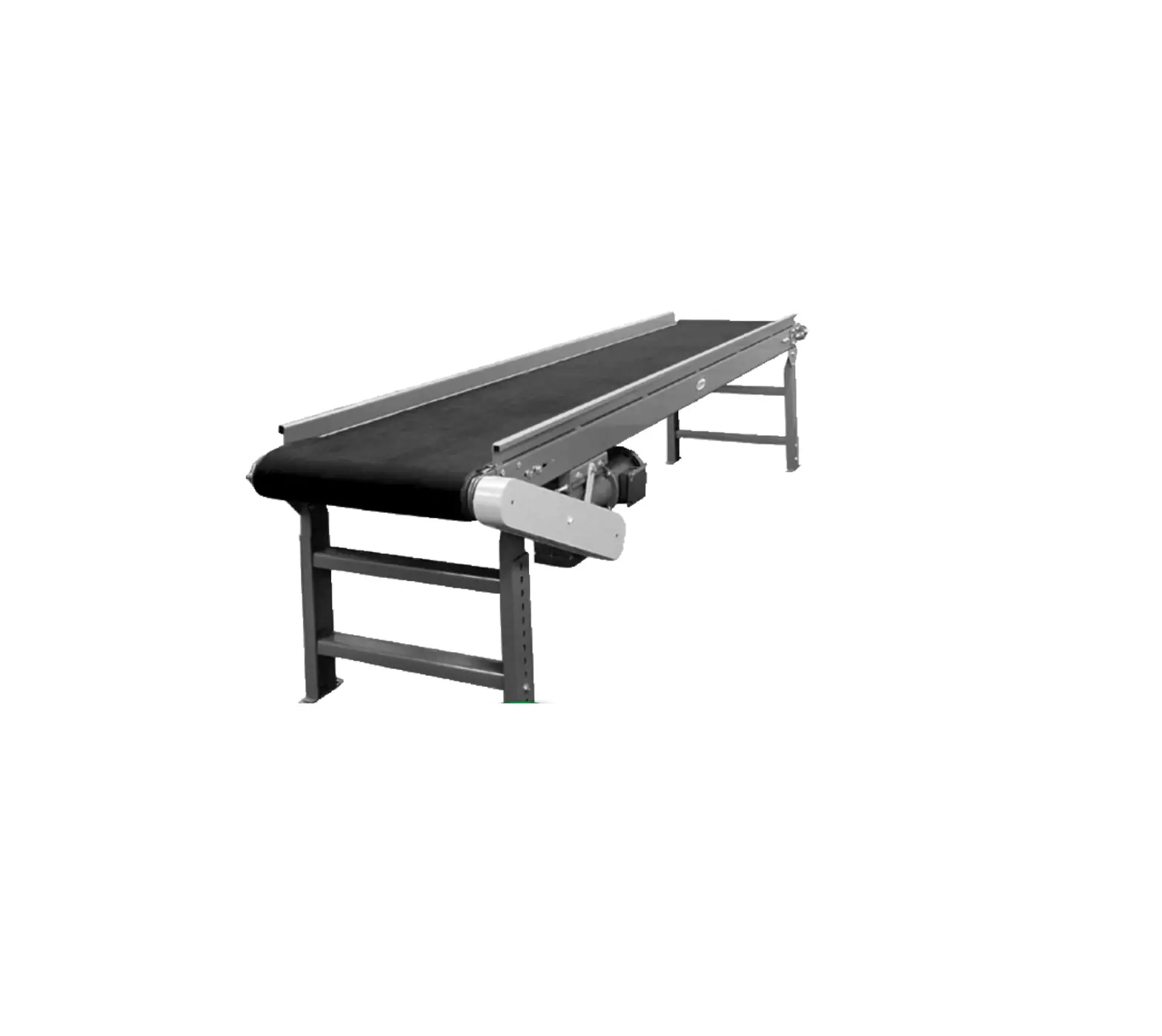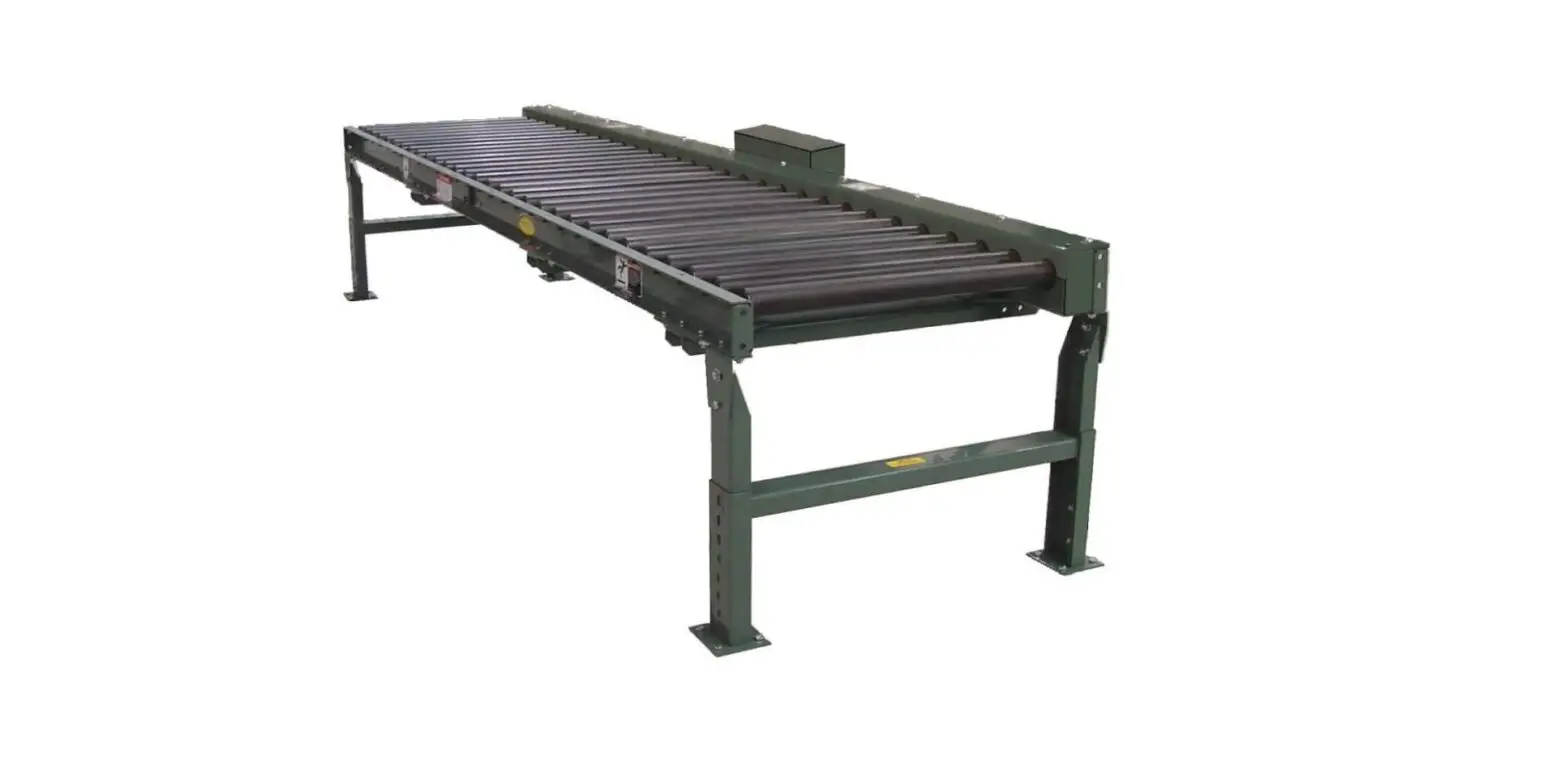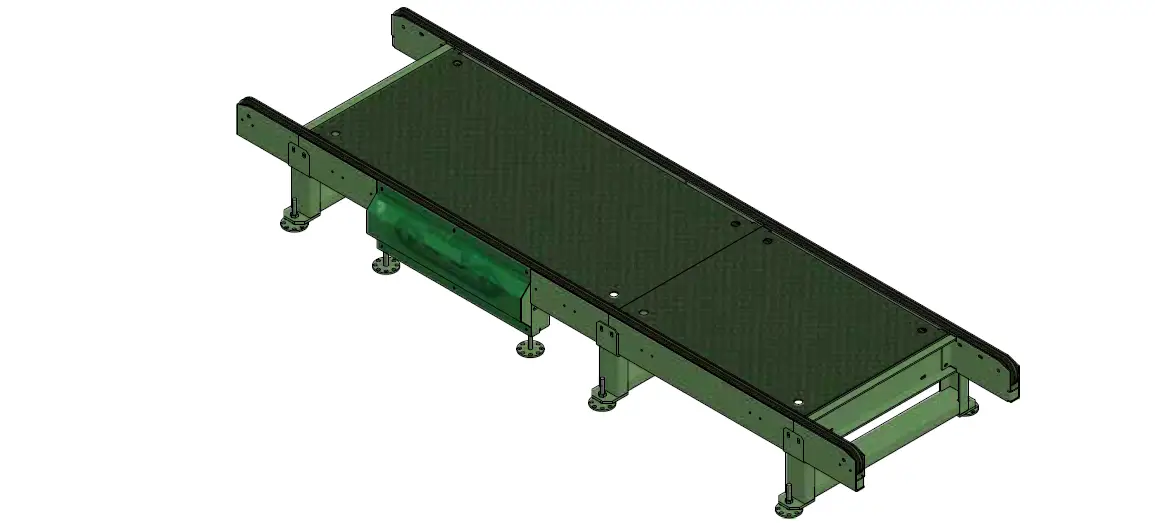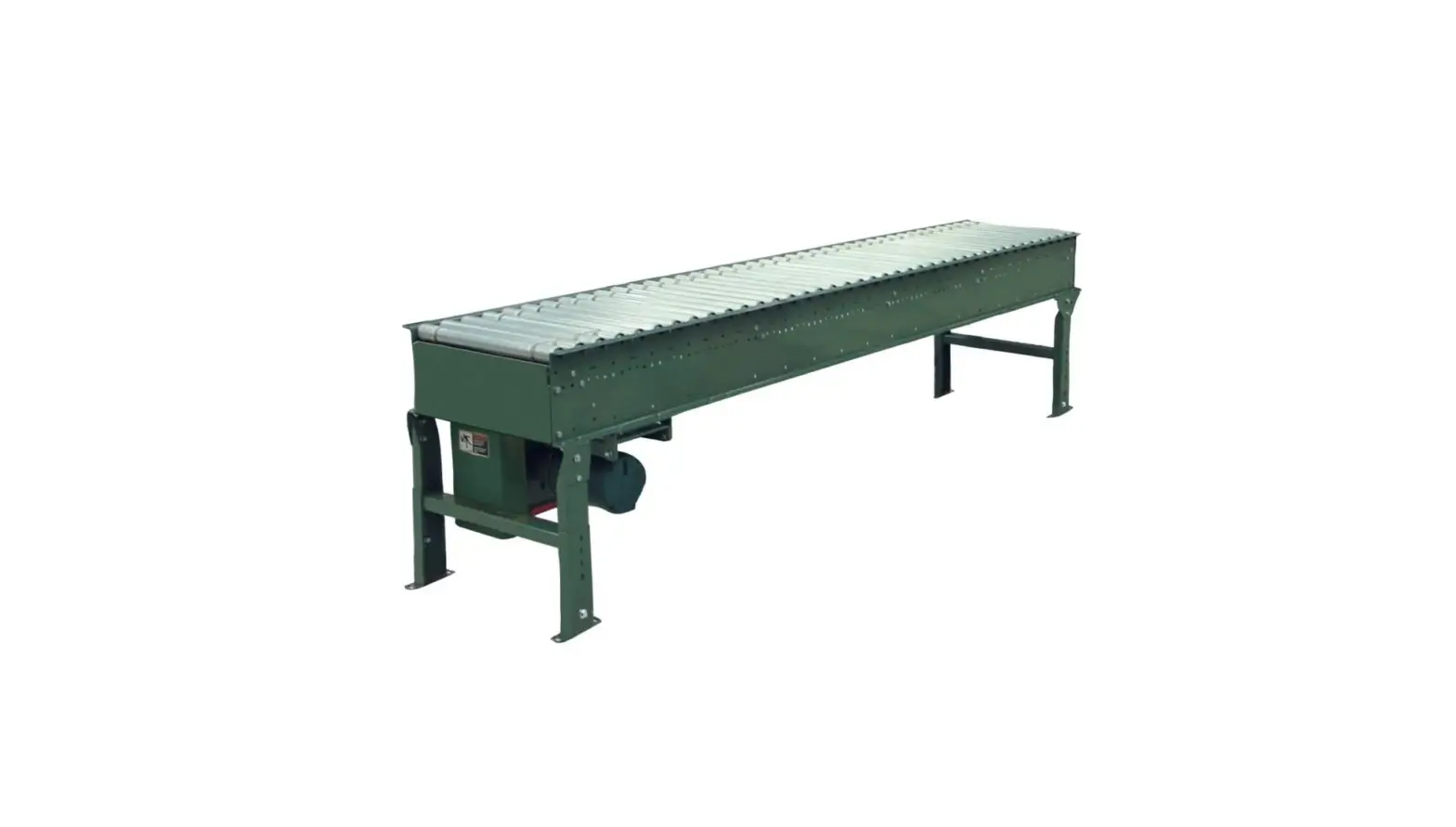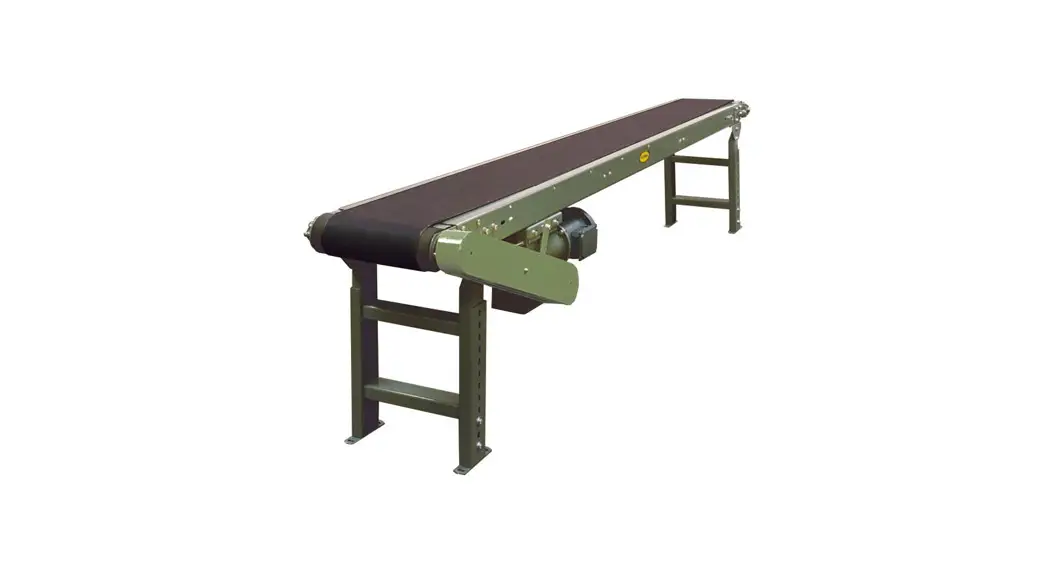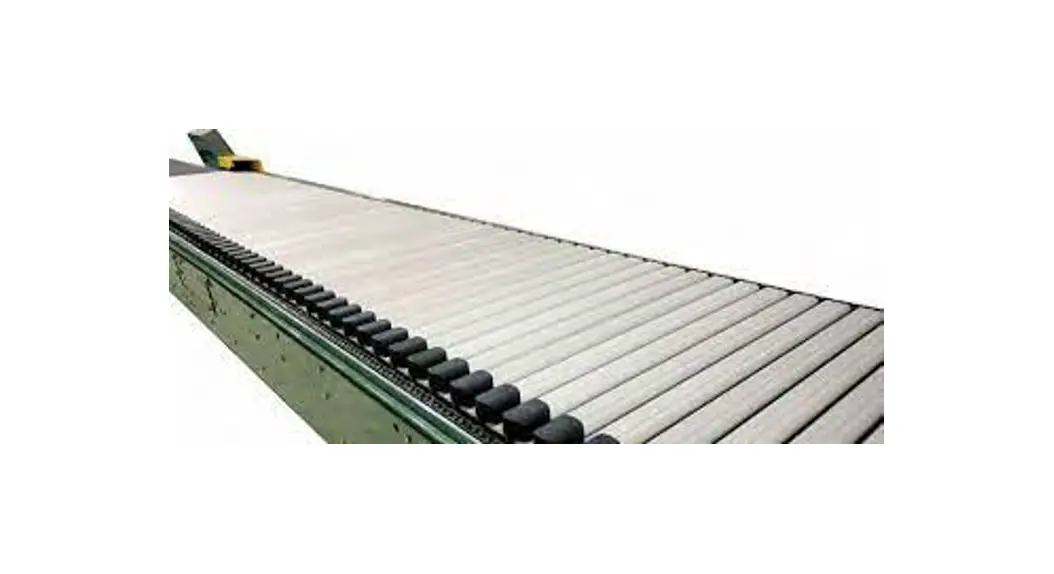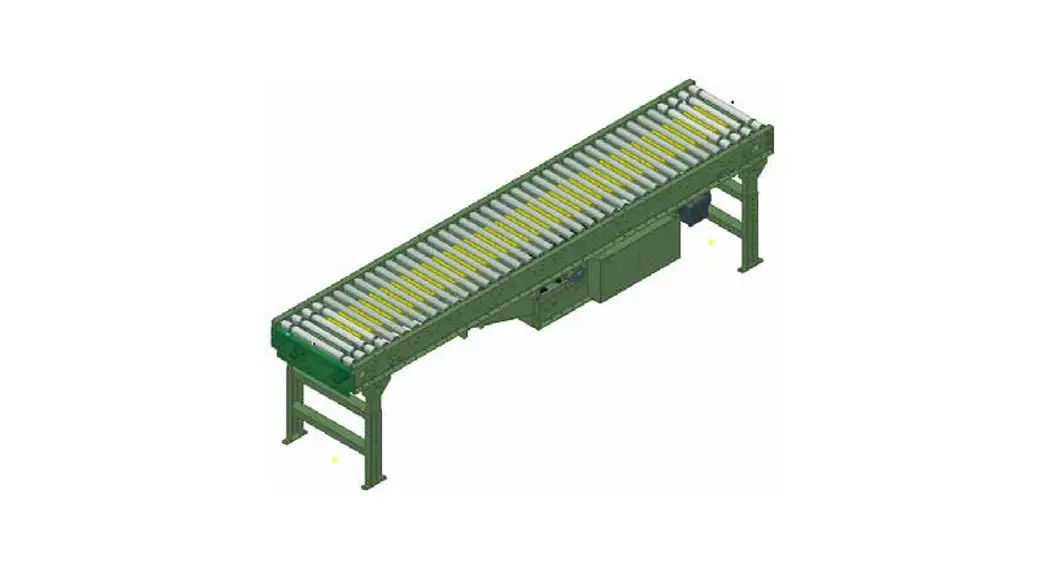
 ABLR Flat Belt Driven Live Roller Conveyor
Installation and Maintenance Manual
with Safety Information and Parts List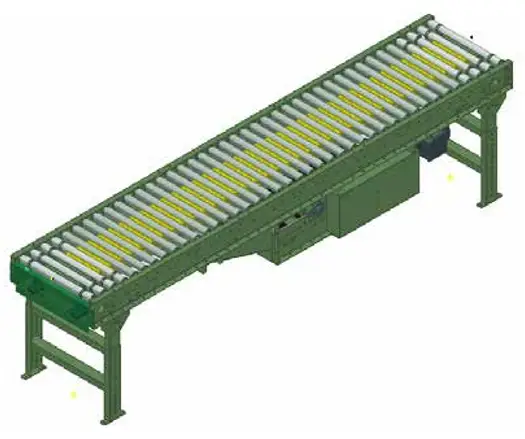
RECOMMENDED SPARE PARTS HIGHLIGHTED IN GRAY
Use code HYPMANUAL for free shipping on your first order at HytrolParts.com
INTRODUCTION
This manual provides guidelines and procedures for installing, operating, and maintaining your conveyor. A complete parts list is provided with recommended spare parts highlighted in gray. Important safety information is also provided throughout the manual. For safety to personnel and for proper operation of your conveyor, it is recommended that you read and follow the instructions provided in this manual.
• Receiving and Uncrating
- Check the number of items received against the bill of lading.
- Examine condition of equipment to determine if any damage occurred during shipment.
- Move all crates to area of installation.
- Remove crating and check for optional equipment that may be fastened to the conveyor. Make sure these parts (or any foreign pieces) are removed.
NOTE: If damage has occurred or freight is missing, Contact your Hytrol Integration Partner.
• How to Order Replacement Parts
Included in this manual are parts drawings with complete replacement parts
lists. Minor fasteners, such as nuts and bolts, are not included.
When ordering replacement parts:
- Contact Dealer from whom conveyor was purchased or nearest HYTROL Integration Partner.
- Give Conveyor Model Number and Serial Number or HYTROL Factory Order Number.
- Give Part Number and complete description from Parts List.
- Give type of drive. Example—8″ End Drive, 8″ Center Drive, etc.
- If you are in a breakdown situation, tell us.

SAFETY INFORMATION
Installation
GUARDS AND GUARDING
Interfacing of Equipment. When two or more pieces of equipment are interfaced, special attention shall be given to the interfaced area to insure the presence of adequate guarding and safety devices.
Guarding Exceptions. Whenever conditions prevail that would require guarding under these standards, but such guarding would render the conveyor unusable, prominent warning means shall be provided in the area or on the equipment in lieu of guarding.
Guarded by Location or Position. Where necessary for the protection of employees from hazards, all exposed moving machinery parts that present a hazard to employees at their work station shall be mechanically or electrically guarded, or guarded by location or position.
- Remoteness from frequent presence of public or employed personnel shall constitute guarding by location.
- When a conveyor passes over a walkway, roadway, or work station, it is considered guarded solely by location or position if all moving parts are at least 8 ft. (2.44 m) above the floor or walking surface or are otherwise located so that the employee cannot inadvertently come in contact with hazardous moving parts.
- Although overhead conveyors may be guarded by location, spill guards, pan guards, or equivalent shall be provided if the product may fall off the conveyor for any reason and if personnel would be endangered.
HEADROOM
- When conveyors are installed above exit passageways, aisles, or corridors, there shall be provided a minimum clearance of 6 ft. 8 in. (2.032 m) measured vertically from the floor or or walking surface to the lowest part of the conveyor or guards.
- Where system function will be impaired by providing the minimum clearance of 6 ft. 8 in. (2.032 m) through an emergency clearance, alternate passageways shall be provided.
- It is permissible to allow passage under conveyors with less that 6 ft. 8 in. (2.032 m) clearance from the floor for other than emergency exits if a suitable warning indicates low headroom.
Operation
A) Only trained employees shall be permitted to operate conveyors. Training shall include instruction in operation under normal conditions and emergency situations.
B) Where employee safety is dependent upon stopping and/or starting devices, they shall be kept free of obstructions to permit ready access.
C) The area around loading and unloading points shall be kept clear of obstructions which could endanger personnel.
D) No person shall ride the load-carrying element of a conveyor under any circumstances unless that person is specifically authorized by the owner or employer to do so. Under those circumstances, such employee shall only ride a conveyor which incorporates within its supporting structure platforms or control stations specifically designed for carrying personnel. Under no circumstances shall any person ride on any element of a vertical conveyor.
E) Personnel working on or near a conveyor shall be instructed as to the location and operation of pertinent stopping devices.
F) A conveyor shall be used to transport only material it is capable of handling safely.
G) Under no circumstances shall the safety characteristics of the conveyor be altered if such alterations would endanger personnel.
H) Routine inspections and preventive and corrective maintenance programs shall be conducted to insure that all safety features and devices are retained and function properly.
I) Personnel should be alerted to the potential hazard of entanglement in conveyors caused by items such as long hair, loose clothing, and jewelry.
J) Conveyors shall not be maintained or serviced while in operation unless proper maintenance or service requires the conveyor to be in motion. In this case, personnel shall be made aware of the hazards and how the task may be safely accomplished.
K) Owners of conveyor should insure proper safety labels are affixed to the conveyor warning of particular hazards involved in operation of their conveyors.
CAUTION! Because of the many moving parts on the conveyor, all personnel in the area of the conveyor need to be warned that the conveyor is about to be started.
Maintenance
- All maintenance, including lubrication and adjustments, shall be performed only by qualified and trained personnel.
- It is important that a maintenance program be established to insure that all conveyor components are maintained in a condition which does not constitute a hazard to personnel.
- When a conveyor is stopped for maintenance purposes, starting devices or powered accessories shall be locked or tagged out in accordance with a formalized procedure designed to protect all persons or groups involved with the conveyor against an unexpected start.
- Replace all safety devices and guards before starting equipment for normal operation.
- Whenever practical, DO NOT lubricate conveyors while they are in motion. Only trained personnel who are aware of the hazard of the conveyor in motion shall be allowed to lubricate.
Safety Guards
Maintain all guards and safety devices IN POSITION and IN SAFE REPAIR.
- Safety Labels
In an effort to reduce the possibility of injury to personnel working around HYTROL conveying equipment, safety labels are placed at various points on the equipment to alert them of potential hazards. Please check equipment and note all safety labels. Make certain your personnel are alerted to and obey these warnings. See Safety Manual for examples of warning labels.
Remember Do not remove, reuse or modify material handling equipment for any purpose other than it’s original intended use.
CAUTION! Only trained personnel should track a conveyor belt which must be done while conveyor is in operation. DO NOT attempt to track belt if conveyor is loaded.
INSTALLATION
Support Installation
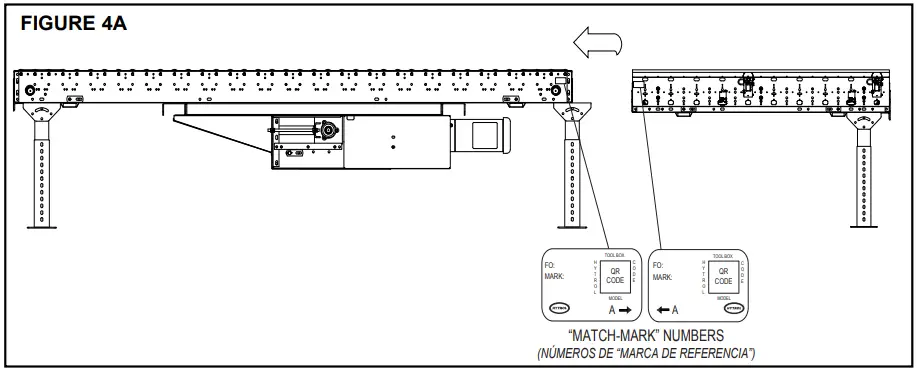
- Determine primary direction of product flow. Figure 4A indicates the preferred flow as related to the drive.
- Refer to “Match-Mark” numbers on ends of conveyor sections. (Figure 4A) Position them in this sequence near the area of installation.
- Attach supports to both ends of drive section and to one end of intermediate or tail sections (Figure 4A). Hand tighten bolts only at this time.
- Adjust elevation to required height.

Ceiling Hanger Installation
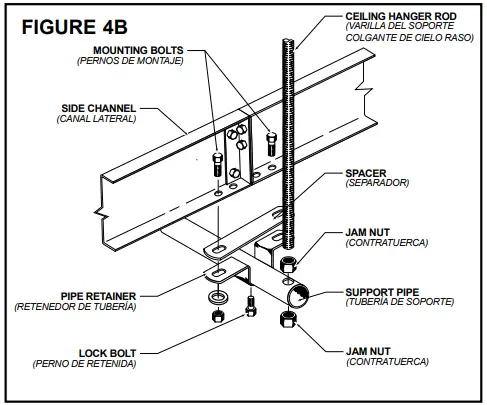
If conveyors are to be used in an overhead application, ceiling hangers may have been supplied in place of floor supports.
Figure 4B shows how a ceiling hanger mounts to a conveyor section. Ceiling hangers should be mounted at section joints. For safety information concerning conveyors mounted overhead, refer to “Installation Safety Precautions” on Page 3.
NOTE: When installing ceiling hanger rods in an existing building, all methods of attachment must comply with local building codes.
Conveyor Set-Up
- Mark a chalk line on floor to locate centerline of the conveyor.
- Set first section in place starting at either end depending on most critical point, usually the end connecting to the last conveyor installed.
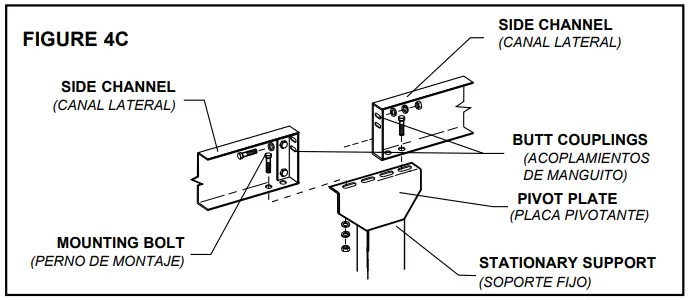
- Place remaining sections on extended support of previous section (Figure 4A and 4C).
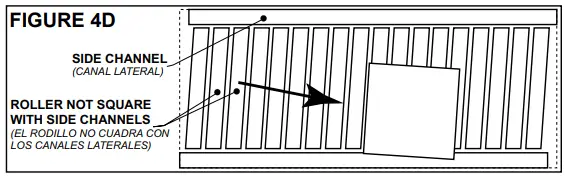
- Insure that each bed sections is square prior to setting in place. Refer to Figure 4D. See information below for Instructions on How To Square The Beds. Bed sections must be square in order for the belt to track properly.
- Fasten sections together with butt couplings and pivot plates as shown in Figure 4C. Hand tighten bolts only at this time.
- Conveyor must be straight. Pull a string taut from center of infeed end to center of discharge end. Measure at each section joint from string to inside of frame. This dimension should be one half the BR at each section joint. If not, reposition the conveyor to straighten it. Do this at each section joint so conveyor is straight. Conveyor must be straight in order for belt to track properly.
- Tighten all butt coupling and support mounting bolts and lag conveyor to floor.
- Install electrical controls and wire motor. See Page 5.
- Track belt per instructions on Page 5 & 6.

Squaring Sections
It is important that each bed section be checked for an out-of-square condition and squared prior to being set in place. If conveyor is not square, tracking problems will result. Figure 4D indicates a racked section.
TO CORRECT AN OUT-OF-SQUARE SECTION
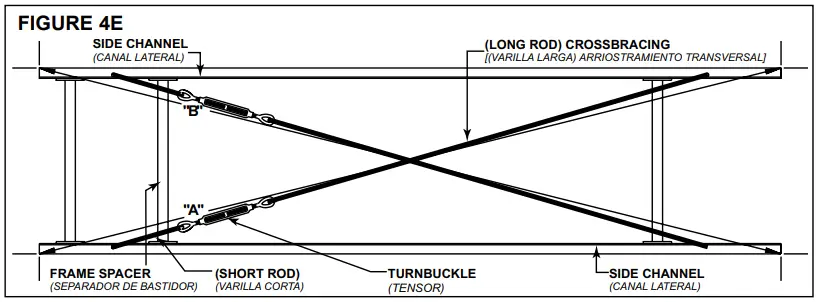
- Locate points on corners of section and measure distance “A” & “B”. If the dimensions are not equal, the section will need to be squared. (Figure 4E).

- Use cross bracing supplied on underside of conveyor to square each section. Adjust turnbuckle until Dimensions “A” & “B” are equal.
- After all bed sections have been checked and corrected for “racked condition”, tighten all butt couplings and pivot plate bolts.
- Make final check to see that all conveyor sections are level across width and length. If entire conveyor is level, supports can be lagged to floor.
“Racked” conveyor sections will cause package to travel toward side of conveyor.
IMPORTANT! Being out of level across width of conveyor can cause package drift on long conveyor lines, and will cause belt to not track properly.
Belt Installation
INSTALLING THE BELT
The conveyor belt has been cut to the proper length and lacing installed at the factory. The belt should be installed with the brushed side down toward the pressure rollers and the polyurethane coated side up toward the tread rollers. To install follow these steps:
- Remove tread rollers as necessary in order to thread belt through conveyor as shown in Figure 5A. Pull ends together and insert lacing pin (Figure 5B). If belt ends cannot be pulled together by hand, loosen take-up pulley in center drive and/or use a belt puller so lacing pin can be inserted.
- Adjust belt tension with take-up pulley. Keep pulley square by moving both take-up bolts an equal amount. Maintain enough tension so drive pulley will not slip when carrying the rated load.
- Track belt per instructions on Page 5 & 6.
BELT WIDTH LACING ANGLE 6″ 2.25°
CAUTION! Excessive slippage will reduce belt life and damage drive pulley lagging. Never apply more tension than is needed. Over-tension will cause extra wear to belt and bearings and will require extra power from drive.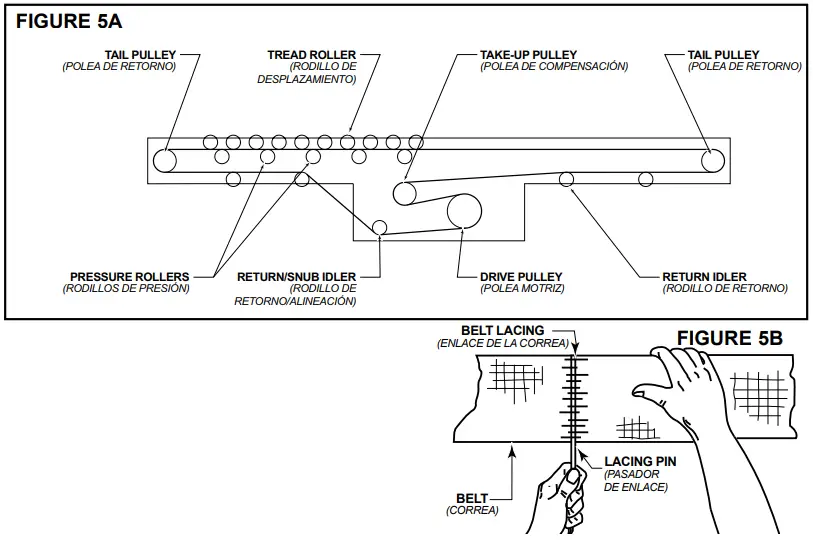
NOTE: If belt ends cannot be pulled together by hand, it may be necessary to loosen take-ups (at tail pulley, etc.), minimum position or use a belt puller so lacing pin can be easily inserted.
NOTE: Tread roller axles are spring loaded on one end. Rollers may be removed by using tool such as a screwdriver to push on the “soft” end of the axle or pliers to pull on opposite end of the axle.
Electrical Equipment
CONTROLS
Electrical Code: All motor controls and wiring shall conform to the National Electrical Code (Article 670 or other applicable articles) as published by the National Fire Protection Association and as approved by the American Standards Institute, Inc.
WARNING! Electrical controls shall be installed and wired by a qualified electrician. Wiring information for the motor and controls are furnished by the equipment manufacturer.
A) Control stations should be so arranged and located that the operation of the equipment is visible from them, and shall be clearly marked or labeled to indicate the function controlled.
B) A conveyor which would cause injury when started shall not be started until employees in the area are alerted by a signal or by a designated person that the conveyor is about to start.
When a conveyor would cause injury when started and is automatically controlled or must be controlled from a remote location, an audible device shall be provided which can be clearly heard at all points along the conveyor where personnel may be present. The warning device shall be actuated by the controller device starting the conveyor and shall continue for a required period of time before the conveyor starts. A flashing light or similar visual warning may be used in conjunction with or in place of the audible device if more effective in particular circumstances.
Where system function would be seriously hindered or adversely affected by the required time delay or where the intent of the warning may be misinterpreted (i.e., a work area with many different conveyors and allied devices), clear, concise, and legible warning shall be provided. The warning shall indicate that conveyors and allied equipment may be started at any time, that danger exists, and that personnel must keep clear. The warnings shall be provided along the conveyor at areas not guarded by position or location.
C) Remotely and automatically controlled conveyors, and conveyors where operator stations are not manned or are beyond voice and visual contact from drive areas, loading areas, transfer points, and other potentially hazardous locations on the conveyor path not guarded by location, position, or guards, shall be furnished with emergency stop buttons, pull cords, limit switches, or similar emergency stop devices.
All such emergency stop devices shall be easily identifiable in the immediate vicinity of such locations unless guarded by location, position, or guards. Where the design, function, and operation of such conveyor clearly is not hazardous to personnel, an emergency stop device is not required.
The emergency stop device shall act directly on the control of the conveyor concerned and shall not depend on the stopping of any other equipment. The emergency stop devices shall be installed so that they cannot be overridden from other locations.
D) Inactive and unused actuators, controllers, and wiring should be removed from control stations and panel boards, together with obsolete diagrams, indicators, control labels, and other material which serve to confuse the operator.
SAFETY DEVICES
A) All safety devices, including wiring of electrical safety devices, shall be arranged to operate in a “Fail-Safe” manner, that is, if power failure or failure of the device itself would occur, a hazardous condition must not result.
B) Emergency Stops and Restarts. Conveyor controls shall be so arranged that, in case of emergency stop, manual reset or start at the location where the emergency stop was initiated, shall be required of the conveyor(s) and associated equipment to resume operation.
C) Before restarting a conveyor which has been stopped because of an emergency, an inspection of the conveyor shall be made and the cause of the stoppage determined. The starting device shall be locked out before any attempt is made to remove the cause of stoppage, unless operation is necessary to determine the cause or to safely remove the stoppage.
Refer to ANSI Z244.1-1982, American National Standard for Personnel Protection – Lockout/Tagout of Energy Sources – Minimum Safety Requirements and OSHA Standard Number 29 CFR 1910.147 “The Control of Hazardous Energy (Lockout/Tagout).”
Belt Tracking
PRE-TRACKING INSPECTION
Before attempting to physically track the belt:
- Make sure all bed sections are square. See information on “Racked Sections”, Page 4.
- Make sure conveyor is level across the width and length of unit. Adjust supports as necessary.
- Make sure conveyor is straight. See Conveyor Set up on page 4.
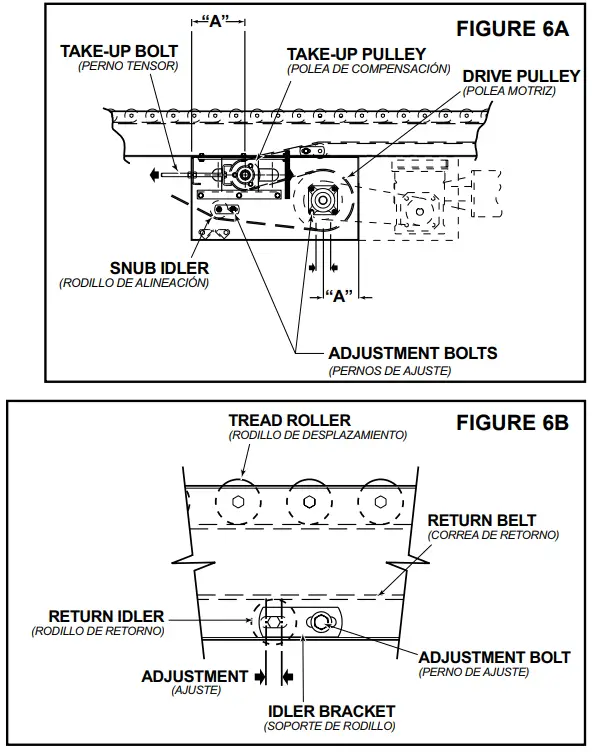
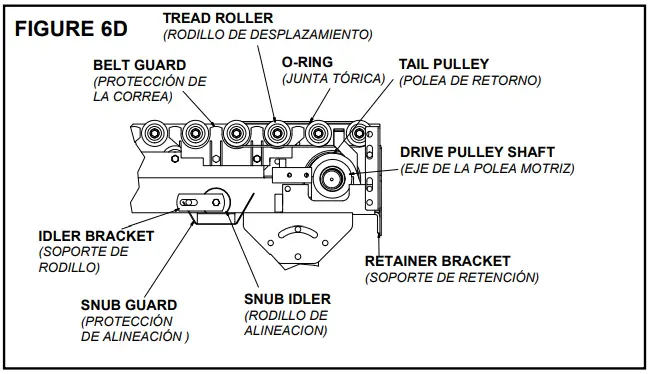
- Make sure all pulleys, return idlers, and snub idlers are square with conveyor bed. (Figures 6A thru 6D). Dimension “A” should be equal on both sides of unit.
- Make sure belt has been properly threaded through conveyor. See “Belt Installation”, Page 5.
IMPORTANT: When belt tracking adjustments are made, they should be minor (1/16 in. at a time on idlers, etc., should be sufficient.).
Give the belt adequate time to react to the adjustments. It may take several complete revolutions around the conveyor for the belt to begin tracking properly on long, slow conveyor lines.
A) Stand at tail pulley looking toward drive and note what direction belt is traveling.
B) Having observed belt and determined tracking problem, follow procedures in “How to Steer The Belt”, See Figure 6C.
HOW TO STEER THE BELT
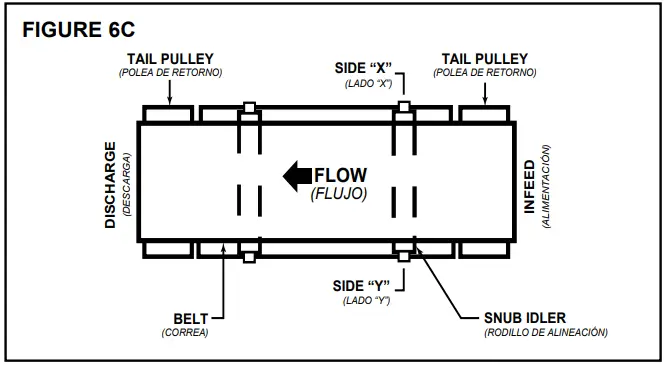
Condition 1. . .When the belt is running in the direction (FLOW) with the arrow, but tracking (drifting) towards Side “X”, move the Snub Idler nearest the INFEED end of Side “Y” towards the DISCHARGE end of the conveyor.
Condition 2. . . When the belt is running in the direction (FLOW) with the arrow, but tracking (drifting) towards Side “Y”, move the Snub Idler nearest the INFEED end of Side “X” towards the DISCHARGE end of the conveyor.
If Belt Direction (FLOW) is reversed, all the above conditions will remain the same as in Figure 6C, except you are now viewing the conveyor from the opposite end.
If belt continues to track improperly, re-check all items covered in “Pre-Tracking Inspection” and make corrections as necessary.
• Belt Tracking
Tread Roller Installation
In order to thread the belt through the conveyor, some of the tread rollers were removed. Reinstall all tread rollers that may have been removed.
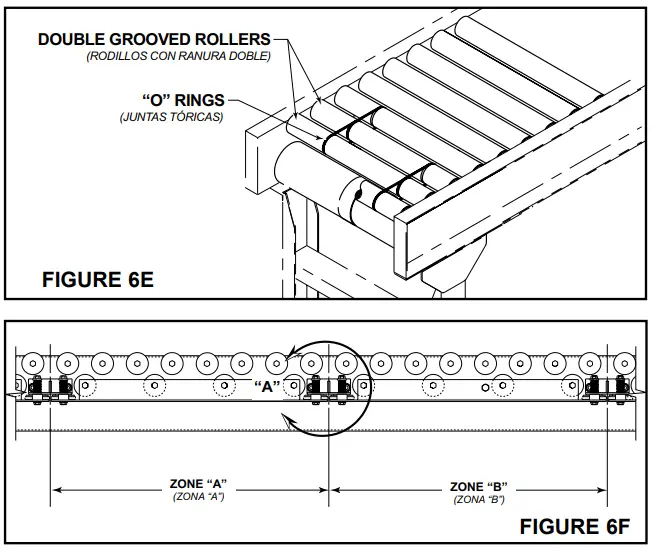
To drive the end rollers, they are connected with “O”-Rings as shown in Figure 6E. Note that the four end rollers have two grooves.
CAUTION! Only trained personnel should track conveyor belt which must be done while conveyor is in operation. All guards should be in place while tracking conveyor belt.
NOTE: In all conditions, you are viewing the Conveyor Belt from the INFEED end. All corrections will be made from the INFEED end of conveyor.
Pressure Adjustment
The Model ABLR is equipped with spring-loaded pressure frames to apply the driving force between the belt and tread rollers. The conveyor has been adjusted at the factory; however, if the belt is moving but the tread rollers are not turning, follow the steps below to adjust each zone.
- With Zone Driving, make sure pressure frame is set properly (Figure 6F).
- If not, tighten guide bolt only enough to bring guide stop in contact with bed spacer (Detail A). Tightening beyond this point will not increase drive.
CAUTION! Do not attempt to adjust conveyor until it has been test run. See trouble Shooting Guide for definition and solution to problems.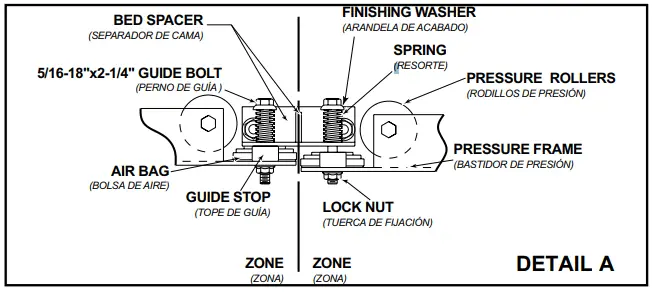
OPERATION
- Conveyor Start-Up
Before conveyor is turned on, check for foreign objects that may have been left inside conveyor during installation. These objects could cause serious damage during startup.
After conveyor has been turned on and is operating, check motors, reducers, and moving parts to make sure they are working freely.
CAUTION! Because of the many moving parts on the conveyor, all personnel in the area of the conveyor need to be warned that the conveyor is about to be started.
MAINTENANCE
- Lubrication
The drive chain is pre-lubricated from the manufacturer by a hot dipping process that ensures total lubrication of all components. However, continued proper lubrication will greatly extend the useful life of every drive chain.
Drive Chain lubrication serves several purposes including:
• Protecting against wear of the pin-bushing joint
• Lubricating chain-sprocket contact surfaces
• Preventing rust or corrosion
For normal operating environments, lubricate every 2080 hours of operation or every 6 months, whichever comes first. Lubricate with a good grade of non-detergent petroleum or synthetic lubricant (i.e., Mobile 1 Synthetic). For best results, always use a brush to generously lubricate the chain. The proper viscosity of lubricant greatly affects its ability to flow into the internal areas of the chain. Refer to the table below for the proper viscosity of lubricant for your application.Ambient Temperature Degrees F SAE ISO 20-40 20 46 or 68 40-100 30 100 100-120 40 150 The drive chain’s lubrication requirement is greatly affected by the operating conditions. For harsh conditions such as damp environments, dusty environments, excessive speeds, or elevated temperatures, it is best to lubricate more frequently. It may be best, under these conditions, to develop a custom lubrication schedule for your specific application. A custom lubrication schedule may be developed by inspecting the drive chain on regular time intervals for sufficient lubrication. Once the time interval is determined at which the chain is not sufficiently lubricated, lubricate it and schedule the future lubrication intervals accordingly.
Drive Chain Alignment and Tension
The drive chain and sprockets should be checked periodically for proper tension and alignment. Improper adjustment will cause extensive wear to the drive components.
TO MAKE ADJUSTMENTS
- Lock out power.
- Remove chain guard.
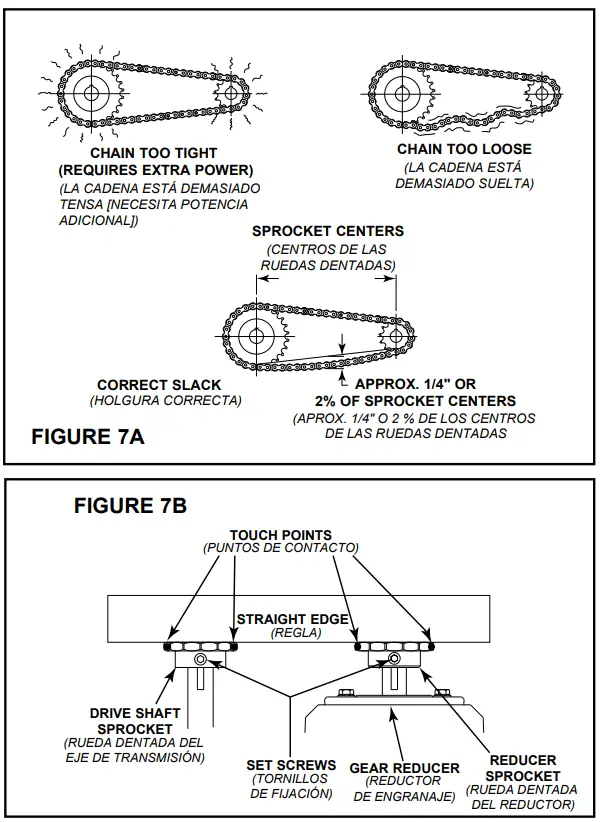
- Check sprocket alignment by placing a straightedge across the face of both sprockets (Figure 7B). Straight edge should touch at four points if sprockets are square and aligned. Somtimes the reducer may need to be squared to make sprockets square.
- Loosen set screws and adjust as needed. Re-tighten set screws.
- To adjust chain tension, loosen bolts that fasten motor base to mounting angles, both sides of the conveyor. Tighten take-up bolts until desired chain tension is reached. (Figures 7A). Re-tighten mounting bolts.
- Lubricate chain per lubrication instructions.
- Replace chain guard so that it does not interfere with drive.
CAUTION! Never remove chain guards while the conveyor is running. Always replace guards after adjustments are made.
TROUBLE SHOOTING:
The following chart list possible problems that may occur in the operation of the conveyor.
| Drives | TROUBLE | CAUSE | SOLUTION |
| Conveyor will not start or motor quits frequently. | 1) Motor is overloaded or drawing too much current. | 1) Check for overloading of conveyor. 2) Check heater or circuit breaker and change if necessary. | |
| Drive chain and sprockets wear excessively. | 1) Lack of lubrication on chain causing chain stretch which creates improper chain to sprocket mesh. 2) Sprockets are out of alignment. 3) Improper chain tension. | 1) Replace chain and sprockets. Provide adequate lubrication. 2) Align sprockets. (See “Drive Chain Alignment and Tension”). 3) See “Drive Chain Alignment and Tension”. | |
| Loud popping or grinding noise in bearing. | 1) Defective bearing. 2) Loose set screw. 3) Loose Drive Chain | 1) Replace bearing. 2) Tighten set screw. 3) Tighten Chain. | |
| Motor or reducer overheating. | 1) Conveyor is overloaded. 2) Low voltage to motor. 3) Low lubricant level in reducer. | 1) Check capacity of conveyor and reduce load to recommended level. 2) Have electrician check and correct as necessary. 3) Relubricate per manufacturer’s recommendations. For HYTROL reducer, refer to separate manual. | |
| Belt doesn’t move, but drive runs. | 1) Conveyor is Overloaded. 2) Belt is too loose. 3) Lagging on drive pulley is worn. | 1) Reduce load. 2) Use belt take-up to tighten belt. 3) Replace the drive pulley lagging and tighten belt. | |
| Belt Tracking | Belt creeps to one side at tail pulley. | 1) Tail pulley, return idler, or snub idler near tail pulley not properly aligned or square bed . | 1) Adjust as necessary. See “Belt Tracking” pre-tracking inspection in this manual on how to square tail pulley, snub idler, and return idler. |
| Entire belt creeps to one side. | 1) Conveyor not straight. 2) Conveyor not level. 3) Material build-up on roller, pulleys, or idlers. | 1) Re-align bed sections as necessary. 2) Correct as necessary. 3) Remove residue and install belt cleaners or scrappers if possible. |
Model ABLR Parts List
| Ref. No. | Part No. | Description |
| 1 | — | Drive Assembly |
| 2 | — | Frame Channel – 3 in. Roller Centers |
| — | PT-054684 | 1 ft. Long (12 in. Zones) |
| — | PT-054685 | 1 ft. 6 in. Long (18 in. Zones) |
| — | PT-054686 | 2 ft. Long (12/24 in Zones) |
| — | PT-054687 | 2 ft. 6 in. Long (30 in. Zones) |
| — | PT-054688 | 3 ft. Long (12/18/36 in. Zones) |
| — | PT-054689 | 4 ft. Long (12/24 in. Zones) |
| — | PT-054690 | 4 ft. 6 in. Long (18 in. Zones) |
| — | PT-054691 | 5 ft. Long (12/30 in. Zones) |
| — | PT-054692 | 6 ft. Long (12/18/24/36 in. Zones) |
| — | PT-054693 | 7 ft. Long (12 in. Zones) |
| — | PT-054694 | 7 ft. 6 in. Long (18/30 in. Zones) |
| — | PT-054695 | 8 ft. Long (12/24 in. Zones) |
| — | PT-054696 | 9 ft. Long (12/18/36 in. Zones) |
| — | PT-054697 | 10 ft. Long (12/24/30 in. Zones) |
| 3 | B-03191 | Butt Coupling |
| 4 | B-21856 | Center Bed Spacer (Specify BR) |
| 5 | B-21858 | End Bed Spacer (Specify BR) |
| 6 | B-01982 | 1.9 in. Dia. Tread/Return Roller (Specify BR) |
| 7 | — | Pressure Frame |
| — | PT-048420 | 12 in. Zone Length (Pulley Zone) |
| — | B-13074-012 | 12 in. Zone Length |
| — | B-13074-018 | 18 in. Zone Length |
| — | B-13074-024 | 24 in. Zone Length |
| — | B-13074-030 | 30 in. Zone Length |
| — | B-13074-036 | 36 in. Zone Length |
| 8 | — | Belt Guard |
| — | 093.219 | Pressure Frame Belt Guard 72 in. |
| — | 093.220 | Pressure Frame Belt Guard 18 in. |
| — | B-12732 | 1.9 in. Pressure Roller |
| 9 | B-09799 | End Guard (Specify OAW) |
| — | — | Tail Pulley Belt Guard |
| — | PT-115534 | 15 in. and 17 in. BR (Specify BR) |
| — | PT-069195 | Support Bracket (19 in. – 39 in. BR) |
| 10 | PT-069194 | Support Bracket (19 in. – 39 in. BR) |
| 11 | B-00944 | Idler Mounting Bracket – 7/16 in. Hex |
| 12 | B-03894 | 2-1/8 in. OD Roller (Specify BR) |
| Ref. No. | Part No. | Description |
| 13 | B-12758 | Snub Roller Guard (Specify BR) |
| — | 040.305 | Full Thread Hex Bolt – 3/8-16 x 1-1/2 in. Lg. |
| — | 041.200 | Hex Jam Nut – 3/8-16 in. |
| — | 042.300 | Truss Head Bolt – 1/4-20 x 1/2 in. Lg. |
| 14 | PT-052739 | Snub Roller Guard Mounting Bracket |
| — | PT-069193 | Pulley Retainer Bracket (Specify BR) |
| — | WA-015334 | Tail Pulley |
| — | 010.303 | Pillow Block Bearing – 1-7/16 in. Bore |
| — | 928.0007 | Bearing Mount |
| — | WA-015316 | End Bed Spacer – Pulley Zone (Specify BR) |
| — | — | 1.9 in. Double Groove Roller (Specify BR) |
| — | SA-027307 | 15 in. BR |
| — | B-21914 | 1.9 in. OD Galvanized Double Grave Roller ABEC-1(Specify BR) |
| — | 090.2556 | O-Ring – 1/8 in. Dia. |
| — | 065.6005 | Belt-Black Ultimate 140-SD 6 in. Wide (Specify Length) |
| 15 | 044.120 | Cross Brace Rod – 70 in. LG |
| 16 | 044.121 | Cross Brace Rod – 6 in. LG |
| 17 | 049.308 | Turn Buckle Eye & Eye, 5/16 in., Galvanized |
| 18 | — | MS Type Pivot Plate – 1-1/2 in. Flange |
| — | B-00913 | 3-11/16 in. High |
| — | B-02112 | 1-9/16 in. High |
| 19 | — | Floor Support Frame |
| — | B-00914 | 6 in. High (Specify OAW) |
| — | B-12777 | 7 in. High (Specify OAW) |
| — | B-12778 | 8 in. High (Specify OAW) |
| — | B-00915 | 9 in. High (Specify OAW) |
| — | B-00916 | 11-1/2 in. High (Specify OAW) |
| — | B-00917 | 14-1/2 in. High (Specify OAW) |
| — | B-02098 | 18-1/2 in. High (Specify OAW) |
| — | B-00919 | 22-1/2 in. High (Specify OAW) |
| — | B-00921 | 32-1/2 in. High (Specify OAW) |
| — | B-00923 | 44-1/2 in. High (Specify OAW) |
| — | B-00925 | 56-1/2 in. High (Specify OAW) |
| — | B-02107 | 68-1/2 in. High (Specify OAW) |
| — | B-02109 | 78-1/2 in. High (Specify OAW) |
| — | B-02111 | 90-1/2 in. High (Specify OAW) |
| 20 | B-00911 | Adjustable Foot Assembly (Specify Length) |
Model ABLR Parts Drawing
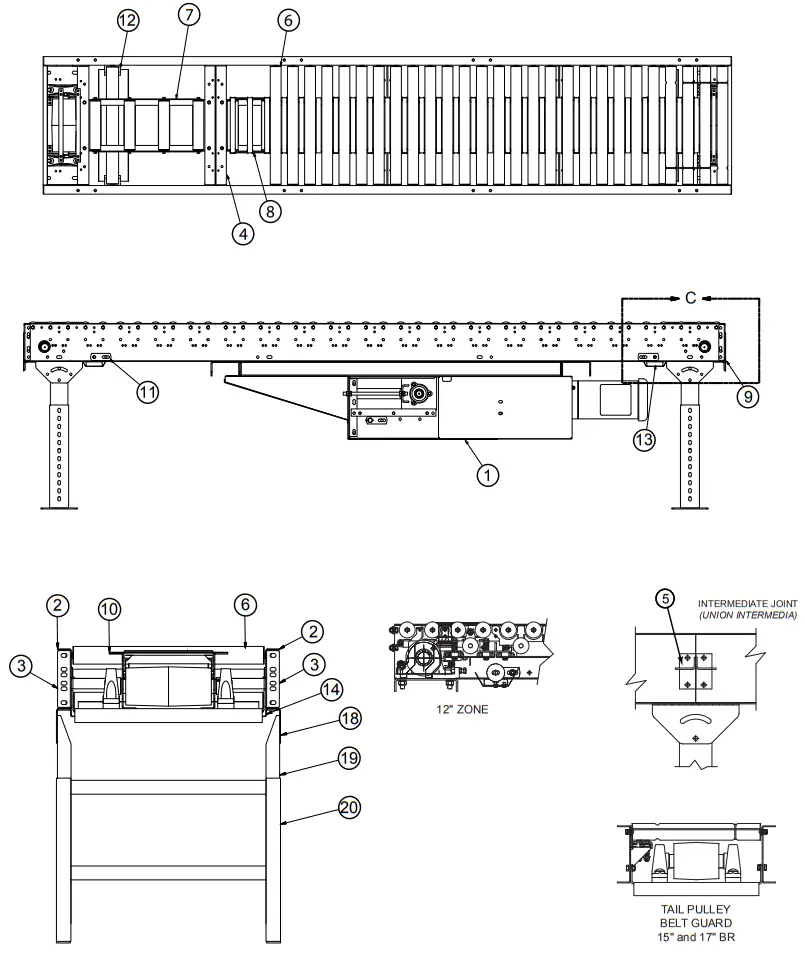
NOTE: ITEM 9 (END GUARD) REMOVED FOR CLARITY
8″ Center Drive Assembly
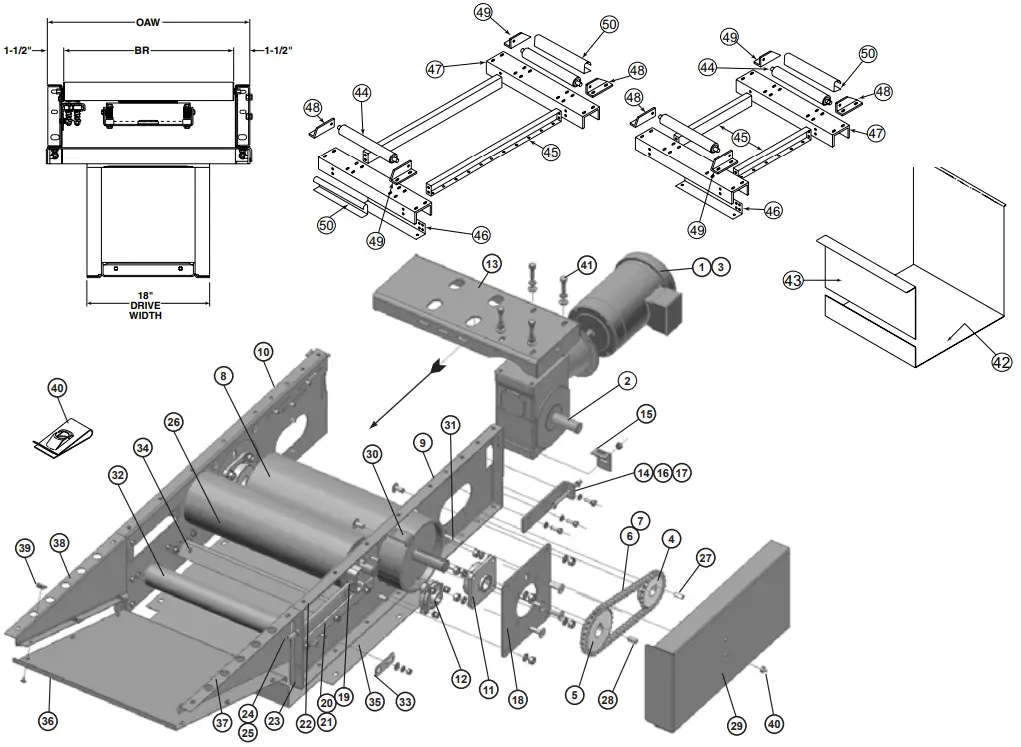
** Based on Standard Speed
| Ref. No. | Part No. | Description |
| 1 | — | Motor-C-Face |
| — | 030.7134 | 1/2 HP—230/460 VAC—3 Ph.—60 Hz.—TEFC |
| — | 030.7324 | 1 HP—230/460 VAC—3 Ph.—60 Hz.—TEFC |
| — | 030.7534 | 2 HP—230/460 VAC—3 Ph.—60 Hz.—TEFC |
| 2 | — | Speed Reducer** |
| — | R-00153-30R | 4AC—RH—30:1 Ratio |
| — | R-00164-30R | 5AC—RH—30:1 Ratio |
| 3 | — | Coupling Kit-Motor To Reducer |
| — | B-09179-B | 1/2 — 1 HP |
| — | B-09179-C | 1-1/2 — 2 HP |
| 4 | — | Sprocket-Reducer** |
| — | 028.133 | 50B14 x 1 in. Bore (4AC) |
| — | 028.1342 | 50B16 x 1-1/4 in. Bore (5AC) |
| 5 | — | Sprocket—Drive Pulley** |
| — | 028.13836 | 50B28x 1 7/16 in. Bore (4AC) |
| — | 028.111523 | 50B32x 1 7/16 in. Bore (5AC) |
| 6 | 029.101 | #50 Riveted Roller Chain |
| 7 | 029.201 | Connector Link—#50 Roller Chain |
| 8 | SA-040301 | 8 in. Dia. Ctr. Dr. Pulley (Fully Lagged) (Specify OAW) |
| 9 | PT-089429-R | Drive Plate Assembly—RH |
| 10 | PT-089429-L | Drive Plate Assembly—LH |
| 11 | 010.203015 | 4-Bolt Flange Bearing—1-7/16 in. Bore |
| 12 | 010.103 | 3-Bolt Flange Bearing—1-3/16 in. Bore |
| 13 | WA-026619 | Motor Base Weldment (Specify OAW) |
| 14 | PT-089434 | Motor Base Take-up |
| 15 | PT-089438 | Motor Base Take-up Angle |
| 16 | 040.313 | Motor Base Take-Up Bolt—3/8-16 x 5 in. Long |
| 17 | 041.300 | Motor Base Hex Jam Nut—Heavy-3/8-16 |
| 18 | PT-090795 | Bearing Plate Center Drive |
| 19 | WA-027027 | Take-Up Plate Weldment |
| Ref. No. | Part No. | Description |
| 20 | PT-089435 | Bearing Guide Spacer |
| 21 | PT-089436 | Bearing Guide |
| 22 | PT-089437 | Upper Bearing Guide |
| 23 | PT-090368 | Take-Up Angle |
| 24 | 044.116011 | Take-Up Bolt—1/2-13 x 11 in. Long |
| 25 | 041.201 | Hex Jam Nut—1/2-13 |
| 26 | WA-027034 | 6 in. Dia. Take-Up Pulley (Specify OAW) |
| 27 | 090.203 | Shaft Key—1/4 in. Sq. x 1 in. Long |
| 28 | 090.204 | Shaft Key—3/8 in. Sq. x 1 in. Long |
| 29 | PT-089430 | Chain Guard |
| 30 | PT-092699 | Guard Bracket |
| 31 | 040.3125 | Hex Head Cap Screw 3/8-16 x 4 1/2 in. Long |
| 32 | B-17254-015 | 2-1/2 in. Dia. Heavy Duty Snub Idler |
| 33 | B-04842 | 11/16 in. Hex Idler Bracket |
| 34 | B-03916-0240H | Bed Spacer (Specify Drive Width) |
| 35 | PT-090465 | Bottom Guard (Specify OAW) |
| 36 | B-08337 | Bottom Angle Guard (Specify OAW) |
| 37 | B-08338-R | Side Guard-RH |
| 38 | B-08338-L | Side Guard-LH |
| 39 | 049.310 | U-Type Speed Nut-1/4-20 |
| 40 | 041.919 | Acorn Nut, 3/8-16 |
| 41 | 049.503 | Hardened Hex Bolt, 3/8-16 x 1 in. Long |
| 42 | PT-090465 | Bottom Guard – Short |
| 43 | PT-091785 | Front Guard |
| 44 | B-03894 | 2-1/8 in. O.D. Roller Assembly (Specify BR) |
| 45 | — | Drive Attachment Side Channel Weldment |
| — | B-12743 | Short Drive Guard |
| — | B-12744 | Long Drive Guard |
| 46 | PT-048145 | Mounting Angle (Specify BR) |
| 47 | PT-048144 | Cross Channel (Specify BR) |
| 48 | PT-054575-R | Snub Roller Bracket-RH |
| 49 | PT-054575-L | Snub Roller Bracket-LH |
| 50 | PT-054572 | Snub Roller Guard (Specify BR) |
 HYTROLPARTS.COM
“Building Relationships One Conveyor Part at a Time”
[email protected]
www.HytrolParts.com
Use code HYPMANUAL for free shipping on your first order at HytrolParts.com
 Hytrol Conveyor Parts & Accessories – HytrolParts.com
 Hytrol Conveyor Parts & Accessories – HytrolParts.com