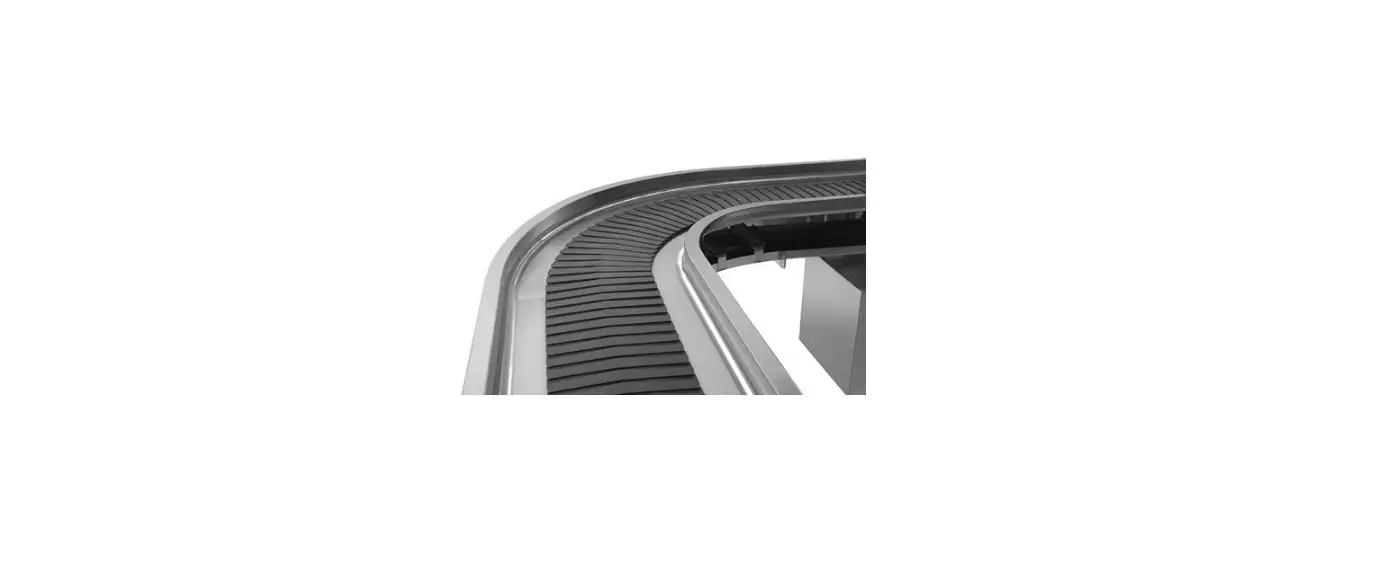
R Portable Compact Belt Conveyor
Product Information
Model: R
Date: April 2017
Bulletin No.: 703
Supercedes: July 2007
Ambient Temperature: Degrees F 20-40, 40-100,
100-120
SAE: 20, 30, 40
ISO: 46 or 68, 100, 150
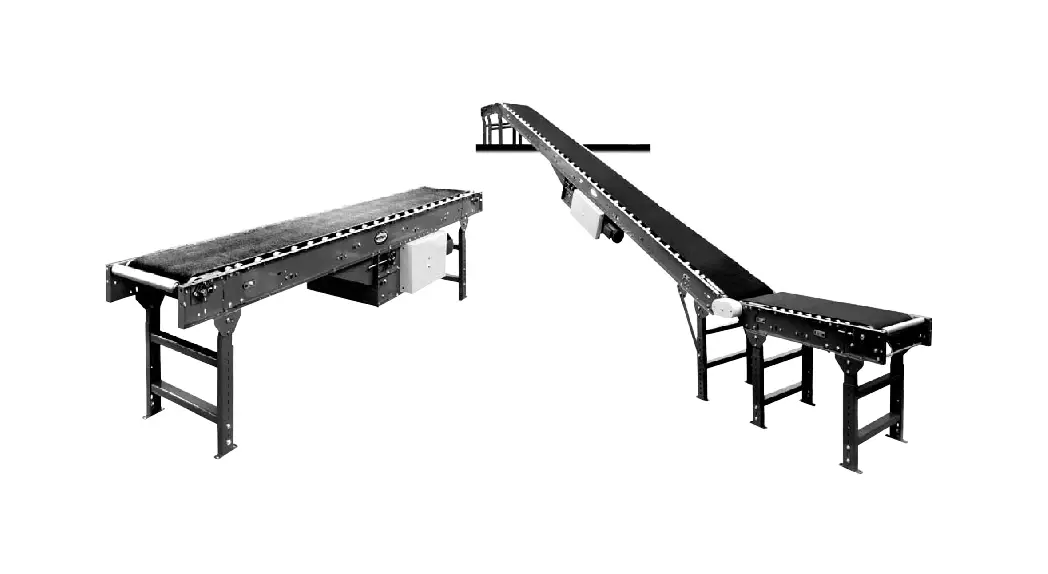
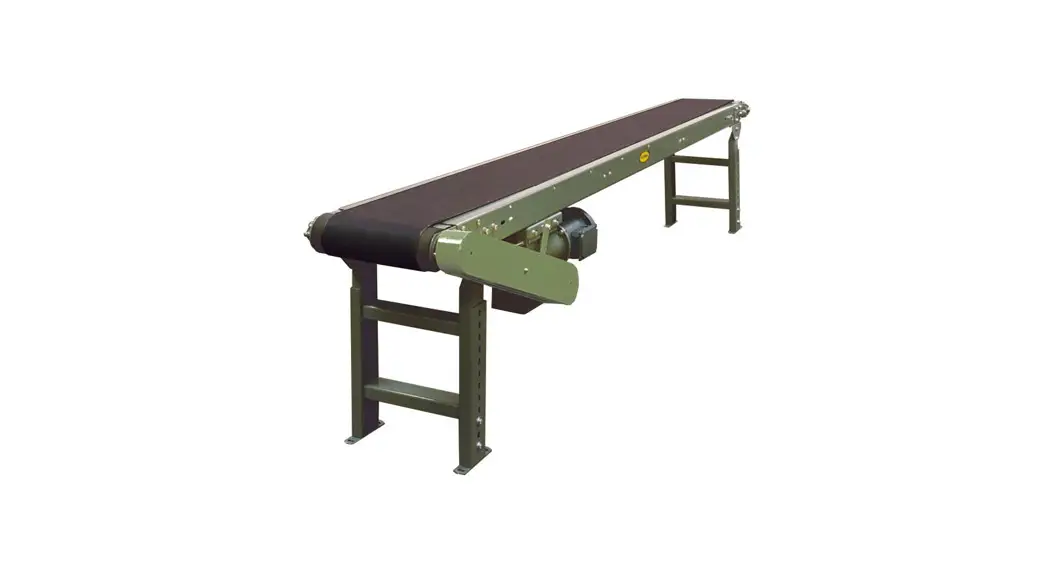
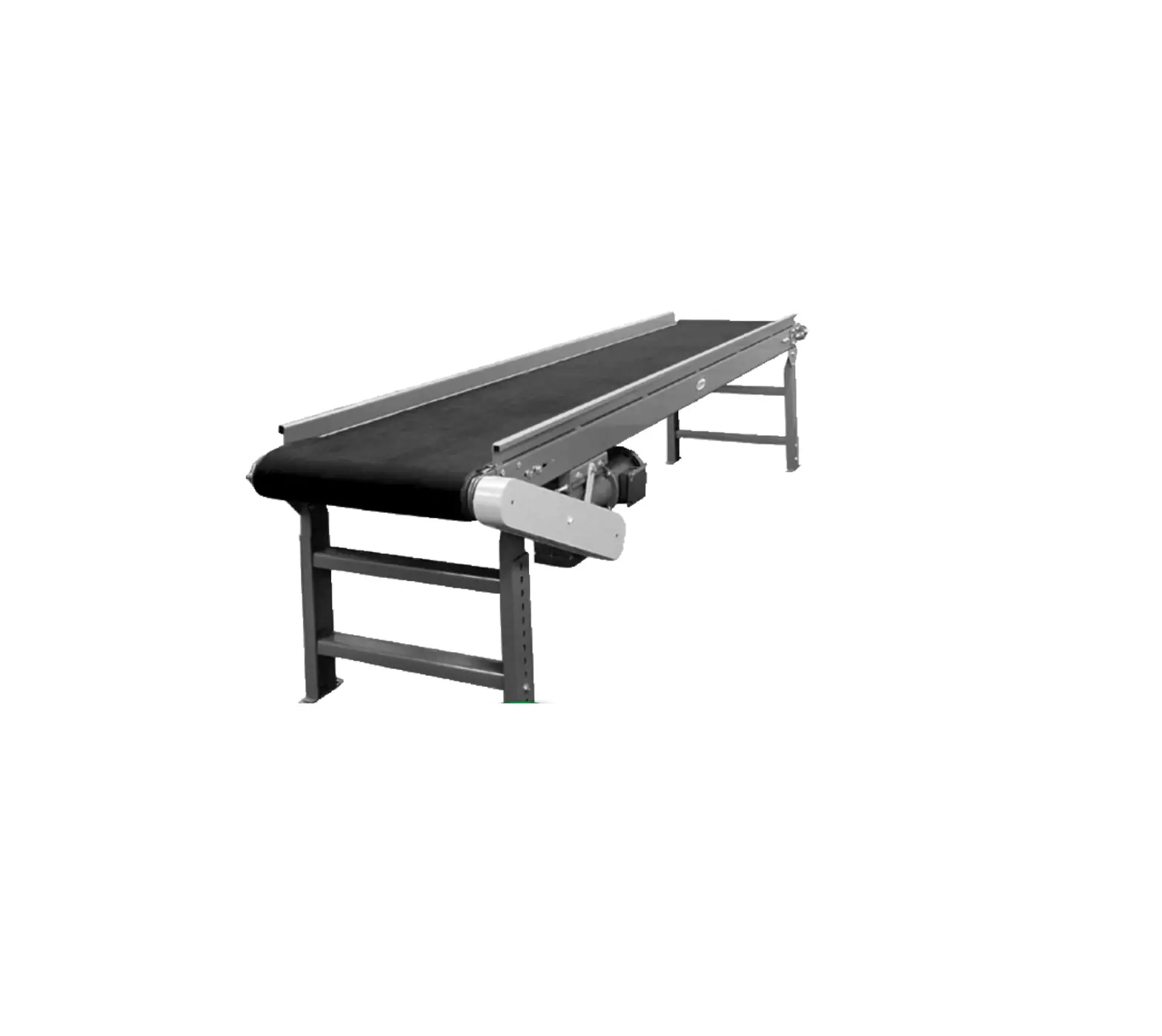
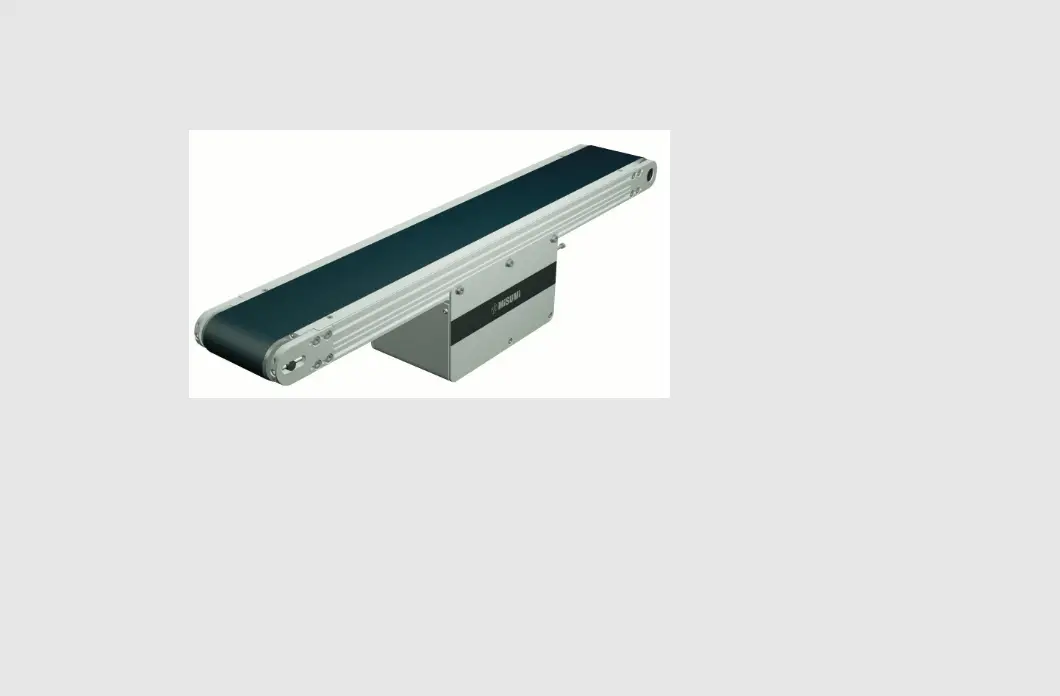
Description: MODEL R – ALUMINUM PORTABLE
COMPACT BELT CONVEYOR
Assembly/Operating Instructions
- Remove the conveyor from the wood crate. Model R is completely
assembled in its full length. - To operate, ensure that the belt is free before running. Check
for any loose, foreign pieces that may have dropped into the
conveyor during shipping. - Plug the conveyor into an electrical outlet, making sure the
correct voltage and power are available.
MOTOR
The standard motor is 115/230 Volt-Single Phase. It will be
wired for 115 volts unless otherwise specified. Avoid weak lighting
circuits and long extension cords. Heavy power wiring will ensure
better motor performance and enable the conveyor to carry the rated
loads.
Lubrication
The drive chain is pre-lubricated from the manufacturer by a hot
dipping process that ensures total lubrication of all components.
However, continued proper lubrication will greatly extend the
useful life of every drive chain.
Drive Chain lubrication serves several purposes including:
protecting against wear of the pin-bushing joint, lubricating
chain-sprocket contact surfaces, and preventing rust or
corrosion.
Tracking Lower Powered Feeder Section
Follow the same procedure as the main conveyor belt. The drive
pulley is the 5 in. pulley with a chain drive from the main
conveyor. The snub idler is mounted inside the feeder section
bed.
Use code HYPMANUAL for free shipping on your first order at
HytrolParts.com
Model R Parts List
Bed Width: 18
Belt Width: 12
Taper: 6-1/2 to 8
Recommended Spare Parts List Highlighted in
Gray
| Ref. No. | Part No. | Description |
|---|---|---|
| 1 | — | Motor–C-Face, Foot Mounted 1/2 HP 115/230VAC-1 Ph–60 Hz TENV |
| 2 | 030.2016 | 1 HP 115/230VAC-1 Ph–60 Hz TEFC Reversing Drum Switch (1 Ph.–NEMA 1) |
Use code HYPMANUAL for free shipping on your first order at
HytrolParts.com
Contact Information:
Email: [email protected]
Website: www.HytrolParts.com
ASSEMBLY/OPERATING INSTRUCTIONS WITH PARTS LIST
Bulletin No. 703
MODEL
R
April 2017
(Supercedes July 2007)
Ambient Temperature Degrees F 20-40 40-100 100-120
SAE
20 30 40
ISO
46 or 68 100 150
MODEL “R” — ALUMINUM PORTABLE “COMPACT” BELT CONVEYOR
Remove conveyor from wood crate. Model “R” is completely assembled in its full length.
TO OPERATE–Be sure the belt is free before running. Check for any loose, foreign pieces which could have dropped into conveyor during shipping. Plug into electrical outlet, making sure correct voltage and power is available.
MOTOR– The standard motor is 115/230 Volt-Single Phase. It will be wired for 115 volts unless otherwise specified. Avoid weak lighting circuits and long extension cords. Heavy power wiring will insure better motor performance and enable conveyor to carry the rated loads.
TO LUBRICATE–The drive chain is pre-lubricated from the manufacturer by a hot dipping process that ensures total lubrication of all components. However, continued proper lubrication will greatly extend the useful life of every drive chain.
Drive Chain lubrication serves several purposes including: protecting against wear of the pin-bushing joint, lubricating chain-sprocket contact surfaces, and preventing rust or corrosion.
For normal operating environments, lubricate every 2080 hours of operation or every 6 months, whichever comes first. Lubricate with a good grade of non-detergent petroleum or synthetic lubricant (i.e., Mobile 1 Synthetic). For best results, always use a brush to generously lubricate the chain. The proper viscosity of lubricant greatly affects its ability to flow into the internal areas of the chain. Refer to the table below for the proper viscosity of lubricant for your application. The drive chain’s lubrication requirement is greatly affected by the operating conditions. For harsh conditions such as damp environments, dusty environments, excessive speeds, or elevated temperatures, it is best to lubricate more frequently. It may be best, under these conditions, to develop a custom lubrication schedule for your specific application. A custom lubrication schedule may be developed by inspecting the drive chain on regular time intervals for sufficient lubrication. Once the time interval is determined at which the chain is not sufficiently lubricated, lubricate it and schedule the future lubrication intervals accordingly.
DRIVE ADJUSTMENT–To insure maximum rated load capacity to drive pulley, check V-belt and roller chain tension. Tension in V-belt from the motor to first 2-step pulley is increased by tightening eye bolt to motor guard. Second V-belt is tightened by loosening jack shaft end bolts on outside of conveyor bed and moved on threaded locating shaft. First roller chain is tightened in the same manner. Be sure end bolts are tight after adjusting. The last roller chain is tightened by moving drive pulley out. Bearings are mounted in slotted holes.
BELT TENSION–To insure maximum rated load capacity on conveyor belt, maintain enough tension so that drive pulley will not slip under belt when carrying full load. Screw take-ups on tail pulley will tighten belt. Because of climactic conditions or after lengthy service, it may be necessary to shorten conveyor belt. A short additional piece of belt (called a “Dutchman”) is inserted and can be removed when the limit of screw take-up is reached. If more take-up is required, cut and re-lace conveyor belt to maintain proper belt tension.
TRACKING THE BELT–All conveyors are assembled and run at the factory, and the belt is tracked before shipment. In the event the belt does not track, follow these instructions: Check conveyor bed section for alignment (no twist or bend). Check drive pulley and tail pulley to insure squareness with conveyor bed. Drive pulley shaft bearings can be moved. Slotted mounting holes are provided in drive plates. Take-up screw adjusts tail pulley. For belt running in forward direction (toward drive pulley), if belt runs to the left, move side of tail pulley out (away from the drive end). Use screw take-up. Move opposite side when belt runs to the right. For belt running in reverse direction (away from drive pulley), if belt runs to the left, move right side of snub idler (located directly behind drive pulley) back (away from drive). When belt is running off to the right, move opposite side.
TRACKING LOWER POWERED FEEDER SECTION–Follow same procedure as main conveyor belt. Drive pulley is the 5 in. pulley with chain drive from main conveyor. Snub idler is mounted inside feeder section bed.
Use code HYPMANUAL for free shipping on your first order at HytrolParts.com
Model “R” Parts Drawing
17 19 15 29 37 28 39 36 23
44 38 33 34
12
27 31 27
26 30 26 50
32 35
45
25 24
18
13 14
10 12 16 17
49 9 1 15 3 5 6
41 69
2
40 11
50 7 8
47 45
43 48
53 46
22 21 14
20
47 42 42
56 52
54
43 48
55
51
57
49
60 61 63 64
59 65
19
66 67 68
62
50
58
“Building Relationships One Conveyor Part at a Time” 2
Use code HYPMANUAL for free shipping on your first order at HytrolParts.com
[email protected] | www.HytrolParts.com
Model “R” Parts List
18″ BED WIDTH
12″ BELT WIDTH
6-1/2″ TO 8″ TAPER
RECOMMENDED SPARE PARTS LIST HIGHLIGHTED IN GRAY
Ref. No.
1 — — 2 3
4 5 6 7 8
9 10 11 12 13
14 15 16 17 18
19 20 21 22 23
24 25 26 27 28
29 30 31 32 33
34 35 36 37 38
Part No.
— 030.2016 030.4014 032.103 034.110
034.101 035.101 035.102 B-00251 B-02331
B-01542-018 020.100 066.107 B-09764 B-00206
011.103 B-00210-018
098.158 049.304 066.106
B-01750 B-00212 026.1275 090.300 098.157
044.105 041-300 029.100 029.200 B-01286
B-00217 010.400 010.401 B-01489 B-00629
098.150 010.200 B-00876 B-09237-143 B-00231
Description
Motor–C-Face, Foot Mounted 1/2 HP 115/230VAC-1 Ph–60 Hz TENV 1 HP 115/230VAC-1 Ph–60 Hz TEFC Reversing Drum Switch (1 Ph.–NEMA 1) Power Cord–12GA, 5 Conductor
Power Cord w/Wall Plug #034.201 (20 ft. Lg.) Cable Connector–Straight Cable Connector–90 Degree Motor Guard Assembly Motor Mount Assembly
Motor Mount Bar Motor Sheave–2 in. O.D. x 5/8 in. Bore V-Belt (4L290) V-Pulley Assembly–2-Step V-Pulley–2-Step
Bearing–1-5/8 in. O.D. x 3/4 in. Bore Jackshaft–3/4 in. Dia. x 12 in. Long Spacer–3/4 in. I.D. x 1 in. O.D. x 1/2 in. Long External Retaining Ring–3/4 in. Dia. Shaft V-Belt (4L280)
V-Pulley & Sprocket Assembly V-Pulley Only Sprocket–40B17 x 1-7/8 in. Bore Drive Lock Pin–1/4 in. Dia. x 1/2 in. Long Spacer–3/4 in. I.D. x 1 in. O.D. x 1/8 in. Long
Take-Up Rod–3/8-16 x 20-1/2 in. Long Hex Jam Nut–Heavy-3/8-16 #40 Riveted Roller Chain Connector Link–#40 Roller Chain Nip Point Guard
Jackshaft w/40A13 & 40A34 Sprocket Bearing Cartridge–3/4 in. Bore Bearing Stamping, Round-3/4 in. Bore Retainer Plate for Drive Pulley Bearing Sprocket–Drive Pulley-40B28 x 3/4 in. Bore
Spacer–13/32 in. I.D x 3/4 in. O.D.x 3/8 in. Long 4-Bolt Flange Bearing–3/4 in. Bore 6 in. Dia. Drive Pulley 1/7 in. Dia. Snub Idler–Drive End Drive Mount Assembly–RH
Ref. No. Part No. Description
39
B-00232 Drive Mount Assembly–LH
40
—
Drive Bed
—
B-01275 4-1/2 ft. Long
—
B-01271 6 ft. Long
—
B-01272 8 ft. Long
—
B-01276 10 ft. Long
41
B-09708 V-Belt Guard Assembly
42
B-00224-018 Threaded Section Spacer
43
B-00225 Plain Section Spacer
44
B-10130 Bottom Guard
45
B-01075 Drive Hinge Assembly–RH
46
B-01074 Drive Hinge Assembly–LH
47
040.4065 Hex Head Bolt–1/2-13 x 4 in. Long
48
097.106 Hinge Rod
49
B-01982-143 1.9 in. Dia. Return Idler
50
B-00944 7/16 in. Hex Idler Bracket
51
—
Tail Bed
—
B-01278 4-1/2 ft. Long
—
B-01265 6 ft. Long
—
B-01260 8 ft. Long
—
B-01289 10 ft. Long
52
B-01072 Tail Hinge Plate–RH
53
B-01073 Tail Hinge Plate–LH
54
B-00208 Hinge Link
55
B-00258-018 Aluminum Flat Spacer
56
B-00237 Aluminum Angle Strut (Specify Length)
57
090.109 Aluminum Pop Rivet–3/16 in. Dia. x 3/8 in. Long
58
B-00235 Take-Up Mount Assembly–RH
59
B-00236 Take-Up Mount Assembly–LH
60
B-01227-018 4 in. Dia. Tail Pulley
61
B-00240-018 Tail Pulley Shaft
62
041.103 Hex Nut–1/2-13
63
010.403 Bearing Cartridge–1 in. Bore
64
010.405 Bearing Stamping, Triangular–1 in. Bore
65
042.606 Hex Socket Head Screw–5/16-18 x 4 in. Long
66
065.003 Belt-Black Trackmate 120 Roughtop (Spec. Len.)
67
—
UX-1 Clipper Unibar Belt Lacing (Spec. Len.)
68
—
#13 Lacing Pin (Specify Length)
69
090.202 Shaft Key–3/16 in. Sq. x 1 in. Long
“Building Relationships One Conveyor Part at a Time” 3
Use code HYPMANUAL for free shipping on your first order at HytrolParts.com
[email protected] | www.HytrolParts.com
INSTRUCCIONES DE ENSAMBLAJE/OPERACIÓN Y LISTA DE PARTES
MODELO “R” -TRANSPORTADOR DE ALUMINIO PORTÁTIL DE BANDA ANGOSTA
Remueva el transportador del empaque. El Modelo “R” está completamente ensamblado en su longitud total.
PARA OPERAR–Asegúrese que la banda está libre antes de ponerse en marcha. Revise si hay material o piezas ajenas que hayan caído dentro del transportador durante el envío. Conéctelo en el enchufe eléctrico asegurándose de que el correcto voltaje esta disponible.
MOTOR–El motor estándar es 115/230 volts en una fase singular. Será cableado para 115 volts a menos de que se especifique lo contrario. Evite circuitos de alumbrado débil y extensiones largas. Cables de poder pesado asegurarán un mejor funcionamiento del motor y harán posible que el transportador lleve la carga considerada.
PARA LUBRICAR–La cadena motriz ha sido pre-lubricada por el fabricante mediante un proceso de sumersión caliente que asegura una lubricación total de todos sus componentes. Sin embargo, una lubricación apropiada y continua extenderá la vida útil de la cadena motriz considerablemente.
La lubricación de la cadena motriz cumple varios propósitos: proteger contra el desgaste de la unión de pines de la cadena , lubricar las superficies de contacto entre la cadena y el sprocket, y prevenir la oxidación o corrosión.
En operaciones bajo condiciones ambientales normales, lubrique cada 2080 horas de operación o cada 6 meses, lo que ocurra primero. Lubrique con un lubricante sintético (ej. Mobile 1 sintético) o basado en petroleo no-detergente de buen grado. Para mejores resultados, siempre utilice una brocha para lubricar la cadena generosamente. La viscosidad apropiada del lubricante afecta considerablemente el fluido del mismo hacia las áreas internas de la cadena. Refiérase a la siguiente tabla para consultar la viscosidad de lubricante adecuada para su aplicación. El requerimiento de lubricación de la cadena motriz se vé afectado de forma considerable por las condiciones de operación. En condiciones difíciles tales como: ambientes humedos, ambientes con polvo, velocidades excesivas, o temperaturas elevadas, se recomienda lubricar la cadena con más frecuencia. Lo apropiado sería que bajo estas condiciones se establezca un programa de lubricación específico para su aplicación. Este programa podrá llevarse a cabo mediante la inspección de la lubricacion suficiente de la cadena motriz en intervalos regulares de tiempo. Una vez se ha determinado el intervalo en el cual la cadena no se encuentra suficientemente lubricada, lubríquela y programe los intervalos futuros de lubricación de acuerdo al intervalo anterior.
Temperatura Ambiente (Grados Fº) (Grados Cº)
20-40 -07-04 40-100 04-38 100-120 38-49
SAE
20 30 40
ISO
46 or 68 100 150
AJUSTE MOTRIZ–Para asegurar el máximo de carga considerada para la polea motriz, revise la banda “V” y la tensión de la cadena. La tensión en la banda “V”, del motor a la primera polea de 2 pasos, es aumentada al apretar los pernos de argolla al guarda motor. La segunda banda “V” es apretada al aflojar los tornillos exteriores del eje del gato hydraúlico, afuera de la cama del transportador y movido a un eje de rosca. La primera cadena de rodillo es apretada de la misma manera. Asegúrese que los tornillos laterales estén apretados despues del ajuste. La última cadena de rodillo es apretada sacando la polea motriz . Los rodamientos estan montados en las aberturas.
TENSION DE LA BANDA–Para asegurar el máximo de carga considerada en la banda del transportador, mantenga suficiente tensión para que la polea motriz no se resbale bajo la banda cuando se use la carga completa. Los tornillos tensores en la polea de retorno, apretarán la banda. Por condiciones climáticas o después de un largo servicio, podra ser necesario acortar la banda del transportador. Una pieza pequeña adicional de banda (llamada “Dutchman”) es insertada y puede ser removida cuando el límite de los tornillos tensores es alcanzado. Sí más tensión es necesaria, corte y re-enlace la banda del transportador para obtener la tensión correcta.
ALINEACION DE LA BANDA–Todos los transportadores son ensamblados y probados en la fábrica y la banda es alineada antes del envío. En caso de que la banda no esté alineada, haga lo siguiente: revise que la cama del transportador este alineada (que no este doblada o torcida). Revise que la polea motriz y la polea de retorno estén escuadradas con la cama del transportador. Las chumaceras se pueden mover (las aberturas de montaje son provistas en la placa motriz). Los tornillos tensores ajustarán la polea de retorno. Cuando la banda debe correr hacia adelante (hacia la polea motriz), y si esta se desvia hacia la izquierda, saque el lado izquierdo de la polea de retorno (alejándola de la polea motriz). Use los tornillos tensores. Mueva hacia el lado opuesto si la banda se va hacia la derecha. Cuando la banda se usa en sentido contrario (alejandose de la polea motriz) y si esta corre hacia la izquierda, mueva a la derecha el rodillo de alineación (localizado directamente detras de la polea motriz) hacia atrás (alejándolo de la polea motiz). Si la banda se mueve hacia la derecha muevalo hacia el lado opuesto.
ALINEACION DEL ALIMENTADOR MOTORIZADO INFERIOR–
Use el mismo procedimiento de la banda principal del transportador. La polea motriz es la polea de 5 pulgadas de díametro con cadena
motriz del transportador principal. El rodillo de alineación esta montado dentro de la sección de la cama del alimentador.
“Building Relationships One Conveyor Part at a Time”
Use code HYPMANUAL for free shipping on your first order at HytrolParts.com
[email protected] | www.HytrolParts.com
 Hytrol Conveyor Parts & Accessories – HytrolParts.com
 Hytrol Conveyor Parts & Accessories – HytrolParts.com