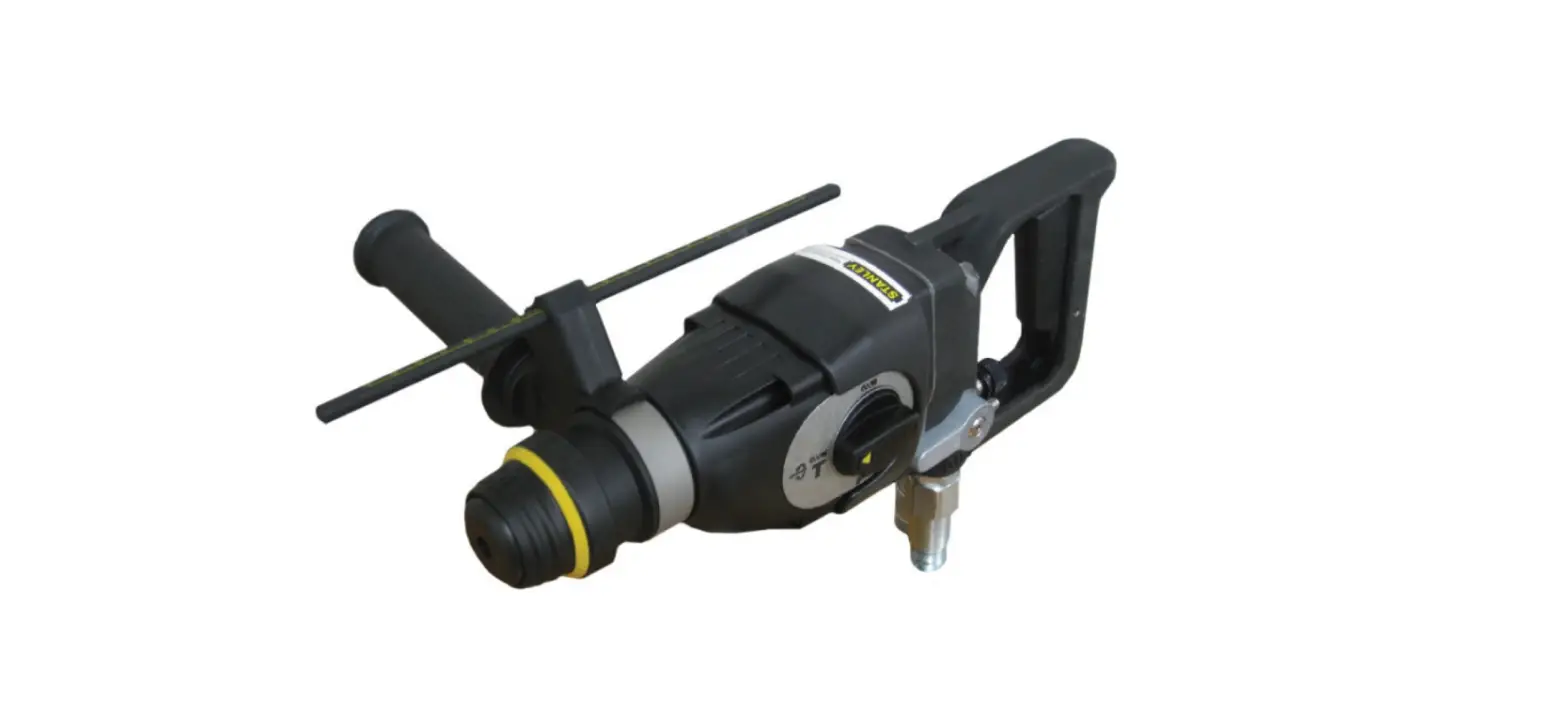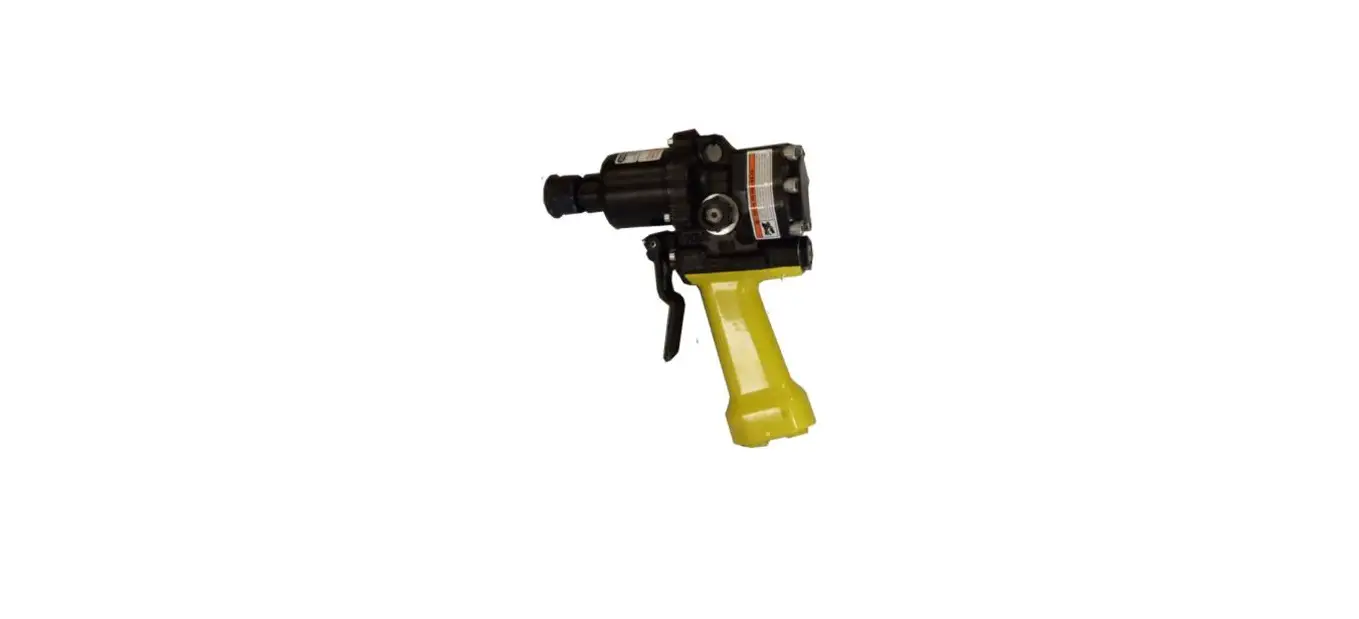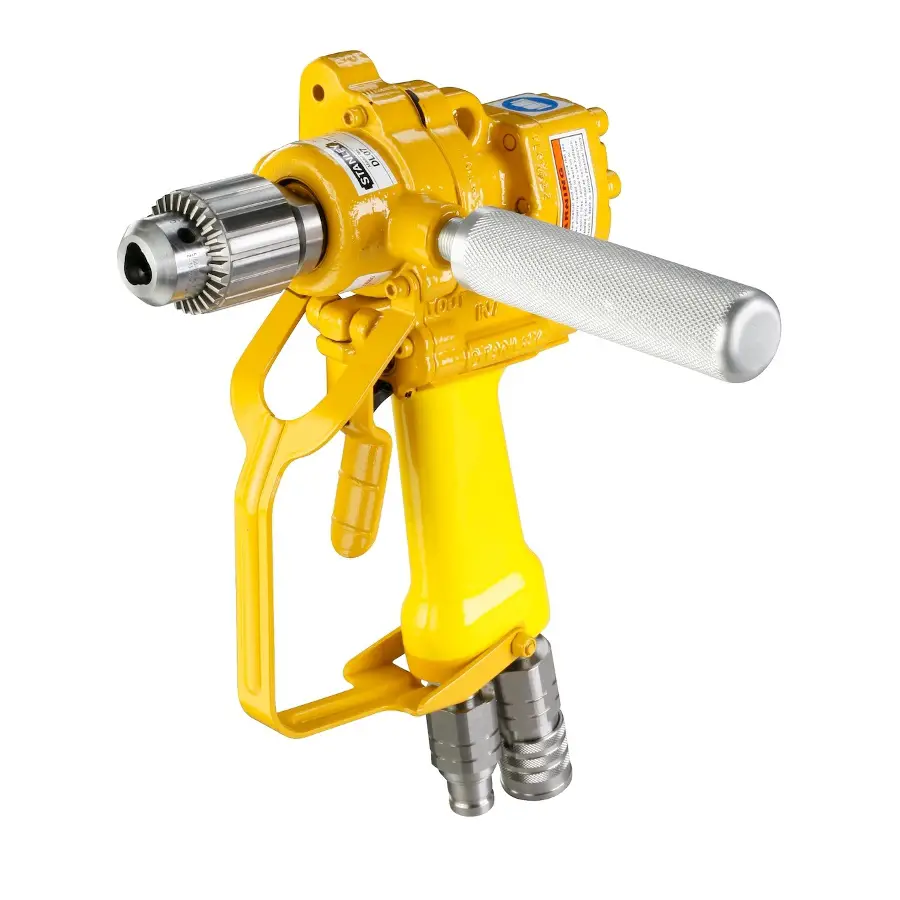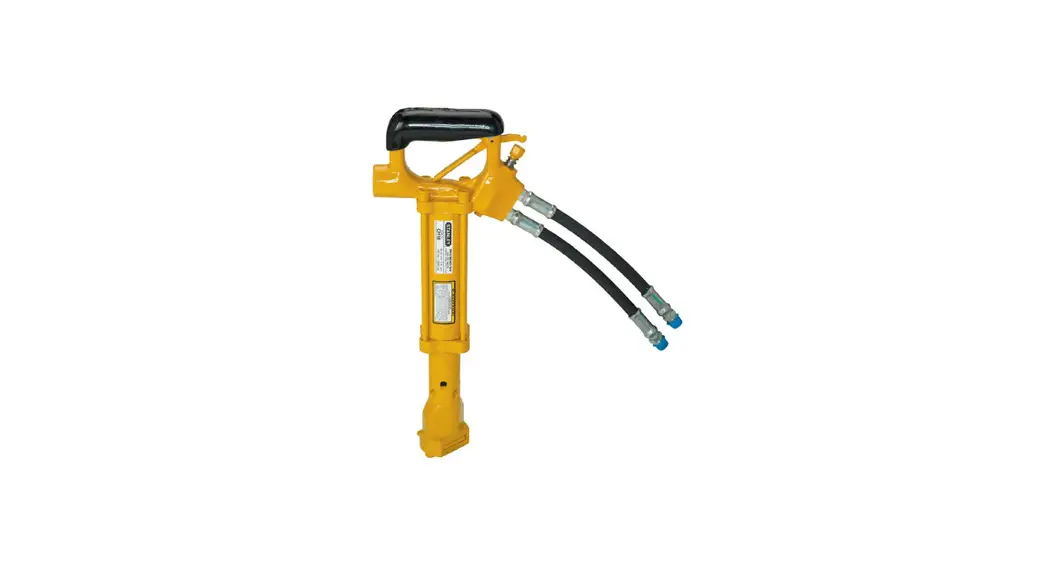
 HD45 Hammer Drill
Installation Guide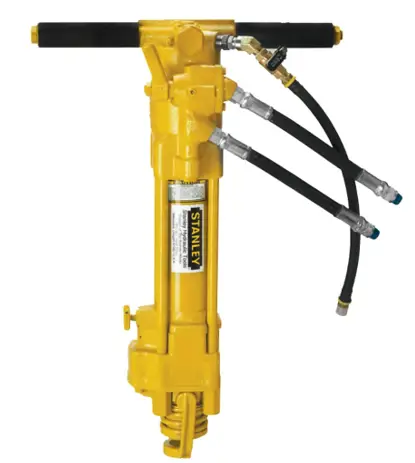
HD45 Hammer Drill
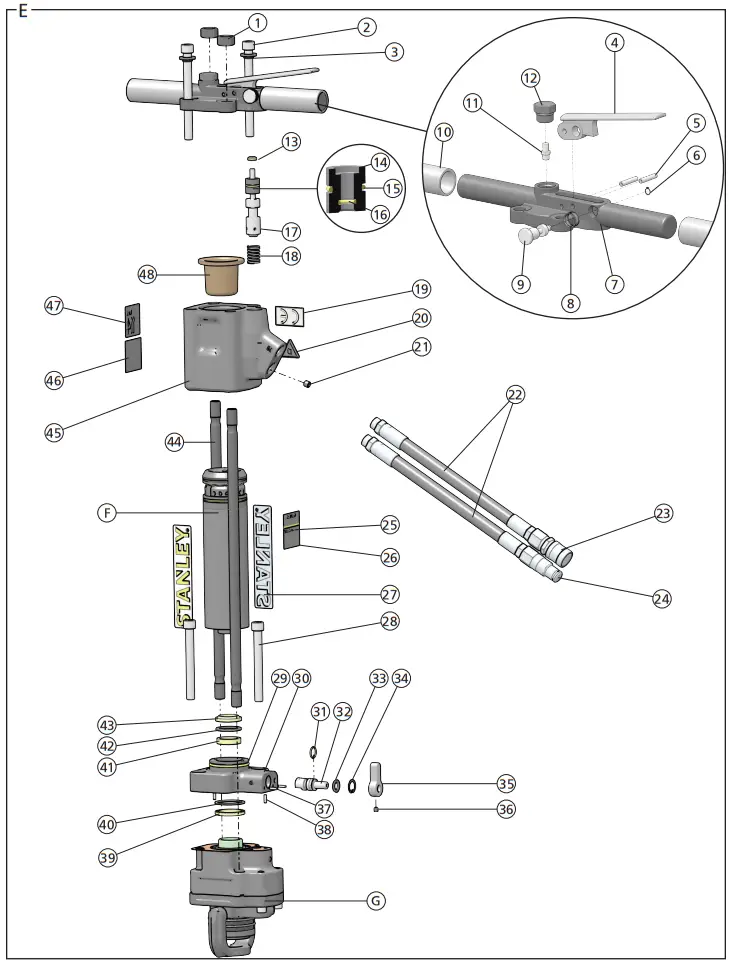
| 3045 Parts Illustration Detail E | ||
| ITEM | P/4 | DESCRIPTION |
| 0437:: | Lock Nut | |
| 2 | 9372 | Capscrew |
| 3 | 25534 | washer |
| • | 4371 | Trigger |
| 7491 | Spool Pin | |
| 6 | 224 | Retaining Rog |
| 7 | 7483 | Handle |
| 11398 | Hardie 11434511001 6 H04531001 | |
| 8 | 7593 | Spring |
| 9 | 7594 | Trigger Lock (HD4511001, HD4531001) |
| 10 | 2494 | Hendle |
| 11 | 20499 | Charge Yoke |
| 12 | 7493 | Charge Plug |
| 13 | 4050 | Rod Wiper* |
| 14 | 4037 | Bushing* |
| 15 | 293 | 0 ring * |
| le | 1307 | 0 ring * |
| 17 | 4077 | -Spool Value |
| 18 | 4058 | Spring |
| 19 | 28322 | CE Decal (HD4511001 & HD4531001) |
| 8017 | General Caution Decal (HD45110B, HD45110D, HD46310) | |
| 20 | 11207 | Circuit Type “D“ Decal (HD4511001, HD4531001) |
| 21 | 5243 | Orifice Plug |
| 22 | 1052 | Hose Assembly |
| 23 | 3977 | Female Copuer |
| 24 | 3973 | Male Coupler |
| 23 | 87773 | Tool Name Tag (HD4511001, HD4531001, HD45310, HD45110B) |
| 26 | 88345 | Importer Decal (HD4511001 & HD4531001) |
| 74770 | Stanley logo Decal | |
| 28 | 4936 | Capscrew |
| 29 | 2027 | 0 ring * |
| 4951 | Drive Motor Control Block | |
| 80 | Dove Motor Control Block 64345314 14045310011 | |
| 31 | 1211 | 0 ring * |
| 32 | 4937 | Motor Control Valve |
| 33 | 4938 | Washer |
| 34 | 4940 | Retaining Ring |
| 35 | 4939 | Laver |
| 30 | 1007 | Set Screw |
| 37 | Roll Pin Roll Pin. | |
| 2900 | ||
| 38 | 1749 | Rad Po |
| 39 | 11190 | Quad Ring* |
| 40 | 11197 | Backup kng* |
| 41 | 4934 | Cup Seal* |
| 42 | 4780 | Washer |
| 14045 Parts Illustration Detail E | ||
| ITEM | P/M | DESCRIPON |
| 43 | 4386 | Cup Seal* |
| 4932 | Side Rod | |
| 5 | Accumulator Vabe Block | |
| 59113 | ||
| z0 | 88347 | Composite Decal (HD4511001, HD4531001) |
| 47 | 81443 | Sand Power Level Deal 00411031. 14045310011 |
| -8 | 7479 | Accumulator Diaphragm |
| G | 30049 | Motet Assembly |
| 30050 | Motor Assembly (HD45310, HD4531001) | |
| SK | 5839 | Seal Kit (*In seal kit) |
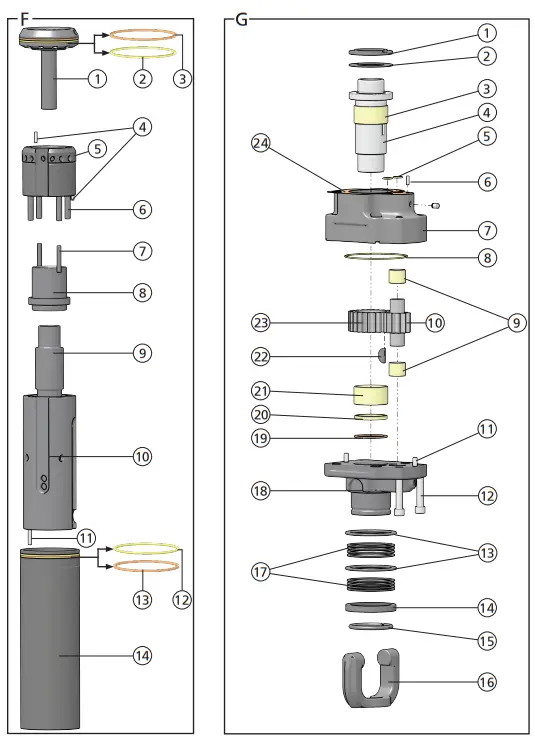
| H045 Flow Sleeve Parte III dttration . Detail F | ||
| ITEM | F/N | DISCRIPOTIS. |
| 4378 | Porting Block | |
| 2 | 4379 | O-ring* |
| 3 | 4381 | Backup Ring* |
| 4 | 2900 | Roll pin |
| 9 | 4380 | Awtomatc Vahe Body |
| 6 | 4000 | Push Pin |
| 7 | 4571 | Push Pin |
| 8 | 4382 | AUTIOMATIC Value |
| 9 | 4934 | Piston |
| 10 | 4384 | Flow Skeet |
| II | 114 | Roll Pin |
| 12 | 4379 | 0nrig* |
| 4381 | Backup Ring* | |
| 14 | 4383 | Flow Sleeve The |
| HD45 Motor Parts Illustration – Detail G | ||
| ITEM | P/N | DISCRIPTION |
| 4949 | Thrust Backup Washer | |
| 2 | 4948 | Thrust Washer |
| 4947 | Bushing | |
| 4 | 4944 | Drive Hex |
| 9 | 18 | 0 ring* |
| 6 | 1749 | Rol Pin |
| 7 | 9970 | Motor Chamber |
| B | 1257 | 0 ring* |
| 3 | 3320 | Bushing |
| 10 | 4033 | Idler Gear |
| 11 | 713 | Dowel Pin |
| 12 | 82 | Capxrew |
| 13 | 4790 | Latch Washer |
| 14 | 4759 | Spring Backup |
| 15 | 4701 | Retaining Ring |
| 16 | 16445 | Latch |
| 17 | 7003 | Wave Spring |
| 18 | 4942 | Motor Plate |
| 19 | 11197 | Backup Ring* |
| 20 | 11190 | Quad Ring* |
| ITEM | P/N | DESCRIPTION |
| 21 | 4947 | Bushing |
| 22 | 4787 | Woodruff Key |
| 23 | 5975 | Drive Gear |
| 6678 | Drive Hex (HD45310, HD4531001) | |
| 24 | 4950 | Gasket* |
Safety Precautions
 The Safety Alert Symbol alerts you to potential personal injury hazards. Obey all safety messages that follow to avoid possible injury or death. DRAGER Indicates an imminently hazardous situation which will result in death or serious injury. WARNING Indicates a potentially hazardous situation which could result in death or serious injury
CAUTION Indicates a potentially hazardous situation which could result in property damage.
Always observe safety symbols. They are included for your safety and for the protection of the tool. WARNING: Read all safety warnings and instructions. Failure to follow warnings and instructions may result in tool damage and/or serious injury.
Warning: To reduce the risk of injury, read the instruction manual.
General
- Do not discard safety instructions. Give to the operator.
- This tool will provide dependable service if operated in accordance with the instructions given in this manual. Read and understand this manual and any stickers and tags attached to the tool and hoses before operation. Failure to do so could result in personal injury or equipment damage.
- Inspect the tool before each use and ensure all decals are legible. Contact STANLEY if replacements are needed.
- Establish a training program for all operators to ensure safe operation. Do not operate the tool unless thoroughly trained or under the supervision of an instructor. Keep out of the reach of children.
- Operators and maintenance personnel shall be able to physically handle the bulk, weight and power of the tool.
- Avoid unsuitable postures as these positions do not allow for counteracting of normal or unexpected movement of the tool, such as a sudden break of the tool bit.
- Do not operate a damaged, improperly adjusted, modified or incompletely assembled tool.
- Do not operate the tool in explosive atmospheres, such as in the presence of flammable liquids, gases or dust. Power tools create sparks which may ignite the dust or fumes.
- Provide adequate ventilation in closed areas when operating a gas or diesel hydraulic power source.
- Do not inspect, carry, clean, change accessories or perform maintenance on the tool while the power source is connected. Accidental engagement of the tool can cause serious injury.
- Ensure work piece is securely fixed. Be aware that failure of the work piece or accessories may generate high velocity projectiles.
- Stay alert, watch what you are doing and use common sense when operating a hydraulic tool. Do not operate this tool if you are tired or under the influence of drugs or alcohol. A moment of inattention while operating hydraulic tools may result in serious injury.
- Assess risks to others around you before operating the tool.
- During operation, do not contact mechanisms, accessories or hardware as they can become very hot or sharp; use your Personal Protection Equipment (PPE).
- Use and maintain the tool as stated in this manual. Misuse of the tool can cause serious injury. Do not modify the tool in any way.
- Supervising personnel should develop additional precautions relating to the specific work area and local safety regulations.
- Never operate the tool if you are unsure about the presence of underground utilities, such as electrical cables, gas pipes, etc. These can cause a hazard if damaged with the tool.
- The tool is not insulated against coming into contact with electric power. Use hose certified as non-conductive.
- Do not overreach. Maintain proper footing and balance at all times when using the tool.
- Slips, trips and falls are major causes of workplace injury. Be observant of hoses lying about the work area, as they can be a tripping hazard.
- Operators must start in a work area without bystanders and must assess the risks to bystanders.
- Operators must be familiar with all prohibited work areas such as excessive slopes and dangerous terrain conditions.
- Only use clean hydraulic fluid, filling equipment and lubricants that have been recommended by STANLEY.
- Ensure tools are working properly and safely by performing preventative maintenance (PM) procedures.
- Repair and service of this tool must only be performed by an authorized and certified dealer.
- Do not force the tool to do the work of a larger tool. Use the correct tool for your application.
- Use only hoses and hose couplings that are rated for a minimum working pressure of 2500 PSI (172 BAR).
- Keep hands away from rotating chuck or drill bits.
- In spite of the application of relevant safety regulations and the implementation of safety devices, certain residual risks cannot be avoided. These risks are: repetitive strain injury due to incorrect posture and risk of pinching fingers when changing tool bit or pressing trigger.
Dust and Fumes
- WARNING: Some dust created by power sanding, sawing, grinding, drilling, and other construction activities contains chemicals known to the State of California to cause cancer, birth defects or other reproductive harm. Some examples of these chemicals are:
- Lead from lead-based paints,
- crystalline silica from bricks and cement and other masonry products, and
- arsenic and chromium from chemically-treated lumber. Your risk from these exposures varies, depending on how often you do this type of work. To reduce your exposure to these chemicals: work in a well ventilated area, and work with approved safety equipment, such as those dust masks that are specially designed to filter out microscopic particles. Protect yourself and those around you. Research and understand the materials you are grinding. Follow correct safety procedures and comply with all applicable national, state or provisional health and safety regulations relating to them, including, if appropriate arranging for the safe disposal of the materials by a qualified person.
- When dust or fumes are created, control them at the point of emission. Direct tool exhaust to minimize disturbance of dust.
- Use respiratory protection in accordance with employers instruction or as required by occupational health and safety regulations.
- Avoid prolonged contact with dust. Allowing dust to get into your mouth, eyes or lay on the skin may promote absorption of harmful chemicals.
- Select and replace tool bits as recommended in order to prevent an unnecessary increase in dust or fumes.
- Keep tool handles dry, clean and free from oil and grease. This will enable better control of the tool.
- Operate and maintain the tool as recommended in this manual to minimize dust.
PPE
- Always wear safety equipment such as impact resistant goggles, ear protection, head protection, breathing protection and safety shoes at all times when operating the tool.
- Hands may be exposed to hazards, impacts, cuts, abrasions and heat. Wear gloves.
- Wear a hardhat if performing overhead work.
- Use PPE that conforms to standards ANSI Z87.1 (Eye and Face Protection), ANSI Z89.1 (Head Protection), ANSI Z41.1 (Foot Protection) and ANSI S12.6 (S3.19) (Hearing Protection).
- Do not wear loose fitting clothing or jewelry when operating the tool. Entanglement, choking, scalping and laceration can occur if loose clothing, personal jewelry, neck wear, hair or gloves are not kept away