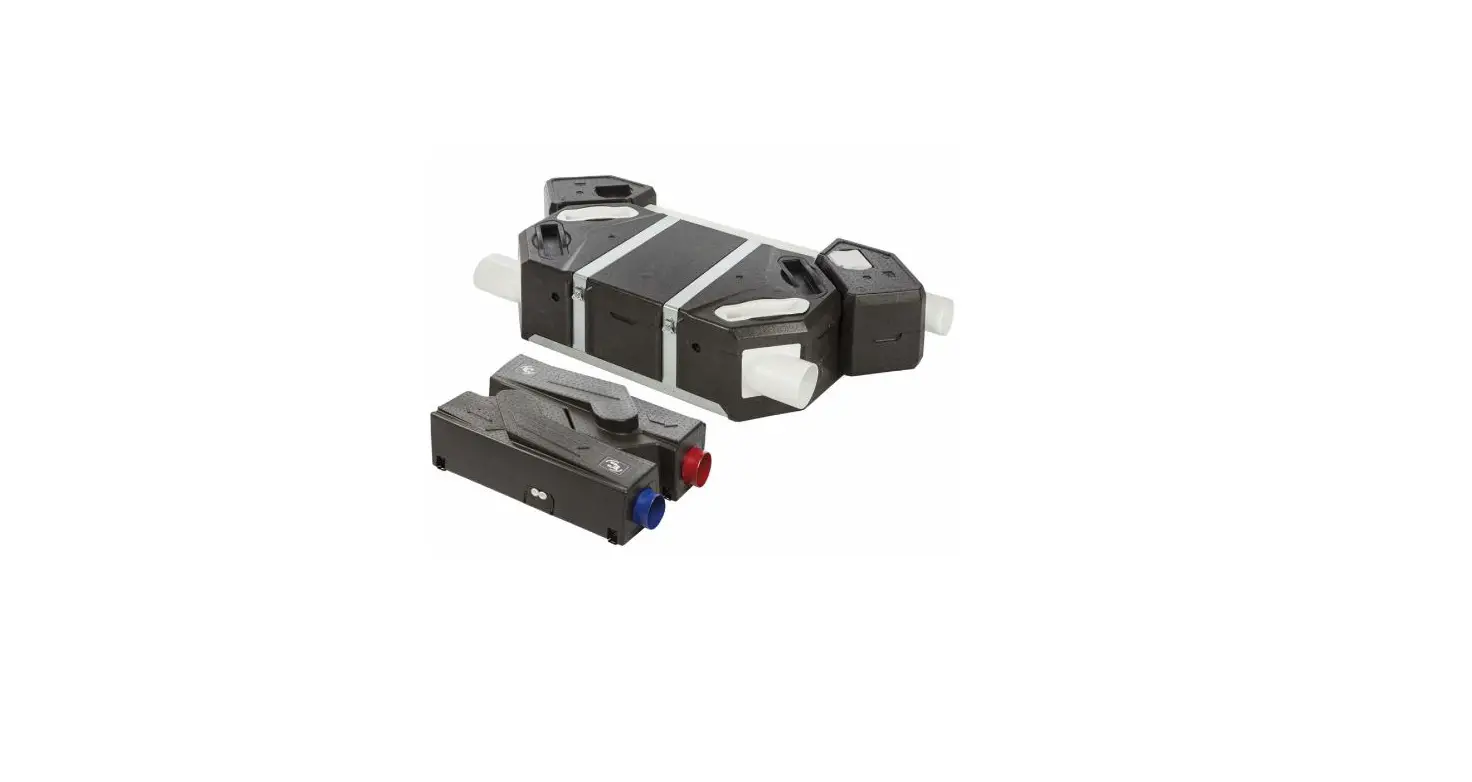
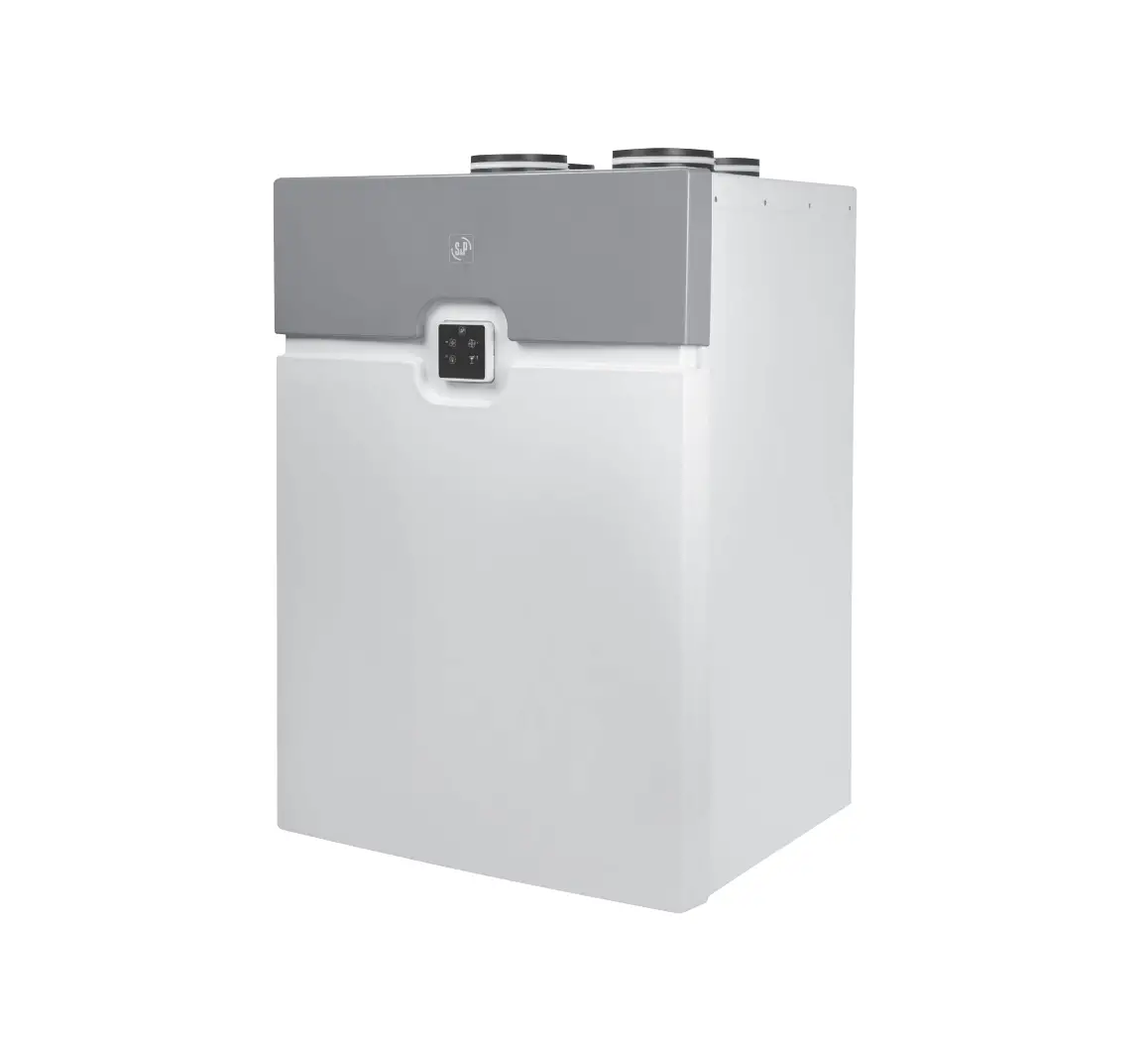
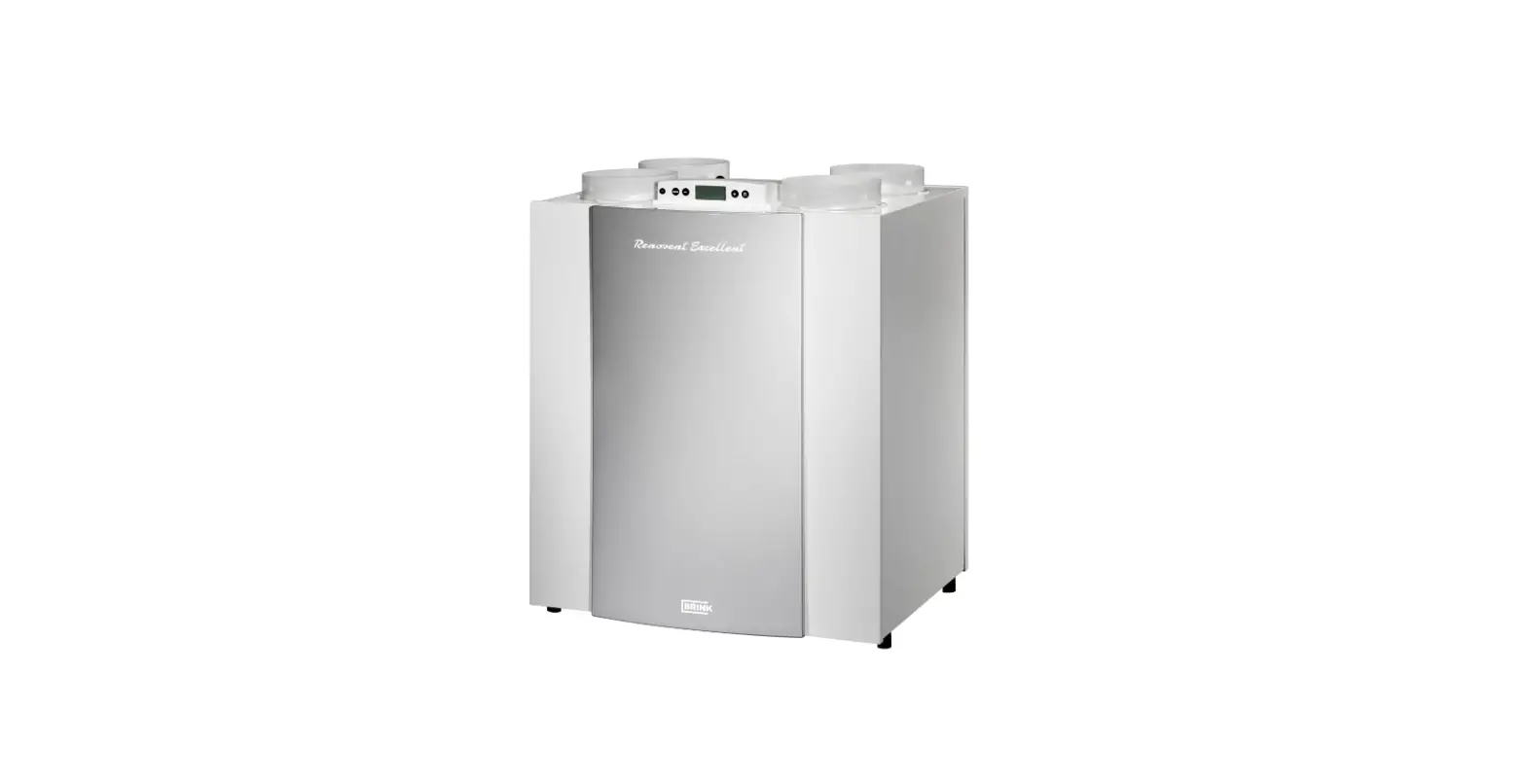
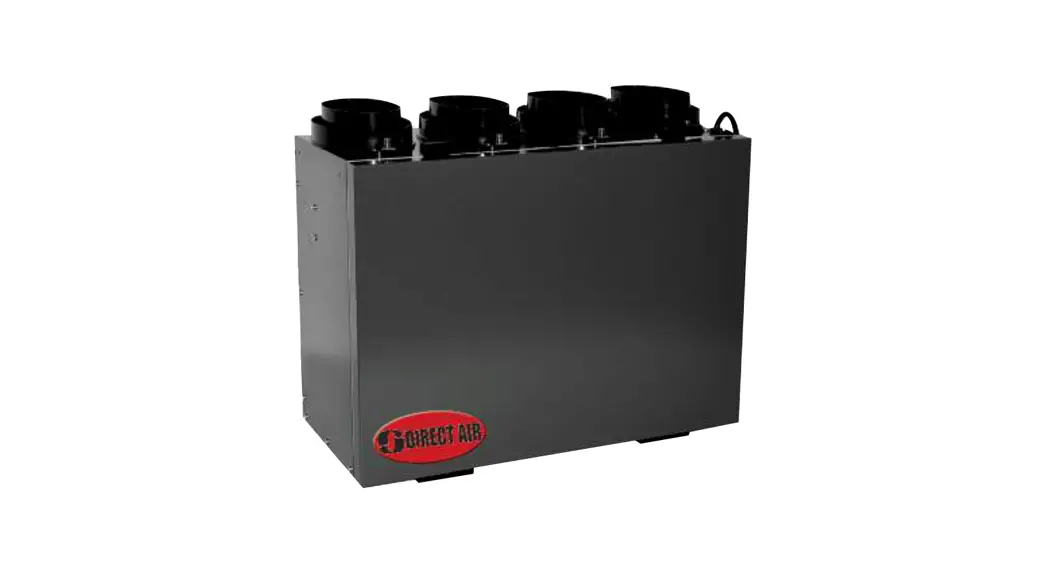
CAD-EPP 400 Heat Recovery Units
Product Information: The product in question is a
CAD-EPP fan designed by Soler & Palau. It is designed to
perform various functions, as described in the table of contents of
the user manual. The fan has features such as speed control inputs,
pre-defined fixed speed control, remote switching, fan-fail
detection by fault sensing, and analog switch outputs. It also has
options for additional accessories such as the S&P REB-EPP and
S&P AIRSENS. Product Usage Instructions: 1.
Transport and Handling: Follow the recommended guidelines for
transporting and handling the product. 2. Safety Rules: 2.1. On
Installation: Follow the safety rules provided during the
installation process. 2.2. At Start Up: Ensure proper safety
measures are taken when starting up the fan. 3. Mechanical
Installation: The product can be mounted in two orientations –
ceiling or wall. 3.1. Ceiling Mounting: Follow the instructions
provided for ceiling mounting. 3.2. Wall Mounting: Follow the
instructions provided for wall mounting. 4. Maintenance Access:
Access to the product’s motor and filters is through the main roof.
Ensure suitable access is maintained at all times. 5. Condensation
Drain Pipe: Follow the instructions provided for installing and
maintaining the condensation drain pipe. 6. Component Locations:
Familiarize yourself with the locations of various components of
the product. 7. Connections: Follow the instructions provided for
making necessary connections to the product. 8. Control Wiring:
7.1. Remote Enable (Volt-free Contact): Follow the instructions
provided for wiring remote enable function. 7.2. 0-10V Input: The
fan speed can be controlled by a 0-10V input signal. Increase or
decrease the control voltage to adjust the fan speed accordingly.
7.3. S&P REB-EPP (0-10V): The fan speed can be controlled by
the CAD-EPP using the S&P REB-EPP accessory. Refer to the
REB-EPP booklet for more information. 7.4. S&P AIRSENS (0-10V):
The fan speed can be controlled by the AIRSENS sensor, which
adjusts the control voltage based on pollutants or humidity in the
air. Different variations of AIRSENS are available for purchase
(CO2, RH, VOC). Refer to the AIRSENS booklet for more information.
7.5. Boost (Volt-free Contact): Follow the instructions provided
for wiring the boost function. 7.6. S&P AIRSENS (Boost): The
fan speed can be controlled by the AIRSENS sensor using the boost
function. Different variations of AIRSENS are available for
purchase (CO2, RH, VOC). Refer to the AIRSENS booklet for more
information. 7.7. Purge (Volt-free Contact): Follow the
instructions provided for wiring the purge function. 7.8. S&P
AIRSENS (Purge): The fan speed can be controlled by the AIRSENS
sensor using the purge function. Different variations of AIRSENS
are available for purchase (CO2, RH, VOC). Refer to the AIRSENS
booklet for more information. Please refer to the complete user
manual for detailed instructions and additional information on
using the product.
UK INSTALLATION AND WIRING GUIDE
TO BE USED IN CONJUNCTION WITH THE MAIN INSTRUCTION MANUAL
1
2
ENGLISH
I
INDEX
1. RECOMMENDATIONS ………………………………………………………………………………………………………………………. 4 2. GENERAL……………………………………………………………………………………………………………………………………………. 4
2.1. SPEED CONTROL INPUTS ………………………………………………………………………………………………………… 4
2.2. PRE-DEFINED FIXED SPEED CONTROL …………………………………………………………………………………. 4 2.3. REMOTE SWITCHING……………………………………………………………………………………………………………….. 4 2.4. FAN-FAIL DETECTION BY FAULT SENSING…………………………………………………………………………… 4 2.5. ANALOG SWITCH OUTPUTS…………………………………………………………………………………………………….. 4 3. TRANSPORT AND HANDLING…………………………………………………………………………………………………………. 4 4. SAFETY RULES ………………………………………………………………………………………………………………………………….. 5 4.1. ON INSTALLATION……………………………………………………………………………………………………………………. 5 4.2. AT START UP ……………………………………………………………………………………………………………………………… 5 5. MECHANICAL INSTALLATION………………………………………………………………………………………………………… 6 5.1. CEILING MOUNTING ………………………………………………………………………………………………………………… 6 5.2. WALL MOUNTING ……………………………………………………………………………………………………………………… 6 5.3. MAINTENANCE ACCESS……………………………………………………………………………………………………………. 7 5.4. CONDENSATION DRAIN PIPE …………………………………………………………………………………………………. 7 5.5. COMPONENT LOCATIONS………………………………………………………………………………………………………… 8 6. CONNECTIONS………………………………………………………………………………………………………………………………….. 9 7.1. REMOTE ENABLE (VOLT-FREE CONTACT) …………………………………………………………………………… 10 7.2. 0-10V INPUT ……………………………………………………………………………………………………………………………. 11 7.3. S&P REB-EPP (0-10V)…………………………………………………………………………………………………………….. 12 7.4. S&P AIRSENS (0-10V) ……………………………………………………………………………………………………………. 13 7.5. BOOST (VOLT-FREE CONTACT) …………………………………………………………………………………………….. 14 7.6. S&P AIRSENS (BOOST) ………………………………………………………………………………………………………….. 15 7.7. PURGE (VOLT-FREE CONTACT) …………………………………………………………………………………………….. 16 7.9. S&P AIRSENS (PURGE) ………………………………………………………………………………………………………….. 17 7.10. FAULT RELAY………………………………………………………………………………………………………………………… 18 8. ROUTINE MAINTENANCE ……………………………………………………………………………………………………………… 19 9. DEFROST PROTECTION …………………………………………………………………………………………………………………. 19 10. FREE-COOLING……………………………………………………………………………………………………………………………. 19 11. MAINTENANCE ……………………………………………………………………………………………………………………………. 19
3
1. RECOMMENDATIONS
You have purchased a CAD-EPP fan designed specifically by Soler & Palau to perform the functions described in the table of contents.
Before you install and start up this product, please read this instruction book carefully because it contains important information for your safety and the safety of users during installation, use and maintenance. Once installation is complete, please pass the instruction book on to the end user. Please check that the equipment is in perfect condition when you unpack it since any factory defect is covered under the S&P guarantee. Please also check that the equipment is the one that you have ordered and that the information on the instruction plate meets your requirements.
2. GENERAL
2.1. SPEED CONTROL INPUTS
· Variable Speed Control · Manual variable speed control via an optional secondary REB-EPP controller, or · Automated variable speed control via a 0-10V signal from an external source.
2.2. PRE-DEFINED FIXED SPEED CONTROL
· An upon-installation defined duty either continuous or on-demand (triggered by an external switch), or · One, two or three speeds to provide a minimum/boost/purge speed ventilation system, the boost and purge speeds
being selected by an external switch/sensor (Volt-free).
2.3. REMOTE SWITCHING
· The switching between the (up to) three speeds can be activated by up to three Volt-free contacts, or · On/Off Volt-Free Contact
2.4. FAN-FAIL DETECTION BY FAULT SENSING
· Automatic monitoring of the impeller rotation via the Tacho pulse (frequency generator) signal. · Sixty seconds time-delay of fault detection on start-up to allow input levels to normalise.
2.5. ANALOG SWITCH OUTPUTS
· Output to BMS of fan fault indicated by an individual set of contacts capable of controlling a maximum load of up to 230 Volts at 1 Amp.
3. TRANSPORT AND HANDLING
· The equipment packaging has been designed to withstand normal transport conditions. The equipment must not be transported without its original packaging as it could become damaged.
· The product must be stored in its original packaging and in a dry and clean place until it is installed. Do not accept any equipment that is not supplied in its original packaging or that shows signs of having been tampered with.
· Prevent the packaging from falling or being knocked · Do not place heavy loads on top of it. · When handling heavy products, adequate lifting equipment techniques and equipment should be used to avoid
injury. · Do not lift a product by pulling the wires, terminal/control enclosure, shutter or impeller to avoid damaging the
product.
4
4. SAFETY RULES 4.1. ON INSTALLATION
· Installation and commissioning must be done by a qualified professional specialist. · Ensure that installation complies with mechanical and electrical regulations in each country. · The equipment complies with the following Directives:
– EMC directive: 2014/30/UE – Low voltage directive: 2014/35/UE – RTTE directive: 2014/53/UE – RoHS directive: 2011/65/UE – WEEE directive: 2012/19/UE · Do not use this equipment in explosive or corrosive atmospheres.
4.2. AT START UP
· Make sure there are no loose elements near the ventilator, as they could run the risk of being sucked up by it. If it is going to be installed in a duct, check that it is clean of any element that could be sucked up by the ventilator.
· When installing an apparatus, make sure that all the fittings are in place and that the structure which supports it is resistant enough to bear its weight at full functioning power.
· Before you handle this equipment, ensure it is disconnected from the mains power supply. · Check that the mains voltage and frequency are the same as specified on the name plate. · Follow the wiring diagram to make the electrical connections. · Check that the earthing, if any, is correct and that the thermal and surge protection has been connected and are
within the relevant limits. · If a ventilator is installed in a duct, the duct must be exclusively for the ventilation system. · Ensure that the condensation drain pipe is connected correctly. · Do not open the inspection doors with moving parts or introduce hands with the machine running.
5
5. MECHANICAL INSTALLATION
The product can be mounted in two orientations, ceiling or wall.
5.1. CEILING MOUNTING 5.2. WALL MOUNTING
6
5.3. MAINTENANCE ACCESS
The products one point of access is from the main roof. This must be followed all times to allow suitable access to the motors and filters:
5.4. CONDENSATION DRAIN PIPE
The drain must be connected by means of a suitable siphon, ensuring that it is free and the rubber has not impediments and obstructions. The condensate drain system must be sized for proper operation; in all the sections of piping that constitute the drain connections to the sewer system, the water flow must be entrusted mainly to the weight of the liquid, without creating significant pressures or depressions and capable of altering the regular functioning of the flow. Note: if a direct connection is created with the external environment, air is sucked in, which can obstruct the flow of condensate. Avoid the use of a double siphon or that the siphon is laid forming many curves, as this obstructs the flow of condensate.
7
5.5. COMPONENT LOCATIONS 8
6. CONNECTIONS
The basic wiring for the CAD-EPP has already been completed, from manufacture there is a moulded 3-pin plug with replaceable fuse pre-installed to allow the installer to connect directly into a domestic socket. L Live N Neutral E Earth
9
7. CONTROL WIRING 7.1. REMOTE ENABLE (VOLT-FREE CONTACT)
10
7.2. 0-10V INPUT
Fan speed The speed is defined by a 0-10V input, when the control signal is received it will proportionally increase or decrease the speed of the fans depending on the input control voltage.
11
7.3. S&P REB-EPP (0-10V)
Fan speed The speed is defined by the CAD-EPP, when the control signal is received it will proportionally increase the speed of the fans depending on the input voltage. NOTE!!! The REB-EPP is a S&P accessory which can be purchased using the product code L0111000000083. Please read this instruction booklet in conjunction with the REB-EPP booklet.
12
7.4. S&P AIRSENS (0-10V)
Fan speed The speed is defined by the AIRSENS sensor, which will proportionally increase its control voltage depending on the
pollutants or humidity in the air.
NOTE!!! The AIRSENS is a S&P accessory which can be purchased, there are three variations relative humidity (RH), carbon dioxide (CO2) and volatile organic compounds (VOC); Below lists the product descriptions and codes to be ordered. Please read this instruction booklet in conjunction with the AIRSENS booklet.
5416845300 5416845500 5416845400
AIRSENS CO2 AIRSENS RH AIRSENS VOC
13
7.5. BOOST (VOLT-FREE CONTACT) 14
7.6. S&P AIRSENS (BOOST)
NOTE!!! The AIRSENS is a S&P accessory which can be purchased, there are three variations relative humidity (RH), carbon dioxide (CO2) and volatile organic compounds (VOC); Below lists the product descriptions and codes to be ordered. Please read this instruction booklet in conjunction with the AIRSENS booklet.
5416845300 5416845500 5416845400
AIRSENS CO2 AIRSENS RH AIRSENS VOC
15
7.7. PURGE (VOLT-FREE CONTACT) 16
7.9. S&P AIRSENS (PURGE)
NOTE!!! The AIRSENS is a S&P accessory which can be purchased, there are three variations relative humidity (RH), carbon dioxide (CO2) and volatile organic compounds (VOC); Below lists the product descriptions and codes to be ordered. Please read this instruction booklet in conjunction with the AIRSENS booklet.
5416845300 5416845500 5416845400
AIRSENS CO2 AIRSENS RH AIRSENS VOC
17
7.10. FAULT RELAY
Fault (Maximum current load 1A) Fault relay will activate when either fan is in fault condition, below is the operation: Fan Running/Stopped Open circuit Fault with Fan Closed circuit
18
8. ROUTINE MAINTENANCE
Routine maintenance must be completed on the product to prevent premature failure: · FILTERS: The control system automatically signals the need for filter replacement. · HEAT EXCHANGER: Periodic inspection and cleaning of the heat exchanger always with an air jet to remove any impurities or deposited with the help of bactericidal products approved by health authorities. · FANS: Check every 500 hours (approximately) of the cleaning operation of the fans and the presence of foreign bodies.
9. DEFROST PROTECTION
The unit is provided by an automatic defrost system. Below the activation procedure: · When the fresh air temperature is < 3 °C the by-pass damper opens and the supply fan turns off. · When the fresh air temperature is > 5 °C the by-pass damper closes and the supply fan turns on.
10. FREE-COOLING
The unit is provided by an automatic free-cooling system with motorized by-pass damper of the heat exchanger. Below is the activation procedure: When the room temperature is > 23 °C and the fresh air temperature is 3 °C less (20°C) the by-pass damper opens. The by-pass damper will close when the fresh air temperature is < 15 °C or when the room temperature is < 20 °C.
11. MAINTENANCE
Before manipulate the device, make sure that it is disconnected from the mains and that no one can turn it on during the intervention. The apparatus must be regularly inspected. These inspections should be carried out bearing in mind the ventilator’s working conditions, in order to avoid dirt or dust accumulating on the impeller, motor or back-draught shutter. This could be dangerous and perceptibly shorten the working life of the ventilator unit. While cleaning, great care should be taken not to unbalance the impeller or motor. In all maintenance and repair work, the safety regulations in force in each country must be observed.
19
S&P UK VENTILATION SYSTEMS LTD S&P HOUSE
WENTWORTH ROAD RANSOMES EUROPARK
IPSWICH SUFFOLK TEL. 01473 276890 WWW.SOLERPALAU.CO.UK
REF. REV-1
20
 Homepage - S&P - Soler & Palau UK – S&P