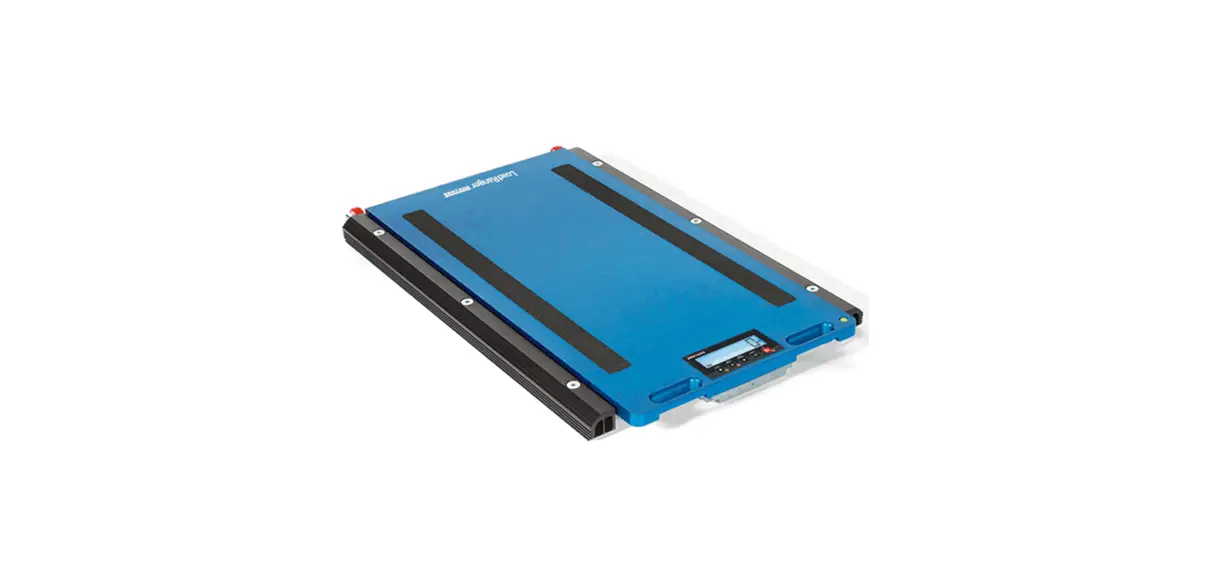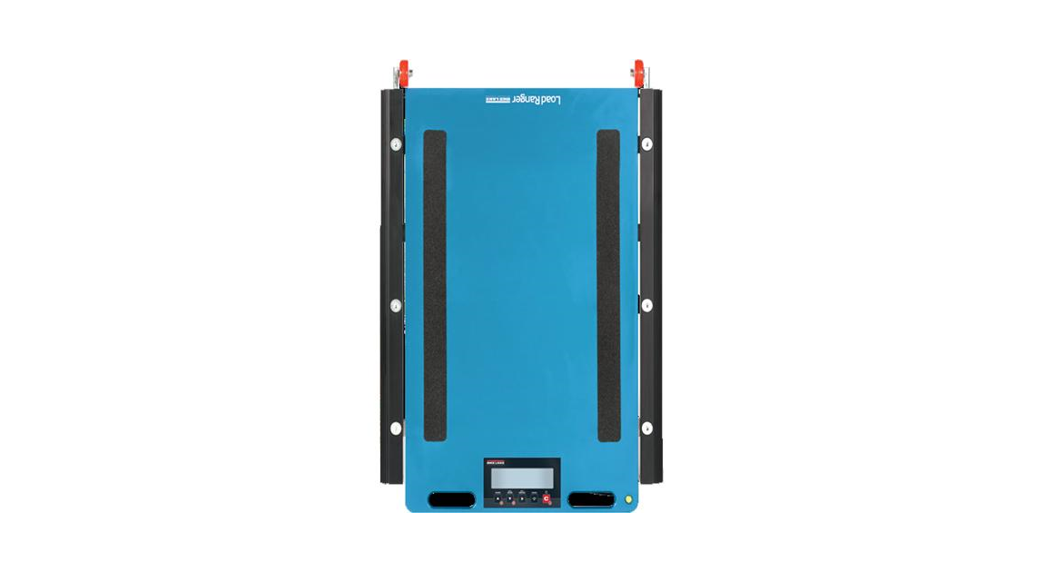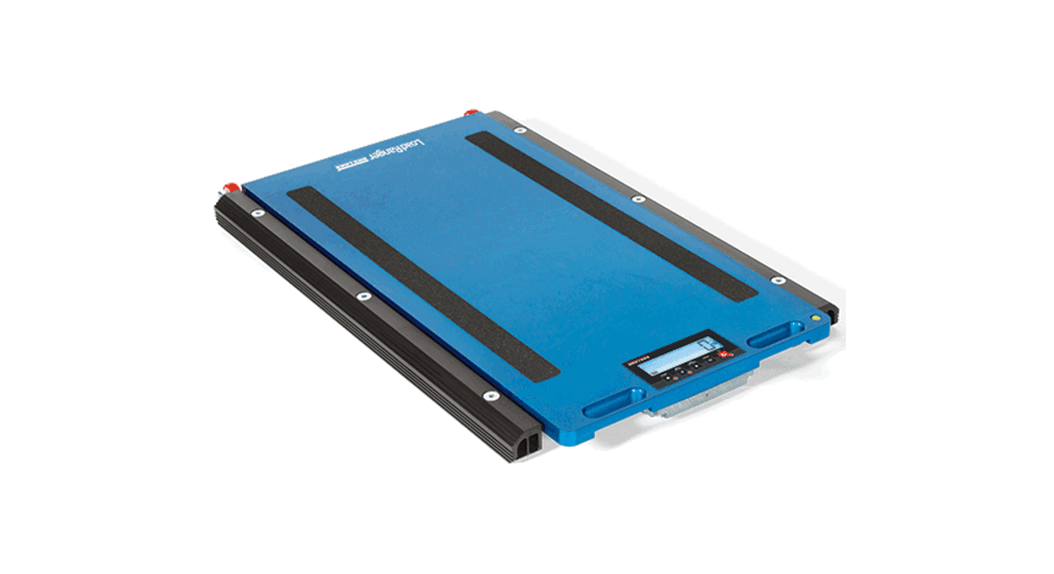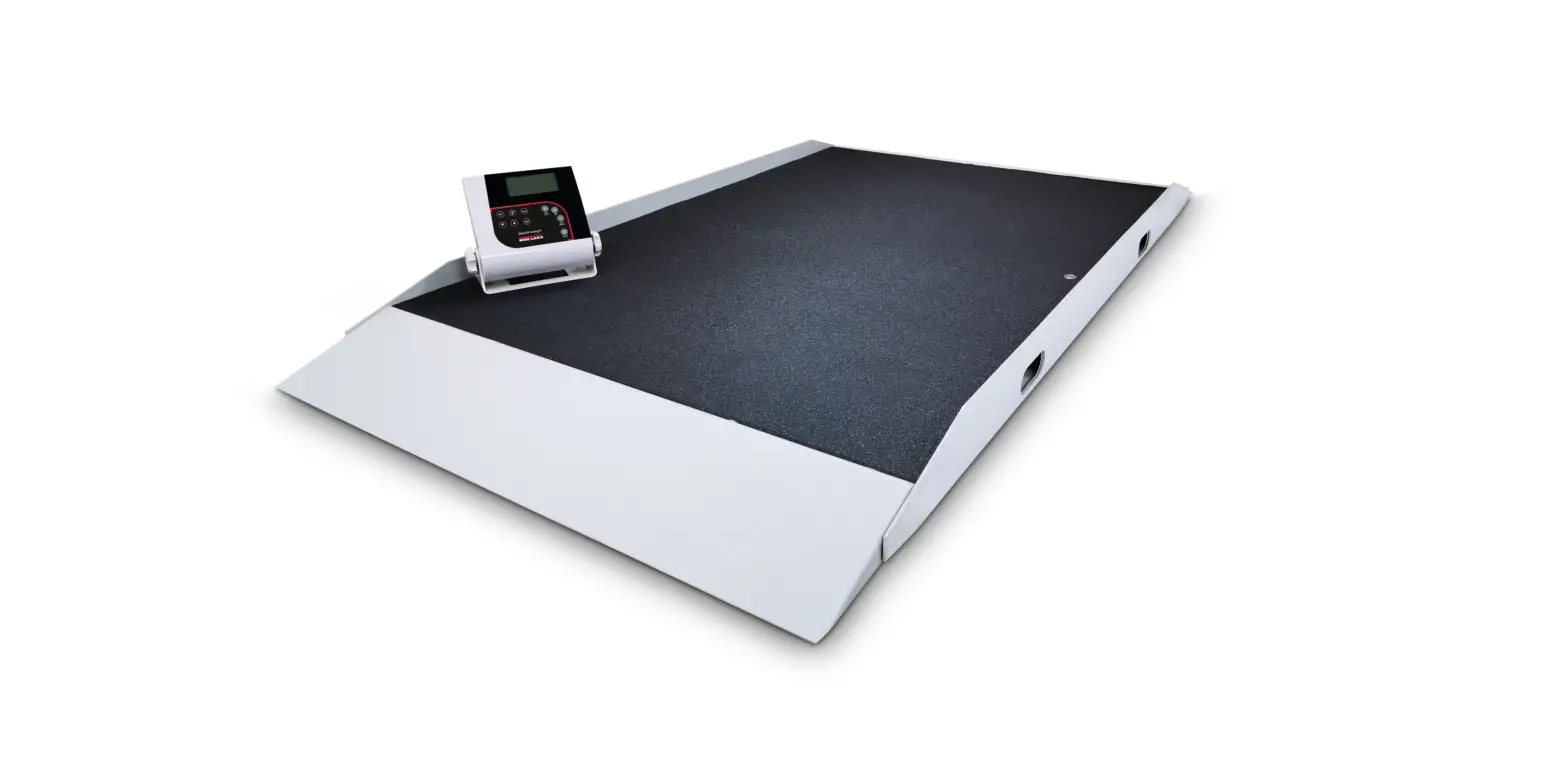

RICE LAKE 214195 Load Ranger 2.4 GHz RF Wheel Pad Scale
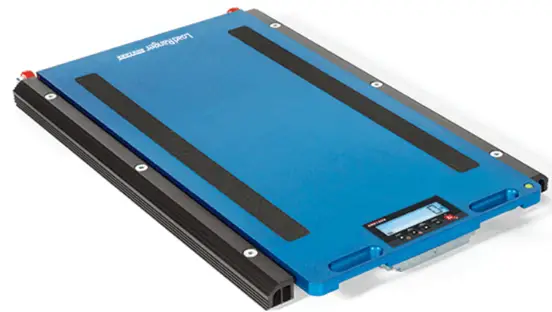
Load Ranger 2.4 GHz RF Quick Start Guide
This document provides the information necessary to quickly set up the Load Ranger wheel weigh pads and pair them with the Ai-1 Indicator to take weight readings.
NOTE: For more information, see Load Ranger (RF) Technical Manual (PN 214194).
Setup Wheel Weigh Pads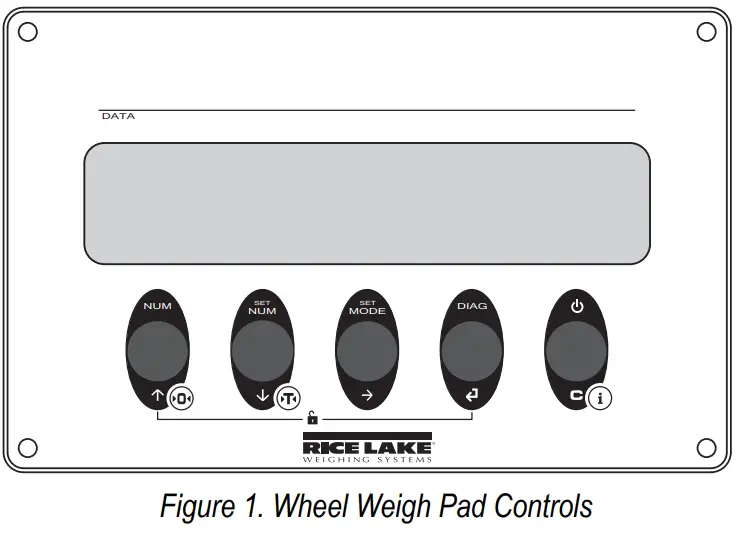
- Press
 to turn on the first wheel weigh pad.
 - Press
 during startup. TeCH flashes, then CAL displays.
 - Press until SERiAL displays.
- Press
 to enter the Serial menu. iD displays.
 - Press to enter the ID settings.
- Press
 increase or decrease the selected digit and press to move between the digits to enter the pad ID number.
NOTE: The first Pad ID number must be 01 and the remaining pad ID numbers must increment in ascending numeric order. Example: 01, 02, 03. Do not configure two pads with the same ID number.
- Press on. rf display
- Press until radio displays.
- Press rf display
- Press until On displays.
- Press r.chan briefly displays.
- Use arrows to enter a channel number.
NOTE: The default channel number is 27. The wheel weighs pad channel number must match the indicator channel number it will pair with. The Ai-1 indicator supports channels 00 – 38. If using multiple groups of indicators and wheel weigh pads, the channel numbers mu st be unique for each group. - Pressbriefly displays then Baud displays.
- Press until the wheel weighs pad resets.
- Repeat procedure for all-wheel weighs pads in the system.
 to turn on the first wheel weigh pad.
 during startup. TeCH flashes, then CAL displays.
 to enter the Serial menu. iD displays.
 increase or decrease the selected digit and press to move between the digits to enter the pad ID number.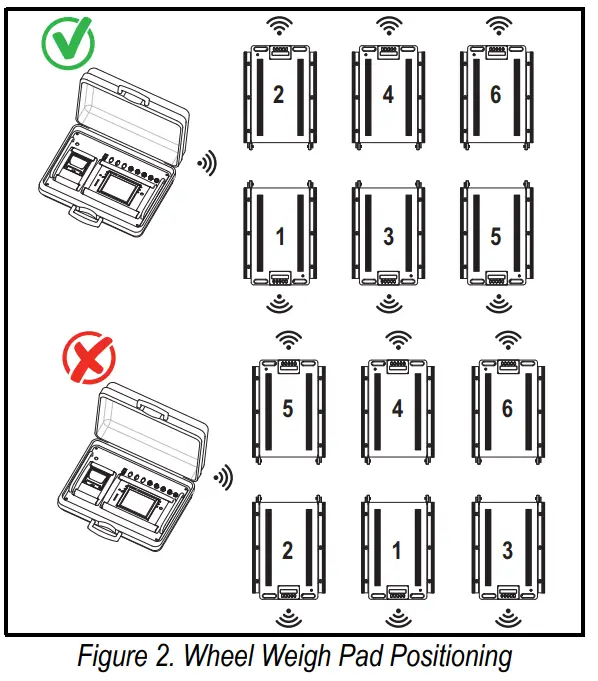
Setup Ai-1 Indicator
- Turn off all wheel weigh pads.
- Press
 to turn on the Ai-1 indicator
 - During startup, press the upper right corner of the screen when the logo displays to enter the Technical Setup menu.

- Press to go to the second Setup menu page.
- In the second page, press

- Press
 Radio Frequency interface displays.
 - Press

- Serial Port menu displays.
NOTE: The default channel number is 27. The wheel weigh pad channel number must match the indicator channel number it will pair with. The Ai-1 indicator supports channels 00 – 38. If using multiple groups of indicators and wheel pads, the channel numbers must be unique for each group. 9. Press
 . A Channel prompt displays.
- Press to close the prompt and return to the Radio Frequency interface menu.
- Press
 twice.
 - Press

- Press

- Press

- Press

- Number of Scales menu displays.
- Number of Scales menu displays.

- Press
- Press
- Press

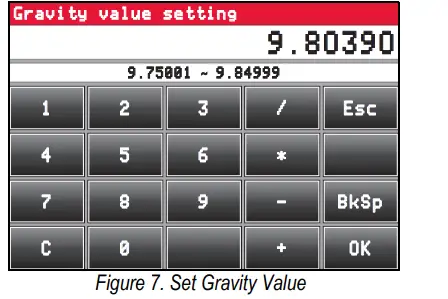
- Enter the gravity value for the area the wheel weigh pads will be used.

- Press OK to close the prompt and return to the Calibration menu.
- Press
 Setup changed prompt displays
- Press
 to save settings and complete setup. Indicator reboots to Weigh mode.
 to turn on the Ai-1 indicator

 Radio Frequency interface displays.
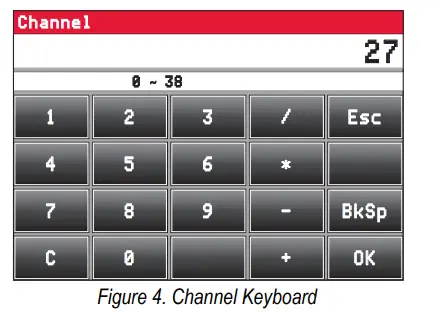 9. Press
 . A Channel prompt displays.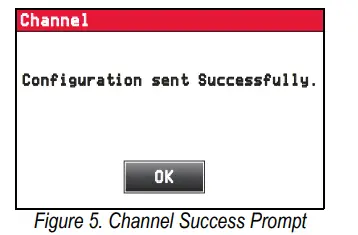
 twice.



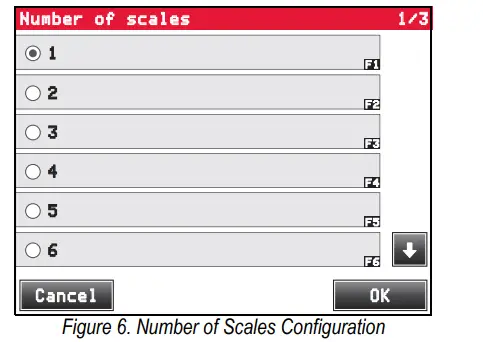

 Setup changed prompt displays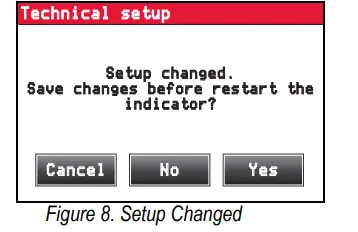
 to save settings and complete setup. Indicator reboots to Weigh mode.
Pairing Ai-1 Indicator with Wheel Weigh Pads
- Press to turn on the Ai-1 indicator.
- During startup, press the upper right corner of the screen when the logo displays to enter the Technical Setup menu.

- Turn on the first wheel weigh pad only (assigned ID 01) and allow to connect.
- Wheel weigh pad connects with indicator and displays
- Repeat Step 3 and Step 4 for additional wheel weigh pads.
- After wheel weigh pads are connected, press
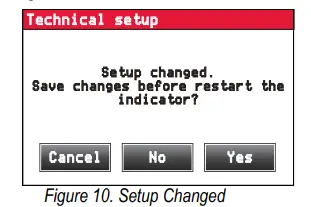
- If setup changed prompt displays. Press to save settings

- Indicator reboots to Weigh mode.

Initial Setup Parameters
The following parameter windows may display during initial setup before the indicator reboots to Weigh mode.
- The Backup of the Configuration window — Press to backup all settings
- The Password window displays — Press or , depending on password requirement
- The Technical Setup window displays — Press to convert the indicator units to match the wheel weigh pad units
Applications
The Load Ranger wheel weigh pads can be arranged to serve multiple applications. The adjustment from one scenario to another is made quickly and easily with the wireless and portability features of the Load Ranger system. This section highlights several of the arrangements available.
Wireless Setup
A wireless system allows for weighing with up to 16 connected wheel weigh pads per Ai-1 indicator. The wireless system is connected by following sections Section 1. through Section 3.
Typically wireless setup is configured for 2, 3, 4,5 or 6 pads.
Two Platform Applications
Two platform applications include weighing axles of the vehicle individually or trailers with only one axle.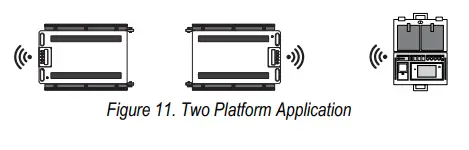
Three Platform Applications
Three platform applications include weighing small planes, three-wheeled vehicles or trailers with a support pin.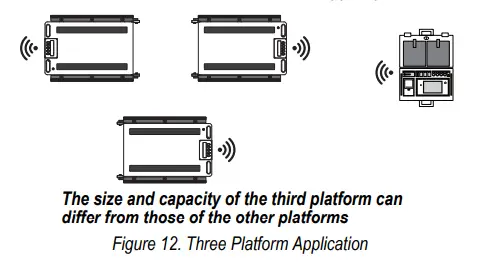
Four Platform Applications
Four platform applications include weighing two-axle vehicles, trailers, containers, or other items with four support points.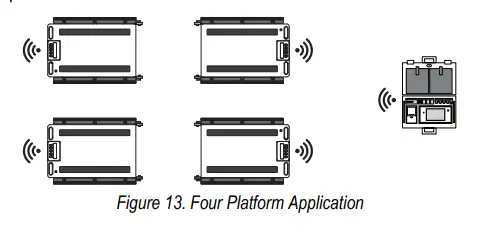 Five Platform Applications
Five platform applications include weighing two-axle trailers with a support pin. When weighing both directions, a sixth platform can be used.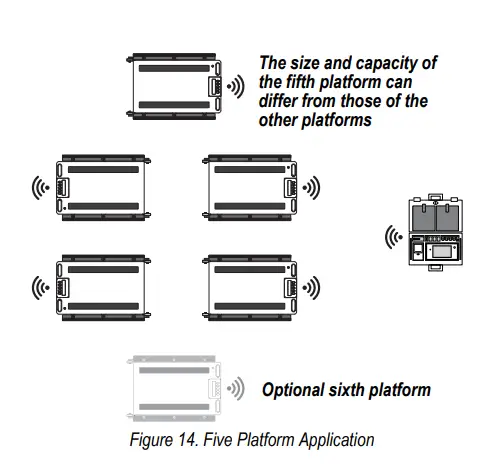
Six Platform Applications
Six platform applications include weighing three-axle vehicles or structures with six support points.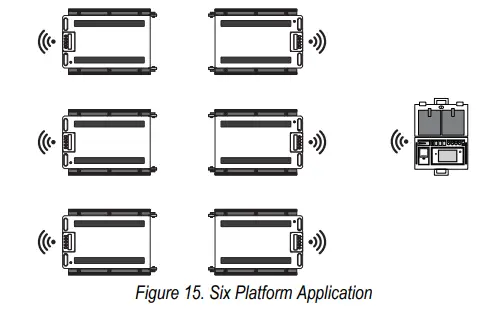
Wired Setup
A wired system allows for weighing up to four connected wheel weigh pads. The data communication port is located on the underside of the wheel weigh pad. For the RF-MD, the port is located at the handle end of the platform and is the port further from the edge. For the RF-WD and RF-XWD, the port is located at the end opposite of the platform handles.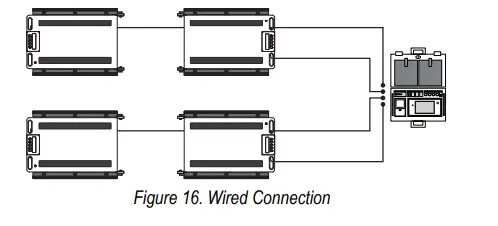
Wired Setup Connection Procedure
- Assign channel numbers and ID numbers to the wheel weigh pads.
- Pair the Ai-1 indicator with the wheel weigh pads.
- Turn off the wheel weigh pads and the Ai-1 indicator.
- Connect RS-485 cables to the wheel weigh pads data communication ports.
- Connect free ends of each RS-485 cable to one of the Ai-1 indicator’s communication ports.
NOTE: The wheel weigh pads can be connected to any of the RS-485 ports on the Ai-1 indicator. The pad ID assigned within the wheel weigh pad dictates the scale number and it does not need to match the Ai-1 indicator channel number. - Turn on all of the wheel weigh pads.
- Turn on the Ai-1 indicator. briefly displays on wheel weigh pads (represents the assigned pad ID number). then displays on the wheel weigh pads and they are ready for use.
 Rice Lake Weighing Systems