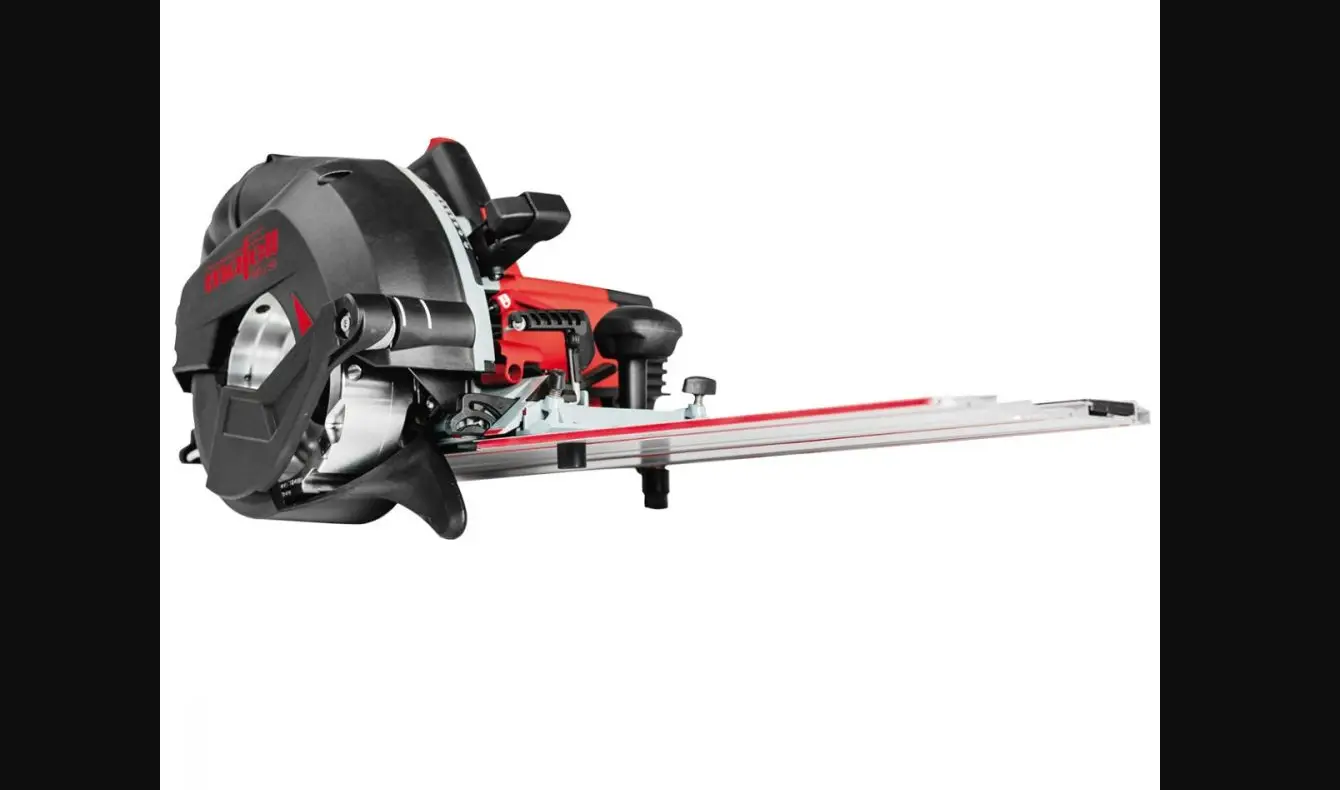
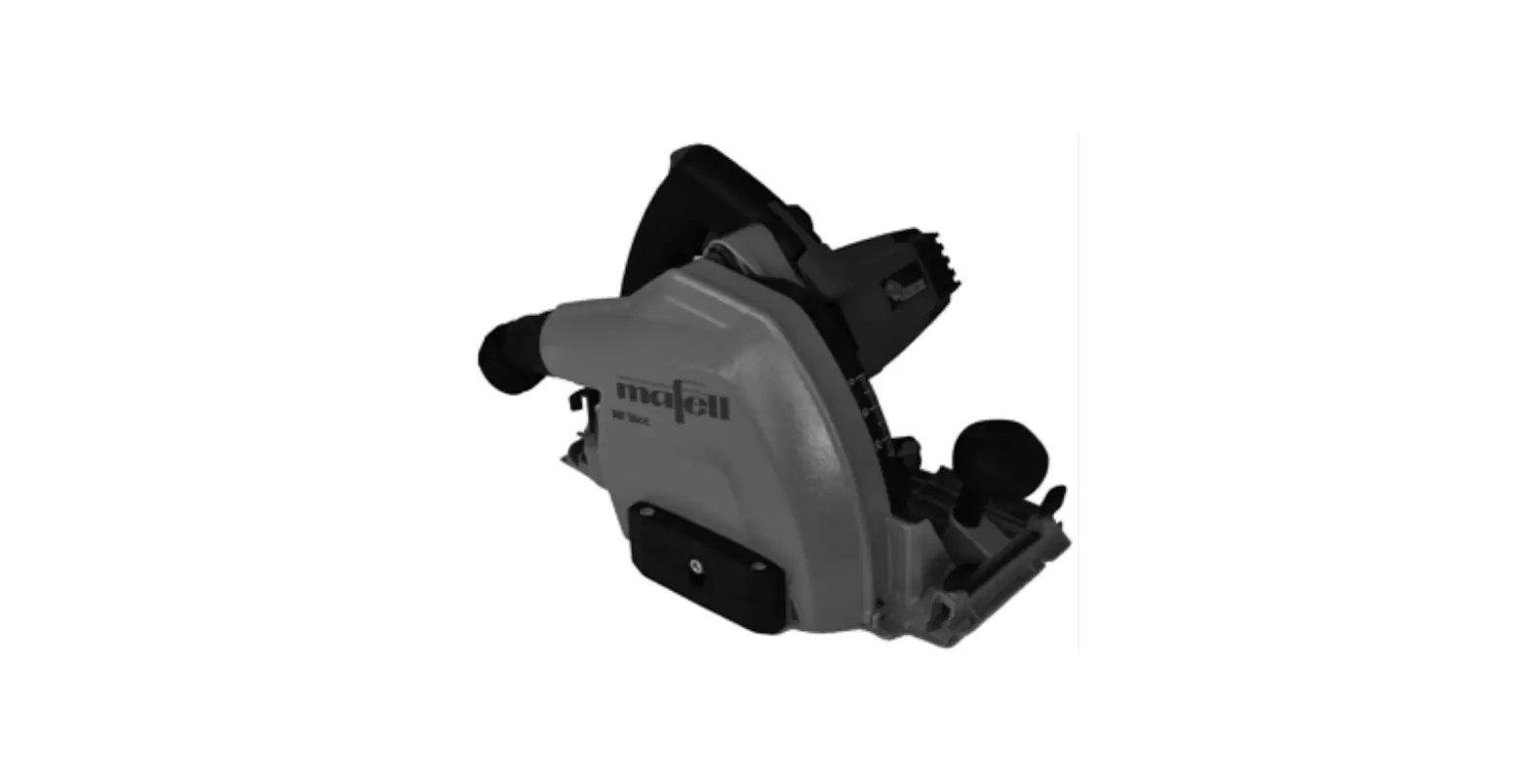
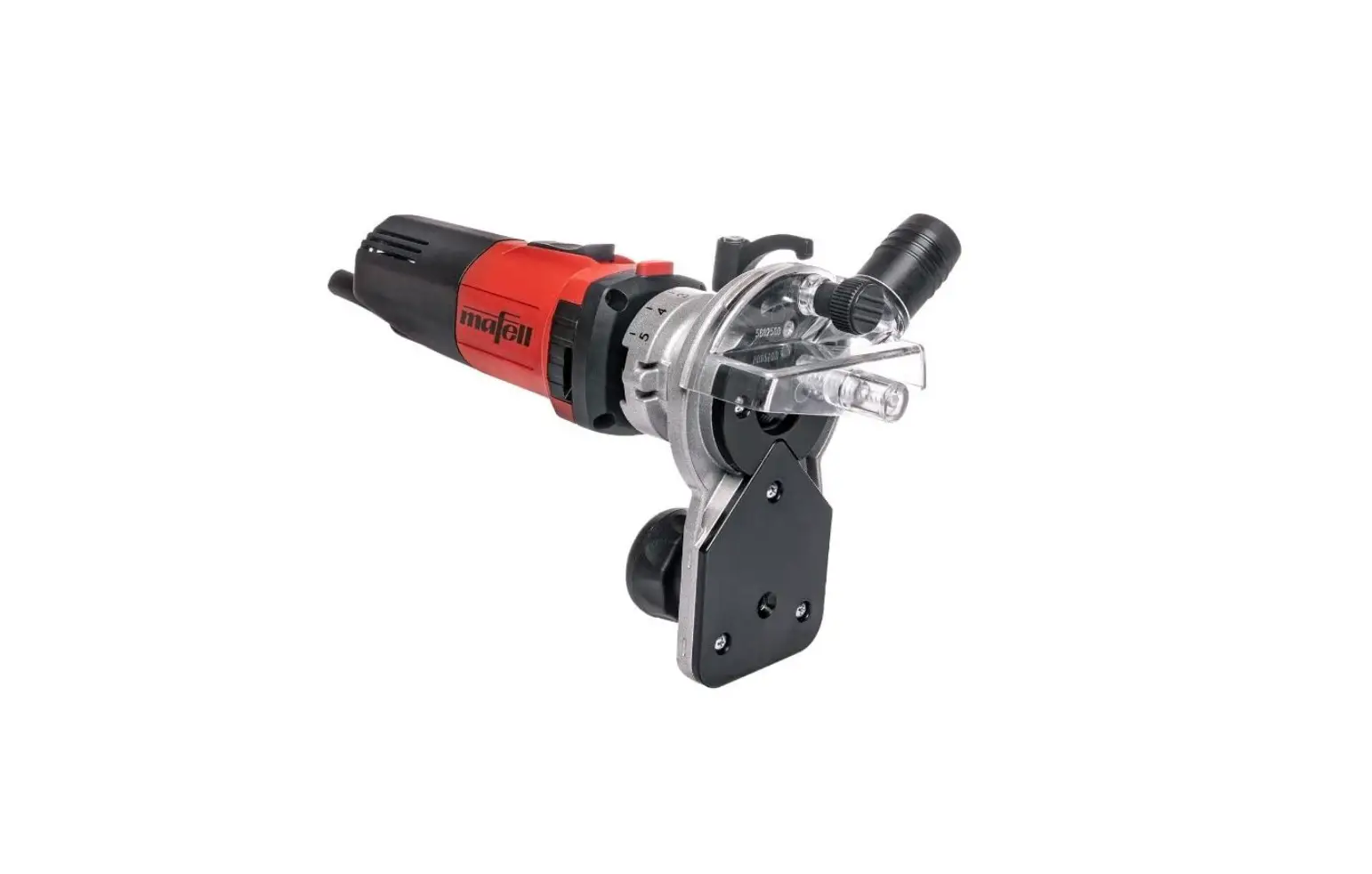
ZK 115 EC Carpentry Birds Mouth Cutter
Product Information:
Machine identification:
Product Name: ZK 115 Ec
Model Number: 170184.0916/f
Technical data:
Noise emission specifications: 17
Vibration specifications: 17
Scope of supply:
The product comes with the following items:
- Carpentry bird’s mouth cutter
- Fraiseuse de charpente
- Fresatrice intagli per carpenteria
- Kerffrees
- Fresadora de ranuras en V para carpinteros
- Ammattilaisen viistourajyrsin
- Originalbruksanvisning
- Original driftsvejledning
Safety devices:
The product is equipped with safety devices to ensure safe
usage.
Use according to intended purpose:
The product should only be used for its intended purpose as
mentioned in the user manual.
Residual risks:
There may still be some risks associated with using the product,
even when following the instructions. These risks should be taken
into consideration while using the product.
Product Usage Instructions:
Setting / Adjustment:
Mains connection:
Ensure the product is properly connected to a suitable power
source.
Tool change:
Follow the instructions provided to safely change the tool on
the product.
Insert change:
Follow the instructions provided to safely change the insert on
the product.
Operation:
Initial operation:
Before using the product for the first time, perform the initial
operation steps as mentioned in the user manual.
Switching on and off:
Follow the instructions provided to safely switch on and off the
product.
ZK 115 Ec
170184.0916/f
Zimmereikervenfräse
Originalbetriebsanleitung
5
Carpentry bird’s mouth Original operating instructions
15
cutter
Fraiseuse de charpente Traduction de la notice d’emploi originale
25
Fresatrice intagli per Istruzioni per l’uso originali
35
carpenteria
Kerffrees
Originele gebruiksaanwijzing
45
Fresadora de ranuras en Manual de instrucciones original
55
V para carpinteros
Ammattilaisen
Alkuperäiskäyttöohje
65
viistourajyrsin
Snickerispårfräs
Originalbruksanvisning
74
Tømrerkærvfræser
Original driftsvejledning
83
ACHTUNG! Diese Betriebsanleitung enthält Hinweise, die für das sichere Arbeiten mit dieser Maschine wichtig sind. Lesen Sie deshalb unbedingt diese Betriebsanleitung.
WARNING! These operating instructions contain important information on safe working practices for this machine. It is therefore essential that you read these operating instructions carefully.
ATTENTION ! Cette notice d’emploi contenant des indications importantes pour la sécurité du travail avec cette machine, veuillez donc la lire impérativement.
ATTENZIONE! Le presenti istruzioni per l’uso contengono avvertenze importanti per lavorare con sicurezza con questa macchina. Per questo motivo è assolutamente necessario leggere le presenti istruzioni per l’uso con la dovuta accuratezza.
ATTENTIE! Deze gebruiksaanwijzing omvat instructies die voor het veilige werken met deze machine belangrijk zijn. Lees vandaar in ieder geval deze gebruiksaanwijzing.
¡ATENCIÓN! Lea atentamente este manual de instrucciones, que contiene la información necesaria para garantizar la seguridad en el trabajo con esta máquina.
HUOMIO! Tämä käyttöohje sisältää ohjeita, jotka ovat tärkeitä koneen turvallisen käytön kannalta. Lue käyttöohje sen vuoksi huolellisesti!
OBSERVERA! Denna bruksanvisning innehåller anvisningar, viktiga för säkert arbete med denna maskin. Läs därför denna bruksanvisning noga!
GIV AGT! Denne driftsvejledning indeholder vigtige henvisninger om sikkerheden ved brug af maskinen. Læs driftsvejledningen omhyggeligt.
English
Table of Contents
1
Signs and symbols …………………………………………………………………………………………… 16
2
Product information ………………………………………………………………………………………….. 16
2.1
Manufacturer´s data …………………………………………………………………………………………. 16
2.2
Machine identification……………………………………………………………………………………….. 16
2.3
Technical data …………………………………………………………………………………………………. 17
2.4
Noise emission specifications ……………………………………………………………………………. 17
2.5
Vibration specifications……………………………………………………………………………………… 17
2.6
Scope of supply……………………………………………………………………………………………….. 18
2.7
Safety devices …………………………………………………………………………………………………. 18
2.8
Use according to intended purpose…………………………………………………………………….. 18
2.9
Residual risks ………………………………………………………………………………………………….. 18
3
Safety instructions ……………………………………………………………………………………………. 18
4
Setting / Adjustment …………………………………………………………………………………………. 20
4.1
Mains connection …………………………………………………………………………………………….. 20
4.2
Tool change…………………………………………………………………………………………………….. 20
4.3
Insert change…………………………………………………………………………………………………… 20
5
Operation………………………………………………………………………………………………………… 21
5.1
Initial operation ………………………………………………………………………………………………… 21
5.2
Switching on and off …………………………………………………………………………………………. 21
5.3
Cutting bird’s mouths………………………………………………………………………………………… 21
5.4
Cutting oblates, grooves and cones ……………………………………………………………………. 22
6
Service and maintenance………………………………………………………………………………….. 23
6.1
Machine………………………………………………………………………………………………………….. 23
6.2
Tools………………………………………………………………………………………………………………. 23
6.3
Storage…………………………………………………………………………………………………………… 23
7
Troubleshooting……………………………………………………………………………………………….. 23
8
Special accessories………………………………………………………………………………………….. 24
9
Exploded drawing and spare parts list ………………………………………………………………… 24
-15-
1 Signs and symbols
This symbol appears at places where you will find instructions for your own safety. Non-compliance with these instructions may result in very serious injuries. This symbol indicates a potentially hazardous situation. If this situation is not avoided, the product or objects in its vicinity may get damaged.
This symbol indicates tips for the user and other useful information.
2 Product information
for machines with the item numbers 925001, 925020, 925021, 952022 oder 925025. 2.1 Manufacturer´s data MAFELL AG, Postfach 1180, D-78720 Oberndorf / Neckar, Phone +49 (0)7423/812-0, Fax +49 (0)7423/812218 2.2 Machine identification All details required for machine identification are available on the attached rating plate.
Protection class II
CE symbol to document compliance with the basic safety and health requirements according to Appendix I of the Machinery Directive. For EU countries only Do not dispose of electric tools together with household waste material! In accordance with the European directive 2002/96/EC on waste electrical and electronic equipment and transposition into national law, obsolete electrical tools must be collected separately and recycled in an environmentallycompatible manner. To reduce the risk of injury, please read the operating instructions.
-16-
2.3 Technical data Universal motor, radio and TV interference suppressed
Power input (nominal load)
Current at nominal load Speed of the output shaft when idle Speed of the output shaft with nominal load Can be pivoted from Depth adjustment Working tool for bird’s mouths:
for flattening:
230 V~, 50 Hz
3000 W
15,5 A 4050 rpm 4050 rpm
120 V~, 60 Hz
2500 W
23,5 A
0 60° 0 – 83.5 mm (0- 3 29/100 in.)
Cutter head Ø 150 x 115 mm (5 29/32 x 4 17/32 in.)
Cutter head Ø 236 x 50 mm (9 29/100 x 1 97/100 in.)
Cutter head Ø 190 x 80 mm (7 31/64 x 3 5/32 in.)
nmax.= 5000 rpm nmax.= 5000 rpm nmax.= 5000 rpm
Weight
Machine with stop without cutter head and power cord Cutter head Ø 150 x 115 mm Cutter head Ø 236 x 50 mm Cutter head Ø 190 x 80 mm
21,1 kg (46.5 lbs)
3.0 kg (6.6 lbs) 3.5 kg (7.7 lbs) 5.9 kg (13 lbs)
Cutting speed with nominal load:
Cutter head Ø 150 x 115 mm Cutter head Ø 236 x 50 mm Cutter head Ø 190 x 80 mm
31.8 m/s (104 ft/sec.) 50.0 m/s (164 ft/sec.) 40.3 m/s (112 ft/sec.)
2.4 Noise emission specifications Noise emission values determined according to EN 60745-1:
Idling Machining
Sound power level 108 dB (A) 109 dB (A)
Workplace-related emission value 97 dB (A) 98 dB (A)
The noise measurements were made with the standard cutter head included in delivery. Workpiece: Spruce 140 x 140 x 2000 mm; Cutting depth: 20 mm; Guide without stop
The values stated do not take into consideration any possible series variances and are not suitable for determining the rating levels, as these fluctuate in dependence on the time in service, the respective type of machining and the environmental influences. The noise rating level can therefore only be determined on an individual basis at the machine user’s position.
2.5 Vibration specifications The typical hand-arm vibration is 4.0 m/s2.
-17-
2.6 Scope of supply Carpentry bird’s mouth cutter ZK 115 Ec complete with:
1 parallel stop 1 bird’s mouth cutter head Ø 150 x 115 mm (5 29/32 x 4 17/32 in.) 1 parallel stop 1 hex screwdriver 1 screwdriver Torx T 15 1 operating manual 1 folder “Safety Instructions”
2.7 Safety devices
Danger These devices are required for the machine’s safe operation and may not be removed or rendered inoperative.
The machine is equipped with the following safety devices:
– Upper stationary saw guard – Lower retractable saw guard – Upper retractable saw guard – Large base plate – Handles – Index mechanism and brake
2.8 Use according to intended purpose The MAFELL ZK 115 Ec carpentry bird’s mouth cutter is designed exclusively for working with wood. For manual feeding use only tools that bear the MAN and, if applicable, the BG test label. The dimensioning of the cutting and flattening heads used must correspond to the tools listed in this operating manual. The tool was manufactured in accordance with the European norm EN 847-1. Any other use than described above is not permissible. The manufacturer cannot be held liable for any damage arising from such other use. So as to use the machine as intended, comply with the operating, maintenance and repair instructions specified by Mafell.
2.9 Residual risks
Danger Even if used in accordance with its intended purpose and despite conforming with the safety instructions, residual risks caused by the intended use will always remain.
– Touching the cutter head in the area of the start-up opening.
– Touching the part of the cutter head that protrudes below the workpiece when cutting.
– Machine backlash if the blade gets stuck in the workpiece.
– Breakage and hurling out of the tool or parts of the tool.
– Touching live parts with the housing open and the mains plug not removed.
– Hearing can be impaired when working for long periods without ear protectors.
– Emission of hazardous wood dust when operating the machine for longer periods of time without extraction.
3 Safety instructions
Danger Always observe the following safety instructions and the safety regulations applicable in the respective country of use!
-18-
– Never work without the protective equipment required for the work to be undertaken and never modify anything on the machine that could impair safety.
– Children and adolescents must not operate this machine. This rule does not apply to young persons receiving training and being supervised by an expert.
– Before working with the machine, always check to ensure that the protective and safety devices are firmly in place and undamaged, that they work faultlessly and that the the moving protective hood works without getting stuck.
– Consider environmental influences. Do not expose the machine to rain and avoid working in damp and wet areas as well as near combustible liquids and gasses.
– When operating the machine outdoors, use of an earth-leakage circuit-breaker is recommended.
– Do not carry the machine by its cable and do not use the cable to pull the plug out of the socket outlet.
– Pay attention that the cable is protected against oil and heat and is not pulled across sharp edges.
– Damaged cables or plugs must be immediately replaced.
– Avoid sharp bends in the cable. Especially when transporting and storing the machine, do not wind the cable around the machine.
– Use only cutter heads with the specifications indicated in this operating manual.
– Store the machine in a dry, locked place outside the reach of children.
Instructions on the use of personal protective equipment:
– Always wear ear protectors during work.
– Always where a dust mark during work.
– Always wear protective goggles during work.
Instructions on operation:
– Provide for an unobstructed and slip-proof location with adequate lighting.
– Unplug the power cord before changing tools, making adjustments or rectifying faults (including the removal of jammed chips).
– Do not work on workpieces which are too small or too large for the capability of the machine.
– Install and fasten the cutter head properly. Use sharp cutters and taper taps; dull cutters increase the risk of kickout. Immediately replace damaged cutters and taper taps and fasten them so that they cannot become loose operation.
– The moving protective hood must not be blocked when open.
– The switch may not be wedged.
– Before switching on the machine, always check whether the cutter head is tightened and whether the wrench and pin have been removed.
– If possible ensure that the workpiece is secured from slippage, e.g. with tension clamps.
– Hold firmly onto the machine before switching it on.
– Begin cutting the workpiece only when the cutter head reaches its full speed.
– Examine the workpiece for foreign objects. Do not cut into metal parts, e.g. nails.
– Never reach under the workpiece while cutting (risk of injury!).
– When cutting always have the connecting cable behind the machine.
– An even forward feed when cutting extends the service life of the cutting bit and the machine. Do not cut backwards or by dipping.
– Remove the machine from the workpiece only when the cutter head is at a standstill.
– Never touch the cutter head or reach into the chip ejector while the machine is running. Always switch off the machine before making adjustments and ensure that the cutter head has come to a standstill.
– Set the machine down only when the moving protective hood is closed. Do not clamp the moving protective hood or end guard, and ensure that they work properly. Do not remove protective parts.
– The bird’s head cutter may be used only outside or in open areas, as effective extraction is not possible.
Instructions on service and maintenance:
– Regularly cleaning the machine, especially the adjusting devices and guides, constitutes an important safety factor.
-19-
– Only original MAFELL spare parts and accessories may be used. Otherwise the manufacturer will not accept any warranty claims and cannot be held liable.
Danger
Idle speed of the output shaft = 4050 rpm, therefore install only cutter heads with n 5000 rpm .
4 Setting / Adjustment
4.1 Mains connection Prior to commissioning make sure that the mains voltage complies with the operating voltage stated on the machine’s rating plate.
4.2 Tool change
Danger Always pull the power plug before changing tools. The maximum permissible speed (indicated on the tool) must not be exceeded! The operating speed must not exceed the maximum speed indicated on the tool. Ensure the correct direction of rotation! Clamp the tool so that it cannot become loose during operation. The blades must touch neither each other nor clamping pieces. Ensure that the machine is clean before changing tools. Clamping surfaces must be clean.
Lock the tool with pin 31 (fig. 1+2).
Use the hexagon screwdriver 29 to unscrew the cylinder head screw anticlockwise, remove front flange 27 and cutter head.
Clean chips and dusts off the spindle and clamping surfaces and put the tool on. When doing so ensure that both drive pins on the spindle engage both bore holes on the tool.
Insert the cylinder head screw with flange and tighten firmly with the hexagonal screwdriver.
Remove the pin and hexagonal screwdriver.
4.3 Insert change
Danger Always pull the power plug before making changes or adjustments. Install and remove the cutters in accordance with instructions in the operating manual. Utmost caution is mandatory! Ensure clean clamping surfaces. Observe the specified tightening torques! The clamping screws must be tightened only with the tools of the same dimensions included in delivery. No striking tools, levers, extensions or other tools may be used. All blades must always be fitted in order to prevent imbalance.
The cutter or flattening head must be fitted with replaceable hard metal cutting inserts. Timeconsuming sharpening is unnecessary as the hard metal cutting inserts need to be only turned or replaced when the blades are dull.
Remove the tool from the machine (see section 4.2).
Loosen the screwed on hard metal cutting inserts with the spanner included in delivery, turn 90 degrees and tighten again° (4Nm) or, after turning three times, replace with new cutting inserts.
Clean all parts and the blade chamber in the cutter head.
Aluminium tools may only be deresinified with solvents which do not corrode the aluminium.
Re-install the tool (see section 3.2).
-20-
5 Operation
5.1 Initial operation
Personnel entrusted to work with the machine must be made aware of the operating instructions, calling particular attention to the chapter “Safety instructions”.
It is mandatory to check whether all safety devices are attached and functional. This applies especially to the ease of movement of the protective hood.
5.2 Switching on and off
Danger
Before switching the machine on ensure that the cutter head can move freely and that the moving protective hood is closed.
Lead the connecting cable away to the rear.
Take hold of the machine by the handles.
Switch the machine on only when the cutter head is not in contact with the workpiece.
Switching on: First unlock the switch lock by pressing the locking lever 12 (fig. 3). Then actuate the shift lever 13 while pressing the locking lever. As this is a switch without locking device, the machine will only run for as long as this gearshift lever is pressed.
The built-in electronic system provides for jerk-free acceleration when the machine is switched on and under load readjusts the speed to the fixed setting.
This electronic system also controls the motor upon overload, e.g. the cutter head stays still. The machine must then be unloaded until the cutter head has reached its full speed. Then continue to cut at a lower feed rate.
Switching off: Release the switch lever 13 to switch the machine off. The built-in automatic break limits the run-down time of the cutter head to approx. 5 s. The switch lock takes effect automatically and secures the bird’s mouth cutter from inadvertantly being switched on again.
5.3 Cutting bird’s mouths
5.3.1 Mark bird’s mouth
Angle and mark the two-sided bird’s mouth mark at the intersection. Pull the crevice A B (fig. 4) over the rafter.
5.3.2 Setting bird’s mouth cutter
The following settings must be made before using the machine:
Set the bird’s mouth angle “”: The cutter head can be pivoted from 0 60°. Release the clamping lever 8 (fig. 5) and set the angle value (e.g. 30°) on the angle scale. Tighten the clamping lever; The clamping position of the lever can be set by pulling it out in a vertical direction.
Set
the
depth
indicator:
The cutter depth indicator depends on the set
bird’s mouth angle “”. The depth indicator 4
can therefore be set from 0 60° and must
always be set to the same angle value “” as
angle scale 6. Loosen the handle knob 9. Move
the depth indicator 4 on the left side of setting
scale 2 (marked “cutter head Ø 150 x 115”) to
the desired angle value “” (the upper edge is
the reading line) and the tighten the handle knob
again.
Set the cutter depth to 0: Unscrew the wing screw 10 (fig. 5). Turn the handle 1 until the depth indicator 4 on the depth scale 5 is at zero. Tighten the wing screw 10 (fig. 5).
The corner of the cutter of the pivoted cutter head must be positioned at the same level as the base panel support.
Set
the
mark
indicator:
The mark indicator 16 (fig. 3) shows the position
of the corner of the blade at the horizontal level.
It must therefore always be set to the same
angle value “” as the angle scale 6 (fig. 5).
Loosen the knurled knob 17 (fig. 3). Set the
mark indicator 16 with the outer right edge over
the mark scale 15 in the area of the marking
“Set cutter head Ø 150 x 115» to angle value
””. Tighten the knurled knob 17.
-21-
The angle scale 6 (fig. 5), depth indicator 4 and mark indicator 16 (fig. 3) must always be set to the same value “”.
Parallel
stop:
The parallel stop 18 (fig. 3) can be set after
loosening the wing screws 19, and it can be
used on the left or right side.
Set the machine to the mark: Open the moving protective hood by pressing the lever 23 (fig. 3) and set the machine onto the wood in such a way that the end guard 37 (fig. 6) swivels back. The bird’s mouth angle, depth indicator (cutter depth 0 mm) and mark indicator must be set in advance. With respect to the space available, align the guide rails 34 (fig. 6) parallel left or right with spacing to the mark A – B (fig. 4) and fasten.
Spacing between the mark and rail approx.:
to the right
10 cm (3 15/16 in.)/30° 15 cm(5 15/16 in.)/45°
20 cm (7 7/8 in.)/60°
to the left
32 cm (12 9/16 in.)/30° 30 cm (11 3/16 in.)/45° 27 cm (10 5/8 in.)/60°
(fig. 3) and cut with a uniform feed rate. The ejected chips can be deflected by setting the chip deflector 24. Guide the machine using both handles 11 and 21.
When done using the machine ensure that the moving protective hood is closed again.
5.3.4 Milling dimensions
Cutter Ø 150 x 115 (5 29/32 x 4 17/32 in.) head
Ø 236 x 50 (9 29/100 x1 97/100 in.)
Ø 190 x 80 (7 31/64 x3 5/32 in.)
0
15
30
45
60
0
0
“°” Depth “D” (mm)
Width “W” (mm) X (mm)
Y (mm)
0 27 (1 1/16)
115 (4 17/32)
029.7 (1 11/64)
115 (4 17/32)
30.8 (1 7/32)
0 57.5 (2 17/64)
115 (4 17/32)
66.4 (2 5/8)
0 77.9 (3 1/8)
110 (4 13/32)
110 (4 13/32)
0 75 (2 61/64)
86.6 (3 13/32) 150 (5 29/32)
0 70 (2 3/8)
0 – 47 (1 27/32)
80 (1 9/16)
Tighten adapter 33 (fig. 6) on the parallel stop 18. Set the machine with the adapter on the guide rail and align it to the mark indicator on mark A – B (fig. 4) by moving it to the side in the parallel stop guides. Tighten the wing screws 19 (fig. 3). Check the mark on the rear mark scale 7 (fig. 5).
5.3.3 Cutting bird’s mouth
Unscrew the wing screw 10 (fig. 5). Remove the machine from the guide rail. Set cutter depth “T” (fig. 4) by turning the handle 1 (fig. 5) to the desired dimension in accordance with depth scale 5.
Tighten the wing screw 10 (fig. 5) again. Set the machine with the adapter on the guide rail so that the cutter head with the protective hood is exposed. Switch on the machine. Open the moving protective hood by pressing the lever 23
5.4 Cutting oblates, grooves and cones
Set angle scale 6 (fig. 5) and mark indicator 16 (fig. 3) to 0. Depending on the cutter head user, set the depth indicator 4 (fig. 5) to the left or right half of the setting scale 2 (with a cutter head of Ø 236 or 190 mm to the corresponding markings on the right, with a cutter head of Ø 150 mm to the left). The cutter width, which at first comprises the width of cutter head, can be increased by moving the parallel stop laterally 18 (fig. 3).
-22-
6 Service and maintenance
Danger Pull the power plug during all service work.
MAFELL machines are designed to be low in maintenance.
6.2 Tools
The cutter heads used on the machine should be regularly deresinified, as clean tools improve improve the cutting quality.
Deresinify them by placing them in petroleum or a commercially available deresinification agent for 24 hours.
The ball bearings used are greased for life. When the machine has been in operation for a longer period of time, we recommend to hand the machine in at an authorised MAFELL customer service shop for inspection.
Only use our special grease, order No. 049040 (1 kg tin) for all greasing points.
6.1 Machine
The machine must be regularly cleaned off deposited dust. The ventilation openings on the motor should be cleaned with a vacuum cleaner.
The free movement of the moving protective hood must be ensured. If it does not close by itself after it is opened, the machine must be delivered to an authorised MAFELL customer service workshop.
Aluminium tools may only be deresinified with solvents which do not corrode the aluminium.
Promptly replace damaged clamping screws and cutting elements. The design must not be modified with progressive tools during servicing.
6.3 Storage If the machine is not used for a longer period of time, it has to be carefully cleaned. Spray bright metal parts with a rust inhibitor.
Store the machine only in dry rooms and protect it from the effects of weather.
7 Troubleshooting
Danger Determining the causes for existing defects and eliminating these always requires increased attention and caution. Pull the mains plug beforehand!
Some of the most frequent defects and their causes are listed in the following chart. In case of other defects, contact your dealer or the MAFELL customer service.
Defect Machine cannot be switched on
Machine switches off automatically during idling or stops during cutting
Cause No mains voltage Mains fuse defective Carbon brushes worn
Mains failure Machine overloaded
Elimination Check power supply Replace fuse Take the machine to a MAFELL customer service shop Check mains back-up fuses Reduce feed speed
-23-
8 Special accessories
– Guide rail length 3 m (2 parts with connector) – Guide rail length 3 m (1 part) – Guide rail extension length 1.5 m – Adapter pair for parallel stop – Complete bird’s mouth cutter head Ø 150 x 60 mm – Complete bird’s mouth cutter head Ø 190 x 80 mm – Complete flattening head Ø 236 x 50 mm
Order No. 037037 Order No. 200672 Order No. 036553 Order No. 037195 Order No. 091415 Order No. 091417 Order No. 203659
9 Exploded drawing and spare parts list
The corresponding information in respect of spare parts can be found on our homepage: www.mafell.com
-24-
 Home: Mafell AG