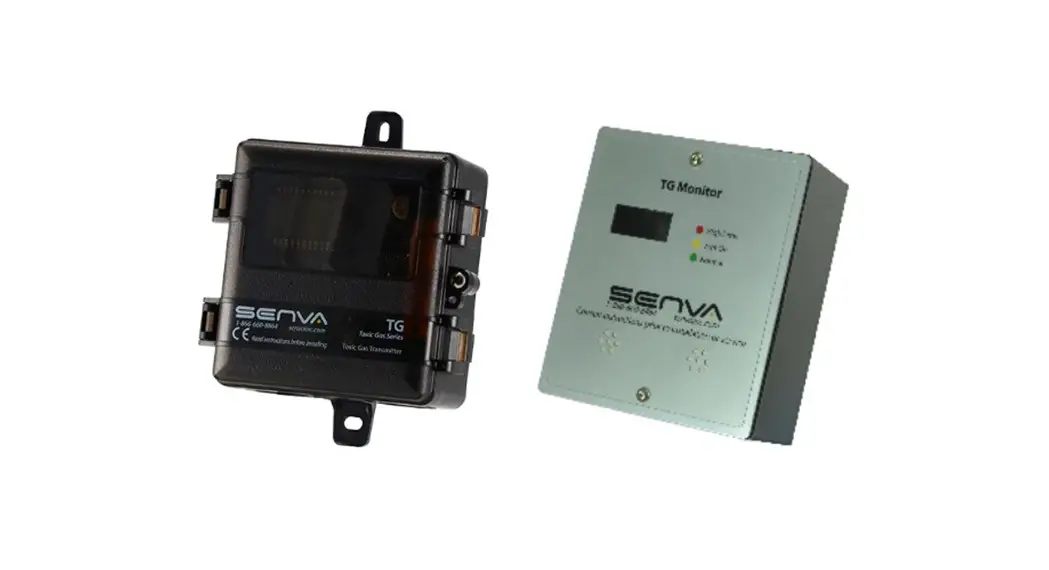
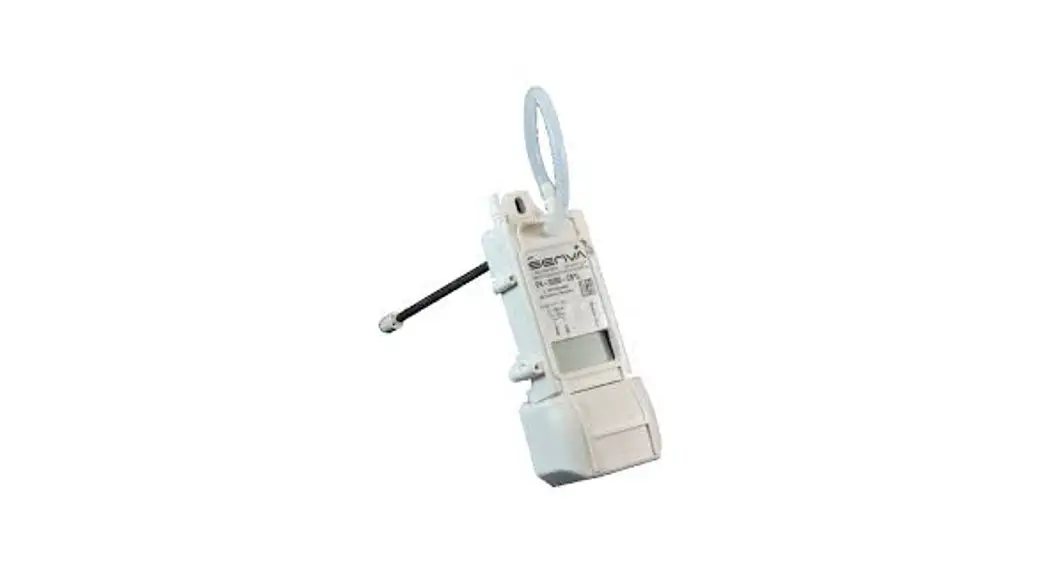
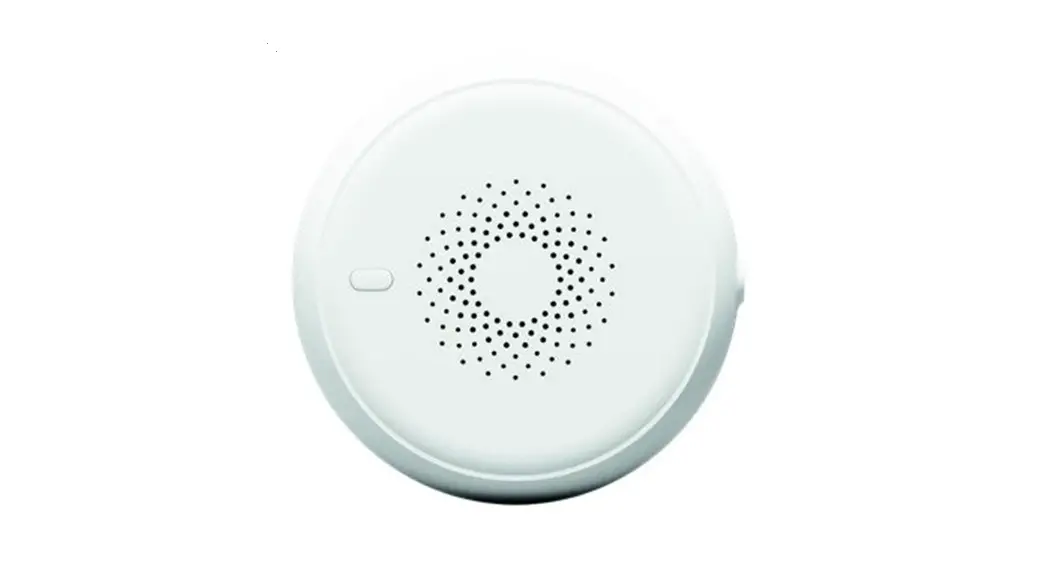
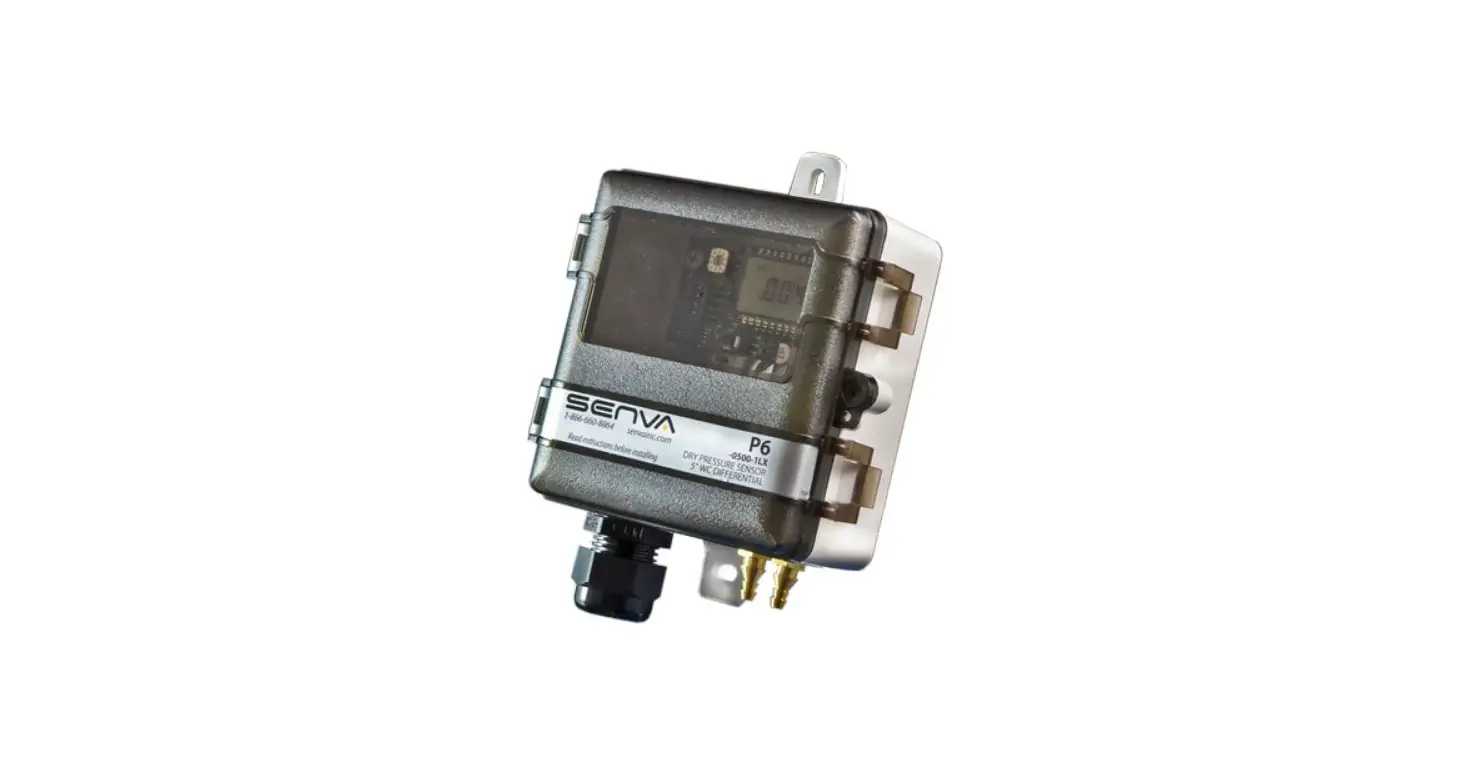
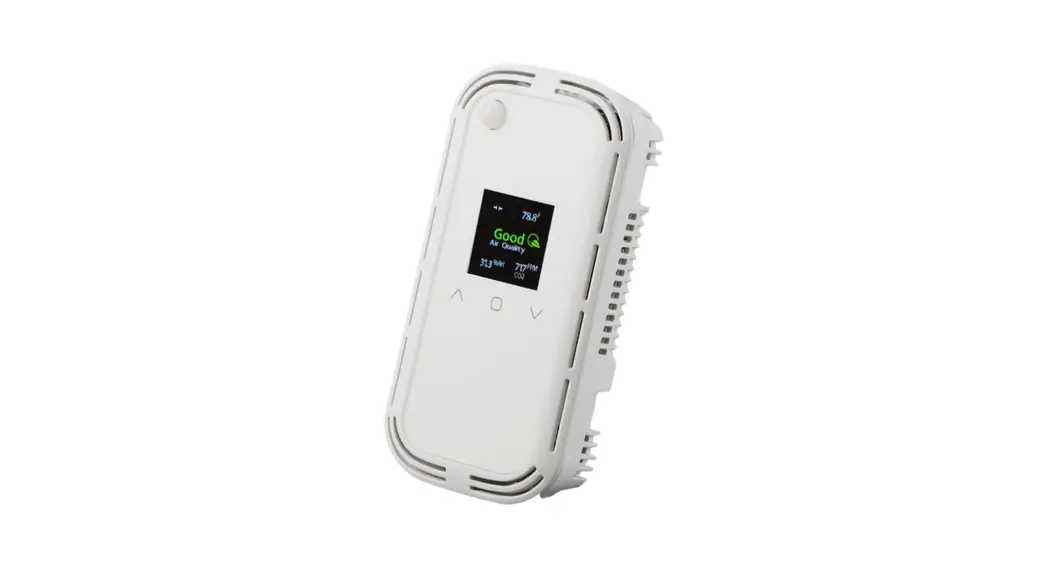
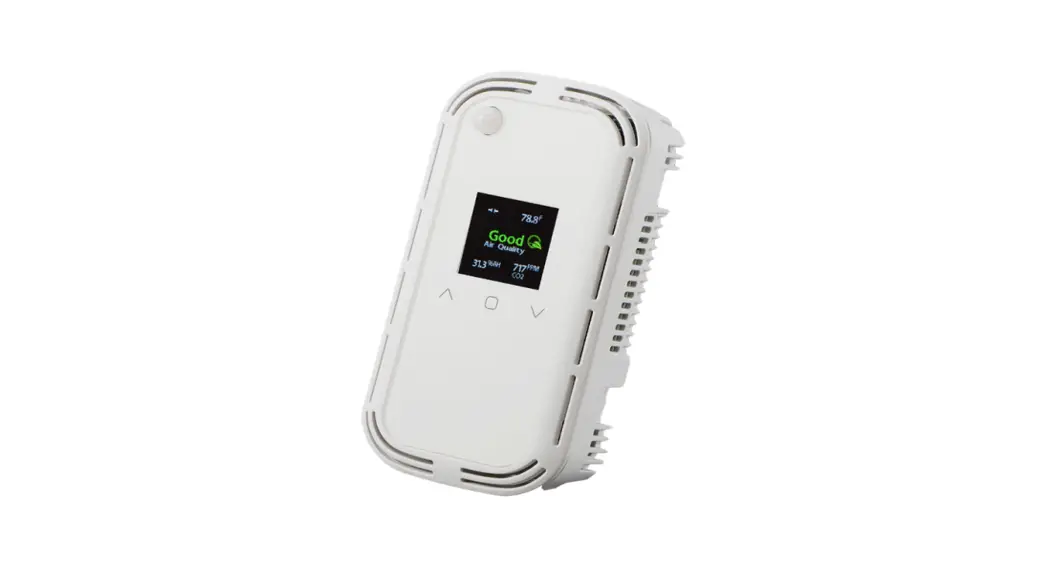
TG Series Toxic Gas Sensor Controller
Product Information
The TG Series Toxic Gas Sensor is a versatile product that can
detect various toxic gases. It supports BACnet, Modbus, and Analog
output types. The sensor can accommodate gases such as Carbon
Monoxide (CO), Nitrogen Dioxide (NO2), Carbon Dioxide (CO2),
Methane (CH4), Propane (C3H8), Hydrogen (H2), Oxygen (O2), Hydrogen
Sulphide (H2S), Ammonia (NH3), and different refrigerants. It also
features visual and audible indicators, LED indicator, and an
audible alarm.
The sensor can be mounted either in a junction box or directly
into drywall. It supports NFC setup for changing device settings
not available through the dip switches. The NFC capabilities allow
access to internal device settings for units without screens.
Product Usage Instructions
Mounting
If Mounting into a Junction Box:
- Remove drywall clamps by turning the screw
counterclockwise. - Insert the sensor into the junction box.
- Turn the screw clockwise to tighten the drywall mounts until
tight to the wall.
If Mounting into Drywall:
- Turn both mounting clamps all the way counterclockwise.
- Insert the sensor into the drywall cutout.
- Turn the screw clockwise to tighten the drywall mounts until
tight to the wall.
NFC Setup
To change device settings that are not available through the dip
switches:
- Download the Senva Sensors app on your mobile phone.
- Use the NFC capabilities of the app to access the internal
device settings for units without screens.
Wiring Call Outs – Analog Setup
Connect the sensor to the power supply and other components
according to the following wiring call outs:
- PWR – Power
- GND – Common/Ground
- TR – Trouble Relay
- COM – Relay Common
- AL – Alarm Relay
- S1 – Sensor 1 analog output
- S2 – Sensor 2 analog output
BACnet Setup
For BACnet setup, configure the dip switches according to the
provided SW3 and SW4 settings. Connect the sensor to the power
supply and other components according to the wiring call outs
mentioned in the Analog Setup section.
For detailed information about installation, limitations of
liability, and contact details, refer to the user manual provided
by Senva.
INSTALLATION INSTRUCTIONS
TG SERIES
Toxic Gas Sensor
BACnet/Modbus/Analog
PRODUCT IDENTIFICATION
Pkg Out Gas1 Gas2
TG
–
Package R = Recessed Mount
Output Type
A = Analog
B = BACnet/Modbus
Gas Type 1*
C = Carbon Monoxide (CO) N = Nitrogen Dioxide (NO2) D = Carbon Dioxide (CO2) E = Dual Channel CO2 M = Methane (CH4) P = Propane (C3H8) H = Hydrogen (H2) O = Oxygen (O2) S = Hydrogen Sulphide (H2S) A = Ammonia (NH3) 2 = R22 3 = R134A (Multi-Refrigerant) 4 = R410A 5 = R404A 6 = R407C
Gas Type 2*
X = No second gas N = Nitrogen Dioxide (NO2) D = Carbon Dioxide (CO2) E = Dual Channel CO2 M = Methane (CH4) P = Propane (C3H8) H = Hydrogen (H2) O = Oxygen (O2) S = Hydrogen Sulphide (H2S) A = Ammonia (NH3) 2-6 = Refrigerants (see above)
!
WARNING
· Use installation wires rated for 75oC and above.
· Only qualified trade installers should install, program, maintain and test system incorporated therein. Installer is responsible for compliance of all applicable codes.
· Read, understand, and follow instructions thoroughly.
· The unit and associated systems require routine test and maintenance as prescribed in the TG Series User’s Manual section `Periodic Test and Maintenance’
· Do not install in hazardous or classified locations.
· De-energize power supply prior to installation.
· Gas sensors should not be used as a substitute for proper installation, use, or maintenance of gas emitting equipment.
· This device is designed to detect conditions that could result in acute effects of gas exposure. It will not fully safeguard individuals with specific medical conditions. If in doubt, consult a medical practitioner.
· Conduit is prone to condensation if it passes from one temperature zone to another, such as from indoors to outdoors or from one part of a building to another. This condensation may actually drip into the sensor if mounted below, causing damage and/or poor readings.
In order to prevent condensation and water egress, seal both the top and bottom of the conduit with a suitable expanding foam product (such as PolywaterTM ZipsealTM ZIP50KIT1) to prevent warm air from entering cold conduit.
Alternatively, fiberglass insulation may be inserted in the conduit between the cold and warm sections using a rigid wire or other method if both ends cannot be sealed. Sealing is the preferred method. · Conduit air flow entering sensor may prevent sensor from reading ambient air properly, resulting in under measurement of gases. Plug sensor conduit in all installations with a foam plug or seal as noted above in order to prevent airflow from the conduit.
*Refrigerant sensors may not be paired with CH4, C3H8, or H2
LIMITATION OF LIABILITY Senva’s liability, whether in contract, in tort, under any warranty, in negligence or otherwise shall not exceed the amount of the purchase price paid by the purchaser for the product. Under no circumstances shall Senva be liable for special or consequential damages.
senvainc.com 1-866-660-8864 1825 NW 167th Place Beaverton Oregon 97006
FEATURES
The Senva TG Series sensor is a dual-sensor toxic gas detector. There are two versions to select from; the Analog version and the Communications version(BACnet MS/TP and Modbus RTU). Each version has Trouble and Alarm relays for controls/ indication. The Analog version has two configurable 0-5V/10V or 4-20mA analog outputs that represent gas concentrations. The communications version has a physical RS-485 connection for communications over either BACnet MS/TP or Modbus RTU. These sensors can be mounted in an indoor application. In addition, each sensor has the following features:
MOUNTING
IF MOUNTING INTO A JUNCTION BOX: 1. Remove drywall clamps by turning screw counter clockwise.
Visual/Audible Indicators – LED indicator, audible alarm. Supports BACnet and Modbus(BACnet/Modbus Version) – TG units with output type of BACnet/Modbus supports BACnet MS/ TP and Modbus RTU. Dual Gas Monitoring – Sensor can accommodate CO, NO2, CO2, Methane, Propane, Hydrogen, Oxygen, H2S, Ammonia, Refrigerants or any dual combination in one enclosure. Sensor can be expanded in field by adding additional elements.
IF MOUNTING INTO DRYWALL: 1. Turn both mounting clamps all the way counter clockwise.
*Refrigerant sensors may not be paired with CH4, C3H8, or H2
NFC Setup
2. Insert into drywall cutout.
To change device setting that are not available through the dip switches, download the Senva Sensors app on your mobile phone. The NFC capabilities will give you access to the internal device settings for units that do not have screens.
3. Turn screw clockwise to tighten drywall mounts until tight to wall.
WIRING CALL OUTS
ANALOG SETUP
PWR PWR GND GND
TR COM
AL AL
ON ON
ON ON
ON ON
GND S1 S2
Analog DIP Settings SW1
SW2
1 2
1 2
SW2
SW1
PWR PWR GND GND
TR COM
AL AL
GND S1 S2
SW1
SW2
1 2
1 2
1 12 2
11 22
SW2
SW1
DIP OFF ON DIP Function OFF
1 Current Voltage 1 S1 Alarm LOW
2 0-5V 0-10V 2 S2 Alarm LOW
ON HIGH HIGH
PWR – Power PWR – Power GND – Common/Ground GND – Common/Ground TR – Trouble Relay COM – Relay Common AL – Alarm Relay AL – Alarm Relay
S2 – Sensor 2 analog output
S1 – Sensor 1 analog output
GND – Common/Ground
B
AL
SG
AL
A
COM
GND TR
BACNET SETUP
ON
ON
GND
SW3
12 3 4 5 6 7 8 SW4
12 3 4 5 6 7 8
PWR
PWR
Comms DIP Settings
SW3
ON
12 3 4 5 6 7 8 SW4
ON
AL
AL
COM
GND TR
SW3
ON
A
SG
B
12 3 4 5 6 7 8 SW4
ON
11 22 33 44 55 66 77 88
PWR – Power PWR – Power GND – Common/Ground GND – Common/Ground TR – Trouble Relay COM – Relay Common AL – Alarm Relay AL – Alarm Relay
B – -RS485(B(-)) SG – Isolated Shield
Ground A – +RS485(A(+))
GND
PWR
PWR
12 3 4 5 6 7 8 SW4
DIP Function OFF
ON
1 BAUD0 N/A 120 OHM
2 BAUD1 Modbus BACnet
3 BAUD2 0
1
4 D/P/S0
0
1
5 D/P/S1
0
1
6 NO USE
7 Protocol Modbus BACnet
8 EOL
N/A 120 OHM
SW3
DIP Function OFF ON 1 MAC0 0 1 2 MAC1 0 1 3 MAC2 0 1 4 MAC3 0 1 5 MAC4 0 1 6 MAC5 0 1 7 MAC6 0 1 8 NO USE
DIP Function
SW3 MAC Address/ 1-7 Modbus Address
0-127 (binary)
SW4 Baud Rate 1-3 0(000)=9600
1(001)=19200 2(010)=38400 3(011)=57600 4(100)=76800 5(101)=115200
SW4 4-5
Data/Parity/Stp 0(00)=8N1 1(01)=8N2
2(10)=8O1
3(11)=8E1
DEVICE OVERVIEW
1
5
26
3
4
1 – LED indicator 2 – Buzzer 3 – Sensor Element 1 4 – Sensor Element 2 5 – Capacitive touch button 6 – Capacitive touch button
PERIODIC TEST AND MAINTENANCE
Periodic Maintenance Though the frequency of inspection is typically affected by the operating conditions and environment (extreme temperatures, extreme humidity, exposure to contaminants, etc.), Senva recommends the following maintenance and intervals. More frequent maintenance may be required per local code by the Jurisdiction Having Authority (JHA). An accurate log of all maintenance and abnormal occurrences should be maintained for the proper service of this product
Every 6 Months
· For Methane, Propane, Hydrogen, H2S, Ammonia NH3 or refrigerants retest and recalibrate the unit using NIST traceable reference gas to ensure sensors remain accurate.
· Visually inspect to ensure optimal operating conditions (no broken pieces/components, sensor filter not blocked or discolored, visual indicators operational, etc.).
· Clean the exterior with a soft cloth to remove debris from the sensor intake ports.
Annual
· For Oxygen, CO or NO2, retest and recalibrate the unit using NIST traceable reference gas to ensure sensors remain accurate.
· For sensor replacement be sure to power down the sensor and remove element to be replaced and plug in new element in its place and then re-apply power.
Do Not · Expose the sensor and its elements to solvents. · Immerse the sensor into liquids.
WIRING AND INSTALLATION
1. For proper detector operation, ensure that the Senva TG is connected to a continuous source of power (not controlled by a wall switch). The TG current draw figures represent worst-case conditions and will not vary as the applied DC voltage varies. To meet the requirements of ANSI/UL 2075, Second Edition, the TG Carbon Monoxide detector employs duplicate power leads (Red and Black) where the first pair of power leads goes into the first Carbon Monoxide detector and the second pair of power leads goes to the next detector on the loop.
2. The alarm control panel zone inputs must be terminated with end of line resistors (E.O.L.R.), which are provided with the panel.
3. The relay of the TG is a dry contact and rated at 1A, 24VAC/30VDC. It shall not be used to directly drive a fan. When connecting the units to other UL approved devices, make sure that the load does not exceed the relay’s rating.
OPERATION
The following section details factory defaults for LED function, Trouble and alarm set-points, Trouble relay and alarm status functions, and the sensor element lifetime clock. These values can be modified from their default settings via the TG Series User’s Guide.
LED Function
The LED indicators function in sync with the Trouble relay and alarm status thresholds. LED will change state if either of the gases reach their Trouble or alarm set-point.
Green Yellow
Red
Normal readings below the low level set-point
Gas concentration above the low level set-point and below the high level set-point
Gas concentration level above the high level setpoint
Alarm Set-points
The alarm set-points are applicable for elements populated on the board by the factory, or added in the field by the user.
Sensor CO NO2 CO2 Methane/ Propane/ Hydrogen Oxygen H2S Ammonia Refrigerants
LOW level (Default) 35 ppm 1 ppm 800 ppm 10% L.E.L.
HIGH level (Default) 100 ppm 3 ppm 5000 ppm 25% L.E.L.
Less than 19.5% Vol 25 ppm 20 ppm 300 ppm
Greater than 23% Vol 75 ppm 40 ppm 600 ppm
CO for Fire Alarm System
The sensors shall respond with the following Carbon Monoxide concentration and time limits.
Single and multiple-station CO alarms (UL Product code: CZHF)
Concentration of CO
Maximum Alarm time response
100-5 ppm
90 minutes (not less than 16 minutes)
200-10 ppm
35 minutes (not less than 8 minutes)
400-20 ppm
15 minutes (not less than 4 minutes)
Trouble Signal During a device failure mode the N.C. Trouble relay will open and the Device LED indicator will then turn yellow and blink to indicate one of the following events: · Removal of a sensor · Sensor is at end of life · The pulse check function has detected a sensor failure · The device has lost power
Power Supply 15-30VDC/24VAC 50/60Hz, 4w max, 160mA max.
GND
Building Automation Control Panel Comms (BACnet or Modbus)
N.O. initiating circuit
A(+) B(-)
Note: Colors are shown to clarify node connections; wire color shall be determined by national and local electrical codes.
Power Supply 15-30VDC/24VAC 50/60Hz, 4w max, 160mA max.
GND
Building Automation Control Panel Analog (0-5/10V, 3 wire 4-20mA)
N.O. initiating circuit
COMMON IN1 IN2
Note: Colors are shown to clarify node connections; wire color shall be determined by national and local electrical codes.
WIRING EXAMPLES
Gas Sensor 1
V+
B(-)
V+
Agnd
V- (Gnd)
A(+)
V- (Gnd)
TR
COM
AL
AL
Gas Sensor 1
V+
S2
V+
S1
V- (Gnd)
GND
V- (Gnd)
TR
COM
AL
AL
E.O.L.R.
E.O.L.R.
Gas Sensor 2
V+
B(-)
V+
Agnd
V- (Gnd) A(+)
V- (Gnd)
TR
COM
AL
AL
Gas Sensor 2
V+
S2
V+
S1
V- (Gnd) GND
V- (Gnd)
TR
COM
AL
AL
Power supply Wiring
Outputs (Analog)
Output (BACnet/Modbus) Trouble Relay Alarm Relay LED’s Audible exposure alarm CO Sensor Performance(2)
NO2 Sensor Performance(3)
CO2 Sensor Performance
SPECIFICATIONS
Power 15-30VDC/24VAC (1), 50/60Hz, 4w max, 160mA max.
Conductor 14-24 AWG, Minimum 600V, 75°C
Terminal Torque 0.5 N·m
2 Programmable Outputs 0-10V (default), 0-5V, 4-20mA (selectable)
CO Output Scaling 0-200ppm (default), 0-500ppm (menu selectable)
NO2 Output Scaling 0-10ppm (default), 0-10ppm (menu selectable)
CO2 Output Scaling 0-10,000 ppm (default), 0-10,000 ppm (menu selectable)
Propane/Methane/Hydrogen Output Scaling 0-50% LEL (default), 0-50% LEL (menu selectable)
Oxygen Output Scaling 0-25% Vol (default), 0-25% Vol (menu selectable)
Refrigerant Output Scaling 0-1000 ppm (default), 0-1000 ppm (menu selectable)
H2S Output Scaling 0-100 ppm (default), 0-100 ppm (menu selectable)
Ammonia NH3 Output Scaling 0-100 ppm (default), 0-100 ppm (menu selectable)
Temp Output Scaling (optional) -20 to 85ºC
RS-485 BACnet MS/TP, Modbus RTU, Modbus ASCII
Baud Rates 9600, 19200, 38400, 57600, 76800, 115200
RS-485 Loading 1/4 unit
Trouble relay characteristics N.C. 1A@24VAC/30VDC(50/60Hz)(No Mains Connection)
Alarm relay characteristics N.O. 1A@24VAC/30VDC(50/60Hz)(No Mains Connection)
Green, Yellow, Red Green = Normal, Yellow = Relay, Red = Alarm
85dB@4″ Piezo transducer 30 minutes above alarm set-point per UL2034 (menu selectable)
Type Electrochemical
Accuracy ±5% of Default Range, ± 5% of Reading Above 200ppm
Resolution 1ppm
Life expectancy 7 years
Recommended Calibration Annual
Recommended Height(4) 3 to 6 feet; coverage 5000-7500 sq ft.
Type Electrochemical
Accuracy ±5% of Default Range, ± 5% of Reading Above 20ppm
Resolution 0.1ppm
Life expectancy 7years
Recommended Calibration Annual
Recommended Height 3 to 6 feet; coverage 5000-7500 sq ft.
Type Accuracy (4) Drift with ABC disabled(5)
Non-dispersive Infrared (NDIR)
±(30ppm +3% of reading) (400-2000ppm), @-10-50°C ±(50ppm +5% of reading) Standard (2000-5000ppm), @-10-50°C ±(50ppm+3% of reading) Dual Channel (2000-5000ppm), @-10-50°C ±(100ppm+10% of reading) (5000-10000ppm), @ 0-50C
35ppm/month (6) (Standard) 5ppm/month (6) (Dual Channel)
Range 0-2000/5000ppm; Programmable up to 10,000ppm
Response time 30s
Sample rate 1s
Recommended Height 3 to 6 feet; coverage 5000-7500 sq ft.
(1) One side of transformer secondary is connected to signal common. Dedicated transformer is recommended. No mains circuit connection allowed. In addition, it is required to use an isolated power supply that is certified by a national or international standard (i.e. UL). Use of a Class 2 LPS power supply or greater is required. (2) Carbon Monoxide full scale is 1000 ppm. (3) Nitrogen Dioxide full scale is 30 ppm. (4) Accuracy of CO2 reading may be reduced at temperatures below 14ºF (-10oC). (5) It is not recommended to de-activate ABC (auto-calibration) except for continuously occupied spaces or greenhouses. Drift ratings may vary based on environment.
Methane/Propane/ Hydrogen Sensor Performance
SPECIFICATIONS (Continued)
Type Catalytic Detection Range 0-50% LEL (Lower Explosive Limit)
Accuracy ±5% of Range Resolution 1% LEL Life expectancy 5years
Recommended Calibration 6 months
Oxygen Sensor Performance
Recommended Height (6) Hydrogen/Methane: 0.5 to 1 foot from ceiling; coverage 5000-7500 sq ft Type Electrochemical
Detection Range 0-25% Volume Accuracy ±5% of Range
Resolution 0.1% Life expectancy 5 years
Recommended Calibration Annual
Recommended Height 3 to 6 feet; coverage 5000-7500 sq ft.
H2S Sensor Performance
Type Electrochemical Detection Range 0-100 ppm
Accuracy ±5% of Range Resolution 1 ppm
Life expectancy 5 years
Recommended Calibration 6 months
Recommended Height 3 to 6 feet; coverage 5000-7500 sq ft.
Ammonia NH3 Sensor Performance
Type Electrochemical Detection Range 0-100 ppm
Accuracy ±5% of Range Resolution 0.1 ppm Life expectancy 5 years
Recommended Calibration 6 months
Recommended Height 0.5 to 1 foot from ceiling; coverage 5000-7500 sq ft.
Type MOS Detection Range 0-1000 ppm
Resolution 1 ppm
Refrigerant Sensors Performance
R22, R134A, R410A, R404A, R407C Calibrated for respective gas @300ppm test gas: 450 ppm R410A, 425 ppm R407C, 400 ppm R404A, 370
R134A Sensitivity(7) ppm R22, 300 ppm R134A
Life expectancy 10 years (typical expectation for MOS sensors)
Recommended Calibration 6 months
Recommended Height 6 inches above floor; no more than 18 inches above lowest level of equipment location for leak detection; coverage 5000-7500 sq ft.
Temperature, continuous -20 to 50oC
Operating Environment
Humidity 15-90% continuous, 0-99% intermittent Max Elevation 2000m
Material ABS/Polycarbonate
Enclosure
Rating IP20
Dimensions 5.66″h x 3.0″w x 1.69″d
Agency
Compliance CE
(6) Combination CO/Methane, CO/Propane, or CO/Refrigerant sensors should be mounted according to Propane/Methane/Refrigerant recommendations. Consult factory for other combinations. Mounting height recommendations may be adjusted according to installation. Ensure sensor is accessible for maintenance and target gas has unobstructed access to sensor. Mount in accordance with ANSI/NFPA 70 and NEC or CEC. (7) R134A sensor may be used as a general purpose refrigerant detection. The sensor’s response to other refrigerants will change proportionally as shown in the following app note: https://www.senvainc.com/catalog/documents/downloadcenter/Refrigerant%20cross%20sensitivities.pdf (or scan QR code). Actual response may vary depending on installation. For more accurate response to a specific gas, a unit may be field calibrated.
Symptom No output Sensor reading error Relay Function
TROUBLESHOOTING
Solution Check wiring. Ensure power supply meets requirements. Sensor contaminated or at end of life. Replace sensor. Verify set-point. Verify test gas concentration. Cover sensor to prevent drafts and dilution during test.
BACnet/Modbus Quick Reference
The following section outlines some commonly utilized Modbus registers and BACnet objects for quick reference. For a complete list and description of each, please see the associated protocol guides: TG BACnet Protocol Guide or TG Modbus Protocol Guide.
Access Legend: R=Readable W-Write-able W0 = Write-able with 0 only NV = Saved in non-volatile configuration memory
Description
Gas 1 Concentration Gas 2 Concentration
BACnet Object
AI1 AI2
Modbus Register
6/7 8/9
Access
R/W0 R/W0
Gas 1 Warning Set-point
AV1
Gas 1 Alarm Set-point
AV2
Gas 2 Warning Set-point
AV4
Gas 2 Alarm Set-point
AV5
101 R/W/NV 102 R/W/NV 104 R/W/NV 105 R/W/NV
Supported Modbus Functions: 0x03 Read Multiple Holding Registers 0x04 Read Register Input 0x06 Write Single Register 0x10 Write multiple Registers
DIMENSIONS
Revised 3/15/2021 Document #152-0386-0A
 Senva Inc