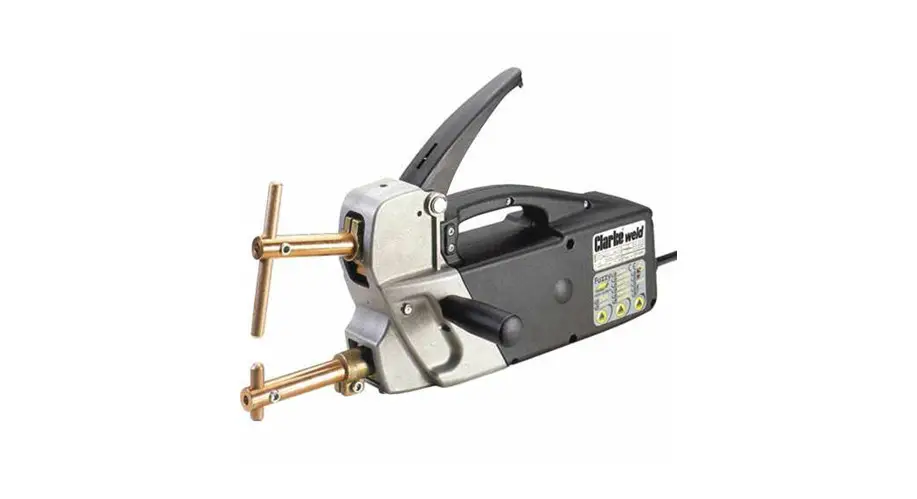
955249 Spot Welder
Product Information
- Product Name: Aparelho de soldar por pontos Puntlasmachine
- Product Code: 955249
Product Usage Instructions
To ensure safe and proper usage of the Aparelho de soldar por
pontos Puntlasmachine, please follow these instructions:
- Before using the product, make sure to wear protective
gloves. - Avoid using the product in areas where there is a danger of
fire. Take necessary precautions and keep flammable materials away
from the product. - Be cautious of non-ionizing radiation emitted by the product.
Take necessary measures to protect yourself from exposure. - The product is suitable for materials that can undergo a
recovery/recycling process. Dispose of the product according to
local regulations and do not dispose of it as solid, mixed urban
refuse. - Do not use the product if you are wearing metal prosthetics or
have medical electronic devices. Consult a professional before
using the product in such cases. - Avoid using the product near metal objects, watches, or
magnetic cards. - Do not allow unauthorized personnel to use the product.
By following these instructions, you can ensure safe and
effective usage of the Aparelho de soldar por pontos
Puntlasmachine.
EN IT FR ES DE RU PT NL EL RO SV CS HR-SR PL FI DA NO SL SK HU
LT ET LV BG TR AR
(EN) INSTRUCTION MANUAL (IT) MANUALE D’ISTRUZIONE (FR) MANUEL D’INSTRUCTIONS (ES) MANUAL DE INSTRUCCIONES (DE) BEDIENUNGSANLEITUNG (RU) (PT) MANUAL DE INSTRUÇÕES (NL) INSTRUCTIEHANDLEIDING (EL) (RO) MANUAL DE INSTRUCIUNI (SV) BRUKSANVISNING (CS) NÁVOD K POUZITÍ (HR-SR) PRIRUCNIK ZA UPOTREBU (PL) INSTRUKCJA OBSLUGI (FI) OHJEKIRJA (DA) INSTRUKTIONSMANUAL (NO) BRUKERVEILEDNING (SL) PRIROCNIK Z NAVODILI ZA UPORABO (SK) NÁVOD NA POUZITIE (HU) HASZNÁLATI UTASÍTÁS (LT) INSTRUKCIJ KNYGEL (ET) KASUTUSJUHEND (LV) ROKASGRMATA (BG) (TR) KULLANIM KILAVUZU
(AR)
Cod.955249
(EN) (IT) (FR) (ES) (DE) (RU) (PT) (NL) (EL) (RO) (SV) (CS) (HR-SR) (PL) (FI) (DA) (NO) (SL) (SK) (HU) (LT) (ET) (LV) (BG) (TR) (AR)
Spot welder Puntatrice Poste de soudage par points Soldadora por puntos Punktschweißmaschine
Aparelho de soldar por pontos Puntlasmachine
Aparat de sudur în puncte Punktsvets Bodovacka Stroj za tockasto varenje Spawarka punktowa Pistehitsauslaite Punktsvejsemaskine Punktesveiseapparat Tockalnik Bodovacka Ponthegeszt Taskinio suvirinimo aparatas Punktkeevitusseade Punktmetinsanas aparts Punto kaynak makinesi
– 1 –
(EN) EXPLANATION OF DANGER, MANDATORY AND PROHIBITION SIGNS. (IT) LEGENDA SEGNALI DI PERICOLO, D’OBBLIGO E DIVIETO. (FR) LÉGENDE SIGNAUX DE DANGER, D’OBLIGATION ET D’INTERDICTION. (ES) LEYENDA SEÑALES DE PELIGRO, DE OBLIGACIÓN Y PROHIBICIÓN. (DE) LEGENDE DER GEFAHREN-, GEBOTS- UND VERBOTSZEICHEN. (RU) , . (PT) LEGENDA DOS SINAIS DE PERIGO, OBRIGAÇÃO E PROIBIDO. (NL) LEGENDE SIGNALEN VAN GEVAAR, VERPLICHTING EN VERBOD. (EL) , . (RO) LEGEND INDICATOARE DE AVERTIZARE A PERICOLELOR, DE OBLIGARE I DE INTERZICERE. (SV) BILDTEXT SYMBOLER FÖR FARA, PÅBUD OCH FÖRBUD. (CS) VYSVTLIVKY K SIGNÁLM NEBEZPECÍ, PÍKAZM A ZÁKAZM. (HR-SR) LEGENDA OZNAKA OPASNOSTI, OBAVEZA I ZABRANA.
(PL) (FI) (DA) (NO) (SL) (SK) (HU) (LT) (ET) (LV) (BG) (TR) (AR)
OBJANIENIA ZNAKÓW OSTRZEGAWCZYCH, NAKAZU I ZAKAZU. VAROITUS, VELVOITUS, JA KIELTOMERKIT. OVERSIGT OVER FARE, PLIGT OG FORBUDSSIGNALER. SIGNALERINGSTEKST FOR FARE, FORPLIKTELSER OG FORBUDT. LEGENDA SIGNALOV ZA NEVARNOST, ZA PREDPISANO IN PREPOVEDANO. VYSVETLIVKY K SIGNÁLOM NEBEZPECENSTVA, PRÍKAZOM A ZÁKAZOM. A VESZÉLY, KÖTELEZETTSÉG ÉS TILTÁS JELZÉSEINEK FELIRATAI. PAVOJAUS, PRIVALOMJ IR DRAUDZIAMJ ZENKL PAAISKINIMAS. OHUD, KOHUSTUSED JA KEELUD. BSTAMBU, PIENKUMU UN AIZLIEGUMA ZMJU PASKAIDROJUMI. , .
TEHLKE,ZO RUNLULUK VEYASAK ARETLERNN AÇIKLAMASI.
(EN) DANGER OF ELECTRIC SHOCK – (IT) PERICOLO SHOCK ELETTRICO – (FR) RISQUE DE CHOC ÉLECTRIQUE – (ES) PELIGRO DESCARGA ELÉCTRICA – (DE) STROMSCHLAGGEFAHR – (RU) – (PT) PERIGO DE CHOQUE ELÉTRICO – (NL) GEVAAR ELEKTROSHOCK – (EL) – (RO) PERICOL DE ELECTROCUTARE – (SV) FARA FÖR ELEKTRISK STÖT – (CS) NEBEZPECÍ ZÁSAHU ELEKTRICKÝM PROUDEM – (HR-SR) OPASNOST STRUJNOG UDARA – (PL) NIEBEZPIECZESTWO SZOKU ELEKTRYCZNEGO – (FI) SÄHKÖISKUN VAARA (DA) FARE FOR ELEKTRISK STØD – (NO) FARE FOR ELEKTRISK STØT – (SL) NEVARNOST ELEKTRICNEGA UDARA – (SK) NEBEZPECENSTVO ZÁSAHU ELEKTRICKÝM PRÚDOM – (HU) ÁRAMÜTÉS VESZÉLYE
– (LT) ELEKTROS SMGIO PAVOJUS – (ET) ELEKTRILÖÖGIOHT – (LV) ELEKTROSOKA BSTAMBA – (BG) – (TR) ELEKTRK ÇARPMASI TEHLKES – (AR)
(EN) DANGER OF WELDING FUMES – (IT) PERICOLO FUMI DI SALDATURA – (FR) DANGER FUMÉES DE SOUDAGE – (ES) PELIGRO HUMOS DE SOLDADURA – (DE) GEFAHR DER ENTWICKLUNG VON RAUCHGASEN BEIM SCHWEISSEN – (RU) – (PT) PERIGO DE FUMAÇAS DE SOLDAGEM – (NL) GEVAAR LASROOK – (EL) – (RO) PERICOL DE GAZE DE SUDUR – (SV) FARA FÖR RÖK FRÅN SVETSNING – (CS) NEBEZPECÍ SVAOVACÍCH DÝM – (HR-SR) OPASNOST OD DIMA PRILIKOM VARENJA – (PL) NIEBEZPIECZESTWO OPARÓW SPAWALNICZYCH – (FI) HITSAUSSAVUJEN VAARA – (DA) FARE P.G.A. SVEJSEDAMPE – (NO) FARE FOR SVEISERØYK – (SL) NEVARNOST VARILNEGA DIMA – (SK) NEBEZPECENSTVO VÝPAROV ZO ZVÁRANIA – (HU) HEGESZTÉS KÖVETKEZTÉBEN KELETKEZETT FÜST VESZÉLYE – (LT) SUVIRINIMO DM PAVOJUS – (ET) KEEVITAMISEL
SUITSU OHT – (LV) METINSANAS IZTVAIKOJUMU BSTAMBA – (BG) – (TR) KAYNAK DUMANI TEHLKES – (AR)
(EN) DANGER OF EXPLOSION – (IT) PERICOLO ESPLOSIONE – (FR) RISQUE D’EXPLOSION – (ES) PELIGRO EXPLOSIÓN – (DE) EXPLOSIONSGEFAHR – (RU) – (PT) PERIGO DE EXPLOSÃO – (NL) GEVAAR ONTPLOFFING – (EL) – (RO) PERICOL DE EXPLOZIE – (SV) FARA FÖR EXPLOSION – (CS) NEBEZPECÍ VÝBUCHU – (HR-SR) OPASNOST OD EKSPLOZIJE – (PL) NIEBEZPIECZESTWO WYBUCHU – (FI) RÄJÄHDYSVAARA – (DA) SPRÆNGFARE – (NO) FARE FOR EKSPLOSJON – (SL) NEVARNOST EKSPLOZIJE – (SK) NEBEZPECENSTVO VÝBUCHU – (HU)
ROBBANÁS VESZÉLYE – (LT) SPROGIMO PAVOJUS – (ET) PLAHVATUSOHT – (LV) SPRDZIENBSTAMBA – (BG) – (TR) PATLAMA TEHLKES – (AR)
(EN) WEARING PROTECTIVE CLOTHING IS COMPULSORY – (IT) OBBLIGO INDOSSARE INDUMENTI PROTETTIVI – (FR) PORT DES VÊTEMENTS DE PROTECTION OBLIGATOIRE – (ES) OBLIGACIÓN DE LLEVAR ROPA DE PROTECCIÓN – (DE) DAS TRAGEN VON SCHUTZKLEIDUNG IST PFLICHT – (RU) – (PT) OBRIGATÓRIO O USO DE VESTUÁRIO DE PROTEÇÃO – (NL) VERPLICHT BESCHERMENDE KLEDIJ TE DRAGEN – (EL) – (RO) FOLOSIREA ÎMBRCMINTEI DE PROTECIE OBLIGATORIE – (SV) OBLIGATORISKT ATT BÄRA SKYDDSPLAGG – (CS) POVINNÉ POUZITÍ OCHRANNÝCH PROSTEDK – (HR-SR) OBAVEZNO KORISTENJE ZASTITNE ODJEE – (PL) NAKAZ NOSZENIA ODZIEY OCHRONNEJ – (FI) SUOJAVAATETUKSEN KÄYTTÖ PAKOLLISTA – (DA) PLIGT TIL AT ANVENDE BESKYTTELSESTØJ – (NO) FORPLIKTELSE Å BRUKE VERNETØY – (SL) OBVEZNO OBLECITE ZASCITNA OBLACILA – (SK)
P(LOVV) IPNINENÉPKOUUMZSITIEORBCTHRAAIZNSNAÝRCGHTPRRPOUSSTR-I(EBDGK)OV- (HU) VÉDRUHAHASZNÁLATAKÖTELEZ- (LT)PRIV- A(TLRO)MKAORDUYVUTCIUAGPSYASU GGINYM EAKPRZAONRGUNL-U(EDTU)RKO- (HAURS)TUSLIKKANDAK AITSERIIETU ST-
(EN) WEARING PROTECTIVE GLOVES IS COMPULSORY – (IT) OBBLIGO INDOSSARE GUANTI PROTETTIVI – (FR) PORT DES GANTS DE PROTECTION OBLIGATOIRE – (ES) OBLIGACIÓN DE LLEVAR GUANTES
DE PROTECCIÓN – (DE) DAS TRAGEN VON SCHUTZHANDSCHUHEN IST PFLICHT – (RU) – (PT) OBRIGATÓRIO O USO DE LUVAS DE SEGURANÇA – (NL)
VERPLICHT BESCHERMENDE HANDSCHOENEN TE DRAGEN – (EL) – (RO) FOLOSIREA MNUILOR DE PROTECIE OBLIGATORIE – (SV) OBLIGATORISKT
ATT BÄRA SKYDDSHANDSKAR – (CS) POVINNÉ POUZITÍ OCHRANNÝCH RUKAVIC – (HR-SR) OBAVEZNO KORISTENJE ZASTITNIH RUKAVICA – (PL) NAKAZ NOSZENIA RKAWIC OCHRONNYCH – (FI)
SUOJAKÄSINEIDEN KÄYTTÖ PAKOLLISTA – (DA) PLIGT TIL AT BRUGE BESKYTTELSESHANDSKER – (NO) FORPLIKTELSE Å BRUKE VERNEHANSKER – (SL) OBVEZNO NADENITE ZASCITNE ROKAVICE – (SK)
POVINNÉ POUZITIE PIENKUMS RBT
AOICZHSRAARNGCNIÝMCDHURSU-K(ABVGÍ)C-(HU) VÉDKESZTYHASZNÁLATAKÖTELEZ-(LT)PRI-V(ATRLO) KMOARMUYUVCUTIEALPDSVAEUNGIKNUELSLPAINRMSTAINKEZSO-R(UETN)LKUODHUURS-T(AURSL) IKKANDAKAITSEKINDA ID- (LV)
(EN) DANGER OF ULTRAVIOLET RADIATION FROM WELDING – (IT) PERICOLO RADIAZIONI ULTRAVIOLETTE DA SALDATURA – (FR) DANGER RADIATIONS ULTRAVIOLETTES DE SOUDAGE (ES) PELIGRO RADIACIONES ULTRAVIOLETAS – (DE) GEFAHR ULTRAVIOLETTER STRAHLUNGEN BEIM SCHWEISSEN – (RU) – (PT) PERIGO DE RADIAÇÕES ULTRAVIOLETAS DE SOLDADURA – (NL) GEVAAR ULTRAVIOLET STRALEN VAN HET LASSEN – (EL) – (RO) PERICOL DE RADIAII ULTRAVIOLETE DE LA SUDUR – (SV) FARA FÖR ULTRAVIOLETT STRÅLNING FRÅN SVETSNING – (CS) NEBEZPECÍ ULTRAFIALOVÉHO ZÁENÍ ZE SVAOVÁNÍ Í – (HR-SR) OPASNOST OD ULTRALJUBICASTIH ZRAKA PRILIKOM VARENJA – (PL) NIEBEZPIECZESTWO PROMIENIOWANIA NADFIOLETOWEGO PODCZAS SPAWANIA – (FI) HITSAUKSEN AIHEUTTAMAN ULTRAVIOLETTISÄTEILYN VAARA – (DA) FARE FOR ULTRAVIOLETTE SVEJSESTRÅLER – (NO) FARE FOR ULTRAFIOLETT STRÅLNING UNDER SVEISINGSPROSEDYREN – (SL) NEVARNOST SEVANJA ULTRAVIJOLICNIH ZARKOV ZARADI VARJENJA – (SK) NEBEZPECENSTVO ULTRAFIALOVÉHO ZIARENIA ZO ZVÁRANIA – (HU) HEGESZTÉS KÖVETKEZTÉBEN LÉTREJÖTT IBOLYÁNTÚLI SUGÁRZÁS VESZÉLYE – (LT) ULTRAVIOLETINIO SPINDULIAVIMO SUVIRINIMO METU PAVOJUS – (ET) KEEVITAMISEL ERALDUVA ULTRAVIOLETTKIIRGUSEOHT – (LV) METINSANAS ULTRAVIOLET IZSTAROJUMA
BSTAMBA – (BG) – (TR) KAYNAKTAN ULTRAVOLE IIMA TEHLKES – (AR)
(EN) DANGER OF FIRE – (IT) PERICOLO INCENDIO – (FR) RISQUE D’INCENDIE – (ES) PELIGRO DE INCENDIO – (DE) BRANDGEFAHR – (RU) – (PT) PERIGO DE
INCÊNDIO – (NL) GEVAAR VOOR BRAND – (EL) – (RO) PERICOL DE INCENDIU – (SV) BRANDRISK – (CS) NEBEZPECÍ POZÁRU – (HR-SR) OPASNOST OD POZARA
– (PL) NIEBEZPIECZESTWO POARU TZVESZÉLY – (LT) GAISRO PAVOJUS –
– (FI) TULIPALON VAARA – (DA) BRANDFARE (ET) TULEOHT – (LV) UGUNSGRKA BSTAMBA
– (NO) BRANNFARE – (SL) NEVARNOST POZARA – (SK) – (BG) – (TR) YANGIN TEHLKES –
NEBEZPECENSTVO
(AR)
P OZIARU-
(HU)
(EN) DANGER OF BURNS – (IT) PERICOLO DI USTIONI – (FR) RISQUE DE BRÛLURES – (ES) PELIGRO DE QUEMADURAS – (DE) VERBRENNUNGSGEFAHR – (RU)
– (PT) PERIGO DE QUEIMADURAS – (NL) GEVAAR VOOR BRANDWONDEN – (EL) – (RO) PERICOL DE ARSURI – (SV) RISK FÖR BRÄNNSKADA
– (CS) NEBEZPECÍ POPÁLENIN – (HR-SR) OPASNOST OD OPEKLINA – (PL) NIEBEZPIECZESTWO OPARZE – (FI) PALOVAMMOJEN VAARA – (DA) FARE FOR FORBRÆNDINGER
– (NO) FARE FOR FORBRENNINGER – (SL) NEVARNOST OPEKLIN – (SK) NEBEZPECENSTVO POPÁLENÍN – (HU) ÉGÉSI SÉRÜLÉS VESZÉLYE – (LT) NUSIDEGINIMO PAVOJUS
– (ET) PÕLETUSHAAVADE SAAMISE OHT – (LV) APDEGUMU GSANAS BSTAMBA – (BG) – (TR) YANIK TEHLKES – (AR)
(EN) DANGER OF STRONG MAGNETIC FIELD – (IT) PERICOLO CAMPI MAGNETICI INTENSI – (FR) DANGER CHAMPS MAGNÉTIQUES INTENSES – (ES) PELIGRO
CAMPOS MAGNÉTICOS INTENSOS – (DE) GEFAHR STARKER MAGNETFELDER – (RU) – (PT) PERIGO DE CAMPOS
MAGNÉTICOS INTENSOS – (NL) GEVAAR INTENSE MAGNETISCHE VELDEN – (EL) – (RO) PERICOL CÂMPURI
MAGNETICE INTENSE – (SV) RISK FÖR INTENSIVA MAGNETFÄLT – (CS) NEBEZPECÍ INTENZIVNÍCH MAGNETICKÝCH POLÍ – (HR-SR) OPASNOST OD INTENZIVNIH
ELEKTROMAGNETSKIH POLJA – (PL) NIEBEZPIECZESTWO SILNYCH PÓL MAGNETYCZNYCH – (FI) VOIMAKKAIDEN MAGNEETTIKENTTIEN VAARA – (DA) FARE STÆRKE
MAGNETISKE FELTER – (NO) FARE FOR INTENSIVE MAGNETISKE FELT – (SL) NEVARNOST MOCNIH MAGNETNIH POLJ – (SK) NEBEZPECENSTVO INTENZÍVNYCH MAGNETICKÝCH POLÍ – (HU) INTENZÍV MÁGNESES MEZK VESZÉLYE – (LT) INTENSYVAUS MAGNETINIO LAUKO PAVOJUS – (ET) OHT – TUGEVAD MAGNETVÄLJAD – (LV)
SPCG MAGNTISK LAUKA BSTAMBA – (BG) – (TR) GÜÇLÜ MANYETK ALAN TEHLKES – (AR)
(EN) DANGER OF NON-IONISING RADIATION – (IT) PERICOLO RADIAZIONI NON IONIZZANTI – (FR) DANGER RADIATIONS NON IONISANTES – (ES) PELIGRO RADIACIONES NO IONIZANTES
– (DE) GEFAHR NICHT IONISIERENDER STRAHLUNGEN – (RU) – (PT) PERIGO DE RADIAÇÕES NÃO IONIZANTES – (NL) GEVAAR NIET
IONISERENDE STRALEN – (EL) – (RO) PERICOL DE RADIAII NEIONIZANTE – (SV) FARA FÖR ICKE JONISERANDE – (CS) NEBEZPECÍ
NEIONIZUJÍCÍHO ZÁENÍ – (HR-SR) OPASNOST NEJONIZIRAJUIH ZRAKA – (PL) ZAGROENIE PROMIENIOWANIEM NIEJONIZUJCYM – (FI) IONISOIMATTOMAN SÄTEILYN VAARA –
(DA) FARE FOR IKKE-IONISERENDE STRÅLER – (NO) FARE FOR UJONISERT STRÅLNING – (SL) NEVARNOST NEJONIZIRANEGA SEVANJA – (SK) NEBEZPECENSTVO NEIONIZUJÚCEHO
ZARIADENIA – (HU) NEM INOGEN SUGÁRZÁS VESZÉLYE – (LT) NEJONIZUOTO SPINDULIAVIMO PAVOJUS – (ET) MITTEIONISEERITUDKIIRGUSTE OHT – (LV) NEJONIZJOSA
IZSTAROJUMA BSTAMBA – (BG) – (TR) YONLATIRICI OLMAYAN RADYASYON TEHLKES – (AR)
(EN) GENERAL HAZARD – (IT) PERICOLO GENERICO – (FR) DANGER GÉNÉRIQUE – (ES) PELIGRO GENÉRICO – (DE) GEFAHR ALLGEMEINER ART – (RU) – (PT)
PERIGO GERAL – (NL) ALGEMEEN GEVAAR – (EL) – (RO) PERICOL GENERAL – (SV) ALLMÄN FARA – (CS) VSEOBECNÉ NEBEZPECÍ – (HR-SR) OPA OPASNOST – (PL)
OGÓLNE NIEBEZPIECZESTWO – (FI) YLEINEN VAARA – (DA) ALMEN FARE – (NO) GENERISK FARE STRÅLNING – (SL) SPLOSNA NEVARNOST – (SK) VSEOBECNÉ NEBEZPECENSTVO
– (HU) ÁLTALÁNOS VESZÉLY – (LT) BENDRAS PAVOJUS – (ET) ÜLDINE OHT – (LV) VISPRGA BSTAMBA – (BG) – (TR) GENEL TEHLKE – (AR)
(EN) GENERAL SYMBOL INDICATING THE ORIGIN OF THE MATERIAL THAT CAN BE SUBJECT TO A RECOVERY/RECYCLING PROCESS – (IT) SIMBOLO GENERALE CHE INDICA L’APPARTENENZA DEL
MATERIALE SU CUI È POSTO AL PROCESSO DI RECUPERO / RICICLAGGIO – (FR) SYMBOLE GÉNÉRAL INDIQUANT QUE LE MATÉRIAU SUR LEQUEL IL EST APPLIQUÉ EST RÉCUPÉRABLE/RECYCLABLE
– (ES) SÍMBOLO GENERAL QUE INDICA A QUÉ CATEGORÍA PERTENECE EL MATERIAL QUE SE SOMETE AL PROCESO DE RECUPERACIÓN/RECICLAJE – (DE) ALLGEMEINES SYMBOL, WELCHES DIE
MATERIALZUGEHÖRIGKEIT ANGIBT, BEI DEM DER WIEDERHERSTELLUNGS-/RÜCKGEWINNUNGSPROZESS GEMACHT WIRD – (RU) , , ,
, / – (PT) SÍMBOLO GERAL QUE INDICA O MATERIAL DISPOSTO PARA O PROCESSO DE RECUPERAÇÃO/RECICLAGEM
– (NL) ALGEMEEN SYMBOOL DAT AANGEEFT DAT HET MATERIAAL WAAROP HET IS AANGEBRACHT, GESCHIKT IS VOOR TERUGWINNING/RECYCLING – (EL)
/ – (RO) SIMBOL GENERAL, CARE INDIC APARTENENA MATERIALULUI PE CARE ESTE
APLICAT ÎN CADRUL PROCESULUI DE RECUPERARE/RECICLARE – (SV) ALLMÄN SYMBOL SOM ANGER MATERIALTILLHÖRIGHET AVSEENDE ÅTERANVÄNDNINGS-/ÅTERVINNINGSPROCESSEN –
(CS) VSEOBECNÝ SYMBOL, OZNACUJÍCÍ PÍSLUSNOST MATERIÁLU, NA KTERÉM JE UVEDEN, K PROCESU REKUPERACE/RECYKLACE – (HR-SR) OPA OZNAKA KOJA OZNACAVA DA JE MATERIJAL
NA KOJEM SE ONA NALAZI PODVRGNUT POSTUPKU OPORABE/RECIKLAZE – (PL) OGÓLNY SYMBOL WSKAZUJCY PRZYNALENO MATERIALU, NA KTÓRYM SI ZNAJDUJE DO PROCESU
ODZYSKIWANIA / RECYKLINGU – (FI) YLEINEN MERKKI, JOKA OSOITTAA UUDELLEENKÄSITTELY- /KIERRÄTYSPROSESSIIN KUULUVAA MATERIAALIA – (DA) ALMENT SYMBOL, DER ANGIVER
MATERIALETS KATEGORI VED GVENVINDINGS-/GENBRUGSPROCESSEN – (NO) GENERELT SYMBOL SOM INDIKERER MATERIALETS OPPHAV FOR GJENVINNINGS- /RESIRULERINGSPROSESSEN – (SL)
SPLOSNI SIMBOL, KI PRIKAZUJE, DA JE MATERIAL, NA KATEREM JE, USTREZEN ZA PREDELAVO/RECIKLIRANJE – (SK) VSEOBECNÝ SYMBOL, OZNACUJÚCI PRÍSLUSNOS MATERIÁLU, NA KTOROM
JE UVEDENÝ, K PROCESU REKUPERÁCIE/RECYKLÁCIE – (HU) ÁLTALÁNOS JEL, AMELY AZ ALAPANYAG VISSZANYERÉSI / ÚJRAHASZNOSÍTÁSI ELJÁRÁSRA VALÓ ALKALMASSÁGÁT JELZI – (LT)
BENDRASIS ZENKLAS, NURODANTIS MEDZIAGOS, ANT KURIOS JIS YRA, TINKAMUM SURINKIMO IR PERDIRBIMO PROCESUI – (ET) ÜLDINE SÜMBOL, MIS TÄHISTAB ALLA ASETATUD MATERIALI
KUULUMIST TAASKASUTUS/-TÖÖTLUS PROTSESSI – (LV) VISPRJS SIMBOLS, KAS NORDA, KA MATERILS, UZ KURA TAS NORDTS, VAR TIKT PAKAUTS ATJAUNOSANAI/PRSTRDEI –
(BG) , OLDUU MATERYALN GER KAZANIM /
, GER DÖNÜÜM SÜRECNE ADYETN GÖSTEREN GENEL SEMBOL –
(AR) / /-(T R)ÜZE RN E UYGULANMI
(EN) EYE PROTECTIONS MUST BE WORN – (IT) OBBLIGO DI INDOSSARE OCCHIALI PROTETTIVI – (FR) PORT DES LUNETTES DE PROTECTION OBLIGATOIRE – (ES) OBLIGACIÓN DE USAR GAFAS DE
PROTECCIÓN – (DE) DAS TRAGEN EINER SCHUTZBRILLE IST PFLICHT – (RU) – (PT) OBRIGAÇÃO DE VESTIR ÓCULOS DE PROTECÇÃO – (NL) VERPLICHT
DRAGEN VAN BESCHERMENDE BRIL – (EL) – (RO) ESTE OBLIGATORIE PURTAREA OCHELARILOR DE PROTECIE – (SV) OBLIGATORISKT ATT
ANVÄNDA SKYDDSGLASÖGON – (CS) POVINNOST POUZÍVÁNÍ OCHRANNÝCH BRÝLÍ – (HR-SR) OBAVEZNA UPOTREBA ZASTITNIH NAOCALA – (PL) NAKAZ NOSZENIA OKULARÓW OCHRONNYCH
– (FI) SUOJALASIEN KÄYTTÖ PAKOLLISTA – (DA) PLIGT TIL AT ANVENDE BESKYTTELSESBRILLER – (NO) DET ER OBLIGATORISK Å HA PÅ SEG VERNEBRILLEN – (SL) OBVEZNA UPORABA ZASCITNIH
OCAL – (SK) POVINNOS POUZÍVANIA KAITSEPRILLE – (LV) PIENKUMS VILKT
OCHRANNÝCH OKULIAROV – (HU) VÉDSZEMÜVEG VISELETE KÖTELEZ – (LT) PRIVALOMA DIRBTI SU APSAUGINIAIS AKINIAIS – (ET) KOHUSTUS
AIZSARGBRILLES – (BG) – (TR) KORUYUCU GÖZLÜK KULLANILMALIDIR – (AR)
KAN DA
(EN) NO ENTRY FOR UNAUTHORISED PERSONNEL – (IT) DIVIETO DI ACCESSO ALLE PERSONE NON AUTORIZZATE – (FR) ACCÈS INTERDIT AUX PERSONNES NON AUTORISÉES – (ES) PROHIBIDO EL ACCESO A PERSONAS NO AUTORIZADAS – (DE) UNBEFUGTEN PERSONEN IST DER ZUTRITT VERBOTEN – (RU) – (PT) PROIBIÇÃO DE ACESSO ÀS PESSOAS NÃO AUTORIZADAS – (NL) TOEGANGSVERBOD VOOR NIET GEAUTORISEERDE PERSONEN – (EL) – (RO) ACCESUL PERSOANELOR NEAUTORIZATE ESTE INTERZIS – (SV) TILLTRÄDE FÖRBJUDET FÖR ICKE AUKTORISERADE PERSONER – (CS) ZÁKAZ VSTUPU NEPOVOLANÝM OSOBÁM – (HR-SR) ZABRANA PRISTUPA NEOVLASTENIM OSOBAMA – (PL) ZAKAZ DOSTPU OSOBOM NIEUPOWANIONYM – (FI) PÄÄSY KIELLETTY ASIATTOMILTA – (DA) ADGANG FORBUDT FOR UVEDKOMMENDE – (NO) PERSONER SOM IKKE ER AUTORISERTE MÅ IKKE HA ADGANG TIL APPARATEN – (SL) DOSTOP PREPOVEDAN NEPOOBLASCENIM OSEBAM – (SK) ZÁKAZ NEOPRÁVNENÉHO PRÍSTUPU K OSÔB – (HU) FEL NEM JOGOSÍTOTT SZEMÉLYEK SZÁMÁRA TILOS A BELÉPÉS – (LT) PASALINIAMS EITI DRAUDZIAMA – (ET) SELLEKS VOLITAMATA ISIKUTEL ON TÖÖALAS VIIBIMINE KEELATUD – (LV) NEPIEDEROSM
PERSONM IEEJA AIZLIEGTA – (BG) – (TR) YETKL OLMAYAN KLER GREMEZ – (AR)
– 2 –
(EN) WEARING A PROTECTIVE MASK IS COMPULSORY – (IT) OBBLIGO USARE MASCHERA PROTETTIVA – (FR) PORT DU MASQUE DE PROTECTION OBLIGATOIRE – (ES) OBLIGACIÓN DE USAR
MÁSCARA DE PROTECCIÓN – (DE) DER GEBRAUCH EINER SCHUTZMASKE IST PFLICHT – (RU) – (PT) OBRIGATÓRIO O USO DE MÁSCARA
DE PROTEÇÃO – (NL) VERPLICHT GEBRUIK VAN BESCHERMEND MASKER – (EL) – (RO) FOLOSIREA MTII DE PROTECIE OBLIGATORIE – (SV)
OBLIGATORISKT ATT BÄRA SKYDDSMASK – (CS) POVINNÉ POUZITÍ OCHRANNÉHO STÍTU – (HR-SR) OBAVEZNO KORISTENJE ZASTITNE MASKE – (PL) NAKAZ UYWANIA MASKI OCHRONNEJ – (FI)
SUOJAMASKIN KÄYTTÖ PAKOLLISTA – (DA) PLIGT TIL AT ANVENDE BESKYTTELSESMASKE – (NO) FORPLIKTELSE Å BRUKE VERNEBRILLER – (SL) OBVEZNOST UPORABI ZASCITNE MASKE – (SK)
POVINNÉ POUZITIE OCHRANNÉHO IZMANTOT AIZSARGMASKU – (BG)
STÍTU – (HU) VÉDMASZK HASZNÁLATA KÖTELEZ
– (LT) PRIVALOMA UZSIDTI – (TR)
APSAUGIN KORUYUCU
KMAAUSKKE-T(EATK)MKAOKHUZOSTRUUSNLLIKUDKUARND- A(AKRA) IT SEMASKI -(LV)PIENK U MS
(EN) WEARING EAR PROTECTORS IS COMPULSORY – (IT) OBBLIGO PROTEZIONE DELL’UDITO – (FR) PROTECTION DE L’OUÏE OBLIGATOIRE – (ES) OBLIGACIÓN DE PROTECCIÓN DEL OÍDO – (DE) DAS
TRAGEN VON GEHÖRSCHUTZ IST PFLICHT – (RU) – (PT) OBRIGATÓRIO PROTEGER O OUVIDO – (NL) VERPLICHTE OORBESCHERMING – (EL)
– (RO) PROTECIA AUZULUI OBLIGATORIE – (SV) OBLIGATORISKT ATT SKYDDA HÖRSELN – (CS) POVINNOST OCHRANY SLUCHU – (HR-SR) OBAVEZNA ZASTITA SLUHA – (PL) NAKAZ OCHRONY
SLUCHU – (FI) KUULOSUOJAUS PAKOLLINEN – (DA) PLIGT TIL AT ANVENDE HØREVÆRN – (NO) FORPLIKTELSE Å BRUKE HØRSELVERN – (SL) OBVEZNA UPORABA GLUSNIKOV – (SK) POVINNÁ
OCHRANA SLUCHU – (HU) HALLÁSVÉDELEM KÖTELEZ – (LT) PRIVALOMOS APSAUGOS PRIEMONS KLAUSOS ORGANAMS – (ET) KOHUSTUS KANDA KUULMISKAITSEVAHENDEID – (LV) PIENKUMS
AIZSARGT DZIRDES ORGNUS – (BG) – (TR) KORUYUCU KULAKLIK KULLANMAK ZORUNLUDUR – (AR)
(EN) DANGER OF CRUSHING UPPER LIMBS – (IT) PERICOLO SCHIACCIAMENTO ARTI SUPERIORI – (FR) RISQUE D’ÉCRASEMENT DES MEMBRES SUPÉRIEURS – (ES) PELIGRO DE
APLASTAMIENTO DE LOS MIEMBROS SUPERIORES – (DE) QUETSCHGEFAHR FÜR DIE OBEREN GLIEDMASSEN – (RU) – (PT) PERIGO DE ESMAGAMENTO DOS MEMBROS SUPERIORES – (NL) GEVAAR VOOR VERPLETTING BOVENSTE LEDEMATEN – (EL) – (RO) PERICOL DE STRIVIRE A MEMBRELOR SUPERIOARE – (SV) RISK FÖR KLÄMNING AV DE ÖVRE EXTREMITETERNA – (CS) NEBEZPECÍ PITLACENÍ HORNÍCH KONCETIN – (HR-SR) OPASNOST OD GNJECENJA GORNJIH UDOVA – (PL) NIEBEZPIECZESTWO ZGNIECENIA KOCZYN GÓRNYCH – (FI) YLÄRAAJOJEN PURISTUMISVAARA – (DA) FARE FOR FASTKLEMNING AF DE ØVRE LEMMER – (NO) FARE FOR Å KLEMME ARMENE – (SL) NEVARNOST ZMECKANIN ZGORNJIH UDOV – (SK) NEBEZPECENSTVO PRITLACENIA HORNÝCH KONCATÍN – (HU) FELS VÉGTAGOK ÖSSZENYOMÁSÁNAK VESZÉLYE – (LT) VIRSUTINI GALNI SUSPAUDIMO PAVOJUS – (ET) ÜLAJÄSEMETE MULJUDASAAMISE OHT – (LV) AUGSJO
EKSTREMITSU SASPIESANAS BSTAMBA – (BG) – (TR) ÜST UZUVLARIN EZLME TEHLKES – (AR)
(EN) WARNING: MOVING PARTS – (IT) ATTENZIONE ORGANI IN MOVIMENTO – (FR) ATTENTION ORGANES EN MOUVEMENT – (ES) ATENCIÓN ÓRGANOS EN MOVIMIENTO – (DE) VORSICHT BEWEGUNGSELEMENTE – (RU) , – (PT) CUIDADO ÓRGÃOS EM MOVIMENTO – (NL) OPGELET ORGANEN IN BEWEGING – (EL) – (RO) ATENIE PIESE ÎN MICARE – (SV) VARNING FÖR ORGAN I RÖRELSE – (CS) POZOR NA POHYBUJÍCÍ SE SOUCÁSTI – (HR-SR) POZOR DIJELOVI U POKRETU – (PL) UWAGA: RUCHOME CZCI MASZYNY – (FI) VARO LIIKKUVIA OSIA – (DA) PAS PÅ DELE I BEVÆGELSE – (NO) ADVARSEL: BEVEGELIGE DELER – (SL) POZOR, NAPRAVE DELUJEJO – (SK) POZOR NA POHYBUJÚCE SA SÚCASTI – (HU) VIGYÁZAT: GÉPALKATRÉSZEK MOZGÁSBAN VANNAK – (LT) DMESIO! JUDANCIOS DETALS – (ET)
TÄHELEPANU! LIIKUVAD MASINAOSAD – (LV) UZMANBU KUSTGS DAAS – (BG) – (TR) DKKAT: HAREKETL PARÇALAR – (AR)
(EN) USERS OF VITAL ELECTRICAL AND ELECTRONIC APPARATUS MUST NEVER USE THE MACHINE – (IT) VIETATO L’USO DELLA MACCHINA AI PORTATORI DI APPARECCHIATURE ELETTRICHE ED ELETTRONICHE VITALI – (FR) L’UTILISATION DE LA MACHINE EST DÉCONSEILLÉE AUX PORTEURS D’APPAREILS ÉLECTRIQUES OU ÉLECTRONIQUES MÉDICAUX – (ES) PROHIBIDO EL USO DE LA MÁQUINA A LOS PORTADORES DE APARATOS ELÉCTRICOS Y ELECTRÓNICOS VITALES – (DE) TRÄGERN LEBENSERHALTENDER ELEKTRISCHER UND ELEKTRONISCHER GERÄTE IST DER GEBRAUCH DER MASCHINE UNTERSAGT – (RU) , – (PT) É
PROIBIDO O USO DA MÁQUINA AOS PORTADORES DE APARELHAGENS ELÉCTRICAS E ELECTRÓNICAS VITAIS – (NL) HET GEBRUIK VAN DE MACHINE IS VERBODEN AAN DRAGERS VAN ELEKTRISCHE
EN ELEKTRONISCHE VITALE APPARATUUR – (EL) – (RO) SE INTERZICE FOLOSIREA MAINII DE CTRE PERSOANELE PURTTOARE DE APARATE ELECTRICE I ELECTRONICEVITALE – (SV) FÖRBJUDET FÖR ANVÄNDARE AV LIVSUPPEHÅLLANDE ELEKTRISKA ELLER ELEKTRONISKA APPARATER ATT ANVÄNDA DENNA MASKIN – (CS) ZÁKAZ POUZITÍ STROJE NOSITELM ELEKTRICKÝCH A ELEKTRONICKÝCH ZIVOTN DLEZITÝCH ZAÍZENÍ – (HR-SR) ZABRANJENO JE UPOTREBLJAVATI STROJ OSOBAMA KOJE IMAJU UGRAENE VITALNE ELEKTRICNE ILI ELEKTRONICKE UREAJE – (PL) ZABRONIONE JEST UYWANIE URZDZENIA OSOBOM STOSUJCYM ELEKTRYCZNE I ELEKTRONICZNE URZDZENIA WSPOMAGAJCE FUNKCJE YCIOWE – (FI) KONEEN KÄYTTÖKIELTO SÄHKÖISTEN JA ELEKTRONISTEN HENKILÖNSUOJALAITTEIDEN KÄYTTÄJILLE – (DA) DET ER FORBUDT FOR PERSONER, DER ANVENDER LIVSVIGTIGT ELEKTRISK OG ELEKTRONISK APPARATUR, AT ANVENDE MASKINEN – (NO) DET ER FORBUDT FOR PERSONER SOM BRUKER
LIVSVIKTIGE ELEKTRISKE ELLER ELEKTRONISKE APPARATER Å BRUKE MASKINEN – (SL) PREPOVEDANA UPORABA STROJA ZA UPORABNIKE ZIVLJENJSKO POMEMBNIH ELEKTRICNIH IN ELEKTRONSKIH
NAPRAV – (SK) ZÁKAZ POUZÍVANIA STROJA OSOBÁM SO ZIVOTNE DÔLEZITÝMI ELEKTRICKÝMI A ELEKTRONICKÝMI ZARIADENIAMI – (HU) TILOS A GÉP HASZNÁLATA MINDAZOK SZÁMÁRA, AKIK
SZERVEZETÉBEN ÉLETFENNTARTÓ ELEKTROMOS VAGY ELEKTRONIKUS KÉSZÜLÉK VAN BEÉPÍTVE – (LT) GRIEZTAI DRAUDZIAMA SU RANGA DIRBTI ASMENIMS, BESINAUDOJANTIEMS GYVYBISKAI
SVARBIAIS ELEKTRINIAIS AR ELEKTRONINIAIS PRIETAISAIS – (ET) SEADET EI TOHI KASUTADA ISIKUD, KES KASUTAVAD MEDITSIINILISI ELEKTRI-JA ELEKTROONIKASEADMEID – (LV) ELEKTRISKO VAI
ELEKTRONISKO MEDICNISKO
IERCU LIETOTJIEM IR AIZLIEGTS IZMANTOT MASNU – (BG) – (TR) HAYAT ELEKTRKL VE ELEKTRONK CHAZ KULLANANLAR MAKNEY
KULLANMAMALIDIR – (AR)
,
(EN) PEOPLE WITH METAL PROSTHESES ARE NOT ALLOWED TO USE THE MACHINE – (IT) VIETATO L’USO DELLA MACCHINA AI PORTATORI DI PROTESI METALLICHE – (FR) UTILISATION INTERDITE DE LA MACHINE AUX PORTEURS DE PROTHÈSES MÉTALLIQUES – (ES) PROHIBIDO EL USO DE LA MÁQUINA A LOS PORTADORES DE PRÓTESIS METÁLICAS – (DE) TRÄGERN VON METALLPROTHESEN IST DER
UMGANGMITDERMASCHINEVERBOTEN-(RU),-(PT)PROIBIDOOUSODAMÁQUINAAOSPORTADORES
DE PRÓTESES METÁLICAS – (NL) HET GEBRUIK VAN DE MACHINE IS VERBODEN AAN DE DRAGERS VAN METALEN PROTHESEN – (EL) – (RO) SE INTERZICE FOLOSIREA MAINII DE CTRE PERSOANELE PURTTOARE DE PROTEZE METALICE – (SV) FÖRBJUDET FÖR PERSONER SOM BÄR METALLPROTES ATT ANVÄNDA MASKINEN – (CS) ZÁKAZ POUZITÍ STROJE NOSITELM KOVOVÝCH PROTÉZ – (HR-SR) ZABRANJENA UPOTREBA STROJA OSOBAMA KOJE NOSE METALNE PROTEZE – (PL) ZAKAZ UYWANIA URZDZENIA OSOBOM STOSUJCYM PROTEZY METALOWE – (FI) KONEEN KÄYTTÖ KIELLETTY METALLIPROTEESIEN KANTAJILTA – (DA) DET ER FORBUDT FOR PERSONER MED METALPROTESER AT BENYTTE MASKINEN – (NO) BRUK AV MASKINEN ER IKKETILLATT FOR PERSONER MED METALLPROTESER – (SL) PREPOVEDANA UPORABA STROJA ZA NOSILCE KOVINSKIH PROTEZ – (SK) ZÁKAZ POUZITIA STROJA OSOBÁM S KOVOVÝMI PROTÉZAMI – (HU)TILOS A GÉP HASZNÁLATA FÉMPROTÉZISTVISEL SZEMÉLYEK SZÁMÁRA – (LT) SU SUVIRINIMO APARATU DRAUDZIAMA DIRBTI ASMENIMS, NAUDOJANTIEMS
METALINIUS PROTEZUS – (ET) SEADET EI TOHI KASUTADA ISIKUD, KES KASUTAVAD METALLPROTEESE – (LV) CILVKIEM AR METLA PROTZM IR AIZLIEGTS LIETOT IERCI – (BG)
– (TR) METAL PROTEZL NSANLAR MAKNEY KULLANAMAZ – (AR)
(EN) DO NOT WEAR OR CARRY METAL OBJECTS, WATCHES OR MAGNETISED CARDS – (IT) VIETATO INDOSSARE OGGETTI METALLICI, OROLOGI E SCHEDE MAGNETICHE – (FR) INTERDICTION DE PORTER DES OBJETS MÉTALLIQUES, MONTRES ET CARTES MAGNÉTIQUES – (ES) PROHIBIDO LLEVAR OBJETOS METÁLICOS, RELOJES, Y TARJETAS MAGNÉTICAS – (DE) DAS TRAGEN VON METALLOBJEKTEN, UHREN UND MAGNETKARTEN IST VERBOTEN – (RU) , – (PT) PROIBIDO VESTIR OBJECTOS METÁLICOS, RELÓGIOS E FICHAS MAGNÉTICAS – (NL) HET IS VERBODEN METALEN VOORWERPEN, UURWERKEN EN MAGNETISCHE FICHES TE DRAGEN – (EL) , – (RO) ESTE INTERZIS PURTAREA OBIECTELOR METALICE, A CEASURILOR I A CARTELELOR MAGNETICE – (SV) FÖRBJUDET ATT BÄRA METALLFÖREMÅL, KLOCKOR OCH MAGNETKORT – (CS) ZÁKAZ NOSENÍ KOVOVÝCH PEDMT, HODINEK A MAGNETICKÝCH KARET – (HR-SR) ZABRANJENO NOSENJE METALNIH PREDMETA, SATOVA I MAGNETSKIH CIPOVA – (PL) ZAKAZ NOSZENIA PRZEDMIOTÓW METALOWYCH, ZEGARKÓW I KART MAGNETYCZNYCH – (FI) METALLISTEN ESINEIDEN, KELLOJEN JA MAGNEETTIKORTTIEN MUKANA PITÄMINEN KIELLETTY – (DA) FORBUD MOD AT BÆRE METALGENSTANDE, URE OG MAGNETISKE KORT – (NO) FORBUDT Å HA PÅ SEG METALLFORMÅL, KLOKKER OG MAGNETISKE KORT – (SL) PREPOVEDANO NOSENJE KOVINSKIH PREDMETOV, UR IN MAGNETNIH KARTIC – (SK) ZÁKAZ NOSENIA KOVOVÝCH PREDMETOV, HODINIEK A MAGNETICKÝCH KARIET – (HU) TILOS FÉMTÁRGYAK, KARÓRÁK VISELETE ÉS MÁGNESES KÁRTYÁK MAGUKNÁL TARTÁSA – (LT) DRAUDZIAMA PRIE SAVS TUR TI METALINI DAIKT, LAIKRODZI AR MAGNETINI PLOKSTELI – (ET) KEELATUD ON KANDA METALLESEMEID, KELLASID JA MAGENTKAARTE – (LV) IR AIZLIEGTS VILKT METLA PRIEKSMETUS, PULKSTEUS UN EMT LDZI MAGNTISKS KARTES – (BG) ,
– (TR) METAL NESNELER, SAATLER YA DA MANYETK KARTLARI KULLANMAYIN VEYA TAIMAYIN – (AR)
(EN) NOT TO BE USED BY UNAUTHORISED PERSONNEL – (IT) VIETATO L’USO ALLE PERSONE NON AUTORIZZATE – (FR) UTILISATION INTERDITE AU PERSONNEL NON AUTORISÉ – (ES) PROHIBIDO EL USO A PERSONAS NO AUTORIZADAS – (DE) DER GEBRAUCH DURCH UNBEFUGTE PERSONEN IST VERBOTEN – (RU) , – (PT) PROIBIDO O USO ÀS PESSOAS NÃO AUTORIZADAS – (NL) HET GEBRUIK IS VERBODEN AAN NIET GEAUTORISEERDE PERSONEN – (EL) – (RO) FOLOSIREA DE CTRE PERSOANELE NEAUTORIZATE ESTE INTERZIS – (SV) FÖRBJUDET FÖR ICKE AUKTORISERADE PERSONER ATT ANVÄNDA APPARATEN – (CS) ZÁKAZ POUZITÍ NEPOVOLANÝM OSOBÁM – (HR-SR) ZABRANJENA UPOTREBA NEOVLASTENIM OSOBAMA – (PL) ZAKAZ UYWANIA OSOBOM NIEAUTORYZOWANYM – (FI) KÄYTTÖ KIELLETTY VALTUUTTAMATTOMILTA HENKILÖILTÄ – (DA) DET ER FORBUDT FOR UVEDKOMMENDE AT ANVENDE MASKINEN – (NO) BRUK ER IKKE TILLATT FOR UAUTORISERTE PERSONER – (SL) NEPOOBLASCENIM OSEBAM UPORABA PREPOVEDANA – (SK) ZÁKAZ POUZITIA NEPOVOLANÝM OSOBÁM – (HU) TILOS A HASZNÁLATA A FEL NEM JOGOSÍTOTT SZEMÉLYEK SZÁMÁRA – (LT) PASALINIAMS NAUDOTIS DRAUDZIAMA – (ET) SELLEKS VOLITAMATA ISIKUTEL ON SEADME KASUTAMINE KEELATUD – (LV) NEPILNVAROTM PERSONM IR AIZLIEGTS IZMANTOT APARTU
– (BG) – (TR) YETKSZ PERSONEL TARAFINDAN KULLANILAMAZ – (AR)
(EN) Symbol indicating separation of electrical and electronic appliances for refuse collection. The user is not allowed to dispose of these appliances as solid, mixed urban refuse, and must
do it through authorised refuse collection centres. – (IT) Simbolo che indica la raccolta separata delle apparecchiature elettriche ed elettroniche. L’utente ha l’obbligo di non smaltire questa
apparecchiatura come rifiuto municipale solido misto, ma di rivolgersi ai centri di raccolta autorizzati. – (FR) Symbole indiquant la collecte différenciée des appareils électriques et électroniques.
L’utilisateur ne peut éliminer ces appareils avec les déchets ménagers solides mixtes, mais doit s’adresser à un centre de collecte autorisé. – (ES) Símbolo que indica la recogida por separado
de los aparatos eléctricos y electrónicos. El usuario tiene la obligación de no eliminar este aparato como desecho urbano sólido mixto, sino de dirigirse a los centros de recogida autorizados.
– (DE) Symbol für die getrennte Erfassung elektrischer und elektronischer Geräte. Der Benutzer hat pflichtgemäß dafür zu sorgen, daß dieses Gerät nicht mit dem gemischt erfaßten festen
Siedlungsabfall entsorgt wird. Stattdessen muß er eine der autorisierten Entsorgungsstellen einschalten. – (RU) ,
. ,
. – (PT) Símbolo que indica a reunião separada das aparelhagens eléctricas e electrónicas. O utente tem a obrigação de não eliminar esta aparelhagem como lixo municipal
sólido misto, mas deve procurar os centros de recolha autorizados. – (NL) Symbool dat wijst op de gescheiden inzameling van elektrische en elektronische toestellen. De gebruiker is verplicht deze
toestellen niet te lozen als gemengde vaste stadsafval, maar moet zich wenden tot de geautoriseerde ophaalcentra. – (EL)
. , . – (RO)
Simbol ce indic depozitarea separat a aparatelor electrice i electronice. Utilizatorul este obligat s nu depoziteze acest aparat împreun cu deeurile solide mixte ci s-l predea într-un centru
de depozitare a deeurilor autorizat. – (SV) Symbol som indikerar separat sopsortering av elektriska och elektroniska apparater. Användaren får inte sortera denna anordning tillsammans med
blandat fast hushållsavfall, utan måste vända sig till en auktoriserad insamlingsstation. – (CS) Symbol oznacující separovaný sbr elektrických a elektronických zaízení. Uzivatel je povinen
nezlikvidovat toto zaízení jako pevný smísený komunální odpad, ale obrátit se s ním na autorizované sbrny. – (HR-SR) Simbol koji oznacava posebno sakupljanje elektricnih i elektronskih
aparata. Korisnik ne smije odloziti ovaj aparat kao obican kruti otpad, ve se mora obratiti ovlastenim centrima za sakupljanje. – (PL) Symbol, który oznacza sortowanie odpadów aparatury
elektrycznej i elektronicznej. Zabrania si likwidowania aparatury jako mieszanych odpadów miejskich stalych, obowizkiem uytkownika jest skierowanie si do autoryzowanych orodków
gromadzcych odpady – (FI) Symboli, joka ilmoittaa sähkö- ja elektroniikkalaitteiden erillisen keräyksen. Käyttäjän velvollisuus on kääntyä valtuutettujen keräyspisteiden puoleen eikä välittää
laitetta kunnallisena sekajätteenä. – (DA) Symbol, der står for særlig indsamling af elektriske og elektroniske apparater. Brugeren har pligt til ikke at bortskaffe dette apparat som blandet, fast
byaffald; der skal rettes henvendelse til et autoriseret indsamlingscenter. – (NO) Symbol som angir separat sortering av elektriske og elektroniske apparater. Brukeren må oppfylle forpliktelsen
å ikke kaste bort dette apparatet sammen med vanlige hjemmeavfallet, uten henvende seg til autoriserte oppsamlingssentraler. – (SL) Simbol, ki oznacuje loceno zbiranje elektricnih in
elektronskih aparatov. Uporabnik tega aparata ne sme zavreci kot navaden gospodinjski trden odpadek, ampak se mora obrniti na pooblascene centre za zbiranje. – (SK) Symbol oznacujúci
separovaný zber elektrických a elektronických zariadení. Uzívate nesmie likvidova toto zariadenie ako pevný zmiesaný komunálny odpad, ale je povinný doruci ho do autorizovaný zberní.
– (HU) Jelölés, mely az elektromos és elektronikus felszerelések szelektív hulladékgyjtését jelzi. A felhasználó köteles ezt a felszerelést nem a városi törmelékhulladékkal együttesen gyjteni,
hanem erre engedéllyel rendelkez hulladékgyjt központhoz fordulni. – (LT) Simbolis, nurodantis atskir nebenaudojam elektrini ir elektronini prietais surinkim. Vartotojas negali
ismesti si prietais kaip misri kietj komunalini atliek, bet privalo kreiptis specializuotus atliek surinkimo centrus. – (ET) Sümbol, mis tähistab elektri- ja elektroonikaseadmete eraldi
kogumist. Kasutaja kohustuseks on pöörduda volitatud kogumiskeskuste poole ja mitte käsitleda seda aparaati kui munitsipaalne segajääde. – (LV) Simbols, kas norda uz to, ka utilizcija ir
jveic atsevisi no citm elektriskajm un elektroniskajm iercm. Lietotja pienkums ir neizmest so aparatru municiplaj cieto atkritumu izgztuv, bet nogdt to pilnvarotaj atkritumu
savksanas centr. – (BG) , .
, , – (TR) Atik toplama için elektrikli ve elektronik cihazlarin
ayrilmasini belirten
sembol.Kullanicininbucihazlarikati,kariikkentselatikolarak bertarafetm esineizinverilmez,b ertarafyetkili çöptopla.m am erkezle rinceyapilma lidir.- (AR)
– 3 –
INSTRUCTIONS FOR USE AND MAINTENANCE………………………………………………………….pag. 5
WARNING! BEFORE USING THE WELDING MACHINE READ THE INSTRUCTION MANUAL CAREFULLY!
ISTRUZIONI PER L’USO E LA MANUTENZIONE……………………………………………………………pag. 8
ATTENZIONE! PRIMA DI UTILIZZARE LA SALDATRICE LEGGERE ATTENTAMENTE IL MANUALE DI ISTRUZIONE!
INSTRUCTIONS D’UTILISATION ET D’ENTRETIEN…………………………………………………….pag. 11
ATTENTION! AVANT TOUTE UTILISATION DU POSTE DE SOUDAGE, LIRE ATTENTIVEMENT LE MANUEL D’INSTRUCTIONS!
INSTRUCCIONES PARA EL USO Y MANTENIMIENTO………………………………………………….pág. 14
ATENCIÓN! ANTES DE UTILIZAR LA SOLDADORA LEER ATENTAMENTE EL MANUAL DE INSTRUCCIONES!
BETRIEBS- UND WARTUNGSANLEITUNG…………………………………………………………………….s. 17
ACHTUNG! VOR GEBRAUCH DER SCHWEISSMASCHINE LESEN SIE BITTE SORGFÄLTIG DIE BETRIEBSANLEITUNG!
……………………………………………….. 20
! , , !
INSTRUÇÕES DE USO E MANUTENÇÃO…………………………………………………………………..pág. 23
CUIDADO! ANTES DE UTILIZAR A MÁQUINA DE SOLDA LER CUIDADOSAMENTE O MANUAL DE INSTRUÇÕES !
INSTRUCTIES VOOR HET GEBRUIK EN HET ONDERHOUD………………………………………….pag. 26
OPGELET! VOORDAT MEN DE LASMACHINE GEBRUIKT MOET MEN AANDACHTIG DE INSTRUCTIEHANDLEIDING LEZEN!
………………………………………………………………………. 29
! !
INSTRUCIUNI DE FOLOSIRE I ÎNTREINERE………………………………………………………….pag. 32
ATENIE: CITII CU ATENIE ACEST MANUAL DE INSTRUCIUNI ÎNAINTE DE FOLOSIREA APARATULUI DE SUDUR!
INSTRUKTIONER FÖR ANVÄNDNING OCH UNDERHÅLL……………………………………………sid. 35
VIKTIGT! LÄS BRUKSANVISNINGEN NOGGRANT INNAN NI ANVÄNDER SVETSEN!
NÁVOD K POUZITÍ A ÚDRZB…………………………………………………………………………………..str. 38
UPOZORNNÍ: PED POUZITÍM SVAOVACÍHO PÍSTROJE SI POZORN PECTTE NÁVOD K POUZITÍ!
UPUTSTVA ZA UPOTREBU I SERVISIRANJE………………………………………………………………..str. 41
POZOR: PRIJE UPOTREBE STROJA ZA VARENJE POTREBNO JE PAZLJIVO PROCITATI PRIRUCNIK ZA UPOTREBU!
INSTRUKCJE OBSLUGI I KONSERWACJI…………………………………………………………………….str. 44
UWAGA: PRZED ROZPOCZCIEM SPAWANIA NALEY UWANIE PRZECZYTA INSTRUKCJ OBSLUGI!
KÄYTTÖ- JA HUOLTO-OHJEET…………………………………………………………………………………….s. 47
HUOM! ENNEN HITSAUSKONEEN KÄYTTÖÄ LUE HUOLELLISESTI KÄYTTÖOHJEKIRJA!
BRUGS- OG VEDLIGEHOLDELSESVEJLEDNING………………………………………………………….sd. 50
GIV AGT! LÆS BRUGERVEJLEDNINGEN OMHYGGELIGT, FØR MASKINEN TAGES I BRUG!
INSTRUKSER FOR BRUK OG VEDLIKEHOLD………………………………………………………………….s. 53
ADVARSEL! FØR DU BRUKER SVEISEBRENNEREN MÅ DU LESE BRUKERVEILEDNINGEN NØYE!
NAVODILA ZA UPORABO IN VZDRZEVANJE………………………………………………………………str. 56
POZOR: PRED UPORABO VARILNE NAPRAVE POZORNO PREBERITE PRIROCNIK Z NAVODILI ZA UPORABO!
NÁVOD NA POUZITIE A ÚDRZBU………………………………………………………………………………str. 59
UPOZORNENIE: PRED POUZITÍM ZVÁRACIEHO PRÍSTROJA SI POZORNE PRECÍTAJTE NÁVOD NA POUZITIE!
HASZNÁLATI UTASÍTÁSOK ÉS KARBANTARTÁSI SZABÁLYOK……………………………….oldal 62
FIGYELEM: A HEGESZTGÉP HASZNÁLATÁNAK MEGKEZDÉSE ELTT OLVASSA EL FIGYELMESEN A HASZNÁLATI UTASÍTÁST!
EKSPLOATAVIMO IR PRIEZIROS INSTRUKCIJOS………………………………………………………psl. 65
DMESIO: PRIES NAUDOJANT SUVIRINIMO APARAT, ATIDZIAI PERSKAITYTI INSTRUKCIJ KNYGEL!
KASUTUSJUHENDID JA HOOLDUS……………………………………………………………………………lk. 68
TÄHELEPANU: ENNE KEEVITUSAPARAADI KASUTAMIST LUGEGE KASUTUSJUHISED TÄHELEPANELIKULT LÄBI!
IZMANTOSANAS UN TEHNISKS APKOPES ROKASGRMATA…………………………………..lpp. 71
UZMANBU: PIRMS METINSANAS APARTA IZMANTOSANAS UZMANGI IZLASIET ROKASGRMATU!
……………………………………………………….. 74
: , .
KULLANIM VE BAKIM TALMATLARI………………………………………………………………sayfa 77
UYARI! KAYNAK MAKNESN KULLANMADAN ÖNCE KULLANIM KILAVUZUNU DKKATLE OKUYUNUZ!
80 …………………………………………………………………….. ! !
EN IT FR ES DE RU PT NL EL RO SV CS HR SR PL FI DA NO SL SK HU LT ET LV BG TR AR
(EN) GUARANTEE AND CONFORMITY – (IT) GARANZIA E CONFORMITÀ – (FR) GARANTIE ET CONFORMITÉ – (ES) GARANTÍA Y CONFORMIDAD – (DE) GARANTIE UND KONFORMITÄT – (RU) – (PT) GARANTIA E CONFORMIDADE – (NL) GARANTIE EN CONFORMITEIT – (EL) – (RO) GARNIE I CONFORMITATE – (SV) GARANTI OCH ÖVERENSSTÄMMELSE – (CS) ZÁRUKA A SHODA – (HR-SR) GARANCIJA I SUKLADNOST – (PL) GWARANCJA I ZGODNO – (FI) TAKUU JA VAATIMUSTENMUKAISUUS’ – (DA) GARANTI OG OVERENSSTEMMELSESERKLÆRING – (NO) GARANTI OG KONFORMITET – (SL) GARANCIJA IN UDOBJE – (SK) ZÁRUKA A ZHODA (HU) GARANCIA ÉS A JOGSZABÁLYI ELÍRÁSOKNAK VALÓ MEGFELELSÉG – (LT) GARANTIJA IR ATITIKTIS – (ET) GARANTII JA VASTAVUS – (LV) GARANTIJA UN ATBILSTBA – (BG)
– (TR) GARANT VE UYGUNLUK – (AR) ………………………………………………………………………………………………………………………………………………86-88
– 4 –
ENGLISH
INDEX
page 1. GENERAL SAFETY FOR RESISTANCE WELDING……………………………………………………. 5 2. INTRODUCTION AND GENERAL DESCRIPTION……………………………………………………. 6
2.1 INTRODUCTION………………………………………………………………………………………………………………………6 2.2 STANDARD ACCESSORIES …………………………………………………………………………………………………….6 2.3 OPTIONAL ACCESSORIES ………………………………………………………………………………………………………6 3. TECHNICAL SPECIFICATIONS …………………………………………………………………………….. 6 3.1 DATA PLATE (Fig. A)………………………………………………………………………………………………………………..6 3.2 OTHER TECHNICAL DATA ………………………………………………………………………………………………………6 4. DESCRIPTION OF THE SPOT WELDING MACHINE ………………………………………………… 6 4.1 GUN AND MAIN COMPONENTS GROUP (Fig. B) ………………………………………………………………..6 4.2 CONTROL, ADJUSTMENT AND SIGNALLING DEVICES………………………………………………………6
4.2.1 Control panel (Fig. B-1) ………………………………………………………………………………………………..6 4.3 SAFETY FUNCTIONS ……………………………………………………………………………………………………………..6
4.3.1 Protection and alarms………………………………………………………………………………………………….6 5. ASSEMBLY AND PREPARATION FOR USE ……………………………………………………………. 6
5.1 SET-UP………………………………………………………………………………………………………………………………………6 5.2 RECHARGE (Fig. B) ………………………………………………………………………………………………………………….6 5.3 USE AREA…………………………………………………………………………………………………………………………………6 6. WELDING (Spot welding)…………………………………………………………………………………… 6 6.1 PRELIMINARY OPERATIONS …………………………………………………………………………………………………. 6 6.2 PARAMETERS ADJUSTMENT (in spot welding) …………………………………………………………………6 6.3 PROCEDURE (Fig. D)……………………………………………………………………………………………………………….6
6.3.1 Switch on and off………………………………………………………………………………………………………….6 6.3.2 Spot welding and simultaneous traction of the sheet metal………………………………..6 6.3.3 Spot welding of the pins/slots (optional) …………………………………………………………………6
page 7. MAINTENANCE…………………………………………………………………………………………………. 7
7.1 ROUTINE MAINTENANCE ………………………………………………………………………………………………………7 7.2 EXTRAORDINARY MAINTENANCE………………………………………………………………………………………..7 7.3 BATTERY DISMANTLING ………………………………………………………………………………………………………..7 8. TROUBLESHOOTING …………………………………………………………………………………………. 7
EQUIPMENT FOR RESISTANCE WELDING FOR PROFESSIONAL AND INDUSTRIAL USE. NB: In the text that follows, the term “spot welding machine” and “gun” will be used. 1. GENERAL SAFETY FOR RESISTANCE WELDING The operator must be sufficiently trained on safe use of the spot welding machine and informed on the risks relating to resistance welding procedures, the relevant safety measures and the emergency procedures. – Use the spot welding machine at an air ambient temperature between 5°C and
40°C and a relative humidity equal to 50% up to temperatures of 40°C and 90% for temperatures up to 20°C. – Do not use the spot welding machine in damp or wet environments or under the rain. – Any routine maintenance and/or replacement intervention of the electrodes must be carried out with the spot welding machine off. – It is strictly forbidden to use the equipment in environments with zones classified as at risk of explosion due to the presence of gas, dust or mist. – Do not weld on containers or tubing containing or having contained flammable liquid or gaseous products. – Avoid working on materials cleaned with chlorinated solvents or near said substances. – Do not weld on pressure containers. – Move all flammable substances away from the work area (e.g. wood, paper, rags, etc.). – Allow the just welded piece to cool! Do not position the piece near flammable substances. – Ensure adequate air exchange or devices suitable to remove the welding fumes near the electrodes; a systematic approach is necessary to assess the welding fume exposure limits based on their composition, concentration and duration of exposure. – Always protect eyes with specific safety goggles. – Wear gloves and protective clothing suitable for resistance welding works. – Noise: If due to particularly intense welding operations, a daily level of exposure for personnel (LEPd) equal or over 85db(A) is verified, use is compulsory of personal protective equipment.
stand on it. – Do not charge the battery in direct sunlight, near flames or in similar conditions. – Do not use the spot welding machine or position it in the vicinity of heaters, near
flames or in other hot areas. – Do not position the battery inside stoves, microwave ovens etc. – Do not throw the battery into a fire or heat it up. – Do not try to invert the positive “+” and negative “-” terminal poles when inserting
the battery in the gun. – Do not short circuit the battery terminals. – Do not keep the batteries in bulk in a box or drawer where they could mutually short
circuit or be short circuited by other metal objects. – Use and always preserve the lithium-ion battery packs correctly. On the contrary,
you could cause fires or explosions or negatively influence the performance of the spot welding machine. – Do not remove a battery from the original packaging when not necessary for use. – Observe the plus (+) and minus (-) signs on the cell, on the battery and on the equipment and ensure correct use. – Load the battery using the power supply unit for recharging supplied. – Do not use cells or batteries not designed for use with the equipment. – Always purchase the battery recommended by the manufacturer of the device for the equipment. – Use the cell or the battery alone in the application for which it was designed. – If during use, charge or storage of the battery strange odours are emitted, the battery heats or deforms, it must be removed from the gun and no longer used. – Do not wet the battery. – Keep cells and batteries clean and dry. – Clean the terminals of the cell or the battery with a dry, clean cloth if dirty. – Dispose of the battery correctly (see paragraph on “disposal of the battery”) – If the battery leaks acid or emits strange smells, immediately move it away from any heat sources or open burning flames. – In case of contact of battery acid on the skin or clothing, rinse with plenty of water. – In case of contact of battery acid with the eyes, rinse immediately with plenty of water and call a doctor. Keep this manual. The manual should be read, paying attention to all the warnings and safety precautions to be taken when using and maintaining the device, the list of components and all technical specifications. Please keep this manual in a secure and dry place for future reference. INTENDED USE The equipment was designed for the exclusive use in bodyshops for vehicle repair: it must be used for manual traction of sheet metal and to spot weld pins and slots (varying in shape and dimensions according to the work to carry out) on the sheet metal with low carbon content.
– Passage of the spot welding current creates electromagnetic fields (EMF) localised around the spot welding circuit.
The electromagnetic fields can interfere with certain medical equipment (e.g. pacemaker, breathing apparatuses, metal prostheses etc.). Adequate safety measures must be taken for wearers of such equipment. For example, access to the spot welding machine use area should be prevented. This spot welding machine complies with the technical standards for products to be exclusively used in industrial environments for professional purposes. Compliance with the basic limits of human exposure to electromagnetic fields in domestic environments is not guaranteed. Even if the equipment was designed and manufactured to reduce electromagnetic field emissions to the minimum, the operator must use the following procedures to reduce exposure to a minimum: – Keep head and torso as far as possible from the spot welding circuit. – Never leave iron magnetic objects near the spot welding circuit. – Do not spot weld with your body near the gun: minimum distance d= 20cm (Fig. G).
RESIDUAL RISKS The operating mode of the spot welding machine foresees a button command to start welding; there is a risk of start-up by involuntarily resting the electrodes of the gun on the sheet metal! This can also cause electric arcs and unwanted sparks with resulting risk of damage and personal injury. When the work has been completed, place the spot welding machine on an insulating surface and switch off! – RISK OF BURNS
Some parts of the spot welding machine (electrodes, slots, pins and adjacent areas) can reach temperatures over 65°C: adequate protective clothing should be worn. Allow the just welded piece to cool before touching it! RISK OF FALLING – Position the spot welding machine on a horizontal surface of the insulating material; on the contrary, the mobile support surfaces and the tilted and smooth surfaces increase the danger of falling.
SPECIAL WARNINGS AND SAFETY PRECAUTIONS ON THE USE OF THE LITHIUM BATTERIES INSIDE THE EQUIPMENT Failure to observe the following rules can cause breakage, overheating, bulging, fire outbreak or explosion of the battery:
– MISUSE Use of the spot welding machine is dangerous for any work other than planned use (see PLANNED USE).
– Keep batteries out of reach of children – Never open the battery casing under any circumstances. – Do not modify or tamper with the battery casing. – Do not throw the battery or cause strong impacts. – Do not perforate the battery casing with drill bits, do not hit it with a hammer or
STORAGE – Position the machine and its accessories (with or without packaging) in closed
premises. – The relative humidity of the air must not be over 80%. – The ambient temperature must be between 0°C and 45°C.
– 5 –
Always use adequate measures to protect the machine from humidity, dirt and corrosion.
2. INTRODUCTION AND GENERAL DESCRIPTION 2.1 INTRODUCTION This spot welding machine is a source of battery-powered mobile energy, created specifically to repair dents on the bodywork of a vehicle, via manual traction of the specific electrode (tip) welded on the sheet metal. A lithium ion battery is used; this has allowed construction of equipment for spot welding with extremely contained volume and weight, facilitating handling and transport. No power cable or earth cable allows work to be carried out in any position. The duration of the lithium battery is proportionate to the type of use and allows repairs to be completed; use with battery initially charged 100% (three leds on). The battery can be recharged both with the battery connected to the gun and separately.
2.2 STANDARD ACCESSORIES – Earth electrode. – Electrode for traction (tip). – Removable battery. – Recharging power supply unit. – Case.
Wait for the spot welding machine to cool. b) Poor contact alarm:
This is triggered if you want to spot weld without good electrical contact between the gun electrodes (e.g. insulated sheet metal, gun raised from piece, etc.). Intervention is signalled by intermittent, rapid switch on of the YELLOW LED (Fig. B-5) when the spot welding trigger is pressed (Fig. B-9). Reset: Clean the sheet metal to weld, the electrodes of the gun and make precise contact. c) Charge anomaly alarm: This is triggered when an anomaly is found in the power supply voltage or in the battery voltage (led in Fig. B-7 flashing). Reset: Resetting operation takes place once the source of error has been eliminated (e.g. replace the power supply unit, replace the battery).
5. ASSEMBLY AND PREPARATION FOR USE 5.1 SET-UP Unpacking the spot welding machine, assemble the detached parts contained in the packaging, as outlined in Fig. C. Install the charged battery, sliding it in the grip of the gun to end of stroke (Fig. C-1). Fasten the locking screw supplied with the specific key (Fig. C-2). To disconnect the battery from the gun, work in reverse order.
For further details please consult the latest catalogue.
2.3 OPTIONAL ACCESSORIES – Electrode holder for slotted pin. – Variable consumable electrodes. – Spare battery.
5.2 RECHARGE (Fig. B) The battery can be recharged if installed on the gun (Fig. B), or separately. Connect the power supply unit to recharge to the power supply unit 100V÷240V 50/60Hz; connect the power supply unit cable to the specific recharge socket (Fig. B-6). During the charging phase, the led in Figure B-7 switches on together with the led in Figure B-8. When charging is complete, the led in Figure B-7 switches off.
For other accessories please consult the latest catalogue.
3. TECHNICAL SPECIFICATIONS 3.1 DATA PLATE (Fig. A) The main data on use and performance of the spot welding machine is summarised on the rating plate and has the following meaning. 1 – Rated voltage no load. 2 – Maximum short circuit current. 3 – Permanent fully operational rated current (100%). 4 – Symbols referring to safety whose meaning is outlined in chapter 1 “General safety for
resistance welding”.
NB: The rating plate shown is an example to explain the meanings of the symbols and figures; the exact technical specifications for the spot welding machine should be taken directly from the rating plate on the spot welding machine.
3.2 OTHER TECHNICAL DATA General characteristics – Protection rating of casing: – Weight: – Dimensions (LxWxH):
IP 20 2.3kg 480x85x220 mm
Battery – Type: – Rated voltage: – Rated capacity: – Storage temperature: – Recharge time:
Lithium polymer rechargeable battery 7.4V 8Ah
0°C÷45°C max 4h max
Recharging power supply unit – Power supply voltage and frequency: – Output rated current: – Protection rating of casing:
100V-240V ~ 2ph 50/60 Hz 2A
IP 20
4. DESCRIPTION OF THE SPOT WELDING MACHINE 4.1 GUN AND MAIN COMPONENTS GROUP (Fig. B) At the top: 1 – Control panel, formed by: 2 – Spot duration level led; 3 – Button with multiple functions: keep pressed for 3 seconds to switch on the gun, for 5
seconds to switch off; 4 – Battery charge level; 5 – Alarm led.
At the bottom: 6 – Recharge inlet. 7 – Red led, battery charging. 8 – Green led, power supply unit connected.
On the side: 9 – Spot control button. 10 – Earth electrode. 11 – Tip electrode (point). 12 – Battery lock and unlock.
4.2 CONTROL, ADJUSTMENT AND SIGNALLING DEVICES 4.2.1 Control panel (Fig. B-1) – The button (Fig. B-3) allows the spot welding machine to be switched on and off: to switch
off, the button must be pressed until all the leds flash (Fig. B-2), then release the button. – With the machine on, the button (Fig. B-3) allows the duration to be set of the spot,
choosing from 5 available levels: the leds (Fig. B-2) indicate the level set (increasing upwards). – The three segments (Fig. B-4) allow monitoring of the battery charge: when they are on, the battery is completely charged, when the first section flashes and the yellow led (Fig. B-5) stays on, it means the battery must be recharged before using the gun. – The led in Figure B-8 indicates the power supply unit is connected correctly for recharge. – The led in Figure B-7 indicates the battery is charging. If off, recharging has terminated.
ATTENTION! – If the battery is connected to the spot welding machine and is recharging, spot
welding cannot take place. Disconnect the power supply unit for recharging before using the gun to spot weld. – Charge the battery before first use or if not used for more than one week. Always recharge the battery before it is completely flat. – Unused batteries must be recharged at least once a year.
5.3 USE AREA Reserve a sufficiently ample zone for the use area to guarantee accessibility to the control panel and the spot welding command in complete safety. Move all flammable substances away from the work area (e.g. wood, paper, rags, etc.).
6. WELDING (Spot welding) 6.1 PRELIMINARY OPERATIONS Before carrying out any spot welding operation, correct fastening must be checked of the battery, the electrodes or the pin/slot holder (Fig. C) and check all the electrodes and the metal piece are very clean.
ATTENTION! – DO NOT SPOT WELD ON SHEET METAL IN DIRECT CONTACT WITH FLAMMABLE
MATERIALS! – AVOID RESTING THE TOOL NOT IN USE ON THE PIECE TO WORK! – ALWAYS BRING THE TOOL NOT IN USE ON A STABLE AND NON-CONDUCTIVE
SURFACE!
6.2 PARAMETERS ADJUSTMENT (in spot welding) The parameters used to determine penetration and mechanical sealing of the pin/slot are: – Force exerted by the electrode. – Spot welding current. – Spot welding time. The particular work of spot welding which is carried out with this gun only requires adjustment of the spot welding time and pressure exertion necessary on the gun so that good contact is made between the electrodes and the piece, however without exaggerating; the electrodes have well-determined stroke and there is no need to press too much on the gun to avoid going to stop; in this way, the pressure exerted will be optimal. If lacking specific experience, some spot welding tests should be carried out using sheet metal thicknesses of the same quality and thickness of the work to carry out.
6.3 PROCEDURE (Fig. D) 6.3.1 Switch on and off Switch the spot welding machine on by keeping the button pressed (Fig. B-3) for 3 seconds then release. To switch on the spot welding machine, wait for timeout (preset inactivity time) or keep the button pressed (Fig. B-3) for 5 seconds, then release.
6.3.2 Spot welding and simultaneous traction of the sheet metal This particular work uses the sharpened electrode (tip) to adhere to the sheet metal to repair; after spotting, traction takes place by taking advantage of the earth of the gun as blowback. a) Screw in the specifically sharpened tip in the planned compartment. b) Position the gun so that the electrodes are perpendicular to the sheet metal (Fig. D-1). c) Exert force in the direction of the electrodes to obtain good contact without going to
stop (Fig. D-2). d) Press and release the spot welding button (Fig. B-9) to weld the tip of the electrode to the
sheet metal (Fig. D-3). e) Lightly press the gun towards the sheet metal to send the electrodes to stop and thereby
have the maximum stroke available when lifting the gun (Fig. D-4). f ) Hold the gun using the specific grips (Fig. D-5). g) Quickly lift the gun perpendicular to the sheet metal in such a way to exert traction on
the sheet metal, without torsion (Fig. D-6). h) Repeat the operation from point e) until the desired traction of the sheet metal is
obtained. To detach the welded electrode, simply turn the gun slightly to obtain torsion of the weld and then detach the electrode.
4.3 SAFETY FUNCTIONS 4.3.1 Protection and alarms a) Thermal protection:
This is triggered by overheating of the spot welding machine due to a work cycle that exceeds the permitted threshold.
Intervention is signalled by the slow flashing (every second) of the YELLOW LED (Fig. B-5). In this condition, spot welding is not permitted; Reset: Automatic.
ATTENTION! This particular work requires certain practice and a bit of attention: do not press the gun too hard on the sheet metal to avoid damaging it! If the electrode should detach too early, increase the spot welding time and/or revive the tip of the electrode and/or execute traction perpendicular to the sheet metal.
6.3.3 Spot welding of the pins/slots (optional) a) Insert the pin/slot in the appropriate electrode holder (Fig. E).
– 6 –
b) Position the gun so that the electrodes are perpendicular to the sheet metal (Fig. F-1). c) Exert force in the direction of the electrodes to obtain good contact without going to
stop (Fig. F-2). d) Press and release the spot welding button (Fig. B-9) to weld the tip of the pin/slot to the
sheet metal (Fig. F-3). e) Lift the gun perpendicular to the sheet metal to remove without torsion, the pin/slot
from the electrode holder (Fig. F-4). f ) Repeat the operation from point a).
ATTENTION! When the work has been completed, place the tools on an insulating surface and switch off the machine!
7. MAINTENANCE
ATTENTION! BEFORE CARRYING OUT THE MAINTENANCE OPERATIONS, ENSURE THE SPOT WELDING MACHINE IS OFF.
7.1 ROUTINE MAINTENANCE ROUTINE MAINTENANCE WORK CAN BE PERFORMED BY THE OPERATOR. – Adapt/restore the tip profile of the electrode. – Replace the electrodes / electrode holder. – Check the electrodes / electrode holder are intact. – Check the gun and the battery are intact. – Check fastenings. – Check the battery and its correct installation.
7.2 EXTRAORDINARY MAINTENANCE EXTRAORDINARY MAINTENANCE OPERATIONS SHOULD BE CARRIED OUT ONLY AND EXCLUSIVELY BY SKILLED OR AUTHORISED ELECTRICAL-MECHANICAL TECHNICIANS.
WARNING! BEFORE REMOVING THE SHELLS OF THE GUN AND ACCESSING INSIDE, ENSURE IT IS OFF AND THAT THE BATTERY IS DISCONNECTED AND EVERYTHING IS REMOVED. Periodically, and however frequently, based on the use and environmental conditions, inspect inside the spot welding machine to remove the dust and metallic particles deposited on the components, using a dry compressed air jet (max 5 bar). Avoid directing the compressed air jet on the electronic cards; clean them with a very soft brush or appropriate solvents. Take the opportunity to: – Check the cabling has no damage on insulation or loose-oxidised connections. – Check the electrical connection screws. – Check intactness of the fuse and its power connections. – Check correct connection to the power cable of the temperature sensor.
7.3 BATTERY DISMANTLING The exhausted battery of the spot welding machine should be recycled. In some cases, this is compulsory. Contact the local special refuse authority for information on recycling.
WARNING! Do not burn the battery to dispose of it. This could cause an explosion. Before disposing of the battery, apply insulating tape to the bare terminals to prevent shorting. Do not expose the battery to intense heat or fire as this could cause an explosion.
8. TROUBLESHOOTING IN THE EVENT OF UNSATISFACTORY OPERATION AND BEFORE CARRYING OUT MORE SYSTEMATIC CHECKS OR CONTACTING YOUR SUPPORT CENTRE, CHECK THE MOST COMMON PROBLEMS, LISTED HERE, AND THE RELEVANT SOLUTIONS: · The spot welding machine does not switch on.
Possible solution: – Check battery connection is correct. – Check the start button. · The spot welding machine switches off by itself. Possible solution: – The machine “timeout” has triggered which switched off the power supply after a
certain period of inactivity. Press the start button. · The spot welding machine is not spot welding properly.
Possible solution: – Recharge the battery. – Clean the electrodes and the contact zones with the sheet metal – Maintain the correct position, orthogonal to the sheet metal, during spot welding. – Do not exert excessive pressure on the piece to weld. · The spot welding machine is not spot welding. Possible solution (see protection and alarms paragraph): – Check proper contact of the electrodes on the sheet metal: yellow alarm led off. – The battery is damaged; replace the battery. – The internal fuse is broken; contact an authorised support centre. · The spot welding machine is blocked with the yellow alarm led flashes slowly. Possible solution (see protection and alarms paragraph): – The thermal alarm has triggered: leave the spot welding machine to cool, then switch
the gun off and back on again. · The spot welding machine does not repeat the spot and the yellow alarm led flashes
quickly. Possible solution (see protection and alarms paragraph): – The spot welding machine does not allow a second spot on the one already welded:
raise the gun off the piece and reposition the electrodes on the sheet metal. · The battery is not charging.
Possible solution (see protection and alarms paragraph): – The power supply unit is not connected to the power mains or is not working. – The power supply unit is not corrected to the battery. – The battery is damaged: replace the battery. · The spot welding machine is blocked with the yellow alarm led flashing and the first green led in Figure B-4 flashing. – The battery is damaged (e.g. shorted cell): replace the battery.
– 7 –
ITALIANO
INDICE
pag. 1. SICUREZZA GENERALE PER LA SALDATURA A RESISTENZA…………………………………. 8 2. INTRODUZIONE E DESCRIZIONE GENERALE……………………………………………………….. 9
2.1 INTRODUZIONE………………………………………………………………………………………………………………………9 2.2 ACCESSORI DI SERIE ………………………………………………………………………………………………………………9 2.3 ACCESSORI A RICHIESTA ………………………………………………………………………………………………………. 9 3. DATI TECNICI ……………………………………………………………………………………………………. 9 3.1 TARGA DATI (fig. A)…………………………………………………………………………………………………………………9 3.2 ALTRI DATI TECNICI…………………………………………………………………………………………………………………9 4. DESCRIZIONE DELLA PUNTATRICE …………………………………………………………………….. 9 4.1 ASSIEME DELLA PISTOLA E COMPONENTI PRINCIPALI (fig. B)…………………………………………9 4.2 DISPOSITIVI DI CONTROLLO, REGOLAZIONE E SEGNALAZIONE……………………………………..9
4.2.1 Pannello di controllo (fig. B-1)…………………………………………………………………………………….9 4.3 FUNZIONI DI SICUREZZA ……………………………………………………………………………………………………..9
4.3.1 Protezioni e allarmi ………………………………………………………………………………………………………9 5. MONTAGGIO E PREPARAZIONE ALL’UTILIZZO ……………………………………………………. 9
5.1 ALLESTIMENTO……………………………………………………………………………………………………………………….9 5.2 RICARICA (fig. B) ……………………………………………………………………………………………………………………..9 5.3 AREA DI IMPIEGO……………………………………………………………………………………………………………………9 6. SALDATURA (Puntatura) …………………………………………………………………………………… 9 6.1 OPERAZIONI PRELIMINARI …………………………………………………………………………………………………… 9 6.2 REGOLAZIONE DEI PARAMETRI (in puntatura) ………………………………………………………………….9 6.3 PROCEDIMENTO (fig. D) ……………………………………………………………………………………………………….. 9
6.3.1 Accensione e spegnimento ………………………………………………………………………………………..9 6.3.2 Puntatura e trazione contemporanea della lamiera ……………………………………………….9 6.3.3 Puntatura di perni/asole (optional)………………………………………………………………………….10
pag. 7. MANUTENZIONE …………………………………………………………………………………………….. 10
7.1 MANUTENZIONE ORDINARIA……………………………………………………………………………………………..10 7.2 MANUTENZIONE STRAORDINARIA ……………………………………………………………………………………10 7.3 SMALTIMENTO DELLA BATTERIA………………………………………………………………………………………..10 8. PROBLEMI E RIMEDI………………………………………………………………………………………… 10
APPARECCHIATURE PER SALDATURA A RESISTENZA PER USO PROFESSIONALE E INDUSTRIALE. Nota: Nel testo che segue verrà impiegato il termine “puntatrice” o “pistola”. 1. SICUREZZA GENERALE PER LA SALDATURA A RESISTENZA L’operatore deve essere sufficientemente edotto sull’uso sicuro della puntatrice ed informato sui rischi connessi ai procedimenti per saldatura a resistenza, alle relative misure di protezione ed alle procedure di emergenza.
– Utilizzare la puntatrice ad una temperatura ambiente dell’aria compresa tra 5°C e 40°C e ad una umidità relativa pari al 50% fino a temperature di 40°C e del 90% per temperature fino a 20°C.
– Non utilizzare la puntatrice in ambienti umidi o bagnati o sotto la pioggia. – Qualunque intervento di manutenzione ordinaria e/o sostituzione degli elettrodi
deve essere eseguita a puntatrice spenta. – E’ fatto divieto di utilizzo dell’apparecchiatura in ambienti con zone classificate a
rischio di esplosione per la presenza di gas, polveri o nebbie.
– Non saldare su contenitori, recipienti o tubazioni che contengano o che abbiano contenuto prodotti infiammabili liquidi o gassosi.
– Evitare di operare su materiali puliti con solventi clorurati o nelle vicinanze di dette sostanze.
– Non saldare su recipienti in pressione. – Allontanare dall’area di lavoro tutte le sostanze infiammabili (p.es. legno, carta,
stracci, etc.). – Lasciare raffreddare il pezzo appena saldato! Non collocare il pezzo in prossimità di
sostanze infiammabili. – Assicurarsi un ricambio d’aria adeguato o di mezzi atti ad asportare i fumi di
saldatura nelle vicinanze degli elettrodi; è necessario un approccio sistematico per la valutazione dei limiti all’esposizione dei fumi di saldatura in funzione della loro composizione, concentrazione e durata dell’esposizione stessa.
– Non forare l’involucro della batteria con punte, non colpirlo col martello, non calpestarlo.
– Non caricare la batteria al sole, in prossimità di fiamme o in condizioni simili. – Non utilizzare la puntatrice o lasciarla vicino a stufe, fiamme o in altri luoghi caldi. – Non collocare la batteria all’interno di forni, forni a microonde, ecc. – Non gettare la batteria nel fuoco o riscaldarlo. – Non cercare di invertire le polarità dei terminali positivo “+” e negativo “-” quando si
inserisce la batteria nella pistola. – Non cortocircuitare i terminali della batteria. – Non conservare le batterie alla rinfusa in una scatola o cassetto in cui potrebbero
cortocircuitarsi a vicenda o essere cortocircuitate da altri oggetti metallici. – Usare e conservare sempre correttamente i pacchi batteria agli ioni di litio. In caso
contrario, si potrebbero causare incendi o esplosioni o influire negativamente sulle prestazioni della puntatrice. – Non rimuovere una batteria dalla confezione originale fino a quando non è necessaria per l’uso. – Osservare i segni più (+) e meno (-) sulla cella, sulla batteria e sull’apparecchiatura e assicurarsi l’uso corretto. – Caricare la batteria utilizzando esclusivamente l’alimentatore per la ricarica in dotazione. – Non utilizzare celle o batterie non progettate per l’uso con l’apparecchiatura. – Acquistare sempre la batteria raccomandata dal produttore del dispositivo per l’apparecchiatura. – Utilizzare la cella o la batteria solo nell’applicazione per cui è stata progettata. – Se durante l’uso, la carica o la conservazione la batteria emana strani odori, si scalda o si deforma la batteria deve essere rimossa dalla pistola e non più utilizzata. – Non bagnare la batteria. – Mantenere le celle e le batterie pulite e asciutte. – Pulire i terminali della cella o della batteria con un panno asciutto e pulito se si sporcano. – Smaltire correttamente la batteria (vedi paragrafo “smaltimento della batteria”) – Se la batteria perde acido o emana strani odori deve essere allontanata subito da sorgenti di calore o da fiamme libere. – In caso di contatto con l’acido della batteria e la pelle o i vestiti, subito sciacquare abbondantemente con acqua. – In caso di contatto con l’acido della batteria e gli occhi, subito sciacquare abbondantemente con acqua e contattare il medico.
– Proteggere sempre gli occhi con gli appositi occhiali di protezione. – Indossare guanti e indumenti di protezione adatti alle lavorazioni con saldatura a
resistenza. – Rumorosità: Se a causa di operazioni di saldatura particolarmente intensive viene
verificato un livello di esposizione quotidiana personale (LEPd) uguale o maggiore a 85db(A), è obbligatorio l’uso di adeguati mezzi di protezione individuale.
Conservare questo manuale. Il manuale è necessario per consultare le avvertenze e precauzioni relative alla sicurezza, per le procedure di funzionamento e di manutenzione, per l’elenco dei componenti e per le specifiche tecniche. Conservare il manuale per eventuali future consultazioni in un luogo sicuro ed asciutto.
– Il passaggio della corrente di puntatura provoca l’insorgere di campi elettromagnetici (EMF) localizzati nei dintorni del circuito di puntatura.
I campi elettromagnetici possono interferire con alcune apparecchiature mediche (es. Pace-maker, respiratori, protesi metalliche etc.). Devono essere prese adeguate misure protettive nei confronti dei portatori di queste apparecchiature. Ad esempio proibire l’accesso all’area di utilizzo della puntatrice. Questa puntatrice soddisfa gli standard tecnici di prodotto per l’uso esclusivo in ambiente industriale a scopo professionale. Non è assicurata la rispondenza ai limiti di base relativi all’esposizione umana ai campi elettromagnetici in ambiente domestico.
USO PREVISTO L’apparecchiatura è stata progettata per essere usata esclusivamente in carrozzeria per la riparazione delle autovetture: deve essere utilizzata per la trazione manuale delle lamiere e per la puntatura di perni o asole (di forma e dimensioni variabili a seconda della lavorazione da eseguire) su lamiere in acciaio a basso contenuto di carbonio.
RISCHI RESIDUI La modalità di funzionamento della puntatrice prevede un comando a pulsante per avviare la saldatura: esiste il rischio di avviare la saldatura appoggiando involontariamente gli elettrodi della pistola alla lamiera! Ciò può provocare archi elettrici e scintille non volute con consegente rischio di danni e lesioni personali.
Sebbene l’apparecchiatura sia stata progettata e costruita per ridurre al minimo l’emissione di campi elettromagnetici, l’operatore deve utilizzare le seguenti procedure in modo da ridurre al minimo l’esposizione: – Mantenere la testa ed il tronco del corpo il più distante possibile dal circuito di
puntatura. – Non lasciare oggetti ferromagnetici in prossimità del circuito di puntatura. – Non puntare con il corpo vicino alla pistola: distanza minima d= 20cm (fig. G).
Al termine del lavoro riporre la puntatrice su di un piano isolante e spegnerla! – RISCHIO DI USTIONI
Alcune parti della puntatrice (elettrodi, asole, perni e aree adiacenti) possono raggiungere temperature superiori a 65°C: è necessario indossare indumenti protettivi adeguati. Lasciare raffreddare il pezzo appena saldato prima di toccarlo!
PARTICOLARI AVVERTENZE E PRECAUZIONI SULLA SICUREZZA PER L’UTILIZZO DELLE BATTERIE AL LITIO CONTENUTE NELL’APPARECCHIATURA L’inosservanza delle seguenti regole può provocare la rottura, il riscaldamento, il rigonfiamento, l’incendio e l’esplosione della batteria: – Tenere le batterie fuori dalla portata dei bambini – Non aprire l’involucro della batteria per nessun motivo. – Non manomettere o modificare l’involucro della batteria. – Non lanciare la batteria o provocare forti urti.
RISCHIO DI CADUTA – Collocare la puntatrice su una superficie orizzontale di materiale isolante; in caso
contrario, i piani d’appoggio mobili e le superfici inclinate e lisce aumentano il pericolo di caduta. – USO IMPROPRIO E’ pericolosa l’utilizzazione della puntatrice per qualsiasi lavorazione diversa da quella prevista (vedi USO PREVISTO).
– 8 –
IMMAGAZZINAMENTO – Collocare la macchina e i suoi accessori (con o senza imballo) in locali chiusi. – L’umidità relativa dell’aria non deve essere superiore all’80%. – La temperatura ambiente deve essere compresa tra 0°C e 45°C. Utilizzare sempre adeguate misure per proteggere la macchina dall’umidità, dallo sporco e dalla corrosione.
2. INTRODUZIONE E DESCRIZIONE GENERALE 2.1 INTRODUZIONE Questa puntatrice è una sorgente di energia mobile alimentata tramite batteria, realizzata specificatamente per la riparazione delle ammaccature, presenti sulla carrozzeria della vettura, per mezzo della trazione manuale dell’apposito elettrodo (puntale) saldato sulla lamiera.
La batteria che viene utilizzata è agli ioni di litio; ciò ha permesso la costruzione di una apparecchiatura per la puntatura di volume e peso estremamente contenuti, esaltandone le doti di maneggevolezza e trasportabilità. La mancanza del cavo di alimentazione e del cavo di massa permette di eseguire le lavorazioni in qualsiasi posizione. La durata della batteria al litio è proporzionata al tipo di impiego e consente di portare a termine la riparazione: utilizzare con batteria inizialmente carica al 100% (tre led accesi). La ricarica della batteria può avvenire sia con batteria collegata alla pistola che separatamente.
2.2 ACCESSORI DI SERIE – Elettrodo di massa. – Elettrodo per la trazione (puntale). – Batteria estraibile. – Alimentatore per la ricarica. – Valigetta.
Per informazioni dettagliate fare riferimento al catalogo aggiornato.
2.3 ACCESSORI A RICHIESTA – Porta-elettrodo per perno asolato. – Elettrodi consumabili vari. – Batteria di ricambio.
Per altri accessori fare riferimento al catalogo aggiornato.
3. DATI TECNICI 3.1 TARGA DATI (fig. A) I principali dati relativi all’impiego e alle prestazioni della puntatrice sono riassunti nella targa caratteristiche col seguente significato. 1 – Tensione nominale a vuoto. 2 – Corrente massima di cortocircuito. 3 – Corrente nominale a regime permanente (100%). 4 – Simboli riferiti alla sicurezza il cui significato è riportato al capitolo 1″Sicurezza generale
per la saldatura a resistenza”.
Nota: L’esempio di targa riportato è indicativo del significato dei simboli e delle cifre; i valori esatti dei dati tecnici della puntatrice in vostro possesso devono essere rilevati direttamente sulla targa della puntatrice stessa.
3.2 ALTRI DATI TECNICI Caratteristiche generali – Grado di protezione involucro: – Peso: – Ingombro (LxWxH):
IP 20 2.3kg 480x85x220 mm
Batteria – Tipologia: – Tensione nominale: – Capacità nominale: – Temperatura di immagazzinamento: – Tempo di ricarica:
Batteria ricaricabile ai polimeri di litio 7.4V 8Ah
0°C÷45°C max 4h max
Alimentatore per la ricarica – Tensione e frequenza di alimentazione: – Corrente nominale di uscita: – Grado di protezione involucro:
100V-240V ~ 2ph 50/60 Hz 2A
IP 20
4. DESCRIZIONE DELLA PUNTATRICE 4.1 ASSIEME DELLA PISTOLA E COMPONENTI PRINCIPALI (fig. B) Sul lato superiore: 1 – Pannello di controllo, formato da: 2 – Led livello durata del punto; 3 – Pulsante con più funzioni: mantenere premuto per 3 secondi per accendere la pistola,
per 5 secondi per spegnere; 4 – Livello di carica della batteria; 5 – Led allarme.
Sul fondo: 6 – Ingresso della ricarica. 7 – Led rosso, batteria in carica. 8 – Led verde, alimentatore collegato.
Sul lato: 9 – Pulsante di comando del punto. 10 – Elettrodo di massa. 11 – Elettrodo a punta (puntale). 12 – Blocco e sblocco della batteria.
4.2 DISPOSITIVI DI CONTROLLO, REGOLAZIONE E SEGNALAZIONE 4.2.1 Pannello di controllo (fig. B-1) – Il pulsante (fig. B-3) permette accendere e spegnere la puntatrice: per spegnere bisogna
mantenere premuto il pulsante fino a quando tutti i led lampeggiano (fig. B-2) quindi rilasciare il pulsante. – A macchina accesa, il pulsante (fig. B-3) permette di impostare la durata del punto scegliendo tra 5 livelli disponibili: i led (fig. B-2) indicano il livello impostato (crescente verso l’alto). – I tre segmenti (fig. B-4) permettono di monitorare il livello di carica della batteria: quando sono tutti accesi la batteria è completamente carica, quando lampeggia il primo settore e il led giallo (fig. B-5) resta acceso vuol dire che la batteria deve essere ricaricata prima di poter utilizzare la pistola. – Il led di figura B-8 indica che è collegato correttamente l’alimentatore per la ricarica. – Il led di figura B-7 indica che la batteria è in carica. Se spento, la ricarica è terminata.
4.3 FUNZIONI DI SICUREZZA 4.3.1 Protezioni e allarmi a) Protezione termica:
Interviene nel caso di sovratemperatura della puntatrice causata da un ciclo di lavoro superiore al limite ammesso. L’intervento è segnalato dal lampeggio lento (ogni secondo) del LED GIALLO (fig. B-5). In questa condizione non è permesso puntare; Ripristino: Automatico. Attendere che la puntatrice si raffreddi. b) Allarme cattivo contatto: Interviene nel caso in cui si voglia eseguire il punto senza che vi sia un buon contatto elettrico tra gli elettrodi della pistola (ad. esempio lamiera isolata, pistola sollevata dal pezzo, ecc..). L’intervento è segnalato dall’accensione intermittente rapida del LED GIALLO (fig. B-5) quando viene premuto il grilletto di puntatura (fig. B-9). Ripristino: Pulire la lamiera da saldare, gli elettrodi della pistola ed effettuare un contatto deciso. c) Allarme anomalia in carica: Interviene nel caso venga riscontrato una anomalia nella tensione di alimentazione oppure nella tensione di batteria (led di fig. B-7 lampeggiante). Ripristino: Il ripristino del funzionamento avviene una volta eliminata la fonte di errore (ad es. sostituzione dell’alimentatore, sostituzione della batteria).
5. MONTAGGIO E PREPARAZIONE ALL’UTILIZZO 5.1 ALLESTIMENTO Disimballare la puntatrice, eseguire il montaggio delle parti staccate contenute nell’imballo come riportato in fig. C. Installare la batteria carica facendola scorrere nel calcio della pistola fino a fine corsa (fig. C-1). Fissare la vite di blocco in dotazione con l’apposita chiave (fig. C-2). Per scollegare la batteria dalla pistola effettuare la manovra inversa.
5.2 RICARICA (fig. B) La batteria può essere ricaricata sia installata nella pistola (fig. B), sia da sola. Collegare l’alimentatore in dotazione per la ricarica alla rete di alimentazione 100V÷240V 50/60Hz; collegare il cavo dell’alimentatore all’apposita presa di ricarica (fig. B-6). In fase di carica il led di figura B-7 si accende assieme al led di figura B-8. Al termine della carica il led di figura B-7 si spegne.
ATTENZIONE! – Se la batteria è collegata alla puntatrice e viene posta in ricarica, non sarà possibile
puntare. Scollegare l’alimentatore per la ricarica prima di utilizzare la pistola per puntare. – Caricare la batteria prima del primo utilizzo oppure se non è stata utilizzata per oltre una settimana. Ricaricare sempre la batteria prima che sia completamente scarica. – Le batterie inutilizzate devono essere ricaricate almeno una volta all’anno.
5.3 AREA DI IMPIEGO Riservare alla zona di impiego una area sufficientemente ampia e priva di ostacoli atta a garantire l’accessibilità al pannello comandi ed al comando di puntatura in piena sicurezza. Allontanare dall’area di lavoro tutte le sostanze infiammabili (p.es. legno, carta, stracci, etc.).
6. SALDATURA (Puntatura) 6.1 OPERAZIONI PRELIMINARI Prima di eseguire qualsiasi operazione di puntatura è necessario controllare che il fissaggio della batteria, degli elettrodi o del porta perno/asola sia stato eseguito correttamente (fig. C) e che gli elettrodi ed il pezzo metallico siano ben puliti.
ATTENZIONE! – NON PUNTARE SU LAMIERE CHE SIANO A DIRETTO CONTATTO CON MATERIALI
INFIAMMABILI! – EVITARE DI APPOGGIARE L’UTENSILE NON IN USO SUL PEZZO IN LAVORAZIONE! – RIPORRE SEMPRE L’UTENSILE NON IN USO SU UN PIANO STABILE E NON
CONDUTTIVO!
6.2 REGOLAZIONE DEI PARAMETRI (in puntatura) I parametri che intervengono a determinare la penetrazione e la tenuta meccanica del perno/asola sono: – Forza esercitata dall’elettrodo. – Corrente di puntatura. – Tempo di puntatura. La particolare lavorazione di puntatura che viene eseguita con questa pistola richiede solamente di regolare il tempo di puntatura e di esercitare la pressione necessaria sulla pistola affinché vi sia un buon contatto tra gli elettrodi ed il pezzo, senza tuttavia esagerare; gli elettrodi hanno una corsa ben determinata e non bisogna premere troppo sulla pistola per non andare in battuta: in questo modo la pressione esercitata sarà ottimale. In mancanza di esperienza specifica è opportuno eseguire alcune prove di puntatura utilizzando spessori di lamiera della stessa qualità e spessore del lavoro da eseguire.
6.3 PROCEDIMENTO (fig. D) 6.3.1 Accensione e spegnimento Accendere la puntatrice mantenendo premuto il pulsante (fig. B-3) per 3 secondi quindi rilasciare. Per lo spegnimento della puntatrice attendere il timeout (tempo predefinito di innattività) oppure mantenere premuto il pulsante (fig. B-3) per 5 secondi quindi rilasciare.
6.3.2 Puntatura e trazione contemporanea della lamiera Questa particolare lavorazione utilizza l’elettrodo appuntito (puntale) per aderire alla lamiera da riparare: dopo il punto si esegue la trazione sfruttando la massa della pistola come massa a battente. a) Avvitare il puntale appositamente appuntito nella sede prevista. b) Posizionare la pistola in modo che gli elettrodi siano perpendicolari alla lamiera (fig. D-1). c) Esercitare la forza nella direzione degli elettrodi in modo tale da ottenere un buon
contatto senza andare in battuta (fig. D-2). d) Premere e rilasciare il pulsante di puntatura (fig. B-9) in modo da saldare la punta
dell’elettrodo alla lamiera (fig. D-3). e) Premere leggermente la pistola verso la lamiera per mandare in battuta gli elettrodi ed
avere così a disposizione la massima corsa nel sollevare la pistola (fig. D-4). f ) Afferrare la pistola nelle apposite prese (fig. D-5). g) Sollevare velocemente la pistola perpendicolarmente rispetto alla lamiera in modo tale
da esercitare trazione sulla lamiera, senza effettuare torsioni (fig. D-6). h) Ripetere l’operazione dal punto e) fino a quando si è ottenuta la trazione voluta della
– 9 –
lamiera. Per staccare l’elettrodo saldato basta ruotare leggermente la pistola per ottenere una torsione sulla saldatura e quindi il distacco dell’elettrodo.
ATTENZIONE! Questa particolare lavorazione richiede una certa pratica e un pò di attenzione: non premere troppo la pistola sulla lamiera per evitare di danneggiala! Se l’elettrodo dovesse staccarsi troppo presto aumentare il tempo di puntatura e/o ravvivare la punta dell’elettrodo e/o eseguire la trazione perpendicolarmente rispetto la lamiera.
6.3.3 Puntatura di perni/asole (optional) a) Inserire il perno/asola nel porta elettrodo approrpiato (fig. E). b) Posizionare la pistola in modo che gli elettrodi siano perpendicolari alla lamiera (fig. F-1). c) Esercitare la forza nella direzione degli elettrodi in modo tale da ottenere un buon
contatto senza andare in battuta (fig. F-2). d) Premere e rilasciare il pulsante di puntatura (fig. B-9) in modo da saldare la punta del
perno/asola alla lamiera (fig. F-3). e) Sollevare la pistola perpendicolarmente rispetto alla lamiera in modo tale da far sfilare,
senza torsioni, il perno/asola dal portaelettrodo (fig. F-4). f ) Ripetere l’operazione dal punto a).
Possibile rimedio (vedi paragrafo protezioni e allarmi): – L’alimentatore non è stato collegato alla rete di alimentazione o non funziona. – L’alimentatore non è stato collegato alla batteria. – La batteria è danneggiata: sostituire la batteria. · La puntatrice è bloccata con il led giallo di allarme lampeggiante e il primo led verde di figura B-4 lampeggiante. – La batteria è danneggiata (ad es. cella in corto): sostituire la batteria.
ATTENZIONE! Al termine del lavoro riporre gli utensili su di un piano isolante e spegnere la macchina!
7. MANUTENZIONE
ATTENZIONE! PRIMA DI ESEGUIRE LE OPERAZIONI DI MANUTENZIONE, ACCERTARSI CHE LA PUNTATRICE SIA SPENTA.
7.1 MANUTENZIONE ORDINARIA LE OPERAZIONI DI MANUTENZIONE ORDINARIA POSSONO DALL’OPERATORE. – Adeguamento/ripristino del profilo della punta dell’elettrodo. – Sostituzione degli elettrodi / porta elettrodi. – Verifica integrità degli elettrodi / porta elettrodi. – Verifica integrità della pistola e della batteria. – Verifica dei fissaggi. – Verifica e della corretta installazione della batteria.
ESSERE
ESEGUITE
7.2 MANUTENZIONE STRAORDINARIA LE OPERAZIONI DI MANUTENZIONE STRAORDINARIA DEVONO ESSERE ESEGUITE ESCLUSIVAMENTE DA PERSONALE ESPERTO O QUALIFICATO IN AMBITO ELETTRICOMECCANICO.
ATTENZIONE! PRIMA DI RIMUOVERE I GUSCI DELLA PISTOLA ED ACCEDERE AL SUO INTERNO ACCERTARSI CHE SIA SPENTA E CHE LA BATTERIA SIA SCOLLEGATA ED ESTRATTA DEL TUTTO. Periodicamente e comunque con frequenza in funzione dell’utilizzo e delle condizioni ambientali, ispezionare l’interno della puntatrice per rimuovere la polvere e le particelle metalliche depositatesi nei componenti mediante getto d’aria compressa secca (max 5 bar). Evitare di dirigere il getto d’aria compressa sulle schede elettroniche; provvedere alla loro eventuale pulizia con una spazzola molto morbida od appropriati solventi. Con l’occasione: – Verificare che i cablaggi non presentino danni all’isolamento o connessioni allentateossidate. – Verificare che le viti di collegamento elettrico. – Verificare l’integrità del fusibile e le sue connessioni al cavo di potenza. – Verificare il corretto collegamento al cavo di potenza del sensore di temperatura.
7.3 SMALTIMENTO DELLA BATTERIA La batteria esausta della puntatrice dovrebbe essere riciclata. In alcuni stati questo e obbligatorio. Contattare le autorità locali per i rifiuti solidi per ricevere informazioni relative al riciclaggio.
AVVERTENZA! Non smaltire la batteria bruciandola. Questo potrebbe causare un’esplosione. Prima di smaltire la batteria, coprire i terminali scoperti con nastro isolante adeguato, allo scopo di evitare i corti circuiti. Non esporre la batteria a calore intenso o a fuoco poiché questo potrebbe causare un’esplosione.
8. PROBLEMI E RIMEDI NELL’EVENTUALITA’ DI FUNZIONAMENTO INSODDISFACENTE, E PRIMA DI ESEGUIRE VERIFICHE PIU’ SISTEMATICHE O RIVOLGERVI AL VOSTRO CENTRO ASSISTENZA, VERIFICARE I PROBLEMI PIU’ COMUNI, QUI DI SEGUITO ELENCATI, E I RELATIVI RIMEDI: · La puntatrice non si accende.
Possibile rimedio: – Verificare il collegamento corretto della batteria. – Verificare il pulsante di accensione. · La puntatrice si spegne da sola. Possibile rimedio: – E’ intervenuto il “timeout” della macchina che ha spento l’alimentazione dopo un
determinato tempo di inattività. Premere il pulsante di accensione. · La puntatrice non punta bene.
Possibile rimedio: – Ricaricare la batteria. – Pulire gli elettrodi e le zone di contatto con la lamiera – Mantenere la corretta posizione, ortogonale alla lamiera, durante la puntatura. – Non esercitare una pressione eccessiva sul pezzo da saldare. · La puntatrice non punta. Possibile rimedio (vedi paragrafo protezioni e allarmi): – Controllare il buon contatto degli elettrodi sulla lamiera: led giallo di allarme spento. – La batteria è danneggiata; sostituire la batteria. – Il fusibile interno è rotto; contattare un centro assistenza autorizzato. · La puntatrice è bloccata con il led giallo di allarme lampeggiante lento. Possibile rimedio (vedi paragrafo protezioni e allarmi): – E’ intervenuto l’allarme termico: lasciar raffreddare la puntatrice, quindi spegnere e
accendere la pistola. · La puntatrice non ripete il punto e il led giallo di allarme lampeggia rapido.
Possibile rimedio (vedi paragrafo protezioni e allarmi): – La puntatrice non permette di eseguire un secondo punto sul quello già saldato:
sollevare la pistola dal pezzo e riposizionare gli elettrodi sulla lamiera. · La batteria non si carica.
– 10 –
FRANÇAIS
SOMMAIRE
pag. 1. SÉCURITÉ GÉNÉRALE POUR LE SOUDAGE PAR RÉSISTANCE ………………………………. 11 2. INTRODUCTION ET DESCRIPTION GÉNÉRALE …………………………………………………… 12
2.1 INTRODUCTION…………………………………………………………………………………………………………………….12 2.2 ACCESSOIRES DE SÉRIE………………………………………………………………………………………………………..12 2.3 ACCESSOIRES SUR DEMANDE …………………………………………………………………………………………….12 3. DONNÉES TECHNIQUES…………………………………………………………………………………… 12 3.1 PLAQUE SIGNALÉTIQUE (fig. A) ………………………………………………………………………………………….12 3.2 AUTRES DONNÉES TECHNIQUES………………………………………………………………………………………..12 4. DESCRIPTION DU POSTE DE SOUDAGE PAR POINTS………………………………………….. 12 4.1 ENSEMBLE PISTOLET ET COMPOSANTS PRINCIPAUX (Fig. B)…………………………………………12 4.2 DISPOSITIFS DE CONTRÔLE, RÉGLAGE ET SIGNALEMENT ……………………………………………..12
4.2.1 Panneau de commande (Fig. B -1)……………………………………………………………………………12 4.3 FONCTIONS DE SÉCURITÉ……………………………………………………………………………………………………12
4.3.1 Protections et alarmes ……………………………………………………………………………………………….12 5. MONTAGE ET PRÉPARATION À L’UTILISATION…………………………………………………… 12
5.1 MISE EN PLACE ……………………………………………………………………………………………………………………..12 5.2 RECHARGE (fig. B) …………………………………………………………………………………………………………………12 5.3 ZONE D’UTILISATION……………………………………………………………………………………………………………12 6. SOUDAGE (par points)…………………………………………………………………………………….. 12 6.1 OPÉRATIONS PRÉLIMINAIRES ……………………………………………………………………………………………..12 6.2 RÉGLAGE DES PARAMÈTRES (en soudage par points) …………………………………………………..12 6.3 PROCÉDÉ (fig. D) …………………………………………………………………………………………………………………..12
6.3.1 Mise sous et hors tension ………………………………………………………………………………………….12 6.3.2 Soudage par points et traction simultanée de la tôle…………………………………………..12 6.3.3 Soudage par points d’axes/oeillets (en option) ……………………………………………………..13
pag. 7. ENTRETIEN……………………………………………………………………………………………………… 13
7.1 ENTRETIEN ORDINAIRE ………………………………………………………………………………………………………..13 7.2 ENTRETIEN EXTRAORDINAIRE…………………………………………………………………………………………….13 7.3 ÉLIMINATION DE LA BATTERIE ……………………………………………………………………………………………13 8. PROBLÈMES ET SOLUTIONS…………………………………………………………………………….. 13
APPAREILS POUR SOUDAGE PAR RÉSISTANCE À USAGE PROFESSIONNEL ET INDUSTRIEL. Note : Dans le texte qui suit, les termes « poste de soudage par points » et « pistolet » seront utilisés. 1. SÉCURITÉ GÉNÉRALE POUR LE SOUDAGE PAR RÉSISTANCE L’opérateur doit être suffisamment informé sur l’utilisation en sécurité du poste de soudage par points et sur les risques liés aux procédés de soudage par résistance, sur les mesures de protection associées et les procédures d’urgence. – Utiliser le poste à souder par points à une température ambiante comprise entre 5°C
et 40°C, une humidité relative de 50 % jusqu’à des températures de 40°C et de 90% à des températures jusqu’à 20°C. – Ne pas utiliser le poste de soudage par points dans des endroits humides ou mouillés ou sous la pluie. – Toute intervention d’entretien ordinaire et/ou remplacement des électrodes doit être effectuée avec le poste à souder par points éteint. – Ne pas utiliser l’appareil en lieux avec zones classées à risque d’explosion en raison de la présence de gaz, poussières ou brouillards. – Ne pas souder sur des récipients ou tuyauteries qui contiennent ou qui ont contenu des produits inflammables liquides ou gazeux. – Éviter de travailler sur des matériaux nettoyés avec des solvants chlorés ou à proximité de ce type de produits. – Ne pas souder sur des récipients sous pression. – Éloigner de la zone de travail toutes les substances inflammables (ex. bois, papier, chiffons, etc.). – Laisser refroidir la pièce qui vient d’être soudée ! Ne pas positionner la pièce à proximité de substances inflammables. · S’assurer qu’il existe un échange d’air adéquat ou de de systèmes d’extraction des fumées de soudage à proximité des électrodes ; une approche systématique est nécessaire pour l’évaluation des limites d’exposition des fumées de soudage en fonction de leur composition, concentration et durée d’exposition. – Porter systématiquement des lunettes de protection. – Revêtir des gants et vêtement de protection adaptés aux travaux de soudage par résistance. – Bruit : Si, en raison d’opérations de soudage particulièrement intensives, un niveau d’exposition acoustique quotidien (LEPd) égal ou supérieur à 85 dB(A) est constaté, des moyens adéquats de protection individuelle doivent impérativement être utilisés.
L’UTILISATION DES BATTERIES AU LITHIUM CONTENUES DANS L’APPAREIL Le non-respect des règles suivantes peut provoquer la rupture, l’échauffement, le gonflement, l’incendie et l’explosion de la batterie : – Tenir les batterie hors de la portée des enfants – N’ouvrir l’enveloppe de la batterie sous aucun prétexte. – Ne pas altérer ou modifier l’enveloppe de la batterie. – Ne pas lancer la batterie ou la heurter fortement. – Ne pas percer l’enveloppe de la batterie avec des mèches, ne pas la taper avec un
marteau, ne pas marcher dessus. – Ne pas charger la batterie au soleil, à proximité de flammes ou en conditions
similaires. – Ne pas utiliser, ou laisser le poste de soudage par points à proximité de poêles,
flammes ou dans d’autres lieux chauds. – Ne pas placer la batterie à l’intérieur de fours, fours à microondes, etc. – Ne pas jeter la batterie dans le feu ou la chauffer. – Ne pas essayer d’inverser les polarités des bornes positive « + » et négative « – » lors
de l’insertion de la batterie dans le pistolet. – Ne pas court-circuiter les bornes de la batterie. – Ne pas conserver les batteries en vrac dans une boîte ou un tiroir, elles risqueraient
de se court-circuiter mutuellement ou d’être court-circuitées par d’autres objets métalliques. – Toujours utiliser et conserver correctement les packs de batterie aux ions de lithium. À défaut, des incendies ou explosions pourraient se former ou les performances du poste de soudage par points pourraient être altérées. – Ne pas sortir une batterie de son emballage d’origine avant que son utilisation soit nécessaire. – Respecter les signes plus (+) et moins (-) sur la cellule, sur la batterie et sur l’appareil et s’assurer d’une utilisation correcte. – Charger la batterie en utilisant exclusivement l’alimentation pour recharge fournie. – Ne pas utiliser de cellules ou batteries non conçues pour l’utilisation avec l’appareil. – Acheter exclusivement la batterie recommandée par le producteur du dispositif pour l’appareil. – Utiliser la cellule ou la batterie uniquement dans le cadre de l’application pour laquelle elle a été conçue. – Si au cours de l’utilisation, de la charge ou de la conservation la batterie dégage des odeurs anormales, chauffe ou se déforme, elle doit être extraite du pistolet et ne plus être utilisée. – Ne pas mouiller la batterie. – Maintenir les cellules et les batteries propres et sèches. – Nettoyer les bornes de la cellule ou de la batterie avec un chiffon sec et propre. – Éliminer correctement la batterie (voir paragraphe « élimination de la batterie ») – Si la batterie perd de l’acide ou dégage des odeurs étranges, elle doit être éloignée immédiatement de sources de chaleur ou de flammes libres. – En cas de contact de l’acide de la batterie avec la peau ou les vêtements, rincer immédiatement et abondamment avec de l’eau. – En cas de contact de l’acide de la batterie avec les yeux, rincer immédiatement et abondamment avec de l’eau, et contacter un médecin.
– Le passage du courant de soudage par points provoque l’apparition de champs électromagnétiques (EMF) localisés aux environs du circuit de soudage.
Les champs électromagnétiques peuvent interférer avec certains équipements médicaux (ex. pacemaker, appareils respiratoires, prothèses métalliques, etc.). Il faut prendre les mesures de protection adéquates à l’égard des personnes qui portent ces équipements. Par exemple, interdire l’accès à la zone d’utilisation du poste de soudage par points. Ce poste de soudage par points satisfait les standards techniques de produit pour l’utilisation en milieu industriel à but professionnel. La conformité aux limites de base en matière d’exposition humaine aux champs électromagnétiques en environnement domestique n’est pas garantie. Bien que l’appareil ait été conçu et réalisé pour réduire au minimum l’émission de champs électromagnétiques, les procédures suivantes devront être exécutées afin de limiter au minimum l’exposition : – Maintenir la tête et le tronc du corps le plus loin possible du circuit de soudage par
points. – Ne pas laisser d’objets ferromagnétiques à proximité du circuit de soudage par
points. – Ne pas souder avec le corps près du pistolet : respecter une distance minimale
d=20cm (fig. G). AVERTISSEMENTS ET PRÉCAUTIONS PARTICULIERS SUR LA SÉCURITÉ POUR
Conserver ce manuel. Le manuel est nécessaire pour consulter les avertissements et les précautions relatives à la sécurité, pour les procédures de fonctionnement et d’entretien, pour la liste des composants et pour les techniques spécifiques. Conserver le manuel pour d’éventuelles consultations futures dans un lieu sûr et sec. USAGE PRÉVU L’appareil a été conçu pour être utilisé exclusivement en carrosserie pour la réparation de véhicules : il doit être utilisé pour la traction manuelle des tôles et pour le soudage par points d’axes ou oeillets (de formes et dimensions variables en fonction de l’opération à effectuer) sur tôles en acier à faible teneur en carbone.
RISQUES RÉSIDUELS Le mode de fonctionnement du poste de soudage par points prévoit un bouton de commande pour commencer le soudage : il existe un risque de démarrage du soudage en posant involontairement les électrodes du pistolet sur la tôle ! Ceci peut provoquer des arcs électriques et étincelles indésirables avec risque de dommages et lésions corporels. Au terme du travail, poser le poste de soudage par points sur un plan isolant et l’éteindre ! – RISQUE DE BRÛLURES
Certaines parties du poste de soudage par points (électrodes, oeillets, axes et zones voisines) peuvent atteindre des températures supérieures à 65°C : des vêtements de protection adéquats sont nécessaires.
– 11 –
Laisser refroidir la pièce qui vient d’être soudée avant de la toucher !
RISQUE DE CHUTE – Poser le poste de soudage par points sur une surface horizontale isolante ; à défaut,
les plans d’appui mobiles et les surfaces inclinées et lisse augmentent le risque de chute.
– USAGE IMPROPRE L’utilisation du poste de soudage par points pour toute opération non indiquée est dangereuse (voir USAGE PRÉVU).
STOCKAGE – Placer la machine et ses accessoires (avec ou sans emballage) dans des locaux
fermés. – L’humidité relative de l’air ne doit pas être supérieure à 80%. – La température ambiante doit être comprise entre 0°C et 45°C. Toujours utiliser des mesures adéquates pour protéger la machine contre l’humidité, la saleté et la corrosion.
2. INTRODUCTION ET DESCRIPTION GÉNÉRALE 2.1 INTRODUCTION Ce poste de soudage par points est une source d’énergie mobile alimentée par batterie, réalisée spécialement pour la réparation de coups sur les carrosseries de voitures, par traction manuelle de l’électrode (poinçon) soudé sur la tôle. La batterie utilisée est aux ions de lithium ;ceci a permis de réaliser un appareil pour le soudage par points d’un volume et d’un poids extrêmement réduits, favorisant la maniabilité et le transport. L’absence du câble d’alimentation et du câble de masse permet de réaliser les travaux en toute position. La durée de la batterie au lithium est proportionnelle au type d’utilisation et permet de terminer la réparation : l’appareil doit être utilisé avec une batterie préalablement chargée à 100 % (trois LED allumées). La recharge de la batterie peut s’effectuer aussi bien avec la batterie raccordée au pistolet que séparément.
– Avec la machine en marche, le bouton (fig. B-3) permet de configurer la durée du point en sélectionnant l’un des 5 niveaux proposés : les LED (fig. B-2) indiquent le niveau configuré (croissant vers le haut).
– Les trois segments (fig. B-4) permettent de surveiller le niveau de charge de la batterie : tous allumés, la batterie est chargée au maximum, lorsque le premier secteur clignote et que la LED jaune (fig. B-5) reste allumée, la batterie doit être rechargée avant de pouvoir utiliser le pistolet.
– La LED en figure B-8 indique que l’alimentation pour recharge est correctement branchée. – La LED en figure B-7 indique que la batterie est en charge. Éteinte, la recharge est terminée.
4.3 FONCTIONS DE SÉCURITÉ 4.3.1 Protections et alarmes a) Protection thermique :
Elle se déclenche en cas de surchauffe à souder par points causée par un cycle de travail supérieur à la limite admise. Le déclenchement est signalé par le clignotement lent `(chaque seconde) de la LED JAUNE (fig. B-5). Dans cette condition, le soudage par points ne peut pas être effectué ; Rétablissement : Automatique. Attendre que le poste de soudage par points refroidisse. b) Alarme mauvais contact : Elle se déclenche si l’on veut effectuer le soudage avec un mauvais contact électrique entre les électrodes du pistolet (ex. lame isolée, pistolet soulevé de la pièce, etc.). Le déclenchement est signalé par l’allumage intermittent rapide de la LED JAUNE (fig. B-5) à la pression de la gâchette de soudage (fig. B-9). Rétablissement : Nettoyer la tôle à souder, les électrodes du pistolet et effectuer un contact franc. c) Alarme anomalie en charge : Elle se déclenche en cas d’anomalie de tension d’alimentation ou de tension de batterie (LED fig. B-7 clignotante). Rétablissement : Le rétablissement du fonctionnement a lieu après avoir éliminé la cause de l’erreur (ex. remplacement de l’alimentation, remplacement de la batterie).
2.2 ACCESSOIRES DE SÉRIE – Électrode de masse. – Électrode pour traction (poinçon). – Batterie extractible. – Alimentation pour recharge. – Mallette.
Pour plus d’informations, se référer au catalogue mis à jour.
5. MONTAGE ET PRÉPARATION À L’UTILISATION 5.1 MISE EN PLACE Déballer le poste de soudage par points, assembler les parties démontées fournies comme indiqué en fig. C. Installer la batterie chargée en la faisant coulisser dans la crosse du pistolet jusqu’en fin de course (fig. C-1). Fixer la vis de blocage fournie avec la clé (fig. C-2). Pour débrancher la batterie du pistolet, procéder en sens inverse.
2.3 ACCESSOIRES SUR DEMANDE – Porte-électrode pour axe à oeillet. – Électrodes consommables diverses. – Batterie de rechange.
Pour d’autres accessoires, se référer au catalogue mis à jour.
5.2 RECHARGE (fig. B) La batterie peut être rechargée en la laissant dans le pistolet (fig. B) ou en l’extrayant. Brancher l’alimentation fournie pour la recharge au circuit électrique 100V÷240V 50/60Hz ; brancher le câble de l’alimentation à la prise de recharge (fig. B-6). Lors de la charge, la LED figure B-7 s’allume avec la LED figure B-8. La charge terminée, la LED figure B-7 s’éteint.
3. DONNÉES TECHNIQUES 3.1 PLAQUE SIGNALÉTIQUE (fig. A) Les principales données concernant l’emploi et les performances du poste de soudage par points sont résumées sur la plaquette des caractéristiques et ont la signification suivante. 1 – Tension nominale à vide. 2 – Courant maximum de court-circuit. 3 – Courant nominal en régime permanent (100 %). 4 – Symboles de sécurité dont la signification figure au chapitre 1 « Sécurité générale pour
le soudage par résistance ».
ATTENTION ! – Si la batterie est raccordée au poste de soudage par points et est mise en charge,
il ne sera pas possible de souder. Débrancher l’alimentation pour recharge avant d’utiliser le pistolet pour souder. – Charger la batterie avant la première utilisation ou si elle n’a pas été utilisée depuis plus d’une semaine. Toujours recharger la batterie avant qu’elle soit complètement déchargée. – Les batteries non utilisées doivent être rechargées au moins une fois par an.
Note : L’exemple de plaquette reporté donne une signification indicative des symboles et des chiffres ; les valeurs exactes des données techniques du poste de soudage par points en votre possession doivent être relevées directement sur la plaquette de ce même poste.
5.3 ZONE D’UTILISATION Réserver à la zone d’utilisation un espace suffisant et non encombré, qui garantisse l’accès au panneau de commande et à la commande de soudage en toute sécurité.
Éloigner de la zone de travail toutes les substances inflammables (ex. bois, papier, chiffons,
3.2 AUTRES DONNÉES TECHNIQUES
etc.).
Caractéristiques générales – Degré de protection de l’enveloppe : – Poids : – Encombrement (LxWxH) :
IP 20 2,3kg 480x85x220 mm
6. SOUDAGE (par points) 6.1 OPÉRATIONS PRÉLIMINAIRES Avant d’effectuer toute opération de soudage par points, contrôler que la fixation de la batterie, des électrodes ou du porte-axe/oeillet a été correctement effectuée (fig. C) et que
Batterie
les électrodes et la pièce métalliques sont propres.
– Catégorie :
Batterie rechargeable aux polymères de lithium
– Tension nominale : – Capacité nominale : – Température de stockage : – Temps de recharge :
7,4 V 8Ah 0°C÷45°C max 4h max
ATTENTION ! – NE PAS SOUDER SUR DES TÔLES EN CONTACT DIRECT AVEC DES MATÉRIAUX
INFLAMMABLES ! – ÉVITER DE POSER L’OUTIL NON EN COURS D’UTILISATION SUR LA PIÈCE EN USINAGE !
Alimentation pour recharge – Tension et fréquence d’alimentation :
– TOUJOURS DÉPOSER L’OUTIL NON UTILISÉ SUR UN PLAN STABLE ET NON
100V-240V ~ 2ph 50/60 Hz
CONDUCTEUR !
– Courant nominal de sortie : – Degré de protection de l’enveloppe :
2A IP 20
6.2 RÉGLAGE DES PARAMÈTRES (en soudage par points) Les paramètres intervenant dans la détermination de la pénétration et de la tenue
4. DESCRIPTION DU POSTE DE SOUDAGE PAR POINTS 4.1 ENSEMBLE PISTOLET ET COMPOSANTS PRINCIPAUX (Fig. B) Sur la face supérieure : 1 – Panneau de commande, composé de : 2 – LED de niveau de durée du point ; 3 – Bouton multifonction : le maintenir pendant 3 secondes pour allumer le pistolet, 5
secondes pour l’éteindre ; 4 – Niveau de charge de la batterie ; 5 – Led alarme.
mécanique de l’axe/oeillet sont : – Force exercée par l’électrode. – Courant de soudage par points. – Temps de soudage par points. Le travail particulier de soudage par points effectué avec ce pistolet nécessite uniquement de régler le temps de soudage et d’exercer la pression requise sur le pistolet pour obtenir un bon contact entre les électrodes et la pièce, sans toutefois exagérer ; les électrodes ont une course bien précise et il faut éviter de trop appuyer sur le pistolet afin de ne pas arriver en butée : la pression exercée sera ainsi optimale. En l’absence d’expérience en la matière, il est conseillé d’effectuer quelques essais de
Au bas : 6 – Entrée de la recharge.
soudage par points avec des épaisseurs de tôle de la même qualité et épaisseur que le travail à exécuter.
7 – LED rouge, batterie en charge. 8 – LED verte, alimentation branchée.
6.3 PROCÉDÉ (fig. D) 6.3.1 Mise sous et hors tension
Sur le côté : 9 – Bouton de commande du point. 10 – Électrode de masse. 11 – Électrode en pointe (poinçon).
Mettre le poste de soudage par points en pressant et en maintenant le bouton (fig. B-3) pendant 3 secondes puis le relâcher. Pour éteindre le poste de soudage, attendre le temps prédéfini d’inactivité ou presser et maintenir le bouton (Fig. B-3) pendant 5 secondes et le relâcher.
12 – Blocage et déblocage de la batterie.
6.3.2 Soudage par points et traction simultanée de la tôle
4.2 DISPOSITIFS DE CONTRÔLE, RÉGLAGE ET SIGNALEMENT 4.2.1 Panneau de commande (Fig. B -1) – Le bouton (fig. B-3) allume et éteint le poste de soudage par points : pour éteindre, presser
et maintenir le bouton jusqu’à ce que toutes les LED clignotent (fig. B-2) et le relâcher.
Cette opération particulière utilise l’électrode pointue (poinçon) pour adhérer à la tôle à réparer : après le point, la traction est effectuée en exploitant la masse du pistolet en tant que masse battante. a) Visser le poinçon spécialement taillé en pointe dans le logement prévu. b) Positionner le pistolet de sorte que les électrodes soient perpendiculaires à la tôle (fig.
– 12 –
D-1). c) Exercer la force dans la direction des électrodes afin d’obtenir un bon contact sans arriver
en butée (fig. D-2). d) Presser et relâcher le bouton de soudage (fig. B-9) pour souder la pointe de l’électrode à
la tôle (fig. D-3). e) Presser légèrement le pistolet vers la tôle pour que les électrodes arrivent en butée et
disposer ainsi de la course maximale en soulevant le pistolet (fig. D-4). f ) Saisir le pistolet par les prises prévues (fig. D-5). g) Soulever rapidement le pistolet perpendiculairement à la tôle de manière à exercer une
traction sur la tôle, sans pratiquer de torsions (fig. D-6). h) Répéter l’opération à partir du point e) jusqu’à obtenir la traction de tôle souhaitée. Pour
détacher l’électrode soudée, il suffit de tourner légèrement le pistolet pour obtenir une torsion sur la soudure suivie du détachement de l’électrode.
ATTENTION ! Cette opération particulière requiert une certaine pratique et un peu d’attention : ne pas trop appuyer le pistolet sur la tôle afin d’éviter de l’endommager ! Si l’électrode se détache trop tôt, augmenter le temps de soudage et/ou raviver la pointe de l’électrode et/ou effectuer la traction perpendiculairement à la tôle.
6.3.3 Soudage par points d’axes/oeillets (en option) a) Insérer l’axe/oeillet dans le porte-électrode approprié (fig. E). b) Positionner le pistolet de sorte que les électrodes soient perpendiculaires à la tôle (fig.
F-1). c) Exercer la force dans la direction des électrodes afin d’obtenir un bon contact sans arriver
en butée (fig. F-2). d) Presser et relâcher le bouton de soudage (fig. B-9) pour souder la pointe de l’axe/oeillet à
la tôle (fig. F-3). e) Soulever le pistolet perpendiculairement à la tôle de sorte à sortir, sans torsion, l’axe/
oeillet du porte-électrode (fig. F-4). f ) Répéter l’opération à partir du point a).
– Maintenir la position correcte, perpendiculaire à la tôle, pendant le soudage par points. – Ne pas exercer de pression excessive sur la pièce à souder. · Le poste de soudage par points ne soude pas. Solution possible (voir paragraphe protections et alarmes) : – Contrôler le contact des électrodes sur la tôle : LED jaune d’alarme éteinte. – La batterie est endommagée et doit être remplacée. – Le fusible intérieur est endommagé, contacter un centre d’assistance agréé. · Le poste de soudage par points est bloqué avec LED jaune d’alarme à clignotement lent. Solution possible (voir paragraphe protections et alarmes) : – L’alarme thermique s’est déclenchée : laisser refroidir le poste de soudage, puis étendre
et allumer le pistolet. · Le poste de soudage par points ne répète pas le point et la LED jaune d’alarme clignote
rapidement. Solution possible (voir paragraphe protections et alarmes) : – Le poste de soudage par points ne permet pas d’effectuer un deuxième point sur un
point déjà soudé : soulever le pistolet de la pièce et repositionner les électrodes sur la tôle. · La batterie ne se charge pas. Solution possible (voir paragraphe protections et alarmes) : – L’alimentation n’a pas été branchée au réseau d’alimentation ou ne fonctionne pas. – L’alimentation n’a pas été raccordée à la batterie. – La batterie est endommagée et doit être remplacée. · Le poste de soudage par points est bloqué avec LED jaune d’alarme clignotante et première LED verte figure B-4 clignotante. – La batterie est endommagée (ex. cellule en court-circuit) et doit être remplacée.
ATTENTION ! Le travail terminé, poser les outils sur un plan isolant et éteindre la machine !
7. ENTRETIEN
ATTENTION ! AVANT D’EXÉCUTER LES OPÉRATIONS D’ENTRETIEN,S’ASSURER QUE LE POSTE À SOUDER PAR POINTS EST ÉTEINT.
7.1 ENTRETIEN ORDINAIRE LES OPÉRATIONS D’ENTRETIEN ORDINAIRE PEUVENT ÊTRE EXÉCUTÉES PAR L’OPÉRATEUR. – Adaptation/rétablissement du profil de la pointe de l’électrode. – Remplacement des électrodes / du porte-électrodes. – Vérification de l’état des électrodes / du porte-électrodes. – Vérification de l’état du pistolet et de la batterie. – Vérification des fixations. – Vérification l’installation de la batterie.
7.2 ENTRETIEN EXTRAORDINAIRE LES OPÉRATIONS D’ENTRETIEN EXTRAORDINAIRE DOIVENT ÊTRE EXÉCUTÉES EXCLUSIVEMENT PAR DU PERSONNEL EXPERT OU QUALIFIÉ DANS LE DOMAINE ÉLECTRIQUEMÉCANIQUE.
ATTENTION ! AVANT D’ENLEVER LES COQUES DU PISTOLET ET D’ACCÉDER À SES PARTIES INTÉRIEURES, S’ASSURER QU’IL EST ÉTEINT QUE LA BATTERIE EST DÉBRANCHÉE ET EXTRAITE. Périodiquement et quoi qu’il en soit à une fréquence qui dépend de l’utilisation et des conditions ambiantes, inspecter l’intérieur du poste de soudage par points pour enlever la poussière et les particules métalliques qui se sont déposées dans les composants à l’aide d’un jet d’air comprimé sec (max 5 bars). Éviter de diriger le jet d’air comprimé sur les cartes électroniques ; pourvoir à leur nettoyage éventuel avec une brosse très souple ou avec des solvants appropriés. À cette occasion : – Vérifier que les câblages ne présentent pas de dommages d’isolation ou de connexions desserrées-oxydées. – Vérifier les vis de branchement électrique. – Vérifier l’état du fusible et ses branchements au câble d’alimentation. – Vérifier le branchement au câble d’alimentation de la sonde de température.
7.3 ÉLIMINATION DE LA BATTERIE La batterie usagée du poste de soudage par points est recyclable. Ceci est obligatoire dans certains pays. Contacter les autorités locales pour les déchets solides pour recevoir des informations concernant le recyclage.
MISE EN GARDE ! Ne pas éliminer la batterie en la brûlant. Ceci pourrait causer une explosion. Avant d’éliminer la batterie, couvrir les bornes dénudées avec du ruban isolant adéquat, dans le but d’éviter les court-circuits. Ne pas exposer la batterie à une chaleur intense ou au feu car cela pourrait causer une explosion.
8. PROBLÈMES ET SOLUTIONS EN CAS DE MAUVAIS FONCTIONNEMENT ET AVANT TOUTE VÉRIFICATION PLUS SYSTÉMATIQUE OU DE S’ADRESSER AU CENTRE D’ASSISTANCE LOCAL, RECHERCHER LES PROBLÈMES PLUS COURANTS ET SOLUTIONS CI-APRÈS : · Le poste de soudage par points ne s’allume pas.
Solution possible : – Vérifier le branchement de la batterie. – Vérifier le bouton de marche. · Le poste de soudage par points s’éteint seul. Solution possible : – Le temps prédéfini d’inactivité de la machine s’est écoulé, avec coupure de l’alimentation.
Presser le bouton de marche. · Le poste de soudage par points ne soude pas bien.
Solution possible : – Recharger la batterie. – Nettoyer les électrodes et les zones de contact avec la tôle
– 13 –
ESPAÑOL
ÍNDICE
pág. 1. SEGURIDAD GENERAL PARA LA SOLDADURA POR RESISTENCIA……………………….. 14 2. INTRODUCCIÓN Y DESCRIPCIÓN GENERAL ………………………………………………………. 15
2.1 INTRODUCCIÓN…………………………………………………………………………………………………………………….15 2.2 ACCESORIOS DE SERIE ………………………………………………………………………………………………………..15 2.3 ACCESORIOS A PETICIÓN DE LOS INTERESADOS…………………………………………………………….15 3. DATOS TÉCNICOS ……………………………………………………………………………………………. 15 3.1 PLACA DE DATOS (Fig. A) …………………………………………………………………………………………………….15 3.2 OTROS DATOS TÉCNICOS…………………………………………………………………………………………………….15 4. DESCRIPCIÓN DE LA SOLDADORA POR PUNTOS ………………………………………………. 15 4.1 CONJUNTO DE LA PISTOLA Y COMPONENTES PRINCIPALES (Fig. B)…………………………….15 4.2 DISPOSITIVOS DE CONTROL, REGULACIÓN Y SEÑALACIÓN ………………………………………….15
4.2.1 Cuadro de control (Fig. B-1) ………………………………………………………………………………………15 4.3 FUNCIONES DE SEGURIDAD ………………………………………………………………………………………………15
4.3.1 Protecciones y alarmas ………………………………………………………………………………………………15 5. MONTAJE Y PREPARACIÓN PARA LA UTILIZACIÓN ……………………………………………. 15
5.1 PREPARACIÓN ……………………………………………………………………………………………………………………….15 5.2 RECARGA (Fig. B)…………………………………………………………………………………………………………………..15 5.3 ÁREA DE EMPLEO …………………………………………………………………………………………………………………15 6. SOLDADURA (Soldadura por puntos) ………………………………………………………………. 15 6.1 OPERACIONES PRELIMINARES ……………………………………………………………………………………………15 6.2 REGULACIÓN DE LOS PARÁMETROS (en soldadura por puntos) …………………………………15 6.3 PROCEDIMIENTO (fig. D) ……………………………………………………………………………………………………..15
6.3.1 Encendido y apagado ………………………………………………………………………………………………..15 6.3.2 Soldadura por puntos y tracción contemporánea de la chapa …………………………..16 6.3.3 Soldadura por puntos de pernos/arandela (opcional) …………………………………………16
pág. 7. MANTENIMIENTO……………………………………………………………………………………………. 16
7.1 MANTENIMIENTO ORDINARIO……………………………………………………………………………………………16 7.2 MANTENIMIENTO EXTRAORDINARIO………………………………………………………………………………..16 7.3 ELIMINACIÓN DE LA BATERÍA……………………………………………………………………………………………..16 8. PROBLEMAS Y SOLUCIONES ……………………………………………………………………………. 16
APARATO PARA SOLDADURA POR RESISTENCIA PARA USO PROFESIONAL E INDUSTRIAL. Nota: En el siguiente texto se usará el término «soldadora por puntos» y «pistola». 1. SEGURIDAD GENERAL PARA LA SOLDADURA POR RESISTENCIA El operador debe tener una formación suficiente sobre el uso seguro de la soldadora por puntos y estar informado sobre los riesgos relacionados con los procedimientos de soldadura por resistencia, con las relativas medidas de protección y los procedimientos de emergencia. – Utilizar la soldadora por puntos a una temperatura ambiente del aire entre 5°C y
40°C y a una humedad relativa igual al 50% hasta temperaturas de 40°C y del 90% para temperaturas hasta 20°C. – No utilizar la soldadora por puntos en ambientes húmedos o mojados o bajo la lluvia. – Cualquier intervención de mantenimiento ordinario o sustitución de los electrodos debe ser realizada con la soldadora por puntos apagada. – Se prohíbe utilizar el aparato en ambientes con zonas clasificadas por riesgo de explosión debido a la presencia de gases, polvos o nieblas. – No soldar en contenedores, recipientes o tuberías que contengan o que hayan contenido productos inflamables líquidos o gaseosos. – Evitar operar en materiales que se hayan limpiado con solventes clorurados o cerca de dichas sustancias. – No soldar en recipientes a presión. – Alejar del área de trabajo todas las sustancias inflamables, por ejemplo, madera, papel, trapos, etc. – Dejar enfriar la pieza en cuanto se haya soldado. No colocar la pieza cerca de sustancias inflamables. – Asegurarse un recambio de aire correcto o de medios adecuados para eliminar los humos de soldadura en la cercanía de los electrodos; es necesario un enfoque sistemático para la valoración de los límites a la exposición de los humos de soldadura en función de su composición, concentración y duración de la exposición misma. – Proteger siempre los ojos con las gafas de protección especiales. – Usar guantes y prendas de protección adecuados para las elaboraciones con soldadura por resistencia. – Ruido: Si debido a una operación de soldadura especialmente intensiva se produce un nivel de exposición diaria personal (LEPd) igual o superior a 85 db(A) es obligatorio el uso de medios de protección individual adecuados.
– El paso de la corriente de soldadura por puntos hace que se generen campos electromagnéticos (EMF) localizados alrededor del circuito de soldadura por puntos.
Los campos electromagnéticos pueden interferir con algunos aparatos médicos (por ejemplo, marcapasos, respiradores, prótesis metálicas, etc.). Las personas que utilicen estos aparatos deben tomar medidas de protección adecuadas. Por ejemplo, prohibir el acceso al área de utilización de la soldadura por puntos. Esta soldadura por puntos cumple las normas técnicas de producto para el uso exclusivo en ambiente industrial con objetivo profesional. No se asegura que cumpla los límites de base relativos a la exposición humana a los campos electromagnéticos en ambiente doméstico. Si bien el aparato se ha diseñado y construido para reducir al mínimo la emisión de campos electromagnéticos, el operador debe utilizar los siguientes procedimientos para reducir al mínimo la exposición: – Mantener la cabeza y el tronco del cuerpo lo más lejos posible del circuito de
soldadura por puntos. – No dejar objetos ferromagnéticos en proximidad del circuito de soldadura por
puntos. – No soldar por puntos con el cuerpo cerca de la pistola: distancia mínima d= 20cm
(fig. G).
ADVERTENCIAS ESPECIALES Y PRECAUCIONES SOBRE LA SEGURIDAD PARA LA UTILIZACIÓN DE LAS BATERÍAS AL LITIO CONTENIDAS EN EL ARRANCADOR La falta de respeto de estas reglas puede provocar la rotura, el calentamiento, el hinchado, el incendio y la explosión de la batería: – Mantener las baterías fuera del alcance de los niños – No abrir el envoltorio de la batería por ningún motivo. – No cambiar ni modificar el envoltorio de la batería. – No lanzar la batería ni provocar golpes fuertes. – No perforar el envoltorio de la batería con puntas, no golpearlo con un martillo, no
pisarlo. – No cargar la batería al sol, cerca de llamas o en condiciones parecidas. – No utilizar la soldadora por puntos ni dejarla cerca de estufas, llamas u otros lugares
calientes. – No colocar la batería el interior de hornos, hornos microondas, etc. – No tirar la batería en el fuego ni calentarla. – No intentar invertir las polaridades de los terminales positivo “+” y negativo “-”
cuando se introduce la batería en la pistola. – No cortocircuitar los terminales de la batería. – No conservar las baterías desordenadas en una caja o en un cajón en los que podrían
cortocircuitar o generar un cortocircuito con otros objetos metálicos. – Usar y conservar siempre correctamente los paquetes de batería de iones de litio. En
caso contrario, podrían provocar incendios o explosiones o influir negativamente en las prestaciones de la soldadora por puntos. – No sacar una batería de la caja original hasta que no sea necesario utilizarla. – Respetar los signos más (+) y menos (-) en la celda, en la batería y en el aparato y asegurarse de que el uso es correcto. – Cargar la batería utilizando exclusivamente el alimentador para la recarga incluido. – No utilizar celdas o baterías no diseñadas para el uso con el aparato. – Comprar siempre la batería recomendada por el fabricante del dispositivo para el aparato. – Utilizar la celda o la batería solo en la aplicación para la que se ha diseñado. – Si durante el uso, la carga o la conservación la batería emana olores extraños, se calienta o se deforma, esta debe sacarse de la pistola y no utilizarse más. – No mojar la batería. – Mantener las celdas y las baterías limpias y secas. – Si se ensucian, limpiar los terminales de la celda o de la batería con un paño seco y limpio. – Eliminar correctamente la batería (véase párrafo “Eliminación de la batería”) – Si la batería pierde ácido o emana olores extraños debe alejarse en seguida de fuentes de calor o de llamas libres. – En caso de contacto con el ácido de la batería y la piel o la ropa, enjuagar en seguida con abundante agua. – En caso de contacto con el ácido de la batería y los ojos, enjuagar en seguida con abundante agua y ponerse en contacto con un médico. Conservar este manual. El manual es necesario para consultar las advertencias y precauciones relativas a la seguridad, para los procedimientos de funcionamiento y de mantenimiento, para la lista de los componentes y para las especificaciones técnicas. Conservar el manual para cualquier consulta en el futuro en un lugar seguro y seco. USO PREVISTO El aparato se ha diseñado para la utilización exclusivamente en carrocería para la reparación de los coches: debe utilizarse para la tracción manual de las chapas y para la soldadura por puntos de pernos y arandelas (de forma o dimensiones variables dependiendo de la elaboración que se deba realizar) en chapas de acero de bajo contenido de carbono.
RIESGOS RESIDUALES La modalidad de funcionamiento de la soldadora por puntos prevé un mando de pulsador para iniciar la soldadura: existe el riesgo de iniciar la soldadura si se apoyan involuntariamente los electrodos de la pistola en la chapa. Esto puede provocar arcos eléctricos y chispas no deseadas que el consiguiente riesgo de daños y lesiones personales. Al final del trabajo guardar la soldadora por puntos en un plano aislante y apagarla. – RIESGO DE QUEMADURAS
Algunas partes de la soldadora por puntos (electrodos, arandelas, pernos y áreas adya