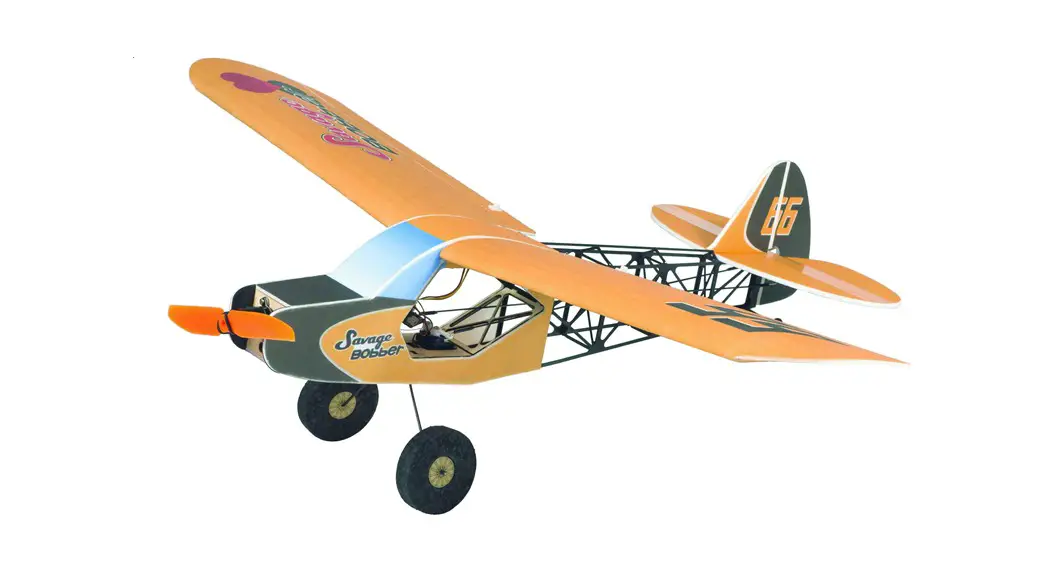
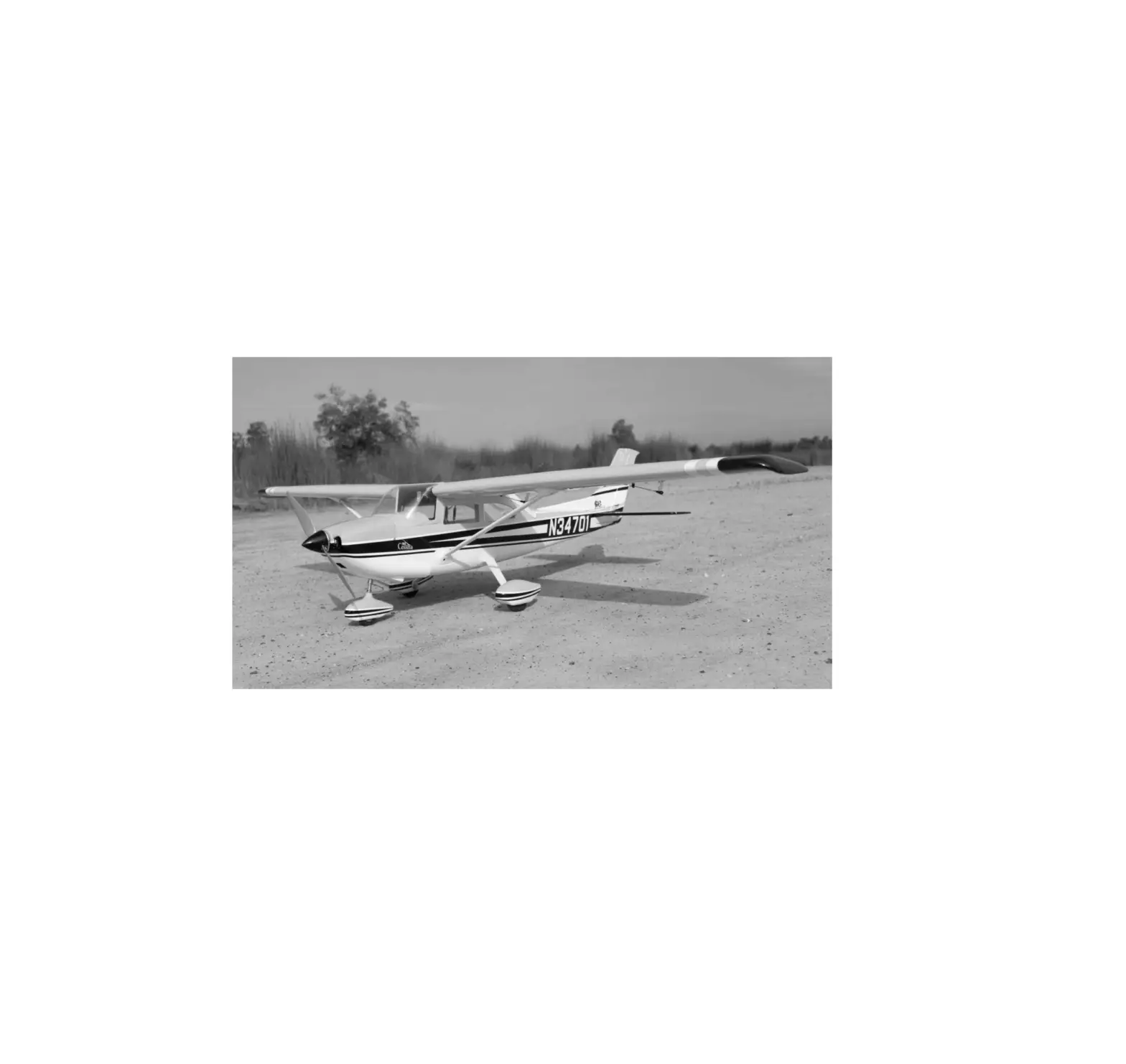
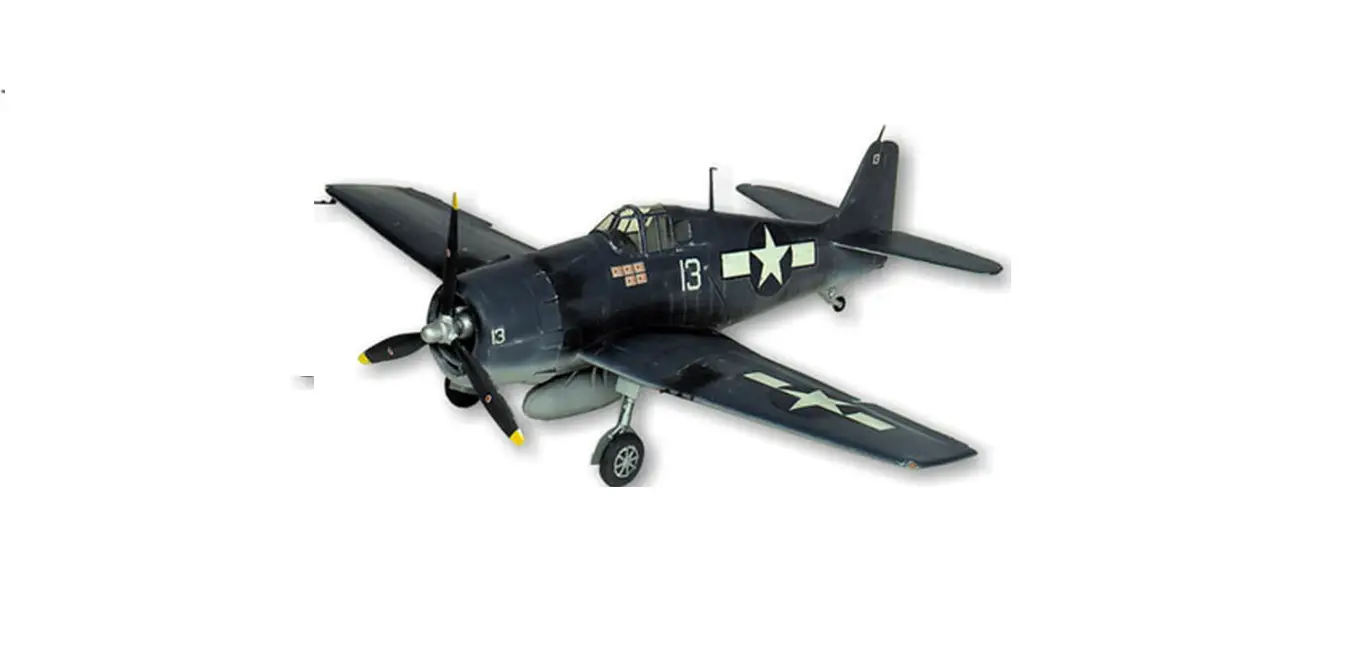
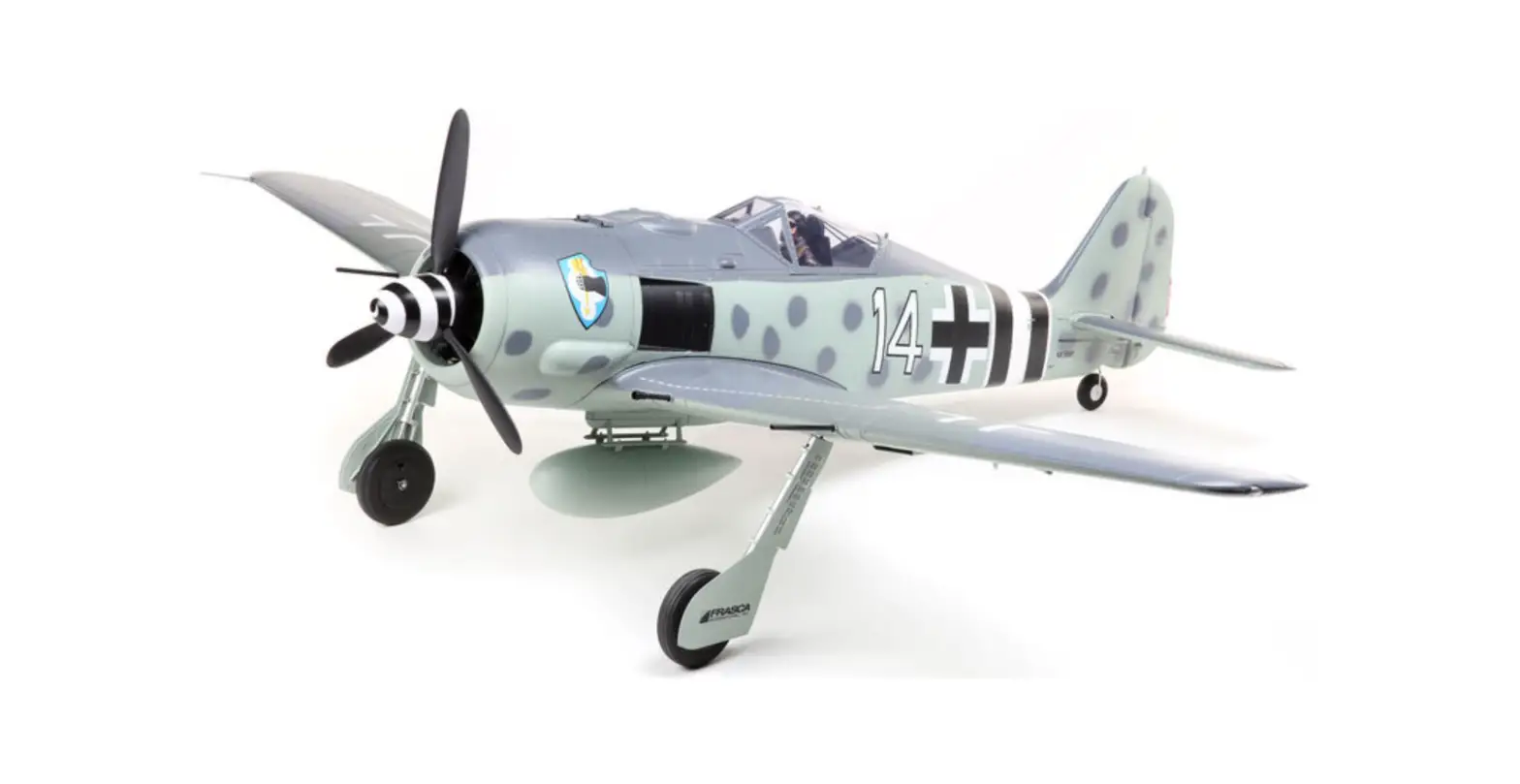
1.8M 1:5 Savage Bobber Balsa Wood Scale Airplane
Product Information
This product is a balsawood scale airplane with the model number
SCG33. It has a wingspan of 1.88 meters (74 inches) and a fuselage
length of 1.30 meters (51 inches). The flying weight of the
airplane is 3.8 kilograms.
Suggested Equipment
- Motor: EPMC3520 880KV GP2C 17cc or 50-55 Class
- Propeller: 14*7 inch
- ESC: 80A 4S
- Battery: 4S 5000mAh+
- Servos: 6 pieces of EP (37g) and 7 pieces of GP
- Receiver: 6 channels
Product Usage Instructions
- Before flying, perform pre-flight checks:
- Check and adjust servo centering for better control surface
adjustment. - Double-check the spinning direction of the motor to ensure it
is suitable for your model. - Set the center of gravity (CG) at the position marked in the
manual. Add weight to the nose or tail if necessary for optimal
flight performance. - Check the inside of the fuselage to ensure all equipment is
correctly connected. Verify the surface of the heat-shrink covering
material and ensure all screws, bolts, cabin, and canopy are
secure. - Take care when connecting/disconnecting the battery. Replace
the battery immediately if low voltage or damage is detected. - Review the connection of internal devices in relation to your
transmitter-receiver device. Simplify the connection if your device
supports it. Refer to your device’s instructions for details. - When pairing the power system and transmitter-receiver device
for the first time, set the maximum throttle stroke as
required.
- This product is not a toy and should be operated by individuals
who understand its complexity. Your safety and the safety of others
depend on correct usage. - Do not fly in restricted locations such as airports, military
bases, or residential areas. - Perform a range check on the transmitter to ensure no
interference is experienced. - Turn on the transmitter before turning on the receiver, and
turn off the receiver before turning off the transmitter. - If you are a beginner, seek assistance or advice from advanced
expert fliers before flying the model. - Keep relevant items out of reach of children.
- If engaging in high-stress flying, take necessary steps to
control movement range and reinforce the body strength. You are
solely responsible for this. - Some parts of this product may cause discomfort to the eyes and
skin. Wear goggles or dust-proof clothes when needed. - The glue mentioned in the list may not be included due to air
traffic safety control. Purchase the required glue from a local
stationery store.
For more information, visit:
PRE-FLIGHT CHECKS
Check/adjust servo centering, in order to adjust the control surface better.
Double-check the spinning direction of motor at first usage, and sure it’s suitable for your model.
CG Set the center of gravity (CG) at the position that manual already marked out. If necessary, add weight to the nose or tail to ensure the best flight performance.
Double-check the inside of the fuselage, make sure all the equipments are correctly connected; Check the heat-shrink covering material’s surface, Make certain all screws, bolts, cabin and canopy remain secure.
Take great care when connecting/disconnecting the battery, pls replace the battery immediately once found low voltage or damage to battery.
The way the internal devices of the fuselage are connected will be related to your transmitter-receiver device. For those transmitter-receiver devices with more functions, you can simplify the connection of the internal devices of the fuselage. Check your device for details to see if it meets the features you need.
When the power system and transmitter-receiver device are paired for the first time, you may need to set the maximum stroke of the throttle. Please set it yourself.
SAFETY PRECAUTIONS
14 This product should not be considered a toy, but rather a complicated and sophisticated flying model. Your safety depends on how you use and fly it, If not correctly operated, could cause injury to you or your family members. Children must be accompanied by an adult at all times if operating this product. Not suitable for children under the age of 14. THIS IS NOT A TOY.
Do not fly around some restricted location like airports, military bases, residential areas, etc.
You will need to range check the transmitter to be sure you are not experiencing any interference.
Always turn on the receiver last after turning on the transmitter and shut off the receiver first before turning off the transmitter.
If you are only a beginner to the radio control model flying, do not attempt to fly your model without any assistance or advice from advanced expert fliers.
Keep relevant items out of reach of children.
This product has been flight tested to meet or exceed our rigid performance and reliability standards in normal use,if you plan to perform any high-stress flying, you are solely responsible for taking any and all necessary steps to control movement range and reinforce the body strength.
This product may include some fiberglass and carbon-fiber reinforced plastic parts,which may cause eye and skin discomfort,pls wear the goggles or dust-proof clothes when needed.
Due to air traffic safety control, the products you receive may not have the glue that appears in the list. Please understand and purchase the glue you need at your local stationery store.
http://www.dwhobby.com/
Balsawood Scale Airplane
SCG33
ARF
Specification
:1.88M74″ :1.30M51″ : 3.8kg
Wingspan:1.88M74″ Fuselage Length:1.30M51″ Flying Weight:3.8kg
Suggested Equipment
EPMC3520 880KV GP2C 17cc or 50-55 Class
14*7inch 80A4S 4S 5000mAh+ 37g EP6pcs GP7pcs 6CH
Motor : EPMC3520 880KV GP2C 17cc or 50-55 Class
Prop : 14*7inch ESC80A4S Battery4S 5000mAh+ Servo : 37g EP6pcs GP7pcs Radio6CH
Tools Needed
KIT SCG33-A
/ Photos shown here just for reference, the product you received maybe slightly differ from the photos due to continuous improvement on products.
SCG33-B
SCG33-F
SCG33-D
SCG33-E.1
SCG33-E
SCG33-H SCG33-G L
I
SCG33-C K
SCG33-G.1 SCG33-G.2
J
SCG33-A: Fuselage SCG33-B: Wing SCG33-C: Cowling
SCG33-D: Horizontal tail
SCG33-E: Landing Gear+ Wheels
SCG33-F: Vertical tail
SCG33-G: Wing strut
SCG33-H Screws and accessories Rudder horn Wood block; Wood rod Connecting rod
I: Tail wheel
J: Carbon tube
K:PVC PVC window shield
Assembly symbol guide
Ensure free rotation
Use medium CA
Use thin CA
Use a pencil
01 Assemble the Landing Gear 01-1
SCG33-E
01-2
screw M3x15mm
wheel stopper
02 Assemble the Tail Wing and Tail Wheel
02-1
SCG33-D
SCG33-E.1
screw M3x15mm
02-2
02-3
Insert the paper hinges into the pre-cut openings in the elevator, and insert the rudder surface into the tail,finally glue the joints with quick-drying glue. Make sure to keep the rudder surface free to turn.
02-4
SCG33-A
Push tightly
x2 Repeat multiple times
1
Use hobby knife with
Apply threadlock
Fully Tighten
OIL Apply Oil
Assemble right and left
Use epoxy adhesive
Epoxy glue
Cut off the spare part of the covering film as shown above
Epoxy glue
Install the vertical tail to the rear of the fuselage and glue firmly with a lot of epoxy glue.
2
02-5
SCG33-F
I
02-6
Epoxy glue
SCG33-F
Epoxy glue
Adjust the wheels to be parallel to the rudder surface
02-7
10mm
02-8
02-9
02-10
02-11
Wheel stopper
Wheel stopper
2 Tighten the two wheel stoppers in above picture.
3
M1.5
03 Install the Wing 03-1 SCG33-B Aileron
03-2
Epoxy glue Epoxy glue
SCG33-B
Lubricant oil
Add some lubricating oil in the joint of needle type hinge.(Avoid the glue stuck dead.) Before install and fasten the needle type hinge with epoxide-resin glue , please confirm the surface can swing freely in advance.
03-3
Flap
03-4 03-5
M1.5
CA When installing the flap, drill holes in the reserved screw holes, and then tap a small amount of CA glue. After curing, screw in the self-tapping screws to install the hinges, so that the flaps can swing freely.
Self-tapping screw M2x10mm
Install the rudder horn at the rudder horn holes of the aileron and flap as shown in the figure below.
Aileron
Rudder horn
Flap
Rudder horn
Make the rudder arm as shown, and install the rudder arm to the steering servo.When installing the rudder arm, power on the servos back to the center.
4
03-6 03-7
Remove the servo compartment cover from the wing, and install the servos between the small wooden blocks.
Servo line export hole
03-8
Self-tapping screw M3x10mm
Guide the steering servo line into the wing and lead it out from the side of the wing. The two steering servos operate the same.
03-9
Connecting rod collet installation method
1. Open the connecting rod collet and buckle the rudder horn.
2. Then press the collet tightly, fix the collet with heat shrinking tube.
Connecting rod installation for aileron and flap in the same way.
03-10
Install the EZ-connector on the rudder arm, and then install the connecting rod to connect the rudder arm and the upper rudder horn of the aileron. After adjusting to the proper position, tighten the screw of EZ-connector to fix the connecting rod.
5
03-11 Install the wing strut
SCG33-G.1 SCG33-G.2
SCG33-G
1 Detail 1
Screw M3*10mm
2 Detail 2
SCG33-G
M3*15mm+ Screw+Self-locking nut
M3*15mm+ Screw+Self-locking nut
3 Detail 3
Note: the left and right wings are installed in the same way. Follow the above steps to complete the installation of the other wing.
03-12
carbon tube Ø6x145mm
SCG33-G
Screw M3*10mm
03-13
Servo wire goes through
carbon tube Ø14x660mm
03-14
2 Install the wing and insert it into the carbon tube, pay attention to butt the two carbon tubes,the servo wires pass through the reserved hole.
screw M4x40mm
Tighten the two screws in the picture above to fix the wings on both sides.
6
03-15
M3*20mm+ Screw+Self-locking nut
SCG33-G.1 SCG33-G.2
SCG33-G.1
SCG33-E SCG33-G.2
04 , Install rudder and elevator steering gear and connecting rod
04-1
CA Place a conduit inside the fuselage as shown in the figure on the left, the conduit is spliced by three short tubes. Pass through the reserved hole and fix the joints with CA glue.
1. Install the servo arm on the servo, and install the EZ-connector on the servo arm
2. One end of the connecting rod collet clamps the rudder horn, and the other end is inserted into the EZ-connector on the rudder arm. After adjusting to the proper position, lock the screws on the EZ-connector.
05 Install the Motor and Cowling
05-1
05-2
05-3
05-4
05-5
SCG33-C
04-2 04-4
7
Servo line import
2 Install 2 servos in the reserved position at the rear of the fuselage as shown in the left figure, the steering servo wire is introduced into the wire tube and exported from the other end.
04-3
Servo line export hole
04-5
Rudder horn
Rudder horn
03-9 Collet installation method Refer to the step 03-9
Here the connecting rod may need to be bent according to the choice of different servos.
05-6
Self-tapping screw M3x10mm
Install the motor mount into the head of the aircraft, adjust the length of the motor mount according to the installation position of the cowling, so that the motor, propller and cowling do not interfere with each other,and finally fix the motor mount with self-tapping screws.
05-7
K
K
M1.5
Self-tapping screw M3x10mm
Self-tapping screw M3x8mm
8
06 Display the stay wire and scale parts
Cut the nylon stay wire according to the length, thread it through the loop, and tie a knot to secure it.
Front of horizontal tail
Install the cable tie at the reserved hole position as shown in the figure.
M2*10mm+ Screw+nut
SCG33-H
X2
Epoxy glue
08 Set and Adjust Display the C.G
110mm C.G
Back of the horizontal tail
X2
Install the cable tie at the reserved hole position as shown in the figure.
Cut the nylon stay wire according to the length, thread it through the loop, and tie a knot to secure it.
M2*10mm+ Screw+nut
X2
Install the cable tie at the reserved hole
position as shown in the figure.
9
10
Usually, the control throws set as below:
110mm
C.G
Aileron
20°-35° 20°-35°
25° 25°
Elevator
25° 25°
Rudder
(Normal Flying)
3D (3D Flying only support some models)
Aileron
±15°-30°
±40° (or larger)
Elevator
±15°
±40° (or larger)
Rudder
±15°
±40° (or larger)
Flap take-off15°-20° Landing20°-40°
V Some special models will have V-tails, flaps, leading edge wings, etc., which can be used as a reference for conventional flight angles. If you do not confirm and there is no experienced person to guide you, we recommend that you first test at a small angle to confirm that your settings are correct.
Control Directions Tests
Lifting rod down
Elevator
Lifting rod up
Steering rod to the right
Aileron
Steering rod to the left
Direction rod to the right
Rudder
Direction rod to the left
More details about power system adjustment, please refer to below link: (You can scan QR Code directly.)
http://www.dwhobby.com/art/connection
11
12
NOTE
13
 DancingWingsHobby AEOrc ELErc HOBBY, RC PLANE,Balsawood Airplane,EPP Foamy Plane,BRUSHLESS MOTOR ,EDF,BLADE,PROPELLER