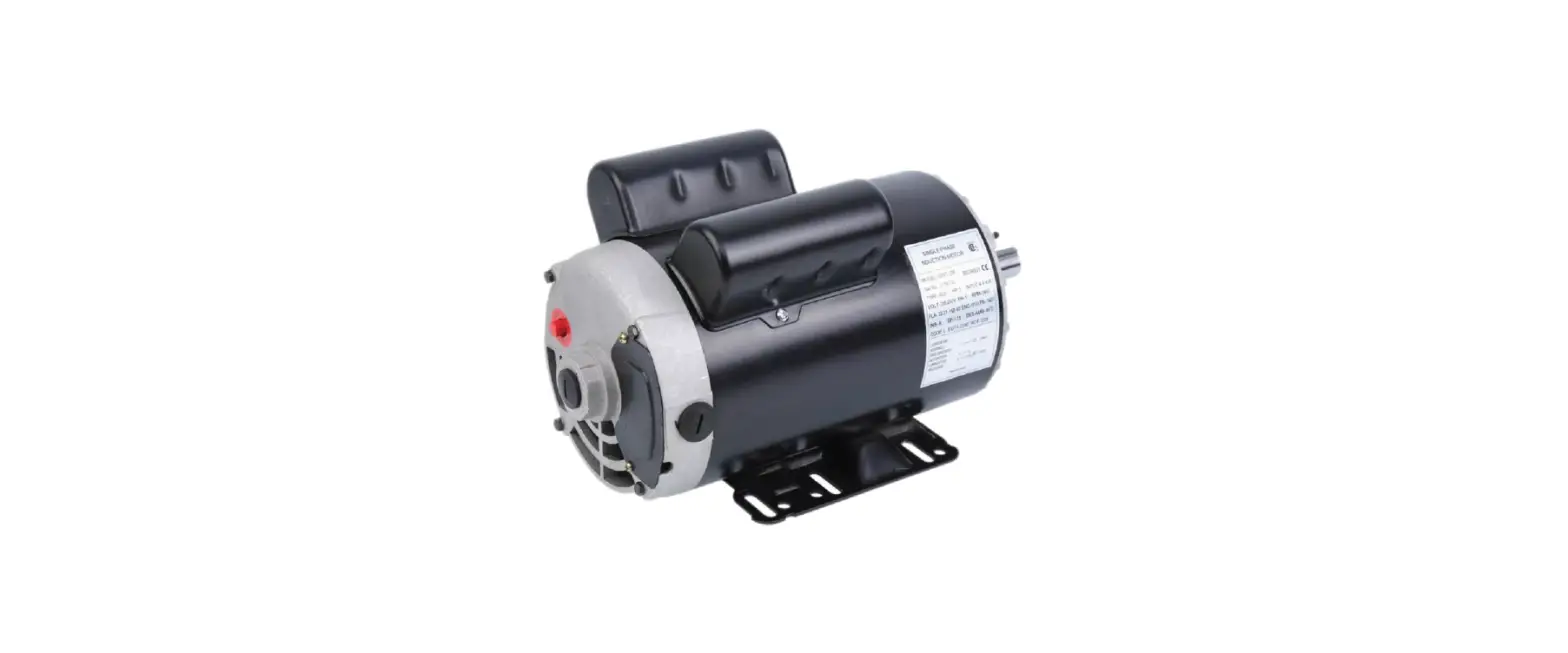
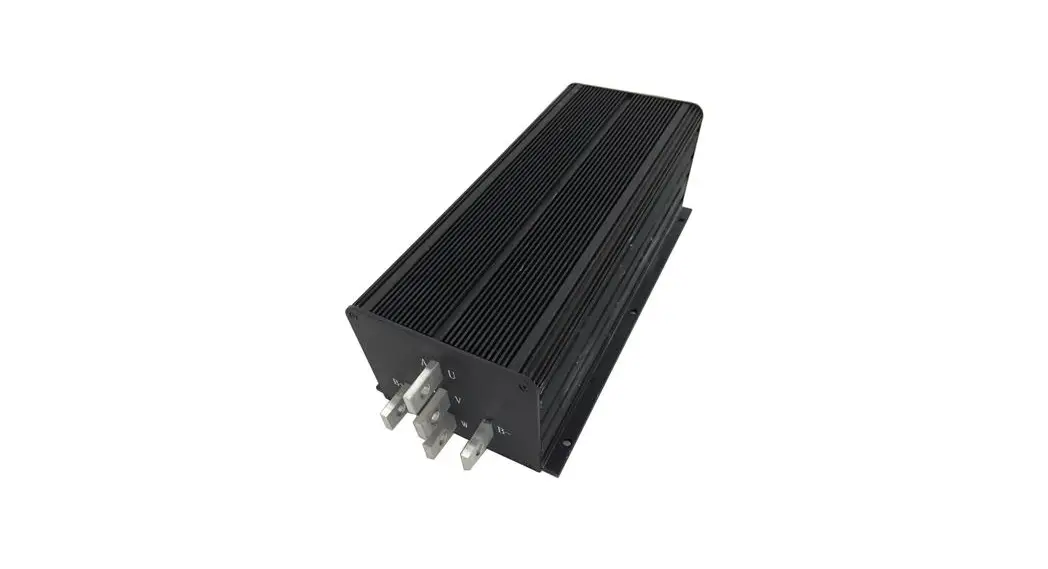
3450 RPM Single Phase Motor
Product Information
The product is a single-phase electric motor with 2 capacitors
and a high speed of 3,450 RPM. It is available in two models –
MOE-2A and MOE-1-1/2A, with rated power of 2 Hp (1.491 kW) and
1-1/2 Hp (1.118 kW) respectively. The motor operates at a voltage
of 115V or 230V and frequency of 60 Hz. It has a service factor of
1.15 and is equipped with permanently connected start-up and
operating switches. The motor has a shaft diameter of 5/8 inches
(1.6 cm) with a shaft wedge of 1 3/8 x 3/16 inches (3.5 cm x 0.5
cm). It has a maximum temperature of Class F and insulation class
of IP21. The motor has an open drip-proof enclosure and weighs 14
kg.
Product Usage Instructions
Before using the tool, read the user manual thoroughly to ensure
the best performance of the tool, prolong its duty life, make the
warranty valid if necessary, and avoid hazards of fatal injuries.
Keep the manual for future reference.
Electric Requirements
When using an extension cord, ensure that the gauge is
sufficient for the current the equipment will draw to avoid line
voltage drops, loss of power, and motor overheating. Refer to the
tables in the user manual to determine the correct gauges to use
depending on the length of cable and ampere rating indicated on the
tool’s nameplate.
General Power Tool Safety Warnings
Read all safety warnings and instructions carefully before using
the tool to avoid electric shock, fire, and severe damage. Save all
warnings and instructions for future reference.
ENGLISH
ESPAÑOL
Manual
2-capacitor Single-phase Motor
3 450 RPM HIGH SPEED
Applies for:
Codes
Models
102313 102312
MOE-2A MOE-1-1/2A
CAUTION
Read this manual thoroughly before using the tool.
Technical Data
3
Dimensions
3
Electric requirements
4
General safety warnings for power tools
5
Safety warnings for electric motors
6
Parts
6
Mounting
7
Connections
8
Troubleshooting
9
Notes
12
Authorized Service Centers
13
Warranty Policy
14
Contents
CAUTION
To gain the best performance of the tool, prolong the duty life,
make the Warranty valid if necessary, and to avoid hazards of fatal injuries please read and understand this Manual before
using the tool.
Keep this manual for future references. The illustrations in this manual are for reference only. They might be different from the real tool.
MOE-2A MOE-1-1/2A
2 ENGLISH
Technical Data
Code Description Rated power
Voltage Frequency
Current Service factor Current operating at service factor
Start type Shaft diameter
Shaft wedge Speed
Maximum temperature Insulation class IP Grade Frame
Type of enclosure Weight
Length (A) Dimensions
MOE-2A 102313
MOE-1-1/2A 102312
High speed single phase electric motor with 2 capacitors
2 Hp (1.491 kW)
1-1/2 Hp (1.118 kW)
115 V / 230 V
60 Hz
19.4 A / 9.7 A
15.6 A / 7.8 A
1.15
22 A / 11 A
17.4 A / 8.7 A
Permanently connected start-up and operating switches
5/8″ (1.6 cm)
1 3/8″ x 3/16″ (3.5 cm x 0.5 cm)
3 450 RPM
104 °F
Class F
IP 21
56 (NEMA)
Open drip-proof
14 kg
12 kg
30 cm
29 cm
A
4.8 cm
21.5 cm 8.9 cm
12.4 cm 16.5 cm
7.6 cm 7 cm
ENGLISH 3
Electric requirements
WARNING The equipment must be grounded to prevent electric shock. · Connect the plug into a properly grounded outlet. Not all outlets are properly grounded, if you are not sure, check with a qualified electrician. · If the outlet available for the equipment is a 2-pole (2-hole) outlet, DO NOT REMOVE OR ALTER THE GROUND CONDUCTOR OF YOUR PLUG FOR ANY REASON.
CAUTION · Connection to the power source must be made by an electrical professional, following one of the diagrams on page 8.
CAUTION · Use a separate electrical circuit for the motor. This circuit must not have conductors with a gauge smaller than 12 AWG, and must be protected with a 20 to 30 A time delay fuse depending on the current of each model. · Before connecting the motor to the power line, make sure that the voltage is equal to that indicated on the motor nameplate. Operating with a lower voltage will damage the motor.
CAUTION · The ground wire gauge must not be smaller than the power supply wire gauge. · It is recommended that the motor be supplied with a circuit that includes a residual current circuit breaker with a rated current of no more than 30 mA. · The 0.560 kW motor has a built-in thermal protector to protect against overheating. Motors from 0.746 kW to 1.491 kW do not have a thermal protector, it is recommended to protect them by installing a motor guard.
CAUTION When using an extension cord, make sure the gauge is sufficient for the current the equipment will draw. Under-gauging will result in line voltage drops, loss of power and motor overheating. The following tables show the correct gauges to use depending on the length of the cable and the ampere rating indicated on the tool’s nameplate. If in doubt use the next higher gauge.
230 Volts
Ampere capacity
From 0 A up to 11 A From 11 A up to 15 A From 15 A up to 17 A From 17 A up to 23 A
Number of conductors (*)
3 (one grounded)
Extension gauge
from 5.9′ to 49.2′ | higher than 49.2′
181A6WAGW(G**) 14 AWG 10 AWG
16 AWG 14 AWG 12 AWG 8 AWG
115 Volts
Ampere capacity
Number of
Extension gauge
conductors (*) from 5.9′ to 49.2′ | higher than 49.2′
From 0 A up to 10 A From 10 A up to 13 A From 13 A up to 15 A From 15 A up to 20 A
3 (one grounded)
181A6WAGW(G**) 14 AWG 8 AWG
16 AWG 14 AWG 12 AWG 6 AWG
* One of the conductors must be a grounding conductor. All conductors are of the same designation (gauge) including the grounding conductor. ** It is allowed to use it as long as the extensions themselves are provided with an overcurrent protection device. AWG = American Wire Gauge. Reference: NMX-J-195-ANCE
WARNING All wiring, electrical connections and grounding of the system must comply with MEXICAN OFFICIAL NOM-001-SEDE, ELECTRICAL INSTALLATIONS (UTILIZATION) or local codes and ordinances. A qualified electrician must be employed.
4 ENGLISH
General power tool safety warnings
WARNING! Read carefully all safety warnings and instruction listed below. Failure to comply with any of these warnings may result in electric shock, fire and / or severe damage. Save all warnings and instructions for future references.
Work area Keep your work area clean, and well lit. Cluttered and dark areas may cause accidents.
Remove any wrench or vice before turning the power tool on. Wrenches or vices left attached to rotating parts of the tool may result in personal
injury.
Never use the tool in explosive atmospheres, such as in the presence of flammable liquids, gases or dust. Sparks generated by power tools may ignite the flammable material.
Keep children and bystanders at a safe distance while operating the tool. Distractions may cause loosing control.
Electrical Safety The tool plug must match the power outlet. Never modify the plug in any way. Do not use any adapter plugs with grounded power tools. Modified plugs and different power outlets increase the risk of electric shock.
Avoid body contact with grounded surfaces, such as pipes, radiators, electric ranges and refrigerators. The risk of electric shock increases if your body is grounded.
Do not expose the tool to rain or wet conditions. Water entering into the tool increases the risk of electric shock.
Do not force the cord. Never use the cord to carry, lift or unplug the tool. Keep the cord away from heat, oil, sharp edges or moving parts. Damaged or entangled cords increase the risk of electric shock.
When operating a tool outdoors, use an extension cord suitable for outdoor use. Using an adequate outdoor extension cord reduces the risk of electric shock.
Do not overreach. Keep proper footing and balance at all times. This enables a better control on the tool during unexpected situations.
Dress properly. Do not wear loose clothing or jewelry. Keep hair, clothes and gloves away from the moving parts. Loose clothes or long hair may get caught in moving parts.
If you have dust extraction and recollection devices connected onto the tool, inspect their connections and use them correctly. Using these devices reduce dust-related risks.
Power Tools Use and Care Do not force the tool. Use the adequate tool for your application. The correct tool delivers a better and safer job at the rate for which it was designed.
Do not use the tool if the switch is not working properly. Any power tool that cannot be turned ON or OFF is dangerous and should be repaired before operating.
Disconnect the tool from the power source and / or battery before making any adjustments, changing accessories or storing. These measures reduce the risk of accidentally starting the tool.
Store tools out of the reach of children. Do not allow persons that are not familiar with the tool or its instructions to operate the tool. Power tools are dangerous in the hands of untrained users.
If operating the tool in a damp location cannot be avoided, use a ground fault circuit interrupter (GFCI) protected supply. Using a GFCI reduces the risk of electric shock.
Personal safety Stay alert, watch what you are doing and use common sense when operating a tool. Do not use a power tool while you are tired or under the influence of drugs, alcohol or medication. A moment of distraction while operating the tool may result in personal injury.
Service the tool. Check the mobile parts are not misaligned or stuck. There should not be broken parts or other conditions that may affect its operation. Repair any damage before using the tool. Most accidents are caused due to poor maintenance to the tools.
Keep the cutting accessories sharp and clean. Cutting accessories in good working conditions are less likely to bind and are easier to control.
Use personal protective equipment. Always wear eye protection. Protective equipment such as safety glasses, anti-dust mask, non-skid shoes, hard hats and hearing protection used in the right conditions significantly reduce personal injury.
Use the tool, components and accessories in accordance with these instructions and the projected way to use it for the type of tool when in adequate working conditions. Using the tool for applications different from those it was designed for, could
result in a hazardous situation.
Prevent unintentional starting up. Ensure the switch is in the “OFF” position before connecting into the power source and / or battery as well as when carrying the tool. Transporting power tools with the finger on the switch or connecting power tools with the switch in the “ON” position may cause accidents.
This tool is in compliance with the Official Mexican Standard (NOM – Norma Oficial Mexicana).
Service
Repair the tool in a
Authorized Service Center
using only identical spare parts.
This will ensure that the safety of the power tool is maintained.
Children or people with reduced physical; sensory or mental capabilities shall not operate the tool, neither inexperienced people or without knowledge in the use of the tool, unless supervised by a person responsible of their safety or if receiving previous instructions about the tool operation. Children shall be kept under supervision to double-check they will not play with the tool. Tight supervision shall be used with children or disabled persons to prevent from using or being close to any household tool.
ENGLISH 5
CAUTION · Before installing or operating the equipment, disconnect from any power source to avoid electric shock and/or burns due to short circuits.
CAUTION · Do not touch the bare (unprotected) terminal. An electric shock will result.
CAUTION · Do not touch any live lines simultaneously, an electric shock will result.
CAUTION · Do not install or handle equipment without proper protective equipment or with wet hands. · Do not install, connect, disconnect or handle the equipment under load. With the exception of socket outlets, never connect pluggable equipment when it is energized. · If you do not have or doubt that you have the appropriate technical knowledge, never install or handle the equipment. · Before installation, be sure to read these operating instructions carefully to ensure correct operation.
CAUTION · Installation, maintenance and inspection of electrical equipment must be carried out by qualified technicians with special knowledge. · Do not install the equipment in an environment with shock, high temperature, humidity, dust, corrosive gases, excessive vibration, etc. to avoid fire accidents and/or equipment malfunction. · Use electrical equipment with the voltage and current ratings shown on the nameplate, otherwise it may cause malfunctions and even dangerous situations.
Safety warnings for electric motors
· Tighten the terminal screws to the proper torque to prevent overheating. · Make sure that the equipment and the connection cables are securely fastened. · Always use terminals on the cables to which the equipment is connected, these must be suitable for the load to be supported. · If there are several terminals in close proximity, each terminal or conductor pole must be connected in parallel. · If the equipment is equipped with grounding terminals, make sure they are grounded. · Always connect the equipment according to the indications and diagrams provided by the manufacturer. · Never exceed the operating ranges indicated by the manufacturer. · Do not modify the equipment. · When the equipment is to be disposed of, it should be disposed of as industrial waste. · Do not connect aluminum terminals and conductors to the switch directly. · Always comply with the regulations in force at the place of installation.
Parts
Shaft key
Connection panel cover
Starting and working
capacitors
Name plate
Shaft
Ventilation slots
Base with fixing holes
6 ENGLISH
Ventilation slots
Cable outlet to ground
Power cord inlet
Mounting
Motor mounting
CAUTION · Before mounting the motor remove the plastic cover from the shaft and rotate it by hand. The motor shaft must rotate freely. · The motor is mounted by means of its rigid base, which must be fixed on a flat surface prepared for installation according to the dimension table shown on page 3, using four 5/16″ (8 mm) diameter screws or threaded bolts. · If mounting on steel plate (A) it is recommended that the thickness of the steel plate be no less than the bolt diameter. · For mounting on concrete or concrete slab (B), a free bolt thread length of not less than 7/16″ (11 mm) is recommended. · Use a drop level or laser to validate motor levelness. If the motor is not level, use calibrated adjustment blades to shim the motor base and correct any deviations in flatness between surfaces.
Shaft joint
· The motor shaft includes a 3/16″ (0.5 cm) x 1-3/8″ (3.5 cm) key to transmit motion to the coupling. · Depending on the application, the shaft can be coupled to the machine in three ways: 1. Gear or sprocket coupling. 2. Coupling by pulleys or flywheel. 3. Coupling by connecting joint.
1
2
3
· In any of the cases, a correct alignment of the couplings
must be ensured to reduce the vibration of the assembly
between the motor and the driven machine and to
extend the life of the bearings and avoid damage to the
motor shaft.
· The use of flexible couplings, capable of absorbing
small alignment deviations inherent to the installation
during operation of the equipment, is recommended.
· In applications of coupling by means of connecting
joints, the motor must be aligned both axially and radially
A
as shown in the image.
B
ENGLISH 7
· For belt and chain drive applications, verify that the centers of the drive and driven pulleys and/or sprockets are aligned with each other as shown. · Proper alignment and mounting will reduce motor noise and workload vibration.
Mounting
CAUTION · To perform the wiring, make sure that the lines are not energized. · Remove the rear cover (A) to access the connection panel. · Make the connections according to the voltage configuration that best suits your needs.
Voltage configuration
115 Volts
Red 1
Blue
Orange
2
Black White Yellow
3 4
Ground Line 1
Line 2
Connections
A
230 Volts
Red 1
Blue
Orange
2
Black White Yellow
3 4
Ground Line 1
Line 2
Direction of rotation configuration
· When using any of the configurations shown above, the motor shaft rotates clockwise as viewed from the connection panel. To reverse counterclockwise rotation: interchange the red and black wires.
8 ENGLISH
Troubleshooting
Problem
The engine takes a long time to accelerate.
Cause
· Defective bearings. · Defective capacitor. · Faulty stationary switch. · Voltage too low.
Solution
· The bearing must be replaced.
· Refer to a
Authorized Service
Center for repair.
· Inspect and repair the switch contacts and connections.
· Make sure the voltage is within 10% of the motor
rating. If not, contact the power company or check to see
if other equipment is drawing power away from the
motor.
Motor does not start · The fan guard is bent and in contact with
after initial
the fan.
installation.
· The motor is damaged and the rotor is
hitting the stator.
· The motor has bad wiring.
· Refer to a Center for repair.
Authorized Service
· Check that the motor is correctly wired according to the information supplied with the motor.
The shaft rotates in the opposite direction.
· Wiring configured to rotate in the opposite direction. · Ambient temperature too high.
The overload protector trips continuously.
· The winding is shorted or grounded. · Protector may be defective.
· Excessive load.
· Rewire the motor according to the configuration diagram on page 8.
· Check that the motor receives sufficient air for proper
cooling. The motor is designed to operate below 104 °F
Note: A properly running motor may be hot to the touch.
· Inspect the stator for defects or loose or cut wires that
may cause it to ground.
· Refer to a
Authorized Service
Center for repair.
· Verify that the load is not jammed. If the motor is a
a replacement, verify that the rating is the same as the
old motor. If the old motor was a special design, a stock
motor may not be able to match the performance.
Remove the load from the motor and inspect the
amperage draw of the motor under load. It should be
less than the full load rating stamped on the nameplate.
Engine has been · The motor or its capacitor may have running and then will failed. not start.
· The stator is shorted or has gone to ground. The motor will hum and the circuit breaker or fuse will trip. · The starter switch has failed.
· The fuse or circuit breaker has tripped. · Motor overloaded or load stuck.
· First discharge the capacitor. To check the capacitor, set the voltmeter to the RX100 scale and touch its probes to the capacitor terminals. If the capacitor is OK, the needle will jump to zero ohms and back up again. A steady zero ohms indicates a short circuit; a steady high ohm indicates an open circuit. · Disassemble the motor and inspect the winding and internal connections. A burned stator will show a burn mark. The motor must be replaced or the stator rewound. · Disassemble the motor and inspect the centrifugal and stationary switches. The centrifugal switch weights should move freely in and out. Make sure the switch is not loose on the shaft. Inspect the contacts and connections of the stationary switch. Replace the switch if the contacts are burned or pitted · Replace the fuse or reset the circuit breaker. · Inspect to see that the load is free. Check motor amp draw against nameplate rating.
ENGLISH 9
Troubleshooting
Problem
Cause
Motor runs, but shuts · Voltage drops. off.
· Load increase.
Solution
· If the voltage is less than 10% of the motor rating, contact the power company. · Check to see if any other equipment is drawing power from the motor and if the motor is running on an extension cord. Verify that the extension cord is the proper gauge for the motor current.
The motor vibrates. · Unbalanced load. · Unbalanced rotor.
· Defective motor bearings. · Motor misaligned with load. · Too much backlash at motor ends. · Defective windings.
· Remove the load from the motor for inspection.
Verify that the shaft is not bent. Rule of thumb:
0.001″deflection per inch of shaft length.
· Remove the load from the motor to inspect it. If it
feels rough and vibrates but the bearings are OK, the
rotor may have been improperly balanced at the
factory. Refer to a
Authorized
Service Center for repair.
· If the bearings are bad, you will hear a noise or feel a
roughness. Go to a
Authorized
Service Center to replace the bearings. Add grease if
the bearings have fittings.
· Realign the load.
· With the motor disconnected from power, rotate the
shaft. It should move, but with some resistance. If the
shaft moves in and out freely, this indicates a preload
problem and the bearings may need additional shims.
· Check to see if the winding is shorted or open. Amps
may also be high. Refer to a
Au-
thorized Service Center for repair.
Run capacitor failure. · Possible power surge in the motor caused by lightning or other high transient voltage. · Ambient temperature is too high.
· This is a common problem. Install an over voltage protector or motor protector relay. · Verify that the ambient temperature does not exceed the motor nameplate.
Starting capacitors · The motor starts too often. are constantly failing.
· Motor is not coming up to speed fast enough.
· Check the duty cycle. Capacitor manufacturers recommend no more than 20 starts of three-second per hour. Install a capacitor with a higher voltage rating or add a bleeder resistor to the capacitor. · The motor may not be properly sized. Check the time it takes for the motor to reach speed. Most single-phase motors with starting capacitors should reach speed in three seconds. If not, the capacitors may be failing.
A loud rubbing or · The starter switch may be defective, squeaking noise is preventing the motor from coming out of produced at start-up. the starter winding.
· Motor voltage is too low. · The rotor may be hitting the stator.
· Replace the switch. · Verify that the motor voltage is within 10% of the nameplate value. · Make sure that the motor has not been damaged during transport. · Damage to the frame may not be repairable. If you cannot see physical damage, inspect the motor rotor and stator for scuff marks. If there are signs of scuffing, the motor should be replaced. Sometimes, simply disassembling and reassembling the motor will eliminate the scuffing. Sometimes end bells become misaligned during shipping.
10 ENGLISH
Troubleshooting
Problem
Bearings fail continuously.
Elevated or abnormal noise.
Cause
· High ambient temperature.
· Motor load may be excessive or unbalanced.
Solution
· If the engine is operated in a warm environment, a
different type of bearing grease may be required. Contact
a
Authorized Service Center
for a recommendation of the proper type of grease.
· In addition to checking the load, also inspect the drive
belt tension to make sure it is not tight or perhaps too
high. An unbalanced tip will also cause the bearings to
fail.
· Defect of the components of the driven machine. · Misaligned base or unlevel motor. · Incorrect motor rotation direction. · Loose fixing screws. · Deteriorated bearings.
· Check the power transmission of the applied load. · Align and level the motor and load. · Reverse the direction of rotation of the load. · Tighten the fixing bolts. · Replace bearings.
If problems persist despite performing the recommended corrective actions,
contact a
Authorized Service Center.
ENGLISH 11
Notes
12 ENGLISH
Authorized Service Centers
In the event of any problem contacting a Truper Authorized Service Center, please see our webpage www.truper.com to get an updated list, or call our toll-free numbers 800 690-6990 or 800 018-7873 to get information about the nearest Service Center.
AGUASCALIENTES DE TODO PARA LA CONSTRUCCIÓN GRAL. BARRAGÁN #1201, COL. GREMIAL, C.P. 20030, AGUASCALIENTES, AGS. TEL.: 449 994 0537
BAJA SUCURSAL TIJUANA CALIFORNIA AV. LA ENCANTADA, LOTE #5, PARQUE INDUSTRIAL EL
FLORIDO II, C.P 22244, TIJUANA, B.C. TEL.: 664 969 5100 BAJA FIX FERRETERÍAS CALIFORNIA SUR FELIPE ÁNGELES ESQ. RUIZ CORTÍNEZ S/N, COL. PUEBLO NUEVO, C.P. 23670, CD. CONSTITUCIÓN, B.C.S. TEL.: 613 132 1115 CAMPECHE TORNILLERÍA Y FERRETERÍA AAA AV. ÁLVARO OBREGÓN #324, COL. ESPERANZA C.P. 24080 CAMPECHE, CAMP. TEL.: 981 815 2808 CHIAPAS FIX FERRETERÍAS AV. CENTRAL SUR #27, COL. CENTRO, C.P. 30700, TAPACHULA, CHIS. TEL.: 962 118 4083 CHIHUAHUA SUCURSAL CHIHUAHUA AV. SILVESTRE TERRAZAS #128-11, PARQUE INDUSTRIAL BAFAR, CARRETERA MÉXICO CUAUHTÉMOC, C.P. 31415, CHIHUAHUA, CHIH. TEL. 614 434 0052 CIUDAD DE FIX FERRETERÍAS MÉXICO EL MONSTRUO DE CORREGIDORA, CORREGIDORA # 22, COL. CENTRO, C.P. 06060, CUAUHTÉMOC, CDMX. TEL: 55 5522 5031 / 5522 4861 COAHUILA SUCURSAL TORREÓN CALLE METAL MECÁNICA #280, PARQUE INDUSTRIAL ORIENTE, C.P. 27278, TORREÓN, COAH. TEL.: 871 209 68 23 COLIMA BOMBAS Y MOTORES BYMTESA DE MANZANILLO BLVD. MIGUEL DE LA MADRID #190, COL. 16 DE SEPTIEMBRE, C.P. 28239, MANZANILLO, COL. TEL.: 314 332 1986 / 332 8013 DURANGO TORNILLOS ÁGUILA, S.A. DE C.V. MAZURIO #200, COL. LUIS ECHEVERRÍA, DURANGO, DGO.TEL.: 618 817 1946 / 618 818 2844 ESTADO DE SUCURSAL CENTRO JILOTEPEC MÉXICO PARQUE INDUSTRIAL # 1, COL. PARQUE INDUSTRIAL JILOTEPEC, JILOTEPEC, EDO. DE MÉX. C.P. 54257 TEL: 761 782 9101 EXT. 5728 Y 5102 GUANAJUATO CÍA. FERRETERA NUEVO MUNDO S.A. DE C.V. AV. MÉXICO – JAPÓN #225, CD. INDUSTRIAL, C.P. 38010, CELAYA, GTO. TEL.: 461 617 7578 / 79 / 80 / 88 GUERRERO CENTRO DE SERVICIO ECLIPSE CALLE PRINCIPAL MZ.1 LT. 1, COL. SANTA FE, C.P. 39010, CHILPANCINGO, GRO. TEL.: 747 478 5793 HIDALGO FERREPRECIOS S.A. DE C.V. LIBERTAD ORIENTE #304 LOCAL 30, INTERIOR DE PASAJE ROBLEDO, COL. CENTRO, C.P. 43600, TULANCINGO, HGO. TEL.: 775 753 6615 / 775 753 6616 JALISCO SUCURSAL GUADALAJARA AV. ADOLFO B. HORN # 6800, COL: SANTA CRUZ DEL VALLE, C.P.: 45655, TLAJOMULCO DE ZUÑIGA, JAL. TEL.: 33 3606 5285 AL 90 MICHOACÁN FIX FERRETERÍAS AV. PASEO DE LA REPÚBLICA #3140-A, COL. EX-HACIENDA DE LA HUERTA, C.P. 58050, MORELIA, MICH. TEL.: 443 334 6858
MORELOS FIX FERRETERÍAS CAPITÁN ANZURES #95, ESQ. JOSÉ PERDIZ, COL. CENTRO, C.P. 62740, CUAUTLA, MOR. TEL.: 735 352 8931
NAYARIT HERRAMIENTAS DE TEPIC MAZATLAN #117, COL. CENTRO, C.P. 63000, TEPIC, NAY. TEL.: 311 258 0540
NUEVO LEÓN SUCURSAL MONTERREY CARRETERA LAREDO #300, 1B MONTERREY PARKS, COLONIA PUERTA DE ANÁHUAC, C.P. 66052, ESCOBEDO, NUEVO LEÓN, TEL.: 81 8352 8791 / 81 8352 8790
OAXACA FIX FERRETERÍAS AV. 20 DE NOVIEMBRE #910, COL. CENTRO, C.P. 68300, TUXTEPEC, OAX. TEL.: 287 106 3092
PUEBLA SUCURSAL PUEBLA AV PERIFÉRICO #2-A, SAN LORENZO ALMECATLA, C.P. 72710, CUAUTLACINGO, PUE. TEL.: 222 282 8282 / 84 / 85 / 86
QUERÉTARO ARU HERRAMIENTAS S.A DE C.V. AV. PUERTO DE VERACRUZ #110, COL. RANCHO DE ENMEDIO, C.P. 76842, SAN JUAN DEL RÍO, QRO. TEL.: 427 268 4544
QUINTANA ROO FIX FERRETERÍAS CARRETERA FEDERAL MZ. 46 LT. 3 LOCAL 2, COL EJIDAL, C.P. 77710 PLAYA DEL CARMEN, Q.R. TEL.: 984 267 3140
SAN LUIS FIX FERRETERÍAS POTOSÍ AV. UNIVERSIDAD #1850, COL. EL PASEO, C.P. 78320, SAN LUIS POTOSÍ, S.L.P. TEL.: 444 822 4341
SINALOA SUCURSAL CULIACÁN AV. JESÚS KUMATE SUR #4301, COL. HACIENDA DE LA MORA, C.P. 80143, CULIACÁN, SIN. TEL.: 667 173 9139 / 173 8400
SONORA FIX FERRETERÍAS CALLE 5 DE FEBRERO #517, SUR LT. 25 MZ. 10, COL. CENTRO, C.P. 85000, CD. OBREGÓN, SON. TEL.: 644 413 2392
TABASCO SUCURSAL VILLAHERMOSA CALLE HELIO LOTES 1, 2 Y 3 MZ. #1, COL. INDUSTRIAL, 2A ETAPA, C.P. 86010, VILLAHERMOSA, TAB. TEL.: 993 353 7244
TAMAULIPAS VM ORINGS Y REFACCIONES CALLE ROSITA #527 ENTRE 20 DE NOVIEMBRE Y GRAL. RODRÍGUEZ, FRACC. REYNOSA, C.P. 88780, REYNOSA, TAMS. TEL.: 899 926 7552
TLAXCALA SERVICIOS Y HERRAMIENTAS INDUSTRIALES PABLO SIDAR #132, COL . BARRIO DE SAN BARTOLOMÉ, C.P. 90970, SAN PABLO DEL MONTE, TLAX. TEL.: 222 271 7502
VERACRUZ LA CASA DISTRIBUIDORA TRUPER BLVD. PRIMAVERA. ESQ. HORTENSIA S/N, COL. PRIMAVERA C.P. 93308, POZA RICA, VER. TEL.: 782 823 8100 / 826 8484
YUCATÁN SUCURSAL MÉRIDA CALLE 33 #600 Y 602, LOCALIDAD ITZINCAB Y MULSAY, MPIO. UMÁN, C.P. 97390, MÉRIDA, YUC. TEL.: 999 912 2451
ENGLISH 13
Warranty policy
Model
Code
Brand
102313 102312
MOE-2A MOE-1-1/2A
Warranty. Duration: 1 year. Coverage: parts, components and workmanship against manufacturing or operating defects, except if used under conditions other than normal; when it was not operated in accordance with the instructive; was altered or repaired by personnel not authorized by Truper®. To make the warranty valid, present the product, stamped policy or invoice or receipt or voucher, in the establishment where you bought it or in Corregidora 22, Centro, Cuauhtémoc, CDMX, 06060, where you can also purchase parts, components, consumables and accessories. It includes the costs of transportation of the product that derive from its fulfillment of its service network. . Phone number 800-018-7873. Made in China. Imported by Truper, S.A. de C.V. Parque Industrial 1, Parque Industrial Jilotepec, Jilotepec, Edo. de Méx. C.P. 54257, Phone number 761 782 9100.
1
YEAR
Stamp of the business. Delivery date:
14 ENGLISH
www.truper.com 06-2022
ESPAÑOL
ENGLISH
Instructivo de
Motores monofásicos
3 450 r/min ALTA VELOCIDAD
de dos capacitores
Este instructivo es para:
Códigos Modelos
102313 102312
MOE-2A MOE-1-1/2A
ATENCIÓN
Lea este Instructivo por completo antes de usar la herramienta.
Especificaciones técnicas
3
Dimensiones
3
Requerimientos eléctricos
4
Advertencias Generales de Seguridad
para herramientas eléctricas
5
Advertencias de Seguridad
para uso de motores eléctricos
6
Partes
6
Montaje
7
Conexiones
8
Solución de problemas
9
Notas
12
Centros de Servicio Autorizados
13
Póliza de Garantía
14
Índice
ATENCIÓN
Para poder sacar el máximo provecho de la herramienta, alargar su vida útil, hacer válida
la garantía en caso de ser necesario y evitar riesgos o lesiones graves, es fundamental
leer este instructivo por completo antes de usar la
herramienta.
Guarde este instructivo para futuras referencias. Los gráficos de este instructivo son para
referencia, pueden variar del aspecto real de la herramienta.
MOE-2A MOE-1-1/2A
2 ESPAÑOL
Especificaciones técnicas
Código Descripción Potencia nominal
Voltaje Frecuencia
Corriente Factor de servicio Corriente operando al factor de servicio Tipo de arranque Diámetro del eje
Cuña del eje Velocidad
Temperatura máxima Clase de aislamiento
Grado IP Armazón Tipo de enclaustramiento
Peso Longitud (A) Dimensiones
MOE-2A 102313
MOE-1-1/2A 102312
Motor eléctrico monofásico de alta velocidad con 2 capacitores
2 Hp (1.491 kW)
1-1/2 Hp (1.118 kW)
115 V / 230 V
60 Hz
19.4 A / 9.7 A
15.6 A / 7.8 A
1.15
22 A / 11 A
17.4 A / 8.7 A
Dos capacitores, de arranque y de trabajo permanentemente conectado
5/8″ (1.6 cm)
1 3/8″ x 3/16″ (3.5 cm x 0.5 cm)
3 450 r/min
40 °C
Clase F
IP 21
56 (NEMA)
Abierto a prueba de goteo
14 kg
12 kg
30 cm
29 cm
A
4.8 cm
21.5 cm 8.9 cm
12.4 cm 16.5 cm
7.6 cm 7 cm
ESPAÑOL 3
Requerimientos eléctricos
ADVERTENCIA El equipo debe ser conectado a
tierra para evitar una descarga eléctrica. · Conecte la clavija en un tomacorriente debidamente aterrizado. No todos los tomacorrientes están propiamente
aterrizados, si no está seguro verifique con un eléctrico calificado. · Si el tomacorriente disponible para el equipo es de 2
polos (2 orificios), NO REMUEVA O ALTERE EL CONDUCTOR DE TIERRA DE SU CLAVIJA POR NINGÚN
MOTIVO. ATENCIÓN · La conexión a la fuente de energía
debe realizarse por un profesional en electricidad,
siguiendo alguno de los diagramas de la página 8. ATENCIÓN · Use un circuito eléctrico separado
para el motor. Este circuito no debe tener conductores con un calibre inferior a 12 AWG, y debe estar protegido con un fusible con demora de tiempo de 20 A a 30 A
dependiendo de la corriente de cada modelo. · Antes de conectar el motor a la línea de corriente, asegúrese de que la tensión sea igual a la indicada en la placa de datos del motor. Si se opera con una tensión menor, se dañará el motor.
ATENCIÓN · El calibre del cable de conducción a tierra no puede ser de menor calibre que el cable de suministro eléctrico.
· Es recomendableque el motor se alimente con un circuito que incluya un interruptor diferencial con una
corriente asignada no mayor a 30 mA · Todos los motores hasta 0.560 kW cuentan con un protector térmico incorporado para protegerlos ante un
sobre calentamiento. Los motores de 0.746 kW a 1.491 kW no cuentan con protector térmico, recomendamos protegerlo mediante la instalación de un guardamotores.
ATENCIÓN Al usar un cable de extensión, asegúrese que el calibre sea suficiente para la corriente que consumirá el equipo. Un calibre inferior ocasionará caídas de tensión en la línea, pérdida de potencia y sobrecalentamiento del motor. Las tablas siguientes muestran los calibres correctos que debe usarse dependiendo de la longitud del cable y de la capacidad de amperes indicada en la placa de datos de la herramienta. Si tiene dudas use el siguiente calibre más alto.
230 Volts Capacidad en
Amperes
de 0 A hasta 11 A de 11 A hasta 15 A de 15 A hasta 17 A de 17 A hasta 23 A
115 Volts Capacidad en
Amperes
de 0 A hasta 10 A de 10 A hasta 13 A de 13 A hasta 15 A de 15 A hasta 20 A
Número de
Calibre de extensión
conductores (*) de 1.8 m a 15 m | mayor de 15 m
3 (uno a tierra)
181A6WAGW(G**) 14 AWG 10 AWG
16 AWG 14 AWG 12 AWG 8 AWG
Número de
Calibre de extensión
conductores (*) de 1.8 m a 15 m | mayor de 15 m
3 (uno a tierra)
181A6WAGW(G**) 14 AWG 8 AWG
16 AWG 14 AWG 12 AWG 6 AWG
* Uno de los conductores debe ser conductor para puesta a tierra. Todos los conductores son de la misma designación (calibre) incluyendo el de puesta a tierra. ** Se permite utilizarlo siempre y cuando las extensiones mismas cuenten con un artefacto de protección contra sobrecorriente. AWG = Calibre de alambre estadounidense (American Wire Gauge). Referencia: NMX-J-195-ANCE
ADVERTENCIA Todo el cableado, las conexiones eléctricas y la conexión a tierra del sistema deben cumplir con la NORMA OFICIAL MEXICANA NOM-001-SEDE, INSTALACIONES ELÉCTRICAS (UTILIZACIÓN) o con los códigos y ordenanzas locales. Debe emplear un electricista calificado.
4 ESPAÑOL
Advertencias generales de seguridad para herramientas eléctricas
¡ADVERTENCIA! Lea detenidamente todas las advertencias de seguridad y todas las instrucciones que se enlistan a continuación. La omisión de alguna de ellas puede dar como resultado un choque eléctrico, incendio y/o daño serio. Conserve las advertencias y las instrucciones para futuras referencias.
Área de trabajo Mantenga el área de trabajo limpia y bien iluminada. Las áreas desordenadas y obscuras son propensas a accidentes.
No maneje la herramienta en ambientes explosivos, como en presencia de líquido, gas o polvo inflamables. Las herramientas eléctricas producen chispas que pueden encender material inflamable.
Mantenga alejados a los niños y curiosos cuando opere la herramienta. Las distracciones pueden hacer que pierda el control.
Seguridad eléctrica La clavija de la herramienta debe coincidir con el tomacorriente. Nunca modifique una clavija. No use ningún tipo de adaptador para clavijas de herramientas puestas a tierra. Clavijas modificadas y enchufes diferentes aumentan el riesgo de choque eléctrico.
Evite el contacto del cuerpo con superficies puestas a tierra como tuberías, radiadores, cocinas eléctricas y refrigeradores. Hay un mayor riesgo de choque eléctrico si el cuerpo está puesto a tierra.
No exponga la herramienta a la lluvia o condiciones de humedad. El agua que ingresa en la herramienta aumenta el riesgo de choque eléctrico.
No fuerce el cable. Nunca use el cable para transportar, levantar o desconectar la herramienta. Mantenga el cable lejos del calor, aceite, orillas afiladas o piezas en movimiento. Los cables dañados o enredados aumentan el riesgo de choque eléctrico.
Cuando maneje una herramienta en exteriores, use una extensión especial para uso en exteriores. El uso de una extensión adecuada para exteriores reduce el riesgo de choque eléctrico.
Si el uso de la herramienta en un lugar húmedo es inevitable, use una alimentación protegida por un interruptor de circuito de falla a tierra (GFCI). El uso de un GFCI reduce el riesgo de choque eléctrico.
No sobrepase su campo de acción. Mantenga ambos pies bien asentados sobre el suelo y conserve el equilibrio en todo momento. Esto permite un mejor control de la herramienta en situaciones inesperadas.
Vista adecuadamente. No vista ropa suelta o joyas. Mantenga su pelo, su ropa y guantes alejados de las piezas en movimiento. La ropa o el pelo suelto o las joyas pueden quedar atrapados en las piezas en movimiento.
En caso de contar con dispositivos de extracción y recolección de polvo conectados a la herramienta, verifique sus conexiones y úselos correctamente. El uso de estos dispositivos reduce los riesgos relacionados con el polvo.
Uso y cuidados de la herramienta No fuerce la herramienta. Use la herramienta adecuada para el trabajo a realizar. La herramienta adecuada hace un trabajo mejor y más seguro cuando se usa al ritmo para el que fue diseñado.
No use la herramienta si el interruptor no funciona. Cualquier herramienta eléctrica que no pueda encenderse o apagarse es peligrosa y debe repararse antes de ser operada.
Desconecte la herramienta de la fuente de alimentación y/o de la batería antes de efectuar cualquier ajuste, cambiar accesorios o almacenarla. Estas medidas reducen el riesgo de arrancar la herramienta accidentalmente.
Almacene las herramientas fuera del alcance de los niños y no permita su manejo por personas no familiarizadas con las herramientas o con las instrucciones. Las herramientas eléctricas son peligrosas en manos no entrenadas.
Déle mantenimiento a la herramienta. Compruebe que las partes móviles no estén desalineadas o trabadas, que no haya piezas rotas u otras condiciones que puedan afectar su operación. Repare cualquier daño antes de usar la herramienta. Muchos accidentes son causados por el escaso mantenimiento de las herramientas.
Seguridad personal Esté alerta, vigile lo que está haciendo y use el sentido común cuando maneje una herramienta. No la use si está cansado o bajo la influencia de drogas, alcohol o medicamentos. Un momento de distracción mientras maneja la herramienta puede causar un daño personal.
Use equipo de seguridad. Use siempre protección para los ojos. El uso de equipo de seguridad como lentes de seguridad, mascarilla antipolvo, zapatos antideslizantes, casco y protección para los oídos en condiciones apropiadas, reduce de manera significativa los daños personales.
Evite arranques accidentales. Asegúrese de que el interruptor está en posición “apagado” antes de conectar a la fuente de alimentación y/o a la batería o transportar la herramienta. Transportar herramientas eléctricas con el dedo sobre el interruptor o conectar herramientas eléctricas que tienen el interruptor en posición de “encendido” puede causar accidentes.
Retire cualquier llave o herramienta de ajuste antes de arrancar la herramienta eléctrica. Las llaves o herramientas que quedan en las partes rotativas de la herramienta pueden causar un daño personal.
Mantenga los accesorios de corte afilados y limpios. Los accesorios de corte en buenas condiciones son menos probables de trabarse y más fáciles de controlar.
Use la herramienta, sus componentes y accesorios de acuerdo con estas instrucciones y de la manera prevista para el tipo de herramienta, en condiciones de trabajo adecuadas. El uso de la herramienta para aplicaciones diferentes para las que está diseñada podría causar una situación de peligro.
Servicio Repare la herramienta en un Centro de Servicio Autorizado
usando sólo piezas de repuesto idénticas. Para mantener la seguridad de la herramienta.
La máquina no debe de ser utilizada por niños ni por personas con capacidades físicas, sensoriales o mentales reducidas; tampoco por personas sin experiencia o conocimientos en su uso, a menos que estén supervisadas por una persona responsable de su seguridad o reciban instrucciones previas sobre el uso de la máquina. Los niños deben de estar bajo supervisión para asegurarse de que no jueguen con la máquina. Se debe de mantener una estricta supervisión si niños o personas discapacitadas llegan a utilizar cualquier tipo de aparato electrodoméstico o estén cerca de él.
Esta herramienta cumple con la Norma Oficial Mexicana (NOM).
ESPAÑOL 5
Advertencias Seguridad para uso de motores eléctricos
ATENCIÓN · Antes de instalar o manipular desconecte el equipo de cualquier fuente de energía para evitar descargas eléctricas y/o quemaduras debido a cortocircuitos.
ATENCIÓN · No toque ningún terminal desnuda (sin protección). Se producirá una descarga eléctrica.
ATENCIÓN · No toque dos líneas activas simultáneamente, se producirá una descarga eléctrica.
ATENCIÓN · No instale o manipule el equipo sin los elementos de protección adecuados ni con las manos húmedas. · No instale, conecte o desconecte o manipule el equipo con carga. A excepción de las tomas de corriente, en los equipos enchufables, nunca los conecte estando en tensión. · Si no dispone o duda de tener los conocimientos técnicos adecuados no instale o manipule nunca el equipo. · Antes de la instalación, asegúrese de leer atentamente estas instrucciones de funcionamiento para garantizar un funcionamiento correcto.
ATENCIÓN · La instalación, el mantenimiento y la inspección de equipos eléctricos deben ser realizados por técnicos cualificados con conocimientos especiales. · No instale el equipo en lugar de un entorno con golpes, alta temperatura, humedad, polvo, gases corrosivos, vibraciones excesivas, etc. para evitar accidentes de incendio y/o mal funcionamiento del equipo.
· Utilice los equipos eléctricos con los rangos de voltaje y corriente nominal que se muestra en la placa de especificaciones técnicas, si no puede causar un mal funcionamiento e incluso provocar situaciones de peligro. · Apriete los tornillos de los terminales con el par de apriete adecuado para evitar el sobrecalentamiento. · Asegúrese que el equipo y los cables de conexión queden firmemente sujetos. · Utilice siempre terminales sobre los cables a los que se conecte el equipo, estos han de ser adecuados a la carga a soportar. · En el caso de disponer de varios terminales próximos, cada terminal o polo conductor debe conectarse en paralelo. · Si el equipo está equipado con terminales de puesta a tierra, asegúrese de conectar a tierra. · Realice siempre la conexión del equipo siguiendo las indicaciones y esquemas proporcionados por el fabricante. · No exceder nunca de los rangos de funcionamiento indicados por el fabricante. · No modifique el equipo. · Cuando el equipo se tenga que desechar, debe de hacerse como un desperdicio industrial. · No conecte terminales y conductores de aluminio al interruptor directamente. · Cumpla siempre la normativa vigente en el lugar de la instalación.
Partes
Cuña del eje
Tapa de caja de conexiones
Capacitores de arranque y de trabajo
Placa de especificaciones
Eje
Base con orificios para fijación
Entradas de aire para ventilación
Ranuras de ventilación
6 ESPAÑOL
Salida de cable a tierra
Entrada de cable de alimentación
Montaje
Montaje del motor
ATENCIÓN · Antes de montar el motor remueva la cubierta plástica del eje y gírelo con su mano. El eje del motor debe girar libremente. · El montaje del motor se realiza por medio de su base rígida, la cual debe fijarse sobre una superficie plana preparada para su instalación de acuerdo con la tabla de dimensiones que se muestra en la página 3, utilizando cuatro tornillos o pernos roscados de 5/16″ (8 mm) de diámetro. · Si el montaje se realiza sobre placa de acero (A) se recomienda que esta tenga un espesor no menor al diámetro del perno. · Para montajes en placa de concreto u hormigón (B) se recomienda una longitud roscada libre del perno no menor a 7/16″ (11 mm). · Utilice un nivel de gota o laser para validar la nivelación del motor. En caso de que el motor no este nivelado, utilice láminas de ajuste calibradas para calzar la base del motor y corregir los eventuales desvíos de planicidad entre las superficies.
A
Unión del eje
· La flecha del motor incluye una cuña de 3/16″ (0.5 cm) x 1-3/8″ (3.5 cm) para trasmitir el movimiento al acople. · Dependiendo de la aplicación, el eje puede ser acoplado a la máquina de tres formas: 1. Acoplamiento por engrane o rueda dentada. 2. Acoplamiento por poleas o volante. 3. Acoplamiento mediante cople de unión.
1
2
3
· En cualquiera de los casos se debe asegurar una correcta alineación de los acoplamientos para reducir la vibración del ensamble entre el motor y la maquina accionada y alargar la vida útil de los rodamientos y evitar daños en el eje del motor. · Se recomienda el uso de acoplamientos flexibles, capaces de absorber las pequeñas desviaciones de alineación propias de la instalación durante el funcionamiento del equipo. · En aplicaciones de acoplamiento mediante cople de unión el motor debe ser alineado tanto axial como radialmente como se muestra en la imagen.
B
ESPAÑOL 7
· Para aplicaciones de transmisión por correas y cadenas, verifique que los centros de las poleas y/o ruedas dentadas motriz y conducida se encuentren alineadas entre ellas como se muestra en la imagen. · La alineación y montaje adecuados reducirán el ruido del motor y la vibración de la carga de trabajo.
Montaje
ATENCIÓN · Para realizar el cableado asegúrese de que las lineas no estén energizadas, · Retire la tapa posterior (A) para acceder al panel de conexiones. · Realice las conexiones de acuerdo con la configuración de voltaje que mas se adecue a sus necesidades.
Configuración de voltaje
115 Volts
Rojo 1
Azul
Naranja
2
Negro Blanco Amarillo
3 4
Tierra Línea 1
Línea 2
Conexiones
A
230 Volts
Rojo 1
Azul
Naranja
2
Negro Blanco Amarillo
3 4
Tierra Línea 1
Línea 2
Configuración de dirección de giro
· Cuando se utiliza cualquiera de las configuraciones mostradas arriba, el eje del motor gira en el sentido de las manecillas del reloj visto desde el panel de conexiones. Para invertir el sentido de rotación contrario a las manecillas del reloj: intercambie los cables rojo y negro.
8 ESPAÑOL
Solución de problemas
Problema
El motor tarda mucho en acelerar.
Causa
· Rodamientos defectuosos. · Condensador defectuoso.
· Interruptor estacionario defectuoso.
· Tensión demasiado baja.
Solución
· El rodamiento debe ser reemplazado. · Acuda a un Centro de Servicio Autorizado
para su reparación. · Inspeccione y repare los contactos y las conexiones del interruptor. · Asegúrese de que la tensión está dentro del 10% de la capacidad nominal del motor. Si no es así, póngase en contacto con la compañía eléctrica o compruebe si otros equipos están consumiendo energía fuera del motor.
El motor no arranca tras la instalación inicial.
· El protector del ventilador se ha doblado y está en contacto con el ventilador. · El motor está dañado y el rotor golpea el estator. · El motor tiene mal el cableado.
· Acuda a un Centro de Servicio Autorizado para su reparación.
· Compruebe que el motor está correctamente cableado según la información suministrada con el motor.
El eje gira en
· Cableado configurado para girar en la · Volver a cablear el motor según el diagrama de
dirección contraria. dirección contraria.
configuración de la página 8.
El protector de
· Temperatura ambiente demasiado alta.
sobrecarga se dispara
continuamente.
· El devanado está en cortocircuito o conectado a tierra. · El protector puede estar defectuoso.
· Carga excesiva.
· Compruebe que el motor recibe suficiente aire para una correcta refrigeración. El motor está diseñado para funcionar a menos de 40 °C Nota: Un motor que funciona correctamente puede estar caliente al tacto. · Inspeccione el estator en busca de defectos o de cables sueltos o cortados que puedan hacer que se vaya a tierra. · Acuda a un Centro de Servicio Autorizado
para su reparación. · Verifique que la carga no está atascada. Si el motor es de reemplazo, verifique que el valor nominal sea el mismo que el del motor antiguo. Si el motor anterior era un diseño especial, es posible que un motor de serie no pueda igualar el rendimiento. Retire la carga del motor e inspeccione el consumo de amperios del motor con carga. Debe ser menor que el valor nominal a plena carga estampado en la placa de datos.
El motor ha estado en marcha y luego no arranca.
· El motor o su condensador pueden haber · Primero descargue el condensador. Para comprobar el
fallado.
condensador, ponga el voltímetro en la escala RX100 y
toque con sus sondas los terminales del condensador. Si
el condensador está bien, la aguja saltará a cero ohmios
y volverá a subir. Un valor constante de cero ohmios
indica un cortocircuito; un valor constante de altos
ohmios indica un circuito abierto.
· El estator está en cortocircuito o se ha ido · Desmonte el motor e inspeccione el bobinado y las
a tierra. El motor emitirá un zumbido y el conexiones internas. Un estator quemado mostrará una
disyuntor o el fusible se dispararán.
marca de quemadura. El motor debe ser reemplazado o
el estator rebobinado.
· El interruptor de arranque ha fallado. · Desmonte el motor e inspeccione los interruptores
centrífugos y estacionarios. Los pesos del interruptor
centrífugo deben moverse libremente hacia dentro y
hacia fuera. Asegúrese de que el interruptor no está
suelto en el eje. Inspeccione los contactos y las
conexiones del interruptor estacionario. Sustituya el
interruptor si los contactos están quemados o picados.
· Se ha disparado el fusible o el disyuntor. · Sustituir el fusible o reajustar el disyuntor.
· Motor sobrecargado o carga atascada. · Inspeccione para ver que la carga está libre. Verificar el
consumo de amperios del motor en comparación con el
valor nominal de la placa de datos.
ESPAÑOL 9
Solución de problemas
Problema
El motor funciona, pero se apaga.
Causa
· Caída de voltaje.
· Aumento de la carga.
Solución
· Si la tensión es inferior al 10% de la potencia nominal del motor, póngase en contacto con la compañía de electricidad. · Compruebe si algún otro equipo está tomando energía del motor y si éste está funcionando con un cable de extensión. Verifique que el cable de extensión sea del calibre adecuado para la corriente del motor.
El motor vibra.
· Carga desequilibrada. · Rotor desbalanceado. · Rodamientos del motor defectuosos. · Motor desalineado con la carga. · Demasiado juego en los extremos del motor. · Bobinado defectuoso.
· Retire la carga del motor para inspeccionarlo. Verifique
que el eje no esté doblado. Regla de oro: 0.001″(0.02
mm) de desviación por cada pulgada de longitud del eje.
· Retire la carga del motor para inspeccionarlo. Si se
siente áspero y vibra pero los cojinetes están bien, puede
ser que el rotor haya sido mal balanceado en la fábrica.
Acuda a un Centro de Servicio Autorizado
para su reparación.
· Si los cojinetes están mal, se escuchará un ruido o se
sentirá una aspereza. Acuda a un Centro de Servicio
Autorizado
para sustituir los
rodamientos. Añada grasa si los rodamientos tienen
accesorios.
· Vuelva a alinear la carga.
· Con el motor desconectado de la corriente, gire el eje.
Debería moverse, pero con cierta resistencia. Si el eje se
mueve hacia adentro y hacia afuera libremente, esto
indica un problema de precarga y los cojinetes pueden
necesitar calzos adicionales.
· Compruebe si el devanado está en cortocircuito o
abierto. Los amperios también pueden ser altos. Acuda
a un Centro de Servicio Autorizado
para su reparación.
Fallo del capacitor de · Posible sobrecarga de energía en el · Es un problema común. Instale un protector de sobre
marcha.
motor causada por un rayo u otra tensión tensión o un guarda motores.
transitoria elevada.
· La temperatura ambiente es demasiado · Verifique que la temperatura ambiente no exceda la
elevada.
placa de datos del motor.
Los capacitores de arranque fallan constantemente.
· El motor se pone en marcha con
· Verificar el ciclo de trabajo. Los fabricantes de
demasiada frecuencia.
condensadores recomiendan no más de 20 arranques de
tres segundos por hora. Instale un condensador con una
tensión nominal más alta o añada una resistencia de
purga al condensador.
· El motor no está llegando a la velocidad · Es posible que el motor no esté bien dimensionado.
suficientemente rápido.
Verifique el tiempo que tarda el motor en alcanzar la
velocidad. La mayoría de los motores monofásicos con
condensadores de arranque deberían alcanzar la
velocidad en tres segundos. De lo contrario, los
condensadores pueden estar fallando.
Al arrancar se
· El interruptor de arranque puede estar
produce un fuerte defectuoso, impidiendo que el motor
ruido de rozamiento salga del devanado de arranque.
o chirrido.
· La tensión del motor es demasiado
baja.
10 ESPAÑOL
· Cambie el interruptor. · Verifique que la tensión del motor esté dentro del 10% del valor de la placa de datos. · Asegúrese de que el motor no haya sufrido daños durante el transporte. · Los daños en el bastidor pueden no ser reparables. Si no puede ver el daño físico, inspeccione el rotor y el estator del motor para ver si hay marcas de golpe. Si hay signos de rozamiento, el motor debe ser sustituido. A veces, el simple hecho de desmontar y volver a montar el motor elimina las rozaduras. A veces, las campanas finales se desajustan durante el transporte.
Solución de problemas
Problema Causa
Solución
Los rodamientos · Temperatura ambiente elevada. fallan continuamente.
· La carga del motor puede ser excesiva o estar desequilibrada.
· Si el motor se utiliza en un ambiente cálido, puede ser necesario un tipo diferente de grasa para los rodamientos. Acuda a un Centro de Servicio Autorizado
para que le recomienden el tipo de grasa adecuada. · Además de comprobar la carga, inspeccione también la tensión de la correa de transmisión para asegurarse de que no está tensa o tal vez demasiado alta. Una punta desequilibrada también hará que los cojinetes fallen.
Ruido elevado o anormal.
· Defecto de los componentes de la
· Verifique la transmisión de fuerza de la carga aplicada.
maquina accionada.
· Base desalineada o motor desnivelado. · Alinee y nivele el motor y la carga.
· Sentido de rotación del motor incorrecto. · Invierta el sentido de rotación de la carga.
· Tornillos de fijación sueltos.
· Apriete los tornillos de fijación.
· Rodamientos deteriorados.
· Reemplace los rodamientos.
Si los problemas persisten a pesar de realizar las acciones correctivas recomendadas,
contacte a un Centro de Servicio Autorizado
.
ESPAÑOL 11
Notas
12 ESPAÑOL
Centros de Servicio Autorizados
En caso de tener algún problema para contactar un Centro de Servicio Autorizado Truper® consulte nuestra página www.truper.com donde obtendrá un listado actualizado, o llame al: 800 690-6990 ó 800 018-7873 donde le informarán cuál es el Centro de Servicio más cercano.
AGUASCALIENTES DE TODO PARA LA CONSTRUCCIÓN GRAL. BARRAGÁN #1201, COL. GREMIAL, C.P. 20030, AGUASCALIENTES, AGS. TEL.: 449 994 0537
BAJA SUCURSAL TIJUANA CALIFORNIA AV. LA ENCANTADA, LOTE #5, PARQUE INDUSTRIAL EL
FLORIDO II, C.P 22244, TIJUANA, B.C. TEL.: 664 969 5100 BAJA FIX FERRETERÍAS CALIFORNIA SUR FELIPE ÁNGELES ESQ. RUIZ CORTÍNEZ S/N, COL. PUEBLO NUEVO, C.P. 23670, CD. CONSTITUCIÓN, B.C.S. TEL.: 613 132 1115 CAMPECHE TORNILLERÍA Y FERRETERÍA AAA AV. ÁLVARO OBREGÓN #324, COL. ESPERANZA C.P. 24080 CAMPECHE, CAMP. TEL.: 981 815 2808 CHIAPAS FIX FERRETERÍAS AV. CENTRAL SUR #27, COL. CENTRO, C.P. 30700, TAPACHULA, CHIS. TEL.: 962 118 4083 CHIHUAHUA SUCURSAL CHIHUAHUA AV. SILVESTRE TERRAZAS #128-11, PARQUE INDUSTRIAL BAFAR, CARRETERA MÉXICO CUAUHTÉMOC, C.P. 31415, CHIHUAHUA, CHIH. TEL. 614 434 0052 CIUDAD DE FIX FERRETERÍAS MÉXICO EL MONSTRUO DE CORREGIDORA, CORREGIDORA # 22, COL. CENTRO, C.P. 06060, CUAUHTÉMOC, CDMX. TEL: 55 5522 5031 / 5522 4861 COAHUILA SUCURSAL TORREÓN CALLE METAL MECÁNICA #280, PARQUE INDUSTRIAL ORIENTE, C.P. 27278, TORREÓN, COAH. TEL.: 871 209 68 23 COLIMA BOMBAS Y MOTORES BYMTESA DE MANZANILLO BLVD. MIGUEL DE LA MADRID #190, COL. 16 DE SEPTIEMBRE, C.P. 28239, MANZANILLO, COL. TEL.: 314 332 1986 / 332 8013 DURANGO TORNILLOS ÁGUILA, S.A. DE C.V. MAZURIO #200, COL. LUIS ECHEVERRÍA, DURANGO, DGO.TEL.: 618 817 1946 / 618 818 2844 ESTADO DE SUCURSAL CENTRO JILOTEPEC MÉXICO PARQUE INDUSTRIAL # 1, COL. PARQUE INDUSTRIAL JILOTEPEC, JILOTEPEC, EDO. DE MÉX. C.P. 54257 TEL: 761 782 9101 EXT. 5728 Y 5102 GUANAJUATO CÍA. FERRETERA NUEVO MUNDO S.A. DE C.V. AV. MÉXICO – JAPÓN #225, CD. INDUSTRIAL, C.P. 38010, CELAYA, GTO. TEL.: 461 617 7578 / 79 / 80 / 88 GUERRERO CENTRO DE SERVICIO ECLIPSE CALLE PRINCIPAL MZ.1 LT. 1, COL. SANTA FE, C.P. 39010, CHILPANCINGO, GRO. TEL.: 747 478 5793 HIDALGO FERREPRECIOS S.A. DE C.V. LIBERTAD ORIENTE #304 LOCAL 30, INTERIOR DE PASAJE ROBLEDO, COL. CENTRO, C.P. 43600, TULANCINGO, HGO. TEL.: 775 753 6615 / 775 753 6616 JALISCO SUCURSAL GUADALAJARA AV. ADOLFO B. HORN # 6800, COL: SANTA CRUZ DEL VALLE, C.P.: 45655, TLAJOMULCO DE ZUÑIGA, JAL. TEL.: 33 3606 5285 AL 90 MICHOACÁN FIX FERRETERÍAS AV. PASEO DE LA REPÚBLICA #3140-A, COL. EX-HACIENDA DE LA HUERTA, C.P. 58050, MORELIA, MICH. TEL.: 443 334 6858
MORELOS FIX FERRETERÍAS CAPITÁN ANZURES #95, ESQ. JOSÉ PERDIZ, COL. CENTRO, C.P. 62740, CUAUTLA, MOR. TEL.: 735 352 8931
NAYARIT HERRAMIENTAS DE TEPIC MAZATLAN #117, COL. CENTRO, C.P. 63000, TEPIC, NAY. TEL.: 311 258 0540
NUEVO LEÓN SUCURSAL MONTERREY CARRETERA LAREDO #300, 1B MONTERREY PARKS, COLONIA PUERTA DE ANÁHUAC, C.P. 66052, ESCOBEDO, NUEVO LEÓN, TEL.: 81 8352 8791 / 81 8352 8790
OAXACA FIX FERRETERÍAS AV. 20 DE NOVIEMBRE #910, COL. CENTRO, C.P. 68300, TUXTEPEC, OAX. TEL.: 287 106 3092
PUEBLA SUCURSAL PUEBLA AV PERIFÉRICO #2-A, SAN LORENZO ALMECATLA, C.P. 72710, CUAUTLACINGO, PUE. TEL.: 222 282 8282 / 84 / 85 / 86
QUERÉTARO ARU HERRAMIENTAS S.A DE C.V. AV. PUERTO DE VERACRUZ #110, COL. RANCHO DE ENMEDIO, C.P. 76842, SAN JUAN DEL RÍO, QRO. TEL.: 427 268 4544
QUINTANA ROO FIX FERRETERÍAS CARRETERA FEDERAL MZ. 46 LT. 3 LOCAL 2, COL EJIDAL, C.P. 77710 PLAYA DEL CARMEN, Q.R. TEL.: 984 267 3140
SAN LUIS FIX FERRETERÍAS POTOSÍ AV. UNIVERSIDAD #1850, COL. EL PASEO, C.P. 78320, SAN LUIS POTOSÍ, S.L.P. TEL.: 444 822 4341
SINALOA SUCURSAL CULIACÁN AV. JESÚS KUMATE SUR #4301, COL. HACIENDA DE LA MORA, C.P. 80143, CULIACÁN, SIN. TEL.: 667 173 9139 / 173 8400
SONORA FIX FERRETERÍAS CALLE 5 DE FEBRERO #517, SUR LT. 25 MZ. 10, COL. CENTRO, C.P. 85000, CD. OBREGÓN, SON. TEL.: 644 413 2392
TABASCO SUCURSAL VILLAHERMOSA CALLE HELIO LOTES 1, 2 Y 3 MZ. #1, COL. INDUSTRIAL, 2A ETAPA, C.P. 86010, VILLAHERMOSA, TAB. TEL.: 993 353 7244
TAMAULIPAS VM ORINGS Y REFACCIONES CALLE ROSITA #527 ENTRE 20 DE NOVIEMBRE Y GRAL. RODRÍGUEZ, FRACC. REYNOSA, C.P. 88780, REYNOSA, TAMS. TEL.: 899 926 7552
TLAXCALA SERVICIOS Y HERRAMIENTAS INDUSTRIALES PABLO SIDAR #132, COL . BARRIO DE SAN BARTOLOMÉ, C.P. 90970, SAN PABLO DEL MONTE, TLAX. TEL.: 222 271 7502
VERACRUZ LA CASA DISTRIBUIDORA TRUPER BLVD. PRIMAVERA. ESQ. HORTENSIA S/N, COL. PRIMAVERA C.P. 93308, POZA RICA, VER. TEL.: 782 823 8100 / 826 8484
YUCATÁN SUCURSAL MÉRIDA CALLE 33 #600 Y 602, LOCALIDAD ITZINCAB Y MULSAY, MPIO. UMÁN, C.P. 97390, MÉRIDA, YUC. TEL.: 999 912 2451
ESPAÑOL 13
PGWóalairzraparnoatdlníiaectyy
Modelo
102313 102312
Código
MOE-2A MOE-1-1/2A
Marca
Garantía. Duración: 1 año. Cobertura: piezas, componentes y mano de obra contra defectos de fabricación o funcionamiento, excepto si se usó en condiciones distintas a las normales; cuando no fue operado conforme instructivo; fue alterado o reparado por personal no autorizado por Truper®. Para hacer efectiva la garantía presente el producto, póliza sellada o factura o recibo o comprobante, en el establecimiento donde lo compró o en Corregidora 22, Centro, Cuauhtémoc, CDMX, 06060, donde también podrá adquirir partes, componentes, consumibles y accesorios. Incluye los gastos de transportación del producto que deriven de su cumplimiento de su red de servicio. Tel. 800-018-7873. Made in/Hecho en China. Importador Truper, S.A. de C.V. Parque Industrial 1, Parque Industrial Jilotepec, Jilotepec, Edo. de Méx. C.P. 54257, Tel. 761 782 9100.
1
AÑO
Sello del establecimiento comercial. Fecha de entrega:
14 ESPAÑOL
www.truper.com 06-2022
 Truper® - Es mucha herramienta