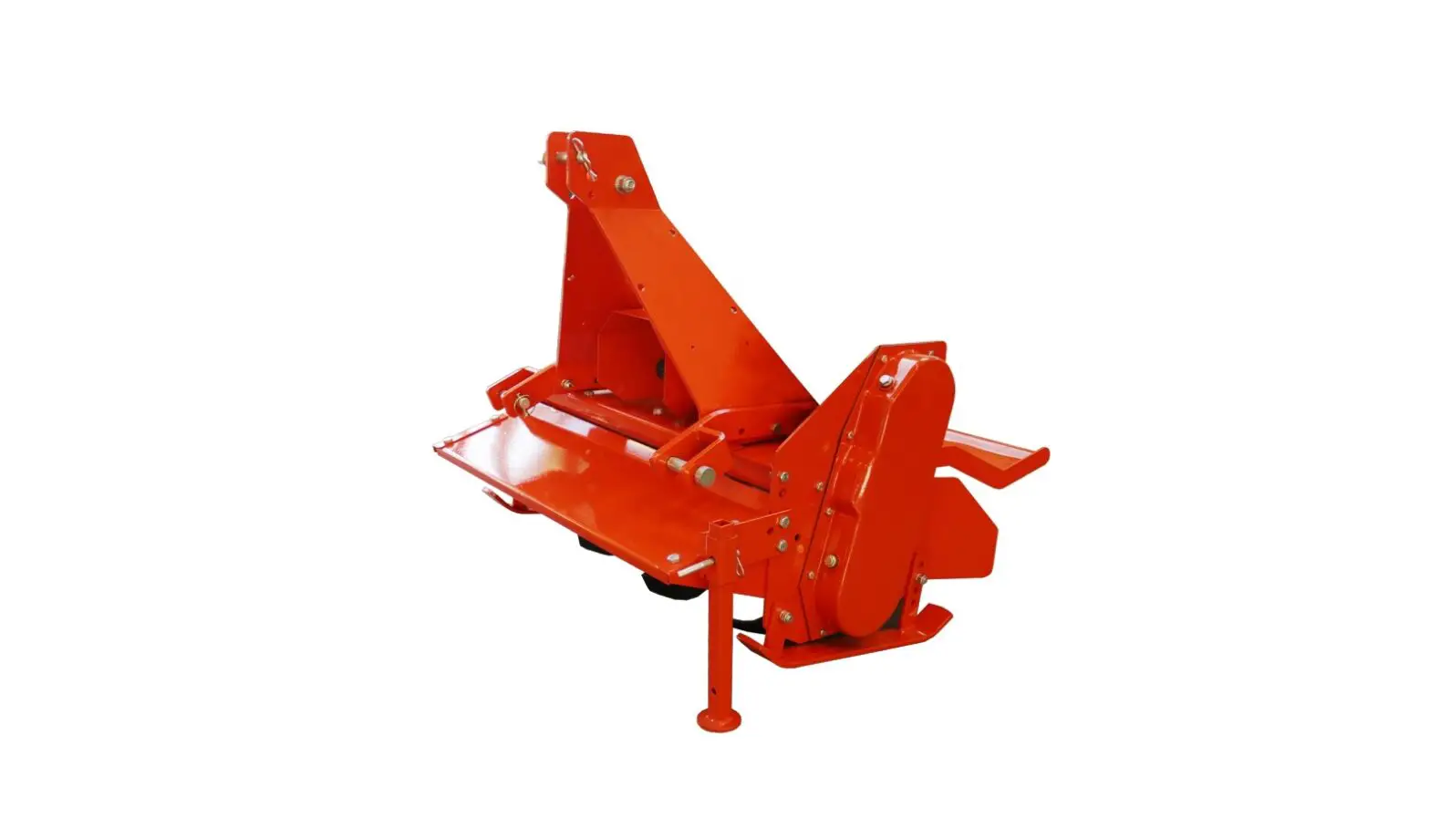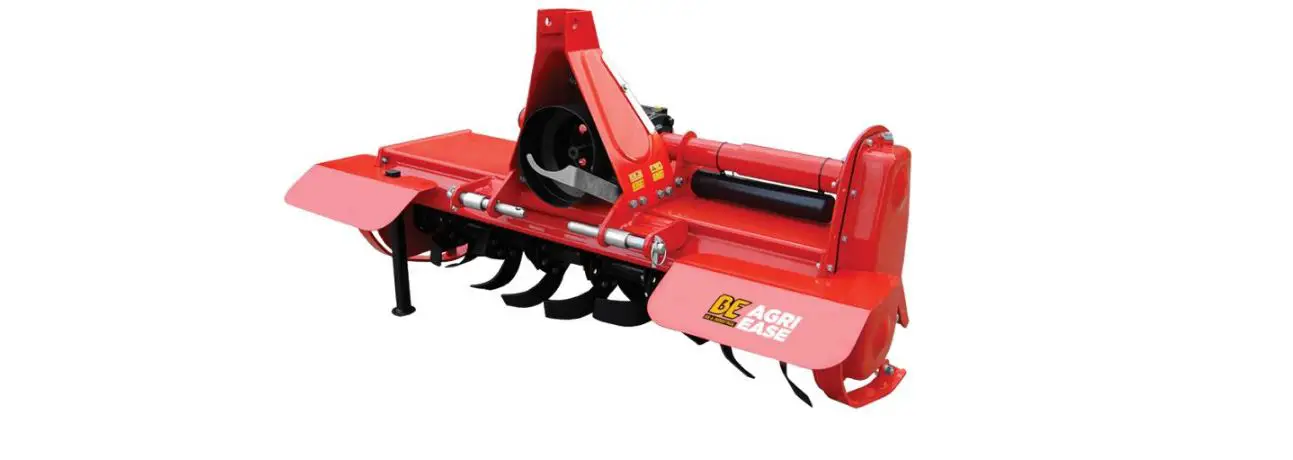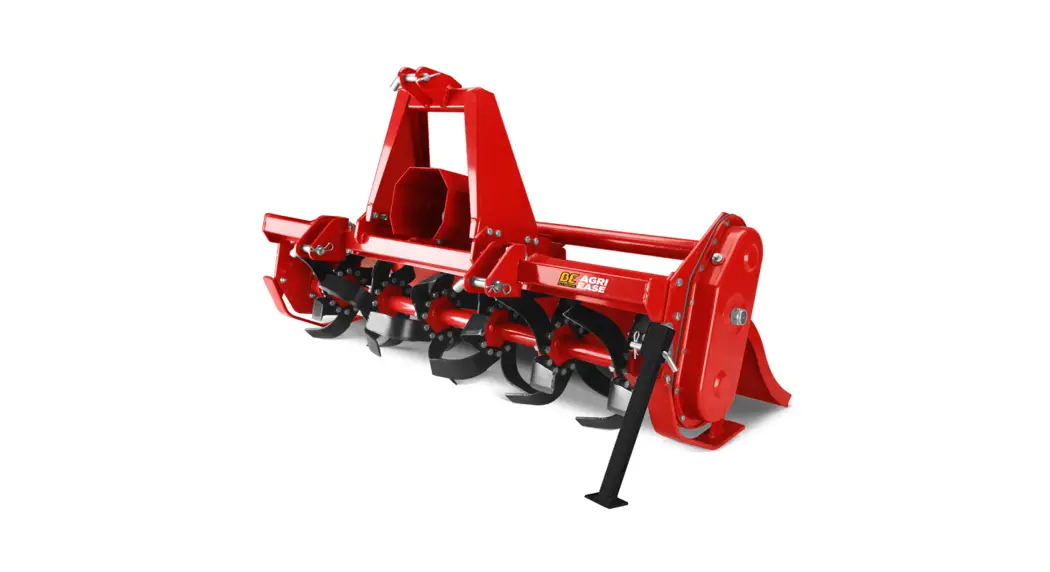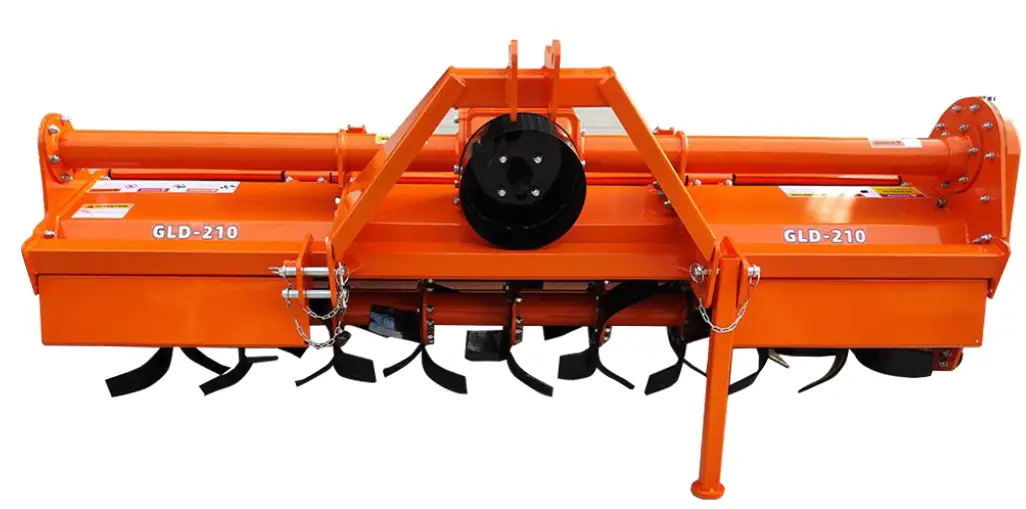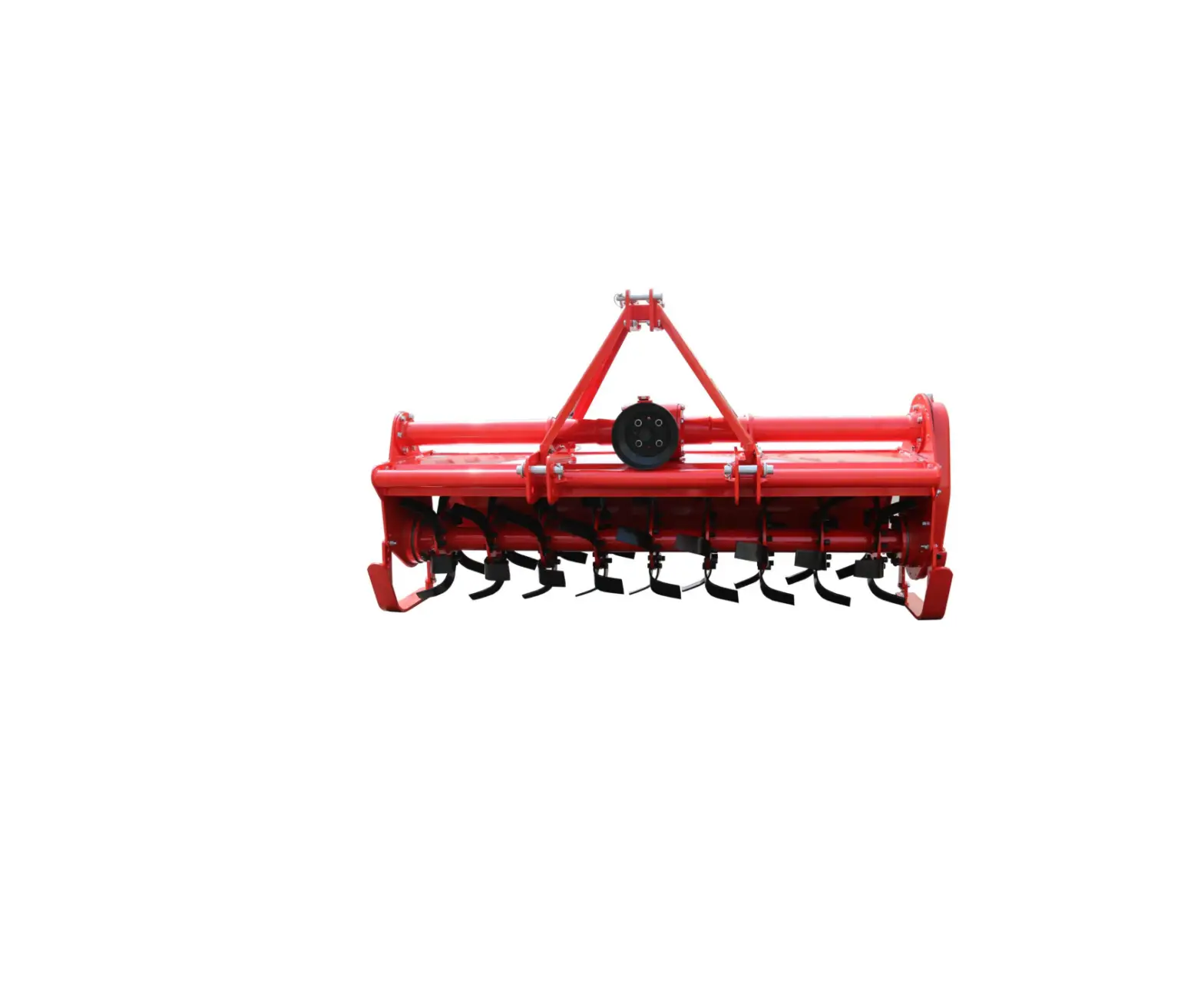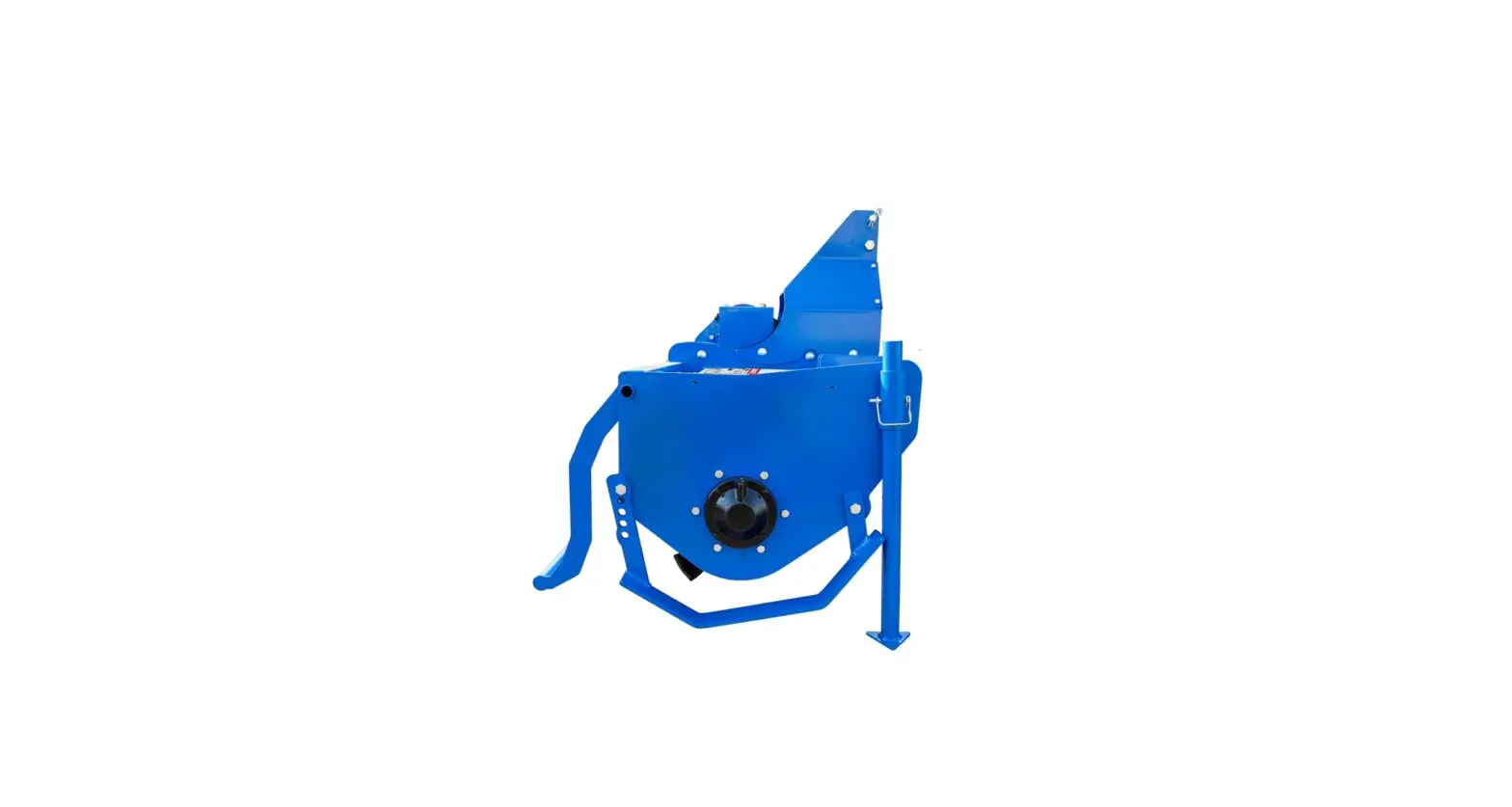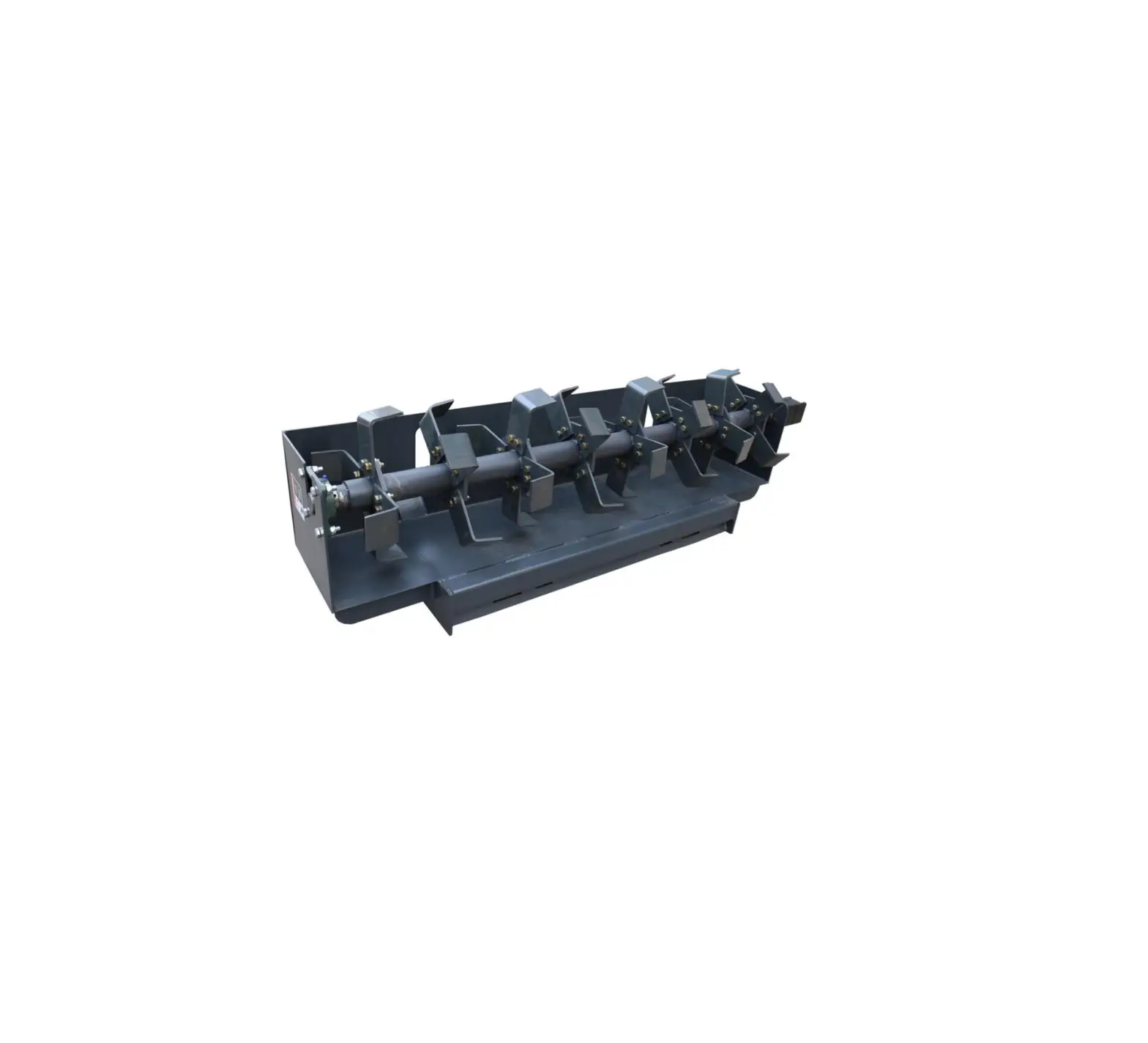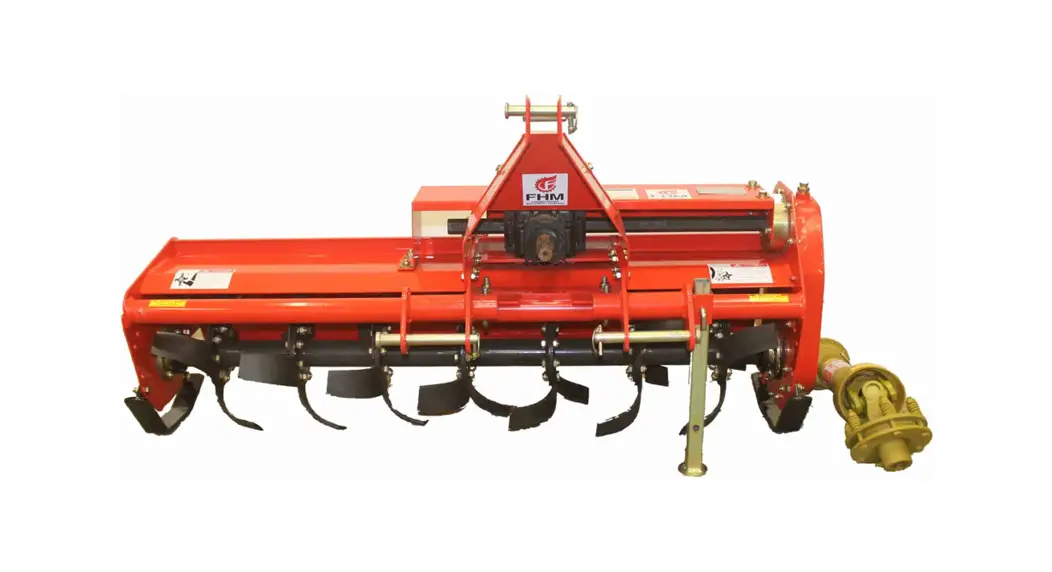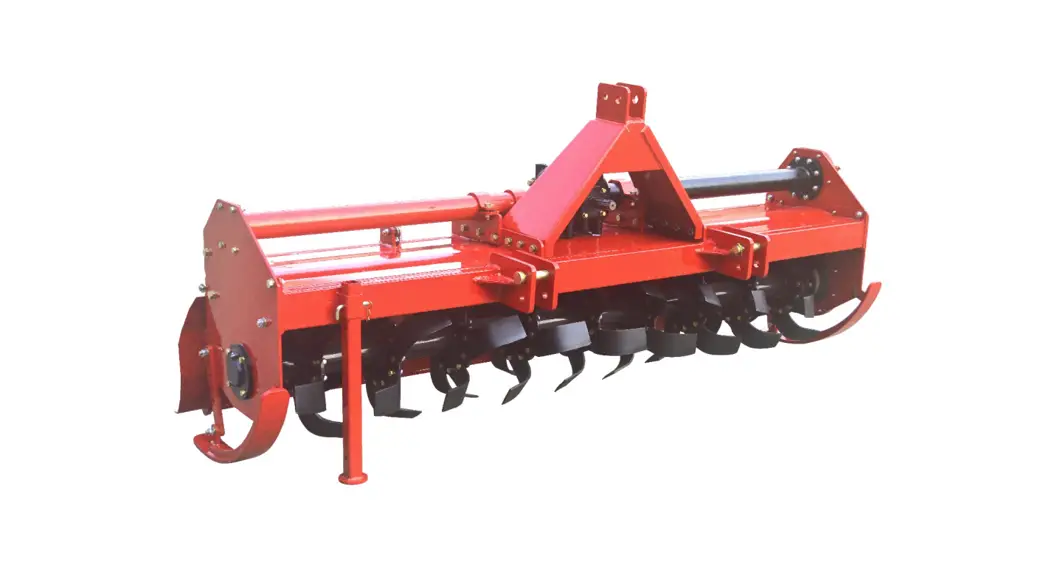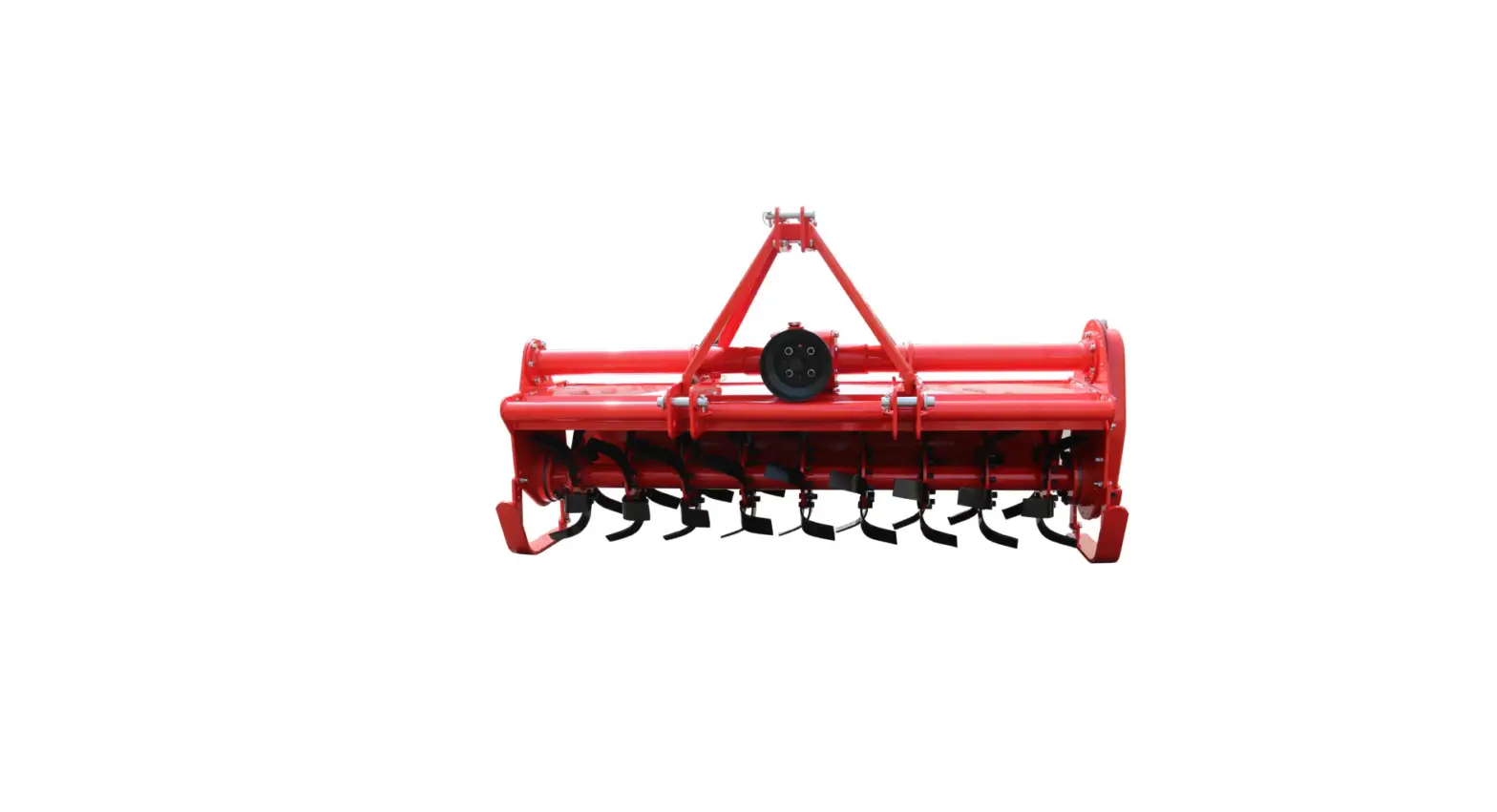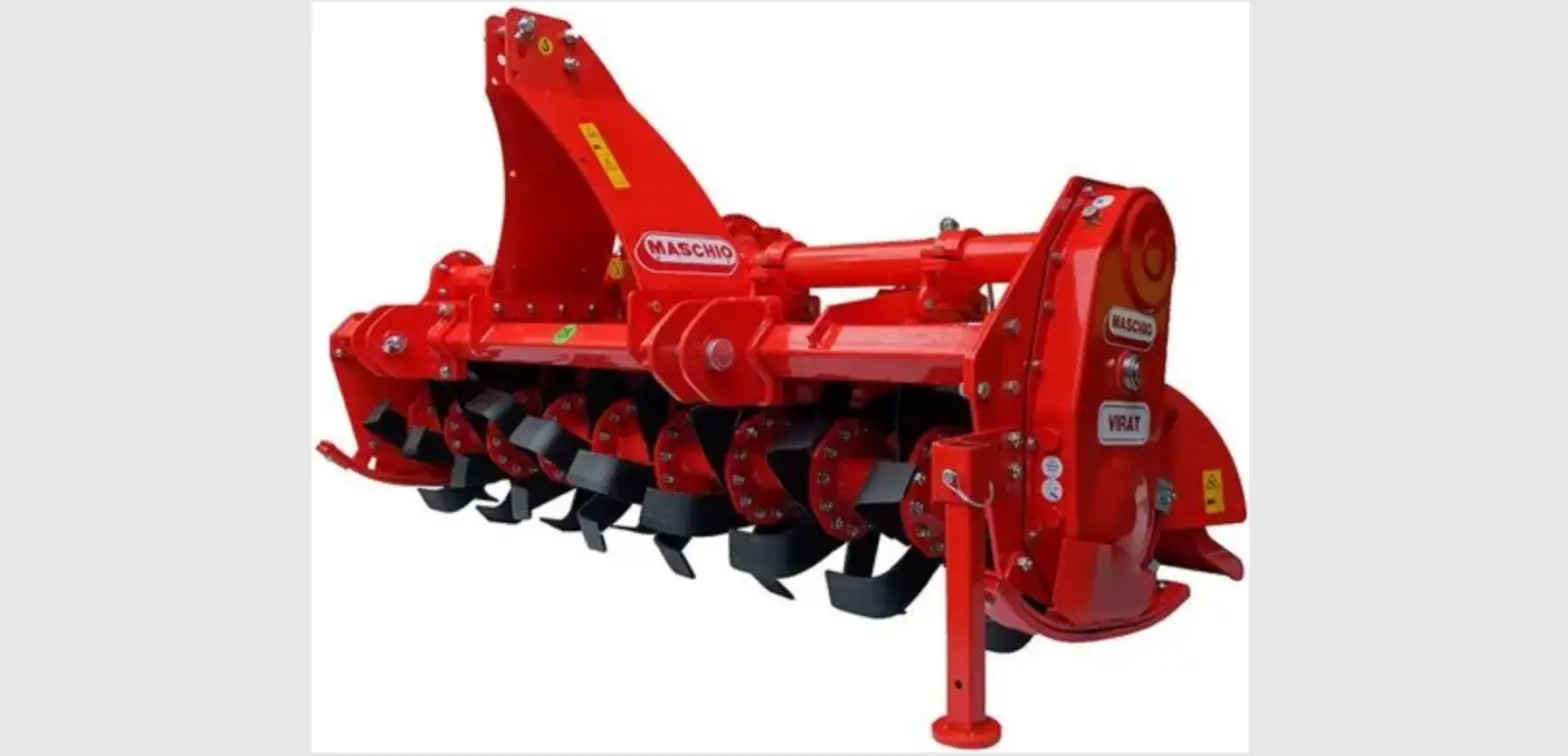

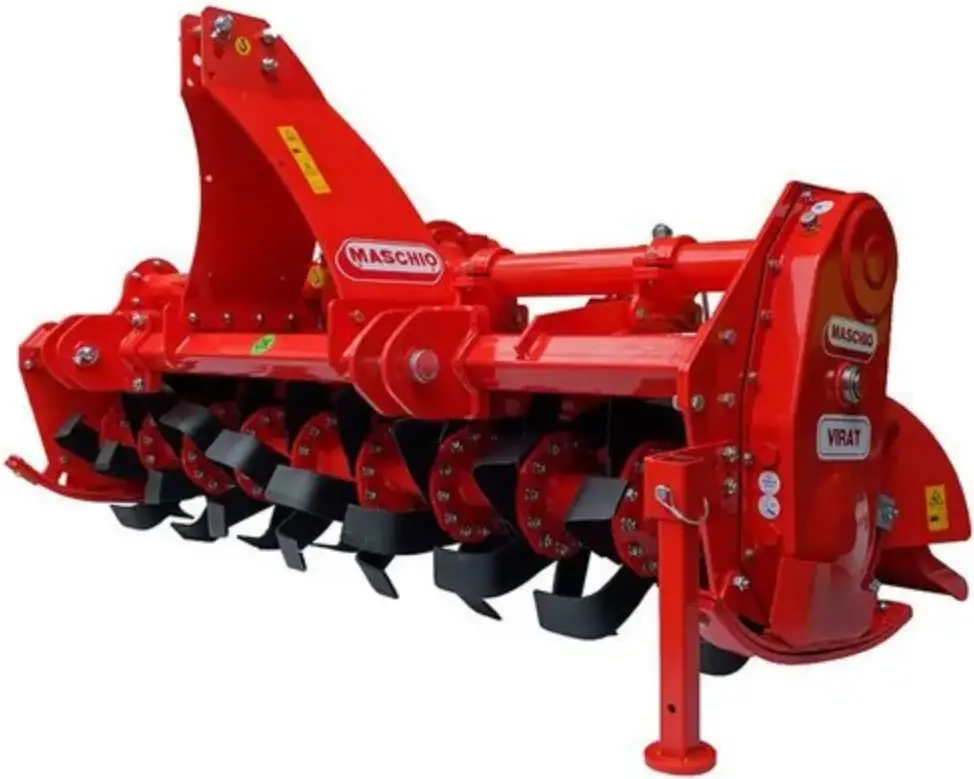
Braber Equipment BE-TXG40 TX 40 Inch Rotary Tiller
INTRODUCTION
Thank you for purchasing your BE Rotary Tiller. Your rotary tiller is designed to be used on 540 RPM tractors. It is important to properly maintain and keep in place all safety guards and shields that came with your tiller.
SAFETY
Read and understand this manual and all safety signs before operating and maintaining. Review the safety instructions and precautions annually.
SAFETY SIGNAL WORDS
Note the use of the signal words DANGER, WARNING, and CAUTION with the safety messages. The appropriate signal word for each has been selected using the following guidelines:
DANGER
Indicates an imminently hazardous situation that, if not avoided, will result in death or serious injury. This signal words are to be limited to the most extreme situations typically for machine components which, for functional purposes, cannot be guarded.
WARNING
Indicate a potentially hazardous situation that, if not avoided, could result in death or serious injury, and includes hazards that are exposed when guards are removed. It may also be used to alert against unsafe practices.
CAUTION
Indicates a potentially hazardous situation that, if not avoided, may result in minor or moderate injury. It may also be used to alert against unsafe practices.
GENERAL SAFETY GUIDELINES
Safety of the operator is one if the main concerns in designing and developing a new piece of equipment. Designers and manufacturers build safety features as possible. However, every year many accidents occur which could have been avoided by a few seconds of thought and a more careful approach to handling equipment. You, the operator, can avoid many accidents by observing the following precautions in this section. To avoid personal injury, study the following precautions and insist those working with you, or for you, follow them. Replace and CAUTION, WARNING, DANGER or instruction safety decal that is not readable or is missing. Location of such decals is indicated in this booklet. Do not attempt to operate this equipment under the influence of drugs or alcohol. Review the safety instructions with all users annually. This equipment is dangerous to children and persons unfamiliar with its operation. The operator should be a responsible adult familiar with farm machinery and trained in this equipment’s operations. Do not allow persons to operate or assemble this unit until they have read this manual and have developed a thorough understanding of the safety precautions and of how it works. To prevent injury or death, use a tractor equipped with a Roll Over Protective System (ROPS). Do not paint over, remove or deface any safety signs or warning decals on your equipment. Observe all safety signs and practice the instructions on them. Never exceed the limits of a piece of machinery. If its ability to do a job, or to do safely, is in question – DON’T TRY IT.
SAFETY DECAL CARE
- Keep safety signs clean and legible at all times.
- Replace safety signs that are missing or have become illegible.
- Replaced parts that displayed a safety sign should also display the current sign.
- Safety signs are available from your Distributor or Dealer Parts Department or the factory.
HOW TO INSTALL SAFETY SIGNS:
- Be sure that the installation area is clean and dry.
- Decide on the extract position before you remove the backing paper.
- Remove the smallest portion of the split backing paper.
- Align the decal over the specified area and carefully press the small portion with the exposed sticky backing in place.
- Slowly peel back the remaining paper and carefully smooth the remaining portion of the decal in place.
- Small air pockets can be pierced with a pin and smoothed out using the piece of decal backing paper.
OPERATION SAFETY
BEFORE OPERATION
- Carefully study and understand this manual.
- Do not wear loose-fitting clothing, which may catch in moving parts.
- Always wear protective clothing and substantial shoes.
- Assure that all tires are inflated evenly.
- Give the unit a visual inspection for any loose bolts, worn parts or cracked welds, and make necessary repairs.
- Be sure that there are no tools lying on or in the equipment.
- Do not use the unit until you are sure that the area is clear, especially children and animals.
- Don’t hurry the learning process or take the unit for granted. Ease into it and become familiar with your new equipment.
- Practice operation of your equipment and its attachments. Completely familiarize yourself and other operators with its operation before using.
- Use a tractor equipped with a Roll Over Protective System (ROPS) and fasten your seat belt prior to starting the engine.
- The manufacturer does not recommend usage of tractor with ROPS removed.
- Move tractor wheels to the widest recommended settings to increase stability.
- Securely attach to towing unit. Use a high strength, appropriately sized hitch pin with a mechanical retainer and attach safety chain.
- Do not allow anyone to stand between the tongue or hitch and the towing vehicle when backing up to the equipment.
DURING OPERATION
- Children should not be allowed on the product.
- Clear the area of small children and bystanders before moving the feeder.
- If using a towing unit, securely attach feeder by using a hardened 3/4” pin, a metal retainer, and safety chains if required. Shift towing unit to a lower gear before going down steep downgrades, thus using the engine as a retarding force. Keep towing vehicle in gear at all times. Slow down for corners and rough terrain.
- Make sure you are in compliance with all local and state regulations regarding transport equipment on public roads and highways. Lights and slow moving signs must be clean and visible by overtaking or oncoming traffic when feeder is transported.
- Beware of bystanders, particularly children. Always look around to make sure that it is safe to start the engine of the towing vehicle or move the unit. This is particular important with higher noise levels and quiet cabs, as you may not hear people shouting.
- NO PASSENGERS ALLOWED – Do not carry passengers anywhere on, or in, the tractor or equipment, except as required for operation.
- Keep hands and clothing clear of moving parts.
- Do not clean, lubricate or adjust your equipment while it is moving.
- When halting operation, even periodically, set the tractor or towing vehicle brakes, disengage the PTO, shut off the engine and remove the ignition key.
- Be especially observant of the operating area and terrain – watch for holes, rocks or other hidden hazards. Always inspect the area prior to operation.
- DO NOT operate the edge of drop-offs or banks.
- DO NOT operate on steep slopes as overturn may result.
- Operate up and down (not across) intermediate slopes. Avoid sudden starts and stops.
HIGHWAY & TRANSPORTATION OPERATIONS
Adopt safe driving practices:
- Keep the brake pedals latched together at all times. NEVER USE INDEPENDENT BRAKING WITH MACHINE IN TOW AS LOSS OF CONTROL AND/OR UPSET OF UNIT CAN RESULT.
- Always drive at a safe speed relative to local conditions and ensure that your speed is low enough for an emergency stop to be safe and secure. Keep speed to a minimum.
- Reduce speed prior to turns to avoid the risk of overturning.
- Avoid sudden uphill turns on steep slopes.
- Always keep the tractor or towing vehicle in gear to provide engine braking when going downhill. Do not coast.
- Do not drink and drive!
- Comply with state and local laws governing highway safety and movement of farm machinery on public roads.
- Use approved accessory lighting flags and necessary warning devices to protect operators of other vehicles on the highway during daylight and nighttime transport. Various safety lights and devices are available from your dealer.
- The use of flashing amber lights are acceptable in most localities. However, some localities prohibit their use. Local laws should be checked for all highway lighting and marking requirements.
- When driving the tractor and equipment on the road or highway under 40 KPH (20 MPH) at night or during the day, use flashing amber warning lights and a slow moving vehicle (SMV) identification emblem.
- Plan your route to avoid heavy traffic.
- Be a safe and courteous driver. Always yield to oncoming traffic in all situations, including narrow bridges, intersections, etc.
- Be observant of bridge loading ratings. Do not cross bridges rated lower than the gross weight as which you are operating.
- Watch for obstruction overhead and to the side while transporting.
- Always operate equipment in a position to provide maximum visibility at all times. Make allowances for increased length and weight of the equipment when making turns, stopping the unit, etc.
- Pick the levelest possible route when transporting across fields. Avoid the edges of ditches or gullies and steep hillsides.
- Be extra careful when working on inclines.
- Maneuver the tractor or towing vehicle at safe speeds.
- Avoid overhead wires or other obstacles. Contact with overhead lines could cause serious injury or death.
- Avoid loose fill, rocks and holes; they can be dangerous for equipment operation or movement.
- Allow for unit length when making turns.
- Operate the towing vehicle from the operator’s seat only.
- Never stand alongside of unit with engine running or attempt to start engine and/or operate machine while standing alongside of unit.
- Never leave running equipment attachments unattended.
- As a precaution, always recheck the hardware on equipment following every 100 hours of operation. Correct all problems. Follow the maintenance safety procedures.
OPERATION
- Before attaching the rotary tiller to the tractor, check the unit to ensure there is oil in the top and side gearbox. See Maintenance section for lubricant specifications.
- Before beginning operation, check oil and grease points.
- Oil Level: Top gearbox 1-1/2” from the end of the dip stick. When sitting slightly tilted forward, oil should at the bottom of the drain plug on the side gearbox cover.
- Grease: Right rotor bearing, PTO shaft cross & bearings.
Attaching To the Tractor
- With the Rotary Tiller on a level surface, back the Cat. 1 tractor so the tractor lift arms are even with the unit’s lower hitch pins. Lower or raise the tractor hitch arms until the 7/8” bushing in the arm is inside the clevis of lower hitch points. Be sure nothing is between the tractor and the tiller before backing up.
- Insert the lower hitch pin through the lower hitch blocks and the tractor arm. The YCT series tillers have adjustable lower hitch blocks that can be slide to facilitate usage on larger tractors.
- Secure the lift arm in place by using a 7/16” lynch pin or other fastener.
- Repeat with the other arm.
- Connect the driveline to the tractor’s PTO output shaft. Secure it in place.
- Connect the tractor top link to the upper hitch point of the rotary tiller.
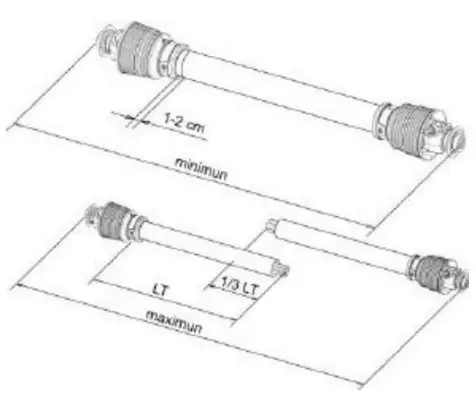
- Start the tractor and slowly raise the tiller. Check for drawbar interference. Be sure that the PTO driveline does not bottom out when lifting the machine to it’s maximum height. If it does appear that it could bottom out, it is necessary to shorten the PTO driveline. (See Shortening a PTO Driveline section). Ensure that in the working position there is an overlap of a minimum of 1/3 the length of each profile.
Shortening a PTO Driveline
- With the implement attached to the tractor’s three point hitch and the PTO driveline not installed, separate the PTO driveline. Attach the implement end to the implement and the other end to the tractor PTO input shaft.
- Raise the implement by using the tractor’s hydraulic three point hitch to it’s maximum lift height.
- Hold the half shafts next to each other and mark them so each end is approximately 1/2” from hitting the end of the telescopic profiles.
- Shorten the inner and out guard tubes equally.
- Shorten the inner and outer profiles by the same length as the guard tubes. Using a rattail file, round off all sharp edges and burrs. grease the telescopic profile generously before reassembling.

DANGER
- Do not shorten too much, the proper overlap is a minimum of 1/3 the length of each profile.
- Slip Clutches may become hot. DO NOT TOUCH. Keep the slip clutch area clear of any material that may catch fire.
Slip Clutch Adjustments
- Slip clutch must be adjusted before first use or after a storage period.
- Using a marker, scribe a line across the exposed edges of the clutch plate and friction discs.
- Back off compression nuts to free friction discs by turning each nut exactly 2 revolutions.
- Start the tractor and run the driveline at a low idle to slip the friction discs. This will remove the dirt, corrosion and surface floss from the clutch plate faces.
- Disengage PTO, shut down tractor and wait for all components to come to a complete stop.
- Inspect the clutch and ensure that the scribed markings on the disc and plates have changed position. If any two marks are still aligned, this is an indication that these discs have not slipped. It may be necessary to completely disassemble the clutch to free them up.
- After ensuring all disc are free, tighten the compression nuts, uniformly, exactly 2 revolutions to resent the clutch original pressure.
Working Depth Adjustment
The working depth is controlled by raising or lowering the side skids. If the skids are raised, the working depth increases. By lowering the skids, the tilling depth with decrease.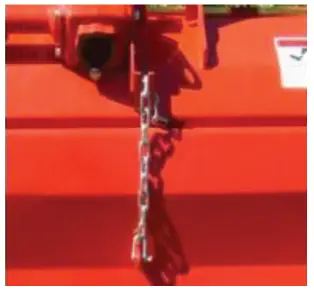 Tailgate Adjustment
The tailgate can be adjusted to help smooth and compact the tilled ground. Release the chain and secure to the desired height.
Start Up
After making the necessary adjustments, lower the rotary tiller until the blades are a couple of inches from the ground. Engage the PTO and slowly lower the tiller to begin working.
Removal & Storage
After finishing, remove the rotary tiller from the tractor.
- Put the PTO driveline in a safe location so it will not become damaged.
- Clean and dry the equipment
- Replace any damaged or worn parts.
- Check all bolts and nuts for tightness.
- Lubricate and protect the machine from the elements.
Following Operation
- Following operation, or when unhitching, stop the tractor or towing vehicle, set the brakes, disengage the PTO and all power drives, shut off the engine and remove the ignition keys.
- Store the unit in an area away from human activity.
- Do not park equipment where it will be exposed to livestock for long periods of time. Damage and livestock injury could result.
- Do not permit children to play on or around the stored unit.
- Make sure all parked machines are on a hard, level surface and engage all safety devices.
- Wheel chocks may be needed to prevent unit from rolling.
MAINTENANCE
Performing Maintenance
- Good maintenance is your responsibility. Poor maintenance is an invitation to trouble.
- Make sure there is plenty of ventilation. Never operate the engine of the towing vehicle in a closed building.
- The exhaust fumes may cause asphyxiation.
- Be certain all moving parts on attachments have come to complete stop before attempting to perform maintenance.
- Always use the proper tools or equipment for the job at hand.
- Use extreme caution when making adjustments.
- Never replace hex bolts with less than grade five bolts unless otherwise specified.
- After servicing, be sure all tools, parts and service equipment are removed.
- Where replacement parts are necessary for periodic maintenance and servicing, genuine factory replacement parts must be used to restore your equipment to original specifications. The manufacturer will not claim responsibility for use of unapproved parts and/or accessories and other damages as a result of their use.
- If equipment has been altered in any way from original design, the manufacturer does not any liability for injury or warranty.
Maintenance Schedule
Every 8 Hours:
- Grease the Rotor support (GP grease TXG and YCT only)
- Grease PTO shaft cross & bearings (GP grease)
- Check hardware for tightness
Every 16 Hours:
- Check oil in center gearbox (90wt)
- Check oil level in side gearbox (140wt)
- Check hardware for tightness
Every 200 Hours:
- Replace oil in center gearbox (90wt)
- Replace oil in side gearbox (140wt)
- Change chain tensioner spring (DLT model only)
- Check hardware for tightness
Replacing Blades
In order for the tiller to perform optimally, make sure the tiller blades are in good working condition and their bolts and nuts tight. Always replace the blades with the bolt head against the blade and the washer and nut on the flange side to help prevent the blades from loosening. When several blades are to be replaced, replace them one blade at a time in order maintain the scroll pattern on the rotor.
NOTE: To determine Left or Right Blades, hold the blade by the bolt hole and the cutting edge facing downward. If the blades curves to the left it is a left hand blade, curving to the right indicates a right hand blade.
EXPLODED VIEW & PARTS LIST
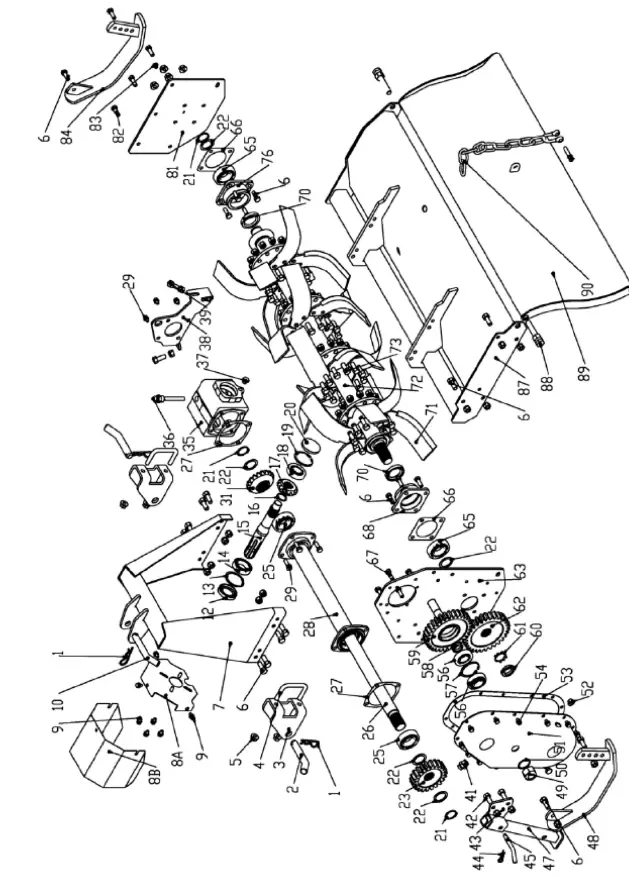
| REF | PART NUM | DESCRIPTION | QTY |
| 1 | “R” Clip – 4mm | 3 | |
| 2 | T10-66-01-02-02 | Hitch Pin (Lower Hitch Block) | 2 |
| 3 | TX.02-02 | Lower Hitch Bracket | 2 |
| 4 | TX.02-03 | “U” Bolt, Lower Hitch Bracket | 2 |
| 5 | GB/T6177.1 | Hex Nut – U-Bolt (Lower Hitch Brckt.) | 4 |
| 6 | GB5783 | Bolt – 10×1.5×30 | 24 |
| 7 | TX.01.01 | A-Frame | 1 |
| 8A | TX.03.04-02 | Support – Gearbox Shielding | 1 |
| 8B | TX.03.04-01 | Gearbox Shield | 1 |
| 9 | GB5783 | Bolt – 8×1.25×16 | 7 |
| 10 | T10-66-01-03-01 | Top Hitch Pin | 1 |
| 12 | HG4-692-67 | Oil Seal 35-62-10 | 1 |
| 13 | GB/T893.1-1986 | Snap Ring – Inner 62mm | 1 |
| 14 | GB/T 279 | Bearing 6007 | 1 |
| 15 | TX03-07 | Input Shaft | 1 |
| 16 | GB/T 894.2 | Snap Ring Ext. 30mm | 1 |
| 17 | TX03-03 | Pinion Gear | 1 |
| 18 | GB/T 297 | Bearing 30305 (same as #556) | 1 |
| 19 | GB/T 893.1 | Snap Ring – Inner 62mm | 1 |
| 20 | Gearbox Cap | 1 | |
| 21 | GB/T 894.2 | Snap Ring Ext. 34mm | 3 |
| 22 | TX.04-02 | Shim | 4 |
| 23 | TXC.05-07 | Top Gear / Sprocket | 1 |
| 25 | GB/T 307 | Bearing 6207-2RS | 2 |
|
26 |
TX03-04 | Drive Shaft TXG32 | 1 |
| Drive Shaft TXG40 | 1 | ||
| Drive Shaft TXG48 | 1 | ||
| Drive Shaft TXG56 | 1 | ||
| 27 | TX.03-06 | Gasket – Drive Shaft | 1 |
|
28 |
TX.03.01 | Drive Shaft Tube Housing TXG32 | 1 |
| Drive Shaft Tube Housing TXG40 | 1 | ||
| Drive Shaft Tube Housing TXG48 | 1 | ||
| Drive Shaft Tube Housing TXG56 | 1 | ||
| 29 | GB5783 | Bolt 10×1.5×25 | 8 |
| 31 | TX.03-04 | Ring Gear | 1 |
| 35 | TX.03-02 | Housing – Gearbox | 1 |
| 36 | Gearbox Oil Plug (Dip Stick) | 1 | |
| 37 | Oil Plug | 1 | |
| 38 | TX.03-01 | Lifting Hook | 1 |
| 39 | GB5783 | Bolt M12x12 | 2 |
| 41 | Breather Cap | 1 | |
| 42 | GB5783 | Bolt 10×1.5×25 | 2 |
| 43 | T10-66-05-01 | Stand Bracket | 1 |
| 44 | R-Clip – 3mm | 1 | |
| 45 | T10-66-05-01 | Pin – Stand | 1 |
| 47 | T10-66-05-01 | Stand Leg | 1 |
| REF | PART NUM | DESCRIPTION | QTY |
| 48 | TX.06.01 | Skid Weldment – Left | |
| 49 | Nylon Lock Nut M24*1.5 | ||
| 50 | O-Ring – Idler Gear Support Shaft | 1 | |
| 51 | TX.05.01 | Side Drive Cover | 1 |
| 52 | Oil Plug | 1 | |
| 53 | TX.05-01 | Gasket – Side Gear/Chain Case | 1 |
| 54 | GB5783 | Bolt – 8×1.25×20 | 13 |
| 56 | GB/T297-1994 | Bearing 30305 | 2 |
| 57 | GB/T893.1 | Snap Ring – Inner 62mm | 1 |
| 58 | TXC.05-11 | Spacer | 1 |
| 59 | TXC.05-08 | Idler Gear | 1 |
| 60 | GB/T 812 | Nut – Rotor | 1 |
| 61 | GB/T 858 | Star Washer – Rotor | 1 |
| 62 | TXC.05-09 | Bottom Gear/Sprocket | 1 |
| 63 | TX.03.02 | Side Panel – Left | 1 |
| 65 | GB/T276-1994 | Bearing 6207 | 2 |
| 66 | TX.04-06 | Gasket – Rotor | 2 |
| 67 | GB5783 | Bolt – 10×1.5×25 | 4 |
| 68 | TX.04-03 | Bearing Support – Left Side | 1 |
| 70 | HG4-692-67 | Oil Seal – 40x62x10 | 2 |
| 71 | TX.04-04 | Blade – Left | – |
| Blade – Right | – | ||
|
72 |
TX.04.01 | Rotor – TXG32 | 1 |
| Rotor – TXG40 | 1 | ||
| Rotor – TXG48 | 1 | ||
| Rotor – TXG56 | 1 | ||
| 73 | GB/T5786-86 | Bolt – 12×1.25×35 | – |
| Nut – 12mm Fine Thread | – | ||
| Lock Washer – 12mm | – | ||
| 76 | TX.04-03 | Bearing Support | 1 |
| 81 | TX.02-01 | Side Panel – Right | 1 |
| 82 | GB5783 | Bolt 10×1.5×25 | 3 |
| 83 | JB/T 7940.1 | Grease Fitting | 1 |
| 84 | TX.06.02 | Skid Weldment – Right | 1 |
|
87 |
TX.02 | Frame Weldment – TXG-32 | 1 |
| Frame Weldment – TXG-40 | 1 | ||
| Frame Weldment – TXG-48 | 1 | ||
| Frame Weldment – TXG-56 | 1 | ||
| 88 | GB5783 | Bolt – 16×90 | 2 |
| Nut – M16 | – | ||
|
89 |
TX.07 | Tailgate TXG-32 | 1 |
| Tailgate TXG-40 | 1 | ||
| Tailgate TXG-48 | 1 | ||
| Tailgate TXG-56 | 1 | ||
| 90 | Tailgate Chain Assembly | 1 |
PTO SHAFT
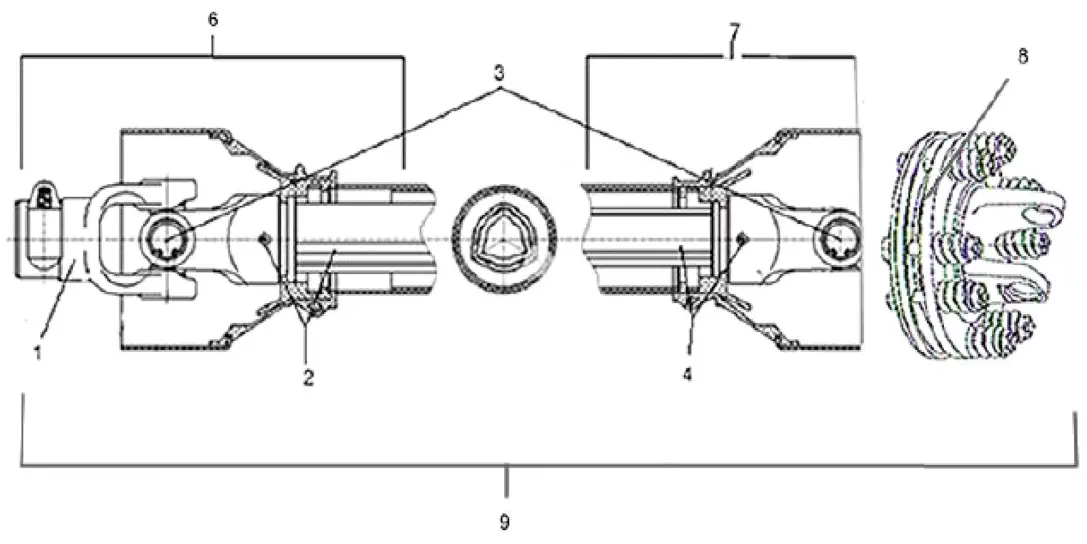
| REF | PART NUM | DESCRIPTION | QTY |
| 1 | DP1075-40 | PTO Yoke – Series 40 | 1 |
| DP1075-60 | PTO Yoke – Series 60 | 1 | |
| 2 | DP1079-40 | Female Yoke & Tube (tractor end) – Series 40 | 1 |
| DP1079-60 | Female Yoke & Tube (tractor end) – Series 60 | 1 | |
| 3 | DP1076-40 | Cross & Bearings – Series 40 | 2 |
| DP1076-60 | Cross & Bearings – Series 60 | 2 | |
| 4 | DP1078-40 | Male Yoke & Tube (implement end) – Series 40 | 1 |
| DP1078-60 | Male Yoke & Tube (implement end) – Series 60 | 1 | |
| 5 | 180-510-30 | Friction Disc – 4-3/4” OD | 2-4 |
| 180-510-40 | Friction Disc – 5-1/2” OD | 2-4 | |
| 6 | DP1074F-40 | Complete Female End PTO Shielding (tractor end) – Series 20-40 | 1 |
| DP1074F-60 | Complete Female End PTO Shielding (tractor end) – Series 60 | 1 | |
| 7 | DP1074M-40 | Complete Male End PTO Shielding (implement end) – Series 20-40 | 1 |
| DP1074M-60 | Complete Male End PTO Shielding (implement end) – Series 60 | 1 | |
| 8 | DP1098-30 | Slip Clutch Complete 150 Clutch (2 Disc) | 1 |
| DP1098-40 | Slip Clutch Complete 180 Clutch (2 Disc) | 1 | |
| DP1098-60 | Slip Clutch Complete 180 Clutch (4 Disc) | 1 | |
| 9 | 147120 | Complete PTO – Series 40 150mm Slip Clutch | 1 |
| 147122 | Complete PTO – Series 40 180mm Slip Clutch | 1 | |
| 147125 | Complete PTO – Series 60 200mm Slip Clutch | 1 |
FAX: 604-850-7774
TOLL FREE PHONE: 1-877-588-3311
TOLL FREE FAX: 1-800-665-7334
BRABEREQ.COM
[email protected]