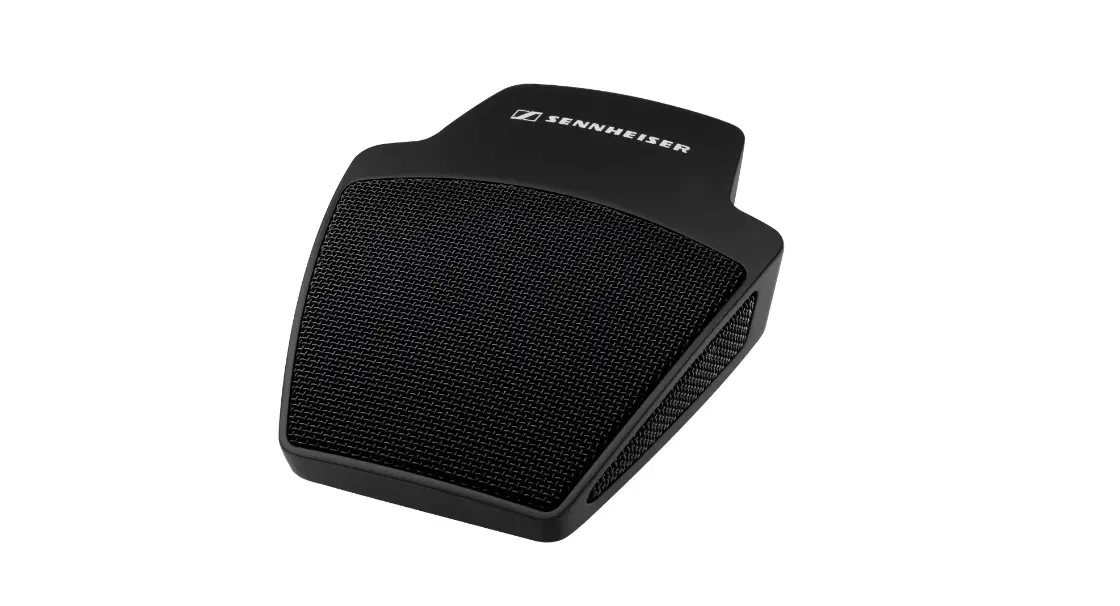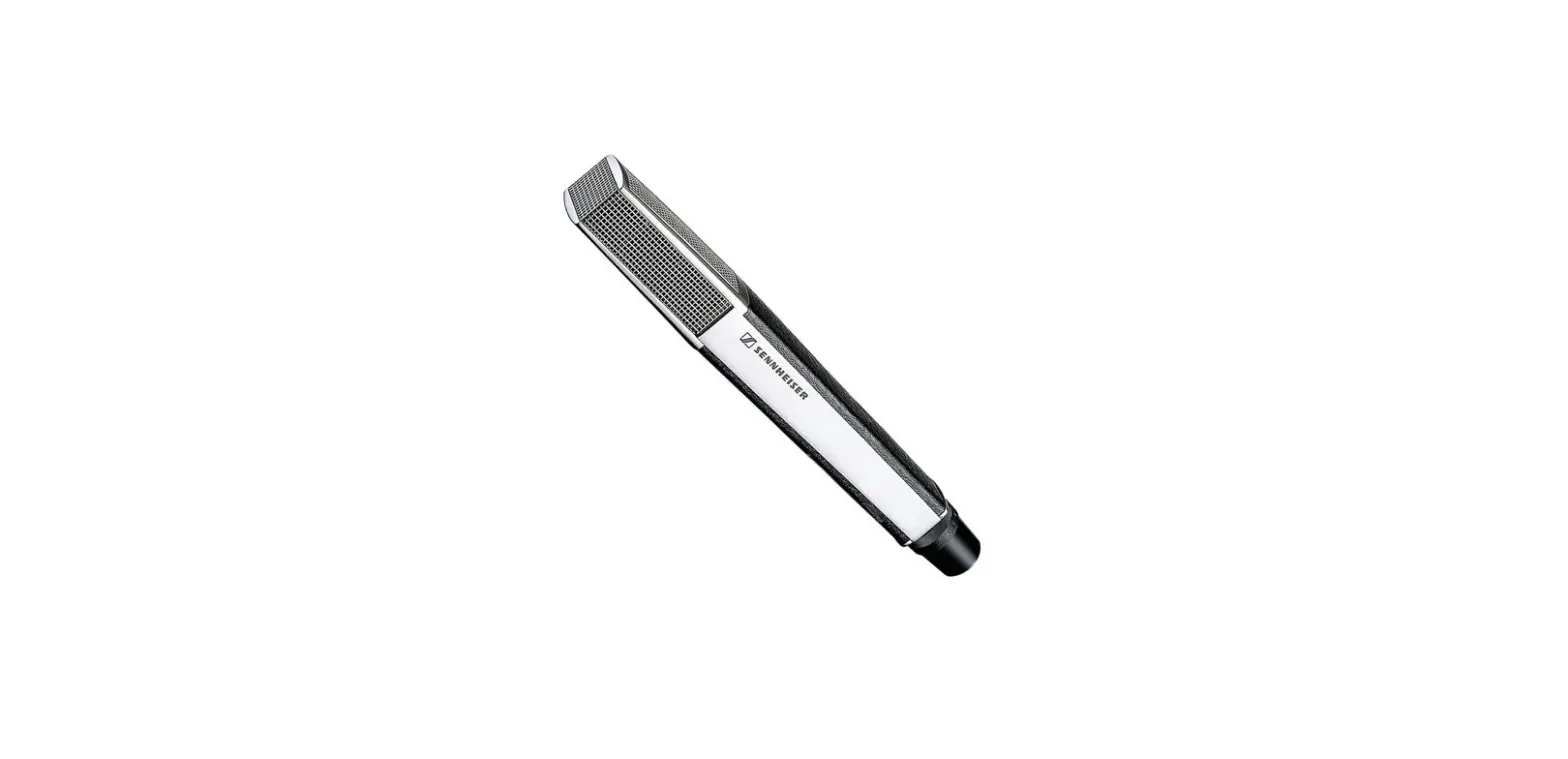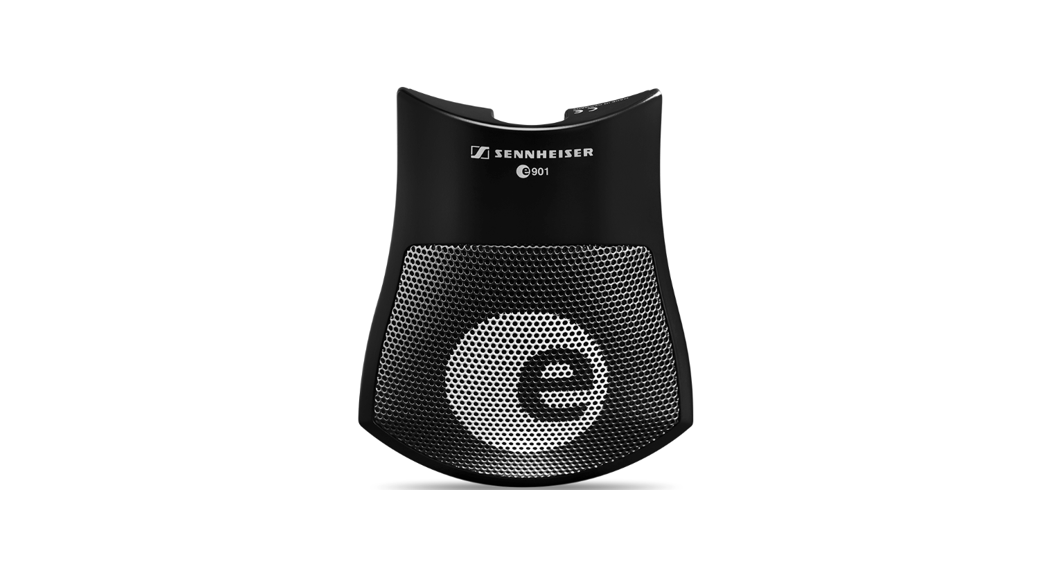

 E 901 Half-Cardioid Boundary Microphone
Instruction Manual
Delivery includes
- e 901
- pouch
- quick guide
- safety guide
Product Overview
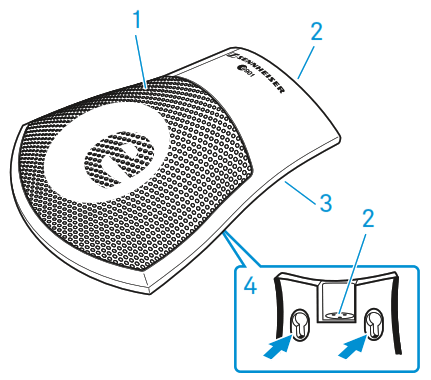
- Sound inlet basket
- XLR-3 connector
- Rubber damping plate
- Mounting slots
Installation
Connecting the microphone
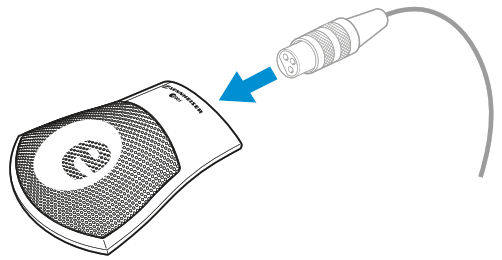
- Connect the XLR-3 socket of the microphone cable (optional accessories) to the XLR-3 socket of the microphone.
Operation
Positioning the microphone in a drum
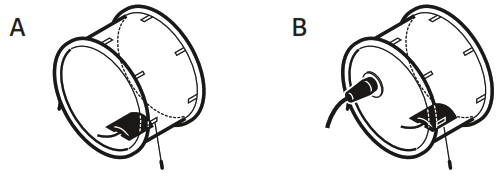
- Place the e 901 in the drum. Position the microphone so that its sound inlet basket is directed upwards.
- It is vital to observe the following notes:
| Position | Resulting sound | Commentary |
| A | Much resonance Much attack Less attack: Turn the microphone away from where the beater strikes. | Position the microphone at the bottom of the kick drum, approx. 10–20 cm from the batter head. |
| B | The e 901 is used for picking up the attack, the e 902 for picking up the fundamental. | Combined with an e 902 positioned at the resonant head. The lower micro-phone must be phase-reversed to avoid phase-cancellation effects due to the second microphone being on the other side of the drumskin. |
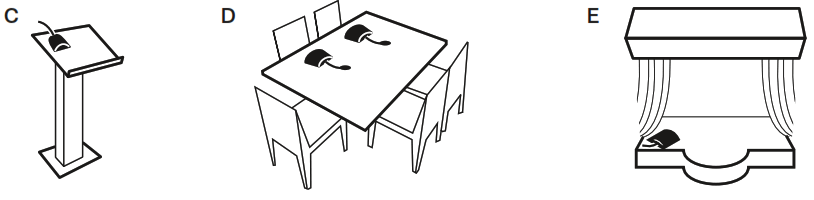
Positioning the microphone on sound-reflecting surfaces
- Place the e 901 on the desired sound-reflecting surface. Position the microphone so that its sound inlet basket is directed towards the sound source.
- It is vital to observe the following notes:
| Position | Resulting sound | Commentary |
| A | Less room resonance portions or comb filter elements Improved speech intelligibility Greater gain reserves in contrast to free- standing microphones | Lying on the altar or lectern. Unobtrusive due to flat design. No microphones in the field of vision. |
| B | Less room resonance in contrast to free-standing microphones | Lying on the conference table, directed toward the conference participants. Microphones must not be covered by papers, folders r similar objects. |
| C | Less room resonance in contrast to free-standing microphones Improved speech intelligibility | Lies at the edge of the stage and is directed towards the stage. As spot microphone of the PA system or for monitoring purposes in the theater cloakrooms. Excellent rejection of rumble noise; if necessary, place the microphone on a soft pad (e.g. mousepad). If necessary, combine with overhead microphones (e.g. Sennheiser ME 36 ith MZH 30 B & MZC 30). |
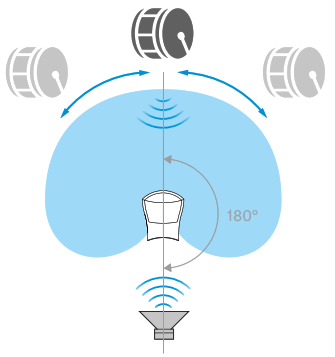
Positioning the monitor loudspeakers
- To prevent feedback and crosstalk, position your monitor loudspeakers in the angle area of the highest cancellation of the microphone (approx. 180°).
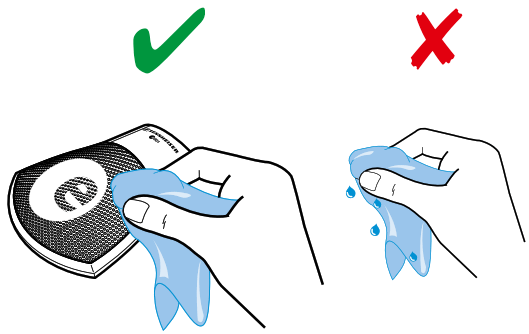
Cleaning and maintaining the e 901
CAUTION
LIQUIDS CAN DAMAGE THE ELECTRONICS OF THE PRODUCT!
Liquids entering the housing of the product can cause a short-circuit and damage the electronics.
- Keep all liquids away from the product.
- Do not use any solvents or cleansing agents.
- Disconnect the products from the power supply system and remove rechargeable batteries and batteries before you begin cleaning.
- Clean all products only with a soft, dry cloth.
Specifications
| Transducer principle | pre-polarised condenser microphone |
| Frequency response | 20 – 20,000 Hz |
| Pick-up pattern | half-cardioid |
| Sensitivity (free field, no load) | 0.5 mV/Pa |
| Nominal impedance (at 1 kHz) | < 100 Ω |
| Min. terminating impedance | 1 kΩ |
| Max. sound pressure level (at 1 kHz) | 154 dB |
| Phantom powering | 48 V |
| Connector | XLR-3 |
| Dimensions | 126.5 x 105 x 26.5 mm |
| Weight | 550 g |
Polar pattern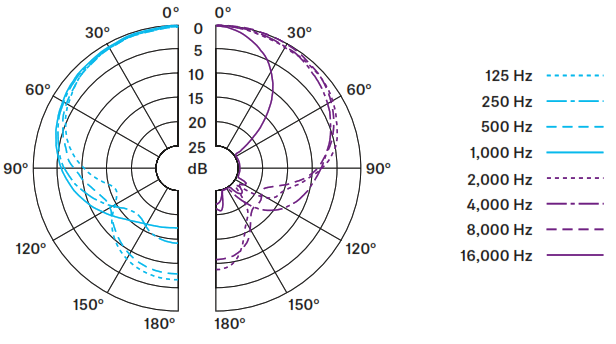
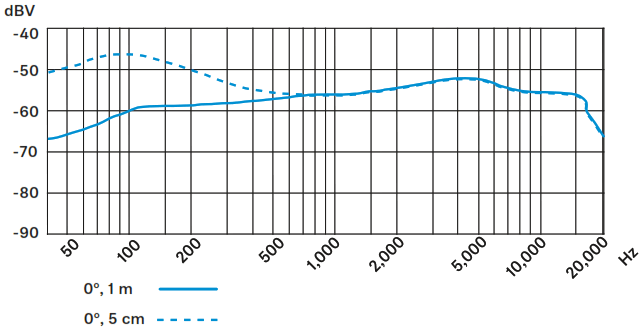
Frequency response
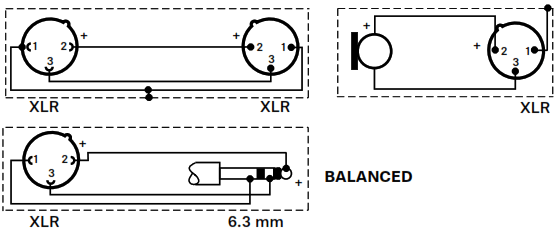
Connector assignment
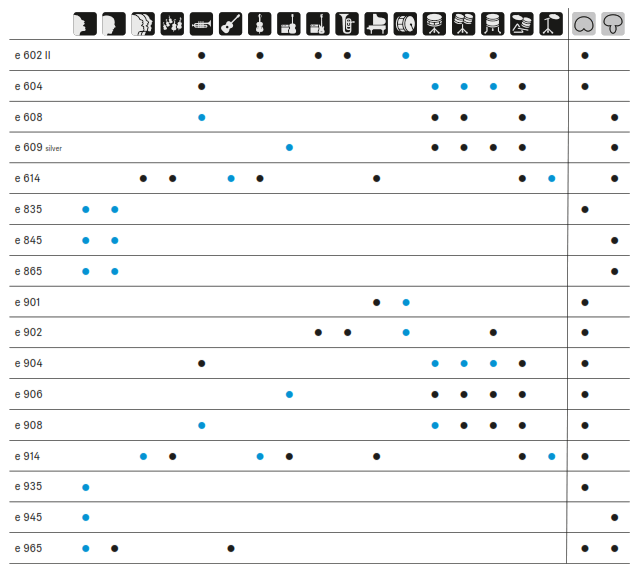
Overview of applications
- Primary application
- Secondary application