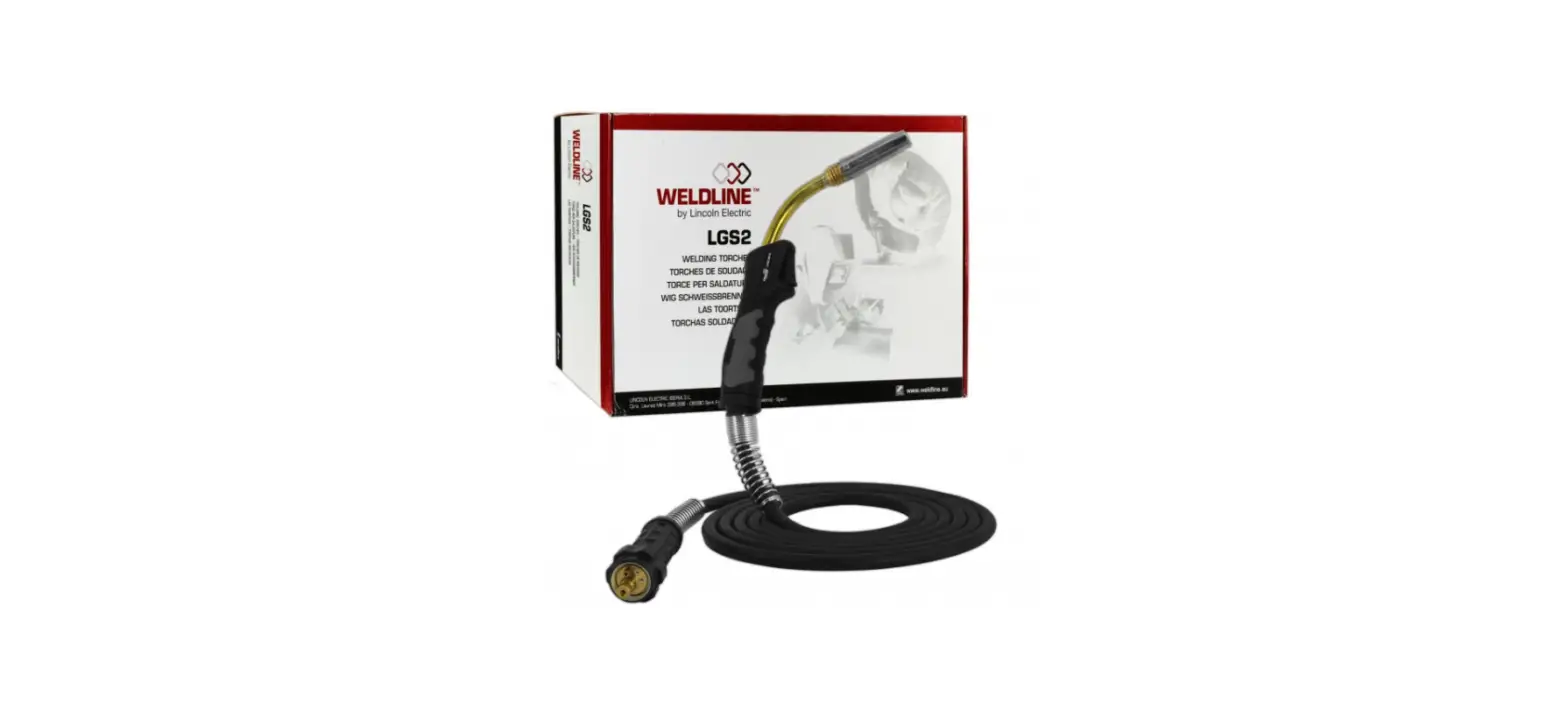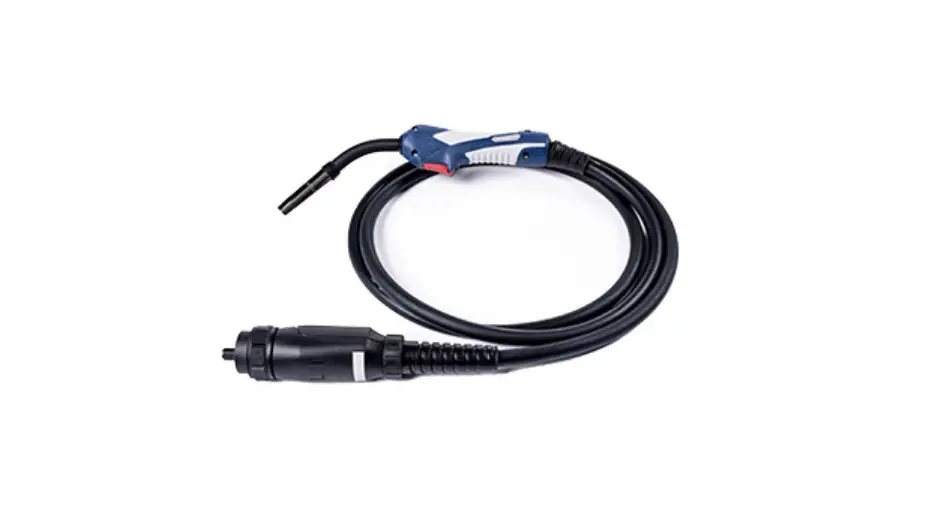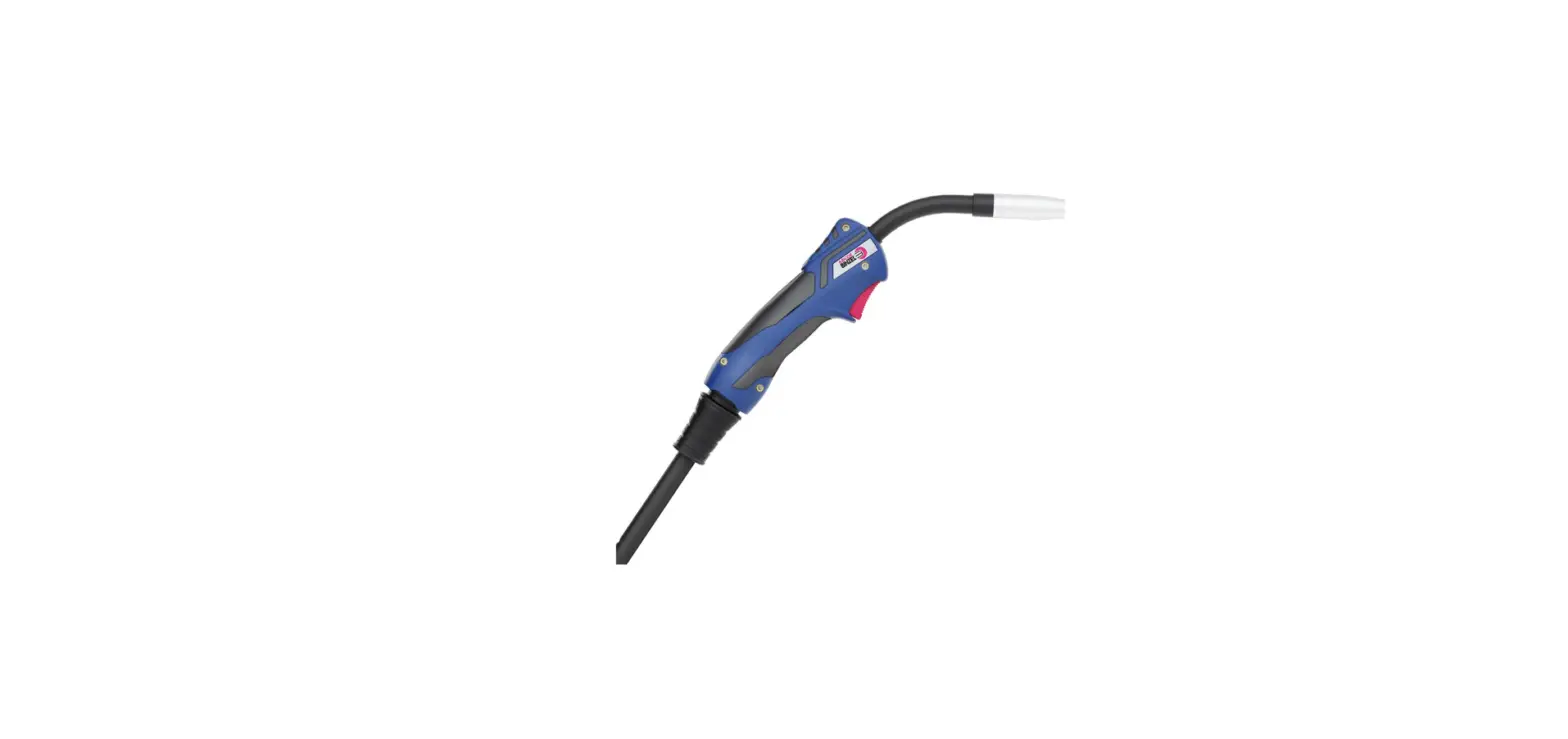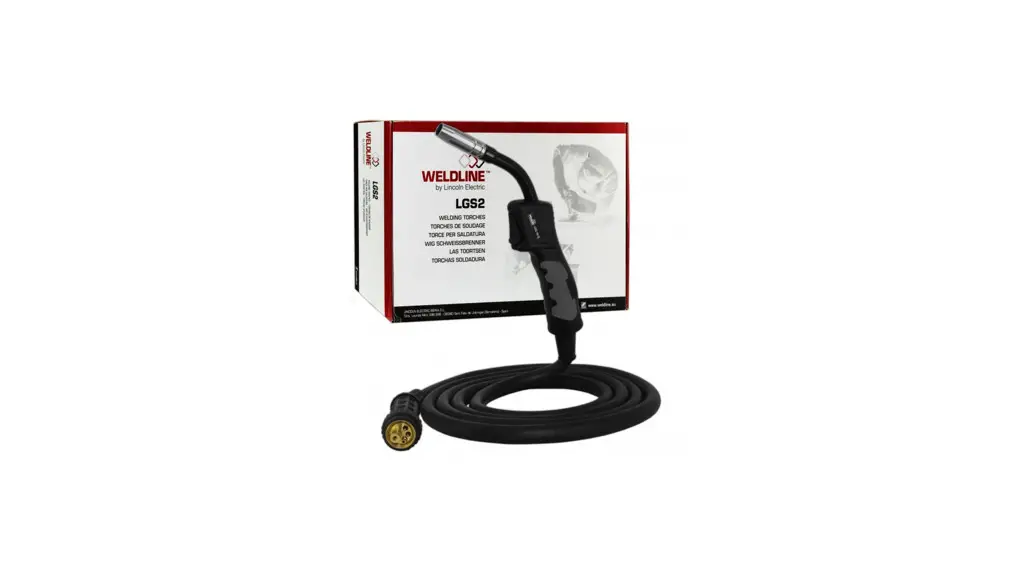
 LGS2 150 G Mig-Mag Welding Torches
User Manual
| Description | Part No. |
| LGS2 150 G – 3.0 m | W10429-15-3M |
| LGS2 150 G – 4.0 m | W10429-15-4M |
| LGS2 150 G – 5.0 m | W10429-15-5M |
LGS2 150 G Mig-Mag Welding Torches
| Duty cycle | 60% |
| C1 : CO2 | 180 A |
| M21 (EN 439) : Ar + CO2 | 150 A |
| Voltage class | L – 113 V |
| Using wires | Ø 0.6 ÷ 1.0 mm |
| Gas flowrate | Min 10 lt/min Max 18 lt/min |
European standard connection, bipolar, spring pins
 EN60974-7
SAFETY INSTRUCTIONS
We thank you for your trust in our company by purchasing this equipment which will provide you with complete satisfaction if you comply with its conditions for use and maintenance
CAUTION: The company declines all responsibility in case of modification, addition of components or subassemblies, or any transformation of the equipment carried out by the customer or a thirdparty, without prior specific written agreement from the company.
A) Maintenance / Troubleshooting
Before any internal verifications and repair work, make sure that the equipment is separated from the electric installation by electrical isolation (by electrical isolation is meant a group of operations designed to separate and keep the equipment de-energized).
At least every six months, you must check the proper condition of the insulation and connections of the electric equipment and accessories such as plugs, flexible wires, ducts, connectors, extension leads, part-holders, electrode-holders, or torches…
Maintenance and repair work on the jackets and insulating ducts must be carried out extremely carefully.
Have defective parts repaired by a specialist, or better still, have them replaced.
Routinely check the proper tightening and cleanliness of the electric connections.
B) Work-station
Use only electrode holders and torches which are perfectly insulated.
The operator must be insulated from the ground-surface and the workpiece (gloves, safety shoes, dry clothes, leather apron, and so forth…).
Do not touch the electrode wire and the part (or the nozzle) simultaneously.
C) Protection
- It is absolutely essential that you protect your eyes from blinding glare (glare of arc invisible light and infrared and ultraviolet radiation).
The welding mask, without or with helmet, must always be equipped with a protective filter whose gradation depends on the welding arc current intensity. - Fumes emitted during welding operations may be dangerous : use adequate protection means (fumes extraction, ventilated masks…)
D) Electromagnetic fields
Any electric current passing through a conductor creates a localised electrical and magnetic field. The welding/cutting current causes an electromagnetic field around the cables and equipment.
Exposure to electromagnetic fields may have effects that are currently unknown. It is possible to reduce exposure to electromagnetic fields caused by the welding circuit by taking the following action:
- Join the electrode holder cable or the welding harness and the return current cable together over the longest length possible – Fix them together with adhesive tape;
- Never wrap the welding/cutting cable round your body or rest it on your shoulder;
- The operator should not be inside the loop formed by the welding circuit Place the electrode holder/torch cable and the current return cable on the same side of the operator.
- The operator should not be near the power source during welding/cutting operations.
Electromagnetic fields can affect the operation of active implants (pacemakers). Active implant carriers should consult their doctors before doing any welding/cutting work.
LINCOLN ELECTRIC IBERIA S.L.
Ctra. Laureà Miró 396-398
08980 Sant Feliu de Llobregat (Barcelona), Spain
www.weldline.eu
 Welders, Welding Wire, Welding Equipment, Accessories & Gear | Lincoln Electric