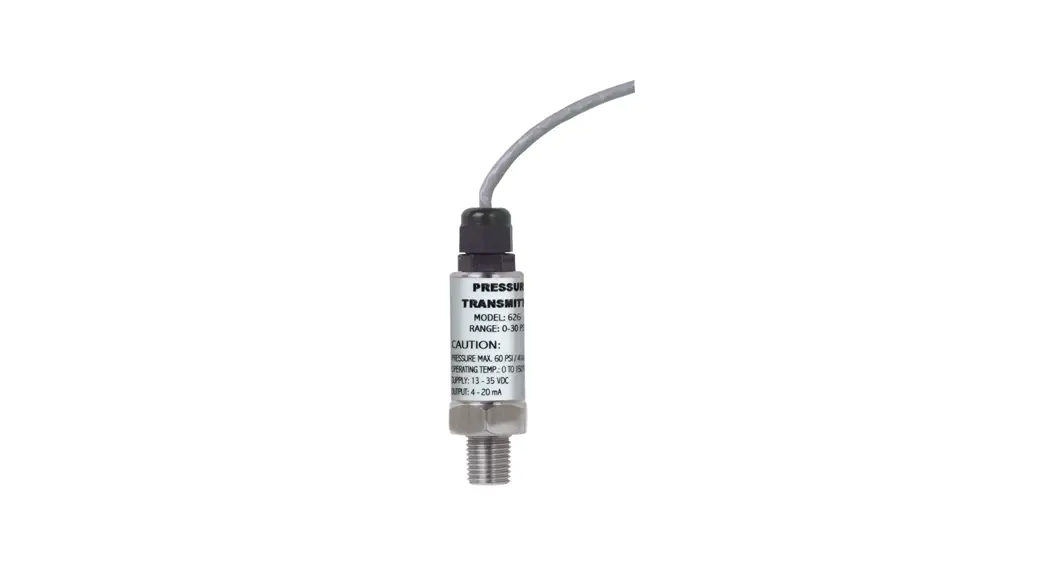
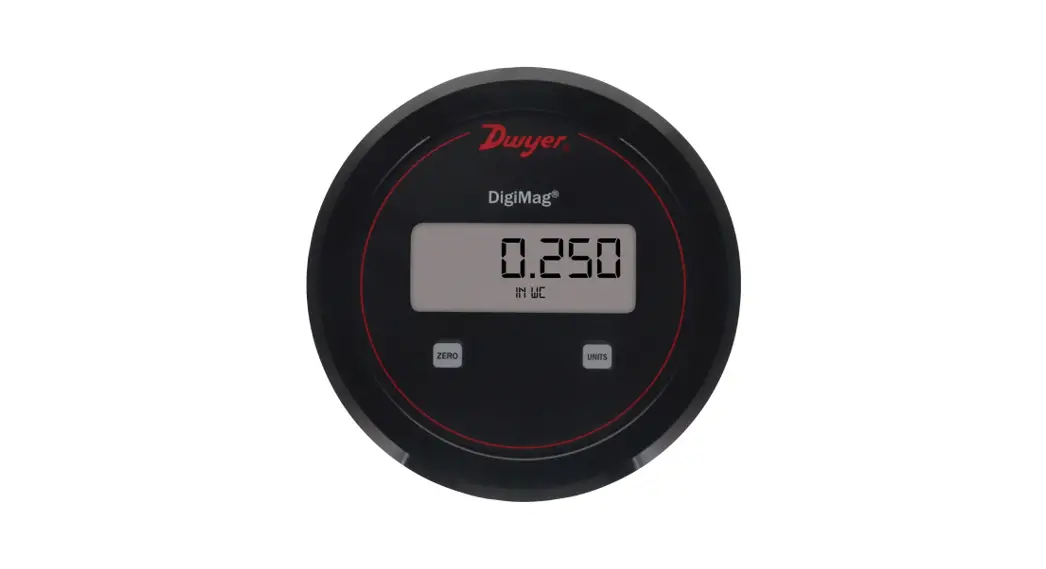
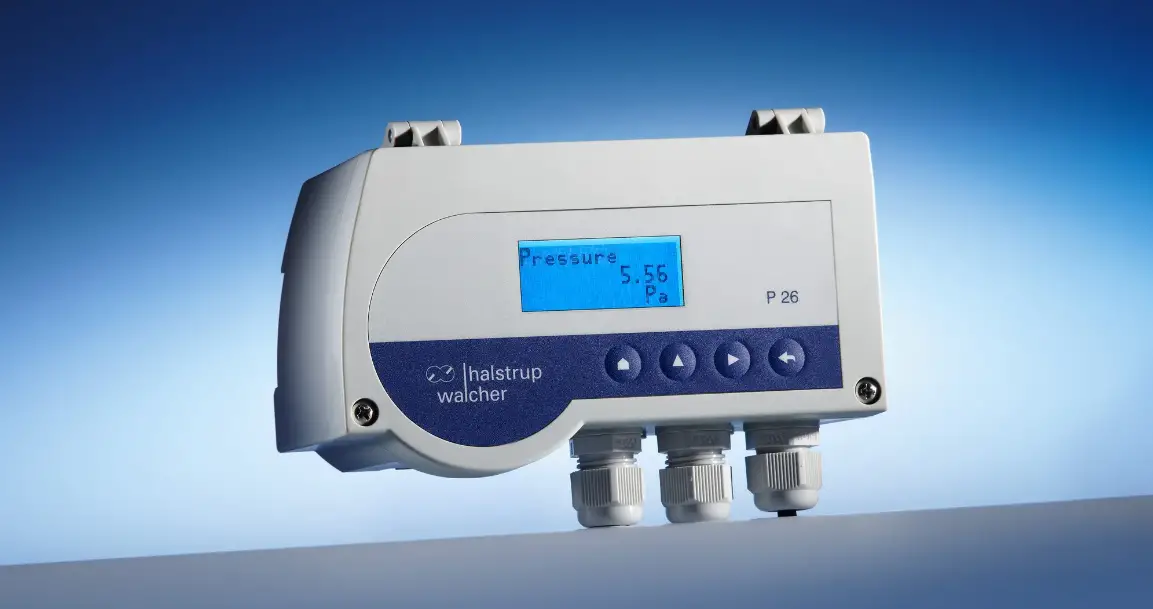
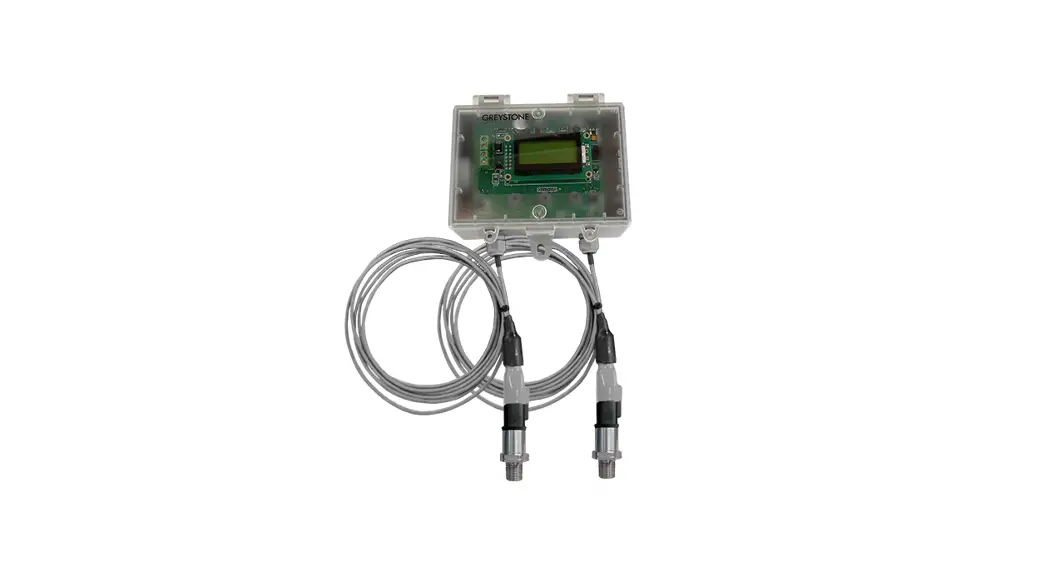
608 Series Differential Pressure Transmitter
Product Information:
The Series 608 Differential Pressure Transmitter is a versatile
device designed for measuring differential pressure in clean/dry
air and compatible gases. It is suitable for use with aluminum,
titanium, PBT, buna, silicone, glass, gold, silicone RTV, and
stainless steel materials. The transmitter is not intended for use
with liquids and requires an approved intrinsically safe barrier
for use in hazardous locations.
Specifications:
- Position: The transmitter is not position sensitive, but it is
recommended to avoid mounting with pressure connections pointing up
to prevent condensed moisture from entering the interior. Tubing
should be routed with a low point just ahead of the transmitter to
avoid moisture accumulation. - Mounting: The transmitter should be attached to a mounting
surface using two #8 or #10 screws in the provided mounting
slots. - Electrical Connection: The transmitter is FM approved
intrinsically safe for use in hazardous locations. An approved
intrinsic safety barrier must be used when applying the transmitter
in hazardous areas. The barrier limits the electrical or thermal
energy in the instrument loop to prevent ignition in the hazardous
location. - Load Limitations: The transmitter has a 4-20 mA output and has
specific loop resistance limitations based on the loop supply
voltage. Exceeding the specified supply voltage rating may result
in permanent damage not covered by warranty.
Product Usage Instructions:
Installation:
- Consult Dwyer Instruments, LLC before installing if you have
any questions or concerns. - Mount the Series 608 Differential Pressure Transmitter on a
suitable surface using two #8 or #10 screws in the provided
mounting slots. - Ensure that the pressure connections are sealed to the
transducer housing using Teflon tape. Avoid using dope-type
sealants as they may cause measurement errors due to
outgassing.
Electrical Connection:
- For use in hazardous locations, an approved intrinsic safety
barrier must be used. The barrier should be installed outside of
the hazardous area and properly wired to the transmitter according
to Figure B in the manual. - Make sure not to exceed the specified supply voltage rating to
prevent permanent damage. The Series 608 Transmitter is not
designed for AC voltage operation. - The transducer housing should be earthed grounded at the ground
screw using one of the cable conductors as shown in Figures E and F
in the manual.
For more information or assistance, contact Dwyer Instruments,
LLC at Phone: 219-879-8000 or visit their website at www.dwyer-inst.com. You can also
reach them via email at [email protected].
Series 608 Differential Pressure Transmitter
®
Specifications – Installation and Operating Instructions
Bulletin E-60
1/4 [6.35] 4-1/2 [107.95]
2-11/16 [68.26] 3 [76.20]
5/8 [15.88]
3-1/4 [82.55]
5-1/32 [127.79]
1/2 NPT TYP 2 PLACES
1-1/2 [38.10]
1/4 NPT TYP 2 PLACES
The SERIES 608 Differential Pressure Transmitter converts positive, negative (vacuum), or differential pressures of clean, dry air or other non-conductive, noncorrosive gases into a standard 2-wire, 4-20 mA output signal. Several factory calibrated models are available with ranges from 0-0.1 (0-2.5 mm) in w.c. up to 0-25 (0-634.4 mm) in w.c. All models employ a variable capacitance transducer with a micro-machined, ultra thin silicon diaphragm enabling precision measurement and control of very low differential pressures while withstanding a high static working pressure of 100 psig (6.89 bar). The Series 608 is FM approved intrinsically safe for use in the specified hazardous locations when used with an approved intrinsic safety barrier. It also features a NEMA 4X (IP65) enclosure that allows for indoor and outdoor installations. This rugged housing design makes this transmitter ideal for use in industrial and process plant environments.
INSTALLATION 1. Location: Select a clean location free of excess vibration where the temperature of the unit will be between 0°F (-18°C) and 160°F (71°C). Distance from the receiver is limited only by total loop resistance. See “Electrical Connections”. The tubing supplying pressure to the transmitter can be run practically any distance. Long tubing lengths will not affect accuracy but response time will be increased slightly.
2. Position: The Series 608 Transmitter is not position sensitive. However, it is recommended that you avoid mounting with pressure connections pointing up because of the chance of condensed moisture entering the interior. Moisture can also be avoided by routing tubing with a low point just ahead of the transmitter.
SPECIFICATIONS Service: Clean/dry air and compatible gases. Clean dry air/gases compatible with aluminum, titanium, PBT, buna, silicone, glass, gold, silicone RTV and stainless
steel. Not for use with liquids.
Wetted Materials: Consult factory. Accuracy: ±0.5% or ±0.25% full scale. Stability: ±0.5% F.S./year. Pressure Limits: 100 psig (6.89 bar); 15 psid (1.03 bar). Temperature Limits: -20 to 185°F (-28 to 85°C). Compensated Temperature Range: 0 to 160°F (-18 to 71°C). Thermal Effect: 0.5% Accuracy: ±0.02% F.S./°F; 0.25% Accuracy: ±0.01% F.S./°F. Power Requirements: 12-36 VDC (2-wire). Output Signal: 4-20 mA DC. Zero and Span Adustments: Potentiometers for zero and span. Response Time: 250 ms. Loop Resistance: DC: 0-1045 s maximum. Electrical Connections: Screw terminal: Two 1/2 female NPT conduit. Process Connections: Two 1/4 female NPT. Enclosure Rating: NEMA 4X (IP65). Mounting Orientation: Not position sensitive. Weight: 2 lb (0.9 kg). Agency Approvals: FM approved intrinsically safe for use in Class I, Div. 1, Groups A, B, C, D; Class II, Div. 1, Groups E, F, G; Class III, Div. 1 when wired with
approved intrinsically safe barrier. Entity parameters: Vmax= 36 VDC; Imax= 250
mA; CI=12 nF; LI=0 mH.
3. Mounting: Attach to mounting surface with two #8 or #10 screws in the mounting slots provided.
WARNING Read before insstallation.
4. Pressure Connections: The 608 series transmitter is shipped with the “HIGH” and “LOW” pressure ports plugged to avoid debris entering the unit. The plugs should be left in place until the tubing and fittings are connected. For gage pressures, connect positive (above atmospheric) pressure to the port marked “HIGH” and vent the “LOW” port. To monitor vacuum, connect negative (vacuum) pressure to port marked “LOW” and vent the “HIGH” port. For differential pressure, connect the higher one to the “HIGH” port and the lower one to the “LOW” port.
The two 1/4 NPT pressure connections should be sealed to the transducer housing using teflon tape. The use of a dope-type sealant should not be used since it may cause measurement errors because of outgassing.
1. GENERAL: A failure resulting in injury or damage may be caused by excessive overpressure, excessive vibration or pressure pulsation, excessive instrument temperature, corrosion of the pressure containing parts, or other misuse. Consult Dwyer Instruments, LLC before installing if there are any questions or concerns.
2. OVERPRESSURE: Pressure spikes in excess of the rated over-pressure capability of the transducer may cause irreversible electrical and/or mechanical damage to the pressure measuring and containing elements.
3. STATIC ELECTRICAL CHARGES: Any electrical device may be susceptible to damage when exposed to static electrical charges. To avoid damage to the transducer observe the following: · Ground the body of the transducer BEFORE making any electrical connections. · When disconnecting, remove the ground LAST!
Note: The shield and drain wire in the cable (if supplied) are not connected to the transducer body, and are not a suitable ground.
DWYER INSTRUMENTS, LLC
P.O. BOX 373 · MICHIGAN CITY, INDIANA 46360, U.S.A.
Phone: 219-879-8000 Fax: 219-872-9057
www.dwyer-inst.com e-mail: [email protected]
ELECTRICAL CONNECTION Use in hazardous location: The Series 608 transmitter is FM approved intrinsically safe for use in hazardous locations. See specifications for details. Intrinsically safe approved devices require the use of an approved intrinsic safety barrier when applied
in hazardous locations. The barrier limits the amount of electrical or thermal energy in the instrument loop, to the level which would not cause ignition in the hazardous location for which it is rated. The barrier must be installed outside of the hazardous area and properly wired to the transmitter according to Figure B.
Load Limitations 4-20 mA Output Only LOOP RESISTANCE ()
1250
1045 1000
CAUTION: Do not exceed the specified supply voltage rating. Permanent damage, not covered by warranty, may result. This unit is not designed for AC voltage operation.
The terminal connections can be accessed by unscrewing the four cover screws and removing the terminal block access cover. Bring cable wires in through one of the 1/2 female NPT conduit connections, plugging the unused entry. Attach the cable wires to the appropriate terminals. If polarity is inadvertently reversed, the loop will not function properly but no damage will be done to the transmitter because of internal circuit protection. The power required to generate the 4-20 mA output signal depends on the loop resistance of the circuit and is proportional to the resistance according to the graph and formula in Figure C. The maximum length that can be used in the current loop is a function of wire size and receiver resistance. A shielded two conductor cable is recommended for control loop wiring. Make sure total loop resistance is within the operating region as shown in Figure C.
750
545 500
250
OPERATING
REGION
0
0
10 12 20 24 30 36 40
LOOP SUPPLY VOLTAGE (VDC)
Figure C
The transducer housing should be earthed grounded at the ground screw using one of the cables conductors as shown in Figures E and F.
HAZARDOUS CLASSIFIED LOCATION
NON-HAZARDOUS (UNCLASSIFIED) LOCATION
V min. = 12V + (.022A x RL)
RL = RS + RW RL = Loop Resistance (s) RS = Sense Resistance (s) RW = Wire Resistance (s)
“ASSOCIATED APPARATUS WITH ENTITY PARAMETERS”
Po 1W Voc 30V Isc 100mA
Figure B
CALIBRATION Each Series 608 Transmitter is factory calibrated to the range listed in the model number chart. Range is defined as that pressure which when applied to the transmitter will produce a 20 milliamp current in the loop. Zero pressure will produce 4 milliamps. If fine adjustment of calibration is required, use the following procedure:
1. With the transmitter connected to its companion receiver, insert a milliammeter 4 times more accurate than the accuracy of the transducer in series with the current loop. A controllable pressure source should be tied to the high pressure port of the transmitter and to an accurate pressure gage or manometer.
2. Apply electrical power to the system and allow 15 seconds for components to stabilize.
3. With no pressure applied to the transmitter remove cover and adjust “zero” control so loop current is at 4 mA.
4. Apply full span pressure and adjust loop current to 20 mA using “span” control.
5. Remove the milliammeter from the circuit, replace cover, and place system in service.
MAINTENANCE After final installation of the Series 608 Differential Pressure Transmitter, no routine maintenance is required. A periodic check of system calibration is suggested. These devices are not field repairable and should be returned if repair is needed (field repair should not be attempted and may void warranty). Be sure to include a brief description of the problem plus any relevant application notes. Contact customer service to receive a return goods authorization number before shipping.
ZERO ADJUSTMENT The zero adjustment for the transducer can be accessed by unscrewing the four cover screws and removing the zero pot access cover. Once the cover is removed, make sure no contaminants, (e.g. water, oil, chemicals, grease, dirt, etc.), enter the
enclosure. The zero adjustment range is approximately ±10% of span.
Hazardous Area Specific Guidelines 1. Do not open unit when energized. 2. Do not disconnect equipment unless area is known to be non-hazardous.
FM Installation Notes SEE DRAWING 71B319
Intrinsically-Safe Entity Barrier Parameters Definition of Entity Concept: The entity concept allows interconnection of intrinsically safe apparatus to associated apparatus not specifically examined in such combination. The criteria for interconnection is that the voltage and current which intrinsically-safe apparatus can receive and remain intrinsically-safe, considering faults, must be equal to or greater than the voltage and current levels which can be delivered by the associated apparatus, considering faults and applicable factors. In addition, the maximum unprotected capacitance and inductance of the IS apparatus, including the inter-connecting wiring, must be equal or less than the capacitance and inductance which can be safely connected to the associated apparatus.
ZERO POT LOCATION
The “entity parameters” were broadened to allow 608 users the freedom to apply the 608 into a wider array of applications. Additionally, the inclusion of a “nonincendive” rating gives our customers the ability to choose an intrinsically safe barrier from any barrier manufacturer meeting the below ratings.
SPAN POT
Figure D: Zero pot location
The offset or zero adjustment potentiometer is shown in Figure D. A hole is provided in the fiber insulation board to access the pot adjust-ment screw. Before you adjust, make sure a short tube is connected from the “low” port to the “high” port of the transducer. This connec-tion will ensure that both ports are at the same pressure. A clockwise rotation raises the output.
i ¡¢ GROUND
Rs (LOAD)
V+
V-
POWER SUPPLY
Figure E: Current (4-20 mA) output wiring
EARTH GROUND
V+
POWER
SUPPLY
V-
Figure F: Voltage output wiring
+
SIGNAL OUT
–
FR# 443350-00 Rev. 4
www.dwyer-inst.com e-mail: [email protected]
Phone: 219-879-8000 Fax: 219-872-9057
DWYER INSTRUMENTS, LLC
P.O. BOX 373 · MICHIGAN CITY, INDIANA 46360, U.S.A.
Printed in U.S.A. 3/23
©Copyright 2023 Dwyer Instruments, LLC
Item Qty Part No
Description
Material Finish Used On
HAZARDOUS (CLASSIFIED) LOCATION
NON-HAZARDOUS (UNCLASSIFIED) LOCATION
Po 1W Voc 30V Isc 100 mA
REDRAWN IN SOLIDWORKS. MODIFIED
B ECR-6354 NOTES. REMOVED SHEET2 & ADDED
KK 3/10/2014
AGENCY CONTROLLED DOC
#
A ECO1774
DRAWING RELEASE
JAD 5/4/2005
Rev ECO
DESCRIPTION
BY
DATE
CONTROLLED DOCUMENT
No changes permitted without prior approval by:
AGENCY:
FILE/CERT#
CSA
N/A
FM
2V5A0AX
CAD GENERATED DRAWING, DO NOT MANUALLY UPDATE
DRAWN BY
DATE
K. Kavgaci
03-10-2014
DWYER INSTRUMENTS, INC. MICHIGAN CITY, INDIANA 46360
DIMENSIONAL TOLERANCES UNLESS OTHERWISE SPECIFIED TOLERANCES ARE:
SCHEMATIC DIAGRAM
FRACTIONS DECIMALS ANGLES
3 PLACE DECIMAL: .000 .007 2 PLACE DECIMAL: .00 .015
Type 608 Transmitter
1 PLACE DECIMAL: .0 .030
ANGLE: 1 deg
CHAMFER: 5 deg
R1-124326-50
UNLESS OTHERWISE SPECIFIED
DIMENSIONS ARE IN INCHES
B
71B319
B
DO NOT SCALE DRAWING
SHEET 1 OF 1
 You are being redirected...