Static Pressure Adjustable Dampers
Static Pressure Adjustable Dampers
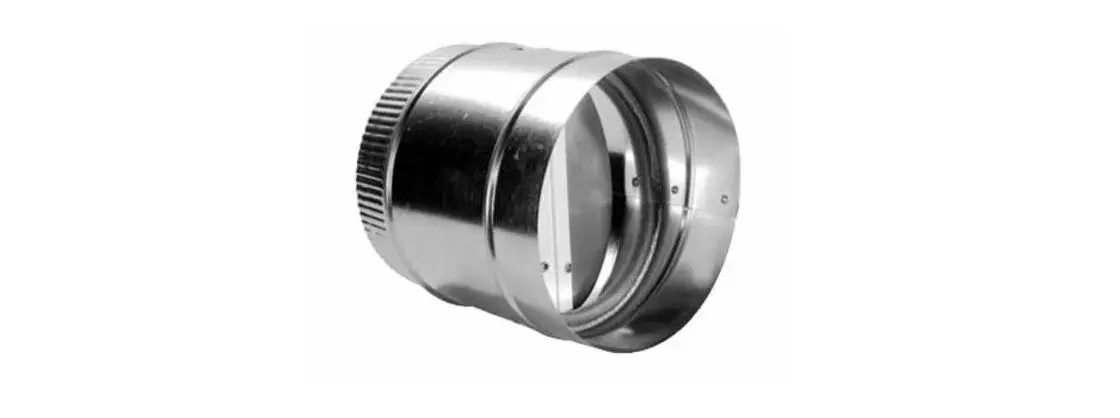
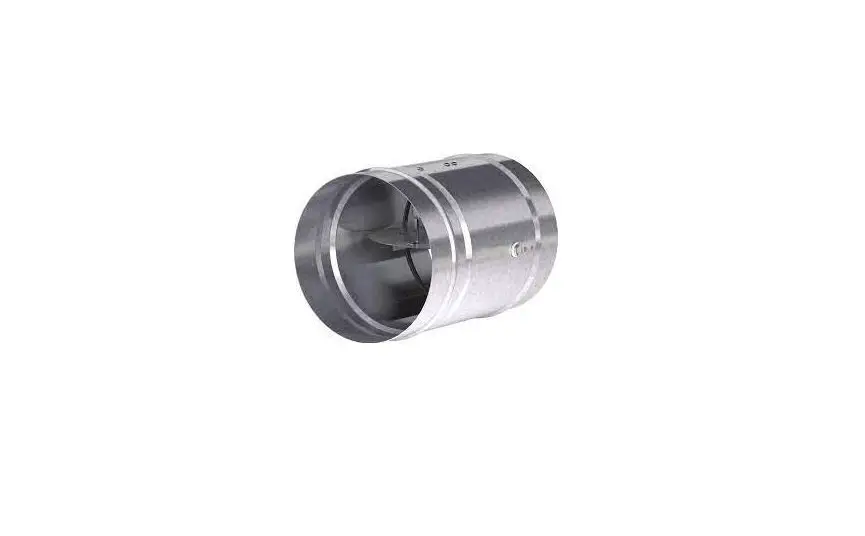
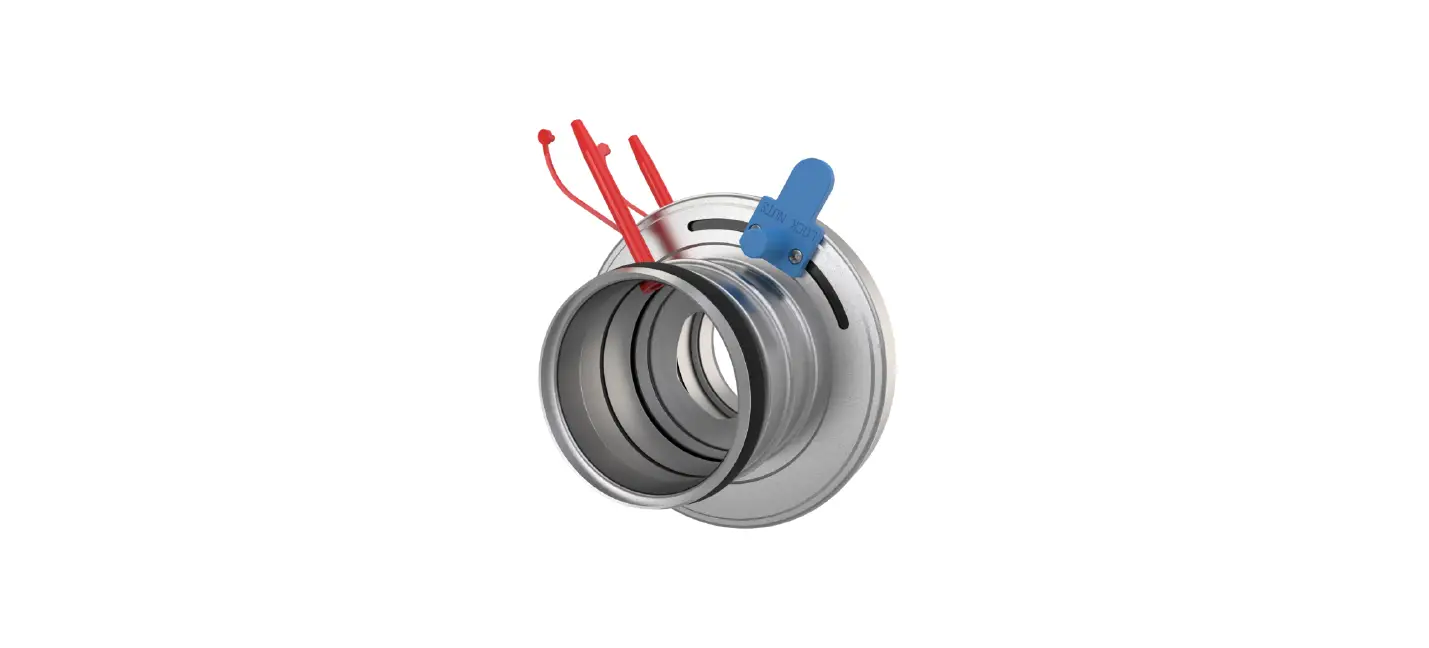
The Static Pressure Adjustable Damper is a single blade,
counterbalancing spring damper that operates on air pressure to
control the flow of by-pass air on a zoned system. The damper
utilizes an adjustable knob/blade to maintain the correct amount of
pressure in the duct system. The damper allows for setpoints
between 0.3 inches W.C. of pressure to 0.8-inch W.C. It is
available in round sizes only.
Available Sizes and CFM Capacities
| Round Sizes | Size (Diameter) | CFM |
|---|---|---|
| 8 | 400 | |
| 10 | 750 | |
| 12 | 1,000 | |
| 14 | 1,600 |
Calculating By-Pass Air Requirements
The need for by-pass air and the size of the damper required can
be calculated by knowing the total CFM capacity of the HVAC unit
(TCFM) and subtracting the CFM capacity of the smallest zone
(SCFM). The resulting CFM of air required to be by-passed (BCFM) is
used to select an appropriately sized by-pass damper from the chart
above. It is recommended to have a larger size by-pass than having
one that is too small.
Location
Selecting a location to place the static pressure damper is very
important for overall system operation. Ideally, the best place for
the damper is as far away from the air handler as possible and
before any zone dampers. In an extended plenum application where
zones come off the side of the main trunk, the end of the extended
plenum is the ideal situation. In most residential applications,
however, the zone dampers are right at the plenum of the air
handler. In this application, the only location for the bypass
damper is at the plenum. It is recommended that a freeze protection
device be used as well as the supply air sensors with the zoning
panel to protect the equipment from overheating or cooling due to
the return by-pass.
Product Usage Instructions
- Calculate the by-pass air requirements by subtracting the
smallest zone CFM from the total CFM capacity of the HVAC
unit. - Refer to the chart above and select an appropriately sized
by-pass damper. - Install the damper in an appropriate location, ideally as far
away from the air handler as possible and before any zone
dampers. - Maintain the correct amount of pressure in the duct system by
adjusting the knob/blade on the damper. - Use a freeze protection device and supply air sensors with the
zoning panel to protect the equipment from overheating or cooling
due to the return by-pass.
The Best Value in Zoning Today®
Static Pressure Adjustable Dampers
The Static Pressure Adjustable Damper is a single blade, counterbalancing spring damper, that operates on air pressure in order to control the flow of by-pass air on a zoned system. The damper utilizes an adjustable knob/blade to maintain the correct amount of pressure in the duct system. The damper allows for setpoints between 0.3 inches W.C. of pressure to 0.8-inch W.C.
As zone dampers close off air to several zones, the supply air pressure in the duct system will increase. This increase in air pressure can increase the noise level and reduce the flow of conditioned air through the HVAC Unit. The static pressure adjustable damper works similar to a standard bypass damper in that it helps maintain a constant air pressure in the duct system. However, the damper utilizes minimum setpoints for the blade to respond to air pressure. This reduces buildup of pressure within the supply and helps reduce the noise that is caused by these high air pressures and velocities, as well as maintains a constant volume of air (CFM) through the duct system. Maintaining a constant volume of air through the HVAC System keeps the efficiency of the system at its maximum.
The static pressure adjustable damper is available in round sizes only. The chart below lists the available sizes of dampers and their recommended CFM capacities.
Round Sizes Size (Diameter) 8″ 10″
CFM 400 750
Size (Diameter) 12″ 14″
CFM 1,000 1,600
Calculating By-Pass Air Requirements Determining the need for by-pass air and the size of the damper required is very simple. It can be calculated by knowing the total CFM capacity of the HVAC unit (TCFM) and subtracting the CFM capacity of the smallest zone (SCFM) will equal the CFM of air required to be by-passed (BCFM).
TCFM –
Total CFM
SCFM
Smallest Zone CFM
= BCFM
By-Pass CFM
Once the by-pass amount of air is known, use the chart above to select an appropriately sized by-pass damper. It is always recommended to have a larger size by-pass than having one that is too small. It is much easier to reduce by-pass air through the damper or close it off than having to increase the size of the by-pass duct and/or damper.
Location Selecting a location to place the static pressure damper is very important for overall system operation. Ideally the best place for the damper is as far away from the air handler as possible and before any zone dampers. In an extended plenum application where zones come of the side of the main trunk, the end of the extended plenum is the ideal situation.
In most residential applications, however, the zone dampers are right at the plenum of the air handler. In this application the only location for the bypass damper is at the plenum. In this application, especially when the bypass damper is ducted to the return, it is recommended that a freeze protection device be used as well as the supply air sensors with the zoning panel to protect the equipment from overheating or cooling due to the return by-pass.
Installation The static pressure adjustable dampers are easily installed in-line of any round duct, with the blade already enclosed in a 10″ length of duct. The damper is just like any typical length of round rigid duct, with a crimped end in the direction of the air flow. Place the flat collar end of the damper over the crimped end of the take-off or rigid metal duct. Insert crimped end of round damper into un-crimped end of rigid round duct and secure with sheet metal screws. When using flexible duct, slip duct over end of the round damper and secure with duct straps (not provided). Most damper installations are typically in horizontal ducts where the damper control blade will close vertically. The damper can also be installed in vertical ducts. To adjust the static pressure control damper, all zone dampers must first be open and the fan operating. When all dampers are open, the knob to the damper should be positioned in the desired minimum setpoint for pressure. Air will flow past the blade, limiting the buildup of pressure within the supply plenum. This ultimately will result in less noise normally caused by the damper blade constantly moving.
Gear Specifications Dimensions 4.725″ x 4.725″ x 1.25″ Temperature Rating 0°F to 180°F Operating, -20°F to 190°F Storage Humidity 5% to 95% Non-Condensing Static Pressure Maximum 0.8″ W.C.
©2023 Braeburn Systems LLC · 2215 Cornell Ave., Montgomery IL 60538 · Telephone 866.268.5599 · Fax 866.268.8897 www.braeburnonline.com
 Braeburn Systems