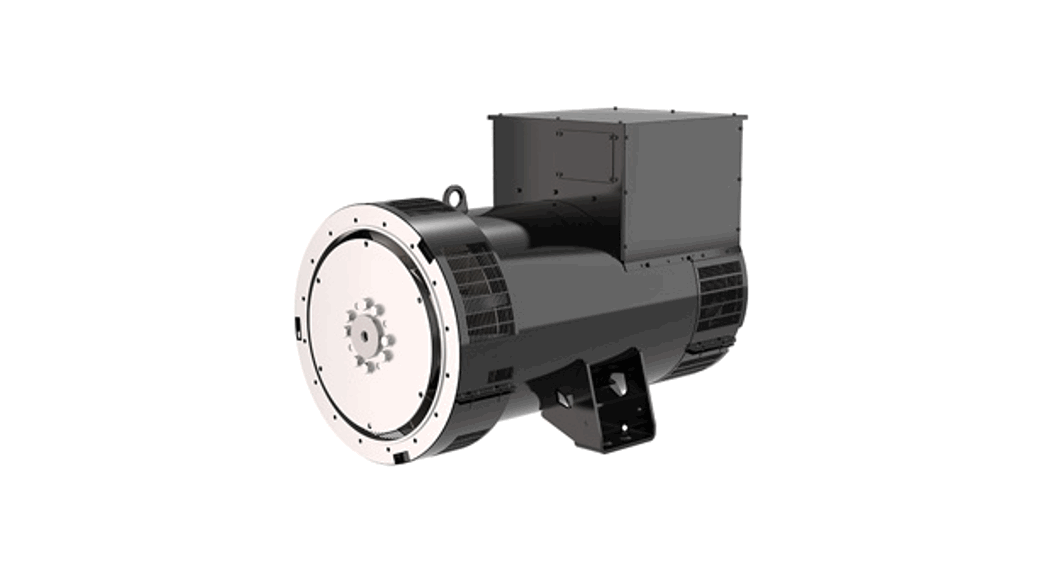
LSAH 44.3 Alternator
Product Information
The LSAH 44.3 is an alternator designed for cogeneration
installations. It has a power output range of 40 to 75 kVA at 50 Hz
and 50 to 94 kVA at 60 Hz. The alternator is equipped with both
electrical and mechanical data for efficient operation.
Main Features
- Built-in coolant circuit for optimized heat recovery
- Direct integration with larger installations
- Suitable for continuous service connected to the national
grid - Compatible with oil and gas applications
- Highly performant and durable construction
Standards
The LSAH 44.3 alternator complies with industry standards for
electrical characteristics and performances.
Protection System and Options
The alternator is equipped with a protection system to ensure
safe operation. It also offers additional options for customization
and enhanced functionality.
Product Usage Instructions
To use the LSAH 44.3 alternator, follow these steps:
- Ensure that the installation is compatible with the power
output range of the alternator (40 to 75 kVA at 50 Hz or 50 to 94
kVA at 60 Hz). - Connect the alternator to the cogeneration installation or the
national grid, depending on the intended use. - If applicable, connect the coolant circuit of the alternator to
the larger installation for optimized heat recovery. - Ensure that the alternator is properly protected using the
built-in protection system. - Customize the operation of the alternator by utilizing any
available options according to your specific requirements. - Monitor the performance of the alternator and address any
issues promptly to ensure continuous and efficient operation.
For further details and specific instructions, refer to the
complete user manual provided with the product.
LSAH 44.3
Alternator for cogeneration installations
40 to 75 kVA – 50 Hz / 50 to 94 kVA – 60 Hz Electrical and mechanical data
MAIN FEATURES AND OPTIONS
Built to heat
The LSAH range of alternators has been designed to maximize efficiency of cogeneration installations.
Thanks to its specific built-in coolant circuit, heat recovery is optimized and directly fed into the larger installation.
LSAH alternators are also perfectly suited for continuous service connected to the national grid and other applications like oil and gas.
The various design elements and construction features of LSAH machines make them highly performant and durable.
Standards
Nidec Leroy-Somer LSAH 44.3 alternator meets all key international standards and regulations, including IEC 60034, NEMA MG 1.32-33, ISO 8528-3, CSA C22.2 n°100-14 and UL 1446 (UL 1004 on request). Also compliant with IEC 61000-6-2, IEC 61000-6-3, IEC 61000-6-4, VDE 0875G, VDE 0875N and EN 55011, group 1 class A for European zone. Nidec Leroy-Somer LSAH 44.3 alternator can be integrated in EC marked generator set, and bears EC and CMIM markings. It is designed, manufactured and marketed in an ISO 9001 and ISO 14001 quality assurance environment.
Electrical characteristics and performances
· Class H insulation · 2/3 pitch winding, standard 6-wire (6S) reconnectable · Voltage range:
– 50 Hz: 380V/400V/415V – 60 Hz: 380V/440V/480V Other voltages: consult us · High efficiency and motor starting capacity
Protection system and options
· Designed for an operating environment up to 80°C and a maximum cooling liquid temperature of 75°C
· Water flow: 3 to 10 m3/h · pH of water: 7<pH<8 · Degree of protection: IP 44 (option: IP55/IP56) · Enclosed machine cooled by heat transfer fluid · Options:
– Double terminal box – Space heater – Bearing sensors – Thermal protection for stator windings
(PT100 sensors) – Shaft height: adapted on request – Remote voltage potentiometer – Current transformer for parallel operation – Single-bearing configuration – Reinforced paint for harsh environment
Mechanical construction
· Compact rigid assembly to better withstand generator vibrations
· Steel frame and terminal box
· Cast iron flanges and shields · Two-bearing and single-bearing mounting · Half-key balancing · Greasable ball bearings: 40,000h · Direction of rotation: clockwise and anti-clockwise
(without derating) · Noise level: 81 dBA (IEC 60034-9) · Output cable direction: left or right
Terminal box design
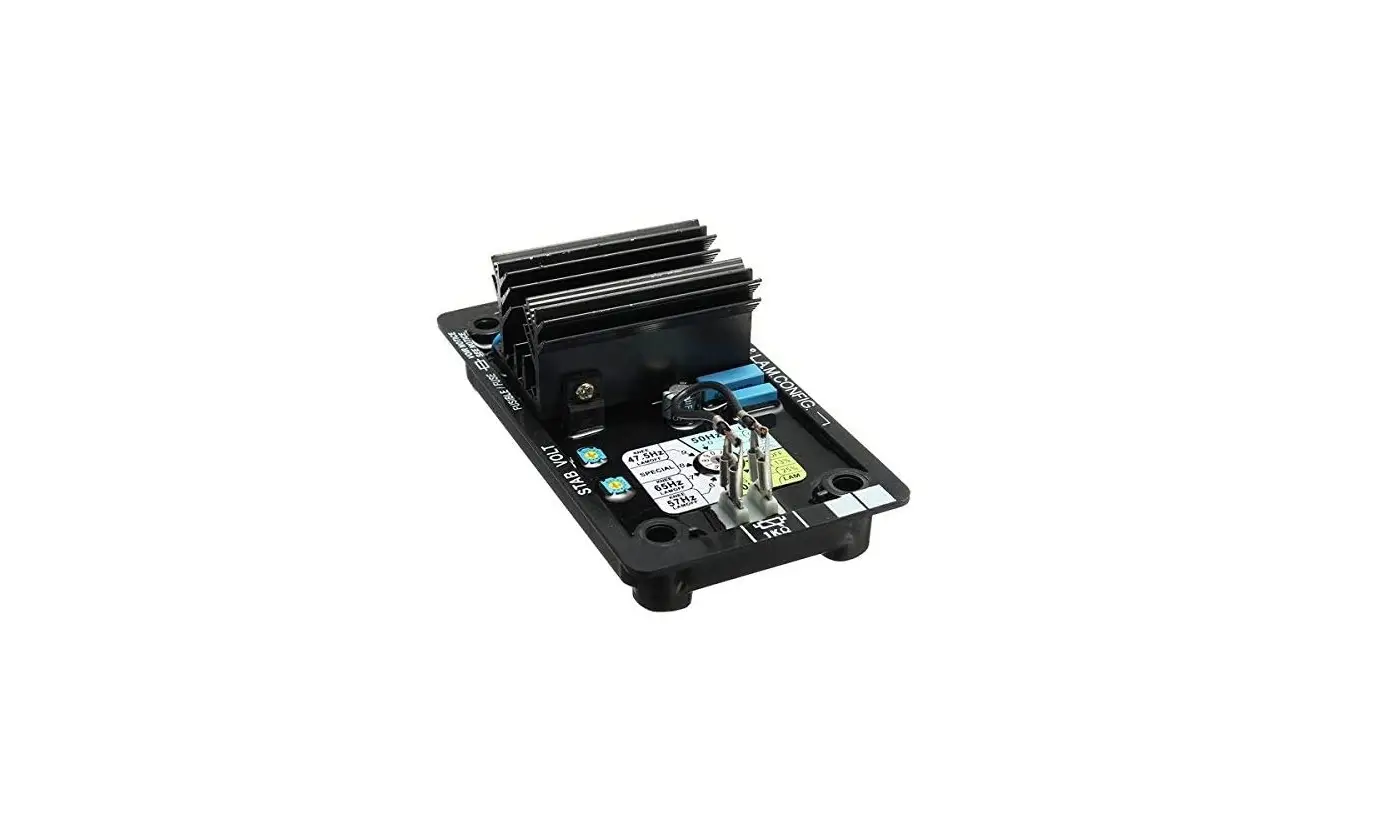
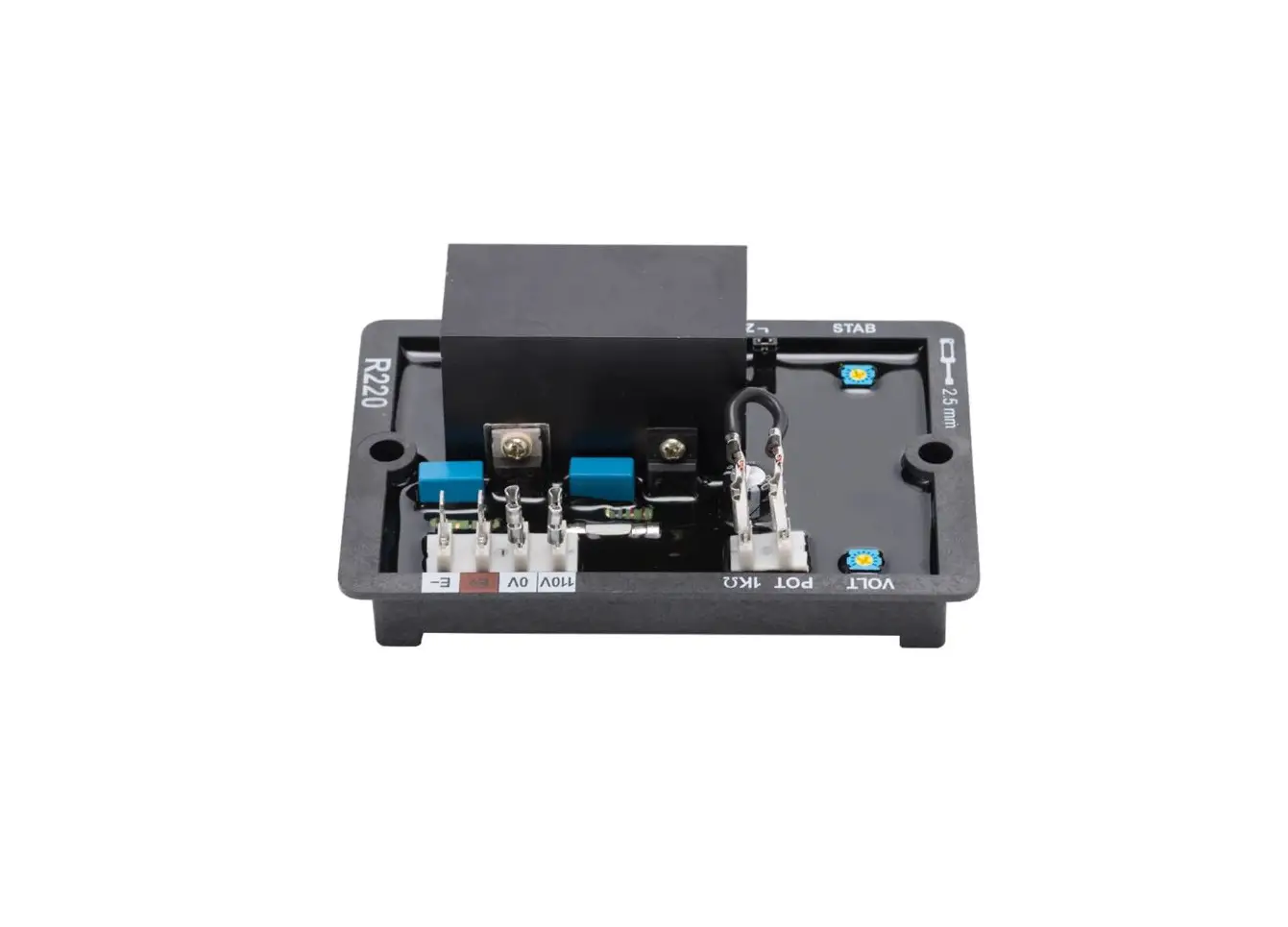
· Remote voltage regulator (AVR not mounted in terminal box)
· Terminal block for voltage reconnection
· Terminal block on the left or right, or both sides (with extra cost)
EXCITATION AND REGULATION SYSTEM
Excitation system
AVR
AREP
D350 D550
Standard Option
Regulation options
C.T. Current transformer
for paralleling
Mains paralleling
3-phase sensing is included as a standard with digital regulators.
Remote voltage potentiometer
2
Electric Power Generation
GENERAL CHARACTERISTICS
Insulation class Winding pitch
Number of wires Protection Cooling – Code
Altitude Overspeed Water flow
H
2/3 (wind. 6S) 6
IP 44 Water – IC7A1W7
1000 m 2250 R.P.M. 3 to 10 m3/h
Excitation system AVR type Voltage regulation (*) Short-circuit current Total Harmonic Distortion THD (**) in no-load Total Harmonic Distortion THD (**) in linear load Waveform: NEMA = TIF (**) Waveform: I.E.C. = THF (**)
(*) Steady state (**) Total harmonic distortion between phases, no-load or on-load (non-distorting)
AREP D350 ± 0.25 % 300 % (3 IN) : 10s < 2 % < 5 % < 50
< 1.5 %
RATINGS
50 Hz – 1500 R.P.M.
Duty max. / T° C Class / T° K
Y LSAH 44.3 M4 kVA
kW
LSAH 44.3 M6 kVA
kW
LSAH 44.3 L8 kVA
kW
LSAH 44.3 VL12 kVA
kW
Continuous / 80 °C (environment) – 75 °C (liquid)
F / 70° K (Standard)
P.F. 1
P.F. 0.8
B / 45° K
P.F. 1
P.F. 0.8
H / 90° K
P.F. 1
P.F. 0.8
380V 400V 415V 380V 400V 415V 380V 400V 415V 380V 400V 415V 380V 400V 415V 380V 400V 415V
40 40 40
50 50 50
32 32 32
40 40 40
44 44 44
55 55 55
40 40 40
40 40 40
32 32 32
32 32 32
44 44 44
44 44 44
52 52 52
65 65 65
42 42 42
52 52 52
57 57 57
71 71 71
52 52 52
52 52 52
42 42 42
42 42 42
57 57 57
57 57 57
60 60 60
75 75 75
48 48 48
60 60 60
66 66 66
82 82 82
60 60 60
60 60 60
48 48 48
48 48 48
66 66 66
66 66 66
75 75 75
94 94 94
60 60 60
75 75 75
83 83 83 104 104 104
75 75 75
75 75 75
60 60 60
60 60 60
83 83 83
83 83 83
60 Hz – 1800 R.P.M.
Duty max. / T° C Class / T° K
Y LSAH 44.3 M4 kVA
kW
LSAH 44.3 M6 kVA
kW
LSAH 44.3 L8 kVA
kW
LSAH 44.3 VL12 kVA
kW
Continuous / 80 °C (environment) – 75 °C (liquid)
F / 70° K (Standard)
P.F. 1
P.F. 0.8
B / 45° K
P.F. 1
P.F. 0.8
H / 90° K
P.F. 1
P.F. 0.8
380V 440V 480V 380V 440V 480V 380V 440V 480V 380V 440V 480V 380V 440V 480V 380V 440V 480V
40 46 50 49 57 62 32 37 40 40 46 50 44 50 55 55 63 69
40 46 50
39 46 50
32 37 40
32 37 40
44 50 55
44 50 55
49 57 62 62 72 78 40 46 50 49 57 62 54 62 68 67 78 85
49 57 62
50 58 62
40 46 50
39 46 50
54 62 68
54 62 68
59 69 75 74 86 94 48 55 60 59 69 75 66 76 83 82 94 103
59 69 75
59 69 75
48 55 60
47 55 60
66 76 83
66 75 82
74 86 94 93 107 117 59 69 75 74 86 94 82 95 104 103 119 130
74 86 94
74 86 94
59 69 75
59 69 75
82 95 104 82 95 104
For other needs, please contact us.
TEMPERATURE AND POWER
Power adjustment factor according to the coolant temperature
Coolant T °C Factor
40 – 50 °C 1.03
60 – 75 °C 1
Max T water (outlet vs inlet) at water temperature 40 °C to 75 °C
Class B 0.5 K
Class F 0.7 K
Class H 0.9 K
85 – 95 °C 0.97
Electric Power Generation
3
EFFICIENCIES 400 V – 50 HZ (— P.F.: 0.8) (– P.F.: 1) – CLASS F
% 100
LSAH 44.3 M4
96
92
88 0
95.5 94.2
93.1
96.1 96.2
94.3
94.7 94.7
89.8
89.0
kVA
10
20
30
40
50
60
% 100
96 92
LSAH 44.3 M6
96.0
96.6
96.7 96.7
93.5
95.0
95.4
95.2 95.1
92.7
88 0
kVA
20
40
60
80
% 100
LSAH 44.3 L8
96.4 96.7 96.7
96
95.6
92.4 92
95.3 95.4 95.3 94.6
91.7
88 0
20
40
60
80
kVA 100
100 % 96 92
LSAH 44.3 VL12
92.6
96.6 96.9 96.9 95.7
94.8
95.5
95.7 95.6
91.9
88 0
kVA
20
40
60
80
100
120
REACTANCES (%). TIME CONSTANTS (MS) – CLASS F / 400 V – P.F. 1
Kcc Short-circuit ratio Xd Direct-axis synchronous reactance unsaturated Xq Quadrature-axis synchronous reactance unsaturated T’do No-load transient time constant X’d Direct-axis transient reactance saturated T’d Short-circuit transient time constant X”d Direct-axis subtransient reactance saturated T”d Subtransient time constant X”q Quadrature-axis subtransient reactance saturated Xo Zero sequence reactance X2 Negative sequence reactance saturated Ta Armature time constant
Other class F / 400 V data
io (A) ic (A) uc (V)
ms kVA % W W
No-load excitation current AREP On-load excitation current AREP On-load excitation voltage AREP Response time (U = 20% transient) Start (U = 20% continuous or U = 30% transient) AREP* Transient U (on-load 4/4) AREP – P.F.: 1 LAG No-load losses
Heat dissipation
* P.F. = 0.6
M4 1.28 119 61 1802 6.6 100 3.9 10 6.9 0.27 5.47 15
1.08 1.4 11.2 500 275 4.8 1212 1602
4
Electric Power Generation
M6 0.67 179 91 1921 9.3 100 5.5 10 9.8 0.38 7.73 15
0.74 1.35 10.8 500 255 4.8 947 1740
L8 0.93 150 76 2024 7.4 100 4.4 10 7.8 0.3 6.16 15
0.94 1.42 11.4 500 371 4.8 1289 2006
VL12 0.99 140 71 2253 6.2 100 3.7 10 6.7 0.26 5.25 15
0.94 1.39 11.1 500 550 4.8 1598 2374
TRANSIENT VOLTAGE VARIATION 400 V – 50 HZ – CLASS F
Voltage drop
30% 25% 20% 15% 10%
5% 0%
0
M4
M6 L8 VL12
50
100
150
200
250
300
Phase loading (AREP) – kVA at P.F. = 1
Voltage rise
30% 25% 20% 15% 10% 5% 0%
0
M4
M6 L8 VL12
50
100
150
200
250
300
Load shedding (AREP) – kVA at P.F. = 1
Voltage drop
30% 25% 20% 15% 10%
5% 0%
0
M6 M4
L8
VL12
100
200
300
400
500
600
Motor starting (AREP) Locked rotor kVA at P.F. = 0.6
– For a starting P.F. other than 0.6, the starting kVA must be multiplied by K = Sine P.F. / 0.8 – For voltages other than 400V (Y), 230V () at 50 Hz, then kVA must be multiplied by (400/U)2 or (230/U)2.
Electric Power Generation
5
EFFICIENCIES 480 V – 60 HZ (— P.F.: 0.8) (– P.F.: 1) – CLASS F
% 100
LSAH 44.3 M4
96
92
88.8 88
0
95.9 96.1 95.2
93.7
94.2 94.7 94.8
92.8
88.1
20
40
60
kVA 80
100 %
LSAH 44.3 M6
96.4 96.6 96.6
96
95.5
92.4
94.7
95.3
95.3 95.3
92
91.8
88 0
kVA
20
40
60
80
100
100 %
96
92
88 0
LSAH 44.3 L8
96.2 96.6 96.7 95.2
95.2
95.4 95.4
94.4
91.7
91.1
kVA
20
40
60
80
100
120
% 100
96
92
88 0
LSAH 44.3 VL12
96.4 96.8 96.8 95.3
95.4
95.7 95.7
94.6
91.8
91.2
kVA
20
40
60
80 100 120 140
REACTANCES (%). TIME CONSTANTS (MS) – CLASS F / 480 V – P.F. 1
Kcc Xd Xq T’do X’d
Short-circuit ratio Direct-axis synchronous reactance unsaturated Quadrature-axis synchronous reactance unsaturated No-load transient time constant Direct-axis transient reactance saturated
T’d Short-circuit transient time constant
X”d Direct-axis subtransient reactance saturated
T”d Subtransient time constant X”q Quadrature-axis subtransient reactance saturated Xo Zero sequence reactance X2 Negative sequence reactance saturated Ta Armature time constant
Other class F / 480 V data
io (A) ic (A) uc (V)
ms kVA % W W
No-load excitation current AREP On-load excitation current AREP On-load excitation voltage AREP Response time (U = 20% transient) Start (U = 20% continuous or U = 30% transient) AREP* Transient U (on-load 4/4) AREP – P.F.: 1 LAG No-load losses
Heat dissipation
* P.F. = 0.6
M4 1.24 123 63 1802 6.8 100 4.1 10 7.1 0.28 5.65 15
1.08 1.41 11.3 500 331 4.8 1696 2083
6
Electric Power Generation
M6 0.67 179 91 1921 9.3 100 5.5 10 9.8 0.38 7.73 15
0.74 1.34 10.8 500 306 4.8 1373 2163
L8 0.89 156 79 2024 7.7 100 4.6 10 8.2 0.32 6.43 15
0.94 1.45 11.6 500 443 4.8 1823 2601
VL12 0.96 146 74 2253 6.4 100 3.8 10
7 0.27 5.44 15
0.94 1.4 11.2 500 657 4.8 2253 3081
TRANSIENT VOLTAGE VARIATION 480 V – 60 HZ – CLASS F
Voltage drop
30% 25% 20% 15% 10% 5% 0%
0
M4 M6 L8 VL12
50 100 150 200 250 300 350 400 Phase loading (AREP) – kVA at P.F. = 1
Voltage rise
30% 25% 20% 15% 10% 5% 0%
0
M4 M6 L8 VL12
50 100 150 200 250 300 350 400 Load shedding (AREP) – kVA at P.F. = 1
Voltage drop
30% 25% 20% 15% 10%
5% 0%
0
M6 M4
L8
VL12
100 200 300 400 500 600 700
Motor starting (AREP) Locked rotor kVA at P.F. = 0.6
– For a starting P.F. other than 0.6, the starting kVA must be multiplied by K = Sine P.F. / 0.8 – For voltages other than 480V (Y), 277V (), 240V (YY) at 60 Hz, then kVA must be multiplied by (480/U)2 or (277/U)2 or (240/U)2.
Electric Power Generation
7
3-PHASE SHORT-CIRCUIT CURVES AT NO LOAD AND RATED SPEED (STAR CONNECTION Y) CLASS F
LSAH 44.3 M4
Symmetrical ——-Asymmetrical – – –
10000 1000 100
AREP In
Current (A)
10
1
1
10
100
1000
10000
Time (ms)
LSAH 44.3 M6
Symmetrical ——-Asymmetrical – – –
10000 1000 100
Current (A)
10
1 1
AREP In
10
100
1000
10000
Time (ms)
Influence due to connection For () connection, use the following multiplication factor:
– Current value x 1.732.
8
Electric Power Generation
3-PHASE SHORT-CIRCUIT CURVES AT NO LOAD AND RATED SPEED (STAR CONNECTION Y) CLASS F
LSAH 44.3 L8
Symmetrical ——-Asymmetrical – – –
10000 1000 100
AREP In
Current (A)
10
1
1
10
100
1000
10000
Time (ms)
LSAH 44.3 VL12
Symmetrical ——-Asymmetrical – – –
10000 1000
100
Current (A)
10
1 1
AREP In
10
100
1000
10000
Time (ms)
Influence due to short-circuit Curves are based on a three-phase short-circuit. For other types of short-circuit, use the following multiplication factors.
Instantaneous (max.) Continuous Maximum duration (AREP)
3 – phase 1 1
10 sec.
2 – phase L / L 0.87 1.5 5 sec.
1 – phase L / N 1.3 2.2
2 sec.
Electric Power Generation
9
571
TWO-BEARING DIMENSIONS – STANDARD
Ø 557
+0
Ø 409.58 – 0.127 Ø 65 h6
110.5
L
LB
189.5
D
WU Xg
6
105
292 Ø 484
Access to terminals
(8)
274 Ø 485
M20
WD C
Type 48 – I “1/2”
Access to diodes
Dimensions (mm) and weight
Type
L
LB
LSAH 44.3 M4
839.5
729
LSAH 44.3 M6
839.5
729
LSAH 44.3 L8
874.5
764
LSAH 44.3 VL12
974.5
864
D
WU
Xg
445
494.5
330
445
494.5
345
480
529.5
360
580
629.5
370
100
286
15
143
31 18
390 12 holes M10 equid. on Ø 428.62
(6)
11 69
45 30
383 515 600
146 M10
+1 -3
H
WD
C
194.5
252
194.5
252
194.5
252
194.5
252
H
Weight (kg)
262
545
262
580
262
622
262
750
TORSIONAL ANALYSIS DATA
Xr
Ø 65 Ø 70 Ø 72 Ø 74.8 Ø 75 Ø 80 Ø 70 Ø 40
Lr
Centre of gravity: Xr (mm), Rotor length: Lr (mm), Weight: M (kg), Moment of inertia: J (kgm2): (4J = MD2)
Type
Xr
Lr
M
LSAH 44.3 M4
332.5
828
135.5
LSAH 44.3 M6
347
828
147
LSAH 44.3 L8
364
863
160.5
LSAH 44.3 VL12
413
963
206
J 0.984 1.098 1.206 1.592
NOTE : Dimensions are for information only and may be subject to modifications. Contractual 2D drawings can be downloaded from the LeroySomer site, 3D drawing files are available upon request. The torsional analysis of the transmission is imperative. All values are available upon request.
10
Electric Power Generation
571
SINGLE-BEARING DIMENSIONS – OPTION
L
LB
189.5
D
AH
WU
Xg
6
4
Access to terminals
390 XBG holes Ø S equid. on Ø M
(6)
(8)
X holes Ø Y equid. on Ø U
292 Ø 484
274 Ø 485
286
0
Ø N- 0.127
– 0.05
Ø BX – 0.15
+1 -3
143
261.5
ø 127
100
1 5
146 M10
194.5
Access to diodes
45 30
178.5
31
383
252
Type 48 – I “1/2”
515
600
Dimensions (mm) and weight
Coupling
Type
L maxi*
LB
D
WU
Xg Weight (kg)
Flange
2
3
4
LSAH 44.3 M4
810
729
445
494.5
330
545
Flex plate
LSAH 44.3 M6
810
729
445
494.5
345
580
11 ½
x
x
–
LSAH 44.3 L8
845
764
480
529.5
360
622
10
x
x
x
LSAH 44.3 VL12
945
864
580
629.5
370
750
8
–
x
x
* L maxi = LB + AH maxi + 19
Flange (mm)
Flex plate (mm)
S.A.E.
N
M
S
XBG
S.A.E.
BX
U
X
4
361.95
381
11
12
11 ½
352.42
333.38
8
3
409.58
428.62
11
12
10
314.32
295.28
8
2
447.68
466.72
11
12
8
263.52
244.48
6
Y
AH
11
39.6
11
53.8
11
62
For torsional analysis data or other request: consult us.
NOTE : Dimensions are for information only and may be subject to modifications. Contractual 2D drawings can be downloaded from the LeroySomer site, 3D drawing files are available upon request.
Electric Power Generation
11
www.leroy-somer.com/epg
Connect with us at:
© 2023 Moteurs Leroy-Somer SAS. The information contained in this brochure is for guidance only and does not form part of any contract. The accuracy cannot be guaranteed as Moteurs Leroy-Somer SAS have an ongoing process of development and reserve the right to change the specification of their products without notice. Moteurs Leroy-Somer SAS. Headquarters: Bd Marcellin Leroy, CS 10015, 16915 Angoulême Cedex 9, France. Share Capital: 38,679,664 , RCS Angoulême 338 567 258.
5873 en – 2023.01 / h
 Leroy-Somer Alternators - Generators