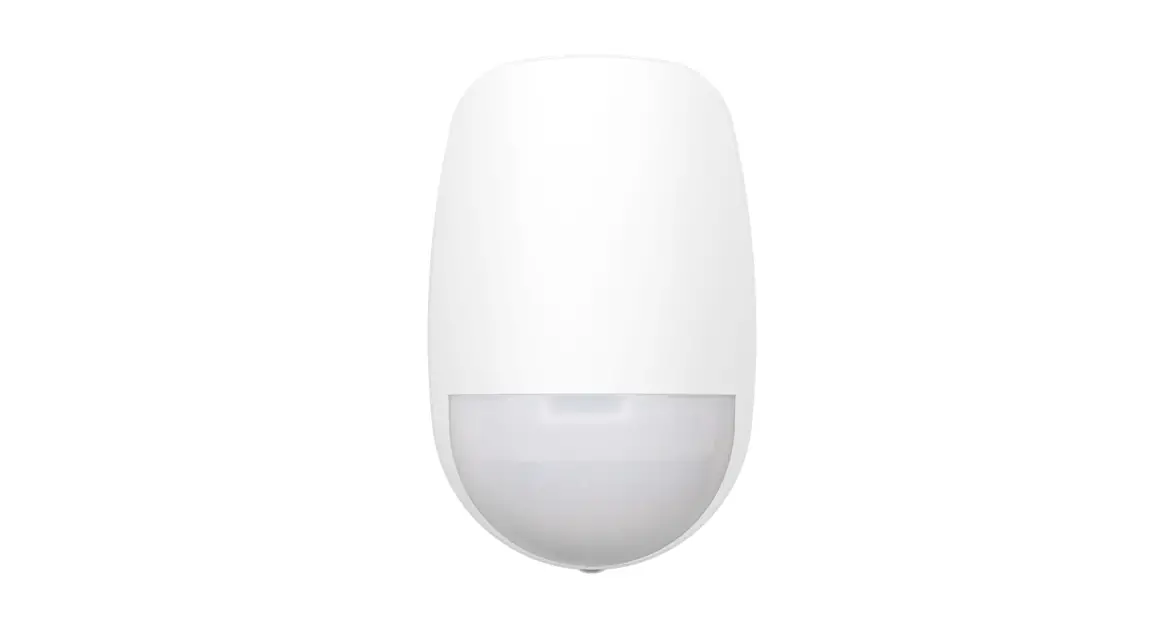
HFW-MA-05 Bi-Directional Wireless Addressable Multicriteria Detector with Variable Sensitivity
HFW-MA-05
BI-DIRECTIONAL WIRELESS ADDRESSABLE MULTICRITERIA DETECTOR WITH
VARIABLE SENSITIVITY
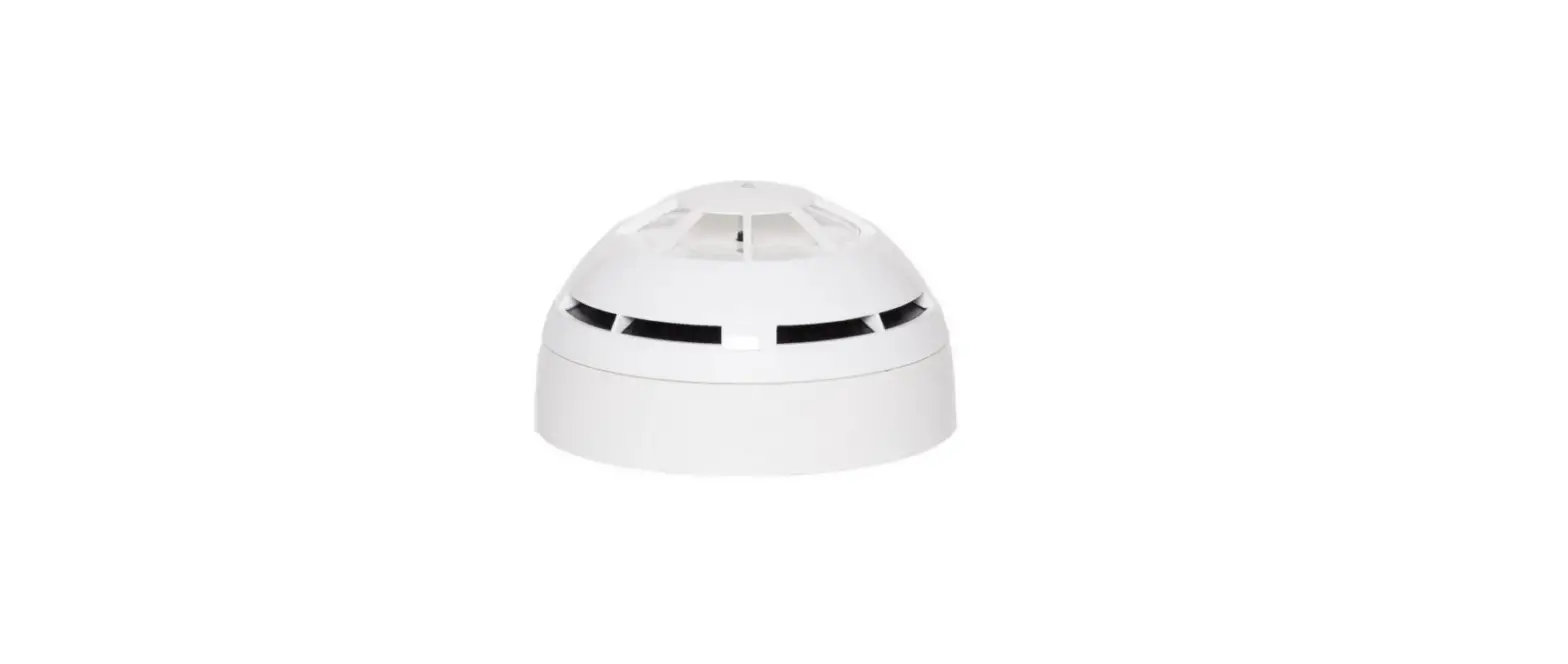
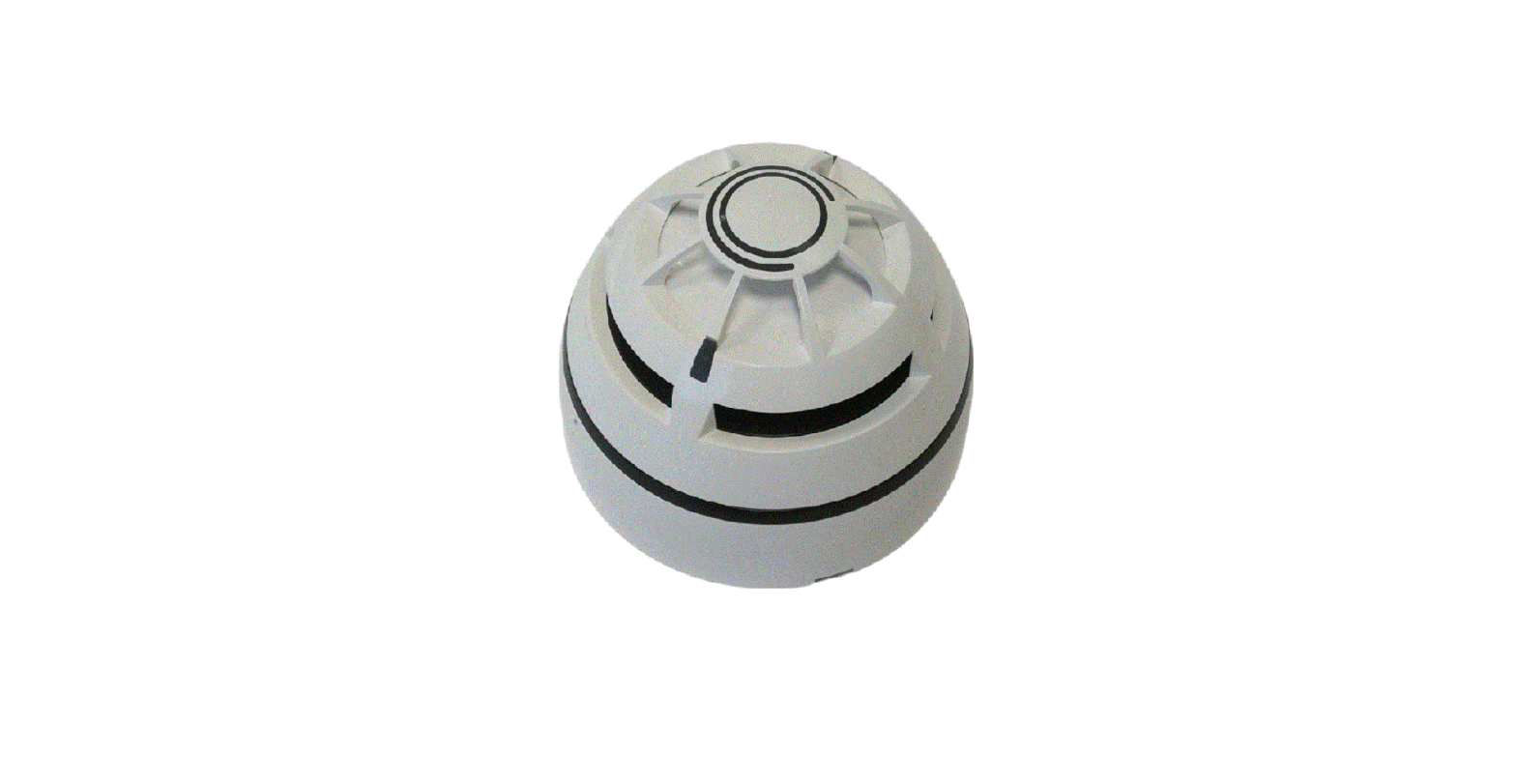
Model HFW-MA-05 is a wireless addressable multicriteria detector
that samples the air and the environmental temperature in the
protected area. When the detected environmental smoke quantity, the
temperature level, or the thermal variation rate exceeds the alarm
threshold, an alarm condition is raised.
COMPATIBILITY
This detector is compatible only with wireless systems based on
the Sagittarius protocol. For more specific information concerning
compatibility, refer to your fire security system supplier.
INSTALLATION – IMPORTANT NOTES
For detector spacing, placement, and special applications, refer
to your specific national standards. Mount the detector as far as
possible from metal objects, metal doors, metal window openings,
etc., as well as cable conductors, cables (especially from
computers), otherwise, the operating distance may greatly drop. The
detector must NOT be installed near electronic devices and computer
equipment that can interfere with its wireless link quality.
This detector must be installed precisely according to the
procedures described in this manual. Test this detector after
installation.
BEFORE INSTALLING THE DETECTOR
- Extract the batteries cover from the back of the detector.
- Power-up the detector by removing the isolating tab in the
battery housing. LED indicators signal Power up. - Link the detector to the Sagittarius wireless system
(LINKING). - Check the WIRELESS LINK QUALITY.
- SELECT A GOOD LOCATION FOR THE DETECTOR.
- Tag device’s loop and address data (IDENTIFICATION).
- Fix the detector supporting base to the wall (BASE
INSTALLATION).
LED INDICATORS
Picture 1 provides visual indication for functional conditions
and battery levels as indicated in table 1.
| Detector’s status | LEDs indication |
|---|---|
| Power up | 1 second GREEN, then 4 X 0.5 second RED blink |
| Linking to the system | Blinking GREEN until linking is completed |
| Link failure | Blinking RED: 0.5 second on and 0.5 second off |
| Normal condition | 0.1 second ORANGE blink, then 5 seconds off |
| Alarm | 0.1 second GREEN blink, then 5 seconds off |
| Battery 1 fault | 0.1 second ORANGE, then 5 seconds off |
| Battery 2 fault | 0.1 second GREEN, then 5 seconds off |
| Both batteries fault | sequential ORANGE / GREEN 0.5 second blinking |
| Other fault | LEDs off |
| Tamper | LEDs off |
| Lost link with wire to wireless translator / wireless expander | Blinking GREEN every 1 second for 1 minute |
| Type 1 Test Mode | GREEN on (continuous) for 30 minutes |
| Type 2 Test Mode | Blinking GREEN every 1 second for 1 minute |
Note: For more information about Type 1 and Type 2 Test Modes,
please refer to the manual.
LINKING
The system is waiting to achieve a wireless child device (for
further information, refer to the translator’s or the Wirelex
configuration software’s literature):
Link switch:
- Move the link switch’s cursor from ON to the opposite side of
its run (we will call it BLANK, since it carries no indication).
LED indicators signal Linking to the system (picture 2).
Linking is successful when:
- The translator indicates so (check translator’s
literature).
HFW-MA-05
BI-DIRECTIONAL WIRELESS ADDRESSABLE MULTICRITERIA DETECTOR WITH VARIABLE SENSITIVITY
928m/02
OVERVIEW
This detector model samples the air and the environmental temperature in the protected area. An alarm condition is raised whe n the detected environmental smoke quantity, the temperature level or the thermal variation rate exceeds the alarm threshold.
COMPATIBILITY
This detector is compatible only with wireless systems based on the Sagittarius protocol. For more specific information concerning compatibility refer to your fire security system supplier.
INSTALLATION – IMPORTANT NOTES
For detector spacing, placement and special applications refer to your specific national standards. Mount the detector as far as possible from metal objects, metal doors, metal window openings, etc. as well as cable conductors, cables
(especially from computers), otherwise the operating distance may greatly drop. The detector must NOT be installed near electronic devices and computer equipment that can interfere with its wireless link quality.
This detector must be installed according precisely to the procedures described in this manual.
Test this detector after installation.
BEFORE INSTALLING THE DETECTOR
1) Extract the batteries cover from the back of the detector. 2) Power-up the detector removing the isolating tab in the battery
housing. LED indicators signal “Power up”. 3) Link the detector to the Sagittarius wireless system (LINKING). 4) Check the WIRELESS LINK QUALITY. 5) SELECT A GOOD LOCATION FOR THE DETECTOR. 6) Tag device’s loop and address data (IDENTIFICATION). 7) Fix the detector supporting base to the wall (BASE INSTALLATION).
LED INDICATORS
LED INDICATORS
Picture 1: provide visual indication for functional conditions and battery levels as indicated in table 1.
Detector’s status Power up Linking to the system Link failure Normal condition Alarm Battery 1 fault Battery 2 fault
Both batteries fault
Other fault Tamper Lost link with wire to wireless translator / wireless expander
Type 1 Test Mode
LEDs indication 1 second GREEN, then 4 X 0.5 second RED blink
Blinking GREEN until linking is completed RED on (continuous) LEDs off
Blinking RED: 0.5 second on and 0.5 second off 0.1 second ORANGE blink, then 5 seconds off 0.1 second GREEN blink, then 5 seconds off
0.1 second ORANGE, then 5 seconds off 0.1 second GREEN, then 5 seconds off sequential ORANGE / GREEN 0.5 second blinking
LEDs off
LEDs off
Blinking GREEN every 1 second for 1 minute
Type 2 Test Mode
GREEN on (continuous) for 30 minutes
Table 1
Hyfire Wireless Fire Solutions Limited – Unit B12a, Holly Farm Business Park, Honiley, Warwickshire, CV8 1NP – United Kingdom
Picture 1 www.hyfirewireless.com
LINKING
The system is waiting to achieve a wireless child device (for further information refer to the translator’s or the Wirelex configuration software’s literature):
Link switch
1) Move the link switch’s cursor from ON to the opposite side of its run (we will
call it BLANK, since it carries no indication). LED indicators signal “Linking to the system” (picture 2).
Linking is successful when:
a) the translator indicates so (check translator’s literature)
OR
b) the Wirelex software indicates so (check the Wirelex’s literature).
If linking is unsuccessful: 2) Check if evident mistakes were made.
Picture 2
3) Perform the LINKING RECOVERY.
LINKING RECOVERY
1) Take out both batteries from their holders
2) Move alternatively the link switch to ON / BLANK five times (picture 2) 3) Move the link switch to ON 4) Reinsert both batteries into their holders, oriented as per polarity marks 5) Perform the LINKING procedure.
During the linking phase, the detector must be positioned close to the aerial (within a few centimeters) of the translator or expander to which it is being linked.
DETECTOR SENSITIVITY SETTINGS
During installation using the Wirelex software it’s possible to set the smoke sensitivity and the heat category of the detector (see tables 4 and
5). Otherwise if the installation is performed manually through the translator keyboard, default setting will be applied.
WIRELESS LINK QUALITY
It is possible to check wireless link quality between the detector and its linked-to translator or expander in this way:
1) Move the link switch to the ON position.
2) LED indicators will start blinking according to the following table:
Communication quality No communication Communication quality: 0 dB – 10 dB (Mark 2) Communication quality: 10 dB – 20 dB (Mark 3) Communication quality: 20 dB – 30 dB (Mark 4) Communication quality: > 30 dB (Mark 5)
Assessment Fail Poor, not acceptable Medium-low, not recommended Good Excellent
Device’s indication Two red blinks One red blink One green blink Two green blinks Two green blinks
3) NOTE: Ensure the link switch is returned to the “BLANK” (operational) position on completion of testing.
SELECT A GOOD LOCATION FOR THE DETECTOR
Choose for the detector a placement position that:
– compliances with your specific standards – is reached by a strong wireless signal from its linked-to
translator or expander module – is not interfered by environmental factors.
IDENTIFICATION
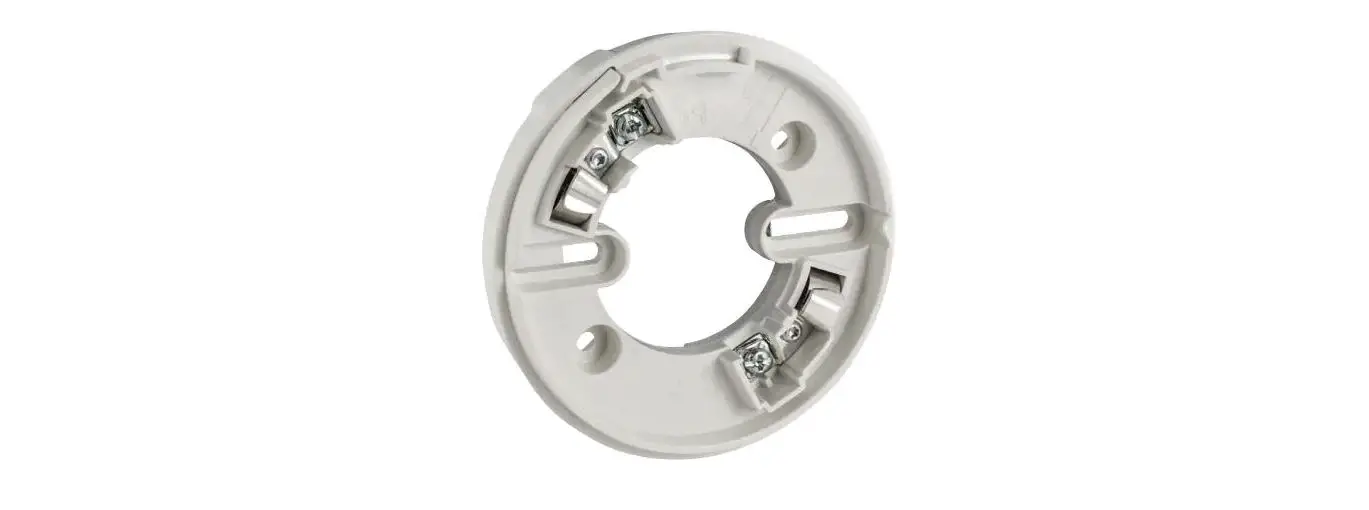
For identification purposes, analogue loop number and device’s address can be recorded on the plastic tag supplied with the
base (picture 3). Extract the plastic tag from the bottom of the base, write or label
identification data on it and, finally, insert it in the side slot of the base.
Table 2
Picture 3 L20-LMCXX-1400 (vA.7)
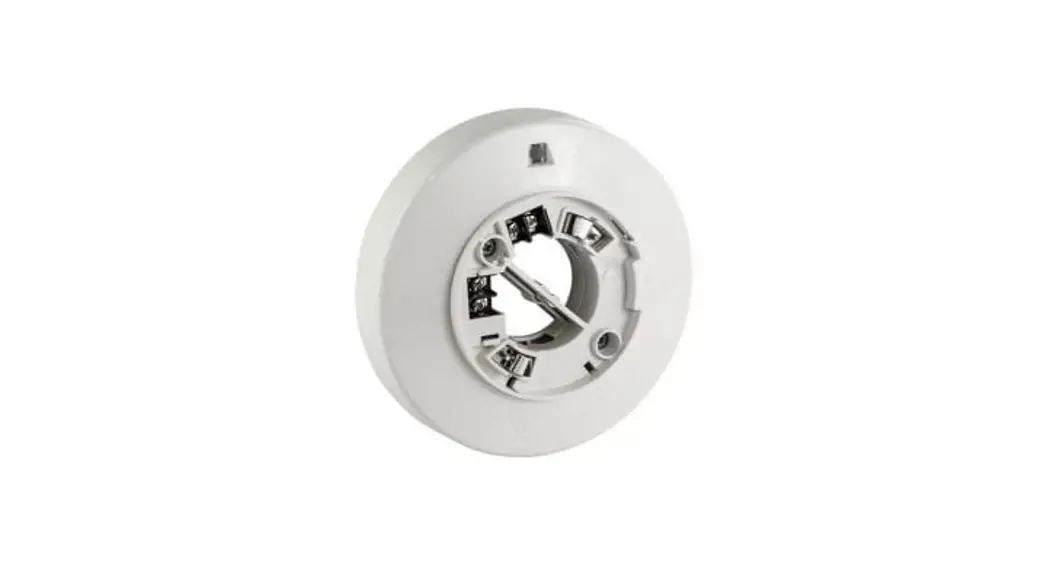
BASE INSTALLATION Fix the base to the wall with the provided screws (picture 4).
DETECTOR PLACEMENT
1) Install the batteries cover.
2) Position the detector centrally on the base ensuring it is level. 3) Rotate clockwise applying gentle pressure.
The detector will drop into its keyed location. 4) Continue to rotate clockwise a few degrees
until the detector has fully engaged in the base. 5) When the detector is firmly engaged, check
the alignment of the raised reference marks on the detector and on the base (picture 5).
Dust covers DO NOT provide
complete protection against
contamination:
detectors
should be removed before construc-
tion, major re-decoration or other dust
producing work is started.
Dust covers MUST be removed before the system can be made operational.
DETECTOR LOCKING To lock the detector to the base, screw in the provided security screw; screw entry is located on the side of the detector’s base (picture 6).
Picture 4
TAMPER DETECTION When the detector is detached from the base a tamper message event is sent to the control panel.
TESTING
Test this detector after installation.
After each test reset the fire security system from the control panel, as per your control panel instructions.
TEST MODES Test modes make the HFW-MA-05 more reactive to aerosol stimulus; two test mode types are provided:
Type 1 Test Mode – triggered by a test magnet; persists for 1 minute. This mode makes the detector almost instantaneously alarm agent reactive.
Type 2 Test Mode – remotely triggered by the Wirelex program; persist for 30 minutes. This mode makes the detector as reactive to smoke as an optical smoke detector, simulating it.
TEST 1 – MAGNET TEST
1) Hold a suitable magnet in correspondence of the indicated area (picture 7) 2) LED indicator will signal “Type 1 Test Mode”
3) Apply again the magnet in correspondence of the indicated area (picture 7) 4) LED indicator will signal “Alarm”
Picture 5
TEST 2 – AEROSOL TEST
Use only suitable aerosol testers supplied by approved manufacturers.
1) Hold a suitable magnet in correspondence of the indicated area (picture 7) 2) LED indicator will signal “Type 1 Test Mode”
3) By following its specific instructions, apply the aerosol test device to the detector 4) Wait a few seconds 5) LED indicator will signal “Alarm”
TEST 3 – AEROSOL TEST
Use only suitable aerosol testers supplied by approved manufacturers.
1) Remotely activate the detector’s green LED from the Wirelex program 2) LED indicator will signal “Type 2 Test Mode” 3) By following its specific instructions, apply the aerosol test device to the detector 4) Wait a few seconds 5) LED indicator will signal “Alarm”
Picture 6
TEST 4 – HEAT TEST
Use only suitable heat test devices from approved manufacturers.
1) By following its specific instructions, apply the heat test device to the detector.
2) Wait a few seconds. 3) LED indicator will signal “Alarm”.
Hyfire Wireless Fire Solutions Limited – Unit B12a, Holly Farm Business Park, Honiley, Warwickshire, CV8 1NP – United Kingdom
Picture 7 www.hyfirewireless.com
MAINTENANCE – CLEANING
1) Remove the detector from its base.
2) Smoke entry areas and thermistor area: use a small, soft bristle brush to dislodge any obvious contaminants such as insects, spider webs, hairs, etc.
3) Smoke entry areas and thermistor area: use a small vacuum tube or dry, clean, compressed air to suck up or blow any remaining small particles away.
4) Wipe the exterior housing of the detector with a clean, damp, lint-free cloth to remove any surface film that can later attract airborne contaminants.
5) Install the detector onto its base again.
6) Test the detector.
TECHNICAL SPECIFICATIONS **
Communication range with the translator or expander
200 m
Operating frequency
868 MHz
Operating frequency channels
7
Radiated power
14 dBm (25 mW)
Batteries type*
Type CR123A (3 Vdc)
Parent expander’s check-up period
Alarm threshold temperature. Category A1R ROR Alarm threshold temperature. Category B – high temperature
Dimensions
60 seconds (default setting) 58 °C 78 °C 110 mm x 65 mm
Weight IP rating Max tolerated humidity (no condensing)
190 g 40 95% RH
Open space
8.2 years life
Base and batteries included
Table 3 MAINTENANCE – BATTERY REPLACEMENT When a low battery condition is indicated, both batteries must be changed altogether. During this procedure the linking switch must NOT be touched at all !
Operating temperature range
From 10 °C to +55 °C
* When a low battery condition is indicated, both batteries must be changed for new cells. Lifespan of batteries indicated is subject to standard environmental conditions, default monitor settings and excellent link quality.
** Check latest version of document TDS-LMCXX for further data, obtainable from your supplier.
SMOKE SENSITIVITY (EN 54)
1) Detach the detector from its base.
Threshold level
Wirelex setting
Notes
2) Extract the batteries cover.
3) Extract the batteries.
4) Insert the new batteries into their holders, oriented as per polarity marks.
Table 4
Level 1 Level 2 Level 3
High Normal
Low
default
5) Reinstall the batteries cover. 6) Reinstall the detector onto its base. 7) Test the detector.
THERMAL SENSITIVITY (EN 54)
Detector Category
Wirelex setting
A1R
A1R
Notes default
Table 5
BS
High temperature
Non-approved
NOTE OF THE DOCUMENT:
Hyfire Wireless Fire Solutions hereby declares that this detector is in compliance with the essential requirements and other relevant provisions of Directive 1999/5/EC. A copy of the original Declaration of Conformity (Document: DoC LI01) is made available to the user on website: www.argussecurity.it
WARNINGS AND LIMITATIONS
Our devices use high quality electronic components and plastic materials that are highly resistant to environmental deterioration. However, after 10 years of continuous operation, it is advisable to replace the devices in order to minimize the risk of reduced performance caused by external factors. Ensure that this device is only used with compatible control panels. Detection systems must be checked, serviced and maintained on a regular basis to confirm correct operation. Smoke detectors may respond differently to various kinds of smoke particles, thus application advice should be sought for special risks. Detectors cannot respond correctly if barriers exist between them and the fire location and may be affected by special environmental conditions. Refer to and follow national codes of practice and other internationally recognized fire engineering standards. Appropriate risk assessment should be carried out initially to determine correct design criteria and updated periodically.
WARRANTY
All devices are supplied with the benefit of a limited 5 years warranty relating to faulty materials or manufacturing defects, effective from the production date indicated on each product. This warranty is invalidated by mechanical or electrical damage caused in the field by incorrect handling or usage. Product must be returned via your authorized supplier for repair or replacement together with full information on any problem identified. Full details on our warranty and product’s returns policy can be obtained upon request.
2831/0051/0681 17
HF-20-004CPR
0832 21
HF-20-004UK
Hyfire Wireless Fire Solutions Limited – Unit B12a, Holly Farm Business Park, Honiley, Warwickshire, CV8 1NP – United Kingdom
EN 54-25:2008 EN 54-5:2017+A1:2018 Category A1R EN 54-7:2018 CEA 4021:2003 HFW-MA-05 For use in compatible fire detection and alarm system
L20-LMCXX-1400 (vA.7)
 Home - Argus
 Hyfire Wireless Fire Solutions