HFI-DMBS-05 Low Profile Adaptor Base
Product Information: HFI-DMBS-05 Low Profile Adaptor Base
The HFI-DMBS-05 Low Profile Adaptor Base is designed to provide
low profile support for ceiling installation of the fire security
Altair analogue series detectors. This base is compatible with the
European Standards and National Codes of Practice, such as
BS5839-1:2002 for UK. The base also provides remote output
capability and a deterrent anti-tamper detector lock.
Adaptor Base Installation
- Select the position where you want to install the detector and
the base. - Install the base in the selected position by inserting the
screws in the circles indicated in figure 1.
Wiring
After installing the base to the ceiling, wiring has to be
carried out to connect the base to the analogue loop and to the
installation. Analogue loop wires must be correctly connected to
the base’s terminals. Check the performed wiring by referring to
the figure 2 diagram.
Remote Output Capability
Remote output capability is available as a standard feature, so
a remote indication lamp or a compatible platform sounder may be
wired to the base terminals. Remote output current must be limited
to a maximum of 20mA.
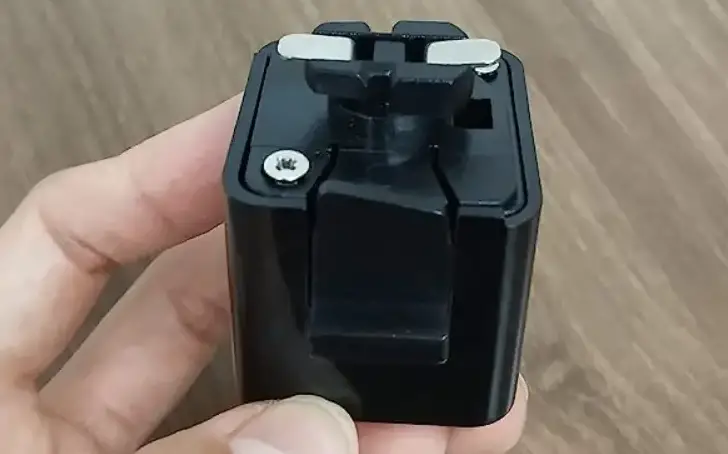
Anti-Tamper Detector Lock
The detector can be locked to its base as a deterrent to
intentional removal performed by non-authorized personnel. Using a
cutter, remove the anti-tamper plastic detail, as illustrated in
figure 4. To unlock the detector, insert the tip of a screwdriver
into the side slot of the base by exerting only a light pressure
(figure 5), and release the detector by turning it
anticlockwise.
External Address Marking
Analogue detector’s address can be externally marked using the
plastic tag supplied together with the base. Tear off the plastic
tag from the inside of the base, write or label the analogue
address on it and, finally, insert it in the side slot of the base
itself (picture 6).
HFI-DMBS-05
LOW PROFILE ADAPTOR BASE
GENERAL DESCRIPTION
The “Low Profile Adaptor Base” is a low profile support for ceiling installation of the fire security Altair analogue series detectors.
Note: Before installing this base please thoroughly read this leaflet and refer to the applicable European Standards and National
Codes of Practice (e.g. BS5839-1:2002 for UK) for guidance on location, spacing and acceptable use. Also seek guidance from the
compatible control panel instructions to ensure appropriate design criteria and configura-
tion specifications are followed.
Figure 1
ADAPTOR BASE INSTALLATION
1) Select the position where you want to install the detector and the base.
2) Install the base in the selected position by inserting the screws in the circles indicated in figure 1.
WIRING
After having installed the base to the ceiling, wiring has to be carried out in order to connect the base to the analogue loop and so to the installation.
Analogue loop wires must be correctly connected to the base’s terminals: check the performed wiring by referring to the figure 2 diagram.
Figure 2A shows the detail for the length of reference for the strip of the connection wires.
LOOP IN (+)
LOOP OUT (+)
Figure 2A Strip detail
SHIELD
LOOP IN (-)
LOOP OUT (-)
Figure 2
REMOTE OUTPUT CAPABILITY
REMOTE ALARM (+)
Remote output capability is available as a standard feature, so a remote indication lamp or a compatible platform sounder may be wired to the base terminals (Figure 3).
Remote output current must be limited to a maximum of 20mA.
Figure 3
REMOTE ALARM (-)
ANTI -TAMPER DETECTOR LOCK The detector can be locked to its base as a deterrent to intentional removal performed by non authorized personnel. Using a cutter, remove the anti-tamper plastic detail, as illustrated in figure 4. To unlock the detector, insert the tip of a screwdriver into the side slot of the base by exerting only a light pressure (figure 5), and release the detector by turning it anticlockwise.
Figure 5 Figure 4 EXTERNAL ADDRESS MARKING Analogue detector’s address can be externally marked using the plastic tag supplied together with the base. Tear off the plastic tag from the inside of the base, write or label the analogue address on it and, finally, insert it in the side slot of the base itself (picture 6).
Figure 6
WARNINGS AND LIMITATIONS Our devices use high quality electronic components and plastic materials that are highly resistant to environmental deterioration. However, after 10 years of continuous operation, it is advisable to replace the devices in order to minimize the risk of reduced performance caused by external factors. Ensure that this device is only used with compatible control panels. Detection systems must be checked, serviced and maintained on a regular basis to confirm correct operation. Smoke detectors may respond differently to various kinds of smoke particles, thus application advice should be sought for special risks. Detectors cannot respond correctly if barriers exist between them and the fire location and may be affected by special environmental conditions. Refer to and follow national codes of practice and other internationally recognized fire engineering standards. Appropriate risk assessment should be carried out initially to determine correct design criteria and updated periodically. WARRANTY All devices are supplied with the benefit of a limited 3 years warranty relating to faulty materials or manufacturing defects, effective from the production date indicated on each product. This warranty is invalidated by mechanical or electrical damage caused in the field by incorrect handling or usage. Product must be returned via your authorized supplier for repair or replacement together with full information on any problem identified. Full details on our warranty and product’s returns policy can be obtained upon request.
1
Hyfire Wireless Fire Solutions Limited – Unit B12a, Holly Farm Business Park, Honiley,
Warwickshire, CV8 1NP – United Kingdom
www.hyfirewireless.com
L20-LABXX-1400 (vA.3)
2