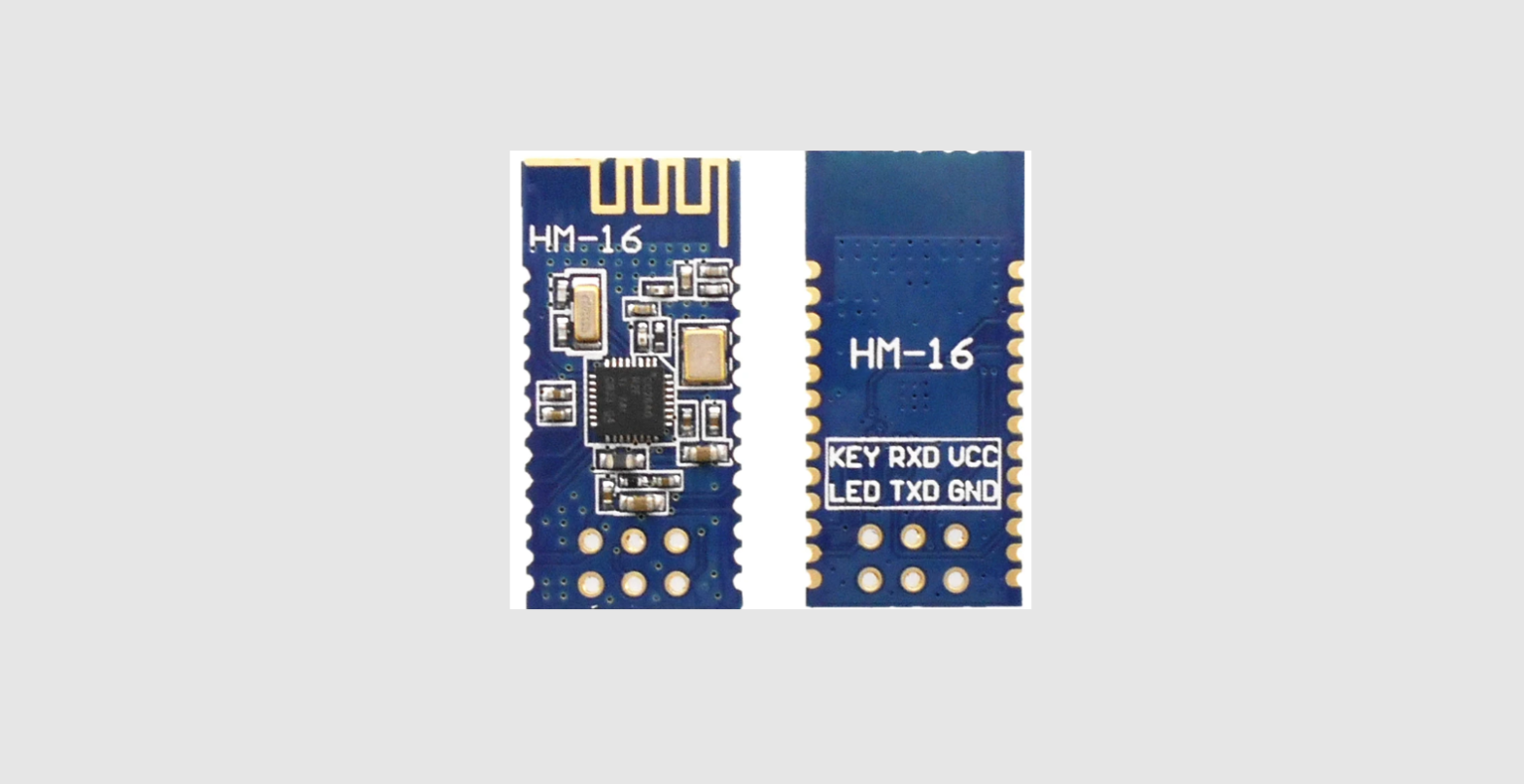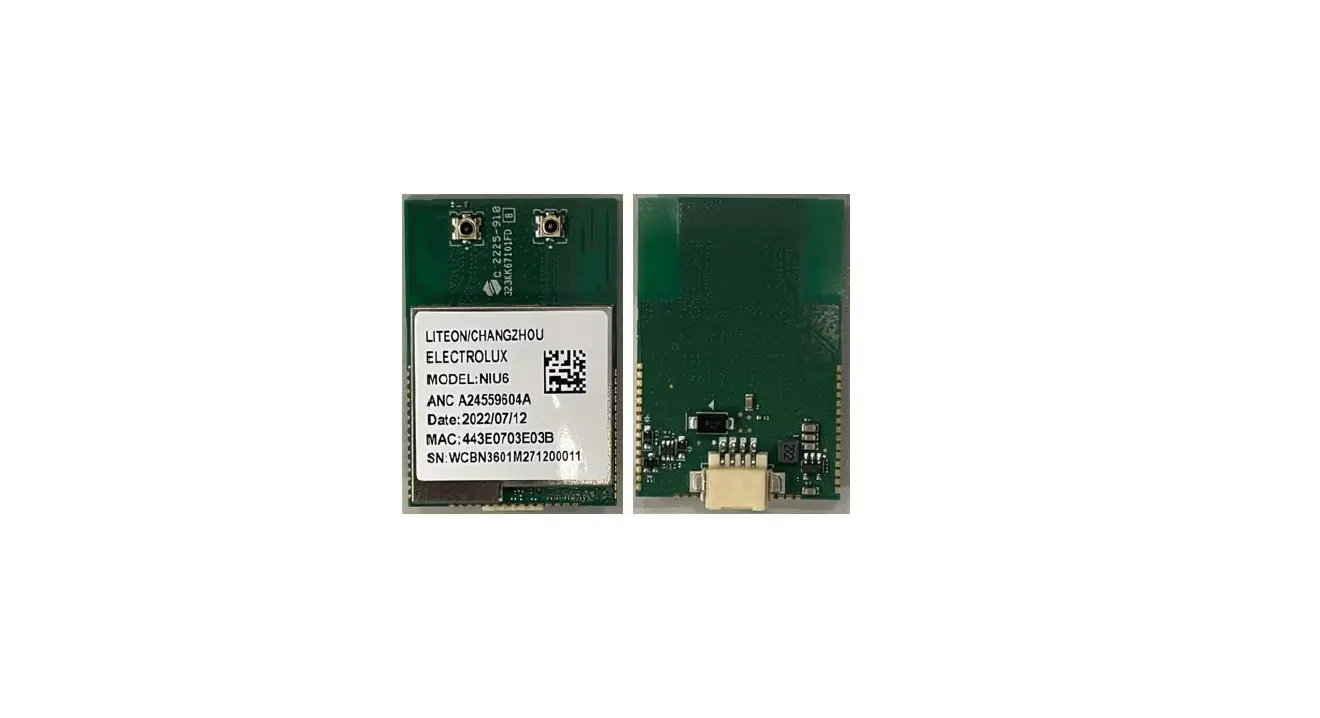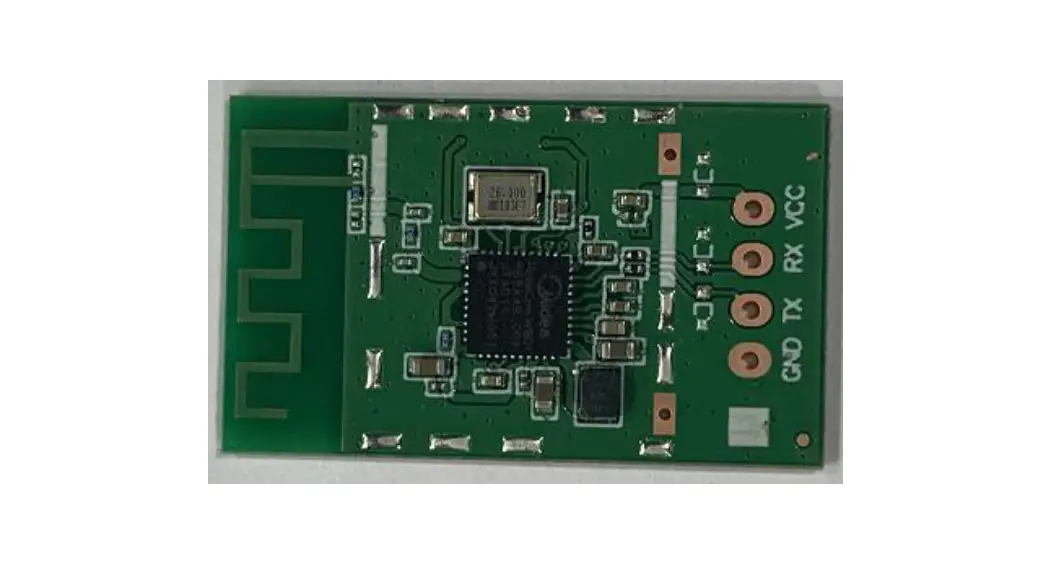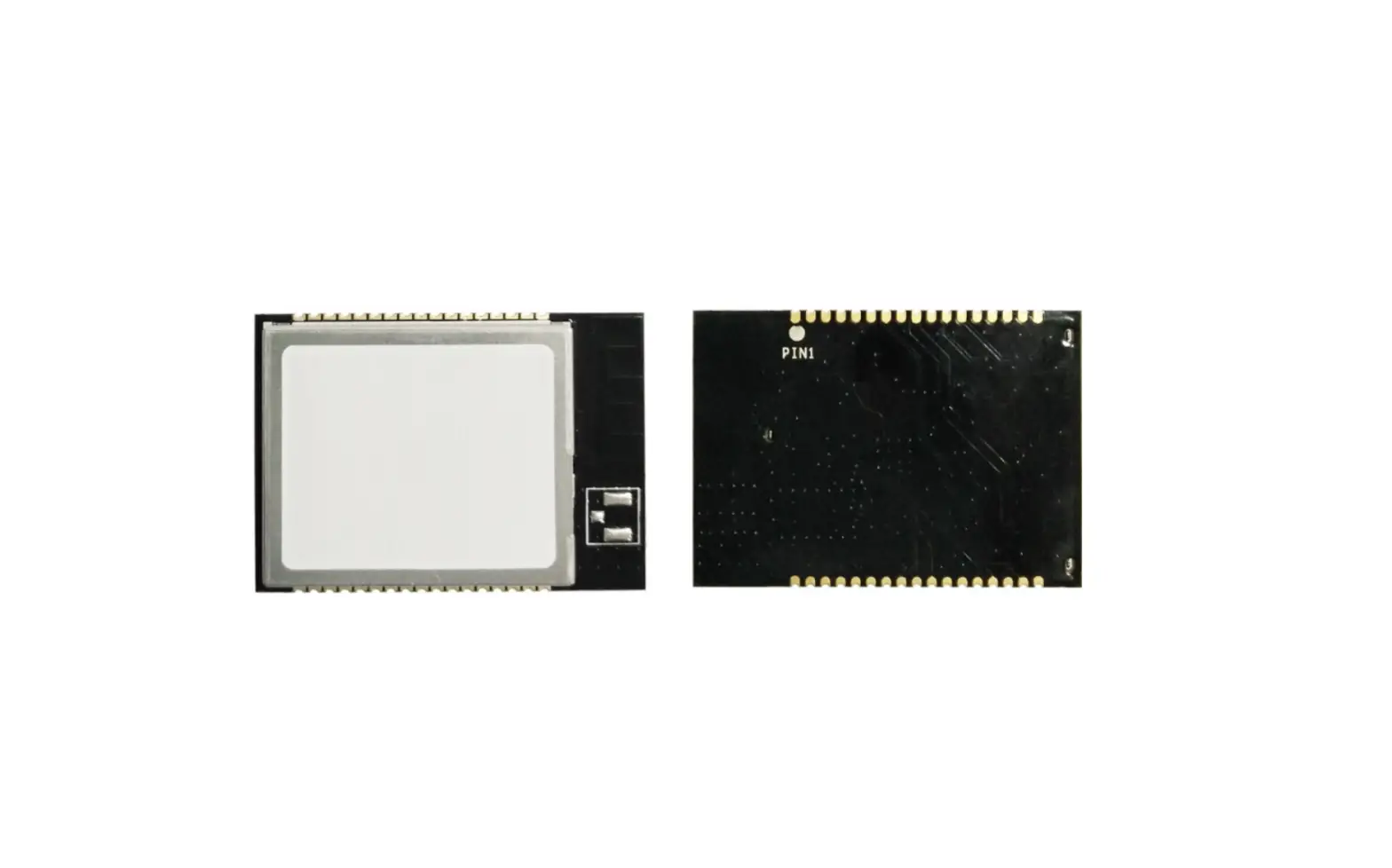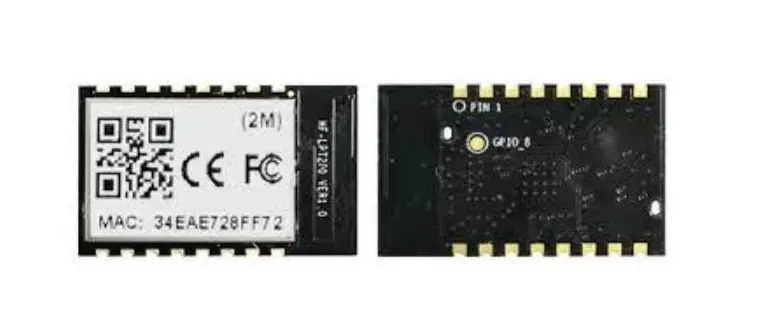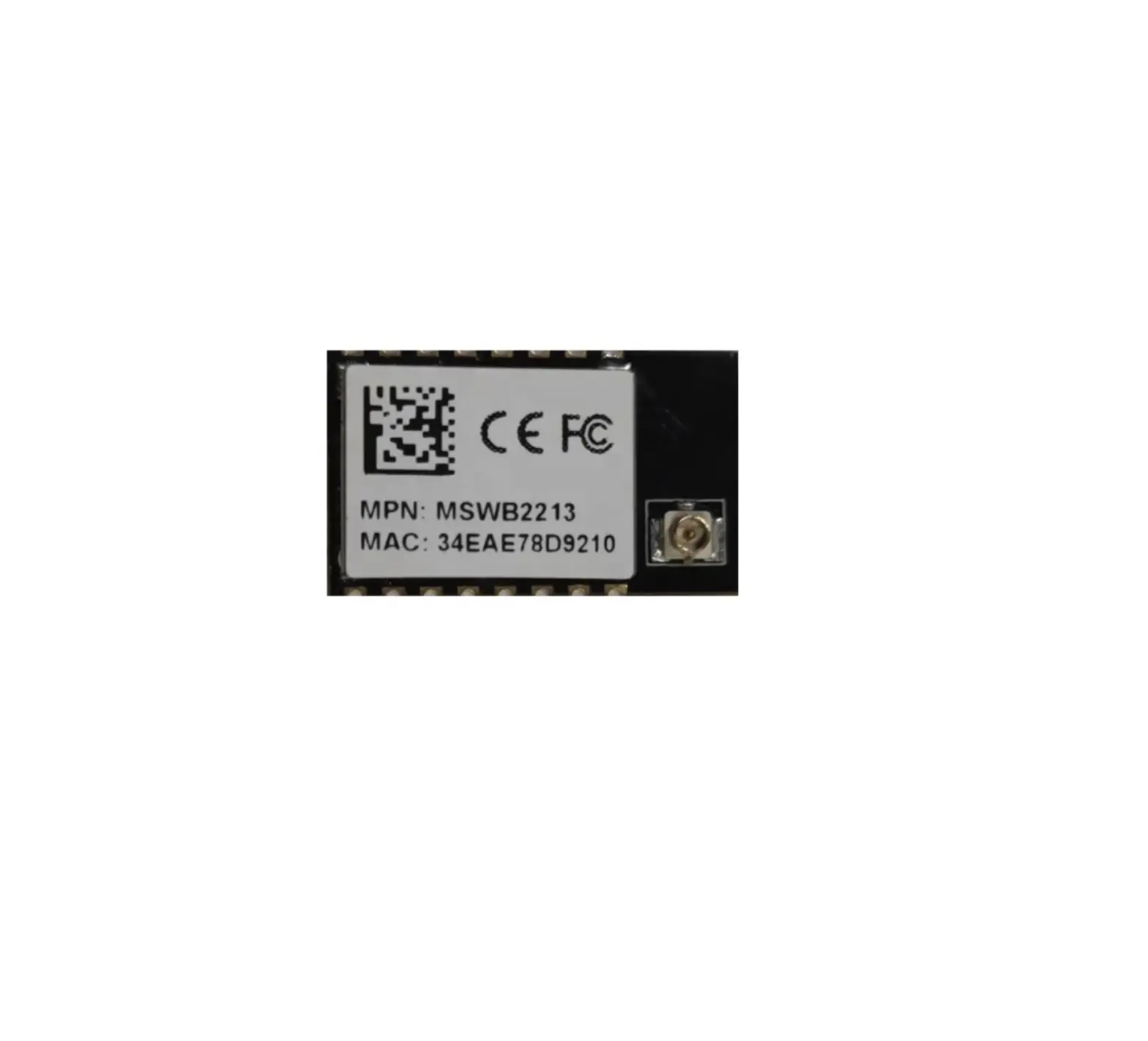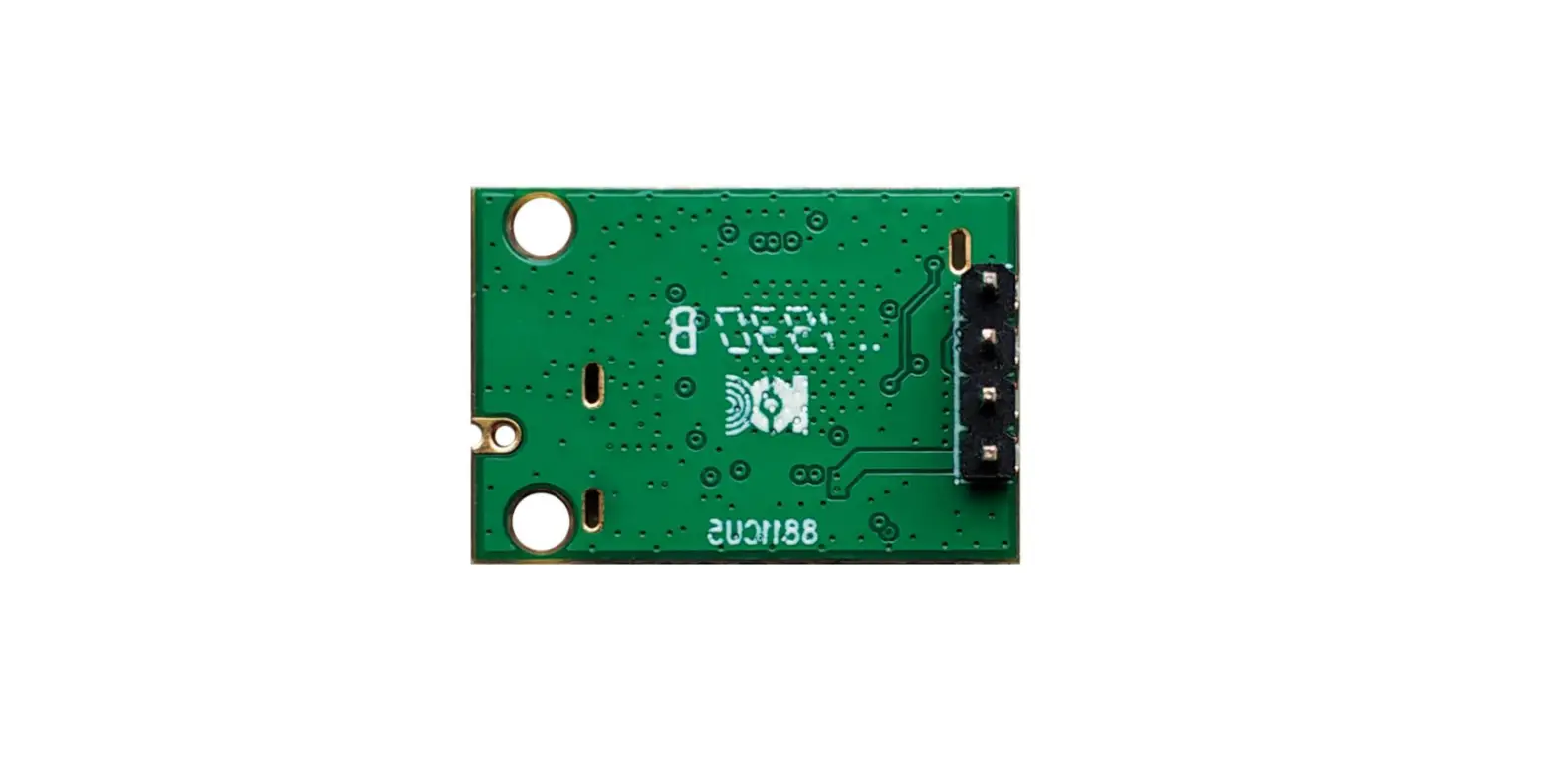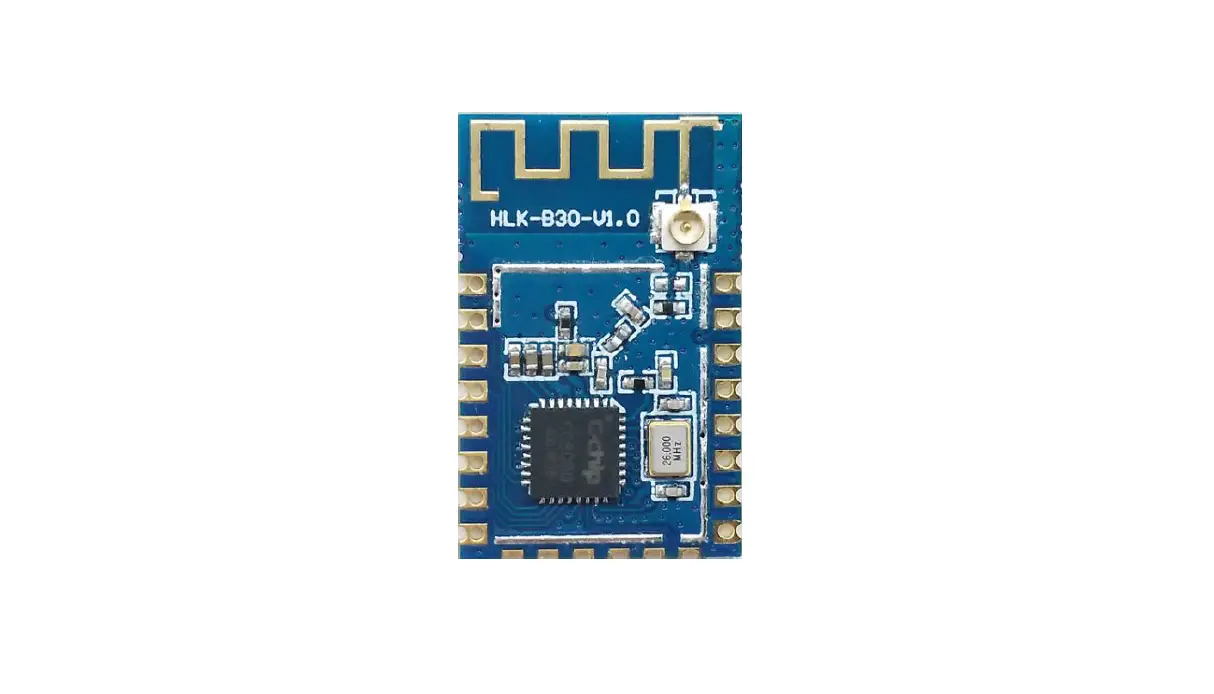

Hi-Link HLK-B30 802.11n+BLE4.2 Wireless Module 
Product description
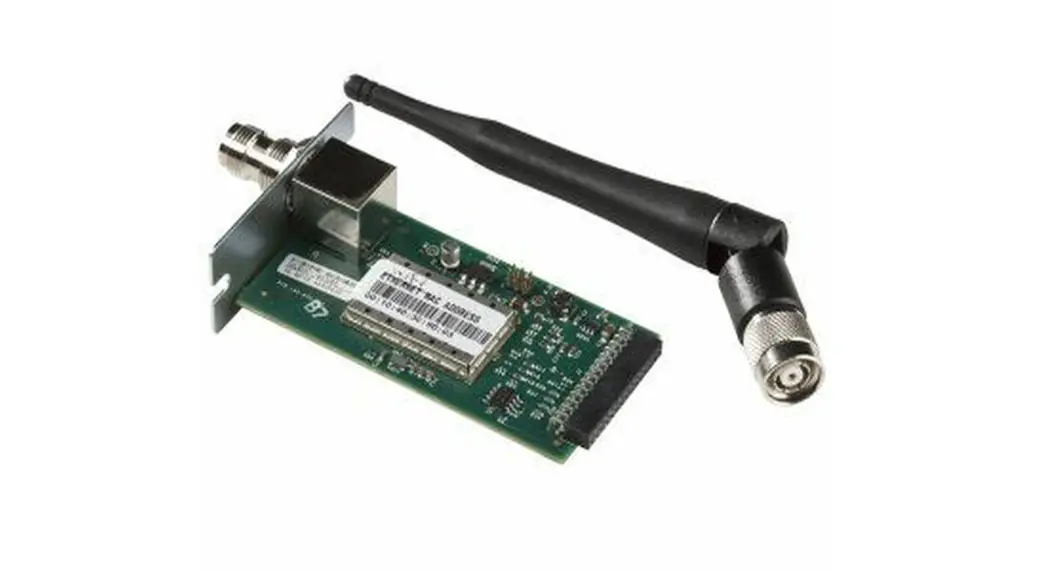
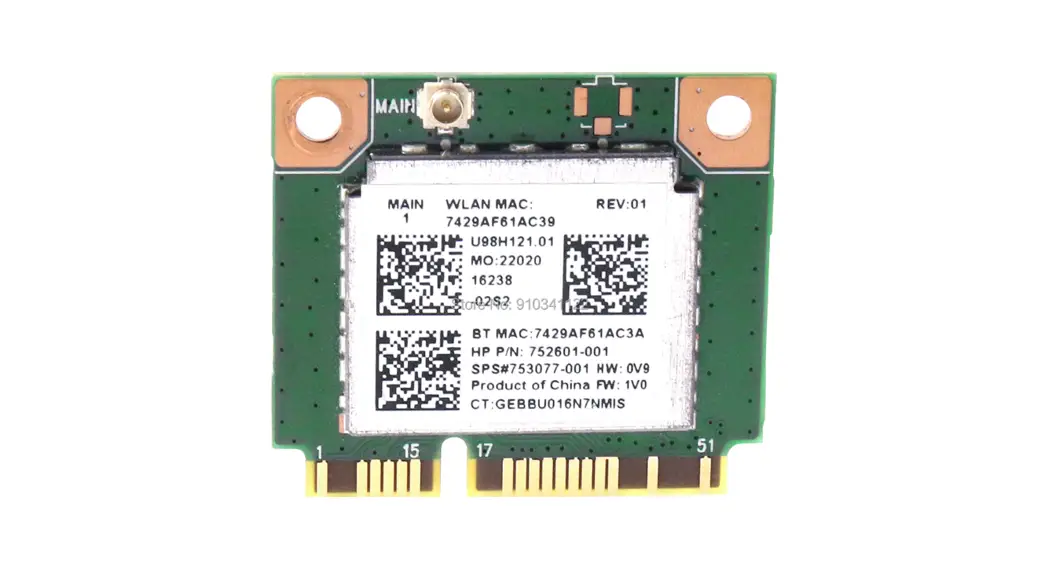
HLK-B30 is a new low-consumption wifi control module from Hi-Link Electronics. The module has built-in wifi network protocol and BLE Bluetooth protocol stack, which can realize fast distribution network through BLE. The module is embedded with a low-power 32-bit CPU, 2Mbyte memory, 256KB RAM and a wealth of peripheral resources. Integrates all wifi mac and TCP/IP protocols.
Basic parameters
- Support 802.11b/g/n standard, integrates ARM9, WLAN MAC/Baseband/RF
- 80MHz and 120MHz frequency
- Built-in 256KB RAM/ 2MB FLASH
- Working voltage 3.0-3.6V
- 2.4G/1T1R wifi, BLE 4.2
- Support BLE fast distribution network
- Support Station, Soft AP, Station+Soft AP
- Support SmartConfig, Alink supports WPA/WPA2 security mode and supports STA/AP/STA+AP working mode
- Support 802.11b/g/n standard, HT-40
- 26 MHz and 32 KHz clock signal output
- Support AP, STA and BLE mixed mode
- Rich peripheral interface, 1*SPI,2*UART,6*PWM,19*GPIO
- Widely used in the Internet of Things
- Support multiple encryption methods WEP64/128, TKIP, AES, WPA, WPA2, WAPI
Main application areas
- Intelligent building
- Smart home/home appliances
- Smart socket, smart light
- Industrial wireless control
- Baby monitor
- Intelligent transportation
Product Overview
Technical specifications
Table 2-1 Product technical specifications
| Network standard | Wireless standard: IEEE 802.11n, IEEE 802.11g, IEEE 802.11b |
| Bluetooth standard: BLE 4.2 | |
| Wireless transmission rate | 11n: up to 150Mbps 11g: upto 54Mbps 11b: upto 11Mbps |
| Channel | 2.4g:1-14 |
| Frequency | 2412-2488MHZ |
| Transmit power | 12-18DBM |
| Interface | 2 serial port, 1 usb port(host/slave), GPIO |
| Antenna | External/ internal antenna |
| WIFI working mode | Wireless network card / wireless access point |
|
Wireless security | Wireless MAC address filtering |
| Wireless safety function switch | |
| 64/128/152 bit WEP encryption | |
| WPA-PSK/WPA2-PSK, WPA/WPA2 security mechanism | |
| Other parameters | |
| Status indicator | Status indication |
|
Environmental standard | Working temperature: -20-85℃ |
| Working humidity: 10%-90%RH (Non-condensing) | |
| Storage temp: -40-30℃ | |
| Storage humidity: 5%-90%RH (Non-condensing) | |
| Other performance | Band bandwidth optional: 20MHz, 40MHz |
Hardware description
HLK-B30 dimension as below: (L*W)=16mm*25mm 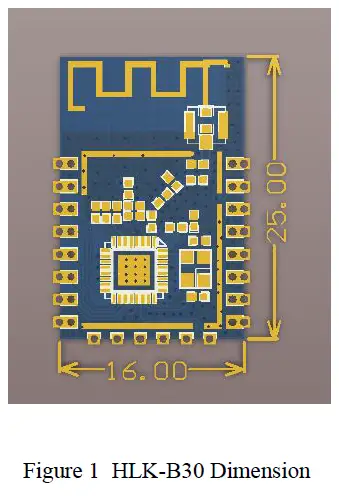
Block diagram 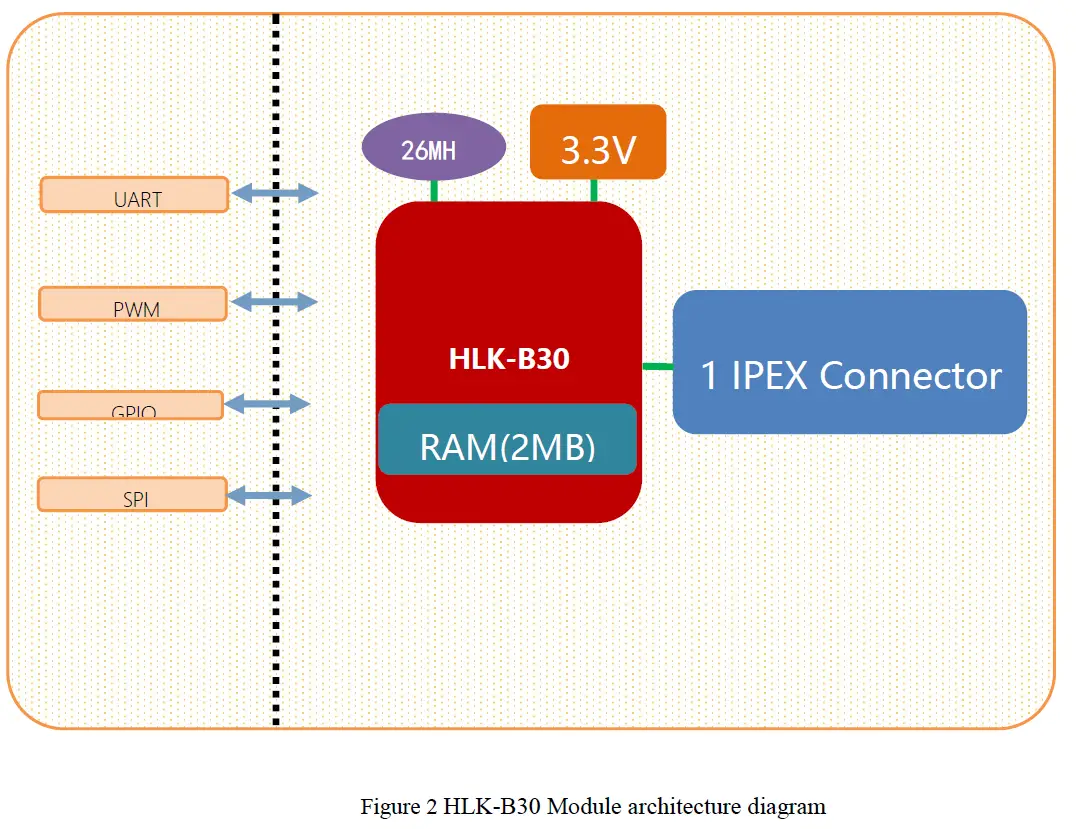
Power supply requirements
| Power supply requirements | |
| Power input voltage | DC:3.3±0.3V |
| No-load operating current | 130±50mA |
| Supply current requirement | ≥1000mA |
WIFI transmission power consumption
| Wifi transmission power consumption | |||
| Mode | Rate | Transmit power | Current(ma) |
| 11b | 11Mbps | 17.5dbm | 280 |
| 11g | 54Mbps | 11dbm | 150 |
| 11n | MCS7 | 10dbm | 130 |
WIFI Receive power consumption
| Mode | Rate | Current(ma) |
| 11b | 11Mbps | 100 |
| 11g | 54Mbps | 100 |
| 11n | MCS7 | 100.5 |
Power consumption in each working mode of WIFI
| Status | Description | Average current (3v3) | Max current(3v3) | Unit |
| Wifi initialization | Turn off the RF, MCU full speed | 45.2 | 46.3 | ma |
| Keep wifi connection | Keep connected to the router | 101 | 342 | ma |
| Udp sends | Full-speed UDP packet delivery after connecting to the AP | 93 | 363 | ma |
| SoftAP | SoftAP networking status | 100.5 | 193.7 | ma |
| SmartConfig | Module distribution status | 100.8 | 129.5 | ma |
Output power in each mode of WIFI
| Parameter | Minimum value | Typical value | Maximum value | Unit |
| RF average output power, 802.11b cck Mode 11m | – | 17.5 | – | dBm |
| RF average output power, 802.11g OFDM Mode 54m | – | 15 | – | dBm |
| RF average output power, 802.11n OFDM Mode MCS7 | – | 13 | – | dBm |
| Frequency error | -10 | – | 10 | ppm |
Receive sensitivity in each mode of WIFI
| Parameter | Minimum value | Typical value | Maximum value | Unit |
| RF average output power, 802.11b cck Mode 11m | – | -91 | – | dBm |
| RF average output power, 802.11g OFDM Mode 54m | – | -74 | – | dBm |
| RF average output power, 802.11n OFDM Mode MCS7 | – | -70 | – | dBm |
Default pin function
| Number | Network name | Type | Function description | Default features |
| 1 | CEN | I | Chip enable, high efficiency | CPU Reset |
| 2 | P26_PWM5 | I/O | P26, PWM5 | GPIO, PWM |
| 3 | P24_PWM4 | I/O | P24, PWM4 | GPIO, PWM |
| 4 | P23_TDO_F_S0 | I/O | P23, ADC3 | GPIO, ADC |
| 5 | P22_TDI_F_SI | I/O | P22 | GPIO |
| 6 | P21_TMS_F_CS | I/O | P21 | GPIO |
| 7 | P20_TCK_F_SC | I/O | P20 | GPIO |
| 8 | VBAT | P | 3.3V power supply | Power |
| 9 | P28 | I/O | P28 | GPIO |
| 10 | P16 | I/O | P16 | GPIO |
| 11 | P17 | I/O | P17 | GPIO |
| 12 | P14 | I/O | P14 | GPIO |
| 13 | P15 | I/O | P15 | GPIO |
| 14 | P6_PWM0 | I/O | P6, PWM0 | GPIO, PWM |
| 15 | GDN | P | GND | GND |
| 16 | P7_PWM1 | I/O | P7, PWM1 | GPIO, PWM |
| 17 | P8_PWM2 | I/O | P8, PWM2 | GPIO, PWM |
| 18 | P9_PWM3 | I/O | P9, PWM3 | GPIO, PWM |
| 19 | P1_URAT2_RXD | I/O | P1,UART2 | GPIO, UART |
| 20 | P0_UART2_TXD | I/O | P0, UART2 | GPIO, UART |
| 21 | P10_UART1_RX D | I/O | P10, UART1 | GPIO,UART |
| 22 | P11_UART1_TX D | I/O | P11, UART1 | GPIO,UART |
Test board description
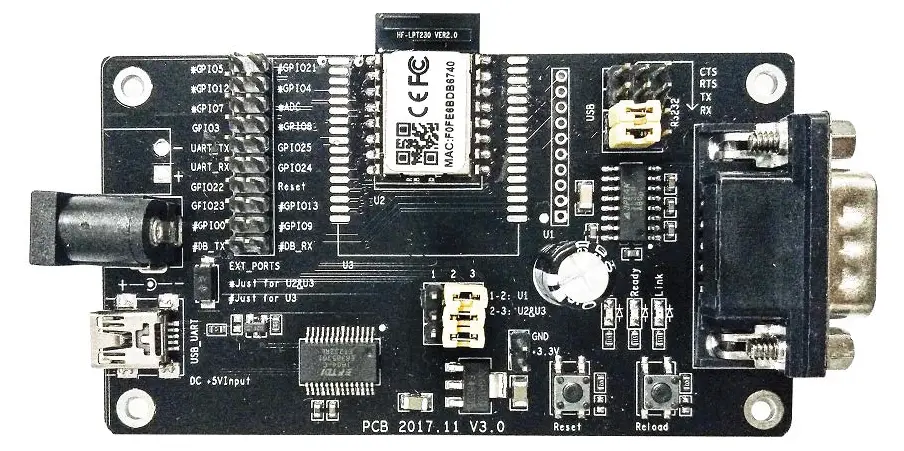
The test board is mainly used to demonstrate the functions of the HLK-B30 module’s lanterns, sockets and lights. Use the test board to demonstrate remote switch LEDs, color changes, brightness changes, relay switch lights, etc. 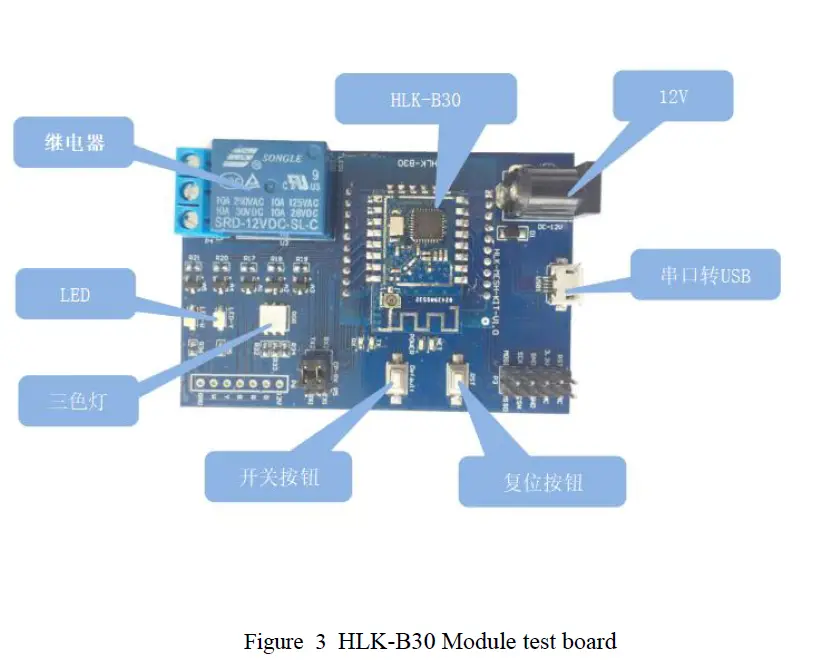
Switching light function description
Before testing the switch light function, you need to use the serial port to burn the firmware of the switch light function. The function of the switch lamp mainly realizes the on and off function of the LED_Y lamp. The function of turning on or off the LED_Y lamp can be controlled by the switch button.
Enter the distribution network mode
Power off the on the module six times continuously at a time interval of one second, and then waited 6 seconds, the NET led light will flash once every second, indicating that the module has erased the network configuration information and entered the distribution network. After the network configuration is successful, the NET led light will be on constantly, indicating that the router is successfully connected.
Using the app distribution network
Open the cloud smart app and open the distribution interface, as shown below: 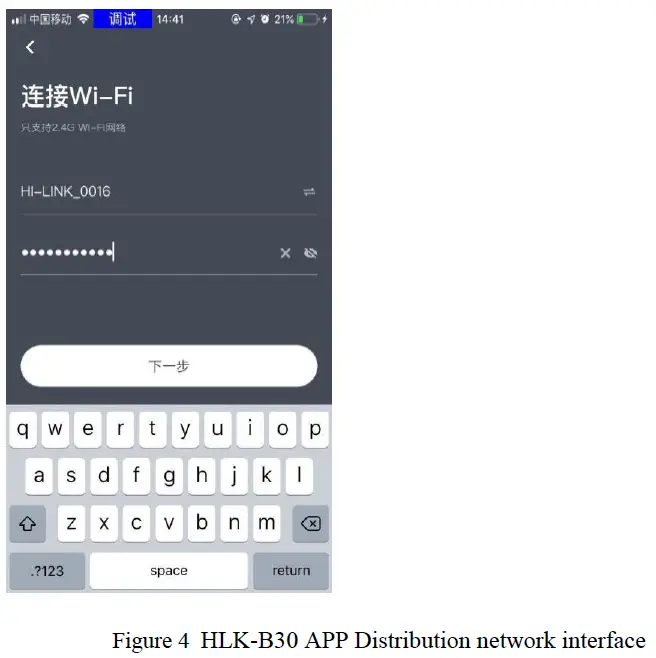
Then click Next to enter the distribution interface: 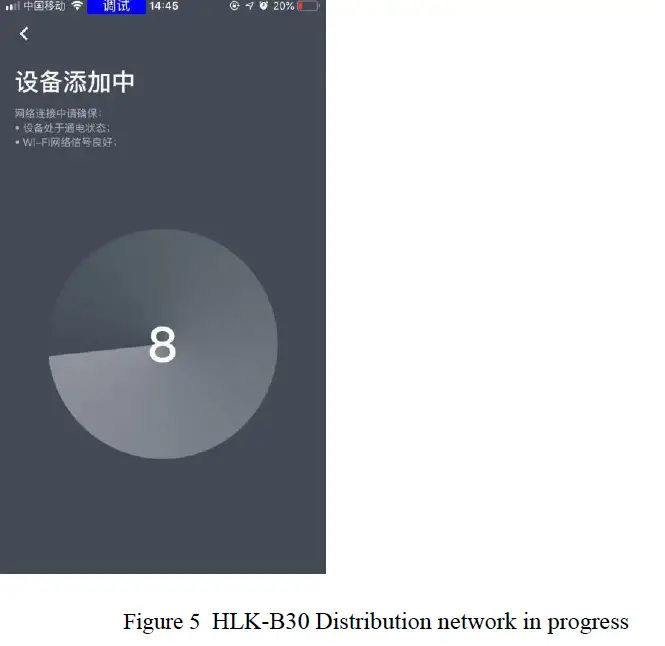 After the distribution network is successfully connected, the app will automatically enter the control interface directly: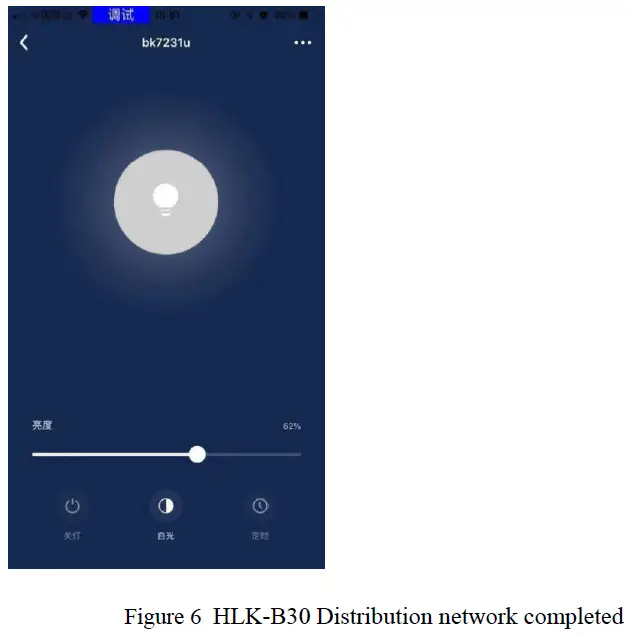
Using the Tmall Elf distribution network
Before using the Tmall Elf to configure the network, you need to let the module enter the distribution mode, then say “Tmall Elf, find device” to the Tmall Wizard, and then follow the prompts of the Tmall Wizard to configure the device to the same router.
When the device is successfully connected, you can say “Tmall Elf, Turn On the Light” or “Tmall Elf, Turn Off the Light” to the Tmall Elf to turn on or off the LED_Y light of the device.
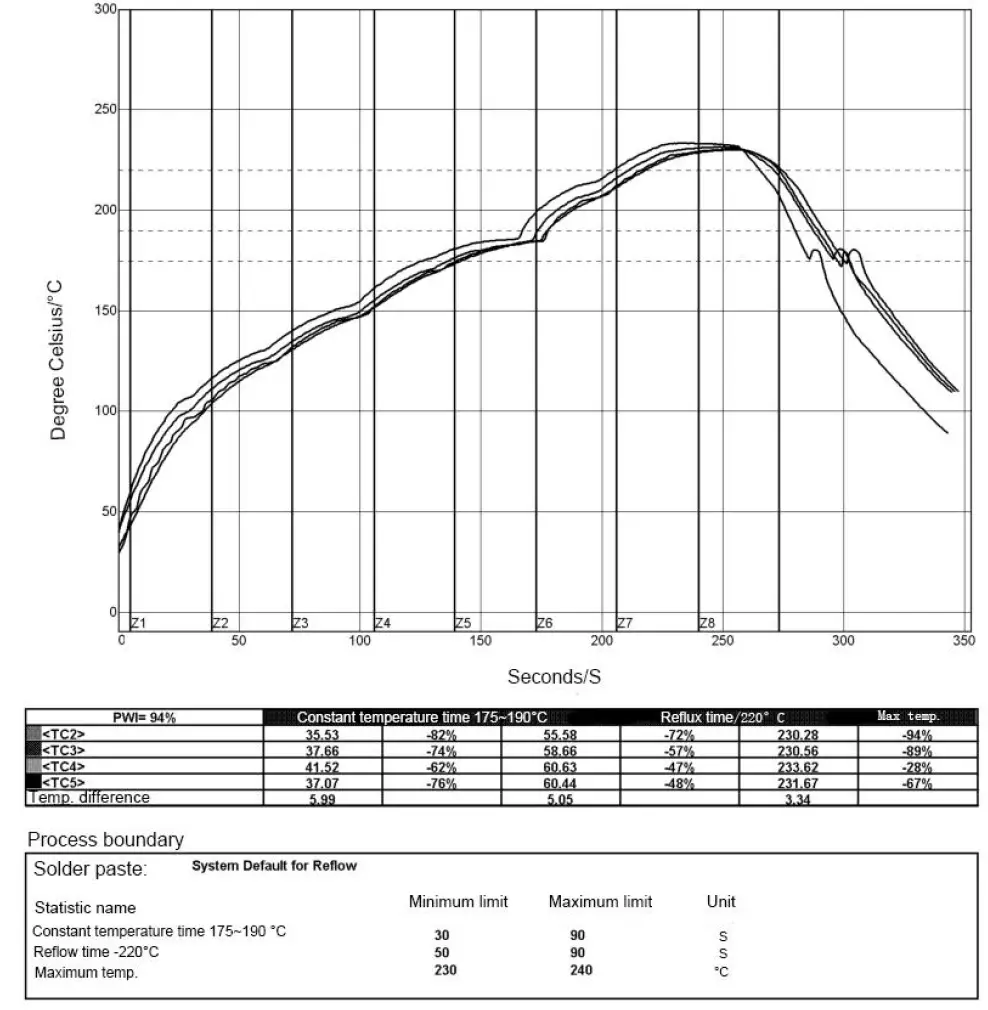
Reflow soldering temperature curve
When the module is over-fired, please strictly follow this temperature curve. If the temperature deviation of the reflow soldering is too large, the module will be damaged!
| Temperature setting (degrees Celsius) | |||||||||
| Warm zone | 1 | 2 | 3 | 4 | 5 | 6 | 7 | 8 | |
| Upper temperature zone | 125 | 135 | 155 | 185 | 195 | 225 | 240 | 230 | |
| Lower temperature zone | 125 | 135 | 155 | 185 | 195 | 225 | 240 | 230 | |
| Conveyor speed: 70.0 cm/min | |||||||||
Appendix A Document Revision History
| Version number | Revision Scope | Date |
| 1.00 | 2019-4-15 |
List of applicable FCC rules
FCC Part 15.247
RF exposure considerations
This equipment complies with the FCC RF radiation exposure limits set forth for an uncontrolled environment. This equipment should be installed and operated with a minimum distance of 20cm between the radiator and any part of your body.
Label and compliance information
Remind end customers to FCC ID label on the final system must be labeled with “Contains FCC ID: 2AD56HLK-B30” or “Contains transmitter module FCC ID: 2AD56HLK-B30”.
Information on test modes and additional testing requirements
Contact ShenZhen HaiLingKe Electronic co.,Ltd will provide stand-alone modular transmitter test mode. Additional testing and certification may be necessary when multiple modules are used in a host.
Additional testing, Part 15 Subpart B disclaimer
To ensure compliance with all non-transmitter functions the host manufacturer is responsible for ensuring compliance with the module(s) installed and fully operational. For example, if a host was previously authorized as an unintentional radiator under the Supplier’s Declaration of Conformity procedure without a transmitter certified module and a module is added, the host manufacturer is responsible for ensuring that the after the module is installed and operational the host continues to be compliant with the Part 15B unintentional radiator requirements. Since this may depend on the details of how the module is integrated with the host, ShenZhen HaiLingKe Electronic co.,Ltd shall provide guidance to the host manufacturer for compliance with the Part 15B requirements.
FCC Radiation Exposure Statement
This equipment complies with FCC radiation exposure limits set forth for an uncontrolled environment. End users must follow the specific operating instructions for satisfying RF exposure compliance.
This module certified that complies with RF exposure requirement under mobile or fixed condition, this module is to be installed only in mobile or fixed applications. A separate approval is required for all other operating configurations, including portable configurations with respect to Part 2.1093 and difference antenna configurations.
This transmitter must not be co-located or operating in conjunction with any other antenna or transmitter.
FCC Warning
This device complies with Part 15 of the FCC Rules. Operation is subject to the following two conditions:
- This device may not cause harmful interference, and
- this device must accept any interference received, including interference that may cause undesired operation.
NOTE 1: This product has been tested and found to comply with the limits for a Class B digital device, pursuant to Part 15 of the FCC Rules. These limits are designed to provide reasonable protection against harmful interference in a residential installation. This product generates, uses, and can radiate radio frequency energy and, if not installed and used in accordance with the instructions, may cause harmful interference to radio communications. However, there is no guarantee that interference will not occur in a particular installation. If this product does cause harmful interference to radio or television reception, which can be determined by turning the equipment off and on, the user is encouraged to try to correct the interference by one or more of the following measures:
- Reorient or relocate the receiving antenna.
- Increase the separation between the equipment and receiver.
- Connect the equipment into an outlet on a circuit different from that to which the receiver is connected.
- Consult the dealer or an experienced radio/TV technician for help.
NOTE 1: Any changes or modifications to this unit not expressly approved by the party responsible for compliance could void the user’s authority to operate the equipment.
NOTE 2: Any modifications made to the module will void the Grant of Certification, this module is limited to OEM installation only and must not be sold to end-users, end-user has no manual instructions to remove or install the device, only software or operating procedure shall be placed in the end-user operating manual of final products.
NOTE 3: The module may be operated only with the antenna with which it is authorized. Any antenna that is of the same type and of equal or less directional gain as an antenna that is authorized with the intentional radiator may be marketed with, and used with, that intentional radiator.
NOTE 4: For all products market in US, OEM has to limit the operation channels to CH1 to CH11 for 802.11b/g/n-HT20 and CH3 to CH9 for 802.11n-HT40 by supplied firmware programming tool. OEM shall not supply any tool or info to the end-user regarding to Regulatory Domain change.