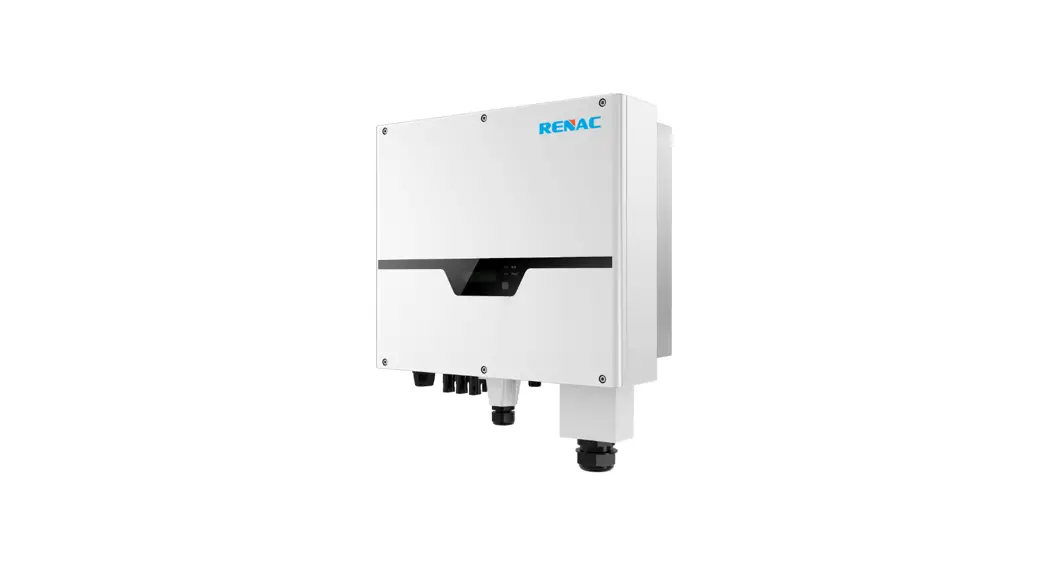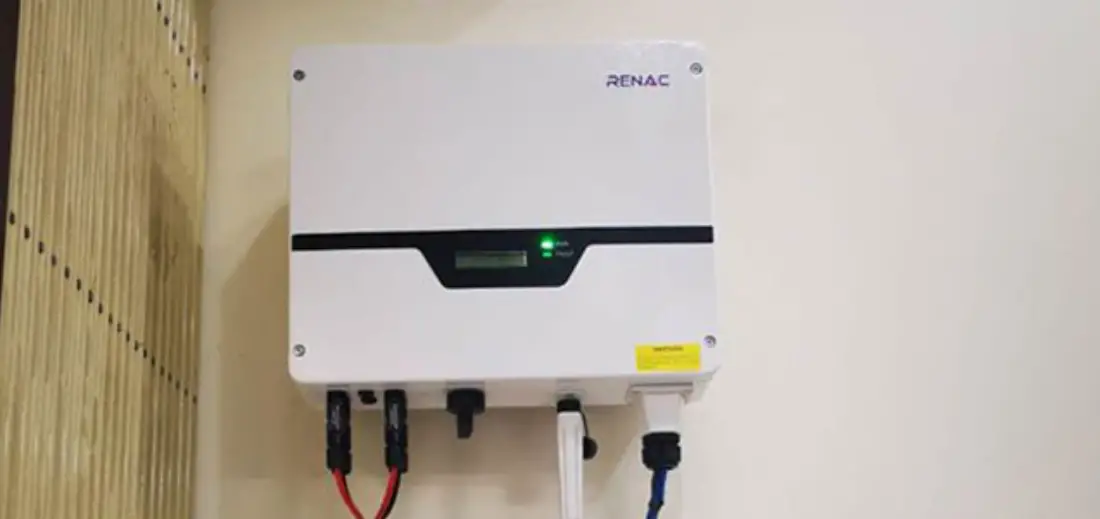

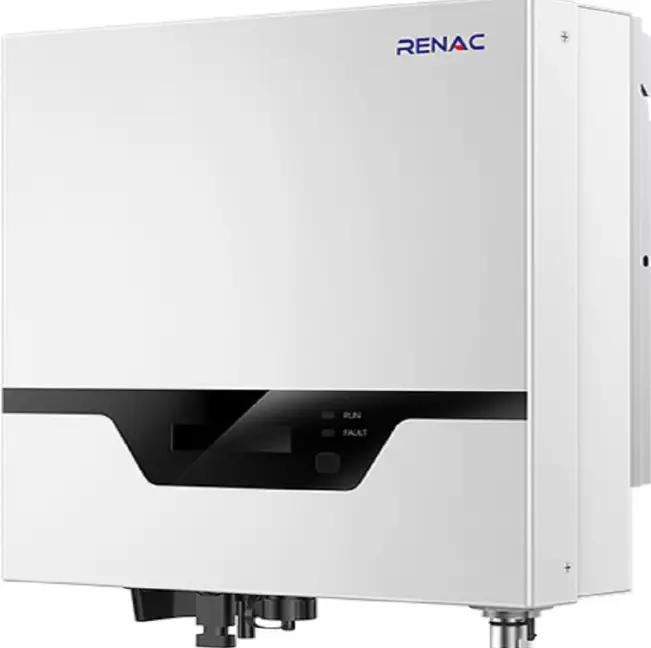
RENAC NAC4K – DS SINGLE PHASE Solar Grid Inverter
Introduction
This manual describes solar inverters: NAC4K-DS / NAC5K-DS / NAC6K-DS / R1-8K-DS / R1-10K-DS / R1-10K5-DS.
These inverters are transformerless based inverter.
Please read the safety instructions in this manual first. Throughout the manual it is assumed that the reader is familiar with AC and DC installations and knows the rules and regulations for electrical equipment and for connecting it to the utility AC grid. It is especially important to be familiar with the general safety rules for working with electrical equipment.
Applied designations
Throughout the manual important information is shown at different levels depending on the character of the information, as shown here:
- Safety information important for human safety. Violation of warnings may result in injury to persons or death.
- Danger of high voltage and electric shock!.
- Signals danger due to electrical shock and indicates the time (5 minutes) to allow after the inverter has been turned off and disconnected to ensure safety in any installation operation.
- Danger of hot surface!
- Product should not be disposed as normal household waste.
- CE Mark
- ROHS Mark
- Information important for the protection of property. Violation of this type of information may cause damage and loss of property.
- Useful additional information or “Tips and Tricks” on specific subjects.
Important safety information
Read this before installing, operating or maintaining the inverter.
Before installation:
Check for damage to inverter and packaging. If you are in doubt, please contact your supplier before installing the inverter. Check the voltages of the solar modules and make sure they are within the limits of the inverter specifications before connecting them to the inverter.
Installation:
Only trained and authorized personnel familiar with local electrical codes may install the inverter. For optimum safety, please follow the steps described in this manual. Keep in mind that the inverter has two voltage carrying sides, the PV input and the AC grid.
Disconnecting the inverter:
Always disconnect the AC line first! Afterwards disconnect the PV lines. Note that the inverter can still be charged with very high voltages at hazardous levels even when it is disconnected from grid and solar modules. Wait at least 5 min. before proceeding, after having disconnected from grid and PV panels.
Operating the inverter:
Before connecting the AC grid to the inverter, make sure that the installation cover is mounted again. The inverter must not be open during operation.
Maintenance and modification:
Only authorized personnel are allowed to repair or modify the inverter. To ensure optimum safety for user and environment, only the original spare parts available from your supplier should be used.
Functional safety parameters:
Unauthorized changes of functional safety parameters may cause injury or accidents to people or inverter. Additionally it will lead to the cancelling of all inverter operating approval certificates.
System sizing
When dimensioning a photovoltaic system, it must be ensured that the open circuit voltage of the PV string never exceeds the maximum permissible input voltage of 600V DC. The PV string open circuit voltage during parallel string operation is 550V. Higher voltages may result in permanent damage
to the inverter.
The selection of PV string output should be based on the optimum utilization of the invested capital compared to the expected annual energy yield from the system. This optimization depends on local weather conditions and should be
considered in each individual case.
The inverter incorporates an input power limiting device, which automatically keeps the power at levels that are safe for the inverter. The limitation depends mainly on internal and ambient temperatures. The limitation is calculated continuously and always allows the maximum possible amount of energy to be produced.
Please use the tool supplied by Renac Power when dimensioning a photovoltaic system.
Technical description of inverters
Mechanical design
Figure 2-1 shows the outline dimensions of NAC4K-DS / NAC5K-DS / NAC6K-DS / R1-8K-DS / R1-10K-DS / R1-10K5-DS.
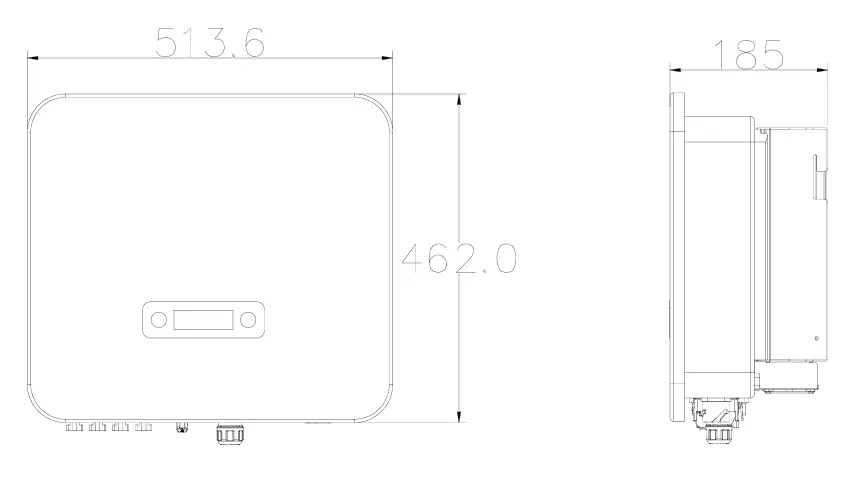 Figure 2-1 Outline dimensions
Figure 2-2 shows the electrical terminals of NAC4K-DS / NAC5K-DS / NAC6K-DS / R1-8K-DS / R1-10K-DS / R1-10K5-DS.
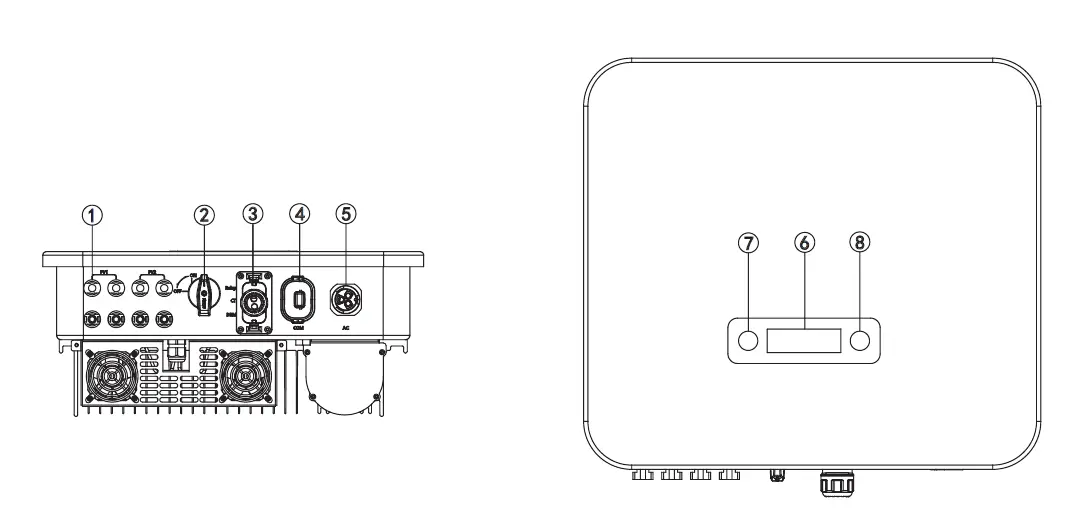 Figure 2-2 Electrical Terminals
| 1 | DC (PV terminal) | 2 | DC Switch |
| 3 | I/O Port | 4 | Communication port |
| 5 | AC terminal | 6 | LCD |
| 7 | LED (Run/Fault) | 8 | Key |
Electrical system design
For safety reasons, the use of a DC switch is recommended. Between the PV modules and the power modules may be mandatory in some countrie.
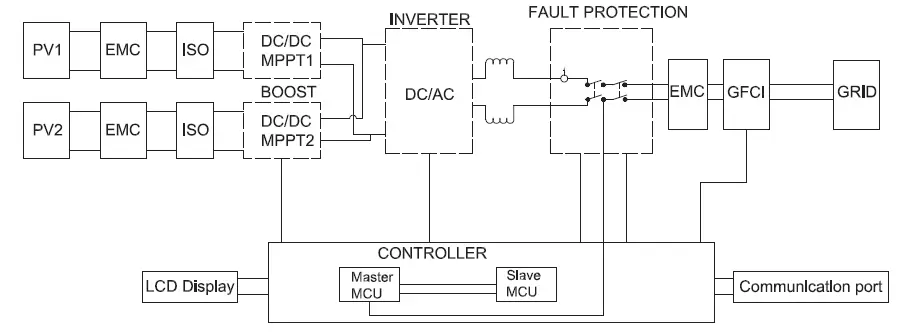 Figure 2-3 wiring diagram of the inverter system
Please refer to chapter 3 for the detail connecting and install methods.
Technical data
| DC Input Data | ||||||||
| Max. Recommended PV Power | 5200W | 6500W | 7800W | |||||
| Max.DC Input Voltage | 600V | |||||||
| MPPT voltage Range | 100-550V | |||||||
| Rated input voltage | 360V | |||||||
| Start-up Voltage | 120V | |||||||
| No. of MPP Trackers | 2 | |||||||
| No. of Input Strings per Tracker | 1 / 1 | 2 / 1 | ||||||
| Max. DC Input Current | 16A / 16A | 16A / 16A | 16A / 16A | |||||
| DC Switch | Optional | |||||||
| AC Output Data | ||||||||
| Rated AC Power | 4000W | 5000 W | 6000W | |||||
| Max.output power | 4400VA | 5500VA | 6600VA | |||||
| Max. AC Current | 19.2A | 24A | 28.7A | |||||
| Rated AC Voltage /Range | 220V/230V; 160-290V | |||||||
| Grid frequency / range | 50Hz/60Hz; ±5Hz | |||||||
| Adjustable Power Factor [cos φ] | 0.8leading ~ 0.8lagging | |||||||
| Output THDi (@Rated Output) | ≤ 2% | |||||||
| Efficiency | ||||||||
| Max.Efficiency | 97.8% | 97.8% | 97.8% | |||||
| Euro Efficiency | 97.2% | 97.2% | 97.2% | |||||
| MPPT Efficiency | 99.9% | 99.9% | 99.9% | |||||
| Protection | ||||||||
| DC Insulation Monitoring | Integrated | |||||||
| Input Reverse Polarity Protection | Integrated | |||||||
| Anti-island Protection | Integrated | |||||||
| Residual Current Monitoring | Integrated | |||||||
| Over-heat Protection | Integrated | |||||||
| AC Overcurrent Protection | Integrated | |||||||
| AC Short-circuit Protection | Integrated | |||||||
| AC Overvoltage Protection | Integrated | |||||||
| DC Surge Protection | Integrated (Type III) | |||||||
| AC Surge Protection | Integrated (Type III) | |||||||
| General Data | ||||||||
| Size(Width*Height*Depth) | 513.6 x 462 x 185mm | |||||||
| Weight | 12KG | |||||||
| User Interface | LCD | |||||||
| Communication | RS485 (Standard), Wifi or GPRS | |||||||
| Ambient Temperature Range | -25 ℃ ~ 60 ℃ | |||||||
| Relative Humidity | 0-100% | |||||||
| Operating Altitude | ≤ 4000m | |||||||
| Standby Self Consumption | < 0.2W | |||||||
| Topology | Transformer less | |||||||
| Cooling | Natural Convection | |||||||
| Protection Grades | IP65 | |||||||
| Noise | < 30dB | |||||||
| Warranty | 5 / 7 / 10 years | |||||||
| Certifications & Standards | ||||||||
| Grid Regulation | VDE 0126-1-1, C10/11, G99, PEA, MEA, AS4777, EN50549, CEI0-21, EC61727, IEC62116, IEC60068, IEC61683, ABNT NBR 16150 | |||||||
| Safety Regulation | IEC 62109-1, IEC 62109-2 | |||||||
| EMC | EN 61000-3-2, EN 61000-3-3, EN 61000-3-11, EN 61000-3-12, EN 61000-6-2, EN 61000-6-3, IEC 61000-4-16, IEC 61000-4-18, 4-29 | |||||||
| DC Input Data | |||||
| Max. Recommended PV Power | 12000W | 15000W | 16000W | ||
| Max.DC Input Voltage | 600V | ||||
| MPPT voltage Range | 100-550V | ||||
| Rated input voltage | 360V | ||||
| Start-up Voltage | 120V | ||||
| No. of MPP Trackers | 2 | ||||
| No. of Input Strings per Tracker | 2 / 1 | 2 / 2 | |||
| Max. DC Input Current | 26A / 20A | 26A / 26A | 26A / 26A | ||
| DC Switch | Optional | ||||
| AC Output Data | |||||
| Rated AC Power | 8000 W | 10000 W | 10440 W | ||
| Max.output power | 8800VA | 10000VA | 9570VA@220V 10005VA@230V 10440VA@240V | ||
| Max. AC Current | 36.4A | 43.5A | 43.5A | ||
| Rated AC Voltage / Range | 220V/230V/240V; 160-290V | ||||
| Grid frequency / range | 50Hz/60Hz; ±5Hz | ||||
| Adjustable Power Factor [cos φ] | 0.8leading ~ 0.8lagging | ||||
| Output THDi (@Rated Output) | ≤ 2% | ||||
| Efficiency | |||||
| Max.Efficiency | 97.8% | 98.1% | 98.1% | ||
| Euro Efficiency | 97.2% | 97.5% | 97.5% | ||
| MPPT Efficiency | 99.9% | 99.9% | 99.9% | ||
| Protection | |||||
| DC Insulation Monitoring | Integrated | ||||
| Input Reverse Polarity Protection | Integrated | ||||
| Anti-island Protection | Integrated | ||||
| Residual Current Monitoring | Integrated | ||||
| Over-heat Protection | Integrated | ||||
| AC Overcurrent Protection | Integrated | ||||
| AC Short-circuit Protection | Integrated | ||||
| AC Overvoltage Protection | Integrated | ||||
| DC Surge Protection | Integrated (Type III) | ||||
| AC Surge Protection | Integrated (Type III) | ||||
| General Data | |||||
| Size (Width*Height*Depth) | 395 x 330 x 185mm | ||||
| Weight | 16KG | ||||
| User Interface | LCD | ||||
| Communication | RS485 (Standard), Wifi or GPRS | ||||
| Ambient Temperature Range | -25 ℃ ~ 60 ℃ | ||||
| Relative Humidity | 0-100% | ||||
| Operating Altitude | ≤ 4000m | ||||
| Standby Self Consumption | < 0.2W | ||||
| Topology | Transformerless | ||||
| Cooling | Natural | Fan | Fan | ||
| Protection Grades | IP65 | ||||
| Noise | < 30dB | < 40dB | |||
| Warranty | 5 / 7 / 10 years | ||||
| Certifications & Standards | |||||
| Grid Regulation | EC61727, IEC62116, IEC60068, IEC61683, ABNT NBR 16150 | ||||
| Safety Regulation | IEC 62109-1, IEC 62109-2 | ||||
| EMC | EN 61000-3-2, EN 61000-3-3, EN 61000-3-11, EN 61000-3-12, EN 61000-6-2, EN 61000-6-3, IEC61000-4-16, IEC61000-4-18, IEC61000-4-29 | ||||
Grid codes
| No. | National/Regional Grid Code | Description |
| 1 | VDE4105-DE | Germany power Grid, meet Grid standards “VDE-AR-N-4105”. |
| 2 | CEI0-21 | Italy power Grid. |
| 3 | AS4777 | Australia power Grid. |
| 4 | RD1699 | Spain power Grid. |
| 5 | EN50549-TR | Turkey power Grid. |
| 6 | EN50549-DK | Denmark power Grid. |
| 7 | Greece | Greece power Grid. |
| 8 | EN50549-NL | Netherland power Grid, meet Grid standards “EN50438”. |
| No. | National/Regional Grid Code | Description |
| 9 | C10/11 | Belgium power Grid. |
| 10 | G59 | UK power Grid. |
| 11 | China | China power Grid, meet Grid standards “CN-NBT”. |
| 12 | VDE0126-FR | France power Grid, meet Grid standards “VDE 0126”. |
| 13 | EN50549-PL | Poland power Grid. |
| 14 | BDEW-DE | Germany power Grid, meet Grid standards “BDEW-MV”. |
| 15 | VDE0126-DE | Germany power Grid, meet Grid standards “VDE 0126”. |
| 16 | CEI0-16 | Italy power Grid, meet Grid standards “CEI 0-16”. |
| 17 | G83 | UK power Grid. |
| 18 | Greece Island | Greece Island power Grid. |
| 19 | EN50549-CZ | Czech Republic power Grid, meet Grid standards “EN50438Y2007-CZ”. |
| 20 | IEC61727 | India power Grid. |
| 21 | Korea | Korea power Grid. |
| 22 | EN50549-SW | Sweden power Grid. |
| 23 | China-W | China power Grid, Grid voltage range:160-290V Grid frequency range:47-53HZ. |
| 24 | China-H | China power Grid, meet standards“CQC ”. |
| 25 | IEC61727-IN | India power Grid, meet Grid standards “IEC61727”. |
| 26 | Brazil | Brazil power Grid , meet Grid standards “NBT 16150”. |
| 27 | IEC61727-SL | Sri Lanka power Grid, meet Grid standards “IEC61727”. |
| 28 | Mexico | Mexico power Grid, meet Grid standards “IEC61727 60HZ”. |
| 29 | NZ4777 | New Zealand power Grid, meet Grid standards “NZ4777”. |
| 30 | Philippines | Philippines power Grid, meet Grid standards “IEC61727 60HZ spec”. |
| 31 | IEC61727-SL-W | Sri Lanka power Grid, Grid voltage range:160-290V, Grid frequency range:47-53HZ. |
| 32 | PEA | Thailand power Grid. |
| 33 | PEA-W | Thailand power Grid, Grid voltage range:160-290V, Grid frequency range:47-53HZ. |
| 34 | IEC61627-VN | Vietnam power Grid. |
| 35 | IEC61627-VN-W | Vietnam power Grid, Grid voltage range:160-290V, Grid frequency range:47-53HZ. |
| 36 | MEA | Thailand power Grid. |
| 37 | MEA-W | Thailand power Grid, Grid voltage range:160-290V, Grid frequency range:47-53HZ. |
| 38 | Tunisia | Tunisia power Grid. |
| 39 | Tunisia-W | Tunisia power Grid, Grid voltage range:160-290V, Grid frequency range:47-53HZ. |
Installation and startup
Warning!
Before installation and maintenance, AC and DC side doesn’t carry electricity, but if DC side is just disconnected, capacitance still contains electricity, so please wait for at least 5 minutes to ensure the capacitors completely release the energy and inverter is not electrified.
Note
Inverters must be installed by qualified person.
Package information
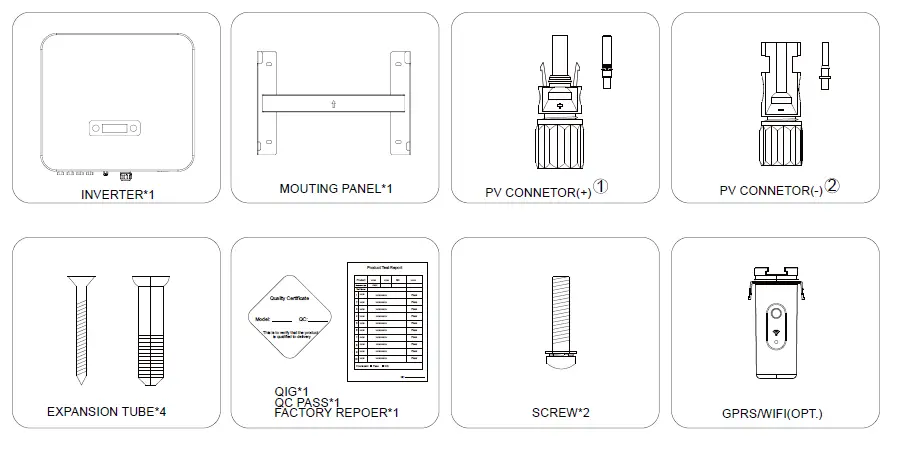
- There are 2 PV+ connectors for 4/5/6K-DS , 3 PV+ connectors for 7/8K-DS and 4 PV+ connectors for 9/10/10.5K-DS
- There are 2 PV- connectors for 4/5/6K-DS , 3 PV- connectors for 7/8K-DS and 4 PV- connectors for 9/10/10.5K-DS
Figure 3-1 package information
Installation environment
- In order to achieve optimal performance, the ambient temperature should be kept lower than 45 °C.
- For the convenience of checking the LCD display and possible maintenance activities, please install the inverter at eye level. Inverters should NOT be installed near inflammable or explosive items. Any strong electro-magnetic equipment should be kept away from installation site.
- Product label and warning symbol shall be clear to read after installation.
- Please do not install inverter under direct sunlight, rain and snow.
 Figure 3-2 installation environment
Installation position
- The installation method and mounting location must be suitable for the inverter’s weight and dimensions.
- Mount on a solid surface.
- Select a well-ventilated place sheltered from direct sun radiation.
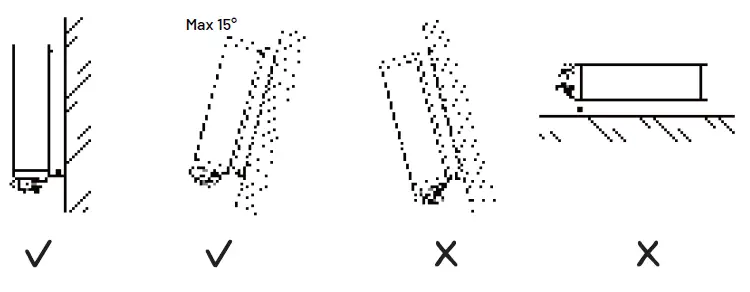 Figure 3-3 installation position
In consideration of heat dissipation and convenient dismantlement, the minimum clearances around the inverter should be no less than the following value: 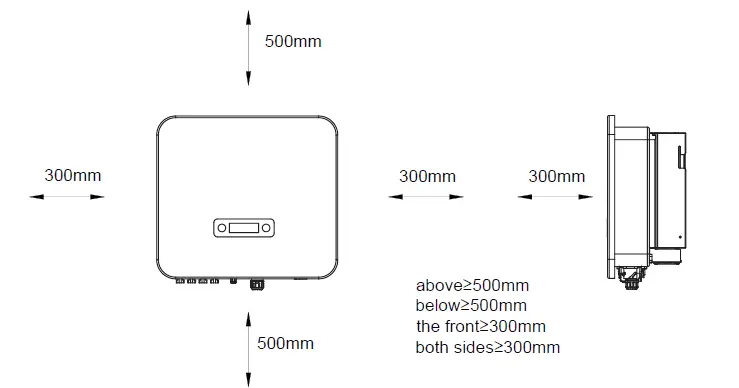 Figure 3-4 Distance required of Invertors
Mounting procedure
Step1: Drill 4 Fix Ø11 holes in the wall according to the dimensions.
Step2: Fix the wall mounting bracket on the wall with 4 expansion bolts in accessory bag. Step3: Place the inverter on the wall-mounted bracket and install the fix screw.
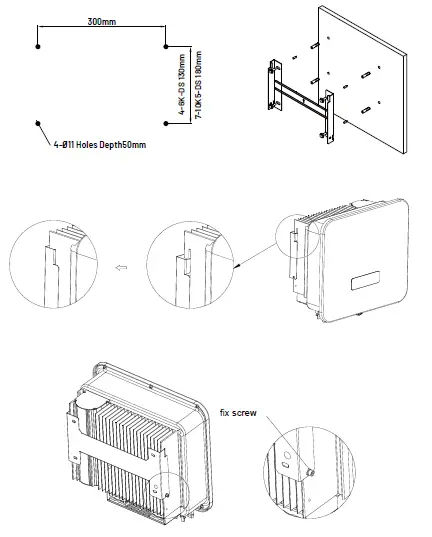 Figure 3-5 mounting the inverter
Electrical connection
Connection to the grid (AC output)
- Add breaker or fuse to AC side, the specification should be more than 1.25 times of rated AC output current.
- The PE line of inverter should be connected to the earth, make sure the impedance of neutral wire and earth wire less than 10 ohm.
- Disconnect the breaker or fuse between the inverter and the utility.
- All inverters incorporate a certified internal Residual Current Device (RCD) in order to protect against possible electrocution and fire hazard in case of a malfunction in the PV array, cables or inverter. There are 2 trip thresholds for the RCD as required for certification (IEC 62109-2:2011). The default value for electrocution protection is 30mA, and for slow rising current is 300mA.
Connect the inverter to the grid as follows:
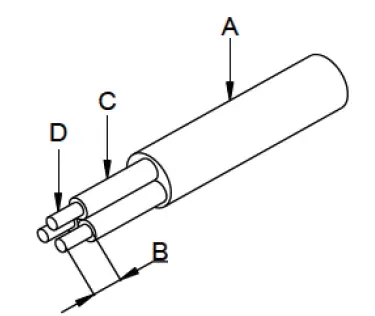
- Strip off L/N/PE cables as figure 3-6:

No. Description Remark A Protective layer Diameter ranges :9-16mm B Length of stripped off 12mm C Insulate layer 50mm D Cross section of ac cables 6-10mm² Figure 3-6 Strip off PE/N/L cables
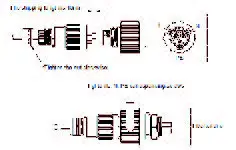
- Tighten the nut clockwise & Tighten L/N/PE cable screws to the terminals according to markings.
Fix (Torque: 2~2.5 N.m) the connector of AC cable to the corresponding terminals
Figure 3-7 Connect the inverter to the Grid - Plug Grid side connector into AC connector of inverter end, rotate and tighten clockwise.
Connection to PV string (DC input)
- Before connecting PV string, make sure DC switch is turned off.
- Make sure PV string polarity confirms with DC connector, otherwise, it will cause damage to inverter.
- Make sure the maximum open circuit voltage (Voc) of each PV string does not exceed the inverter input voltage Vmax under any condition.
- Do not connect positive or negative pole of PV string to earth wire. Otherwise, it will cause damage to inverter.
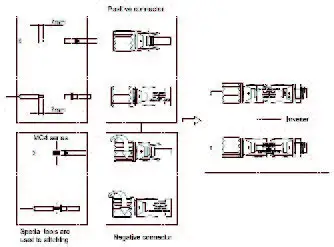 Figure 3-8 Connect the PV string
Communication
Overview of communication ports:
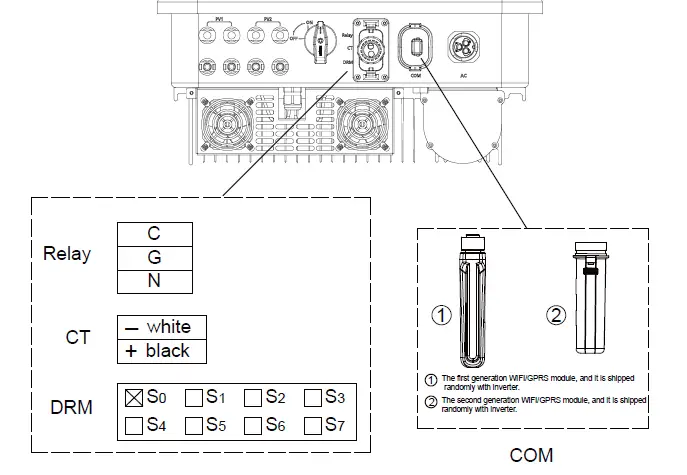 Figure 3-9
WIFI/GPRS Communication (optional)
Connect the WIFI/GPRS module produced by Renac to the COM port of inverter. After successful connection, information such as power generation and running state of the inverter can be viewed via the App on the phone. The details please refer
to the module user manual.
The block diagram of the WIFI/GPRS communication system is as follows: 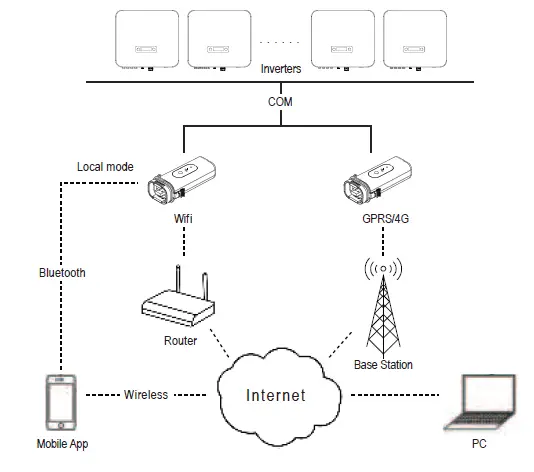
CT Connection (Optional)
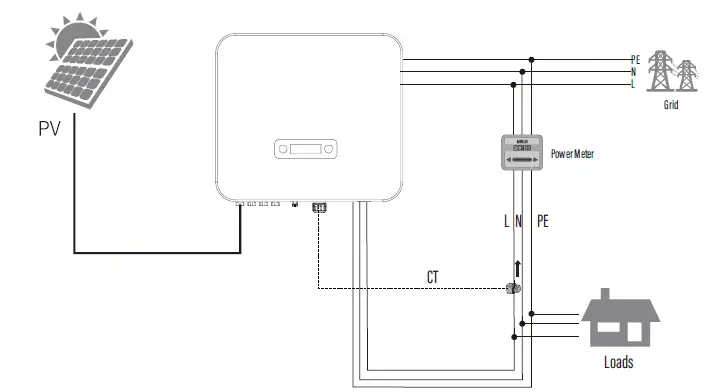
The inverter is equipped with the feed-in power limit function, and the communication port on inverter is “CT” (figure 3-9), below is the method of connecting the CT in system.
DRM connection
The inverter supports the demand response modes as specified in the standard AS/NZS4777. The inverter has integrated a terminal for connecting to a DRED. The details please refer to figure 3-9, and for CEI standard, DRM S0 is the DI port .
Relay connection
The relay can be set to fault alarm output, and user can configure it to be a normal open contact (COM&NO) or a normal close contact (COM&NC).The relay is initially at the NC terminal, and it will trip to another contact when a fault occurs.
Use LED indicators or other equipment to indicate whether the inverter is in the faulty state. The following figures show the typical applications of normal open contact and normal close contact: 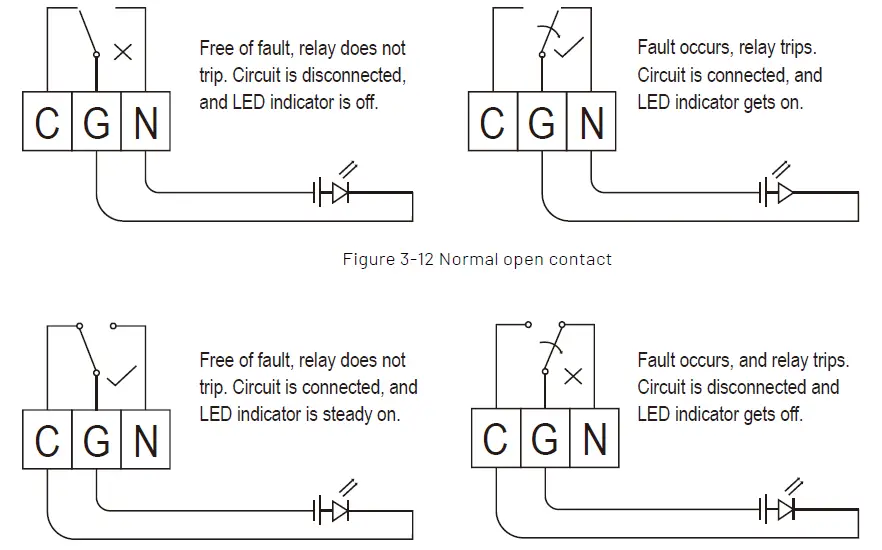 Figure 3-13 Normal close contact
Starting the inverter
Before turn on the inverter, please confirm:
- Three AC wires (PE/L/N) cable correctly connected to the inverter AC side through AC circuit breaker;
- The DC cable connected correctly to the inverter DC side through DC circuit breaker, please be attention to the cable connected to the two string correctly and it’s polarity;
- The unused terminals are covered.
Starting the inverter:
- Close the DC and AC circuit breaker;
- If the solar panels provide enough energy, the power module will work and the LCD panel will be lit;
- In case you are starting the inverter for the first time, the inverter needs to be commissioned. Commissioning is described on page 19,chapter 4.3.
- Then the inverter will turn into self-check mode and the LCD panel will display the remaining time of connect simultaneously; After the inverter turn into normal mode, it feed electrical energy into grid, and LCD panel will display the generated electrical energy.
As long as the inverter works, it will automatically track the maximum power point to absorb the maximum energy from solar. When night comes, the irradiance is not strong enough to provide energy, the inverter will power off automatically. When the next day comes, the input voltage reaches the start value, it will start again automatically.
User interface
Led and key
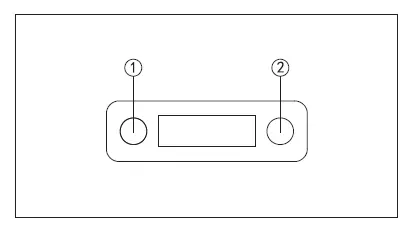 Figure 4-1 LED display
| No. | Object | Description |
| 1 | Run (Green LED) | On = Normal operation |
| Flashing = Waiting, checking or starting up | ||
| 1 | Fault (Red LED) | On = Failure |
| Flashing = Temporary failure | ||
| 2 | Pushbutton | Pressing < 1 s: Next |
| Pressing > 2 s: Enter |
LCD display
Menu structure:
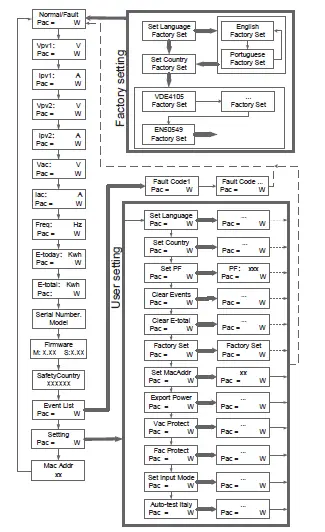 Press the button less than 1 second
long Press the button
Return
Factory setting
- Press pushbutton long in order to enter the “Factory setting” menu.
- Press pushbutton long to enter the “language setting” menu.
- Press pushbutton less than 1 sec. to the langue menu you want and Press pushbutton long to select. Press pushbutton less than 1 sec. to the country menu you want and Press pushbutton long to select.
Setting language
- Press pushbutton less than 1 sec. several times until you reach the “Setting” menu.
- Press pushbutton long in order to enter the “setting” menu.
- Press pushbutton less than 1 sec. several times until you reach the “language setting” menu.
- Press pushbutton less than 1 sec. to the langue menu you want and Press pushbutton long to select.
Setting modbus address
- Press pushbutton less than 1 sec. several times until you reach the “Setting” menu.
- Press pushbutton long in order to enter the “setting” menu.
- Press pushbutton less than 1 sec. several times until you reach the “module add” menu.
- Press pushbutton less than 1 sec. to the mod bus address number you want and Press pushbutton long to set.
Setting export power (CT)
- Press pushbutton less than 1 sec. several times until you reach the “Setting” menu. Press pushbutton long in order to enter the “setting” menu.
- Press pushbutton less than 1 sec. several times until you reach the “Export power” menu. Press pushbutton long to enter onto “Export power”.
- Set “Export power” as “1”, press pushbutton long to save the value.
Self-Test in accordance with CEI 0-21 (Applies to Italy only)
- The self-test is only required for inverters, which are commissioned in Italy. The Italian standard requires that all inverters feeding into the utility grid are equipped with a self-test function in accordance with CEI 0-21. During the self-test, the inverter will consecutively check the protection reaction times and values for overvoltage, under voltage, over frequency and under frequency.
- Self-test function is available at any time. It also allows end user get test reports shown on LCD display.
- There are two ways to execute the self-test:
Auto-Test from screen:
- Press pushbutton less than 1 sec. several times until you reach the “Setting” menu.
- Press pushbutton long in order to enter the “setting” menu.
- Press pushbutton less than 1 sec. several times until you reach the “AutoTest-Italy” menu (You need to set the inverter country to CEI 0-21 before testing).

- Press pushbutton long to execute the auto-test.
- The inverter will automatically run the test until the screen shows “Test end”, if the test passes, it will show “test ok”, if the test is failed, it will show “test failed”.
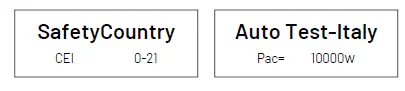
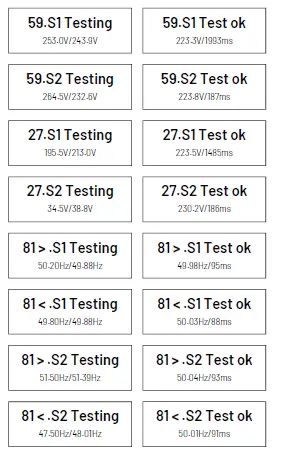 Auto-Test from Solar Admin:
- Download and install “Solar Admin” on laptop.
- Connect inverter to laptop via RS485 port.
- When the inverter and “solar admin” are successfully connected. Click “Sys.setting” – “Other” – “AUTOTEST” enter into “Auto-Test” interface.
- Click “Execute” to start the test.
- The inverter will automatically run the test until the screen shows “Test end”.
- Click “Read” to read the test value, and click “Export” to export the test report.
- After click “Read” button, interface will show the test results, if the test passes, it will show “PASS”, if the test is failed, it will show “FAIL”.
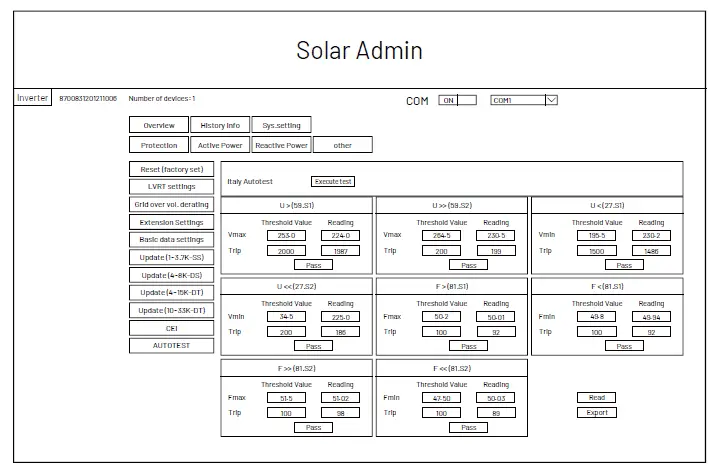
Warranty
The standard warranty period for the inverter is 60 months from the date of installation and no more than 66 months (5.5 years) from the date of shipment from factory.
Warranty claim procedure
Please report defective device with a brief error description and SN code to our service mail or service hotline for registration.
Alternatively, please contact your specific dealer or installer if your unit is defective or faulty.
To claim the warranty under the warranty terms of factory, you need to supply us with the following information and documentation regarding the faulty unit:
- Product Model No (e.g. R1-8K-DS) and the serial Number (e.g. 8700831201211006). Copy of the invoice and warranty certificate for the inverter.
- Error message on LCD screen and additional information regarding the fault/error. Detailed information about the entire system (modules, circuits, etc.).
- Documentation of previous claim/exchanges ( if applicable).
In the case of an exchange, the remainder of the warranty entitlement will be transferred to the replacement device. In this event, you will not receive a new certificate, as this replacement will be noted by factory.
Service after warranty expiration
For products which are out of warranty, factory charges an on-site service fee, parts, labor cost and logistic fee to end-user which can be any/all of:
- On-site attendance fee: Cost of travel and time for the technician in attending on-site;
- Parts: Cost of replacement parts (including any shipping/admin fee that may apply);
- Labor: Labor time fee charged for the technician, who is repairing, maintaining, and installing (hardware or software) and debugging the faulty product;
- Logistic fee: Cost of delivery, tariff and other derived expense when defective products are sent from user to factory or / and repaired products are sent from factory to user;
Troubleshooting and Maintenance
Troubleshooting
Once a fault occurs in the inverter, the fault information can be displayed on screen or the App interface. Fault codes and check methods are as follows:
| Fault | LCD display | Possible actions |
| Clearable Fault | Isolation Fault1 Isolation Fault2 |
|
| Grid Faults: 10min OVR Fault OVR Fault UVR Fault OFR Fault UFR |
| |
| No utility |
| |
| Low Temp Over Temp |
| |
| PV over Voltage: PV1OVFault PV2OVFault |
| |
| Permanent Fault | Consistent Faults: Consist VGrid Consist Freq Consist GFCI Consist DCI |
|
| RelayFail | ||
| EEPROM R/W Fail | ||
| Sci Comm lose | ||
| Spi Comm lose | ||
| BusHFault | ||
| GFCIDeviceFault | ||
| IGridDevice | ||
| PLLFault | ||
| AutoTestFail | ||
| PV Config fault | ||
| Fan error | ||
| DCI out range | ||
| OCPV1 | ||
| OCPV2 | ||
| OCIGrid |
Maintenance
Risk of inverter damage or personal injury due to incorrect service!
- Always keep in mind that the inverter is powered by dual sources: PV strings and utility grid. Before any service work, observe the following procedure.
- Disconnect the AC circuit breaker and then set the DC load-break switch of the inverter to OFF.
- Wait at least 5 minutes for inner capacitors to discharge completely.
- Verify that there is no voltage or current before pulling any connector.
NOTICE
Restart the inverter only after removing the fault that impairs safety performance. As the inverter contains no component parts that can be maintained, never arbitrarily replace any internal components. For any maintenance need, please contact Renac Power. Otherwise, Renac Power shall not be held liable for any damage caused.
Routine Maintenance
| Item | LCD display | Period |
| System clean | Check the temperature and dust of the inverter. Clean the inverter enclosure if necessary. Check if the air inlet and outlet are normal. Clean the air inlet and outlet, if necessary. | Six months to a year (- depend on the dust contents in air.) |
| Fans | Check whether there is any abnormal noise when the fan is turning. Clean or replace the fans if necessary (see the following section). | Once a year |
| Cable entry | Check whether the cable entry is insufficiently sealed or the gap is excessively large, and reseal the entry when necessary. | Once a year |
| Electrical Connection | Check whether all cable are firmly in place. Check whether a cable is damaged, especially the part contacting the metal enclosure. | Six months to a year |
Maintenance Instruction
Cleaning Air Inlet and Outlet
A huge amount of heat is generated in the process of running the inverter. The inverter adopts a controlled forced-air cooling method. In order to maintain good ventilation, please check to make sure the air inlet and outlet are not blocked. Clean the air inlet and outlet with soft brush or vacuum cleaner if necessary.
Fan Maintenance
- Stop the inverter and disconnect it from all power supplies before maintenance.
- Lethal voltage still exists in the inverter. Please wait for at least 5 minutes and then perform maintenance work.
- Only qualified electricians can maintain the fans.
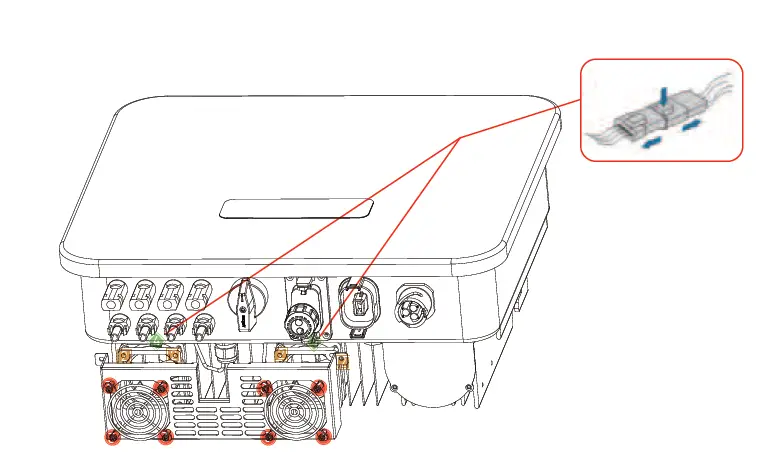
Fans inside the inverter are used to cool the inverter during operation. If the fans do not operate normally, the inverter may not be cooled down and inverter efficiency may decrease. Therefore, it is necessary to clean the dirty fans and replace the broken fans in time.
The operation procedure is as follows:
- Step 1 Stop the inverter (turns off DC and AC both for inverter, wait for at least 5 minutes).
- Step 2 Loosen the 4 screws of the 2 fan modules.
- Step 3 Loosen the 4 screws for each fan module.
- Step 4 Disconnect the fan cables and then pull out the fan modules, clean the fans with soft brush or vacuum cleaner, and replace them when necessary.
- Step 5 Reinstall the fan back to the inverter in reverse order and restart the inverter.

SMART ENERGY FOR BETTER LIFE
Add: Block 6, No.2, West Jinzhi Road, Suzhou National Hi-Tech District, Suzhou, China Tel:+86-0512-66677278
[email protected]
www.renacpower.com
 Energy Storage System, Solar Inverter, Pv Inverters, On Grid Inverter, Grid Tie Inverter - RENAC