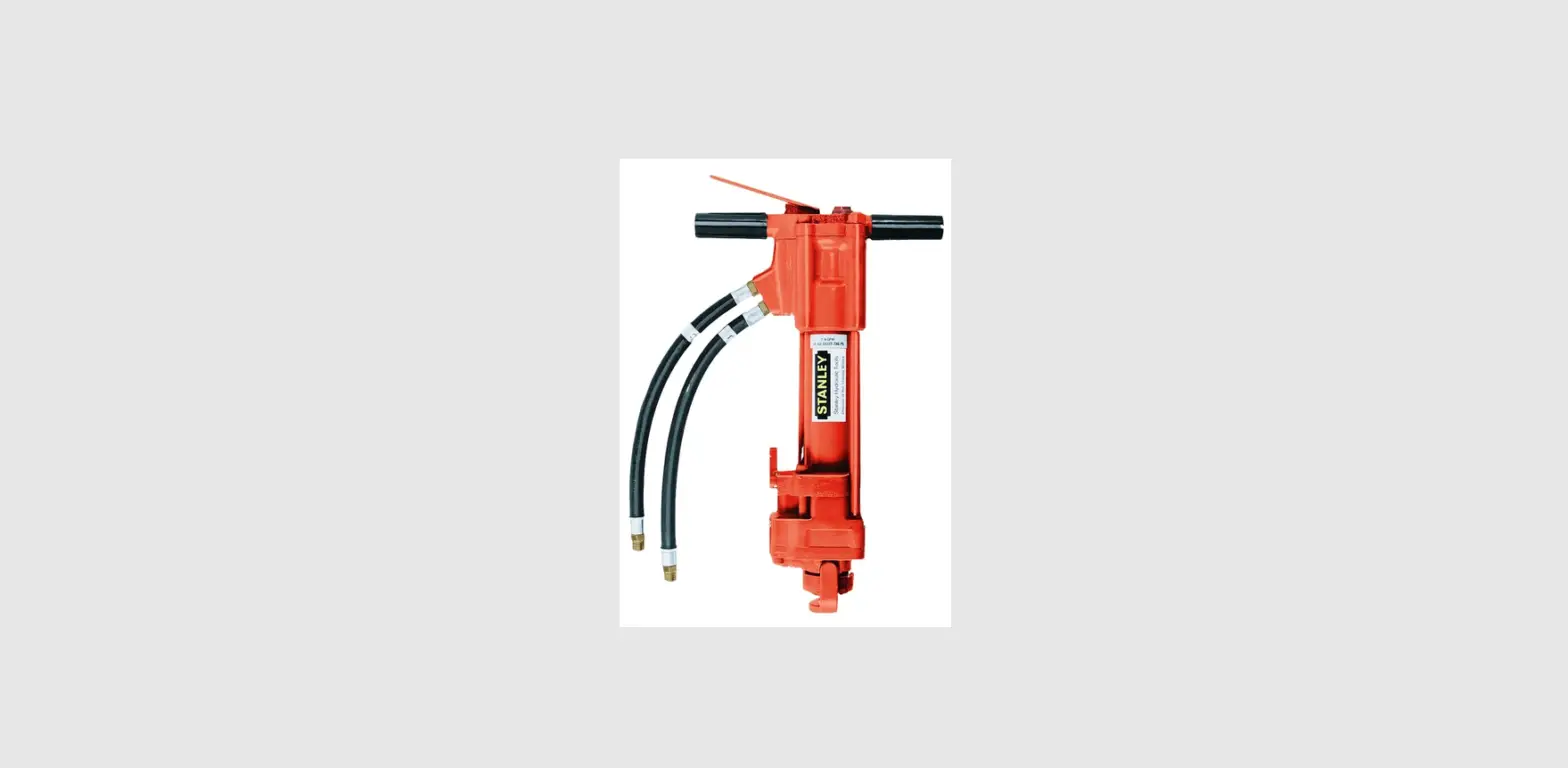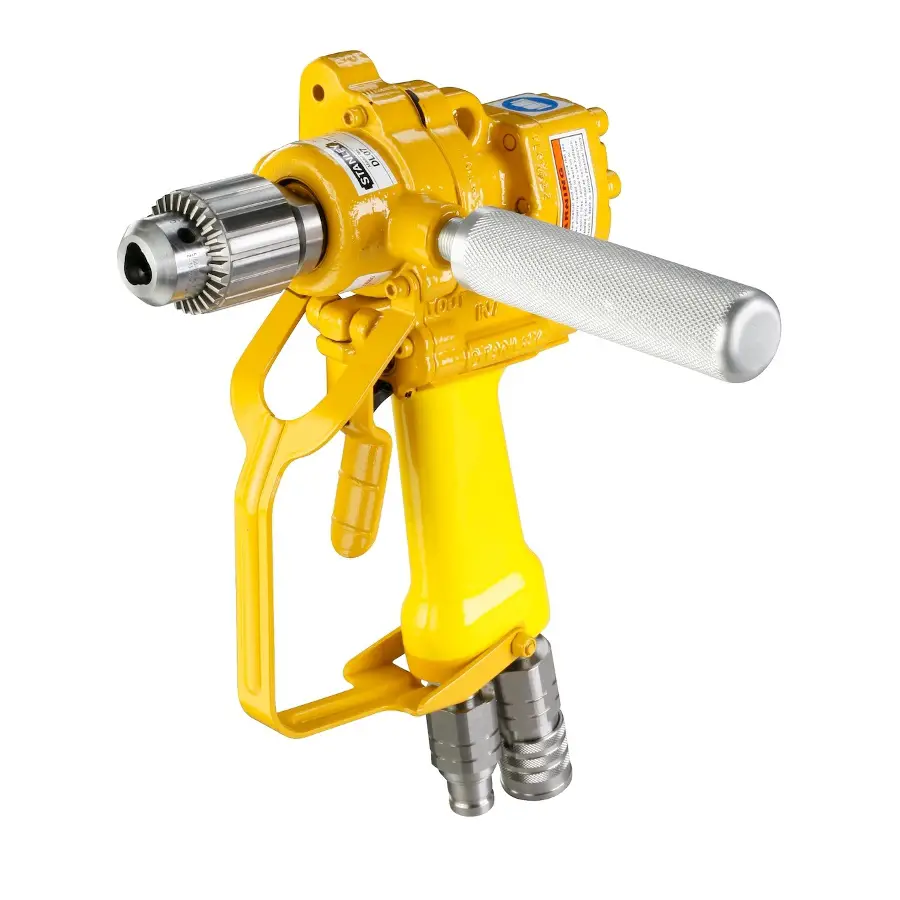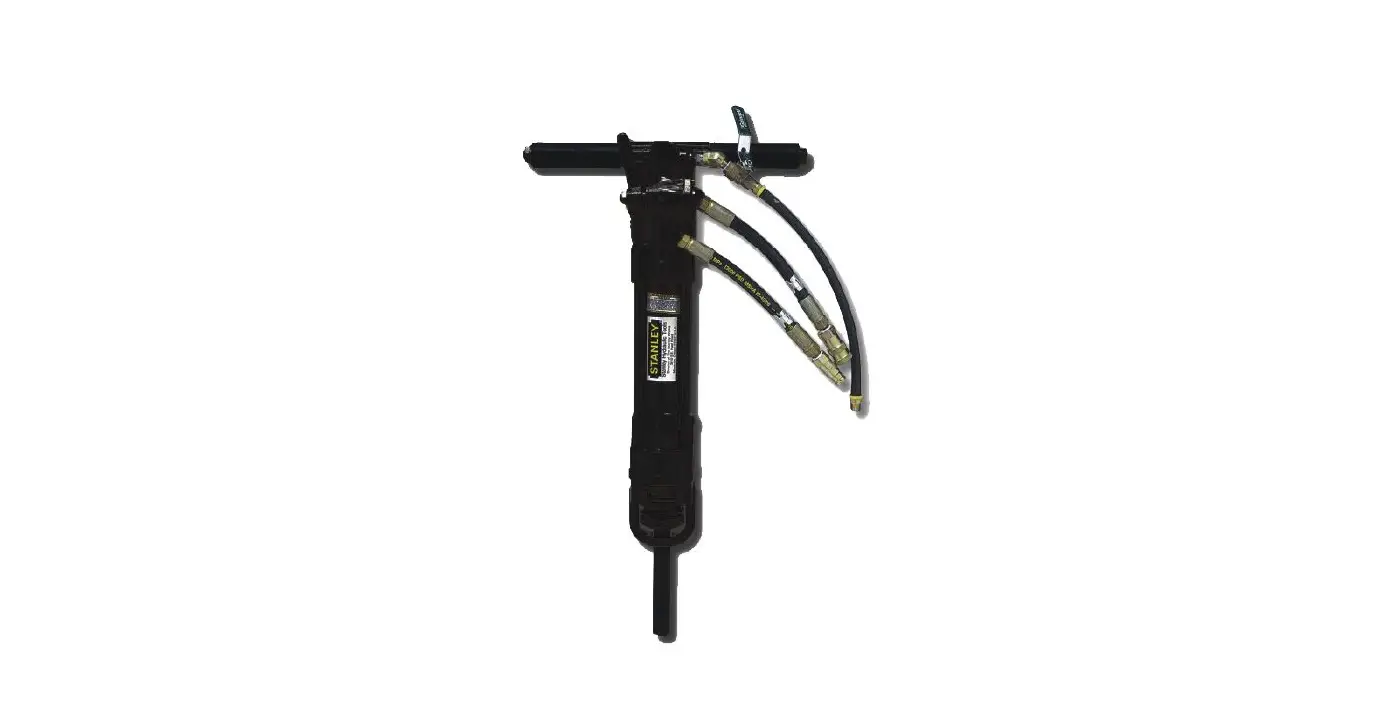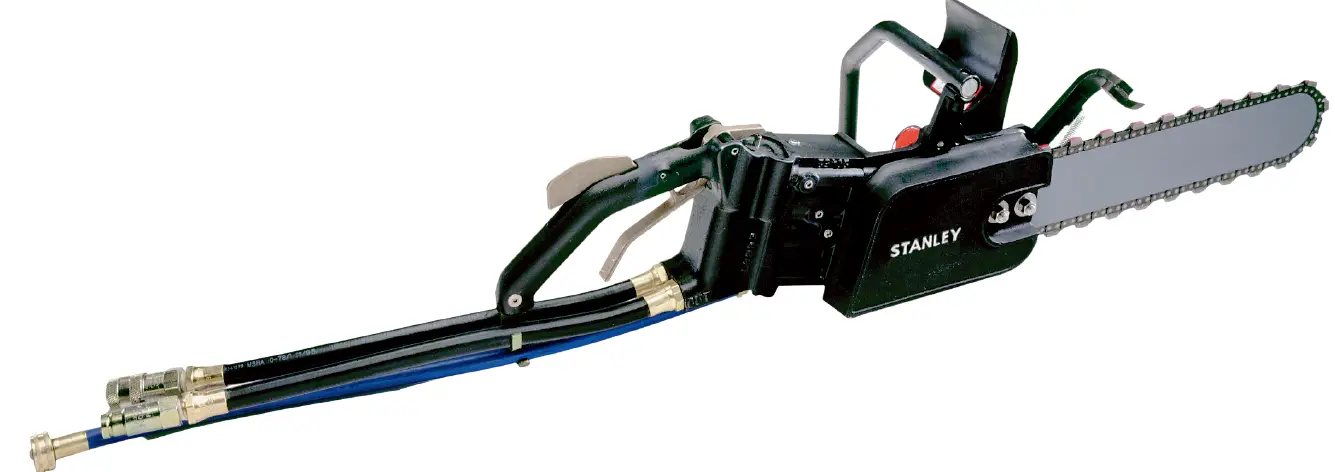
STANLEY RD12 Hydraulic Rail Drill User Manual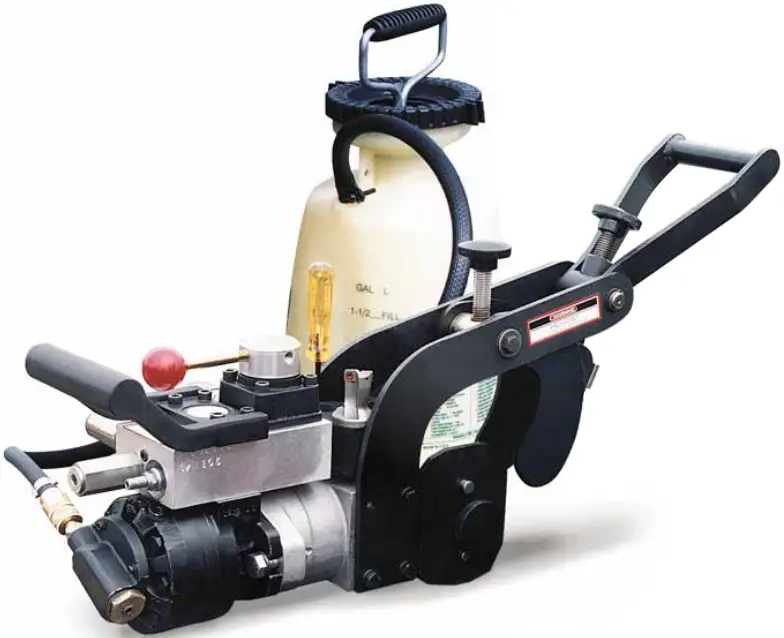
Important
To fill out a product warranty validation form, and for information on your warranty, visit www.stanleyinfrastructure.com and select the Company tab > Warranty.
Note: The warranty validation record must be submitted to validate the warranty.
SERVICING: This manual contains safety, operation and routine maintenance instructions. STANLEY Infrastructure recommends that servicing of hydraulic tools, other than routine maintenance, must be performed by an authorized and certified dealer. Please read the following warning.
Warning
SERIOUS INJURY OR DEATH COULD RESULT FROM THE IMPROPER REPAIR OR SERVICE OF THIS TOOL.
REPAIRS AND / OR SERVICE TO THIS TOOL MUST ONLY BE DONE BY AN AUTHORIZED AND CERTIFIED DEALER.
SAFETY SYMBOLS
Safety symbols and signal words, as shown below, are used to emphasize all operator, maintenance and repair actions which, if not strictly followed, could result in a life-threatening situation, bodily injury or damage to equipment.
 This is the safety alert symbol. It is used to alert you to potential personal injury hazards. Obey all safety messages that follow this symbol to avoid possible injury or death.
Danger: This safety alert and signal word indicates an imminently hazardous situation which, if not avoided, will result in death or serious injury
Warning: This safety alert and signal word indicates a potentially hazardous situation which, if not avoided, could result in death or serious injury.
Caution: This safety alert and signal word indicates a potentially hazardous situation which, if not avoided, could result in death or serious injury.
Caution This signal word indicates a potentially hazardous situation which, if not avoided, may result in property damage
Notice This signal word indicates a situation which, if not avoided, will result in damage to the equipment.
Important This signal word indicates a situation which, if not avoided, may result in damage to the equipment.
Always observe safety symbols. They are included for your safety and for the protection of the tool.
LOCAL SAFETY REGULATIONS
Enter any local safety regulations here. Keep these instructions in an area accessible to the operator and maintenance personnel.
Tool operators and maintenance personnel must always comply with the safety precautions given in this manual and on the stickers and tags attached to the tool and hose.
These safety precautions are given for your safety. Review them carefully before operating the tool and before performing general maintenance or repairs.
Supervising personnel should develop additional precautions relating to the specific work area and local safety regulations. If so, place the added precautions in the space provided in this manual.
The model RD12 Hydraulic Rail Drill will provide safe and dependable service if operated in accordance with the instructions given in this manual. Read and understand this manual and any stickers and tags attached to the pressure washer and hose before operation. Failure to do so could result in personal injury or equipment damage.
SAFETY PRECAUTIONS
- The operator must start in a work area without bystanders. Flying debris can cause serious injury.
- Do not operate the tool unless thoroughly trained or under the supervision of an instructor. Establish a training program for all operators to ensure safe operation.
- Always wear personal protection equipment (PPE) such as goggles, safety shoes, head, eye, breathing, and ear protection when operating the tool. Use gloves and aprons when necessary.
- The operator must be familiar with all prohibited work areas such as excessive slopes and dangerous terrain conditions.
- Do not inspect, clean or replace the drill bit or any part(s) if the hydraulic power source is connected.
Do not inspect or clean the tool while the hydraulic power source is connected. Accidental engagement of the tool can cause serious injury. - Always connect hoses to the tool hose couplers before energizing the hydraulic power source. Be sure all hose connections are tight and are in good condition.
- Do not operate the tool at oil temperatures above 140° F/60° C. Operation at higher temperatures can cause higher than normal temperatures at the tool which can result in operator discomfort.
- Never wear loose clothing or unrestrained long hair that can get entangled in the working parts of the tool.
- To avoid personal injury or equipment damage, all tool repair, maintenance and service must only be performed by authorized and properly trained personnel.
- The hydraulic circuit control valve must be in the OFF position when coupling or uncoupling the tool.
Wipe all couplets clean before connecting. Failure to do so may result in damage to the quick couplers and cause overheating. Use only lint-free cloths. - Never transport or carry the tool with the unit energized.
- Use proper lifting techniques when handling the tool. Do not overreach. Maintain proper footing and balance at all times.
- Keep hands and fingers away from rotating parts.
- Do not operate a damaged, improperly adjusted or incompletely assembled tool.
- Do not exceed the rated limits of the tool or use the tool for applications beyond its design capacity.
- Always keep critical tool markings, such as labels and warning stickers legible.
- Check fasteners tightness often and before each use daily.
- Never operate the tool if you cannot be sure that underground utilities are not present. Undergroundelectrical utilities present an electrocution hazard.
Underground gas utilities present an explosion hazard. Other underground utilities may present other hazards. - Always replace parts with replacement parts recommended by STANLEY.
- Warning: hydraulic fluid under pressure could cause skin injection injury. If you are injured by hydraulic fluid get medical attention immediately.
- WARNING: Some dust created by power sanding, sawing, grinding, drilling, and other construction activities contains chemicals known to the State of California to cause cancer, birth defects or other reproductive harm. Some examples of these chemicals are:
- Lead from lead-based paints,
- crystalline silica from bricks and cement and other masonry products, and
- arsenic and chromium from chemically treated lumber.
Your risk from these exposures varies, depending on how often you do this type of work. To reduce your exposure to these chemicals: work in a well ventilated area, and work with approved safety equipment, such as those dust masks that are specially designed to filter out microscopic particles. Protect yourself and those around you. Research and understand the materials you are cutting. Follow correct safety procedures and comply with all applicable national, state or provisional health and safety regulations relating to them, including, if appropriate arranging for the safe disposal of the materials by a qualified person.
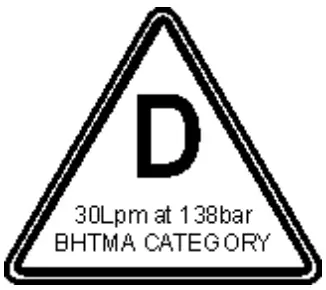
- 11207 Circuit Type D Sticker

- 28788 Manual Sticker

- 73680
Railroad Help Desk Sticker
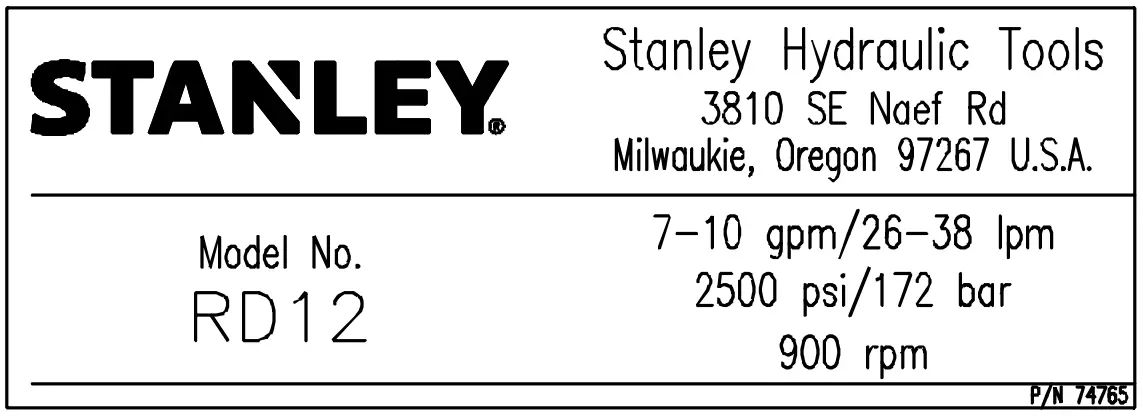
- 74765
RD12 Model Sticker
- 81441
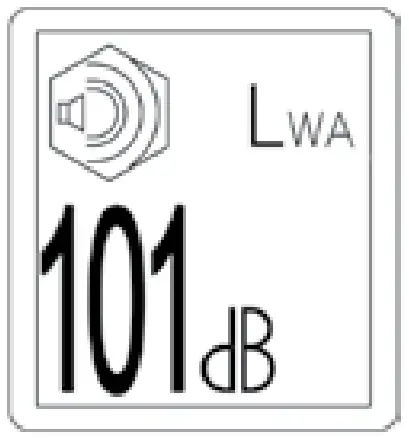
Sound Power Sticker
- 31096
RD12 Model Sticker
- 31049
Eye Protection Sticker
- 17572
Pinch Point Warning Sticker
WARNING
PINCH POINT
STAY CLEAR OF ALL MOVING PARTS - 88345
Pinch Point Warning Sticker
- 31096
RD12 Model Sticker



NOTE:
THE INFORMATION LISTED ON THE STICKERS SHOWN, MUST BE LEGIBLE AT ALL TIMES.
REPLACE DECALS IF THEY BECOME WORN OR DAMAGED. REPLACEMENTS ARE AVAILABLE FROM YOUR LOCAL STANLEY DISTRIBUTOR.
The safety tag at right is attached to the tool when shipped from the factory. Read and understand the safety instructions listed on this tag before removal. We suggest you retain this tag and attach it to the tool when not in use
DANGER
- FAILURE TO USE HYDRAULIC HOSE LABELED AND CERTIFIED AS NON-CONDUCTIVE WHEN USING HYDRAULIC TOOLS ON OR NEAR ELECTRICAL LINES MAY RESULT IN DEATH OR SERIOUS INJURY.
BEFORE USING HOSE LABELED AND CERTIFIED AS NON CONDUCTIVE ON OR NEAR ELECTRIC LINES BE SURE THE HOSE IS MAINTAINED AS NON-CONDUCTIVE. THE HOSE SHOULD BE REGULARLY TESTED FOR ELECTRIC CURRENT LEAKAGE IN ACCORDANCE WITH YOUR SAFETY DEPARTMENT INSTRUCTIONS. - A HYDRAULIC LEAK OR BURST MAY CAUSE OIL INJECTION INTO THE BODY OR CAUSE OTHER SEVERE PERSONAL INJURY.
- DO NOT EXCEED SPECIFIED FLOW AND PRESSURE FOR THIS TOOL. EXCESS FLOW OR PRESSURE MAY CAUSE A LEAK OR BURST.
- DO NOT EXCEED RATED WORKING PRESSURE OF HYDRAULIC HOSE USED WITH THIS TOOL. EXCESS PRESSURE MAY CAUSE A LEAK OR BURST.
- CHECK TOOL HOSE COUPLERS AND CONNECTORS DAILY FOR LEAKS. DO NOT FEEL FOR LEAKS WITH YOUR HANDS. CONTACT WITH A LEAK MAY RESULT IN SEVERE PERSONAL INJURY.
- DO NOT LIFT OR CARRY TOOL BY THE HOSES. DO NOT ABUSE HOSE. DO NOT USE KINKED, TORN OR DAMAGED HOSE
IMPORTANT
READ OPERATION MANUAL AND SAFETY INSTRUCTIONS FOR THIS TOOL BEFORE USING IT.
USE ONLY PARTS AND REPAIR PROCEDURES APPROVED BY STANLEY AND DESCRIBED IN THE OPERATION MANUAL.
TAG TO BE REMOVED ONLY BY TOOL OPERATOR. SEE OTHER SIDE
- NECTED TO THE TOOL BEFORE PRESSURING SYSTEM. SYSTEM PRESSURE HOSE MUST ALWAYS BE CONNECTED TO TOOL “IN” PORT. SYSTEM RETURN HOSE MUST ALWAYS BE CONNECTED TO TOOL “OUT” PORT.
REVERSING CONNECTIONS MAY CAUSE REVERSE TOOL OPERATION WHICH CAN RESULT IN SEVERE PERSONAL INJURY. - DO NOT CONNECT OPEN-CENTER TOOLS TO CLOSED CENTER HYDRAULIC SYSTEMS. THIS MAY RESULT IN LOSS OF OTHER HYDRAULIC FUNCTIONS POWERED BY THE SAME SYSTEM AND/OR SEVERE PERSONAL INJURY.
- BYSTANDERS MAY BE INJURED IN YOUR WORK AREA. KEEP BYSTANDERS CLEAR OF YOUR WORK AREA.
- WEAR HEARING, EYE, FOOT, HAND AND HEAD PROTECTION.
- TO AVOID PERSONAL INJURY OR EQUIPMENT DAMAGE, ALL TOOL REPAIR MAINTENANCE AND SERVICE MUST ONLY BE PERFORMED BY AUTHORIZED AND PROPERLY TRAINED PERSONNEL.
IMPORTANT
READ OPERATION MANUAL AND SAFETY INSTRUCTIONS FOR THIS TOOL BEFORE USING IT.
USE ONLY PARTS AND REPAIR PROCEDURES APPROVED BY STANLEY AND DESCRIBED IN THE OPERATION MANUAL.
TAG TO BE REMOVED ONLY BY TOOL OPERATOR. SEE OTHER SIDE
SAFETY TAG P/N 15875 (Shown smaller then actual size)
SAFETY TAG P/N 88346 (RD12101 Only)
HOSE TYPES
The rated working pressure of the hydraulic hose must be equal to or higher than the relief valve setting on the hydraulic system. There are three types of hydraulic hose that meet this requirement and are authorized for use with STANLEY hydraulic tools. They are:
Certified non-conductive — constructed of thermoplastic or synthetic rubber inner tube, synthetic fi ber braid reinforcement, and weather resistant thermoplastic or synthetic rubber cover. Hose labeled certifi ed non conductive is the only hose authorized for use near electrical conductors.
Wire-braided (conductive) — constructed of synthetic rubber inner tube, single or double wire braid
reinforcement, and weather resistant synthetic rubber cover. This hose is conductive and must never be used near electrical conductors.
Fabric-braided (not certified or labeled non-conductive) — constructed of thermoplastic or synthetic rubber inner tube, synthetic fi ber braid reinforcement, and weather resistant thermoplastic or synthetic rubber cover. This hose is not certifi ed non-conductive and must never be used near electrical conductors.
HOSE SAFETY TAGS
To help ensure your safety, the following DANGER tags are attached to all hose purchased from STANLEY. DO NOT REMOVE THESE TAGS.
If the information on a tag is illegible because of wear or damage, replace the tag immediately. A new tag may be obtained from your STANLEY Distributor.
THE TAG SHOWN BELOW IS ATTACHED TO “CERTIFIED NON-CONDUCTIVE” HOSE
DANGER
DO NOT REMOVE THIS TAG
- FAILURE TO USE HYDRAULIC HOSE LABELED AND CERTIFIED AS NON CONDUCTIVE WHEN USING HYDRAULIC TOOLS ON OR NEAR ELECTRIC LINES MAY RESULT IN DEATH OR SERIOUS INJURY.
FOR PROPER AND SAFE OPERATION MAKE SURE THAT YOU HAVE BEEN PROPERLY
TRAINED IN CORRECT PROCEDURES REQUIRED FOR WORK ON OR AROUND ELECTRIC LINES. - BEFORE USING HYDRAULIC HOSE LABELED AND CERTIFIED AS NON-CONDUCTIVE ON OR NEAR ELECTRIC LINES. WIPE THE ENTIRE LENGTH OF THE HOSE AND FITTING WITH A CLEAN DRY ABSORBENT CLOTH TO REMOVE DIRT AND MOISTURE AND TEST HOSE FOR MAXIMUM ALLOWABLE CURRENT LEAKAGE IN ACCORDANCE WITH SAFETY DEPARTMENT INSTRUCTIONS.
- DO NOT EXCEED HOSE WORKING PRESSURE OR ABUSE HOSE. IMPROPER USE OR HANDLING OF HOSE COULD RESULT IN BURST OR OTHER HOSE FAILURE. KEEP HOSE AS FAR AWAY AS POSSIBLE FROM BODY AND DO NOT PERMIT DIRECT CONTACT DURING USE. CONTACT AT THE BURST CAN CAUSE BODILY INJECTION AND SEVERE PERSONAL INJURY.
- HANDLE AND ROUTE HOSE CAREFULLY TO AVOID KINKING, ABRASION, CUTTING, OR CONTACT WITH HIGH TEMPERATURE SURFACES. DO NOT USE IF KINKED. DO NOT USE HOSE TO PULL OR LIFT TOOLS, POWER UNITS, ETC.
- CHECK ENTIRE HOSE FOR CUTS CRACKS LEAKS ABRASIONS, BULGES, OR DAMAGE TO COUPLINGS IF ANY OF THESE CONDITIONS EXIST, REPLACE THE HOSE IMMEDIATELY. NEVER USE TAPE OR ANY DEVICE TO ATTEMPT TO MEND THE HOSE.
- AFTER EACH USE STORE IN A CLEAN DRY AREA.
(Shown smaller than actual size)
THE TAG SHOWN BELOW IS ATTACHED TO “CONDUCTIVE” HOSE.
DANGER
DO NOT REMOVE THIS TAG
- DO NOT USE THIS HYDRAULIC HOSE ON OR NEAR ELECTRIC LINES. THIS HOSE IS
NOT LABELED OR CERTIFIED AS NON-CONDUCTIVE. USING THIS HOSE ON OR NEAR ELECTRICAL LINES MAY RESULT IN DEATH OR SERIOUS INJURY. - FOR PROPER AND SAFE OPERATION MAKE SURE THAT YOU HAVE BEEN PROPERLY TRAINED IN CORRECT PROCEDURES REQUIRED FOR WORK ON OR AROUND ELECTRIC LINES.
- DO NOT EXCEED HOSE WORKING PRESSURE OR ABUSE HOSE. IMPROPER USE OR
HANDLING OF HOSE COULD RESULT IN BURST OR OTHER HOSE FAILURE. KEEP HOSE AS FAR AWAY AS POSSIBLE FROM BODY AND DO NOT PERMIT DIRECT CONTACT DURING USE. CONTACT AT THE BURST CAN CAUSE BODILY INJECTION AND SEVERE PERSONAL INJURY. - HANDLE AND ROUTE HOSE CAREFULLY TO AVOID KINKING, CUTTING, OR CONTACT WITH HIGH TEMPERATURE SURFACES. DO NOT USE IF KINKED. DO NOT USE HOSE TO PULL OR LIFT TOOLS, POWER UNITS, ETC.
- CHECK ENTIRE HOSE FOR CUTS CRACKS LEAKS ABRASIONS, BULGES, OR DAMAGE TO COUPLINGS IF ANY OF THESE CONDITIONS EXIST, REPLACE THE HOSE IMMEDIATELY.
NEVER USE TAPE OR ANY DEVICE TO ATTEMPT TO MEND THE HOSE. - AFTER EACH USE STORE IN A CLEAN DRY AREA.
(Shown smaller than actual size)
HOSE RECOMMENDATIONS
Tool to Hydraulic Circuit Hose Recommendations
The chart to the right shows recommended minimum hose diameters for various hose lengths based on gallons per minute (GPM)/liters per minute (LPM). These recommendations are intended to keep return line pressure (back pressure) to a minimum acceptable level to ensure maximum tool performance.
This chart is intended to be used for hydraulic tool applications only based on STANLEY tool operating requirements and should not be used for any other applications.
All hydraulic hose must have at least a rated minimum working pressure equal to the maximum hydraulic system relief valve setting.
All hydraulic hose must meet or exceed specifications as set forth by SAE J517.
| Oil Flow | Hose Lengths | Inside Diameter | USE (Press/Return) | Min. Working Pressure | ||||
| GPM | LPM | FEET | METERS | INCH | MM | PSI | BAR | |
| Certified Non-Conductive Hose – Fiber Braid – for Utility Bucket Trucks | ||||||||
| 4-9 | 15-34 | up to 10 | up to 3 | 3/8 | 10 | Both | 2250 | 155 |
| Conductive Hose – Wire Braid or Fiber Braid -DO NOT USE NEAR ELECTRICAL CONDUCTORS | ||||||||
| 4-6 | 15-23 | up to 25 | up to 7.5 | 3/8 | 10 | Both | 2500 | 175 |
| 4-6 | 15-23 | 26-100 | 7.5-30 | 1/2 | 13 | Both | 2500 | 175 |
| 5-10.5 | 19-40 | up to 50 | up to 15 | 1/2 | 13 | Both | 2500 | 175 |
| 5-10.5 | 19-40 | 51-100 | 15-30 | 5/8 | 16 | Both | 2500 | 175 |
| c 5-10.5 | 19-40 | 100-300 | 30-90 | 5/8 | 16 | Pressure | 2500 | 175 |
| 3/4 | 19 | Return | 2500 | 175 | ||||
| 10-13 | 38-49 | up to 50 | up to 15 | 5/8 | 16 | Both | 2500 | 175 |
| 10-13 | 38-49 | 51-100 | 15-30 | 5/8 | 16 | Pressure | 2500 | 175 |
| 3/4 | 19 | Return | 2500 | 175 | ||||
| 10-13 | 38-49 | 100-200 | 30-60 | 3/4 | 19 | Pressure | 2500 | 175 |
| 1 | 25.4 | Return | 2500 | 175 | ||||
| 13-16 | 49-60 | up to 25 | up to 8 | 5/8 | 16 | Pressure | 2500 | 175 |
| 3/4 | 19 | Return | 2500 | 175 | ||||
| 13-16 | 49-60 | 26-100 | 8-30 | 3/4 | 19 | Pressure | 2500 | 175 |
| 1 | 25.4 | Return | 2500 | 175 | ||||
HTMA / EHTMA REQUIREMENTS
| HTMA HYDRAULIC SYSTEM REQUIREMENTS | TYPE I | TYPE II | TYPE RR | TYPE III |
| Flow range | 4-6 GPM (15-23 LPM) | 7-9 GPM (26-34 LPM) | 9-10.5 GPM (34-40 LPM) | 11-13 GPM (42-49 LPM) |
| Nominal operating pressure (At the power supply outlet) | 1500 psi (103 bar) | 1500 psi (103 bar) | 1500 psi (103 bar) | 1500 psi (103 bar) |
| System relief valve setting (At the power supply outlet) | 2100-2250 psi (145-155 bar) | 2100-2250 psi (145-155 bar) | 2200-2300 psi (152-159 bar) | 2100-2250 psi (145-155 bar) |
| Maximum back pressure (At tool end of the return hose) | 250 psi (17 bar) | 250 psi (17 bar) | 250 psi (17 bar) | 250 psi (17 bar) |
| Measured at a max fluid viscosity of: (At minimum operating temperature) | 400 ssu* (82 entistokes) | 400 ssu* (82 entistokes) | 400 ssu* (82 entistokes) | 400 ssu* (82 centistokes) |
| Temperature: Sufficient heat rejection capacity to limit maximum fluid temperature to: (At maximum expected ambient temperature) | 140° F (60° C) | 140° F (60° C) | 140° F (60° C) | 140° F (60° C) |
| Minimum cooling capacity at a temperature difference of between ambient and fluid temps | 3 hp (2.24 kW) 40° F (22° C) | 5 hp (3.73 kW) 40° F (22° C) | 6 hp (5.22 kW) 40° F (22° C) | 7 hp (4.47 kW) 40° F (22° C) |
| Note: Do not operate the tool at oil temperatures above 140° F (60° C). Operation at higher temperatures can cause operator is comfort at the tool. | ||||
| Filter minimum full-flow filtration | 25 microns | 25 microns | 25 microns | 25 microns |
| Sized for flow of at least: (For cold temp startup and maximum dirt-holding capacity) | 30 GPM (114 LPM) | 30 GPM (114 LPM) | 30 GPM (114 LPM) | 30 GPM (114 LPM) |
| Hydraulic fluid, petroleum based (premium grade, anti- wear, non-conductive) Viscosity (at minimum and maximum operating temps) | 100-400 ssu (20-82 centistokes) | 100-400 ssu (20-82 centistokes) | 100-400 ssu (20-82 centistokes) | 100-400 ssu (20-82 centistokes) |
| Note: When choosing hydraulic fluid, the expected oil temperature extremes that will be experienced in service determine the most suitable temperature viscosity characteristics. Hydraulic fluids with a viscosity index over 140 will meet the requirements over a wide range of operating temperatures. *SSU = Saybolt Seconds Universal | ||||
| EHTMA HYDRAULIC SYSTEM REQUIREMENTS |
|
| 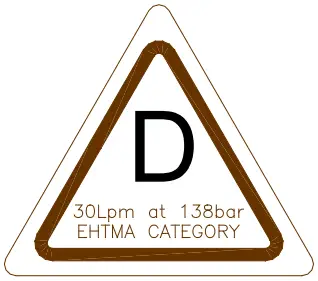 | 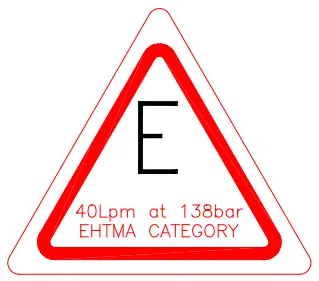 | 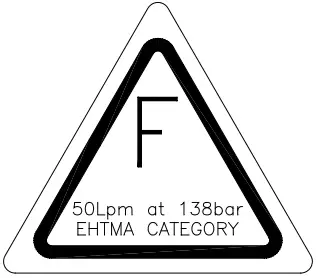 |
| Flow range | 3.5-4.3 GPM (13.5-16.5 LPM) | 4.7-5.8 GPM (18-22 LPM) | 7.1-8.7 GPM (27-33 LPM) | 9.5-11.6 GPM (36-44 LPM) | 11.8-14.5 GPM (45-55 LPM) |
| Nominal operating pressure (At the power supply outlet) | 1870 psi (129 bar) | 1500 psi (103 bar) | 1500 psi (103 bar) | 1500 psi (103 bar) | 1500 psi (103 bar) |
| System relief valve setting (At the power supply outlet) | 2495 psi (172 bar) | 2000 psi (138 bar) | 2000 psi (138 bar) | 2000 psi (138 bar) | 2000 psi 138 bar) |
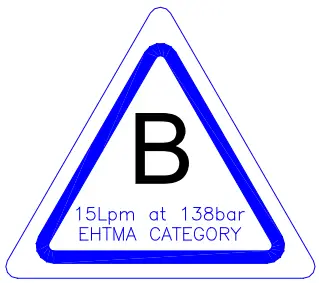
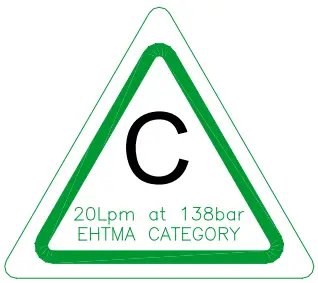
Note: These are general hydraulic system requirements. See tool specification page for tool specific requirements.
OPERATION
PREOPERATIVE PROCEDURES
PREPARATION FOR INITIAL USE
The tool as shipped has no special unpacking or assembly requirements prior to usage. Inspection to assure the tool was not damaged in shipping and that it does not contain packing debris is all that is required. Otherwise, the tool may be connected to a hydraulic source upon receipt
CHECK HYDRAULIC POWER SOURCE
- Using a calibrated flow meter and pressure gauge, check that the hydraulic power source develops a flow of 8–10 gpm/30–38 lpm at 2000 psi/140 bar.
- Make certain the hydraulic power source is equipped with a relief valve set to open at 2200–2300 psi/152– 159 bar maximum.
- Make certain that the power source return pressure does not exceed 250 psi/17 bar.
CONNECT HOSES
- Wipe all hose couplers with a clean lint-free cloth before making connections.
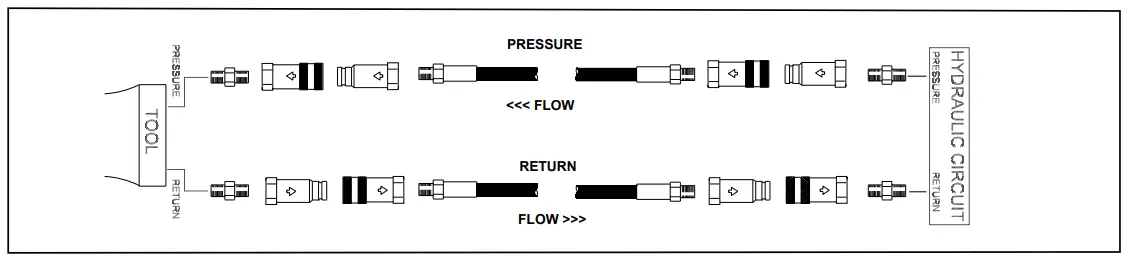
- Connect the hoses from the hydraulic power source to the hose couplers on the tool. It is a good practice to connect the return hose first and disconnect it last to minimize or avoid trapped pressure within the tool.
- Observe flow indicators stamped on hose couplers to be sure that oil will flow in the proper direction.
The female coupler is the inlet coupler. - Observe the IN and OUT port lettering on the valve block assembly to ensure that the hydraulic flow is in the proper direction. The IN port lettering indicates the inlet (pressure) side.
NOTE:
The pressure increase in uncoupled hoses left in the sun may result in making them difficult to connect.
When possible, connect the free ends of operating hoses together.
USING COOLANT
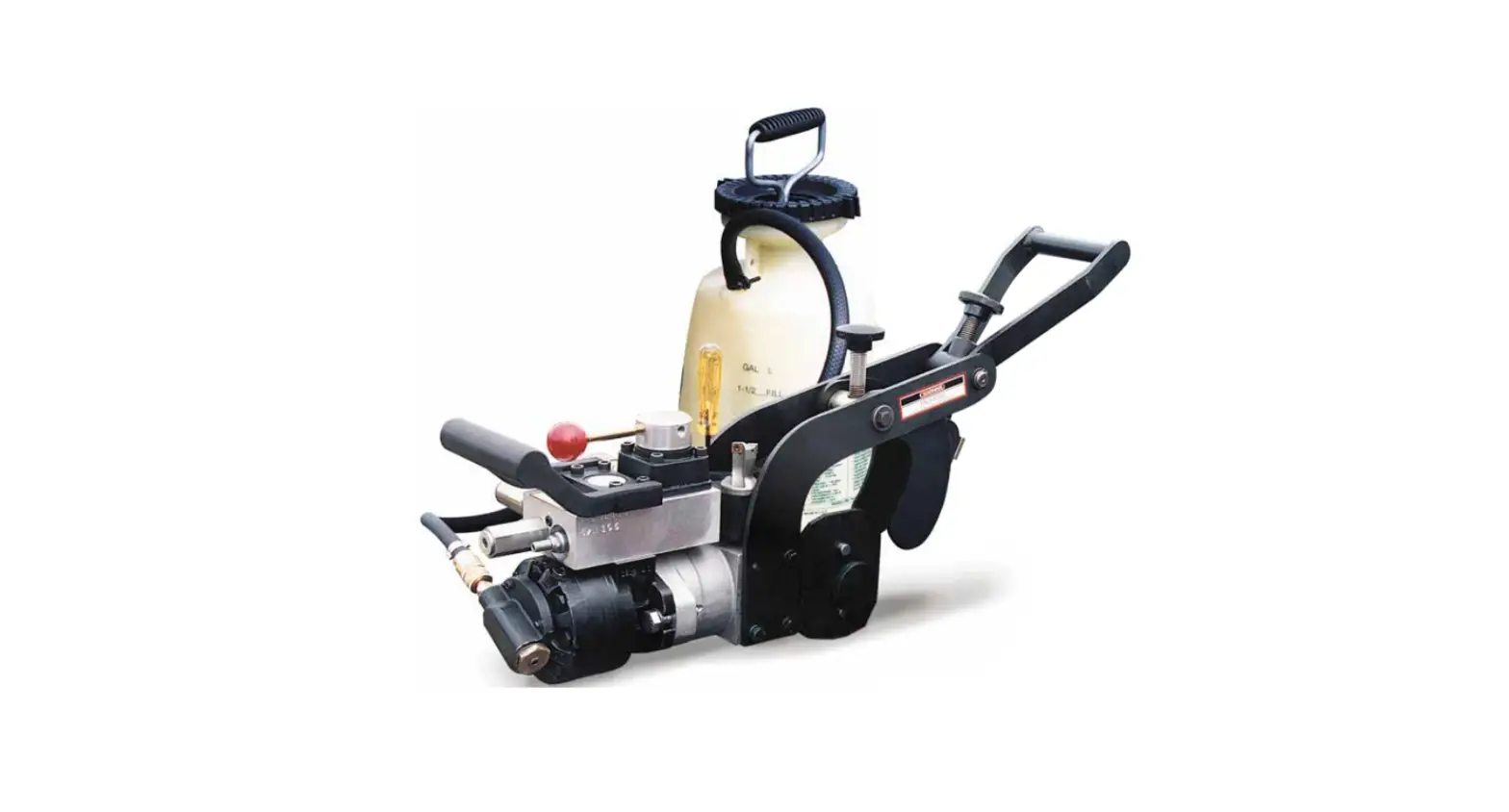
The RD12 rail drill is equipped with a separate coolant can assembly that is used to deliver coolant to the drill bit. Follow the instructions below to use the coolant can assembly with the rail drill:
- If operating the rail drill at temperatures above 32 °F/0 °C, fill the coolant can with ordinary tap water.
- If operating the rail drill at temperatures below 2 °F/0 °C, fill the coolant can with a mixture of 50% ordinary tap water and 50% biodegradable antifreeze.
- Pressurize the coolant can using the carrying handle/pump.
- Connect the coolant can assembly to the rail drill using the supplied quick-disconnect coupler.
OPERATING PROCEDURES
- Observe all safety precautions.
- Make sure the drill bit you intend to use contains carbide inserts with good cutting surfaces. If the surfaces are worn or chipped, unscrew the retaining screw and rotate the insert to a good cutting surface. If the inserts do not contain a good cutting surface on one of the four sides, replace the inserts. Make sure the bit holder is not damaged.
- Install the drill bit into the piston machining assembly (24) and then turn it clockwise until it stops.
RAIL TEMPLATES & HOLE GUIDES
NOTE:
The RD12 must be used with rail templates and hole guides. See the chart at the end of this section for selections of rail templates and hole guides.
- Install a hole guide assembly onto the rail and position it where you want to drill.
- Install templates onto the rail drill with the rail size facing the rail.
NOTE:
To avoid drill bit damage, make sure the drill bit/ piston assembly is fully retracted prior to placing the RD12 on the rail. - Set the rail drill over the hole guide on the rail so that the templates are nested between the ball and the base of the rail and the adjustment screw (52) fits in a slot in the hole guide.
- Adjust the threaded shaft (44) until there is no movement of the rail drill as it sits on the rail and the hole guide. Wiggle the RD12 to remove all looseness. Then lift the handle (49) up and turn the threaded shaft (44) clockwise approximately 1/2 turn. Push the handle (49) down hard to firmly clamp the RD12 to the rail.
TO BEGIN DRILLING
Note:
Do not operate the drill in the fully advanced position for more than 5-10 seconds at one time.
- Engage the control valve on the hydraulic power source to the ON position.
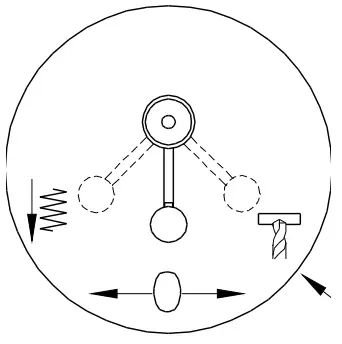
- To begin drilling, move the control lever on the rail drill toward the “drill bit” symbol. The drill bit will turn and advance simultaneously. Make sure water is spraying from the bit.
TO STOP DRILLING
Move the control lever to the “0” mark to stop the rail drill.
TO RETRACT THE DRILL BIT
Move the control lever to the “retract” symbol to retract the drill bit.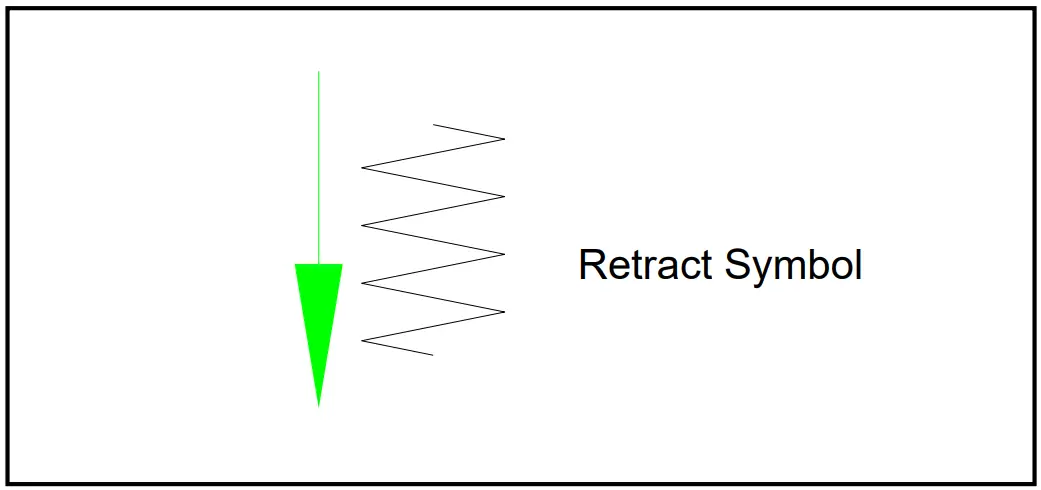
Figure 2. Retract the Drill Bit
REMOVING THE DRILL BIT
- Uncouple the water hose from the rail drill.
- Move the hydraulic circuit control valve to the OFF position and disconnect from the power supply.
- From the bit end, turn the bit counter clockwise and pull it out.
STORAGE
- Clean the tool thoroughly.
- Remove the drill bit.
- Advance the piston .250 in./6 mm.
- Drain water from the tool.
- Retract the piston
- Store in a dry area
COLD WEATHER OPERATION
Preheat the hydraulic fluid at low engine speed. When using the normally recommended fluids, fluid temperature should be at or above 50 °F/10 °C before use.
Use a biodegradable antifreeze solution such as windshield antifreeze in the spray can. Drain water from the drill when finished using.
TEMPLATES & HOLE GUIDES
| RAIL SIZE | RD12 DRILL TEMPLATE SETS: DOUBLE SIDED/ (SINGLE SIDED) | GUIDE ASSY P/N: ING (MM)/[INCHES] | COUNTRY | ||
| 60 ASCE (6040)# | ^(34525) | USA | |||
| 65 ASCE (6540)# | ^(35975) | USA | |||
| 68GN | (52636) | 38644 [2 1/8 X 4 1/2 X 7] | USA | ||
| 70 ASCE # | ^(49246) | USA | |||
| 72 CHI & NW (7250) | ^(35876) | USA | |||
| 75 ASCE (7540) | ^34262 | 22631 | [2 11/16 X 5 1/2 X 5 1/2] | USA | |
| 75 GRT. NO.-1893 | ^(35701) | USA | |||
| 75 U PAC C.R.S.# | ^(36001) | USA | |||
| 77 1/2 GRT. NO. # | ^33720 ^(35876) | 38644 [2 1/8 X 4 1/2 X 7] | USA | ||
| 80 ASCE (8040) # | ^(35626)/^38660 | USA | |||
| 80 GRT. NOR.# | ^33720 ^(35876) | 38644 [2 1/8 X 4 1/2 X 7] | USA | ||
| 85 ASCE STD | (8504 /8540) | ^(34915) | [2 7/16 X 7 X 6] & ^(35358) [2 7/16 X 6X 6] | USA | |
| 85 CAN. PAC. (8524)# | ^(35628 HD) | USA | |||
| 85 CP HEAD FREE (37337) | ^(37337 HD) | USA | |||
| 85 GRT. NOR.# | ^33720 ^(35876) | [2 7/16 X 5] | USA | ||
| 85PS | ^37139 | USA | |||
| 85 SOO LINE (8520) | ^(35630 HD) | USA | |||
| 90 ARA-B (9030) ELEVATION | 2 11/32 | ^34263 | USA | ||
| 90 ASCE (9040) | ^(36046) | USA | |||
| 90 C&NW (9035) | ^(35715) | USA | |||
| 90 GN | ^33720 | 35358 (2 7/16 X 6 ) | USA | ||
| 90 RA (ARA-A)(9020) | 90 SF | 31978 / (31984)/35105 (65948 HD) | 22631 [2 11/16 X 5 1/2 X 5 1/2] ^34680 [2-13/32 X 5 X 5 ] | USA | |
| 100 ARA-A (10020) | ^34159 / ^35438/^38660 | ^34526 [ 3 X 6 ] | USA | ||
| 100 ARA-B (10030) / 100-8 | ^(34916) | USA | |||
| 100 RA HEAD FREE | ^(37367) | USA | |||
| 100 RE STD (10025) ELEVATION | 2 45/64 | ^34263 (65959 HD) | 36037 [2 1/2 X 6 X 6 ] | USA | |
| 100 RE HEAD FREE (37341) | ^(37341 HD) | USA | |||
| 100 CN&W (10035) | ^(34982) | 39229 [2-31/32 X 6] | USA | ||
| 100 GRT. NO. | ^(35633) | 38645 [2 7/16 X 7] | USA | ||
| 100 NH | ^(80788) | USA | |||
| 100PS | ^37139 | USA | |||
| 100 ASCE (10040) | ^(65761 HD) | USA | |||
| 105 DUDLEY (10524) | ^(34917) | USA | |||
| 105 DUDLEY (OFFSET) | ^(58508 OFFSET TEMPLATE) | 58468 [2 X 4 3/4 X 4 3/4] | USA | ||
| 107 NH | (74839) | USA | |||
| 110 GRT NO (11036) | ^(35973) | 38645 [2 7/16 X 7] | USA | ||
| 110 RE GUARD RAIL | ^(35151) | USA | |||
| 110 RE (11025) ELEVATION | 2 5/8 | ^(34597) | ^35357 [2 23/32 X 5 1/2] | USA | |
| 110 RE (11025) ELEVATION | 2 53/64 | ^(38683) | USA | ||
| 112 RE (11228) 7/8″ ELEVATION | 2 | 33721/31979/31980/35105 (31985)(62201 HD) | ^33687 [2 1/2 X 6 1/2 X 6 1/2] | USA | |
| RAIL SIZE | RD12 DRILL TEMPLATE SETS: DOUBLE SIDED/ (SINGLE SIDED) | GUIDE ASSY P/N: ING (MM)/[INCHES] | COUNTRY | ||
| 112TR | ^33721 | ^33687 [2 1/2 X 6 1/2 X 6 1/2] | USA | ||
| 113 HEAD FREE | ^(34598) | USA | |||
| 115 AREA RETARDER 3.484 FIXED ELEVATION | (34882 FIXED) (34935 ADJ.) | 34912 FIXED / 34933 ADJ. [3 1/2] | USA | ||
| 115 AREA (11525) 2 7/8″ ELEVATION | 31979/31980/35105/^35438 (31985)(62201 HD) | 22625 [3 1/2 X 6 X 6] | USA | ||
| 115 RE GUARD RAIL 3 1/32″ ELEVATION | ^(35153) | USA | |||
| 119 AREA (11922) 2 7/8″ ELEVATION | 31979/31980/35105/ (31985) (62201 HD) | 22625 [3 1/2 X 6 X 6] | USA | ||
| 122 C.B. & O. | ^34159(32279) | 22625 [3 1/2 X 6 X 6] | USA | ||
| 127 DUDLEY (12723) | ^34264 | 22625 [3 1/2 X 6 X 6] | USA | ||
| 129 TR | ^(35003) | USA | |||
| “130 AREA (13025) (3 1/16 ELEVATION)” | ^(36048) | USA | |||
| 130 AREA HEAD FREE 3 1/16 ELEVATION) | ^(41772) | USA | |||
| 130 AREA HEAD FREE 2 15/16 ELEVATION) | ^(38579) | USA | |||
| 130 AREA HEAD FREE 2 3/4 ELEVATION) | ^(38643) | ||||
| 130 PS (13031) | ^(34918) | USA | |||
| 131 RE (13128) | 31980/31981 / (31986)(62203 HD) | ^33687 [2 1/2 X 6 1/2 X 6 1/2] | USA | ||
| 131 RE-M | ^34264 | 22625 [3 1/2 X 6 X 6] | USA | ||
| “131RE 3-1/4″” ELEVATION” | ^(72502) | USA | |||
| 132 HEAD FREE | ^(34599) | USA | |||
| 132 AREA (13225) | 31980/31981 / (31986)(62203 HD) | 22625 [3 1/2 X 6 X 6] | USA | ||
| 132 RE GUARD RAIL | ^(35155) | USA | |||
| 133 AREA (13331) | 31979 / 31981 / (31987) | 22625 [3 1/2 X 6 X 6] | USA | ||
| 136 AREA (13622) (STD. 3 3/32″ ELEVATION) | 31980/31981 / (31986)(62203 HD) | 22625 [3 1/2 X 6 X 6] | USA | ||
| 136 AREA (3″ ELEVATION) | (44977) | 44975 [2-23/32 X 6 X 7] | USA | ||
| 136 RE GUARD RAIL (3 9/32 ELEVATION) | ^(35155) | USA | |||
| 136 RE STOCK RAIL (3 11/32 ELEVATION) | (66945 HD) | USA | |||
| 136 LVH | (62412) | USA | |||
| 136 LV (13633) | (65075) | USA | |||
| 140 AREA (14031) | 31978 / (31988) | 22625 [3 1/2 X 6 X 6] | USA | ||
| 141 AREA | (43674) (65964 HD) | 22625 [3 1/2 X 6 X 6] | USA | ||
| 152 PS | ^(43576) | USA | |||
| 155 PS | ^(43578) | USA | |||
| 906 D&RG | 88563 (88562) | USA | |||
| 41 KG AS1085 | ^(35353) | 41773 (62 X 127 X 127) | AUSTRALIA | ||
| 47 KG AS1085 | ^(35353) | 41773 (62 X 127 X 127) | AUSTRALIA | ||
| 50 KG AS1085 | ^(35351) | 41774 (88 X 130 X 130) | AUSTRALIA | ||
| 53 KG (107#) AS1085 | ^(34185) | 41774 (88 X 130 X 130) | AUSTRALIA | ||
| 60 KG AS1085.1 | ^(34187) | 41774 (88 X 130 X 130) | AUSTRALIA | ||
| TR-32 (SEE 65 ASCE) | ^(35975) | BRAZIL | |||
| RAIL SIZE | RD12 DRILL TEMPLATE SETS: DOUBLE SIDED/ (SINGLE SIDED) | GUIDE ASSY P/N: ING (MM)/[INCHES] | COUNTRY | ||
| TR-37 (SEE 75ASCE) | ^34262 | 22631 [2 11/16 X 5 1/2 X 5 1/2] | BRAZIL | ||
| TR-45 (SEE 90ARA-A) | ^34262 | 22631 [2 11/16 X 5 1/2 X 5 1/2] | BRAZIL | ||
| TR-50 (SEE 100RE) | BRAZIL | ||||
| TR-57 (SEE 115AREA) | BRAZIL | ||||
| TR-68 (SEE 136AREA) | BRAZIL | ||||
| 50 KG N | 31975 (43583) | 29963 (77 X 130 X130) | CHINA | ||
| 60 KG | (69512) | 69510 (76 X 140 X 140) | CHINA | ||
| 46 KG U 33 | 31973 | 29436 (57.5 X 160) | FRANCE | ||
| 50 KG U 50 | 31974 | 29434 (60 X 170) | FRANCE | ||
| LP48 | 31973 | 29435 (65 X 120 X 160) | FRANCE | ||
| 60 KG UIC | 31974 | 29434 (60 X 170) | FRANCE | ||
| S49 | 31976 / (31982) | 31772 (46 X 165) | GERMANY | ||
| S54 | 31976 / (31982) | 31772 (46 X 165) | GERMANY | ||
| 60 KG UIC/UNI | 31976 / (31983) | 31772 (46 X 165) | GERMANY | ||
| 54 KG UIC | ^34261 | HOLLAND | |||
| NP46 | ^34261 | HOLLAND | |||
| I.R.S. 52KG | (66830) | 66831 (80 X 166) | INDIA | ||
| 60KG UIC | (31983) | 66831 (80 X 166) | INDIA | ||
| 36 KG U 33 | ITALY | ||||
| 50 KG UNI ** | 31976 / (31982) | 30675 (47 X 165) | ITALY | ||
| 60 KG UIC/UNI | 31976 / (31983) | 30675 (47 X 165) | ITALY | ||
| 60 KG | 31975 | 29963 (77 X 130 X 130) | JAPAN | ||
| 50 KG N | 31975 (43583) | 29963 (77 X 130 X 130) | JAPAN | ||
| P50 | (66321 HD) | 66324 (65 X 150 X 140) | RUSSIA | ||
| P65 | (66323 HD) | 66326 (95 X 220) | RUSSIA | ||
| 54KG UIC | ^34261 | ^32276 (58 X 170) | SPAIN | ||
| 37 KG JIS/JRS | ^(43580) | 44927 (60.5 X 127) | TAIWAN | ||
| 50 KG N | 31975 ^(43583) | 29963 (77 X 130 X 130) | TAIWAN | ||
| 60 KG UIC | 31976 | 31772 (46 X 165) | TAIWAN | ||
| 87LB B.H. | ^(35251) | UK | |||
| 90LB B.H. | ^(35255) | ^(35284) (60 X 114) | UK | ||
| 92LB F.B. | ^(35257) | ^(35283) (54 X 114) | UK | ||
| BS 95 B.H | 31977 | UK | |||
| 95LB F.B. MARK A | ^(35249) | UK | |||
| 95LB F.B. MARK B | ^(35470) | UK | |||
| 98 | UK | ||||
| 109BR | UK | ||||
| BS 113A (54KG UIC) 65MM HOLE ELEVATION | 31977 | 31779 (60.32 X 127 X 203) | UK | ||
| 54KG UIC (BS 113A) 70MM HOLE ELEVATION | 34261 | 38889 (65 X 200) | UK | ||
| UIC60 INSULATED | (71558) | 71459 (62 X 170 X 170) | UK | ||
| CIE 50 | ^(39233) | 39236 (57 X 120) | UK | ||
| RILC/RILR | *(E32009) | EUROPE | |||
| RI60/RI60N | *(E32010) | EUROPE | |||
| PH37 | *(E32011) | EUROPE | |||
TOOL PROTECTION & CARE
Notice
In addition to the Safety Precautions found in this manual, observe the following for equipment protection and care.
- Make sure all couplers are wiped clean before connection.
- The hydraulic circuit control valve must be in the OFF position when coupling or uncoupling hydraulic tools. Failure to do so may result in damage to the quick couples and cause overheating of the hydraulic system.
- Always store the tool in a clean dry space, safe from damage or pilferage.
- Make sure the circuit PRESSURE hose (with male quick disconnect) is connected to the IN port. The circuit RETURN hose (with female quick disconnect) is connected to the opposite port. Do not reverse circuit flow. This can cause damage to internal seals.
- Always replace hoses, couplings and other parts with replacement parts recommended by STANLEY.
Supply hoses must have a minimum working pressure rating of 2500 psi/172 bar. - Do not exceed the rated flow (see Specifications) in this manual for correct flow rate and model number.
Rapid failure of the internal seals may result. - Always keep critical tool markings, such as warning stickers and tags, legible.
- Tool repair should be performed by experienced personnel only.
- Make certain that the recommended relief valves are installed in the pressure side of the system.
- Do not use the tool for applications for which it was not intended.
TROUBLESHOOTING
If symptoms of poor performance develop, the following chart can be used as a guide to correct the problem.
When diagnosing problems with operation of the drill, always check that the hydraulic power source is supplying the correct hydraulic flow and pressure to the tool as listed in the specifications. Use a flow meter known to be accurate. Check the flow with the hydraulic oil temperature at least 80 °F/27 °C.
| PROBLEM | CAUSE | SOLUTION |
| Drill does not run. | Hydraulic power source not functioning. | Check power source for proper flow and pressure, 8–10 gpm/30–38 lpm, 2000 psi/140 bar. |
| Couplers or hoses blocked. | Locate and remove restriction. | |
| Hydraulic motor failure. | Inspect and repair. | |
| Hydraulic lines not connected. | Connect lines. | |
| Drill bit dulls quickly. | Incorrect oil flow. | Check that 8–10 gpm/30–38 lpm at 2000 psi/140 bar is available at the rail drill. |
| Using insufficient amount of coolant. | Rotate or replace insert. Increase flow of coolant. Make sure pressure tank is fully pumped up. Check for plugged water port in drill bit. Check for a clogged inlet filter. Remove pipe plug in end cap and flush with water. Remove end cap and clean filter. | |
| Drill moves on rail during drilling operation. | Not clamped properly. | See clamping instructions. |
| Wrong templates. | Use correct templates and verify fit to rail. | |
| Template knob(s) not tight | Tighten knobs securely. | |
| Drill vibrates during drilling. | Inserts dull or damaged. | Rotate or replace inserts. |
| Template knob(s) loose. | Tighten knobs securely. | |
| Not clamped properly. | See clamping instructions. | |
| Inserts chipped. | Some chipping is normal, particularly on the inside insert. | Rotate or replace if poor hole finish is noted. |
| Incorrect template. | Use correct template and verify fit. | |
| Using insufficient amount of coolant. | Rotate or replace insert. Increase flow of coolant. Make sure pressure tank is fully pumped up. Check for plugged water port in drill bit. Check for a clogged inlet filter. Remove pipe plug in end cap and flush with water. Remove end cap and clean filter. | |
| Not clamped properly. | See clamping instructions. | |
| Template knob(s) loose | Tighten knob(s) securely. | |
| Handling damage. | Make sure drill bit is retracted when installing the drill on the rail. Avoid insert contact with hard objects. | |
| Insert screw difficult to remove. | Not assembled with lubricant. | Install screw with anti-seize lubricant on the threads. |
SPECIFICATIONS
- Bit Capacity: up to 1-9/16 in. diameter/36 mm diameter
- Bit Type: Carbide Inserts (2) on Insert Holder
- Pressure: 2000 psi/140 bar
- Flow Range: 8 – 10 gpm/30 – 38 lpm
- Porting: -8 SAE O-ring
- Connect Size and Type: 3/8 in. Flush Face Couplers
- Weight (with couplers) (w/o templates & bit): 59 lb/26.75 kg
- Length (handle extended to maximum): 33 inches/84 cm
- Width: 8.5 inches/21.6 cm
- Height (w/o templates) (maximum): 21 inches/53.35 cm
- EHTMA Category.: D” (30 lpm @ 138 bar)
- Sound Power Level: 100.7 dBA
- Vibration Level: N/A
NOTE: Weights, dimensions, and operating specifications listed are subject to change without notice. Where specifications are critical to your application, please consult the factory.
ACCESSORIES
RAIL TEMPLATES & HOLE GUIDES
See “TEMPLATES & HOLE GUIDES” under the “OPERATION” section of this manual.
Ten-Piece Carbide Insert Kit (includes the following) 31969
Carbide Insert Package (10 inserts per package)
Flat Head Capscrew (Tor× 5.40 × 1/4)
- DRILL BITS
- 1 in. Drill Bit: 29471
- 1-1/16 in. Drill Bit: 29470
- 1-1/8 in. Drill Bit: 29469
- 1-3/16 in. Drill Bit: 29468
- 1-1/4 in. Drill Bit: 29467
- 1-5/16 in. Drill Bit: 29461
- 1-3/8 in. Drill Bit: 29465
- 1-7/16 in. Drill Bit: 32511
- 1-1/2 in. Drill Bit: 32510
- 1-9/16 in. Drill Bit: 33331
- 1-5/8 in. Drill Bit: 67267
- 1-11/16 in. Drill Bit: 67268
- 1-13/16 in. Drill Bit: 72652
- 22 mm Drill Bit: 31808
- 23 mm Drill Bit: 29475
- 24 mm Drill Bit: 30563
- 25 mm Drill Bit: 31674
- 26 mm Drill Bit: 31619
- 27 mm Drill Bit: 31622
- 28 mm Drill Bit: 29474
- 30 mm Drill Bit: 29473
- 31 mm Drill Bit: 31675
- 32 mm Drill Bit: 31624
- 33 mm Drill Bit: 29472
- 36 mm Drill Bit: 31647
SERVICE TOOLS
- Piston Seal Installation Kit: 31879
- Piston Wrench: 28868
RD12 PARTS ILLUSTRATION
NOTE: CAN ALSO BE INSTALLED ON UNITS WITH S/N 002639 AND LOWER. ITEMS SHOWN IN BOX MUST REPLACE PREVIOUS ITEMS.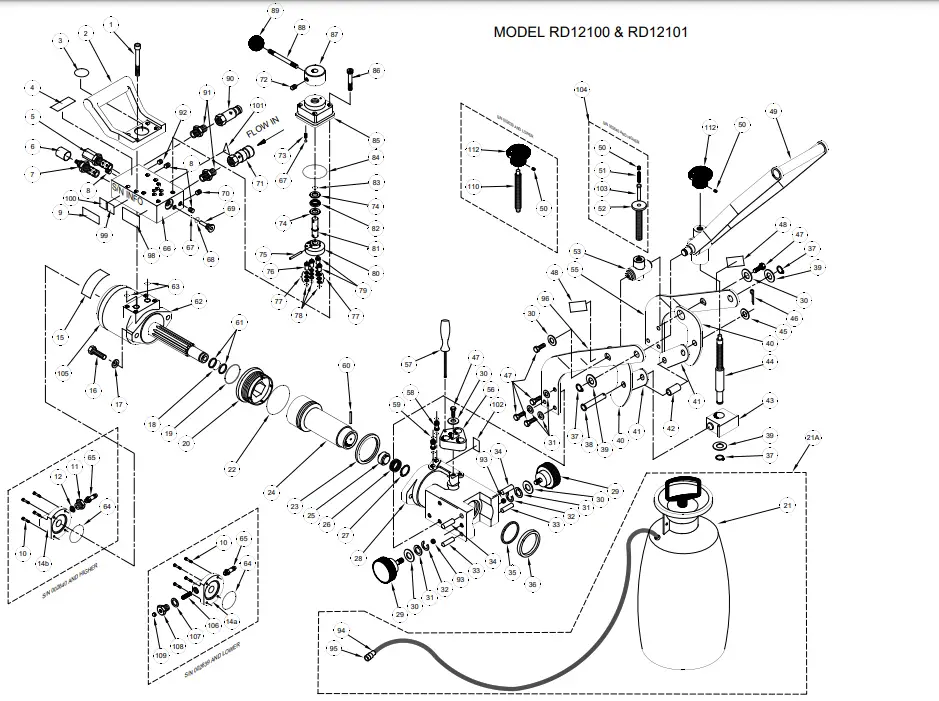
NOTE: CAN ALSO BE INSTALLED ON UNITS WITH S/N 002639 AND LOWER. ITEMS SHOWN IN BOX MUST REPLACE PREVIOUS ITEMS EXCEPT FOR 10, 64 & 65
RD12 PARTS LIST
| ITEM | PART NO. | QTY | DESCRIPTION |
| 1 | 24871 | 4 | CAPSCREW |
| 2 | 24844 | 1 | CARRY HANDLE |
| 3 | 31097 | 1 | OPERATION DECAL |
| 4 | —– | 1 | NO ITEM |
| 5 | 34059 | 1 | PRESSURE RELIEF VALVE |
| 6 | 25774 | 1 | TAMPER RESISTANT COVER |
| 7 | 24868 | 1 | FLOW CONTROL |
| 8 | 00955 | 4 | 1/8″ PIPE PLUG |
| 9 | 74765 | 1 | RD12 MODEL NO. STICKER |
| 10 | 15909 | 4 | CAPSCREW |
| 11 | 60787 | 1 | FITTING |
| 12 | 24441 | 1 | FILTER WASHER |
| 13 | — | — | NO ITEM |
| 14 | 60785 | 1 | COVER |
| 15 | 73680 | 1 | RAILROAD HELP DESK STICKER |
| 16 | 370251 | 2 | CAPSCREW |
| 17 | 03061 | 2 | LOCK WASHER |
| 18 | 02003 | 1 | O-RING 2-113 R16 • |
| 19 | 24878 | 1 | FACE SEAL |
| 20 | 60782 | 1 | PLUG ASSY |
| 21 | 24774 | 1 | SPRAY CAN ASSY (INCL 94 & 95) |
| 22 | 04054 | 1 | O-RING 2-233 R17 |
| 23 | 76777 | 1 | PISTON RING |
| 24 | 31286 | 1 | PISTON MACHINING ASSY |
| 25 | 29303 | 1 | WATER VALVE |
| 26 | 29302 | 1 | WAVE SPRING |
| 27 | 29301 | 1 | RETAINING RING |
| 28 | 60783 | 1 | CYLINDER MACHINING ASSY |
| 29 | 31828 | 2 | KNOB |
| 30 | 371067 | 5 | FLAT WASHER |
| 31 | 01459 | 12 | LOCK WASHER |
| 32 | 30652 | 2 | RETAINING RING |
| 33 | 29126 | 2 | DOWEL PIN |
| 34 | 29125 | 2 | DOWEL PIN |
| 35 | 07287 | 1 | QUAD RING • |
| 36 | 24881 | 1 | WIPER SEAL • |
| 37 | 17904 | 3 | RETAINING RING |
| 38 | 29197 | 1 | CLEVIS PIN |
| 39 | 28228 | 3 | WASHER |
| 40 | 28902 | 2 | PLATE |
| 41 | 29136 | 2 | LINK |
| 42 | 31069 | 1 | SPACER |
| 43 | 29075 | 1 | STOP |
| 44 | 28955 | 1 | THREADED SHAFT |
| 45 | 20876 | 2 | WASHER |
| ITEM | PART NO. | QTY | DESCRIPTION |
| 46 | 01924 | 1 | COTTER PIN |
| 47 | 06173 | 9 | CAPSCREW |
| 48 | 17572 | 2 | PINCH POINT WARNING STICKER |
| 49 | 29072 | 1 | HANDLE WELDMENT |
| 50 | 38581 | 1 | SETSCREW |
| 51 | 02916 | 1 | SPRING |
| 52 | 35724 | 1 | ADJUSTMENT SCREW |
| 53 | 39449 | 1 | ADJUSTMENT NUT |
| 55 | 29070 | 1 | CLAMP ARM LH |
| 56 | 28867 | 1 | GROMMET |
| 57 | 29123 | 1 | TORX SCREW DRIVER |
| 58 | 24818 | 2 | OIL TUBE |
| 59 | 00055 | 4 | O-RING 2-012 R17 • |
| 60 | 29127 | 1 | DOWEL PIN |
| 61 | 08928 | 2 | BACK-UP RING 9/16 3/32 • |
| 62 | 29134 | 1 | HYDRAULIC MOTOR |
| 63 | 19095 | 2 | O-RING 2-114 R17 • |
| 64 | 00253 | 1 | O-RING 2-038 R16 • |
| 65 | 22521 | 1 | QUICK DISCONNECT NIPPLE |
| 66 | 27618 | 1 | VALVE BLOCK ASSEMBLY |
| 67 | 20145 | 2 | STEEL BALL |
| 68 | 01411 | 1 | O-RING 3-906 R17 • |
| 69 | 24289 | 1 | PLUG |
| 70 | 04119 | 1 | PIPE PLUG |
| 71 | 03972 | 1 | FEMALE COUPLER BODY |
| 72 | 24300 | 1 | SETSCREW |
| 73 | 24876 | 1 | SPRING |
| 74 | 20761 | 2 | BEARING RACE |
| 75 | 07890 | 1 | ROLL PIN |
| 76 | 34585 | 1 | GROMMET |
| 77 | 24305 | 12 | SPRING WASHER |
| 78 | 01362 | 4 | O-RING 2-011 R16 • |
| 79 | 24231 | 3 | GROMMET |
| 80 | 24877 | 1 | ROTOR ASSY |
| 81 | 24233 | 1 | SHAFT |
| 82 | 20762 | 1 | BEARING |
| 83 | 17924 | 1 | O-RING 2-012 R24 • |
| 84 | 02177 | 1 | O-RING 2-137 R17 • |
| 85 | 24313 | 1 | HOUSING ASSY |
| 86 | 26297 | 4 | CAPSCREW |
| 87 | 17527 | 1 | VALVE CAP |
| 88 | 24291 | 1 | ROD |
| 89 | 02633 | 1 | KNOB |
| 90 | 03973 | 1 | MALE COUPLER BODY |
| 91 | 00936 | 2 | ADAPTER |
RD12 PARTS LIST
| ITEM | PART NO. | QTY | DESCRIPTION |
| 93 | 00698 | 2 | HELICOIL |
| 94 | 22748 | 1 | HOSE CLAMP 9/16 |
| 95 | 24784 | 1 | QUICK DISCONNECT COUPLER |
| 96 | 29071 | 1 | CLAMP ARM RH |
| 97 | — | — | NO ITEM |
| 98 | 28322 | 1 | CE STICKER |
| 99 | 31049 | 1 | EYE PROTECTION STICKER |
| 100 | 28788 | 1 | MANUAL STICKER |
| 101 | 11207 | 1 | CIRCUIT D STICKER |
| 102 | 81441 | 1 | SOUND POWER LEVEL STICKER |
| 103 | 35725 | 1 | PLUNGER |
| 104 | 35726 | 1 | ADJUSTMENT SCREW ASSY (IF PURCHASED AS AN ASSEMBLY, THIS CAN BE INSTALLED ON ALL RAIL DRILLS.) |
| 105 | 65622 | 1 | NO LONGER AVAILABLE |
| 106 | 31098 | 1 | SCREEN |
| 107 | 31099 | 1 | GASKET |
| 108 | 31100 | 1 | END CAP |
| 109 | 00961 | 1 | PIPE PLUG |
| 110 | 28956 | 1 | ADJUSTMENT SCREW |
| 111 | 24874 | 1 | SETSCREW |
| 112 | 24873 | 1 | PLASTIC KNOB |
| 113 | 67475 | 1 | RD12 CLAMP ASSEMBLY (INCLUDES ITEMS 30, 31, 37 THRU 55, 96, 102, 103, 111 & 112) |
RD12 Clamp Assembly P/N- 67475
Includes the following: Items 30, 31, and 37 thru 55, 96, 102, 103, 111 and 112.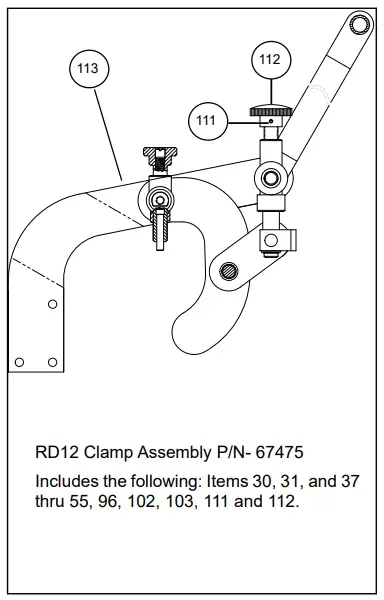
Seal Kit P/N 32031 (• Denotes part in Seal Kit)
Motor Seal Kit P/N 28658
Support
STANLEY Infrastructure
6430 SE Lake Road
Portland, Oregon 97222 USA
(503) 659-5660 / Fax (503) 652-1780
www.stanleyinfrastructure.com
 Stanley Infrastructure - World’s Largest Handheld Hydraulic Tool Manufacturer