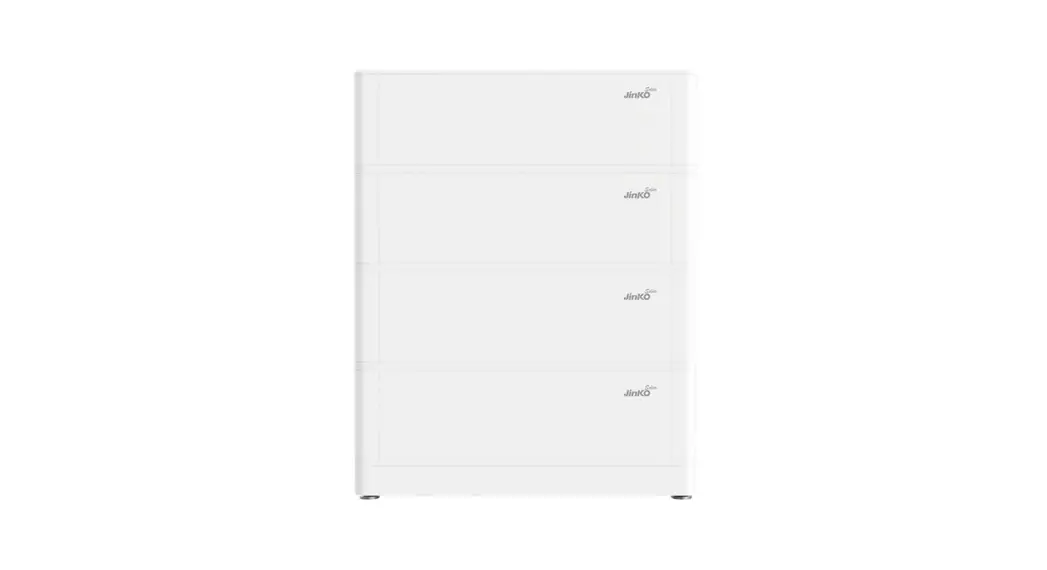
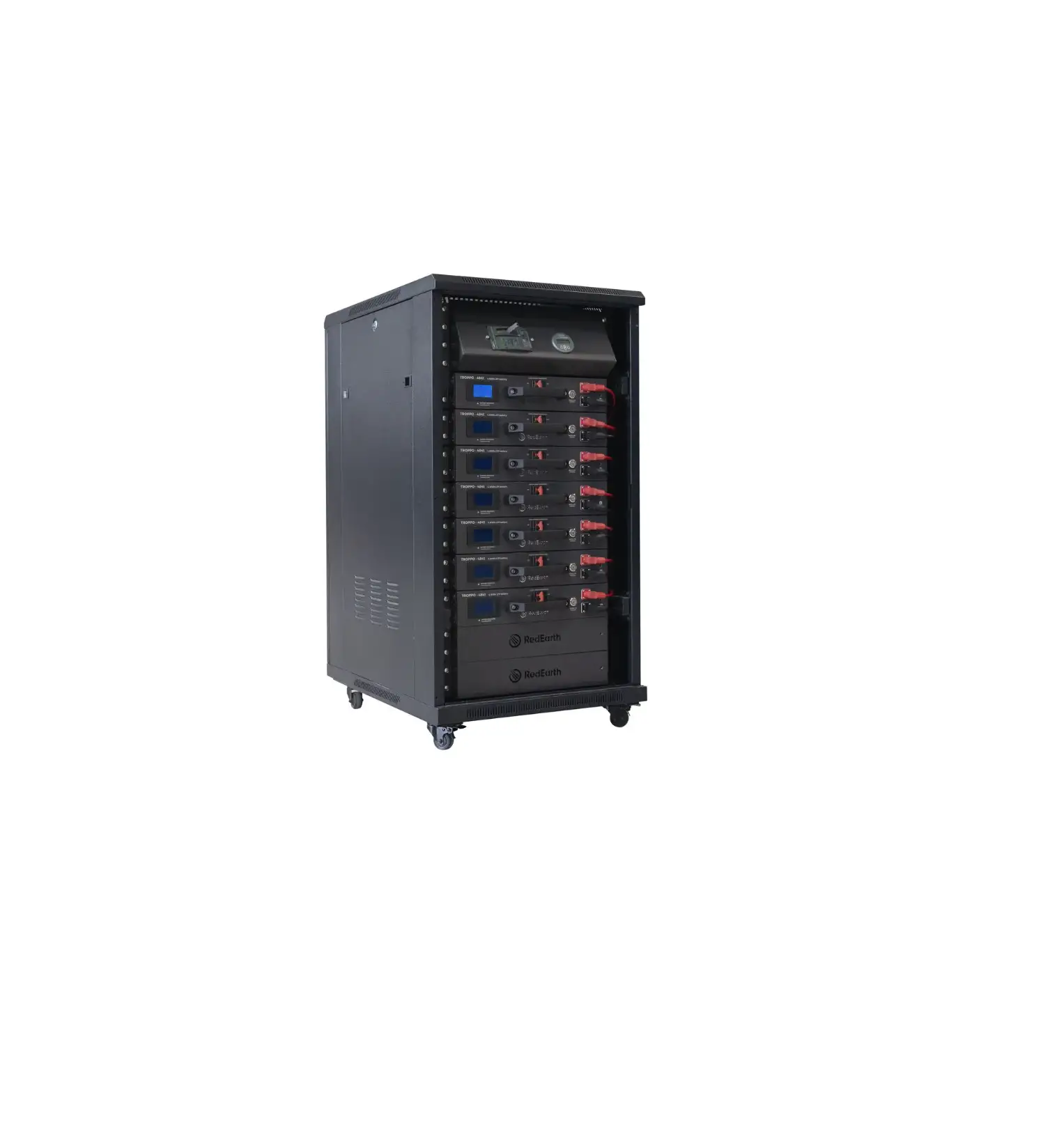
JKS-B5150-BI Residential Energy Storage
Product Information
The Jinko Solar JKS-B51XXX-BI Series Battery System is a
residential energy storage system manufactured by Jinko Solar Co.,
Ltd. It is designed to provide backup power and store excess energy
generated from solar panels. The battery system consists of a
battery module, battery management system (BMS), power and
communication terminals, and LED indicators.
Appearance
The JKS-B5150-BI battery system has the following
components:
- 1. Battery module: Includes cell and
mechanical parts. - 2. Battery management system (BMS): Manages
the charging and discharging of the battery. - 3. Power and communication terminals: Used for
connecting the battery system to the electrical system and
communication network.
The battery system also features LED indicators, a power button,
a circuit breaker, and a USB interface for system upgrades.
Working Principle and Function
The JKS-B51XXX-BI Series Battery System stores electrical energy
in its battery module. The battery management system controls the
charging and discharging process to ensure optimal performance and
safety. The LED indicators display the state of charge (SOC) and
system status, while the power button allows for powering on and
off the battery system.
Product Usage Instructions
Safety Precautions
Before installing and operating the JKS-B51XXX-BI Series Battery
System, it is important to observe the following safety
precautions:
- Read and familiarize yourself with the user manual and all
warnings. - Ensure that the installation environment meets the specified
requirements. - Use the recommended installation tools and follow the provided
installation procedures. - Adhere to the specified electrical connection guidelines.
- Follow all safety labels and warning symbols on the battery
system.
Installation
To install the JKS-B51XXX-BI Series Battery System, follow these
steps:
- Ensure that the installation environment meets the specified
requirements. - Gather the necessary tools for installation.
- Follow the provided installation procedures to assemble and
connect the battery module, battery management system, and power
and communication terminals. - Complete the electrical connection according to the guidelines
provided.
Power On and Off the Battery
To power on the battery system, press the power button. To power
off the battery system, follow the recommended procedure provided
in the user manual.
Maintenance Guide
For maintenance and troubleshooting of the JKS-B51XXX-BI Series
Battery System, refer to the user manual for detailed instructions.
The guide covers preparation, pack replacement, and system failure
information along with troubleshooting suggestions.
Technical Specifications
For detailed technical specifications of the JKS-B51XXX-BI
Series Battery System, refer to Appendix I of the user manual. The
specifications include LED indication control mechanism and product
description.
Note: When operating the battery system in ambient temperatures
between -10°C and 0°C, ensure that the maximum charging current
does not exceed 2.5A.
Jinko Solar
Jinko Solar Co., Ltd No.1, Jinko Road, Shangrao Economic Development Zone Shangrao City, Jiangxi Province, 334100, P.R. China W:www.jinkosolar.com [email protected]
JKS-B51XXX-BI Series Battery System
Residential Energy Storage User Manual
About this Document
This document describes the installation, electrical connection, operation, commission, maintenance and troubleshooting of JKS-B51XXX-BI Series Battery System (hereafter simply put JKS-B51XXX-BI). Before installing and operating JKS-B51XXX-BI, ensure that you are familiar with product features, functions, and safety precautions provided in this document.
Symbol
Description
WARNING
Indicates a potentially hazardous situation, if not avoided, could result in serious injury or death.
Product Overview
1.1 Intended Use 1.2 Appearance 1.3 Working Principle and Function
Safety
2.1 Basic Security 2.2 Safety Precautions 2.3 Warning Labels 2.4 Emergency Responses
Storage and Transportation
3.1 Storage Requirements 3.2 Transportation Requirement
Installation
4.1 Installation Environment 4.2 Basic Installation Requirements 4.3 Installation Required Tools 4.4 Installation Procedures 4.5 Electrical Connection
Power On and Off the Battery
5.1 Power On 5.2 Power Off
Maintenance Guide
6.1 Preparation 6.2 PACK Replacement 6.3 System Failure Information List And Troubleshooting Suggestions
Technical Specifications
Appendix I
7.1 LED Indication Control Mechanism 7.2 Product Description
1 Product Overview 1.1 Intended Use Each JKS-B5150-BI consists of 50Ah cells which form 51.2V voltage battery module and sixteen serial connection (1P16S).Two to ten JKS-B5150-BI can be connected in parallel and extend the capacity and power of energy storage system. The same type of cell and the same software version of the PACK can be used in parallel. Specifically, the battery system powers the loads through PCS at nighttime without solar; when solar becomes available during daytime, solar energy powers the loads as a priority and store residual solar power into the JKS-B5150-BI batter system.
1.2 Appearance
JKS-B5150-BI consists of battery module (including cell and mechanical parts), battery management system (BMS) as well as power and communication terminals. Product appearance is shown as below.
12 3
4 56 7 8
9 10
Fig 1.1: Battery dimensions and end connector face introduction
Location 1 2 3 4 5 6 7 8 9 10 11
Port
Communication Interface
Safety Vent Negative Terminal GND Terminal Positive Terminal USB Interface LED Indicator Power Button Circuit Breaker
Function PCS CAN communication LINK-IN CAN communication LINK-OUT CAN communication Balance air pressure Stands for PACK anode output Terminal connect to ground Stands for PACK cathode output USB interface for system upgrade SOC and status display panel Starting up Control battery output
1
No.
Name
Color
Description
A
LED 1
Blue
0%-25%
B
LED 2
Blue
26%-50%
C
LED 3
Blue
51%-75%
D
LED 4
Blue
76%-100%
E
RUN
Green
Normal operation
F
ALM
Red
Failure or protection status
1.3 Working Principle and Function
JKS-B5150-BI is an energy storage unit composed of electrochemical cells, switch button, battery management unit, power and signal terminals, and mechanical parts. It features better charge and discharge performance, more precise status monitor, longer cycle life, and less self-discharge loss than other batteries. Two to ten PACKs connected in parallel increase the capacity and power of battery system; the whole battery system communicates to Power Conversion System (PCS) via CAN. Ø Monitoring: voltage, current and temperature detection of both single cells and PACK. Ø Protection and Alarm: protection and alarm when overvoltage, under voltage, over current, over-temperature or under temperature occurs. See Appendix I for the details. Ø Report: report all alarm and status data to PCS. Ø Parallel connection: support two to ten PACKs in parallel connection. Ø Passive balance function. Ø Power off triggered by fault: PACK and PCS communication lost for 25 minutes or under voltage protection for 30 minutes.
2
2 Safety
Safety information contains in this section must be observed at all times when working on or with batteries. For safety, installers are responsibility to familiarize themselves with this manual and all warnings before installation.
2.1 Basic Security
The PACK has been designed and tested in strict rules with international safety certification requirements. Read all safety instructions carefully before any work and obey the rules at all times when working on or with the PACK. Jinko shall not be liable for any consequence caused by the violation of the following: Y Damage occurred during transportation. Y Incorrect transportation, storage, installation and use, or customer fails to convey the correct information about transportation, storage, installation and use to terminal customers. Y Non-professional installation. Y Failure to obey the rules of this operation instructions and safety precautions in this document. Y Unauthorized modifications or removal of the software package. Y PACK tamper label is damaged or product with any part missing (except the authorized dissemble parts). Y Operation in extreme environments which are not allowed in this document. Y Repair, disassemble, or change PACKs without authorization and cause failure. Y Damage to shell labels or modifies date of production. Y PACK fail to be charge for more than six months. Y Damages due to force majeure (such as lightning, earthquakes, fire, and storms). Y Warranty expiration.
2.2 Safety Precautions
2.2.1 Environment Requirements Do not expose the battery to temperature above 50 or heat sources. Do not install or use the battery in wet locations, moisture , corrosive gases or liquids, such as bathroom. Do not expose the battery to direct sunlight for extended periods of time. Place battery in safe place away from children and animals. Battery power terminals shall not touch conductive objects such as wires. Do not dispose the batteries in fire, which may cause an explosion. PACK shall not come in contact with liquids.
3
2.2.2 Operation Precautions
Do not touch the PACK with wet hands. Do not disassemble the PACK without permission. Do not crush, drop or puncture the PACK and battery. Dispose the batteries according to local safety regulations. Store and recharge battery in accordance with this manual. Ensure the connection of ground wire reliable. Remove all metal objects such as watches and rings that could cause a short-circuit before installation, replacement and maintenance. The Pack shall be repaired, replaced or maintained by skilled personal that has been recognized. When storing or handling batteries ,do not stack batteries without package. Do not broke the battery, the released electrolyte may be toxic and is harmful to skin and eyes. Packaged batteries should not be stacked more than specified number stipulated on the packing case. Do not use damaged, failed or deformed batteries, which may lead to high temperature or even dangerous accidents. Continued operation of damaged battery may result in electrical shock, fire or even worse.
2.3 Warning Labels
Symbols
Description
Do not dispose in trash
Lithium ion battery can be recycled
Certification in European union area
Electric shock hazard
Explosive gas
Alternating Current (AC)
Heavy enough to cause severe injury
Keep the Pack away from children
Make sure the battery polarity well connected
Do not expose to fire
Operate as the Manual 4
Fig 2.1: Nameplate
Note: When the ambient temperature is between -10 and 0, the maximum charging current of the battery is 2.5A.
2.4 Emergency Responses
Manufacturer takes foreseeable risk scenarios into consideration and is designed to reduce hazards and dangers. However, if the following situation occurs, do as below:
Situation Occurs
Description and Action Need
Leakage
Avoid touch of leaking liquid or gas. If you touch the leaking electrolyte, do as below immediately. Inhalation: Evacuate the contaminated area, and seek medical help. Eye contact: Rinse eyes with flowing water for 15 minutes, and seek medical help. Skin contact: Rinse contacted area thoroughly with soap and water, and seek medical help. Ingestion: Vomiting, and seek medical help.
It’s hard for PACK systems ignite spontaneously. If the PACK has
Fire
caught a fire, do not try to extinguish the fire but evacuate people
immediately.
Wet Packs
If PACK is flooded or submerged, do not access it. Contact Jinko or distributor for technical assistance immediately.
Damaged PACKS are dangerous and must be handled with special
Damaged PACKS
attention. They are no longer suitable for use and may cause danger to people. If the PACK damaged, stop use it and then contact the
Jinko or distributor.
5
3 Storage and Transportation
3.1 Storage Requirements
Ø Place the PACK follow the identification on the packing case during storage. Ø Do not put the PACK upside down or sidelong. Ø The defective PACK needs to be separated from other PACKs. Ø The storage environment requirements are as follows: Install the PACK in a dry and clean place with proper ventilation. The storage temperature for a short week is between -30°C to 60. If you store the PACK over a long period of six months, the storage temperature is between-20°C to 50°C, relative humidity: 5%~95%RH. Place the PACK away from corrosive and organic substances (including gas exposure). Free from direct exposure to sunlight and rain . At least two meters away from heat sources (such as a radiator). Free from exposure to intensive infrared radiation. Note: If a PACK is useless for six months, it needs to be recharged. Recharge procedures 1.Identify the PACK that needs recharging. 2.Refer to quick installation guidance, complete the installation and wire connection. Ensure PACK in off status during all the steps. 3.Set the power system as “CC=25A, CV=55.8V” , activate the PACK and start recharging. 4.Recharge until LED2 flicks. 5.Having completed recharge, leave circuit open for five minutes before check voltage. If voltage is not less than 52V, the recharge is successful.
3.2 Transportation Requirement
PACK has been certified in UN38.3 (Section 38.3 of the sixth Revised Edition of the Recommendations on the Transport of Dangerous Goods: Manual of Tests and Criteria) and SN/T 0370.2-2009 (Part 2: Performance Test of the Rules for the Inspection of Packaging for Exporting Dangerous Goods). PACK is classified as category 9 dangerous goods. Ø The PACK shall not be transported with other inflammable, explosive or toxic substances. Ø Ensure the original Package and label complete and recognizable. Ø Prohibit direct exposure to sunlight, rain, condensing water caused by temperature difference and mechanical damages. Ø Prohibit to pile up more than six PACKs. Ø There will be a drop in capacity during transportation and storage. Ø Transportation temperature is between-20°C to 50°C, relative humidity: 5%~95%RH.
6
4 Installation
WARNING
Ø Ensure to read the Guidance before installation in order to understand product information and safety cautions; Ø Operators should be well trained technicians and fully understand the whole photovoltaic system, grid network, working principle and national regional standards; Ø Installers must use insulating tools and wear safety equipment; Ø Device damages caused by failure to comply with storage, transportation, installation and use requirements specified in Guidance are not coved by Warranty.
4.1 Installation Environment
The ambient temperature for the installation of the battery system shall be above -10, below 50, and the humidity shall between 5% and 95%.
Max. +50
Min. -10
RH. +5%~+95%
Fig 4.1: Installation environment requirements
4.2 Basic Installation Requirements
Ø The PACK can be installed indoors or outdoors. The following conditions are allowed:
Wall
Ground
Ground
Fig 4.2: Acceptable wall mounted installation
7
Wall
Ground
Ground
Ground
Fig 4.3: Acceptable floor standing installation
Do not place the PACK upside down. WARNING Ø Build sun& rain shade to avoid direct exposure to the sunlight and rain.
Wall
Wall
Fig 4.4: Shade for JKS-B5150-BI
4.3 Installation Required Tools
The following tools are required to install the PACK:
Drill Pencil
Screw Driver Tap Measure
Wrench Multimeter
8
It is recommended to wear the following safety gear when dealing with the PACK.
Insulated Glove
Safety Goggle
Safety Shoes
4.4 Installation Procedures
Pre-installation Check
Check the package
Check the PACK package before open it. If any abnormity is detected, do not open the Package and contact your distributor.
Check the power Check and confirm the PACK is powered off before installation.
Check the quantity of all parts inside according to the package Check deliverable list. If there is any part missing or damaged, please contact your
distributor.
Check the JKS-B5150-BI
JKS-B5150-BI
Wall hangers×1
Parallel communication line ×1 Ground wire ×1
Operation manual
Quick installation manual
Warranty card Certification
Quick installation manual ×1 Operation manual ×1 Warranty card ×1 Certification ×1
Positive parallel power line ×1 Negative parallel power line ×1
M6 Explosive screw ×2 M6 Flange nut ×1
M4×10Combinationscrew ×2
Fig 4.5: Components and parts of JKS-B5150-BI Check the Accessories
JKS-B5150-BI A
Cable B
Parallel Cable C
JKS-B5150-BI Base D
Installation Method Standard wall-mounted installation Standard floor installation Wall-mounted battery system stacked in two line Floor installation battery system stacked in two line
Compound Mode A+B A+B+D A+B+C A+B+C+D*2
9
Wall Mounted Installation
1
Adjust the screw to ensure the battery in horizontal position
Fig 4.6:Multiple JKS-B5150-BI installation process
Step 1: Please make sure that the weight capacity of wall should exceed 150kg.
Step 2: Assemble the wall hangers together. If you want to install four packs, make four
wall hangers together. We can parallel two to ten at a time .But, it is recommended that no more than four packs be mounted on wall.
Step 3: Place the wall hangers on the wall and mark the holes that need to be punched. We recommend two persons participate the installation. One person places the wall hangers on wall and ensure the gradienter horizontal; the other person marks the holes. Each wall hanger has two fixed positions. After mark the holes, put down the wall hangers. Step 4: Drill a hole at the marked point with a depth of 55mm at the mark with a drill of 8.Expand the bolt with a hammer into the hole in the wall , install the nut(including elastic flat pad)and tighten the nut with a wrench. Step 5: Hang the JKS-B5150-BI on the wall hangers. Adjust the battery level with M6 external hexagon torque wrench and install the safety screws (M4x10 Combination screw) on both sides of all modules. Step 6: Plug the connected power lines into PACK terminals (red positive terminal and black negative terminal). Plug the well-connected CAN communication line into the communication ports of PCS and PACK. Note: The number of wall-mount installations should not exceed four.
10
Floor Standing Installation
4.5 Electrical Connection
WARNING
Do not forget wear ESD wrist strap and gloves, safety gloves and goggles.
Terminal Definition:
Fig 4.7:Multiple JKS-B5150-BI with base installation process
Step 1: Assemble the wall hangers together. If you want to install four packs, make four wall hangers together. We can parallel two to ten at a time . We recommend that the stack number be no higher than six. However, if necessary our structure allows us to stack higher. Step 2: Place the mount base where you want the PACK to be mounted. Put the wall hangers on the wall and match the base. Step 3: Mark the holes that need to be punched. We recommend two persons participate the installation.One person places the wall hangers on wall and ensure the gradienter horizontal; the other person marks the holes. Noted that only two ends of the top wall hanger and the bottom wall hanger need to be marked.. After mark the holes, put down the wall hangers. Step 4: Drill a hole at the marked point with a depth of 55mm at the mark with a drill of 8. Expand the bolt with a hammer into the hole in the wall , install the nut(including elastic flat pad)and tighten the nut with a wrench. Step 5: Hang the JKS-B5150-BI on the wall hangers. Adjust the battery level with M6 external hexagon torque wrench and install the safety screws (M4x10 Combination screw) on both sides of all modules. Step 6: Plug the connected power lines into PACK terminals (red positive terminal and black negative terminal). Plug the well-connected CAN communication line into the communication ports of PCS and PACK. Note:If more than 4 batteries are used, base mounting is recommended. For floor installation, we recommend that the number of the stacked battery modules is no higher than six.
11
11
Serial Number
1
Fig 4.8: Terminal definition
Item
Quantity
Specifications
Symbol
Communication Port 1 IP67 Rj45 water proof connector PCS
2
Communication Port 1 IP67 Rj45 water proof connector LINK-IN
3
Communication Port
1
IP67 Rj45 water proof connector
LINKOUT
4
Safety Vent
1
Pressures inside released via the vent
PCS
5
Negative Terminal
2 IP67Black connector
BAT-
6
Grounding Terminal
2 M6 Screw
7
Positive Terminal
8
USB Interface
9
LED Indicator
10
POWER Button
11
Circuit Breaker
2 IP67Red connector
BAT+
1
USB interface for Program Upgrade
BAT-
1 Five leds
BAT+
1
IP67Button to turn on or off the PACK
POWER
1
Turn on or turn off the Battery output
12
Communication Interface Definition:
RS485&CAN Crystal Plug Definition:
Item
Crystal Head Picture
PCS
4.5.1 System Connection Diagram
Serial No. 1 2 3 4 5 6 7 8
Definition RS485_B RS 485_A GND_COM CANH CANL GND_COM WAKEWAKE+
JKS-B5150-BI Cable
JKS-B5150-BI Parallel Cable
Fig 4.9: System connection diagram Fig 4.10: Parallel connection stacked in two line
13
Note: The battery is not allowed to be installed in the running state, and all the RUN lights of battery modules should be off before installation. To ensure system security, do not forget to install ground wire. For the power lines connected to PCS, the positive power line is drawn from the top battery module, and the negative power line is drawn from the bottom battery module . The breaker between PCS and JKS, we recommend to use molded case circuit breaker with rated working voltage greater than 80V and rated working current greater than 125A. 4.5.2 System Connection Diagram of Two Line When stacked in two lines, you need to buy the accessory of wires connecting two stacks of battery systems. The connection mode is shown in the figure 13. 4.5.3 Electrical Wiring Connection 1. When the power wiring harness is connected, please pay attention to the positive and negative terminals, the red terminals are connected to the positive terminals and the black terminals to the negative terminals. 2. PE conductor is used to connect between PACKs,with a cross-sectional area of 5.2mm². The PCS communication terminal is used to communicate to the PCS. Link-in terminals are used for signal inlet of multiple parallel battery packs. Link-out terminals are used for signal output of multiple parallel battery packs. 4.5.4 Power Line Connection Press the position indicated in the figure above before disconnecting the power terminal.
Fig 4.11: Connect and disconnect power terminals 4.5.5 Communication Line Connection
Fig 4.12: Connect and disconnect communication terminals 1.Parallel communication is the connection between the middle communication plug of the first module and the lower communication plug of the next module. 2.The uppermost communication plug of the top battery module is connected to the PCS.
14
5 Power On and Off the Battery
WARNING
Ø The installation and use of batteries involve much specialized knowledge. Therefore, technicians should be given appropriate technical training and obtain operational certificates in compliance with local laws and regulations. Please ensure technicians have obtained training certificate before operation. Ø Please stand on dry insulating objects and do not wear conductive material such as watches and necklace during operation. Insulated tools should be used.
Ø Do not contact any positions with potential difference. Ø Prohibition sign should be hung on the battery:”Non – professionals, do not touch”. Ø If any abnormalities occur during the startup phase, power off the PACK immediately. After problem confirmed, proceed again. Ø Make sure the inverter is turned off before checking the PACK.
5.1 Power On
Turn the circuit breaker to the “ON” position.Press the power button for 3 seconds to turn on the battery.The battery LED indicator lights up to indicate that the battery has been turned on.
Power ON battery system
Power on the PACK by Pressing Power Button(t>2S)
Serial
Procedures
Acceptation Criteria
1 Connect the battery and PCS.
Make sure the wiring harnesses are well connected.
2 Close the breaker of the PACK. Make sure the breaker is ON.
1. If both RUN/ALM and SOC lights turn on
Press POWER button for three to normally, PACK is powered on successfully.
3 eight seconds. Observe the LED 2. If RUN/ALM light turns red, there is a
indication on panel.
failure and should solve it before power on
again.
15
Power on the PACK by PCS
1
Connect the battery and PCS.
Make sure the wiring harnesses are well connected.
2 Close the breaker of the PACK. Make sure the breaker is ON.
3
Power on the PCS. PCS outputs a wake up signal of 5V or an output main circuit voltage signal of 46-58V.
1. If both RUN/ALM and SOC lights turn on normal, PACK powers on successfully. 2. If RUN/ALM light turns red, there is a failure and should solve it before power on again.
5.2 Power Off
Turn the circuit breaker to the “OFF” position.Press the power button to turn off the battery.The battery LED indicator is off,and the battery has been turned off.
Power OFF battery system Press the power button to turn off the PACK and five LED lights will flicker for three times. If under the situation of multiple packs in parallel, only turning off one of the packs then the whole battery system will turn off.
16
6 Maintenance Guide 6.1 Preparation
Ø Tools like safety gloves, cross head driver and socket wrench should be prepared. Ø Turn off and turn on new PACK. 1. If the PACK is power-off. Press power button for 3-8 seconds to turn on. 2. If the PACK is power-on. Press power button once to turn off. Before maintaining the battery, turn off the breaker and press power button once to make sure the PACK is in the power-off mode. Follow the installation and wire connection procedures specified above. Ensure wires are properly connected before turn the breaker on. After that, turn on the breaker and press power button of any PACK for 3-8 seconds to check if the system normal works.
6.2 PACK Replacement
§ Wear safety gloves. § Close the breaker and power off the PACK. § Disconnect power lines and CAN communication lines of the PACK. § Wall-mounting PACK: Uninstall the safety screws on both sides of the PACK. Lift up the PACK. § Floor-standing PACK: Uninstall the safety part and open the connector at both ends of the battery of the batteries. Lift up the PACK. § Put the PACK into the packing box according to the repair procedure and transport the PACK to the designated repair site. § Install new PACK based on procedure specified in Section 4.
6.3 System Failure Information List and Troubleshooting Suggestions
Error Indication ALM
Error Description
Error Cause
Suggested Actions
(ALM Light Flickers)
17
Discharge under voltage protection
Single cell voltage below the threshold for under-voltage protection.
There is over discharge risk. User should stop discharging and arrange recharge.
Charge over voltage protection
Single cell voltage exceeding threshold for protection threshold.
1. There is no safety threat. 2. User should stop charging.Idle PACK and it will turn to normal status.
External CAN communication failure
1. There is no safety threat and
user should stop using battery.
2. Check if PCS and Battery
communication terminal is well
Communication loss connected.
between
3. If PCS and PACK cannot
PCS and PACK.
communicate when the
communication wire is
confirmed well connected, user
should contact installer to repair
Battery.
(ALM Light On)
Interior CAN communication failure
Communication loss between two parallel.
Parallel connection failure protection
Discharge short circuit
Precharger short circuit
Precharger overtime circuit
Communication failure between two parallel connected PACK.
External short circuit of PACK.
Type inconsistency of PACK
The pack type is different.
Main circuit fault
BMS main power circuit failure.
1. Check CAN connection between two Batteries, CAN connection between Linkin and Linkout; 1. Check CAN connection between two batteries, CAN connection between Battery and PCS;
There is safety risk and user should stop using Battery. User should contact installer to repair PCS and Battery.
There is safety risk and user should stop using battery. User should contact installer to use the same PACK in Parallel. There is safety risk and user should stop using Battery. User should contact installer to repair Battery.
18
7 Technical Specifications
Functional parameters of JKS-B5150-BI energy storage system are as shown below:
No.
Items
1 Battery Module
2 Nominal/Rated Capacity
3 Nominal/Rated Energy
4 Nominal Voltage
5 Operating Voltage
6 Rated Current
7 Battery Type
8 Operative Temperature Range
9 Recommended Operating
10 Storage Conditions
11 Cooling 12 Dimension (W/D/H) 13 Weight
14 Installation
15 Ingress Protection
16 Cell Safety Certification 17 PACK Safety Certification
18 UN Transportation Test Standard 19 Communication Port
20 Parallel Connection
21
Maximum Current For Multiple Parallel Machines To PCS
Specification JKS-B5150-BI (2.56kWh, 51.2V, 28kg) 50Ah/45Ah 2560Wh/2300Wh 51.2V 47.2-56.8V 25A Cobalt Free Lithium Iron Phosphate (LFP) -10~50 0~30 Temperature: -10°C ~ + 50°C Humidity5%~95%RH Within six months after initial charge Natural cooling 650/260/185mm 28kg Wall-mounted installation/floor standing installation IP65
IEC62619/UL1642
IEC62619/IEC62040/CE/RCM/ CEC
UN38.3
CAN/RS485(Optional)
Two-Ten PACKs
100A
19
Appendix I
7.1 LED Indication Control Mechanism
LED Light Definition
Status
Items
SOC Indication
RUN/ALM
LED1 LED2 LED3 LED4 LED5
Remark
Charge SOC
0%-25% 26%-50% 51%-75% 76%-99%
(t=1S)
(t=1S)
(t=1S)
(t=1S)
RUN/ALM light on and one SOC lights flicker
100%
100%-76%
Discharge SOC
75%-51% 50%-26% 25%-5%
5%-0%
100%-76%
(t=1S)
RUN/ALM light flicker
75%-51%
Idle
50%-26%
25%-5%
5%-0%
Parallel Connection Protection
Parallel connection succeeds
Cell charge overvoltage alarm
Cell charge overvoltage protection
PACK charge overvoltage alarm PACK charge overvoltage protection Over charge and over discharge alarm
LED1-LED4 indicates current remaining capacity
(t=1S)
(t=1S) (t=1S)
RUN/ALM light flicker RUN/ALM light flicker green
RUN/ALM light flicker green
RUN/ALM light flicker green
(t=1S)
RUN/ALM light flicker green
(t=1S)
RUN/ALM light flicker green
(t=1S)
RUN/ALM light flicker green
20
Over charge and over discharge protection Charging current limit does not respond Charge and discharge high temperature alarm
Charge and discharge high temperature protection
Charge and discharge low temperature alarm
Charge and discharge low temperature protection
Cell discharge undervoltage alarm
Cell discharge undervoltage protection PACK discharge undervoltage alarm PACK discharge undervoltage protection Charge and discharge Overcurrent hardware protection
21
(t=1S)
RUN/ALM light flicker green
(t=1S)
RUN/ALM light flicker green
(t=1S)
RUN/ALM light flicker green
(t=1S)
RUN/ALM light flicker green
(t=1S)
RUN/ALM light flicker green
(t=1S)
RUN/ALM light flicker green
(t=1S)
RUN/ALM light flicker green
(t=1S)
RUN/ALM light flicker green
(t=1S)
RUN/ALM light flicker green
(t=1S)
RUN/ALM light flicker green
(t=1S)
RUN/ALM light flicker green
Mos high temperature alarm Mos high temperature protection
High temperature environment alarm High temperature environment protection Cell Large voltage difference alarm Cell Large voltage difference protection difference protection between PACK voltage and module voltage
Parallel connection over charge and over discharge alarm
Discharge short circuit
Precharged short circuit
Fault, personnel handling required
Precharged overtime circuit
External CAN communication failure
Interior CAN communication failure
Parallel connection failure
LED1-LED4 indicates current remaining capacity
(t=1S) (t=1S) (t=1S) (t=1S) (t=1S) (t=1S)
(t=1S)
(t=1S) (t=1S) (t=1S) (t=1S) (t=1S) (t=1S) (t=1S)
RUN/ALM light flicker green RUN/ALM light flicker green RUN/ALM light flicker green
RUN/ALM light flicker green
RUN/ALM light flicker green
RUN/ALM light flicker green
RUN/ALM light flicker green
RUN/ALM light flicker green RUN/ALM light flicker red RUN/ALM light flicker red RUN/ALM light flicker red RUN/ALM light flicker red RUN/ALM light flicker red RUN/ALM light flicker red
22
Type inconsistenc y of PACK
Batteries failure protection
Voltage sampling anomaly protection
Current sampling fault
Main circuit fault
(t=1S)
RUN/ALM light flicker red
RUN/ALM light stays red
RUN/ALM light stays red
RUN/ALM light stays red RUN/ALM light stays red
IFpP41/150/102/[1P16S]M/-10+50/90
Method for calculating rated capacity: Rated capacity of the measured module: 45 Ah Number of modules connected in parallel: 10 Calculated rated capacity (Ah) = 45 Ah×N = 45*N Ah (N=1~10)
Recommend charging method declared by the manufacturer: 1.Constant current 25A charging to 54V; 2.Constant current 10A charging to 55V; 3.Constant current 2A charging to 55V;
7.2 Product Description
General product information and other remarks: Product Description: The models JKS-B5150-BI , JKS-B51100-BI , JKS-B51150-BI, JKS-B51200-BI, JKS-B51250BI, JKS-B51300-BI, JKS-B51350-BI, JKS-B51400-BI, JKS-B51450-BI, JKS-B51500-BI is composed of JKS-B5150-BI 2-10 in parallel.JKS-B5150-BI is an energy storage unit composed of electrochemical cells, switch button, battery management system (BMS), power and signal terminals, and mechanical parts. Each JKS-B5150-BI consists of 50Ah cells which form 51.2V voltage battery pack via one parallel and sixteen serial connection (1P16S). In the final installation, all models only be connected to the DVC A circuit.
Model Difference: The models JKS-B5150-BI, JKS-B51100-BI, JKS-B51150-BI, JKS-B51200-BI, JKS-B51250BI, JKS-B51300-BI, JKS-B51350-BI, JKS-B51400-BI, JKS-B51450-BI, JKS-B51500-BI are same as the construction, hardware and software, excepted the parallel number of battery systems as below table.
Model Difference
JKSB5150-BI
JKS-
JKS-
JKS-
JKS-
B51100-BI B51150-BI B51200-BI B51250-BI
Parallel
Number of
1
2
3
4
5
Module
23
Model
JKS-
JKS-
JKS-
JKS-
JKS-
Difference B51300-BI B51350-BI B51400-BI B51450-BI B51500-BI
Parallel
Number of
6
7
8
9
10
Module
Produce Name Model Rated Capacity (Ah) Rated Energy (kWh) Operating Voltage Rated Charge Current (A) Rated Discharge Current (A) Maximum Charge Current (A) Maximum Discharge Current (A) Operating Ambient Temperature
Storage Temperature
Lithium Ion Battery JKS-B5150-BI 45 2.3
51.2
25 25 48 48 -10 °C ~ 50 °C – 30°C ~50°C / 7 days; – 20°C ~45°C / 6 months; 95%RH
Rated Charge Voltage (V)
55
Maximum Charge Voltage (V) End-of-Discharge Voltage (V)
56.8 47.2
Dimension
W/D/H: 650 / 260 / 185 mm
Weight (kg)
28±2
Pack Pattern Recommend Charging Method Declared by The Manufacturer Overcharge Voltage Protection
1P16S 1.Constant current 25A charging to 54V; 2.Constant current 10A charging to 55V; 3.Constant current 2A charging to 55V; 3.7V/Cell
Over Current Protection
49
Thermal Protection
55°C /Cell
24
Model Name Rated Capacity(Ah) Rated Energy(kWh) Parallel Number of Module Nominal Voltage (V) Standard Charge Current (A) Standard Discharge Current (A) Maximum Charge Current (A) Maximum Discharge Current (A) Charge Temperature Range Discharge Temperature Range
Storage Temperature
Standard Charge Voltage Maximum Charge Voltage Discharge Cut off Voltage Size(width/depth/hei ght) (mm)
JKS-B51100-BI 90 4.6 2
50
Battery System JKS-B51150-BI
135 6.9 3 51.2 75
JKS-B51200-BI 180 9.2 4
100
50
75
100
96
110
110
96
110
110
-10 °C ~ 50 °C
-10 °C ~ 50 °C – 30°C ~50°C / 7 days; – 20°C ~45°C / 6 months; 95%RH
55V
650*260*366
56.8V 47.2V 650*260*547
650*260*728
25
Weight (kg) Pack Pattern Battery Designation
Recommend Charging Method Declared by The Manufacturer
Overcharge Voltage Protection Over Current Protection
56 (1P16S)2P
84 (1P16S)3P
112 (1P16S)4P
IFpP/41/150/102/[ (1P16S)2P]M/10+50/90
IFpP/41/150/102/[ (1P16S)3P]M/10+50/90
IFpP/41/150/102/[ (1P16S)4P]M/10+50/90
1.Constant current 50A charging to 54V; 2.Constant current 10A charging to 55V; 3.Constant current 2A charging to 55V;
1.Constant current 75A charging to 54V; 2.Constant current 10A charging to 55V; 3.Constant current 2A charging to 55V;
1.Constant current 100A charging to 54V; 2.Constant current 10A charging to 55V; 3.Constant
current 2A charging to 55V;
3.7V/Cell
98A
110A
Thermal Protection
55°C /Cell
26
Model Name Rated Capacity(Ah) Rated Energy(kWh) Parallel Number of Module Nominal Voltage (V) Standard Charge Current (A) Standard Discharge Current (A) Maximum Charge Current (A) Maximum Discharge Current (A) Charge Temperature Range Discharge Temperature Range
Storage Temperature
Standard Charge Voltage Maximum Charge Voltage Discharge Cut off Voltage Size(width/depth/hei ght) (mm)
JKS-B51250-BI 225 11.5
5
Battery System JKS-B51300-BI
270 13.8
6 51.2 100
JKS-B51350-BI 315 16.1
7
100
110
110
-10 °C ~ 50 °C
-10 °C ~ 50 °C – 30°C ~50°C / 7 days; – 20°C ~45°C / 6 months; 95%RH
55V
56.8V
47.2V
650*260*909
650*260*1090
650*260*1271
27
Weight (kg) Pack Pattern
Battery Designation
Recommend Charging Method Declared by The Manufacturer Overcharge Voltage Protection Over Current Protection
140 (1P16S)5P
168 (1P16S)6P
196 (1P16S)7P
IFpP/41/150/102/[ (1P16S)5P]M/10+50/90
IFpP/41/150/102/[ (1P16S)6P]M/10+50/90
IFpP/41/150/102/[ (1P16S)7P]M/10+50/90
1.Constant current 100A charging to 54V; 2.Constant current 10A charging to 55V; 3.Constant current 2A charging to 55V;
3.7V/Cell
110A
Thermal Protection
55°C /Cell
28
Model Name Rated Capacity(Ah) Rated Energy(kWh) Parallel Number of Module Nominal Voltage (V) Standard Charge Current (A) Standard Discharge Current (A) Maximum Charge Current (A) Maximum Discharge Current (A) Charge Temperature Range Discharge Temperature Range
Storage Temperature
Standard Charge Voltage Maximum Charge Voltage Discharge Cut off Voltage Size(width/depth/hei ght) (mm)
JKS-B51400-BI 360 18.4
8
Battery System JKS-B51450-BI
405 20.7
9 51.2 100
JKS-B51500-BI 450 23
10
100
110
110
-10 °C ~ 50 °C
-10 °C ~ 50 °C – 30°C ~50°C / 7 days; – 20°C ~45°C / 6 months; 95%RH
55V
56.8V
47.2V
650*260*1452
650*260*1633
650*260*1814
29
Weight (kg) Pack Pattern
Battery Designation
Recommend Charging Method Declared by The Manufacturer Overcharge Voltage Protection Over Current Protection
224 (1P16S)8P
252 (1P16S)9P
280 (1P16S)10P
IFpP/41/150/102/[ (1P16S)8P]M/10+50/90
IFpP/41/150/102/[ (1P16S)9P]M/10+50/90
IFpP/41/150/102/[ (1P16S)10P]M/10+50/90
1.Constant current 100A charging to 54V; 2.Constant current 10A charging to 55V; 3.Constant current 2A charging to 55V;
3.7V/Cell
110A
Thermal Protection
55°C /Cell
30
 Jinko Solar-首页