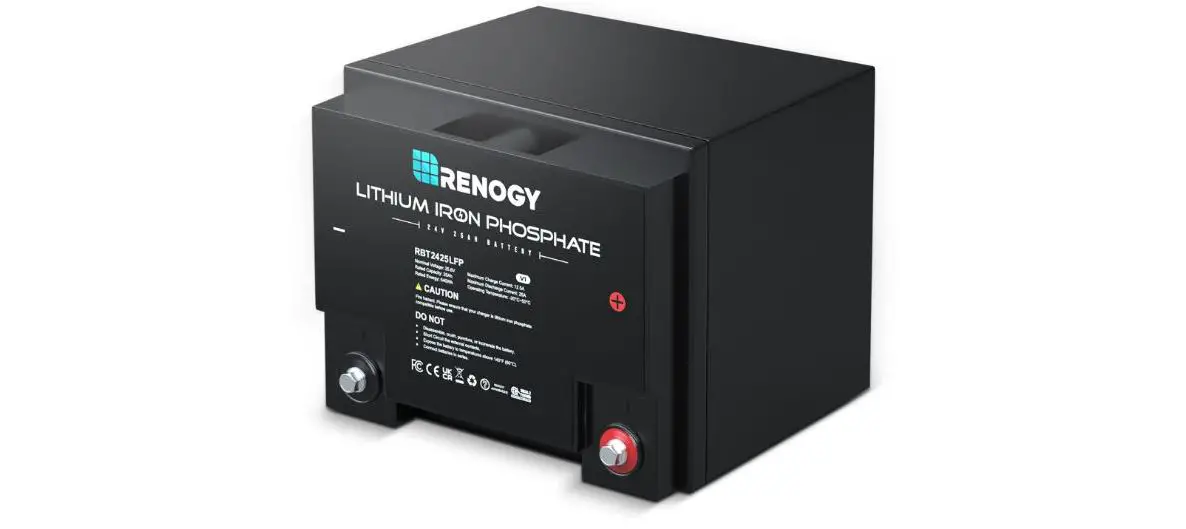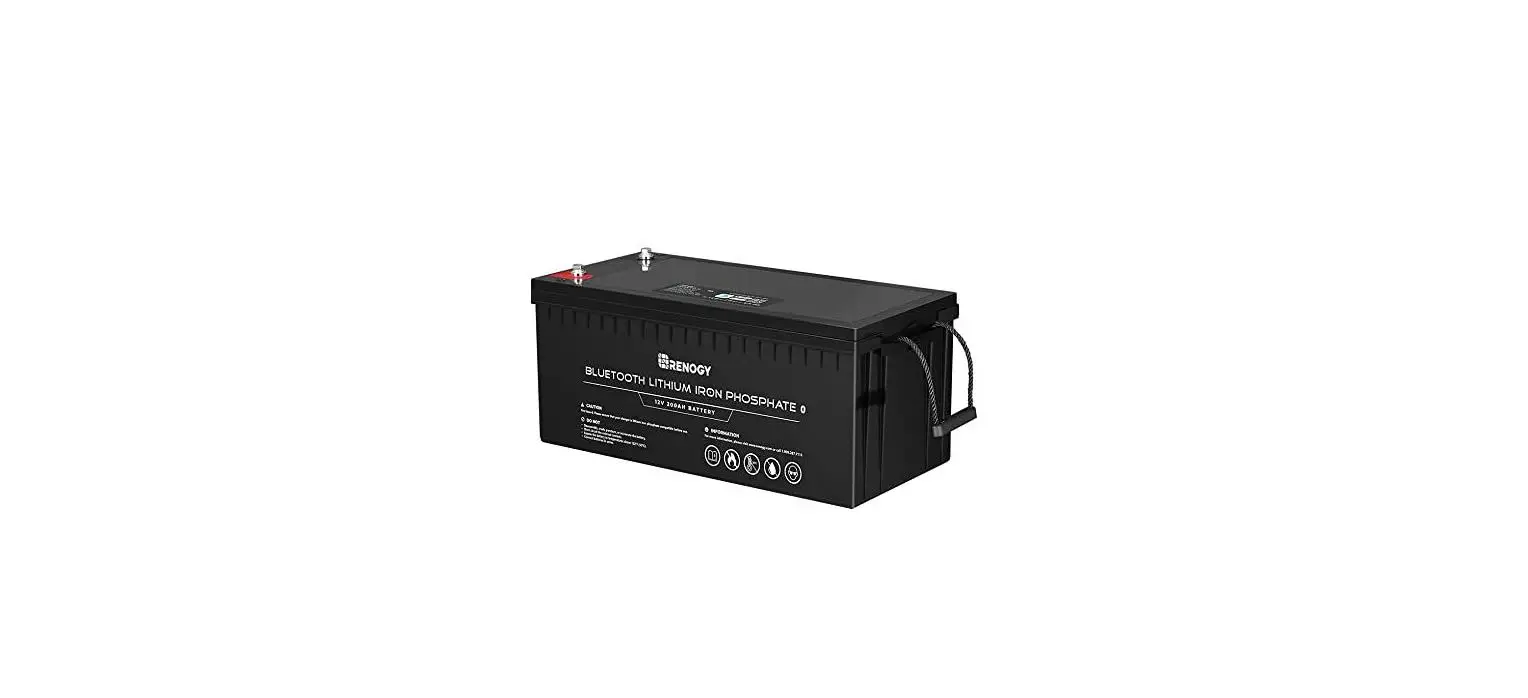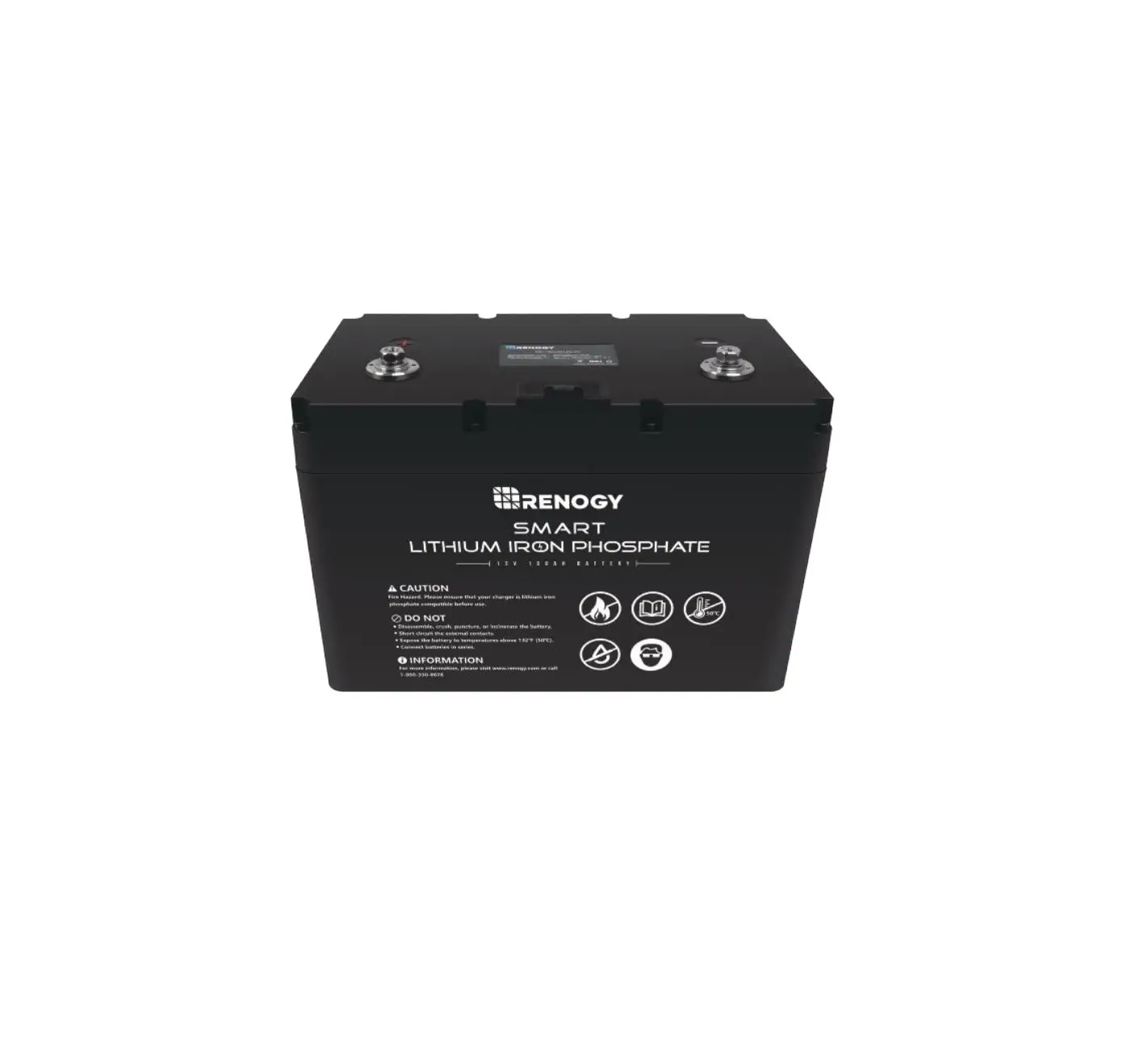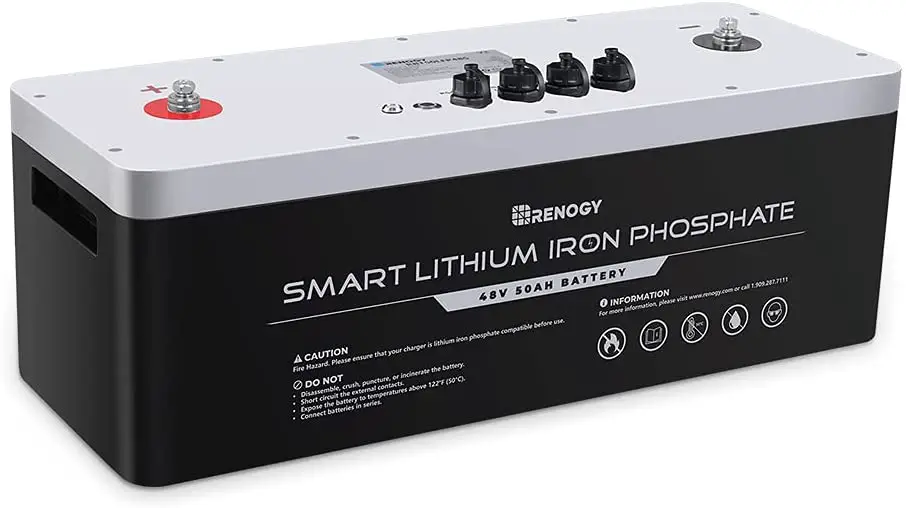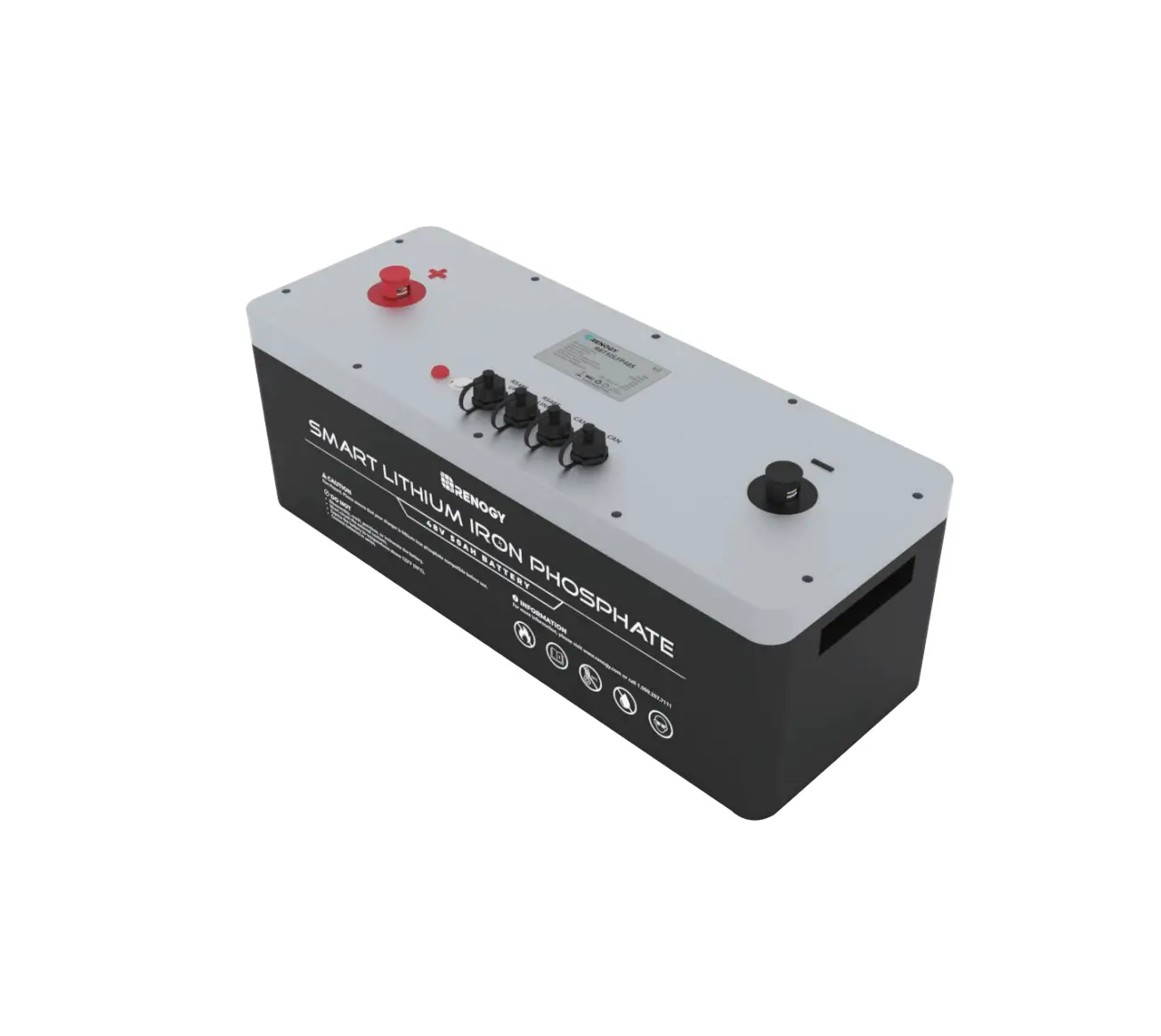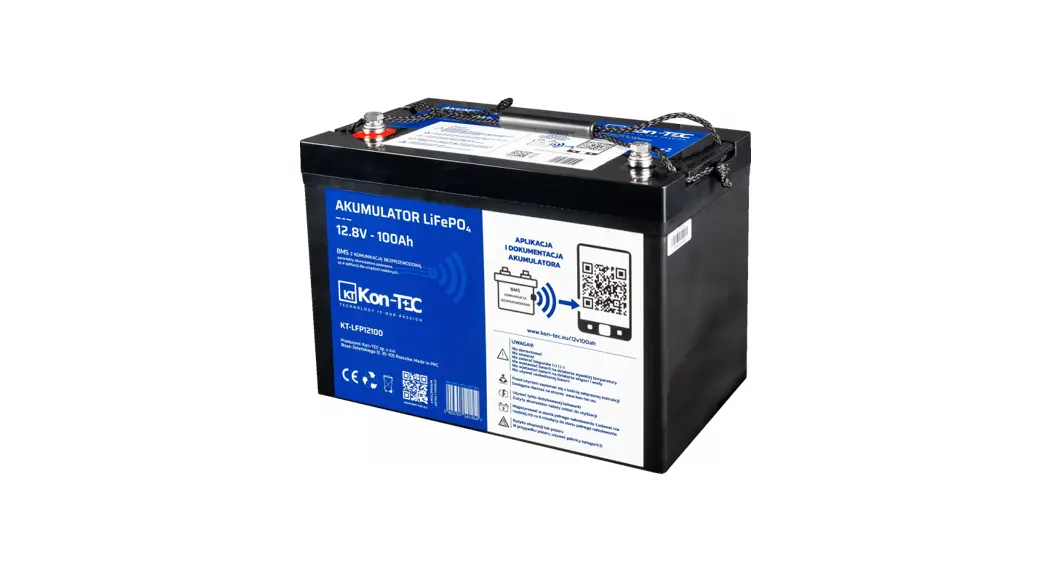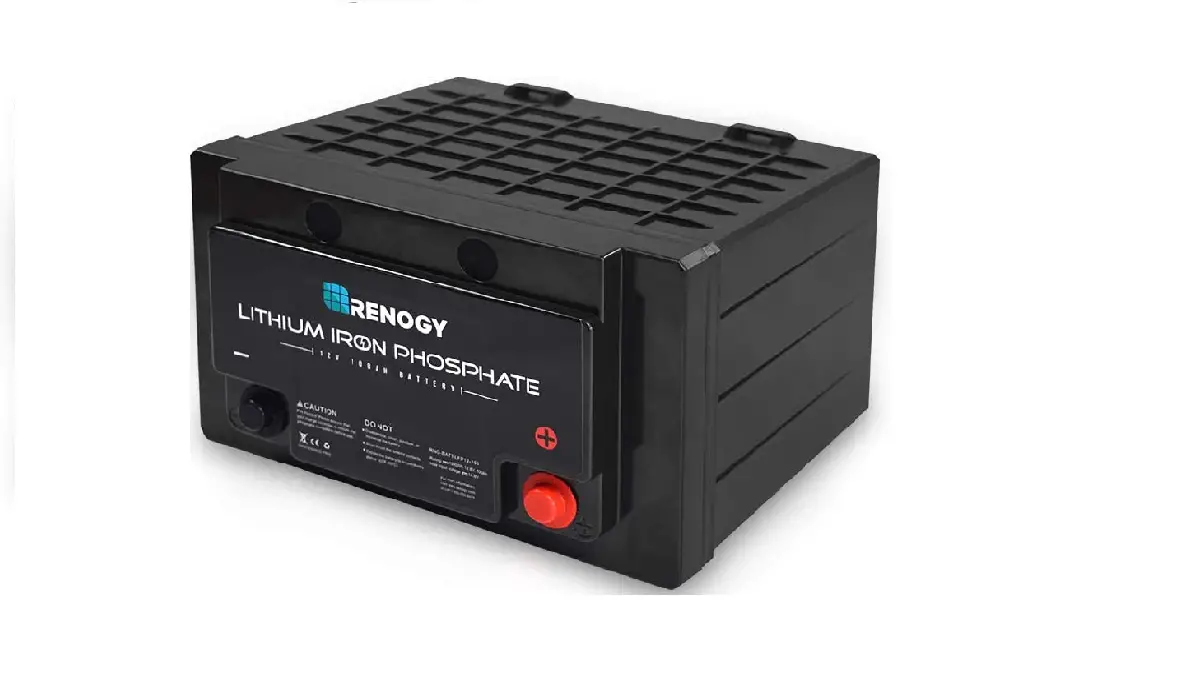

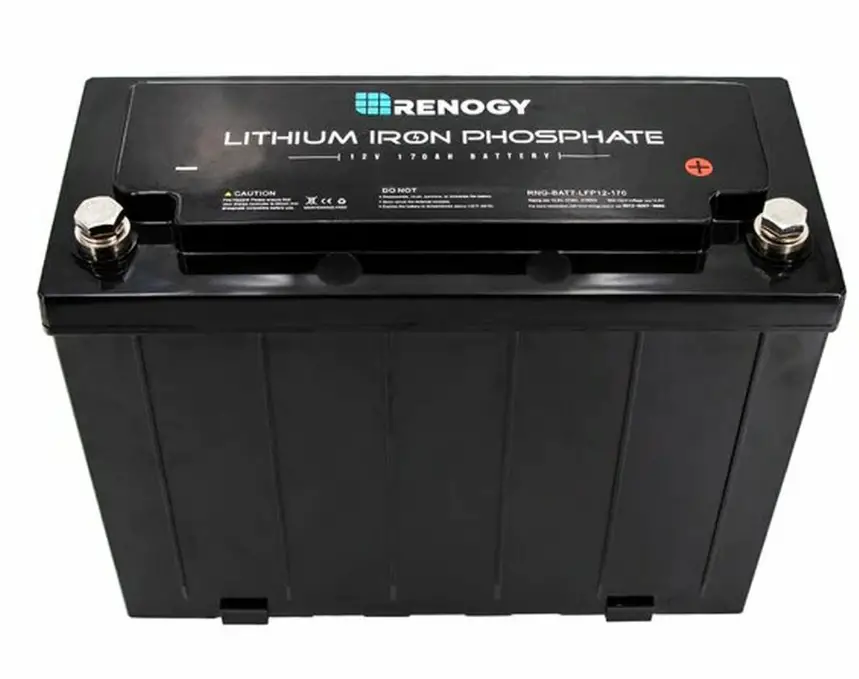
RENOGY LFP50100170 Lithium Iron Phosphate Battery
OverView
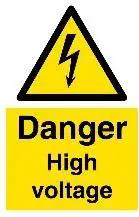
DO NOT touch any terminals or connectors to avoid electric shock.

ALWAYS wear protective clothing and eyeglasses while working with the Lithium Iron Phosphate Battery.

Any uncovered battery material such as electrolyte or powder on the skin or in the eyes must be flushed out with plenty of clean water immediately. Seek medical attention afterwards. Spillages on clothing should be rinsed out with water.
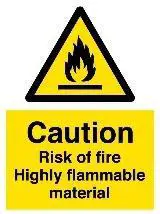
Terminals of the Lithium Iron Phosphate Battery are always live. DO NOT place tools on them. DO NOT short circuit or use outside of the specified electrical ratings.
Safety Precautions
- Please use circuit breakers, fuses, or disconnects that are appropriately sized by certified electricians, licensed installers, or regional code authorities to protect all the electrical equipment in your system. The battery contains a battery management system (BMS) that protects the battery cells from over-charge, over-discharge, and over-current, however this alone will not protect your system from severe electrical conditions.
- Please verify the polarity before connecting wiring. Reverse polarity can and will destroy the battery.
- DO NOT short-circuit the battery terminals. Doing so can cause bursts in amperage and lead to irreversible damage to the system and the battery (and possibly cause an explosion).
- Please wear proper personal protective equipment when working on the battery.
- DO NOT string batteries in series. Doing so can cause catastrophic failure.
- Please ONLY connect identical batteries in parallel to ensure the best battery performance.
- If the battery shuts off due to low state of charge, please disconnect the battery from your equipment to eliminate parasitic loads and charge the battery as soon as possible.
- It is highly recommended to pair the battery with low voltage disconnect devices in the system setup.
Battery Installation
Safe and reliable installation requires trained and certified technicians. This section can only serve as a guideline as all scenarios cannot be covered.
- Wear protective clothing and eyeglasses
- Size the battery cables appropriately
Use high stranded copper and heavy gauge cables to handle possible loads from the battery. Make sure to maintain identical cable lengths. - Verify correct polarity
Reverse polarity can and will destroy the battery. Use a multimeter to determine proper polarity. - Tighten the cable connections
Over-tightening cable connections can cause terminal breakage and loose cable connections can cause terminal meltdown or fire. - Place the battery in a well-ventilated area
Battery Operation
- Depending on shipping times and the time since manufacture, the battery may be received at a partial state of charge. Please fully charge the battery prior to the first use.
- Standard charging consists of charging at 0.2C constant current until the battery reaches 14.6V. The battery is then charged at a constant voltage of 14.6V while tapering the charging current. Charging is considered complete when the charging current has tapered to 0.02C. Safe charging requires temperatures between 0℃ and 45℃ (32℉ and 113℉) and takes approximately 7 hours.
- For standard discharging, the battery is discharged at 0.2C constant current until the battery reaches 10V. Safe discharging requires temperatures between -20℃ and 60℃ (-4℉ and 140℉).
Battery Storage
- Please charge the battery to 30%~50% and store the battery in an open, well-ventilated, dry, clean area with temperatures of around 23℃ (73.4℉).
- Long periods of storage can deteriorate the battery performance. It is recommended to charge the battery at least once every three months to prevent over-discharge.
Battery Management System (BMS)
The BMS will protect and shut the battery down when it is over-discharged or short circuited. In these rare cases, the battery will show 0V voltage. Please activate the battery using an external charging source that has lithium battery activation function. Please contact our Tech Support team at (909)287-7111 for more information about the BMS.
Battery Specifications
| Model | RNG-BATT- LFP-12-50 | RNG-BATT- LFP-12-100 | RNG-BATT- LFP-12-170 | |
| Electric Characteristics | Nominal Voltage | 12.8V | ||
| Rated Capacity (0.2C) | 50Ah | 100Ah | 170Ah | |
| Minimal Rated Capacity (0.2C) | 47.5Ah | 95Ah | 161.5Ah | ||
| Energy | 640Wh | 1280Wh | 2176Wh | ||
| Specific Energy | 95.5Wh/kg | 100.4Wh/kg | 103.6Wh/kg | ||
| Energy Density | 114.4Wh/L | 126.7Wh/L | 149.1Wh/L | ||
| Internal Resistance | ≤50mΩ | ≤30mΩ | ≤10mΩ | ||
| Cycle Life (0.2C, 20±5℃) | 2000 Cycles @ 80% DOD | ||||
|
Charging Parameters | Charge Voltage | 14.4±0.2V | |||
| Maximum Charge Current | 50A | 85A | |||
| Charge Cut-off Voltage | 14.6V | ||||
| Discharging Parameters | Maximum Continuous Discharge Current | 50A | 100A | 125A | |
| Discharge Cut-off Voltage | ≥10V | ||||
|
Temperature Parameters | Operation Temperature Range (60±25% R.H.) | Charge | 0~45℃ / 32~113℉ | ||
| Discharge | -20~60℃ / -4~140℉ | ||||
| Recommended | 23±5℃ / 73.4±9℉ | ||||
| Storage Temperature Range (60±25% R.H.) | Less Than 1 Year | 0~25℃ / 32~77℉ | |||
| Less Than 3 Months | -5~35℃ / 23~95℉ | -10~35℃ / 14~95℉ | |||
|
Mechanical Properties |
Dimensions | Length | 197 mm / 7.8 inch | 260 mm / 10.2 inch | 347 mm / 13.7 inch |
| Width | 166 mm / 6.5 inch | 158 mm / 6.2 inch | 155 mm / 6.1 inch | ||
| Height | 171 mm / 6.7 inch | 246 mm / 9.7 inch | 270 mm / 10.6 inch | ||
| Weight | 6.7 kg / 14.7 lbs. | 12.75 kg / 28.1 lbs. | 22 kg / 48.5 lbs. | ||
| Housing Material | ABS+PC | ||||
| Terminal Model | M8x1.25x12mm | M8x0.75x14mm | M12x1.75x16mm | |
| Assembly Method | 4S15P | 4S30P | 4S53P |
Protection Circuit Module (PCM) Specifications
| Over-charge Protection | Protection Voltage | 3.9±0.05V/Cell |
| Recovery Voltage | 3.6±0.05V/Cell | |
| Over-discharge Protection | Protection Voltage | 2.0±0.05V/Cell |
| Recovery Voltage | 2.4±0.05V/Cell | |
|
Overcurrent Protection | Protection Current | 160A |
| Delay Time | 5~13ms | |
| Recovery Mechanism | Disconnect Load | |
| Short-circuit Protection | Protection Mechanism | External Short-circuit |
| Recovery Mechanism | Disconnect Load |
Renogy | www.renogy.com | [email protected] | T: 909-287-7111 | F: 888-543-1164