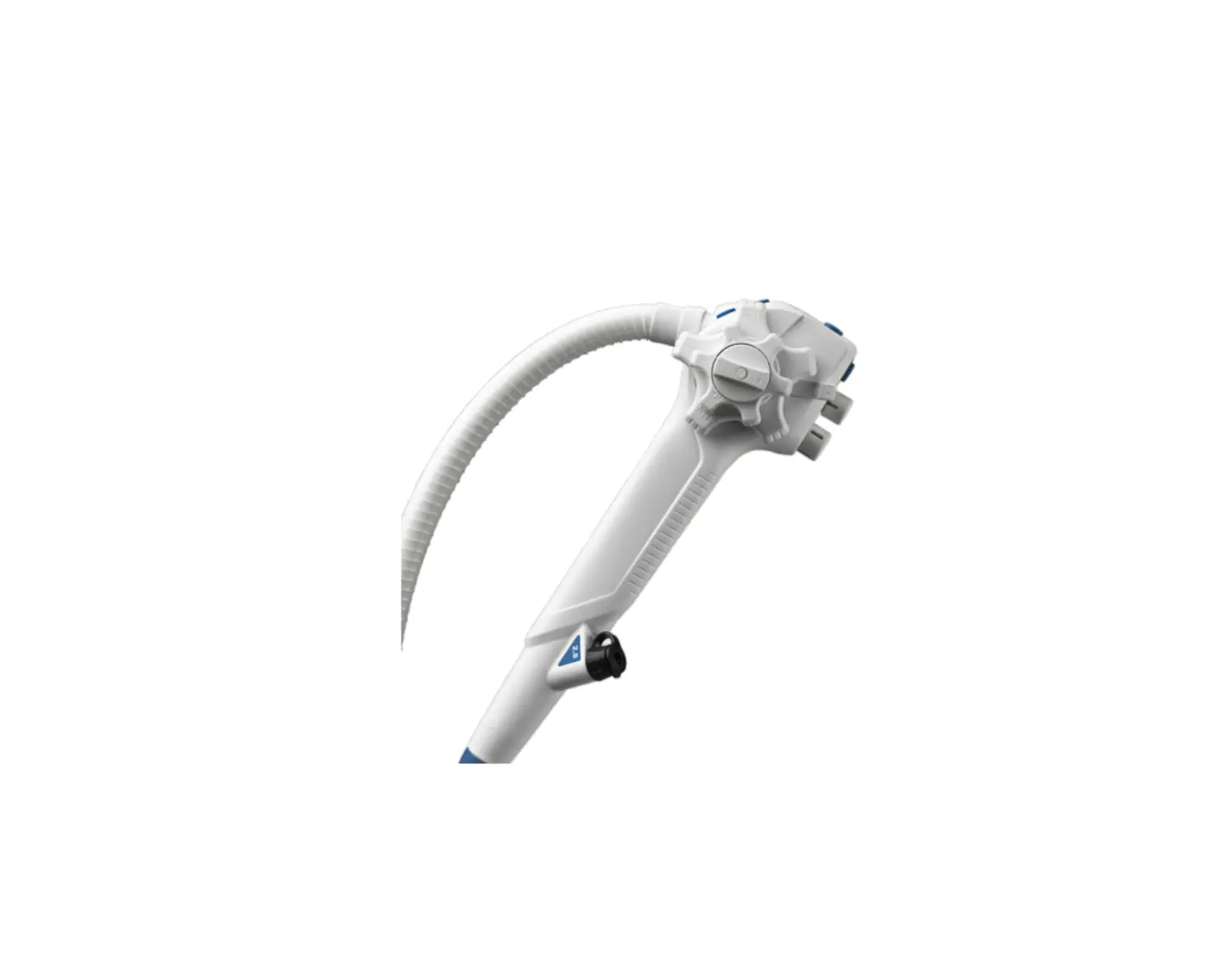
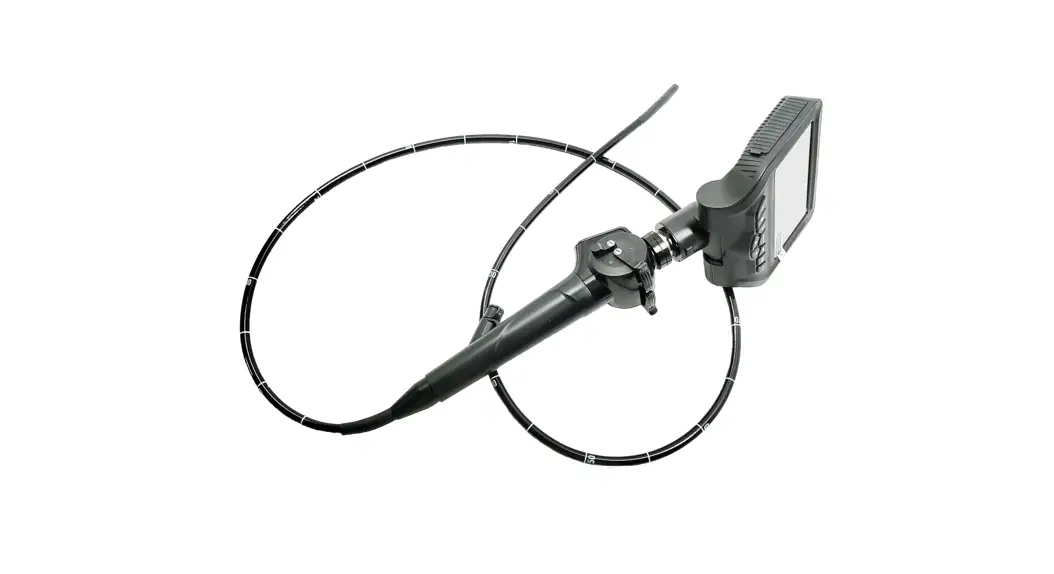
aScope RhinoLaryngo Intervention Single Use Endoscope
Product Information: The product is called aScope
5 Broncho HD. It comes in two versions: 5.0/2.2 and 5.6/2.8. The
product is manufactured by Ambu A/S. The aScope and aBox are
trademarks of Ambu A/S. The product is patented and the patent is
pending. Product Usage Instructions: 1. Before
using the aScope 5 Broncho HD, it is important to read the
following important information. 2. Refer to the English
Instruction for use section of the manual for detailed instructions
on how to use the product (pages 4-15). 3. The manual also includes
instructions in other languages such as Dansk, Deutsch, Evi, Eesti,
Hrvatski, Italiano, Lietuviskai, Latviski, Nederlands, Norsk,
Polski, P, Slovenscina, Svenska, and (pages 16-351). 4. It is
essential to read and understand all the instructions provided in
the manual before using the product. 5. Follow the instructions
carefully to ensure safe and effective usage of the aScope 5
Broncho HD. 6. If you have any questions or concerns about the
usage of the product, refer to the relevant section in the manual
or contact Ambu A/S for assistance.
INSTRUCTIONS FOR USE
Ambu® aScopeTM 5 Broncho HD
For use by trained healthcare professionals only. For use in hospitals and medical ambulatory environments. For use with Ambu® displaying units.
aScope 5 Broncho HD 5.0/2.2 aScope 5 Broncho HD 5.6/2.8
1a
1b
2.2
1c
2a
2b
2.2 2.2
2.2
3a
3b
2.2
4
2.2
5a
5b 5c
5d
5e 5f
2.2 2.2
6a
6b
6c
7a
2.2
7b
2.2
7c
7d
2.2
8
2.2
9
2.2
10a
10b
11
2.2
Pat. Pending Ambu is a registered trademark and aScope and aBox are trademarks of Ambu A/S. 2
CONTENTS
PAGE
English (Instruction for use) ………………………………………………………………………………………………………………….4-15
( )…………………………………………………………………………………………………16-29
Cesky (Návod k pouzití) ………………………………………………………………………………………………………………………30-41
Dansk (Brugsanvisning) ……………………………………………………………………………………………………………………… 42-53
Deutsch (Bedienungsanleitung) ……………………………………………………………………………………………………… 54-67
Evi ( X) ………………………………………………………………………………………………………………..68-81
Español (Manual de instrucciones) …………………………………………………………………………………………………..82-95
Eesti (Kasutusjuhised)………………………………………………………………………………………………………………………. 96-107
Suomi (Käyttöohje)…………………………………………………………………………………………………………………………..108-119
Français (Mode d´emploi) ……………………………………………………………………………………………………………… 120-132
Hrvatski (Upute za uporabu) ………………………………………………………………………………………………………….133-145
Magyar (Használati útmutató) ……………………………………………………………………………………………………… 146-158
Italiano (Manuale d’uso) ………………………………………………………………………………………………………………….159-171
() ……………………………………………………………………………………………………………………………..172-183
Lietuviskai (Naudojimo instrukcijos) …………………………………………………………………………………………… 184-195
Latviski (Lietosanas instrukcija) …………………………………………………………………………………………………….196-207
Nederlands (Gebruiksaanwijzing) ………………………………………………………………………………………………..208-220
Norsk (Brukerveiledning) ………………………………………………………………………………………………………………. 221-232
Polski (Instrukcja obslugi) ………………………………………………………………………………………………………………233-246
Português (Manual de instruções) ………………………………………………………………………………………………. 247-260
Român (Instruciuni de utilizare) ……………………………………………………………………………………………….. 261-273
P (Directions for use) …………………………………………………………………………………………………………. 274-289
Slovencina (Návod na pouzitie)…………………………………………………………………………………………………….290-302
Slovenscina (Navodila za uporabo)……………………………………………………………………………………………… 303-315
Svenska (Instruktionshandbok)……………………………………………………………………………………………………. 316-328
Türkçe (Kullanim talimatlari) ………………………………………………………………………………………………………….329-341
(
)…………………………………………………………………………………………………………………………………. 342-351
3
1. Important information – Read before use
Read these instructions for use carefully before using the aScope 5 Broncho HD. The Instructions for use may be updated without further notice. Copies of the current version are available upon request. Please be aware that these instructions do not explain or discuss clinical procedures. They describe only the basic operation and precautions related to the operation of the endoscope. Before initial use of the endoscope, it is essential for operators to have received sufficient training in clinical endoscopic techniques and to be familiar with the intended use, indications, warnings, cautions, and contraindications mentioned in these instructions. There is no warranty on the endoscope. In this document endoscope refers to instructions which apply to the endoscope only and system refers to information relevant for the aScope 5 Broncho HD and the compatible Ambu displaying unit and accessories. Unless otherwise specified, endoscope refers to all aScope 5 Broncho HD variants.
In this document the term aScope 5 Broncho HD refers to the Ambu® aScopeTM 5 Broncho HD.
1.1. Intended use
aScope 5 Broncho HD is intended for endoscopic procedures and examination within the airways and tracheobronchial tree. aScope 5 Broncho HD is intended to provide visualization via a compatible Ambu displaying unit, and to allow administration of fluids and passing of endotherapy instruments via its working channel. aScope 5 Broncho HD is intended for transient use in hospital and medical ambulatory environments. The aScope 5 Broncho HD is designed for adult use.
1.2. Indications for use
aScope 5 Broncho HD is intended for oral, nasal and percutaneous intubation and flexible bronchoscopy procedures, in any clinical situation where intubation applies or in which a clinician expects that bronchoscopy will have a substantial diagnostic or therapeutic impact.
1.3. Contraindications
None known.
1.4. Clinical benefits
Single-use application minimises the risk of cross-contamination of the patient.
1.5. Warnings and cautions
WARNINGS
1. Only to be used by healthcare professionals trained in clinical endoscopic techniques and procedures. Failure to comply with this may result in patient injury.
2. The endoscope is a single-use device and must be handled in a manner consistent with accepted medical practice for such devices in order to avoid contamination of the endoscope prior to insertion.
3. In order to avoid contamination, do not use the endoscope if the product sterilisation barrier or its packaging is damaged.
4. Do not attempt to clean and reuse the endoscope as it is a single-use device. Reuse of the product can cause contamination, leading to infections.
5. Do not use the endoscope or an endotherapy instrument if it is damaged in any way or if any part of the functional check fails (see section 4.1. as failure to comply may result in patient injury).
6. In order to promptly detect events of desaturation, patients should be monitored at all times during use.
7. If any malfunction occurs during the endoscopic procedure, stop the procedure immediately to avoid patient injury and withdraw the endoscope.
8. The device should not be used if adequate supplemental oxygenation cannot be provided to the patient during the procedure. Failure to comply may result in patient desaturation.
4
en
9. Always make sure that any tube connected to the suction connector on the scope is connected to a suction device. Secure the tubing properly on the suction connector before suction is applied. Failure to do so may result in patient or user injury.
10. Apply a maximum vacuum of 85 kPa (638 mmHg) when suctioning. Applying too large a vacuum may make it difficult to interrupt suctioning and may cause patient injury.
11. Always check compatibility of the scope with both airway management accessories and endotherapy instruments. Failure to do so may result in patient injury.
12. For non-intubated patients a mouthpiece should be used when inserting the endoscope orally to prevent the patient from biting the insertion cord and potentially damaging her/his teeth.
13. The shape and size of the nasal cavity and its suitability for transnasal insertion may vary from patient to patient. Individual differences in the shapes and sizes of the patients’ nasal lumens, as well as their receptivity to transnasal insertion, must be considered prior to the procedure. Never use force during insertion or withdrawal of the endoscope transnasally because patient injury may occur.
14. Verify that the orientation of the image is as expected and be careful to check whether the image on the screen is a live image or a recorded image. Failure to do so will increase the difficulty of navigation and may result in damage to mucosa or tissue.
15. Always watch the live endoscopic image on the Ambu displaying unit or external monitor when advancing or withdrawing the endoscope, operating the bending section or during suctioning. Failure to do so may result in damage to mucosa or tissue.
16. Ensure the biopsy valve and its cap are properly attached prior to suction. During manual suction, ensure that the syringe tip is fully inserted into the working channel port/biopsy valve prior to suction. Failure to do so may expose unprotected users to the risk of infection.
17. The endoscope images must not be used as an independent means of diagnosis for any clinical finding. Healthcare professionals must interpret and substantiate any finding by other means and in the light of the patient’s clinical characteristics. Failure to do so may result in delayed, incomplete, or inadequate diagnosis.
18. Always make sure that the bending section is in a straight position when inserting or withdrawing an endotherapy instrument into or out of the working channel. Do not operate the control lever and never use excessive force, as this may result in injury to the patient and/or damage to the endoscope.
19. Do not damage the insertion portion during use. This may expose sharp surfaces that may cause damage to the mucosa or this may result in parts of the product being left inside the patient. Particular care should be taken to avoid damaging the insertion portion when using the endoscope with endotherapy instruments.
20. Bronchoscopists and assistants shall be familiar with the adequate personal protective equipment for bronchoscopy procedures in order to avoid contamination of staff.
21. Do not activate an endotherapy instrument (especially laser or electrosurgical equipment) in the endoscope before the instrument’s distal end can be seen in the image on the displaying unit, as this can lead to patient injury or damage the endoscope.
22. The endoscope and active endotherapy instruments, e.g. HF and laser instruments, are not to be used when highly flammable gases e.g. anaesthetic aerosols are present in the patients airways. This could potentially cause patient injury.
23. The distal end of the endoscope may get warm due to heating from the light emission part. Avoid long periods of contact between the distal tip and the mucosal membrane as this may cause injury to mucosa.
24. When inserting or withdrawing the endoscope, the distal tip must be in a nondeflected position. Do not operate the control lever, as this may result in injury to the patient and/or damage to the endoscope.
25. Always perform a visual check according to the instructions in this Instructions for use before placing the endoscope in a waste container to minimize the risk of post procedure complications.
5
26. The user must exercise professional judgement when deciding whether a bronchoscopy procedure will be appropriate for patients with severe heart disease (e.g. life-threatening arrythmia and recent myocardial infarction) or acute respiratory failure with hypercapnia. Uncorrected coagulopathy is relevant if transbronchial biopsy is planned. Serious complications have a higher rate in the mentioned categories of patients.
27. Use of endotherapy instruments including Argon Plasma Coagulation (APC) probe and nd-YAG laser may in rare cases cause gas embolism. Monitor the patient appropriately during and after treatment.
28. Patient leakage currents may be additive when using active endotherapy instruments. Active endotherapy instruments must be classified as “type CF” or “type BF” according to IEC 60601. Failure to comply may lead to too high patient leakage current and patient injury.
29. Endotherapy instruments shall always be operated according to the respective manufacturer’s instructions for use. Users shall always be familiar with safety precautions and guidelines on the proper use of endotherapy instruments, including use of adequate personal protective equipment e.g. wearing suitable protective filtering spectacles when using laser equipment together with the endoscope. Failure to do so may result in patient or user injury.
30. Always operate endoscope and displaying unit according to the instructions for use for each product. Failure to do so may result in patient or user injury.
CAUTIONS
1. Have a suitable backup system readily available for immediate use so the procedure can be continued if a malfunction should occur.
2. Be careful not to damage the endoscope in combination with sharp endotherapy instruments such as needles.
3. Be careful when handling the distal tip and do not allow it to strike other objects, as this may result in damage to the endoscope. The lens surface of the distal tip is fragile and visual distortion may occur.
4. Do not exert excessive force on the bending section as this may result in damage to the endoscope. Examples of inappropriate handling of the bending section include: Manual twisting. Operating it inside an ET tube or in any other case where resistance is felt. Inserting it into a preshaped tube or a tracheostomy tube with the bending direction not aligned with the curve of the tube.
5. Keep the endoscope handle dry during preparation, use and storage. 6. Do not use a knife or other sharp instrument to open the pouch or cardboard box. 7. Using electrosurgical equipment with aScope 5 Broncho HD may disturb the image on
the displaying unit and/or external monitor. 8. Do not remove the suction button for any reason as this may result in damage to the
endoscope and loss of suction. 9. US federal law restricts these devices for sale only by, or on the order of, a physician. 10. Only use the endoscope with medical electrical equipment that complies with
IEC 60601-1, any associated applicable collateral and particular standards, or equivalent safety standards. Failure to do so may lead to equipment damage.
1.6. Potential adverse events
Potential adverse events in relation to flexible bronchoscopy (not exhaustive): Tachycardia/bradycardia, hypotension, bleeding, bronchospasm/laryngospasm, cough, dyspnoea, sore throat, apnoea, seizure, desaturation/hypoxemia, epistaxis, haemoptysis, pneumothorax, aspiration pneumonia, pulmonary oedema, airway obstruction, fever/infection, and respiratory/cardiac arrest.
1.7. General notes
If, during the use of this device or as a result of its use, a serious incident has occurred, please report it to the manufacturer and to your national authority.
6
en
2. System description
The aScope 5 Broncho HD must be connected to an Ambu displaying unit. For information about Ambu displaying units, please refer to the respective displaying units’ Instructions for use.
2.1. System parts
Ambu® aScopeTM 5 Broncho HD Single-use device:
Part numbers:
60 cm/23.6″
621001000 aScope 5 Broncho HD 5.0/2.2 622001000 aScope 5 Broncho HD 5.6/2.8
2.2
aScope 5 Broncho HD 5.0/2.2 and HD 5.6/2.8 are not available in all countries. Please contact your local sales office.
Product name aScope 5 Broncho HD 5.0/2.2 aScope 5 Broncho HD 5.6/2.8
Outer diameter [mm] ”
5.0 mm/0.20″ max 5.7 mm/0.22″
5.6 mm/0.22″ max 6.3 mm/0.25″
Inner diameter [mm] ”
2.2 mm/0.09″ min 2.05 mm/0.08″
2.8 mm/0.11″ min 2.65 mm/0.10″
2.2. Product compatibility
The aScope 5 Broncho HD has been designed to be used in conjunction with:
Displaying units Ambu® aBoxTM 2
Endoscopic accessories Endotherapy instruments compatible with the working channel ID (such as biopsy forceps,
cytology brushes, endoscopic needles, electrosurgical probes). Accessories with standard Luer slip and/or Luer Lock (using the enclosed introducer). High frequency electrosurgical equipment fulfilling EN 60601-2-2.
Lubricants and solutions Sterile water Isotonic saline solution Local anaesthetic gel and solutions e.g: · 1 % lidocaine solution · 2 % lidocaine gel · Lidocaine 10 % aerosol spray · Noradrenaline 0.5 mg · Waterbased lubricants
Airway management accessories in compliance with EN ISO 5361 Endotracheal tubes Laryngeal masks Tracheostomy tubes Laryngectomy tubes Double-swivel catheter mounts
The aScope 5 Broncho HD has been evaluated to be compatible with the following endotracheal tubes (ETT) and endoscopic accessories (EA) sizes:
aScope 5 Broncho HD 5.0/2.2 aScope 5 Broncho HD 5.6/2.8
Minimum ETT inner diameter
6.0 mm 7.0 mm
EA maximum working channel width
Up to 2.2 mm Up to 2.8 mm
7
There is no guarantee that instruments selected solely using this working channel size will be compatible in combination. Compatibility of selected instruments should be tested before the procedure.
Suctioning equipment Suction tube of inner diameters between 5.5 mm and 9.0 mm.
Container for the collection of specimens aScope BronchoSamplerTM.
2.3. aScope 5 Broncho HD parts
5 6
2
15
7
4
1
3
8 14
9
13 10
16
17
11 12
No. Part
Function
1
Handle
Designed for left and right hand.
2
Control lever
Moves the distal tip up or down in a single plane.
3
Working channel port Allows for instillation of fluids and insertion of
endotherapy instruments.
Working channel
Can be used for instillation/aspiration of fluids and insertion of endotherapy instruments.
4
Biopsy Valve
Attached to the working channel port. Endotherapy instruments can be inserted or a syringe can be attached.
5
Suction connector
Allows for connection of suction tubing.
8
en
No. Part
6
Suction button
7
Endoscope buttons
1 & 2
8
Rotation control ring
9
Tube connection
Insertion cord 10
Insertion portion 11 Bending section 12 Distal tip
13 Displaying unit connector
14 Cable
15 Protective handle cover
16 Protective pipe
17 Introducer
Function
Actives suction when pressed. Depending on settings in displaying unit the two remote switches allow for direct activation on handle of four different functionalities such as image and video capturing, ARC, zoom. Allows for rotation of the insertion cord during procedure. Allows for fixation of tubes with standard connector during procedure. Flexible airway insertion cord. Same as insertion cord. Manoeuvrable part.
Contains the camera, light source (two LEDs), as well as the working channel exit.
Connects to the connector port on the Ambu displaying unit.
Transmits the image signal to the Ambu displaying unit.
Protects the control lever during transport and storage. Remove before use.
Protects the insertion cord during transport and storage. Remove before use.
To facilitate introduction of Luer Lock syringes.
3. Explanation of symbols used
Symbols for the aScope 5 Broncho HD devices
Description
Symbols for the aScope 5 Broncho HD devices
Description
2.2
Working length of the insertion cord.
60 cm/23.6″
Max OD Min ID
Maximum insertion portion width (Maximum outer diameter).
Minimum working channel width (Minimum inner diameter).
Temperature limit.
Warning.
Rated power output symbol.
Field of view.
IFU symbol.
Humidity limitation.
Atmospheric pressure limitation.
Electrical Safety Type BF Applied Part.
Global Trade Item Number.
Country of manufacturer.
Medical Device.
9
Symbols for the aScope 5 Broncho HD devices
Description
Packaging level ensuring sterility. Do not use if the product sterilisation barrier or its packaging is damaged.
Symbols for the aScope 5 Broncho HD devices
Description
UL Recognized Component Mark for Canada and the United States.
A full list of symbol explanations can also be found on ambu.com/symbol-explanation
4. Use of aScope 5 Broncho HD
Numbers in gray circles below refer to illustrations on page 2.
4.1. Preparation and inspection of aScope 5 Broncho HD
Lubricate the insertion cord with a water-based medical grade lubricant, to ensure the lowest possible friction when the endoscope is inserted into the patient.
Visual inspection of the endoscope 1 1. Check that the pouch seal is intact. 1a 2. Make sure to remove the protective elements from the handle and from
the insertion cord. 1b 3. Check that there are no impurities or damage on the product such as rough surfaces,
sharp edges or protrusions which may harm the patient. 1c 4. Turn on the Ambu displaying unit. 2a 2b
Refer to the Ambu displaying unit Instructions for use for preparation and inspection of the Ambu displaying unit. 2a 2b
Inspection of the image
1. Plug in the displaying unit connector into the corresponding connector on the compatible displaying unit. Please ensure the colours are identical and be careful to align the arrows. 3a 3b
2. Verify that a live video image appears on the screen by pointing the distal tip of the endoscope towards an object, e.g. the palm of your hand. 4
3. Adjust the image preferences on the displaying unit if necessary (please refer to the displaying unit Instructions for use).
4. If the object cannot be seen clearly, wipe the lens at the distal tip with a sterile cloth.
The aScope 5 Broncho HD System consists of the aScope 5 Broncho HD and Ambu’s Full-HD displaying unit. Compared to previous generations, the aScope 5 Broncho HD System provides a higher resolution resulting in a clearer and improved image to the user.
Preparation of aScope 5 Broncho HD
1. Carefully slide the control lever upwards and downwards to bend the bending section as much as possible. Then slide the control lever slowly to its neutral position. Confirm that the bending section functions smoothly and correctly. 5a
2. Carefully turn the rotation control ring left and right to rotate the insertion cord as much as possible. Then turn the rotation control ring back to its neutral position. Confirm that the rotation control ring functions smoothly and correctly. 5b
3. Press the endoscope buttons one after the other. Short press < 1 second and long press > 1 second. For default setting please see displaying unit Instructions for use. 5c
4. Instill 2 ml of sterile water and 2 ml of air into the working channel using a syringe (if applying a Luer Lock syringe, use the enclosed introducer). Press the plunger to ensure that there are no leaks, and that water is emitted from the distal tip. 5d
10
en
5. If applicable, prepare the suction equipment according to the manufacturer’s Instructions for use. Connect the suctioning tube to the suction connector and press the suction button to check that suction is applied. 5e
6. If applicable, verify that endotherapy instruments of appropriate size can be passed through the working channel without resistance. The enclosed introducer can be used for connection of Luer Lock syringes or to ease insertion of very soft instruments such as soft catheters and protected specimen brushes if necessary. 5f
7. If applicable, verify that the accessories or endotherapy instruments are compatible with the endoscope before starting the procedure.
8. To guard against potentially infectious materials during the procedure, consider wearing personal protective equipment.
4.2. Operating the aScope 5 Broncho HD
Holding the aScope 5 Broncho HD and manipulating the tip The handle of the endoscope can be held with either hand. Use the thumb to move the control lever up and down and the index finger to operate the suction button. The control lever is used to flex and extend the distal tip of the endoscope in the vertical plane 5a . Moving the control lever downward will make the tip bend anteriorly (flexion). Moving it upward will make the distal tip bend posteriorly (extension). The insertion cord should be held as straight as possible at all times in order to secure an optimal bending angle at the distal tip. After bending, the control lever should be moved back to neutral position. This will increase/ease maneuverability.
Rotation of the insertion cord 5b The rotation control ring enables the user to rotate insertion cord in relation to the handle, and vice-versa. This can be done either by holding the rotation control ring in place and then rotating the handle, or by holding the handle in place and then rotating the rotation control ring. In either case, make sure to check the rotation indicators on the rotation control ring and on the red ring above. The rotation is at neutral position (i.e. turned 0°) when the indicators are aligned, this will allow a maximal rotation of 120° to either side. There is a tactile click indicating when the rotation control ring is returned to the neutral position. Always view the live endoscopic image when operating the rotation control ring to avoid patient injury.
Endoscope buttons 5c 6a The two endoscope buttons can activate up to four functions. The endoscope buttons can be programmed via the Ambu displaying unit (see Instructions for use of the Ambu Displaying Unit) and current settings can be found in the user interface of the displaying unit.
During use of active endotherapy instruments the endoscope buttons cannot be activated on the handle but functions are still available using the Ambu displaying unit.
Biopsy valve 6b The biopsy valve is attached to the working channel port allowing for insertion of endotherapy instruments or attachment of syringes. The cap of the biopsy valve can be detached to ease insertion of an endotherapy instrument or accessory into the instrument channel port. If not using an endotherapy instrument or accessory, always attach the cap to the biopsy valve to avoid leakage and spraying of fluids from the open biopsy valve or reduction of suction capability.
Tube connection 6c The tube connection can be used to mount ETT with an ISO connector during intubation.
Insertion of the endoscope 7a Lubricate the insertion cord with a water-based medical grade lubricant when the endoscope is inserted into the patient. If the endoscopic image becomes unclear, the distal tip can be cleaned by gently rubbing the distal tip against the mucosal wall or remove the endoscope and clean the tip. When inserting the endoscope orally, it is recommended to use a mouthpiece to protect the patient and the endoscope from being damaged.
11
Instillation of fluids 7b Fluids can be instilled through the working channel by attaching a syringe to the biopsy valve. When using a Luer Lock syringe, use the included introducer. Insert the syringe tip or the introducer completely into the biopsy valve (with or without the valve’s cap attached) and press the plunger to instill fluid. Make sure you do not apply suction during this process, as this will direct the instilled fluids into the suction collection system. To ensure that all fluid has left the channel, flush the channel with 2 ml of air.
Aspiration 7c When a suction system is connected to the suction connector, suction can be applied by pressing the suction button with the index finger. If the introducer and/or an endoscopic accessory is placed inside the working channel note, that the suction capability will be reduced. For optimal suction capability it is recommended to remove the introducer or syringe entirely during suction.
Insertion of endotherapy instruments or accessories 7d Always make sure to select the correct size endotherapy instrument for the endoscope (see section 2.2). Maximum compatible instrument size is indicated at the working channel port. Inspect the endotherapy instrument before using it. If there is any irregularity in its operation or external appearance, replace it. Insert the instrument into the biopsy valve and advance it carefully through the working channel until it can be seen on the endoscopic image.
For insertion, hold the endotherapy instrument close to the opening of the biopsy valve and insert it straight into the opening using gentle short strokes to avoid the endotherapy instrument to bend or break. The enclosed introducer can be used to ease insertion of very soft instruments such as soft catheters and protected specimen brushes if necessary. Use of excessive force during insertion may damage the endotherapy instrument. When the bending section of the endoscope angulates significantly and insertion of the endotherapy instrument becomes difficult, straighten the bending section as much as possible.
Do not open the tip of the endotherapy instrument or extend the tip of the endotherapy instrument from its sheath while the instrument is in the working channel, as this may damage both the endotherapy instrument and the endoscope.
Insertion of active endotherapy instruments 7d Use of active endotherapy instruments should always be operated according to the respective manufacturer’s instructions for use. Users shall always be familiar with safety precautions and guidelines on the proper use of active endotherapy instruments, including use of adequate personal protective equipment.
Do not activate an active endotherapy instrument (e.g. laser equipment, electrosurgical equipment) in the working channel before the instrument distal end can be seen in the image.
It should be recognized that the use of active endotherapy instruments may interfere with the normal endoscopic image and this interference is not indicative of a malfunction of the endoscopic system. A variety of factors can affect the quality of the endoscopic image during use of active endotherapy instruments. Factors such as intensity, high power setting, close distance of the instrument probe to the endoscope tip and excessive tissue burning can each adversely influence image quality.
Withdrawal of the endoscope 8 When withdrawing the endoscope, make sure that the control lever is in the neutral position. Slowly withdraw the endoscope while watching the live endoscopic image.
4.3. After use
Visual check 9 1. Are there any missing parts on the bending section, lens, or insertion cord? If yes, then take
corrective action to locate the missing part(s). 2. Is there any evidence of damage on the bending section, lens, or insertion cord? If yes,
then examine the integrity of the product and conclude if there are any missing parts. 3. Are there cuts, holes, sagging, swelling or other irregularities on the bending section,
lens, or insertion cord? If yes, then examine the product to conclude if there are any missing parts. In case of corrective actions needed (step 1 to 3) act according to local hospital procedures.
12
en
Disconnect Disconnect the endoscope from the displaying unit 10 . The aScope 5 Broncho HD is a singleuse device. Do not soak rinse, or sterilize this device as these procedures may leave harmful residues or cause malfunction of the device. The design and materials used are not compatible with conventional cleaning and sterilization procedures.
Disposal The used aScope 5 Broncho HD is considered contaminated after use and must be disposed of in accordance with local guidelines for collection of infected medical devices with electronic components.
5. Technical product specifications 5.1. Standards applied
The endoscope conforms with: EN 60601-1 Medical electrical equipment Part 1: General requirements for basic safety and
essential performance. EN 60601-2-18 Medical electrical equipment Part 2-18: Particular requirements for the basic
safety and essential performance of endoscopic equipment. IEC 60601-1-2 Medical electrical equipment Part 1-2: General requirements for basic safety
and essential performance Collateral standard: Electromagnetic disturbances requirements and tests. ISO 10993-1 Biological evaluation of medical devices Part 1: Evaluation and testing. ISO 8600-1 Endoscopes Medical endoscopes and endotherapy devices Part 1: General requirements.
5.2. aScope 5 Broncho HD specifications
Insertion cord
aScope 5 Broncho HD 5.0/2.2
aScope 5 Broncho HD 5.6/2.8
Bending section1 [°]
195 ,195
195 ,195
Insertion cord diameter [mm, (“)]
5.0 (0.20) Ø 5.0 ± 0.2 (0.008) 5.6 (0.22) Ø 5.6 ± 0.2 (0.008)
Maximum diameter of insertion portion [mm, (“)]
max. Ø 5.7 (0.22)
max. Ø 6.3 (0.25)
Distal tip diameter [mm, (“)] 5.4 (0.21) Ø 5.4 ± 0.08 (0.003) 6.0 (0.24) Ø 6.0 ± 0.08 (0.003)
Minimum endotracheal
6.0
7.0
tube size (ID) [mm]
Working length [mm, (“)]
600 (23.6) ± 10 (0.39)
600 (23.6) ± 10 (0.39)
Rotary function
120O
120O
Depth marks
5 cm
5 cm
Working channel
aScope 5 Broncho HD 5.0/2.2
aScope 5 Broncho HD 5.6/2.8
Instrument channel width2 [mm, (“)] Minimum instrument channel width2 [mm, (“)]
2.2 (0.09) min. Ø 2.05 (0.08)
2.8 (0.11) min. Ø 2.65 (0.10)
Storage
aScope 5 Broncho HD 5.0/2.2 and HD 5.6/2.8
Recommended storage temperature3 [°C, (°F)]
10 25 (50 77)
Relative humidity [%]
10 85
Atmospheric pressure [kPa] 50 106
13
Optical system Field of view [°] Depth of field [mm] Illumination method Suction connector Connecting tube ID [mm] Sterilisation Method of sterilisation Operating environment Temperature [°C, (°F)] Relative humidity [%] Atmospheric pressure [kPa] Altitude [m] Biocompatibility
aScope 5 Broncho HD 5.0/2.2 and HD 5.6/2.8 120 (± 15 %) 3 100 LED
Ø 5.5 9.0 aScope 5 Broncho HD 5.0/2.2 and HD 5.6/2.8 ETO aScope 5 Broncho HD 5.0/2.2 and HD 5.6/2.8 10 40 (50 104) 30 85 80 106 2000 aScope 5 Broncho HD is biocompatible
1. Please be aware that the bending angle can be affected if the insertion cord is not kept straight.
2. There is no guarantee that accessories selected solely using this minimum instrument channel width will be compatible in combination.
3. Storage under higher temperatures may impact shelf life.
6. Troubleshooting
If problems occur with the system, please use this trouble shooting guide to identify the cause and correct the error.
Problem
Possible cause
Recommended action
The endoscope is not connected to the displaying unit.
Connect an endoscope to the grey port on the displaying unit.
No live image on the screen but User Interface is present on the display or the image shown is frozen.
The displaying unit and the endoscope have communication problems.
The endoscope is damaged.
1. Reconnect aScope 5 Broncho HD by unplugging and reconnecting the endoscope.
2. Turn off the displaying unit and turn it on again (Power off/Power on).
Still no image; 3. Refer to the Instructions for use of
the displaying unit for a detailed troubleshooting guide or alternatively take a new endoscope.
Replace the endoscope with a new one.
A recorded image is shown in the yellow file management tab.
Return to live image by pressing the blue live image tab or restart the displaying unit by pressing the power button for at least 2 seconds. When the displaying unit is off, restart by pressing power button once more.
14
en
Problem Low picture quality.
Possible cause
Blood, saliva etc. on the lens (distal tip).
Recommended action
Gently rub the distal tip against the mucosa. If the lens cannot be cleaned this way remove the endoscope and wipe the lens with sterile gauze.
Absent or reduced suction capability or difficulty in inserting endotherapy instrument through the working channel.
Biopsy valve.
Endoscope buttons.
Suction button.
Working channel blocked.
Clean the working channel using a cleaning brush or flush the working channel with sterile saline using a syringe. Do not operate the suction button when instilling fluids.
Suction is not active.
Ensure the suction tube is properly connected to the endoscope and to the suction system. Ensure suction system is turned on.
Endotherapy instrument/introducer/ syringe inserted in working channel port/ biopsy valve (applicable if suction is absent or reduced).
Remove endotherapy instrument or introducer/syringe from the working channel port/biopsy valve. Check that the instrument used is compatible with the working channel’s ID.
Cap detached from biopsy valve.
Ensure that the cap is attached to the biopsy valve to avoid reduction of suction capability.
Difficulty inserting an endotherapy instrument through the working channel.
Ensure compatibility of endotherapy instrument to working channel size. When the cap of the biopsy valve is detached, it may be easier to insert an endotherapy instrument into the instrument channel port.
The setting of the endoscope buttons differs from preferred setting.
Set the endoscope button function as preferred using the Instructions for use for the Ambu displaying unit.
Suction button detached from endoscope.
Remount suction button and test the suction function according to preparation step 5e. If that does not work, then use new endoscope.
15
1.
, aScope 5 Broncho HD. . . , . , . , , , , . . , , a , aScope 5 Broncho HD, Ambu . , ,,” aScope 5 Broncho HD.
aScope 5 Broncho HD Ambu® aScopeTM 5 Broncho HD.
1.1.
aScope 5 Broncho HD . aScope 5 Broncho HD Ambu, . aScope 5 Broncho HD . aScope 5 Broncho HD .
1.2.
aScope 5 Broncho HD , , , .
1.3.
.
1.4.
.
1.5.
1. , . .
2. , , .
3. , , .
4. , . , .
5. , (. 4.1 ).
6. , .
16
bg
7. , , , .
8. , . .
9. , , , . . .
10. . 85 kPa (638 mmHg). .
11. , . .
12. , .
13. , , . , . , .
14. , , , . .
15. Ambu , . .
16. , . : , / . .
17. . . , .
18. , , . , / .
19. . , , . , .
20. , .
17
21. ( ) , , .
22. , , , , . . .
23. . , .
24. . , / .
25. , .
26. (. ) . , . – .
27. , () nd-YAG , . .
28. , . ,, CF” ,, BF” IEC 60601. .
29. . , , , . .
30. . .
1. , , .
2. , .
3. , . .
18
bg
4. , . : . ET , . , .
5. , .
6. .
7. aScope 5 Broncho HD / .
8. , .
9. .
10. , IEC 60601-1, . .
1.6.
, ( ): /, , , / , , , , , , / , , , , , , , / / .
1.7.
, .
2.
aScope 5 Broncho HD Ambu. Ambu .
2.1.
Ambu® aScopeTM 5 Broncho HD :
:
60 cm/23.6″
621001000 aScope 5 Broncho HD 5.0/2.2 622001000 aScope 5 Broncho HD 5.6/2.8
2.2
aScope 5 Broncho HD 5.0/2.2 HD 5.6/2.8 . .
aScope 5 Broncho HD 5.0/2.2 aScope 5 Broncho HD 5.6/2.8
[mm] ”
5,0 mm/0,20″ . 5,7 mm/0,22″
5,6 mm/0,22″ . 6,3 mm/0,25″
[mm] ”
2,2 mm/0,09″ . 2,05 mm/0,08″
2,8 mm/0,11″ . 2,65 mm/0,10″
19
2.2.
aScope 5 Broncho HD :
Ambu® aBoxTM 2
, .. (
, , , ). Luer Slip / Luer Lock (
). ,
EN 60601-2-2.
, : · 1 % · 2 % · 10 % · 0,5 mg ·
EN ISO 5361
aScope 5 Broncho HD (ETT) () – :
ETT
aScope 5 Broncho HD 5.0/2.2 aScope 5 Broncho HD 5.6/2.8
6,0 mm 7,0 mm
2,2 mm 2,8 mm
, , , . .
5,5 mm 9,0 mm.
aScope BronchoSamplerTM.
20
bg
2.3. aScope 5 Broncho HD
5 6
2
15
7
4
1
3
8 14
9
13 10
16
17
11
12
1
, .
2
.
3
.
/ .
4
.
,
.
5
.
6
.
21
7
1 2
,
, ARC, .
8
–
.
9
.
.
10
.
11
.
12
, ( ), .
13
Ambu.
14
Ambu.
15
. .
16
. .
17
Luer Lock.
3.
aScope 5 Broncho HD
aScope 5 Broncho HD
2.2
.
60 cm/23.6″
Max OD Min ID
( ).
( ).
.
.
.
.
.
. .
22
bg
aScope 5 Broncho HD
aScope 5 Broncho HD
.
.
BF .
, .
, .
.
UL .
ambu.com/symbol-explanation.
4. aScope 5 Broncho HD
– 2.
4.1. aScope 5 Broncho HD
, – .
1 1. . 1a 2.
. 1b 3.
, , . 1c 4. Ambu. 2a 2b
Ambu Ambu. 2a 2b
1. a . , , . 3a 3b
2. , , . 4
3. , ( ).
4. , .
aScope 5 Broncho HD aScope 5 Broncho HD Full-HD Ambu. aScope 5 Broncho HD – , – .
23
aScope 5 Broncho HD 1. ,
. . , . 5a 2. , . . , . 5b 3. . < 1 > 1 . . 5c 4. 2 ml 2 ml ( Luer Lock, ). , . 5d 5. , . , . 5e 6. , . Luer Lock, , , . 5f 7. , , . 8. , .
4.2. aScope 5 Broncho HD
aScope 5 Broncho HD , . , , , . 5a . (). (). – , . . / .
5b . , . . (.. 0°), 120° . , , . , .
5c 6a . Ambu ( Ambu), .
24
bg
, Ambu.
6b , . , . , , , .
6c ETT ISO .
7a . , , , , . , .
7b . Luer Lock . ( ) , . , , . , , 2 ml .
7c , , . / , , . .
7d (. 2.2). . , . , . , .
: , , . , , . . , -.
, , , .
25
7d . , .
(. , ) , .
, . . , , .
8 , . , .
4.3.
9 1. , , ?
, , () (). 2. , , ? , . 3. , , , , ? , . ( 1 3) .
10 . aScope 5 Broncho HD . , , . .
, aScope 5 Broncho HD .
5. 5.1.
: EN 60601-1 . 1:
. EN 60601-2-18 . 2-18:
. IEC 60601-1-2 . 1-2:
. : . .
26
bg
ISO 10993-1 . 1: . ISO 8600-1 . .
1: .
5.2. aScope 5 Broncho HD
aScope 5 Broncho HD 5.0/2.2
aScope 5 Broncho HD 5.6/2.8
1 [°]
195 ,195
195 ,195
[mm, (“)]
5,0 (0,20) Ø 5,0 ±0,2 (0,008) 5,6 (0,22) Ø 5,6 ±0,2 (0,008)
[mm, (“)]
. Ø 5,7 (0,22)
. Ø 6,3 (0,25)
[mm, (“)]
5,4 (0,21) Ø 5,4 ±0,08 (0,003) 6,0 (0,24) Ø 6,0 ±0,08 (0,003)
6,0
7,0
(..) [mm]
[mm, (“)] 600 (23,6) ±10 (0,39)
600 (23,6) ±10 (0,39)
120°
120°
5 cm
5 cm
aScope 5 Broncho HD 5.0/2.2
aScope 5 Broncho HD 5.6/2.8
2 [mm, (“)] 2 [mm, (“)]
2,2 (0,09) . Ø 2,05 (0,08)
2,8 (0,11) . Ø 2,65 (0,10)
aScope 5 Broncho HD 5.0/2.2 HD 5.6/2.8
– 10 25 (50 77) 3 [°C, (°F)]
[%] 10 85
[kPa] 50 106
aScope 5 Broncho HD 5.0/2.2 HD 5.6/2.8
[°]
120 (±15 %)
[mm] 3 100
[mm]
Ø 5,5 9,0
aScope 5 Broncho HD 5.0/2.2 HD 5.6/2.8
ETO
27
[°C, (°F)] [%] [kPa] [m]
aScope 5 Broncho HD 5.0/2.2 HD 5.6/2.8 10 40 (50 104) 30 85 80 106 2000 aScope 5 Broncho HD
1. , .
2. , , , .
3. .
6.
, , .
– . .
.
1. aScope 5 Broncho HD, .
2. (./. ).
, ,,”.
.
; 3.
.
.
.
2 . , .
.
, .. ( ).
. , .
28
bg
.
.
.
// / (, ).
.
.
.
.
.
.
.
, , . .
, . , .
/ / . , .
, , .
, . , – .
, Ambu.
5e . , .
29
1. Dlezité informace Ped pouzitím ctte
Ped pouzitím endoskopu aScope 5 Broncho HD si pozorn pectte tento návod. Tento návod k pouzití mze být aktualizován bez pedchozího oznámení. Kopie aktuální verze je k dispozici na vyzádání. Vezmte laskav na vdomí, ze tento návod nevysvtluje klinické postupy a ani se jimi nezabývá. Popisuje pouze základní úkony a opatení související s pouzitím endoskopu. Ped prvním pouzitím endoskopu je dlezité, aby jeho obsluha byla nálezit proskolena v klinických endoskopických technikách a byla obeznámena s urceným pouzitím, indikacemi, varováními, upozornními a kontraindikacemi uvedenými v tomto návodu. Na endoskop se nevztahuje zádná záruka. V tomto dokumentu je pojem endoskop pouzit v souvislosti s pokyny týkajícími se výlucn endoskopu a pojem systém je pouzit v souvislosti s informacemi, které se týkají aScope 5 Broncho HD, kompatibilní zobrazovací jednotky a píslusenství Ambu. Není-li uvedeno jinak, pak pojem endoskop zahrnuje vsechny varianty aScope 5 Broncho HD.
Pojem aScope 5 Broncho HD v tomto dokumentu oznacuje Ambu® aScopeTM 5 Broncho HD.
1.1. Urcené pouzití
Endoskop aScope 5 Broncho HD je urcen k pouzití pi endoskopických výkonech a vyseteních dýchacích cest a tracheobronchiálního stromu. Jeho úcelem je umoznit vizualizaci prostednictvím kompatibilní zobrazovací jednotky Ambu a podání tekutin nebo zavedení endoterapeutického instrumentária pracovním kanálem. Je urcen k pechodnému pouzití v nemocnicním a ambulantním prostedí. Endoskop aScope 5 Broncho HD je urcen k pouzití u dosplých.
1.2. Indikace k pouzití
Endoskop aScope 5 Broncho HD je urcen k orální, nazální a perkutánní intubaci a k bronchoskopickým výkonm za pouzití flexibilního bronchoskopu, dále v jakékoli klinické situaci, kdy je indikována intubace nebo kdy léka ocekává, ze bronchoskopie bude mít významný diagnostický nebo terapeutický dopad.
1.3. Kontraindikace
Zádné nejsou známé.
1.4. Klinické pínosy
Jednorázové pouzití minimalizuje riziko kízové kontaminace u pacient.
1.5. Varování a upozornní
VAROVÁNÍ
1. Zdravotnický prostedek je urcen k pouzití pouze zdravotnickými pracovníky nálezit vyskolenými v klinických endoskopických technikách a postupech. Nedodrzení tchto pokyn mze mít za následek poranní pacienta.
2. Endoskop je prostedek pro jedno pouzití, s nímz musí být zacházeno v souladu s lékaskými postupy platnými pro takové prostedky, aby se pedeslo kontaminaci endoskopu ped jeho zavedením.
3. Za úcelem prevence kontaminace nepouzívejte endoskop v pípad, ze doslo k poskození sterilní bariéry nebo obalu.
4. Nepokousejte se endoskop cistit ani pouzívat opakovan, nebo se jedná o prostedek pro jedno pouzití. Jeho opakované pouzití mze zpsobit kontaminaci vedoucí k infekcím.
5. Endoskop nebo endoterapeutický nástroj nepouzívejte v pípad, ze je jakýmkoli zpsobem poskozen anebo neprosel úspsn kontrolou ped pouzitím (viz oddíl 4.1 nedodrzení tchto pokyn mze mít za následek poranní pacienta).
6. V zájmu vcasného zachycení desaturace je zapotebí trvale monitorovat stav pacienta. 7. Pokud by se v prbhu endoskopického výkonu vyskytla porucha, okamzit výkon
ukoncete a endoskop vytáhnte. 8. Zdravotnický prostedek nepouzívejte, není-li mozné pacientovi bhem výkonu
poskytnout adekvátní doplkovou oxygenaci. Nedodrzení tohoto pokynu mze mít za následek desaturaci pacienta.
30
cs
9. Vzdy se ujistte, ze jakákoliv hadicka pipojená k odsávacímu konektoru na endoskopu je soucasn pipojena k sacímu zaízení. Zajistte hadicku ádn na odsávacím konektoru pedtím, nez je spustno sání. Nedodrzení tohoto pokynu mze vést k poranní pacienta nebo obsluhy.
10. Pi odsávání aplikujte maximální podtlak 85 kPa (638 mmHg). Pouzití pílis velkého podtlaku mze ztízit perusení sání a mze vést k poranní pacienta.
11. Vzdy ovte kompatibilitu endoskopu s píslusenstvím pro zajistní prchodnosti dýchacích cest a endoterapeutickými nástroji. Nedodrzení tohoto pokynu mze vést k poranní pacienta.
12. Pi orálním zavádní endoskopu u neintubovaných pacient je vhodné vlozit do úst náustek, který pacientovi zabrání v kousání do zavádcí hadicky a pedejde poskození jeho zub.
13. Tvar a velikost nosní dutiny i vhodnost pro transnasální zavedení se mohou u jednotlivých pacient lisit. Ped výkonem je vzdy nutné posoudit individuální velikost a tvar nosní dutiny pacient, jakoz i jejich citlivost vci zavedení nosem. Pi zavádní nebo vytahování endoskopu nosem nikdy nepouzívejte sílu, nebo by mohlo dojít k poranní pacienta.
14. Ovte, ze orientace obrazu je dle ocekávání, a zkontrolujte, zda je na obrazovce zivý nebo zaznamenaný obraz. Nedodrzení tohoto pokynu bude mít za následek ztízené navádní endoskopu a mze zpsobit poskození sliznice nebo tkán.
15. Vzdy sledujte zivý endoskopický obraz na zobrazovací jednotce Ambu nebo na externím monitoru pi zavádní nebo vytahování endoskopu, ovládání ohybové cásti nebo odsávání. V opacném pípad mze dojít k poskození sliznice nebo tkán.
16. Ped odsáváním se ujistte, ze je bioptický ventil ádn pipojen a ze je na nm nasazena krytka. Pi rucním odsávání se ped spustním sání nejprve ujistte, ze hrot stíkacky je zcela zasunut do portu pracovního kanálu/bioptického ventilu. Nedodrzení tohoto pokynu mze nechránné uzivatele vystavit nebezpecí infekce.
17. Endoskopické snímky nesmí být pouzity jako nezávislý prostedek pro diagnostiku libovolného klinického nálezu. Zdravotnictí pracovníci musí interpretovat a zdvodnit jakýkoliv nález jinými prostedky s pihlédnutím ke klinické charakteristice pacienta. Nedodrzení tohoto pokynu mze vést k opozdné, neúplné anebo neadekvátní diagnóze.
18. Vzdy se ujistte, ze je ohybová cást pi zavádní nebo vytahování endoterapeutického instrumentária z/do pracovního kanálu narovnaná. Nepouzívejte ovládací pácku a nikdy nepouzívejte nadmrnou sílu, jelikoz by tím mohlo dojít k poranní pacienta anebo k poskození endoskopu.
19. Dbejte na to, abyste bhem pouzití neposkodili zavedenou cást. Mohlo by dojít k odhalení ostrých povrch, které mohou poskodit sliznici, pípadn by cásti prostedku mohly zstat v tle pacienta. Vyvarujte se zejména poskození zavedené cásti pi pouzití endoskopu s endoterapeutickými nástroji.
20. Bronchoskopisté a jejich asistenti musí být obeznámeni s odpovídajícími osobními ochrannými prostedky pro bronchoskopické výkony v zájmu prevence kontaminace personálu.
21. Nespoustjte elektrické endoterapeutické nástroje (zvlást pak laserové pístroje nebo elektrochirurgické nástroje) endoskopu, dokud na zobrazovací jednotce není viditelný distální konec nástroje, jelikoz by tím mohlo dojít k poranní pacienta nebo k poskození endoskopu.
22. Endoskop a aktivní endoterapeutické nástroje, jako nap. vysokofrekvencní a laserové pístroje, se nesmí pouzívat, pokud jsou v dýchacích cestách pacienta pítomny vysoce holavé plyny (nap. anestetické aerosoly). V takových pípadech hrozí poranní pacienta.
23. Distální konec endoskopu mze být horký v dsledku zahívání cásti vyzaující svtlo. Vyhýbejte se delsímu kontaktu distálního konce se sliznicí, nebo tím mze dojít k jejímu poskození.
24. Pi zavádní nebo vytahování endoskopu musí být distální konec v neutrální a neohnuté poloze. Nepouzívejte ovládací pácku, jelikoz tím mze dojít k poranní pacienta nebo poskození endoskopu.
25. Vzdy ped vlozením endoskopu do nádoby na odpad provete jeho vizuální kontrolu podle pokyn uvedených v tomto návodu k pouzití, abyste minimalizovali nebezpecí komplikací po provedeném výkonu.
31
26. Uzivatel musí spoléhat na odborný úsudek pi rozhodování o tom, zda je bronchoskopický výkon vhodný pro pacienty trpící závazným onemocnním srdce (nap. zivot ohrozující arytmie, nedávno prodlaný infarkt myokardu) nebo akutním respiracním selháním s hyperkapnií. Nekorigovaná koagulopatie je relevantní pi plánované transbronchiální biopsii. Závazné komplikace mají u uvedených kategorií pacient vyssí míru incidence.
27. Pouzití endoterapeutických nástroj, vcetn argonové plazmatické koagulace (APC) a laseru ND YAG, mze ve vzácných pípadech zapícinit plynovou embolii. Bhem lécby i po ní pacienta odpovídajícím zpsobem monitorujte.
28. Pi pouzití aktivních endoterapeutických nástroj mohou vznikat doprovodné svodové proudy pacienta. Aktivní endoterapeutické nástroje musí být klasifikovány jako pílozná cást typu CF nebo BF v souladu s normou IEC 60601. Nedodrzení tchto pokyn mze mít za následek pílis vysoké doprovodné svodové proudy a poranní pacienta.
29. Obsluha i pouzití endoterapeutických nástroj musí být vzdy provádny v souladu s návodem k pouzití výrobce. Uzivatelé musí vzdy být dkladn obeznámeni s bezpecnostními opateními a pokyny pro správné pouzití endoterapeutických nástroj, vcetn pouzití odpovídajících osobních ochranných prostedk, jako nap. vhodných ochranných brýlí s filtrem pi pouzití endoskopu s laserovým pístrojem. Nedodrzení tohoto pokynu mze vést k poranní pacienta nebo obsluhy.
30. Endoskop a zobrazovací jednotku vzdy obsluhujte v souladu s jejich píslusnými návody k pouzití. Nedodrzení tohoto pokynu mze vést k poranní pacienta nebo obsluhy.
UPOZORNNÍ
1. Zajistte vhodný zálozní systém, který bude k dispozici pro okamzité pouzití, aby v pípad poruchy bylo mozné pokracovat ve výkonu.
2. Dbejte na to, aby pi pouzití endoskopu v kombinaci s ostrým endoterapeutickým instrumentáriem nedoslo k jeho poskození ostrými prostedky, jako nap. jehlami.
3. Dbejte na to, aby pi manipulaci s distálním koncem nedocházelo k nárazm do jiných pedmt, nebo by mohly zpsobit poskození endoskopu. Povrch cocky distálního konce je kehký a mze dojít k narusení zobrazení.
4. Nepsobte nadmrnou silou na ohybovou cást, jelikoz tím mze dojít k poskození endoskopu. Píklady nevhodné manipulace s ohybovou cástí zahrnují: Manuální kroucení. Pouzití uvnit ET trubice nebo v jakémkoliv jiném obalu, v nmz vzniká odpor. Zavádní do pedem vytvarované trubice nebo tracheostomické trubice s ohybovou cástí nevyrovnanou se zahnutím trubice.
5. Bhem pípravy, pouzití a skladování uchovávejte rukoje endoskopu v suchu. 6. Na otevení vaku nebo kartonové krabice nepouzívejte nz ani jiný ostrý nástroj. 7. Pouzitím elektrochirurgického instrumentária v kombinaci s endoskopem
aScope 5 Broncho HD mze docházet k rusení obrazu na zobrazovací jednotce anebo externím monitoru. 8. Neodstraujte z jakéhokoli dvodu tlacítko sání, jelikoz tím mze dojít k poskození endoskopu nebo ke ztrát funkce. 9. Federální zákony USA omezují prodej tohoto zdravotnického prostedku pouze na lékae nebo na pedpis lékae. 10. Endoskop pouzívejte pouze se zdravotnickými elektrickými pístroji splujícími pozadavky normy IEC 60601-1 a jakýchkoli platných skupinových a specifických norem nebo ekvivalentních bezpecnostních norem. V opacném pípad mze dojít k poskození prostedku.
1.6. Potenciální nepíznivé události
Potenciální nepíznivé události v souvislosti s flexibilní bronchoskopií (pehled není vycerpávající): Tachykardie/bradykardie, hypotenze, krvácení, bronchospasmus/laryngospasmus, kasel, dyspnoe, bolest v krku, apnoe, záchvat, desaturace/hypoxémie, epistaxis, hemoptýza, pneumotorax, aspiracní pneumonie, pulmonální edém, obstrukce cest dýchacích, horecka/ infekce a respiracní/srdecní zástava.
1.7. Obecné poznámky
Jestlize v prbhu anebo v dsledku pouzití tohoto zdravotnického prostedku dojde k závazné nezádoucí píhod, oznamte ji výrobci a píslusnému národnímu úadu.
32
2. Popis systému
Endoskop aScope 5 Broncho HD musí být pipojen k zobrazovací jednotce Ambu. Informace o zobrazovacích jednotkách Ambu naleznete v návodu k pouzití píslusné zobrazovací jednotky.
2.1. Soucásti systému
Ambu® aScopeTM 5 Broncho HD prostedek pro jedno pouzití:
Císla dílu:
cs
60 cm/23.6″
621001000 aScope 5 Broncho HD 5.0/2.2 622001000 aScope 5 Broncho HD 5.6/2.8
2.2
Endoskopy aScope 5 Broncho HD 5.0/2.2 a HD 5.6/2.8 nejsou k dispozici ve vsech zemích. Kontaktujte prosím své místní obchodní zastoupení.
Název produktu
Vnjsí prmr [mm] ” Vnitní prmr [mm] ”
aScope 5 Broncho HD 5.0/2.2
5,0 mm/0,20″ max. 5,7 mm/0,22″
2,2 mm/0,09″ min 2,05 mm/0,08″
aScope 5 Broncho HD 5.6/2.8
5,6 mm/0,22″ max. 6,3 mm/0,25″
2,8 mm/0,11″ min 2,65 mm/0,10″
2.2. Kompatibilita prostedku
Endoskop aScope 5 Broncho HD je navrzen pro pouzití v kombinaci s následujícím:
Zobrazovací jednotky Ambu® aBoxTM 2
Endoskopické píslusenství Endoterapeutické nástroje kompatibilní s vnitním prmrem pracovního kanálu (jako nap.
bioptické klest, cytologické kartácky, endoskopické jehly, elektrochirurgické sondy). Píslusenství se standardním konektorem typu Luer Slip anebo Luer Lock (za pouzití
pilozeného zavadce). Vysokofrekvencní elektrochirurgický pístroj splující pozadavky normy EN 60601-2-2.
Lubrikanty a roztoky Sterilní voda Izotonický fyziologický roztok Gel a roztok s lokálním anestetickým úcinkem, jako nap.: · 1 % roztok lidokainu · 2 % lidokainový gel · 10 % lidokainový aerosolový sprej · Noradrenalin 0,5 mg · Lubrikanty na bázi vody
Píslusenství pro zajistní dýchacích cest v souladu s normou EN ISO 5361 Endotracheální trubice Laryngeální masky Tracheostomické trubice Laryngektomické trubice Dvojité otocné drzáky katétru
Endoskop aScope 5 Broncho HD byl posouzen jako kompatibilní s následujícími velikostmi endotracheálních trubic (ETT) a endoskopického píslusenství (EA):
Minimální vnitní prmr ETT
Maximální síka pracovního kanálu EA
aScope 5 Broncho HD 5.0/2.2 aScope 5 Broncho HD 5.6/2.8
6,0 mm 7,0 mm
Az 2,2 mm Az 2,8 mm
33
Neexistuje záruka, ze nástroje zvolené pouze na základ velikosti pracovního kanálu budou s endoskopem kompatibilní. Ped výkonem by mla být vzdy vyzkousena kompatibilita zvoleného instrumentária.
Odsávací zaízení Sací trubice o prmru v rozsahu od 5,5 mm do 9,0 mm.
Nádoba na odbr vzork aScope BronchoSamplerTM.
2.3. Díly aScope 5 Broncho HD
5 6
2
15
7
4
1
3
8 14
9
13 10
16
17
11 12
C. Soucást
Funkce
1
Rukoje
Vhodná pro pouzití pravou i levou rukou.
2
Ovládací pácka
Pohybuje distálním koncem nahoru a dol v jedné rovin.
3
Port pracovního kanálu Umozuje instilaci tekutin a zavedení
endoterapeutických nástroj.
Pracovní kanál
Slouzí k instilaci/aspiraci tekutin a k zavádní endoterapeutických nástroj.
4
Bioptický ventil
Je pipojen k portu pracovního kanálu. Umozuje zavádní endoterapeutických nástroj nebo pipojení stíkacky.
34
cs
C. Soucást
5
Odsávací konektor
Funkce Umozuje pipojení sací trubice.
6
Tlacítko sání
Po stisknutí aktivuje sání.
7
Tlacítka endoskopu 1 a 2 V závislosti na nastavení zobrazovací jednotky oba
dálkové spínace umozují pímou aktivaci cty rzných
funkcí pímo na rukojeti, jako nap. poízení snímku
nebo videa, ARC, zvtsení.
8
Krouzek pro ovládání
otácení
Ovládá otácení zavádcí hadicky bhem výkonu.
9
Pipojení trubice
Umozuje fixaci trubic se standardním konektorem bhem výkonu.
Zavádcí hadicka 10
Zavedená cást
Flexibilní zavádcí hadicka pro dýchací cesty. Stejná jako zavádcí hadicka.
11 Ohybová cást
Pohyblivá cást.
12 Distální konec
Obsahuje kameru, zdroj svtla (dv LED diody) a také výstup pracovního kanálu.
13 Konektor zobrazovací jednotky
Umozuje pipojení k portu zobrazovací jednotky Ambu.
14 Kabel
Penásí obrazový signál do zobrazovací jednotky Ambu.
15 Ochranný kryt rukojeti
Chrání ovládací pácku bhem pepravy a skladování. Ped pouzitím odstrate.
16 Ochranná trubicka
Chrání zavádcí hadicku bhem pepravy a skladování. Ped pouzitím odstrate.
17 Zavadc
Usnaduje zavedení stíkacek Luer Lock.
3. Vysvtlení pouzitých symbol
Symboly pro prostedky aScope 5 Broncho HD
Popis
Symboly pro prostedky aScope 5 Broncho HD
Popis
2.2
60 cm/23.6″
Pracovní délka zavádcí hadicky.
Max OD Min ID
Maximální síka zavedené cásti (maximální vnjsí prmr).
Minimální síka pracovního kanálu (minimální vnitní prmr).
Zorné pole.
Teplotní limit.
Varování.
Symbol jmenovitého výkonu. Symbol návodu k pouzití.
Vlhkostní omezení.
Globální obchodní císlo polozky.
Omezení atmosférickým tlakem.
Elektrická bezpecnost pílozná cást typu BF.
Zem výrobce.
Zdravotnický prostedek.
35
Symboly pro prostedky aScope 5 Broncho HD
Popis
Úrove obal zajisuje sterilnost. Prostedek nepouzívejte, pokud doslo k narusení sterilní bariéry nebo k poskození obalu.
Symboly pro prostedky aScope 5 Broncho HD
Popis
UL znacka pro schválený díl pro Kanadu a Spojené státy.
Úplný seznam vysvtlivek k symbolm také naleznete na webu ambu.com/symbol-explanation.
4. Pouzití aScope 5 Broncho HD
Císla v sedých krouzcích níze odkazují na obrázky na stran 2.
4.1. Píprava a kontrola aScope 5 Broncho HD
Ped zavedením endoskopu do tla pacienta aplikujte na zavádcí hadicku lubrikant na bázi vody urcený k lékaskému pouzití, který minimalizuje mozné tení.
Vizuální kontrola endoskopu 1 1. Zkontrolujte, zda je uzávr obalu neporusený. 1a 2. Nezapomete odstranit ochranné prvky z rukojeti a ze zavádcí hadicky. 1b 3. Zkontrolujte, zda prostedek nevykazuje známky znecistní anebo poskození, jako nap.
hrubé povrchy, ostré hrany nebo výcnlky, které mohou pacienta poranit. 1c 4. Zapnte zobrazovací jednotku Ambu. 2a 2b
Informace týkající se pípravy a kontroly zobrazovací jednotky Ambu naleznete v jejím návodu k pouzití. 2a 2b
Kontrola obrazu 1. Konektor kabelu endoskopu zapojte do odpovídající zásuvky na kompatibilní zobrazovací
jednotce. Ujistte se, ze se shodují barvy a ze sipky lícují. 3a 3b 2. Nasmrováním distálního konce endoskopu na njaký pedmt, jako nap. na dla ruky,
ovte, zda se na obrazovce objeví zivý videoobraz. 4 3. Podle poteby upravte nastavení obrazu na zobrazovací jednotce (viz její návod k pouzití). 4. Pokud není snímaný objekt jasn viditelný, ocistte cocku na distálním konci
sterilním hadíkem.
Systém aScope 5 Broncho HD se skládá z endoskopu aScope 5 Broncho HD a zobrazovací jednotky Full-HD Ambu. Ve srovnání s pedchozími generacemi systém aScope 5 Broncho HD nabízí vyssí rozlisení, jehoz výsledkem je zetelnjsí vylepsený obraz.
Píprava aScope 5 Broncho HD 1. Opatrn posouvejte ovládací pácku dopedu a dozadu, aby se ohybová cást co nejvíce
ohnula. Poté ovládací pácku pomalu posute do neutrální polohy. Ujistte se, ze se ohybová cást pohybuje plynule a správným zpsobem. 5a 2. Opatrn otácejte krouzkem pro ovládání otácení doleva a doprava, aby se zavádcí hadicka co nejvíce otácela. Poté krouzek pro ovládání otácení vrate zpt do neutrální polohy. Ujistte se, ze se krouzek pro ovládání otácení pohybuje plynule a správným zpsobem. 5b 3. Stisknte postupn tlacítka endoskopu. Stisknte je krátce na mén nez 1 sekundu a poté dlouze na déle nez 1 sekundu . Informace o výchozím nastavení naleznete v návodu k pouzití zobrazovací jednotky. 5c 4. Pomocí stíkacky aplikujte 2 ml sterilní vody a 2 ml vzduchu do pracovního kanálu (u stíkacky Luer Lock pouzijte pilozený zavadc). Stlacte píst a ujistte se, ze nedochází k zádným únikm a ze je voda vytlacována z distálního konce. 5d 5. Podle poteby pipravte odsávací zaízení dle návodu k pouzití výrobce. Pipojte sací trubici k odsávacímu konektoru a stisknte tlacítko sání, abyste ovili, ze dochází k odsávání. 5e
36
cs
6. V pípad poteby ovte, zda je endoterapeutické instrumentárium vhodné velikosti a zda pi jeho zavádní pracovním kanálem nedochází k odporu. Pilozený zavadc lze pouzít k pipojení stíkacek Luer Lock, pípadn ke snazsímu zavádní velmi mkkých nástroj, jako nap. mkkých katétr a chránných kartáck pro odbr vzork. 5f
7. Podle poteby ped zahájením výkonu ovte, zda píslusenství nebo endoterapeutické nástroje jsou s endoskopem kompatibilní.
8. V zájmu zajistní ochrany ped potenciáln infekcním materiálem v prbhu výkonu zvazte pouzití osobních ochranných prostedk.
4.2. Ovládání endoskopu aScope 5 Broncho HD
Drzení endoskopu aScope 5 Broncho HD a manipulace s jeho koncem Rukoje endoskopu lze uchopit libovolnou rukou. Palcem posouvejte ovládací pácku nahoru a dol a ukazováckem ovládejte tlacítko sání. Ovládací pácka slouzí k ohybu a natahování distálního konce endoskopu ve vertikální rovin 5a . Pohyb ovládací pácky dol zpsobí ohnutí konce endoskopu smrem dopedu (flexi). Její pohyb nahoru zpsobí ohnutí konce dozadu (extenzi). Zavádcí hadicku vzdy drzte co nejrovnji, aby bylo dosazeno optimálního úhlu ohybu distálního konce. Poté ovládací pácku posute zpt do neutrální polohy. Tím se zvýsí/zjednodusí ovladatelnost.
Otácení zavádcí hadicky 5b Krouzek pro ovládání otácení umozuje uzivateli otácet zavádcí hadicku podle rukojeti a naopak. Docílíte toho tak, ze pidrzíte krouzek pro ovládání otácení na míst a poté otocíte rukojetí, nebo pidrzíte rukoje na míst a poté otocíte krouzkem pro ovládání otácení. V obou pípadech nezapomete zkontrolovat ukazatele otácení na krouzku pro ovládání otácení a na cerveném krouzku nad ním. Otácení je v neutrální poloze (tj. v poloze 0°), kdyz ukazatele lícují. Maximální dosazitelná rotace na ob strany je tak 120°. Kdyz se krouzek pro ovládání otácení vrátí do neutrální polohy, pocítíte zetelné cvaknutí. Pi manipulaci s krouzkem pro ovládání otácení vzdy sledujte zivý endoskopický obraz, abyste pedesli poranní pacienta.
Tlacítka endoskopu 5c 6a Dv tlacítka endoskopu mohou aktivovat az ctyi funkce. Tlacítka endoskopu je mozné naprogramovat prostednictvím zobrazovací jednotky Ambu (viz návod k pouzití píslusné zobrazovací jednotky Ambu) a aktuální nastavení naleznete v jejím uzivatelském rozhraní.
Bhem pouzití aktivních endoterapeutických nástroj nelze tlacítka endoskopu na rukojeti aktivovat, ale funkce jsou nadále k dispozici na zobrazovací jednotce Ambu.
Bioptický ventil 6b Bioptický ventil se pipojuje k portu pracovního kanálu a umozuje zavedení endoterapeutického instrumentária nebo pipojení stíkacek. Krytku bioptického ventilu je mozné odstranit pro snazsí zavedení endoterapeutického nástroje anebo píslusenství do portu nástrojového kanálu. Pokud nepouzíváte endoterapeutické instrumentárium ani píslusenství, pak na bioptický ventil vzdy nasate krytku, aby nedoslo k úniku ci vystíknutí tekutin z oteveného bioptického ventilu anebo ke snízení sacího výkonu.
Pipojení trubice 6c Pipojení trubice je mozné pouzít bhem intubace k pipojení ETT a DLT s ISO konektorem.
Zavedení endoskopu 7a Ped zavedením endoskopu do tla pacienta aplikujte na zavádcí hadicku lubrikant na bázi vody urcený k lékaskému pouzití. Pokud se endoskopický obraz stane nejasným, je mozné distální konec ocistit jemným tením o stnu sliznice, pípadn je mozné endoskop vytáhnout a konec poté ocistit. Pi orálním zavádní endoskopu je doporuceno vlozit do úst náustek, který endoskop ochrání ped poskozením a pacienta ped poranním.
Instilace tekutin 7b Tekutiny je mozné instilovat pracovním kanálem pipojením stíkacky k bioptickému ventilu. Pi pouzití stíkacky Luer Lock pouzijte pilozený zavadc. Zasute celý hrot stíkacky do
37
bioptického ventilu (s nasazenou krytkou ci bez) a stisknte píst pro instilaci tekutiny. Dbejte na to, aby bhem vstikování nebylo aktivováno sání, nebo by tím doslo k nasátí instilované tekutiny do sbrného odsávacího systému. K vyprázdnní veskeré tekutiny z kanálu jej profouknte 2 ml vzduchu.
Aspirace 7c Pokud je sací systém pipojen k odsávacímu konektoru, sání se aktivuje stisknutím tlacítka sání ukazováckem. Pamatujte na to, ze je-li do pracovního kanálu zaveden zavadc anebo endoskopické píslusenství, je sací výkon snízený. Pro dosazení optimálního sacího výkonu je doporuceno odstranit bhem sání zavadc nebo stíkacku.
Zavedení endoterapeutických nástroj nebo píslusenství 7d Vzdy se ujistte, ze jste pro endoskop zvolili správnou velikost endoterapeutického instrumentária (viz oddíl 2.2). Maximální velikost kompatibilního nástroje je uvedena na portu pracovního kanálu. Ped pouzitím provete kontrolu endoterapeutického nástroje. Pokud se pi jeho pouzití nebo na jeho zevním vzhledu vyskytnou jakékoliv odchylky, nástroj vymte. Nástroj zasute do bioptického ventilu a opatrn ho zavádjte pracovním kanálem, dokud se neobjeví na endoskopickém obrazu.
Endoterapeutický nástroj pidrzujte blízko otvoru bioptického ventilu a zavádjte jej pímo do bioptického ventilu pomocí krátkých tah tak, aby nedoslo k jeho ohnutí nebo zlomení. Pilozený zavadc lze podle poteby pouzít ke snazsímu zavádní velmi mkkých nástroj, jako nap. mkkých katétr a chránných kartáck pro odbr vzork. Pouzití nadmrné síly pi zavádní mze zpsobit poskození endoterapeutického nástroje. V pípad, ze dojde k výrazné angulaci ohybové cásti endoskopu, která ztízí zavedení endoterapeutického nástroje, ohybovou cást co nejvíce narovnejte.
Neotevírejte ani nevytahujte konec endoterapeutického nástroje z jeho pouzdra v pracovním kanálu, jelikoz by tím mohlo dojít k poskození endoterapeutického nástroje i endoskopu.
Zavádní aktivních endoterapeutických nástroj 7d Obsluha i pouzití aktivních endoterapeutických nástroj by vzdy mly být provádny v souladu s návodem k pouzití výrobce. Uzivatelé musí vzdy být dkladn obeznámeni s bezpecnostními opateními a pokyny pro správné pouzití aktivních endoterapeutických nástroj, vcetn pouzití odpovídajících osobních ochranných prostedk.
Nespoustjte aktivní endoterapeutické nástroje (nap. laserové pístroje, elektrochirurgické nástroje) v pracovním kanálu díve, nez je na obrazu viditelný distální konec nástroje.
Je teba mít na pamti, ze pi pouzití aktivního endoterapeutického instrumentária mze docházet k rusení normálního endoskopického obrazu, které vsak není projevem poruchy endoskopického systému. Bhem pouzití endoterapeutických nástroj mze být kvalita endoskopického obrazu ovlivována celou adou faktor. Kvalitu obrazu mohou nepízniv ovlivnit takové faktory, jako jsou intenzita, nastavený vysoký výkon, malá vzdálenost mezi sondou nástroje a koncem endoskopu nebo nadmrné pálení tkán.
Vytazení endoskopu 8 Pi vytahování endoskopu se ujistte, ze je ovládací pácka v neutrální poloze. Pomalu vytahujte endoskop a sledujte pi tom zivý endoskopický obraz.
4.3. Po pouzití
Vizuální kontrola 9 1. Chybí njaké soucásti na ohybové cásti, cocce nebo zavádcí hadicce? Pokud ano, pijmte
nápravná opatení a chybjící cást(i) lokalizujte. 2. Jsou patrné njaké známky poskození na ohybové cásti, cocce nebo na zavádcí hadicce?
Pokud ano, zkontrolujte integritu prostedku a provte, zda nechybí njaké cásti. 3. Vyskytují se na ohybové cásti, cocce nebo zavádcí hadicce njaké záezy, otvory,
prohlubn, vypoukliny nebo jiné nepravidelnosti? Pokud ano, zkontrolujte prostedek, zda nechybí njaké cásti. V pípad poteby nápravných opatení (krok 1 az 3) postupujte dle místních nemocnicních postup.
38
cs
Odpojení Odpojte endoskop od zobrazovací jednotky 10 . Endoskop aScope 5 Broncho HD je prostedek pro jedno pouzití. Zdravotnický prostedek nenamácejte, neoplachujte ani nesterilizujte, jelikoz tyto postupy na nm mohou zanechávat skodlivá rezidua anebo zpsobit jeho poruchu. Provedení a pouzité materiály nejsou kompatibilní s konvencními postupy cistní a sterilizace.
Likvidace Po pouzití je endoskop aScope 5 Broncho HD povazován za kontaminovaný a musí být zlikvidován v souladu s místními pedpisy pro sbr infikovaných zdravotnických prostedk s elektronickými soucástmi.
5. Technické specifikace prostedku 5.1. Pouzité normy
Funkce endoskopu jsou v souladu s následujícími normami: EN 60601-1 Zdravotnické elektrické pístroje Cást 1: Vseobecné pozadavky na základní
bezpecnost a nezbytnou funkcnost. EN 60601-2-18 Zdravotnické elektrické pístroje Cást 2-18: Zvlástní pozadavky na základní
bezpecnost a nezbytnou funkcnost endoskopických pístroj. IEC 60601-1-2 Zdravotnické elektrické pístroje Cást 1-2: Vseobecné pozadavky na základní
bezpecnost a nezbytnou funkcnost Skupinová norma: Elektromagnetická kompatibilita Pozadavky a zkousky. ISO 10993-1 Biologické hodnocení zdravotnických prostedk Cást 1: Hodnocení a testování. ISO 8600-1 Endoscopes Medical endoscopes and endotherapy devices Part 1: General requirements. (dosud nezavedena)
5.2. Specifikace aScope 5 Broncho HD
Zavádcí hadicka
aScope 5 Broncho HD 5.0/2.2
aScope 5 Broncho HD 5.6/2.8
Ohybová cást1 [°]
195 , 195
195 , 195
Prmr zavádcí hadicky [mm, (“)]
5,0 (0,20) Ø 5,0 ±0,2 (0,008) 5,6 (0,22) Ø 5,6 ±0,2 (0,008)
Maximální prmr zavedené cásti [mm, (“)]
max. Ø 5,7 (0,22)
max. Ø 6,3 (0,25)
Prmr distálního konce [mm, (“)]
5,4 (0,21) Ø 5,4 ±0,08 (0,003) 6,0 (0,24) Ø 6,0 ±0,08 (0,003)
Minimální velikost endotra- 6,0
7,0
cheální trubice (ID) [mm]
Pracovní délka [mm, (“)]
600 (23,6) ±10 (0,39)
600 (23,6) ±10 (0,39)
Funkce otácení
120°
120°
Znacky hloubky zavedení
5 cm
5 cm
Pracovní kanál
aScope 5 Broncho HD 5.0/2.2
aScope 5 Broncho HD 5.6/2.8
Síka nástrojového kanálu2 [mm, (“)] Minimální síka nástrojového kanálu2 [mm, (“)]
2,2 (0,09) min. Ø 2,05 (0,08)
2,8 (0,11) min. Ø 2,65 (0,10)
Skladování
aScope 5 Broncho HD 5.0/2.2 a HD 5.6/2.8
Doporucená teplota skladování3 [°C, (°F)]
10 25 (50 77)
Relativní vlhkost [%]
10 85
Atmosférický tlak [kPa]
50 106
39
Optický systém Zorné pole [°] Hloubka pole [mm] Zpsob osvtlení Odsávací konektor Vnitní prmr spojovací trubicky [mm] Sterilizace Metoda sterilizace Provozní prostedí Teplota [°C, (°F)] Relativní vlhkost [%] Atmosférický tlak [kPa] Nadmoská výska [m] Biokompatibilita
aScope 5 Broncho HD 5.0/2.2 a HD 5.6/2.8 120 (±15 %) 3 100 LED
Ø 5,5 9,0
aScope 5 Broncho HD 5.0/2.2 a HD 5.6/2.8 ETO aScope 5 Broncho HD 5.0/2.2 a HD 5.6/2.8 10 40 (50 104) 30 85 80 106 2000 aScope 5 Broncho HD je biokompatibilní
1. Mjte laskav na pamti, ze mze být ovlivnn úhel ohybu, pokud zavádcí hadicka není udrzována rovná.
2. Neexistuje záruka, ze píslusenství zvolené pouze na základ minimální síky nástrojového kanálu bude pi pouzití v kombinaci s endoskopem kompatibilní.
3. Skladování za vyssích teplot mze ovlivnit zivotnost.
6. Odstraování problém
Pokud se objeví problémy se systémem, pouzijte prvodce odstraováním problém, abyste identifikovali pícinu a problém napravili.
Problém
Mozná pícina
Doporucené opatení
Endoskop není pipojen Zapojte endoskop do sedé zásuvky na k zobrazovací jednotce. zobrazovací jednotce.
Vyskytl se problém s komunikací mezi zobrazovací jednotkou a endoskopem.
1. Znovu pipojte endoskop aScope 5 Broncho HD jeho odpojením a optovným pipojením.
2. Zobrazovací jednotku vypnte a znovu zapnte (zapnte/vypnte vypínacem).
Na obrazovce není zivý obraz, zobrazuje se pouze uzivatelské rozhraní, pípadn je obraz zamrzlý.
Endoskop je poskozený.
Stále není zádný obraz. 3. Podrobné pokyny k odstraování
problém naleznete v návodu k pouzití zobrazovací jednotky, pípadn pouzijte nový endoskop.
Vymte endoskop za nový.
Zaznamenaný obraz je vyobrazen v zluté zálozce práce se soubory.
Pejdte zpt k zivému obrazu klepnutím na modrou zálozku Live Image nebo restartujte zobrazovací jednotku stisknutím a podrzením vypínace po dobu alespo 2 sekund. Pokud je zobrazovací jednotka vypnutá, restartujte ji optovným stisknutím vypínace.
40
cs
Problém
Kvalita obrazu je nízká.
Mozná pícina
Na cocce (distálním konci) je krev, sliny apod.
Doporucené opatení
Jemn otete distální konec o sliznici. Pokud není mozné cocku ocistit tímto zpsobem, vyjmte endoskop a otete cocku sterilní gázou.
Chybjící nebo snízený sací výkon nebo problém se zavádním endoterapeutického píslusenství pracovním kanálem.
Bioptický ventil.
Tlacítka endoskopu.
Tlacítko sání.
Pracovní kanál je zablokovaný.
Sání se nespoustí.
Endoterapeutické píslusenství/zavadc/ stíkacka jsou zavedené do pracovního kanálu/ bioptického kanálu (platí pi chybjícím ci snízeném sacím výkonu). Z bioptického ventilu je odstranna krytka.
Obtízné zavádní endoterapeutického instrumentária pracovním kanálem.
Nastavení tlacítek endoskopu se lisí od preferovaného nastavení.
Tlacítko sání je od endoskopu odpojeno.
Vycistte pracovní kanál pomocí cisticího kartácku nebo jej propláchnte sterilním fyziologickým roztokem pomocí stíkacky. Nemanipulujte s tlacítkem sání pi instilaci tekutin.
Ujistte se, ze je sací trubice správn pipojena k endoskopu a k odsávacímu systému. Zkontrolujte, zda je odsávací systém zapnutý.
Odstrate endoterapeutický nástroj nebo zavadc/stíkacku z pracovního kanálu/bioptického ventilu. Zkontrolujte, zda je pouzitý nástroj kompatibilní s vnitním prmrem pracovního kanálu.
Zkontrolujte, zda je na bioptický ventil nasazena krytka, aby se pedeslo snízení sacího výkonu.
Ovte kompatibilitu endoterapeutického nástroje s velikostí pracovního kanálu. Odstranní krytky bioptického ventilu mze usnadnit zavedení endoterapeutického nástroje do portu nástrojového kanálu.
Preferovanou funkci tlacítka endoskopu nastavte podle pokyn uvedených v návodu k pouzití zobrazovací jednotky Ambu.
Znovu nasate tlacítko sání a vyzkousejte funkci odsávání podle pípravných krok popsaných v oddílu 5e. Pokud problém nadále trvá, pouzijte nový endoskop.
41
1. Vigtig information Læs inden brug
Læs denne brugsanvisning omhyggeligt, før Ambu® aScope 5 Broncho HD tages i brug. Denne brugsanvisning kan blive opdateret uden varsel. Eksemplarer af den aktuelle version fås ved henvendelse. Vær opmærksom på, at denne brugervejledning ikke forklarer eller forholder sig til kliniske procedurer. Den indeholder kun en beskrivelse af den grundlæggende betjening af endoskopet og de dermed forbundne forholdsregler. Før endoskopet tages i brug, er det vigtigt, at operatøren er blevet behørigt instrueret i de kliniske endoskopiske teknikker og er fortrolig med den tilsigtede anvendelse, indikationer, de advarsler, forholdsregler og kontraindikationer, som er anført i denne brugsanvisning. Der er ingen garanti på endoskopet. I dette dokument henviser endoskop til anvisninger, der kun gælder endoskopet, og system henviser til oplysninger, der er relevante for aScope 5 Broncho HD og den kompatible Ambu-monitor og tilbehør. Medmindre andet er angivet, henviser endoskopet til alle aScope 5 Broncho HD-varianter.
I dette dokument henviser aScope 5 Broncho HD til Ambu® aScopeTM 5 Broncho HD.
1.1. Tilsigtet anvendelse
aScope 5 Broncho HD er beregnet til endoskopiske procedurer og undersøgelse i luftvejene og det trakeobronkiale træ. aScope 5 Broncho HD er beregnet til visualisering via en kompatibel Ambu-monitor og til at muliggøre administration af væsker og passage af endoterapiinstrumenter via arbejdskanalen. aScope 5 Broncho HD er beregnet til midlertidig brug på hospitaler og i ambulante medicinske miljøer. aScope 5 Broncho HD er beregnet til brug til voksne.
1.2. Indikationer for anvendelse
aScope 5 Broncho HD er beregnet til oral, nasal og perkutan intubation og fleksible bronkoskopiprocedurer i enhver klinisk situation, hvor intubation anvendes, eller hvor en kliniker forventer, at bronkoskopi vil have en væsentlig diagnostisk eller terapeutisk indvirkning.
1.3. Kontraindikationer
Ingen kendte.
1.4. Kliniske fordele
Engangsbrug minimerer risikoen for krydskontaminering af patienten.
1.5. Advarsler og forsigtighedsregler
ADVARSLER
1. Må kun anvendes af kvalificeret sundhedspersonale, som er trænet i kliniske endoskopiske teknikker og procedurer. Manglende overholdelse heraf kan medføre patientskade.
2. Endoskopet er beregnet til engangsbrug og skal håndteres i overensstemmelse med godkendt medicinsk praksis for sådant udstyr for at undgå kontaminering af endoskopet før indføring.
3. For at undgå kontaminering, må endoskopet ikke anvendes, hvis den sterile barriere eller emballagen er beskadiget.
4. Forsøg ikke at rense endoskopet og genbruge det; det er et engangsprodukt. Genbrug af produktet kan forårsage kontaminering, hvilket kan medføre infektioner.
5. Endoskopet eller et endoterapeutisk instrument må ikke anvendes, hvis det er beskadiget på nogen måde, eller hvis en del af funktionskontrollen mislykkes (se afsnit 4.1., da manglende overholdelse kan medføre patientskade).
6. For straks at påvise desaturationshændelser skal patienterne monitoreres på alle tidspunkter under brugen.
7. Hvis der opstår funktionsfejl under den endoskopiske procedure, skal proceduren straks indstilles for at undgå patientskade, og endoskopet skal trækkes ud.
8. Udstyret må ikke anvendes, hvis der ikke kan gives tilstrækkelig supplerende oxygenering til patienten under proceduren. Manglende overholdelse kan medføre desaturation af patienten.
42
da
9. Sørg altid for, at enhver slange, der er forbundet med sugekonnektoren på skopet, er forbundet med en sugeanordning. Sæt slangen godt fast på sugekonnektoren, før sugningen påbegyndes. Undladelse af dette kan medføre patient- eller brugerskade.
10. Anvend et maksimalt vakuum på 85 kPa (638 mmHg) under sugning. Ved et for højt vakuum kan det være svært at at afbryde sugningen og der kan opstå patientskade.
11. Kontrollér altid, at skopet er kompatibelt med både luftvejshåndteringstilbehør og endoterapeutiske instrumenter. Undladelse af dette kan medføre patientskade.
12. Det anbefales at bruge et mundstykke til ikke-intuberede patienter, når endoskopet indføres oralt, for at forhindre patienten i at bide i indføringsslangen og potentielt beskadige hans/hendes tænder.
13. Formen og størrelsen af næsehulen og dens egnethed til transnasal indføring kan variere fra patient til patient. Der skal tages højde for individuelle forskelle i formen og størrelsen af patienternes nasale lumener samt deres modtagelighed for transnasal indføring inden indgrebet. Brug aldrig kraft under indføring eller udtrækning af endoskopet transnasalt, da dette kan medføre patientskade.
14. Kontrollér omhyggeligt, om billedet på monitoren er et livebillede eller et optaget billede, og bekræft, at billedet vender som forventet. Hvis du undlader at gøre dette, vil det gøre det sværere at navigere, og det kan resultere i beskadigelse af slimhinder eller væv.
15. Observer altid det endoskopiske livebillede på Ambu-monitoren eller den eksterne monitor, når endoskopet føres ind eller trækkes ud, når det bøjelige område betjenes eller under sugning. I modsat fald kan slimhinden eller vævet tage skade.
16. Sørg for, at biopsiventilen og dens hætte er korrekt fastgjort før sugning. Under manuel sugning skal det sikres, at sprøjtespidsen er sat helt ind i arbejdskanalens port/ biopsiventil før sugning. Undladelse heraf kan udsætte ubeskyttede brugere for risiko for infektion.
17. Endoskopbillederne må ikke anvendes som en uafhængig diagnosemetode til kliniske fund. Sundhedspersonale skal fortolke og begrunde eventuelle resultater på anden vis og i henhold til patientens kliniske kendetegn. Hvis dette ikke gøres, kan det resultere i forsinket, ufuldstændig eller mangelfuld diagnose.
18. Sørg altid for, at det bøjelige område holdes lige, når der indføres eller udtages endoterapiinstrumenter i eller fra arbejdskanalen. Styreknappen må ikke betjenes, og der må aldrig anvendes for stor kraft, da dette kan medføre patientskade og/eller beskadigelse af endoskopet.
19. Indføringsdelen må ikke beskadiges under brug. Dette kan blotlægge skarpe overflader, der kan beskadige slimhinden, eller det kan medføre, at dele af produktet efterlades inde i patienten. Der skal altid udvises forsigtighed for ikke at beskadige indføringsdelen, når endoskopet anvendes sammen med endoterapeutiske instrumenter.
20. Bronkoskopister og assistenter skal være fortrolige med passende personligt beskyttelsesudstyr til bronkoskopiprocedurer for at undgå kontaminering af personalet.
21. Et aktivt endoterapeutisk instrument (især laser eller elektrokirurgisk udstyr) må ikke aktiveres i endoskopet, før instrumentets distale ende kan ses på billedet på monitoren, da dette kan medføre patientskade eller beskadigelse af endoskopet.
22. Endoskopet og aktive endoterapeutiske instrumenter f.eks. HF- og laserinstrumenter må ikke anvendes, når der er meget brandfarlige gasser, f.eks. anæstesiaerosoler, i patientens luftveje. Dette kan bringe patienten i fare for skader.
23. Endoskopets distale ende kan blive varm på grund af varme fra emissionsdelen. Undgå længerevarende kontakt mellem den distale spids og slimhinden, da dette kan beskadige slimhinden.
24. Når endoskopet indføres eller trækkes ud, skal den distale spids være i en ikke-bøjet position. Den bøjelige del må ikke bevæges, da dette kan føre til patientskade og/eller beskadige endoskopet.
25. Udfør altid en visuel kontrol i henhold til instrukserne i denne brugsanvisning, inden endoskopet anbringes i en affaldsbeholder for at minimere risici for komplikationer efter proceduren.
43
26. Brugeren skal udvise professionel dømmekraft, når det skal besluttes, om en bronkoskopiprocedure vil være hensigtsmæssig for patienter med svær hjertesygdom (f.eks. livstruende arytmi og nyligt myokardieinfarkt) eller akut respirationssvigt med hyperkapni. Ukorrigeret koagulopati er relevant, hvis der er planlagt transbronkial biopsi. Alvorlige komplikationer forekommer hyppigere hos de nævnte patientkategorier.
27. Brug af endoterapeutiske instrumenter, herunder Argon Plasma Coagulation (APC)probe og nd-YAG-laser, kan i sjældne tilfælde forårsage gasemboli. Overvåg patienten korrekt under og efter behandlingen.
28. Patientlækstrømme kan være additive, når der anvendes aktive endoterapeutiske instrumenter. Aktive endoterapeutiske instrumenter skal være klassificeret som “type CF” eller “type BF” i henhold til IEC 60601. Manglende overholdelse kan medføre for høj patientlækstrøm og patientskade.
29. Endoterapeutiske instrumenter skal altid anvendes i overensstemmelse med den pågældende producents brugsanvisning. Brugerne skal altid være fortrolige med sikkerhedsforanstaltninger og retningslinjer for korrekt brug af endoterapeutiske instrumenter, herunder brug af passende personligt beskyttelsesudstyr, f.eks. brug af passende filtrerende beskyttelsesbriller, når der anvendes laserudstyr sammen med endoskopet. Undladelse af dette kan medføre patient- eller brugerskade.
30. Endoskopet og monitoren skal altid betjenes i overensstemmelse med brugsanvisningen til hvert produkt. Undladelse af dette kan medføre patient- eller brugerskade.
FORSIGTIGHEDSREGLER
1. Hav et passende backup-system klart til øjeblikkelig anvendelse, således at proceduren kan fortsættes, selv om der forekommer en fejl.
2. Pas på ikke at beskadige endoskopet i kombination med skarpe endoterapeutiske instrumenter, som f.eks. nåle.
3. Vær forsigtig ved manøvrering af den distale spids, og sørg for, at den ikke rører andre genstande, idet det kan medføre beskadigelse af endoskopet. Den distale spids’ linseoverflade er skrøbelig, og der er risiko for billedforvrængning.
4. Der må ikke udøves stor kraft på det bøjelige område, idet dette kan føre til beskadigelse af endoskopet. Eksempler på upassende håndtering af det bøjelige område omfatter: Manuelle vrid. Anvendelse heraf i en ET-tube eller i alle andre tilfælde, hvor der mærkes en modstand. Indføring i en forformet tube eller trakeostomitube, idet den ikke bøjes i samme retning som tubens kurve.
5. Hold endoskophåndtaget tørt under klargøring, brug og opbevaring. 6. Posen eller papkassen må ikke åbnes med en kniv eller andre skarpe instrumenter. 7. Brug af elektrokirurgisk udstyr sammen med aScope 5 Broncho HD kan forstyrre billedet
på monitoren og/eller den eksterne monitor. 8. Sugeknappen må under ingen omstændigheder fjernes, da dette kan medføre
beskadigelse af endoskopet og tab af sugning. 9. Efter amerikansk lov må dette produkt kun sælges af en læge eller efter lægeordination. 10. Endoskopet må kun anvendes sammen med elektromedicinsk udstyr, der er i
overensstemmelse med IEC 60601-1, alle tilknyttede gældende tillægsstandarder og særlige standarder eller tilsvarende sikkerhedsstandarder. Undladelse heraf kan medføre beskadigelse af udstyret.
1.6. Potentielle utilsigtede hændelser
Potentielle utilsigtede hændelser i forbindelse med fleksibel bronkoskopi (ikke udtømmende): Takykardi/bradykardi, hypotension, blødning, bronkospasme/laryngospasme, hoste, dyspnø, ondt i halsen, apnø, krampeanfald, desaturation/hypoxæmi, epistakse, hæmoptyse, pneumothorax, aspirationspneumoni, lungeødem, luftvejsobstruktion, feber/infektion og respirations-/hjertestop.
1.7. Generelle bemærkninger
Hvis der sker en alvorlig hændelse under brugen af denne enhed eller som resultat af brugen af den, bedes det indberettet til producenten og til den nationale myndighed.
44
2. Systembeskrivelse
AScope 5 Broncho HD skal tilsluttes en Ambu-monitor. Yderligere oplysninger om Ambu-monitorer kan findes i brugsanvisningen til den pågældende Ambu-monitor.
2.1. Systemets dele
Ambu® aScopeTM 5 Broncho HD Udstyr til engangsbrug:
Varenumre:
da
60 cm/23.6″
621001000 aScope 5 Broncho HD 5.0/2.2 622001000 aScope 5 Broncho HD 5.6/2.8
2.2
aScope 5 Broncho HD 5.0/2.2 og HD 5.6/2.8 fås ikke i alle lande. Kontakt dit lokale salgskontor.
Produktnavn aScope 5 Broncho HD 5.0/2.2
Udvendig diameter [mm] ”
5,0 mm/0,20″ maks. 5,7 mm/0,22″
Indvendig diameter [mm] ”
2,2 mm/0,09″ min. 2,05 mm/0,08″
aScope 5 Broncho HD 5.6/2.8
5,6 mm/0,22″ max 6,3 mm/0,25″
2,8 mm/0,11″ min. 2,65 mm/0,10″
2.2. Produktkompatibilitet
AScope 5 Broncho HD er beregnet til anvendelse sammen med:
Monitorer Ambu® aBoxTM 2
Endoskopisk tilbehør Endoterapeutiske instrumenter, der er kompatible med arbejdskanalens ID (såsom biopsitang,
cytologibørster, endoskopiske nåle, elektrokirurgiske sonder). Tilbehør med standard Luer-slip og/eller Luer-lock (ved hjælp af den medfølgende introducer). Højfrekvent elektrokirurgisk udstyr, der opfylder kravene i EN 60601-2-2.
Smøremidler og opløsninger Sterilt vand Isotonisk saltvandsopløsning Lokalbedøvende gel og opløsninger, f.eks.: · 1 % lidocainopløsning · 2 % Lidocain gel: · Lidocain 10 % aerosolspray · Noradrenalin 0,5 mg · Vandbaserede smøremidler
Tilbehør til Airway Management i overensstemmelse med EN ISO 5361 Endotrachealtuber Larynxmasker Tracheostomituber Laryngektomituber Dobbeltdrejelige kateterholdere
aScope 5 Broncho HD er godkendt til følgende endotrakealtuber (ETT) og endoskopisk tilbehør (EA) med størrelsen:
Mindste indvendige diameter for ETT
Maksimal arbejdskanalbredde for EA
aScope 5 Broncho HD 5.0/2.2 aScope 5 Broncho HD 5.6/2.8
6,0 mm 7,0 mm
Op til 2,2 mm Op til 2,8 mm
45
Der gives ingen garanti for, at instrumenter, der vælges udelukkende ud fra denne arbejdskanalstørrelse, er kompatible i kombination. De valgte instrumenters kompatibilitet skal testes før proceduren.
Sugeudstyr Sugeslange med en indre diameter på mellem 5,5 mm og 9,0 mm.
Beholder til indsamling af prøver aScope BronchoSamplerTM.
2.3. aScope 5 Broncho HD-dele
5 6
2
15
7
4
1
3
8 14
9
13 10
16
Nr. Del
1
Håndtag
2
Styreknap
3
Arbejdskanalens
åbning
Arbejdskanal
4
Biopsiventil
46
17
11 12
Funktion Passer til højre og venstre hånd. Bevæger den distale spids op eller ned i enkeltplan. Muliggør indføring af væsker og indføring af endoterapeutiske instrumenter. Kan anvendes til indføring/aspiration af væsker og indføring af endoterapeutiske instrumenter. Fastgjort til arbejdskanalens åbning. Endoterapeutiske instrumenter kan isættes, eller der kan påsættes en sprøjte.
da
Nr. Del
5
Sugekonnektor
Funktion Sikrer forbindelse med sugeslangen.
6
Sugeknap
Aktiverer sugning, når knappen aktiveres.
7
Endoskopknapper
1 og 2
Afhængigt af indstillingerne på monitoren giver de to endoskopknapper mulighed for direkte aktivering via håndtaget med fire forskellige funktioner såsom billedog videooptagelse, ARC, zoom.
8
Rotationskontrolring Muliggør rotation af indføringsslangen under proceduren.
9
Slangekonnektor
Muliggør fastgørelse af slanger med standardkonnektor under proceduren.
Indføringsslange 10
Indført del
Fleksibel luftvejsindføringsslange Samme som indføringsslangen.
11 Bøjeligt område
Manøvrerbar del.
12 Distal spids
Indeholder kameraet, lyskilden (to LED’er) samt arbejdskanalens udgang.
13 Monitorkonnektor
Forbindes til konnektorporten på Ambu-monitoren
14 Kabel
Sender billedsignalet til Ambu-monitoren.
15 Beskyttelsesovertræk Beskytter håndtaget under transport og opbevaring.
til håndtag
Fjernes før brug.
16 Beskyttelsesrør
Beskytter indføringsslangen under transport og opbevaring. Fjernes før brug.
17 Introducer
Til at lette indføring af Luer Lock-sprøjter.
3. Symbolforklaring
Symboler for aScope 5 Broncho HD-udstyr
Beskrivelse:
Symboler for aScope 5 Broncho HD-udstyr
Beskrivelse:
2.2
60 cm/23.6″
Maks. OD Min. ID
Indføringsslangens arbejdslængde.
Maksimal bredde på indført del (maksimal ydre diameter).
Min. bredde på arbejdskanal (mindste indvendige diameter).
Temperaturgrænse.
Advarsel.
Symbol for nominel udgangseffekt.
Synsfelt.
IFU-symbol.
Luftfugtighedsgrænse.
Atmosfærisk trykbegrænsning.
Elektrisk sikkerhed, type BF, patientdel.
Globalt handels varenummer.
Producentland.
Medicinsk udstyr.
47
Symboler for aScope 5 Broncho HD-udstyr
Beskrivelse:
Symboler for aScope 5 Broncho HD-udstyr
Emballeringsniveau, der sikrer sterilitet.
Må ikke anvendes, hvis produktets sterile barriere eller emballagen er beskadiget.
Beskrivelse:
UL-godkendt komponentmærke for Canada og USA.
En komplet liste over symbolforklaringer kan findes på ambu.com/symbol-explanation.
4. Anvendelse af aScope 5 Broncho HD
Tallene i de grå cirkler herunder henviser til billederne på side 2.
4.1. Klargøring og inspektion af aScope 5 Broncho HD
Smør indføringsslangen med et vandbaseretsmøremiddel af medicinsk kvalitet for at sikre den lavest mulige friktion, når endoskopet føres ind i patienten.
Visuelt eftersyn af endoskopet 1 1. Kontrollér, at posens forsegling er ubeskadiget. 1a 2. Husk at fjerne beskyttelseselementerne fra håndtaget og fra indføringsslangen. 1b 3. Kontrollér, at der ikke er urenheder eller skader på produktet såsom ru overflader,
skarpe kanter eller fremspring, som kan være til fare for patienten. 1c 4. Tænd Ambu-monitoren. 2a 2b
Se brugsanvisningen til Ambu-monitoren for klargøring og inspektion af Ambu-monitoren. 2a 2b
Kontrol af billedet
1. Sæt monitorens stik i det tilsvarende stik på den kompatible monitor. Sørg for, at farverne er identiske, og sørg for, at pilene flugter. 3a 3b
2. Bekræft, at der kommer et livevideobillede frem på skærmen, ved at pege den distale ende af endoskopet mod en genstand, f.eks. din håndflade. 4
3. Tilpas eventuelt billedindstillingerne på Ambu-monitoren (se brugsanvisningen til Ambu-monitoren).
4. Hvis genstanden ikke kan ses tydeligt, skal linsen tørres af ved den distale ende med en steril klud.
aScope 5 Broncho HD-systemet består af aScope 5 Broncho HD og Ambus Full-HD-monitor. Sammenlignet med forudgående generationer har aScope 5 Broncho HD-systemet en højere opløsning, hvilket giver brugeren et bedre og mere klart billede.
Klargøring af aScope 5 Broncho HD
1. Bevæg styreknappen forsigtigt frem og tilbage, så det bøjelige område bøjes så meget som muligt. Sæt derefter langsomt styreknappen i neutral position. Kontroller, at det bøjelige område fungerer problemfrit og korrekt. 5a
2. Drej forsigtigt rotationskontrolringen til venstre og højre for at dreje indføringsslangen så meget som muligt. Drej derefter rotationskontrolringen tilbage til neutral position. Kontrollér, at rotationskontrolringen fungerer jævnt og korrekt. 5b
3. Tryk på endoskopknapperne en efter en. Kort tryk < 1 sekund og langt tryk > 1 sekund. Standardindstillingen fremgår af brugsanvisningen til monitoren. 5c
4. Indfør 2 ml sterilt vand og 2 ml luft i arbejdskanalen ved hjælp af en sprøjte (hvis der anvendes en Luer-Lock-sprøjte, anvendes den medfølgende introducer). Tryk på stemplet, og kontroller, at der ikke er utætheder, og at vandet løber ud af den distale spids. 5d
5. Hvis det skønnes relevant, skal sugeudstyret klargøres i henhold til leverandørens brugsanvisning. Forbind sugeslangen med sugekonnektoren, og tryk på sugeknappen for at kontrollere, at sugningen fungerer. 5e
48
da
6. Kontroller i givet fald, at endoterapeutiske instrumenter i den rigtige størrelse kan føres gennem arbejdskanalen uden modstand. Den vedlagte introducer kan bruges til tilslutning af Luer Lock-sprøjter eller til at lette indføringen af meget bløde instrumenter som f.eks. bløde katetre og beskyttede prøvebørster, hvis det er nødvendigt. 5f
7. Hvis det skønnes relevant, skal det kontrolleres, at tilbehøret eller de endoterapeutiske instrumenter er kompatible med endoskopet, før proceduren påbegyndes.
8. Overvej at bære personlige værnemidler for at beskytte mod potentielt infektiøst materiale under proceduren.
4.2. Betjening af aScope 5 Broncho HD
Hold aScope 5 Broncho HD, og manipuler dets spids Endoskopet kan holdes i enten venstre eller højre hånd. Brug tommelfingeren til at bevæge styreknappen op og ned, og brug pegefingeren til at styre sugeknappen. Styreknappen bruges til at bøje og strække endoskopets distale spids i lodret plan 5a . Når styreknappen bevæges nedad, bøjes spidsens forreste del opad (flexion). Når den bevæges opad, bøjes den distale spids posteriort (ekstension). Indføringsslangen skal hele tiden holdes så lige som muligt, således sikres en optimal bøjelighed på den distale spids. Når den er bøjet, skal kontrolknappen føres tilbage til neutral position. Dette forøger/letter manøvredygtigheden.
Rotation af indføringsslangen 5b Rotationskontrolringen gør det muligt for brugeren at rotere indføringsslangen i forhold til håndtaget og omvendt. Dette kan gøres ved enten at holde rotationskontrolringen på plads og derefter dreje håndtaget eller ved at holde håndtaget på plads og derefter dreje rotationskontrolringen. I begge tilfælde skal rotationsindikatorerne på rotationskontrolringen og på den røde ring ovenfor kontrolleres. Rotationen er i neutral position (dvs. drejet 0°), når indikatorerne er rettet ind, hvilket muliggør en maksimal rotation på 120° til begge sider. Der lyder et taktilt klik, når rotationskontrolringen sættes tilbage i neutral position. Se altid på det endoskopiske livebillede, når rotationskontrolringen betjenes, for at undgå patientskade.
Endoskopknapper 5c 6a De to endoskopknapper kan aktivere op til fire funktioner. Endoskopknapperne kan programmeres via Ambu-monitoren (se brugsanvisningen til Ambu-monitoren), og de aktuelle indstillinger kan findes i monitorens brugergrænseflade.
Under anvendelse af aktive endoterapeutiske instrumenter kan endoskopknapperne ikke aktiveres på håndtaget, men funktionerne er stadig tilgængelige ved hjælp af Ambu-monitoren.
Biopsiventil 6b Biopsiventilen er fastgjort til arbejdskanalens åbning, så det er muligt at indsætte endoterapeutiske instrumenter eller påsætte sprøjter. Biopsiventilens hætte kan tages af for at lette indføringen af et endoterapeutisk instrument eller tilbehør i instrumentkanalporten. Hvis der ikke anvendes et endoterapeutisk instrument eller tilbehør, skal hætten altid sættes på biopsi ventilen for at undgå lækage og væskesprøjt fra den åbne biopsiventil eller nedsat sugeevne.
Konnektor til tube 6c Konnektoren til tuben kan anvendes til montering af ETT med en ISO-konnektor under intubation.
Indføring af endoskopet 7a Smør indføringsslangen med et vandbaseret smøremiddel af medicinsk kvalitet, når endoskopet føres ind i patienten. Hvis det endoskopiske billede bliver utydeligt, kan den distale spids rengøres ved forsigtigt at gnide den distale spids mod slimhindevæggen eller fjerne endoskopet og rengøre spidsen. Når endoskopet indføres gennem munden, anbefales det at benytte en tungeholder for at forhindre skade på patienten eller endoskopet.
Instillation af væsker 7b Væsker kan indføres gennem arbejdskanalen ved at tilslutte en sprøjte til biopsiventilen. Ved brug af en Luer Lock-sprøjte skal den vedlagte introducer anvendes. Sæt sprøjtespidsen eller
49
introduceren helt ind i biopsiventilen (med eller uden ventilhætten påsat), og tryk på stemplet for at indføre væske. Sørg for, at der ikke suges under denne proces, idet dette leder de instillerede væsker ind i sugesystemet. For at sikre, at der ikke er væske tilbage i kanalen, skal den skylles med 2 ml luft.
Aspiration 7c Når der er forbundet et sugesystem med sugekonnektoren, kan sugning ske ved at trykke på sugeknappen ved hjælp af pegefingeren. Hvis en introducer og/eller endoskopisk tilbehør placeres i arbejdskanalen, reduceres sugeevnen. For at optimere sugeevnen anbefales det helt at fjerne introduceren eller sprøjten under sugningen.
Indføring af endoterapeutiske instrumenter eller tilbehør 7d Sørg altid for at vælge den rigtige størrelse endoterapeutisk instrument til endoskopet (se afsnit 2.2). Den maksimale kompatible instrumentstørrelse er angivet ved arbejdskanalens port. Efterse det endoterapeutiske instrument før brug. Hvis der forekommer uregelmæssigheder i driften eller af det ydre, skal tilbehøret udskiftes. Indfør instrumentet i biopsiventilen, og før det forsigtigt frem gennem arbejdskanalen, indtil det er synligt på monitoren.
Ved indføring holdes det endoterapeutiske instrumentet tæt på biopsiventilens åbning, og det indføres lige i åbningen med korte, forsigtige strøg for at undgå, at det endoterapeutiske instrument bøjer eller knækker. Den medfølgende introducer kan bruges til at lette indføringen af meget bløde instrumenter som f.eks. bløde katetre og beskyttede prøvebørster, hvis det er nødvendigt. Brug af overdreven kraft under indføring kan beskadige det endoterapeutiske instrument. Når det bøjelige område af endoskopet vinkles betydeligt, og indføringen af endoterapiinstrumentet bliver vanskeligt, rettes det bøjelige område ud så meget som muligt.
Det endoterapeutiske instruments spids må ikke åbnes, og spidsen må ikke stikke ud af dets hylster, mens instrumentet er i arbejdskanalen, da dette kan beskadige både det entoterapeutiske instrument og endoskopet.
Indføring af aktive endoterapeutiske instrumenter 7d Brug af aktive endoterapeutiske instrumenter skal altid udføres i overensstemmelse med den pågældende producents brugsanvisning. Brugerne skal altid være fortrolige med sikkerhedsforanstaltninger og retningslinjer for korrekt brug af aktive endoterapeutiske instrumenter, herunder brug af passende personligt beskyttelsesudstyr.
Aktiver ikke et aktivt endoterapeutisk instrument (f.eks. laserudstyr, elektrokirurgisk udstyr) i arbejdskanalen, før instrumentets distale ende kan ses på billedet.
Det skal erkendes, at brugen af aktive endoterapeutiske instrumenter kan forstyrre det normale endoskopiske billede, og at denne interferens ikke er tegn på en fejlfunktion i det endoskopiske system. En række faktorer kan påvirke kvaliteten af det endoskopiske billede under brug af aktive endoterapeutiske instrumenter. Faktorer såsom intensitet, høj effektindstilling, tæt afstand mellem instrumentsonden og endoskopets spids og kraftig vævsforbrænding kan hver især påvirke billedkvaliteten negativt.
Udtrækning af endoskopet 8 Når endoskopet trækkes ud, skal styreknappen være i neutral position. Træk langsomt endoskopet ud, mens der holdes øje med det endoskopiske livebillede.
4.3. Efter brug
Visuel inspektion 9 1. Mangler der dele af skopets bøjelige område, linsen eller indføringsslangen? I bekræftende
fald skal der foretages en eftersøgning. 2. Er der tegn på beskadigelse af det bøjelige område, linsen eller indføringsslangen? I
bekræftende fald skal produktets integritet kontrolleres, og det skal fastslås, om der mangler dele. 3. Er der hak, huller, fordybninger, udbulinger eller uregelmæssigheder på det bøjelige område, linsen eller indføringsslangen? I bekræftende fald skal produktet kontrolleres for at fastslå, om der mangler dele. Hvis en eftersøgning er nødvendig (trin 1 til 3), skal hospitalets procedurer følges.
50
da
Afbryd Kobl endoskopet fra monitoren 10 . aScope 5 Broncho HD er beregnet til engangsbrug. Udstyret må ikke lægges i væske, skylles eller steriliseres, da det kan efterlade skadelige rester eller forårsage fejlfunktion. Udformning og materiale egner sig ikke til traditionelle rengøringsog sterilisationsmetoder.
Bortskaffelse aScope 5 Broncho HD betragtes som kontamineret efter brug og skal bortskaffes i overensstemmelse med lokale retningslinjer for indsamling af inficeret medicinsk udstyr med elektroniske komponenter.
5. Tekniske produktspecifikationer 5.1. Anvendte standarder
Endoskopet opfylder kravene i: EN 60601-1 Elektromedicinsk udstyr Del 1: Generelle sikkerhedskrav og væsentlige
funktionskrav. EN 60601-2-18 Elektromedicinsk udstyr Del 2-18: Særlige krav til grundliggende sikkerhed
og væsentlige funktionskrav til udstyr til brug ved endoskopi. IEC 60601-1-2 Elektromedicinsk udstyr Del 1-2: Generelle krav til grundliggende sikkerhed
og væsentlige funktionsegenskaber Sideordnet standard: Elektromagnetiske forstyrrelser krav og tests. ISO 10993-1 Biologisk evaluering af medicinsk udstyr del 1: Evaluering og afprøvning. ISO 8600-1 Endoskoper Medicinske endoskoper og endoskopitilbehør Del 1: Generelle krav.
5.2. aScope 5 Broncho HD specifikationer
Indføringsslange
aScope 5 Broncho HD 5.0/2.2
aScope 5 Broncho HD 5.6/2.8
Bøjeligt område1 [°]
195 ,195
195 ,195
Diameter på indføringsslange 5,0 (0,20) Ø 5,0 ± 0,2 (0,008) 5,6 (0,22) Ø 5,6 ± 0,2 (0,008) [mm, (“)]
Maksimal diameter på indført del [mm, (“)]
maks. Ø 5,7 (0,22)
maks. Ø 6,3 (0,25)
Diameter på distal spids [mm, (“)]
5,4 (0,21) Ø 5,4 ± 0,08 (0,003) 6,0 (0,24) Ø 6,0 ± 0,08 (0,003)
Mindste størrelse
6.0
7.0
endotrakealtube (ID) [mm]
Arbejdslængde [mm, (“)]
600 (23,6) ± 10 (0,39)
600 (23,6) ± 10 (0,39)
Rotationsfunktion
120°
120°
Dybdemærker
5 cm
5 cm
Arbejdskanal
aScope 5 Broncho HD 5.0/2.2
aScope 5 Broncho HD 5.6/2.8
Instrumentkanalens instrumentkanal2 [mm, (“)] Minimumbredde på instrumentkanal2 [mm, (“)]
2,2 (0,09) min. Ø 2,05 (0,08)
2,8 (0,11) min. Ø 2,65 (0,10)
Opbevaring
aScope 5 Broncho HD 5.0/2.2 og HD 5.6/2.8
Anbefalet opbevaringstemperatur3 [°C, (°F)]
10 25 (50 77)
Relativ fugtighed [%]
10 85
Atmosfærisk tryk [kPa]
50 106
51
Optisk system
aScope 5 Broncho HD 5.0/2.2 og HD 5.6/2.8
Synsfelt [°]
120 (± 15 %)
Feltdybde [mm]
3 100
Belysning
LED
Sugekonnektor
Konnektorslangens ID [mm] Ø 5,5 9,0
Sterilisering
aScope 5 Broncho HD 5.0/2.2 og HD 5.6/2.8
Steriliseringsmetode
ETO
Driftsmiljø
aScope 5 Broncho HD 5.0/2.2 og HD 5.6/2.8
Temperatur [°C, (°F)]
10 40 (50 104)
Relativ fugtighed [%]
30 85
Atmosfærisk tryk [kPa]
80 106
Højde over havets overflade [m] 2000
Biokompatibilitet
aScope 5 Broncho HD er biokompatibelt
1. Vær opmærksom på, at det kan påvirke bøjeligheden, hvis indføringsslangen ikke holdes lige.
2. Der gives ingen garanti for, at det valgte tilbehør ved udelukkende anvendelse af denne minimumbredde for instrumentkanalen er kompatibel ved kombination.
3. Opbevaring under højere temperaturer kan påvirke holdbarheden.
6. Fejlfinding
Hvis der opstår problemer med systemet, bedes denne fejlfindingsguide anvendt til at finde årsagen og afhjælpe fejlen.
Problem
Mulig årsag
Anbefalet handling
Endoskopet er ikke tilsluttet monitoren.
Slut et endoskop til den grå port på monitoren.
Monitoren og endoskopet har kommunikationsproblemer.
1. Tilslut aScope 5 Broncho HD igen ved at trække stikket ud og tilslutte endoskopet igen.
2. Sluk for monitoren, og tænd den igen (sluk/tænd for strømmen).
Intet livebillede på skærmen, men brugergrænsefladen vises på displayet, eller det viste billede er frosset.
Endoskopet er beskadiget.
Stadig ikke noget billede; 3. Se brugsanvisningen til
monitoren for en detaljeret fejlfindingsvejledning, eller tag alternativt et nyt endoskop.
Udskift endoskopet med et nyt.
Der vises et lagret billede i den gule filstyringsfane.
Gå tilbage til livebillede ved at trykke på den blå fane livebillede, eller genstart monitoren ved at holde strømknappen nede i mindst to sekunder. Når monitoren er slukket, genstartes ved at trykke endnu en gang på strømknappen.
52
da
Problem Dårlig billedkvalitet.
Manglende eller nedsat sugeevne eller besvær med at indføre det endoterapeutiske instrument gennem arbejdskanalen.
Biopsiventil.
Endoskopknapper. Sugeknap.
Mulig årsag
Anbefalet handling
Blod, spyt osv. på linsen (distale spids).
Gnid forsigtigt den distale spids mod slimhinden. Hvis linsen ikke kan renses på denne måde, skal endoskopet fjernes, og linses skal tørres med steril gaze.
Arbejdskanal blokeret.
Rens arbejdskanalen ved hjælp af en rensebørste, eller skyl arbejdskanalen med sterilt saltvand ved hjælp af en sprøjte. Bevæg ikke sugeknappen, mens væsken indføres
Sugning er ikke aktiv.
Sørg for, at sugeslangen er tilsluttet korrekt til endoskopet og til sugesystemet. Sørg for, at sugesystemet er tændt.
Endoterapiinstrument/ introducer/sprøjte indsat i arbejdskanalens port/biopsiventil (gælder, hvis sugning mangler eller er reduceret).
Fjern endoterapiinstrumentet eller introduceren/sprøjten fra arbejdskanalens port/biopsiventil. Kontrollér, at det anvendte instrument er kompatibelt med arbejdskanalens ID.
Hætte løsnet fra biopsiventil.
Sørg for, at hætten er fastgjort til biopsiventilen for at undgå reduktion af sugeevnen.
Problemer med at indføre et endoterapiinstrument gennem arbejdskanalen.
Kontrollér, at det endoterapeutiske instrument er kompatibelt med arbejdskanalens størrelse. Når hætten på biopsiventilen er taget af, kan det være nemmere at indsætte et endoterapeutisk instrument i instrumentkanalens port.
Indstillingen af endoskopknapperne afviger fra den foretrukne indstilling.
Indstil endoskopknappens funktion som foretrukket ved hjælp af brugsanvisningen til Ambu-monitoren.
Sugeknap frigjort fra endoskop.
Monter sugeknappen igen, og test sugefunktionen i henhold til klargøringstrin 5e. Hvis det ikke fungerer, skal der bruges et nyt endoskop.
53
1. Wichtige Informationen Vor Verwendung lesen
Lesen Sie diese Bedienungsanleitung sorgfältig durch, bevor Sie das aScope 5 Broncho HD verwenden. Die Bedienungsanleitung kann ohne Ankündigung aktualisiert werden. Die aktuelle Version ist auf Anfrage erhältlich. In den hier gegebenen Anleitungen werden keine klinischen Verfahren erläutert oder behandelt. Sie beschreiben ausschließlich die grundlegenden Schritte und Vorsichtsmaßnahmen zur Bedienung des Endoskops. Vor dem ersten Einsatz des Endoskops ist es unerlässlich, dass der Anwender des Geräts über ausreichend Erfahrung mit endoskopischen Untersuchungsverfahren verfügt und mit dem Verwendungszweck sowie den Indikationen, Warnhinweisen, Sicherheitshinweisen und Kontraindikationen in der vorliegenden Anleitung vertraut ist. Für das Endoskop wird keine Gewährleistung gegeben. In diesem Dokument bezieht sich der Ausdruck Endoskop ausschließlich auf Anweisungen für das Endoskop, während sich der Begriff System auf Informationen bezieht, die das aScope 5 Broncho HD, die kompatible Ambu Visualisierungseinheit sowie zugehörige Zubehörkomponenten betreffen. Sofern nicht anders angegeben, bezieht sich ,,Endoskop” auf alle aScope 5 Broncho HD-Varianten.
In diesem Dokument bezieht sich der Begriff aScope 5 Broncho HD auf das Ambu® aScopeTM 5 Broncho HD.
1.1. Zweckbestimmung
Das aScope 5 Broncho HD ist für endoskopische Eingriffe und Untersuchungen der Atemwege und des Tracheobronchialbaums vorgesehen. Das aScope 5 Broncho HD dient zur Visualisierung über eine kompatible Ambu Visualisierungseinheit und ermöglicht die Verabreichung von Flüssigkeiten sowie das Einführen von Endo-Therapie-Instrumenten über den Arbeitskanal. Das aScope 5 Broncho HD ist für den vorübergehenden Einsatz in Krankenhaus- und ambulanten medizinischen Umgebungen vorgesehen. Das aScope 5 Broncho HD ist für die Verwendung bei Erwachsenen indiziert.
1.2. Indikationen
Das Ambu aScope 5 Broncho HD ist für orale, nasale und perkutane Intubationen und flexible Bronchoskopieverfahren in klinischen Situationen vorgesehen, in denen eine Intubation durchgeführt wird oder in denen ein Arzt davon ausgeht, dass die Bronchoskopie erhebliche diagnostische oder therapeutische Auswirkungen haben wird.
1.3. Kontraindikationen
Keine bekannt.
1.4. Klinische Vorteile
Die einmalige Anwendung minimiert das Risiko einer Kreuzkontamination des Patienten.
1.5. Warnhinweise und Vorsichtsmaßnahmen
WARNHINWEISE
1. Das Produkt darf nur von qualifizierten und in der Durchführung von klinischen Endoskopie-Verfahren geschulten medizinischen Fachkräften verwendet werden. Ein Nichtbeachten dieser Anweisungen kann zu Verletzungen des Patienten führen.
2. Das Endoskop ist ein Medizinprodukt zur einmaligen Verwendung. Die Handhabung muss nach medizinisch anerkannter Praxis erfolgen, damit es vor dem Einführen des Endoskops nicht zu einer Kontamination kommt.
3. Das Endoskop nicht verwenden, wenn das Siegel der Produktsterilisation oder seine Verpackung beschädigt ist, um eine Kontamination zu vermeiden.
4. Das Endoskop darf nicht gereinigt und wiederverwendet werden, da es sich um ein Medizinprodukt zur einmaligen Verwendung handelt. Die Wiederverwendung des Produkts kann zu einer Kontamination führen, die Infektionen verursachen kann.
5. Das Endoskop oder ein Endo-Therapie-Instrument nicht verwenden, wenn es beschädigt ist oder ein Teil der Funktionsprüfung fehlschlägt (siehe Abschnitt 4.1, da eine Nichtbeachtung dieser Warnung zu Verletzungen des Patienten führen kann).
6. Um Entsättigungsereignisse rechtzeitig erkennen zu können, sollten die Patienten während der Anwendung ständig überwacht werden.
54
de
7. Im Falle einer Fehlfunktion während des endoskopischen Verfahrens, muss die Untersuchung sofort unterbrochen werden, um eine Verletzung des Patienten zu vermeiden, und das Endoskop muss herausgezogen werden.
8. Das Gerät sollte nicht verwendet werden, wenn der Patienten während des Eingriffs nicht ausreichend mit zusätzlichem Sauerstoff versorgt werden kann. Eine Nichtbeachtung dieser Warnung kann zur Patientenentsättigung führen.
9. Achten Sie stets darauf, dass ein mit dem Absauganschluss verbundener Tubus am Endoskop an ein Absauggerät angeschlossen ist. Die Schläuche ordnungsgemäß am Absauganschluss sichern, bevor der Absaugvorgang eingeleitet wird. Andernfalls kann es zu Verletzungen des Patienten oder Benutzers kommen.
10. Wenden Sie beim Absaugen ein maximales Vakuum von 85 kPa (638 mmHg) an. Ein zu großes Vakuum kann das Beenden des Absaugvorgangs erschweren und zu Verletzungen des Patienten führen.
11. Prüfen Sie immer die Kompatibilität des Endoskops mit dem Atemwegsmanagementzubehör und den Endo-Therapie-Instrumenten. Andernfalls kann es zu Verletzungen des Patienten kommen.
12. Bei nicht intubierten Patienten sollte beim oralen Einführen des Endoskops ein Mundstück verwendet werden, um zu verhindern, dass der Patient in den Einführungsschlauch beißt und seine Zähne beschädigt.
13. Die Form und Größe der Nasenhöhle und ihre Eignung für die transnasale Einführung können von Patient zu Patient variieren. Individuelle Unterschiede bei Form und Größe des Nasenlumens des Patienten sowie dessen Bereitschaft, der transnasalen Einführung zuzustimmen, müssen vor dem Eingriff berücksichtigt werden. Wenden Sie beim transnasalen Einführen oder Herausziehen des Endoskops niemals übermäßige Kraft an, da dies zu Verletzungen des Patienten führen kann.
14. Überprüfen Sie, ob das Bild wie erwartet auf dem Bildschirm angezeigt wird und ob es sich um ein Live-Bild oder eine Aufzeichnung handelt. Andernfalls wird die Navigation erschwert und es kann zu Schäden an Schleimhaut oder Gewebe kommen.
15. Beachten Sie beim Einführen oder Herausziehen des Endoskops sowie beim Verwenden der biegbaren Sektion oder beim Absaugen immer das endoskopische Bild auf der Ambu Visualisierungseinheit oder dem externen Monitor. Andernfalls kann es zu Schäden an Schleimhaut oder Gewebe kommen.
16. Stellen Sie vor dem Absaugen sicher, dass das Biopsieventil und die Kappe ordnungsgemäß angebracht sind. Achten Sie beim manuellen Absaugen darauf, dass die Spritzenspitze vor dem Absaugen vollständig in den Arbeitskanalanschluss/das Biopsieventil eingeführt ist. Andernfalls können Benutzer ungeschützt dem Risiko einer Infektion ausgesetzt werden.
17. Die endoskopischen Bilder dürfen nicht als ausschließliches Mittel zur Diagnose von klinischen Befunden herangezogen werden. Medizinische Fachkräfte müssen alle Ergebnisse im Zusammenhang mit anderen Verfahren und den klinischen Merkmalen des Patienten interpretieren und belegen. Andernfalls kann es zu einer verzögerten, unvollständigen oder unzureichenden Diagnose kommen.
18. Achten Sie immer darauf, dass die biegbare Sektion gerade ist, wenn Sie ein Endoskopiezubehörteil in den Arbeitskanal einführen oder daraus entfernen. Bewegen Sie den Steuerhebel nicht und wenden Sie keine übermäßige Kraft an, da dies zu Verletzungen des Patienten und/oder Schäden am Endoskop führen könnte.
19. Beschädigen Sie den Einführteil nicht während der Anwendung. Dies kann scharfe Oberflächen freilegen, die die Schleimhaut verletzen können, oder dazu führen, dass Teile des Produkts im Patienten verbleiben. Achten Sie insbesondere darauf, den Einführteil nicht zu beschädigen, wenn Sie das Endoskop mit Endo-TherapieInstrumenten verwenden.
20. Ärzte, die eine Bronchoskopie durchführen, und ihre Assistenten müssen mit der angemessenen persönlichen Schutzausrüstung für Bronchoskopieverfahren vertraut sein, um eine Kontamination des Personals zu vermeiden.
21. Aktivieren Sie kein aktives Endo-Therapie-Instrument (insbesondere Laser oder elektrochirurgische Geräte) im Endoskop, bevor das distale Ende des Instruments auf dem Bild auf der Visualisierungseinheit zu sehen ist, da dies zu Verletzungen des Patienten oder Schäden am Endoskop führen kann.
55
22. Das Endoskop und aktive Endo-Therapie-Instrumente, z. B. HF- und Laserinstrumente, dürfen nicht verwendet werden, wenn leicht entzündliche Gase wie z. B. AnästhetikaAerosole in den Atemwegen des Patienten vorhanden sind. Dies kann zu potenziellen Verletzungen des Patienten führen.
23. Die Temperatur am distalen Ende des Endoskops kann durch das Aufheizen des LED-Teils steigen. Lang anhaltender Kontakt zwischen der distalen Spitze und der Schleimhaut ist zu vermeiden, da dieser zu Verletzungen der Schleimhaut führen kann.
24. Beim Einführen oder Herausziehen des Endoskops muss sich die distale Spitze in einer nicht abgewinkelten Position befinden. Bewegen Sie den Steuerhebel nicht, da dies zu Verletzungen des Patienten und/oder Schäden am Endoskop führen könnte.
25. Führen Sie gemäß den Anweisungen in dieser Bedienungsanleitung eine Sichtprüfung durch, bevor Sie das Endoskop in einem Abfallbehälter entsorgen, um das Risiko von Komplikationen nach dem Eingriff zu verringern.
26. Der Anwender muss bei der Entscheidung, ob ein Bronchoskopieverfahren für Patienten mit schwerer Herzerkrankung (z. B. lebensbedrohliche Arrythmie und frischer Myokardinfarkt) oder akute Ateminsuffizienz mit Hyperkapnie) zweckmäßig ist, ein fachmännisches Urteil treffen. Eine unkorrigierte Koagulopathie ist von Bedeutung, wenn eine transbronchiale Biopsie geplant ist. Schwerwiegende Komplikationen treten in den genannten Patientenkategorien verstärkt auf.
27. In seltenen Fällen kann die Verwendung von Endo-Therapie-Instrumenten, wie der Argon-Plasma-Koagulationssonde (APC) und dem ND:YAG-Laser, zu einer Gasembolie führen. Den Patienten während und nach der Behandlung angemessen überwachen.
28. Der Kriechstrom durch den Patienten kann sich bei Verwendung von aktiven Endo-Therapie-Instrumenten akkumulieren. Aktive Endo-Therapie-Instrumente müssen gemäß IEC 60601 als ,,Typ CF” oder ,,Typ BF” klassifiziert werden. Anderenfalls kann zu einem zu hohen Kriechstrom durch den Patienten und zu Verletzungen des Patienten kommen.
29. Aktive Endo-Therapie-Instrumente sollte immer gemäß der Bedienungsanleitung des jeweiligen Herstellers betrieben werden. Der Anwender muss stets mit den Sicherheitsvorkehrungen und Richtlinien für die richtige Verwendung aktiver Endo-Therapie-Instrumente, einschließlich der Verwendung angemessener persönlicher Schutzausrüstung vertraut sein. So sollte beispielsweise eine geeignete filternde Schutzbrille bei der Verwendung einer Laserausrüstung zusammen mit dem Endoskop getragen werden. Andernfalls kann es zu Verletzungen des Patienten oder Benutzers kommen.
30. Endoskop und Visualisierungseinheit stets gemäß der Bedienungsanleitung für jedes Produkt bedienen. Andernfalls kann es zu Verletzungen des Patienten oder Benutzers kommen.
SICHERHEITSHINWEISE
1. Halten Sie ein geeignetes Backup-System für den sofortigen Einsatz bereit, sodass das Verfahren weitergeführt werden kann, falls eine Funktionsstörung auftritt.
2. Achten Sie darauf, das Endoskop bei der Verwendung mit scharfen Endo-TherapieInstrumenten, wie Nadeln, nicht zu beschädigen.
3. Behandeln Sie die distale Spitze mit Vorsicht. Sie darf nicht mit anderen Gegenständen in Kontakt kommen, da dies zu einer Beschädigung des Endoskops führen kann. Die Linsenoberfläche der distalen Spitze ist empfindlich, daher kann es zu optischen Verzerrungen kommen.
4. Eine übermäßige Kraftanwendung auf die biegbare Sektion ist zu vermeiden, da dies zu Beschädigungen des Endoskops führen kann. Zur unsachgemäßen Handhabung der biegbaren Sektion zählen: Manuelles Verdrehen. Verwendung in einem ETT oder in anderen Fällen bei einem spürbaren Widerstand. Einführen in einen vorgeformten Tubus oder Tracheostomietubus, wenn die Biegerichtung nicht an die Wölbung des Tubus angepasst wurde.
5. Achten Sie darauf, dass der Griff des Endoskops während der Vorbereitung, Verwendung und Lagerung trocken gehalten wird.
56
de
6. Zum Öffnen der Produktverpackung oder des Pappkartons kein Messer oder andere scharfe Gegenstände verwenden.
7. Die Verwendung von elektrochirurgischen Geräten mit dem aScope 5 Broncho HD kann das Bild auf der Visualisierungseinheit und/oder dem externen Monitor stören.
8. Entfernen Sie die Absaugtaste niemals, da dies zu Schäden am Endoskop und einem Verlust der Saugkraft führen kann.
9. Gemäß US-amerikanischem Bundesrecht dürfen diese Geräte lediglich an Ärzte oder auf deren Anordnung verkauft werden.
10. Verwenden Sie das Endoskop nur mit medizinischen elektrischen Geräten, die der IEC 606011, allen zugehörigen anwendbaren Sicherheitsmaterialien und besonderen Normen oder gleichwertigen Sicherheitsstandards entsprechen. Andernfalls kann es zu Geräteschäden kommen.
1.6. Potenzielle unerwünschte Ereignisse
Mögliche Nebenwirkungen im Zusammenhang mit der flexiblen Bronchoskopie (Auflistung nicht vollständig): Tachykardie/Bradykardie, Hypotonie, Blutung, Bronchospasmus/ Laryngospasmus, Husten, Dyspnoe, Halsschmerzen, Apnoe, Krampfanfälle, Entsättigung/ Hypoxämie, Epistaxis, Hämoptyse, Pneumothorax, Aspirationspneumonie, Lungenödem, Atemwegsobstruktion, Fieber/Infektion und Atem-/Herzstillstand.
1.7. Allgemeine Hinweise
Falls während oder infolge der Verwendung des Produkts ein schwerer Zwischenfall aufgetreten ist, melden Sie diesen bitte dem Hersteller und ihrer zuständigen nationalen Behörde.
2. Systembeschreibung
Das aScope 5 Broncho HD muss an eine Ambu Visualisierungseinheit angeschlossen werden. Informationen zur Ambu Visualisierungseinheit entnehmen Sie bitte der Bedienungsanleitung für die entsprechende Visualisierungseinheit.
2.1. Systemteile
Ambu® aScopeTM 5 Broncho HD Einwegprodukt:
Artikelnummern:
60 cm/23.6″
621001000 Ambu aScope 5 Broncho HD 5.0/2.2 622001000 Ambu aScope 5 Broncho HD 5.6/2.8
2.2
Ambu aScope 5 Broncho HD 5.0/2.2 und HD 5.6/2.8 sind nicht in allen Ländern erhältlich. Bitte wenden Sie sich an Ihren Vertriebspartner vor Ort.
Produktbezeichnung Ambu aScope 5 Broncho HD 5.0/2.2
Außendurchmesser [mm] 5,0 mm max. 5,7 mm
Innendurchmesser [mm] 2,2 mm min. 2,05 mm
Ambu aScope 5 Broncho HD 5.6/2.8
5,6 mm max 6,3 mm
2.2. Produktkompatibilität
Das aScope 5 Broncho HD dient zur Verwendung mit:
2,8 mm min. 2,65 mm
Visualisierungseinheiten Ambu® aBoxTM 2
57
Endoskopiezubehör Endo-Therapie-Instrumente, die mit dem Innendurchmesser (ID) des Arbeitskanals kompatibel
sind (z. B. Biopsiezange, Zytologiebürsten, Endoskopienadeln, elektrochirurgische Nadeln). Zubehör mit standardmäßigem Luer-Slip und/oder Luer-Lock
(mithilfe der beiliegenden Einführhilfe). Hochfrequenz-Elektrochirurgiegeräte, die EN 60601-2-2 erfüllen.
Gleitmittel und Lösungen Steriles Wasser Isotonische Kochsalzlösung Lokalanästhesiegel und -lösungen, z. B.: · 1 %ige Lidocainlösung · 2 %iges Lidocaingel · 10 %iges Lidocain-Aerosolspray · Noradrenalin, 0,5 mg · Gleitmittel auf Wasserbasis
Atemwegsmanagementzubehör gemäß EN ISO 5361 Endotrachealtuben Larynxmasken Tracheostomietuben Laryngektomietuben Doppelt schwenkbare Gänsegurgeln
Die aScope 5 Broncho HD Produktfamilie wurde für Endotrachealtuben (ETT) und Endoskopiezubehör (EZ) der folgenden Größen einer Untersuchung unterzogen:
Minimaler
Mindestbreite
ETT-Innendurchmesser EZ-Arbeitskanal
Ambu aScope 5 Broncho HD 5.0/2.2 6,0 mm Ambu aScope 5 Broncho HD 5.6/2.8 7,0 mm
Bis zu 2,2 mm Bis zu 2,8 mm
Es besteht keine Garantie, dass Instrumente, die nur aufgrund der Größe des Arbeitskanals des Instruments ausgewählt wurden, in Kombination kompatibel sind. Die Kompatibilität von ausgewählten Instrumenten sollte vor dem Eingriff geprüft werden.
Absaugvorrichtungen Absaugkatheter mit Innendurchmessern von 5,5 mm bis 9,0 mm.
Behälter für die Probenentnahme aScope BronchoSamplerTM.
58
2.3. aScope 5 Broncho HD Komponenten
5 6
2
15
7
4
1
3
8 14
9
13 10
16
de
17
11 12
Nr. Komponente
Funktion
1
Handgriff
Geeignet für die linke und rechte Hand.
2
Steuerhebel
Bewegt die distale Spitze in einer Ebene nach oben oder unten.
3
Arbeitskanalanschluss Ermöglicht das Applizieren von Flüssigkeiten und das
Einführen von Endo-Therapie-Instrumenten.
Arbeitskanal
Kann zur Applikation/Aspiration von Flüssigkeiten und zum Einführen von Endo-Therapie-Instrumenten verwendet werden.
4
Biopsieventil
Wird am Arbeitskanalanschluss angebracht. Endo-Therapie-Instrumente können hier eingeführt oder eine Spritze angebracht werden.
5
Absauganschluss
Ermöglicht den Anschluss eines Absaugschlauchs.
6
Absaugtaste
Aktivierung der Absaugfunktion durch Drücken.
59
Nr. Komponente
7
Endoskoptasten
1 und 2
8
Dreh-Steuerring
9
Tubusanschluss
Einführungsschlauch 10
Einführungsbereich 11 Biegbare Sektion
Funktion
Je nach Einstellungen in der Visualisierungseinheit ermöglichen die beiden Fernbedienungsschalter eine direkte Aktivierung des Griffs mit vier verschiedenen Funktionen wie Bild- und Videoerfassung, ARC, Zoom.
Ermöglicht die Drehung des Einführungsschlauchs während des Eingriffs.
Ermöglicht während des Verfahrens die Fixierung von Tuben mit einem Standardanschluss.
Flexibler Teil zur Einführung in die Atemwege.
Wie Einführungsschlauch.
Beweglicher Teil.
12 Distale Spitze
Enthält die Kamera, eine Lichtquelle (zwei LEDs) sowie den Arbeitskanalausgang.
13 Anschluss
Anschluss an die Ambu Visualisierungseinheit.
Visualisierungseinheit
14 Kabel
Überträgt das Bildsignal an die Ambu Visualisierungseinheit.
15 Schutzabdeckung für den Griff
Schützt den Steuerhebel bei Transport und Lagerung. Vor der Anwendung entfernen.
16 Schutzrohr
Schützt den Einführungsschlauch bei Transport und Lagerung. Vor der Anwendung entfernen.
17 Einführungshilfe
Vereinfacht das Einführen von Luer-Lock-Spritzen.
3. Erklärung der verwendeten Symbole
Symbole für die aScope 5 Broncho HD Geräte
Beschreibung
Symbole für die aScope 5 Broncho HD Geräte
Beschreibung
Arbeitslänge des Einführungsschlauchs.
60 cm/23.6″
2.2
Max. AD
Min. Innendurchmesser
Maximale Breite des Intubationsbereichs (maximaler Außendurchmesser).
Mindestbreite Arbeitskanal (minimaler Innendurchmesser).
Blickfeld.
Temperaturgrenzwert.
Warnhinweis.
Symbol für Nennleistungsausgabe. Symbol für die Bedienungsanleitung.
Feuchtigkeitsbeschränkung.
Beschränkung des atmosphärischen Drucks.
Globale Artikelnummer.
Produktionsland.
60
Symbole für die aScope 5 Broncho HD Geräte
Beschreibung
Elektrische Sicherheit Typ BF Anwendungsteil.
Verpackungsstufe zur Gewährleistung der Sterilität.
Nicht verwenden, falls die Schutzhülle des Produkts oder die sterile Verpackung beschädigt ist.
Symbole für die aScope 5 Broncho HD Geräte
Beschreibung
Medizinprodukt.
Für UL genehmigte Bauteile für Kanada und die Vereinigten Staaten.
Eine vollständige Liste der Symbolerklärungen finden Sie auf ambu.com/symbol-explanation.
4. Verwendung des aScope 5 Broncho HD
Die nachstehenden, mit grauen Kreisen hinterlegten Nummern verweisen auf die Abbildungen auf Seite 2.
de
4.1. Vorbereitung und Prüfung eines aScope 5 Broncho HD
Verwenden Sie ein medizinisch geeignetes Gleitmittel auf Wasserbasis für den Einführungsschlauch, um das Einführen des Endoskops in den Patienten so einfach wie möglich zu gestalten.
Visuelle Überprüfung des Endoskops 1 1. Vergewissern Sie sich, dass die Versiegelung der Verpackung unversehrt ist. 1a
2. Entfernen Sie die Schutzabdeckungen von Griff und Einführungsschlauch. 1b 3. Überprüfen Sie, ob Verunreinigungen oder Beschädigungen, wie raue Oberflächen,
scharfe Kanten oder Vorsprünge, sichtba
 Ambu - Single-use devices that save lives
 ambu.es/symbol-explanation