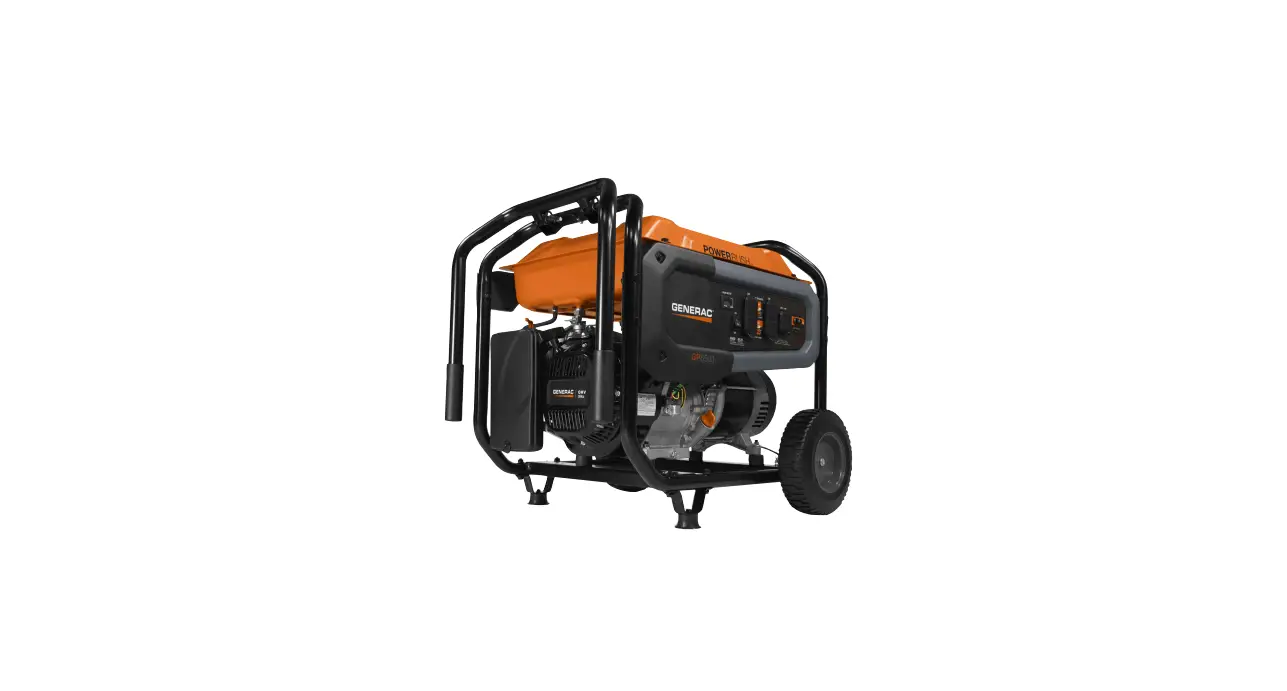
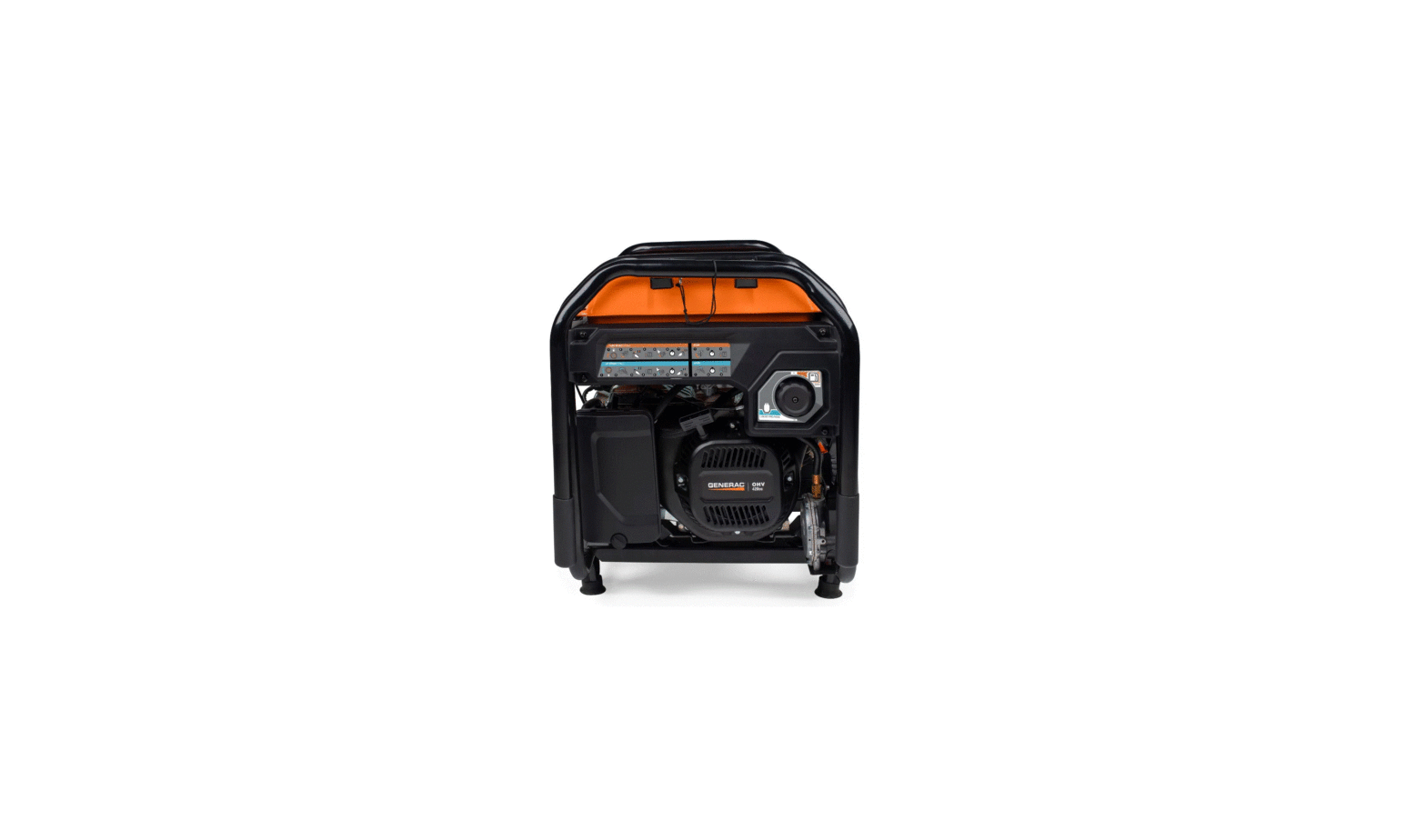
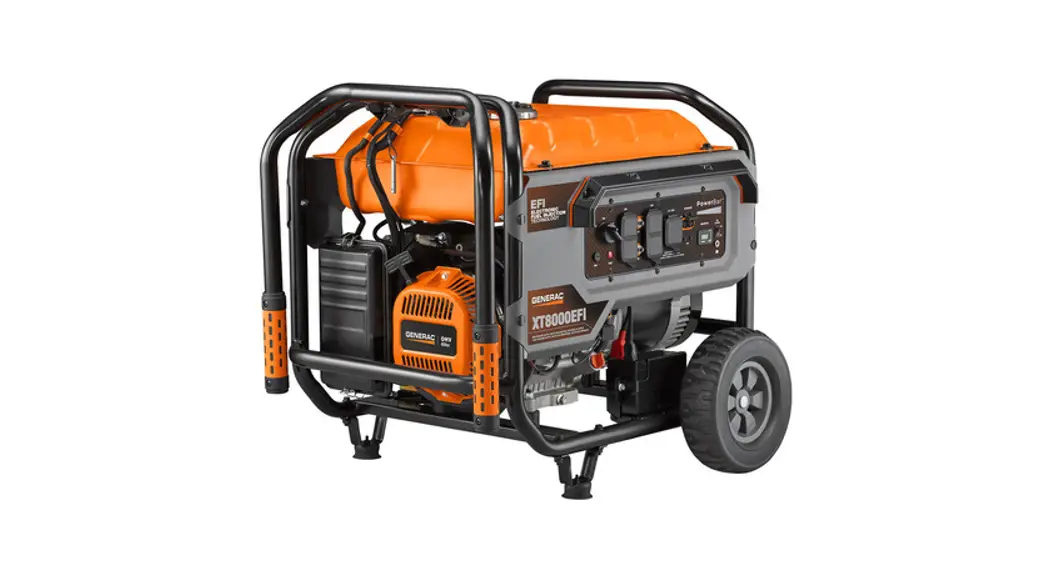
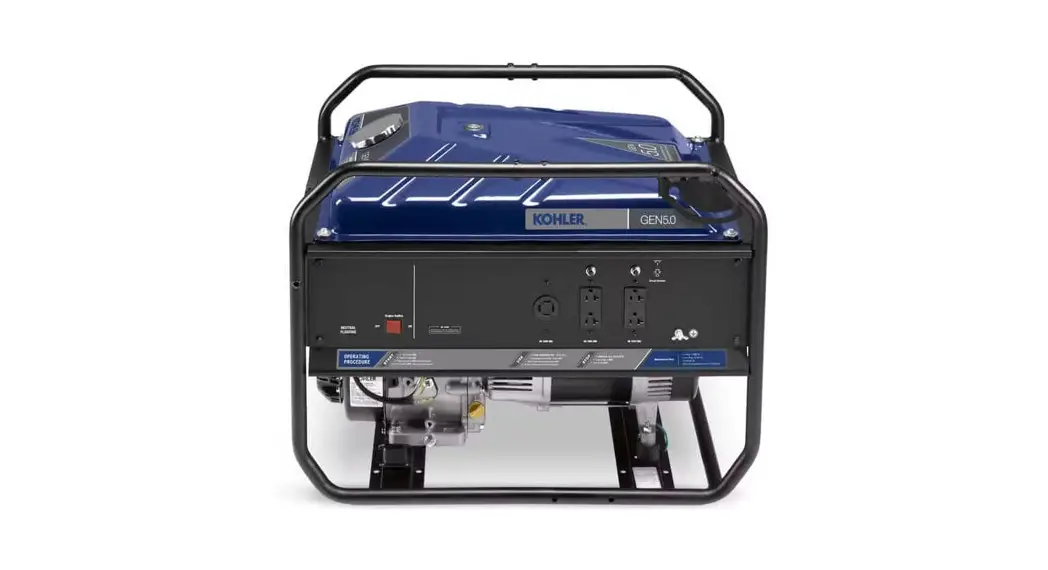
GP3300 Portable Generator
Product Information: GP3300 Portable Generator
The GP3300 Portable Generator is a compact, high performance,
air-cooled, engine-driven generator designed to supply electrical
power to operate electrical loads where no utility power is
available or in place of utility due to a power outage. The
generator is produced by Generac Power Systems, Inc. and is not
intended for use in critical life support applications.
The generator emits exhaust fumes that can be deadly, and it
should only be used outside far away from windows, doors, and vents
to prevent any harm. The product also contains or emits chemicals
known to the state of California to cause cancer, birth defects,
and other reproductive harm. The operator is responsible for proper
and safe use of the equipment and should read the manual thoroughly
before using it.
Product Usage Instructions
- Location: The generator should only be used
outside far away from windows, doors, and vents to prevent any harm
from deadly exhaust fumes. - Assembly: Follow the instructions in section
1.2 of the manual for assembling the generator. - Emission Information: Refer to section 1.3 of
the manual for information on the emissions of the generator. - Operation: Follow the instructions in section
5 of the manual for operating the generator. - Maintenance: Refer to section 10 of the manual
for maintenance instructions. - Troubleshooting: In case of any issues, refer
to section 15 of the manual for troubleshooting guidelines.
It is important to note that the information contained in the
manual was based on machines in production at the time of
publication, and Generac reserves the right to modify the manual at
any time. Therefore, it is essential to keep the manual and provide
it to any operator of the generator. Instruct other users to
properly start and operate the unit to prepare them if they need to
operate the equipment in an emergency.
Owner’s Manual
GP3300 Portable Generator
DEADLY EXHAUST FUMES! ONLY use OUTSIDE far away from windows, doors and vents!
NOT INTENDED FOR USE IN CRITICAL LIFE SUPPORT APPLICATIONS.
SAVE this Manual. Provide this manual to any operator of the generator.
AUTHORIZED DEALER SUPPORT:
Table of Contents
Introduction…………………………………………………………. 1 Read this Manual Thoroughly………………………………. 1 Safety Rules………………………………………………………… 1
Standards Index …………………………………………………………. 3
General Information …………………………………………….. 4
1.1 Unpacking………………………………………………………………….. 4 1.2 Assembly …………………………………………………………………… 4 1.3 Emission Information …………………………………………………… 4
Operation…………………………………………………………….. 5
2.1 Know the Generator ……………………………………………………. 5 2.2 Hourmeter………………………………………………………………….. 6 2.3 Connection Plugs ……………………………………………………….. 7 2.4 How to Use the Generator……………………………………………. 7 2.5 Don’t Overload the Generator ………………………………………. 8 2.6 Wattage Reference Guide ……………………………………………. 8 2.7 Before Starting the Generator ………………………………………. 9 2.8 To Start the Engine……………………………………………………. 10 2.9 Stopping the Engine ………………………………………………….. 10 2.10 Low Oil Level Shutdown System…………………………………. 10
Maintenance………………………………………………………. 10
3.1 Maintenance Schedule ………………………………………………. 10 3.2 Product Specifications …………………………………………………11 3.3 General Recommendations………………………………………….11 3.4 Service Air Filter ……………………………………………………….. 12 3.5 Valve Clearance ……………………………………………………….. 13 3.6 General……………………………………………………………………. 13 3.7 Long Term Storage……………………………………………………. 13 3.8 Other Storage Tips ……………………………………………………. 14
Troubleshooting ………………………………………………… 15
4.1 Troubleshooting Guide ………………………………………………. 15
Notes…………………………………………………………………. 16
MANUAL DEL PROPIETARIO …………………………..19
MANUEL DU PROPRIÉTAIRE …………………………..37
WARNING!
California Proposition 65 Engine exhaust and some of its constituents are known to the state of California to cause cancer,
birth defects, and other reproductive harm.
WARNING!
California Proposition 65 This product contains or emits chemicals known to the state of California to cause cancer,
birth defects, and other reproductive harm.
Introduction
INTRODUCTION
Thank you for purchasing this model by Generac Power Systems, Inc. This model is a compact, high performance, air-cooled, engine driven generator designed to supply electrical power to operate electrical loads where no utility power is available or in place of utility due to a power outage.
READ THIS MANUAL THOROUGHLY
If any portion of this manual is not understood, contact the nearest Authorized Dealer for starting, operating and servicing procedures.
The operator is responsible for proper and safe use of the equipment. We strongly recommend that the operator read this manual and thoroughly understand all instructions before using the equipment. We also strongly recommend instructing other users to properly start and operate the unit. This prepares them if they need to operate the equipment in an emergency.
The generator can operate safely, efficiently and reliably only if it is properly located, operated and maintained. Before operating or servicing the generator:
· Become familiar with and strictly adhere to all local, state and national codes and regulations.
· Study all safety warnings in this manual and on the product carefully.
· Become familiar with this manual and the unit before use. The manufacturer cannot anticipate every possible circumstance that might involve a hazard. The warnings in this manual, and on tags and decals affixed to the unit are, therefore, not all inclusive. If using a procedure, work method or operating technique that the manufacturer does not specifically recommend, ensure that it is safe for others. Also make sure the procedure, work method or operating technique utilized does not render the generator unsafe.
THE INFORMATION CONTAINED HEREIN WAS BASED ON MACHINES IN PRODUCTION AT THE TIME OF PUBLICATION. GENERAC RESERVES THE RIGHT TO MODIFY THIS MANUAL AT ANY TIME.
SAFETY RULES
Throughout this publication, and on tags and decals affixed to the generator, DANGER, WARNING, CAUTION and NOTE blocks are used to alert personnel to special instructions about a particular operation that may be hazardous if performed incorrectly or carelessly. Observe them carefully. Their definitions are as follows:
INDICATES A HAZARDOUS SITUATION OR ACTION WHICH, IF NOT AVOIDED, WILL RESULT IN DEATH OR SERIOUS INJURY.
Indicates a hazardous situation or action which, if not avoided, could result in death or serious injury.
Indicates a hazardous situation or action which, if not avoided, could result in minor or moderate injury.
NOTE: Notes contain additional information important to a procedure and will be found within the regular text body of this manual. These safety warnings cannot eliminate the hazards that they indicate. Common sense and strict compliance with the special instructions while performing the action or service are essential to preventing accidents. Four commonly used safety symbols accompany the DANGER, WARNING and CAUTION blocks. The type of information each indicates is as follows:
This symbol points out important safety information that, if not followed, could endanger personal safety and/or property of others.
This symbol points out potential explosion hazard. This symbol points out potential fire hazard. This symbol points out potential electrical shock hazard.
1
Safety Rules
GENERAL HAZARDS
· NEVER operate in an enclosed area, in a vehicle, or indoors EVEN IF doors and windows are open.
· For safety reasons, the manufacturer recommends that the maintenance of this equipment is carried out by an Authorized Dealer. Inspect the generator regularly, and contact the nearest Authorized Dealer for parts needing repair or replacement.
· Operate generator only on level surfaces and where it will not be exposed to excessive moisture, dirt, dust or corrosive vapors.
· Keep hands, feet, clothing, etc., away from drive belts, fans, and other moving parts. Never remove any fan guard or shield while the unit is operating.
· Certain parts of the generator get extremely hot during operation. Keep clear of the generator until it has cooled to avoid severe burns.
· Do NOT operate generator in the rain. · Do not alter the construction of the generator or change controls
which might create an unsafe operating condition. · Never start or stop the unit with electrical loads connected to
receptacles AND with connected devices turned ON. Start the engine and let it stabilize before connecting electrical loads. Disconnect all electrical loads before shutting down the generator. · Do not insert objects through unit’s cooling slots. · When working on this equipment, remain alert at all times. Never work on the equipment when physically or mentally fatigued. · Never use the generator or any of its parts as a step. Stepping on the unit can stress and break parts, and may result in dangerous operating conditions from leaking exhaust gases, fuel leakage, oil leakage, etc.
NOTE:
This generator (CARB model) is equipped with a spark arrestor muffler. The spark arrestor must be maintained in effective working order by the owner/ operator. In the State of California, a spark arrestor is required by law (Section 4442 of the California Public Resources Code). Other states may have similar laws. Federal laws apply on federal lands.
EXHAUST & LOCATION HAZARDS
· Never operate in an enclosed area or indoors! NEVER use in the home, in a vehicle, or in partly enclosed areas such as garages, EVEN IF doors and windows are open! ONLY use outdoors and far from open windows, doors, vents, and in an area that will not accumulate deadly exhaust.
· The engine exhaust fumes contain carbon monoxide, which you cannot see or smell. This poisonous gas, if breathed in sufficient concentrations, can cause unconsciousness or even death.
· Adequate, unobstructed flow of cooling and ventilating air is critical to correct generator operation. Do not alter the installation or permit even partial blockage of ventilation provisions, as this can seriously affect safe operation of the generator. The generator MUST be operated outdoors.
· This exhaust system must be properly maintained. Do nothing that might render the exhaust system unsafe or in noncompliance with any local codes and/or standards.
· Always use a battery operated carbon monoxide alarm indoors, installed according to the manufacturer’s instructions.
· If you start to feel sick, dizzy, or weak after the generator has been running, move to fresh air IMMEDIATELY. See a doctor, as you could have carbon monoxide poisoning.
ELECTRICAL HAZARDS
· The generator produces dangerously high voltage when in operation. Avoid contact with bare wires, terminals, connections, etc., while the unit is running, even on equipment connected to the generator. Ensure all appropriate covers, guards and barriers are in place before operating the generator.
· Never handle any kind of electrical cord or device while standing in water, while barefoot or while hands or feet are wet. DANGEROUS ELECTRICAL SHOCK MAY RESULT.
· The National Electric Code (NEC) requires the frame and external electrically conductive parts of the generator be properly connected to an approved earth ground. Local electrical codes may also require proper grounding of the generator. Consult with a local electrician for grounding requirements in the area.
· Use a ground fault circuit interrupter in any damp or highly conductive area (such as metal decking or steel work).
· Do not use worn, bare, frayed or otherwise damaged electrical cord sets with the generator.
· Before performing any maintenance on the generator, disconnect the engine starting battery (if equipped) to prevent accidental start up. Disconnect the cable from the battery post indicated by a NEGATIVE, NEG or () first. Reconnect that cable last.
· In case of accident caused by electric shock, immediately shut down the source of electrical power. If this is not possible, attempt to free the victim from the live conductor. AVOID DIRECT CONTACT WITH THE VICTIM. Use a non-conducting implement, such as a rope or board, to free the victim from the live conductor. If the victim is unconscious, apply first aid and get immediate medical help.
2
FIRE HAZARDS
· Gasoline is highly FLAMMABLE and its vapors are EXPLOSIVE. Do not permit smoking, open flames, sparks or heat in the vicinity while handling gasoline.
· Never add fuel while unit is running or hot. Allow engine to cool completely before adding fuel.
· Never fill fuel tank indoors. Comply with all laws regulating storage and handling of gasoline.
· Do not overfill the fuel tank. Always allow room for fuel expansion. If tank is over-filled, fuel can overflow onto a hot engine and cause FIRE or an EXPLOSION. Never store generator with fuel in tank where gasoline vapors might reach an open flame, spark or pilot light (as on a furnace, water heater or clothes dryer). FIRE or EXPLOSION may result. Allow unit to cool entirely before storage.
· Wipe up any fuel or oil spills immediately. Ensure that no combustible materials are left on or near the generator. Keep the area surrounding the generator clean and free from debris and keep a clearance of five (5) feet on all side to allow for proper ventilation of the generator.
· Do not insert objects through unit’s cooling slots. · Do not operate the generator if connected electrical devices
overheat, if electrical output is lost, if engine or generator sparks or if flames or smoke are observed while unit is running. · Keep a fire extinguisher near the generator at all times.
STANDARDS INDEX
1. National Fire Protection Association (NFPA) 70: The NATIONAL ELECTRIC CODE (NEC) available from www.nfpa.org
2. National Fire Protection Association (NFPA) 5000: BUILDING CONSTRUCTION AND SAFETY CODE available from www. nfpa.org
3. International Building Code available from www.iccsafe.org 4. Agricultural Wiring Handbook available from www.rerc.org, Rural
Electricity Resource Council P.O. Box 309 Wilmington, OH 45177-0309 5. ASAE EP-364.2 Installation and Maintenance of Farm Standby Electric Power available from www.asabe.org, American Society of Agricultural & Biological Engineers 2950 Niles Road, St. Joseph, MI 49085 This list is not all inclusive. Check with the Authority Having Local Jurisdiction (AHJ) for any local codes or standards which may be applicable to your jurisdiction.
Safety Rules
3
General Information
1.1 UNPACKING
· Remove all packaging material. · Remove separate accessory box. · Remove the generator from carton.
1.1.1 ACCESSORY BOX
Check all contents. If any parts are missing or damaged, locate an authorized dealer at 1-888-436-3722.
· Owner’s manual (1)
· Warranty Statement (1)
· Emissions Warranty (1)
· Bottle of Oil SAE 30 with funnel (1)
· Product Registration Cards (English, Spanish, French) (3)
· A – 8″ WHEELS (2)
· B – Axle Pins (2)
· C – Frame Foot Assembly (2)
· D – Handle Assembly (1)
· – Hardware Bag (1)
E – Handle Bracket (1) K – M8-1.25 X 55 Bolt (1)
F – Cotter Pins (2)
L – Washers (2)
G – M8-1.25 Hex Flange Nuts (5)
H – M8-1.25 X 40 Bolts (2)
J – M8-1.25 X 45 Bolts (4)
1.2 ASSEMBLY
The generator requires some assembly prior to using it. If problems arise when assembling the generator, please call the Generator Helpline at 1-888-436-3722.
The following tools are required to properly assemble the generator:
· Needle-nose pliers · Ratchet and 12mm (1/2″) socket · 12mm (1/2″) box wrench or adjustable wrench
1.2.1 ASSEMBLING THE ACCESSORY KIT
The wheels are designed for the unit to greatly improve the portability of the generator.
NOTE:
The wheels are not intended for over-the-road-use.
1. Refer to Figure 1 to install the wheels as shown. Slide the axle pins (B) through the wheels (A). through the frame brackets, washers (L) then install the cotter pins (F).
2. Refer to Figure 1 to install the wheel bumpers as shown.. Place the frame foot assemblies (C) under the frame and secure with two M8-1.25 x 45 bolts (J) and 2 M8 – 1.25 hex flange nuts (G).
3. Refer to Figure 2 to install the handle assembly as shown. Install the handle bracket to the frame using two M8-1.25 x 40 bolts (if not already assembled).
4
Secure the handle assembly (D) to the handle bracket (E) using the M8-1.25 x 55 bolt (K) and one M8-1.25 hex flange nut (G).
Figure 1 Wheel Assembly
B A
J
L F
C G
Figure 2 Handle Kit
E
H
K
D G
1.3 EMISSION INFORMATION
The Environmental Protection Agency (and California Air Resource Board for generators certified to CA standards) requires that this generator comply with exhaust and evaporative emission standards. Locate the emissions compliance decal on the engine to determine what standards the generator meets, and to determine which warranty applies. This generator is certified to operate on gasoline. The emission control system includes the following components (if equipped):
· Air Induction System
Intake Pipe / Manifold Air Cleaner · Fuel System
Carburetor Fuel Tank / Cap Fuel Lines Evaporative Vent Lines Carbon Canister
· Ignition System
Spark Plug Ignition Module · Exhaust System
Exhaust Manifold Muffler Pulsed Air Valve Catalyst
2.1 KNOW THE GENERATOR
Read the Owner’s Manual and Safety Rules before operating this generator.
Compare the generator to Figures 3 through 6 to become familiarized with the locations of various controls and adjustments. Save this manual for future reference.
1. 120 Volt AC, 20 Amp, Duplex Receptacle Supplies electrical power for the operation of 120 Volt AC, 20 Amp, single-phase, 60 Hz electrical lighting, appliance, tool and motor loads. CARB models are equipped with GFCI outlets.
2. 120/240V AC, 20 Amp Locking Receptacle Supplies electrical power for the operation of 120 and/or 240 volt AC, 20 amp, single-phase, 60 Hz, electrical lighting, appliance, tool and motor loads.
3. Circuit Breakers (AC) The control panel is provided with a 2-pole, 14 amp circuit breaker to protect the generator against electrical overload.
4. Air Filter Filters intake air as it is drawn into the engine. 5. Choke Lever Used when starting a cold engine. 6. Fuel Tank Tank holds 3.35 U.S. gallons of fuel. 7. Grounding Lug Ground the generator to an approved earth
ground here. See “Grounding the Generator” for details. 8. On/OFF Switch Controls the operation of the generator. 9. Muffler Quiets the engine. 10. Handle Pivot and retract for storage. 11. Gas Cap Fuel fill location. 12. Fuel Gauge Shows fuel level in tank. 13. Oil Check/Fill Check and fill oil here. 14. Recoil Starter Use to start engine manually. 15. Fuel Shut Off Valve between fuel tank and carburetor. 16. Oil Drain Plug Used to drain engine oil. 17. Spark Arrestor Reduces fire hazard by containing sparks.
(CARB models only) 18. Roll Over Valve – Passes fuel vapors to the air box. 19. Recovery Hose – Installed between the roll over valve and the
engine. 20. Carbon Canister – Absorbs fuel vapors (CARB models only). 21. HourMeter – Tracks hours of operation.
Operation
Figure 3a – Control Panel – 49 state & CSA
21
2
1
8
3
Figure 3b – Control Panel – CARB
21
2
1
8
3
Figure 4 – Generator Controls
6 11
5
4 15 14
5
Operation
Figure 5 – Generator Controls
19 18 12
10
16 13
Figure 6 – Muffler
20
17
9
2.2 HOURMETER
The Hourmeter tracks hours of operation for scheduled maintenance (Figure 7): There will be a “CHG OIL” message every 100 hours. The message will flash one hour before and one hour after each 100 hour interval, providing a two hour window to perform service. This message will actually begin flashing at 99 hours and disable itself at 101 hours again, providing a two hour window to perform the service. Every 200 hours the “SVC” icon on the lower left hand corner of the display will flash. The message will flash one hour before and one hour after each 200 hour interval providing a two hour window to perform service.
Figure 7 Hourmeter
0000.0
HOUR GLASS GRAPHIC
RESET BUTTON (IF EQUIPPED)
When the hour meter is in the Flash Alert mode, the maintenance message will always alternate with elapsed time in hours and tenths. The hours will flash four times, then alternate with the maintenance message four times until the meter resets itself.
· 100 hours – CHG OIL — Oil Change Interval (Every 100 hrs) · 200 hours – SVC — Service Air Filter (Every 200 hrs)
Note:
The hour glass graphic will flash on and off when the engine is running. This signifies that the meter is tracking hours of operation.
6
Operation
2.3 CONNECTION PLUGS
2.3.1 120 VAC DUPLEX RECEPTACLE
This is a 120 Volt outlet protected against overload by a 14 Amp circuit breaker (Figure 7). 14 Amps of current may be drawn from each socket, however, total power drawn must be kept within data plate ratings. Use only high quality, well insulated, 3-wire grounded cord sets rated for 125 Volts at 20 Amps (or greater).
2.3.2 120/240 VAC, 20A TWISTLOCK RECEPTACLE
This is a 120/240 Volt outlet protected against overload by a 14 Amp circuit breaker (Figure 8). Connect a suitable 4-wire grounded cord set to the plug and to the desired load. The cord set should be rated for 250 volts at 20 amps (or greater) if the 120/240 receptacle is used along with 120 volt receptacle. The total load drawn must not exceed the data label ratings.
Figure 8 – 120 VAC Duplex & 120/240 VAC Twistlock
Adequate, unobstructed flow of cooling and ventilating air is critical to correct generator operation. Do not alter the installation or permit even partial blockage of ventilation provisions, as this can seriously affect safe operation of the generator. The generator MUST be operated outdoors.
This exhaust system must be properly maintained. Do nothing that might render the exhaust system unsafe or in noncompliance with any local codes and/or standards.
Always use a battery operated carbon monoxide alarm indoors, installed according to the manufacturer’s instructions.
IMPORTANT: Do not overload the generator. Also, do not overload individual panel receptacles. These outlets are protected against overload with circuit breakers. If amperage rating of any circuit breaker is exceeded, that breaker opens and electrical output to that receptacle is lost. Read “Don’t Overload the Generator” carefully.
2.4 HOW TO USE THE GENERATOR
If there are any problems operating the generator, please call the generator helpline at 1-888-436-3722.
Never operate in an enclosed area or indoors! NEVER use in the home, in a vehicle, or in partly enclosed areas such as garages, EVEN IF doors and windows are open! ONLY use outdoors and far from open windows, doors, vents, and in an area that will not accumulate deadly exhaust.
The engine exhaust fumes contain carbon monoxide, which can you cannot see or smell. This poisonous gas, if breathed in sufficient concentrations, can cause unconsciousness or even death.
2.4.1 GROUNDING THE GENERATOR WHEN USED AS A PORTABLE
This generator has an equipment ground that connects the generator frame components to the ground terminals on the AC output receptacles (see NEC 250.34 (A) for explanation). This allows the generator to be used as a portable without grounding the frame of the generator as specified in NEC 250.34.
Special Requirements
There may be Federal or State Occupational Safety and Health Administration (OSHA) regulations, local codes, or ordinances that apply to the intended use of the generator.
Please consult a qualified electrician, electrical inspector, or the local agency having jurisdiction:
· In some areas, generators are required to be registered with local utility companies.
· If the generator is used at a construction site, there may be additional regulations which must be observed.
7
Operation
2.4.2 CONNECTING THE GENERATOR TO A BUILDING’S ELECTRICAL SYSTEM
When connecting directly to a building’s electrical system, it is recommended that a manual transfer switch is used. Connections for a portable generator to a building’s electrical system must be made by a qualified electrician and in strict compliance with all national and local electrical codes and laws.
Figure 9 – Grounding the Generator
GROUNDING
2.4.3 CONNECTING ELECTRICAL LOADS
DO NOT connect 240 Volt loads to 120 Volt receptacles. DO NOT connect 3-phase loads to the generator. DO NOT connect 50 Hz loads to the generator. · Let engine stabilize and warm up for a few minutes after starting. · Plug in and turn on the desired 120 or 240 Volt AC, single phase, 60 Hz
electrical loads. · Add up the rated watts (or amps) of all loads to be connected at one time.
This total should not be greater than (a) the rated wattage/amperage capacity of the generator or (b) circuit breaker rating of the receptacle supplying the power. See “Don’t Overload the Generator”.
2.5 DON’T OVERLOAD THE GENERATOR
Overloading a generator in excess of its rated wattage capacity can result in damage to the generator and to connected electrical devices. Observe the following to prevent overloading the unit: · Add up the total wattage of all electrical devices to be connected
at one time. This total should NOT be greater than the generator’s wattage capacity. · The rated wattage of lights can be taken from light bulbs. The rated wattage of tools, appliances and motors can usually be found on a data label or decal affixed to the device. · If the appliance, tool or motor does not give wattage, multiply volts times ampere rating to determine watts (volts x amps = watts). · Some electric motors, such as induction types, require about three times more watts of power for starting than for running. This surge of power lasts only a few seconds when starting such motors. Make sure to allow for high starting wattage when selecting electrical devices to connect to the generator: 1. Figure the watts needed to start the largest motor. 2. Add to that figure the running watts of all other connected loads. The Wattage Reference Guide is provided to assist in determining how many items the generator can operate at one time.
NOTE: All figures are approximate. See data label on appliance for wattage requirements.
8
2.6 WATTAGE REFERENCE GUIDE
Device. . . . . . . . . . . . . . . . . . . . . . . . . . . . . . . . . . . . . . . .Running Watts *Air Conditioner (12,000 Btu) . . . . . . . . . . . . . . . . . . . . . . . . . . . . . . 1700 *Air Conditioner (24,000 Btu) . . . . . . . . . . . . . . . . . . . . . . . . . . . . . . 3800 *Air Conditioner (40,000 Btu) . . . . . . . . . . . . . . . . . . . . . . . . . . . . . . 6000 Battery Charger (20 Amp). . . . . . . . . . . . . . . . . . . . . . . . . . . . . . . . . . 500 Belt Sander (3″) . . . . . . . . . . . . . . . . . . . . . . . . . . . . . . . . . . . . . . . . 1000 Chain Saw. . . . . . . . . . . . . . . . . . . . . . . . . . . . . . . . . . . . . . . . . . . . . 1200 Circular Saw (6-1/2″). . . . . . . . . . . . . . . . . . . . . . . . . . . . . . . .800 to 1000 *Clothes Dryer (Electric) . . . . . . . . . . . . . . . . . . . . . . . . . . . . . . . . . 5750 *Clothes Dryer (Gas). . . . . . . . . . . . . . . . . . . . . . . . . . . . . . . . . . . . . . 700 *Clothes Washer . . . . . . . . . . . . . . . . . . . . . . . . . . . . . . . . . . . . . . . . 1150 Coffee Maker. . . . . . . . . . . . . . . . . . . . . . . . . . . . . . . . . . . . . . . . . . . 1750 *Compressor (1 HP) . . . . . . . . . . . . . . . . . . . . . . . . . . . . . . . . . . . . . 2000 *Compressor (3/4 HP). . . . . . . . . . . . . . . . . . . . . . . . . . . . . . . . . . . . 1800 *Compressor (1/2 HP). . . . . . . . . . . . . . . . . . . . . . . . . . . . . . . . . . . . 1400 Curling Iron . . . . . . . . . . . . . . . . . . . . . . . . . . . . . . . . . . . . . . . . . . . . . 700 *Dehumidifier. . . . . . . . . . . . . . . . . . . . . . . . . . . . . . . . . . . . . . . . . . . . 650 Disc Sander (9″) . . . . . . . . . . . . . . . . . . . . . . . . . . . . . . . . . . . . . . . . 1200 Edge Trimmer . . . . . . . . . . . . . . . . . . . . . . . . . . . . . . . . . . . . . . . . . . . 500 Electric Blanket . . . . . . . . . . . . . . . . . . . . . . . . . . . . . . . . . . . . . . . . . . 400 Electric Nail Gun . . . . . . . . . . . . . . . . . . . . . . . . . . . . . . . . . . . . . . . . 1200 Electric Range (per element) . . . . . . . . . . . . . . . . . . . . . . . . . . . . . . 1500 Electric Skillet . . . . . . . . . . . . . . . . . . . . . . . . . . . . . . . . . . . . . . . . . . 1250 *Freezer . . . . . . . . . . . . . . . . . . . . . . . . . . . . . . . . . . . . . . . . . . . . . . ..700 *Furnace Fan (3/5 HP) . . . . . . . . . . . . . . . . . . . . . . . . . . . . . . . . . . . . 875 *Garage Door Opener. . . . . . . . . . . . . . . . . . . . . . . . . . . . . . . .500 to 750 Hair Dryer . . . . . . . . . . . . . . . . . . . . . . . . . . . . . . . . . . . . . . . . . . . . . 1200 Hand Drill . . . . . . . . . . . . . . . . . . . . . . . . . . . . . . . . . . . . . . . . 250 to 1100 Hedge Trimmer . . . . . . . . . . . . . . . . . . . . . . . . . . . . . . . . . . . . . . . . . . 450 Impact Wrench . . . . . . . . . . . . . . . . . . . . . . . . . . . . . . . . . . . . . . . . . . 500 Iron . . . . . . . . . . . . . . . . . . . . . . . . . . . . . . . . . . . . . . . . . . . . . . . . . . 1200 *Jet Pump . . . . . . . . . . . . . . . . . . . . . . . . . . . . . . . . . . . . . . . . . . . . . . 800 Lawn Mower . . . . . . . . . . . . . . . . . . . . . . . . . . . . . . . . . . . . . . . . . . . 1200 Light Bulb . . . . . . . . . . . . . . . . . . . . . . . . . . . . . . . . . . . . . . . . . . . . . . 100 Microwave Oven . . . . . . . . . . . . . . . . . . . . . . . . . . . . . . . . . . .700 to 1000 *Milk Cooler. . . . . . . . . . . . . . . . . . . . . . . . . . . . . . . . . . . . . . . . . . . . 1100 Oil Burner on Furnace . . . . . . . . . . . . . . . . . . . . . . . . . . . . . . . . . . . . 300 Oil Fired Space Heater (140,000 Btu) . . . . . . . . . . . . . . . . . . . . . . . . 400 Oil Fired Space Heater (85,000 Btu) . . . . . . . . . . . . . . . . . . . . . . . . . 225 Oil Fired Space Heater (30,000 Btu) . . . . . . . . . . . . . . . . . . . . . . . . . 150 *Paint Sprayer, Airless (1/3 HP) . . . . . . . . . . . . . . . . . . . . . . . . . . . . . 600 Paint Sprayer, Airless (handheld) . . . . . . . . . . . . . . . . . . . . . . . . . . . . 150 Radio. . . . . . . . . . . . . . . . . . . . . . . . . . . . . . . . . . . . . . . . . . . . . .50 to 200 *Refrigerator . . . . . . . . . . . . . . . . . . . . . . . . . . . . . . . . . . . . . . . . . . . . 700 Slow Cooker . . . . . . . . . . . . . . . . . . . . . . . . . . . . . . . . . . . . . . . . . . . . 200 *Submersible Pump (1-1/2 HP) . . . . . . . . . . . . . . . . . . . . . . . . . . . . 2800 *Submersible Pump (1 HP). . . . . . . . . . . . . . . . . . . . . . . . . . . . . . . . 2000 *Submersible Pump (1/2 HP) . . . . . . . . . . . . . . . . . . . . . . . . . . . . . . 1500 *Sump Pump. . . . . . . . . . . . . . . . . . . . . . . . . . . . . . . . . . . . . .800 to 1050 *Table Saw (10″) . . . . . . . . . . . . . . . . . . . . . . . . . . . . . . . . . .1750 to 2000 Television . . . . . . . . . . . . . . . . . . . . . . . . . . . . . . . . . . . . . . . . .200 to 500 Toaster . . . . . . . . . . . . . . . . . . . . . . . . . . . . . . . . . . . . . . . . .1000 to 1650 Weed Trimmer. . . . . . . . . . . . . . . . . . . . . . . . . . . . . . . . . . . . . . . . . . . 500 * Allow 3 times the listed watts for starting these devices.
Operation
2.7 BEFORE STARTING THE GENERATOR
Prior to operating the generator, engine oil and gasoline will need to be added, as follows:
2.7.1 ADDING ENGINE OIL
All oil should meet minimum American Petroleum Institute (API) Service Class SJ, SL or better. Use no special additives. Select the oil’s viscosity grade according to the expected operating temperature (also see chart).
· Above 40° F, use SAE 30 · Below 40° F and down to 10° F, use 10W-30 · All temperatures, use synthetic 5W-30
10W-30
SAE 30
Synthetic 5W-30
Any attempt to crank or start the engine before it has been properly serviced with the recommended oil may result in an engine failure. 1. Place generator on a level surface (not to exceed 15° in any
direction). 2. Clean area around oil fill and remove oil fill cap and dipstick. 3. Wipe dipstick clean. 4. Slowly fill engine with oil through the oil fill opening until it
reaches the high mark on the dipstick (Figure 10). Stop filling occasionally to check oil level. Be careful not to over fill. 5. Install oil fill cap and finger tighten securely. 6. Check engine oil level before starting each time thereafter.
Figure 10 – Dipstick
2.7.2 ADDING GASOLINE
Never fill fuel tank indoors. Never fill fuel tank when engine is running or hot. Avoid spilling gasoline on a hot engine. Allow engine to cool entirely before filling fuel tank. DO NOT light a cigarette or smoke when filling the fuel tank.
Do not overfill the fuel tank. Always leave room for fuel expansion. If the fuel tank is overfilled, fuel can overflow onto a hot engine and cause FIRE or EXPLOSION. Wipe up any spilled fuel immediately.
Never light a cigarette or smoke when filling the fuel tank. Gasoline is highly FLAMMABLE and its vapors are EXPLOSIVE. Never permit smoking, open flames, sparks or heat in the vicinity while handling gasoline. 1. Use regular UNLEADED gasoline with the generator engine. Do
not use any gasoline with more than 10% added ethanol. Do not use E85 gasoline. Do not mix oil with gasoline. 2. Clean area around fuel fill cap, remove cap. 3. Slowly add unleaded regular gasoline to fuel tank. Be careful not to overfill (Figure 11). 4. Install fuel cap and wipe up any spilled gasoline.
Figure 11 – Fuel Tank
Fuel Tank
Fuel
DO NOT Fill Above Lip
IMPORTANT: It is important to prevent gum deposits from forming in fuel system parts such as the carburetor, fuel hose or tank during storage. Alcohol-blended fuels (called gasohol, ethanol or methanol) can attract moisture, which leads to separation and formation of acids during storage. Acidic gas can damage the fuel system of an engine while in storage. To avoid engine problems, the fuel system should be emptied before storage of 30 days or longer. See the “Storage” section. Never use engine or carburetor cleaner products in the fuel tank as permanent damage may occur.
HIGH
LOW
9
Maintenance
2.8 TO START THE ENGINE
Never start or stop engine with electrical devices plugged into the receptacles AND devices turned on. 1. Unplug all electrical loads from the unit’s receptacles before
starting the engine. 2. Make sure the unit is in a level position (not to exceed 15° in any
direction). 3. OPEN the Fuel Shut-off Valve (Figure 12). 4. Turn engine ON/OFF switch to ON position (Figure 12).
Figure 12 – Engine Controls
5. Move engine CHOKE lever to the FULL CHOKE position (Figure 13). Figure 13 – Engine Controls
CHOKE LEVER
NOTE: If engine fires, but does not continue to run, move choke lever to the START position and repeat starting instructions.
2.9 STOPPING THE ENGINE
1. Shut off all loads, then unplug the electrical loads from generator panel receptacles. Never start or stop the engine with electrical devices plugged in and turned on.
2. Let engine run at no-load for several minutes to stabilize the internal temperatures of engine and generator.
3. Move ON/OFF switch to OFF position. 4. Close fuel valve.
2.10 LOW OIL LEVEL SHUTDOWN SYSTEM
The engine is equipped with a low oil level sensor that shuts down the engine automatically when the oil level drops below a specified level. If the engine shuts down by itself and the fuel tank has enough gasoline, check engine oil level.
2.10.1 SENSING LOW OIL LEVEL
If the system senses a low oil level during operation, the engine shuts down. The engine will not run until the oil has been refilled to the proper level.
3.1 MAINTENANCE SCHEDULE
Follow the calendar intervals. More frequent service is required when
operating in adverse conditions noted below.
Check Oil Level
At Each Use
Change Oil ¥
*Every 50 Hours
Check Valve Clearance
***Every Season
Service Air Filter
**Every 25 Hours
Replace Spark Plug
****Every 100 Hours
¥ Change oil after first 20 hours of operation.
* Change oil every month when operating under heavy load or in high temperatures.
** Clean more often under dirty or dusty operating conditions. Replace air filter parts if they cannot be adequately cleaned.
*** Check valve clearance and adjust if necessary after first 50 hours of operation and every 100 hours thereafter.
**** Clean and re-gap spark plug every 50 hours.
6. To start engine, firmly grasp the recoil handle and pull slowly until increased resistance is felt. Pull rapidly up and away.
7. When engine starts, move choke lever to 1/2-CHOKE position until engine runs smoothly and then fully into RUN position. If engine falters, move choke back out to 1/2-CHOKE position until engine runs smoothly and then to RUN position.
10
Maintenance
3.2 PRODUCT SPECIFICATIONS
3.2.1 GENERATOR SPECIFICATIONS
Rated. Power………………………………………………………….. ….3.3 kW** Surge Power……………………………………………………………….. 3.75 kW Rated AC Voltage………………………………………………………… 120/240 Rated Current………………………………………………. 27.5/13.75 Amps** Rated Frequency………………………………………… 60 Hz @ 3600 RPM Phase …………………………………………………………………. Single Phase Assembled Dimensions (L x W x H) 622mm (24.5 in) x 564mm (22.2
in) x 534mm (21.0 in) Unit Weight ………………………………………………………….50kg (110 lbs)
** Maximum wattage is subject to, and limited by, such factors as fuel Btu content, ambient temperature, altitude, engine condition, etc.. Maximum power decreases about 3.5% for each 1,000 feet above sea level; and will also decrease about 1% for each 6° C (10° F) above 16° C (60° F) ambient temperature.
3.2.2 ENGINE SPECIFICATIONS
Displacement………………………………………………………………….208 cc Spark Plug Type ……………………….. F6TC, NGK BP6IS or Champion …………………………………………………………………………………. RN11YC Spark Plug Gap……………………………………..0.030 inch or (0.76 mm) Gasoline Capacity ………………………………. 12.7 L (3.35 U.S. gallons) Oil Type ………………….. See Chart in “Before Starting the Generator” …………………………………………………………………………………… Section Oil Capacity …………………………………………………… 0.6 L (0.634 Qts.) Run Time ………………………………………………. 10.2 Hours at 1/2 Load
3.3 GENERAL RECOMMENDATIONS
The warranty of the generator does not cover items that have been subjected to operator abuse or negligence. To receive full value from the warranty, the operator must maintain the generator as instructed in this manual.
Some adjustments will need to be made periodically to properly maintain the generator.
All adjustments in the Maintenance section of this manual should be made at least once each season. Follow the requirements in the “Maintenance Schedule”.
NOTE:
Once a year replace the spark plug and replace the air filter. A new spark plug and clean air filter assure proper fuel-air mixture and help the engine run better and last longer.
3.3.1 GENERATOR MAINTENANCE
Generator maintenance consists of keeping the unit clean and dry. Operate and store the unit in a clean dry environment where it will not be exposed to excessive dust, dirt, moisture or any corrosive vapors. Cooling air slots in the generator must not become clogged with snow, leaves, or any other foreign material.
Check the cleanliness of the generator frequently and clean when dust, dirt, oil, moisture or other foreign substances are visible on its exterior surface.
Never insert any object or tool through the air cooling slots, even if the engine is not running. NOTE: DO NOT use a garden hose to clean generator. Water can enter the engine fuel system and cause problems. In addition, if water enters the generator through cooling air slots, some water will be retained in voids and crevices of the rotor and stator winding insulation. Water and dirt buildup on the generator internal windings will eventually decrease the insulation resistance of these windings.
3.3.2 TO CLEAN THE GENERATOR
· Use a damp cloth to wipe exterior surfaces clean. · A soft, bristle brush may be used to loosen caked on dirt, oil, etc. · A vacuum cleaner may be used to pick up loose dirt and debris. · Low pressure air (not to exceed 25 psi) may be used to blow away
dirt. Inspect cooling air slots and openings on the generator. These openings must be kept clean and unobstructed.
3.3.3 ENGINE MAINTENANCE
When working on the generator, always disconnect the spark plug wire from spark plug and keep wire away from spark plug.
3.3.4 CHECKING OIL LEVEL
See the “Before Starting the Generator” section for information on checking the oil level. The oil level should be checked before each use, or at least every eight hours of operation. Keep the oil level maintained (Figure 10).
3.3.5 CHANGING THE OIL
Change the oil after the first 20 hours of operation, then every 50 hours thereafter. If running this unit under dirty or dusty conditions, or in extremely hot weather, change the oil more often.
Hot oil may cause burns. Allow engine to cool before draining oil. Avoid prolonged or repeated skin exposure with used oil. Thoroughly wash exposed areas with soap. Use the following instructions to change the oil while the engine is still warm: 1. Clean area around oil drain plug (Figure 14). 2. Remove oil drain plug from engine and oil fill plug to drain oil
completely into a suitable container. 3. When oil has completely drained, install oil drain plug and tighten
securely. 4. Fill engine with recommended oil. (See “Before Starting the
Generator” for oil recommendations.) 5. Wipe up any spilled oil.
11
Maintenance
6. Dispose of used oil at a proper collection center. Figure 14 – Oil Drain, Check & Fill
Clean and inspect the spark arrestor when the engine is at ambient temperature as follows:
1. Remove the spark arrestor screen from the muffler by loosening the clamp and removing the screw.
2. Inspect screen and replace if torn, perforated or otherwise damaged. DO NOT USE a defective screen. If screen is not damaged, clean it with commercial solvent. A replacement spark arrestor is available through the nearest dealer.
3. Replace the spark arrestor and secure with the clamp and screw.
Figure 16 – Spark Arrestor
3.3.6 REPLACING THE SPARK PLUG
Use spark plug F6TC, NGK® BP6IS or Champion® RN11YC. Replace the plug once each year. This will help the engine start easier and run better. 1. Stop the engine and pull the spark plug wire off of the spark plug. 2. Clean the area around the spark plug and remove it from the
cylinder head. 3. Set the spark plug’s gap to 0.76 mm (0.030 in.). Install the
correctly gapped spark plug into the cylinder head and torque to 15 ft/lbs. (Figure 15).
Figure 15 – Spark Plug Gap
3.3.7 SPARK ARRESTOR
The engine exhaust muffler (CARB model) has a spark arrestor screen. (CARB models) Inspect and clean the screen at least once each year (Figure 16). If unit is used regularly, inspect and clean more often.
If using the generator on any forest-covered, brushcovered unimproved land, it must be equipped with a spark arrestor. The spark arrestor must be maintained in good condition by the owner/operator.
12
3.4 SERVICE AIR FILTER
The engine will not run properly and may be damaged if using a dirty air filter. Clean the air filter every 25 hours (Figure 17). Clean or replace more often if operating under dusty conditions.
1. Remove air filter cover. 2. Wash in soapy water. Squeeze filter dry in clean cloth (DO NOT
TWIST). 3. Clean air filter cover before re-installing it.
Figure 17 – Air Filter
BOLT
AIR FILTER AIR FILTER COVER
Maintenance
3.5 VALVE CLEARANCE
· Intake — 0.10 ± 0.02mm (cold), (0.004″ ± 0.0008″ inches) · Exhaust — 0.15 ± 0.02mm (cold) (0.006″ ± 0.0008″ inches) After the first 50 hours of operation, check the valve clearance in the engine and adjust if necessary.
Important: If feeling uncomfortable about doing this procedure or the proper tools are not available, please take the generator to the nearest service center to have the valve clearance adjusted. This is a very important step to ensure longest life for the engine.
To check valve clearance:
1. Make sure the engine is at room temperature (60° – 80° F). 2. Make sure that the spark plug wire(s) is removed from the
spark plug and out of the way. Remove spark plug(s). 3. Remove the four screws attaching the valve cover(s). 4. Make sure the piston is at Top Dead Center (TDC) of its
compression stroke (both valves closed). To get the piston at TDC, remove the intake screen at the front of the engine to gain access to the flywheel nut. Use a large socket and socket wrench to rotate the nut and hence the engine in a clockwise direction while watching the piston through the spark plug hole. The piston should move up and down. The piston is at TDC when it is up as high as it can go. 5. See Figure 17. Insert a 0.002 – 0.004 inch (0.05 – 0.1mm) feeler gauge between the rocker arm and valve stem. Correct clearance is when a slight drag is felt when sliding the gauge back and forth. If the clearance is either excessively loose or tight the rocker arms will need adjusting.
To adjust valve clearance:
1. Loosen the rocker jam nut. Use an Allen wrench to turn the pivot ball stud, while checking clearance between the rocker arm and the valve stem with a feeler gauge (Figure 18).
NOTE:
The rocker arm jam nut must be held in place as the pivot ball stud is turned.
When valve clearance is correct, hold the pivot ball stud in place with the Allen wrench and tighten the rocker arm jam nut. Tighten the jam nut to 174 in/lbs. torque. After tightening the jam nut, recheck valve clearance to make sure it did not change.
2. Install new valve cover gasket. 3. Re-attach the valve cover.
NOTE:
Start all four screws before tightening or it will not be possible to get all the screws in place. Make sure the valve cover gasket is in place. Replace spark plug(s).
4. Re-attach the spark plug wire(s) to the spark plug(s). Figure 18 – Valve Clearance Adjustment
3.6 GENERAL
The generator should be started at least once every 30 days and be allowed to run at least 30 minutes. If this cannot be done and the unit must be stored for more than 30 days, use the following information as a guide to prepare it for storage.
NEVER store engine with fuel in tank indoors or in enclosed, poorly ventilated areas where fumes may reach an open flame, spark or pilot light as on a furnace, water heater, clothes dryer or other gas appliance.
3.7 LONG TERM STORAGE
It is important to prevent gum deposits from forming in essential fuel system parts such as the carburetor, fuel hose or tank during storage. Also, experience indicates that alcohol-blended fuels (called gasohol, ethanol or methanol) can attract moisture, which leads to separation and formation of acids during storage. Acidic gas can damage the fuel system of an engine while in storage. To avoid engine problems, the fuel system should be emptied before storage of 30 days or longer, as follows: 1. Add a quality gasoline stabilizer to the fuel per the manufacturer’s
specifications, and run the unit for 10-15 minutes. 2. After engine cools down, remove all gasoline from the fuel
tank. Use a commercially available, non-conductive vacuum siphon.
Drain fuel into approved container outdoors, away from open flame. Be sure engine is cool. Do not smoke.
13
Maintenance
3. Start and run engine until engine stops from lack of fuel. 4. After engine cools down, drain oil from engine. Refill with
recommended grade. 5. Remove spark plug and pour about 1/2 ounce (15 ml) of
engine oil into the cylinder. Cover spark plug hole with rag. Pull the recoil starter a couple times to lubricate the piston rings and cylinder bore. A fogging agent can also be used in the place of oil.
Avoid spray from spark plug hole when cranking engine.
6. Install and tighten spark plug. Do not connect spark plug wire. 7. Clean the generator outer surfaces. Check that cooling air
slots and openings on generator are open and unobstructed. 8. Store the unit in a clean, dry place.
3.8 OTHER STORAGE TIPS
· Do not store gasoline from one season to another. · Replace the gasoline can if it starts to rust. Rust and/or dirt in
the gasoline will cause problems with the carburetor and fuel system. · If possible, store the unit indoors and cover it to give protection from dust and dirt. BE SURE TO EMPTY THE FUEL TANK. · If it is not practical to empty the fuel tank and the unit is to be stored for some time, use a commercially available fuel stabilizer added to the gasoline to increase the life of the gasoline. · Cover the unit with a suitable protective cover that does not retain moisture
NEVER cover the generator while engine and exhaust area are warm.
14
Troubleshooting
4.1 TROUBLESHOOTING GUIDE
PROBLEM
Engine is running, but no AC output is available.
CAUSE
1. Circuit breaker is open. 2. Poor connection or defective cord set. 3. Connected device is bad. 4. Fault in generator.
Engine runs good but bogs down when loads are connected.
1. Short circuit in a connected load. 2. Generator is overloaded. 3. Engine speed is too slow. 4. Shorted generator circuit.
Engine will not start; or starts and runs rough.
1. Dirty air filter. 2. Out of gasoline. 3. Stale gasoline. 4. Spark plug wire not connected to spark plug. 5. Bad spark plug. 6. Water in gasoline. 7. Over-choking. 8. Low oil level. 9. Excessive rich fuel mixture. 10. Intake valve stuck open or closed. 11. Engine has lost compression.
Engine shuts down during operation.
1. Out of gasoline. 2. Low oil level. 3. Fault in engine.
Engine lacks power.
1. Load is too high. 2. Dirty air filter. 3. Engine needs to be serviced.
Engine “hunts” or falters.
1. Choke is opened too soon. 2. Carburetor is running too rich or too lean.
CORRECTION
1. Reset circuit breaker. 2. Check and repair. 3. Connect another device that is in good condition. 4. Contact Authorized Service Facility.
1. Disconnect shorted electrical load. 2. See “Don’t Overload the Generator” . 3. Contact Authorized Service Facility. 4. Contact Authorized Service Facility.
1. Clean or replace air filter. 2. Fill fuel tank. 3. Drain fuel tank and fill with fresh fuel. 4. Connect wire to spark plug. 5. Replace spark plug. 6. Drain fuel tank; fill with fresh fuel. 7. Put choke knob to No Choke position. 8. Fill crankcase to proper level. 9. Contact Authorized Service Facility. 10. Contact Authorized Service Facility. 11. Contact Authorized Service Facility.
1. Fill fuel tank. 2. Fill crankcase to proper level. 3. Contact Authorized Service Facility.
1. See “Don’t Overload the Generator”. 2. Replace air filter. 3. Contact Authorized Service Facility.
1. Move choke to halfway position until engine runs smoothly.
2. Contact Authorized Service Facility.
15
Notes
16
Notes
17
©2014 Generac Power Systems, Inc. All rights reserved. Specifications are subject to change without notice No reproduction allowed in any form without prior written consent from Generac Power Systems, Inc.
Part No. 0K3390
Rev. C (03/25/14)
Printed in U.S.A.
Manual del propietario
Generador portátil GP3300
GARANTÍA
LIMITADA DE
2 AÑOS
¡PELIGRO!
EMANACIONES DE ESCAPE MORTALES! ¡Use ÚNICAMENTE EN EXTERIORES, lejos de ventanas, puertas y ventilaciones!
NO ESTÁN DESTINADOS AL USO EN APLICACIONES CRÍTICAS DE SOPORTE A LA VIDA HUMANA.
GUARDE este manual. Proporcione este manual a todos los operadores del generador.
APOYO DE CONCESIONARIO AUTORIZADO:
VENTAJAS DEL SERVICIO
Mantenimiento/Reparación/Servicio/Planes de protección extendida
LOWE’S
Llame 24/7/365 para ayuda con la resolución de problemas o para programar servicios.
2008 by Lowe’s. Todos los derechos reservados. Lowe’s y el diseño del isotipo con forma de alero son marcas comerciales de LF, LLC
19
Índice
Introducción………………………………………………………. 21 Lea este manual minuciosamente1…………………….. 21 Reglas de seguridad ………………………………………….. 21
Índice de normas………………………………………………………. 23
Información general …………………………………………… 24
1.1 Desembalaje…………………………………………………………….. 24 1.2 Armado ……………………………………………………………………. 24 1.3 Información sobre emisiones………………………………………. 24
Funcionamiento…………………………………………………. 25
2.1 Conozca el generador ……………………………………………….. 25 2.2 Horómetro………………………………………………………………… 26 2.3 Conexión de las bujías ………………………………………………. 27 2.4 Cómo usar el generador…………………………………………….. 27 2.5 No sobrecargr el generador ……………………………………….. 28 2.6 Guía de referencia de potencia en vatios …………………….. 28 2.7 Antes de arrancar el generador…………………………………… 29 2.8 Arranque del motor……………………………………………………. 30 2.9 Parada del motor………………………………………………………. 30 2.10 Sistema de apagado por nivel de aceite bajo ……………….. 30
Mantenimiento …………………………………………………… 30
3.1 Programa de mantenimiento ………………………………………. 30 3.2 Especificaciones del producto…………………………………….. 31 3.3 Recomendaciones generales ……………………………………… 31 3.4 Servicio del iltro de aire……………………………………………… 32 3.5 Luz de válvulas…………………………………………………………. 33 3.6 Generalidades ………………………………………………………….. 33 3.7 Almacenamiento a largo plazo ……………………………………. 33 3.8 Otros consejos sobre el almacenamiento …………………….. 34
Resolución de problemas…………………………………… 35
4.1 Guía de resolución de problemas ……………………………….. 35
¡ADVERTENCIA! Proposición 65 de California El escape del motor y algunos de sus componentes son conocidos por el Estado de California como causa de cáncer, defectos congénitos y otros daños reproductivos.
¡ADVERTENCIA! Proposición 65 de California Este producto contiene o emite sustancias químicas que son conocidas por el Estado de California como causa de cáncer, defectos congénitos y otros daños reproductivos.
20
Introducción
INTRODUCCIÓN
Muchas gracias por haber comprado este modelo de Generac Power Systems, Inc. Este modelo es un generador impulsado por motor, compacto, de alto rendimiento y enfriado por aire diseñado para suministrar alimentación eléctrica para utilizar cargas eléctricas donde no haya alimentación de servicio público disponible o como reemplazo de dicha alimentación debido a un apagón.
LEA ESTE MANUAL MINUCIOSAMENTE
Si una parte de este manual no se comprende, comuníquese con el concesionario autorizado más cercano para conocer los procedimientos de arranque, operación y mantenimiento.
El operador es responsable del uso correcto y seguro del equipo. Recomendamos firmemente que el operador lea este manual y comprenda completamente todas las instrucciones antes de usar el equipo. También recomendamos firmemente instruir a otras personas en el arranque y la operación correctos de la unidad. Esto las prepara en el caso de que deban operar el equipo en una emergencia. El generador puede funcionar de manera segura, eficiente y fiable solo si es ubicado, operado y mantenido correctamente. Antes de operar el generador o darle servicio: · Familiarícese con todos los códigos y reglamentos locales, estatales y
nacionales, y cúmplalos de manera estricta. · Estudie todas las advertencias de seguridad indicadas en este manual y
en el producto minuciosamente. · Familiarícese con este manual y la unidad antes del uso. El fabricante no puede prever todas las circunstancias posibles que podrían involucrar un peligro. Las advertencias de este manual y los rótulos y etiquetas adhesivas fijadas en la unidad, por lo tanto, no son exhaustivas. Si usa un procedimiento, método de trabajo o técnica de funcionamiento que el fabricante no recomienda específicamente, asegúrese de que sea seguro para otras personas. Asegúrese también de que el procedimiento, método de trabajo o técnica de funcionamiento utilizado no vuelvan inseguro al generador. LA INFORMACIÓN QUE FIGURA EN EL PRESENTE SE BASÓ EN MÁQUINAS QUE ESTABAN EN PRODUCCIÓN AL MOMENTO DE LA PUBLICACIÓN. GENERAC SE RESERVA EL DERECHO DE MODIFICAR ESTE MANUAL EN CUALQUIER MOMENTO.
REGLAS DE SEGURIDAD
En toda esta publicación, en los rótulos y en las etiquetas adhesivas fijadas en el generador, los bloques de PELIGRO, ADVERTENCIA, PRECAUCIÓN y NOTA se usan para alertar al personal sobre instrucciones especiales acerca de una operación en particular que puede ser peligrosa si se efectúa de manera incorrecta o imprudente. Obsérvelos cuidadosamente. Sus definiciones son las siguientes:
¡PELIGRO!
INDICA UNA SITUACIÓN O ACCIÓN PELIGROSA QUE, SI NO SE EVITA, OCASIONARÁ LA MUERTE O LESIONES GRAVES.
¡ADVERTENCIA!
Indica una situación o acción peligrosa que, si no se evita, podría ocasionar la muerte o lesiones graves.
¡PRECAUCIÓN!
Indica una situación o acción peligrosa que, si no se evita, podría ocasionar lesiones leves o moderadas.
NOTA: Las notas contienen información adicional importante para un procedimiento y se encuentran dentro del texto del cuerpo de este manual. Estas advertencias de seguridad no pueden eliminar los peligros que indican. El sentido común y el cumplimiento estricto de las instrucciones especiales mientras se desarrolla la acción o el servicio son esenciales para la prevención de accidentes. Cuatro símbolos de seguridad de uso común acompañan a los bloques de PELIGRO, ADVERTENCIA y PRECAUCIÓN. Cada uno indica el siguiente tipo de información:
Este símbolo señala información de seguridad importante que, si no se respeta, podría poner en peligro la seguridad personal y/o material de terceros.
Este símbolo señala un posible peligro de explosión. Este símbolo señala un posible peligro de incendio. Este símbolo señala un posible peligro de choque
eléctrico.
21
Reglas de seguridad
PELIGROS GENERALES
· NUNCA opere la unidad en una zona confinada, en un vehículo o en interiores, AUN SI las puertas y ventanas están abiertas.
· Por motivos de seguridad, el fabricante recomienda que el mantenimiento de este equipo sea efectuado por un concesionario autorizado. Inspeccione el generador regularmente, y póngase en contacto con el concesionario autorizado más cercano en relación con las piezas que necesitan reparación o sustitución.
· Utilice el generador solamente sobre superficies niveladas y donde no esté expuesto a humedad, suciedad, polvo o vapores corrosivos excesivos.
· Mantenga las manos, pies, ropa, etc. alejados de las correas de transmisión y otras piezas en movimiento. Nunca retire ningún protector o escudo de ventilador mientras la unidad esté funcionando.
· Algunas piezas del generador se calientan en extremo durante el funcionamiento. Manténgase alejado del generador hasta que se haya enfriado para evitar quemaduras graves.
· NO use el generador debajo de la lluvia. · No modifique la construcción del generador o cambie los controles, ya
que podrían generase condiciones de funcionamiento inseguro. · Nunca arranque o pare la unidad con cargas eléctricas conectadas a
tomacorrientes Y con dispositivos conectados encendidos. Arranque el motor y permita que se estabilice antes de conectar cargas eléctricas. Desconecte todas las cargas eléctricas antes de apagar el generador. · No inserte objetos a través de las ranuras de refrigeración de la unidad. · Cuando trabaje en este equipo, manténgase alerta en todo momento. Nunca trabaje en el equipo cuando esté fatigado física o mentalmente. · Nunca use el generador o cualquiera de sus piezas como un escalón. Pararse sobre la unidad puede forzar y romper piezas y podría ocasionar condiciones de funcionamiento peligrosas por fugas de gases de escape, fugas de combustible, fugas de aceite, etc.
NOTA:
Este generador (modelo CARB) está equipado con un silenciador supresor de chispas. El supresor de chispas debe ser mantenido en condiciones de trabajo eficaces por el propietario/operador. En el Estado de California, se requiere por ley un supresor de chispas (Sección 4442 del California Public Resources Code [Código de recursos públicos de California]). Otros estados pueden tener leyes similares. Se aplican leyes federales en las tierras federales.
PELIGROS RELACIONADOS CON EL ESCAPE Y LA UBICACIÓN
· ¡Nnunca use la unidad en una zona confinada o en interiores! ¡NUNCA use la unidad en el hogar, en un vehículo o en zonas parcialmente confinadas tales como garajes, AUN SI las puertas y ventanas están abiertas!Use SOLAMENTE en exteriores y lejos de ventanas, puertas y ventilaciones abiertas, y en una zona donde no se acumulen vapores de escape mortales.
PELIGRO
El uso del generador en ambientes cerrados PUEDE MATARLO EN MINUTOS. El los gases de escape del generador contienen monóxido de carbono. Este es un venenos que no se puede ver ni oler.
· Los vapores de escape del motor contienen monóxido de carbono, que no se puede ver ni oler. Este gas venenoso, si se respira en concentraciones suficientes, puede causar pérdida de conocimiento o incluso la muerte.
· El flujo adecuado y sin obstrucciones del aire de enfriamiento y ventilación resulta crítico para el funcionamiento adecuado del generador. No altere la instalación ni permita el bloqueo, ni siquiera parcial, del suministro de ventilación, dado que esto puede afectar seriamente el funcionamiento seguro del generador. El generador SE DEBE usar en exteriores.
· Este sistema de escape debe ser mantenido adecuadamente. No haga nada que pueda volver inseguro al sistema de escape o que infrinja cualquier código y/o norma local.
· Siempre use en interiores una alarma de monóxido de carbono alimentada por batería instalada conforme a las instrucciones del fabricante.
· Si comienza a sentirse enfermo, mareado o débil después de que el generador ha estado funcionando, salga INMEDIATAMENTE al aire fresco. Consulte a un médico, ya que podría sufrir envenenamiento por monóxido de carbono.
PELIGRO ELÉCTRICO
· Elgenerador produce un voltaje peligrosamente alto cuando está en funcionamiento. Evite el contacto con cables, terminales, conexiones, etc. desnudos mientras la unidad está funcionando, aún en los equipos conectados al generador. Asegúrese de que todas las cubiertas, protecciones y barreras adecuadas estén colocadas antes de utilizar el generador.
· Nunca maneje ningún tipo de cable o dispositivo eléctrico mientras esté parado sobre agua o esté descalzo o cuando tenga las manos o los pies mojados. PUEDE PRODUCIRSE UN CHOQUE ELÉCTRICO PELIGROSO.
· El Código Eléctrico Nacional de los EE. UU. (NEC) requiere que el bastidor y las piezas conductoras de electricidad externas del generador estén correctamente conectadas a una conexión a tierra aprobada. Los códigos de electricidad locales también pueden requerir la conexión a tierra apropiada del generador. Consulte con un electricista local los requisitos de conexión a tierra de su zona.
· Use un interruptor de circuito por fallo de conexión a tierra en todas las zonas húmedas o altamente conductoras (tales como zonas de trabajo con tarimas metálicas o estructuras de acero).
· No use el generador con juegos de cables eléctricos de conexión gastados, desnudos, deshilachados o que tengan algún otro tipo de daño.
· Antes de efectuar cualquier mantenimiento en el generador, desconecte la batería de arranque del motor (de tenerla) para evitar un arranque accidental. Desconecte primero el cable del borne de batería indicado por NEGATIVO, NEG o (). Vuelva a conectar ese cable en último lugar.
· En caso de accidente causado por choque eléctrico, apague de inmediato la fuente de alimentación eléctrica. Si esto no es posible, intente liberar a la víctima del conductor alimentado. EVITE EL CONTACTO DIRECTO CON LA VÍCTIMA. Use un implemento no conductor, como una cuerda o tabla, para liberar a la víctima del conductor alimentado. Si la víctima está inconsciente, aplique primeros auxilios y obtenga ayuda médica de inmediato.
NUNCA lo utilice dentro de una Utilícelo SOLAMENTE al aire casa o garaje, INCLUSO SI las libre y lejos de ventanas, puertas y las ventanas están puertas, respiraderos. abiertas.
22
PELIGRO DE INCENDIO
· La gasolina es altamente INFLAMABLE y sus vapores son EXPLOSIVOS. No permita que se fume o que haya llamas abiertas, chispas o calor en la zona mientras maneje gasolina.
· Nunca agregue combustible mientras la unidad está funcionando o caliente. Espere a que el motor se enfríe completamente antes de agregar combustible.
· Nunca llene el tanque de combustible en interiores. Cumpla todas las leyes que reglamentan el almacenamiento y manejo de gasolina.
· No llene el tanque de combustible en exceso. Siempre deje lugar para la expansión del combustible. Si se llena el tanque en exceso, el combustible puede rebasar sobre un motor caliente y causar INCENDIO o EXPLOSIÓN. Nunca almacene el generador con combustible en el tanque donde los vapores de la gasolina podrían alcanzar una llama abierta, chispa o luz piloto (como de un horno, caldera o secador de ropa). Puede ocasionar INCENDIO o EXPLOSIÓN. Permita que la unidad se enfríe completamente antes de almacenarla.
· Recoja y seque inmediatamente todos los derrames de combustible o aceite. Asegúrese de que no queden materiales combustibles en el generador o cerca de este. Mantenga la zona alrededor del generador limpia y sin residuos, y deje un espacio libre de 4.6 m (5 ft) en todos los costados a fin de permitir la ventilación apropiada del generador.
· No inserte objetos a través de las ranuras de refrigeración de la unidad. · Nouse el generador si los dispositivos eléctricos conectados se
recalientan, si se pierde la salida eléctrica, si el motor o el generador producen chispas o si se observan llamas o humo mientras la unidad está funcionando. · Mantenga un extintor de incendio cerca del generador en todo momento.
ÍNDICE DE NORMAS
1. National Fire Protection Association (Asociación nacional de protección contra incendios [NFPA]) de los EE. UU. 70: NATIONAL ELECTRIC CODE (Código eléctrico nacional de los EE. UU., NEC) disponible en www.nfpa.org
2. National Fire Protection Association (Asociación nacional de protección contra incendios [NFPA]) de los EE. UU. 5000: BUILDING CONSTRUCTION AND SAFETY CODE (Código de construcción y seguridad de edificios) disponible en www.nfpa.org
3. International Building Code (Código de construcción internacional) disponible en www.iccsafe.org
4. Agricultural Wiring Handbook (Manual de cableado agrícola) disponible en www.rerc.org,Rural Electricity Resource Council (Consejo de Recursos Eléctricos Rurales) P.O. Box 309 Wilmington, OH 45177-0309, EE. UU.
5. ASAE EP-364.2 Installation and Maintenance of Farm Standby Electric Power (Instalación y mantenimiento de alimentación eléctrica rural de reserva) disponible en www.asabe.org,American Society of Agricultural & Biological Engineers (Sociedad estadounidense de ingenieros agrícolas y biológicos) 2950 Niles Road, St. Joseph, MI 49085, EE. UU.
Esta lista no es exhaustiva. Compruebe con la autoridad que tiene jurisdicción local (AHJ, por sus siglas en inglés) todos los códigos o normas que podrían corresponder a su jurisdicción.
Reglas de seguridad
23
Información general
1.1 DESEMBALAJE
· Retire todo el material de embalaje. · Retire la caja de accesorios separada. · Retire el generador de la caja.
1.1.1 CAJA DE ACCESORIOS
Revise todo el contenido. Si falta alguna pieza o hay alguna pieza dañada, comuníquese con un concesionario autorizado al 1-888-436-3722.
· Manual del propietario (1)
· Declaración de garantía (1)
· Ganatía de emisiones (1)
· Botella de aceite SAE 30 con embudo (1)
· Tarjetas de registro del producto (inglés, español, francés) (3)
· A – RUEDAS de 8 in (2)
· B – Pasadores del eje (2)
· C – Conjunto de pie del bastidor (2)
· D – Conjunto de asa (1)
· – Bolsa de tornillería (1)
E – Ménsula del asa (1)
K – Pernos M8-1.25 X 55 (1)
F – Pasadores hendidos (2) L – Arandelas (2)
G – Tuercas hexagonales embridadas M8-1.25 (5) H – Pernos M8-1.25 x 40 (2) J – PernosM8-1.25 x 45 (4)
1.2 ARMADO
El generador requiere armado antes del uso. Si surgen problemas durante el armado del generador, llame a la Línea de ayuda para generadores al 1-888-436-3722.
Las siguientes herramientas son necesarias para armar correctamente el generador:
· Pinzas de punta de aguja · Trinquete y casquillo de 12 mm (1/2 in) · Llave de boca de 12 mm (1/2 in) o llave ajustable
1.2.1 ARMADO DEL KIT DE ACCESORIOS
Las ruedas se han diseñado para aumentar en gran medida la facilidad de transporte del generador.
NOTA:
Las ruedas no están destinadas al uso en caminos.
1. Consulte la Figura 1 e instale las ruedas como se muestra. Deslice los pasadores del eje (B) a través de las ruedas (A), ménsulas del bastidor y arandelas (L), luego instale los pasadores hendidos (F)
2. Consulte la Figura 1 para instalar los parachoques de ruedas como se muestra. Coloque los conjuntos de pie del bastidor (C) debajo del bastidor y fíjelos con dos pernos M8 – 1.25 x 45 (J) y dos tuercas hexagonales embridadas M8 – 1.25 (G).
3. Consulte la Figura 2 para instalar el conjunto de asa como se muestra. Instale la ménsula del asa en el bastidor usando dos pernos M8-1.25 x 40 bolts (si ya no están instalados). Fije el conjunto del asa (D) en la ménsula del asa usando el perno the M8-1.25 x 55 (K) y una tuerca hexgonal embridada M8-1.25 (G).
24
Figura 1 – Armado de ruedas
B A
J
L F
C G
Figura 2 – Kit del asa
E
H
K
D G
1.3 INFORMACIÓN SOBRE EMISIONES
La Agencia de Protección Ambiental de los EE. UU. (EPA) (y la Junta de Recursos del Aire de California [CARB] para los generadores certificados conforme a las normas de California) requieren que este generador cumpla las normas de emisiones de escape y evaporación. Localice la etiqueta adhesiva sobre cumplimiento de las normas referidas a emisiones colocada sobre el motor para determinar qué normas satisface el generador, y para determinar qué garantía corresponde. Este generador cuenta con certificación para funcionar con gasolina. El sistema de control de emisiones incluye los siguientes componentes (de tenerlos):
· Sistema de inducción de aire Tubo/colector de admisión Filtro de aire
· Sistema de combustible Carburador Tanque/tapa de combustible Tuberías de combustible Tuberías de ventilación de evaporación Cartucho de carbón
· Sistema de encendido Bujía Módulo de encendido
· Sistema de escape Colector de escape Silenciador Válvula de aire por impulsos Catalizador
2.1 CONOZCA EL GENERADOR
Lea el Manual del propietario y las Reglas de seguridad antes de operar este generador.
Compare el generador con las Figuras 3 a 6 para familiarizarse con las ubicaciones de los diversos controles y ajustes. Guarde este manual para referencia en el futuro.
1. Tomacorriente doble de 120 VCA, 20 A – Suministra alimentación eléctrica para el funcionamiento de iluminación eléctrica, artefactos, herramientas y cargas de motor de 120 VCA, 20 A, monofásicos, de 60 Hz. Los modelos CARB tienen tomacorrientes GFCI.
2. Tomacorriente de 120/240 VCA, 20 A con bloqueo – Suministra alimentación eléctrica para el funcionamiento de iluminación eléctrica, artefactos, herramientas y cargas de motor de 120 y/o 240 VCA, 20 A, monofásicos, de 60 Hz.
3. Disyuntores (CA) – El tablero de control cuenta con un disyuntor de 2 polos 14 A para proteger al generador contra sobrecargas eléctricas.
4. Filtro de aire – Filtra el aire de admisión a medida que ingresa en el motor.
5. Palanca del estrangulador – Se usa para arrancar un motor frío. 6. Tanque de combustible – El tanque contiene 3.35 galones de EE. UU.
de combustible. 7. Terminal de conexión a tierra – Conecte aquí el generador a una
conexión a tierra aprobada. Vea los detalles en “Conexión a tierra del generador”. 8. Interruptor On/Off – Controla el funcionamiento del generador. 9. Silenciador – Reduce el ruido del motor. 10. Manija – Pivotea y se retrae para el almacenamiento. 11. Tapa de combustible – Ubicación para llenado de combustible. 12. Medidor de combustible – Muestra el nivel de combustible del tanque. 13. Llenado de aceite – Compruebe y agregue aceite aquí. 14. Arrancador con cuerda – Se usa para arrancar el motor manualmente. 15. Cierre de combustible – Válvula entre el tanque de combustible y el carburador. 16. Tapón de vaciado de aceite – Se usa para vaciar el aceite del motor. 17. Supresor de chispas – Reduce el peligro de incendio conteniendo las chispas (modelos CARB solamente). 18. Válvula de inversión – Permite el paso de combustible a la cámara de aire. 19. Manguera de recuperación – Instale entre la válvula de giro y el motor. 20. Cartucho de carbón – Absorbe los vapores de combustible (modelos CARB solamente) 21. Horómetro – Lleva un registro de las horas de funcionamiento.
Funcionamiento
Figura 3a – Tablero de control – 49 estados y CSA
21
2
1
8
3
Figura 3B – Tablero de control – CARB
21
2
1
8
3
Figura 4 – Controles del generador
6 11
5
4 15 14
25
Funcionamiento
Figura 5 – Controles del generador
19 18 12
10
16 13
Figura 6 – Silenciador
20
17
9
2.2 HORÓMETRO
El horómetro lleva un registro de las horas de funcionamiento para el mantenimiento programado (Figura 7): Se visualizará un mensaje “CHG OIL” (Cambiar aceite) cada 100 horas. El mensaje destellará 1 hora antes y una 1 después de cada intervalo de 100 horas, proporcionando una ventana de 2 horas para efectuar el servicio. Este mensaje realmente comenzará a destellar a las 99 horas y se desactivará en forma automática a las 101 horas nuevamente, proporcionando una ventana de 2 horas para efectuar el servicio. Cada 200 horas destellará el icono “SVC” (Servicio) en el ángulo inferior izquierdo de la pantalla. El mensaje destellará 1 hora antes y una 1 después de cada intervalo de 200 horas, proporcionando una ventana de 2 horas para efectuar el servicio.
Figura 7 – Horómetro
0000.0
GRÁFICO DE
BOTÓN DE
RELOJ DE ARENA RESTABLECIMIENTO
(DE TENERLO)
Cuando el horómetro está en el modo de alerta destellando, el mensaje de mantenimiento siempre mostrará el tiempo transcurrido en horas y décimos. Las horas destellarán cuatro veces, y luego se alternarán con el mensaje de mantenimiento cuatro veces hasta que el medidor se ponga en cero automáticamente.
· 100 horas- CHG OIL — Intervalo de cambio de aceite (cada 100 horas) · 200 horas- SVC — Servicio del filtro de aire (cada 200 horas)
Nota:
El gráfico de reloj de arena destellará intermitentemente cuando el motor está funcionando. Esto significa que el medidor está llevando un registro de las horas de funcionamiento.
26
Funcionamiento
2.3 ENCHUFES DE CONEXIÓN
2.3.1 TOMACORRIENTEDOBLE DE 120 VCA
Es un tomacorriente de 120 V protegido contra sobrecargas por un disyuntor de 14 A (Figura 7). Se puede consumir 14 A de corriente de cada tomacorriente, sin embargo el total de potencia consumida debe ser mantenido dentro de los valores nominales de la placa de datos. Use solamente juegos de cables conexión de 3 conductores con conexión a tierra, de alta calidad y bien aislados, con una capacidad nominal de 125 V con 20 A (o mayor).
2.3.2 TOMACORRIENTE DE SEGURIDADDE 120/120 VCA, 20 A
Es un tomacorriente de 120/240 V protegido contra sobrecargas por un disyuntor de 14 A (Figura 8). Conecte un juego de cables de conexión de 4 conductores con conexión a tierra adecuado para el enchufe y la carga deseados. El juego de cables de conexión debe tener capacidad nominal para 250 VCA con 20 A (o mayor) si se usa el tomacorriente de 120/240 V junto con el tomacorriente de 120V. El total de carga consumida no debe exceder los valores nominales de la placa de datos.
Figura 8 – Tomacorriente doble de 120 VCA y de seguridad de 120/240 VCA
Las emanaciones de escape del motor contienen dióxido de carbono, que no puede ver ni oler. Este gas venenoso, si se respira en concentraciones suficientes, puede causar pérdida de conocimiento o incluso la muerte.
El flujo adecuado y sin obstrucciones del aire de enfriamiento y ventilación resulta crítico para el funcionamiento adecuado del generador. No altere la instalación ni permita el bloqueo, ni siquiera parcial, del suministro de ventilación, dado que esto puede afectar seriamente el funcionamiento seguro del generador. El generador SE DEBE usar en exteriores.
Este sistema de escape debe contar con el mantenimiento apropiado. No haga nada que pueda volver inseguro al sistema de escape o que infrinja cualquier código y/o norma local.
Siempre use en interiores una alarma de monóxido de carbono alimentada por batería, instalada conforme a las instrucciones del fabricante.
PELIGRO
El uso del generador en ambientes cerrados PUEDE MATARLO EN MINUTOS. El los gases de escape del generador contienen monóxido de carbono. Este es un venenos que no se puede ver ni oler.
IMPORTANTE: No sobrecargue el generador. Tampoco sobrecargue los tomacorrientes individuales del tablero. Estos tomacorrientes están protegidos contra sobrecargas con. Si se excede el amperaje nominal de algún disyuntor, ese disyuntor se abre y se pierde la salida eléctrica a ese tomacorriente. Lea “No sobrecargue el generador” cuidadosamente.
2.4 CÓMO USAR EL GENERADOR
Si surgen problemas durante el funcionamiento del generador, llame a la Línea de ayuda para generadores al 1-888-436-3722.
¡PELIGRO!
¡Nunca use la unidad en una zona confinada o en interiores! ¡NUNCA use la unidad en el hogar, en un vehículo o en zonas parcialmente confinadas tales como garajes, AUN SI las puertas y ventanas están abiertas!Use SOLAMENTE en exteriores y lejos de ventanas, puertas y ventilaciones abiertas, y en una zona donde no se acumulen vapores de escape mortales.
NUNCA lo utilice dentro de una Utilícelo SOLAMENTE al aire casa o garaje, INCLUSO SI las libre y lejos de ventanas, puertas y las ventanas están puertas, respiraderos. abiertas.
2.4.1 CONEXIÓN A TIERRADEL GENERADOR CUANDO SE USA COMO UNIDAD PORTÁTIL
Este generador tiene una conexión a tierra del equipo que conecta los componentes del bastidor del generador a los terminales de conexión a tierra de los tomacorrientes de salida de CA (véase una explicación en NEC 250.34 (A)). Esto permite usar el generador como una unidad portátil sin conectar a tierra el bastidor del generador como se especifica en NEC 250.34.
Requisitos especiales
Pueden haber reglamentos federales o estatales de la Administración de Seguridad y Salud Ocupacional de los EE. UU. (OSHA), códigos u ordenanzas que correspondan al uso previsto del generador. Consulte a un electricista cualificado, inspector de electricidad o al organismo local que tenga jurisdicción: · En algunas zonas, se requiere el registro de los generadores en las
compañías de servicios públicos locales. · Si el generador se usa en un sitio de construcción, puede ser necesario
cumplir reglamentos adicionales.
27
Funcionamiento
2.4.2 CONEXIÓNDEL GENERADOR AL SISTEMA ELÉCTRICO DE UN EDIFICIO
Al conectarse directamente al sistema eléctrico de un edificio, se recomienda usar un interruptor de transferencia manual. Las conexiones para generador portátil al sistema eléctrico de un edificio deben ser efectuadas por un electricista cualificado y cumpliendo estrictamente todos los códigos y leyes nacionales y locales sobre electricidad.
Figura 9 – Conexión a tierra del generador
CONEXIÓN A TIERRA
2.4.3 CONEXIÓN DE CARGAS ELASTOMÉRICO
NO conecte cargas de 240 V en tomacorrientes de 120 V. NO conecte cargas trifásicas al generador. NO conecte cargas de 50 Hz al generador. · Deje que el motor se estabilice y caliente unos pocos minutos después
del arranque. · Enchufe y conecte las cargas eléctricas monofásicas de 120 o 240 VCA,
60 Hz deseadas. · Sume los vatios (o amperios) totales de todos los dispositivos eléctricos
a ser conectados a la vez. Esta carga no debe ser mayor que: (a) la capacidad de potencia/amperaje nominal del generador o (b) la capacidad nominal del disyuntor del tomacorriente que suministra la alimentación. Vea “No sobrecargue el generador”.
2.5 NO SOBRECARGUE EL GENERADOR
Sobrecargar un generador por encima de su capacidad nominal en watts puede ocasionar daños al generador y a los dispositivos eléctricos conectados. Observe lo siguiente para evitar sobrecargar la unidad: · Sume los watts totales de todos los dispositivos eléctricos a ser
conectados a la vez. Este total NO debería ser mayor que la capacidad en watts del generador. · Los watts nominales de las luces puede ser tomados de las bombillas. Los watts nominales de las herramientas, artefactos y motores pueden encontrarse usualmente en la etiqueta de datos adheridas a la unidad. · Si el artefacto, herramienta o motor no indica la potencia, multiplique los voltios por amperios nominales para determinar los watts (V x A = W). · Algunos motores eléctricos, como los de inducción, requieren tres veces más watts de potencia para el arranque que para la marcha. Este pico de potencia dura unos pocos segundos al arrancar estos motores. Asegúrese de contar con capacidad para una alta potencia de arranque en watts cuando seleccione dispositivos eléctricos para conectar al generador: 1. Calcule los watts requeridos para arrancar el motor más grande. 2. Añada a esa cifra los watts de consumo en marcha de todas las otras
cargas conectadas. La guía de referencia de potencia en watts se provee para asistir en la determinación de cuántos elementos puede accionar el generador a la vez.
NOTA: Todas las cifras son aproximadas. Vea la etiqueta de datos en el artefacto para conocer los requisitos de potencia en watts.
28
2.6 GUÍA DE REFERENCIA DE POTENCIA EN VATIOS
Dispositivo . . . . . . . . . . . . . . . . . . . . . . . . . . . . . . . . . Watts en marcha *Acondicionador de aire (12 000 Btu). . . . . . . . . . . . . . . . . . . . . . . . 1700 *Acondicionador de aire (24 000 Btu). . . . . . . . . . . . . . . . . . . . . . . . 3800 *Acondicionador de aire (40 000 Btu). . . . . . . . . . . . . . . . . . . . . . . . 6000 Cargador de baterías (20 A) . . . . . . . . . . . . . . . . . . . . . . . . . . . . . . . . 500 Lijadora de banda (3 in) . . . . . . . . . . . . . . . . . . . . . . . . . . . . . . . . . . 1000 Motosierra . . . . . . . . . . . . . . . . . . . . . . . . . . . . . . . . . . . . . . . . . . . . . 1200 Sierra circular (6-1/2 in) . . . . . . . . . . . . . . . . . . . . . . . . . . . . . 800 a 1000 *Secarropas (eléctrico) . . . . . . . . . . . . . . . . . . . . . . . . . . . . . . . . . . . 5750 *Secarropas (gas) . . . . . . . . . . . . . . . . . . . . . . . . . . . . . . . . . . . . . . . . 700 *Lavarropas. . . . . . . . . . . . . . . . . . . . . . . . . . . . . . . . . . . . . . . . . . . . 1150 Cafetera . . . . . . . . . . . . . . . . . . . . . . . . . . . . . . . . . . . . . . . . . . . . . . 1750 *Compresor (1 HP) . . . . . . . . . . . . . . . . . . . . . . . . . . . . . . . . . . . . . . 2000 *Compresor (3/4 HP) . . . . . . . . . . . . . . . . . . . . . . . . . . . . . . . . . . . . 1800 *Compresor (1/2 HP) . . . . . . . . . . . . . . . . . . . . . . . . . . . . . . . . . . . . 1400 Rizador de pelo. . . . . . . . . . . . . . . . . . . . . . . . . . . . . . . . . . . . . . . . . . 700 *Deshumidificador. . . . . . . . . . . . . . . . . . . . . . . . . . . . . . . . . . . . . . . . 650 Lijadora de disco (9 in) . . . . . . . . . . . . . . . . . . . . . . . . . . . . . . . . . . . 1200 Bordeadora . . . . . . . . . . . . . . . . . . . . . . . . . . . . . . . . . . . . . . . . . . . . . 500 Manta eléctrica . . . . . . . . . . . . . . . . . . . . . . . . . . . . . . . . . . . . . . . . . . 400 Pistola de clavos eléctrica . . . . . . . . . . . . . . . . . . . . . . . . . . . . . . . . 1200 Cocina eléctrica (por elemento) . . . . . . . . . . . . . . . . . . . . . . . . . . . . 1500 Sartén eléctrica . . . . . . . . . . . . . . . . . . . . . . . . . . . . . . . . . . . . . . . . . 1250 *Congelador . . . . . . . . . . . . . . . . . . . . . . . . . . . . . . . . . . . . . . . . . . . . 700 *Ventilador de horno (3/5 HP). . . . . . . . . . . . . . . . . . . . . . . . . . . . . . . 875 *Abridor de puerta de garaje. . . . . . . . . . . . . . . . . . . . . . . . . . . 500 a 750 Secador de pelo . . . . . . . . . . . . . . . . . . . . . . . . . . . . . . . . . . . . . . . . 1200 Taladro de mano . . . . . . . . . . . . . . . . . . . . . . . . . . . . . . . . . . . 250 a 1100 Podadora de cerco . . . . . . . . . . . . . . . . . . . . . . . . . . . . . . . . . . . . . . . 450 Llave de impacto. . . . . . . . . . . . . . . . . . . . . . . . . . . . . . . . . . . . . . . . . 500 Plancha . . . . . . . . . . . . . . . . . . . . . . . . . . . . . . . . . . . . . . . . . . . . . . . 1200 *Bomba de inyección . . . . . . . . . . . . . . . . . . . . . . . . . . . . . . . . . . . . . 800 Cortadora de césped . . . . . . . . . . . . . . . . . . . . . . . . . . . . . . . . . . . . 1200 Bombilla . . . . . . . . . . . . . . . . . . . . . . . . . . . . . . . . . . . . . . . . . . . . . . . 100 Horno de microondas . . . . . . . . . . . . . . . . . . . . . . . . . . . . . . . 700 a 1000 *Refrigerador de leche . . . . . . . . . . . . . . . . . . . . . . . . . . . . . . . . . . . 1100 Quemador de gasoil en horno . . . . . . . . . . . . . . . . . . . . . . . . . . . . . . 300 Estufa de gasoil (140 000 Btu) . . . . . . . . . . . . . . . . . . . . . . . . . . . . . . 400 Estufa de gasoil (85 000 Btu) . . . . . . . . . . . . . . . . . . . . . . . . . . . . . . . 225 Estufa de gasoil (30 000 Btu) . . . . . . . . . . . . . . . . . . . . . . . . . . . . . . . 150 *Pulverizadora de pintura, sin aire (1/3 HP) . . . . . . . . . . . . . . . . . . . . 600 Pulverizadora de pintura, sin aire (de mano) . . . . . . . . . . . . . . . . . . . 150 Radio. . . . . . . . . . . . . . . . . . . . . . . . . . . . . . . . . . . . . . . . . . . . . . 50 a 200 *Refrigerador. . . . . . . . . . . . . . . . . . . . . . . . . . . . . . . . . . . . . . . . . . . . 700 Olla de cocción lenta . . . . . . . . . . . . . . . . . . . . . . . . . . . . . . . . . . . . . 200 *Bomba sumergible (1-1/2 HP). . . . . . . . . . . . . . . . . . . . . . . . . . . . . 2800 *Bomba sumergible (1 HP) . . . . . . . . . . . . . . . . . . . . . . . . . . . . . . . . 2000 *Bomba sumergible (1/2 HP) . . . . . . . . . . . . . . . . . . . . . . . . . . . . . . 1500 *Bomba de sumidero . . . . . . . . . . . . . . . . . . . . . . . . . . . . . . . 800 a 1050 *Sierra de banco (10 in) . . . . . . . . . . . . . . . . . . . . . . . . . . . . 1750 a 2000 Televisor . . . . . . . . . . . . . . . . . . . . . . . . . . . . . . . . . . . . . . . . . . 200 a 500 Tostadora . . . . . . . . . . . . . . . . . . . . . . . . . . . . . . . . . . . . . . . 1000 a 1650 Recortador de malezas. . . . . . . . . . . . . . . . . . . . . . . . . . . . . . . . . . . . 500 * Considere 3 veces la potencia en watts indicada para el arranque
de estos dispositivos.
Funcionamiento
2.7 ANTES DE ARRANCAR EL GENERADOR
Antes de hacer funcionar el generador, se deberá agregar aceite de motor y gasolina, de la siguiente forma:
2.7.1 AGREGADO DE ACEITE DE MOTOR
Todo el aceite debe satisfacer las clases de servicio mínimas SJ, SL o mejores del American Petroleum Institute (Instituto norteamericano del petróleo) (API). No use aditivos especiales. Seleccione el grado de viscosidad del aceite de acuerdo con la temperatura de funcionamiento esperada (vea también la tabla). · Por encima de 4.4 °C (40 °F), use SAE 30 · Por debajo de 4.4 °C (40 °F) hasta -12.2 °C (10 °F), use 10W-30 · Para todas las temperaturas, use aceite sintético 5W-30
SAE 30 10W-30
5W-30 synthétique
Plage de températures de l’utilisation prévue
¡PRECAUCIÓN!
Cualquier intento de efectuar giros de arranque o de arrancar el motor antes de que haya sido correctamente preparado con el aceite recomendado puede ocasionar un fallo del motor. 1. Coloque el generador en una superficie nivelada (que no exceda 15° en
ningún sentido). 2. Limpie la zona alrededor de la abertura de llenado de aceite y retire la
tapa de llenado de aceite y la varilla de medición. 3. Limpie la varilla de medición. 4. Llene lentamente el motor con aceite a través de la abertura de llenado
hasta que alcance la marca superior de la varilla de medición (Figura 10). Deje de llenar ocasionalmente para verificar el nivel de aceite. Tenga cuidado de no sobrellenar.
Figura 10 – Varilla de medición
ALTO
BAJOS
5. Coloque la tapa de llenado de aceite y apriete firmemente con la mano. 6. Compruebe el nivel del aceite del motor antes de cada arranque de allí
en adelante.
2.7.2 AGREGADO DE GASOLINA ¡PELIGRO!
Nunca llene el tanque de combustible en interiores. Nunca llene el tanque de combustible mientras la unidad está funcionando o caliente. Evite derramar gasolina sobre un motor caliente. Espere a que el motor se enfríe completamente antes de llenar el tanque de combustible. NO encienda un cigarrillo o fume mientras llena el tanque de combustible.
No llene el tanque de combustible en exceso. Siempre deje lugar para la expansión del combustible. Si llena el tanque el exceso, el combustible puede rebasar sobre un motor caliente y causar INCENDIO o EXPLOSIÓN. Recoja y seque inmediatamente el combustible que pueda haberse derramado.
Nunca encienda un cigarrillo o fume mientras llena el tanque de combustible. La gasolina es altamente INFLAMABLE y sus vapores son EXPLOSIVOS. Nunca permita que se fume o que haya llamas abiertas, chispas o calor en la zona mientras maneje gasolina. 1. Use gasolina común SIN PLOMO con el motor del generador.
No use ninguna gasolina con más de 10% de etanol añadido. No use gasolina E85. No mezcle gasoil con gasolina. 2. Limpie la zona alrededor de la tapa de llenado de combustible, retire la tapa. 3. Lentamente agregue gasolina común sin plomo al tanque de combustible. Tenga cuidado de no llenar en exceso (Figura 11). 4. Instale la tapa de combustible y recoja y seque la gasolina que se haya derramado.
Figura 11 – Tanque de combustible
Tanque de combustible
Combustible
NO llene por encima del borde
IMPORTANTE: Es importante evitar la formación de depósitos de goma en piezas del sistema de combustible como el carburador, la manguera o el tanque de combustible durante el almacenamiento. Los combustibles mezclados con alcohol (llamados gasohol, etanol o metanol) pueden atraer humedad, lo que ocasiona la separación y la formación de ácidos durante el almacenamiento. El gas ácido puede dañar el sistema de combustible de un motor durante el almacenamiento. Para evitar problemas del motor, el sistema de combustible debe vaciarse antes de almacenarlo durante 30 días o más. Vea la sección de “Almacenamiento”. Nunca use productos de limpieza de motor o carburador ya que pueden ocasionar daños permanentes.
29
Mantenimiento
2.8 PARA ARRANCAR EL MOTOR
¡ADVERTENCIA!
N unca arranque o pare el motor con dispositivos eléctricos enchufados en los tomacorrientes Y los dispositivos encendidos. 1. Desconecte todas las cargas eléctricas de los tomacorrientes de la
unidad antes de arrancar el motor. 2. Asegúrese de que la unidad se encuentre en una posición nivelada (que
no exceda 15° en ningún sentido). 3. ABRA la válvula de cierre de combustible (Figura 12). 4. Ponga el interruptor ON/OFF en la posición de ON (Figura 12).
Figura 12 – Controles del motor
VÁLVULA DE CIERRE DE
COMBUSTIBLE
INTERRUPTOR ON/OFF DEL MOTOR
ASA DE LA CUERDA
5. Mueva la palanca del CEBADOR hacia afuera a la posición de CEBADO MÁXIMO (Figura 13).
Figura 13 – Controles del motor
PALANCA DEL CEBADOR
NOTA: Si el motor hace explosiones, pero no sigue funcionando, mueva la palanca del cebador a la posición de ARRANQUE y repita las instrucciones de arranque.
2.9 PARADA DEL MOTOR
1. Apague todas las cargas, y luego desenchufe las cargas eléctricas de los tomacorrientes del tablero del generador. Nunca arranque o pare el motor con dispositivos eléctricos enchufados y en funcionamiento.
2. Deje que el motor funcione en vacío por varios minutos para estabilizar las temperaturas internas del motor y el generador..
3. Ponga el interruptor ON/OFF en la posición de OFF. 4. Cierre la válvula de combustible.
2.10 SISTEMA DE APAGADO POR NIVEL DE ACEITE BAJO
El motor se encuentra equipado con un sensor de nivel de aceite bajo que apaga el motor automáticamente cuando el nivel cae por debajo de un nivel especificado. Si el motor se apaga automáticamente y el tanque de combustible tiene suficiente gasolina, revise el nivel de aceite.
2.10.1 DETECCIÓNNIVEL DE ACEITE BAJO.
Si el sistema detecta un nivel de aceite bajo durante el funcionamiento, el motor se apaga. El motor no funcionará hasta que el aceite haya sido llenado hasta el nivel apropiado.
3.1 PROGRAMA DE MANTENIMIENTO
Siga los intervalos del calendario. Se requiere un mantenimiento más frecuente para el uso en las condiciones adversas que se listan a continuación.
Revise el nivel de aceite
En cada uso
Cambie el aceite ¥
*Cada 50 horas
Revise la holgura de válvulas
***Cada estación
Preste servicio al filtro de aire
**Cada 25 horas
Sustituya las bujías
****Cada 100 horas
¥ Cambie el aceite después de las primeras 20 horas de funcionamiento.
* Cambie el aceite cada mes cuando funcione bajo carga pesada o altas temperaturas.
** Limpie más a menudo en condiciones de funcionamiento con suciedad o polvo. Sustituya las piezas del filtro de aire si no se pueden limpiar adecuadamente.
*** Revise la holgura de válvulas y ajuste si es necesario luego de las primeras 50 horas de funcionamiento y luego cada 100 horas.
**** Limpie y ajuste la separación de la bujía cada 50 horas.
6. Para arrancar el motor, sujete firmemente el asa de la cuerda y tire lentamente hasta sentir una mayor resistencia. Tire rápidamente hacia arriba y afuera.
7. Cuando el motor arranque, mueva la palanca del cebador a la posición de MEDIO CEBADO hasta que el motor funcione suavemente y luego hasta la posición de MARCHA. Si el motor falla, mueva el cebador nuevamente a la posición de MEDIO CEBADO hasta que el motor funcione suavemente y luego a la posición de MARCHA.
30
Mantenimiento
3.2 ESPECIFICACIONES DEL PRODUCTO
3.2.1 ESPECIFICACIONES DEL GENERADOR
Potencia nominal…………………………………………………………………… 3.3 kW** Potencia pico…………………………………………………………………………. 3.75 kW Voltaje de CA nominal …………………………………………………………….. 120/240 Corriente nominal ………………………………………………………….. 27.5/13.75 A** Frecuencia nominal ………………………………………………….60 Hz a 3600 RPM Fase…………………………………………………………………………………. Monofásico Dimensiones armado (Lar. x An. x Al.)..622 mm (24.5 in) x 564 mm (22.2 in)
x 534 mm (21.0 in) Peso de la unidad ………………………………………………………….. 50 kg (110 lb) ** La potencia máxima está sujeta a, y limitada por, factores como el contenido de
BTU del combustible, temperatura ambiente, altitud, condiciones del motor, etc. La potencia máxima disminuye alrededor de 3,5% por cada 305 m (1000 pies) sobre el nivel del mar; y también disminuirá alrededor de 1% por cada 6 °C (10 °F) de temperatura ambiente por encima de 16 °C (60 °F)
3.2.2 MOTORESPECIFICACIONES
Cilindrada …………………………………………………………………………….. 208 cm3 Tipo de bujía………………………………………….F6TC, NGK BP6IS o Champion ……………………………………………………………………………………………. RN11YC Separación de electrodos de bujía……………………………..0.030 in (0.76 mm) Capacidad de gasolina…………………………………….12.7 l (3.35 gal. EE. UU.) Tipo de aceite….Vea la tabla en la sección “Antes de arrancar el generador” ………………………………………………………………………………………………Sección Capacidad de aceite……………………………………………………….0.6 l (0.634 qt) Tiempo de funcionamiento ………………………….. 10.2 horas can media carga
3.3 RECOMENDACIONES GENERALES
La garantía del generador no cubre elementos que hayan sido sometidos a abuso o negligencia del operador. Para recibir el valor completo de la garantía, el operador debe mantener el generador como se instruye en este manual. Se deberán hacer algunos ajustes periódicamente para mantener el generador de manera apropiada. Todos los ajustes indicados en la sección de mantenimiento de este manual deberán ser efectuados al menos una vez cada estación. Siga los requisitos indicados en el “Programa de mantenimiento”.
NOTA: Una vez al año sustituya la bujía y sustituya el filtro de aire. Una bujía nueva y un filtro de aire limpio aseguran una mezcla de aire-combustible apropiada y ayudan a que el motor funcione mejor y dure más.
3.3.1 GENERADORMANTENIMIENTO
El mantenimiento del generador consiste en conservar la unidad limpia y seca. Haga funcionar y almacene la unidad en un ambiente limpio y seco donde no se encuentre expuesta a polvo, tierra o humedad en exceso ni a vapores corrosivos. Las ranuras de aire de refrigeración no deben ser obstruidas con nieve, hojas o ningún otro material extraño. Revise la limpieza del generador frecuentemente y limpie cuando en su superficie exterior se observen polvo, tierra, aceite, humedad u otras sustancias extrañas.
¡PRECAUCIÓN!
Nunca inserte ningún objeto o herramienta a través de las ranuras de aire de refrigeración, aún si el motor no está funcionando.
NOTA: NO use una manguera de jardín para limpiar el generador. Puede entrar agua en el sistema de combustible del motor y causar problemas. Además, si entra agua en el generador a través de las ranuras de refrigeración por aire, parte de ese agua será retenida en vacíos y hendiduras del aislante del bobinado del rotor y estator. La acumulación de agua y tierra en los bobinados internos del generador con el tiempo disminuirá la resistencia de la aislación de estos bobinados.
3.3.2 PARALA LIMPIEZA DEL GENERADOR
· Use un paño húmedo para limpiar las superficies exteriores. · Se puede usar un cepillo de cerdas suave para aflojar tierra compactada,
aceite, etc. · Se puede usar una aspiradora para recoger tierra y suciedad suelta. · Se puede usar aire a baja presión (que no exceda 25 psi) para
soplar la tierra. Inspeccione las ranuras de aire de refrigeración y las aberturas del generador. Estas aberturas deben mantenerse limpias y sin obstrucciones.
3.3.3 MOTORMANTENIMIENTO
¡ADVERTENCIA!
Cuando trabaje sobre el generador, siempre desconecte el cable de distribución de la bujía y manténgalo alejado de la bujía.
3.3.4 COMPROBACIÓNNIVEL DE ACEITE
Vea la sección “Antes de arrancar el generador” para información sobre la revisión del nivel de aceite. El nivel de aceite debe ser revisado antes de cada uso o al menos cada ocho horas de funcionamiento. Mantenga el nivel de aceite (Figura 10).
3.3.5 CAMBIO DE ACEITE
Cambie el aceite después de las primeras 20 horas de funcionamiento, luego cada 50 horas de allí en adelante. Si utiliza esta unidad en condiciones de suciedad o polvorientas, o en clima extremadamente caluroso, cambie el aceite más frecuentemente.
¡PRECAUCIÓN!
El aceite caliente puede provocar quemaduras. Espere a que el motor se enfríe andes de vaciar el aceite. Evite la exposición prolongada o repetida de la piel al aceite usado. Lave cuidadosamente con jabón las zonas expuestas. Siga las instrucciones dadas a continuación para cambiar el aceite mientras el motor aún esté tibio: 1. Limpie la zona alrededor del tapón de vaciado de aceite (Figura 14). 2. Retire los tapones de vaciado y llenado de aceite para vaciar el aceite
completamente en un contenedor apropiado. 3. Cuando el aceite se haya vaciado completamente, coloque el tapón de
vaciado de aceite y apriételo firmemente. 4. Llene el motor con el aceite recomendado. (Vea “Antes de arrancar el
generador” para las recomendaciones sobre el aceite). 5. Recoja y limpie el aceite que pueda haberse derramado. 6. Deseche el aceite usado en un centro de recolección apropiado.
31
Mantenimiento
Figura 14 – Tapón de vaciado, comprobación y llenado de aceite
Vaciado de aceite
Comprobación y llenado de aceite
3.3.6 SUSTITUCIÓN DE LA BUJÍA
Tipo de bujía F6TC, NGK® BP6IS o Champion®. Sustituya la bujía una vez por año. Esto ayudará a que el motor arranque más fácilmente y funcione mejor. 1. Pare el motor y desconecte el cable de distribución de la bujía. 2. Limpie la zona alrededor de la bujía y retírela de la culata del cilindro. 3. Ajuste la luz de la bujía a 0.76 mm (0.030 in). Instale la bujía con la luz
correcta en la culata del cilindro y apriétela a 15 ft/lb (Figura 15).
Figura 15 – Luz de la bujía
3.3.7 SUPRESORDE CHISPAS
El silenciador del escape del motor (modelo CARB) tiene una rejilla supresora de chispas. Inspeccione y limpie la rejilla al menos una vez al año (Figura 16). Si la unidad se usa regularmente, inspeccione y límpielo más frecuentemente.
¡PELIGRO!
S i usa el generador en tierra no mejorada cubierta de bosque o maleza, DEBE tener un supresor de chispas. El propietario/operador debe mantener el supresor de chispas en buenas condiciones.
Limpie e inspeccione el supresor de chispas cuando el motor se encuentre a temperatura ambiente de la siguiente manera: 1. Retire la rejilla supresora de chispas del silenciador aflojando la
abrazadera y retirando el tornillo. 2. Inspeccione la rejilla y sustitúyala si está desgarrada, perforada
o dañada de alguna otra forma. NO USE un tamiz defectuoso. Si el tamiz no se encuentra dañado, límpielo con algún solvente comercial. Hay repuestos de rejilla de supresor de chispas a través del distribuidor más cercano. 3. Sustituya el supresor de chispas y sujételo con la abrazadera y el tornillo.
Figura 16 – Supresor de chispas
SILENCIADOR
ABRAZADERA
CONO PANTALLA
3.4 SERVICIO DEL FILTRO DE AIRE
El motor no funcionará correctamente y se puede dañar si se usa un filtro de aire sucio. Limpie el filtro de aire cada 25 horas (Figura 17). Limpie o sustituya más frecuentemente si se usa en condiciones polvorientas.
1. Retire la cubierta del filtro de aire. 2. Lave en agua jabonosa. Estruje el filtro suavemente para secarlo con
un paño limpio (NO LO RETUERZA). 3. Limpie la cubierta del filtro de aire antes de volver a instalarla.
Figura 17 – Filtro de aire
FILTRO DE AIRE TORNILLO CUBIERTA DEL FILTRO DE AIRE
32
Mantenimiento
3.5 LUZ DE VÁLVULAS
· Admisión – 0.10 ± 0.02 mm (frío), (0.004 ± 0.0008 in) · Escape – 0.15 ± 0.02 mm (frío) (0.006 ± 0.0008 in) Luego de las primeras 50 horas de funcionamiento, revise la holgura de válvulas en el motor y ajuste si es necesario.
IMPORTANTE: Si no se siente cómodo haciendo este procedimiento o si no dispone de las herramientas adecuadas, lleve el generador al centro de servicio más cercano para que ajuste la holgura de válvulas. Este es un paso muy importante para asegurar una larga vida útil del motor.
Para comprobar la luz de válvulas:
1. Asegúrese de que el motor esté a temperatura ambiente (60 °F a 80 °F.)
2. Asegúrese de que el o los cable(s) de bujía sea(n) retirado(s) de la(s) bujía(s) y quede(n) fuera del paso. Retiro de la(s) bujía(s).
3. Retire los cuatro tornillos que fijan la(s) cubierta(s) de la(s) válvula(s).
4. Asegúrese de que el pistón esté en el punto muerto superior (PMS) de su carrera de compresión (ambas válvulas cerradas). Para llevar el pistón al PMS, retire la rejilla de admisión en la parte delantera del motor para ganar acceso a la tuerca del volante. Use un casquillo grande y una llave de casquillo para girar la tuerca, y por lo tanto el motor, en sentido horario mientras observa el pistón a través del agujero de la bujía. El pistón se debe mover hacia arriba y abajo. El pistón está en el PMS cuando está en el punto más alto que pueda llegar.
5. Vea la Figura 17. Inserte un calibre de espesores de 0.002 – 0.004 in (0.05 – 0.1 mm) entre el balancín y el vástago de la válvula. La separación correcta es cuando se siente una resistencia leve al deslizar el calibre de espesores hacia atrás y adelante. Si la separación está excesivamente suelta o apretada es necesario ajustar los balancines.
Para ajustar la luz de válvulas:
1. Afloje la contratuerca del balancín. Use una llave Allen para girar el prisionero de bola pivote mientras comprueba la luz entre el balancín y el vástago de la válvula con un calibre de espesores (Figura 18). NOTA:
Debe sostener la contratuerca del balancín en su lugar mientras se gira el prisionero de bola pivote.
Cuando la luz de válvulas sea correcta, sostenga el prisionero de bola pivote en su lugar con la llave Allen y apriete la contratuerca del balancín. Ajuste la contratuerca con 174 in-lbde par de apriete. Luego de apretar la contratuerca, compruebe nuevamente la luz de válvulas para asegurarse que no cambió.
2. Instale una junta de la cubierta de válvulas nueva. 3. Vuelva a fijar la cubierta de válvulas.
NOTA:
Inicie los cuatro tornillos antes de apretarlo o no será posible colocar todos los tornillos en su lugar. Asegúrese de que la junta de la cubierta de válvulas esté en su lugar. Vuelva a colocas la(s) bujía(s).
4. Vuelva a fijar el o los cable(s) de bujía en la(s) bujía(s).
Figura 18 – Ajuste de la luz de válvulas
Prisionero de bola pivote
Contratuerca
Balancín
Vástago de válvula
3.6 GENERALIDADES
El generador se debe arrancar al menos una vez cada 30 días y se debe hacer funcionar durante al menos 30 minutos. Si esto no es posible y la unidad debe ser almacenada por más que 30 días, use la siguiente información como guía para prepararlo para el almacenamiento.
¡ADVERTENCIA!
N UNCA almacene el motor con combustible en el tanque en interiores o en zonas con mala ventilación donde los gases puedan alcanzar una llama abierta, chispa o llama piloto como en un horno, calefón, secarropas u otros artefactos de gas.
3.7 ALMACENAMIENTO A LARGO PLAZO
Es importante evitar la formación de depósitos de goma en piezas esenciales del sistema de combustible como el carburador, la manguera o el tanque de combustible durante el almacenamiento. Además, la experiencia indica que los combustibles mezclados con alcohol (llamados gasohol, etanol o metanol) pueden atraer humedad, lo que ocasiona la separación y la formación de ácidos durante el almacenamiento. El gas ácido puede dañar el sistema de combustible de un motor durante el almacenamiento.
Para evitar problemas en el motor, el sistema de combustible debería vaciarse antes de ser almacenarlo por 30 días o más, como sigue:
1. Añada un estabilizador de gasolina de buena calidad al combustible según las especificaciones del fabricante, y haga funcionar la unidad por 10-15 minutos.
2. Luego de que el motor se enfríe, retire toda la gasolina del tanque de combustible. Use un sifón de vacío no conductor disponible comercialmente.
¡PELIGRO!
V acíe el combustible en un contenedor aprobado en exteriores, alejado de llamas abiertas. Asegúrese de que el motor esté frío. No fume.
33
Mantenimiento
3. Arranque y haga funcionar el motor hasta que se pare por falta de combustible.
4. Luego de que el motor se enfríe, vacíe el aceite del motor. Rellene con el grado recomendado.
5. Retire la bujía y vierta alrededor de 1/2 onza (15 ml) de aceite de motor en el cilindro. Cubra el agujero de la bujía con un trapo. Tire del arrancador a cuerda un par de veces para lubricar los aros del pistón y la cavidad del cilindro. Se puede usar también aceite protector de cilindros en vez de aceite común.
¡PRECAUCIÓN!
Evite la pulverización del agujero de la bujía cuando gire el motor. 6. Instale y apriete la bujía. No conecte el cable de distribución. 7. Limpie las superficies exteriores del generador. Revise que las
ranuras de aire de refrigeración y las aberturas del generador se encuentren abiertas y sin obstrucciones. 8. Almacene la unidad en un lugar limpio y seco.
3.8 OTROS CONSEJOS SOBRE EL ALMACENAMIENTO
· No almacene gasolina de una estación a otra. · Sustituya el contenedor de gasolina si comienza a oxidarse. El óxido
y/o la tierra en la gasolina causarán problemas en el carburador y el sistema de combustible. · Si es posible, almacene la unidad en interiores y cúbrala para protegerla del polvo y la tierra. ASEGÚRESE DE VACIAR EL TANQUE DE COMBUSTIBLE. · Si no es posible vaciar el tanque de combustible y la unidad será almacenada durante cierto tiempo, use un estabilizador de gasolina disponible comercialmente añadido a la gasolina para aumentar la vida útil de ésta. · Cubra la unidad con una cubierta protectora adecuada que no retenga humedad.
¡ADVERTENCIA!
NUNCA cubra el generador mientras las zonas del motor y del escape se encuentren tibias.
34
Resolución de problemas
4.1 GUÍA DE RESOLUCIÓN DE PROBLEMAS
PROBLEMA
El motor funciona, pero no hay salida de CA.
El motor funciona bien pero se ralentiza cuando se le conectan cargas. El motor no arranca; o arranca y funciona con dificultad.
El motor se apaga durante el funcionamiento. Falta potencia del motor.
El motor “ratea” o falla.
CAUSA
1. El disyuntor se encuentra abierto. 2. Conexión deficiente o conjunto de cables de
conexión defectuoso. 3. El dispositivo conectado está averiado. 4. Fallo en el generador.
SOLUCIÓN
1. Reconecte el disyuntor. 2. Compruebe y repare. 3. Conecte otro dispositivo que se encuentre en
buenas condiciones. 4. Comuníquese con un Taller de servicio autorizado.
1. Cortocircuito en una carga conectada. 2. El generador está sobrecargado. 3. La velocidad del motor es muy lenta. 4. Generador en cortocircuito.
1. Desconecte la carga eléctrica en cortocircuito. 2. Vea “No sobrecargue el generador”. 3. Comuníquese con un Taller de servicio autorizado. 4. Comuníquese con un Taller de servicio autorizado.
1. Filtro de aire sucio. 2. Sin gasolina. 3. Gasolina vencida. 4. El cable de distribución no se encuentra conectado
a la bujía. 5. Bujía averiada. 6. Agua en la gasolina. 7. Cebado en exceso 8. Nivel de aceite bajo. 9. Mezcla de combustible excesivamente rica. 10. La válvula de admisión se encuentra atorada
abierta o cerrada. 11. El motor ha perdido compresión.
1. Limpie o sustituya el filtro de aire. 2. Llene el tanque de combustible. 3. Vacíe el tanque de combustible y llene con
combustible nuevo. 4. Conecte el cable a la bujía. 5. Sustituya la bujía. 6. Vacíe el tanque de combustible; llene con
combustible nuevo. 7. Ponga la perilla del cebador en la posición sin
cebado. 8. Llene el cárter hasta el nivel correcto. 9. Comuníquese con un Taller de servicio autorizado. 10. Comuníquese con un Taller de servicio autorizado. 11. Comuníquese con un Taller de servicio autorizado.
1. Sin gasolina. 2. Nivel de aceite bajo. 3. Fallo en el motor.
1. Llene el tanque de combustible. 2. Llene el cárter hasta el nivel correcto. 3. Comuníquese con un Taller de servicio autorizado.
1. La carga es muy alta. 2. Filtro de aire sucio. 3. El motor necesita mantenimiento.
1. Vea “No sobrecargue el generador”. 2. Sustituya el filtro de aire. 3. Comuníquese con un Taller de servicio autorizado.
1. El cebador se abre demasiado temprano.
2. El carburador tiene una mezcla muy rica o muy pobre.
1. Mueva el cebador a la posición media hasta que el motor funcione suavemente.
2. Comuníquese con un Taller de servicio autorizado.
35
©2014 Generac Power Systems, Inc. Todos los derechos reservados. Las especificaciones están sujetas a cambios sin aviso No se permite la reproducción bajo ninguna forma sin previo consentimiento escrito de Generac Power Systems, Inc.
Núm. de pieza 0K3390
Rev. C (25/03/14)
Impreso en EE. UU.
Manuel du propriétaire
Générateur portatif GP3300
G GAARRAANNTTIEIE
L LIIM MIITTÉÉEEDD EE
22 AANNSS
DANGER!
GAZ D’ÉCHAPPEMENT MORTELS! N’utilisez l’appareil qu’à l’EXTÉRIEUR, loin des fenêtres, des portes et des conduits d’aération.
NON DESTINÉ À DES UTILISATIONS DE MAINTIEN DES FONCTIONS VITALES CRITIQUES.
CONSERVEZ ce manuel. Fournissez ce manuel à tous les opérateurs du générateur.
FOURNISSEUR DE SERVICES D’ENTRETIEN ET DE RÉPARATION AGRÉÉ :
Entretien / Réparation / Service / Plans de garantie prolongée
Accessible 24 heures sur 24, 7 jours sur 7, 365 jours par année pour joindre le service de dépannage ou pour prendre rendez-vous.
© 2008, Lowe’s. Tous droits réservés. Lowe’s et le motif du pignon sont des marques de commerce enregistrées de LF, LLC
37
Table des matières
Introduction……………………………………………………….. 39 Lire ce manuel au complet ………………………………… 39 Règles de sécurité……………………………………………… 39
Index des normes ………………………………………………………….. 41
Information générale………………………………………….. 42
1.1 Déballage……………………………………………………………………… 42 1.2 Assemblage ………………………………………………………………….. 42 1.3 Informations au sujet des émissions…………………………………. 42
Utilisation ………………………………………………………….. 43
2.1 Connaître le générateur………………………………………………….. 43 2.2 Horomètre …………………………………………………………………….. 44 2.3 Fiches de branchement ………………………………………………….. 45 2.4 Comment utiliser le générateur………………………………………… 45 2.5 Ne pas surcharger le générateur……………………………………… 46 2.6 Guide de référence des puissances électriques…………………. 46 2.7 Avant de faire démarrer le générateur………………………………. 47 2.8 Pour faire démarrer le moteur………………………………………….. 48 2.9 Arrêter le moteur……………………………………………………………. 48 2.10 Système d’arrêt en cas de niveau d’huile bas ……………………. 48
Entretien……………………………………………………………. 48
3.1 Calendrier d’entretien……………………………………………………… 48 3.2 Caractéristiques techniques du produit …………………………….. 49 3.3 Recommandations générales ………………………………………….. 49 3.4 Entretien du filtre à air ……………………………………………………. 50 3.5 Jeu des soupapes………………………………………………………….. 51 3.6 Général ………………………………………………………………………… 51 3.7 Entreposage à long terme ………………………………………………. 51 3.8 Autres conseils d’entreposage…………………………………………. 52
Dépannage ………………………………………………………… 53
4.1 Guide de dépannage ……………………………………………………… 53
AVERTISSEMENT!
Proposition 65 de l’État de la Californie L’échappement du moteur et certains de ses composants sont reconnus par l’État de la Californie comme
pouvant causer le cancer, des anomalies congénitales ou d’autres problèmes reproducteurs.
AVERTISSEMENT!
Proposition 65 de l’État de la Californie Ce produit contient ou émet des produits chimiques reconnus par l’État de la Californie comme pouvant
causer le cancer, des anomalies congénitales ou d’autres problèmes reproducteurs.
38
Introduction
INTRODUCTION
Nous vous remercions d’avoir acheté ce modèle de Generac Power Systems, Inc. Il s’agit d’un modèle de générateur compact, haute performance, refroidi par air et entraîné par moteur, conçu de manière à fournir la puissance électrique permettant de faire fonctionner des charges électriques là où le réseau public n’est pas accessible ou lors d’une panne de courant du réseau public.
LIRE CE MANUEL AU COMPLET
Si vous ne comprenez pas une partie du manuel, veuillez communiquer avec le fournisseur agréé le plus proche afin d’obtenir les procédures de démarrage, d’utilisation et d’entretien.
L’opérateur est responsable de faire une utilisation appropriée et sécuritaire de cet équipement. Nous recommandons vivement à l’opérateur de lire ce manuel et de bien comprendre toutes les instructions avant d’utiliser l’équipement. Nous recommandons aussi vivement que les autres utilisateurs soient formés pour pouvoir démarrer et faire fonctionner correctement l’appareil. Cela les prépare au cas où ils devraient faire fonctionner l’équipement en cas d’urgence. Le générateur peut être utilisé de manière sécuritaire, efficace et fiable seulement si celui-ci est installé, utilisé et entretenu correctement. Avant d’utiliser ou de faire l’entretien de ce générateur : · Familiarisez-vous avec tous les codes et règlements locaux, provinciaux
et nationaux et conformez-vous-y strictement. · Étudiez attentivement tous les avertissements se trouvant dans ce
manuel et sur le produit. · Familiarisez-vous avec ce manuel et avec l’appareil. Le fabricant ne peut anticiper toutes les circonstances possibles pouvant être source de danger. Les avertissements de ce manuel, ainsi que ceux qui se trouvent sur les étiquettes et les autocollants fixés sur l’unité ne préviennent pas tous les risques. Si vous utilisez une procédure, une méthode de travail ou une technique d’utilisation n’étant pas spécifiquement recommandée par le fabricant, veuillez vous assurer de sa sécurité pour les autres. S’assurer également que la procédure, la méthode de travail ou la technique d’utilisation ne fait pas en sorte que la génératrice devienne non sécuritaire. LES INFORMATIONS CONTENUES DANS LE PRÉSENT DOCUMENT SONT BASÉES SUR DES APPAREILS EN PRODUCTION AU MOMENT DE LA PUBLICATION. GENERAC SE RÉSERVE LE DROIT DE MODIFIER CE MANUEL À TOUT MOMENT.
RÈGLES DE SÉCURITÉ
Des encarts DANGER, AVERTISSEMENT, ATTENTION et REMARQUE apparaissent ponctuellement dans ce manuel ainsi que sur les étiquettes et autocollants fixés au générateur pour attirer l’attention du personnel sur des consignes relatives à certaines opérations pouvant présenter des risques si elles sont réalisées de manière incorrecte ou inattentive. Respectez-les à la lettre. Voici leur définition :
DANGER!
INDIQUE UNE SITUATION OU UNE ACTION DANGEREUSE QUI, SI ELLES NE SONT PAS ÉVITÉES, ENTRAÎNERAIENT LA MORT OU DES BLESSURES GRAVES.
AVERTISSEMENT
Indique une situation ou une action dangereuse qui, si elles ne sont pas évitées, pourraient entraîner la mort ou des blessures graves.
ATTENTION
Indique une situation ou une action dangereuse qui, si elles ne sont pas évitées, pourraient entraîner des blessures légères ou moyennement graves.
REMARQUE : Les remarques contiennent des informations supplémentaires importantes sur une procédure et elles seront incorporées au corps du texte de ce manuel. Ces avertissements en matière de sécurité ne peuvent éliminer les dangers qu’ils décrivent. Le bon sens et un respect strict des consignes sont essentiels afin de prévenir les accidents lors de l’utilisation ou de l’entretien. Quatre symboles de sécurité communément utilisés accompagnent les encarts DANGER, AVERTISSEMENT et ATTENTION. Voici les informations indiquées par chacun de ceux-ci :
Ce symbole fournit des informations de sécurité importantes qui, si elles ne sont pas suivies, pourraient mettre en danger la sécurité des personnes ou les biens d’autrui.
Ce symbole indique un risque potentiel d’explosion Ce symbole indique un risque potentiel d’incendie. Ce symbole indique un risque potentiel de décharge
électrique.
39
Règles de sécurité
RISQUES GÉNÉRAUX
· Ne faites JAMAIS fonctionner cet appareil dans un espace clos, dans un véhicule ou à l’intérieur, MÊME si les portes et fenêtres sont ouvertes.
· Pour des raisons de sécurité, le fabricant recommande que l’entretien de cet équipement soit effectué par un fournisseur agréé. Inspectez régulièrement le générateur et communiquez avec le fournisseur agréé le plus proche pour les pièces nécessitant une réparation ou un remplacement.
· Ne faites fonctionner le générateur que sur une surface de niveau et dans un lieu où il ne sera pas exposé à l’humidité excessive, à la saleté, à la poussière ou à des vapeurs corrosives.
· Gardez les mains, les pieds, les vêtements, etc., loin des courroies d’entraînement, des ventilateurs et des autres pièces mobiles. N’enlevez jamais les grilles de protection ou les écrans protecteurs des ventilateurs pendant le fonctionnement de l’appareil.
· Certaines pièces du générateur deviennent extrêmement chaudes pendant son fonctionnement. Pour éviter des brûlures sévères, tenezvous à l’écart du générateur jusqu’à son refroidissement.
· Ne faites PAS fonctionner le générateur sous la pluie. · Ne modifiez pas la construction du générateur et ne changez pas les
commandes, car cela pourrait entraîner des conditions d’utilisation dangereuses. · Ne faites jamais démarrer et n’arrêtez jamais l’appareil lorsque les charges électriques sont connectées aux prises ET que les dispositifs connectés sont en position MARCHE. Démarrez le moteur et laissez-le se stabiliser avant de connecter des charges électriques. Déconnectez toutes les charges électriques avant d’arrêter le générateur. · N’insérez pas d’objets à travers les fentes de refroidissement de l’appareil. · Rester vigilant en tout temps pendant l’entretien ou la réparation de cet appareil. Ne jamais travailler sur l’équipement lorsque vous êtes physiquement ou mentalement fatigué. · Ne jamais utiliser la génératrice ni aucune de ses parties en guise de marchepied. Mettre un pied sur l’appareil peut exercer une contrainte sur les pièces et les briser, et peut entraîner des conditions d’utilisation dangereuses en raison de fuites de gaz d’échappement, de carburant, d’huile, etc.
REMARQUE :
Ce générateur (modèle CARB) est muni d’un silencieux pare-étincelles. Pour que le pare-étincelles fonctionne de manière efficace, le propriétaire ou l’opérateur doit entretenir celui-ci correctement. Dans l’État de Californie, un pare-étincelles est requis par la loi (article 4442 du Code des ressources publiques). Des lois semblables pourraient être en vigueur dans d’autres États. Les lois fédérales s’appliquent sur les terrains sous juridiction fédérale.
RISQUES LIÉS À L’ÉCHAPPEMENT ET AU LIEU D’UTILISATION
· Ne faites jamais fonctionner le générateur dans un lieu clos ou à l’intérieur! N’utilisez JAMAIS le générateur à l’intérieur de la maison, dans un véhicule ou dans un endroit partiellement clos comme un garage, MÊME SI les portes et fenêtres sont ouvertes!Utilisez le générateur SEULEMENT à l’extérieur, à l’écart des fenêtres ouvertes, des portes et des conduits d’aération et dans un endroit où les gaz d’échappement mortels ne peuvent s’accumuler.
L’utilisation d’un générateur à l’intérieur peut vous TUER en QUELQUES MINUTES.
L’échappement du générateur contient du monoxyde de carbone. Il s’agit d’un poison que vous ne pouvez ni voir, ni sentir.
N’utilisez JAMAIS cet appareil à N’utilisez l’appareil qu’à
l’intérieur d’une maison ou d’un l’EXTÉRIEUR, loin des
garage, MÊME si les portes et fenêtres, des portes et des
fenêtres sont ouvertes.
conduits d’aération.
· Les gaz d’échappement du moteur contiennent du monoxyde de carbone, un gaz que vous ne pouvez ni voir ni sentir. Ce gaz dangereux, s’il est respiré à des concentrations suffisantes, peut provoquer une perte de conscience ou même la mort.
· Un flux continu d’air de refroidissement et de ventilation adéquat est essentiel pour le bon fonctionnement du générateur. Ne pas modifier l’installation ou ne pas permettre le blocage, même partiel, des dispositifs de ventilation, puisque cela peut sérieusement nuire au bon fonctionnement de la génératrice. Le générateur DOIT être utilisé à l’extérieur.
· Ce système d’échappement doit être entretenu convenablement. Ne faites rien qui pourrait rendre le système d’échappement dangereux ou non conforme aux normes ou aux codes locaux.
· À l’intérieur, utilisez toujours une alarme de monoxyde de carbone alimentée par pile et installée selon les instructions du fabricant.
· Si vous commencez à vous sentir mal, étourdi ou faible après le fonctionnement du générateur, déplacez-vous à l’air frais IMMÉDIATEMENT. Consultez un médecin, car il est possible que vous soyez victime d’une intoxication au monoxyde de carbone.
RISQUES ÉLECTRIQUES
· Pendant son fonctionnement, le générateur produit des tensions dangereusement élevées. Pendant que l’appareil est en marche, évitez tout contact avec les fils dénudés, les bornes, les connexions, etc., même sur l’équipement connecté au générateur. Assurez-vous que tous les couvercles, les protections et les barrières appropriés sont en place avant d’utiliser le générateur.
· Ne touchez jamais un appareil ou un cordon électrique en étant debout sur un sol mouillé, pieds nus ou avec les mains ou les pieds mouillés. UNE DÉCHARGE ÉLECTRIQUE DANGEREUSE PEUT SE PRODUIRE.
· Le National Electrical Code (NEC) exige que le cadre et les pièces externes électriquement conductrices du générateur soient reliés à une mise à la terre règlementaire. Les codes de l’électricité locaux peuvent aussi exiger que le générateur soit mis à la terre de façon appropriée. Consultez un électricien de votre région pour connaître les exigences qui s’y appliquent en matière de mise à la terre.
· Dans tout lieu humide ou à forte conductivité (comme les terrasses en métal ou les ouvrages métalliques), utilisez un disjoncteur de fuite à la terre.
· N’utilisez pas de cordons d’alimentation amovibles usés, dénudés, effilochés ou endommagés de quelque manière que ce soit avec le générateur.
40
Règles de sécurité
· Avant d’effectuer tout entretien sur le générateur, déconnectez la batterie de démarrage du moteur (si le modèle en est équipé) afin de prévenir un démarrage accidentel. Déconnectez le câble de la borne de la batterie marquée comme NÉGATIVE, NEG ou () en premier. Reconnectez ce câble en dernier.
· En cas d’accident causé par une décharge électrique, couper immédiatement la source d’énergie électrique. Si cela n’est pas possible, essayez de libérer la victime du conducteur sous tension. ÉVITER TOUT CONTACT DIRECT AVEC LA VICTIME. Utilisez un outil non conducteur, comme un câble ou une planche, pour libérer la victime du conducteur sous tension. Si la victime est inconsciente, lui administrer les premiers soins et obtenir une aide médicale immédiate.
RISQUES D’INCENDIE
· L’essence est une substance hautement INFLAMMABLE et ses vapeurs sont EXPLOSIVES. Ne laissez personne fumer à proximité pendant que vous manipulez de l’essence et tenez-vous loin des flammes nues, des étincelles et de la chaleur.
· N’ajoutez jamais de carburant pendant que l’appareil fonctionne ou lorsqu’il est chaud. Laissez refroidir complètement le moteur avant d’ajouter du carburant.
· Ne remplissez jamais le réservoir de carburant à l’intérieur. Conformezvous à toutes les lois relatives à l’entreposage et à la manipulation de l’essence.
· Ne remplissez jamais le réservoir de carburant à ras bord. Laissez toujours de l’espace pour l’expansion du carburant. Si le réservoir est trop rempli, le carburant pourrait déborder sur un moteur chaud et provoquer un INCENDIE ou une EXPLOSION. Lorsque le réservoir contient du carburant, n’entreposez jamais le générateur dans un lieu où les vapeurs d’essence pourraient atteindre une flamme nue, une étincelle ou une veilleuse (comme celles que l’on retrouve sur les appareils de chauffage, les chauffe-eau et les sèche-linge). Cela pourrait provoquer un INCENDIE ou une EXPLOSION. Laissez refroidir complètement l’appareil avant de l’entreposer.
· Essuyer immédiatement tout déversement de carburant ou d’huile. Assurezvous de ne laisser aucune matière combustible sur le générateur ou à proximité de celui-ci. Gardez la zone entourant le générateur propre et exempte de débris et gardez un espace libre de cinq (5) pieds de chaque côté pour permettre une bonne ventilation du générateur.
· N’insérez pas d’objets à travers les fentes de refroidissement de l’appareil. · Ne faites pas fonctionner le générateur si les appareils électriques qui y
sont connectés surchauffent, s’il y a des pertes d’électricité, si le moteur ou le générateur produit des étincelles ou si des flammes ou de la fumée se dégagent pendant le fonctionnement de l’appareil. · Garder un extincteur près de la génératrice à tout moment.
INDEX DES NORMES
1. National Fire Protection Association (NFPA) 70 : NATIONAL ELECTRIC CODE (NEC), consultable au www.nfpa.org
2. National Fire Protection Association (NFPA) 5000 : BUILDING CONSTRUCTION AND SAFETY CODE, consultable au www.nfpa.org
3. International Building Code, consultable au www.iccsafe.org 4. Agricultural Wiring Handbook, consultable au www.rerc.org, Rural
Electricity Resource Council P.O. Box 309 Wilmington, OH 45177-0309 5. ASAE EP-364.2 Installation and Maintenance of Farm Standby Electric
Power, consultable au www.asabe.org, American Society of Agricultural & Biological Engineers 2950 Niles Road, St. Joseph, MI 49085 Cette liste n’est pas exhaustive. Vérifiez auprès de l’autorité compétente s’il existe des codes et des normes locales qui pourraient s’appliquer à votre juridiction.
41
Information générale
1.1 DÉBALLAGE
· Retirer tout le matériel d’emballage. · Retirer la boîte d’accessoires. · Retirer le générateur de la boîte.
1.1.1 BOÎTED’ACCESSOIRES
Vérifier l’ensemble du contenu. Si des pièces sont manquantes ou endommagées, composez le 1-888-436-3722 pour trouver un dépositaire agréé.
· Manuel du propriétaire (1)
· Déclaration de garantie (1)
· Garantie couvrant les émissions (1)
· Une bouteille d’huile SAE 30 avec entonnoir (1)
· Cartes d’enregistrement du produit (anglais, espagnol, français) (3)
· A – ROUES DE 8 PO (2)
· B – Goupilles d’essieux (2)
· C – Assemblage du pied du cadre (2)
· D – Assemblage de la poignée (1)
· – Sac pour quincaillerie (1)
E – Support de la poignée (1) K – Boulon M8-1,25 X 55 (1)
F – Goupilles fendues (2)
L – Rondelles (2)
G – Écrous hexagonaux à embase M8-1,25 (5)
H – Boulons M8-1,25 X 40 (2)
J – Boulons M8-1,25 X 45 (4)
1.2 ASSEMBLAGE
Le générateur requiert un certain assemblage avant son utilisation. Si un problème survient lors de l’assemblage du générateur, v
 NFPA
NFPA ASABE - American Society of Agricultural and Biological Engineers > Home
 ICC - International Code Council - ICC
 NFPA
NFPA Rural Electricity Resource Council