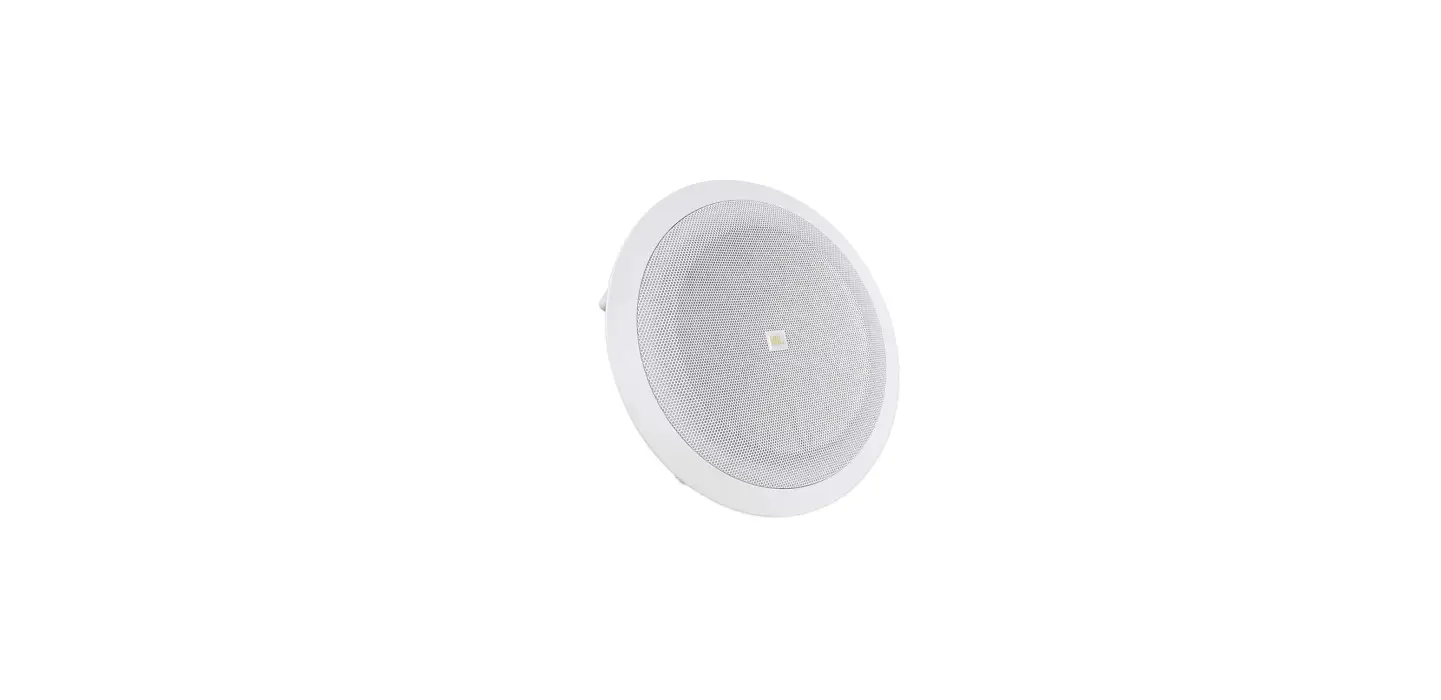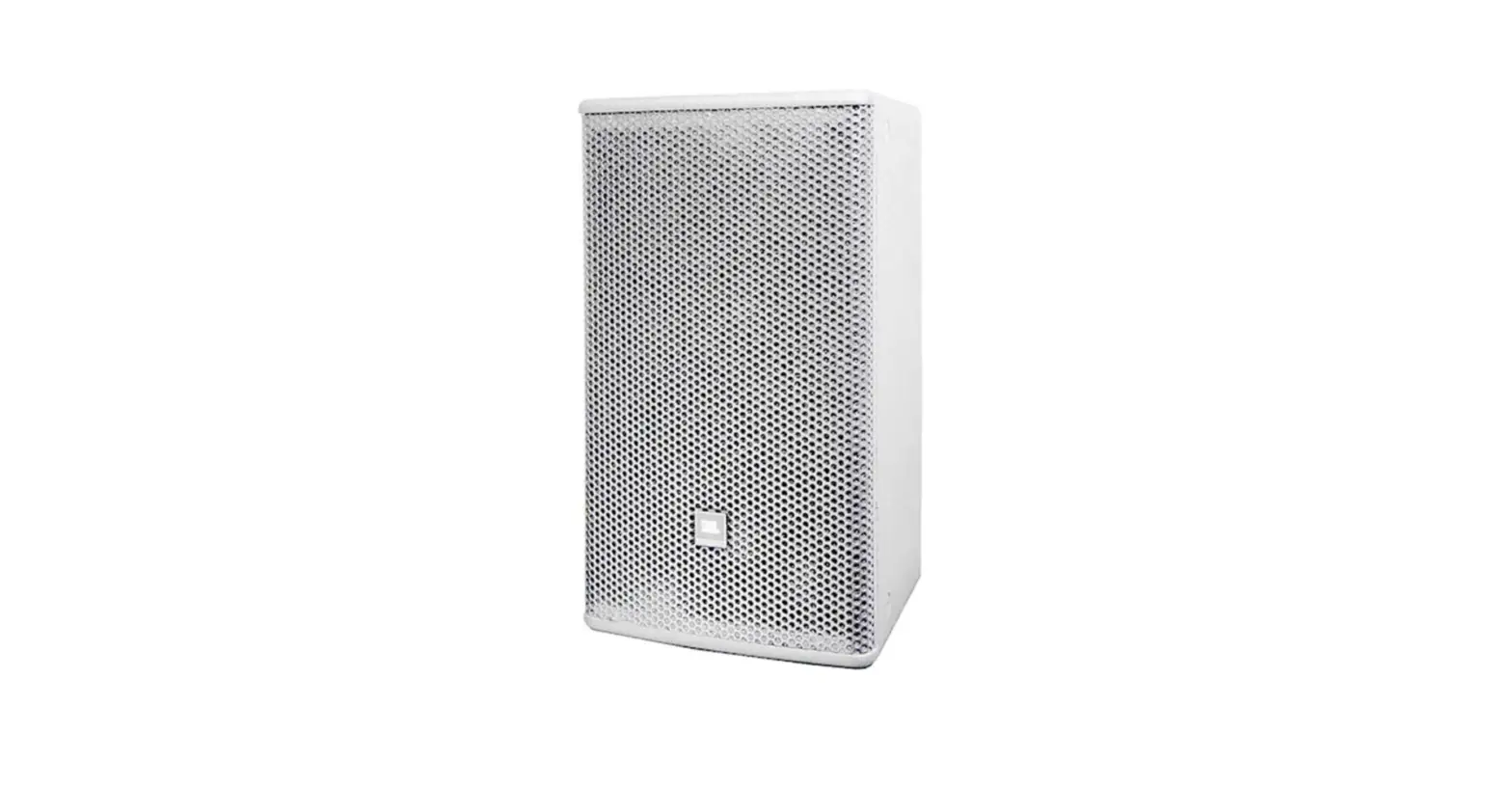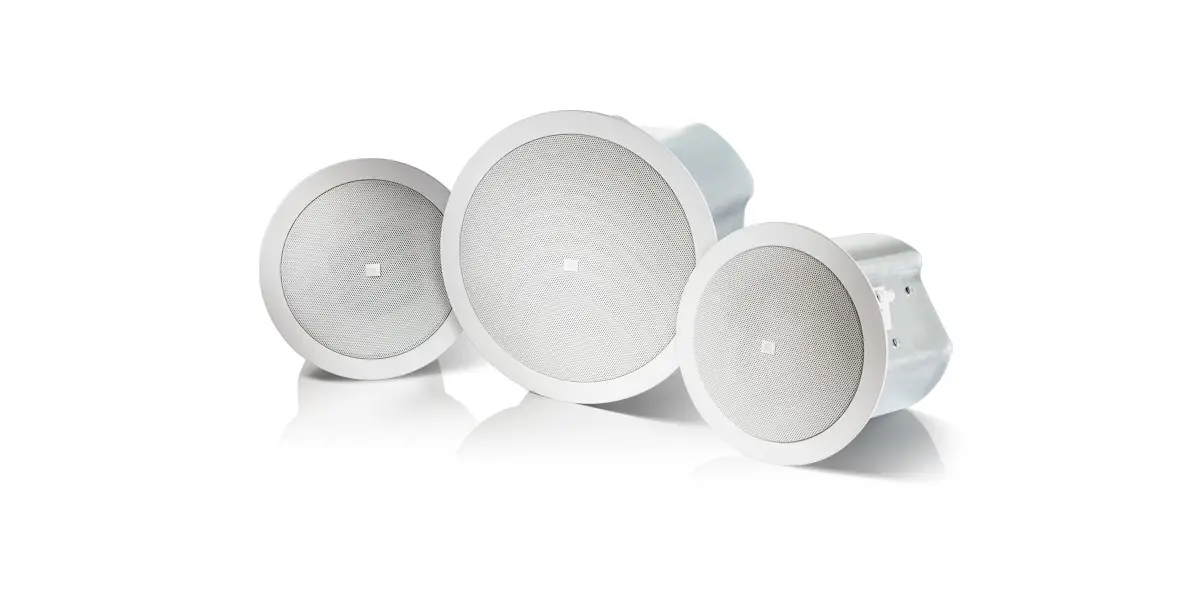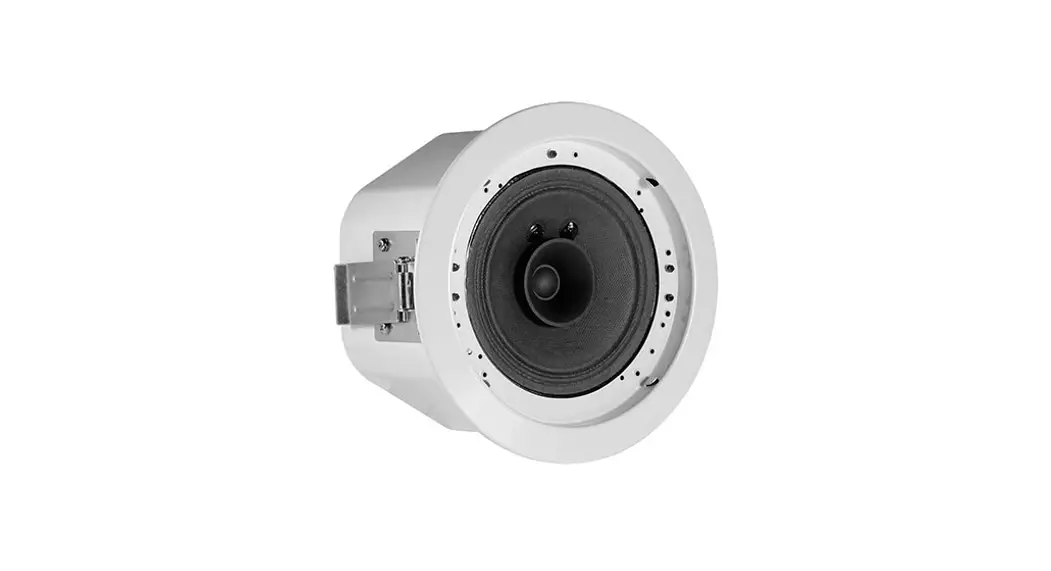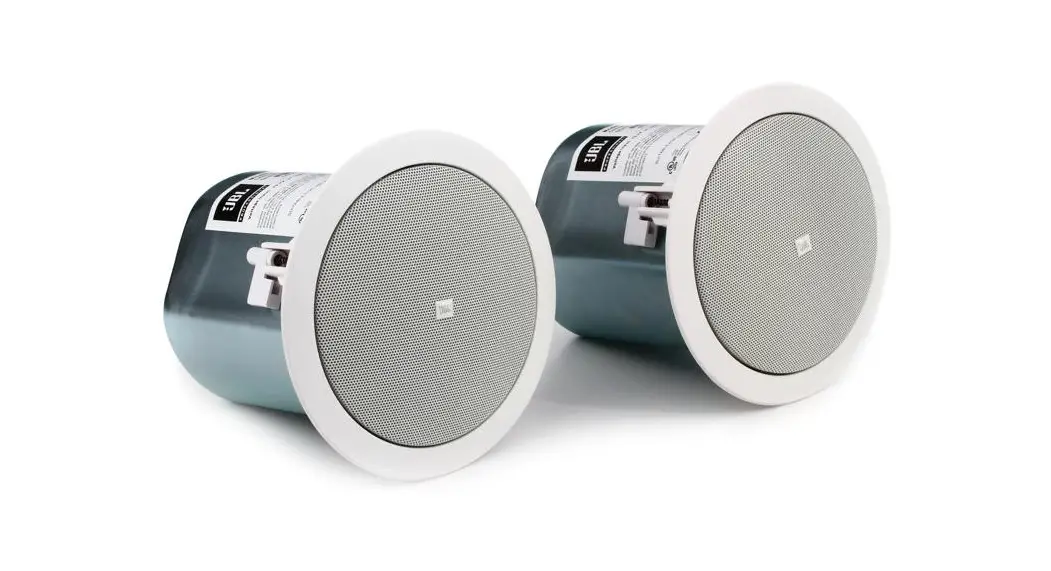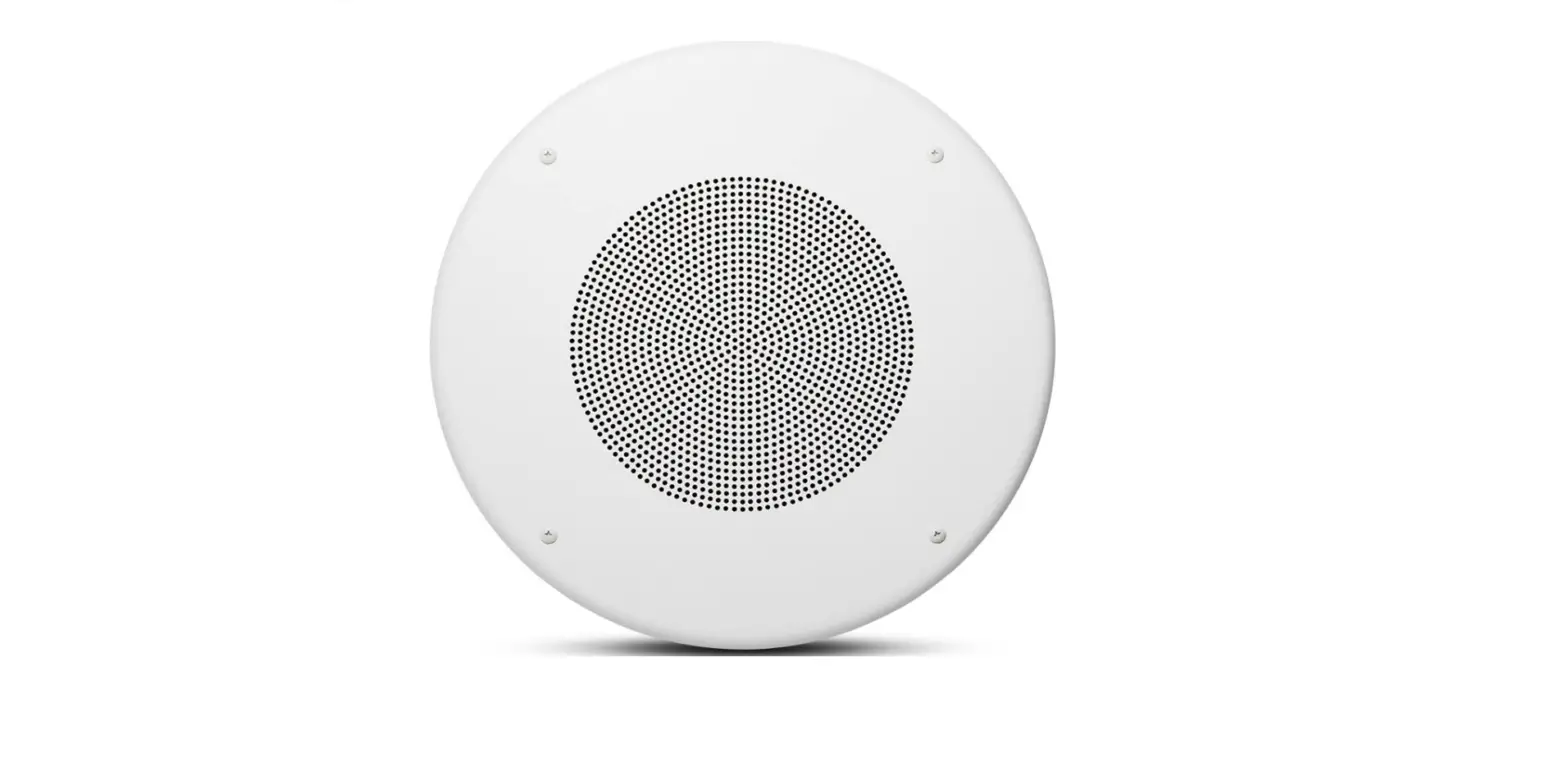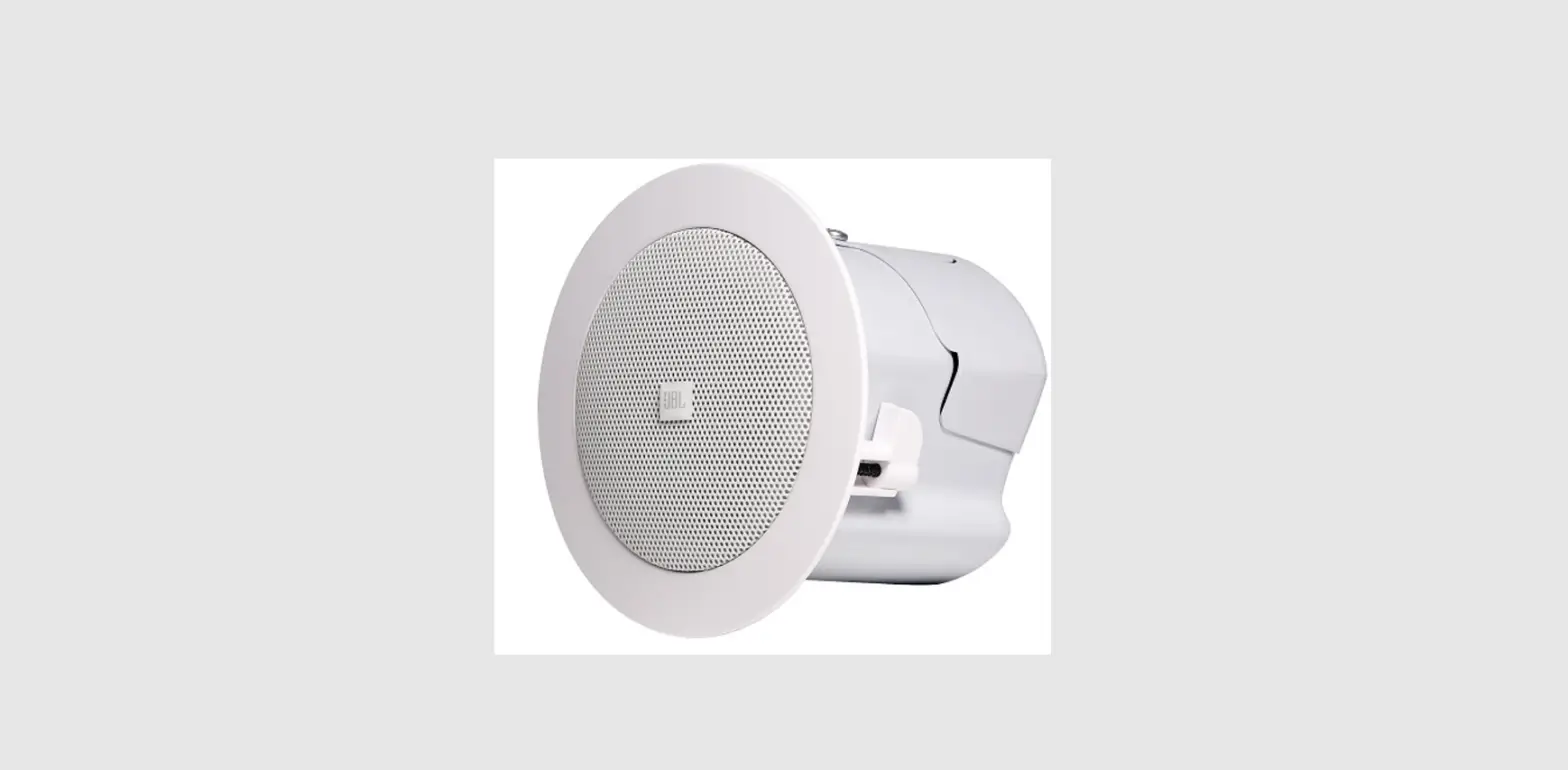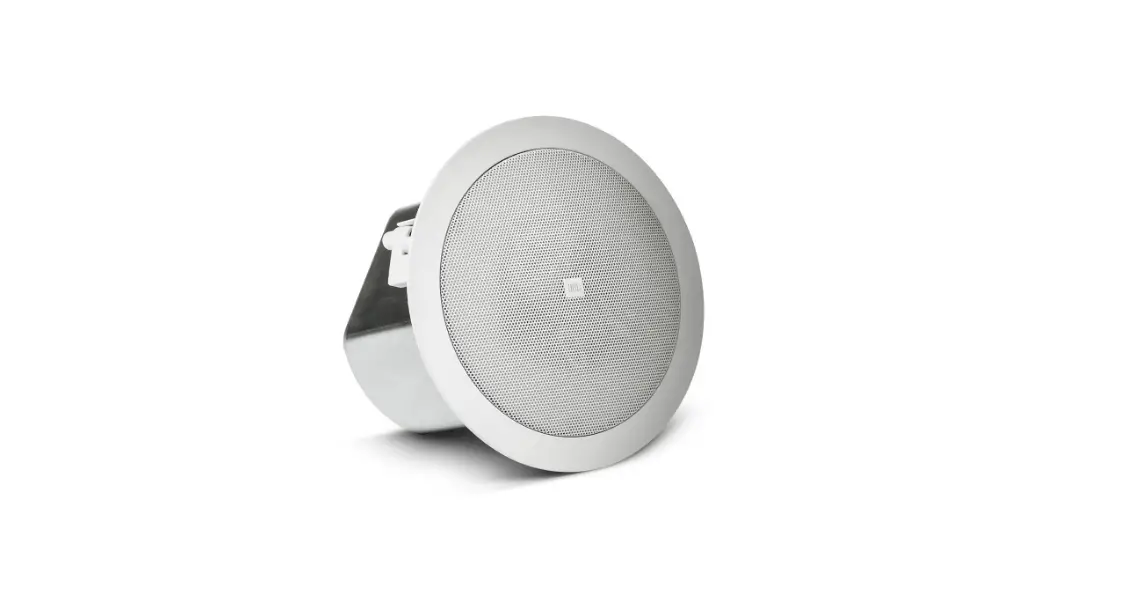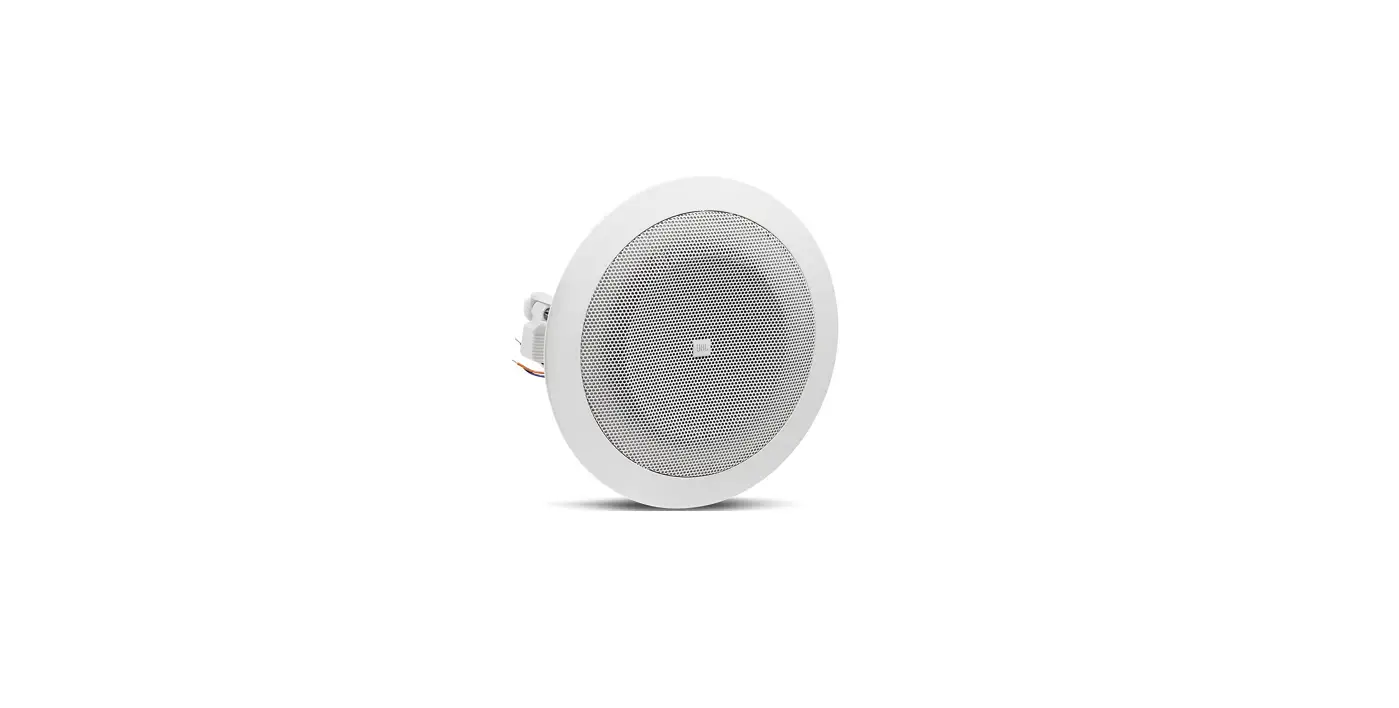
 JBL 8124 Full-Range In-Ceiling Loudspeaker
 JBL 8124 Full-Range In-Ceiling Loudspeaker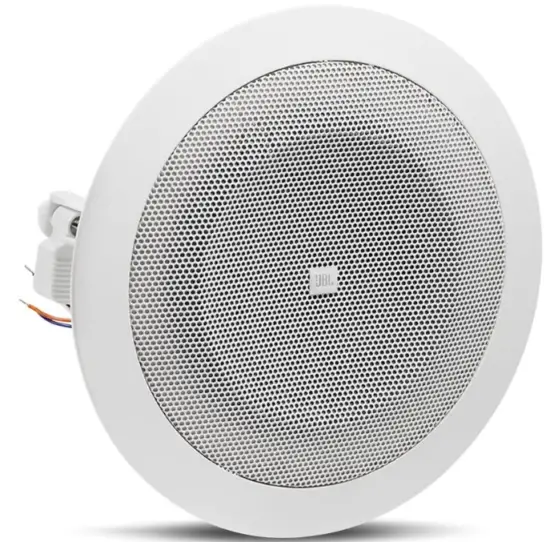
SPECIFICATION
- COMPONENT: 100 mm (4 in) Full-Range
- FREQUENCY RANGE (-10 DB): 60 Hz – 18 kHz
- COVERAGE: 130° conical
- SENSITIVITY (2.83V@ 1M): 93 dB (1 kHz – 8 kHz)
- TERMINATION: Bare Wire
- NOMINAL DRIVER IMPEDANCE: 8 ohms Driver Power
- CAPACITY: 20 W 70V/100V
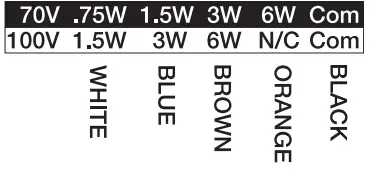
- TRANSFORMER TAPS: 6 W, 3 W, 1.5 W, (0.75 W at 70 V only)
- DIMENSIONS (DIAMETER X DEPTH): 206 mm (8.1 in) diameter round baffle x 89 mm (3.75 in) depth from back of baffle
- CUTOUT DIMENSION: 175 mm diameter (6.9 in)
- NET WEIGHT: 1.2 kg (2.5 lb)
- INCLUDED ACCESSORIES: Sculpted Grille Optional
- ACCESSORIES: MTC-8124C C-ring MTC-RAIL tile rails
- PLENUM USAGE: Not intended for use in return air plenums
- TRANSFORMER TAP COLOR CODES:
OVERVIEW
High-fidelity performance at a cost effective price point, the 8100 Series is an easy to install loudspeaker solution for a wide variety of commercial sound applications. With two models in the line, the 8124, a 4-inch (100 mm) full-range loudspeaker, an 8-inch (200 mm) full-range loudspeaker, the 8100 Series feature high sensitivity drivers that deliver maximum sound levels using minimal amplifier power. With its contemporary grill design, the 8100 Series loudspeakers are ideal for a variety of settings ranging from restaurant and retail settings to professional offices and reception / waiting areas. Because of the very light weight of 8124, tile rails may not be required for some in-ceiling applications. They are not packaged with these models, however MTC-RAIL tile rail sets and C-Rings are available separately. Featuring 70V/100V taps and open-back design, the 8100 series brings elegance and performance to basic commercial sound systems, or any application not requiring a back can for installation.
KEY FEATURES
- Clear, High-Fidelity Performance
- 6W Transformer for use on 70V / 100V Distributed Lines
- Dog-Ears for Easy Blind Mount Installations
- High Sensitivity for Maximum Power Efficiency
- Open-back design for applications not requiring an in-ceiling back can.
SUPPORT
JBL Professional 8500 Balboa Boulevard, P.O. Box 2200 Northridge, California 91329 U.S.A. © Copyright 2008 JBL Professional www.jblpro.com
FAQs
Ceiling speakers may communicate exquisitely detailed music from overhead and even improve the surround sound of your speakers, despite their comparatively small size. Why not add a few to your home? Theaters even employ them to enhance the surround sound experience.
How far apart should the ceiling speakers be placed and where should they go? For the best stereo separation effect, it is recommended to place the ceiling speakers along the length of the room, 2 metres or more apart from each other, and equally spaced from each wall.
Where do ceiling speakers plug in? They are connected to an amplifier at the very least. They cannot be driven by power without an amplifier. You don’t need to purchase an AV receiver if you choose a music-only system and don’t worry about theatre audio.
Ceiling speakers are indeed excellent for playing music. Similar to being at a concert hall or live music event, they have the power to immerse you in a surround sound experience.
Every TV will have some sort of connected audio output. It will most likely be a digital optical output presently. You can enjoy TV sound through your ceiling speaker system by connecting an analogue cable from your TV to the amplifier, plugging it in, and setting your TV to line output.
An external amplifier that is wired via speaker cable to each ceiling speaker is required to power all of the ceiling speakers. The Sonos Amp is the greatest multi-room option, in our opinion.
How Effective Are In-Ceiling Speakers for Surround Sound? We appreciate you asking. Naturally, “yes” is the response. To add that immersive extra layer of sound, simply point your in-ceiling stereo speakers in the desired location before configuring your system.
Do ceiling speakers require a subwoofer? Even if ceiling speakers are capable of producing all the bass and low-end frequencies, a subwoofer will be helpful in handling them. Additionally, it considerably improves the overall quality of your sound system.
It is possible to install in-ceiling speakers in walls, and they will sound quite similar to in-wall speakers. The size is the main distinction that you’ll see. Typically, in-wall speakers are bigger than in-ceiling speakers.
For the wires, drill a hole. Make sure the amplifier is unplugged and turn off your breaker. Put the wires in. Start attaching the wires to the ceiling speakers’ terminals. Take the opposite side of the wires and attach it to the amplifier’s terminals. Try it by turning on your breaker.
Bluetooth ceiling speakers are often wirelessly managed by a smartphone or other internet-connected device. The Bluetooth chip in the speaker will receive the content from the smartphone and play it through the speaker.
Yes! While passive models make up the majority of in-ceiling speakers, active variants are becoming more and more common. Installing active speakers in your ceiling has many advantages.
They ought to be roughly equal in height to their left and right surroundings. If you’re setting up five, six, or seven in-ceiling speakers for a surround sound home theatre system: Place the front left and right speakers 2-3 feet from the wall and at an equal distance from your primary listening position in front of your TV.
No, ceiling speakers typically function as passive speakers, which means they lack internal amplifiers and are powered by speaker cables connected to an external amplifier. Each ceiling speaker is connected to the binding posts on the amplifier to do this.
They are connected to an amplifier at the very least. They cannot be driven by power without an amplifier. You don’t need to purchase an AV receiver if you choose a music-only system and don’t worry about theatre audio.