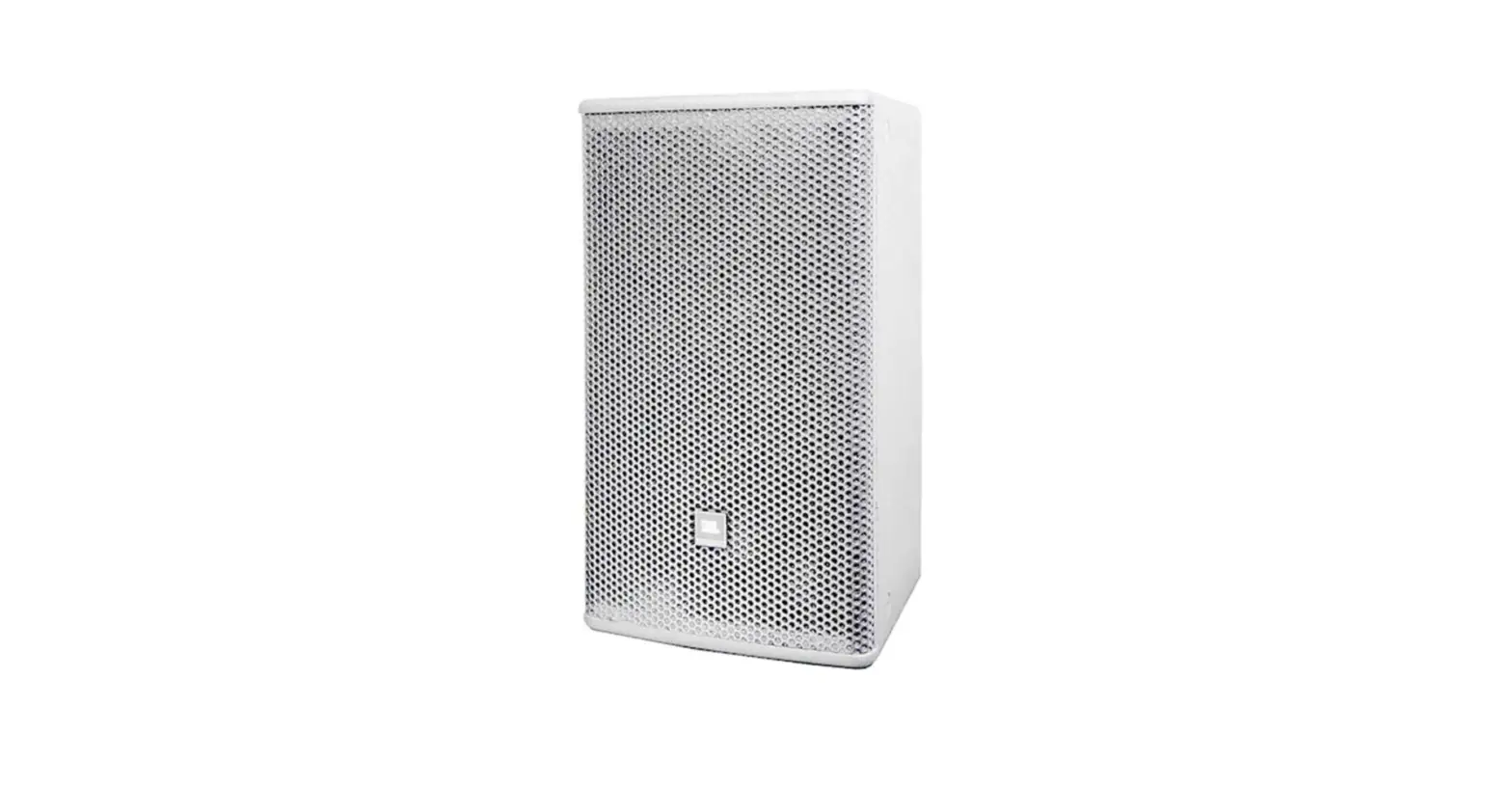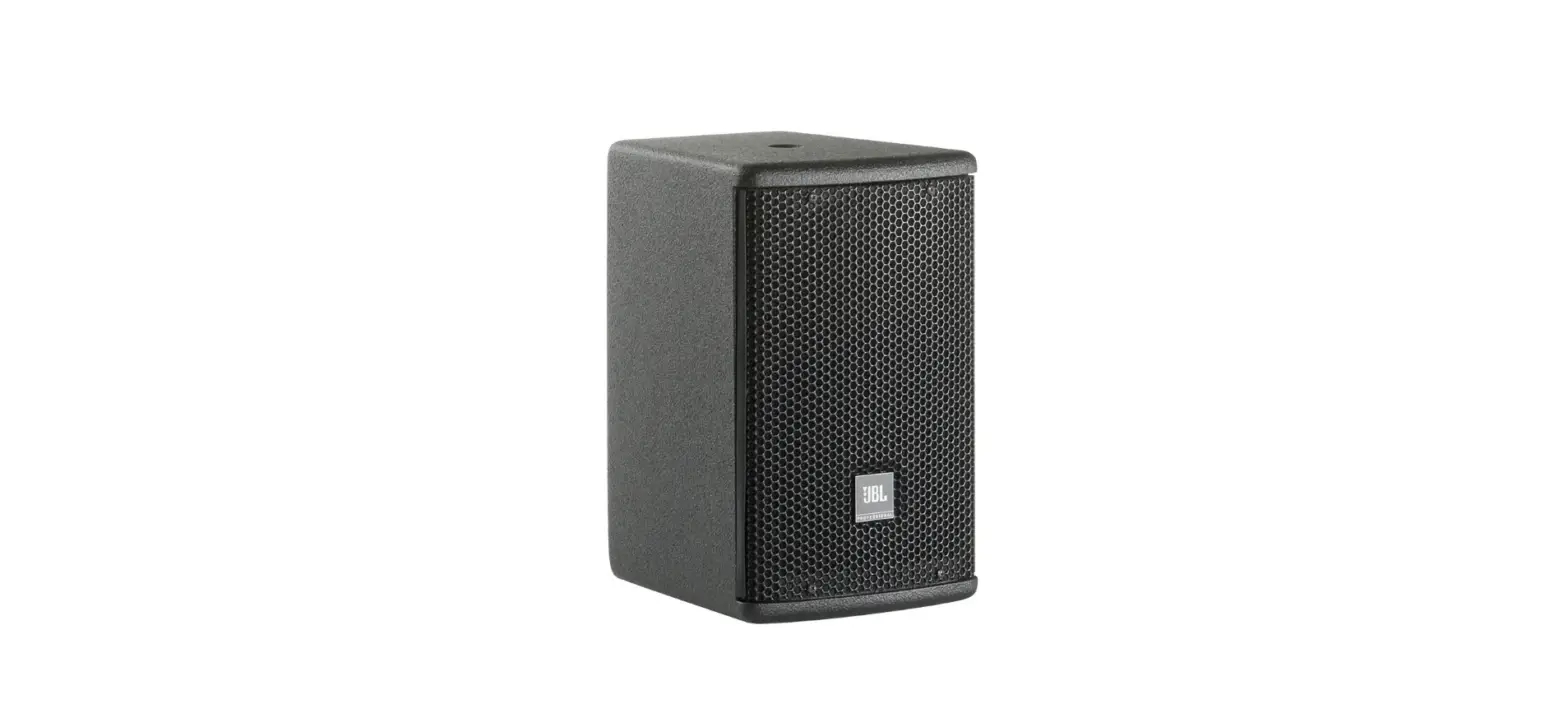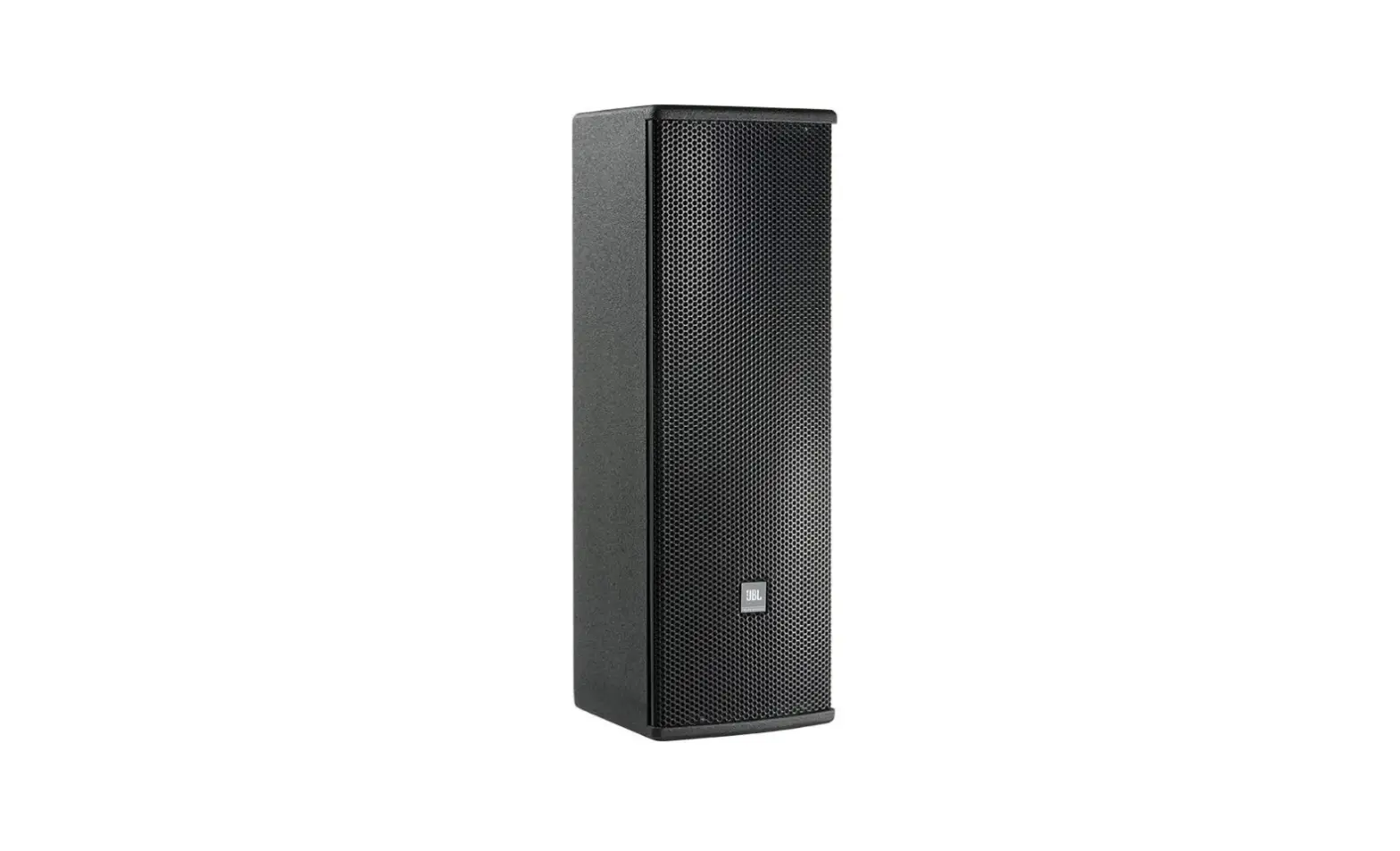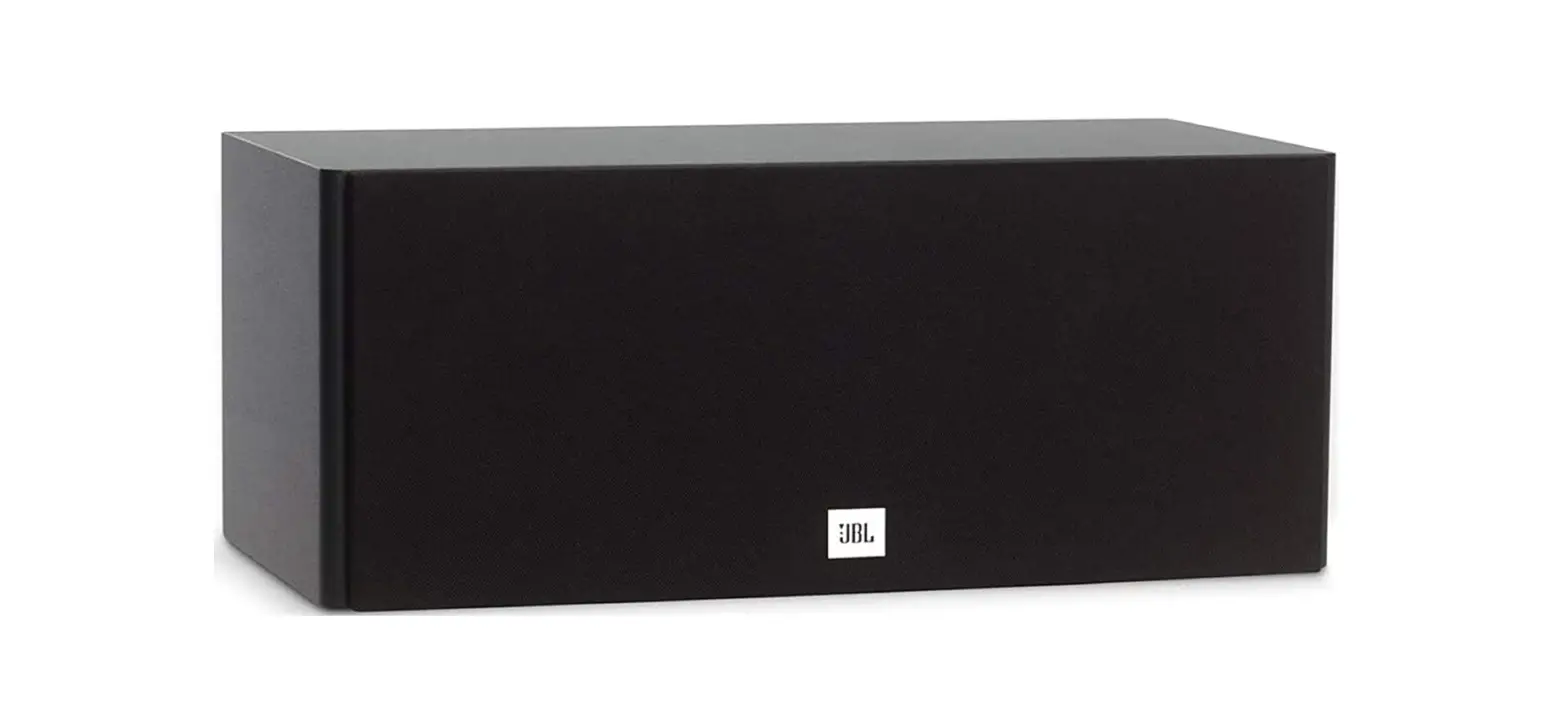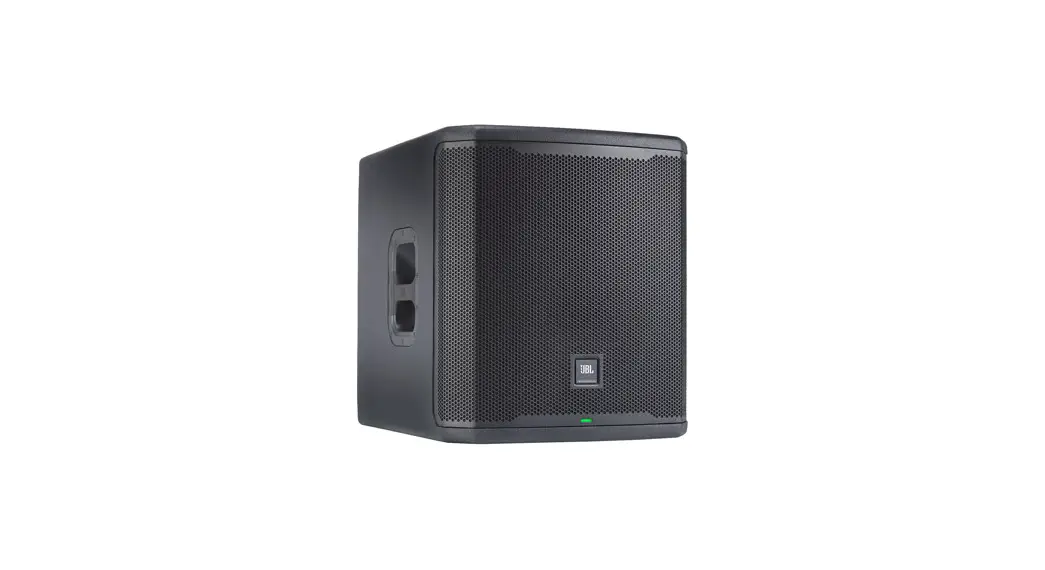

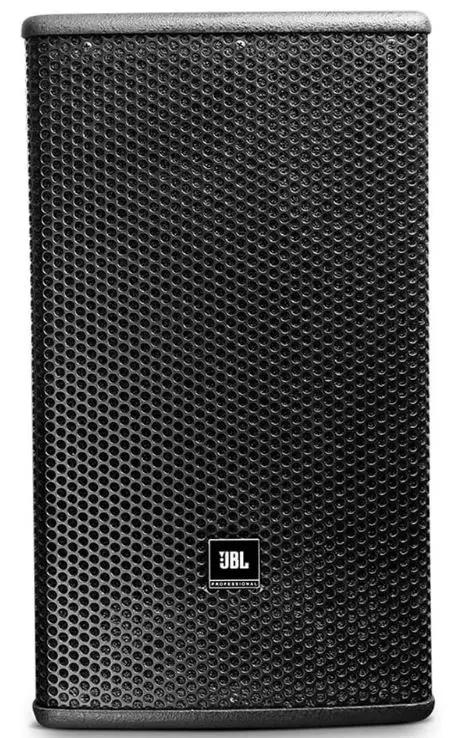
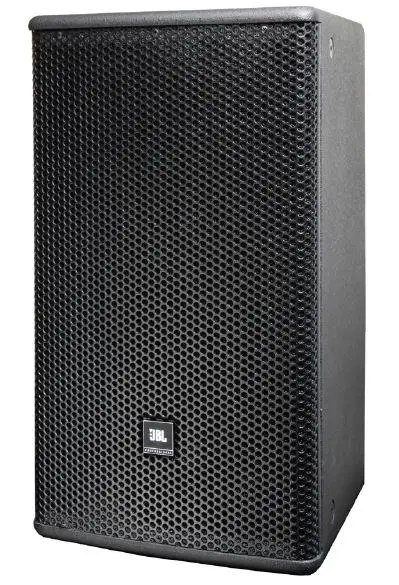
JBL Professional AC195 Two-Way Full-Range Loudspeaker
Specifications
- BRAND: JBL Professional
- MODEL NAME: AC195
- MOUNTING TYPE: Screw Mount
- SURROUND SOUND CHANNEL CONFIGURATION: 2.0
- COLOR: Black
- PRODUCT DIMENSIONS: 15 x 14 x 23 inches
- ITEM WEIGHT: 33.5 pounds
- FREQUENCY DRIVER: 258 mm (10 in) low frequency driver
- VOICE-COIL COMPRESSION DRIVER: 25 mm (1 in) exit/35 mm (1.5 in) voice-coil compression driver
Introduction
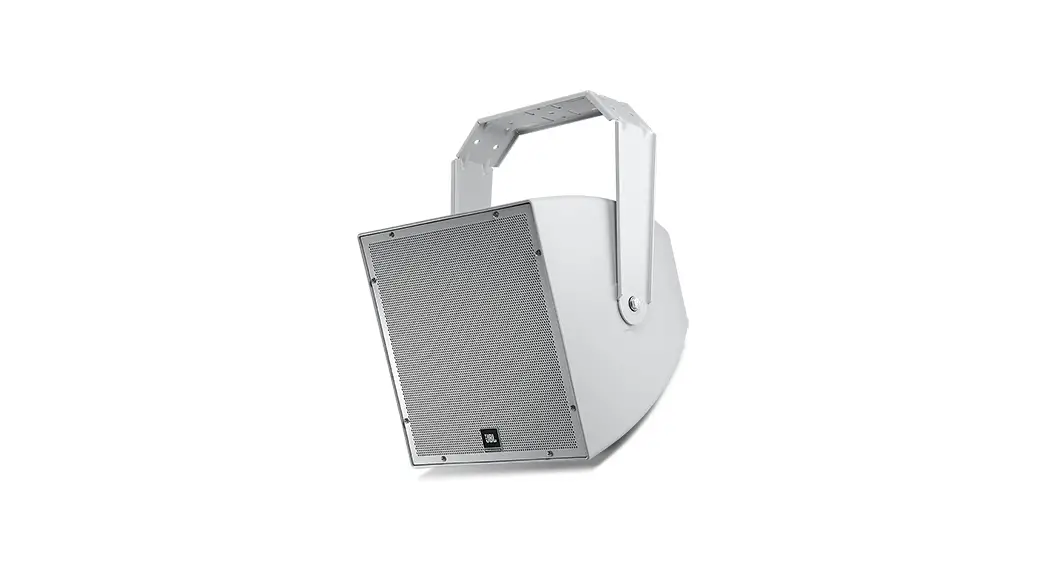
It has a small enclosure. It has Dual Neutrik NL4 connectors and screw terminals, waveguide that rotates 90 degrees by 50 degrees. For maximum versatility, there are several attachment points.
KEY FEATURES
- Compact enclosure
- 254 mm (10 in) LF transducer
- 90° x 50° Progressive Transition™ Field Rotatable Waveguide with a 25 mm (1 in) exit 25mm (1″) diaphragm compression driver
- Dual Neutrik NL4 connectors plus screw terminals
- Multiple attachment points for ultimate flexibility
APPLICATIONS
- Performing Spaces
- Clubs & Bars
- Houses of Worship
- Multi-Media Spaces
- Retail & Hospitality Spaces
- Presentation Suites
- Educational Facilities
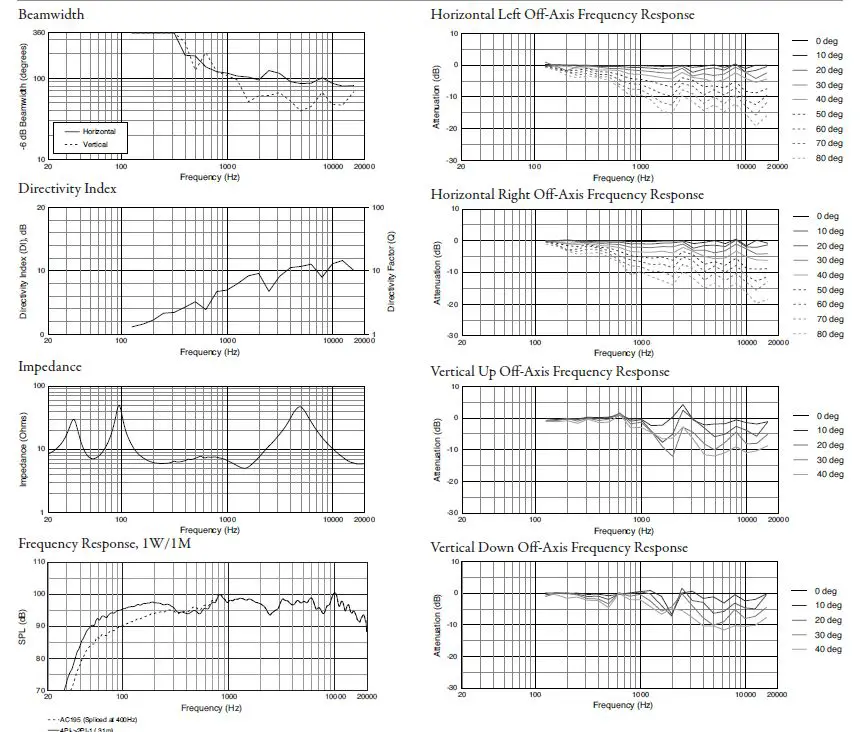
AC195 is a compact 2-way full-range loudspeaker system comprised of one 254 mm (10 in) low frequency driver and one 25 mm (1 in) exit/38 mm (1.5 in) voice-coil compression driver. The rotatable PT™ Progressive Transition waveguide provides 90° by 50° coverage in vertical cabinet orientation. High- slope passive crossovers minimize band overlap and well-controlled off axis response
The cabinet is fitted with M10 threaded suspension points. Four threaded inserts located on back of the enclosure allow attachment of a MultiMount® or similar type mounting.
AC195 is part of JBL’s AE Application Engineered Series, a versatile family of loudspeakers for a wide variety of fixed installation applications.
SPECIFICATIONS
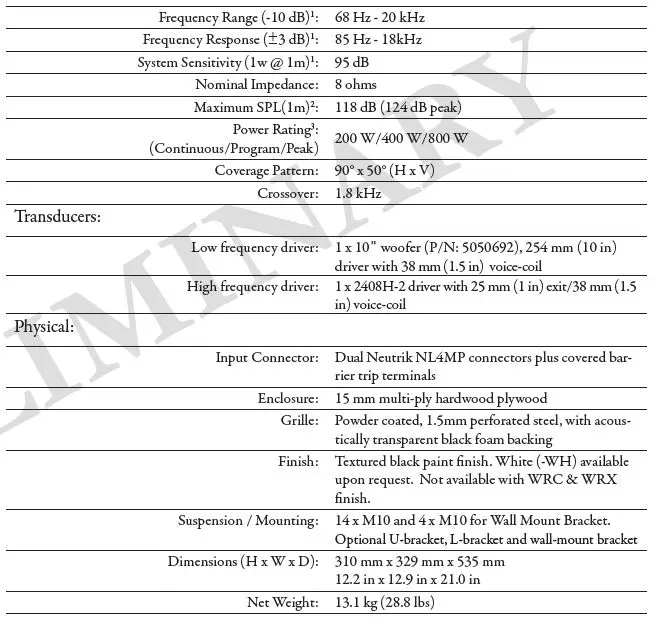
- Full space (4π) conditions
- Calculated maximum SPL based on rated power handling
- IEC-shaped pink noise with 6dB CF for 100hrs
JBL continually engages in research related to product improvement. Some materials, production methods and design refinements are introduced into existing products without notice as a routine expression of that philosophy. For this reason, any current JBL product may differ in some respect from its published description, but will always equal or exceed the original design specifications unless otherwise stated.
AC195 2-WAY LOUDSPEAKER WITH 1 X 10″ LF
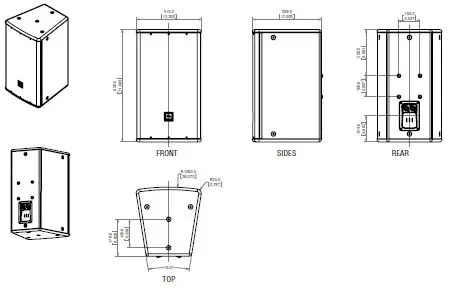
DIMENSIONS
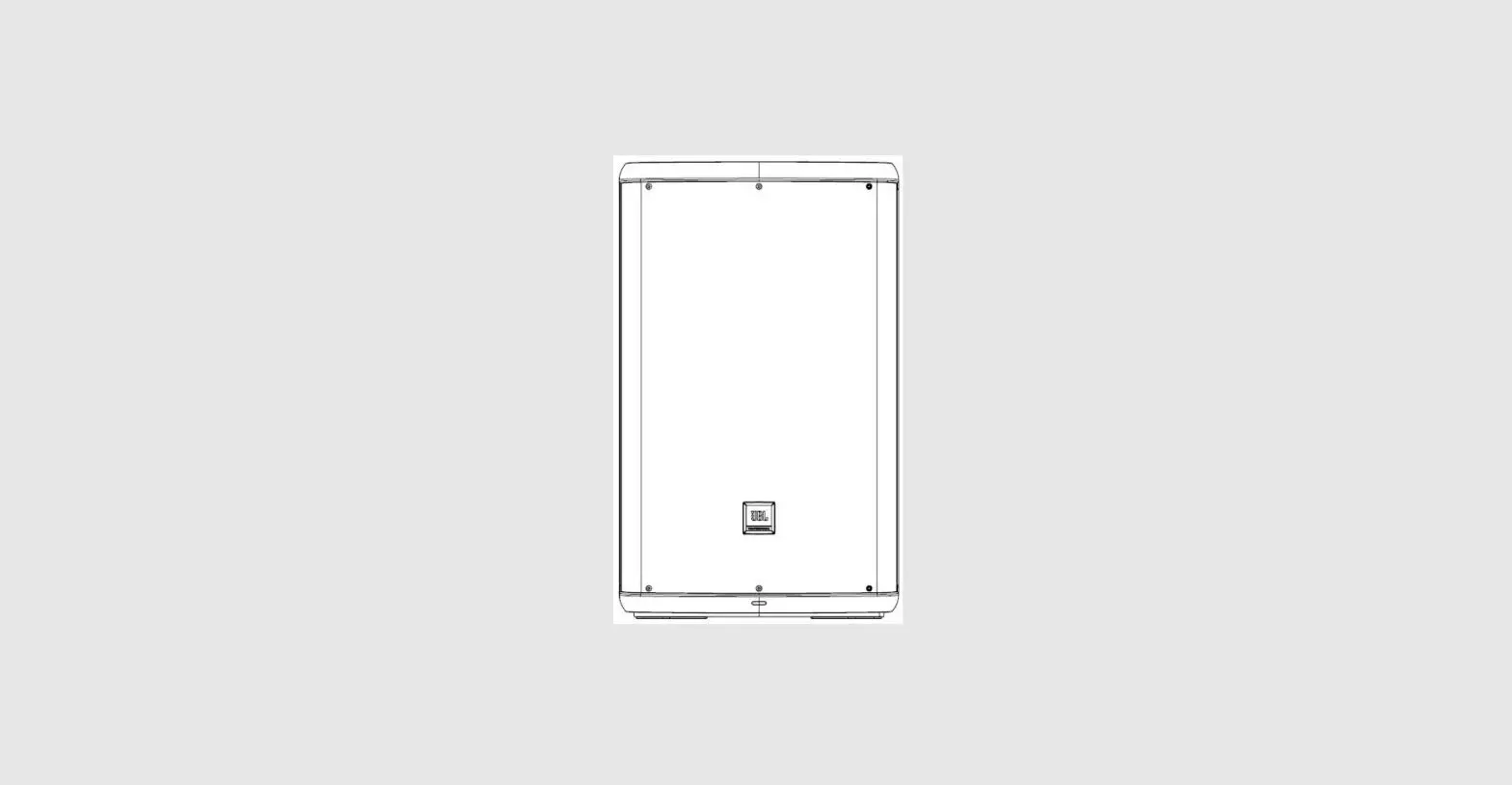
Dimensions in mm (inch)
Frequently Asked Questions
PROS: Since sound originates from a “single point in space,” there are no peaks or cancellations in the frequency response caused by interference from two physically apart drivers.
A driver that reproduces the maximum amount of the audible frequency range while adhering to the physical limitations imposed by a particular design is referred to as a full-range loudspeaker drive unit. These drivers’ frequency range is expanded using a whizzer cone and other techniques.
The woofer and tweeter are two different types of drivers found in 2-way speakers. A speaker called a woofer is made specifically to reproduce low-frequency sounds, whereas a tweeter is made to reproduce high-frequency sounds. The mid-range, woofer, and tweeter drivers, collectively known as the 3-way speaker, produce sound.
Your speakers are not full-range speakers if they are not rated for at least 20Hz. manage the comparatively small portion of an audio signal’s audible frequency spectrum that contains the sounds you hear. In most cases, speakers that have a subwoofer are not full-range ones.
Full-Range speakers span the complete vocal spectrum, as indicated by the phrase. The typical low frequency of full-range speakers is between 60 and 70 Hz. Larger units will be able to reach low frequencies with 15″ drivers, however smaller units with 10″ or less LF drivers will roll off closer to 100 Hz.
With fullrange speakers, phase alignment between drivers isn’t an issue because there is only one driver, and a crossover isn’t necessary (but one resistor may be used to tame an unruly peak).
The range of possible values for 16-bit PCM audio, for instance, ranges from 32,768 to +32,767 and is centered on the value 0. If a signal reaches a value between -32,767 and +32,767, it is at full scale. (This indicates that the lowest value, 32,768, barely exceeds full-scale.)
At the very least, they must be respectable, good subs. Use three subs whether your mains have a full or limited range. Make sure the loudness of all the subs in the room is at the front (relative to where you are listening). You require subwoofers with level, crossover, and phase settings that are infinitely adjustable.
Other speakers have a greater degree of range specialization. Mid-range speakers handle the center range, tweeters handle the highest range, and woofers handle the lower range. When you combine these separate speakers, the music you reproduce is much fuller and more accurate than it would be with just one full-range speaker.
Only two component drivers are used in certain smaller full-range speakers, with a single driver handling the bass and midrange frequencies. Typically, a mid-bass driver is what is being discussed here. The bass will not be as deep as it would be in speakers with specialized woofers because the low end in such speakers often stops off at 100 Hz.