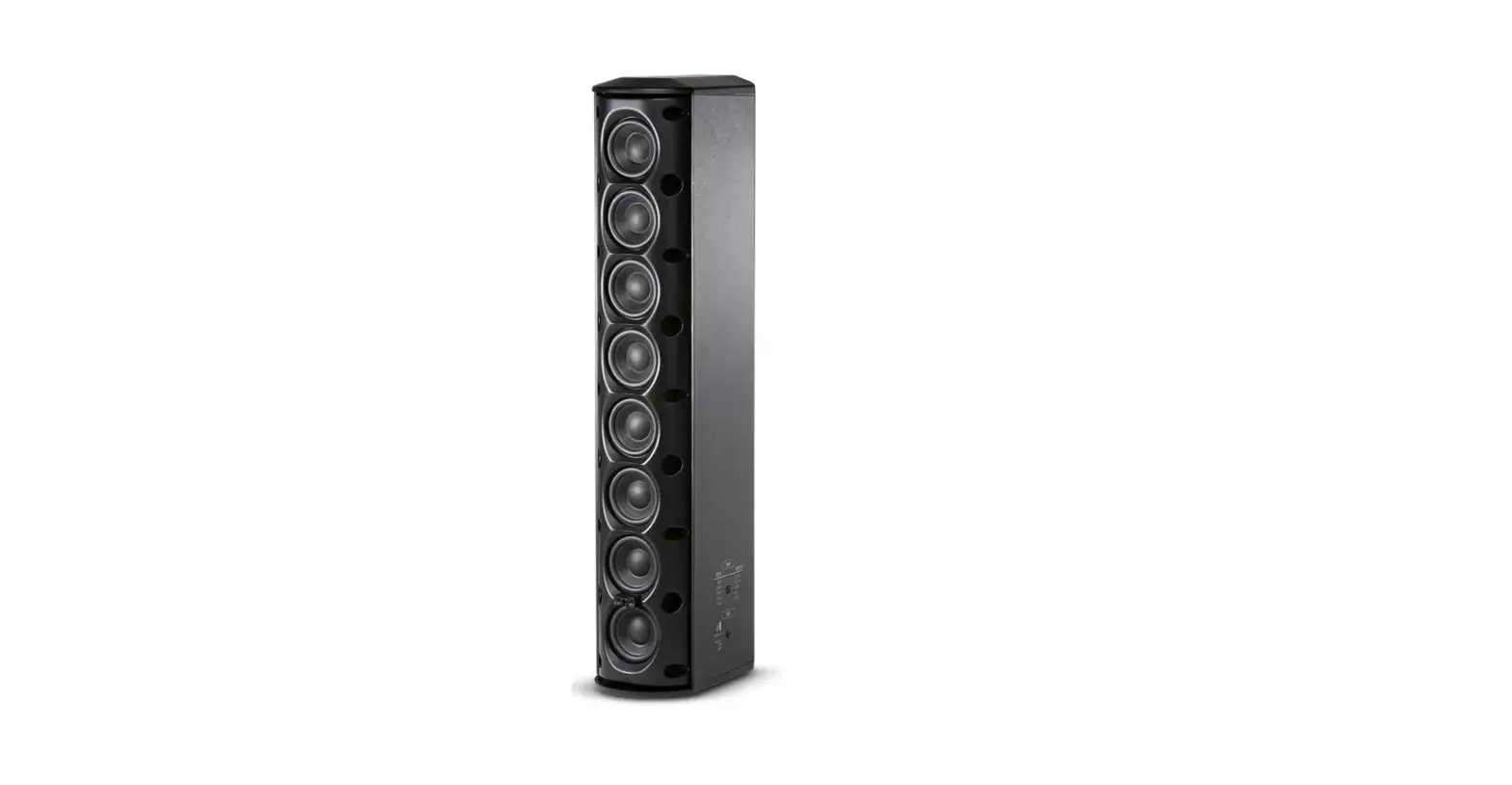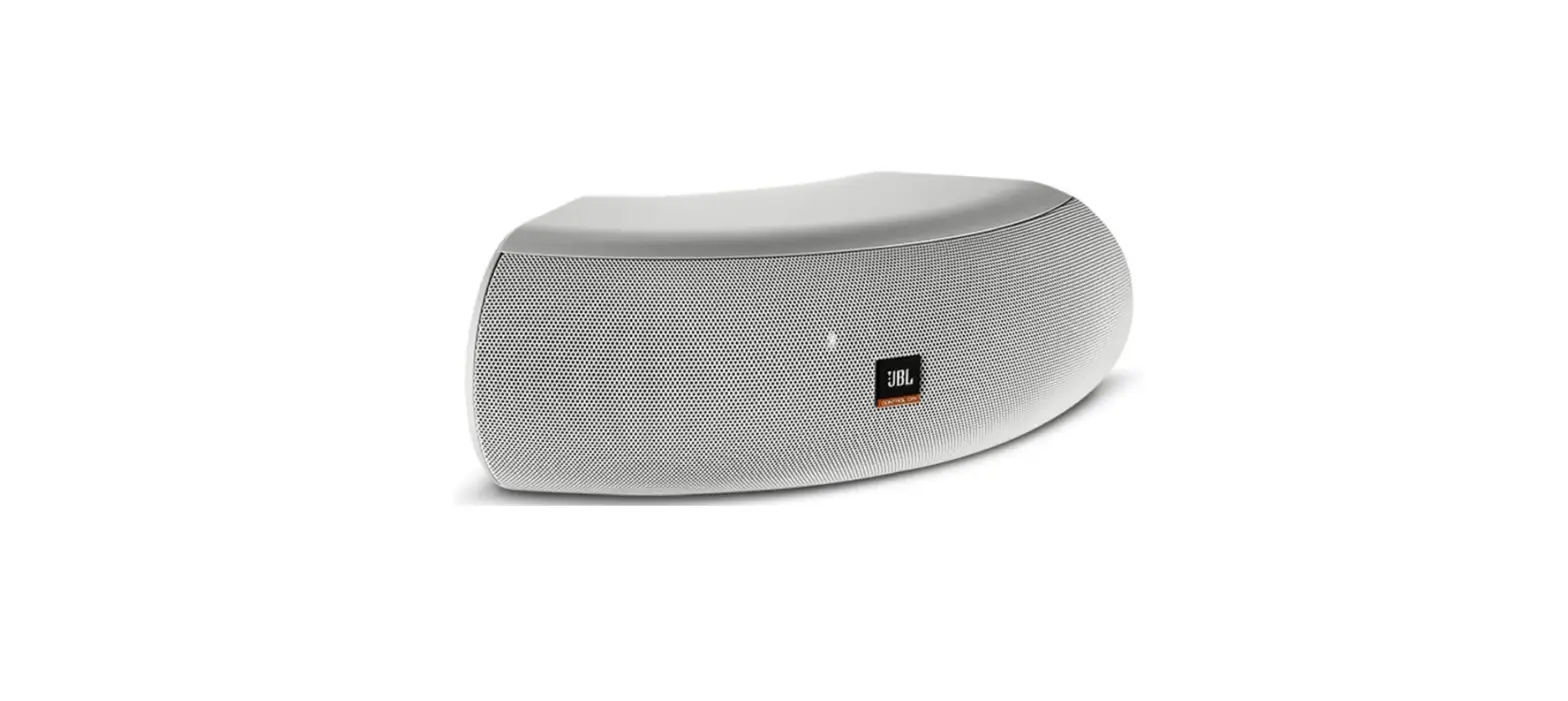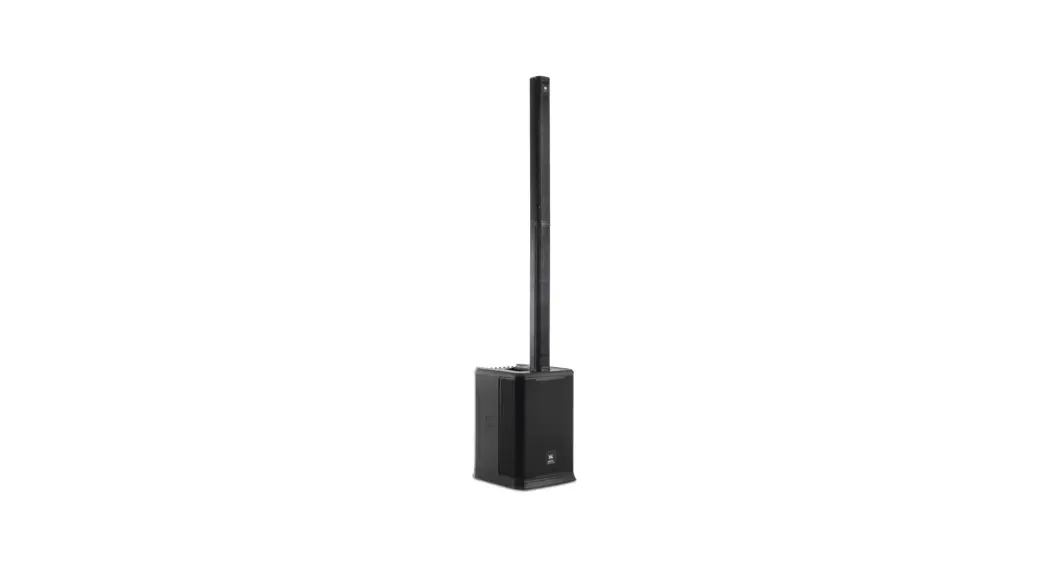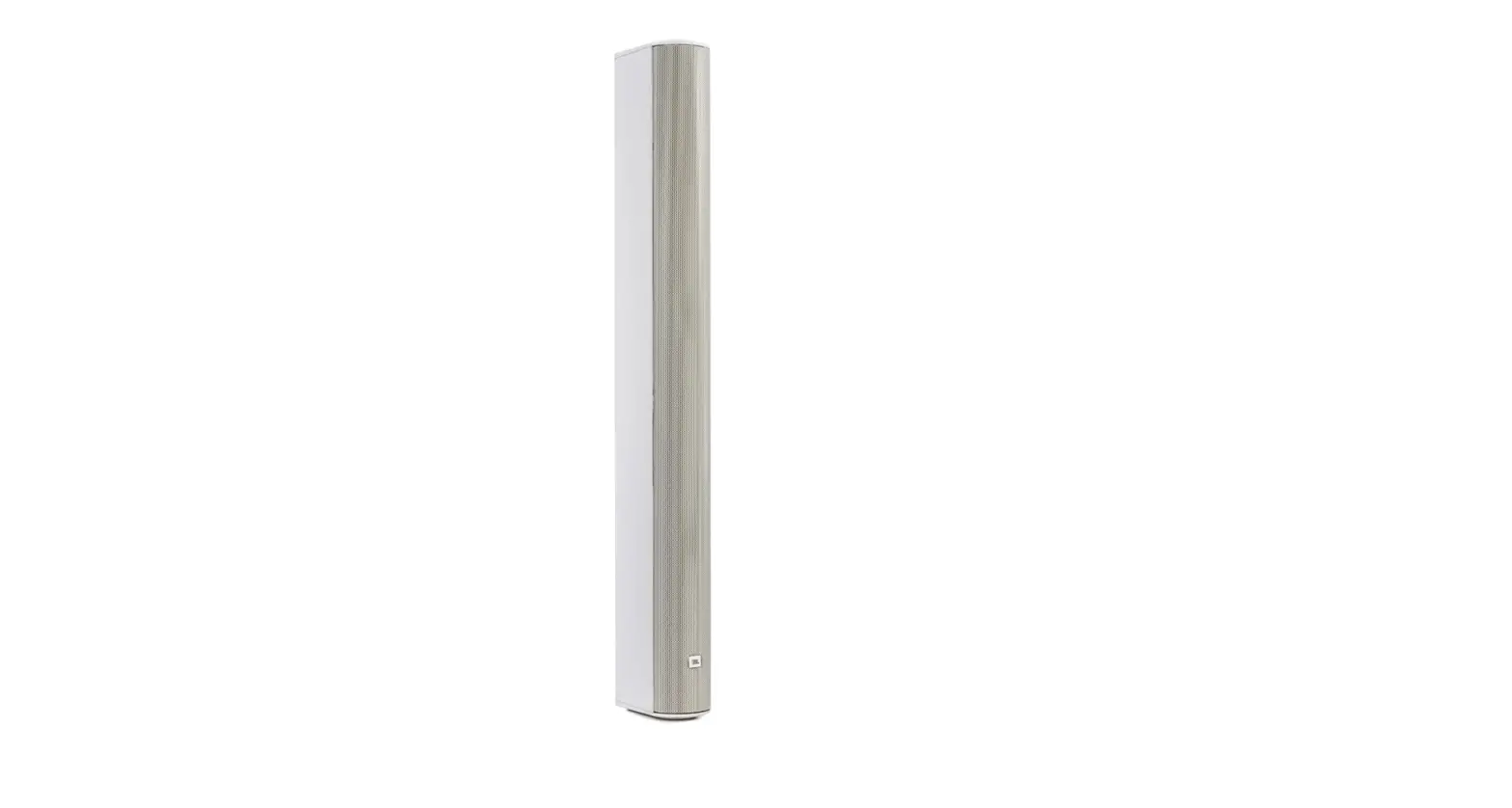
 JBL Professional CBT 100LA-1 Column Loudspeaker
 JBL Professional CBT 100LA-1 Column Loudspeaker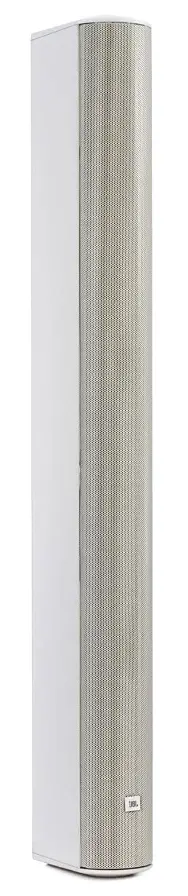
- DIMENSIONS: 1000 x 98.5 x 153 (39.4 in x 3.8 in x 6.0 in)
- WEIGHT: 7.2 kg (15.8 lbs.)
- COMPONENTS: Sixteen 50 mm (2 in) Full-Range
- FREQUENCY RANGE (-10 DB): 80 Hz – 20 kHz
- NOMINAL IMPEDANCE: 8 ohms (in Thru mode)
- POWER CAPACITY: 325 W (1300W peak), 2 hrs.
- 70V/100V TRANSFORMER TAPS: 120W, 60W, 30W, (15W at 70V only), and 8_ thru, via switch
- ENCLOSURE: Fiberglass reinforced ABS cabinet, painted aluminum grille
- OUTDOOR CAPABILITY: IP-55 rated
With Constant Beamwidth Technology, the JBL Professional CBT 100LA-1-WH achieves superior, consistent vertical coverage without the narrow vertical beaming and out-of-coverage lobing that are typical of straight form-factor column speakers. This technology uses complex analogue delay beam-forming and amplitude tapering.
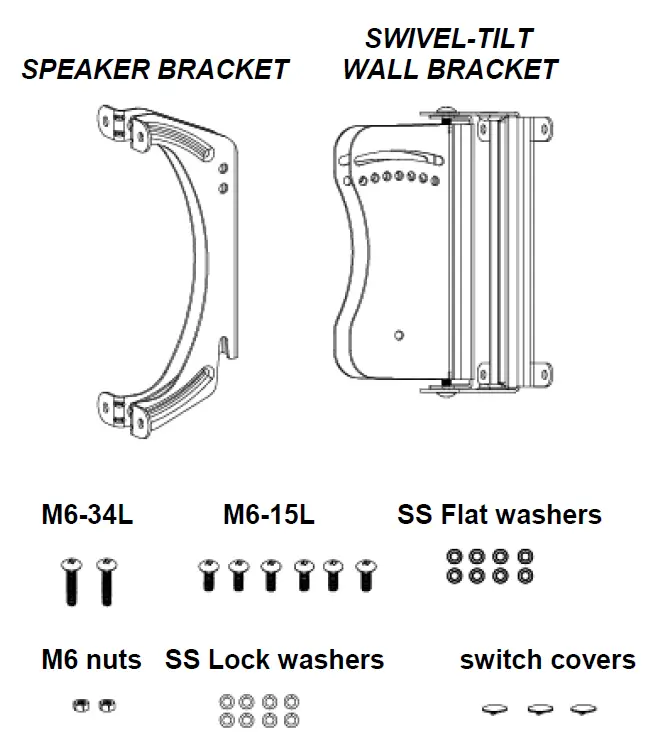
Included
WALL SURFACE MOUNTING
Note that the BRACKET ASSEMBLY consists of a SPEAKER BRACKET and a WALL BRACKET.
- RUN WIRING — Run the wiring from the power amplifier to the location desired for mounting the JBL CBT Loudspeakers.
- ATTACH WALL BRACKET TO WALL —
 Using a level to ensure that the WALL BRACKET is straight, secure the WALL BRACKET to the wall. Be sure to use the appropriate wall anchors for attaching the bracket. Use all four screw holes for maximum integrity and safety. Be sure that the slot feature is at the top.
 - ATTACH SPEAKER BRACKET TO SPEAKER
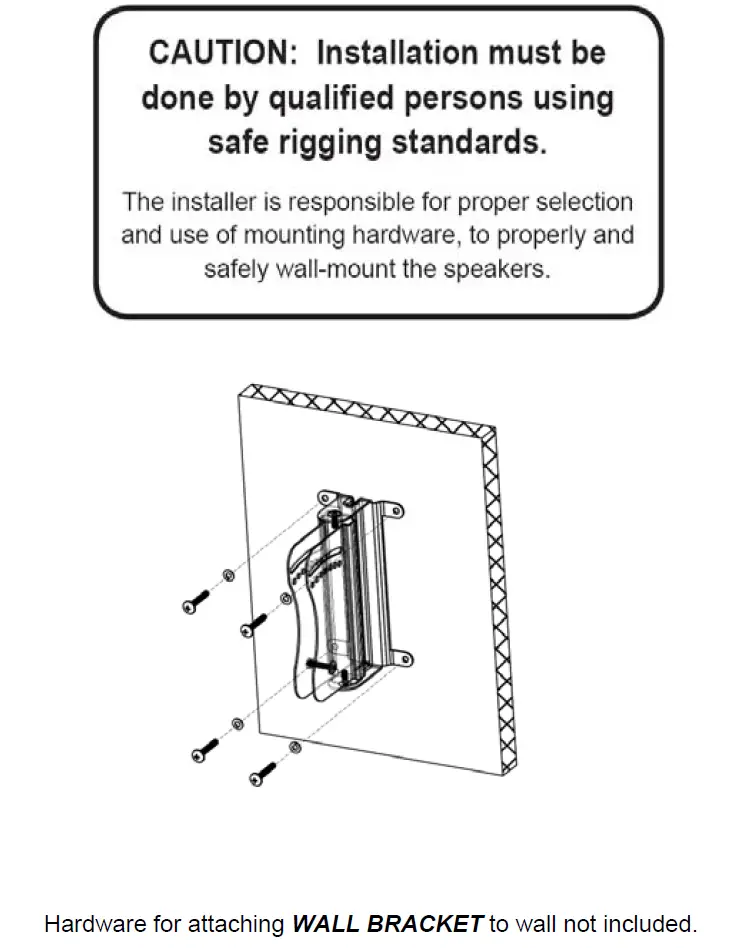 Using a level to ensure that the WALL BRACKET is straight, secure the WALL BRACKET to the wall. Be sure to use the appropriate wall anchors for attaching the bracket. Use all four screw holes for maximum integrity and safety. Be sure that the slot feature is at the top.
3a) CBT 50LA-1 — 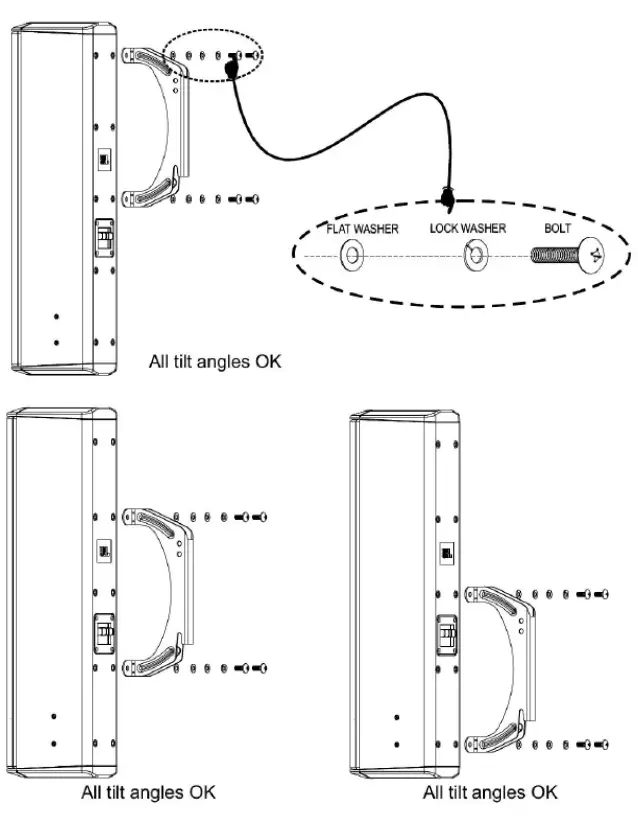 Mount the SPEAKER BRACKET to the speaker with the provided M6-15L pan head bolts, lock washers and flat washers, as shown below. For the CBT 50LA-1 there are three (3) possible mounting position. Choose the one that best suits the application. Be sure the hook feature of the SPEAKER BRACKET is downward.
3b) CBT 100LA-1 — 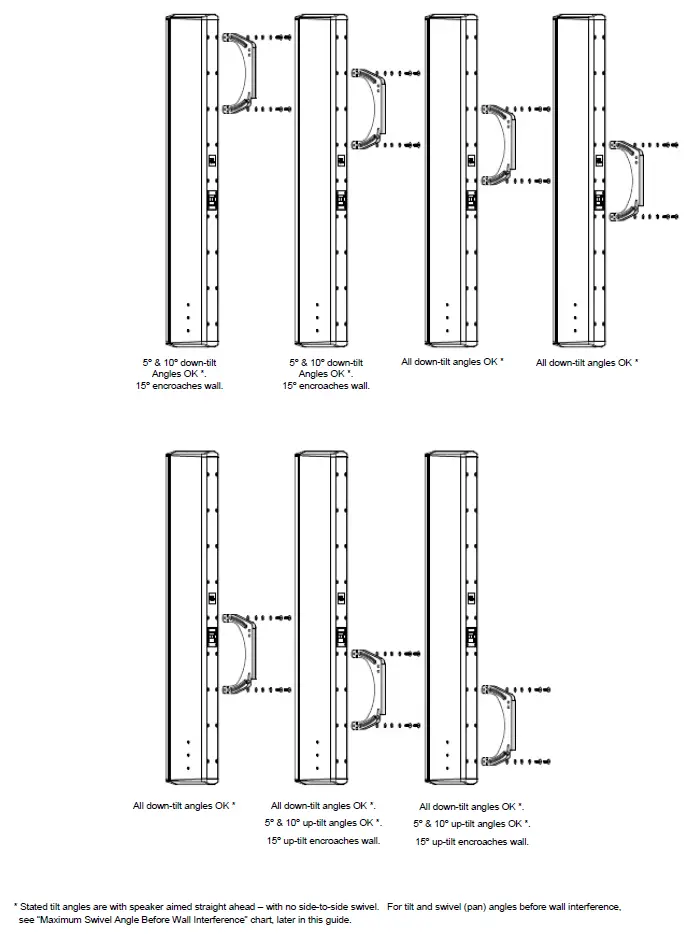 Mount the SPEAKER BRACKET to the speaker with the provided M6-15L hardware. For the CBT 100LA-1 there are seven (7) possible mounting position. Choose the one that best suits the application. Be sure the hook feature of the SPEAKER BRACKET is downward.
Note the bolt attachment configuration for the SPEAKER BRACKET from the diagram on the previous page.
- SLIDE SPEAKER WITH SPEAKER BRACKET ONTO WALL BRACKET —
 Once the wall mount has been attached to the wall and speaker mount has been attached to the speaker, slide the speaker forward so that the SPEAKER BRACKET engages into the WALL BRACKET, dropping the hook slot of the SPEAKER BRACKET onto the pivot bolt (which will already be installed loosely in the WALL BRACKET).
 - SET THE TILT ANGLE – Once the speaker has nested securely on the pivot bolt, slide the second M6 34mm bolt into one of the holes in top of the wall bracket to set the angle.
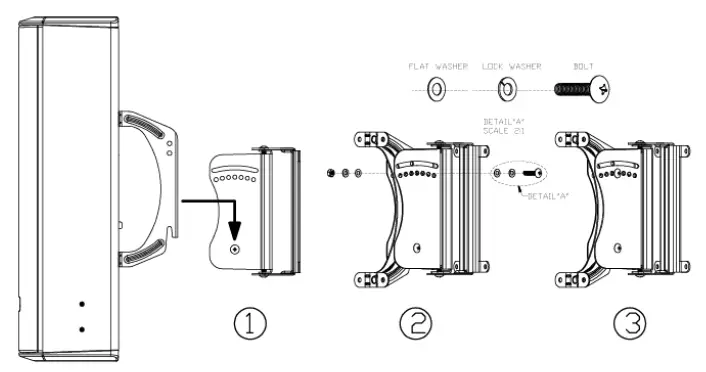 Once the wall mount has been attached to the wall and speaker mount has been attached to the speaker, slide the speaker forward so that the SPEAKER BRACKET engages into the WALL BRACKET, dropping the hook slot of the SPEAKER BRACKET onto the pivot bolt (which will already be installed loosely in the WALL BRACKET).
5a) TILT ANGLES — The bracket allows for +/-15 degrees of tilt. Some of the extreme tilt angles are not recommended because the speaker will run into the wall first.
5b) PRE- SET ANGLES and CONTINUOUSLY VARIABLE ANGLE — 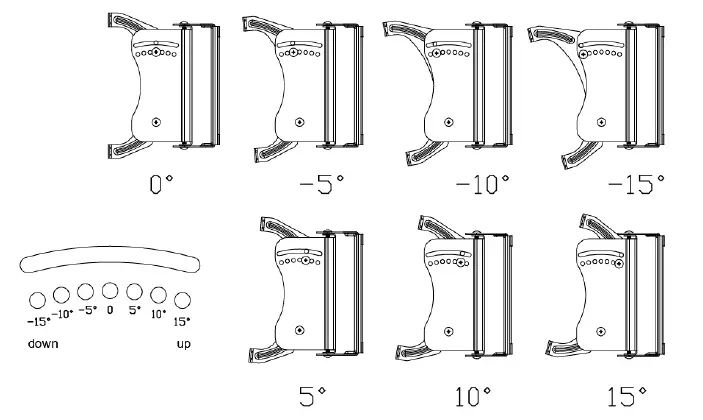 The bracket has through holes for mounting angles of +/- 15 degrees in 5 degree increments. There is also a slot above the set of holes for continuously variable adjustment. The pre-set angles are recommended for accurate aiming. Either can be utilized for setting the speaker’s tilt angle.
5c) SECURE THE ANGLE SETTING — Once the angle has been chosen, tighten both bolts with hardware provided.
- SET THE SWIVEL (PAN) ANGLE – Loosen the top and bottom bolts on the pivot. Adjust the side-to-side swivel (ie, pan) aiming angle of the speaker. Tighten the bolts securely.
Maximum Swivel Angles before Wall Interference
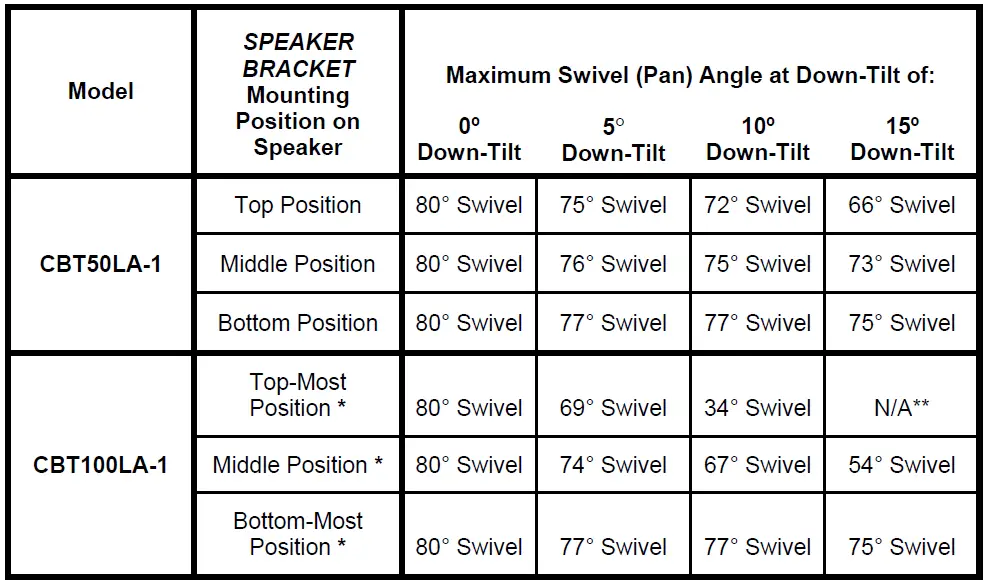
The bracket swivels a full 90 degrees from side-to-side, however when mounting the CBT speaker onto a wall, the side-to-side swivel is limited by the end of the speaker encountering the wall. The maximum swivel angle depends on:
- which of the speaker’s rear-panel positions the SPEAKER BRACKET is mounted to, and b) the down-tilt angle setting.
The following chart lists the typical maximum side-to-side swivel angles for some of the possible Speaker Bracket mounting point locations, and for 0°, 5°, 10°, and 15° down-tilt angle settings.
- The in-between mounting positions on CBT 100LA-1 have Maximum Swivel Angles in between those listed.
- The very top bracket position and 15° tilt angle interferes with wall even with no swivel angle.
Maximum Swivel Angles in Other Mounting Situations – The bracket itself can swivel up to 90 degrees (side-to-side), so if the speaker is being mounted onto a pole or an outside corner, for example, where interference with a wall may not be a factor, then greater swivel angles than those stated in the above chart may be achieved.
- SAFETY CABLE — Attach a safety cable (not included) to any of the 6 mm inserts on the back of the CBT 100LA/50LA-1 cabinet using one of the extra included M6 mm bolts. Attach the other end of the cable to a secondary attachment point on the wall.
- SWITCH COVERS – To discourage tampering with the switch settings, adhesive switch covers are provided. Peel off the backing from the switch cover and stick the cover over the switch shaft, lining up the ridge with the recess in the switch shaft.
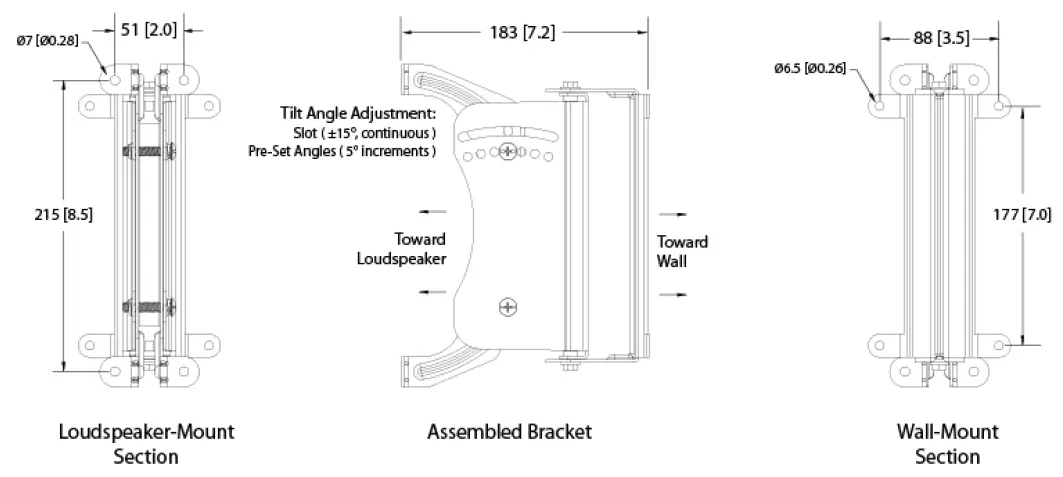
CBT 50LA-1 & 100LA-1 Bracket Dimensions 
FREQUENTLY ASKED QUESTIONS
Does the swivel wall bracket come with it?
Yes, it comes with the swivel wall bracket.
Do column array speakers perform well?
Similar to full-sized line arrays, column speakers may produce consistent sound levels from the front to the back of the listening area without the use of massive multiple speaker cabinets.
What purposes serve column speakers?
Similar to full-sized vertical line arrays, maintainable sound levels from front to back column speakers may generate consistent sound levels from the front to the back of the listening area without the weight of numerous large enclosures.
What are speakers for CBT?
The patented Constant Beamwidth Technology (CBT) by JBL uses complex analogue delay and amplitude-tapering to provide pattern control consistency.
Are tower speakers more musical?
Because of their bigger size, which enables them to move more air through the drivers than desktop or bookshelf speakers, tower speakers are frequently able to produce deeper, more dramatic bass than isolated bookshelf speakers.
What are the four categories of speakers?
The four most common speaker types that are presently accessible in homes are conventional loudspeakers, in-wall/ceiling speakers, soundbars, and subwoofers.
Tower speakers — should they be on the floor?
Yes, they ought to be put on the ground.
What distinguishes CBT and CT from one another?
Some individuals mistakenly believe that cognitive behavioral therapy (CBT), a more general category of psychotherapies, includes cognitive therapy (CT). However, CT differs from CBT in that it only addresses cognitions as the crucial therapeutic component in altering emotions and behavior.
How loud is the JBL PRX one?
Due its specially designed 12-tweeter column array with JBL AIM acoustic technology, 12-inch bass-reflex woofer, and built-in 2,000-watt (peak) amplifier, PRX ONE produces a staggering 130db max SPL with constant front-to-back throw.
Are tower speakers need to include a subwoofer?
Even if modern bookshelf speakers plus a subwoofer may match the frequency range of a bigger tower speaker, there is still nothing that compares to the dramatic range a larger speaker offers. A good tower speaker will deliver all the bass you need without a subwoofer.
How durable are tower speakers?
Good tower speakers have a lifespan of between 40 and 50 years.
How far from the wall should tower speakers be placed?
They ought to be spaced apart by two to three feet.
Can I atop a subwoofer with tower speakers?
Although it isn’t advised, you can.
What does decibel level qualify
as a party?50 to 60 dB is the ideal range for indoors. With no discomfort or hearing damage, the level is just loud enough to be heard over the music and background noise.