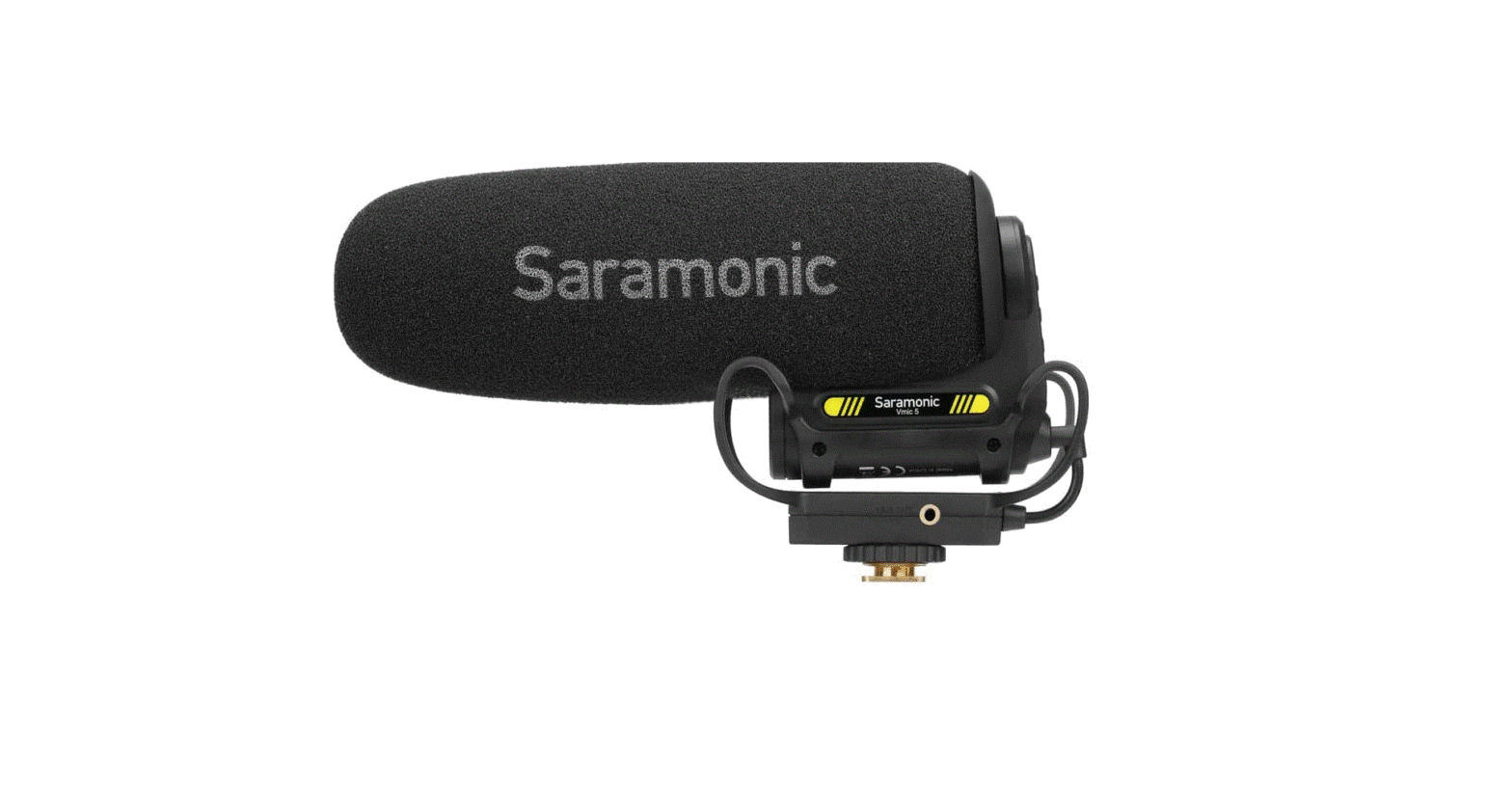

Saramonic Professional On-Camera Supercardioid Shotgun Mic with 2-Stage Gain
Introduction
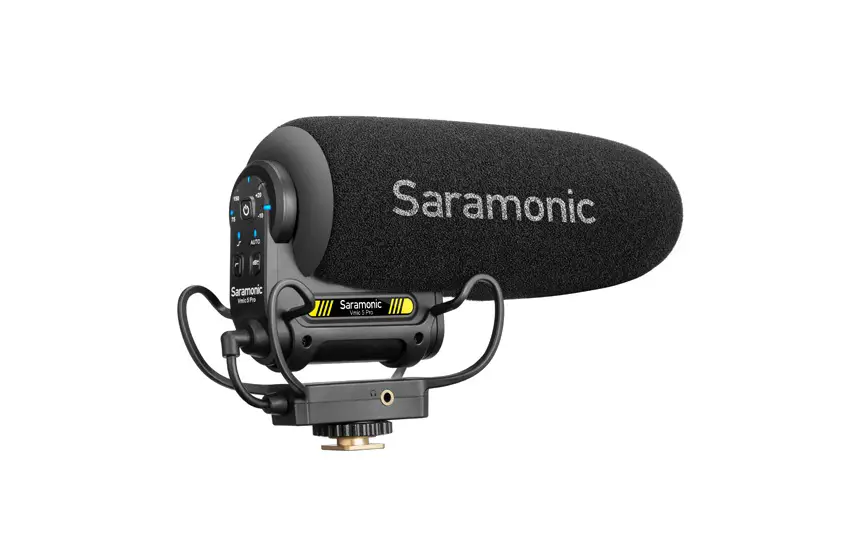
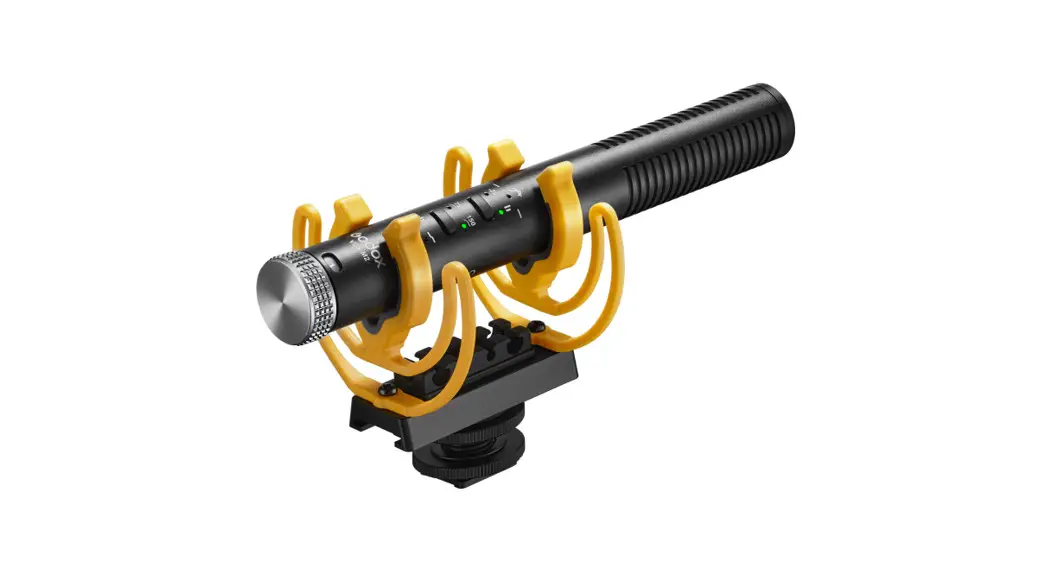
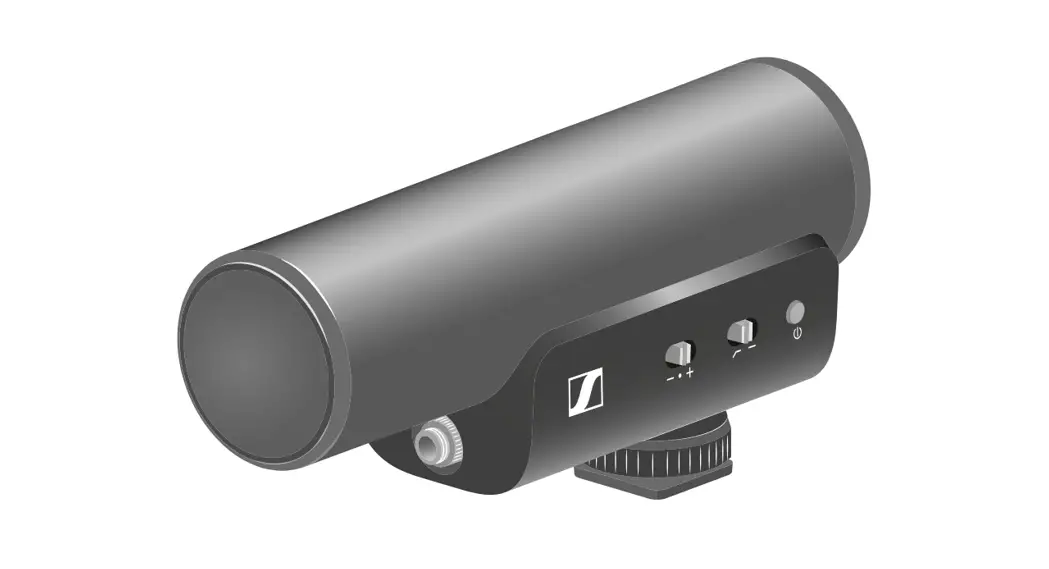
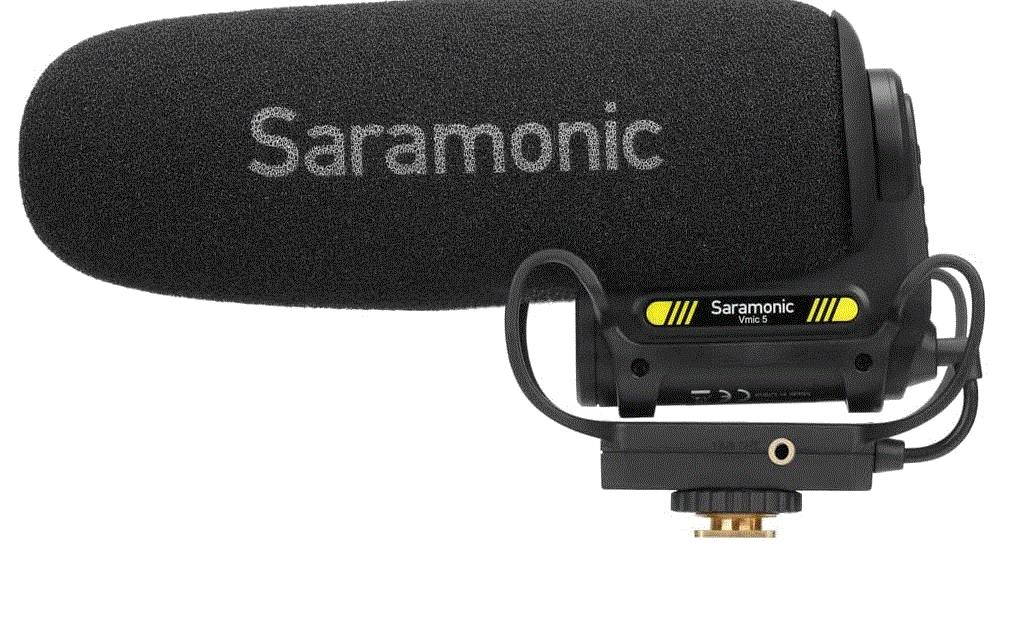
The Saramonic Vmic5 Pro is a super-cardioid on-camera condenser shotgun microphone that provides broadcast-quality audio to DSLR, Mirrorless and Video Cameras. The Vmic5 Pro features aoutput level control (-10dB, OdB, +20dB), a high-pass filter (0/75/150Hz) and a high frequency boost (+5db) to increase intelligibility of dialogue.The microphone teatures Auto Power function, allowing to turns on off in response to the plug-in power status.
The detachable 3.5mm cable connects the Vmics Pro to your camera’s audio input and the headphone output allows you to monitor the incoming audio. Specially designed shock mount system provide isolation from vibration and mechanical noise. Built-in battery has a capacity of 2000mAh that allows to be charged via USB-C (DC 5V/1A). Includes foam windshield, fur windscreen, USB-C charging cable, 3.5mm TRS audio cable in the package.
Highlights
- Super-cardioid polar pattern
- Automatic Power On/Off
- Shock mount system for reducing mechanism noise
- High-pass filter (flat/150 Hz)
- Three-level output control (-10dB, OdB, +20dB)
- High-frequency boost ( 5db)
- Powered by built-in battery or USB-C (DC 5V/1A)
- Includes foam windshield, fur windscreen, USB-C charging
- cable, 3.5mm TRS to TRS audio output cable for camera
Product Structure
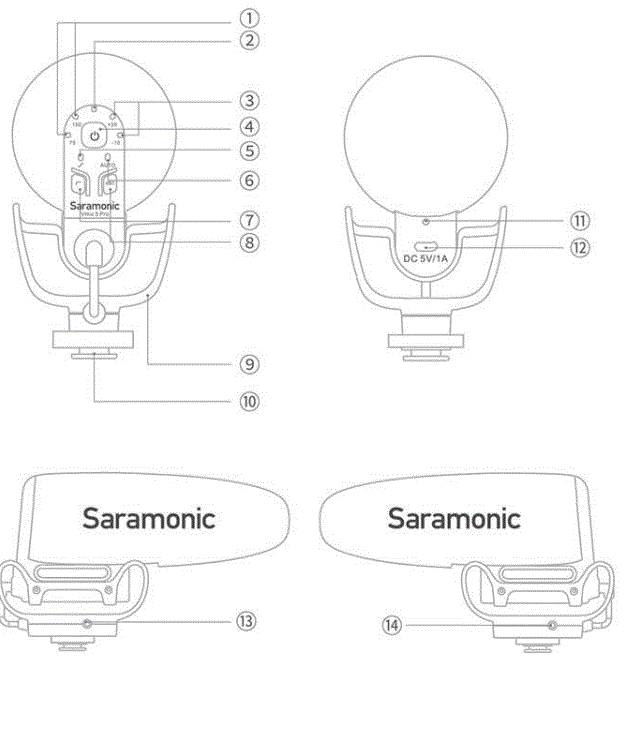
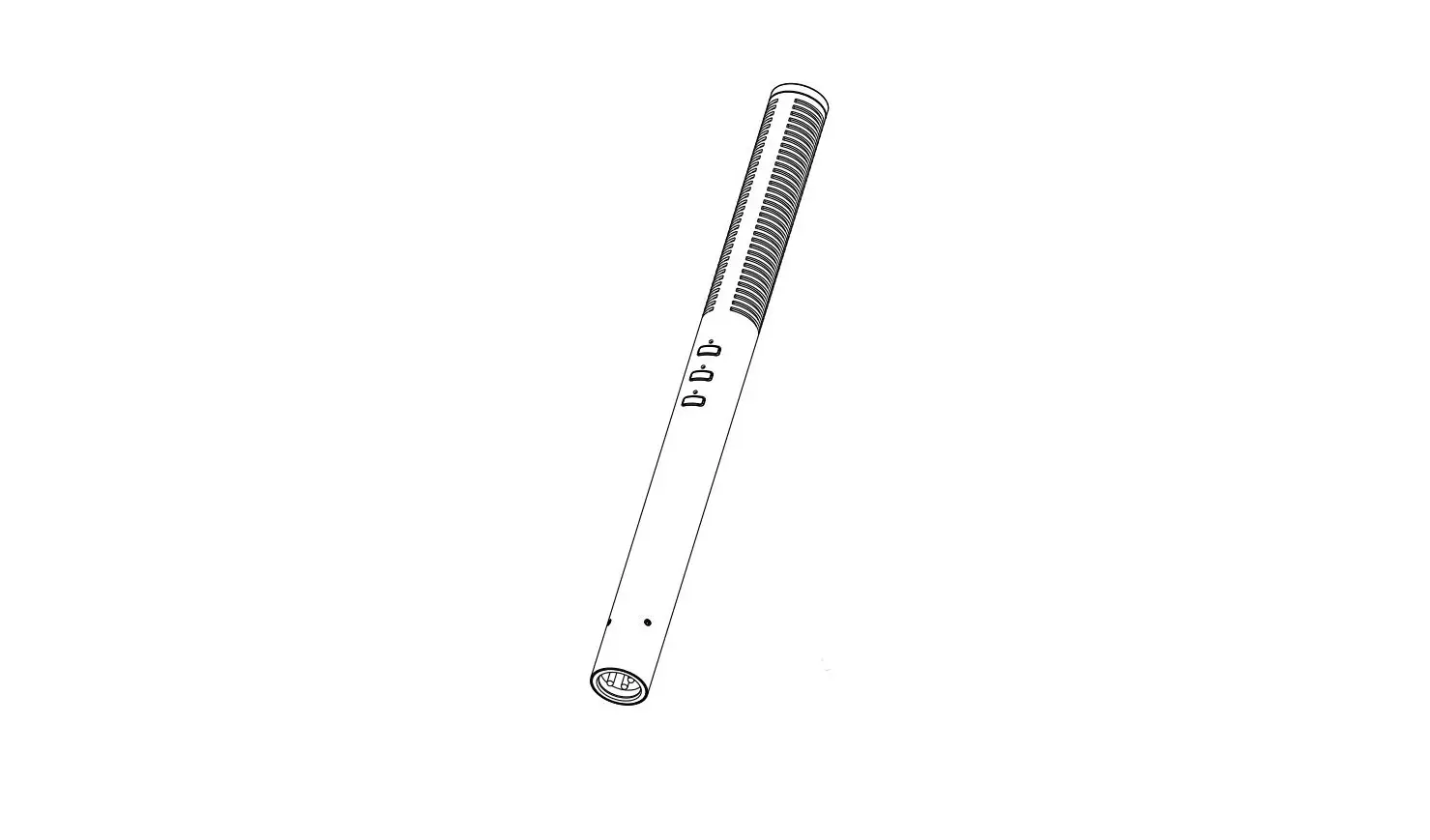
- High-pass Filter LED (flat, 75, 150Hz)
NOTE: The indicator lights off when turns into flat - Power LED
Power ON=Solid Blue Light - Output Gain Control LED (-10dB, OdB, +20dB)
The indicator lights off when turns into OdB.
Low Battery-Solid Red Light - Power Button
- High-pass Filter Button
- Auto Power LED
- High-pass Filter Button
Short press to adjust low-cut setting.
Long press to turn on high-frequency boost function. - Output Gain Level Button
Short press to adjust output gain level setting.
Long press to turn on POWER AUTO function. - Shock Mount System
- Cold Shoe Mount
- Charging Status LED
Charging-Solid Red Light
Fully Charged-Solid Blue Light - USB-C Charging Port (DC 5V/1A)
- 3.5mm Headphone Output
- LINE OUT Port
Set Up Guide
- Long press the power button turning on the microphone, and then the Power LED lights blue.
- Unscrew the locking screw of the microphone, and slide it onto DSLR or others.
- Tighten the screw again to fix it on the position.
- Attach the Vmic5 Pro to your camera’s shoe mount. Connect the Vmic5 Pro’s microphone output to the microphone input of the camera using the supplied 3.5mm audio output cable.
- Adjust the microphone’s The OdB is appropriate for most scenarios, +20dB lets you to turn down your camera’s preamp in order to achieve a clean sound or for picking up subjects from further away in noisy environments.
- If your camera lacks a headphone jack for direct monitoring, plug headphones into the headphone output jack to monitor the audio. We also suggest to recording a sample take and playing back to check if the audio level it is acceptable before recording.
- Wearing the foam windshield in outdoors can reject wind noise and record a clear sound vel control according to your needs.
- Turn the switch to OFF position after recording finished.
Charging
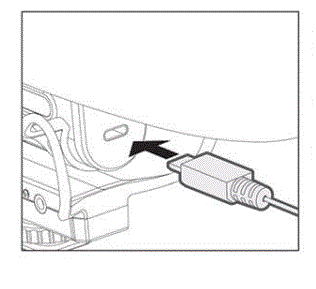
- Use the supplied cable to plug into the
- USB-C charging cable (DC 5V/1A)
- Charging-Solid Red Light
- Fully Charged-Solid Blue Light
Specification
Frequently Asked Questions
The shotgun mic will produce the finest sound if it is placed a few feet above your subject. A dialogue that booms from above the topic can be heard as being crisper and clearer. The microphone will be pointed downward when the noise is coming from above, and it will be off-axis when it is coming from other parts of the room.
The normal pickup range of a shotgun microphone is four to ten feet. A medium shotgun often does enough booming and voice detection.
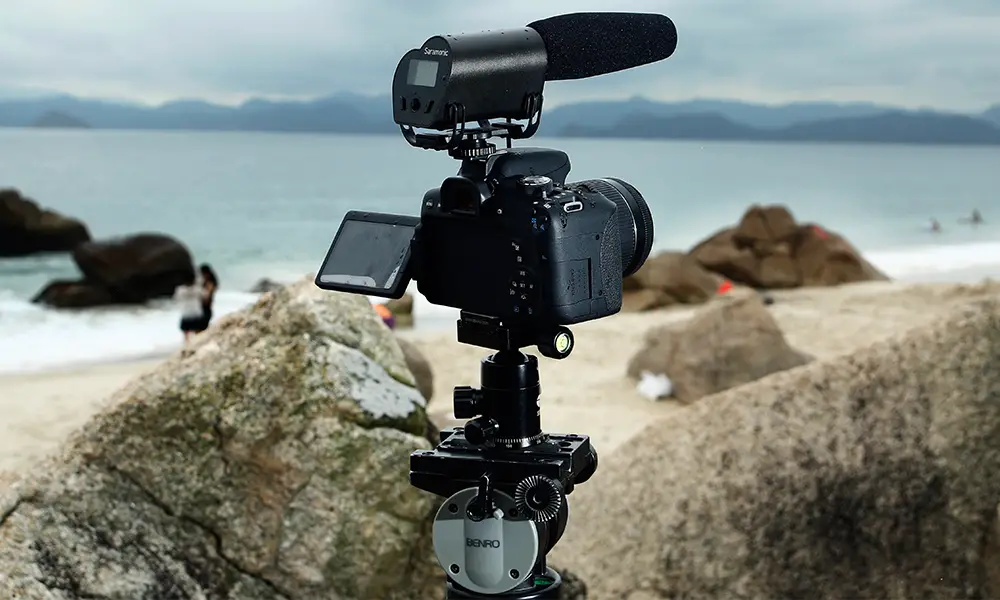
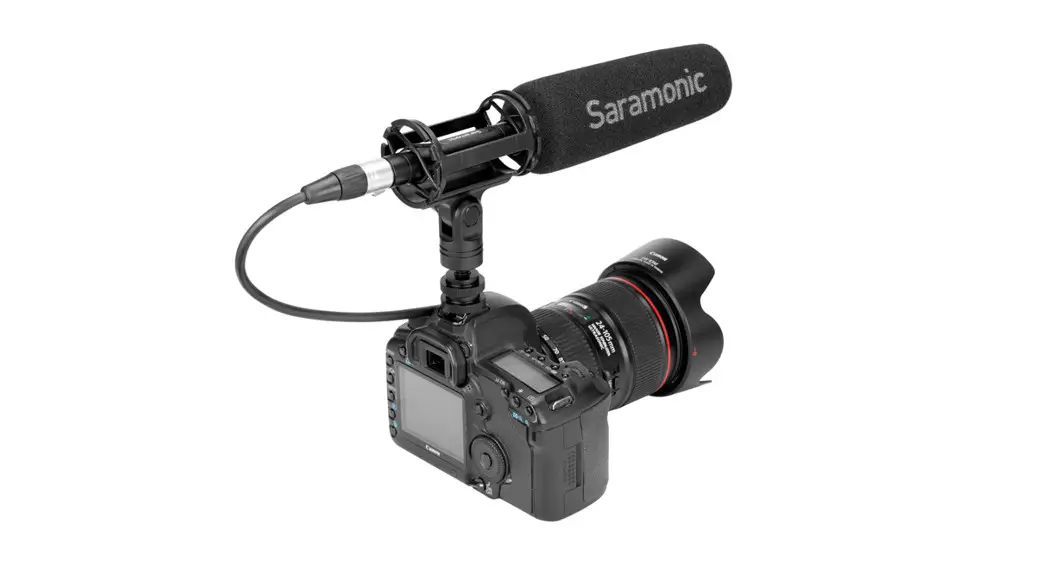
Shotgun mics are frequently utilised by filmmakers who seek higher audio quality when shooting videos because they are vastly superior to onboard camera microphones. They are frequently attached to the camera’s hot shoe, but they can also be affixed to a boom, a camera rig, a mic stand, or a tripod.
In essence, you connect a cable from your boom microphone to the wireless connector on the transmitter, which can supply phantom power, and then broadcast to the receiver, which you can connect to the microphone jack on your DSLR.
A basic directional microphone capsule, typically one with a super-cardioid polar pattern, is used in all shotgun microphones. The capsule is positioned at the bottom of a long, hollow tube with slots along the tube’s surface. A shotgun microphone essentially works on the “waveform interference” idea.
The polar pattern and pickup pattern of a super-cardioid microphone is extremely directional. It has null points at 127° and 233°, as well as a rear lobe of sensitivity, and is most responsive to on-axis noises (where the microphone “points”). A common super-cardioid microphone is one with a high degree of directionality.
Using the option known as “Microphone Mode,” you can alter the audio quality. Every time an app uses your microphone, including FaceTime calls, you can change the modes.
Rugged microphones with balanced XLR audio output, like them, are available. They can use an internal AA battery or regular phantom power to work. Make sure there are no batteries within the device before using phantom power. Short shotguns are the term used on set for video shotgun microphones, which have an extremely directional pattern.
Since a professional shotgun mic is typically used to record sound from a distance, it is attempting to pick up weak signals. Because of this, a high-quality shotgun microphone needs to have a higher sensitivity than those designed to capture close sources.
Shotgun microphones are frequently used for talks or speeches in conferences, meetings, and lectures. In situations like these, the speaker can record his speech or lecture without having to hold a microphone to his mouth or strap a microphone to his body.