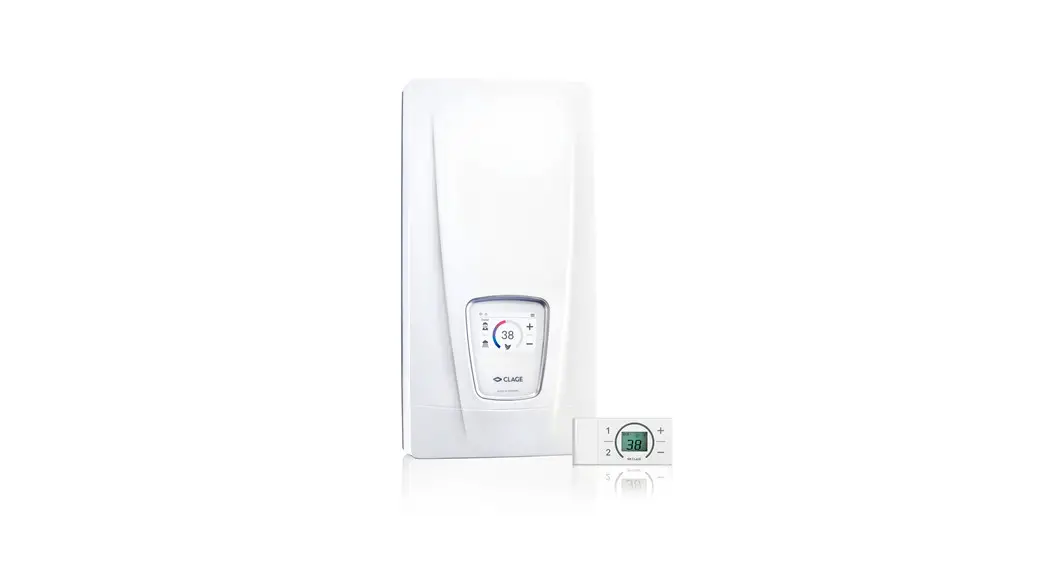
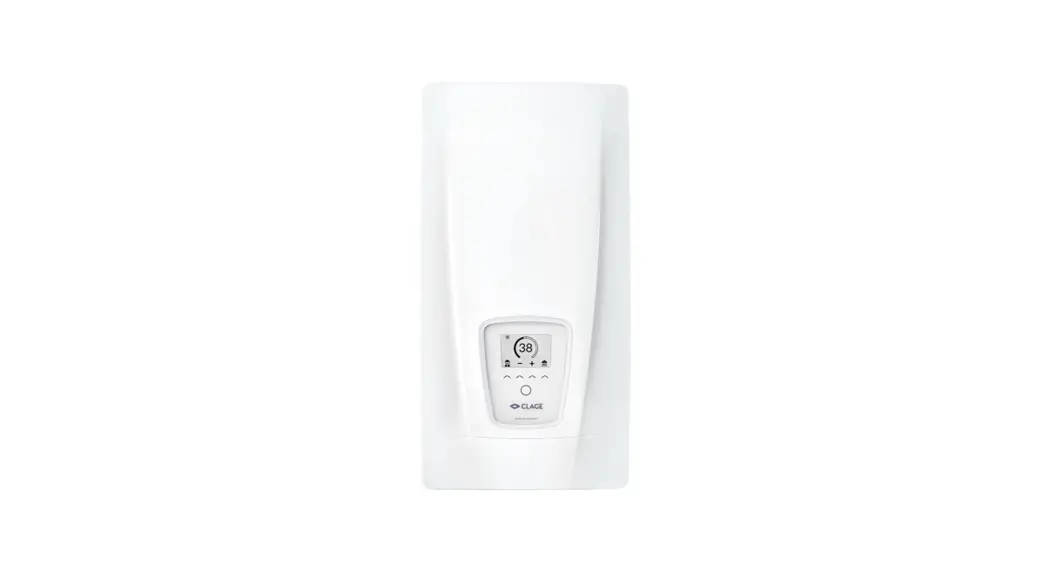
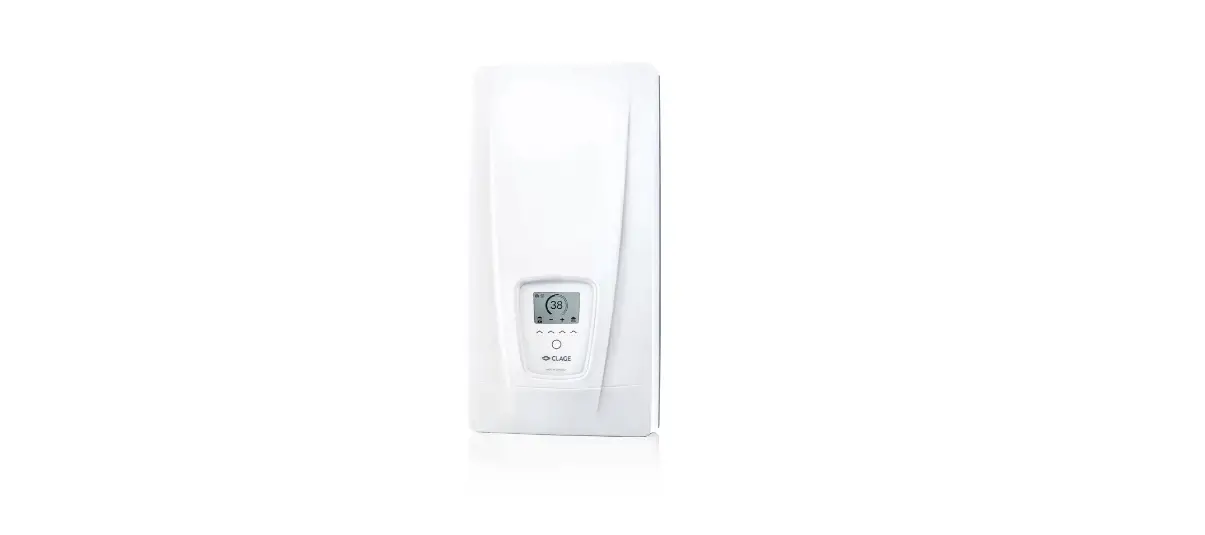
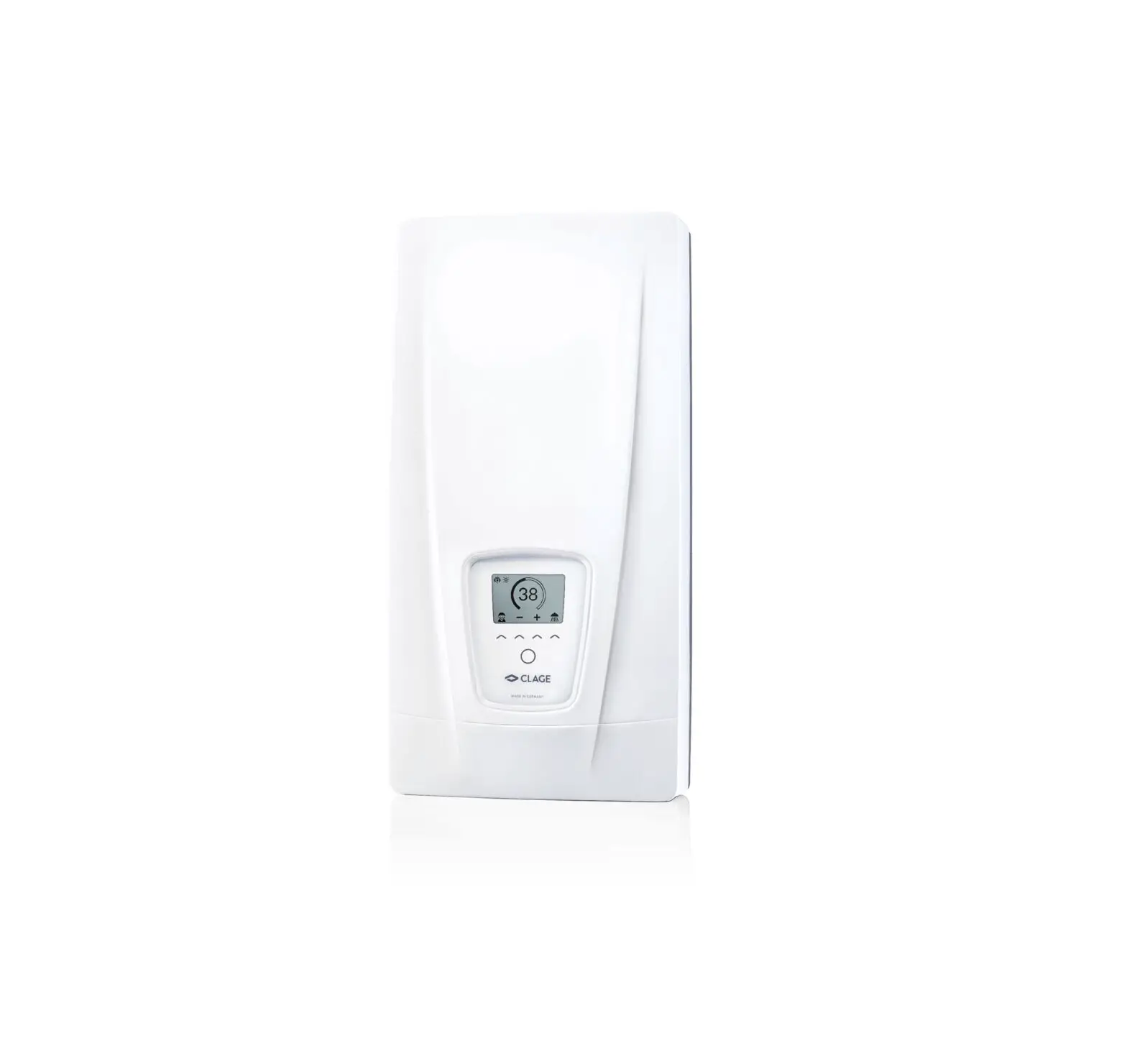
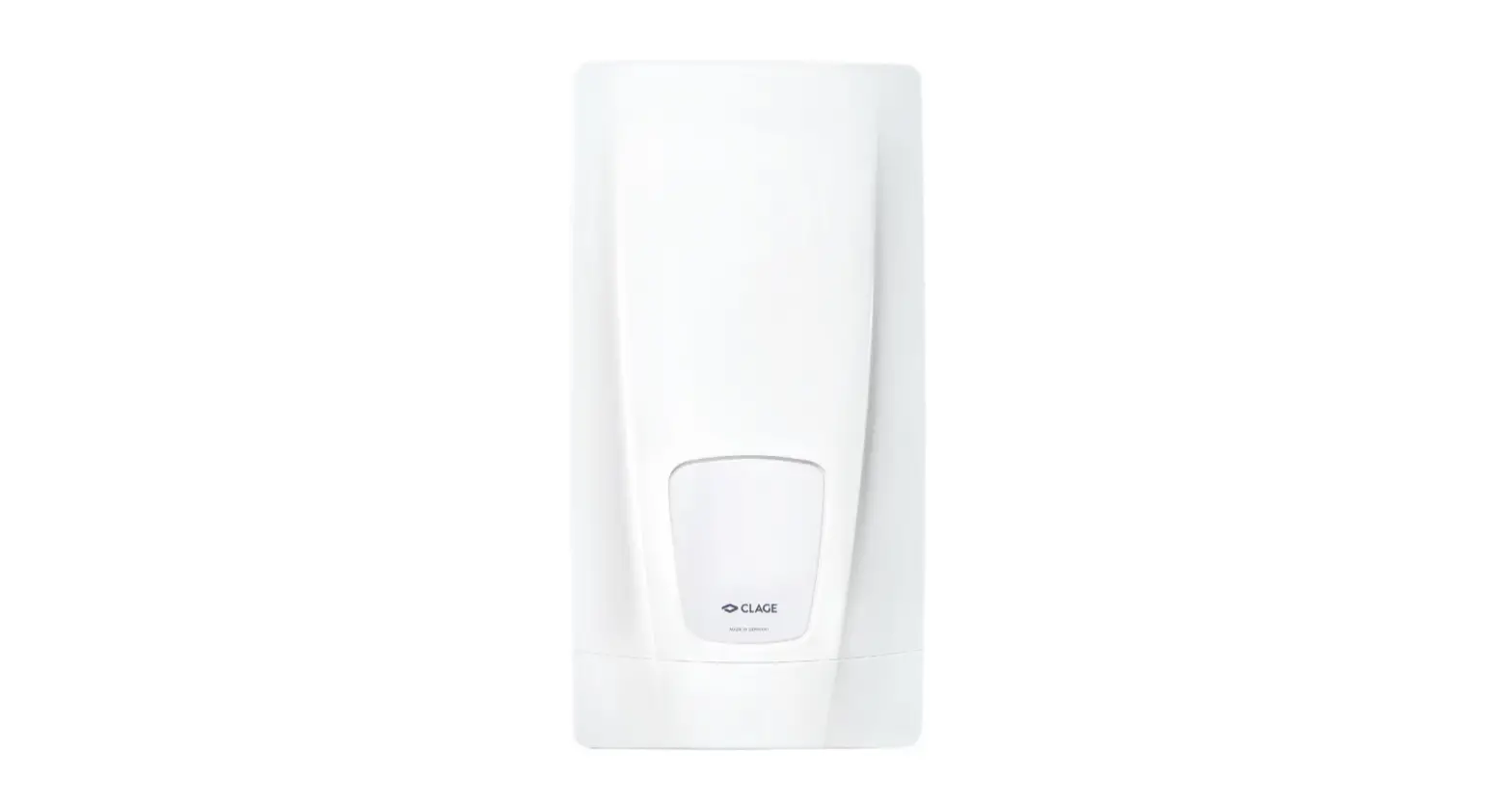
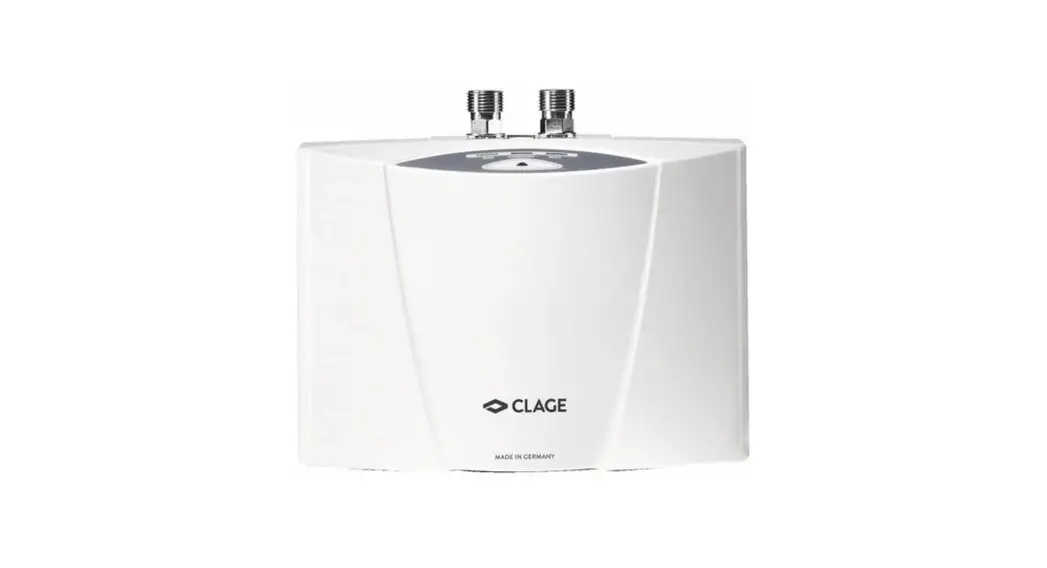
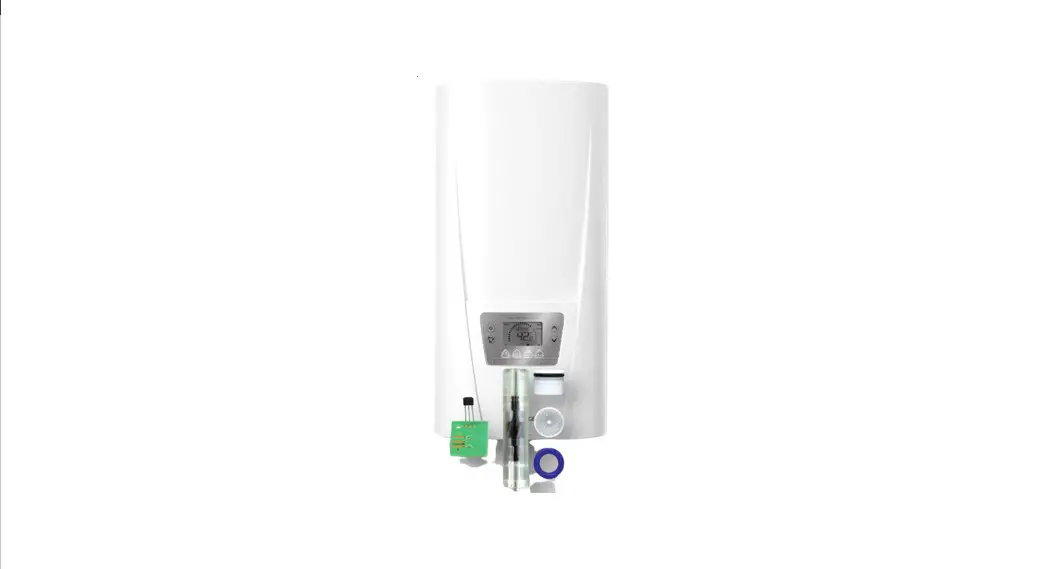
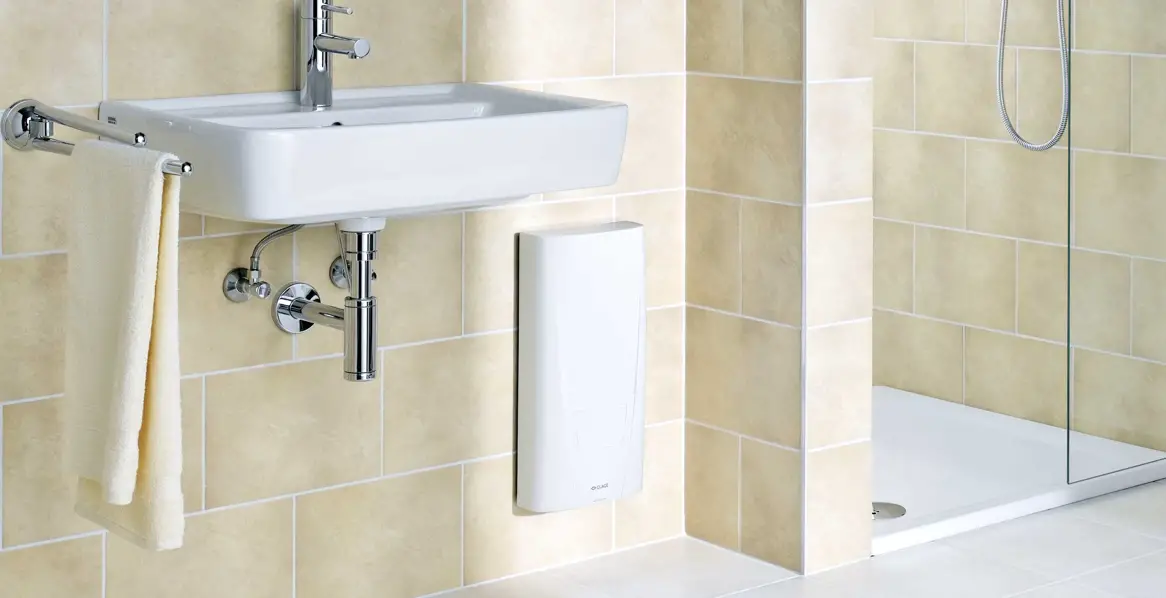
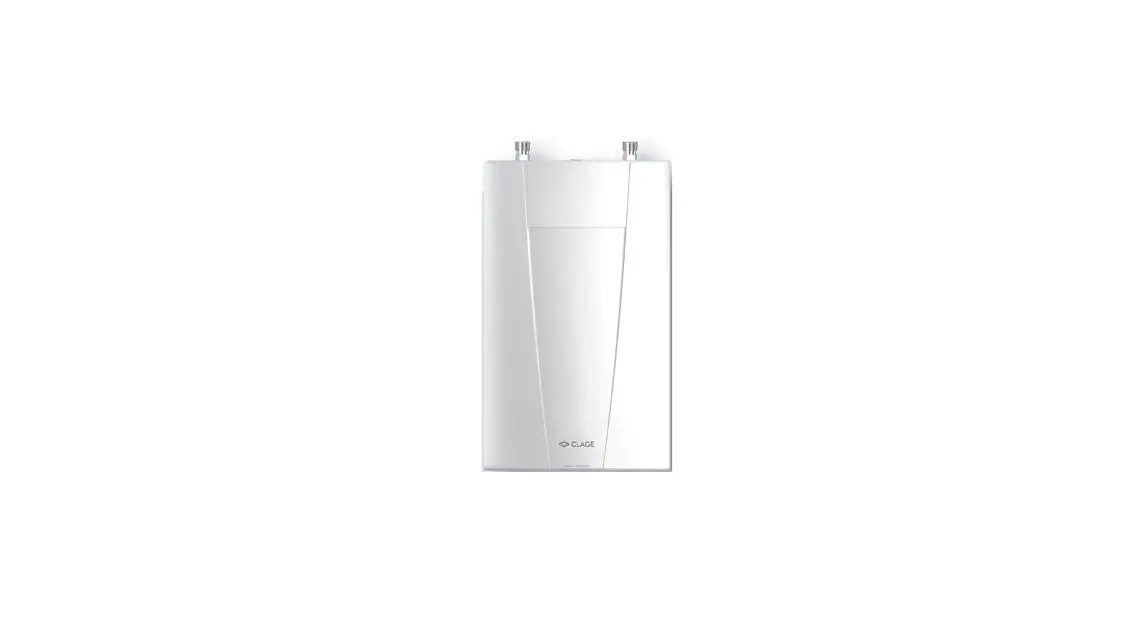
DLX Next E-convenience Instant Water Heater
Product Information
The E-Komfortdurchlauferhitzer DLX Next is an electronically
regulated pressure-resistant instant water heater for decentralized
water supply to one or more tap(s).
Product Usage Instructions
1. Temperature Setting:
Use the temperature selection button (Pos. 2) to adjust the
desired water temperature.
2. Self-help for Problems and Customer
Service:
Refer to the user manual for troubleshooting guide and contact
customer service if needed.
3. Mounting Location:
Follow the installation instructions to determine the
appropriate mounting location.
4. Cleaning and Maintenance:
Regularly clean and maintain the water heater. Refer to the user
manual for detailed instructions.
5. Electrical Connection:
Follow the electrical connection instructions provided in the
user manual and refer to the wiring diagram (Pos. 5) for proper
installation.
6. Initial Operation:
Perform the initial setup and operation as described in the user
manual.
7. Maintenance Work:
Perform regular maintenance tasks, such as cleaning and
replacing the filter sieve for surface-mounted connection. Refer to
the user manual for detailed instructions.
Kurzanleitung Quick guide
E-Komfortdurchlauferhitzer DLX Next E-convenience instant water heater DLX Next
de > 2 en > 7
01.23
DLX Next
Abbildungsverzeichnis / List of figures / Liste des figures / Lijst van figuren / Lista de Figuras / Lista de Figuras / Lista liczb / / Seznam císel / Zoznam císiel / / Lista figura
C1
14
1 15
2 16
3 17
4 5
18 6
3 7
19 20
8
21
9
22
23 10
24
13
11
12
I
Abbildungsverzeichnis / List of figures / Liste des figures / Lijst van figuren / Lista de Figuras / Lista de Figuras / Lista liczb / / Seznam císel / Zoznam císiel / / Lista figura
CLAGE
A1
D1
170
1
239
2
468 363 96
D2
D
E2
56 100
E1
5
2
1
3
4
E3
A
II
DLX Next
Abbildungsverzeichnis / List of figures / Liste des figures / Lijst van figuren / Lista de Figuras / Lista de Figuras / Lista liczb / / Seznam císel / Zoznam císiel / / Lista figura
F1
F2
SDB
STB
G1
G2
0 (a)
(b)
(c)
1
G3
III
Inhaltsverzeichnis
CLAGE
Abbildungsverzeichnis Gebrauchsanleitung
Montageanleitung
1. Übersichtsdarstellung . . . . . . . . . . . . . . . . . . . . . . . . . . . . . . . . . . . . . . . . . . . . . . . . . . . . . . . . . . . .4
DE
1. Gerätebeschreibung . . . . . . . . . . . . . . . . . . . . . . . . . . . . . . . . . . . . . . . . . . . . . . . . . . . . . . . . . . . . .2 2. Technische Daten . . . . . . . . . . . . . . . . . . . . . . . . . . . . . . . . . . . . . . . . . . . . . . . . . . . . . . . . . . . . . . .4
2. Umwelt und Recycling. . . . . . . . . . . . . . . . . . . . . . . . . . . . . . . . . . . . . . . . . . . . . . . . . . . . . . . . . . . .2 3. Abmessungen. . . . . . . . . . . . . . . . . . . . . . . . . . . . . . . . . . . . . . . . . . . . . . . . . . . . . . . . . . . . . . . . . . .4
3. Gebrauch . . . . . . . . . . . . . . . . . . . . . . . . . . . . . . . . . . . . . . . . . . . . . . . . . . . . . . . . . . . . . . . . . . . . . .3 Temperatureinstellung. . . . . . . . . . . . . . . . . . . . . . . . . . . . . . . . . . . . . . . . . . . . . . . . . . . . . . . . . . . .3
4. Installation . . . . . . . . . . . . . . . . . . . . . . . . . . . . . . . . . . . . . . . . . . . . . . . . . . . . . . . . . . . . . . . . . . . . .5 Wasseranschlussstücke installieren . . . . . . . . . . . . . . . . . . . . . . . . . . . . . . . . . . . . . . . . . . . . . . . . .5
4. Selbsthilfe bei Problemen und Kundendienst . . . . . . . . . . . . . . . . . . . . . . . . . . . . . . . . . . . . . . . . .3
Montageort. . . . . . . . . . . . . . . . . . . . . . . . . . . . . . . . . . . . . . . . . . . . . . . . . . . . . . . . . . . . . . . . . . . . .5
Entlüften nach Wartungsarbeiten. . . . . . . . . . . . . . . . . . . . . . . . . . . . . . . . . . . . . . . . . . . . . . . . . . .3
Gerät montieren. . . . . . . . . . . . . . . . . . . . . . . . . . . . . . . . . . . . . . . . . . . . . . . . . . . . . . . . . . . . . . . . .5
Reinigung und Pflege . . . . . . . . . . . . . . . . . . . . . . . . . . . . . . . . . . . . . . . . . . . . . . . . . . . . . . . . . . . .3
Wandhalter montieren . . . . . . . . . . . . . . . . . . . . . . . . . . . . . . . . . . . . . . . . . . . . . . . . . . . . . . . . . . . .5
5. Produktdatenblatt nach Vorgabe der EU Verordnungen – 812/2013 814/2013. . . . . . . . . . . .12
5. Elektroanschluss . . . . . . . . . . . . . . . . . . . . . . . . . . . . . . . . . . . . . . . . . . . . . . . . . . . . . . . . . . . . . . . .5 Elektroanschluss unten . . . . . . . . . . . . . . . . . . . . . . . . . . . . . . . . . . . . . . . . . . . . . . . . . . . . . . . . . . .5
Schaltplan . . . . . . . . . . . . . . . . . . . . . . . . . . . . . . . . . . . . . . . . . . . . . . . . . . . . . . . . . . . . . . . . . . . . . .5
Bauliche Voraussetzungen. . . . . . . . . . . . . . . . . . . . . . . . . . . . . . . . . . . . . . . . . . . . . . . . . . . . . . . . .5
6. Erstinbetriebnahme . . . . . . . . . . . . . . . . . . . . . . . . . . . . . . . . . . . . . . . . . . . . . . . . . . . . . . . . . . . . . .6
7. Wartungsarbeiten. . . . . . . . . . . . . . . . . . . . . . . . . . . . . . . . . . . . . . . . . . . . . . . . . . . . . . . . . . . . . . . .6
Reinigung und Wechsel des Filtersiebes im Anschlussstück bei Unterputzanschluss . . . . . . . . .6
Reinigung und Wechsel des Filtersiebes bei Aufputzanschluss . . . . . . . . . . . . . . . . . . . . . . . . . . .6
Die mit dem Gerät gelieferten Unterlagen sind sorgfältig aufzubewahren.
Geräteregistrierung Registrieren Sie Ihr Gerät online auf unserer Webseite und profitieren Sie von unseren Serviceleistungen im Garantiefall. Ihre vollständigen Daten helfen unserem Kundendienst Ihr Anliegen schnellstmöglich zu bearbeiten. Für die Onlineregistrierung folgen Sie einfach dem unten stehenden Link oder nutzen Sie den QR-Code mit Ihrem Smartphone oder Tablet. https://partner.clage.com/de/service/geraeteregistrierung/
Gebrauchsanleitung
Hinweis: Die beiliegenden Sicherheitshinweise sind vor der Installation, der Inbetriebnahme und der Nutzung sorgfältig und vollständig durchzulesen und für das weitere Vorgehen, sowie den Gebrauch zu beachten!
1. Gerätebeschreibung
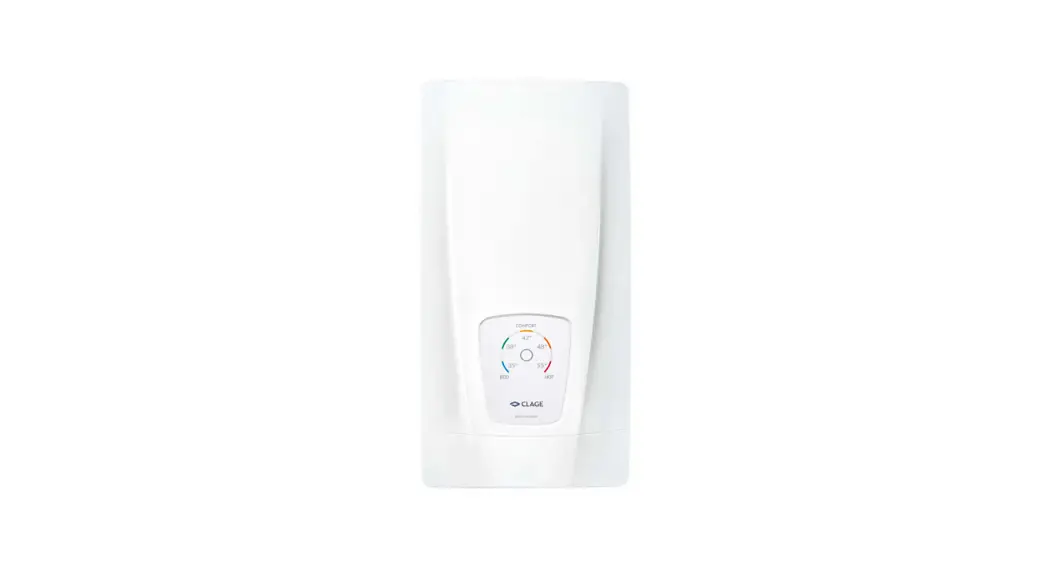
Der E-Komfortdurchlauferhitzer DLX Next ist ein elektronisch geregelter druckfester Durchlauferhitzer zur dezentralen Wasserversorgung einer oder mehrerer Zapfstelle(n).
Die Elektronik regelt die Leistungsaufnahme in Abhängigkeit von der gewählten Auslauftemperatur, der jeweiligen Zulauftemperatur und der Durchflussmenge, um die eingestellte Temperatur gradgenau zu erreichen und auch bei Wasserdruckschwankungen konstant zu halten. Die Auslauftemperatur kann über die mittige Sensortaste auf 35 °C, 45 °C oder 55 °C eingestellt werden.
Bei kühler Zulauftemperatur und hoher Durchflussmenge kann es wegen Überschreiten der Leistungsgrenze vorkommen, dass die voreingestellte Auslauftemperatur nicht erreicht wird.
Durch Reduzieren der Warmwassermenge an der Armatur kann dann die Auslauftemperatur erhöht werden. Der Durchlauferhitzer kann in Kombination mit einem externen Lastabwurfrelais für elektronische Durchlauferhitzer betrieben werden (Details siehe Montageanleitung).
Sobald Sie das Warmwasserventil an der Armatur öffnen, schaltet sich der Durchlauferhitzer automatisch ein. Beim Schließen der Armatur schaltet sich das Gerät automatisch wieder aus.
2. Umwelt und Recycling
Dieses Produkt wurde klimaneutral nach Scope 1 + 2 hergestellt. Wir empfehlen den Bezug von 100%igem Ökostrom, um den Betrieb ebenfalls klimaneutral zu gestalten.
Entsorgung von Transport- und Verpackungsmaterial: Für einen reibungslosen Transport ist Ihr Produkt sorgfältig verpackt. Die Entsorgung des Transportmaterials erfolgt über den Fachhandwerker oder den Fachhandel. Führen Sie die Verkaufsverpackung nach Materialien getrennt über eines der dualen Systeme Deutschlands in den Wertstoffkreislauf zurück.
Entsorgung von Altgeräten: Ihr Produkt wurde aus hochwertigen, wiederverwendbaren Materialien und Komponenten hergestellt. Die mit dem Symbol der durchgestrichenen Mülltonne gekennzeichneten Produkte müssen am Ende ihrer Lebensdauer getrennt vom Hausmüll entsorgt werden. Bringen
Sie dieses Gerät daher zu uns als Hersteller oder zu einer der kommunalen Sammelstellen, die gebrauchte Elektronikgeräte wieder dem Wertstoffkreislauf zuführen. Diese ordnungsgemäße Entsorgung dient dem Umweltschutz und verhindert mögliche schädliche Auswirkungen auf Mensch und Umwelt, die sich aus einer unsachgemäßen Handhabung der Geräte am Ende ihrer Lebensdauer ergeben könnten. Genauere Informationen zur Entsorgung erhalten Sie bei der nächstgelegenen Sammelstelle bzw. dem Recyclinghof oder Ihrer Gemeindeverwaltung.
Geschäftskunden: Wenn Sie Geräte entsorgen möchten, treten Sie bitte mit Ihrem Händler oder Lieferanten in Kontakt. Diese halten weitere Informationen für Sie bereit.
Bei Entsorgung außerhalb Deutschlands beachten Sie auch die örtlichen Vorschriften und Gesetze.
2
DLX Next 3. Gebrauch
Display (Abb. A1)
DE
Pos. Funktion
Entlüften nach Wartungsarbeiten Dieser Durchlauferhitzer ist mit einer automatischen Luftblasenerkennung
1
Drei farbige LEDs
ausgestattet, die ein versehentliches Trockenlaufen verhindert. Trotzdem
2
Temperaturwahltaste
muss das Gerät vor der ersten Inbetriebnahme entlüftet werden. Nach jeder Entleerung (z.B. nach Arbeiten in der Wasserinstallation, wegen
Frostgefahr oder nach Reparaturen am Gerät) muss das Gerät vor der
Temperatureinstellung
Wiederinbetriebnahme erneut entlüftet werden. 1. Trennen Sie den Durchlauferhitzer vom Netz, indem Sie die Sicherungen ausschalten.
Mit der Temperaturwahltaste können Sie schnell eine der drei voreingestellten Temperaturen auswählen, die für die typischen Warmwasseranwendungen »Handwäsche« 35 °C, »Badewanne« 45 °C und »Reinigung« 55 °C benötigt werden.
2. Schrauben Sie den Strahlregler an der Entnahmearmatur ab und öffnen Sie zunächst das Kaltwasserzapfventil, um die Wasserleitung sauber zu spülen und eine Verschmutzung des Gerätes oder des Strahlreglers zu vermeiden.
Mit jedem Tastendruck stellen Sie die nächsthöhere Stufe ein:
3. Öffnen und schließen Sie danach mehrfach das zugehörige Warmwasserzapfventil, bis keine
35 °C 45 °C 55 °C
Luft mehr aus der Leitung austritt und der Durchlauferhitzer luftfrei ist.
Bei erneutem Tastendruck beginnt der Zyklus von vorn. Die aktuelle eingestellte Temperatur wird durch eine der drei farbigen LEDs angezeigt.
4. Erst dann dürfen Sie die Stromzufuhr zum Durchlauferhitzer wieder einschalten und den Strahlregler wieder einschrauben.
5. Nach ca. zehn Sekunden kontinuierlichem Wasserfluss aktiviert das Gerät die Heizung.
Weitere Informationen finden Sie in der online erhältlichen Gebrauchsund Montageanleitung. Folgen Sie bitte dem unten stehenden Link oder nutzen Sie den QR-Code mit Ihrem Smartphone oder Tablet.
https://www.clage.de/links/gma/DLX-Next-GMA-9120-34381
Reinigung und Pflege
· Kunststoffoberflächen und Sanitärarmaturen nur mit einem feuchten Tuch abwischen. Keine scheuernden, lösungsmittel- oder chlorhaltigen Reinigungsmittel verwenden.
· Für eine gute Wasserdarbietung sollten Sie die Entnahmearmaturen (z.B. Strahlregler und Duschköpfe) regelmäßig abschrauben und reinigen. Lassen Sie alle drei Jahre die elektround wasserseitigen Bauteile durch einen anerkannten Fachhandwerksbetrieb überprüfen, um die einwandfreie Funktion und Betriebssicherheit jederzeit zu gewährleisten.
4. Selbsthilfe bei Problemen und Kundendienst
Reparaturen dürfen nur von anerkannten Fachhandwerksbetrieben durchgeführt werden.
Wenn sich ein Fehler an Ihrem Gerät mit dieser Tabelle nicht beheben lässt, wenden Sie sich bitte an den Werkskundendienst. Halten Sie die Daten des Gerätetypenschildes bereit!
Dieser Durchlauferhitzer wurde sorgfältig hergestellt und vor der Auslieferung mehrfach überprüft. Tritt ein Problem auf, so liegt es oft nur an einer Kleinigkeit. Schalten Sie zunächst die Sicherungen aus und wieder ein, um die Elektronik »zurückzusetzen«. Prüfen Sie dann, ob Sie das Problem mit Hilfe der folgenden Tabelle selbst beheben können. Sie vermeiden dadurch die Kosten für einen unnötigen Kundendiensteinsatz.
CLAGE GmbH
Werkskundendienst
Pirolweg 4 21337 Lüneburg Deutschland
Fon: E-Mail:
+49 4131 8901-400 [email protected]
DLX Next Problem
Wasser bleibt kalt, Temperaturanzeige leuchtet nicht
Ursache Haussicherung ausgelöst
Abhilfe Sicherung erneuern oder einschalten
Sicherheitsdruckschalter hat ausgelöst Kundendienst informieren
Wasser bleibt kalt, Temperaturanzeige leuchtet
Sicherheitstemperaturschalter hat ausgelöst
Kundendienst informieren
Wasser bleibt kalt, alle LED blinken Das Gerät hat einen Fehler erkannt Kundendienst informieren
Wasser wird erwärmt, alle LED außer der Temperaturanzeige blinken
Das Gerät hat einen Fehler erkannt
Auslaufarmatur verschmutzt oder
Warmwasserdurchfluss wird
verkalkt
schwächer
Zulauffiltersieb verschmutzt oder
verkalkt
Temperaturanzeige blinkt bei Heizbetrieb
Leistungsgrenze erreicht
Gewählte Temperatur wird nicht Kaltwasser wird an der Armatur bei-
erreicht
gemischt
Sensortaste reagiert nicht richtig Bedienfeld ist nass
Kundendienst informieren
Strahlregler, Duschkopf und Siebe reinigen
Filtersieb von Kundendienst reinigen lassen
Warmwasserdurchfluss an der Armatur reduzieren Nur Warmwasser zapfen, Temperatur für den Gebrauch einstellen, Auslauftemperatur prüfen Bedienfeld mit einem weichen Tuch trocken wischen
3
Montageanleitung
1. Übersichtsdarstellung
Siehe hierzu Abbildung C1
Pos. Funktion
1
Geräteunterteil
2
Temperaturbegrenzer (STB)
3
Temperaturfühler
4
Heizelement
5
Rückflussverhinderer
6
Durchflussgeber
7
Sicherheitsdruckbegrenzer SDB
8
Auslaufrohr
9
Durchflussmengenregler
10
Warmwasseranschlussstück
11
G½ Zoll Einschraubnippel
12
Durchführungstülle
Pos. Funktion
13
Spritzwasserschutztülle
14
Wandhalter
15
DLX Next Gerätehaube
16
Verbindungsrohr
17
Elektronikabdeckung
18
Elektronik
19
Anschlussklemme
20
DLX Next Bedienfeld
21
Zulaufrohr
22
Feinfilter
23
Kaltwasseranschlussstück
24
Rahmen
CLAGE
DE
2. Technische Daten
Typ Energieeffizienzklasse Gewählte/r Leistung / Strom Nennspannung Elektroanschluss Erforderlicher Leiterquerschnitt 1) Warmwasserleistung (l/min) max. bei t = 28 K max. bei t = 38 K Nenninhalt Nennüberdruck Anschlussart Heizsystem Einsatzbereich bei 15 °C: spezifischer Wasserwiderstand spezifische elektrische Leitfähigkeit Zulauftemperatur Einschalt- max. Durchflussmenge Druckverlust Einstellbare Temperaturen Wasseranschluss Gewicht (mit Wasserfüllung) Schutzklasse nach VDE
Schutzart / Sicherheit
DLX 18 Next
18 kW / 26 A 400 V
16,2 kW / 25 A 380 V
4,0 mm2
DLX 21 Next
A *)
21 kW / 30 A
19 kW / 29 A
400 V
380 V
3~ / PE
4,0 mm2
9,2 2)
10,7 2)
6,8
7,9
0,4 l
1,0 MPa (10 bar)
druckfest / drucklos
Blankdraht-Heizsystem IES®
1,5 l/min 7,0 3)
1100 cm 90 mS/m
30 °C 1,5 l/min 8,0 3) 0,08 bar bei 1,5 l/min 1,3 bar bei 9,0 l/min 4) 35 °C / 45 °C / 55 °C
G ½ Zoll 4,2 kg
I
IP25
DLX 24 Next
24 kW / 35 A 400 V
21,7 kW / 33 A 380 V
6,0 mm2
12,3 2) 9,0 2)
1,5 l/min 8,0 3)
3. Abmessungen Maßangaben in mm (Abb. D1)
4
DLX Next 4. Installation
Für dieses Gerät ist aufgrund der Landesbauordnungen ein allgemei- 2. Halten Sie die mitgelieferte Montageschablone gemäß Bilderanleitung an die Wand, zeichnen
DE
nes bauaufsichtliches Prüfzeugnis zum Nachweis der Verwendbarkeit
Sie die Bohrlöcher entsprechend der Schablone an und bohren Sie die Löcher mit einem 6 mm–
hinsichtlich des Geräuschverhaltens erteilt.
Bohrer.
16951
Zu beachten sind:
· VDE 0100
3. Öffnen Sie das Gerät. Ziehen Sie dazu die Blende nach unten ab und lösen Sie die zentrale Haubenschraube. Heben Sie die Haube vorsichtig an, ziehen Sie den Stecker vom Bedienfeld ab und merken Sie sich die Position des Steckers.
· EN 806
· Bestimmungen der örtlichen Energie- und Wasserversorgungsunternehmen
· Technische Daten und Angaben auf dem Typenschild
4. Lösen Sie die Rändelmutter des Wandhalters, nehmen sie den Wandhalter ab und schrauben Sie den Wandhalter an die Wand. Fliesenversatz oder Unebenheiten lassen sich bis zu 30 mm durch die mitgelieferten Distanzhülsen ausgleichen. Die Distanzhülsen werden zwischen Wand und Wandhalter montiert.
· Die ausschließliche Verwendung von geeignetem und unbeschädigtem Werkzeug
Wasseranschlussstücke installieren
Montageort
· Gerät nur in einem frostfreien Raum installieren. Das Gerät darf niemals Frost ausgesetzt werden.
· Das Gerät ist für eine Wandmontage vorgesehen und muss senkrecht mit unten liegenden Wasseranschlüssen oder alternativ quer mit Wasseranschlüssen links installiert werden.
· Das Gerät entspricht der Schutzart IP25 und darf gemäß VDE 0100 Teil 701 im Schutzbereich 1 installiert werden.
· Um Wärmeverluste zu vermeiden, sollte die Entfernung zwischen Durchlauferhitzer und Zapfstelle möglichst gering sein.
· Das Gerät muss für Wartungszwecke zugänglich sein.
· Kunstoffrohre dürfen nur verwendet werden, wenn diese DIN 16893 Reihe 2 entsprechen.
· Der spezifische Widerstand des Wassers muss bei 15 °C mindestens 1100 cm betragen. Der spezifische Widerstand des Wassers kann bei Ihrem Wasserversorgungsunternehmen erfragt werden.
Hinweis: Ziehen Sie die Überwurfmuttern maßvoll an, um die notwendige Dichtheit zu erreichen, ohne die Armaturen oder die Rohrleitungen zu beschädigen. · Schrauben Sie gemäß Abbildung das Kaltwasseranschlussstück mit Überwurfmutter und der
½ Zoll-Dichtung an den Kaltwasseranschluss.(Abb. D2). · Schrauben Sie das Warmwasseranschlussstück mit Überwurfmutter und der ½ Zoll-Dichtung
an den Warmwasseranschluss.
· Schieben Sie den Durchflussmengenregler »D« in das Warmwasseranschlussstück. Der O-Ring muss nach dem Einsetzen sichtbar sein.
Gerät montieren
· Im Austauschfall kann es vorkommen, dass die Elektrozuleitung im oberen Gerätebereich vorhanden ist. Der Elektroanschluss erfolgt dann gemäß der Beschreibung »Elektroanschluss von oben« in der online erhältlichen Anleitung.
· Montieren Sie das Gerät gemäß Bilderanleitung
Wandhalter montieren
Spülen Sie die Wasserzuleitungen vor der Installation gründlich durch, um Schmutz aus den Leitungen zu entfernen.
1. Schrauben Sie die Einschraubnippel gemäß Bilderanleitung mit einem 12 mm Innensechskantschlüssel in die beiden Wandanschlüsse. Dabei müssen die Dichtungen vollständig in das Gewinde eingeschraubt werden.
Hinweis: Aufputzanschluss
Weitere Informationen finden Sie in der online erhältlichen Gebrauchsund Montageanleitung. Folgen Sie bitte dem unten stehenden Link oder nutzen Sie den QR-Code mit Ihrem Smartphone oder Tablet.
https://www.clage.de/links/gma/DLX-Next-GMA-9120-34381
5. Elektroanschluss
Nur durch den Fachmann! Zu beachten sind: · VDE 0100 · Bestimmungen der örtlichen Energie- und Wasserversorgungsunternehmen · Technische Daten und Angaben auf dem Typenschild · Gerät an den Schutzleiter anschließen!
Schaltplan (Abb. E1)
1. Elektronik 2. Heizelement 3. Sicherheitsdruckbegrenzer SDB 4. Anschlussklemme 5. Sicherheitstemperaturbegrenzer STB
Bauliche Voraussetzungen · Das Gerät muss dauerhaft an fest verlegte Elektroanschlussleitungen angeschlossen wer-
den. Das Gerät muss an den Schutzleiter angeschlossen werden. · Die Elektroleitungen müssen sich in einem einwandfreien Zustand befinden und dürfen nach
der Montage nicht mehr berührbar sein. · Installationsseitig ist eine allpolige Trennvorrichtung mit einer Kontaktöffnungsweite von
mindestens 3 mm pro Pol vorzusehen (z.B. über Sicherungen). · Zur Absicherung des Gerätes ist ein Sicherungselement für Leitungsschutz mit einem dem
Gerätenennstrom angepassten Auslösestrom zu montieren.
Elektroanschluss unten
Hinweis: Bei Bedarf kann die Anschlussklemme in den oberen Gerätebereich verlegt werden. Bitte folgen Sie hierzu den Anweisungen in der online erhältlichen Gebrauchs- und Montageanleitung.
Vergewissern Sie sich vor dem Anschließen des Gerätes an das elektrische Netz, dass die Stromversorgung ausgeschaltet ist!
1. Manteln Sie das Anschlusskabel ungefähr 6 cm über dem Wandaustritt ab (Abb. E2). Schieben Sie die Spritzwasserschutztülle mit der kleineren Öffnung voran über das Anschlusskabel, so dass die Schutztülle wandbündig abschließt. Diese verhindert, dass eventuell eindringendes Wasser mit den Elektroleitungen in Kontakt kommt. Das Anschlusskabel darf nicht beschädigt sein! Die Schutztülle muss verwendet werden!
2. Isolieren Sie die Einzeladern ab und schließen diese an die Anschlussklemme gemäß des Schaltplans an. Das Gerät ist an den Schutzleiter anzuschließen.
3. Ziehen Sie die Schutztülle so weit über die Anschlusskabel und formen Sie die Anschlussleitungen derart, dass die Schutztülle ohne mechanische Spannungen in die Aussparung der Zwischenwand passt. Setzen Sie die Tüllenfixierung (A) ein (Abb. E3).
4. Schließen Sie das Bedienfeldkabel an das Bedienfeld in der Haube an, setzen Sie die Haube auf und drehen Sie die Haubenschraube ein. Hinweis: Das Bedienfeldkabel darf nicht eingeklemmt oder gequetscht werden.
Hinweis: Lastabwurfrelais und Stromanschluss alternativ
Weitere Informationen finden Sie in der online erhältlichen Gebrauchsund Montageanleitung. Folgen Sie bitte dem unten stehenden Link oder nutzen Sie den QR-Code mit Ihrem Smartphone oder Tablet.
https://www.clage.de/links/gma/DLX-Next-GMA-9120-34381
5
6. Erstinbetriebnahme
CLAGE
Entlüften Sie das Gerät gemäß der beigefügten Bilderanleitung.
1. Schalten Sie die Stromzufuhr zum Gerät ein.
Nach jeder Entleerung (z.B. nach Arbeiten in der Wasserinstallation, wegen 2. Öffnen Sie das Warmwasserzapfventil. Überprüfen Sie die Funktion des Durchlauferhitzers.
DE
Frostgefahr oder nach Reparaturen am Gerät) muss das Gerät vor der
Die Wasserheizung wird nach ca. 10 30 Sekunden kontinuierlichen Wasserflusses aktiviert.
Wiederinbetriebnahme erneut entlüftet werden.
3. Machen Sie den Benutzer mit dem Gebrauch vertraut und übergeben Sie ihm die
Lässt sich der Durchlauferhitzer nicht in Betrieb nehmen, prüfen Sie, ob der
Gebrauchsanleitung.
Sicherheitstemperaturbegrenzer (STB) oder der Sicherheitsdruckbegrenzer (SDB) durch den Transport ausgelöst hat. Spannungsfreiheit am Gerät sicherstellen und ggf. Sicherheitsschalter zurücksetzen (Abb. F1 + F2).
4. Füllen Sie die Registrierkarte aus und senden diese an den Werkskundendienst oder registrieren Sie Ihr Gerät online auf unserer Homepage (siehe hierzu auch Seite 2).
7. Wartungsarbeiten
Wartungsarbeiten dürfen nur von einem anerkannten Fachhandwerksbetrieb durchgeführt werden.
Reinigung und Wechsel des Filtersiebes im Anschlussstück bei Unterputzanschluss
Der Kaltwasseranschluss dieses Durchlauferhitzers ist mit einem integrierten Absperrventil und Sieb ausgestattet. Durch Verschmutzung des Siebes kann die Warmwasserleistung vermindert werden, so dass die Reinigung beziehungsweise der Austausch des Siebes wie folgt vorzunehmen ist:
1. Schalten Sie den Durchlauferhitzer an den Haussicherungen spannungsfrei und sichern Sie diese gegen unbeabsichtigtes Wiedereinschalten.
2. Öffnen Sie das Gerät indem Sie die Blende nach unten abziehen, die sich darunter befindliche Schraube lösen. Heben Sie die Haube vorsichtig an, ziehen Sie den Stecker vom Bedienfeld ab und merken Sie sich die Position des Steckers.
3. Drehen Sie das Absperrventil im Kaltwasseranschlussstück (a) zu Position »0« (Abb. G1).
4. Drehen Sie die Verschlussschraube (b) aus dem Kaltwasseranschlussstück und nehmen Sie das Sieb (c) heraus (Abb. G2). Hinweis: Es kann Restwasser austreten.
5. Das Sieb kann nun gereinigt beziehungsweise ersetzt werden.
6. Nach Einbau des sauberen Siebes drehen Sie die Verschlussschraube fest.
7. Drehen Sie das Absperrventil im Kaltwasseranschlussstück langsam wieder auf (Position »1«).
8. Entlüften Sie das Gerät, indem Sie die zugehörige Warmwasserarmatur mehrfach langsam öffnen und schließen, bis keine Luft mehr aus der Leitung austritt.
9. Schließen Sie das Bedienfeldkabel an das Bedienfeld in der Haube an, setzen Sie die Haube auf und drehen Sie die Haubenschraube ein. Hinweis: Das Bedienfeldkabel darf nicht eingeklemmt oder gequetscht werden. Danach schalten Sie die Spannung an den Haussicherungen wieder ein.
Reinigung und Wechsel des Filtersiebes bei Aufputzanschluss
Der Kaltwasseranschluss dieses Durchlauferhitzers ist mit einem Sieb ausgestattet. Durch Verschmutzung des Siebes kann die Warmwasserleistung vermindert werden, so dass die Reinigung beziehungsweise der Austausch des Siebes wie folgt vorzunehmen ist:
1. Schalten Sie den Durchlauferhitzer an den Haussicherungen spannungsfrei und sichern Sie diese gegen unbeabsichtigtes Wiedereinschalten.
2. Schließen Sie das Absperrventil in der Zulaufleitung.
3. Öffnen Sie das Gerät indem Sie die Blende nach unten abziehen, die sich darunter befindliche Schraube lösen. Heben Sie die Haube vorsichtig an, ziehen Sie den Stecker vom Bedienfeld ab und merken Sie sich die Position des Steckers.
4. Lösen Sie das Einlaufrohr vom Wasseranschlussstück. Hinweis: Es kann Restwasser austreten.
5. Das Sieb kann nun gereinigt beziehungsweise ersetzt werden (Abb. G3).
6. Nach Einbau des sauberen Siebes verschrauben Sie das Einlaufrohr wieder am Wasseranschlussstück.
7. Öffnen Sie langsam das Absperrventil in der Einlaufleitung. Achten Sie auf Undichtigkeiten.
8. Entlüften Sie das Gerät, indem Sie die zugehörige Warmwasserarmatur mehrfach langsam öffnen und schließen, bis keine Luft mehr aus der Leitung austritt.
9. Schließen Sie das Bedienfeldkabel an das Bedienfeld in der Haube an, setzen Sie die Haube auf und drehen Sie die Haubenschraube ein. Hinweis: Das Bedienfeldkabel darf nicht eingeklemmt oder gequetscht werden. Danach schalten Sie die Spannung an den Haussicherungen wieder ein.
6
DLX Next Contents
List of figures
Installation instruction
Operation instruction
1. Overview. . . . . . . . . . . . . . . . . . . . . . . . . . . . . . . . . . . . . . . . . . . . . . . . . . . . . . . . . . . . . . . . . . . . . . .9
EN
1. Description of the appliance. . . . . . . . . . . . . . . . . . . . . . . . . . . . . . . . . . . . . . . . . . . . . . . . . . . . . . .7 2. Environment and recycling . . . . . . . . . . . . . . . . . . . . . . . . . . . . . . . . . . . . . . . . . . . . . . . . . . . . . . . .7
2. Technical specifications . . . . . . . . . . . . . . . . . . . . . . . . . . . . . . . . . . . . . . . . . . . . . . . . . . . . . . . . . .9 3. Dimensions. . . . . . . . . . . . . . . . . . . . . . . . . . . . . . . . . . . . . . . . . . . . . . . . . . . . . . . . . . . . . . . . . . . . .9
3. How to use . . . . . . . . . . . . . . . . . . . . . . . . . . . . . . . . . . . . . . . . . . . . . . . . . . . . . . . . . . . . . . . . . . . . .8 Temperature setting . . . . . . . . . . . . . . . . . . . . . . . . . . . . . . . . . . . . . . . . . . . . . . . . . . . . . . . . . . . . .8
4. Installation . . . . . . . . . . . . . . . . . . . . . . . . . . . . . . . . . . . . . . . . . . . . . . . . . . . . . . . . . . . . . . . . . . . .10 Installing connection pieces . . . . . . . . . . . . . . . . . . . . . . . . . . . . . . . . . . . . . . . . . . . . . . . . . . . . . .10
4. Trouble-shooting and service . . . . . . . . . . . . . . . . . . . . . . . . . . . . . . . . . . . . . . . . . . . . . . . . . . . . . .8
Installation site . . . . . . . . . . . . . . . . . . . . . . . . . . . . . . . . . . . . . . . . . . . . . . . . . . . . . . . . . . . . . . . . .10
Venting after maintenance work. . . . . . . . . . . . . . . . . . . . . . . . . . . . . . . . . . . . . . . . . . . . . . . . . . . .8
Installing the appliance . . . . . . . . . . . . . . . . . . . . . . . . . . . . . . . . . . . . . . . . . . . . . . . . . . . . . . . . . .10
Cleaning and maintenance . . . . . . . . . . . . . . . . . . . . . . . . . . . . . . . . . . . . . . . . . . . . . . . . . . . . . . . .8
Installing the wall bracket . . . . . . . . . . . . . . . . . . . . . . . . . . . . . . . . . . . . . . . . . . . . . . . . . . . . . . . .10
5. Product data sheet in accordance with EU regulation – 812/2013 814/2013 . . . . . . . . . . . . .12
5. Electrical connection. . . . . . . . . . . . . . . . . . . . . . . . . . . . . . . . . . . . . . . . . . . . . . . . . . . . . . . . . . . .10 Electrical connection from below. . . . . . . . . . . . . . . . . . . . . . . . . . . . . . . . . . . . . . . . . . . . . . . . . .10
Wiring diagram. . . . . . . . . . . . . . . . . . . . . . . . . . . . . . . . . . . . . . . . . . . . . . . . . . . . . . . . . . . . . . . . .10
Structural prerequisites . . . . . . . . . . . . . . . . . . . . . . . . . . . . . . . . . . . . . . . . . . . . . . . . . . . . . . . . . .10 6. Initial operation . . . . . . . . . . . . . . . . . . . . . . . . . . . . . . . . . . . . . . . . . . . . . . . . . . . . . . . . . . . . . . . .11 7. Maintenance work . . . . . . . . . . . . . . . . . . . . . . . . . . . . . . . . . . . . . . . . . . . . . . . . . . . . . . . . . . . . . .11
The documents supplied with the device must be stored carefully.
Cleaning and replacing the filter strainer. . . . . . . . . . . . . . . . . . . . . . . . . . . . . . . . . . . . . . . . . . . .11 Cleaning and replacing the filter strainer if direct connected . . . . . . . . . . . . . . . . . . . . . . . . . . .11
Registration Register your device online on our website and benefit from our services under warranty. Your full details help our customer service process your request as fast as possible. For online registration, just follow the link below or use the QR code with your smartphone or tablet. https://partner.clage.com/en/service/device-registration/
Operation instruction
Note: Carefully read the enclosed safety instructions through in full before the appliance is installed, put into service and used and follow them in the further steps and during use!
1. Description of the appliance
The E-convenience instant water heater DLX Next is a electronically controlled pressure-resistant instantaneous water heater for an efficient water supply to one or more tap outlets.
Its electronic control regulates the power consumption depending on the selected outlet temperature, the respective inlet temperature and the flow rate, thus reaching the set temperature exactly to the degree and keeping it constant in case of water pressure fluctuations. The outlet temperature can be set to 35 °C, 45 °C or 55 °C using the central sensor key.
In case of a low feed temperature and a high flow rate at the same time, it could happen that the preset outlet temperature is not reached which is due to the fact that the appliance exceeded its
capacity. The outlet temperature can be raised by reducing the water flow at the tap.
It is possible to use the instantaneous water heater in combination with an external load shedding relay for electronically controlled instantaneous water heaters (refer to installing instructions).
As soon as you open the hot water tap, the instantaneous water heater switches on automatically. When the tap is closed, the appliance automatically switches off.
2. Environment and recycling
This product was manufactured climate neutrally according to Scope 1 + 2. We recommend the purchase of 100% green electricity to make the operation climate neutral as well.
Disposal of transport and packaging material: For smooth transport your product is carefully packed. The disposal of the transport material is carried out by the specialist tradesman or the specialist trade. Separate the sales packaging according to materials separated according to materials via one of the dual systems in Germany.
Disposal of old products: Your product was manufactured from high-quality, reusable materials and components. Products marked with the crossed-out wheeled bin symbol must be disposed of separately from household waste at the end of their service life. Therefore, take this product to us as the manufacturer or to
one of the municipal collection points that recycle used electronic devices. This proper disposal serves to protect the environment and prevents possible harmful effects on humans and the environment that could result from improper handling of the products at the end of their service life. For more detailed information on disposal, please contact your nearest collection point or recycling centre or your local council.
Business customers: If you wish to discard equipment, please contact your dealer or supplier for further information.
For disposal outside Germany, please also observe the local regulations and laws.
7
3. How to use
Display (fig. A1)
Pos. Function
1
Three coloured LEDs
2
Temperature selection key
Temperature setting
The temperature selection key allows you to quickly select one of three preset temperatures, that are typical for hot water applications: “Hand wash” 35 °C, “Bath tub” 45 °C and “Cleaning” 55 °C. Every key press sets the temperature to the next level: 35 °C 45 °C 55 °C Pressing the key once again, starts the cycle all over. The currently selected temperature is indicated by one of three coloured LEDs.
For further informations please use the online operation and installation instruction. Please follow the link below or use the QR code via smartphone or tablet. https://www.clage.de/links/gma/DLX-Next-GMA-9120-34381
CLAGE
Venting after maintenance work
This instantaneous water heater features an automatic air bubble pro-
tection to prevent it from inadvertently running dry. Nevertheless, the
appliance must be vented before using it for the first time. Each time the appliance is emptied (e.g. after work on the plumbing system, if there is
EN
a risk of frost or following repair work), the appliance must be re-vented
before it is used again.
1. Disconnect the instantaneous water heater from the mains (e.g. via deactivating the fuses).
2. Unscrew the jet regulator on the outlet fitting and open the cold water tap valve to rinse out the water pipe and avoid contaminating the appliance or the jet regulator.
3. Open and close the hot water tap until no more air emerges from the pipe and all air has been eliminated from the water heater.
4. Only then should you re-connect the power supply again (e.g. via activating the fuses) to the instantaneous water heater and screw the jet regulator back in.
5. The appliance activates the heater after approx. 10 seconds of continuous water flow.
Cleaning and maintenance
· Plastic surfaces and fittings should only be wiped with a damp cloth. Do not use abrasive or chlorine-based cleaning agents or solvents.
· For a good water supply, the outlet fittings (e.g. jet regulators and shower heads) should be unscrewed and cleaned at regular intervals. Every three years, the electrical and plumbing components should be inspected by an authorised professional in order to ensure proper functioning and operational safety at all times.
4. Trouble-shooting and service
Repairs must only be carried out by authorised professionals.
If a fault in your appliance cannot be rectified with the aid of this table, please contact the service organisation of your importer or the Central Customer Service Department. Please have the details of the typeplate at hand.
This instantaneous water heater was manufactured conscientiously and checked several times before delivery. Should malfunctions nevertheless occur, it is usually only due to a bagatelle. First attempt to switch the house fuses off and on again in order to reset the electronics. Next, try to remedy the problem with reference to the following table. In doing so, you will avoid unnecessary expense of customer service assistance.
CLAGE GmbH
After-Sales Service
Pirolweg 4 21337 Lüneburg Germany
Phone: Email:
+49 4131 8901-400 [email protected]
DLX Next
Problem
Cause
Water stays cold, temperature LED does Master fuse tripped
not light up
Safety pressure cut-out tripped
Water stays cold, temperature LED does light up
Safety thermal cut-out tripped
Water stays cold, all LEDs flash
Internal error
Water heats up, all LEDs flash with exception of the temperature indication
Appliance detected an error
Flow rate of hot water too weak
Outlet fitting dirty or calcified Fine filter dirty or calcified
Solution Renew or activate fuse Contact customer service Contact customer service Contact customer service Contact customer service Clean shower head, jet regulator or sieves Let clean fine filter by customer service
Temperature indication LED flashes Power limit reached
Decrease the warm water flow at the tap
Selected temperature is not reached
Cold water has been added via the tap
Tap hot water only; set temperature, check outlet temperature
Sensor key does not respond correctly or only sporadically
Display is wet
Dry display by wiping it with a soft cloth
8
DLX Next
Installation instruction
1. Overview
EN
See figure C1.
Pos. Function
1
Bottom part
2
Safety thermal cut-out (STB)
3
Thermal sensor set
4
Heating element
5
Non-return valve
6
Flow sensor
7
Safety pressure cut-out SDB
8
Outlet pipe
9
Flow limiter
10
Hot water connection
11
Screw-in nipples ½ inch
12
Grommet
Pos. Function
13 Water splash protection sleeve
14 Wall bracket
15 DLX Next hood
16 Connecting pipe
17 PCB cover
18 PCB
19 Connecting terminal
20
Control panel with bracket
21 Inlet pipe
22 Fine filter
23 Cold water connection
24 Frame
2. Technical specifications
Model
Energy efficiency class Chosen capacity / current Nominal voltage Electrical connection Min. required cable size 1)
Hot water (l/min) max. at t = 28 K max. at t = 38 K
Rated volume
Rated pressure
Connecting type
Heating system
@ 15 °C: Required specific water resistance Specific electrical conductivity
Inlet temperature
Flow rate to switch on max. flow rate
Pressure loss
Temperature range
Water connection
Weight (when filled with water)
VDE class of protection
DLX 18 Next
18 kW / 26 A 400 V
16.2 kW / 25 A 380 V
4.0 mm2
DLX 21 Next
A *)
21 kW / 30 A
19 kW / 29 A
400 V
380 V
3~ / PE
4.0 mm2
9.2 2)
10.7 2)
6.8
7.9
0.4 l
1.0 MPa (10 bar)
pressure-resistant / pressureless
Bare wire heating system IES®
1.5 l/min 7.0 3)
1100 cm 90 mS/m
30 °C 1.5 l/min 8.0 3) 0.08 bar at 1.5 l/min 1.3 bar at 9.0 l/min 4) 35 °C / 45 °C / 55 °C
G ½ inch 4.2 kg
I
Type of protection / safety
*) The declaration complies with the EU regulation No 812/2013 1) Maximum applicable cable size is 10 mm2 at electrical connection from above 2) Mixed water 3) Flow rate limited to achieve optimum temperature rise 4) Without flow regulator
IP25
DLX 24 Next
24 kW / 35 A 400 V
21.7 kW / 33 A 380 V
6.0 mm2
12.3 2) 9.0 2)
1.5 l/min 8.0 3)
3. Dimensions Dimensions in mm (fig. D1)
9
4. Installation
CLAGE
Based on the national constitution guidelines a general test certificate 2. Hold the included mounting template according to image manual on the wall, mark the drill
concerning the evidence of applicability of noise behaviour is granted.
holes according to the template and drill them using a 6 mm drill.
The following regulations must be observed:
16951
· e.g. VDE 0100
3. To open the appliance pull down the faceplate and unscrew the main hood screw. Lift the
hood carefully, remove the plug from the control panel and note the position of the plug. 4. Loosen the knurled nut of the wall bracket, remove the wall bracket and screw it on the wall.
EN
· EN 806
Offset tiling or uneven surfaces can be compensated by up to 30 mm with the aid of the
· Installation must comply with all statutory regulations, as well as
spacers supplied. The spacers are fitted between the wall and the wall bracket.
those of the local electricity and water supply companies.
· The rating plate and technical specifications
Installing connection pieces
· Only intact and appropriate tools must be used
Note: Fasten the screw nuts with caution, to avoid damage to the valves or the piping system.
Installation site
· As shown in the illustration, screw the cold water connection piece with the union nut and the ½ inch seal onto the cold water connection.(fig. D2).
· Appliance must only be installed in frost-free rooms. Never expose appliance to frost.
· The Appliance must be wall mounted and has to be installed with water connectors downward or alternative transversely with water connections left.
· The appliance complies with protection type IP25 and may therefore be installed in protection zone 1 according to VDE 0100 part 701 (IEC 60364-7).
· Screw the hot water connection piece with the union nut and the ½ inch seal onto the hot water connection.
· Put the water flow reducer “D” into the hot water connection piece. The O-ring must be visible after insertion.
· In order to avoid thermal losses, the distance between the instantaneous water heater and the tap connection should be as small as possible.
Installing the appliance
· The appliance must be accessible for maintenance work.
· Plastic pipes may only be used if they conform to DIN 16893, Series 2.
· The specific resistance of the water must be at least 1100 cm at 15 °C. The specific resistance can be asked for with your water distribution company.
· The electrical power supply cable may be connected in the upper part. In such case, the connection will be done according to the description “Electrical connection from above” in online manual.
· Install the appliance according to image manual.
Installing the wall bracket
Thoroughly rinse the water supply pipes before installation to remove soiling from the pipes. 1. Using a 12 mm hexagon socket screw key, screw the screw-in nipples according to image
manual into the wall connections as shown in. The seals must be fully screwed into the thread.
Note: Surface mounting
For further informations please use the online operation and installation instruction. Please follow the link below or use the QR code via smartphone or tablet. https://www.clage.de/links/gma/DLX-Next-GMA-9120-34381
5. Electrical connection
Only by a specialist! Please observe: · e.g. VDE 0100 · The installation must comply with current IEC and national local regulations or any particular
regulations, specified by the local electricity supply company · The rating plate and technical specifications · The appliance must be earthed!
Wiring diagram (fig. E1)
1. Electronic circuitry 2. Heating element 3. Safety pressure cut-out 4. Connecting terminal 5. Safety thermal cut-out
Structural prerequisites · The appliance must be installed via a permanent connection. Heater must be earthed! · The electric wiring should not be injured. After mounting, the wiring must not be direct
accessible. · An all-pole disconnecting device (e.g. via fuses) with a contact opening width of at least
3 mm per pole should be provided at the installation end. · To protect the appliance, a fuse element must be fitted with a tripping current commensu-
rate with the nominal current of the appliance.
Electrical connection from below
Note: If necessary, the connecting terminal can be displaced to the upper part of the appliance. To do this, please follow the instructions in the operating and installation manual available online.
Check that the power supply is switched off prior to electrical connection!
1. Remove the outer sheath of the connection cable from about 6 cm above the wall outlet (fig. E2). With the smaller opening ahead, slide the water splash protection sleeve over the connecting cable so that the sleeve is flush with the wall. This prevents any leaking water from coming into contact with the electrical leads. It must not become damaged! The protection sleeve must be used!
2. Strip the cables and plug them in the connecting terminals according to the wiring diagram. The appliance must be earthed.
3. Pull the protective sleeve over the connecting cables until the sleeve fits perfectly in the recess of the intermediate panel. Adjust the water splash protection sleeve as illustrated and fix it with the sleeve fixing (A). Reinsert the control panel and lock it on (fig. E3).
4. Connect the control panel cable to the control panel in the hood, replace the hood and tighten the hood screw. Note: The control panel cable must not be pinched or squeezed.
Note: Load shedding and alternative electrical connection
For further informations please use the online operation and installation instruction. Please follow the link below or use the QR code via smartphone or tablet.
https://www.clage.de/links/gma/DLX-Next-GMA-9120-34381
10
DLX Next 6. Initial operation
Fill the mains and the appliance with water and emerge air according to
1. Switch on the power supply to the appliance.
image manual.
2. Open the hot water tap. Check the function of the appliance. The heating element will be
After every draining (e.g. after work on the plumbing system or following
activated after approx. 10 30 sec of continuous water flow.
EN
repairs to the appliance), the heater must be re-vented in this way before starting it up again.
3. Explain the user how the instantaneous water heater works and hand over the operating instructions.
If the water heater cannot be put into operation, the temperature cut-out or the pressure cut-out may have tripped during transport. If necessary, check that the power supply is switched off and reset the cut-out (fig. F1 + F2).
4. Fill in the guarantee registration card and send it to the CLAGE Central Customer Service or use the online registration (see page 7).
7. Maintenance work
Maintenance work must only be conducted by an authorised professional.
Cleaning and replacing the filter strainer
The cold water connection of this instantaneous water heater is equipped with an integrated shut-off valve and a strainer. Soiling of the strainer may reduce the warm water output. Clean or replace the strainer as follows:
1. De-energize the instantaneous water heater (e.g. via deactivating the fuses) and prevent inadvertent reactivation of them.
2. To open the appliance, pull down the faceplate and unscrew the main hood screw. Lift the hood carefully, remove the plug from the control panel and note the position of the plug.
3. Close the shut-off valve (a) in the cold water connection piece (position “0” fig. G1). 4. Unscrew the screw plug (b) from the cold water connection piece and take out the strainer
(c) (fig. G2). Note: Residual water can leak 5. The strainer can now be cleaned or replaced. 6. After fitting of the clean strainer tighten the screw plug. 7. Slowly reopen the shut-off valve in the cold water connection piece (position “1”). Check all connections for leaks. 8. Vent the appliance by carefully opening and closing the affiliated warm water tap valve several times until air no longer emerges from the pipe. 9. Connect the control panel cable to the control panel in the hood, replace the hood and tighten the hood screw. Note: The control panel cable must not be pinched or squeezed. Then switch on the power again (e.g. via activating the fuses).
Cleaning and replacing the filter strainer if direct connected
The cold water connection of this instantaneous water heater is equipped with a strainer. Soiling of the strainer may reduce the warm water output. Clean or replace the strainer as follows:
1. De-energize the instantaneous water heater (e.g. via deactivating the fuses) and prevent inadvertent reactivation of them.
2. Close the shut-off valve in the mains water supply of the instantaneous water heater.
3. To open the appliance, pull down the faceplate and unscrew the main hood screw. Lift the hood carefully, remove the plug from the control panel and note the position of the plug.
4. Unscrew mains water inlet from connection piece and take out the strainer. Note: Residual water can leak
5. The strainer can now be cleaned or replaced (fig. G3).
6. After refitting the clean strainer reconnect the mains water inlet to the connection piece.
7. Slowly reopen the shut-off valve in the mains water supply. Check all connections for leaks.
8. Vent the appliance by carefully opening and closing the affiliated warm water tap valve several times until air no longer emerges from the pipe.
9. Connect the control panel cable to the control panel in the hood, replace the hood and tighten the hood screw. Note: The control panel cable must not be pinched or squeezed. Then switch on the power again (e.g. via activating the fuses).
11
5. Produktdatenblatt / Product data sheet
CLAGE
a
b
c
d
e
f
h
i
b.1
b.2
WH
AEC
%
kWh
°C
LWA
dB(A)
CLAGE
DLX 18 Next 5E-180W-3C
XS
A
39
470
55
15
CLAGE
DLX 21 Next 5E-210W-3C
XS
A
39
470
55
15
CLAGE
DLX 24 Next 5E-240W-3C
XS
A
39
470
55
15
Erläuterungen
a
Name oder Warenzeichen
b.1 Gerätebezeichnung
b.2 Gerätetyp
c
Lastprofil
d
Klasse Warmwasserbereitungs-Energieeffizienz
e
Warmwasserbereitungs-Energieeffizienz
f
Jährlicher Stromverbrauch
g
Alternatives Lastprofil, die entsprechende Warmwasserbereitungs-Energieeffizienz und der entsprechende jährliche Stromverbrauch, sofern verfügbar.
h
Temperatureinstellungen des Temperaturreglers des Warmwasserbereiters
i
Schallleistungspegel in Innenräumen
Zusätzliche Hinweise
Alle bei der Montage, Inbetriebnahme, Gebrauch und Wartung des Warmwasserbereiters zu treffenden besonderen Vorkehrungen sind in der Gebrauchs- und Installationsanweisung zu finden.
Alle angegebenen Daten wurden auf Grundlage der Vorgabe der europäischen Richtlinien ermittelt. Unterschiede zu Produktinformationen, die an anderer Stelle angeführt werden, basieren auf unterschiedlichen Testbedingungen. Der Energieverbrauch wurde nach einem standardisierten Verfahren nach EU-Vorgaben ermittelt. Der reale Energiebedarf des Gerätes hängt von der individuellen Anwendung ab.
> en Product data sheet in accordance with EU regulation (a) Brand name or trademark, (b.1) Model, (b.2) Type, (c) Specified load profile, (d) Energy-efficiency class, (e) Energy-efficiency, (f) Annual power consumption, (g) Additional load profile, the appropriate energy-efficiency and the annual power consumption, if applicable, (h) Temperature setting for the temperature controller, (i) Sound power level, internal. Additional notes: All specific precautions for assembly, installation, maintenance and use are described in the operating and installation instructions. All data in this product data sheet are determined by applying the specifications of the relevant European directives. Differences to other product information listed elsewhere may result in different test conditions. The power consumption was determined in compliance with standardized measurement method based on EU guidelines. The real energy consumption is pending on individual requirements.
12
CLAGE GmbH
Pirolweg 4 21337 Lüneburg Deutschland
Telefon: +49 4131 8901-0 E-Mail: [email protected] Internet: www.clage.de
*9120-34384*
Technische Änderungen, Änderungen der Ausführung und Irrtum vorbehalten. Subject to technical changes, design changes and errors. Sauf modifications techniques, changements constructifs et erreur ou omission. Technische wijzigingen, wijzigingen van de uitvoering en misverstanden voorbehouden. Reserva-se o direito a alterações técnicas, falhas de impressão e erros. Reservado el derecho a realizar modificaciones técnicas, cambios en el diseño y a corregir los errores. Zastrzega si zmiany techniczne, zmiany w wykonaniu i pomylki. , . Technické zmny, zmny v provedení a omyl vyhrazeny. Technické zmeny, zmeny vyhotovenia a chyby vyhradené. , . Zadrzavamo pravo na izmene, promene izvedbe i greske. 9120-34384 01.23
 Startseite · Durchlauferhitzer, warmes Wasser und mehr! · CLAGE.de
 Geräteregistrierung · Klein-Durchlauferhitzer · Kompakt-Durchlauferhitzer · Elektronische Durchlauferhitzer · Speicher · Kochendwassergeräte · Armaturen · Händetrockner · Solarthermie · CLAGE