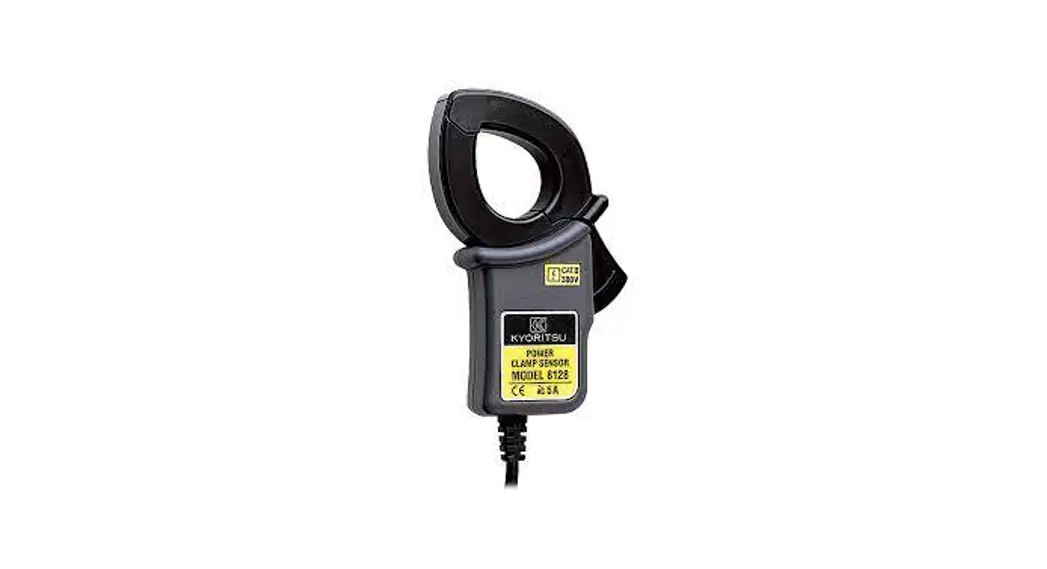
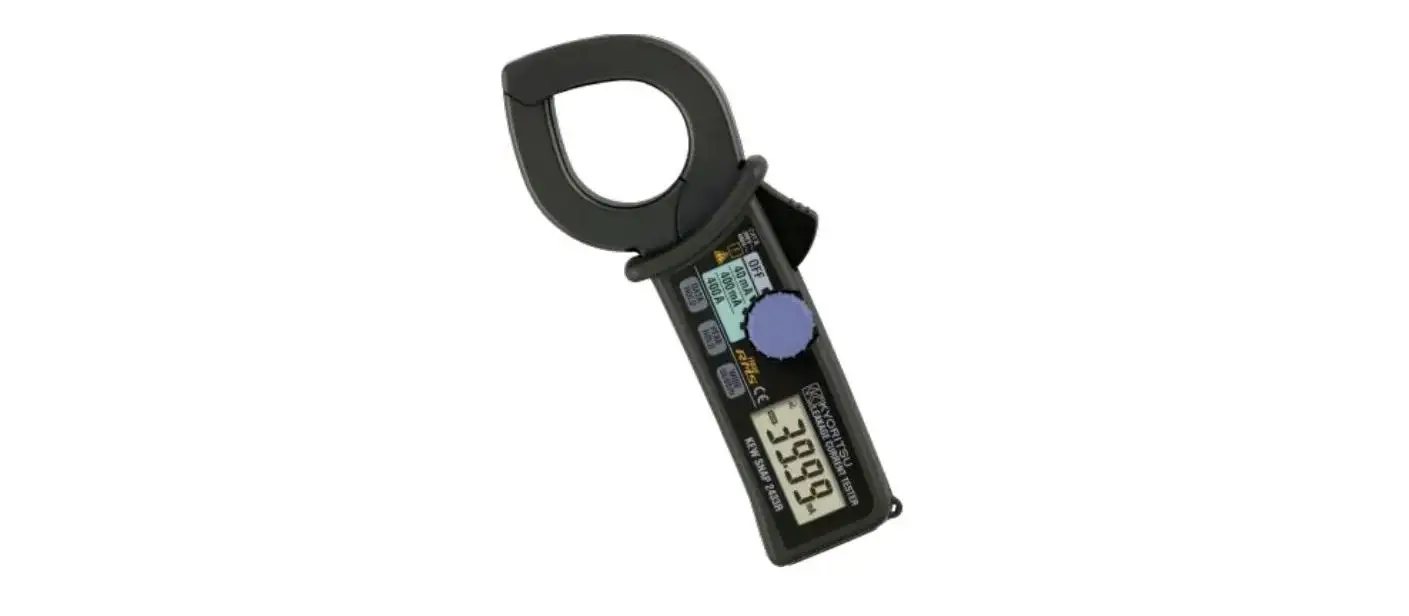
KEW 8177 Clamp Sensor
Product Information:
The KEW 8177/ 8178 Leakage Clamp Sensor (Sensor) is a measuring
apparatus designed, manufactured, and tested according to IEC 61010
safety requirements for electronic measuring instruments. It has
passed quality control tests and is delivered in the best
condition. The Sensor comes with an instruction manual containing
warnings and safety rules that must be followed to ensure safe
operation and maintenance.
Safety Warnings:
- Read and understand all instructions in the manual before using
the Sensor. - Keep the manual accessible for quick reference.
- Use the Sensor only for its intended applications.
- Adhere to all safety instructions provided in the manual.
- Failure to follow the instructions may result in injury or
damage to the Sensor. - The symbol ! indicates important safety
information that must be read in the manual.
Warning Levels:
- DANGER: Indicates conditions and actions that
may cause serious or fatal injury. - WARNING: Indicates conditions and actions that
can cause serious or fatal injury. - CAUTION: Indicates conditions and actions that
can cause minor injury or damage to the Sensor.
Usage Instructions:
- DANGER: Do not attempt measurements in the
presence of thunder. Stop measurements immediately and remove the
Sensor from the measured object if thunder is heard. - The transformer jaws are designed to prevent short-circuiting,
but be cautious when measuring objects with uninsulated
conductors. - Do not use the Sensor if its surface or your hand is wet.
- WARNING: Keep your fingers and hands behind
the barrier on the Sensor to avoid possible shock hazards. - Avoid making measurements if any abnormal conditions are noted,
such as a broken case or exposed metal parts. Return the Sensor to
your local distributor for repair or re-calibration if
necessary. - CAUTION: The Sensor is not dust or
water-proof. Avoid using it in dusty places or where it may be
splattered. - Handle the Sensor with care to avoid electric shock.
Safety Symbol: The user must refer to the
explanations in the instruction manual.
Instrument with Double or Reinforced
Insulation: The Sensor provides additional safety due to
its insulation design.
AC: Indicates that the Sensor is suitable for
AC measurements.
Crossed-out Wheel Bin Symbol: According to the
WEEE Directive (2002/96/EC), this symbol indicates that the Sensor
should not be treated as household waste but collected and treated
separately.
Measurement Category: The Sensor is categorized
according to IEC 61010 into various electrical environments (O to
CAT IV) to ensure safe operation. Higher-numbered categories can
handle greater momentary energy.
*OTUSVDUJPONBOVBM
*PS-FBLBHF$VSSFOU$MBNQ4FOTPS
$-“.14&/4034FSJFT
,&8
1. Safety warnings
KEW 8177/ 8178 Ior leakage clamp sensor (Sensor) has been designed, manufactured and tested according to IEC 61010: Safety requirements for Electronic Measuring apparatus, and delivered in the best condition after passing quality control tests. This instruction manual contains warnings and safety rules which have to be observed by the user to ensure safe operation of the Sensor and to maintain it in safe condition. Therefore, read through these operating instructions before using the Sensor.
WARNING Read through and understand instructions contained in this
manual before starting to use the Sensor. Keep the manual at hand to enable quick reference whenever
necessary. The Sensor is to be used only in its intended applications. Understand and follow all the safety instructions contained in the
manual. It is essential that the above instructions are adhered to. Failure to follow the above instructions may cause injury and or damage the Sensor.
The symbol marked on the Sensor, means that the user must refer to the related parts in the manual for safe operation of the Sensor. It is essential to read the instructions wherever symbol appears in the manual.
DANGER WARNING CAUTION
: is reserved for conditions and actions that are likely to cause serious or fatal injury.
: reserved for conditions and actions that can cause serious or fatal Injury.
: is reserved for conditions and actions that can cause minor injury or damage the Sensor.
DANGER Do not attempt to make measurement in the presence of
flammable gasses. Otherwise, the use of the Sensor may cause sparking, which can lead to an explosion. Wear insulated protective gears to reduce the risks such as electrical shock at the workplace. Never make measurement in CAT III environment if electrical potentials of 300 V AC or higher exist in the circuit to be tested. Do not exceed the maximum allowable input of any measuring range. The Sensor is to be used only in its intended applications or conditions. Otherwise, safety functions equipped with the Sensor will not work, and Sensor damage or serious personal injury may occur. Verify proper operation on a known source before starting to use the Sensor.
Do not make measurement when thunder rumbling. If the Sensor is in use, stop the measurement immediately and remove the Sensor from the measured object.
The transformer jaws are designed so as not to short-circuiting the object under test; however, be especially careful about the possible shorting where the measured object has uninsulated conductors.
Never attempt to use the Sensor if it’s surface or your hand is wet.
WARNING Always keep your fingers and hands behind the barrier on the
Sensor to avoid the possible shock hazard. Never attempt to make any measurement, if any abnormal
conditions are noted, such as broken case, and exposed metal parts. Do not install substitute parts or make any modification to the Sensor. Return the Sensor to your local distributor for repair or re-calibration in case of suspected faulty operation.
CAUTION The Sensor is not dust nor water-proof. Don’t use the Sensor at
dusty places or to be spattered. Take sufficient care to avoid shock when handling the Sensor and
also to prevent foreign substance from being stuck between the transformer jaws. Do not step on or pinch the cable to prevent the jacket of cable from being damaged. Do not bend or pull the cable of the clamp sensor. Connect/ disconnect the output terminal without clamping onto a measured conductor. Do not expose the Sensor to direct sunlight, high temperature, humidity or dew. Never give shocks, such as vibration or drop, which may damage the Sensor. Use a damp cloth and detergent for cleaning the Sensor. Do not use abrasives or solvents.
Safety symbol
User must refer to the explanations in the instruction manual.
Instrument with double or reinforced insulation
Indicates that this instrument can clamp on live bare conductors when the voltage to be tested is below Circuit Ground-to-Earth voltage against the indicated Measurement Category.
AC
Crossed-out wheel bin symbol (according to WEEE Directive: 2002/96/EC) indicating that this electrical product may not be treated as household waste, but that it must be collected and treated separately.
Measurement Category To ensure safe operation of measuring instruments, IEC 61010 establishes safety standards for various electrical environments, categorized as O to CAT IV, and called measurement categories. Higher-numbered categories correspond to electrical environments with greater momentary energy, so a measuring instrument designed for CAT III environments can endure greater momentary energy than one designed for CAT II.
O(None, Other) : Circuits which are not directly connected to the mains
power supply.
CAT II
: Electrical circuits of equipment connected to an AC
electrical outlet by a power cord.
CAT III : Primary electrical circuits of the equipment connected
directly to the distribution panel, and feeders from the
distribution panel to outlets.
CAT IV : The circuit from the service drop to the service entrance,
and to the power meter and primary overcurrent
protection device (distribution panel).
Incoming wire
Interior wiring
:Device which is not directly connected to the mains power supply
Socket
2. Features
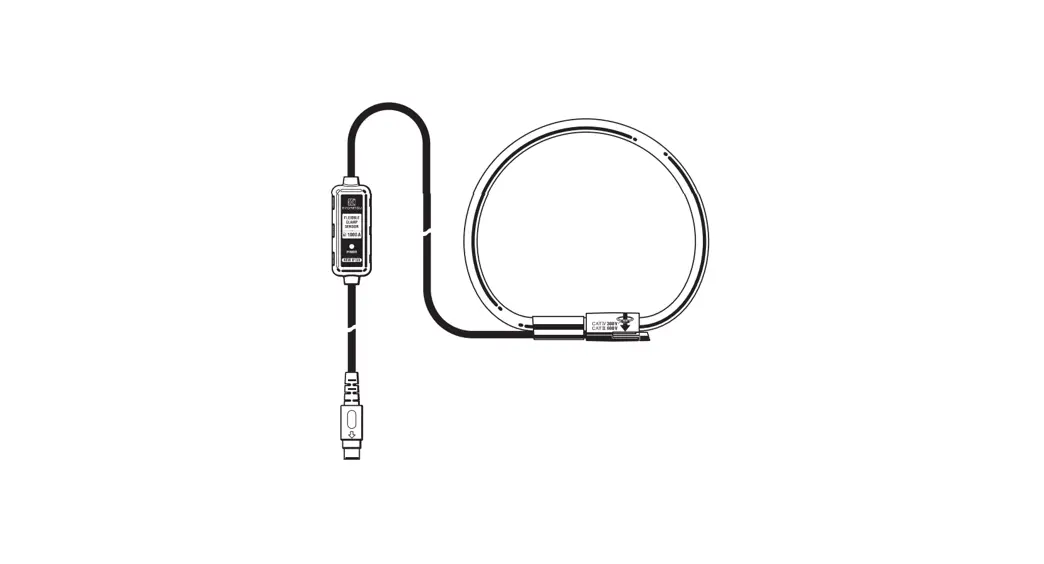
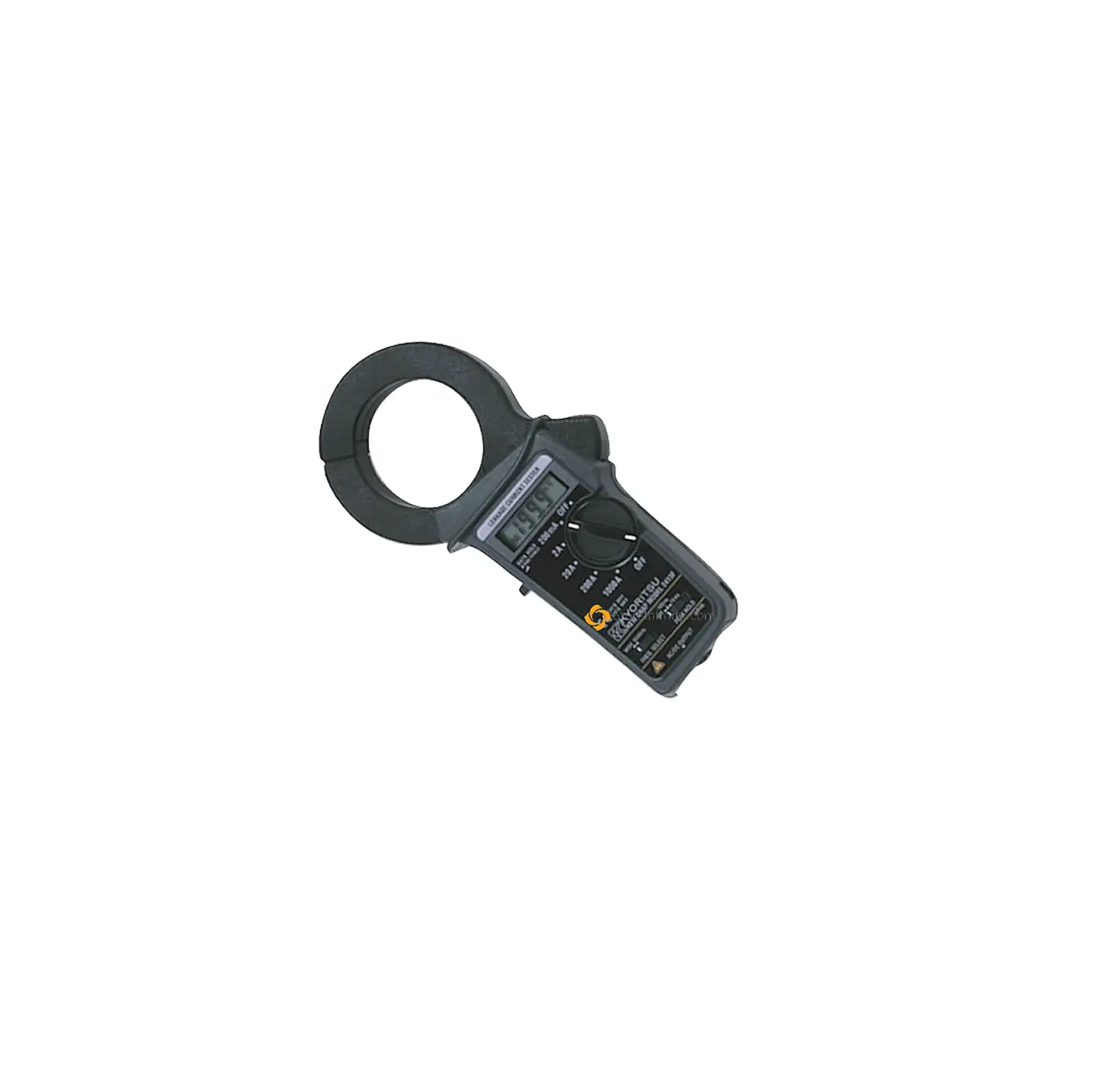
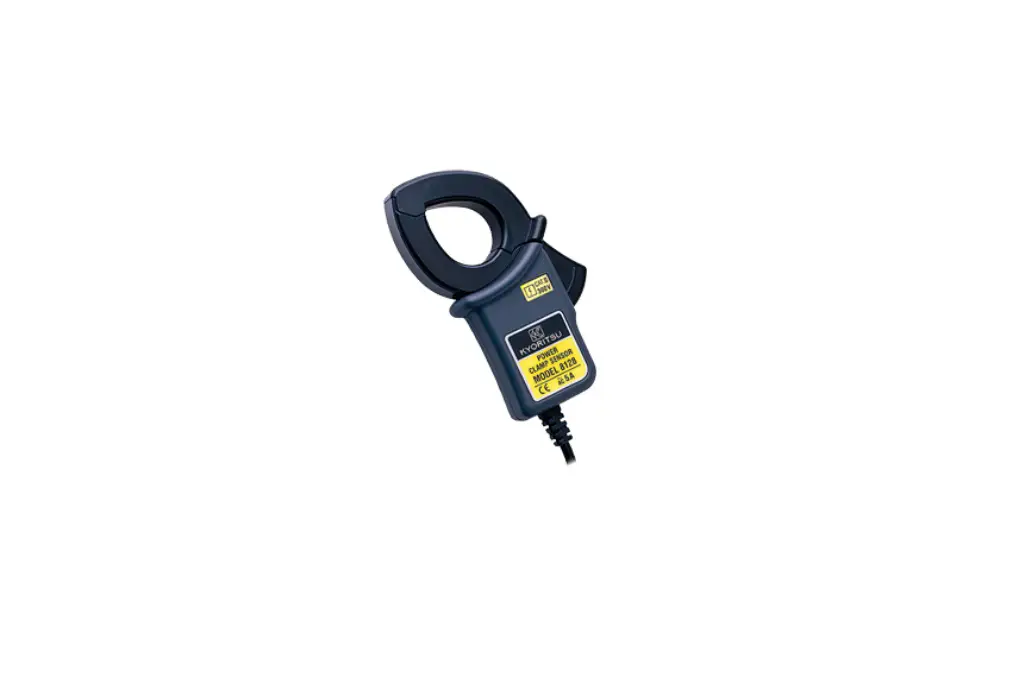
KEW 8177/ 8178 are clamp sensors to measure Ior leakage current.
Provides the best phase characteristics when combined and used with our KEW 5050 Ior leakage logger.
Designed to meet IEC 61010-2-032 (CAT III, Pollution degree 2)
3. Sensor layout
Barrier: provides protection against electrical shock and ensuring the required minimum air and creepage distances. Always keep your fingers behind the barrier during a measurement.
4. DIN plug pin assignment
1 : Power 2 : NC (Not connected) 3 : GND pin 4 : SCL pin for memory 5 : Output signal pin 6 : SDA pin for memory
Above figure shows the pin assignment seeing the clamp sensor from output connector part. The figure of the pin assignment of connection terminal is symmetrical to above figure.
Power to the Sensor is supplied from KEW 5050 via cable. Connect a power supply of +5 V across GND pin (no.3) and Power pin (no. 1).
The internal memory stores the information about sensor type, serial no. and phase correction value. The Sensor is automatically detected by KEW 5050* by its communication function.
* KEW 5050 is an Ior leakage logger which has a reference voltage input terminal and four current input terminals and can measure and record resistive leakage current (Ior) up to four systems.
For its specs and functions, please see the instruction manual for KEW 5050.
5. Operating instructions
DANGER The rated ground-to-voltage is CAT III 300 V. Never make
measurement if the potential of the circuit under test exceeds 300 V. The transformer jaws are designed so as not to short-circuiting
the object under test; however, be especially careful about the possible shorting where the measured object has uninsulated conductors.
CAUTION Take sufficient care to avoid shock, vibration or excessive force
when handling the Sensor. Otherwise, precisely adjusted transformer jaws will be damaged. When transformer jaws do not fully close, never try to close them by force, but make them free to move and try again. If a foreign substance is stuck in the jaw tips, remove it. Hold the inserting part (except for the cable) and disconnect the output terminal from the measuring instrument so as not to cause a break in the cable. Do not forcibly open the jaws if they are frozen.
%*453*#6503
”
Load Source
Notes: The Sensor is dedicated to our KEW 5050 Ior Leakage
Logger. When connecting to our other models, such as KEW 5010/ 5020, the sensor auto-detecting function doesn’t work. Ensure that the transformer jaws are fully closed while clamping onto a conductor to be tested; otherwise, accurate measurements cannot be taken. See 6. Specification in this manual for maximum conductor size. Sensitive transformer jaws are used for leakage clamp sensor. Because of the characteristics of split-core type transformer, it is impossible to eliminate the interference of external magnetic field completely. If there is a presence of strong magnetic field, use the Sensor at a distance as far as possible from it. The followings are the typical things which generate magnetic field. Conductor fed large current Motor Equipment which has magnet Integrating wattmeter (1) Attach the color markers, supplied with KEW 5050, to clamp sensors for easy recognition. Colors of the marker are harmonized with that of current input terminals (red: A1, yellow: A2, blue: A3, green: A4).
(2) Connect the output terminal to the current input terminal on KEW 5050.
(3) Power on KEW 5050 and wait for a while until the connected sensor is identified. * Sensor detection can be performed on Basic settingscreen. See6.2 Basic settings in the manual for KEW 5050 for details.
(4) Connect the clamp sensor and the voltage test lead properly.
L N
Connectors on KEW 5050
Source
Source
Source
L1 N L2
Connectors on KEW 5050 L1/R L2/S L3/T
Connectors on KEW 5050 L1/R L2/S L3/T N
Connectors on KEW 5050
(5) Ensure that the arrow mark on the clamp sensor points towards load side (towards neutral at earth line measurement). Ensure that the tips of transformer jaws are firmly closed.
Load
Load
Load
6. Specifications
Model name
KEW 8177
KEW 8178
Rated current
10 A (rms) AC (14.1 A peak)
Output voltage
500 mV AC/ 10 A AC (50 mV/ A)
Measuring range
0 10 A AC
Accuracy (Input: sine wave)
1.0%rdg 0.025 mV (40 – 70 Hz) 4.0%rdg 0.025 mV (30 – 5 kHz, with inputs of 100mA or more)
Within 1.0°
Phase characteristics
(45 70 Hz while combining with KEW 5050, under the input of 10% or more of KEW 5050
leakage current range)
Current consumption 8.6 mA max.
Temperature & humidity range (Guaranteed accuracy)
235°C, relative humidity (no condensation)
85% or
less
Operating temperature -10 to 50°C, relative humidity 85% or less
& humidity range
(no condensation)
Storage temperature -20 to 60°C, relative humidity 85% or less
& humidity range
(no condensation)
Max. allowable input*1 100 A (rms) AC, continuous, (40 – 70 Hz)
Output impedance Approx. 100 or less Approx. 60 or less
Location for use
Altitude up to 2000 m, in-door use
Applicable standard
IEC61010-1, IEC61010-2-032 CAT III 300 V Pollution degree 2 IEC 61326-1 (EMC)
Environmental standard EU RoHS directive compliant
Withstand voltage Insulation resistance
3470 V AC (rms, 50/ 60 Hz) / 5 sec. * Any combination of: engaged Jaws, enclosure,
output terminal
50 M or more (@1000 V) * Any combination of: engaged Jaws, enclosure,
output terminal
Conductor size
Approx. Ø40 mm max. Approx. Ø68 mm max.
Outer dimension
128(L)81(W)36(D)mm 186(L)129(W)53(D)mm
Cable length
Approx. 3 m
Weight
Approx. 280 g
Approx. 560 g
Accessories
Instruction manual, Carrying case (KEW 8177: M-9095, KEW 8178: M-9094*2)
*1: Allowable limit values in the case of in correct operations. Accuracy is not guaranteed for current inputs higher than the rated current.
*2: Carrying case isn’t packed with the clamp sensor supplied as standard accessory.
MEMO