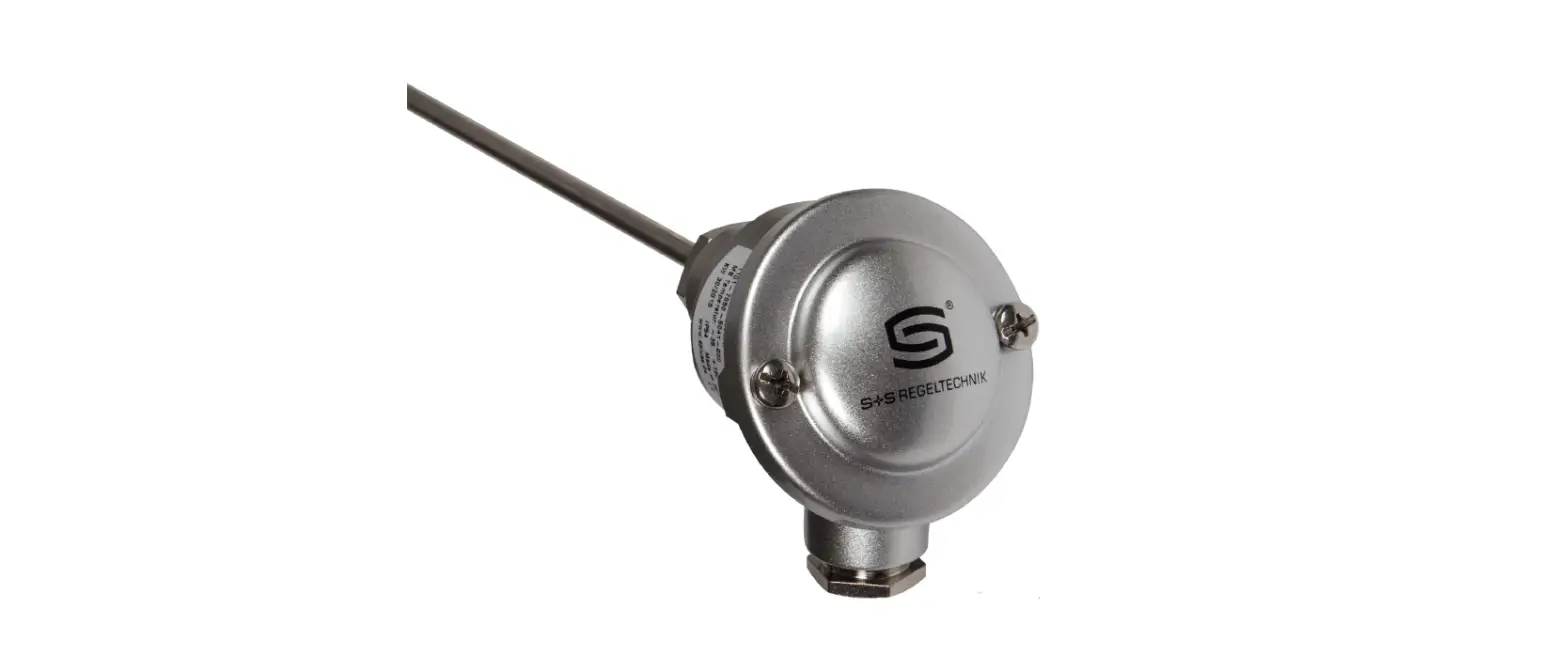
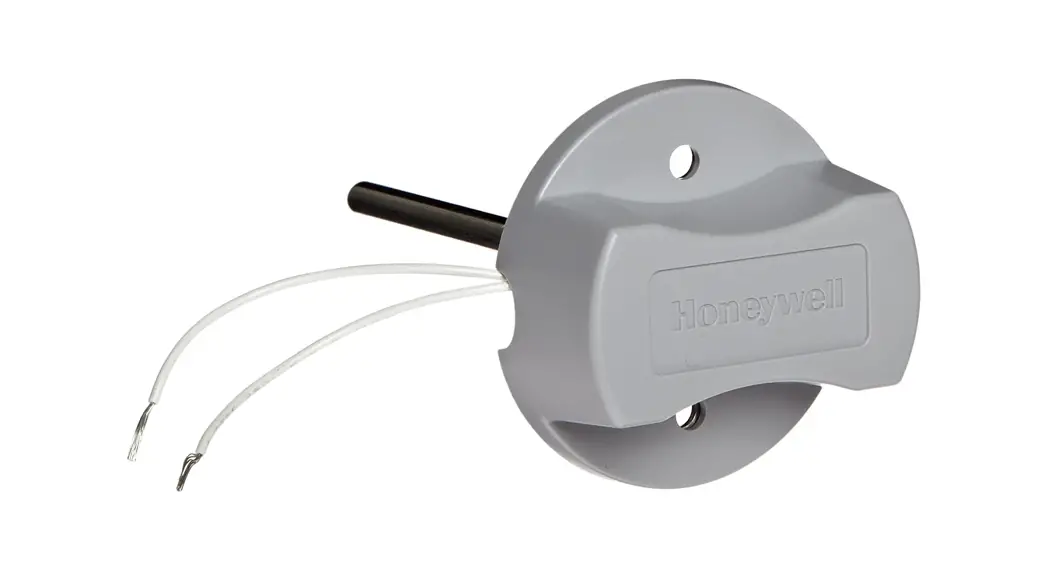
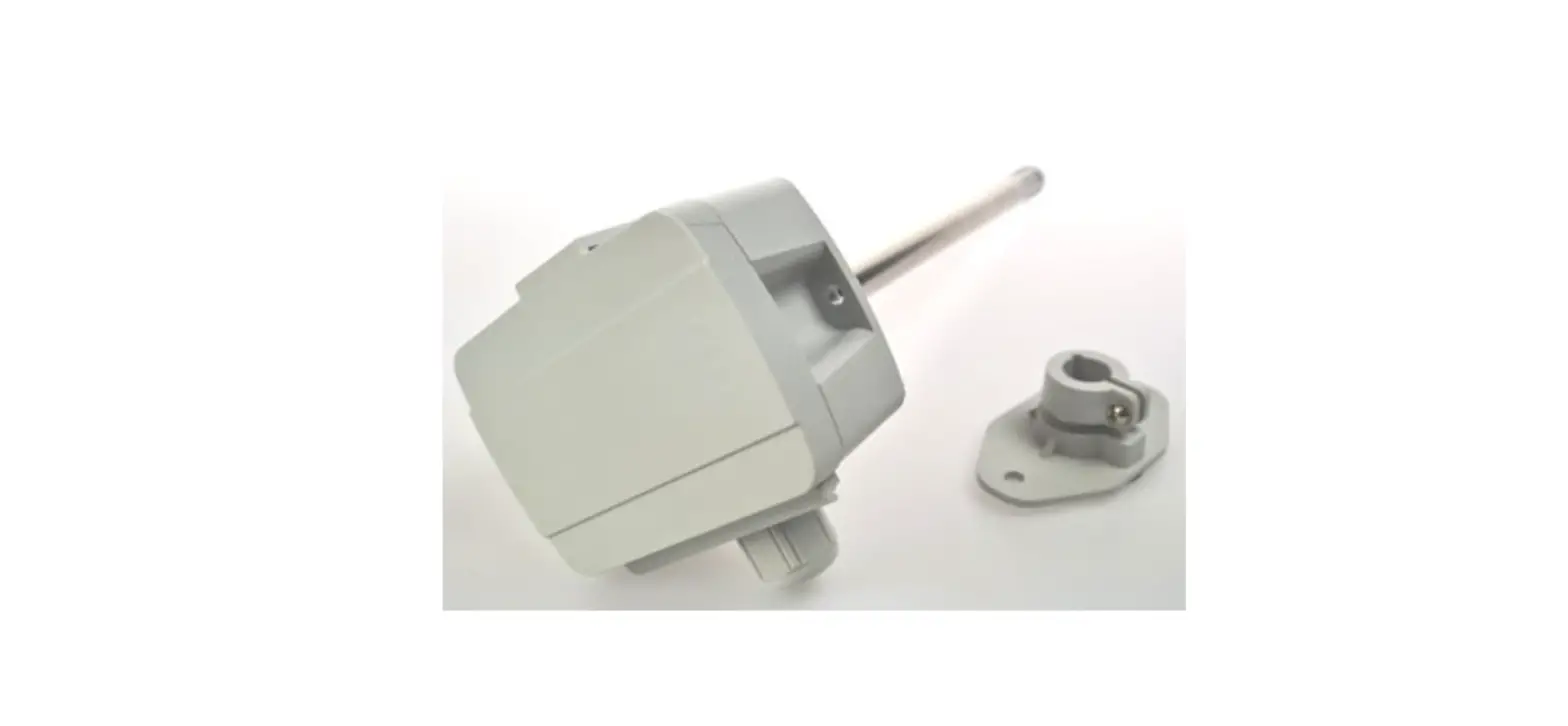
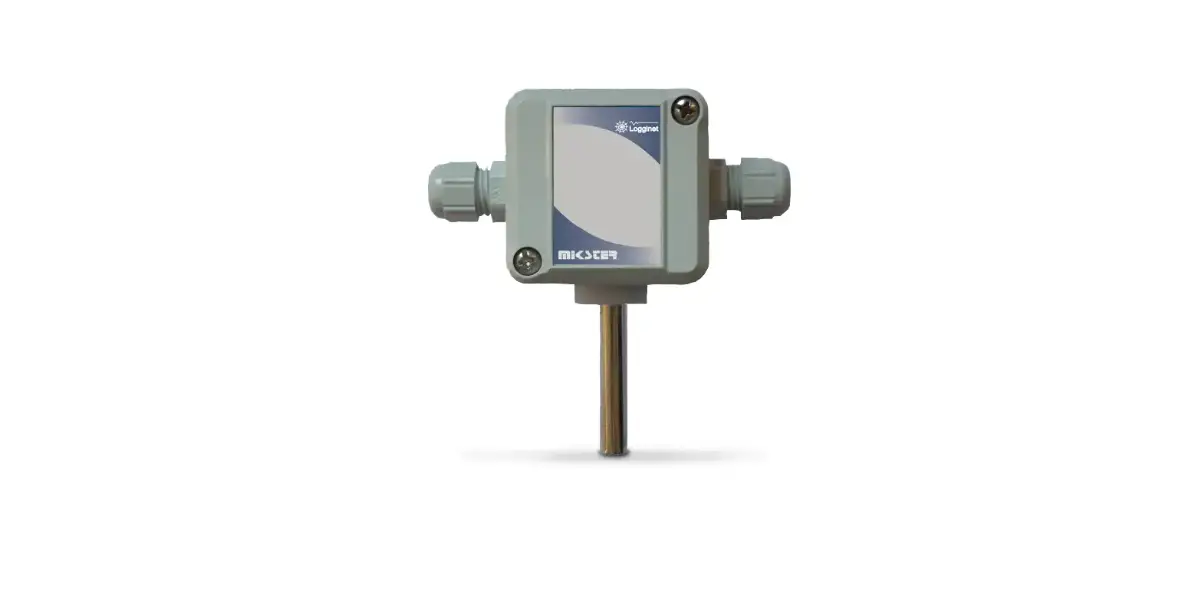
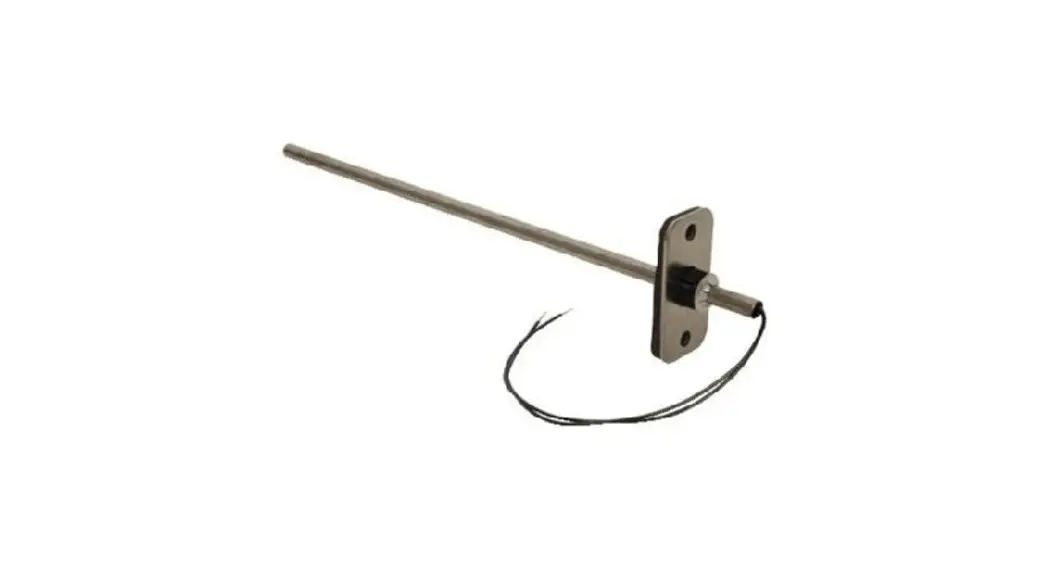
RGTF1 Duct Temperature Sensor
Product Information: – Product Name: D G F r
6000-2750-0000-1XX – Model Number: 27500-2022 V112 03 / 2022 –
Product Type: Duct / smoke gas temperature sensor – Includes:
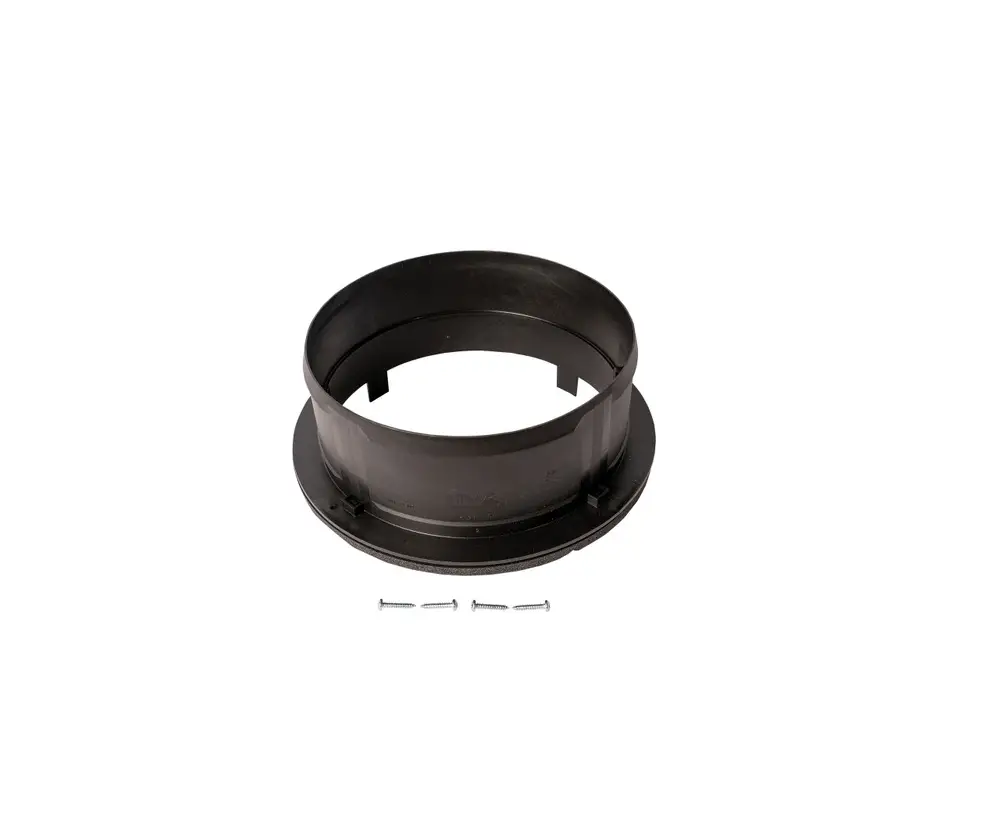
Mounting flange – Output: Passive – IP Rating: – RGTF 1: IP 54 –
RGTF 1 – KV: IP 65 – RGTF 1 – Q: IP 65 – Manufacturer: SplusS –
Manufacturer Contact: [email protected] – Manufacturer Website:
www.SplusS.de Product Usage Instructions: 1.
Mounting and Installation: – Choose a suitable location for the
temperature sensor in the duct or smoke gas area. – Ensure that the
mounting flange is securely attached to the sensor. – For RGTF 1 –
KV variant: – Use the provided brass nickel-plated cable gland (M20
x 1.5) with strain relief. – The inner diameter of the cable gland
should be between 6 – 12 mm. – For RGTF 1 – Q variant: – Connect
the sensor using the M12 connector according to DIN EN 61076-2-101
standard. – The connector should be 5-pin with A-coding. – Use the
included stainless steel V2A (1.4305) mounting flange for
installation. – Make sure the sensor is protected from excessive
moisture and vibrations. 2. Electrical Connection: – Standard
Connection (2-wire): – Connect the sensor using a 2-wire
connection. – For Pt1000 sensors, the current should be less than
0.6 mA. – For Pt100 sensors, the current should be less than 1.0
mA. – Optional Connection (4-wire): – Use a 4-wire connection for
optional Pt100 / Pt1000 sensors. – Follow the appropriate wiring
diagram for the 4-wire connection. 3. Technical Specifications: –
Measuring Range: Pt100 / Pt1000 (according to DIN EN 60751, Class
B) – Insulating Resistance: Check the provided resistance curves
(see last page of the manual). – Electrical Connection: RGTF 1
(Standard) or RGTF 1-KV (optional) or RGTF 1-Q (optional) – Cable
Connection: M20 x 1.5 for RGTF 1 and RGTF 1-KV, M12 connector for
RGTF 1-Q – Humidity: Up to 95% non-condensing air humidity –
Protection Class: III (according to EN 60730) – IP Rating: IP 54
for RGTF 1, IP 65 for RGTF 1-KV / RGTF 1-Q Note: For detailed
resistance curves and additional information, refer to the user
manual provided with the product.
D G F r 6000-2750-0000-1XX 27500-2022 V112 03 / 2022
THERMASGARD®RGTF 1 xx
D Bedienungs- und Montageanleitung
Kanal- / Rauchgas-Temperaturfühler, incl. Montageflansch, mit passivem Ausgang
G Operating Instructions, Mounting & Installation
Duct / smoke gas temperature sensor, including mounting flange, with passive output
F Notice d’instruction
Sonde de température de gaine / de gaz de fumées, y compris bride de montage, avec sortie passive
r
, . ,
RGTF 1 (IP 54)
RGTF 1 – KV (IP 65)
RGTF 1 – Q (IP 65)
S+S REGELTECHNIK GMBH THURN-UND-TAXIS – STR. 22 90411 NÜRNBERG / GERMANY FON +49 (0) 911 / 519 47- 0
[email protected] www.SplusS.de
CARTONS ET EMBALLAGE PAPIER À TRIER
D G F r
THERMASGARD®RGTF 1 xx
Maßzeichnung Dimensional drawing Plan coté
ø 70 RGTF 1
~ 80 M20 x1.5
RGTF 1 xx
~ 82
2 12
ø 8.3
RGTF 1 – KV
RGTF 1 – Q
M20 x1.5
M12
ø 10 ~ 91
ø 10 ~ 98
45°
ø5
ø 40
ø 50
NL
ø8
High-Performance-Verguss gegen Vibration, mechanischer Belastung und Feuchtigkeit High-performance encapsulation against vibration, mechanical stress and humidity
PS-PROTECTION
PERFECT SENSOR PROTECTION
2-Leiteranschluss (Standard) 2-wire connection (Standard) 1x 2 fils (Standard) ( ) (Pt1000)
4-Leiteranschluss (optional) 4-wire connection (optional) 1x 4 fils (en option) () (Pt100 / Pt1000)
D THERMASGARD® RGTF 1
Widerstandsthermometer / Rauchgastemperaturfühler THERMASGARD® RGTF 1 mit passivem Ausgang, mit Anschlusskopf aus Aluminium (optional mit Kabelverschraubung oder M12-Steckverbinder nach DIN EN 61076-2-101) und geradem Schutzrohr, incl. Montageflansch. Der Kanalfühler dient zur Erfassung von relativ hohen Temperaturen in gasförmigen Medien, z.B. zur Abluft- und Rauchgastemperaturmessung.
TECHNISCHE DATEN
Messbereich:
Sensoren / Ausgang: Schaltungsart: Messstrom: Isolationswiderstand: elektrischer Anschluss: Kabelanschluss:
Abmessungen: Anschlusskopf:
Schutzrohr: Prozessanschluss: zulässige Luftfeuchte: Schutzklasse: Schutzart:
35…+600 °C (optional erweiterte Messbereichsgrenzen von 100…+750 °C)
Pt100 / Pt1000 (nach DIN EN 60751, Klasse B) (Perfect Sensor Protection)
2-Leiteranschluss (Pt1000) 4-Leiteranschluss (Pt100 / Pt1000 optional)
< 0,6 mA (Pt1000) < 1,0 mA (Pt100)
100 M, bei +20 °C (500 V DC)
0,14 – 2,5 mm², über Schraubklemmen, auf Keramiksockel
RGTF 1 (Standard) Druckschraube aus Metall (M 20 x 1,5)
RGTF 1-KV (optional) Kabelverschraubung aus Messing, vernickelt (M 20 x 1,5 ; mit Zugentlastung, auswechselbar, Innendurchmesser 6 – 12 mm)
RGTF 1-Q (optional) M12-Steckverbinder nach DIN EN 61076-2-101 (Einbaustecker, 5-polig, A-Kodierung)
siehe Maßzeichnung
Form B, Werkstoff Aluminium, Farbe Weißaluminium (ähnlich RAL 9006), Umgebungstemperatur 20…+100 °C
Edelstahl V4A (1.4571), Ø = 8 mm Einbaulänge (EL) = 200 – 500 mm (siehe Tabelle)
mittels Montageflansch aus Edelstahl V2A (1.4305) (im Lieferumfang enthalten)
< 95 % r. H., nicht kondensierende Luft
III (nach EN 60730)
IP 54 (nach EN 60 529) RGTF1 IP 65 (nach EN 60 529) RGTF1-KV / RGTF1-Q
Rev. 2022 – V19 1x Zweileiterschaltung (Standard)
1x Vierleiterschaltung (optional)
2x Dreileiterschaltung (optional)
Typ / WG03 RGTF1 PT100 xx (EL) MM RGTF1 PT1000 xx (EL) MM RGTF 1 PT100 xx KV (EL) MM RGTF 1 PT1000 xx KV (EL) MM RGTF 1 PT100 xx Q (EL) MM RGTF 1 PT1000 xx Q (EL) MM Einbaulänge: Aufpreis:
Sensor / Ausgang Pt100 (nach DIN EN 60 751, Klasse B) Pt1000 (nach DIN EN 60 751, Klasse B) Pt100 (nach DIN EN 60 751, Klasse B) Pt1000 (nach DIN EN 60 751, Klasse B) Pt100 (nach DIN EN 60 751, Klasse B) Pt1000 (nach DIN EN 60 751, Klasse B) (EL)MM = 200 mm, 250 mm, 300 mm, 500 mm andere Messbereiche optional
D Allgemeine Informationen
Messprinzip für HLK – (HVAC) -Temperaturfühler allgemein: Das Messprinzip der Temperaturfühler beruht darauf, dass der innen liegende Sensor ein temperaturabhängiges Widerstandssignal abgibt. Die Art des innen liegenden Sensors bestimmt das Ausgangssignal. Man unterscheidet die nachfolgenden passiven / aktiven Temperatursensoren:
a) Pt 100 – Messwiderstand (nach DIN EN 60 751) b) Pt 1000 – Messwiderstand (nach DIN EN 60751) c) Ni 1000 – Messwiderstand (nach DIN EN 43 760, TCR=6180 ppm / K) d) Ni 1000_TK5000 – Messwiderstand (TCR=5000 ppm / K) e) LM235Z, Halbleiter IC (10mV / K, 2,73V / °C), beim Anschluss ist auf die Polung + / zu achten! f) NTC (nach DIN 44070) g) PTC h) KTY- Siliziumtemperatursensoren
Die wichtigsten Kennlinien der Temperatursensoren sind auf der letzten Seite dieser Bedienungsanleitung dargestellt. Die einzelnen Temperatursensoren weisen entsprechend ihrer Kennlinie einen unterschiedlichen Anstieg im Bereich 0 bis +100 °C (TK-Wert) auf. Ebenso sind die maximal möglichen Messbereiche von Sensor zu Sensor verschieden (siehe hierzu einige Beispiele unter technischen Daten).
Hinweis! Wählen Sie die Eintauchtiefe bei Einbaufühlern so, dass der Fehler durch Wärmeableitung innerhalb der zulässigen Fehlergrenzen bleibt. Der Richtwert: ist 10 x Ø des Schutzrohres + Sensorlänge. Bitte beachten Sie bei Gehäusefühlern, insbesondere bei Außenfühlern, den Temperaturstrahlungseinfluss. Als Zubehör kann ein Sonnen- und Strahlungsschutz SS-02 montiert werden.
Maximale Temperaturbelastung der Bauteile:
Grundsätzlich sind alle Temperaturfühler vor unzulässiger Überhitzung zu schützen!
Standardrichtwerte gelten für die einzelnen Bauelemente in Abhängigkeit von der Materialwahl in neutraler Atmosphäre und unter sonstigen normalen Betriebsbedingungen (siehe Tabelle rechts).
Bei Kombination verschiedener Isolationen gilt immer die minimale Temperatur.
Bauteil ………………………………………………. max. Temperaturbelastung
Anschlusskabel PVC, normal ………………………………………………………………………… +70 °C PVC, wärmestabilisiert …………………………………………………….. +105 °C Silikon ………………………………………………………………………………. +180 °C PTFE ………………………………………………………………………………… +200 °C Glasseidenisolation mit Edelstahlgeflecht ………………………. +400 °C
Gehäuse / Sensor siehe Tabelle “Technische Daten”
D Widerstandskennlinien (siehe letzte Seite)
Um Schäden / Fehler zu verhindern, sind vorzugsweise abgeschirmte Leitungen zu verwenden. Eine Parallelverlegung mit stromführenden Leitungen ist unbedingt zu vermeiden. Die EMV-Richtlinien sind zu beachten! Die Installation der Geräte darf nur durch einen Fachmann erfolgen!
Grenzabweichungen nach Klassen: Toleranzen bei 0 °C:
Platinsensoren (Pt100, Pt1000): DIN EN 60751, Klasse B …………………………………………………….± 0,3 K 1 / 3 DIN EN 60751, Klasse B ……………………………………………..± 0,1 K
Nickelsensoren: NI1000 DIN EN 43760, Klasse B ……………………………………….± 0,4 K NI1000 1 / 2 DIN EN 43760, Klasse B………………………………..± 0,2 K NI1000 TK5000…………………………………………………………………± 0,4 K
ACHTUNG, HINWEIS !
Infolge der Eigenerwärmung beeinflusst der Messstrom die Messgenauigkeit des Thermometers und sollte daher keinesfalls größer sein, als wie folgt angegeben:
Richtwerte für den Messstrom:
Sensorstrom maximal ……………………………………………………………… Imax. Pt1000 (Dünnschicht) …………………………………………………… < 0,6 mA Pt100 (Dünnschicht) …………………………………………………… < 1,0 mA Ni1000 (DIN), Ni1000 TK5000 ……………………………………… < 0,3 mA NTC xx ……………………………………………………………………………….. < 2 mW LM235Z………………………………………………………………….. 400 µA … 5 mA KTY 81 – 210 ………………………………………………………………………… < 2 mA
D Montage und Inbetriebnahme
Die Geräte sind im spannungslosen Zustand anzuschließen. Der Anschluss der Geräte darf nur an Sicherheitskleinspannung erfolgen. Folgeschäden, welche durch Fehler an diesem Gerät entstehen, sind von der Gewährleistung und Haftung ausgeschlossen. Montage und Inbetriebnahme der Geräte darf nur durch Fachpersonal erfolgen. Es gelten ausschließlich die technischen Daten und Anschlussbedingungen der zum Gerät gelieferten Geräteetikettdaten, der Montage- und Bedienungsanleitung. Abweichungen zur Katalogdarstellung sind nicht zusätzlich aufgeführt und im Sinne des technischen Fortschritts und der stetigen Verbesserung unserer Produkte möglich. Bei Veränderungen der Geräte durch den Anwender entfallen alle Gewährleistungsansprüche. Der Betrieb in der Nähe von Geräten, welche nicht den EMVRichtlinien entsprechen, kann zur Beeinflussung der Funktionsweise führen. Dieses Gerät darf nicht für Überwachungszwecke, welche dem Schutz von Personen gegen Gefährdung oder Verletzung dienen und nicht als NOT-AUS-Schalter an Anlagen und Maschinen oder vergleichbare sicherheitsrelevante Aufgaben verwendet werden.
Die Gehäuse- und Gehäusezubehörmaße können geringe Toleranzen zu den Angaben dieser Anleitung aufweisen.
Veränderungen dieser Unterlagen sind nicht gestattet.
Bei Reklamationen werden nur vollständige Geräte in Originalverpackung angenommen.
Als AGB gelten ausschließlich unsere sowie die gültigen ,,Allgemeinen Lieferbedingungen für Erzeugnisse und Leistungen der Elektroindustrie” (ZVEI Bedingungen) zuzüglich der Ergänzungsklausel ,,Erweiterter Eigentumsvorbehalt”.
Hinweise zum mechanischen Ein- und Anbau:
Der Einbau hat unter Berücksichtigung der einschlägigen, für den Messort gültigen Vorschriften und Standards (wie z. B. Schweißvorschriften usw.) zu erfolgen. Insbesondere sind zu berücksichtigen:
VDE / VDI Technische Temperaturmessungen, Richtlinie, Messanordnungen für Temperaturmessungen
die EMV-Richtlinien, diese sind einzuhalten
eine Parallelverlegung mit stromführenden Leitungen ist unbedingt zu vermeiden
es wird empfohlen abgeschirmte Leitungen zu verwenden, dabei ist der Schirm einseitig an der DDC / SPS aufzulegen.
Beim Einsatz in Kältekreisen muss der Fühler zusammen mit dem Gehäuse isoliert werden, um das Temperaturpotenzial zwischen Gerät und Medium zu minimieren und somit Kondensationsschäden zu vermeiden.
Der Einbau hat unter Beachtung der Übereinstimmung der vorliegenden technischen Parameter der Thermometer mit den realen Einsatzbedingungen zu erfolgen, insbesondere:
Messbereich zulässiger maximaler Druck, Strömungsgeschwindigkeit Einbaulänge, Rohrmaße Schwingungen, Vibrationen, Stöße sind zu vermeiden (< 0,5 g)
Achtung! Berücksichtigen Sie in jedem Fall die mechanischen und thermischen Belastungsgrenzen der Schutzrohre nach DIN 43763 bzw. nach speziellen S+S-Standards!
Hinweise zum Prozessanschluss von Einbaufühlern: Wählen Sie den Werkstoff des Schutzrohres so aus, dass er möglichst mit dem Werkstoff der Rohrleitung oder der Behälterwand übereinstimmt, in die das Thermometer eingebaut wird!
Die Maximaltemperatur Tmax und der Maximaldruck pmax liegen bei: TH-ms Messinghülsen bei +150 °C, pmax = 10 bar, und TH-VA Edelstahlhülsen (Standard) bei +400 °C, pmax = 40 bar.
Einschraubgewinde: Achten Sie beim Einbau auf die sachgemäße Unterlage der Dichtung oder des Abdichtmaterials! Bei Einschraubgewinde gelten für das Anzugsdrehmoment folgende zulässige Richtwerte:
M 18 x 1,5; M 20 x 1,5; G ½ ” : 50 Nm
M 27 x 2,0; G ¾ ”
: 100 Nm
Flanschbefestigung: Bei Flanschbefestigungen sind die Schrauben am Flanschteil gleichmäßig anzuziehen. Die seitliche Druckschraube muss sicher klemmen, sonst kann es zum Durchrutschen des Fühlerschaftes kommen.
Einschweißhülsen: Es sind spezielle Schweißvorschriften zu beachten. Prinzipiell dürfen keine Unebenheiten oder ähnliches an Schweißstellen entstehen, die die ,,CIP-Fähigkeit” der Anlage beeinflussen.
Bei hochdruckführenden Leitungen sind Druckabnahmen und Überwachungen erforderlich.
Hinweise zur Inbetriebnahme: Dieses Gerät wurde unter genormten Bedingungen kalibriert, abgeglichen und geprüft.
Bei Betrieb unter abweichenden Bedingungen empfehlen wir Vorort eine manuelle Justage erstmals bei Inbetriebnahme sowie anschließend in regelmäßigen Abständen vorzunehmen.
Eine Inbetriebnahme ist zwingend durchzuführen und darf nur von Fachpersonal vorgenommen werden!
Zulässige Anströmgeschwindigkeiten für quer-angeströmte Schutzrohre in Wasser Durch die Anströmung wird das Schutzrohr in Schwingung versetzt. Wird die angegebene Anströmgeschwindigkeit nur gering überschritten, so kann sich dies negativ auf die Lebensdauer des Schutzrohres auswirken (Materialermüdung). Gasentladungen bzw. Druckstöße sind zu vermeiden, denn diese beeinträchtigen die Lebensdauer negativ oder beschädigen die Schutzrohre irreparabel.
Bitte beachten Sie die max. zulässige Anströmgeschwindigkeiten für Edelstahlschutzrohre 8 x 0,75 mm (1.4571) (siehe Diagramm TH – VA / xx, TH – VA / xx / 90) sowie für Messingschutzrohre 8 x 0,75 mm (siehe Diagramm TH – ms / xx) :
30
28
Max. zulässige Anströmgeschwindigkeiten für
26
TH – ms / xx
24
22
P = 1 bar / T = 100 – 200 °C (Dampf)
20
18
P = 20 bar / T = 100 °C (Wasser)
16
14
P = 20 bar / T = 200 °C (Wasser)
12
10
8
6
4
2
0 50 75 100 125 150 175 200 225 250 275 300 325 350 375 400
[l] = mm40
Max. zulässige Anströmgeschwindigkeiten für
35
TH – VA / xx, TH – VA / xx / 90
30
P = 1 bar / T = 100 – 200 °C (Dampf)
25
P = 20 bar / T = 100 °C (Wasser)
20
P = 20 bar / T = 200 °C (Wasser)
15
10
5
0 50 75 100 125 150 175 200 225 250 275 300 325 350 375 400
[l] = mm
G THERMASGARD® RGTF 1
Resistance thermometer / smoke gas temperature sensor THERMASGARD® RGTF 1 with passive output, with connecting head made from aluminium (optionally with cable gland or M12 connector according to DIN EN 61076-2-101) and straight protective tube, incl. mounting flange. The duct sensor is used to detect relatively high temperatures in gaseous media, eg, for exhaust air and smoke gas temperature measurement.
TECHNICAL DATA
Measuring range:
Sensor / output: Connection type: Testing current: Insulating resistance: Electrical connection: Cable connection:
Dimensions: Connecting head:
Protective tube: Process connection: Humidity: Protection class: Protection type:
35…+600 °C (extended range limits from 100…+750 °C optional )
Pt100 / Pt1000 (according to DIN EN 60 751, class B) (Perfect Sensor Protection)
2-wire connection (Pt1000) 4-wire connection (Pt100 / Pt1000 optional)
< 0.6 mA (Pt1000) < 1.0 mA (Pt100)
100 M, at +20 °C (500 V DC)
0.14 – 2.5 mm² via terminal screws on ceramic base
RGTF 1 (standard) adjusting screw made of metal (M 20 x 1.5);
RGTF 1-KV (optional) cable gland, brass, nickel-plated (M 20 x 1.5 ; with strain relief, exchangeable, inner diameter 6 – 12 mm)
RGTF 1-Q (optional) M12 connector according to DIN EN 61076-2-101 (male, 5-pin, A-code)
see dimensional drawing
form B, material aluminium, colour white aluminium (similar to RAL 9006), ambient temperature 20…+100 °C
stainless steel V4A (1.4571), Ø = 8 mm inserted length (EL) = 200 – 500 mm (see table)
by mounting flange, stainless steel V2A (1.4305) (included in the scope of delivery)
< 95 % r. H., non-precipitating air
III (according to EN 60 730)
IP 54 (according to EN 60 529) RGTF 1 IP 65 (according to EN 60 529) RGTF1-KV / RGTF1-Q
Rev. 2022 – V19 1x two-wire connection (Standard)
1x four-wire connection (optional)
2x three-wire connection (optional)
Type / WG03 RGTF1 PT100 xx (EL) MM RGTF1 PT1000 xx (EL) MM RGTF 1 PT100 xx KV (EL) MM RGTF 1 PT1000 xx KV (EL) MM RGTF 1 PT100 xx Q (EL) MM RGTF 1 PT1000 xx Q (EL) MM Inserted Length: Extra charge:
Sensor / Output Pt100 (according to DIN EN 60 751, class B) Pt1000 (according to DIN EN 60 751, class B) Pt100 (according to DIN EN 60 751, class B) Pt1000 (according to DIN EN 60 751, class B) Pt100 (according to DIN EN 60 751, class B) Pt1000 (according to DIN EN 60 751, class B) (EL)MM = 200 mm, 250 mm, 300 mm, 500 mm Other ranges optional
G General notes
Measuring principle of HVAC temperature sensors in general: The measuring principle of temperature sensors is based on an internal sensor that outputs a temperature-dependent resistance signal. The type of the internal sensor determines the output signal. The following active / passive temperature sensors are distinguished:
a) Pt 100 measuring resistor (according to DIN EN 60 751) b) Pt 1000 measuring resistor (according to DIN EN 60751) c) Ni 1000 measuring resistor (according to DIN EN 43 760, TCR = 6180 ppm / K) d) Ni 1000_TK 5000 measuring resistor (TCR = 5000 ppm / K) e) LM235Z, semiconductor IC (10 mV / K, 2.73 V / °C). Ensure correct polarity + / when connecting! f) NTC (according to DIN 44070) g) PTC h) KTY silicon temperature sensors
The most important resistance characteristics are shown on the last page of these operating instructions. According to their characteristics, individual temperature sensors exhibit different slopes in the range between 0 °C and +100 °C (TK value). Maximum-possible measuring ranges also vary from sensor to sensor (for some examples to this see under technical data).
Note! Select immersion depth for built-in sensors so that the error caused by heat dissipation stays within the admissible error margins. A standard value is: 10 x diameter of protection tube + sensor length. In connection with housing-type sensors, particularly with outdoor sensors, please consider the influence of thermal radiation. For that purpose, a sunshade and radiation protector SS-02 can be attached.
Maximum thermal load on components:
On principle, all temperature sensors shall be protected against unacceptable overheating!
Standard values for individual components and materials selected are shown for operation under neutral atmosphere and otherwise normal conditions (see table to the right).
For combinations of different insulating materials, the lowest temperature limit shall always apply.
Component ………………………………………………………. max. thermal load
Connecting cable PVC, normal ………………………………………………………………………… +70 °C PVC, heat-stabilized………………………………………………………….. +105 °C Silicone …………………………………………………………………………….. +180 °C PTFE ………………………………………………………………………………… +200 °C Fibreglass insulation with stainless steel texture …………… +400 °C
Housing / Sensor see table “Technical Data”
G Resistance characteristics of passive temperature sensors (see last page)
In order to avoid damages / errors, preferably shielded cables are to be used. Laying measuring cables parallel with current-carrying cables must in any case be avoided. EMC directives shall be observed! These instruments must be installed by authorised specialists only!
Limiting deviation according to classes: Tolerances at 0 °C:
Platinum sensors (Pt100, Pt1000): DIN EN 60751, class B ……………………………………………………….± 0.3 K 1 / 3 DIN EN 60751, class B………………………………………………..± 0.1 K
Nickel sensors: NI1000 DIN EN 43760, class B………………………………………….± 0.4 K NI1000 1 / 2 DIN EN 43760, class B…………………………………..± 0.2 K NI1000 TK5000…………………………………………………………………± 0.4 K
ATTENTION, NOTE !
Testing current influences the thermometer`s measuring accuracy due to intrinsic heating and therefore, should never be greater than as specified below:
Standard values for testing current:
Sensor current, maximum ……………………………………………………….. Imax. Pt1000 (thin-layer) ………………………………………………………… < 0,6 mA Pt100 (thin-layer) ………………………………………………………… < 1,0 mA Ni1000 (DIN), Ni1000 TK5000 ……………………………………… < 0,3 mA NTC xx ……………………………………………………………………………….. < 2 mW LM235Z………………………………………………………………….. 400 µA … 5 mA KTY 81 – 210 ………………………………………………………………………… < 2 mA
G Installation and Commissioning
Devices are to be connected under dead-voltage condition. Devices must only be connected to safety extra-low voltage. Consequential damages caused by a fault in this device are excluded from warranty or liability. These devices must be installed and commissioned by authorised specialists. The technical data and connecting conditions shown on the device labels and in the mounting and operating instructions delivered together with the device are exclusively valid. Deviations from the catalogue representation are not explicitly mentioned and are possible in terms of technical progress and continuous improvement of our products. In case of any modifications made by the user, all warranty claims are forfeited. Operating this device close to other devices that do not comply with EMC directives may influence functionality. This device must not be used for monitoring applications, which serve the purpose of protecting persons against hazards or injury, or as an EMERGENCY STOP switch for systems or machinery, or for any other similar safety-relevant purposes. Dimensions of housing or housing accessories may show slight tolerances on the specifications provided in these instructions. Modifications of these records are not permitted.
In case of a complaint, only complete devices returned in original packing will be accepted.
Our “General Terms and Conditions for Business” together with the “General Conditions for the Supply of Products and Services of the Electrical and Electronics Industry” (ZVEI conditions) including supplementary clause “Extended Retention of Title” apply as the exclusive terms and conditions”.
Notes regarding mechanical mounting and attachment: Mounting shall take place while observing all relevant regulations and standards applicable for the place of measurement (e.g. such as welding instructions, etc.). Particularly the following shall be regarded:
VDE / VDI directive technical temperature measurements, measurement set – up for temperature measurements.
The EMC directives must be adhered to.
It is imperative to avoid parallel laying of current-carrying lines.
We recommend to use shielded cables with the shielding being attached at one side to the DDC / PLC.
If the sensor is used in refrigeration circuits, it must be insulated together with the housing to reduce the temperature potential between the device and the medium to a minimum and thus prevent condensation damage.
Before mounting, make sure that the existing thermometer`s technical parameters comply with the actual conditions at the place of utilization, in particular in respect of:
Measuring range Permissible maximum pressure, flow velocity Installation length, tube dimensions Oscillations, vibrations, shocks are to be avoided (< 0.5 g)
Attention! In any case, please observe the mechanical and thermal load limits of the protective tubes according to DIN 43763 or according to specific S+S standards!
Notes regarding process connection of built-in sensors: If possible, select material of protective tube to match the material of piping or tank wall, in which the thermometer will be installed!
Maximum temperatures Tmax and maximum pressures pmax are as follows: for TH – MS brass sleeves Tmax = +150 °C, pmax = 10 bar and for TH – VA stainless steel sleeves (standard) Tmax = +400 °C, pmax = 40 bar.
Screw-in threads: Ensure appropriate support of the gasket or sealing material when
mounting! Permissible tightening torque standard values for screw – in
threads, are as follows:
M 18 x 1.5; M 20 x 1.5; pipe thread G ½ ” : 50 Nm
M 27 x 2.0; pipe thread G ¾ ”
: 100 Nm
Flange mounting: In case of flange mounting, screws in the flange part must be equally tightened. The lateral pressure screw must clamp securely, otherwise the feeler shaft might slip through.
Welding sleeves: Specific welding instructions shall be observed. On principle, unevenness or the like that might influence the system`s “CIP ability” must not develop at welds.
For high-pressure lines, pressure test certifications and inspections are required.
Notes on commissioning: This device was calibrated, adjusted and tested under standardised conditions. When operating under deviating conditions, we recommend performing an initial manual adjustment on-site during commissioning and subsequently at regular intervals.
Commissioning is mandatory and may only be performed by qualified personnel!
Permissible approach velocities (flow rates) for crosswise approached protective tubes in water.
The approaching flow causes protective tube to vibrate. If specified approach velocity is exceeded even by a marginal amount, a negative impact on the protective tube’s service life may result (material fatigue). Discharge of gases and pressure surges must be avoided as they have a negative influence on the service life and may damage the protective tubes irreparably.
Please observe maximum permissible approach velocities for stainless steel protective tubes 8 x 0.75 mm (1.4571) (see graph TH – VA / xx, TH – VA / xx / 90) as well as for brass protective tubes 8 x 0.75 mm (see graph TH – ms / xx) :
30
28
Maximum permissible approach velocities for
26
TH – ms / xx
24
22
P = 1 bar / T = 100 – 200 °C (steam)
20
18
P = 20 bar / T = 100 °C (water)
16
14
P = 20 bar / T = 200 °C (water)
12
10
8
6
4
2
0 50 75 100 125 150 175 200 225 250 275 300 325 350 375 400
[l] = mm40
Maximum permissible approach velocities for
35
TH – VA / xx, TH – VA / xx / 90
30
P = 1 bar / T = 100 – 200 °C (steam)
25
P = 20 bar / T = 100 °C (water)
20
P = 20 bar / T = 200 °C (water)
15
10
5
0 50 75 100 125 150 175 200 225 250 275 300 325 350 375 400
[l] = mm
F THERMASGARD® RGTF 1
Thermomètre à résistance/sonde de température de gaz de fumée THERMASGARD® RGTF 1 avec sortie passive, tête de raccordement en aluminium (en option presse-étoupe ou connecteur M12 selon DIN EN 61076-2-101) et tube de protection droite, bride de montage incluse. La sonde de mesure pour montage en gaine sert à mesurer les températures relativement élevées dans les milieux gazeux, par ex. pour mesurer la température de l’air d’évacuation et des gaz de fumée.
CARACTÉRISTIQUES TECHNIQUES
Plage de mesure :
Capteurs / sortie : Type de raccordement : Courant de mesure : Résistance d’isolement : Raccordement électrique : Raccordement de câble :
Dimensions : Tête de raccordement : Tube de protection : Raccord process : Humidité d’air admissible : Classe de protection : Type de protection :
35…+600 °C (extension des limites des plages de mesure de 100…+750 °C en option)
Pt100 / Pt1000 (selon DIN EN 60 751, classe B) (Perfect Sensor Protection)
2 fils (Pt1000) 4 fils (Pt100 / Pt1000 en option)
< 0,6 mA (Pt1000) < 1,0 mA (Pt100)
100 M à +20 °C (500 V cc)
0,14 – 2,5 mm², par bornes à vis sur bornier céramique
RGTF 1 (standard) vis de pression en métal (M 20 x 1,5) ;
RGTF 1-KV (en option) Presse-étoupe en laiton, nickelé (M 20 x 1,5 ; avec décharge de traction, remplaçable, diamètre intérieur 6 – 12 mm)
RGTF 1-Q (en option) connecteur M12 selon DIN EN 61076-2-101 (mâle, 5 pôles, codage A)
voir plan coté
forme B, matériau aluminium, couleur blanc aluminium (similaire à RAL 9006), température ambiante 20…+100 °C
acier inox V4A (1.4571), Ø = 8 mm longueur de montage (EL) = 200 – 500 mm (voir tableau)
avec bride de montage en acier inox V2A (1.4305) (comprise dans la livraison)
< 95 % h.r., sans condensation de l’air
III (selon EN 60 730)
IP 54 (selon EN 60 529) RGTF 1 IP 65 (selon EN 60 529) RGTF1-KV / RGTF1-Q
1x 2 fils (Standard)
1x 4 fils (en option)
2 x 3 fils (en option)
Rev. 2022 – V19
Type / WG03 RGTF1 PT100 xx (EL) MM RGTF1 PT1000 xx (EL) MM RGTF 1 PT100 xx KV (EL) MM RGTF 1 PT1000 xx KV (EL) MM RGTF 1 PT100 xx Q (EL) MM RGTF 1 PT1000 xx Q (EL) MM Longueur de montage : Supplément :
capteur / sortie Pt100 (selon DIN EN 60 751, classe B) Pt1000 (selon DIN EN 60 751, classe B) Pt100 (selon DIN EN 60 751, classe B) Pt1000 (selon DIN EN 60 751, classe B) Pt100 (selon DIN EN 60 751, classe B) Pt1000 (selon DIN EN 60 751, classe B) (EL)MM = 200 mm, 250 mm, 300 mm, 500 mm d’autres plages de mesure en option
F Généralités
Principe de mesure des sondes de température pour applications CVC (HVAC) en général: Le principe de mesure se base sur le fait que le capteur à l’intérieur génère un signal de résistance dépendant de la température. Le signal de sortie est déterminé par le type de capteur qui se trouve à l’intérieur. On distingue les capteurs de température actifs et passifs suivants:
a) Pt 100 résistance électrique (suivant DIN EN 60 751) b) Pt 1000 résistance électrique (suivant DIN EN 60751) c) Ni 1000 résistance électrique (suivant DIN EN 43 760, TCR=6180 ppm / K) d) Ni 1000_TK5000 résistance électrique (TCR=5000 ppm / K) e) LM235Z, semi-conducteur IC (10mV / K, 2,73V / °C). Lors du raccordement électrique, veiller à la bonne polarisation + / ! f) NTC (suivant DIN 44070) g) PTC h) KTY- capteurs de température en silicium
Les courbes caractéristiques les plus importantes des capteurs de température se trouvent à la dernière page de cette notice d’instruction. Conformément à leur courbe caractéristique, chacun des capteurs de température présente une montée différente dans la plage située entre 0 et +100 °C (valeur du coefficient de température). Pareillement, les plages de mesure maximales possibles varient en fonction du capteur utilisé (voir quelques exemples à ce sujet dans la rubrique données techniques).
Remarque! Dans le cas des sondes à visser, choisissez la profondeur d’immersion de telle façon que l’erreur due à la dissipation de chaleur reste dans les limites d’erreur admissibles. Valeur indicative: 10 x Ø du tube de protection + longueur de la sonde. Dans le cas des sondes sous forme de boîtier, notamment dans le cas des sondes extérieures, n’oubliez pas de tenir compte de l’influence du rayonnement thermique. Il est possible de monter une protection solaire et anti-rayonnement SS-02 (disponible en accessoire).
Contrainte thermique maximale des composants:
En général, toutes les sondes de température doivent être protégées contre la surchauffe!
Les valeurs indicatives standard sont applicables pour chaque élément en fonction du choix du matériau en ambiance neutre et dans les autres conditions de service normales (voir tableau à droite).
Lors d’une combinaison de plusieurs types d’isolation, c’est toujours la température minimale qui est applicable.
Pièce ………………………………………….. contrainte thermique maximale
Câble de raccordement PVC normall ………………………………………………………………………… +70 °C PVC stabilisé thermiquement…………………………………………… +105 °C Silicone …………………………………………………………………………….. +180 °C PTFE ………………………………………………………………………………… +200 °C Isolation soie de verre avec tresse inoxe ………………………… +400 °C
Boîtier / capteur voir tableau “Caractéristiques techniques”
F Courbes caractéristiques (cf. dernière page)
Pour éviter des endommagements ou erreurs de mesure, il est conseillé d’utiliser de préférence des câbles blindés. Ne pas poser les câbles de sonde en parallèle avec des câbles de puissance. Les directives CEM sont à respecter ! L’installation des appareils doit être effectuée uniquement par un spécialiste qualifié!
Incertitudes de mesure selon classes: Tolérances à 0 °C:
Sondes platine (Pt100, Pt1000): DIN EN 60751, classe B……………………………………………………..± 0,3 K 1 / 3 DIN EN 60751, classe B………………………………………………± 0,1 K
Sondes nickel: NI1000 DIN EN 43760, classe B………………………………………..± 0,4 K NI1000 1 / 2 DIN EN 43760, classe B ………………………………..± 0,2 K NI1000 TK5000…………………………………………………………………± 0,4 K
ATTENTION !
À cause de son propre échauffement, le courant de mesure influence la précision du thermomètre et ne doit donc pas dépasser les valeurs suivantes :
Valeurs indicatives pour le courant de mesure:
Courant de mesure maximale …………………………………………………… I max Pt1000 (éléments résistifs) ………………………………………….. < 0,6 mA Pt100 (éléments résistifs) ………………………………………….. < 1,0 mA Ni1000 (DIN), Ni1000 TK5000 ……………………………………… < 0,3 mA NTC xx ……………………………………………………………………………….. < 2 mW LM235Z………………………………………………………………….. 400 µA … 5 mA KTY 81 – 210 ………………………………………………………………………… < 2 mA
F Montage et mise en service
Les raccordements électriques doivent être exécutés HORS TENSION. Veillez à ne brancher l’appareil que sur un réseau de très basse tension de sécurité. Nous déclinons toute responsabilité ou garantie au titre de tout dommage consécutif provoqué par des erreurs commises sur cet appareil. L’installation et la mise en service des appareils doit être effectuée uniquement par du personnel qualifié. Seules les données techniques et les conditions de raccordement indiquées sur l’étiquette signalétique de l’appareil ainsi que la notice d’instruction sont applicables. Des différences par rapport à la présentation dans le catalogue ne sont pas mentionnées explicitement et sont possibles suite au progrès technique et à l’amélioration continue de nos produits. En cas de modifications des appareils par l’utilisateur, tous droits de garantie ne seront pas reconnus. L’utilisation de l’appareil à proximité d’appareils qui ne sont pas conformes aux directives « CEM » pourra nuire à son mode de fonctionnement. Cet appareil ne devra pas être utilisé à des fins de surveillance qui visent à la protection des personnes contre les dangers ou les blessures ni comme interrupteur d’arrêt d’urgence sur des installations ou des machines ni pour des fonctions relatives à la sécurité comparables. Il est possible que les dimensions du boîtier et des accessoires du boîtier divergent légèrement des indications données dans cette notice. Il est interdit de modifier la présente documentation. En cas de réclamation, les appareils ne sont repris que dans leur emballage d’origine et que si tous les éléments de l’appareil sont complets.
Seules les CGV de la société S+S, les « Conditions générales de livraison du ZVEI pour produits et prestations de l’industrie électronique » ainsi que la clause complémentaire « Réserve de propriété étendue » s’appliquent à toutes les relations commerciales entre la société S+S et ses clients.
Consignes pour l’installation mécanique :
L’installation doit être effectuée en conformité avec les réglementations et les normes en vigueur pour le lieu de mesure (par ex. règles de soudage, etc.). Sont notamment à considérer :
Mesure technique de températures selon VDE / VDI, directives, ordonnances sur les instruments de mesure pour la mesure de températures
Les directives « CEM », celles-ci sont à respecter
L’installation en parallèle avec des câbles sous tension doit être évitée à tout prix.
Il est conseillé d’utiliser des câbles blindés ; le blindage doit être connecté d’un côté au DDC / API.
En cas d’utilisation dans des circuits de refroidissement, la sonde ainsi que le boîtier doivent être isolés, afin de réduire le potentiel de température entre l’appareil et le milieu, et ainsi d’éviter des dommages dus à la condensation.
Effectuer l’installation en respectant la conformité des paramètres techniques correspondants des thermomètres aux conditions d’utilisation réelles, notamment :
Plage de mesure Pression maximale admissible, vitesse d’écoulement Longueur totale, dimensions des tuyaux Éviter les oscillations, vibrations, chocs (< 0,5 g)
Attention ! Il faut impérativement tenir compte des limites de charge mécanique et thermique des tubes de protection suivant DIN 43763, resp. suivant les standards spécifiques de S+S !
Consignes pour le raccordement au process des sondes à visser : Si possible, choisissez le matériau du tube de protection de façon à ce qu’il soit conforme au matériau de la tuyauterie ou de la paroi du récipient dans laquelle / lequel le thermomètre sera monté !
Voici la température maximale Tmax et la pression maximale pmax pour : doigts de gant en laiton TH-ms = +150 °C, pmax= 10 bars et doigts de gant en acier inox TH-VA (standard) = +400 °C, pmax = 40 bars.
Raccord fileté :
Lors du montage, veillez au positionnement correct du joint ou du matériau
d’étanchéité ! Les couples de serrage sont donnés à titre indicatif pour
les raccords filetés :
M 18 x 1,5; M 20 x 1,5; G ½ ” : 50 Nm
M 27 x 2,0; G ¾ ”
: 100 Nm
Fixation par bride : Pour fixer une bride, veillez à appliquer un serrage égal à chacune des vis de la bride. La vis de serrage latérale doit être bien serrée, car sinon l’embout du tube de sonde pourrait passer à travers.
Doigts de gant à souder : Respectez les règles de soudage spécifiques. Les soudures doivent être dépourvues d’ aspérités ou d’effets similaires qui pourraient
influencer la compatibilité de l’installation avec un système NEP.
Les conduites à haute pression nécessitent des contrôles de pression et une surveillance régulière.
Consignes de mise en service : Cet appareil a été étalonné, ajusté et testé dans des conditions normalisées. En cas de fonctionnement dans des conditions différentes, nous recommandons un premier réglage manuel sur site lors de la mise en service et à intervalles réguliers par la suite.
La mise en service ne doit être effectuée que par du personnel qualifié !
Vitesses d’afflux admissibles pour tubes de protection afflués en travers dans l’eau. L’ afflux fait que le tube de protection est mis en vibration. Si la vitesse d’afflux n’est que légèrement dépassée, ceci peut entraîner des effets négatifs sur la durée de vie du tube de protection (fatigue des matériaux). Éviter les décharges de gaz ou les coups de bélier car ceux-ci nuisent à la durée de vie des tubes de protection ou les endommagent de manière irréparable.
Veuillez respecter les vitesses d’afflux admissibles pour tubes de protection en acier inox 8 x 0,75 mm (1.4571) (voir diagramm TH – VA / xx, TH – VA / xx / 90) ainsi que pour tubes de protection en laiton 8 x 0,75 mm (voir diagramme TH – ms / xx) :
30
28
Vitesse d’afflux admissible pour
26
TH – ms / xx
24
22
P = 1 bar / T = 100 – 200 °C (vapeur)
20
18
P = 20 bar / T = 100 °C (eau)
16
14
P = 20 bar / T = 200 °C (eau)
12
10
8
6
4
2
0 50 75 100 125 150 175 200 225 250 275 300 325 350 375 400
[l] = mm40
Vitesse d’afflux admissible pour
35
TH – VA / xx, TH – VA / xx / 90
30
P = 1 bar / T = 100 – 200 °C (vapeur)
25
P = 20 bar / T = 100 °C (eau)
20
P = 20 bar / T = 200 °C (eau)
15
10
5
0 50 75 100 125 150 175 200 225 250 275 300 325 350 375 400
[l] = mm
r THERMASGARD® RGTF 1
/ THERMASGARD® RGTF 1 , ( M12 DIN EN 61076-2-101) , . . , , .
:
/ : : : : : :
: :
: / :
: : :
-35 …+600 °C ( — -100 °C …+750 °C)
Pt100 / Pt1000 ( DIN EN 60 751, )
(Perfect Sensor Protection)
(Pt1000) (Pt100 / Pt1000 )
< 0,6 (Pt1000) < 1,0 (Pt100)
100 , +20 °C (500 )
0,142,5 ², ,
RGTF 1 () (M 20 x 1,5);
RGTF 1-KV () , , (M 20 x 1,5 ; , , 6 – 12 )
RGTF 1-Q () M12 DIN EN 61076-2-101 (, 5-, A-)
.
– , , — ( RAL 9006), -20…+100 °C
V4A (1.4571), Ø = 8 , (EL) = 200500 (. )
V2A (1.4305) ( )
< 95 %,
III ( EN 60 730)
IP 54 ( EN 60 529) RGTF 1 IP 65 ( EN 60 529) RGTF1-KV / RGTF1-Q
Rev. 2022 – V19 1x ()
1 ()
2 ()
/ WG03 RGTF1 PT100 xx (EL) MM RGTF1 PT1000 xx (EL) MM RGTF 1 PT100 xx KV (EL) MM RGTF 1 PT1000 xx KV (EL) MM RGTF 1 PT100 xx Q (EL) MM RGTF 1 PT1000 xx Q (EL) MM : :
. / Pt100 ( DIN EN 60 751, ) Pt1000 ( DIN EN 60 751, ) Pt100 ( DIN EN 60 751, ) Pt1000 ( DIN EN 60 751, ) Pt100 ( DIN EN 60 751, ) Pt1000 ( DIN EN 60 751, ) (EL)MM = 200 , 250 , 300 , 500 —
r
HLK (HVAC): (), , . . / :
) Pt 100 (. DIN EN 60 751) ) Pt 1000 (. DIN EN 60751) ) Ni 1000 (. DIN EN 43 760, TCR=6180 ppm / K) ) Ni 1000_TK5000 (TCR=5000 ppm / K) ) LM235Z, IC (10 / K, 2,73 / °C), + / ! ) NTC (. DIN 44070) ) PTC ) KTY
. , , 0 +100 °C ( TK). (. ).
! , , , . : 10 x Ø + . ( ) . SS-02.
:
!
(. ).
.
………………………………………………. .
………………………………………………………………………. +70 °C . ……………………………………………………………+105 °C ………………………………………………………………………………….. +180 °C PTFE () …………………………………………………+200 °C . ……+400 °C
/ . ” ”
r ( )
. . ! .
: 0 °C:
(Pt100, Pt1000): DIN EN 60751, ………………………………………………………± 0,3 K 1 / 3 DIN EN 60751, ……………………………………………….± 0,1 K
: NI1000 DIN EN 43760, …………………………………………± 0,4 K NI1000 1 / 2 DIN EN 43760, …………………………………± 0,2 K NI1000 TK5000…………………………………………………………………± 0,4 K
!
:
:
………………………………………………………… Imax. Pt1000 () …………………………………………….. < 0,6 A Pt100 () …………………………………………….. < 1,0 A Ni1000 (DIN), Ni1000 TK5000 ………………………………………. < 0,3 A NTC xx ………………………………………………………………………………… < 2 LM235Z……………………………………………………………………400 µA … 5 A KTY 81 – 210 ………………………………………………………………………….< 2 A
r
. . ; . . , / . , . . , (EMV), . / , / , . . . .
, ,, ” ( ZBEI) ,, “.
: , (, ). : VDE / VDI ( /
) , ;
( );
;
; / .
, , .
, : ; ; , ; , , (.. < 0,5 g).
! DIN 43763 S+S! :
, , !
Tmax pmax : TH-ms Tmax = +150 °C, pmax = 10 ; TH-VA () Tmax = + 400 °C, pmax = 40 .
: ! :
M 18 x 1,5; M 20 x 1,5; G ½ ” : 50
M 27 x 2,0; G ¾ ”
: 100
: . , .
: . , «cleaning in place»- . .
: , . .
!
( ). , .
m. 8 x 0,75 (1.4571) ( TH – VA / xx, TH – VA / xx / 90) 8 x 0,75 (TH – ms / xx) :
30
28
.
26
24
TH – ms / xx
22
P = 1 / T = 100 – 200 °C ()
20
18
P = 20 bar / T = 100 °C ()
16
14
P = 20 bar / T = 200 °C ()
12
10
8
6
4
2
0 50 75 100 125 150 175 200 225 250 275 300 325 350 375 400
[l] =40
.
35
TH – VA / xx, TH – VA / xx / 90
30
P = 1 / T = 100 – 200 °C ()
25
P = 20 bar / T = 100 °C ()
20
P = 20 bar / T = 200 °C ()
15
10
5
0 50 75 100 125 150 175 200 225 250 275 300 325 350 375 400
[l] =
D G F r
THERMASGARD®RGTF 1 xx
Einbauschema Mounting diagram Schéma de montage
RGTF 1 xx
RGTF 1 xx Messeinsatz Measuring insert Insert de mesure
© Copyright by S+S Regeltechnik GmbH Nachdruck, auch auszugsweise, nur mit Genehmigung der S+S Regeltechnik GmbH. Reprint in full or in parts requires permission from S+S Regeltechnik GmbH. La reproduction des textes même partielle est uniquement autorisée après accord de la société S+S Regeltechnik GmbH. , , S+S Regeltechnik GmbH.
Irrtümer und technische Änderungen vorbehalten. Alle Angaben entsprechen unserem Kenntnisstand bei Veröffentlichung. Sie dienen nur zur Information über unsere Produkte und deren Anwendungsmöglichkeiten, bieten jedoch keine Gewähr für bestimmte Produkteigenschaften. Da die Geräte unter verschiedensten Bedingungen und Belastungen eingesetzt werden, die sich unserer Kontrolle entziehen, muss ihre spezifische Eignung vom jeweiligen Käufer bzw. Anwender selbst geprüft werden. Bestehende Schutzrechte sind zu berücksichtigen. Einwandfreie Qualität gewährleisten wir im Rahmen unserer Allgemeinen Lieferbedingungen.
Subject to errors and technical changes. All statements and data herein represent our best knowledge at date of publication. They are only meant to inform about our products and their application potential, but do not imply any warranty as to certain product characteristics. Since the devices are used under a wide range of different conditions and loads beyond our control, their particular suitability must be verified by each customer and/or end user themselves. Existing property rights must be observed. We warrant the faultless quality of our products as stated in our General Terms and Conditions.
Sous réserve d’erreurs et de modifications techniques. Toutes les informations correspondent à l’état de nos connaissances au moment de la publication. Elles servent uniquement à informer sur nos produits et leurs possibilités d’application, mais n’offrent aucune garantie pour certaines caractéristiques du produit. Etant donné que les appareils sont soumis à des conditions et des sollicitations diverses qui sont hors de notre contrôle, leur adéquation spécifique doit être vérifiée par l’acheteur ou l’utilisateur respectif. Tenir compte des droits de propriété existants. Nous garantissons une qualité parfaite dans le cadre de nos conditions générales de livraison.
. . , . , , . . « ».
D G F r
Widerstandskennlinien für passive Temperatursensoren Resistance characteristics of passive temperature sensors Courbes caractéristiques pour capteurs de température passive
° C 50 40 30 20 10
0 + 10 + 20 + 30 + 40 + 50 + 60 + 70 + 80 + 90 + 100 + 110 + 120 + 130 + 140 + 150
Pt 100
80.3 84.3 88.2 92.2 96.1 100.0 103.9 107.8 111.7 115.5 119.4 123.2 127.1 130.9 134.7 138.5 142.3 146.1 149.8 153.6 157.3
Pt 1000
803 843 882 922 961 1000 1039 1078 1117 1155 1194 1232 1271 1309 1347 1385 1423 1461 1498 1536 1573
Ni 1000
743 791 842 893 946 1000 1056 1112 1171 1230 1291 1353 1417 1483 1549 1618 1688 1760 1833 1909 1987
Ni 1000 TK 5000
790.8 826.8 871.7 913.4 956.2 1000.0 1044.8 1090.7 1137.6 1185.7 1235.0 1285.4 1337.1 1390.1 1444.4 1500.0 1557.0 1625.4
LM235Z (KP10) mV 2330 2430 2530 2630 2730 2830 2930 3030 3130 3230 3330 3430 3530 3630 3730 3830 3930
NTC 1.8 kOhm
39073 22301 13196 8069 5085 3294 2189 1489 1034 733 529 389 290 220 169 131 103
NTC 10 kOhm
175785 96597 55142 32590 19880 12491 8058 5329 3605 2489 1753 1256 915 678 509 389 300 234 185
NTC 20 kOhm
806800 413400 220600 122260 70140 41540 25340 15886 10212 6718 4518 3098 2166 1541 1114 818 609 460 351 272
Steckerbelegung (M12) Pin assignment (M12) Affectation des broches (M12) (M12)
1x Zweileiterschaltung 1x two-wire connection 1x 2 fils 1
RGTF 1
45°
2 351
4
1x Vierleiterschaltung
RGTF 1
1x four-wire connection
1x 4 fils
1
45°
2 351
4
1 Rx
2
3 frei / free
4 frei / free
5 frei / free
1 2
Rx 3 4
5 frei / free
 S+S Regeltechnik | Ihr zuverlässiger Partner