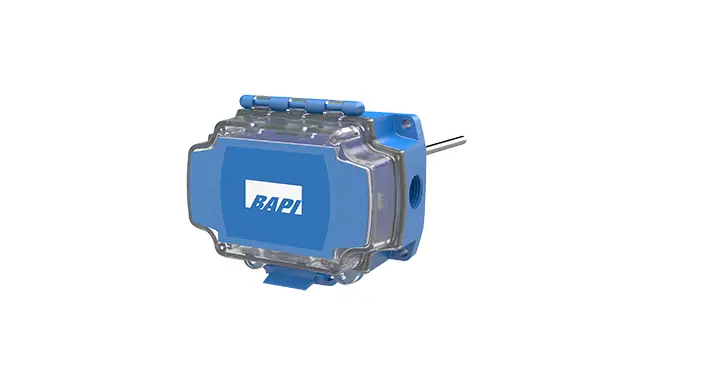
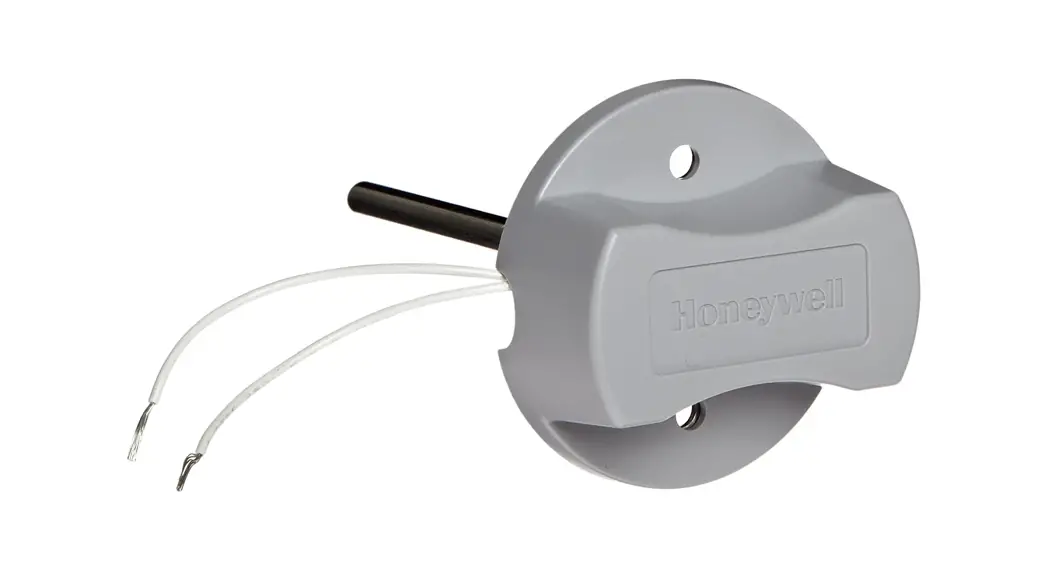
49799 Wireless Duct Temperature Sensor
Product Information
The Wireless Duct Temperature Sensor is a device designed for
monitoring and transmitting temperature data from ducts. It is
equipped with adjustable settings and onboard memory. The sensor
can transmit data to a digital Gateway or a wireless-to-analog
Receiver.
The sensor is compatible with BAPI’s wireless devices and can be
field adjusted to suit the installation requirements. All settings
can be configured using the gateway or receiver. For more detailed
information on adjusting the settings, refer to the gateway or
receiver instructions available on the BAPI website.
Associated Receiver or Gateway
Receiver (Wireless-to-Analog): The wireless
receiver receives data from one or more wireless sensors. It
transfers the data to analog output modules and converts it into an
analog voltage or resistance. The receiver supports up to 32
sensors and up to 127 different analog output modules.
Gateway: The wireless gateway receives data
from one or more wireless sensors. It provides the data to the
cloud via MQTT and sends a confirmation signal to each sensor upon
successful reception of data. The gateway supports up to 32
sensors.
To establish communication between the sensors and the gateway
or receiver, refer to BAPI’s Wireless Quick Start Guide or the
gateway/receiver instructions on the BAPI website.
Initial Activation
Battery Power Units: The unit comes with two
pre-installed batteries. To activate the unit, follow these
steps:
- Open the cover to access the batteries.
- Remove the battery tab insulators.
- Press the Service button, and the Service LED should flash once
to confirm power.
Wire Power Units: To activate the unit, follow
these steps:
- Open the cover to access the circuit board.
- Apply 9 to 30 VDC or 24 VAC to the power terminals as
shown. - Press the Service button, and the Service LED should flash once
to confirm power.
Mounting
To achieve the best temperature reading, follow these steps for
mounting the sensor:
- Place the sensor in the middle of the duct, away from
temperature stratified air, coils, or humidifiers. - Drill the probe hole as shown in Fig 3. Use the enclosure tabs
to mark the pilot hole locations and drill 1/8 (3.2mm) pilot
holes. - Mount the enclosure to the duct using the provided mounting
screws. - Tighten the screws until the foam backing is depressed slightly
to prevent air leakage.
Note: Do not drill into the enclosure, as it will violate the
NEMA and IP rating.
Product Usage Instructions
Operation:
1. Power the unit as described in the Initial Activation
section.
2. Follow the gateway or receiver instructions for pairing the
unit and changing adjustable settings. Refer to the instructions
available on the BAPI website.
3. Pressing the Service button on the circuit board will force a
transmission.
Fig. 4:

Wireless Duct Temperature Sensor
49799_Wireless_BLE_Duct_Temp
Installation & Operations
rev. 06/29/23
Overview and Identification
User adjustable settings Onboard memory Transmits to a digital Gateway or a wireless-to-analog
Receiver
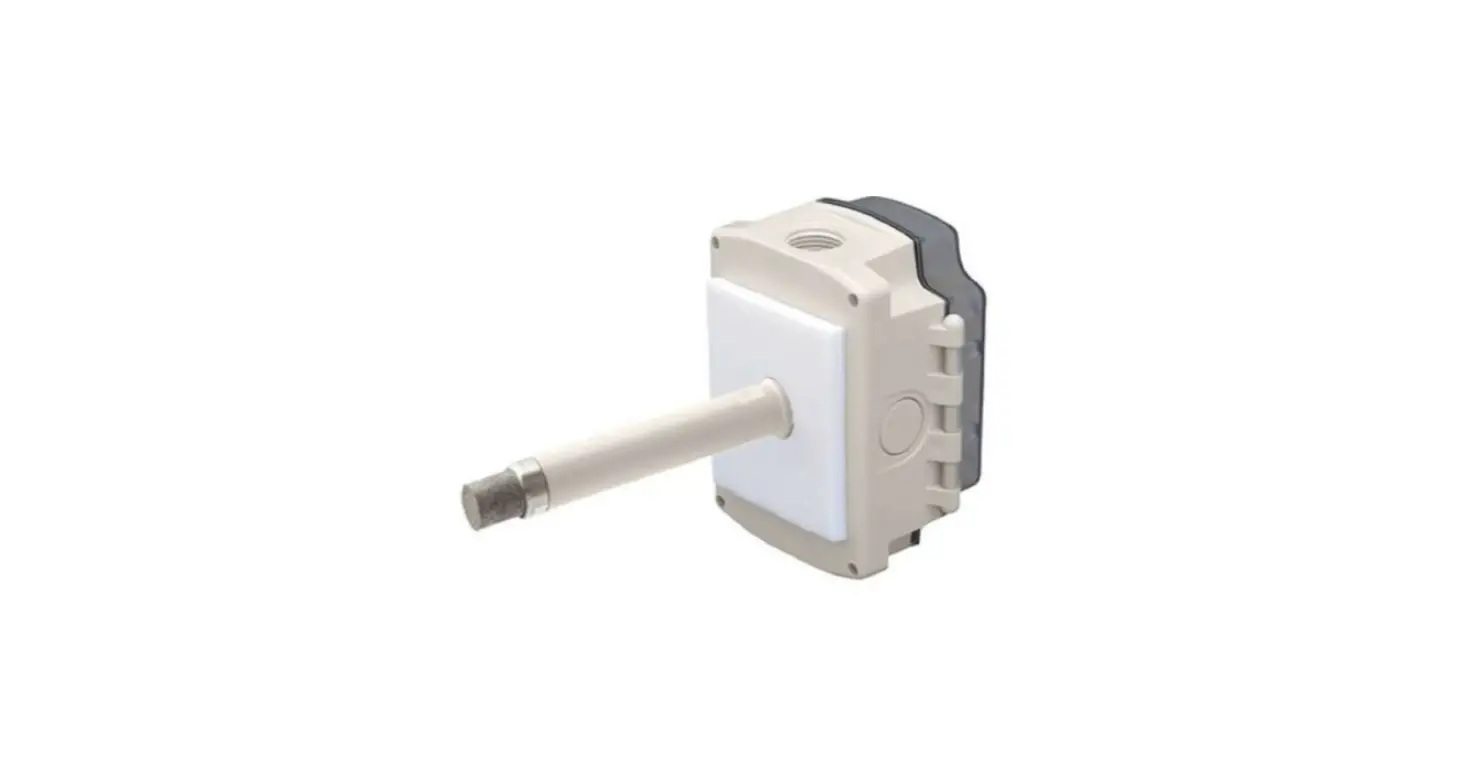
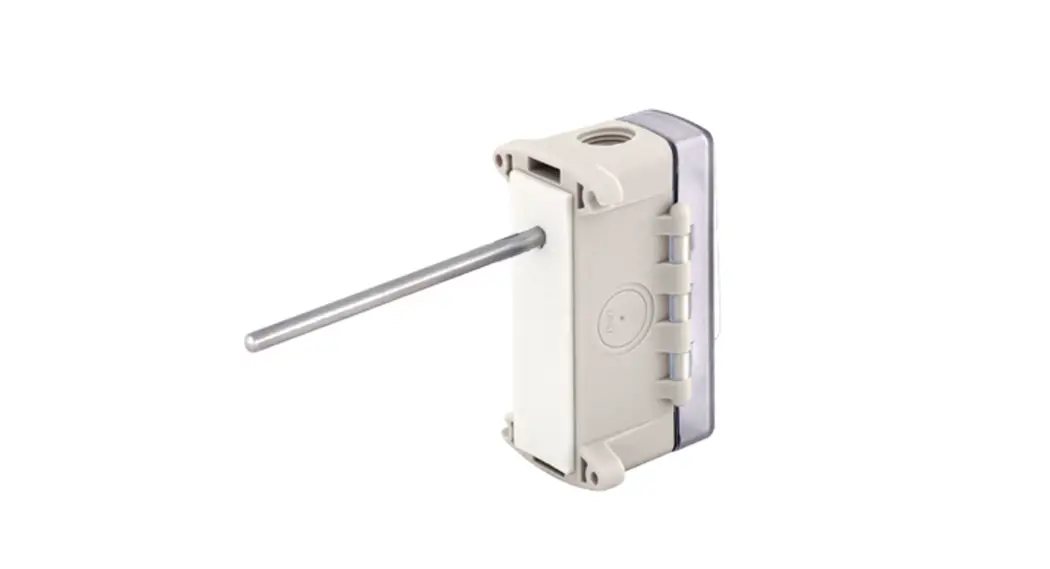
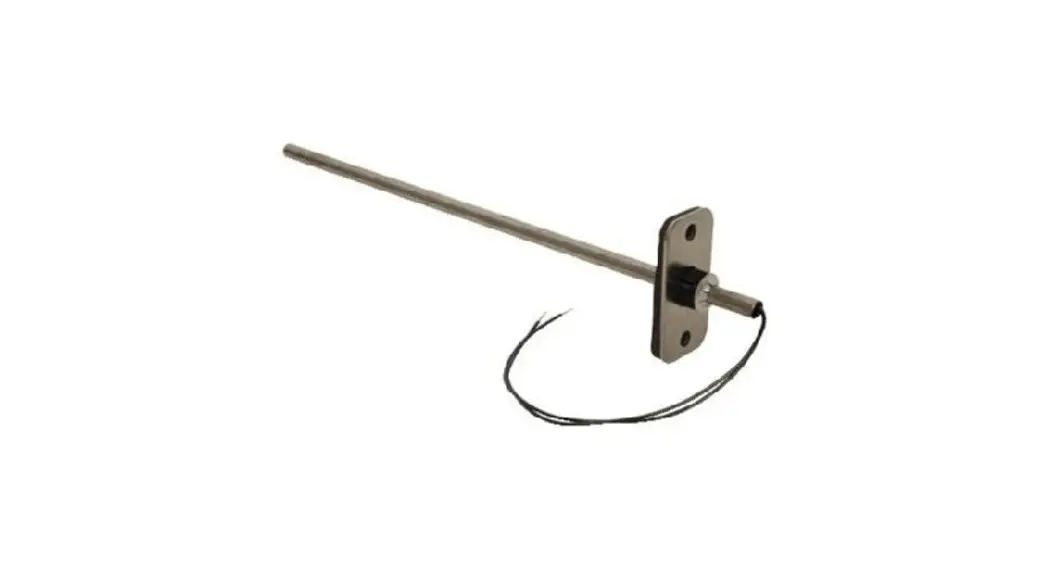
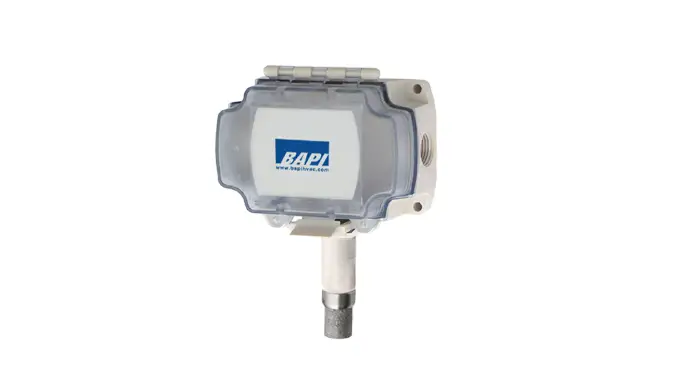
BAPI’s Duct Wireless Sensor measures the temperature and transmits the data via Bluetooth Low Energy to a receiver or gateway. This unit features a rugged IP66-rated BAPI-Box enclosure and ¼” (6.4mm) stainless steel probe with standard probe lengths from 4″ to 18″ (102 to 457mm).
Duct Temperature Sensor
Adjustable Settings
BAPI’s wireless devices have several settings that can be can be field adjusted to suit the needs of the installation. All settings are configured by either the gateway or the receiver. (See the gateway or receiver instructions documents available on the BAPI website for more information on adjusting the settings.)
Sample Rate/Interval The time between when the sensor wakes up and takes a reading. The available values are 10 sec, 30 sec, 1 min, 3 min or 5 min with the gateway, or 30 sec, 1 min, 3 min or 5 min with the receiver.
Transmit Rate/Interval The time between when the sensor transmits the readings to the gateway or receiver. The available values are 30 sec, 1, 2, 3, 4, 5, 10, 15, 20 or 30 minutes, or 1, 6 or 12 hours with the gateway, or 1, 5, 10 or 30 minutes with the receiver.
Delta Temperature The change in temperature between sample intervals that will cause the sensor to override the transmit interval and transmit the changed temperature at the next sample interval. The available values are 0.1, 0.2, 0.3, 0.4, 0.5, 1, 2, 3, 4, 5 °F or °C with the gateway, and 1 or 3 °F or °C with the receiver.
Temperature Min/Max The maximum or minumum temperature that will cause the sensor to override the transmit interval and immediately transmit a reading to the gateway. (Only available when using a gateway.)
Temperature Offset Adjusts the temperature value being transmitted to match that of a calibrated reference device. The available values are ±0.1, 0.2, 0.5, 1, 2, 3, 4 or 5 °F or °C. (Only available when using a gateway.)
Building Automation Products, Inc., 750 North Royal Avenue, Gays Mills, WI 54631 USA Tel:+1-608-735-4800 · Fax+1-608-735-4804 · E-mail:[email protected] · Web:www.bapihvac.com
1 of 4
Wireless Duct Temperature Sensor
49799_Wireless_BLE_Duct_Temp
Installation & Operations
rev. 06/29/23
Associated Receiver or Gateway
RECEIVER (Wireless-to-Analog)
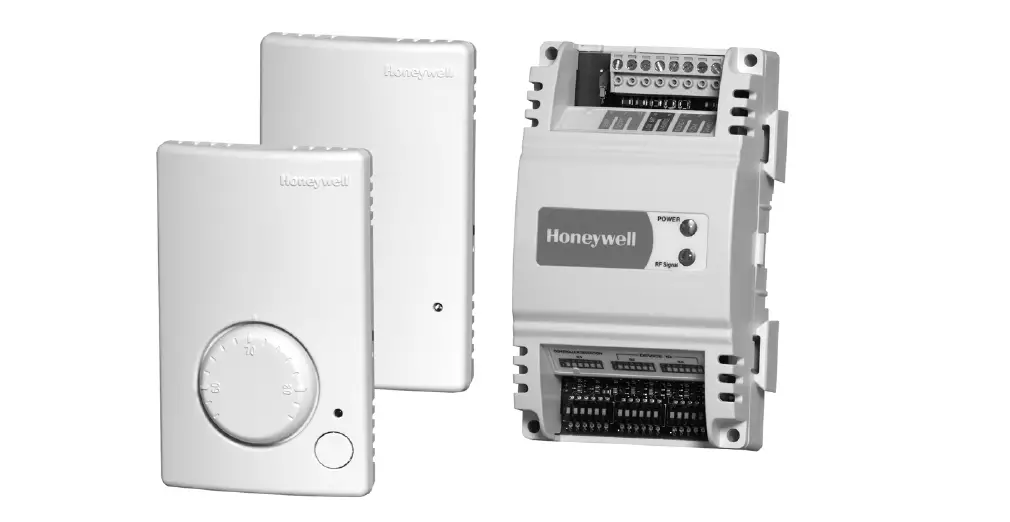
The wireless receiver from BAPI receives the data from one or more wireless sensors. The data is then transferred to the analog output modules and converted to an analog voltage or resistance. The receiver supports up to 32 sensors and up to 127 different analog output modules.
Wireless Receiver with Analog
Output Modules
GATEWAY
The wireless gateway from BAPI receives the data from one or more wireless sensors. The gateway then provides the data to the cloud via MQTT. The gateway also sends a confirmation signal to each sensor upon a successful reception of data. The gateway supports up to 32 sensors.
Please see BAPI’s Wireless Quick Start Guide, or the gateway or receiver instructions documents available on the BAPI website to establish communication between the sensors and the gateway or receiver.
Wireless Gateway
Initial Activation
Battery Power Units
The unit comes with two pre-installed batteries. To activate the unit, open the cover to access the batteries. Find the battery tab insulators and pull them out. Press the Service button and the Service LED should flash once to confirm power.
Remove
battery tab insulators.
Service LED
Wire Power
Units
To activate the unit, open the cover to access the circuit board and apply the 9 to 30 VDC or 24 VAC to the power terminals as shown. Press the Service button and the Service LED
should flash once to confirm power.
Fig. 1: Battery Power Unit
Mounting
1. Place the sensor in the middle of the duct away from temperature stratified air, coils or humidifiers to achieve the best temperature reading.
2. Drill the probe hole as shown in Fig 3. Use the enclosure tabs to mark the pilot hole locations and drill the 1/8″ (3.2mm) pilot holes. Mount the enclosure to the duct using the provided mounting screws.
3. Tighten the screws until the foam backing is depressed slightly to prevent air leakage.
Note: Do not drill into the enclosure which will violate the NEMA and IP rating.
Service LED
“” “+”
Fig. 2: Wire Power Unit Fig. 3: Duct
Sensor Mounting
Building Automation Products, Inc., 750 North Royal Avenue, Gays Mills, WI 54631 USA Tel:+1-608-735-4800 · Fax+1-608-735-4804 · E-mail:[email protected] · Web:www.bapihvac.com
2 of 4
49799_Wireless_BLE_Duct_Temp
Operation
Power the unit as described in “Initial Activation” section. Follow the gateway or receiver instructions for pairing the unit and changing the adjustable settings. (The instructions are available on the BAPI website.)
Pressing the “Service”
button on the circuit board
will force a transmission.
Fig. 4:
Battery Power Unit
Wireless Duct Temperature Sensor
Installation & Operations
rev. 06/29/23
Pressing the “Service”
button on the circuit board
will force a transmission.
Fig. 5: Wire Power
Unit
Wireless Sensor Reset
Sensors remain paired to the gateway or receiver and output modules when power is interrupted or the batteries are removed. To break the bonds between them, the sensors need to be reset. To do this, press and hold the “Service Button” on the sensor for about 30 seconds. During those 30 seconds, the green LED will be off for about 5 seconds, then flash slowly, then begin flashing rapidly. When the rapid flashing stops, the reset is complete. The sensor can now be paired to a new receiver or gateway. To re-pair to the same receiver or gateway, you must reset the receiver or gateway. Output modules that were previously paired to the sensor do not need to be re-paired.
Onboard Memory
Sensor retains up to 16,000 readings should the communication become interrupted. The sensor only stores readings from missed transmissions and only when the sensor is paired to a gateway. Once communication is re-established with the gateway, the stored readings are transmitted and then erased from the sensor. The current reading and nine previous readings are sent at each transmit interval until the sensor is caught up.
Battery Replacement
Open the cover to access the batteries (Fig 6).
Remove the batteries from their holders and discard in an environmentally safe manner. Replace with new batteries in the correct orientation.
Battery Specifications: Two 3.6V Lithium batteries: (#14505, 14500 or equivalent)
Remove and replace batteries
in the correct orientation as
shown.
Fig. 6: Battery Power Unit
Building Automation Products, Inc., 750 North Royal Avenue, Gays Mills, WI 54631 USA Tel:+1-608-735-4800 · Fax+1-608-735-4804 · E-mail:[email protected] · Web:www.bapihvac.com
3 of 4
49799_Wireless_BLE_Duct_Temp
Diagnostics
Possible Problems: Sensor is not communicating with the gateway or receiver, or the transmitted values are incorrect.
Wireless Duct Temperature Sensor
Installation & Operations
rev. 06/29/23
Possible Solutions: Make sure the sensor is within range of the gateway or receiver.
Verify that the green LED on the sensor circuit board flashes when the “Service” button is pressed, indicating a transmission. If it does not flash, replace the batteries.
Verify that the sensor is properly paired to the gateway or receiver and analog output modules as described in the gateway or receiver instructions available on the BAPI website. Re-pair them if needed. If necessary, perform the “Wireless Sensor Reset” procedure as described on the pg 3.
Specifications
Battery Power: Two included 3.6V 14505, 14500 or equivalent lithium batteries (Note: Standard AA batteries are not compatible)
Wire Power: 9 to 30 VDC or 24 VAC, halfwave rectified
Temperature Sensor Accuracy: ±1.0°F (0.55°C) from 32 to 158°F (0 to 70°C)
Temperature Range: -4 to 221°F (-20 to 105°C)
Transmission Distance: Varies by application*
Environmental Operation Range: Temp: -4 to 149°F (-20 to 65°C) Humidity: 10 to 90%RH, non-condensing
Enclosure Rating, Material & Material Rating: IP66, UV-Resistant Polycarbonate, UL94 V-0
Frequency: 2.4 GHz (Bluetooth Low Energy)
Receiver Sensitivity: -97 dBm
User Adjustable Settings: Delta T (Temp): 0.1°F/C to 5.0°F/C Transmit Interval: 30 sec to 12 hour Sample Interval: 10 sec to 5 min Temp Offset: ±0.1°F/C to ±5.0°F/C
Onboard Memory: Sensor retains up to 16,000 readings should the communication become interrupted. If using a Gateway, the data is re-transmitted once communication is re-established.
Agency: RoHS
*In-building range is dependent on obstructions such as furniture and walls and the density of those materials. In wide open spaces, the distance may be greater; in dense spaces, the distance may be less.
**Actual battery life is dependent on the sensor’s adjustable settings and environmental conditions.
Calculated Battery Life**
Transmit Interval Sample Rate Estimated Life (years)
30 sec
30 sec
1.04
1 min
1 min
1.95
3 min
1 min
3.46
5 min
5 min
4.63
10 min
5 min
7.02
Specifications subject to change without notice.
Building Automation Products, Inc., 750 North Royal Avenue, Gays Mills, WI 54631 USA Tel:+1-608-735-4800 · Fax+1-608-735-4804 · E-mail:[email protected] · Web:www.bapihvac.com
4 of 4
 BAPI - Sensor Products for HVAC/R Duct and Room