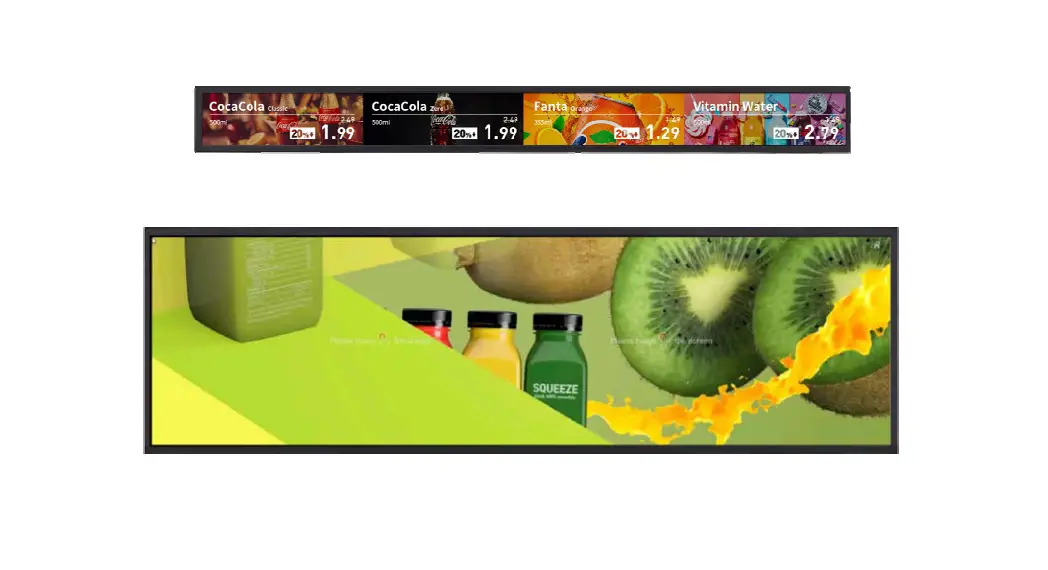
MDPi Series True Flat Healthcare Display with Color Calibration
MDPi Series True-Flat Healthcare Display with Color Calibration
User’s Manual
The MDPi Series is a portable (on a table) healthcare display
that is intended for general use in a hospital environment for data
collection and display for reference. It should not be used with a
life support system or for medical diagnosis. The intended user
profile is an adult (age above 21) who can be of any gender,
possessing at least a general level of education and basic medical
knowledge.
Table of Contents
- Chapter 1 – Introduction
- 1.1 Monitor Description
- 1.2 Box of Contents
- 1.3 Product Overview
Chapter 1 – Introduction
1.1 Monitor Description
The MDPi Series is a healthcare display that is designed to be
used in a hospital environment for data collection and display. The
equipment is intended for general use and should not be used with a
life support system or for medical diagnosis. It is a portable
device that can be placed on a table.
1.2 Box of Contents
The contents of the package may vary depending on the sales
region or model in which it was sold. For more information about
the standard package in your region, please contact your dealer or
sales representative.
1.3 Product Overview
The front view of the display includes:
- P-CAP touch (for touch version) / AG/AR/CLEAR cover glass
- Bezel
- LED
Product Usage Instructions:
- Do not use the MDPi Series with a life support system or for
medical diagnosis. - The intended user profile is an adult (age above 21) who
possesses at least a general level of education and basic medical
knowledge. - For more information about the standard package in your region,
please contact your dealer or sales representative. - Do not attempt to perform service, adjustments, or repairs on
the product, whether in or out of warranty. It must be returned to
the purchase point, factory, or authorized service agency for all
such work. - Use shielded interface cables to comply with the emission
limits.
MDPi Series
True-Flat Healthcare Display with color calibration User’s Manual
ver.A_MP_3-1521_13-13
Copyright
This publication contains information that is protected by copyright. No part of it may be reproduced in any form or by any means or used to make any transformation/adaptation without the prior written permission from the copyright holders.
This publication is provided for informational purposes only. The manufacturer makes no representations or warranties with respect to the contents or use of this manual and specifically disclaims any express or implied warranties of merchantability or fitness for any particular purpose. The user will assume the entire risk of the use or the results of the use of this document. Further, the manufacturer reserves the right to revise this publication and make changes to its contents at any time, without obligation to notify any person or entity of such revisions or changes.
Changes after the publication’s first release will be based on the product’s revision. The website will always provide the most updated information.
© 2020. All Rights Reserved.
Trademarks
Product names or trademarks appearing in this manual are for identification purpose only and are the properties of the respective owners.
Notice:
1. The changes or modifications not expressly approved by the party responsible for compliance could void the user’s authority to operate the equipment.
2. Shielded interface cables must be used in order to comply with the emission limits.
About this Manual
This manual can be downloaded from the website. The manual is subject to change and update without notice, and may be based on editions that do not resemble your actual products. Please visit our website or contact our sales representatives for the latest editions.
Warranty
1. Warranty does not cover damages or failures that arised from misuse of the product, inability to use the product, unauthorized replacement or alteration of components and product specifications.
2. The warranty is void if the product has been subjected to physical abuse, improper installation, modification, accidents or unauthorized repair of the product.
3. Unless otherwise instructed in this user’s manual, the user may not, under any circumstances, attempt to perform service, adjustments or repairs on the product, whether in or out of warranty. It must be returned to the purchase point, factory or authorized service agency for all such work.
4. We will not be liable for any indirect, special, incidental
User’s Manual | MDPi Series
2
Table of Contents
Copyright………………………………………………………………………………………………………………………. 2 Trademarks…………………………………………………………………………………………………………………… 2 Notice:………………………………………………………………………………………………………………………….. 2 About this Manual…………………………………………………………………………………………………………. 2 Warranty……………………………………………………………………………………………………………………….. 2 Chapter 1 – Introduction…………………………………………………………………………………………………. 4
1.1 Monitor description……………………………………………………………………………………………. 4 1.2 Box of contents…………………………………………………………………………………………………. 4 1.3 Product overview ………………………………………………………………………………………………. 4 1.4 Key Features……………………………………………………………………………………………………… 7 1.5 Outline Dimension……………………………………………………………………………………………… 8 Chapter 2 – Important information………………………………………………………………………………….. 9 2.1 Safety Information …………………………………………………………………………………………….. 9 2.2 Environmental Information………………………………………………………………………………..10 2.3 Regulatory Information……………………………………………………………………………………..11 2.4 Equipment Symbols………………………………………………………………………………………….11 Chapter 3 – Cleaning the display……………………………………………………………………………………13 3.1 Cleaning instructions………………………………………………………………………………………..13 3.2 EMC notice ……………………………………………………………………………………………………… 13 Chapter 4 – Monitor Installation…………………………………………………………………………………….15 4.1 Cleaning instructions………………………………………………………………………………………..15 4.2 Stand removal & VESA mount installation …………………………………………………………16 Chapter 5 – Daily operation……………………………………………………………………………………………18 5.1 Main power switch……………………………………………………………………………………………18 5.2 Power/Status indication……………………………………………………………………………………18 Chapter 6 – OSD menu operation…………………………………………………………………………………..19 6.1 On-Screen Display…………………………………………………………………………………………….19 6.2 Menu Descriptions……………………………………………………………………………………………19 6.3 OSD Structure…………………………………………………………………………………………………..19 6.4 Main Menu……………………………………………………………………………………………………….20
6.4.1 Exit………………………………………………………………………………………………………….20 6.4.2 Auto Setup (Only Support Analog) ……………………………………………………………20 6.4.3 Brightness……………………………………………………………………………………………….21 6.4.4 Contrast ………………………………………………………………………………………………….21 6.4.5 Display (Only Support Analog)………………………………………………………………….21 6.4.6 Color Mode ……………………………………………………………………………………………..22 6.4.7 Clock/Phase (Only support Analog)………………………………………………………….23 6.4.8 Audio ………………………………………………………………………………………………………23 6.4.9 Management …………………………………………………………………………………………..24 6.4.9.1 Scaling …………………………………………………………………………………………………25 6.4.9.2 OSD Display………………………………………………………………………………………….25 6.4.9.3 Scaling …………………………………………………………………………………………………26 6.4.9.4 Source………………………………………………………………………………………………….26 6.4.9.5 Power Key Lock ……………………………………………………………………………………27 6.4.9.6 Recall …………………………………………………………………………………………………..27 6.4.10 Operating Hours…………………………………………………………………………………….27 6.5 Supported Video Modes……………………………………………………………………………..28
User’s Manual | MDPi Series
3
Chapter 1 – Introduction
X 1.1 Monitor description
The equipment is applied for healthcare that is intended for general use in hospital environment for data collection and display for reference. It shall not be used with life support system or for medical diagnosis.
Type of equipment: Portable (on a table) Intended location: Medical environment Intended User Profile
Intended User Profile
Age: Gender: Linguistic/ Cultural Background: Education/ Professional Competence: Intended User Group: Knowledge Base:
Adult (Age above 21) Can be use by all genders At least English General level of education Hospital staff User should possess basic medical knowledge
X 1.2 Box of contents
· 21.5″/23.8″/27″ LCD Touch Screen Monitor · AC Power Cord · VGA Cable · DVI or HDMI Cable · USB Cable (for touch version) · Power Adapter (Delta 24V)
(Optional) · Audio Cable · RS232 Cable · DP Cable
The main body and accessories in the package may not come similar to the information listed above. This may differ in accordance with the sales region or models in which it was sold. For more information about the standard package in your region, please contact your dealer or sales representative.
X 1.3 Product overview
Front View The image below shows the front view of the display.
Chapter 1
INTRODUCTION
1. P-CAP touch (for touch version) / AG/AR/CLEAR cover glass 2. Bezel 3. LED
User’s Manual | MDPi Series
4
Chapter 1
INTRODUCTION
Side View
The image below shows the control keys located in the right bottom corner of the display.
Rear View
Chapter 1
INTRODUCTION
1. Menu / Enter key / Scrolling key
1. Rear cover 2. IO cover 3. Monitor stand 4. Hinge cover
User’s Manual | MDPi Series
5
Available Connections
1. USB 2. RS232 3. Audio 4. Display Port 5. DVI 6. HDMI (RGD model) 7. VGA 8. POWER 9.
User’s Manual | MDPi Series
Chapter 1
INTRODUCTION
6
X 1.4 Key Features
Model Display
Touch Screen Systems I/O Interface Power requirements Mechanical
Others
Display Max. Resolution Luminance Contrast View Angle Color Depth Display Colors Response Time (ms) Backlight MTBF Type Touch Point Glass Coating Interface Color Temperature Gamma Selection Gamma LUT (bits) OSD Languages Speaker VGA DP HDMI or DVI Audio Power input AC Input Power Consumption Chassis Material Color Dimension (W)(H)(D)
Weight
Mounting Operating Temperature Storage Temperature Operating Humidity OSD
Certifications
Protection Accessory
EMC / Safety
IP level Packing List
User’s Manual | MDPi Series
Chapter 1
INTRODUCTION
MDPi215 21.5″ TFT LCD 1920 x 1080 350 nits 1000:1 178(H) / 178(V) 8 bits 16.7M 22 (On/Off) 50,000 hrs (Min.) Projected Capacitive 10 AG Combo(USB/RS232) Neutral/Warm/Cool/User Neutral/2.2/DICOM 10 English/French/German/Italian/Spanish/Japanese 2 x 2W Speaker 1 x VGA 1 x DP1.2 1 x HDMI 1.4 or DVI-D 1 x Line-in 1 x DC IN External power adapter,100 ~ 250V 40W (Max) Plastic ABS White “537 (W) x 387 (H) x 175 (D) mm (with Stand) 537 (W) x 339 (H) x 69 (D) mm (w/o Stand)” “8.2 (with Stand) 6.5 (w/o Stand)” 100 x 100 mm VESA mount 0°C ~ 40°C -20°C ~ 60°C 30% to 75% non-condensing “RotaryKnob buttons on the side edge Power On/Off, Menu”
MDPi238 23.8″ TFT LCD 1920 x 1080 250 nits 1000:1 178(H) / 178(V) 6 bits + FRC 16.7M 14 (GtG)) 30,000 hrs (Min.) Projected Capacitive 10 AG Combo(USB/RS232) Neutral/Warm/Cool/User Neutral/2.2/DICOM 10 English/French/German/Italian/Spanish/Japanese 2 x 2W Speaker 1 x VGA 1 x DP1.2 2 x HDMI 1.4 or DVI-D 1 x Line-in 1 x DC IN External power adapter,100 ~ 250V 40W (Max) Plastic ABS White “581 (W) x 400 (H) x 175 (D) mm (with Stand) 581 (W) x 360 (H) x 69 (D) mm (w/o Stand)” “9.5 (with Stand) 7.7 (w/o Stand)” 100 x 100 mm VESA mount 0°C ~ 40°C -20°C ~ 60°C 30% to 75% non-condensing “RotaryKnob buttons on the side edge Power On/Off, Menu”
MDPi270 27″ TFT LCD 1920 x 1080 (4K option) 300 nits 3000:1 160(H) / 140(V) 8 bits 16.7M 12 (On/Off) 30,000 hrs (Min.) Projected Capacitive 10 AG Combo(USB/RS232) Neutral/Warm/Cool/User Neutral/2.2/DICOM 10 English/French/German/Italian/Spanish/Japanese 2 x 2W Speaker 1 x VGA 1 x DP1.2 3 x HDMI 1.4 or DVI-D 1 x Line-in 1 x DC IN External power adapter,100 ~ 250V 40W (Max) Plastic ABS White “651 (W) x 441 (H) x 175 (D) mm (with Stand) 651 (W) x 402 (H) x 69 (D) mm (w/o Stand)” “10.3 (with Stand) 8.4 (w/o Stand)” 100 x 100 mm VESA mount 0°C ~ 40°C -20°C ~ 60°C 30% to 75% non-condensing “RotaryKnob buttons on the side edge Power On/Off, Menu”
cTUVus(60601 Ed3.1),CE(EN 60601-1, EN60601-1-2,)FCCclass B IP65 Front Panel “Audio Cable DP Cable HDMI Cable VGA Cable USB 2.0 Cable Power Adapter”
cTUVus(60601 Ed3.1),CE(EN 60601-1, EN60601-1-2,)FCCclass B IP65 Front Panel “Audio Cable DP Cable HDMI Cable VGA Cable USB 2.0 Cable Power Adapter”
cTUVus(60601 Ed3.1),CE(EN 60601-1, EN60601-1-2,)FCCclass B IP65 Front Panel “Audio Cable DP Cable HDMI Cable VGA Cable USB 2.0 Cable Power Adapter”
7
X 1.5 Outline Dimension User’s Manual | MDPi Series
Chapter 1
INTRODUCTION
8
Chapter 2 – Important information
X 2.1 Safety Information
General recommendations
Read the safety and operating instructions before operating the device. Save the safety and operating instructions for future reference. Adhere to all warnings on the device and in the operating instructions manual. Follow all instructions for operation and use.
Electrical Shock or Fire Hazard
To prevent an electrical shock or fire hazard, do not remove the cover. No serviceable parts are inside. Refer servicing to qualified personnel. Do not expose this apparatus to rain or moisture.
Modifications to the unit:
Do not modify this equipment without authorization of the manufacturer.
Degree of safety (flammable anesthetic mixture):
Equipment is not suitable for use in the presence of a flammable anesthetic mixture of air, oxygen, or nitrous oxide.
Non-patient care equipment
· Equipment primarily for use in a health care facility. It is intended for use when contact with a patient is unlikely (no applied part). · The equipment may not be used with life support equipment. · The user should not touch the equipment, nor its signal input ports (SIP)/signal output ports (SOP) and the patient at the same time. Mission critical applications We strongly recommend for there to be a replacement monitor immediately available in mission critical applications.
Power connection Equipment with internal power supply
· This equipment must be grounded. · Power requirements: The equipment must be powered by the DC mains voltage. · The equipment is intended for continuous operation.
Chapter 2
Important Information
Power cords:
· Do not overload wall outlets and extension cords as this may result in fire or electric shock. · Main leads protection (U.S.: Power cord): Power cords should be routed so that they are not walked upon or pinched by items placed upon or against them. Pay particular attention to cords at plugs and receptacles. · The power supply cord should be replaced by the designated operator only at all time. · Use a power cord that matches the voltage of the power outlet, which should be approved and in compliance with the safety standard of your particular country. · Avoid placing the monitor near places that is hard to reach or difficult to disconnect the power supply cord. · “WARNING: To avoid risk of electric shock, this equipment must only be connected to a supply mains with protective ground” · “AVERTISSEMENT” : Pour éviter le risque de choc électrique, cet équipement doit être uniquement raccordé à un réseau d’alimentation avec protection par mise à la terre.
Grounding reliability
Grounding reliability can only be achieved when the equipment is connected to an equivalent receptacle.
Liquids and moisture
Never expose the monitor to liquids or moisture. Never use the monitor near water – e.g. near a bathtub, washbasin, swimming pool, kitchen sink, laundry tub or in a wet basement.
Ventilation
Do not cover or block any ventilation openings in the cover of the set. When installing the device in a cupboard or another closed location, heed the necessary space between the set and the sides of the cupboard.
Installation
Place the device on a flat, solid, and stable surface that can support the weight of at least 3 devices. If you use an unstable cart or stand, the device may fall, causing serious injury to a child or adult, and serious damage to the device.
Accessory equipment connected to the analog and digital interfaces must be in compliance with the respective nationally harmonized IEC standards (i.e. IEC 60601-1 for medical equipment.) Furthermore all configurations shall comply with the system standard in IEC 60601-1. Anyone who connects additional equipment to the signal input part or signal output part is configuring a medical system, and is therefore, responsible that the system complies with the requirements of the system standard IEC 60601-1. The unit is for exclusive interconnection with IEC 60601-1 certified equipment in the patient environment and IEC 60XXX certified equipment outside of the patient environment.
User’s Manual | MDPi Series
9
This apparatus conforms to:
EN 60601-1:2006+A11:2011+A1:2013+A12:2014 IEC 60601-1: 2005 + CORR. 1 (2006) + CORR. 2 (2007) + AM1(2012) ANSI/AAMI ES606011:2005+A2(R2012)+A1 CAN/CSA-C22.2 No. 60601-1:14 EN 60601-1-2 (2015) IEC 60601-1-2 (2014) FCC CFR 47 Part 15 Subpart B (Level B) RoHS (2011/65/EU & 2015/863/EU)
X 2.2 Environmental Information
Disposal Information Waste Electrical and Electronic Equipment
Chapter 2
Important Information
This symbol on the product indicates that under the European Directive 2012/19/EU, governing waste from electrical and electronic equipment, this product must not be disposed of with other municipal waste. Please dispose of your waste equipment by handing it over to a designated collection point for the recycling of waste electrical and electronic equipment. To prevent possible harm to the environment or human health from uncontrolled waste disposal, please separate these items from other types of waste and recycle them responsibly to promote the sustainable reuse of material resources. For more information about recycling of this product, please contact your local city office or your municipal waste disposal service.
User’s Manual | MDPi Series
10
X 2.3 Regulatory Information
Indications for use
The monitor (21.5″/23.8″/27″ Touch Screen LCD Monitor) is applied for healthcare that is intended for general use in hospital environment for data collection and display for reference.
FCC class B
This device complies with Part 15 of the FCC Rules. Operation is subject to the following two conditions: (1) This device may not cause harmful interference, and (2) this device must accept any interference received, including interference that may cause undesired operation. This device has been tested and found to comply with the limits for a Class B digital device, pursuant to Part 15 of the FCC Rules. These limits are designed to provide reasonable protection against harmful interference in a residential installation. This device generates uses and can radiate radio frequency energy and, if not installed and used in accordance with the instructions, may cause harmful interference to radio communications. However, there is no guarantee that interference will not occur in a particular installation. If this device does cause harmful interference to radio or television reception, which can be determined by turning the device off and on, the user is encouraged to try to correct the interference by one or more of the following measures: · Reorient or relocate the receiving antenna. · Increase the separation between the device and receiver. · Connect the device to an outlet on a circuit different from that to which the receiver is connected. · Consult the dealer or an experienced radio/TV technician for help. Changes or modifications not expressly approved by the party responsible for compliance could void the user’s authority to operate the equipment.
Canadian notice
This ISM device complies with Canadian ICES-003. Cet appareil ISM est conforme à la norme NMB-001 du Canada.
X 2.4 Equipment Symbols
Chapter 2
Important Information
Electrical and electronic equipment symbols Indicates the device meets the requirements of the applicable EC directives.
Indicates compliance with Part 15 of the FCC rules (Class A or Class B) Indicates the device is approved according to the TUV regulations for Canada and US
Indicates the USB connectors on the device Indicates the Display Port connectors on the device Indicates the legal manufacturer Indicates the manufacturing date Indicates the temperature limitations for the device to safely operate within specs. Indicates the device serial number Indicates the device part number or catalog number Warning: dangerous voltage AVERTISSEMENT : Tension dangereuse Caution ATTENTION Consult the operating instructions
User’s Manual | MDPi Series
11
Indicates this device must not be thrown in the trash but must be recycled, according to the European WEEE (Waste Electrical and Electronic Equipment) directive
Indicates Direct Current (DC) Indicates Alternating Current (AC) Stand-by Power ON. Power connection to the mains Power OFF Protective earth (ground) Equipotentiality. Connect device to a potential equalization conductor.
Chapter 2
Important Information
User’s Manual | MDPi Series
12
Chapter 3 – Cleaning the display
X 3.1 Cleaning instructions
To clean the display
Cleaning the display using a sponge, cleaning cloth, or soft tissue with lightly moistened recognized cleaning product for medical equipment. Read and follow all labeled instructions on the cleaning product. In case of doubt about a certain cleaning product, use plain water.
CAUTION: · Take care not to damage or scratch the front glass or LCD. Be careful with rings or other jewelry and do not apply excessive pressure on the front glass or LCD. · Do not apply or spray liquid directly to the display as excess liquid may cause damage to internal electronics. Instead, apply the liquid to a cleaning sponge, cloth, or tissue.
ATTENTION : · Veillez à ne pas endommager ou rayer la vitre avant ou l’écran LCD. Soyez prudent lorsque vous portez des bagues ou autres bijoux et n’appliquez pas une pression excessive sur le verre avant ou l’écran LCD. · N’appliquez ou ne vaporisez pas de liquide directement sur l’écran car l’excès de liquide peut endommager l’électronique interne. Appliquez plutôt le liquide sur une éponge, un chiffon ou un mouchoir en papier.
X 3.2 EMC notice
Chapter 3
Cleaning the display
Electromagnetic emissions
The monitor is intended for use in the electromagnetic environment specified below. The customer or the user of the monitor should assure that it is used in such an environment.
Emissions test
Compliance
RF emissions CISPR 11
Group 1
Electromagnetic environment Guidance The monitor uses RF energy only for its internal function. Therefore, its RF emissions are very low and are not likely to cause any interference with nearby electronic equipment.
RF emissions CISPR 11
Harmonic emissions IEC 61000-3-2 Voltage fluctuations/ flicker emissions IEC 61000-3-3
Class B
N/A (power consumption less than 75W)
The monitor is suitable for use in all establishments, including domestic establishments and those directly connected to the public lowvoltage power supply network that supplies
buildings used for domestic purposes.
Complies
This monitor complies with appropriate medical EMC standards on emissions to, and interference from surrounding equipment. Operation is subject to the following two conditions:
(1) this device may not cause harmful interference, and (2) this device must accept any interference received, including interference that may cause undesired operation. Interference can be determined by turning the equipment off and on.
If this equipment does cause harmful interference to, or suffer from harmful interference of, surrounding equipment, the user is encouraged to try to correct the interference by one or more of the following measures: · Reorient or relocate the receiving antenna or equipment. · Increase the separation between the equipment and receiver. · Connect the equipment into an outlet on a circuit different from that to which the receiver is connected. · Consult the dealer or an experienced technician for help.
User’s Manual | MDPi Series
13
Electromagnetic immunity
The monitor is intended for use in the electromagnetic environment specified below. The customer or the user of the monitor should assure that it is used in such an environment.
Immunity test Electrostatic
discharge (ESD)
IEC 61000-4-2 Electrical fast transient/burst IEC 61000-4-4
IEC 60601 Test levels
Compliance level
± 8kV contact ± 15kV air
± 8kV contact ± 15kV air
± 2kV for power supply
lines
± 2kV for power supply lines
± 1kV for input/ output ± 1kV for input/ output lines
lines
Electromagnetic environment guidance Floors should be wood, concrete or ceramic tile. If floors are covered with synthetic material, the relative humidity should be at least 30% Mains power quality should be that of a typical commercial or hospital environment
Surge IEC61000-4-5
± 1 kV line(s) to line(s) ± 2 kV line(s) to earth
± 1 kV line(s) to line(s) ± 2 kV line(s) to earth
Mains power quality should be that of a typical commercial or hospital environment
Voltage dips, short
interruptions and voltage variations on power supply
input lines IEC 61000-411
Mains power qual-
ity should by that of a
typical commercial or
0% residual voltage for
hospital
0.5 cycle.
0% residual voltage
environment. If the user
0% residual voltage for for 0.5 cycle.
of the monitor requires
1 cycle.
0% residual voltage
continued operation
70% residual voltage for 1 cycle.
during power mains
for 0.5s.
70% residual voltage for 0.5s. interruptions, it is
0% residual voltage for 0% residual voltage for 5s. recommended that the
5s.
monitor be powered
from an uninterruptible
power supply or a bat-
tery.
Power frequency (50/60
Hz) magnetic field IEC
61000-4-8
30 A/m
Not applicable
Power frequency magnetic fields should be at levels characteristic of a typical location in a typical commercial or hospital environment.
Chapter 3
Cleaning the display
Conducted RF IEC 61000-4-6 Radiated RF IEC 61000-4-3
Portable and mobile
RF communications
equipment should be
used no closer to any
part of the monitor,
including cables, than
the recommend
separation distance
calculated from the
equation applicable
to the frequency
of the transmitter.
3 V at 0,15 – 80MHz
Recommended
6 V at ISM bands
separation distance
10 V/m at 80-2,
3 V at 0,15 – 80MHz 6 V at ISM bands
d = 1.2P d = 1.2P 80 MHz to 800
700MHz.
MHz
And 9-28V/m at 3856,000MHz, Pulse Mode: 27 V/m at 385MHz 28 V/m at 450MHz 9V/m at 710/745/780MHz 28 V/m at 810/870/930MHz 28 V/m at
1720/1845/1970MHz 28 V/m at
10V/m at 80-2,700MHz. And 9-28V/m at 3856,000MHz, Pulse Mode: 27 V/ m at 385MHz 28 V/m at 450MHz 9V/m at 710/745/780MHz 28 V/m at 810/870/930MHz 28 V/m at 1720/1845/1970MHz 28 V/m at 2450MHz 9V/m at 5240/5500/5785MHz
d = 2.3P 800 MHz to 2.5 Ghz Where P is the maximum output power rating of the transmitter in watts (W) according to the transmitter manufacturer and d is the recommended separation
2450MHz 9V/m at
distance in meters (m).
5240/5500/5785MHz
Field strengths from
fixed RF transmitters,
as
determined by an
electromagnetic site
survey,5 should be less
than the compliance
level in each frequency
range.6
Interference may
occur in the vicinity of
equipment marked with
symbol:
Note: At 80 MHz and 800 MHz, the higher frequency range applies.
These guidelines may not apply in all situations. Electromagnetic propagation is affected by absorption and reflection from structures, objects, and people.
User’s Manual | MDPi Series
14
Chapter 4 – Monitor Installation
Warning: Sufficient expertise is required to install this equipment. All devices and complete setup must be tested before operation.
AVERTISSEMENT: Une expertise suffisante est requise pour l’installation de cet équipement. Tous les appareils et la configuration complète doivent être testés avant d’être mis en service.
X 4.1 Cleaning instructions
To install your monitor
To get access to the connectors, put the display on a flat surface. 1. Connect one or more video source(s) to the corresponding video inputs of the monitor. Use the appropriate video cable(s) to do this. 2. Connect the USB or RS232 connector for touch screen function. 3. Connect the Audio cable for audio function. 4. Connect the power cord input to a power adapter with a grounded Power Outlet. 5. Connect the power adapter input to the monitor. 6. Install cable cover back on the monitor.
Image 4-1-1 Connectors (RGP)
Chapter 4
Monitor Installation
User’s Manual | MDPi Series
Image 4-1-2 Connectors (RGD)
15
X 4.2 Stand removal & VESA mount installation
This monitor provided with a validated stand. The monitor has been designed to be used in landscape position with a maximum tilt of -5° to 30° backward. If a different stand is needed in the final application, the monitor VESA interface (VESA 100 mm standard) could be used.
To remove the stand and install the VESA mount
1. Place the monitor face down on a flat, solid and stable surface. 2. Remove the hinge cover 3. Unscrew the 4x M4 (length: 10mm) screws fixing the stand and rear cover 4. Remove the stand and install the VESA mount.
Caution: Use a protective cloth or cushion to prevent the monitor and LCD from any damage or scratches.
Attention: Utilisez un chiffon ou un coussin de protection pour éviter d’endommager ou rayer le moniteur et l’écran LCD.
Tip: Store the fixation screws at a known place for possible future use.
Image 4-2-2 Remove the 4x M4 screws
Chapter 4
Monitor Installation
Image 4-2-1 Remove the hinge cover
User’s Manual | MDPi Series
Image 4-2-3 Remove the stand from the monitor
16
5. Attach the monitor in landscape position to a 100 mm VESA mounting bracket. Mounting in portrait position is not feasible.
Image 4-2-4 VESA mount is located at the back of the monitor.
User’s Manual | MDPi Series
Chapter 4
Monitor Installation
17
Chapter 5 – Daily operation
X 5.1 Main power switch
The monitor is switched on or off with the main switch, sees image 1-2 Control key.
X 5.2 Power/Status indication
During start-up the monitor performs signal detection before going into normal operation mode. Depending on the detection result, the status LED on the side of the monitor will show different LED color.
Below is an overview of the possible status LED modes:
LED Color
Status LED modes
Operation Description
OFF (No LED)
OFF mode
Monitor is not powered.
Blue, static Red, static
Normal mode
Monitor is ON, video sync OK.
Automatically enters power Stand-by mode (Power saving) saving and standing by for
input signal
User’s Manual | MDPi Series
Chapter 5
Daily operation
18
Chapter 6 – OSD menu operation
The Charts displays the function tree and brief explanations of the functions. Color, OSD, and other adjustments have submenus under each tree.
X 6.1 On-Screen Display
The LCD monitor features an On-Screen Display (OSD) menu with easily identifiable icons designed to make adjustment of your monitor display settings a more user-friendly process. When highlighted, the icon illustrates the control function and brief instruction to assist the user in identifying which control needs adjustment.
The OSD menu is activated by pressing the Control Dial inward and you can select and adjust the function of your choice by rotating and clicking the Control Dial. The main menu displays a list of sub menu icons and the current video input mode. Rotate the dial to move the highlights to the control you would like to adjust, then press the Control Dial inward to select that control or to activate that function. Depending on the control you selected, a submenu of the control with a status bar will appear. The status bar indicates in which direction, form the factory preset; your adjustments arebeing made. Rotate the Control Dial to adjust the control.
When you have finished making the adjustments, the setting is saved automatically by activating the control function. If you do not touch the Control Dial for 30 seconds, the OSD is automatically exited saving your current settings.
X 6.2 Menu Descriptions
The LCD monitor is capable of accepting VGA, DVI(HDMI), Display Port signal inputs and therefore has two different sets of OSD control functions. Because the digital signaling always achieves optimum display quality without mush adjustment, it requires much less OSD functions than the analog input mode. The following options are not available in digital input mode: Auto Setup, Display, Clock/Phase, denoted by as trick (*) in the following descriptions. If switched to digital input model, you will encounter a “Not Available” message.
X 6.3 OSD Structure
Chapter 6
OSD menu operation
User’s Manual | MDPi Series
19
User’s Manual | MDPi Series
X 6.4 Main Menu
6.4.1 Exit
To exit the OSD menu.
Chapter 6
OSD menu operation
6.4.2 Auto Setup (Only Support Analog)
· Exit: To exit the auto setup of the OSD menu. · Yes: Automatically adjust the analog settings of the image. · No: Enter Clock/Phase OSD menu when NO is selected.
20
6.4.3 Brightness
This function allows the user to adjust the monitor’s brightness setting manually.
6.4.5 Display (Only Support Analog)
· Exit: To exit the display of the OSD menu.
Chapter 6
OSD menu operation
6.4.4 Contrast
This function allows the user to adjust the contrast setting of the monitor manually.
· H. Position: The function allows user manually adjust the image position horizontally on the screen.
User’s Manual | MDPi Series
21
· V. Position: The function allows users manually adjust the image position vertically on the screen.
Chapter 6
OSD menu operation
· Color Temperature: Allows users to select preset color temperature of the display setting. Preset color temperatures are 9300K, 6500K, 5400K & User adjustable color temperature.
6.4.6 Color Mode
· Exit: To exit the color mode of the OSD menu.
User’s Manual | MDPi Series
· User: User can adjust and set tones.
· Red: Adjust red and equivalent colors at the range from 0 to 100. The greater the value is, the deeper the color is, and vice versa.· Yes: Automatically adjust the analog settings of the image. · Green: Adjust green and equivalent colors at the range from 0 to 100. The greater the value is, the deeper the color is, and vice versa. · Blue: Adjust blue and equivalent colors at the range from 0 to 100. The greater the value is, the deeper the color is, and vice versa User can adjust and set tones.
22
· Gamma: Allows users to select preset gamma curve of the display setting.Preset gamma curve are Neutral & Gamma 2.2. · DICOM: Allows users to select preset DICOM curve of the display setting.
Chapter 6
OSD menu operation
· Phase: Allows users to adjust the phase of the display setting manually.
6.4.7 Clock/Phase (Only support Analog)
· Exit: To exit the Clock / Phase of the OSD menu. · Clock: Allows users to adjust the clock of the display setting manually
6.4.8 Audio
· Exit: To exit the Audio of the OSD menu.
User’s Manual | MDPi Series
23
· Input: Allows users to select the audio input source of the display setting. Digital & Line-In audio input source are available.
Chapter 6
OSD menu operation
· Volume: Allows users to adjust the audio output of the display setting.
· Mute: Allows users to Mute(On) & Unmute(Off) the audio output of the display setting.
6.4.9 Management
· Exit: To exit the Management of the OSD menu.
User’s Manual | MDPi Series
24
6.4.9.1 Scaling
Allows users to select preferred image scaling of the display setting. · Full screen: Expands the current image to the full size of the monitor. · Aspect ratio (5:4, 4:3, 16:9): Expands the video image until its largest dimension fills the screen, while maintaining the aspect ratio of the image size. For example, when input timing is not equal to panel native resolution 1920×1080 (16:9 aspect ratio), the image may be displayed with black bars to fill the screen. · 1 : 1: Display image as its original input image resolution.
Chapter 6
OSD menu operation
· OSD H. Position: Allows users to set OSD menu in horizontal position on the display.
· OSD V. Position: Allows users to set OSD menu in vertical position on the display.
6.4.9.2 OSD Display
· Exit: To exit the OSD Display of the OSD menu.
User’s Manual | MDPi Series
25
6.4.9.3 Scaling
· Exit: To exit the Language of the OSD menu. · English, French, German, Italian, Spanish & Japanese OSD menu languages are available for users to select preferred languages.
Chapter 6
OSD menu operation
6.4.9.4 Source
· Exit: To exit the OSD Display of the OSD menu.
User’s Manual | MDPi Series
· Exit: To exit the Source of the OSD menu. · Auto Source: Allows users to Enable or Disable the Auto Select function of the display setting.
· VGA, DVI & Display Port (DP)/ HDMI sources are available for user to select preferred input source.
26
6.4.9.5 Power Key Lock
· Exit: To exit the Power Key Lock of the OSD menu. · Locked: Allows users to Enable the DC power key function of the display setting. · Unlocked: Allows users to Disable the DC power key function of the display setting.
6.4.10 Operating Hours
· Keep records of the monitor operating hours.
Chapter 6
OSD menu operation
6.4.9.6 Recall
· Exit: To exit the Recall function of the OSD menu. · Yes: Allows users to recall the display setting back to factory default setting.
User’s Manual | MDPi Series
27
6.5 Supported Video Modes
· Compliant Graphic Signal Timing (VGA, DVI, HDMI & DP)
Chapter 6
OSD menu operation
User’s Manual | MDPi Series
28