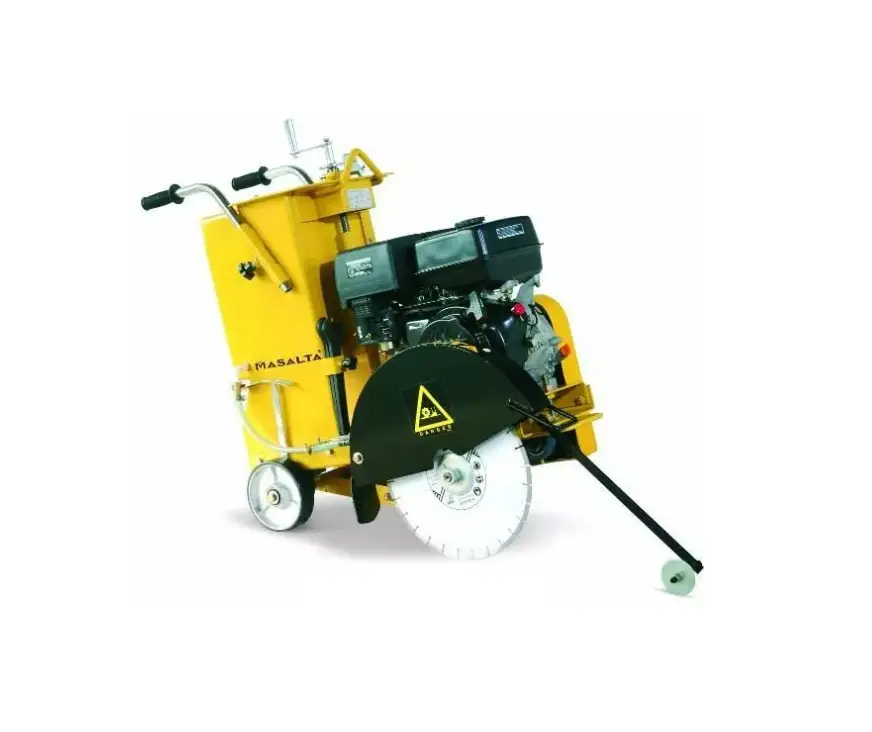
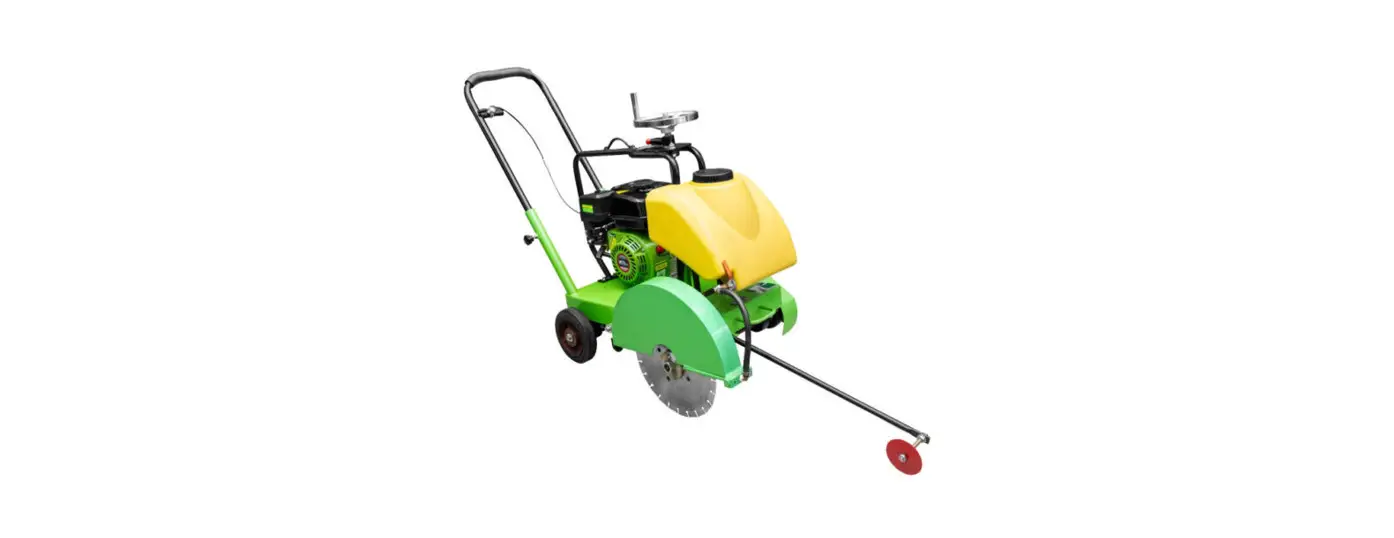
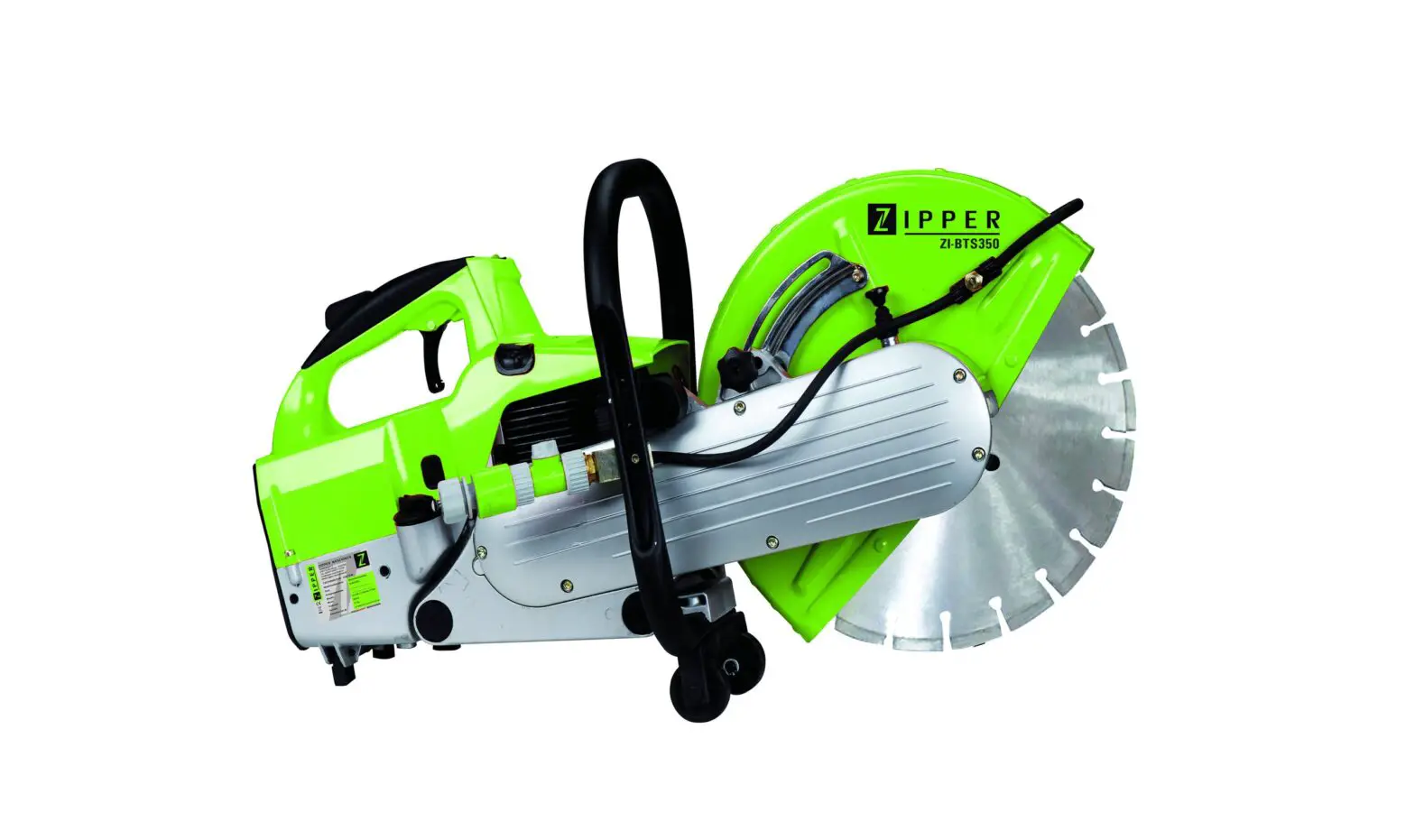
YT-82158 Concrete Cutter Machine
Product Information
The PL PRZECINARKA DO BETONU (GB CONCRETE CUTTER) is a powerful
cutting tool designed for cutting concrete, masonry, and other
tough materials. It is equipped with a cutting disc guard, cutting
disc, and a main handle for easy operation. The device also has an
additional handle, tilting guard, dust extraction spigot,
supporting wheels, water hose, base, and a cutting depth guide to
ensure precision and accuracy during use. The machine is
manufactured by TOYA S.A. in Wroclaw, Poland.
Product Usage Instructions
- Read the operating instructions carefully before using the
concrete cutter. - Wear protective goggles to protect your eyes from debris and
dust that may be generated during operation. - Wear hearing protectors to protect your ears from the loud
noise generated by the machine. - Attach the water hose to the device to cool down the blade
during operation and prevent overheating. - Make sure that the cutting disc guard is properly installed and
in place before starting the machine. - Hold the main handle firmly with both hands and turn on the
On/Off switch to start the machine. - Adjust the cutting depth guide to the desired depth of
cut. - Slowly lower the blade onto the surface to be cut, applying
gentle pressure to avoid overloading the machine. - Use the supporting wheels to guide the machine along the cut
line for straight cuts. - Turn off the On/Off switch and unplug the machine when
finished.
PL PRZECINARKA DO BETONU
GB CONCRETE CUTTER
D BETONSCHNEIDER
RUS UA LT BETONO PJAUSTYTUVAS
LV BETONA GRIEZJS CZ EZACKA BETONU SK REZACKA BETÓNU H BETONVÁGÓ
RO DRUJB DE BETON E CORTADOR DE HORMIGÓN
F DECOUPEUSE BETON
I TAGLIATRICE PER CALCESTRUZZO
NL BETONSNIJDER
GR
YT-82158
INSTRUKCJA ORYGINALNA
1
PL D RUS UA LT LV CZ SK H RO E F I NL GR
12
13
2
1
10
5 6
4
11
I
3 8
10 7
9 I
14
I
II
III
IV
2020
Rok produkcji: Production year: Produktionsjahr:
: :
Pagaminimo metai:
V
Razosanas gads: Rok výroby: Rok výroby:
Gyártási év:
Anul produciei utilajului: Año de fabricación:
Année de fabrication: Anno di produzione: Bouwjaar:
TOYA S.A. ul. Soltysowicka 13-15, 51-168 Wroclaw, Polska
VI :
2
INSTRUKCJA ORYGINALNA
PL D RUS UA LT LV CZ SK H RO E F I NL GR
VII
VIII
IX
X
XI
XII
2 1
XIII
XIV
INSTRUKCJA ORYGINALNA
3
PL D RUS UA LT LV CZ SK H RO E F I NL GR
XV
XVI
XVII
XVIII
XIX
XX
XXI
4
INSTRUKCJA ORYGINALNA
PL
1. rkoje glówna 2. rkoje dodatkowa 3. oslona tarczy 4. tarcza tnca 5. wlcznik 6. blokada wlcznika 7. oslona uchylna 8. krócie odcigu pylu 9. kólka pomocnicze 10. w wodny 11. podstawa
12. prowadnica glbokoci cicia 13. blokada poloenia oslony 14. bezpiecznik kabla zasilajcego
PL D RUS UA LT LV CZ SK H RO E F I NL GR
GB
1. main handle 2. additional handle 3. cutting disc guard 4. cutting disc 5. On/Off switch 6. On/Off switch lock 7. tilting guard 8. dust extraction spigot 9. supporting wheels 10. water hose 11. base 12. cutting depth guide 13. guard position lock 14. power cord RCD
D
1. Haupthandgriff 2. Zusatzhandgriff 3. Schneidscheiben-Schutzabdeckung 4. Schneidscheibe 5. Ein-/Ausschalter 6. Schaltersperre 7. Schwenkabdeckung 8. Anschlussstutzen für Staubabsaugung 9. Hilfsräder 10. Wasserschlauch 11. Sockel 12. Schnitttiefenführung 13. Abdeckungspositionsverriegelung 14. Netzkabelsicherung
RUS
1. 2. 3. 4. 5. 6. 7. 8. 9. 10. 11. 12. 13. 14.
UA
1. 2. 3. 4. 5. 6. 7. 8. 9. 10. 11. 12. 13. 14.
LT
1. pagrindin rankena 2. papildoma rankena 3. disko dangtis 4. pjovimo diskas 5. jungiklis 6. jungiklio uzraktas 7. atverciamas dangtis 8. dulki istraukimo jungtis 9. pagalbiniai rateliai 10. vandens zarna 11. pagrindas 12. pjovimo gylio kreiptuvas 13. dangcio padties uzraktas 14. maitinimo laido saugiklis
LV
1. galvenais rokturis
2. papildrokturis
3. pamatnes prsegs 4. griezjdisks 5. sldzis 6. sldza blotjs 7. atgzams prsegs 8. puteku nosksanas scaurule 9. palgritei 10. dens stene 11. pamatne
12. griesanas dziuma vadkla 13. prsega pozcijas blotjs 14. barosanas kabea drosintjs
CZ
1. hlavní rukoje 2. pídavná rukoje 5. kryt kotouce 4. ezací kotouc 5. vypínac 6. blokáda vypínace 7. sklopný kryt
8. koncovka pro odsávání prachu
9. pomocná kolecka 10. vodní hadice
11. základna
12. vodítko hloubky ezu 13. blokáda polohy krytu
14. pojistka napájecího kabelu
SK
1. hlavná rukovä 2. dodatocná rukovä 3. kryt kotúca 4. rezný kotúc 5. vypínac 6. blokáda vypínaca 7. sklopný kryt
8. hrdlo odsávania prachu
9. pomocné kolieska
10. hadica na vodu
11. základa 12. vodiaca lista pre nastavenie hbky rezu 13. aretácia polohy krytu
14. poistka napájacieho kábla
H
1. f fogantyú 2. plusz fogantyú 3. tárcsa védburkolat 4. vágótárcsa
5. bekapcsológomb 6. bekapcsolás reteszel 7. csuklós burkolat
8. porelszívó csonk
9. segédkerekek 10. víztöml 11. alap 12. vágásmélység-vezet 13. védszerkezet pozíció zár 14. betáp biztosíték
RO
1. mâner principal
2. mâner suplimentar
3. aprtoare disc tietor 4. disc tietor 5. comutator pornit/oprit
6. blocaj comutator pornit/oprit
7. aprtoare basculant 8. conector de extragere a prafului
9. roi de susinere 10. furtun pentru ap 11. baz 12. ghidaj pentru adâncimea de tiere 13. blocarea poziiei ghidajului 14. priz pentru cablul electric
E
1. mango principal 2. mango adicional 3. pantalla del disco 4. disco de corte 5. interruptor 6. bloqueo del interruptor 7. protección abatible 8. conexión de extracción de polvo 9. ruedas auxiliares 10. manguera de agua 11. base 12. guía de profundidad de corte 13. bloqueo de posición de la pantalla 14. fusible del cable de alimentación
INSTRUKCJA ORYGINALNA
5
PL D RUS UA LT LV CZ SK H RO E F I NL GR
F
1. poignée principale 2. poignée supplémentaire 3. capot protecteur du disque 4. disque de coupe 5. gâchette de l’interrupteur 6. blocage de la gâchette de l’interrupteur 7. capot à charnière 8. tube d’extraction des poussières 9. roulettes auxiliaires 10. flexible d’eau 11. embase 12. guide de profondeur de coupe 13. verrouillage de la position du capot protecteur 14. fuse du cordon d’alimentation
I
1. impugnatura principale 2. impugnatura supplementare 3. schermo di protezione del disco 4. disco da taglio 5. pulsante di accensione 6. blocco del pulsante di accensione 7. riparo reclinabile 8. raccordo di aspirazione della polvere 9. rotelle ausiliarie 10. tubo flessibile per l’acqua 11. base 12. guida di profondità di taglio 13. blocco posizione del riparo 14. fusibile per il cavo di alimentazione
NL
1. hoofdhandgreep 2. bijkomende handgreep 3. zaagbladafscherming 4. zaagblad 5. schakelaar 6. schakelaarslot 7. kantelafscherming 8. stofafzuigaansluiting 9. hulpwielen 10. waterslang 11. basis 12. zaagdieptebegrenzer 13. afschermingspositievergrendeling 14. zekering van de stroomkabel
GR
1. 2. 3. 4. 5. 6. 7. 8. 9. 10. 11. 12. 13. 14.
6
INSTRUKCJA ORYGINALNA
PL D RUS UA LT LV CZ SK H RO E F I NL GR
Przeczyta instrukcj Read the operating instruction
Bedienungsanleitung durchgelesen
ii Perskaityti instrukcij Jlasa instrukciju Pectet návod k pouzití Precíta návod k obsluhe Olvasni utasítást
Citeti instrucunile Lea la instrucción
Lisez la notice d’utilisation
Leggere il manuale d’uso
Lees de instructies
Stosowa ochron dróg oddechowych Use the respiration protection
Atemwege schützen!
Taikyti kvpavimo tak apsaug Lietojiet elposanas traktu aizsardzbu Pouzívejte prostedky na ochranu dýchacích cest Pouzívajte prostriedky na ochranu dýchacích ciest
Használjon légzésvéd álarcot Utilizai aprtori ale cilor respiratorii Proteja las vías respiratorias
Utilisez la protection respiratoire
Utilizzare la protezione della respirazione
Gebruik de ademhalingsbescherming
Uywa gogle ochronne Wear protective goggles
Schutzbrille tragen
Vartok apsauginius akinius
Jlieto drosbas brilles Pouzívej ochranné brýle
Pouzívaj ochranné okuliare
Használjon védszemüveget! Intrebuineaz ochelari de protejare Use protectores del oído
Portez des lunettes de protection
Utilizzare gli occhiali di protezione
Draag een veiligheidsbril
Uywa ochrony sluchu Wear hearing protectors
Tragen Sie Gehörschutz
Vartoti ausines klausai apsaugoti
Jlieto dzirdes drosbas ldzeku Pouzívej chránice sluchu Pouzívaj chránice sluchu Használjon fülvédt! Intrebuineaz antifoane Use protectores de la vista
Portez une protection auditive
Utilizzare i dispositivi di protezione dell’udito
Draag gehoorbescherming
Druga klasa bezpieczestwa elektrycznego Second class of electrical safety
Zweite Klasse der elektrischen Sicherheit
Antros klass elektrin apsauga Elektrbas drosbas II. klase Druhá tída elektrické bezpecnosti Druhá trieda elektrickej bezpecnosti Második osztályú elektromos védelem
Securitatea electric de clasa a doua Segunda clase de la seguridad eléctrica
Deuxième classe de sécurité électrique
Seconda classe di sicurezza elettrica
Tweede klas elektrische veiligheid
Ten symbol informuje o zakazie umieszczania zuytego sprztu elektrycznego i elektronicznego (w tym baterii i akumulatorów) lcznie z innymi odpadami. Zuyty sprzt powinien by zbierany selektywnie i przekazany do punktu zbierania w celu zapewnienia jego recyklingu i odzysku, aby ogranicza ilo odpadów oraz zmniejszy stopnie wykorzystania zasobów naturalnych. Niekontrolowane uwalnianie skladników niebezpiecznych zawartych w sprzcie elektrycznym i elektronicznym moe stanowi zagroenie dla zdrowia ludzkiego oraz powodowa negatywne zmiany w rodowisku naturalnym. Gospodarstwo domowe pelni wan rol w przyczynianiu si do ponownego uycia i odzysku, w tym recyklingu zuytego sprztu. Wicej informacji o wlaciwych metodach recyklingu mona uzyska u wladz lokalnych lub sprzedawcy.
This symbol indicates that waste electrical and electronic equipment (including batteries and storage cells) cannot be disposed of with other types of waste. Waste equipment should be collected and handed over separately to a collection point for recycling and recovery, in order to reduce the amount of waste and the use of natural resources. Uncontrolled release of hazardous components contained in electrical and electronic equipment may pose a risk to human health and have adverse effects for the environment. The household plays an important role in contributing to reuse and recovery, including recycling of waste equipment. For more information about the appropriate recycling methods, contact your local authority or retailer.
Dieses Symbol weist darauf hin, dass Elektro- und Elektronik-Altgeräte (einschließlich Batterien und Akkumulatoren) nicht zusammen mit anderen Abfällen entsorgt werden dürfen. Altgeräte sollten getrennt gesammelt und bei einer Sammelstelle abgegeben werden, um deren Recycling und Verwertung zu gewährleisten und so die Abfallmenge und die Nutzung natürlicher Ressourcen zu reduzieren. Die unkontrollierte Freisetzung gefährlicher Stoffe, die in Elektro- und Elektronikgeräten enthalten sind, kann eine Gefahr für die menschliche Gesundheit darstellen und negative Auswirkungen auf die Umwelt haben. Der Haushalt spielt eine wichtige Rolle bei der Wiederverwendung und Verwertung, einschließlich des Recyclings von Altgeräten. Weitere Informationen zu den geeigneten Recyclingverfahren erhalten Sie bei den örtlichen Behörden oder Ihrem Händler.
( ) . , , , , . , , , . , , . .
INSTRUKCJA ORYGINALNA
7
PL D RUS UA LT LV CZ SK H RO E F I NL GR
( ), . , . , , ‘ . , . .
Sis simbolis rodo, kad draudziama ismesti panaudot elektrin ir elektronin rang (skaitant baterijas ir akumuliatorius) kartu su kitomis atliekomis. Naudota ranga turt bti renkama atskirai ir siunciama surinkimo punkt, kad bt uztikrintas jos perdirbimas ir utilizavimas, siekiant sumazinti atliekas ir sumazinti gamtos istekli naudojim. Nekontroliuojamas pavojing komponent, esanci elektros ir elektroninje rangoje, issiskyrimas gali kelti pavoj zmoni sveikatai ir sukelti neigiamus natralios aplinkos pokycius. Nam kis vaidina svarb vaidmen prisidedant prie pakartotinio rengini naudojimo ir utilizavimo, skaitant perdirbim. Nordami gauti daugiau informacijos apie tinkamus perdirbimo bdus, susisiekite su savo vietos valdzios institucijomis ar pardavju.
Ss simbols inform par aizliegumu izmest elektrisko un elektronisko iekrtu atkritumus (tostarp baterijas un akumulatorus) kop ar citiem atkritumiem. Nolietotas iekrtas ir jsavc atsevisi un jnodod savksanas punkt ar mri nodrosint atkritumu otrreizjo prstrdi un reenerciju, lai ierobezotu to apjomu un samazintu dabas resursu izmantosanas lmeni. Elektriskajs un elektroniskajs iekrts ietverto bstamo sastvdau nekontrolta izdalsans var radt cilvku veselbas apdraudjumu un izraist negatvas izmaias apkrtj vid. Mjsaimniecba pilda svargu lomu otrreizjs izmantosanas un reenercijas, tostarp nolietoto iekrtu prstrdes veicinsan. Vairk informcijas par atbilstosm otrreizjs prstrdes metodm var saemt pie vietjo varas iestzu prstvjiem vai prdevja.
Tento symbol informuje, ze je zakázáno likvidovat pouzité elektrické a elektronické zaízení (vcetn baterií a akumulátor) spolecn s jiným odpadem. Pouzité zaízení by mlo být shromazováno selektivn a odesíláno na sbrné místo, aby byla zajistna jeho recyklace a vyuzití, aby se snízilo mnozství odpadu a snízil stupe vyuzívání pírodních zdroj. Nekontrolované uvolování nebezpecných slozek obsazených v elektrických a elektronických zaízeních mze pedstavovat hrozbu pro lidské zdraví a zpsobit negativní zmny v pírodním prostedí. Domácnost hraje dlezitou roli pi pispívání k optovnému pouzití a vyuzití, vcetn recyklace pouzitého zaízení. Dalsí informace o vhodných zpsobech recyklace Vám poskytne místní úad nebo prodejce.
Tento symbol informuje o zákaze vyhadzovania opotrebovaných elektrických a elektronických zariadení (vrátane batérií a akumulátorov) do komunálneho (netriedeného) odpadu. Opotrebované zariadenia musia by separované a odovzdané do príslusných zberných miest, aby mohli by nálezite recyklované, cím sa znizuje mnozstvo odpadov a zmensuje vyuzívanie prírodných zdrojov. Nekontrolované uvoovanie nebezpecných látok, ktoré sú v elektrických a elektronických zariadeniach, môze ohrozova udské zdravie a ma negatívny dopad na zivotné prostredie. Kazdá domácnos má dôlezitú úlohu v procese opätovného pouzitia a opätovného získavania surovín, vrátane recyklácie, z opotrebovaných zariadení, Blizsie informácie o správnych metódach recyklácie vám poskytne miestna samospráva alebo predajca.
Ez a szimbólum arra hívja fel a figyelmet, hogy tilos az elhasznált elektromos és elektronikus készüléket (többek között elemeket és akkumulátorokat) egyéb hulladékokkal együtt kidobni. Az elhasznált készüléket szelektíven gyjtse és a hulladék mennyiségének, valamint a természetes erforrások felhasználásának csökkentése érdekében adja le a megfelel gyjtpontban újrafeldolgozás és újrahasznosítás céljából. Az elektromos és elektronikus készülékben található veszélyes összetevk ellenrizetlen kibocsátása veszélyt jelenthet az emberi egészségre és negatív változásokat okozhat a természetes környezetben. A háztartások fontos szerepet töltenek be az elhasznált készülék újrafeldolgozásában és újrahasznosításában. Az újrahasznosítás megfelel módjaival kapcsolatos további információkat a helyi hatóságoktól vagy a termék értékesítjétl szerezhet.
Acest simbol indic faptul c deeurile de echipamente electrice i electronice (inclusiv baterii i acumulatori) nu pot fi eliminate împreun cu alte tipuri de deeuri. Deeurile de echipamente trebuie colectate i predate separat la un punct de colectare în vederea reciclrii i recuperrii, pentru a reduce cantitatea de deeuri i consumul de resurse naturale. Eliberarea necontrolat a componentelor periculoase coninute în echipamentele electrice i electronice poate prezenta un risc pentru sntatea oamenilor i are efect advers asupra mediului. Gospodriile joac un rol important prin contribuia lor la reutilizare i recuperare, inclusiv reciclarea deeurilor de echipamente. Pentru mai multe informaii în legtur cu metodele de reciclare adecvate, contactai autoritile locale sau distribuitorul dumneavoastr.
Este símbolo indica que los residuos de aparatos eléctricos y electrónicos (incluidas las pilas y acumuladores) no pueden eliminarse junto con otros residuos. Los aparatos usados deben recogerse por separado y entregarse a un punto de recogida para garantizar su reciclado y recuperación a fin de reducir la cantidad de residuos y el uso de los recursos naturales. La liberación incontrolada de componentes peligrosos contenidos en los aparatos eléctricos y electrónicos puede suponer un riesgo para la salud humana y causar efectos adversos en el medio ambiente. El hogar desempeña un papel importante en la contribución a la reutilización y recuperación, incluido el reciclado de los residuos de aparatos. Para obtener más información sobre los métodos de reciclaje adecuados, póngase en contacto con su autoridad local o distribuidor.
Ce symbole indique que les déchets d’équipements électriques et électroniques (y compris les piles et accumulateurs) ne peuvent être éliminés avec d’autres déchets. Les équipements usagés devraient être collectés séparément et remis à un point de collecte afin d’assurer leur recyclage et leur valorisation et de réduire ainsi la quantité de déchets et l’utilisation des ressources naturelles. La dissémination incontrôlée de composants dangereux contenus dans des équipements électriques et électroniques peut présenter un risque pour la santé humaine et avoir des effets néfastes sur l’environnement. Le ménage joue un rôle important en contribuant à la réutilisation et à la valorisation, y compris le recyclage des équipements usagés. Pour plus d’informations sur les méthodes de recyclage appropriées, contactez votre autorité locale ou votre revendeur.
Questo simbolo indica che l’apparecchiatura elettrica e elettronica usurata (comprese le batterie e gli accumulatori) non può essere smaltita insieme con altri rifiuti. Le apparecchiature usurate devono essere raccolte separatamente e consegnate al punto di raccolta specializzato per garantire il riciclaggio e il recupero, al fine di ridurre la quantità di rifiuti e diminuire l’uso delle risorse naturali. Il rilascio incontrollato dei componenti pericolosi contenuti nelle apparecchiature elettriche e elettroniche può costituire il rischio per la salute umana e causare gli effetti negativi sull’ambiente naturale. Il nucleo familiare svolge il ruolo importante nel contribuire al riutilizzo e al recupero, compreso il riciclaggio dell’apparecchiatura usurata. Per ottenere le ulteriori informazioni sui metodi di riciclaggio appropriate, contattare l’autorità locale o il rivenditore.
Dit symbool geeft aan dat afgedankte elektrische en elektronische apparatuur (inclusief batterijen en accu’s) niet samen met ander afval mag worden weggegooid. Afgedankte apparatuur moet gescheiden worden ingezameld en bij een inzamelpunt worden ingeleverd om te zorgen voor recycling en terugwinning, zodat de hoeveelheid afval en het gebruik van natuurlijke hulpbronnen kan worden beperkt. Het ongecontroleerd vrijkomen van gevaarlijke componenten in elektrische en elektronische apparatuur kan een risico vormen voor de menselijke gezondheid en schadelijke gevolgen hebben voor het milieu. Het huishouden speelt een belangrijke rol bij het bijdragen aan hergebruik en terugwinning, inclusief recycling van afgedankte apparatuur. Voor meer informatie over de juiste recyclingmethoden kunt u contact opnemen met uw gemeente of detailhandelaar.
( ) . . . , , . , .
8
INSTRUKCJA ORYGINALNA
PL CHARAKTERYSTYKA PRODUKTU
Przecinarka do betonu jest elektronarzdziem zwyklym, II klasy izolacji, przeznaczonym do cicia betonu w tym zbrojonego betonu oraz podobnych materialów ceramicznych za pomoc tarcz diamentowych. Cicie mona wykonywa zarówno na sucho jak i na mokro. Prawidlowa, niezawodna i bezpieczna praca narzdzia zalena jest od wlaciwej eksploatacji, dlatego:
Przed przystpieniem do pracy z narzdziem naley przeczyta cal instrukcj i zachowa j.
Za szkody powstale w wyniku nie przestrzegania przepisów bezpieczestwa i zalece niniejszej instrukcji dostawca nie ponosi odpowiedzialnoci.
WYPOSAENIE
W opakowaniu fabrycznym powinny si znajdowa: – przecinarka – tarcza diamentowa – kólka pomocniczy – wyk wodny – oslona tylna
DANE TECHNICZNE
Parametr Numer katalogowy Napicie znamionowe Czstotliwo znamionowa Moc znamionowa Obroty znamionowe Maks. glboko cicia Tarcza: red. zew. x red. mocowania x grubo maks. Masa Poziom halasu – cinienie akustyczne LpA ± K – moc LwA ± K Poziom drga Klasa izolacji Stopie ochrony Cinienie wody
Jednostka miary
[V~] [Hz] [W] [min-1] [mm] [mm] [kg]
[dB(A)] [dB(A)] [m/s2]
[MPa]
Warto YT-82158 220 – 240
50 / 60 2600 4300 125 355 x 25,4 x 3 10
99,0 ± 3,0 110,0 ± 3,0 8,22 ± 1,5
II IP20 0,1 0,5
Deklarowana, calkowita warto emisji drga oraz deklarowana warto emisji halasu zostala zmierzona za pomoc standardowej metody bada i moe by uyta do porównania jednego narzdzia z drugim. Deklarowana, calkowita warto emisji drga oraz deklarowana warto emisji halasu moe zosta uyta we wstpnej ocenie ekspozycji. Uwaga! Emisja drga podczas pracy narzdziem moe si róni od zadeklarowanej wartoci, w zalenoci od sposobu uycia narzdzia. Uwaga! Naley okreli rodki bezpieczestwa majce chroni operatora, które s oparte na ocenie naraenia na emisje w rzeczywistych warunkach uytkowania (wliczajc w to wszystkie czci cyklu pracy, jak na przyklad czas kiedy narzdzie jest wylczone lub pracuje na biegu jalowym oraz czas aktywacji).
OGÓLNE OSTRZEENIA DOTYCZCE BEZPIECZESTWA ELEKTRONARZDZI
Ostrzeenie! Naley zapozna si ze wszystkimi ostrzeeniami bezpieczestwa, ilustracjami oraz specyfikacjami dostarczonymi z tym elektronarzdziem. Nieprzestrzeganie ich moe prowadzi do poraenia elektrycznego, poaru albo do powanych urazów.
Zachowa wszystkie ostrzeenia oraz instrukcje do przyszlego odniesienia si.
Pojcie ,,elektronarzdzie” uyte w ostrzeeniach odnosi si do wszystkich narzdzi napdzanych prdem elektrycznym zarówno przewodowych, jak i bezprzewodowych.
Bezpieczestwo miejsca pracy Miejsce pracy naley utrzymywa dobrze owietlone i w czystoci. Nieporzdek i slabe owietlenie mog by przyczynami wypadków.
INSTRUKCJA ORYGINALNA
9
PL Nie naley pracowa elektronarzdziami w rodowisku o zwikszonym ryzyku wybuchu, zawierajcym palne ciecze, gazy lub opary. Elektronarzdzia generuj iskry, które mog zapali pyl lub opary. Nie naley dopuszcza dzieci i osób postronnych do miejsca pracy. Utrata koncentracji moe spowodowa utrat kontroli.
Bezpieczestwo elektryczne Wtyczka przewodu elektrycznego musi pasowa do gniazdka sieciowego. Nie wolno modyfikowa wtyczki w jakikolwiek sposób. Nie wolno stosowa adnych adapterów wtyczki z uziemionymi elektronarzdziami. Niemodyfikowana wtyczka pasujca do gniazdka zmniejsza ryzyko poraenia prdem elektrycznym. Unika kontaktu z uziemionymi powierzchniami takimi jak rury, grzejniki i chlodziarki. Uziemienie ciala zwiksza ryzyko poraenia prdem elektrycznym. Nie naley naraa elektronarzdzi na kontakt z opadami atmosferycznymi lub wilgoci. Woda i wilgo, która dostanie si do wntrza elektronarzdzia zwiksza ryzyko poraenia prdem elektrycznym. Nie przecia kabla zasilajcego. Nie uywa kabla zasilajcego do noszenia, cignicia lub odlczania wtyczki od gniazdka sieciowego. Unika kontaktu kabla zasilajcego z cieplem, olejami, ostrymi krawdziami i ruchomymi czciami. Uszkodzenie lub spltanie kabla zasilajcego zwiksza ryzyko poraenia prdem elektrycznym. W przypadku pracy poza pomieszczeniami zamknitymi naley uywa przedluaczy przeznaczonych do pracy poza pomieszczeniami zamknitymi. Uycie przedluacza przystosowanego do pracy na zewntrz pomieszcze zmniejsza ryzyko poraenia prdem elektrycznym. W przypadku, gdy uywanie elektronarzdzia w rodowisku wilgotnym jest nieuniknione, jako ochron przed napiciem zasilania naley stosowa urzdzenie rónicowoprdowe (RCD). Zastosowanie RCD zmniejsza ryzyko poraania prdem elektrycznym.
Bezpieczestwo osobiste Pozosta czujny, zwracaj uwag na to, co robisz i zachowuj zdrowy rozsdek podczas pracy elektronarzdziem. Nie uywaj elektronarzdzia bdc zmczonym lub pod wplywem narkotyków alkoholu lub leków. Nawet chwila nieuwagi podczas pracy moe prowadzi do powanych urazów osobistych. Uywaj rodków ochrony osobistej. Zawsze zakladaj ochron wzroku. Stosowanie rodków ochrony osobistej, takich jak maski przeciwpylowe, przeciwpolizgowe obuwie ochronne, kaski i ochronniki sluchu zmniejszaj ryzyko powanych urazów osobistych. Zapobiegaj przypadkowemu uruchomieniu. Upewnij si, e wlcznik elektryczny jest w pozycji ,,wylczony” przed podlczeniem do zasilania i/lub akumulatora, podniesieniem lub przenoszeniem elektronarzdzia. Przenoszenie elektronarzdzia z palcem na wlczniku lub zasilenie elektronarzdzia, gdy wlcznik jest w pozycji ,,wlczony” moe prowadzi do powanych urazów. Przed wlczeniem elektronarzdzia usu wszelkie klucze i inne narzdzia, które zostaly uyte do jego regulacji. Klucz pozostawiony na obracajcych si elementach narzdzia moe prowadzi do powanych urazów. Nie sigaj i nie wychylaj si zbyt daleko. Utrzymuj odpowiedni postaw oraz równowag przez caly czas. Pozwoli to na latwiejsze zapanowanie nad elektronarzdziem w przypadku niespodziewanych sytuacji podczas pracy. Ubieraj si odpowiednio. Nie zakladaj luniej odziey lub biuterii. Utrzymuj wlosy oraz odzie z dala od ruchomych czci elektronarzdzia. Luna odzie, biuteria lub dlugie wlosy mog zosta pochwycone przez ruchome czci. Jeeli urzdzenia s przystosowane do podlczenia odcigu pylu lub gromadzenia pylu, upewnij si, e zostaly one podlczone i uyte prawidlowo. Uycie odcigu pylu zmniejsza ryzyko zagroe zwizanych z pylami. Nie pozwól, aby dowiadczenie nabyte z czstego uycia narzdzia spowodowaly beztrosk i ignorowanie zasad bezpieczestwa. Beztroskie dzialanie moe spowodowa powane urazy w ulamku sekundy.
Uytkowanie i troska o elektronarzdzie Nie przeciaj elektronarzdzia. Uywaj elektronarzdzia wlaciwego do wybranego zastosowania. Wlaciwe elektronarzdzie zapewni lepsz i bezpieczniejsz prac jeeli zostanie uyte do zaprojektowanego obcienia. Nie uywaj elektronarzdzia, jeli wlcznik elektryczny nie umoliwia wlczenia i wylczenia. Narzdzie, które nie daje si kontrolowa za pomoc wlcznika sieciowego jest niebezpieczne i naley je odda do naprawy. Odlcz wtyczk od gniazdka zasilajcego i/lub zdemontuj akumulator, jeeli jest odlczalny od elektronarzdzia przed regulacj, wymian akcesoriów lub przechowywaniem narzdzia. Takie rodki zapobiegawcze pozwol na uniknicie przypadkowego wlczenia elektronarzdzia. Przechowuj narzdzie w miejscu niedostpnym dla dzieci, nie pozwól osobom nieznajcym obslugi elektronarzdzia lub tych instrukcji poslugiwa si elektronarzdziem. Elektronarzdzia s niebezpieczne w rkach nieprzeszkolonych uytkowników. Konserwuj elektronarzdzia oraz akcesoria. Sprawdzaj narzdzie pod ktem niedopasowa lub zaci ruchomych czci, uszkodze czci oraz jakichkolwiek innych warunków, które mog wplyn na dzialanie elektronarzdzia. Uszkodzenia naley naprawi przed uyciem elektronarzdzia. Wiele wypadków jest spowodowanych przez niewlaciwe konserwowane narzdzia. Narzdzia tnce naley utrzymywa czyste i naostrzone. Wlaciwie konserwowane narzdzia tnce z ostrymi krawdziami jest mniej sklonne do zakleszczania i jest latwiej kontrolowa je podczas pracy. Stosuj elektronarzdzia, akcesoria oraz narzdzia wstawiane itd. zgodnie z niniejszymi instrukcjami, biorc pod uwag rodzaj i warunki pracy. Stosowanie narzdzi do innej pracy ni zostaly zaprojektowane, moe spowodowa powstanie niebezpiecznej sytuacji.
10
INSTRUKCJA ORYGINALNA
PL Rkojeci oraz powierzchnie do chwytania utrzymuj suche, czyste oraz wolne od oleju i smaru. liskie rkojeci i powierzchnie do chwytania nie pozwalaj na bezpieczn obslug oraz kontrolowanie narzdzia w niebezpiecznych sytuacjach.
Naprawy Naprawiaj elektronarzdzie tylko w uprawnionych do tego zakladach, uywajcych tylko oryginalnych czci zamiennych. Zapewni to wlaciwe bezpieczestwo pracy elektronarzdzia.
INSTRUKCJE BEZPIECZESTWA DLA PRZECINAREK Ostrzeenia dotyczce bezpieczestwa przecinarek Oslona dostarczona z narzdziem musi by bezpiecznie zamontowana do narzdzia i ustawiona w pozycji zapewniajcej maksymalne bezpieczestwo tak, aby jak najmniejsza cz tarczy byla wystawiona w kierunku operatora. Ustaw siebie oraz osoby postronne z dala od plaszczyzny obracajcej si tarczy. Oslona pomoe chroni operatora przed fragmentami pknitej tarczy oraz przypadkowym kontaktem z tarcz. Uywaj tylko diamentowych tarcz tncych w przecinarce. Tylko dlatego, e akcesorium da si zamontowa w elektronarzdziu, nie sprawia, e zostanie zachowane bezpieczestwo dzialania. Prdko znamionowa akcesorium musi by przynajmniej równa maksymalnej prdkoci znamionowej oznaczonej na elektronarzdziu. Akcesoria poruszajce si szybciej ni ich prdko znamionowa mog pkn i rozpa si. Tarcze musz by uywane tylko do zalecanych zastosowa. Na przyklad: nie szlifowa powierzchni boczn dysków przeznaczonych do cicia. ciernice tnce s przeznczone do cierania krawdziowego, sily boczne przyloone do tych tarcz mog spowodowa ich rozpadniecie. Zawsze uywaj nieuszkodzonych kolnierzy mocujcych, które s wlaciwego rozmiaru w stosunku do wybranej tarczy. Odpowiednie kolnierze mocujce wzmacniaj tarcz i zmniejszaj moliwo jej rozpadnicia. rednica zewntrzna oraz grubo akcesorium musz si zawiera w znamionowym zakresie moliwoci elektronarzdzia. Akcesoria o niewlaciwych wymiarach nie mog by wlaciwie chronione lub kontrolowane. Rozmiar otworu mocujcego tarcz oraz kolnierzy musi pasowa do rozmiaru wrzeciona elektronarzdzia. Tarczom oraz kolnierzom, których rozmiar otworu mocujcego nie odpowiada rozmiarowi wrzeciona narzdzia, zabraknie równowagi, po uruchomieniu wpadn w wibracje i moe to spowodowa utrat kontroli nad narzdziem. Nie stosowa uszkodzonych tarcz. Przed kadym uyciem zbada stan tarcz pod ktem obecnoci odprysków i pkni. W przypadku upuszczenia tarczy, naley sprawdzi je pod ktem uszkodze albo zamontowa nieuszkodzon tarcz. Po ogldzinach i zainstalowaniu tarczy naley ustawi siebie oraz osoby postronne poza plaszczyzn obrotu tarczy, nastpnie uruchomi elektronarzdzie na jedn minut przy maksymalnej prdkoci obrotowej bez obcienia. Podczas testu uszkodzone tarcze zwykle si rozpadn. Stosowa rodki ochrony osobistej. W zalenoci od zastosowania stosowa oslony twarzy, gogle lub okulary ochronne. Jeeli jest wlaciwe, stosowa maski przeciwpylowe, ochron sluchu, rkawice oraz fartuchy zdolne zatrzyma niewielkie czci ciernicy lub odlamków powstajcych podczas pracy. Ochrona oczu musi by zdolna do zatrzymania leccych odlamków powstajcych podczas rónych dziala. Maska przeciwpylowa musi by zdolna do filtracji czstek powstajcego podczas pracy. Przedluona ekspozycja na halas moe skutkowa utrat sluchu. Zachowa bezpieczny dystans pomidzy osobami postronnymi, a miejscem pracy. Ktokolwiek wchodzcy w miejsce pracy musi stosowa rodki ochrony osobistej. Odlamki powstajce podczas pracy lub odlamki uszkodzonych akcesoriów mog wylecie poza najblisze otoczenie miejsca pracy. Trzymaj narzdzie tylko za izolowane chwyty, podczas pracy gdzie akcesorium tnce moe wej w kontakt z ukrytym przewodem lub kablem zasilajcym narzdzie. Akcesorium tnce w kontakcie z przewodem pod napiciem moe spowodowa, e metalowe czci narzdzia znajda si pod napiciem i spowoduj poraenie operatora prdem elektrycznym. Ukladaj przewód z dala od wirujcego akcesorium. Jeeli stracisz kontrol, przewód moe zosta przecity lub wcignity, a twoja rka lub rami moe zosta pocignite w kierunku wirujcej tarczy. Nigdy nie odkladaj elektronarzdzia przed tym, jak akcesorium zatrzyma si calkowicie. Wirujce akcesorium moe pochwyci powierzchni i pocign elektronarzdzie pozbawiajc ci kontroli nad nim. Nigdy nie uruchamiaj elektronarzdzia podczas gdy trzymasz je na swoim boku. Przypadkowy kontakt z wirujcym akcesorium moe chwyci twoj odzie pocigajc akcesorium w kierunku twojego ciala. Regularnie czy otwory wentylacyjne elektronarzdzia. Wentylator silnika moe wcign pyl do wntrza obudowy, nadmierne nagromadzenie sproszkowanego metalu moe spowodowa zagroenie poraeniem elektrycznym. Nie pracowa elektronarzdziem w pobliu materialów latwopalnych. Nie pracowa elektronarzdziem jeeli zostalo umieszczone na palnym podlou, na przyklad drewnianym. Iskry mog zapali takie materialy. Ostrzeenia zwizane z odbiciem w kierunku operatora Odbicie w kierunku operatora jest nagl reakcj na zablokowan lub zacinit obracajc si tarcz. Zablokowanie lub zacinicie powoduje gwaltowne zablokowanie obracajcej si tarczy, co skutkuje tym, e pozbawiona kontroli glowica tnca zostaje pchnita w gór, w kierunku operatora. Na przyklad, jeeli tarcza cierna jest zablokowana lub zacinity w obrabianym materiale, krawd tarczy, która wchodzi do punktu zacinicia moe si zaglbi w powierzchni materialu powodujc, e tarcza wydostanie si lub zostanie wyrzucona.
INSTRUKCJA ORYGINALNA
11
PL
Tarcza moe take wydosta si w kierunku do lub od operatora, w zalenoci od kierunku ruchu ciernicy w miejscu zacinicia. Tarcze cierne mog take pkn w tych warunkach. Odbicie w kierunku operatora jest wynikiem niewlaciwego uycia elektronarzdzia i/ lub niepoprawnych procedur operacyjnych lub warunków i moe by uniknite przy zachowaniu wlaciwych rodków zaradczych jak podane poniej. Stosowa pewny chwyt elektronarzdzia oraz odpowiedni pozycj ciala i ramion, które pozwol oprze si silom odbicia. Operator jest w stanie kontrolowa obrót lub odbicie narzdzia, jeeli zastosuje odpowiednie rodki ostronoci. Nigdy nie umieszczaj swoich dloni w pobliu wirujcego akcesorium. Akcesorium moe odbi w stron twoich dloni. Nigdy nie umieszczaj swojego ciala w linii obracajcej si tarczy. Jeeli zdarzy si odbicie, skieruje glowic tnc w kierunku operatora. Zachowaj szczególna ostrono podczas obróbki rogów, ostrych krawdzi itp. Unikaj podbijania i zacinania akcesorium. Naroniki, ostre krawdzie lub podbijanie maj tendencj do zacinania wirujcego akcesorium w obrabianym materiale i powoduj utrat kontroli lub odbicie w stron operatora. Nigdy nie montuj pil lacuchowych, pil do drewna, diamentowych tarcz segmentowych z odstpem krawdziowym wikszym ni 10 mm lub pil tarczowych. Takie ostrza stwarzaj czste odbicia oraz utraty kontroli. Nigdy nie ,,zacinaj” tarczy lub nie stosuj nadmiernego nacisku. Nie podejmuj prób zwikszenia glbokoci cicia. Nadmierne przecianie zwiksza obcienie oraz podatno na skrcenia lub zakleszczenia tarczy w rzazie oraz zwiksza prawdopodobiestwo odbicia lub rozpadnicia si tarczy. Jeeli tarcza jest pochwytywana lub przerywasz cicie z jakiegokolwiek powodu, wylcz elektronarzdzie i przytrzymaj glowic tnc w bezruchu do czasu pelnego zatrzymania tarczy. Nigdy nie próbuj wyprowadzi tarczy tncej z rzazu jeeli tarcza pozostaje w ruchu w przeciwnym wypadku moe doj do odbicia. Zbadaj i podejmij wlaciwe dzialania, aby wyeliminowa przyczyn pochwytywania. Nie wznawiaj cicia w obrabianym materiale. Pozwól tarczy osign peln prdko i ostronie wprowad j ponownie w rzaz. Tarcza moe zosta pochwycona, wyrzucona lub odbita jeeli elektronarzdzie jest uruchamiane ponownie w obrabianym materiale. Podpieraj kady ponadwymiarowy obrabiany material, aby zminimalizowa ryzyko cinicia lub odbicia tarczy. Due materialy obrabiane wykazuj tendencj do uginania si pod wlasnym ciarem. Podpórki musz by umieszczone pod materialem obrabianym w pobliu linii cicia oraz w pobliu krawdzi materialu, po obu stronach tarczy tncej. Zachowaj szczególn ostrono podczas cicia wglbnego w cianach lub innych ,,lepych” obszarach. Wystajca tarcza moe przeci rury gazowe lub wodne, przewody elektryczne lub obiekty, które mog spowodowa odbicie. Nigdy nie tnij górn wiartk tarczy tncej, zwlaszcza nie zaczynaj w ten sposób cicia. Cicie tym obszarem moe latwo spowodowa odbicie narzdzia w kierunku operatora. Podczas przecinania tworzyw sztucznych nie dopu do ich stopienia. Stopione tworzywa sztuczne przywr do tarczy tncej co moe doprowadzi do odbicia narzdzia w stron operatora.
Ostrzeenia zwizane z tarczami tncymi Stosowa tylko tarcze przystosowane do pracy z narzdziem rcznym, tarcze do których narzdzie nie zostalo zaprojektowane nie mog by wlaciwie oslaniane i nie s bezpieczne. Nie stosowa tarcz przystosowanych tylko do narzdzi stacjonarnych. Takie tarcze maj slabsz konstrukcj, poniewa tarcza podczas cicia narzdziami stacjonarnymi jest mniej naraone na wychylenie boczne. Zastosowanie tarczy przeznaczonej do narzdzi stacjonarnych w przecinarce rcznej moe skutkowa jej rozpadniciem si w trakcie pracy co moe by przyczyn powanych obrae. Oslona musi by bezpieczne przymocowana do narzdzia i ustawiona w pozycji zapewniajcej maksimum bezpieczestwa tak, aby jak najmniejszy obszar tarczy byl odslonity w kierunku operatora lub narzdzia. Oslona pomaga ochroni operatora oraz narzdzie przed polamanymi fragmentami tarczy oraz zapobiega przypadkowemu zetkniciu si z tarcz. Przed kadym uyciem naley dokona szczególowej inspekcji tarczy przeznaczonej do cicia. Naley sprawdzi czy tarcza nie nosi ladów jakichkolwiek uszkodze. Szczególn uwag naley zwróci na krawd tnc. Jeeli zostan zauwaone jakiekolwiek uszkodzenia, np. w postaci, pkni, rozwarstwie, ubytków. Sprawdzi ksztalt tarczy czy nie jest wygita, czy nie wykazuje zaklóce w równowadze, np. nie obraca si równomiernie. Jeeli zostan wykryte jakiekolwiek nieprawidlowoci dotyczce tarczy, nie naley takiej tarczy stosowa w produkcie Zaleca si aby stosowa w produkcie tarcze diamentowe zgodne z norm EN 13236. Jeeli tarcza ma okrelony kierunek obrotów naley zamontowa w taki sposób, aby kierunek okrelony na tarczy zgadzal si z kierunkiem obrotów wrzeciona. Przed zamontowaniem naley dokona inspekcji akustycznej tarczy. Trzymajc tarcz w powietrzu, delikatnie uderzy j kawalkiem drewna. Jeeli nie bdzie slyszalny dwiczny odglos oznacza to uszkodzon tarcz i nie naley jej uywa. Nie przecia tarczy tncej, nie stosowa zbyt duego docisku podczas cicia. Nie ci pod ktem, przecinarka zostala zaprojektowana tylko do takiej pracy gdzie tarcza wiruje w plaszczynie pionowej. Cicie naley przeprowadza tylko w linii prostej, przecinarka nie zostala zaprojektowana do cicia po luku. W przypadku nie zastosowania si do powyszych zalece tarcza moe ulec zniszczeniu w trakcie pracy, a jej odlamki mog by przyczyn powanych obrae. Tarcza musi by stosowana zgodnie z przeznaczeniem. Na przyklad: nie szlifowa tarcz przeznaczon do cicia. Tarcze do cicia s przeznaczone do obcienia obwodowego, sily boczne przyloone do takiej tarczy mog spowodowa jej rozpadnicie. Nie stosowa tarcz przeznaczonych do cicia na mokro do cicia suchego. Nie stosowa chlodzenia wodnego do tarcz przeznaczonych do cicia tylko na sucho. Nie stosowa do chlodzenia innych plynów ni woda. Jeeli rodzaj zastosowanej tarczy
12
INSTRUKCJA ORYGINALNA
PL pozwala na chlodzenie wodne naley zawsze je stosowa. Pozwoli to zmniejszy ilo pylu powstajc w trakcie pracy, a take wydluy ywotno tarczy. Tarcza diamentowa przeznaczona do cicia na sucho nie wymaga chlodzenia wodnego, ale jej przecienie doprowadzi do jej przedwczesnego zuycia i moe by przyczyn jej uszkodzenia co moe skutkowa obraeniami. Zaleca si co kade 30 60 sekund wyprowadza tarcz z cicia i pozwoli jej wirowa przez ok. 10 sekund. Pozwoli to schlodzi tarcz. Nigdy nie ci azbestu lub materialów zawierajcych azbest. Pyl powstajcy w trakcie cicia azbestu jest szczególnie niebezpieczny dla zdrowia i zostal zaliczony do czynników kancerogennych. Zawsze stosowa nieuszkodzone kolnierze mocujce, które s we wlaciwym rozmiarze, dostosowanym do tarczy tncej. Wlaciwe kolnierze mocujce tarcz ciern zmniejszaj moliwo uszkodzenia tarczy tncej. Jeeli tarcza zostala wyposaona w przekladki naley ich uy podczas montau tarczy. grubo przekladek nie moe przekracza 0,5 mm. Nie stosowa zuytych tarcz z wikszych narzdzi. Tarcza o wikszej rednicy nie jest przystosowana do wikszej prdkoci obrotowej mniejszych narzdzi i moe pkn. Cicie zawsze naley przeprowadza uprzednio rozpdziwszy tarcz do obrotów znamionowych. Nie zmienia prdkoci tarczy podczas cicia. Zachowa szczególn uwag podczas wznawiania cicia. Naley najpierw rozpdzi tarcz do obrotów znamionowych, a dopiero wtedy ostronie wprowadzi tarcz do szczeliny cicia. Jeeli tarcza ulegnie zakleszczeniu w citym materiale, natychmiast naley wylczy narzdzie i przytrzyma je w bezruchu do momentu calkowitego zatrzymania tarczy. Nigdy nie naley podejmowa prób uwolnienia tarczy w ruchu. Takie dzialanie moe by przyczyn odbicia w stron operatora. Przed wznowieniem pracy naley podj dzialania w celu wyeliminowania przyczyny zakleszczenia. Zawsze naley mocowa przecinany element. Mocowanie mona dokona za pomoc cisków, imadel lub podobnych urzdze zapewniajcych mocne i pewne zamocowanie przecinanego elementu. Jeeli przecinany element zostanie podparty, naley podeprze go w taki sposób, aby przemieszczajce si w trakcie cicia fragmenty przecinanego elementu nie spowodowaly zakleszczenia tarczy. Podpory naley umieci przy krawdzi przecinanego elementu, a take w pobliu linii cicia, po obu jej stronach (XVIII). Jeeli odcinany element jest zbyt maly, aby go podeprze naley ustawi podpory w sposób ukazany na ilustracji (XIX).
OBSLUGA NARZDZIA
Przygotowanie do pracy Ostrzeenie! Wszystkie czynnoci zwizane z montaem i demontaem oraz regulacj narzdzia naley przeprowadzi przy wylczonym napiciu zasilajcym. Upewnij si, e wtyczka przewodu zasilajcego zostala odlczona od gniazdka sieciowego.
Przed rozpoczciem pracy naley zamontowa tarcz lub sprawdzi poprawno jej montau. Palcem nacisn i przytrzyma przycisk blokady wrzeciona, a kluczem obraca powoli wrzeciono do momentu zablokowania jego obrotu (II). Nie zwalnia nacisku na przycisk blokady. Przy zablokowanym wrzecionie odkrci, zgodnie z ruchem wskazówek zegara, rub mocujc oraz zdemontowa zewntrzny kolnierz mocujcy tarcz. Tarcz naloy na wrzeciono i wewntrzny kolnierz mocujcy (III). Nastpnie zamontowa zewntrzny kolnierz mocujcy i przy zablokowanym wrzecionie dokrci, przeciwnie do ruchu wskazówek zegara, rub mocujc (IV). Jeeli cicie bdzie odbywalo si ,,na mokro” naley podlczy wyk do zaworu fabrycznie podlczonego ju do narzdzia. Zawór mona ustawi w dwóch pozycjach (V). Jeeli pokrtlo znajduje si prostopadle do wa oznacza to zamknity zawór, a jeeli pokrtlo znajduj si w jednej linii z wem oznacza to otwarty zawór. Drugi koniec wa jest wyposaony w elastyczny adapter pozwalajcy na podlczenie wa do ródla wody.
Uwaga! Zaleca si ci zawsze z chlodzeniem wodnym o ile pozwalaj na to zastosowana tarcza tnca oraz rodzaj citego materialu. Zastosowanie wody chlodzi tarcz co zmniejsza ryzyko jej przegrzania i wydlua ywotno. Ponadto zastosowanie wody zmniejsza zapylenie w miejscu pracy. Zabronione jest stosowanie innych plynów ni czystej wody.
Narzdzie fabrycznie jest wyposaone w podstaw która umoliwia latwe ustawienie glbokoci cicia, jednak zamiast podstawy mona zamontowa kólka pomocnicze, które ulatwiaj prostopadle prowadzenie tarczy wzgldem przecinanego materialu. Podstaw naley zdemontowa odkrcajc calkowicie nakrtk prowadnicy do ustawiania glbokoci cicia oraz odkrcajc calkowicie obie ruby zawiasu podstawy (VI). Kólka pomocnicze wsun w widelki w obudowie narzdzia, a nastpnie zamocowa je za pomoc nakrtki (VII). Na krawdzi oslony tarczy naley zamontowa dodatkowa oslon odchylan, która chroni przed wyrzutem pylu oraz fragmentów obrabianego materialu w stron operatora. Oslon naley nasun na uchwyt przy krawdzi oslony tarczy tak, aby zatrzaski utrzymaly j na miejscu (VIII). Odchylana cz oslony powinna si swobodnie porusza tak, aby spryna dociskala j do podloa podczas cicia (X). Istnieje moliwo zablokowania ruchomej czci oslony w górnej pozycji. Naley tego dokona zaczepiajc druciane blokady o siebie (IX).
W przypadku cicia z zamontowan stop, glboko cicia naley ustawi luzujc nakrtk prowadnicy, oddychajc stop, a nastpnie blokujc j w wybranej pozycji przez dokrcenie nakrtki (XI). Na prowadnicy zostala naniesiona skala ulatwiajca ustawienie glbokoci cicia.
INSTRUKCJA ORYGINALNA
13
PL W zalenoci od sposobu montau i wykonywanego cicia naley ustawi oslon tarczy tncej tak, aby maksymalnie chronila operatora. Poluzowa pokrtlo blokady oslony (XII), obróci oslon, a nastpnie zablokowa jej poloenie dokrcajc pokrtlo oslony. Oslon mona obróci o okolo 80 stopni. Zawsze naley j obraca w taki sposób, aby jak najwiksza cz oslony byla zwrócona w stron operatora. Oslona tarczy jest wyposaona w króciec umoliwiajcy podlczenie narzdzia do instalacji odcigu pylu np. do odkurzacza przemyslowego. Naley zdemontowa oslon króca (XIII), a nastpnie podlczy narzdzie do instalacji odcigu pylu za pomoc elastycznego przewodu (wa). Ewentualny adapter zlcza nie znajduje si na wyposaeniu narzdzia. Uwaga! W przypadku cicia na mokro instalacja odcigu pylu powinna by dostosowana do pracy na mokro. Odcig pylu naley stosowa za kadym razem, zmniejszy on ilo pylu powstajcego w tracie pracy, co podnosi bezpieczestwo pracy.
Przed podlczeniem narzdzia do zasilania naley przeprowadzi test wlcznika. Wlcznik jest wyposaony w blokad zapobiegajc przypadkowemu wciniciu wlcznika w trakcie pracy. Naley chwyci rkoje, pchn bokiem palca wskazujcego blokad, przytrzyma j w tej pozycji, a nastpnie wcisn wlcznik (XIV). Zwolni nacisk na wlcznik i blokad. Poprawnie dzialajcy wlcznik powinien samoczynnie wróci do pozycji wylczony. Wlcznik nie posiada moliwoci zablokowania go w pozycji wlczony. Podlczanie do zasilania Ostrzeenie! Przed kadym uruchomieniem naley sprawdzi stan kabla zasilajcego. Jeeli zostan wykryty jakiekolwiek uszkodzenia nie naley takiego kabla podlcza do zasilania. Uszkodzony kabel naley wymieni, wymiany naley dokona w uprawnionym do tego zakladzie. Kabel zasilajcy musi by wyposaony w bezpiecznik rónicowo-prdowy. Zabroniona jest praca narzdziem z uszkodzonym kablem zasilajcym. Zabroniona jest samodzielna wymiana kabla zasilajcego. Kabel zasilajcy narzdzia jest wyposaony w bezpiecznik rónicowo-prdowy. Bezpiecznik posiada kontrolk wietln oraz dwa przyciski opisane: TEST oraz RESET. Przy kadorazowym podlczeniu wtyczki kabla zasilajcego narzdzie naley przetestowa dzialanie bezpiecznika. W tym celu naley nacisn przycisk TEST, zawieci si kontrolka oznaczona ON. Bezpiecznik przerwie dostarczanie energii elektrycznej do narzdzia. Nastpnie nacisn przycisk RESET, aby przywróci zasilanie narzdzia. W przypadku wykorzystania przedluaczy, przekrój yl kadego przedluacza nie moe by mniejszy ni 4 mm2, a suma dlugoci kabli przedluajcych nie moe by wiksza ni 30 m. W przypadku uycia przedluacza na bbnie, naley go calkowicie rozwin przed rozpoczciem pracy. Praca przecinark Przed rozpoczciem cicia naley zaznaczy na przecinanym materiale lini cicia. Przecinarka moe ci tylko w linii prostej, prostopadle do powierzchni po której bdzie prowadzone narzdzie. Zastosowa rodki ochrony osobistej zalene od warunków pracy. Zawsze jednak naley mie zaloone gogle ochronne, obuwie ochronne z antypolizgow podeszw, stój ochronny z dlugimi rkawami i nogawkami. Ochron sluchu oraz dróg oddechowych. W razie potrzeby zastosowa kask ochronny. Wykona wszystkie czynnoci przygotowawcze. Ostrzeenie! Podczas cicia na mokro upewni si, e woda nie bdzie miala kontaktu z elementami pod napiciem. W szczególnoci woda nie moe dosta si do otworów wentylacyjnych czy znale si na rkojeciach. Zwróci uwag, aby woda nie splywala po kablu zasilajcym w kierunku gniazdka elektrycznego. Kontakt wody z elementami pod napiciem moe spowodowa poraenie prdem elektrycznym. Chwyci pilark oburcz za uchwyt glówny i dodatkowy (X). Upewni si, e tarcza tnca nie styka si z adnym przedmiotem. Uruchomi pilark naciskajc wlcznik. Po wciniciu wlcznika naley pozwoli tarczy tncej osign znamionowe obroty i dopiero rozpocz cicie. Zabronione jest przykladanie tarczy do materialu i dopiero uruchamianie narzdzia. Moe to spowodowa zablokowanie tarczy, jej uszkodzenie, bd uszkodzenie materialu. Moe to prowadzi do powstania powanych obrae. W przypadku wznawiania cicia, naley pozwoli tarczy osign znamionowe obroty, a nastpnie wprowadzi j do szczeliny cicia. Podczas przecinania tarcz naley opuszcza plynnym ruchem, unikajc nadmiernego nacisku. Nacisk jaki naley wywiera na narzdzie nie powinien by wikszy ni, ten który wystarcza do cicia materialu. Naley unika uderzania tarcz w city material. W plaszczynie obrotu tarczy tncej nie powinny znajdowa si adne czci ciala (XV). Pozwoli to zmniejszy ryzyko obrae w przypadku rozpadnicia si tarczy w trakcie pracy. Tarcz naley prowadzi w prostej linii przesuwajc j do przodu i do tylu (XVI). Nie odchyla tarczy od plaszczyzny jej obrotu
14
INSTRUKCJA ORYGINALNA
PL podczas cicia. Tarcze do cicia nie s przystosowane do przenoszenia obcie bocznych i mog si rozpa w trakcie pracy. Stwarza to ryzyko odniesienia powanych obrae. Nie wywiera zbytniego nacisku na tarcz. Nacisk na tarcz powinien pozwala na efektywn prac krawdzi tnc. Nie siga za daleko, pozycja ciala w trakcie pracy powinna zawsze pozwala na zapanowanie nad narzdziem, równie w przypadku nieoczekiwanego ruchu narzdzia. Przykladajc wirujc tarcz do materialu naley przygotowa si na szarpnicie w kierunku przodu narzdzia jaki wywola zetknicie si krawdzi tarczy z przecinanym materialem (XVII). Nie pochyla si nad produktem w trakcie pracy, szczególnie jeeli oslona zostala ustawiona w takiej pozycji, e nie chroni górnej czci tarczy. Zawsze, kiedy bdzie to moliwe naley stosowa chlodzenie wodne podczas ciecia. Cinienie wody w instalacji doprowadzajcej wod do produktu musi zawiera si w przedziale okrelonym w tabeli z danymi technicznymi. Instalacja wodna musi by wyposaona w osobny zawór umoliwiajcy odcicie doplywu wody do produktu. Jeeli z produktu nie wydobywa si woda lub wydobywa si z innego miejsca ni wntrze oslony tarczy tncej oznacza to nieprawidlowe dzialanie i naley zatrzyma prac produktu, a nastpnie sprawdzi drono i szczelno instalacji wodnej. Jeeli w trakcie pracy chlodzenie wodne nie jest wykorzystywane naley zabezpieczy w i przylcze tak, aby nie mialo kontaktu z tarcz oraz nie przeszkadzalo w operowaniu produktem podczas pracy. Przecinane elementy zawsze naley wlaciwie zamocowa tak, aby zapobiec ich nieoczekiwanemu przemieszczeniu si podczas cicia. Naley zapozna si z informacjami z punktu ,,Ostrzeenia zwizane z tarczami tncymi”. Rury naley ci, prowadzc tarcz po obwodzie, a nie przez przekrój rury. Rury podczas cicia naley zabezpieczy klinami. Upewni si co do podloa, na którym spoczywa rura czy nie ulegnie rozkruszeniu w trakcie pracy. W przypadku tarcz diamentowych mog one ulec stpieniu podczas pracy. Jeeli praca tarcz staje si mniej wydajna naley tarcz naostrzy. W tym celu naley przeci material cierny np. piaskowiec, asfalt lub gazobeton. Naley zachowa szczególn ostrono podczas koczenia przecinania. Tarcza tnca traci podparcie w przecinanym materiale co moe skutkowa szarpniciem lub odbiciem w kierunku operatora. Naley zmniejszy nacisk na tarcz podczas koczenia przecinania. Jeeli podczas przecinania korzystano z chlodzenia wodnego naley osuszy tarcz i wntrze oslony tarczy. Po zakoczeniu cicia naley uruchomi tarcz na pelnych obrotach przez ok. 30 sekund, pd powietrza osuszy tarcz oraz wntrze oslony tarczy.
Po zakoczonym ciciu naley narzdzie przytrzyma w bezruchu, zwolni nacisk na wlcznik i zaczeka do calkowitego zatrzymania wirowania tarczy. Unie glowic tnc. Odlczy wtyczk przewodu zasilajcego od gniazdka sieciowego i przystpi do czynnoci konserwacyjnych.
KONSERWACJA, MAGAZYNOWANIE I TRANSPORT
UWAGA! Przed przystpieniem do regulacji, obslugi technicznej lub konserwacji wycignij wtyczk narzdzia z gniazdka sieci elektrycznej. Po zakoczonej pracy naley sprawdzi stan techniczny elektronarzdzia poprzez ogldziny zewntrzne i ocen: korpusu i rkojeci, przewodu elektrycznego, wtyczki, dzialania wlcznika elektrycznego, dronoci szczelin wentylacyjnych, iskrzenia szczotek, glonoci pracy loysk i przekladni, rozruchu i równomiernoci pracy. W okresie gwarancji uytkownik nie moe domontowa elektronarzdzi, ani wymienia adnych podzespolów lub czci skladowych, gdy powoduje to utrat praw gwarancyjnych. Wszelkie nieprawidlowoci obserwowane przy przegldzie lub w czasie pracy, s sygnalem do przeprowadzenia naprawy w punkcie serwisowym. Po zakoczeniu pracy, obudow, szczeliny wentylacyjne, przelczniki, rkoje dodatkow i oslony naley oczyci np. strumieniem powietrza o cinieniu nie wikszym ni 0,3 MPa, pdzlem lub such szmatk bez uycia rodków chemicznych i plynów czyszczcych. Narzdzia i uchwyty oczyci such czyst szmat. Produkt naley przechowywa dokladnie oczyszczony i wysuszony. Produkt przechowywa w zamknitych pomieszczeniach. Chroni przed dostpem osób postronnych. W miejscu przechowywania naley zapewni wlaciw wentylacj zapobiegajc kondensacji pary wodnej. Miejsce przechowywania powinno chroni produkt przed wplywem warunków atmosferycznych. Produkt transportowa w opakowaniach jednostkowych lub innych twardych opakowaniach, zapewniajcych ochron przed wstrzsami. W trakcie transportu chroni produkt przed wilgoci.
Przy kadej wymianie tarczy lub czciej, zwlaszcza jeeli zostan zaobserwowane takie objawy podczas pracy bez obcienia, jak wydobywajce si wntrza oslony iskry, pyl, nierównomierne obroty, wzmoone drgania naley dokladnie oczyci wntrze oslony. W tym celu naley zdemontowa podstaw przecinarki, a nastpnie zdemontowa wszystkie zatrzaski umieszczone na krawdzi oslony (XX). Pozwoli to otworzy pokryw oslony (XXI). Zdemontowa tarcz i oczyci wntrze oslony za pomoc pdzla lub szczotki z mikkim wlosiem z tworzywa sztucznego. Nie uywa ostrych lub metalowych przedmiotów do oczyszczania oslony. Po wyczyszczeniu zamkn oslon i zabezpieczy za pomoc zatrzasków.
Czci zamienne Szczególowy wykaz czci zamiennych produktu znajduje si w dziale ,,Do pobrania”, w karcie produktu, na stronach internetowych TOYA SA: www.toya.pl.
INSTRUKCJA ORYGINALNA
15
GB PRODUCT CHARACTERISTICS
The concrete cutter is an ordinary power tool, with class II insulation, designed to cut concrete, including reinforced concrete and similar ceramic materials, with help of diamond discs. Cutting can be done both dry and wet. The correct, reliable, and safe operation of the tool depends on its proper use, therefore:
Read this entire instruction manual before the first use of the tool and keep it for future reference.
The supplier shall not be liable for any damage resulting from failure to comply with the safety instructions and recommendations specified in this instructions manual.
ACCESSORIES
The factory packaging should contain: – cutter – diamond disc – supporting wheels – water hose – rear guard
TECHNICAL DATA
Parameter Part number Rated voltage Rated frequency Rated power Rated speed Max. cutting depth Disc: outer diam. x fixing diam. x max. thickness Weight Noise level – sound pressure LpA ± K – power LwA ± K Vibration level Insulation class Protection rating Water pressure
Unit
[V~] [Hz] [W] [min-1] [mm] [mm] [kg]
[dB(A)] [dB(A)] [m/s2]
[MPa]
Value YT-82158 220 – 240
50/60 2600 4300 125 355 x 25.4 x 3 10
99.0 ± 3.0 110.0 ± 3.0 8.22 ± 1.5
II IP20 0.1 0.5
The declared total vibration emission value and declared noise emission value have been measured using the standard test
method and can be used to compare one tool to another. The declared total vibration emission value and declared noise emission
can be used in the initial exposure assessment.
Caution! The vibration emission during tool operation may differ from the declared value, depending on the manner the tool is used. Caution! Safety measures to protect the operator, which are based on an assessment of emission exposure under actual condi-
tions of use (including all parts of the work cycle, such as the time when the tool is switched off or idle and the activation time), must be specified.
GENERAL WARNINGS FOR THE SAFETY OF POWER TOOLS
Warning! Read all safety warnings, illustrations and specifications provided with this power tool. Failure to do so may result in electric shock, fire or serious injury.
Keep all warnings and instructions for future reference.
The term “power tool” used in warnings applies to all tools driven by power both wired and wireless.
Workplace safety Keep the workplace well-lit and clean. Disorder and poor lighting can be causes of accidents. Do not work with power tools in an environment with an increased risk of explosion, containing flammable liquids, gases or vapors. Power tools generate sparks that can ignite dust or fumes.
16
ORIGINAL INSTRUCTIONS
GB
Children and third persons should not be allowed to enter the workplace. Loss of concentration can result in loss of control.
Electrical safety The plug of the electric cable must match the power socket. You must not modify the plug in any way. Do not use any plug adapters with earthed power tools. An unmodified plug that fits the outlet reduces the risk of electric shock. Avoid contact with earthed surfaces such as pipes, radiators and coolers. Grounding the body increases the risk of electric shock. Do not expose power tools to contact with atmospheric precipitation or moisture. Water and moisture that gets inside the power tool increases the risk of electric shock. Do not overload the power cable. Do not use the power cord to carry, pull or unplug the power plug from the power outlet. Avoid contact of the power cable with heat, oils, sharp edges and moving parts. Damage or entanglement of the power cord increases the risk of electric shock. In the case of working outside closed rooms, use extension cords intended for work outside closed rooms. The use of an extension cord adapted for outdoor use reduces the risk of electric shock. When using a power tool in a humid environment is unavoidable as a protection against supply voltage use a residual current device (RCD). The use of RCD reduces the risk of electric shock.
Personal safety Stay alert, pay attention to what you do and keep common sense while working with the power tool. Do not use a power tool when you are tired or under the influence of alcohol or medication. Even a moment of inattention while working can lead to serious personal injury. Use personal protective equipment. Always wear eye protection. The use of personal protective equipment such as dust masks, anti-slip safety shoes, helmets and hearing protection reduce the risk of serious personal injury. Prevent accidental operation. Make sure that the electric switch is in the “off” position before connecting to the power supply and / or battery, lifting or moving the power tool. Moving the power tool with the finger on the switch or powering the power tool, when the switch is in the “on” position can lead to serious injuries. Before turning on the power tool remove any keys and other tools that were used to adjust it. The key left on the rotating parts of the power tool can lead to serious injuries. Do not reach and do not lean too far. Keep the right attitude and balance all the time. This will allow easier control over the power tool in case of unexpected work situations. Dress accordingly. Do not wear loose clothing or jewelry. Keep your hair and clothing away from moving parts of the power tool. Loose clothing, jewelry or long hair can be caught by moving parts. If the devices are fitted for the connection of dust extraction or dust collection, make sure that they are connected and used properly. The use of dust extraction reduces the risk of dust hazards. Do not let the experience acquired from frequent use of the tool resulted in carelessness and ignoring safety rules. Carefree action can cause serious injuries in a fraction of a second.
Use and care of the power tool Do not overload the power tool. Use the power tool appropriate for the selected application. The right power tool will provide a better and safer job if used according to the designed load. Do not use the power tool, if the electric switch does not allow switching on and off. Power tool, which cannot be controlled by means of a power switch is dangerous and must be returned for repair. Disconnect the plug from the power socket and / or remove the battery if it is detachable from the power tool before adjusting, changing accessories or storing the tool. Such preventive measures will allow you to avoid accidentally turning on the power tool. Keep the tool out of the reach of children, do not let people who do not know how to operate the power tool or these instructions use a power tool. Power tools are dangerous in the hands of untrained users. Maintain power tools and accessories. Check the tool for mismatches or jams of moving parts, damage to parts and any other conditions that may affect the operation of the power tool. Damage must be repaired before using the power tool. Many accidents are caused by incorrectly maintained tools. Keep cutting tools sharp and clean. Properly maintained cutting tools with sharp edges are less prone to jamming and are easier to control when working. Use power tools, accessories and inserted tools etc. in accordance with these instructions, taking into account the type and conditions of work. The use of tools for work other than designed is likely to result in a dangerous situation. Handles and gripping surfaces must be dry, clean and free from oil and grease. Slippery handles and gripping surfaces do not allow for safe operation and control of the tool in dangerous situations.
Repairs Repair the power tool only in authorized facilities using only original spare parts. This ensures proper operation safety of the power tool.
ORIGINAL INSTRUCTIONS
17
GB
SAFETY INSTRUCTIONS FOR CUTTERS
Safety warnings for cutting equipment The guard supplied with the tool must be safely attached to it and adjusted in a position that provides a maximum level of safety so that as little part of the cutting disc as possible is exposed towards the operator. Position yourself and unauthorised persons away from the rotating disc plane. The guard helps will protect the operator from fragments of a broken disc and accidental contact with the disc. Use only diamond cutting discs in the cutter. Just because an accessory can be mounted in a power tool does not make it safe to operate. The rated speed of the accessory must be at least equal to the maximum rated speed indicated on the power tool. Accessories moving faster than their rated speed may break and fall apart. Discs must only be used for recommended applications. For example, do not grind with the side surface of discs for cutting. Cutting grinding wheels are designed for edge grinding; lateral forces applied to them may cause them to fall apart. Always use undamaged mounting flanges that are the right size for the selected disc. Right fixing flanges strengthen the disc and reduce the possibility of its falling apart. The outer diameter and thickness of the accessory must be within the rated range of the power tool. It is not possible to properly protect or operate improperly sized accessories. The size of the disc mounting hole and flanges must match the size of the power tool spindle. Discs and flanges with a fixing hole size not suitable for the tool spindle size loose their balance and will start to vibrate during operation, which may result in the loss of control over the tool. Do not use damaged cutting discs. Before each use, check the discs for splinters and cracks. If any discs are dropped, make sure they are not damaged, or mount new, undamaged discs. After you have checked and installed the discs, make sure you and all bystanders stand outside the rotation plane of the discs, then run the power tool for one minute at maximum speed without load. Damaged discs usually fall apart during the test. Wear personal protective equipment. Use face shields, goggles, or safety goggles, depending on the application. If applicable, use dust masks, hearing protection, safety gloves, and aprons capable of protecting against small pieces of the grinding wheel or splinters generated during work. The eye protection must be capable of stopping any flying debris generated during different jobs. The dust mask must be capable of filtering out particles generated during work. Prolonged exposure to noise can cause hearing loss. Keep a safe distance between bystanders and the work area. Any person entering the work area must wear personal protective equipment. Splinters produced during the work or splinters of damaged accessories may be thrown outside the immediate vicinity of the work area. Hold the tool by the insulated grips only, when working where the cutting accessory may come into contact with the hidden cord or power cord of the tool. The cutting accessory coming into contact with live cable causes the metal parts of the tool become live and electrocute the operator. Keep the cable away from the rotating accessory. If you lose control, the cord can be cut or drawn in, and your hand or arm can be pulled towards the rotating disc. Never put the power tool down until the accessory has stopped completely. A rotating accessory can catch the surface and pull the power tool, depriving you of control of it. Never operate the power tool while holding it on your side. Accidental contact with a rotating accessory can catch your clothing by pulling the accessory towards your body. Clean the power tool’s ventilation openings regularly. The motor fan can suck dust inside the housing, excessive accumulation of powdered metal may result in the risk of electric shock. Do not use the power tool near flammable materials. Do not operate the power tool if it is placed on a combustible surface, for example a wooden surface. Sparks can ignite such materials.
Caution! Kickback towards the operator The kickback towards the operator is caused by a sudden reaction to a locked or jammed rotating disc or other disc. Locking or jamming causes the rotating disc to lock suddenly, which results in the uncontrolled cutting head being pushed up towards the operator. For example, if the abrasive disc is blocked or jammed in the material being processed, the disc edge which enters into the jamming point may penetrate the surface of the material, causing the disc to get out or be ejected. The disc can also be ejected towards or away from the operator, depending on the direction of the grinding wheel movement at the jamming point. Abrasive discs may also break in these conditions. The kickback towards the operator is a result of misuse of the power tool and/or improper operating procedures or conditions and can be avoided with appropriate remedies as outlined below. Use a firm grip on the power tool and the correct position of the body and arms which withstand the kickback forces. The operator will be able to control the tool rotation or the kickback if appropriate precautions are taken. Keep your hands away from the rotating accessory. The accessory may kick back towards your hands. Never place your body in the rotating disc line. If a kickback occurs, it will point the cutting head towards the operator. Pay special attention when machining corners, sharp edges, etc. Avoid raising and jamming the accessory. Corners,
18
ORIGINAL INSTRUCTIONS
GB
sharp edges or tamping tend to jam the rotating accessory in the material being processed and cause loss of control or kickback towards the operator. Never install chain saws, wood saws, diamond segmented discs with an edge clearance greater than 10 mm or circular saws. Such blades create frequent kickbacks and loss of control. Never ,,jam” the disc or apply excessive pressure. Do not attempt to increase the cutting depth. Excessive overload increases the load and susceptibility to disc twisting or jamming in the saw cut and increases the probability of the disc kickback or breaking apart. If the disc is caught or cutting is interrupted for any reason, turn off the power tool and keep the cutting head stationary until the disc stops completely. Never attempt to remove the cutting disc from the saw cut if the disc is in motion, otherwise it may kick back. Check and take appropriate action to eliminate the cause of pinching. Do not restart cutting in the material being processed. Allow the blade to reach its full speed and carefully reinsert it into the saw cut. The disc can be seized, ejected or kicked back if the power tool is restarted in the material being processed. Support any oversized material processed to minimise the risk of disc jamming or kickback. Large processed materials tend to bend under their own weight. The supports must be placed under the processed material close to the cutting line and close to the edge of the material on both sides of the cutting line. Take special care when cutting indentations in walls or other ,,blind” areas. A protruding disc may cut through gas pipes or water pipes, electric cables, or objects that may cause a kickback. Never cut with the upper quarter of the cutting disc, especially do not start cutting in such a way. Cutting with this area can easily cause the tool to kick back towards the operator. Do not allow plastics to melt when cutting. Melted plastics stick to the cutting disc, which can lead to the tool kickback towards the operator.
Safety warnings related to cuttings discs Use only discs suitable for use with hand tools, discs for which the tool is not designed cannot be properly guarded and are not safe. Do not use discs adapted only for stationary tools. Such discs have a less durable design as the disc is less exposed to lateral tilting when cutting with stationary tools. Use of the disc intended for stationary tools in the manual cutter can cause it to fall apart during operation, which can cause serious injury. The guard must be securely attached to the tool and positioned for maximum safety so that the smallest possible area of the disc is exposed towards the operator or the tool. This guard helps to protect the operator and the tool from broken disc fragments and prevents accidental contact with the disc. Inspect the cutting disc thoroughly before each use. Check the disc for signs of any damage. Pay particular attention to the cutting edge. In the case of any damage, e.g. in the form, cracks, delaminations, defects. Check the shape of the disc for bending or any imbalance, e.g. whether it rotates evenly. If any disc abnormalities are detected, do not use this disc in the product. It is recommended to use diamond discs in the product in accordance with EN 13236. If the disc has a specified direction of rotation, it must be mounted in such a way that the direction specified on the disc corresponds to the direction of rotation of the spindle. An acoustic inspection of the disc must be carried out prior to installation. While holding the disc in the air, gently hit it with a piece of wood. If there is no audible noise, the disc is damaged and should not be used. Do not overload the cutting disc, do not apply too much pressure during cutting. Do not cut into a mitre, the cutter is designed only for work where the disc rotates vertically. Cutting should only be carried out in a straight line, the cutter is not designed for cutting in curved lines. Failure to comply with the above recommendations may damage the disc during operation, and its debris may cause serious injury. The disc must be used as intended. For example, do not grind with a cutting disc. Discs for cutting are designed for use under heavy pressure and the lateral forces applied to such a disc may cause it to fall apart. Do not use wet cutting discs for dry cutting. Do not use water cooling for dry cutting discs only. Do not use any liquids other than water for cooling. If the type of disc used allows for water cooling, they should always be used. This will reduce the amount of dust generated during operation, as well as extend the life of the disc. A diamond disc intended for dry cutting does not require water cooling, but its overload will lead to premature wear and may cause damage, which may result in injury. It is recommended to remove the disc from the cut every 30 60 seconds and allow it to spin for approx. 10 seconds. This will cool the disc. Never cut asbestos or materials containing asbestos. Dust from cutting asbestos is particularly hazardous to health and has been classified as a carcinogen. Always use undamaged fixing flanges, which are the correct size for the cutting disc. The correct fixing flanges of the abrasive disc reduce the possibility of damage to the cutting disc. If the disc is equipped with spacers, use them during the installation of the discs. The thickness of the spacers must not exceed 0.5 mm. Do not use worn discs from larger tools. A larger diameter disc is not suited for a higher rotational speed of smaller tools and may break. Always run up the disc to rated speed before cutting. Do not change the disc speed during cutting. Pay special attention when restarting the cutting. Run up the disc to rated speed first and then carefully insert the disc into the cutting slot. If the disc is jammed in the material being cut, turn off the tool immediately and keep it still until the disc stops completely. Never
ORIGINAL INSTRUCTIONS
19
GB
attempt to release the disc in motion. This can cause a kickback towards the operator. Before restarting work, measures must be taken to eliminate the cause of jamming. Always fix the workpiece to be cut. Fixing can be done by means of clamps, vice or similar devices ensuring a strong and secure fixing of the workpiece being cut. If the workpiece being cut is supported, it must be supported in such a way that the fragments of the workpiece moving during cutting do not cause the disc to jam. The supports should be placed at the edge of the workpiece being cut, as well as near the cutting line, on both sides (XVIII). If the workpiece being cut is too small to support it, set the supports as shown in the figure (XIX).
TOOL OPERATION
Preparing for operation Warning! All assembly, disassembly and adjustment of the tool must be carried out with the power supply switched off. Make sure that the power cord is unplugged from the mains outlet.
Before starting work, attach the disc or make sure that it is attached correctly. Press and hold the spindle lock button with your finger and turn the spindle slowly until its rotation is locked (II). Do not release the lock button. With the spindle locked, unscrew the mounting screw clockwise and remove the outer flange securing the disc. Place the disc on the spindle and the inner mounting flange (iii). Then install the external fixing flange and, with the spindle locked, tighten the fixing screw (IV) counter-clockwise. In the case of “wet” cutting, connect the hose to the valve already connected to the tool. The valve can be adjusted in 2 positions (V). If the knob is perpendicular to the hose, it means closed valve, and if the knob is in line with the hose, it means open valve. The other end of the hose is equipped with a flexible adapter to connect the hose to the water supply.
Caution! It is recommended to cut always with water cooling, if the cutting disc and the type of material being cut allow it. The use of water cools the disc, which reduces the risk of overheating and extends the life of the disc. In addition, the use of water reduces dust in the workplace. Using liquids other than pure water is not allowed.
The tool is factory equipped with a base that allows easy adjustment of the cutting depth, but instead of a base, auxiliary wheels can be mounted to facilitate perpendicular guiding of the disc in relation to the material to be cut. Remove the base by fully unscrewing the guide nut for setting the cutting depth and unscrewing the two base hinge screws completely (VI). Insert the supporting wheels into the forks in the tool housing and then fix them with the nut (VII). An additional tilting guard, which protects against ejection of dust and workpiece fragments towards the operator, should be installed on the edge of the disc guard. Slide the guard over the handle at the edge of the disc cover so that the latches hold it in place (VIII). The tiltable part of the guard should move freely so that the spring presses it against the ground during cutting (X). It is possible to lock the movable part of the guard in the upper position. This should be done by catching the wire locks against each other (IX).
In the case of cutting with the foot mounted, the cutting depth should be set by loosening the guide nut, tilting the foot and then locking it in the selected position by tightening the nut (XI). A scale has been placed on the guide to facilitate the adjustment of the cutting depth.
Depending on the method of installation and cutting, set the cutting disc guard so that it protects the operator as much as possible. Loosen the guard lock knob (XII), rotate the guard and then lock it in position by tightening the guard knob. The guards can be rotated approximately 80 degrees. Always turn it in such a way that the largest part of the guard is facing the operator.
The disc guard is equipped with a spigot enabling the tool to be connected to the dust extraction system, e.g. to an industrial vacuum cleaner. Remove the nozzle cover (XIII) and then connect the tool to the dust extraction system with a flexible main (hose). The connector adapter, if any, is not included with the tool. Caution! In the case of wet cutting, the dust extraction system should be adapted for wet work. Dust extraction system should be used every time, it will reduce the amount of dust generated during work, which increases work safety.
Test the on/off switch before connecting the tool to the power supply. The switch is equipped with a lock to prevent accidental pressing of the switch during operation. Grasp the handle, push the lock with the side of the forefinger, hold it in this position, and then press the switch (XIV). Release the pressure on the switch and lock. A properly functioning switch should automatically return to the off position. The switch cannot be locked in the on position.
Power supply connection Warning! Check the condition of the power cord before each use. If any damage is detected, do not connect the power cord to the power supply. The damaged cable must be replaced at an authorised workshop. The power cord must be equipped with an RCD. It is forbidden to use the tool with a damaged power cord. Do not replace the power cord by yourself.
20
ORIGINAL INSTRUCTIONS
GB
The power cord of the tool is equipped with an RCD. The RCD has a light and two buttons described: TEST and RESET. Test RCD operation each time the tool power cord plug is plugged in. To do this, press the TEST button, the indicator light marked ON will go on. The RCD will interrupt the power supply to the tool. Then press the RESET button to restore power supply to the tool.
Where extension cords are used, the cross-section of the cores of each extension cord shall not be less than 4 mm2 and the sum of the lengths of the extension cords shall not exceed 30 m. If a reel extension cord is used, it must be fully unwound before starting work.
Working with the cutter Before cutting, mark the cutting line on the cut material. The cutter can only cut in a straight line, perpendicular to the surface on which the tool will be led. Wear personal protective equipment suitable to working conditions. Always wear protective goggles, protective footwear with an anti-slip sole, a protective stand with long sleeves and legs. Hearing and respiratory protection. Use a safety helmet if necessary Make sure you carry out all preparatory work.
Warning! When cutting wet, make sure that the water does not come into contact with live components. In particular, water must not enter the ventilation holes or be present on the handles. Make sure that water does not flow down the power cord towards the mains outlet. Contact of water with live components may cause electric shock.
Grasp the saw with both hands by the main and additional handles (X). Make sure that the cutting disc does not come into contact with any object. Turn the cutter on by pressing the switch.
After pressing the switch, allow the cutting disc to reach the rated speed and only then start cutting. It is forbidden to first apply the disc to the workpiece and then start the tool. This can jam or damage the disc or cause damage to the workpiece. This can lead to serious injuries.
When resuming cutting, let the disc reach its rated speed and then insert it into the cutting slot. When cutting, the disc should be lowered with a smooth motion, avoiding excessive pressure. The pressure to be exerted on the tool should not be greater than that which is sufficient to cut the workpiece. Avoid hitting the workpiece with the disc.
No parts of the body (XV) should be in the rotation plane of the cutting disc. This will reduce the risk of injury if the disc falls apart during operation. The disc should be led in a straight line by moving it back and forth (XVI). Do not tilt the disc from the plane of its rotation during cutting. Cutting discs are not suitable for carrying lateral loads and may fall apart during operation. This poses a threat of serious injury. Do not exert excessive pressure on the disc. Pressure on the disc should allow efficient operation with the cutting edge. Do not reach too far, the position of the body during operation should always allow you to control the tool, even in the case of unexpected movement of the tool. When applying the rotating disc to the material, prepare for a jerk towards the front of the tool, which will cause the edge of the disc to come into contact with the material being cut (XVII). Do not lean over the product during operation, especially if the guard has been set in such a position that it does not protect the upper part of the disc. Wherever possible, use water cooling when cutting. Pressure of the water supply system of the product must be within the range given in the technical data table The water system must be equipped with a separate valve enabling the water supply to the product to be cut off. If water does not come out of the product or comes out from a place other than the inside of the cutting disc guard, this indicates a malfunction and the operation of the product should be stopped, and then the water system should be checked for choking and tightness. If water cooling is not used during operation, secure the hose and connection so that it does not come into contact with the disc and does not interfere with the operation of the product during operation. Always attach the objects to be cut properly to prevent unexpected movement during cutting. Refer to the information in the section “Safety warnings related to cuttings discs”. Pipes should be cut by guiding the disc along the circumference, not through the cross-section of the pipe. Secure the pipes with wedges during cutting. Make sure the ground on which the pipe rests is not crushed during operation. Diamond discs can be dulled during operation. If the disc becomes less efficient, sharpen the disc. To do this, cut the abrasive material, e.g. sandstone, asphalt or aerated concrete. Take special care when you stop cutting. The cutting disc loses support in the cut material, which may result in jerking or kickback towards the operator. Relieve the pressure on the disc when you stop cutting. If water cooling has been used during cutting, dry the disc and the inside of the disc guard. After cutting, start the disc at full speed for approx. 30 seconds, the air momentum will dry the disc and the inside of the disc guard.
ORIGINAL INSTRUCTIONS
21
GB
When cutting is complete, hold the tool still, release the pressure on the switch and wait until the spinning of the disc has stopped completely. Lift the cutting head. Disconnect the power cord plug from the power outlet and start maintenance works.
MAINTENANCE, STORAGE AND TRANSPORT
CAUTION! Before carrying out any adjustment, servicing or maintenance work, unplug the tool from the power outlet. Having finished working with the workpiece/material, inspect the power tool for damage by visually inspecting the exterior and the body and the handles. Check the power cord, the plug, the action of the ON/OFF switch, the vents for clogging, the motor brushes for sparking, the noise of the bearings and the drive transmission, and how the power tool starts and runs. During the warranty period, the user is not allowed to install any power tools or replace any components or parts, as this will void the warranty rights. Any abnormality found during this inspection or the operation require servicing at an authorized service agent’s. Having finished your work, clean the housing, the vents, all switches, all handles and guards with compressed air at 0.3 MPa maximum, a brush or a dry cloth. Do not use any chemicals or cleaners. Clean the tools and chucks with a clean, dry cloth. The product should be stored thoroughly cleaned and dried. Store the product indoors. Secure against unauthorized access. Ensure adequate ventilation to prevent water vapour condensation at the place of storage. The place of storage should protect the product from weather conditions. The product should be transported in unit packaging or other hard packaging, providing protection against shocks. Protect the product from moisture during transport.
When replacing the disc or more frequently, especially if symptoms such as leaking spark shield interiors, dust, uneven rotation, increased vibration are observed during unloaded operation, thoroughly clean the inside of the guard. To do this, remove the cutter base, then remove all latches located on the edge of the guard (XX). This will open the guard cover (XXI). Remove the disc and clean the inside of the guard with a soft-bristle or plastic brush. Do not use sharp or metal objects for cleaning the guard. After cleaning, close the guard and secure it with the latches.
Spare parts For a detailed list of spare parts for the appliance go to the “Download” section in the Product tab on the TOYA SA website: www. toya.pl.
22
ORIGINAL INSTRUCTIONS
D PRODUKTBESCHREIBUNG
Die Betontrennmaschine ist ein gewöhnliches Elektrowerkzeug, der II Isolierungsklasse, entwickelt zum Durchschneiden mit Diamantscheiben von Beton, einschließlich Stahlbeton und ähnliche keramische Materialien. Das Durchschneiden kann sowohl trocken als auch nass erfolgen. Der störungsfreie, zuverlässige und sichere Betrieb des Gerätes hängt von dem ordnungsgemäßen Einsatz ab, deshalb:
Lesen Sie vor Beginn der Arbeiten mit dem Werkzeug die gesamte Bedienungsanleitung durch und bewahren Sie sie für die weitere Nutzung auf.
Der Lieferant haftet nicht für Schäden, die sich aus der Nichtbeachtung der Sicherheitsvorschriften und der Bestimmungen dieser Bedienungsanleitung ergeben.
ZUBEHÖR
In der Werksverpackung sollen sich befinden: – Trennmaschine – Diamantscheibe – Hilfsräder – Wasserschlauch – Hintere Verkleidung
TECHNISCHE DATEN
Parameter Katalog-Nr. Nennspannung Nennfrequenz Nennleistung Nenndrehzahl Max. Schnittbreite Scheibe: Außerdurchm. x Montagedurchm. x max. Dicke Gewicht Schallpegel – Schalldruck LpA ± K – Leistung LwA ± K Schwingungsemission Schutzklasse Schutzart Versorgungswasserdruck
Maßeinheit
[V~] [Hz] [W] [min-1] [mm] [mm] [kg]
[dB(A)] [dB(A)] [m/s2]
[MPa]
Wert YT-82158 220 – 240
50 / 60 2600 4300 125 355 x 25,4 x 3 10
99,0 ± 3,0 110,0 ± 3,0 8,22 ± 1,5
II IP20 0,1 0,5
Der angegebene Gesamtwert der Schwingungsemission und die angegebene Lärmemission wurden nach dem Standardprüfverfahren gemessen und kann zum Vergleich eines Werkzeugs mit einem anderen verwendet werden. Der angegebene Gesamtschwingungswert und die angegebene Lärmemission können bei der ersten Belastungsbewertung verwendet werden. Achtung! Die Schwingungsemission während des Werkzeugbetriebs kann je nach Einsatz des Werkzeugs vom angegebenen Wert abweichen. Achtung! Zum Schutz des Bedieners sind Sicherheitsmaßnahmen festzulegen, die auf einer Bewertung der Belastung unter tatsächlichen Einsatzbedingungen (einschließlich aller Schritte des Arbeitszyklus, wie z.B. der Zeit, in der das Werkzeug ausgeschaltet ist oder im Leerlauf läuft, sowie der Aktivierungszeit) beruhen.
ALLGEMEINE SICHERHEITSHINWEISE FÜR ELEKTROWERKZEUGE
Warnung! Alle mit diesem Elektrowerkzeug mitgelieferten Sicherheitshinweise, Abbildungen und Spezifikationen gründlich lesen. Bei Nichtbeachten ist elektrischer Schlag, Brand oder ernsthafte Verletzungen nicht auszuschließen.
Alle Warnungen sowie Anleitungen für mögliche Bezugnahme aufbewahren.
Der in den Warnungen verwendete Begriff ,,Elektrowerkzeug” betrifft alle Werkzeuge mit dem Netz- oder kabellosen Elektroantrieb.
ORIGINALANLEITUNG
23
D
Sicherheit am Arbeitsplatz Arbeitsplatz gut beleuchtet und sauber halten. Bei Unordnung oder schwacher Beleuchtung kann es zu Unfällen kommen. Elektrowerkzeuge nicht in einer Umgebung mit erhöhter Explosionsgefahr, mit brennbaren Flüssigkeiten, Gasen oder Dämpfen gebrauchen. Bei Einsatz von Elektrowerkzeugen kann der Funkenflug zr Staub- oder Dampfentzündung führen. Kinder und Unbefugte fern vom Arbeitsplatz halten. Bei reduzierter Konzentration kann die Kontrolle über das Werkzeug verloren gehen.
Elektrische Sicherheit Der Stecker des Stromkabels muss für die Steckdose geeignet sein. Stecker niemals modifizieren. Keine Steckeradapter mit geerdeten Elektrowerkzeugen verwenden. Originalstecker, die zur Steckdose passen, minimieren die Gefahr eines möglichen elektrischen Schlages. Berührung geerdeter Flächen, wie Rohre, Heizkörper, Kühlgeräte, vermeiden. Die Erdung auf den Körper erhöht die Gefahr eines möglichen elektrischen Schlages. Elektrowerkzeuge gegen direkte Regen- oder Schneeeinwirkung schützen. Dringt Wasser oder Feuchte ins Elektrowerkzeug, erhöht sich die Gefahr eines möglichen elektrischen Schlages. Stromkabel nicht überlasten. Gerät am Stromkabel werde tragen, noch ziehen, Gerät durch Ziehen des Steckers und nicht des Stromkabels elektrisch abschalten. Kontakt des Stromkabels mit Wärme, Ölen, scharfen Kanten und beweglichen Teilen vermeiden. Ein beschädigtes oder verwirrtes Stromkabel erhöht die Gefahr eines elektrischen Schlages. Bei der Arbeit im Freien nur Verlängerungskabel für den Einsatz im Freien verwenden. Mit derartigen Verlängerungskabeln wird die Gefahr eines elektrischen Schlages minimiert. Ist der Einsatz der Elektrowerkzeugen in einer feuchten Umgebung unvermeidbar, sind Stromschutzvorrichtungen zum Schutz gegen die Versorgungsspannung einzusetzen. Dadurch wird die Gefahr eines elektrischen Schlages minimiert.
Persönliche Sicherheit Immer achtsam bleiben, alle Tätigkeiten vorsichtig durchführen und Zurechnungsfähigkeit bei der Arbeit mit Elektrowerkzeugen behalten. Elektrowerkzeuge bei Müdigkeit oder unter Einfluss von Alkohol, Drogen oder Arzneimitteln nicht bedienen. Nur eine kurze Unachtsamkeit kann bei der Arbeit ernsthafte Körperverletzungen herbeiführen. Persönliche Schutzausrüstungen verwenden. Schutzbrille immer tragen. Persönliche Schutzausrüstungen, wie Staubschutzmasken, rutschfreies Schutzschuhwerk, Schutzhelme und Gehörschutz, reduzieren die Gefahr ernsthafter Körperverletzungen. Unerwartete Inbetriebnahme des Gerätes vermeiden. Vor dem Netz- / Akkuanschluss oder Vertragen des Elektrowerkzeuges sicherstellen, dass der Steuerschalter auf ,,Aus” steht. Wird das Elektrowerkzeug mit dem Finger auf dem Steuerschalter vertragen oder mit dem Steuerschalter auf ,,Ein” angeschlossen, kann es zu ernsthaften Körperverletzungen führen. Alle Schlüssel und andere Werkzeuge, die zur Einstellung des Elektrowerkzeuges verwendet wurden, vor Einschalten des Gerätes entfernen. Ein an den rotierenden Komponenten des Elektrowerkzeuges zurückgelassener Schlüssel kann zu ernsthaften Verletzungen führen. Nicht zu weit greifen oder sich beugen. Für eine korrekte Körperstellung während der Arbeit sorgen. Dadurch kann das Elektrowerkzeug bei unerwarteten Situationen bei der Arbeit einfacher beherrscht werden. Entsprechende Schutzkleidung tragen. Lose Kleidung oder Schmuck nicht tragen. Lose Haare und die Kleidung fern von beweglichen Komponenten des Elektrowerkzeuges halten. Lose Kleidungsstücke, Schmuck oder lange Haare können durch diese Komponenten erfasst werden. Sind die Geräte für den Anschluss einer Staubabsaugung ausgelegt, sicherstellen, dass sie korrekt angeschlossen und betrieben wird. Mithilfe einer Staubabsaugung wird die Gefahr ernsthafter Körperverletzungen minimiert. Nicht zulassen, dass die bei der häufigen Bedienung von Elektrowerkzeugen gewonnenen Erfahrungen zur Unachtsamkeit und Ignorierung der Sicherheitsgrundsätze führen. Das unvorsitichige Vorgehen kann blitzschnell zu Körperverletzungen führen.
Elektrowerkzeuge gebrauchen und pflegen Elektrowerkzeug nicht überlasten und nur für den geplanten Einsatz gebrauchen. Ein entsprechendes Elektrowerkzeug kann eine leistungsstärkere und sicherere Arbeit gewährleisten, wird das Gerät für die beabsichtigte Beanspruchung eingesetzt. Elektrowerkzeug nicht überlasten, wenn die Ein- und Ausschaltung mit dem Steuerschalter nicht möglich ist. Kann keine Kontrolle über das Elektrowerkzeug mit dem Steuerschalter gewährleistet werden, stellt es eine Gefahr dar und das Gerät ist dann reparieren lassen. Stecker des Stromkabels ziehen und/oder (abbaubaren) Akku demontieren, bevor eine Einstellung, der Zubehörwechsel oder die Lagerung des Elektrowerkzeuges durchgeführt wird. Durch diese Sicherheitsmaßnahmen kann eine unerwartete Inbetriebnahme des Elektrowerkzeuges verhindert werden. Elektrowerkzeug fern von Kindern lagern, Elektrowerkzeug durch Personen, die in der Gerätebedienung oder diesen Anleitungen nicht unterwiesen sind, nicht bedienen lassen. Von nicht unterwiesenen Personen bediente Elektrowerkzeugen stellen eine Gefahr dar. Elektrowerkzeuge und Zubehör ordnungsgemäß warten. Elektrowerkzeuge auf nicht zusammenpassende oder verklemmte Werkzeuge, beschädigte Komponenten oder sonstige Fälle kontrollieren, die Funktion des Elektrowerkzeuges beeinträchtigen können. Alle Schäden vor Einsatz des Elektrowerkzeuges beheben lassen. Viele Unfälle werden durch eine mangelhafte Wartung des Elektrowerkzeuges herbeigeführt.
24
ORIGINALANLEITUNG
D
Schneidwerkzeuge immer sauber und geschärft halten. Ordnungsgemäß gewartete scharfkantige Schneidwerkzeuge verklemmen sich selten und können bei der Arbeit besser kontrolliert werden. Nur Elektrowerkzeuge, Zubehör oder sonstige Anbauwerkzeuge usw. nach dieser Bedienungsanleitung einsetzen, dabei die Art und die Bedingungen der jeweiligen Arbeit berücksichtigen. Werden Werkzeuge nicht bestimmungsgemäß eingesetzt, kann es zu gefährlichen Situationen führen. Handgriffe und Haleflächen immer trocken, sauber, öl- und schmierstofffrei halten. Durch verschmutzte Handgriffe und Halteflächen wird eine sichere Bedienung und Kontrolle des Elektrowerkzeuges bei gefährlichen Situationen unmöglich.
Reparaturen Elektrowerkzeug nur in entsprechenden Vertragswerkstätten unter Einsatz von Originalersatzteilen reparieren lassen. Dadurch wird eine entsprechende Arbeitssicherheit des Gerätes gewährleistet.
SICHERHEITSHINWEISE FÜR TRENNMASCHINEN
Sicherheitswarnungen zu Schneidemaschinen Die mit dem Werkzeug mitgelieferte Schutzabdeckung muss sicher am Werkzeug befestigt und so positioniert werden, dass maximale Sicherheit gewährleistet ist, sodass der kleinste Teil der Scheibe dem Bediener ausgesetzt ist. Stellen Sie sich und andere Personen außerhalb der Ebene der rotierenden Scheibe. Die Abdeckung hilft den Bediener vor Fragmenten einer gebrochenen Scheibe und vor versehentlichem Kontakt mit der Scheibe zu schützen. Verwenden Sie in der Trennmaschine nur Diamanttrennscheiben. Die Tatsache, dass das Zubehör in einem Elektrowerkzeug montiert werden kann, bedeutet nicht, dass die Betriebssicherheit eingehalten ist. Die Nenndrehzahl des Zubehörs muss mindestens gleich der am Elektrowerkzeug angegebenen maximalen Nenndrehzahl sein. Das Zubehör, das schneller als die Nenndrehzahl läuft, kann brechen und zerfallen. Die Scheiben dürfen nur für empfohlene Anwendungen verwendet werden. Zum Beispiel: die Seitenflächen einer Trennscheibe nicht zum Schleifen verwenden. Die Trennscheiben sind für den Kantenabrieb bestimmt, die auf diese Trennscheiben wirkenden Querkräfte können das Brechen der Scheiben zur Folge haben. Verwenden Sie immer unbeschädigte Befestigungsflansche, die die richtige Größe für die ausgewählte Scheibe haben. Geeignete Befestigungsflansche stärken die Scheibe und verringern die Gefahr ihres Brechens. Der Außendurchmesser und die Dicke des Zubehörs müssen im Nennbereich der Elektrowerkzeugmöglichkeiten liegen. Das Zubehör mit falschen Abmessungen kann nicht richtig geschützt und überwacht werden. Der Bohrungsdurchmesser der Scheiben und der Flansche muss dem Durchmesser der Elektrowerkzeugspindel entsprechen. Die Scheiben und Flansche, bei den die Größe der Befestigungsöffnung nicht den Abmessungen der Werkzeugspindel entspricht, sind nicht ausreichend ausgewuchtet und können beim Gerätestart in Schwingungen geraten und zum Verlust der Kontrolle über dem Werkzeug führen. Verwenden Sie keine beschädigten Scheiben. Überprüfen Sie vor jedem Einsatz den Zustand der Scheiben auf Splitter und Risse. Nach dem Fallen der Scheibe sollte sie auf mögliche Beschädigungen geprüft oder eine unbeschädigte eingebaut werden. Nachdem die Scheibe visuell geprüft wurde und eingebaut ist, sollten der Bediener und andere Personen eine Position außerhalb der Drehebene der Scheibe wählen, dann das Werkzeug für eine Minute bei maximaler Drehzahl laufen lassen. Bei diesem Test werden die beschädigten Scheiben in der Regel brechen. Persönliche Schutzausrüstung benutzen. Je nach Anwendung Gesichtsschutz, Korbbrille oder Schutzbrille verwenden. Wenn erforderlich, Staubschutzmasken, Gehörschutz, Schutzhandschuhe sowie Schutzkittel gegen kleine, betriebsbedingte Zubehörteil- oder Materialsplitter tragen. Der Augenschutz muss in der Lage sein, die während der Arbeiten anfallenden Splitter aufzuhalten. Die Staubschutzmaske muss den bei der Arbeit entstehenden Staub zurückhalten können. Eine anhaltende Lärmexposition kann zum Gehörverlust führen. Unbefugte im sicheren Abstand vom Arbeitsplatz halten. Wird der Arbeitsplatz von Personen betreten, müssen diese persönliche Schutzausrüstungen tragen. Während des Betriebs entstehende Splitter oder Splitter des beschädigten Zubehörs können aus der unmittelbaren Umgebung des Arbeitsplatzes fliegen. Halten Sie das Werkzeug nur an den isolierten Griffen fest, wenn Sie Arbeiten durchführen, bei denen das Schneidzubehör mit dem verdeckten Kabel oder dem Netzkabel des Werkzeugs in Berührung kommen kann. Schneidzubehör, das mit einer stromführenden Leitung in Berührung kommt, kann die Metallteile des Werkzeugs unter Spannung setzen und einen zum Elektroschlag des Bedieners führen. Legen Sie das Kabel vom rotierenden Zubehör fern. Wenn Sie die Kontrolle verlieren, kann das Kabel durchgeschnitten oder eingezogen werden, und Ihr Arm oder Arm kann zur rotierenden Scheibe gezogen werden. Legen Sie das Elektrowerkzeug niemals weg, bevor das Zubehör vollständig gestoppt wird. Ein rotierendes Zubehör kann die Oberfläche ergreifen und das Elektrowerkzeug mitziehen, wodurch Sie die Kontrolle verlieren. Betreiben Sie niemals das Elektrowerkzeug, während Sie es auf Ihrer Seite halten. Unbeabsichtigter Kontakt mit dem rotierenden Zubehör kann Ihre Kleidung ergreifen und das Zubehör in Richtung Ihres Körpers ziehen. Lüftungsschlitze des Werkzeugs regelmäßig reinigen. Der Motorlüfter kann Staub im Gehäuse einsaugen, eine übermäßige Ansammlung von Metallpulver kann die Gefahr eines elektrischen Schlages verursachen. Verwenden Sie das Elektrowerkzeug nicht in der Nähe von brennbaren Materialien. Betreiben Sie das Elektrowerkzeug nicht, wenn es auf einen brennbaren Untergrund, wie z. B. einen Holzuntergrund, gestellt wird. Funken können solche
ORIGINALANLEITUNG
25
D
Materialien entzünden. Warnhinweise beim Zurückschlagen in Richtung des Bedieners Das Zurückschlagen zum Bediener ist eine plötzliche Reaktion auf eine verriegelte oder geklemmte rotierende Scheibe. Das Verriegeln oder Klemmen bewirkt ein plötzliches Sperren der rotierenden Scheibe, was dazu führt, dass der unkontrollierte Schneidkopf in Richtung des Bedieners nach oben geschoben wird. Wenn z.B. die Schleifscheibe im Werkstück blockiert oder eingeklemmt wird, kann die Kante der Scheibe, die in die Klemmstelle eingeht, die Oberfläche des Materials durchdringen, wodurch die Scheibe austreten oder ausgestoßen werden kann. Die Trennscheibe kann sich je nach ihrer Drehrichtung an der Verklemmungsstelle zum Bediener hin oder vom Bediener weg bewegen. Die Trennscheiben können auch unter diesen Verhältnissen brechen. Das Zurückschlagen zum Bediener hin ist die Folge eines fehlerhaften Gebrauchs des Elektrowerkzeugs und/oder fehlerhafter Bedienungsvorgänge oder -bedingungen und kann mit geeigneten Mitteln, wie nachfolgend beschrieben, vermieden werden. Das Elektrowerkzeug immer sicher fassen und bei der Arbeit entsprechende Körper- und Handposition halten, um die Reaktionskräfte beim Zurückschlagen entgegenwirken. Der Bediener kann die Drehung oder das Zurückschlagen des Werkzeugs kontrollieren, wenn er entsprechende Vorsichtsmaßnahmen beachtet. Mit den Händen niemals in die Nähe des rotierenden Zubehörs greifen. Das Zubehör kann zu Ihren Händen zurückschlagen. Stellen Sie sich niemals so auf, dass Ihr Körper in der Ebene der rotierenden Scheibe liegt. Beim Zurückschlagen wird der Schneidkopf in Richtung des Bedieners gerichtet. Seien Sie äußerst vorsichtig bei der Bearbeitung von Ecken, scharfen Kanten usw. Vermeiden Sie das Hochschlagen und Einklemmen des Zubehörs. Ecken, scharfe Kanten oder Hochschlagen neigen dazu, das rotierende Zubehör im Werkstück einzuklemmen und zu Kontrollverlust oder zum Zurückschlagen zu führen. Bauen Sie niemals Kettensägen, Holzsägen, Diamantsegmentscheiben mit einem Randabstand über 10 mm oder Kreissägen ein. Solche Schneiden führen häufig zum Zurückschlagen und Kontrollverlust. Die Scheibe niemals ,,verklemmen” oder übermäßigen Druck ausüben. Versuchen Sie nicht, die Schnitttiefe zu vergrößern. Übermäßige Überlastung erhöht die Belastung und Anfälligkeit für Verdrehen oder Verklemmen der Scheibe im Schnitt und erhöht die Wahrscheinlichkeit, dass die Scheibe zurückschlägt oder bricht. Wenn die Schneide eingeklemmt wird oder Sie den Schnitt aus irgendeinem Grund unterbrechen, schalten Sie das Elektrowerkzeug aus und halten Sie den Schneidkopf still, bis die Scheibe vollständig stoppt. Versuchen Sie niemals, die Trennscheibe aus dem Schnitt zu ziehen, wenn die Scheibe sich bewegt, sonst kann die Scheibe zurückschlagen. Prüfen Sie die Ursache der Verklemmung und unternehmen Sie geeignete Maßnahmen, um sie zu beheben. Nehmen Sie das Schneiden im Werkstück nicht wieder auf. Die Scheibe auf Hochtouren gehen lassen und vorsichtig wieder in den Schnitt einführen. Die Scheibe kann verklemmt, ausgeworfen oder zurückgeschlagen werden, wenn das Elektrowerkzeug im Werkstück neu gestartet wird. Unterstützen Sie jedes übergroße Werkstück, um die Gefahr der Verklemmung oder des Zurückschlagens der Scheibe zu minimieren. Große Werkstücke haben die Tendenz, sich unter ihrem eigenen Gewicht zu verbiegen. Die Stützen müssen unter dem Material nahe der Schnittlinie und nahe der Materialkante, auf beiden Seiten der Trennscheibe, angebracht werden. Seien Sie äußerst vorsichtig beim Tiefschneiden in Wänden oder anderen ,,blinden” Bereichen. Eine hervorstehende Scheibe kann Gas- oder Wasserleitungen, Stromkabel oder Gegenstände, die das Zurückschlagen verursachen können, durchschneiden. Schneiden Sie niemals mit dem oberen Viertel der Trennscheibe, insbesondere beginnen Sie den Schnitt auf diese Weise nicht. Das Schneiden mit diesem Bereich kann schnell das Zurückschlagen des Werkzeugs zum Bediener führen. Beim Schneiden der Kunststoffe ist das Schmelzen nicht erlaubt. Der geschmolzene Kunststoff klebt an der Trennscheibe, was zum Zurückschlagen des Werkzeugs zum Bediener führen kann.
Warnhinweise betreffend der Trennscheiben Nur die für das Handwerkzeug bestimmte Scheiben einsetzen, die Scheiben, für die das Werkzeug nicht ausgelegt ist, können nicht ordnungsgemäß abgeschirmt werden und sind nicht sicher. Verwenden Sie keine Scheiben, die nur für stationäre Werkzeuge ausgelegt sind. Die Konstruktion von solchen Scheiben ist schwächer, da die Scheibe beim Schneiden mit stationären Werkzeugen weniger einer seitlichen Auslenkung ausgesetzt ist. Die Verwendung einer Scheibe für stationäre Werkzeuge in einer Handtrennmaschine kann zum Brechen der Scheibe während des Betriebs führen, was zu schweren Verletzungen führen kann. Die Schutzvorrichtung muss sicher am Werkzeug befestigt und in eine Position gebracht werden, die maximale Sicherheit bietet, so dass der kleinste Bereich der Scheibe in Richtung des Bedieners oder des Werkzeugs freigelegt wird. Die Abdeckung schützt den Bediener und das Werkzeug vor Bruchstücken der Scheibe und verhindert den versehentlichen Kontakt mit der Scheibe. Vor jedem Gebrauch muss eine gründliche Inspektion der Trennscheibe durchgeführt werden. Überprüfen Sie die Scheibe auf Anzeichen von Beschädigungen. Besondere Aufmerksamkeit soll der Antriebswelle gewidmet werden. Wenn Sie Schäden feststellen, z. B. in Form von Rissen, Delaminationen oder Defekte. Überprüfen Sie die Form der Scheibe auf Biegung, Unwuchtanzeichen, z. B. nicht gleichmäßige Drehung. Werden beliebige Fehler der Scheibe festgestellt, sollte solche Scheibe nicht im Produkt verwendet werden. Es wird empfohlen, im Produkt Diamantscheiben gemäß EN 13236 zu verwenden. Wenn die Scheibe eine bestimmte Drehrichtung hat, muss sie so montiert werden, dass die auf der Scheibe angegebene Richtung der Drehrichtung der Spindel entspricht. Vor der Montage muss eine akustische Inspektion der Scheibe durchgeführt werden. Während Sie die Scheibe frei halten, schla-
26
ORIGINALANLEITUNG
D
gen Sie sie vorsichtig mit einem Stück Holz an. Wenn kein melodisches Geräusch zu hören wird, weist dies auf eine beschädigte Scheibe hin und sie sollte nicht verwendet werden. Überlasten Sie die Trennscheibe nicht, üben Sie beim Schneiden nicht zu viel Druck aus. Schneiden Sie nicht in einem Winkel, die Trennmaschine ist nur für Arbeiten vorgesehen, bei denen die Scheibe in der vertikalen Ebene läuft. Das Schneiden sollte nur in einer geraden Linie durchgeführt werden, die Trennmaschine ist nicht für das Bogenschneiden ausgelegt. Wenn die oben genannten Anweisungen nicht beachtet werden, kann die Scheibe während des Betriebs zerstört werden und die Bruchstücke zu schweren Verletzungen führen. Die Scheibe muss bestimmungsgemäß verwendet werden. Zum Beispiel: Schleifen Sie nicht mit einer Trennscheibe. Trennscheiben sind für die Umfangsbelastung ausgelegt, die Querkräfte, die auf die Trennscheibe wirken, können sie zum Zerfall bringen. Verwenden Sie keine Nassschneidscheiben zum Trockenschneiden. Verwenden Sie keine Wasserkühlung bei den Trennscheiben für Trockenschneiden. Verwenden sie keine anderen Flüssigkeiten außer Wasser. Wenn der verwendete Scheibentyp eine Wasserkühlung ermöglicht, sollten sie immer verwendet werden. Dies reduziert die während des Betriebs erzeugte Staubmenge und verlängert die Lebensdauer der Scheibe. Eine Diamantscheibe für den Trockenschnitt braucht keine Wasserkühlung, aber ihre Überlastung führt zu vorzeitigem Verschleiß und kann Beschädigungen verursachen, die zu Verletzungen führen können. Es wird empfohlen, die Scheibe alle 30 – 60 Sekunden aus dem Schnitt zu ziehen und für ca. 10 Sekunden drehen zu lassen. Das kühlt die Scheibe. Asbest oder asbesthaltige Materialien dürfen niemals geschnitten werden. Staub, der beim Schneiden von Asbest entsteht, ist besonders gesundheitsgefährdend und wurde als krebserregend eingestuft. Verwenden Sie immer unbeschädigte Befestigungsflansche, die in der für die Trennscheibe richtigen Größe sind. Die richtigen Befestigungsflansche für die Schleifscheibe reduzieren die Möglichkeit einer Beschädigung der Trennscheibe. Wenn die Scheibe mit den Einlagen ausgestattet ist, müssen diese während des Einbaus der Scheiben verwendet werden. Die Dicke der Einlagen darf 0,5 mm nicht überschreiten. Verwenden Sie keine abgenutzten Schleifscheiben von größeren Werkzeugen. Eine Scheibe mit größerem Durchmesser ist nicht an die höhere Drehzahl kleinerer Werkzeuge angepasst und kann brechen. Schneiden Sie immer mit der Scheibe, die die Nenndrehzahl erreicht hat. Ändern Sie die Scheibengeschwindigkeit während des Schneidens nicht. Seien Sie besonders vorsichtig bei der Wiederaufnahme des Schneidens. Bringen Sie die Scheibe zuerst auf Nenndrehzahl und erst dann führen Sie sie vorsichtig in den Schneidspalt ein. Wenn die Scheibe im geschnittenen Material verklemmt bleibt, schalten Sie das Werkzeug sofort aus und bewegen Sie es nicht, bis die Scheibe vollständig zum Stillstand kommt. Versuchen Sie niemals, die laufende Scheibe zu befreien. Eine solche Handlung kann zum Zurückschlagen zum Bediener führen. Vor der Wiederinbetriebnahme müssen Maßnahmen ergriffen werden, um die Ursache des Verklemmens zu beseitigen. Befestigen Sie immer das geschnittene Teil. Die Fixierung kann mittels Klammern, Schraubstöcken oder ähnlichen Vorrichtungen erfolgen, die eine feste und sichere Befestigung des Werkstücks gewährleisten. Wenn das geschnittene Teil abgestützt wird, muss es so abgestützt werden, dass die die Fragmente des geschnittenen Teiles, die sich beim Durchtrennen verschieben, nicht zum Verklemmen der Scheibe führen. Die Stützen sollten am Rand des geschnittenen Elements sowie auf beiden Seiten in der Nähe der Schnittlinie platziert werden (XVIII). Wenn das abgetrennte Stück zu klein ist, um es zu stützen, platzieren Sie die Stützen wie in der Abbildung (XIX) dargestellt.
WERKZEUGBETRIEB
Vorbereitung zum Betrieb Warnung! Alle Montage-, Demontage- und Einstellarbeiten am Werkzeug müssen bei ausgeschalteter Stromversorgung durchgeführt werden. Achten Sie darauf, dass der Netzstecker aus der Steckdose gezogen ist.
Bevor Sie mit der Arbeit beginnen, installieren Sie die Scheibe oder überprüfen Sie die Richtigkeit der Installation. Drücken und halten Sie die Spindelarretierungstaste mit dem Finger und drehen Sie die Spindel langsam, bis sie einrastet (II). Lassen Sie den Verriegelungsknopf nicht frei. Bei der verriegelten Spindel lösen Sie die Befestigungsschraube im Uhrzeigersinn und bauen Sie den äußeren Flansch, der die Scheibe befestigt, ab. Setzen Sie die Scheibe auf die Spindel und den inneren Befestigungsflansch (III) an. Befestigen Sie dann den äußeren Befestigungsflansch und ziehen Sie bei verriegelter Spindel die Befestigungsschraube (IV) gegen den Uhrzeigersinn an. Wenn das Schneiden ,,nass” erfolgt, schließen Sie den Schlauch an das serienmäßig am Werkzeug angeschlossene Ventil an. Das Ventil kann in zwei Positionen (V) eingestellt werden. Wenn der Drehknopf senkrecht zum Schlauch steht, bedeutet dies, dass das Ventil geschlossen ist, und wenn der Drehknopf in einer Linie mit dem Schlauch steht, bedeutet dies, dass das Ventil geöffnet ist. Das andere Ende des Schlauchs ist mit einem flexiblen Adapter ausgestattet, um den Schlauch an die Wasserquelle anzuschließen.
Achtung! Es wird empfohlen, immer mit Wasserkühlung zu schneiden, wenn es die verwendete Trennscheibe und die Art des geschnittenen Materials zulassen. Die Verwendung von Wasser kühlt die Scheibe, was die Gefahr einer Überhitzung reduziert und die Lebensdauer der Scheibe verlängert. Darüber hinaus reduziert das Wasser die Staubentwicklung am Arbeitsplatz. Es ist verboten, andere Flüssigkeiten als sauberes Wasser zu verwenden.
ORIGINALANLEITUNG
27
D
Das Werkzeug ist werkseitig mit einem Sockel ausgestattet, der eine einfache Einstellung der Schnitttiefe ermöglicht, aber anstelle des Sockels können Hilfsräder montiert werden, um eine senkrechte Führung der Scheibe zum bearbeiteten Material zu erleichtern. Um den Sockel zu demontieren wird die Mutter der Tiefeneinstellungsführung vollständig abgeschraubt und auch die beiden Scharnierschrauben (VI) des Sockels vollständig abgeschraubt. Setzen Sie die Hilfsräder in die Gabeln im Werkzeuggehäuse ein und befestigen Sie sie dann mit der Mutter (VII). Am Rand der Scheibenabdeckung sollte eine zusätzliche Schwenkabdeckung angebracht werden, die vor dem Staubauswurf und den Werkstückbruchstücken zum Bediener hin schützt. Schieben Sie die Abdeckung über den Griff am Rand der Scheibenabdeckung, so dass die Verriegelungen sie am Platz halten (VIII). Der schwenkbare Teil der Abdeckung sollte sich frei bewegen, so dass die Feder sie während des Schneidens gegen den Unterboden drückt (X). Es ist möglich, den beweglichen Teil der Abdeckung in der oberen Position zu verriegeln. Dazu müssen die Drahtverriegelungen aneinander eingehängt werden (IX).
Beim Schneiden mit montiertem Sockel muss die Schnitttiefe durch Lösen der Führungsmutter, Wegstoßen mit dem Fuß und anschließendes Verriegeln in der gewählten Position durch Anziehen der Mutter (XI) eingestellt werden. Eine Skala ist auf der Führung angebracht, um die Einstellung der Schnitttiefe zu erleichtern.
Stellen Sie je nach der Montageweise und dem ausgeführten Schnitt die Trennscheibenabdeckung so ein, dass der Bediener maximal geschützt ist. Lösen Sie den Abdeckungsverriegelungsknopf (XII), schwenken Sie die Abdeckung um und verriegeln Sie sie dann durch Anziehen des Abdeckungsknopfes. Die Abdeckung kann um 80 Grad geschwenkt werden. Schwenken Sie sie immer so, dass der größte Teil der Abdeckung dem Bediener gerichtet ist.
Die Scheibenabdeckung ist mit einem Stutzen ausgestattet, der den Anschluss des Werkzeugs an die Staubabsaugung, z. B. an einen Industriestaubsauger, ermöglicht. Entfernen Sie die Abdeckung des Stutzens (XIII) und schließen Sie das Gerät dann mit einem flexiblen Schlauch an die Staubabsaugung an. Ein möglicher Steckeradapter ist nicht im Lieferumfang enthalten. Achtung! Beim Naßschneiden sollte die Staubabsaugungsanlage für den Naßbetrieb ausgelegt werden. Die Staubabsaugung sollte jedes Mal verwendet werden, sie reduziert die bei Arbeit entstehende Staubmenge, was die Arbeitssicherheit erhöht.
Testen Sie den Schalter, bevor Sie das Werkzeug an die Stromversorgung anschließen. Der Schalter ist mit einer Verriegelung ausgestattet, um eine versehentliche Betätigung des Schalters während des Betriebs zu verhindern. Halten Sie den Griff, drücken Sie die Verriegelung mit dem seitlichen Teil des Zeigerfingers, halten Sie sie in dieser Stellung und drücken Sie dann den Schalter (XIV). Lassen Sie den Schalter und die Verriegelung frei. Ein ordnungsgemäß funktionierender Schalter sollte automatisch in die Aus-Position zurückkehren. Der Schalter kann in der Einschaltstellung nicht verriegelt werden.
Anschluss an die Stromversorgung Warnung! Überprüfen Sie vor jedem Gebrauch den Zustand des Versorgungskabels. Wenn beliebige Schäden festgestellt werden, schließen Sie das Kabel nicht an die Stromversorgung an. Das beschädigte Kabel muss ausgetauscht werden, der Austausch muss von einer autorisierten Werkstatt durchgeführt werden. Das Versorgungskabel muss mit einer Fehlerstromsicherung ausgestattet sein. Das Arbeiten mit dem Werkzeug mit einem beschädigten Versorgungskabel ist untersagt. Ersetzen Sie das Versorgungskabel auf keinen Fall selbst.
Das Versorgungskabel des Werkzeugs ist mit einer Fehlerstromsicherung ausgestattet. Die Sicherung hat über eine Leuchtanzeige und zwei beschriebene Tasten: TESTEN und ZURÜCKSETZEN. Prüfen Sie die Sicherungsfunktion vor jedem Anschließen des Netzsteckers des Werkzeugs. Drücken Sie dazu die TEST-Taste, die ON-Kontrollleuchte leuchtet auf. Die Sicherung unterbricht die Stromversorgung des Werkzeugs. Drücken Sie dann die RESET-Taste, um das Gerät wieder mit Strom zu versorgen.
Bei Verlängerungskabeln darf der Aderquerschnitt jedes Verlängerungskabels nicht weniger als 4 mm2 betragen und die gesamte Länge der Verlängerungskabel 30 m nicht überschreiten. Wenn ein Verlängerungskabel an der Trommel verwendet wird, muss es vor Arbeitsbeginn vollständig abgerollt werden.
Trennmaschinebetrieb Vor dem Schneiden die Schnittlinie auf dem zu schneidenden Material markieren. Die Trennmaschine kann nur gerade, senkrecht zu der Oberfläche, auf der das Werkzeug geführt wird, schneiden. Bei der Arbeit entsprechende, an die Arbeitsbedingungen angepasste persönliche Schutzausrüstung tragen: Tragen Sie allerdings immer eine Schutzbrille, Schutzschuhe mit rutschfester Sohle, eine Schutzkleidung mit langen Ärmeln und Beinen. Gehörund Atemschutz. Bei Bedarf einen Schutzhelm tragen. Alle Vorbereitungsarbeiten vornehmen.
Warnung! Achten Sie beim Nassschneiden darauf, dass das Wasser nicht mit spannungsführenden Teilen in Berührung kommt. Insbesondere darf kein Wasser in die Lüftungslöcher gelangen oder sich an den Griffen befinden. Achten Sie darauf, dass das Wasser nicht auf dem Netzkabel zur Steckdose fließt. Der Kontakt von Wasser mit spannungsführenden Komponenten kann zu
28
ORIGINALANLEITUNG
D
einem elektrischen Schlag führen.
Halten Sie die Trennmaschine mit beiden Händen am Haupt- und am Hilfsgriff (X). Achten Sie darauf, dass die Trennscheibe mit keinem Gegenstand in Berührung kommt. Schalten Sie die Trennmaschine ein, indem Sie den Schalter drücken.
Nach dem Drücken des Schalters die Trennscheibe laufen lassen bis sie die Nenndrehzahl erreicht und erst dann mit dem Schneiden beginnen. Es ist verboten, die Scheibe auf das Material aufzusetzen und erst dann das Werkzeug zu starten. Dies kann zum Einklemmen, Beschädigung der Scheibe oder Schäden am Material führen. Das kann zu schweren Verletzungen führen.
Wenn Sie das Trennen wiederaufnehmen, lassen Sie die Scheibe laufen bis sie die Nenndrehzahl erreicht und führen Sie sie dann in die Schnittfuge ein. Beim Schneiden sollte die Scheibe ruhig, ohne übermäßigen Druck geführt werden. Der auf den Schneidkopf auszuübende Druck sollte nicht höher sein als derjenige, der zum Schneiden des Materials ausreicht. Es ist zu vermeiden, dass die Scheibe gegen das zu schneidende Material schlägt.
Es dürfen sich keine Körperteile (XV) in der Drehebene der Schneidscheibe befinden. Dies reduziert das Verletzungsrisiko, wenn die Scheibe während des Betriebs bricht. Die Scheibe sollte gerade, bei vorwärts und rückwärts Bewegungen, geführt werden (XVI). Während des Schneidens darf die Scheibe nicht aus der Rotationsebene geschwenkt werden. Die Trennscheiben sind nicht für die Aufnahme von Seitenlasten ausgelegt und können während des Betriebs zerbrechen. Dadurch entsteht das Risiko einer schweren Verletzung. Üben Sie keinen übermäßigen Druck auf die Scheibe aus. Der Druck auf die Scheibe sollte einen effizienten Betrieb der Schneidkante ermöglichen. Greifen Sie nicht zu weit, die Körperstellung während des Betriebs sollte immer die Kontrolle über dem Werkzeug ermöglichen, auch bei unerwarteter Bewegung des Werkzeugs. Wenn Sie die rotierende Scheibe auf das Material zustellen, bereiten Sie sich auf einen Zug in Richtung des Werkzeugsfronts, verursacht durch das Kontakt des Scheibenrandes mit dem geschnittenen Material (XVII). Beugen Sie sich während des Betriebs nicht über das Produkt, insbesondere nicht, wenn die Abdeckung in einer Stellung steht, dass die Oberseite der Scheibe nicht geschützt ist. Immer, wenn es möglich ist, verwenden Sie beim Schneiden die Wasserkühlung. Der Druck im Wasserversorgungskreis muss innerhalb des in der Tabelle der technischen Daten angegebenen Bereichs liegen. Die Wasseranlage muss mit einem separaten Ventil ausgestattet sein, um die Wasserzufuhr zum Produkt zu unterbrechen. Wenn kein Wasser aus dem Produkt austritt oder es an einer anderen Stelle als die Innenseite der Trennscheibenabdeckung austritt, weist dies auf eine Fehlfunktion hin und der Betrieb des Produkts muss gestoppt werden, dann überprüfen Sie die Wasseranlage auf Durchgängigkeit und Dichtheit. Wenn während des Betriebs keine Wasserkühlung verwendet wird, müssen der Schlauch und der Anschluss so gesichert werden, dass kein Kontakt mit der Scheibe möglich ist und die Handhabung des Produkts während des Betriebs nicht gestört wird. Befestigen Sie immer die geschnittenen Teile, um der unerwarteten Verschiebung während des Schneidens zu verhindern. Siehe Abschnitt ,,Warnhinweise betreffend der Trennscheiben”. Bei Trennen der Rohre sollte die Scheibe am Umfang und nicht durch den Querschnitt des Rohres geführt wird. Rohre während des Schneidens müssen mit Keilen gesichert werden. Stellen Sie sicher, dass der Untergrund, auf dem das Rohr liegt, während des Betriebs nicht zerdrückt wird. Die Diamantscheiben können während des Betriebs stumpf werden. Wenn die Leistung der Scheibe nachlässt, schärfen Sie die Scheibe. Schneiden Sie dazu das Schleifmittel, z. B. Sandstein, Asphalt oder Porenbeton, durch. Am Ende des Trennvorganges ist besondere Vorsicht geboten. Die Trennscheibe wird im geschnittenen Material nicht mehr gestützt, was zu einem Ruck oder Zurückschlagen in Richtung des Bedieners führen kann. Reduzieren Sie den Druck auf die Scheibe, wenn sie das Durchtrenne beenden. Wenn während des Schneidens eine Wasserkühlung verwendet wurde, trocknen Sie die Scheibe und die Innenseite der Scheibenabdeckung. Starten Sie die Scheibe nach dem Schneiden für ca. 30 Sekunden mit voller Drehzahl, der Luftstrom trocknet die Scheibe und die Innenseite der Scheibenabdeckung.
Halten Sie das Werkzeug nach dem Schneiden still, lassen Sie den Schalter frei und warten Sie, bis die Drehung der Scheibe vollständig gestoppt ist. Heben Sie den Schneidkopf an. Ziehen Sie den Netzkabelstecker aus der Steckdose und beginnen Sie mit den Wartungsarbeiten.
WARTUNG, LAGERUNG UND TRANSPORT
ACHTUNG! Stecker des Stromkabels vor jeder Einstellung, Inspektion oder Reinigung ziehen. Nach beendetem Einsatz sind die Komponenten des das Elektrowerkzeugs: Gerätekörper und Haltegriff, Stromkabel, Stecker, die Funktion des Elektroschalters visuell, Steuerschalter auf Funktion, Lüftungsschlitze auf Durchgängigkeit, Kohlenbürsten auf Funkenbildung, Lager und Getriebe auf Geräusche, das Werkzeug selbst auf fehlerfreien Start und gleichmäßigen Lauf zu prüfen und zu beurteilen. Es ist während
ORIGINALANLEITUNG
29
D
der Garantiedauer für den Betreiber verboten, Elektrowerkzeuge oder sonstige Komponenten anzubauen, da es sonst zum Verlust der Garantieansprüche führt. Sämtliche Unregelmäßigkeiten, die während der Inspektion oder des Betriebs festgestellt werden, sind ein Signal für die Reparatur in der Servicestelle. Nach Abschluss der Arbeiten sind Gehäuse, Lüftungsschlitze, Schalter, Zusatzgriff und Abdeckungen z.B. mit einem Luftstrahl beim Druck von höchstens 0,3 MPa, einer Bürste oder einem trockenen Tuch ohne Einsatz von Chemikalien oder Reinigungsflüssigkeiten zu reinigen. Reinigen Sie die Werkzeuge und Werkzeughalter mit einem trockenen, sauberen Tuch. Das Produkt ist gründlich gereinigt und getrocknet zu lagern. Lagern Sie das Produkt in geschlossenen Räumen. Vor unbefugtem Zugriff von Dritten schützen. Zur Vermeidung von Kondensation von Wasserdampf ist am Lagerort eine geeignete Belüftung vorzusehen. Der Aufbewahrungsort sollte das Produkt vor Witterungseinflüssen schützen. Das Produkt sollte in Einzelverpackungen oder anderen harten Verpackungen transportiert werden, um den Schutz vor Stößen zu gewährleisten. Schützen Sie das Produkt während des Transports vor Feuchtigkeit.
Beim jedem Austausch der Scheibe oder häufiger, insbesondere wenn während des Betriebs ohne Belastung solche Symptome wie aus der Abdeckung fliehende Funken, Staub, ungleichmäßige Drehzahl, erhöhte Vibrationen beobachtet werden, sollte die Innenseite der Abdeckung gründlich gereinigt werden. Demontieren Sie dazu den Sockel der Trennmaschine und dann alle Verriegelungen, die sich am Rand der Abdeckung (XX) befinden. Die Abdeckung kann dann geöffnet werden (XXI). Demontieren Sie die Scheibe und reinigen Sie die Innenseite der Abdeckung mit einem Pinsel oder einer weichen Kunststoffbürste. Verwenden Sie zur Reinigung keine scharfen oder metallischen Gegenstände. Schließen Sie nach dem Reinigen die Abdeckung und sichern Sie sie mit den Verriegelungen.
Ersatzteile Genauen Verzeichnis der Produktersatzteile finden Sie im Abschnitt ,,Download”, im Produktdatenblatt, auf der Website der TOYA SA: www.toya.pl.
30
ORIGINALANLEITUNG
RUS – , II, , . , . , , : , . , , . : – – – – –
. : . . . x . – LpA ± K – LwA ± K
[~] [] [] [-1] [] [] [] [()] [()] [/2] []YT-82158 220 – 240
50 / 60 2600 4300 125 355 x 25,4 x 3 10
99,0 ± 3,0 110,0 ± 3,0 8,22 ± 1,5
II IP20 0,1 – 0,5
. . ! . ! , ( , , ).
,
! , , . , .
.
«», , , , , .
31
RUS . . , , . , . . . . – . . , , . , , . . . , , . . , , . , , . . , , . , , . , , () [. residual current device, RCD]. . , , , . , . . . . , , , , . . , / , , «». , «», . | , . , , . . , . . . . . , . | , , . , . , , , . . . , . , . , | . , . / , –
32
RUS , . . , , , . , . , . , , – , . . . . / . , , .. , . , , . , , . , . , , . . , , , , , . . . . , , . , . , , , . . : , . , , , . , . . . . . , , , . . . , . , , . . . , , . , , , , . , . , . . . , , . , , .
33
RUS , . , , , , . . , , . , . , . , . , . . , . . , , , . .
, – . , , . , , , , , , . , . . / , , . , , . , . . . . . , . . . , , , . , , 10 . . ,,” . . . – , . , , . , . . . , , . , . . , . «» . , , . , . . . , . , , , , , . , . , . , –
34
RUS , , . , , . . . . . – , , , , – , , , . – , EN 13236. , , . . , . , . , . , , . , . . . : , . , , , . , , . , . – , . , . , , . , , , , . 30-60 10 . . . , , . , . , , . , . 0,5 . . . , . . . , . , . . . . . , , . , , , , . , , (XVIII). , , , (XIX). ! , . , . . , (II). . , . (III). , , (IV) .
35
RUS «» , , . . , , , , , . . ! , . , . , , . , . , , . , (VI). , (VII). , . , (VIII). , (X). . (IX). , , (XI). . . (XII), , , . 80 . , . , , , . (XIII), . . ! «» . , , , . . . , , , (XIV). . . . ! . – . , . . . . . : TEST RESET. . TEST, , ON. . RESET (), . 4 2, 30 . , .
36
RUS , . , , . . , , . . . .
! , , . , . , . .
(X). , – . , .
. . , . .
, . , . , , , . , .
(XV) . , . , (XVI). . . . . . , , . , (XVII). , , . , . , . . , , , , . , , . , . . «, ». , . . , , , . . , . , , , . . , . . , . , 30 , .
, –
37
RUS . . . , ! , , . : , , , , , , , . . , , . , , , , , , , 0,3 , . , . . . . . . , . . , , , , , , . , , (XX). (XXI). , . . . «», , TOYA SA: www.toya.pl.
38
UA – , II , , . , . , , : , . , . : – – – – –
. : . . x . x . – LpA ± K – LwA ± K
[~] [] [] [-1] [] [] [] [dB(A)] [dB(A)] [/2] [Ma]YT-82158 220 – 240
50 / 60 2600 4300 125 355 x 25,4 x 3 10
99,0 ± 3,0 110,0 ± 3,0 8,22 ± 1,5
II IP20 0,1 0,5
. . ! . ! , ( , , ).
,
! , , . , .
.
«», , , , , .
39
UA . . , , . , . . . . – . . , , . , , . . . , , . . , , > . , , . . , , . , , . , , () [. residual current device, RCD]. . , , , . , . . . . , , , , . . , > , , «». , «», . , . , , . . , . . . . . , . , , . , > . , , , . . . , . , . , . , . > , , , . . , , , . , .
40
UA , . , , – , . . . . / . , , .. , . , , . , , . , . , , . . , , , , , . , . . . , , . , . , , , . . : , . , , , . , . , , , . . . , . , , , . . , . , . , , . . . , . , , . . , . . . , , . , . , . , , , . . , , , . , .
41
UA , . , . , . . , . . , , , `. .
– . , , . , , , , , , , . ,
 TOYA S.A. - leading manufacturer and distributor of tools