
Aiwa ESTM-128 In-Ear Headphones
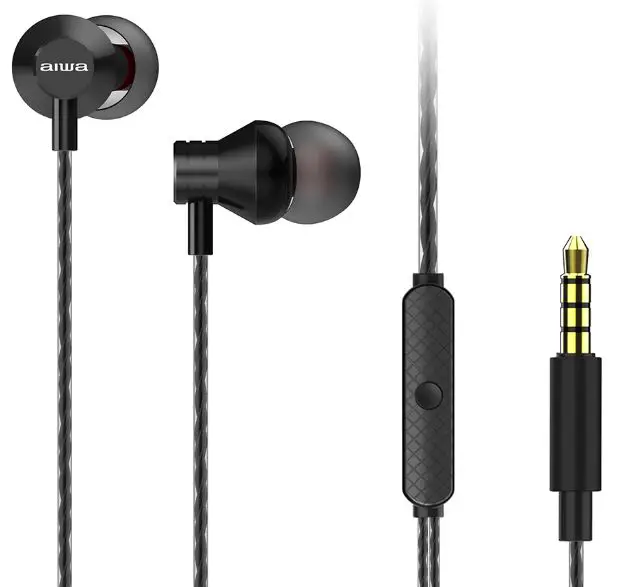
Specification
Model Number: ESTM-128
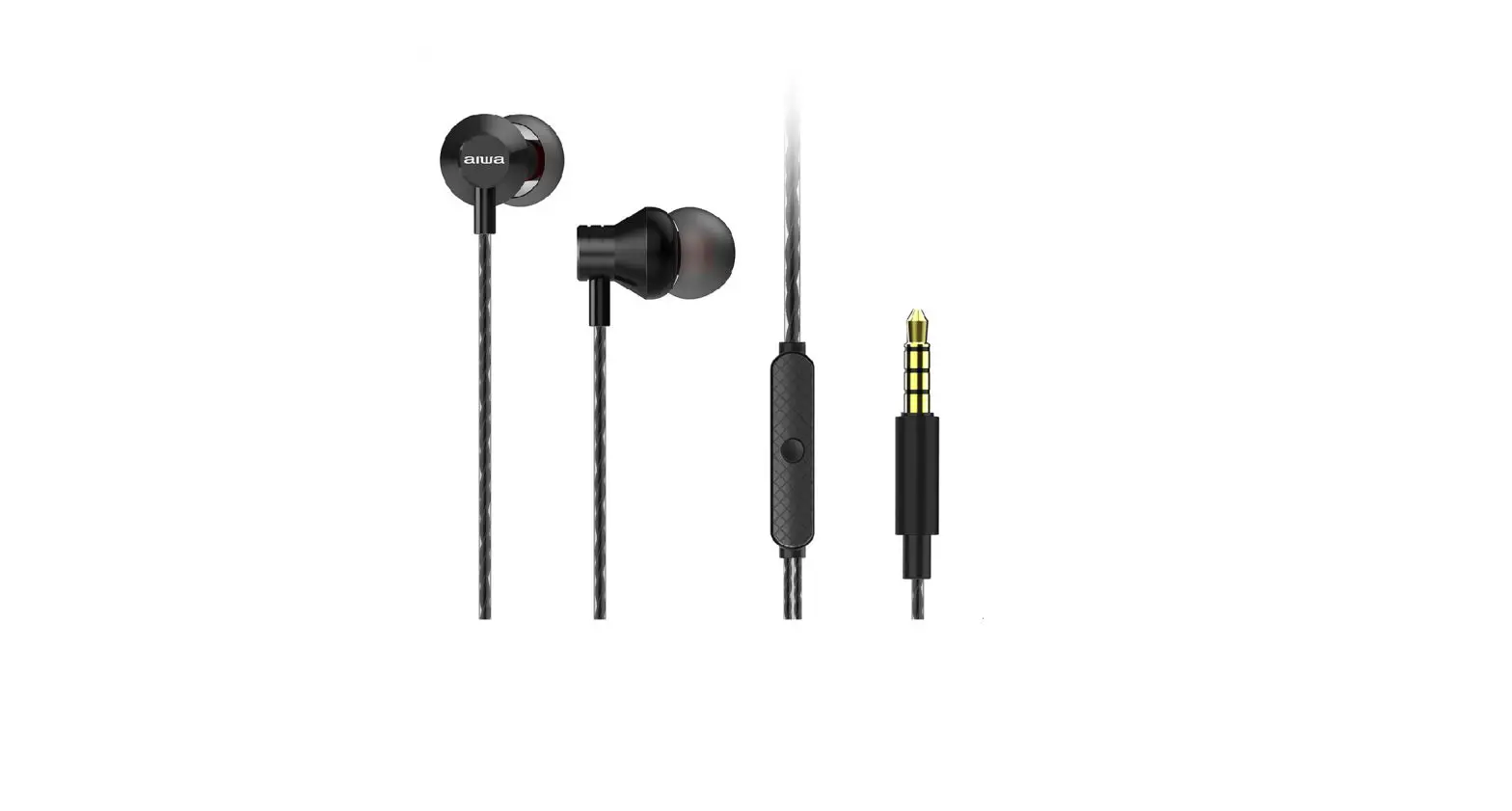
Product: Wired In-Ear Headphones
Cord Length: 1200 mm ± 20 mm
Plug: 3.5 mm gold plated plug
Impedance: 16Ω
Speaker Size: ∅10 mm
Rated Power: 3mW
Operation Voltage: 2.0V
Frequency: 20Hz~20KHz
Sensitivity: 100dB±3dB
Weight: 13.4g
Remote Control
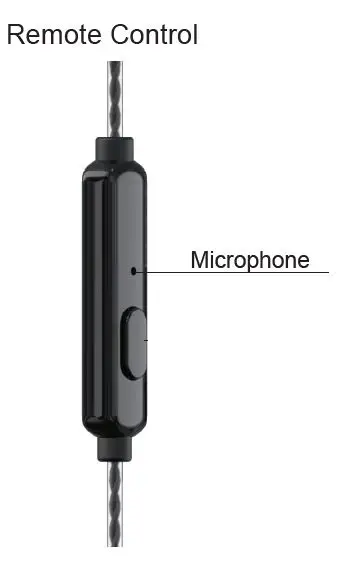
| Action | Result |
| Click Once | Play & Pause Music / Answer Incoming Call |
| Click Twice | Next Track |
| Triple Click | Previous Track |
| Long press (2-3 seconds) | Reject Incoming Call / Activate Siri |
Important Safety Notes
Make sure the volume of the music player is turned down before connecting your headphones. After connecting your headphones, gradually turn up the volume until you reach a comfortable listening level.
Noise levels are measured in decibels (dB), exposure to any noise at or above 85 dB may result in hearing loss. Monitor headphones usage. Hearing loss is a function of loudness versus time. This is the decibel (dB) table that compares some common sounds and shows how they rank in potential harm to hearing.
| SOUND | NOISE LEVEL | EFFECT |
| Whisper | 30 | very quiet |
| Quiet Office | 50~60 | Comfortable hearing levels are under 60 dB |
| Vacuum Cleaner / Hair Dryer | 70 | Intrusive; interferes with telephone conversations |
| Food Blender / Garbage Truck | 85~90 | 85 dB is the level at which hearing damage (8 hrs.) begins |
| Cement Mixer / Power Saw | 100 | No more than 15 minutes of unprotected exposure recommended for sounds between 90-100 dB. |
| Drill / Jackhammer | 110 | Regular exposure to sound over 100 dB of more than 1-minute risks permanent hearing loss. |
| Rock Concerts (varies) | 110~140 | The threshold of pain begins around 125 dB |
Earphones Tempering
Upon usage of new earphones, we strongly recommend tempering it by playing music for a period of 100-200 hours at a medium volume level.
Physiology of the Ear
For additional information, reference: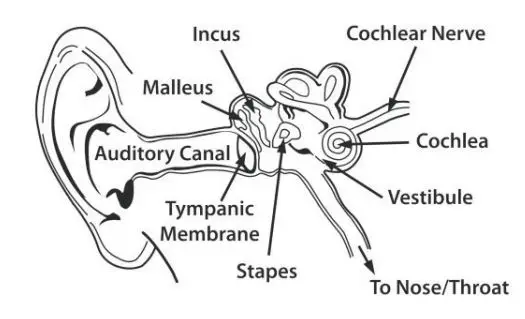
- Having the correct headphone side in the correct ear affects listening experience. Note the “L” and “R” markings on the side of each headphone. “L” is for the left ear. “R” is for the right ear.
- Excessive listening levels can cause permanent hearing damage. Avoid loud listening, especially for extended periods of time. Recommended listening to time is not more than 90 minutes.
Use Responsibly
Do not use headphones when it’s unsafe to do so – while operating a vehicle, riding a bike, crossing streets, or during any activity or in an environment where your full attention to your surroundings is required. It’s dangerous to drive while wearing headphones, and in many places, illegal because it decreases your chances of hearing life-saving sounds outside of your vehicle, such as another car’s horn and emergency vehicle sirens. Please avoid wearing your headphones while driving.
AIWA Electronics International Co., Ltd. Explore more at www.int-aiwa.com