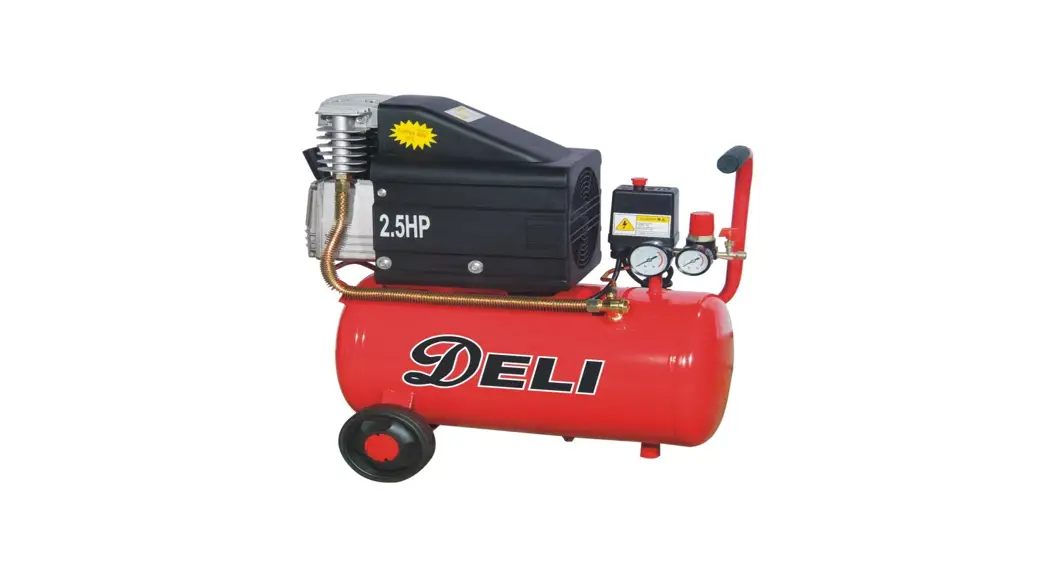
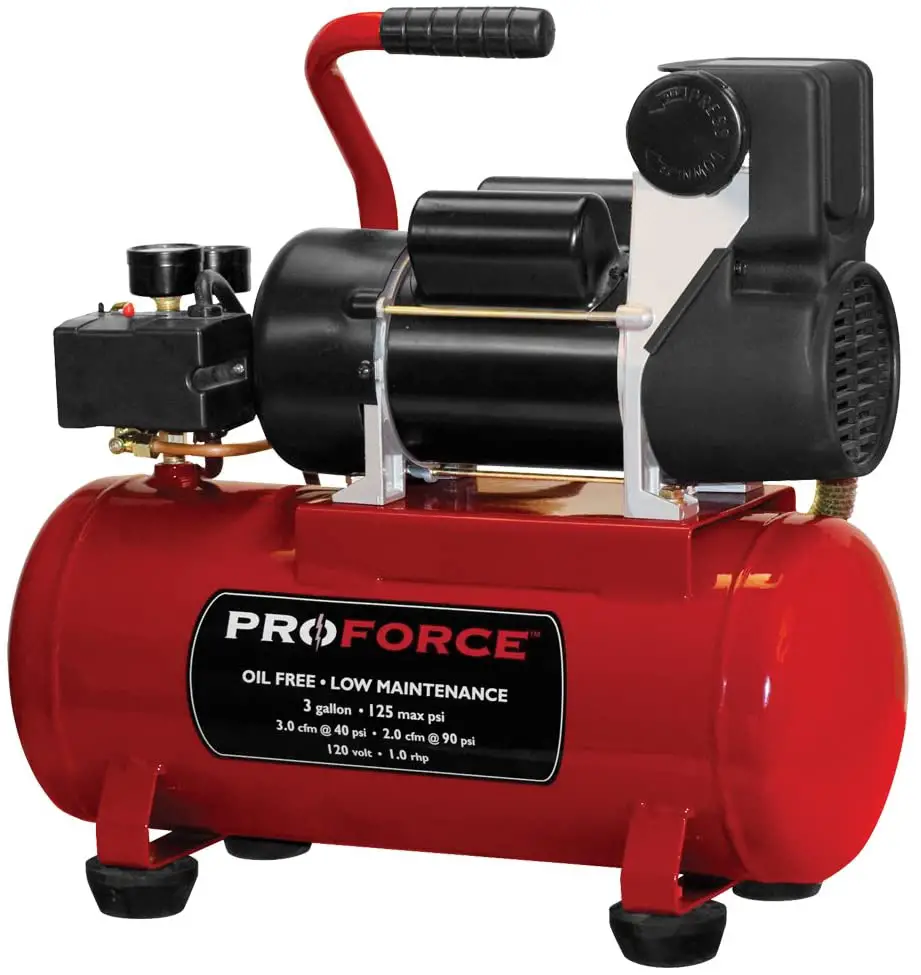
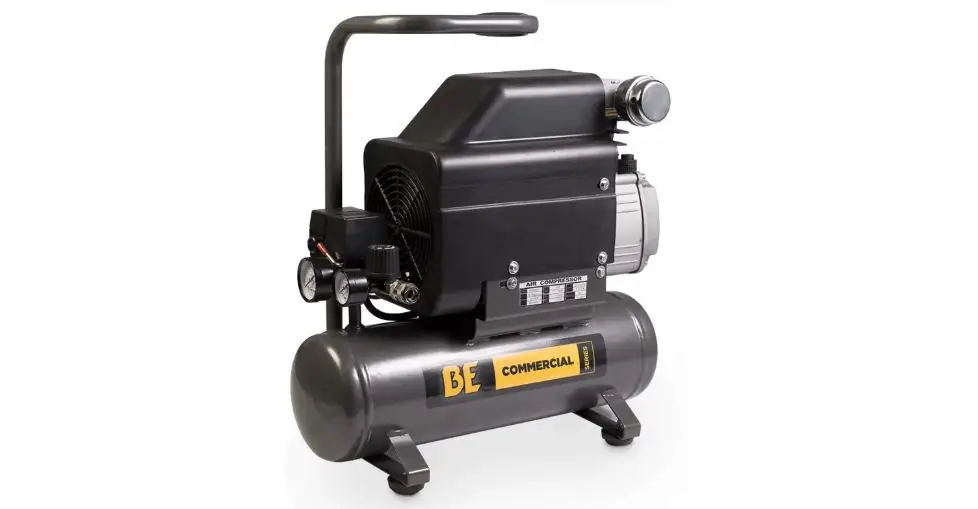
133753 Portable Quiet Electric Air Compressor
Product Information
Product Name: Portable Air Electric
Compressor
Power: 2.0 HP
Capacity: 5 Gallons
Airflow: 5.0 CFM
Oil-Free: Yes
Model: 133753
Product Usage Instructions
- Read the Manual: Before using the compressor,
carefully read and understand all safety and operational
instructions provided in the user manual. - Safety Precautions: Follow all safety rules
and precautions to reduce the risk of personal injury or property
damage. - Electrical Safety: Ensure the compressor is
used on a nominal 120V grounded circuit. Use a power cord equipped
with a grounding plug and verify that the compressor is plugged
into an outlet with the same configuration as the plug. Do not use
an adapter with this compressor. - Extension Cord: If using an extension cord,
keep it clear of the working area and ensure it will not get caught
on lumber, tools, or other obstructions. Check extension cords for
any damage before each use and replace immediately if damaged. Only
use extension cords listed by Underwriters Laboratories (UL). For
outdoor use, use an outdoor extension cord marked W-A or W to
reduce the risk of electric shock. - Minimum Gauge for Extension Cords: When using
120 volts, refer to the table in the manual to determine the
minimum gauge required for different cord lengths. Using cords with
a lower gauge than recommended is not recommended.
By following these instructions, you can safely and effectively
use the Portable Air Electric Compressor for your desired
applications.
If you have any further questions or concerns, please contact
our Customer Service at 1-800-645-2986.
User’s manual
Customer Service US: 1-800-645-2986
Manual del usuario
Servicio de atención al Cliente US: 1-800-645-2986
Manuel de l’utilisateur
Service à la clientèle Canada: 888-645-2986
Portable Air Electric Compressor, 2.0 HP, 5 Gal, 5.0 CFM, Oil-Free
Models: 133753
GENERAL SAFETY WARNINGS
IMPORTANT SAFETY INSTRUCTIONS
Read and understand all safety and operational instructions. Failure to follow the safety rules listed below and other basic safety precautions may result in serious personal injury. Keep this manual, sales receipts and applicable warranty forms for future reference.
SAFETY SYMBOLS
The purpose of safety symbols is to alert you of the potential safety RISKS. Recognize and understand them. Follow the instructions provided.
SYMBOL DANGER WARNING CAUTION
MEANING
Failure to obey a DANGER safety alert WILL result in serious personal injury or death to you or to others. Always obey all messages following this symbol to reduce the risk of serious personal injury or death.
Failure to obey a WARNING safety alert MAY result in serious personal injury or death to you or to others. Always obey all messages following this symbol to reduce the risk of potential serious personal injury or death.
Failure to obey a CAUTION safety alert MAY result in personal injury or property damage to you or to others. Always obey all messages following this symbol to reduce the risk of personal injury or property damage.
NOTICE
Notice indicates important information, that if not followed, may cause damage to equipment.
SPECIFIC SAFETY INSTRUCTIONS FOR 5 GAL AIR COMPRESSOR
SAVE THIS MANUAL FOR FUTURE REFERENCE
· The purpose of safety symbols is to attract your attention to possible dangers. The safety symbols, and the explanations with them, deserve your careful attention and understanding. The symbol warnings do not by themselves eliminate any danger. The instructions and warnings they give are no substitutes for proper accident prevention measures.
· Be sure to read and understand all safety instructions in this manual, including all safety alert symbols such as “DANGER”, “WARNING” and “CAUTION”, before using this compressor. Failure to follow all instructions listed below may result in electric shock, fire and/or serious personal injury.
SAFETY INSTRUCTIONS
WORK AREA SAFETY
· Keep your work area clean and well lit. Cluttered workbenches and dark areas invite accidents.
· Do not operate power tools in explosive atmospheres, such as in the presence of flammable liquids, gases, or dust. Power tools create sparks which may ignite the dust or fumes.
· Keep bystanders, children and visitors away while operating a power tool. Distractions can cause you to lose control.
· Make your workshop childproof with padlocks and master switches. Lock tools away when not in use.
· Make sure the work area has ample lighting so you can see the work and that there are no obstructions that will interfere with safe operation before using your power tool.
· Know your power tool. Read the operator’s manual carefully. Learn the power tools applications and limitations, as well as the specific potential hazards related to this tool.
· Stay alert, watch what you are doing and use common sense when operating a power tool.
· Do not use tool while tired or under the influence of drugs, alcohol or medication. A moment of inattention while operating power tools may result in serious personal injury.
1
5-Gallon Air Compressor
User Manual
· Dress properly. Do not wear loose clothing or jewelry. Pull back long hair. Keep your hair, clothing, and gloves away from moving parts. Air vents often cover moving parts and should also be avoided. Loose clothing, jewelry or long hair can be caught in moving parts.
· Avoid accidental starting. Be sure switch is in “OFF” position before plugging in. Do not carry tools with your finger on the switch. Carrying tools with your finger on the switch or plugging in tools that have the switch in the “ON” position invites accidents.
· Remove adjusting keys or wrenches before turning the tool “ON”. A wrench that is left attached to a rotating part of the tool may result in personal injury.
· Do not overreach. Keep proper footing and balance at all times. Proper footing and balance enables better control of the tool in unexpected situations.
· Always secure your work. Use clamps or a vise to hold work when practical. It is safer than using your hand and frees both hands to operate tool.
· Use safety equipment. Always wear eye protection. Dust mask, non-skid safety shoes, hard hat or hearing protection must be used for appropriate conditions.
· Do not use on a ladder or unstable support. Stable footing on a solid surface enables better control of the tool in unexpected situations.
TOOL USE AND CARE SAFETY
WARNING
Be sure to read and understand all instruction before operating this power tool. Failure to follow all instructions listed below may result in electric shock, fire and/or serious Personal injury.
· Always use clamps or other practical ways to secure and support the work piece to a stable platform. Holding the work by hand or against your body is unstable and may lead to loss of control.
· Do not force the tool. Use the correct tool and blade for your application. The correct tool and blade will do the job better and safer at the rate for which it is designed.
· Do not use the tool if switch does not turn it “ON” or “OFF”. Any tool that cannot be controlled with the switch is dangerous and must be repaired
· Disconnect the plug from the power source before making any adjustments, changing accessories or storing the tool. Such preventive safety measures reduce the risk of starting the tool accidentally.
· Never leave the tool running. Always turn it off. Do not leave the tool until it comes to a complete stop.
· Store idle tools out of the reach of children and other untrained persons. Tools are dangerous in the hands of untrained users.
· Maintain tools with care. Keep cutting tools sharp and clean. Properly maintained tools with sharp cutting edges are less likely to bind and are easier to control.
· Check for misalignment or binding of moving parts, breakage of parts, and the tool serviced before using. Many accidents are caused by poorly maintained tools.
· Use only accessories that are recommended for this tool. Accessories that may be suitable for one tool may become hazardous when used on another tool.
ELECTRICAL SAFETY
· Avoid body contact with grounded surfaces such as pipes,radiators, ranges, and refrigerators. There is an increased risk of electric shock if your body is grounded.
· Do not expose power tools to rain or wet conditions. Water entering a power tool will increase the risk of electric shock.
· Do not abuse the cord. Never use the cord to carry the tool or pull the plug from an outlet. Keep the cord away from heat, oil, sharp edges, and moving parts.
· Replace damaged cords immediately. Damaged cords increase the risk of electric shock.
NOTE
This compressor should be used on a nominal 120V grounded circuit. Use a power cord that is equipped with a grounding plug. Verify that the compressor is plugged into an outlet that has the same configuration as the plug. Do not use an adaptor with this compressor.
Grounded outlet
Plug
Grounding Pin
EXTENSION CORDS
CAUTION
Keep the extension cord clear of the working area. Position the cord so that it will not get caught on lumber, tools or other obstructions while you are working with a power tool.
WARNING
Check extension cords before each use. If damaged replace immediately. Never use tool with a damaged cord since toughing the damaged area could cause electrical shock, resulting in serious injury.
Use a proper extension cord. Only use cords listed by Underwriters Laboratories (UL). Other extension cords can cause a drop in line voltage, resulting in a loss of power and overheating of tool. When operating a power tool outdoors, use an outdoor extension cord marked “W-A” or “W”. These cords are rated for outdoor use and reduce the risk of electric shock.
MINIMUM GAUGE FOR EXTENSION CORDS
(When using 120 volts only)
Ampere Rating
Total Length Of Cord
More Than< >Less Than 25ft.
50ft.
100ft.
150ft.
0
6
18
16
16
14
6
10
18
16
14
12
10
12
16
16
14
12
12
16
14
12
Not Recommended
PRODUCT SPECIFICATIONS
Model No. Pump Motor Voltage/Amps/Hz Air Tank Capacity Maximum Pressure CFM@40 PSI CFM@90 PSI Power Cord
133753 Oil free 2 HP 120/15/60 5 Gallon (19 L) 225 PSI 6.5 5.0 SJT14AWG x 12 ft
2
5-Gallon Air Compressor
OVERVIEW
L AB C
D
K J
I
H
G
FE
User Manual
A.
Pressure Regulator
B.
Outlet Pressure Gauge
C.
Quick Coupler
D.
Motor & Pump
E.
Power Cord
F.
Power Switch
G. Cam Locks
H.
Drain Valve
I.
Sliding Handle
J.
Air Tank
K.
Safety Valve
L.
Tank Pressure Gauge
3
5-Gallon Air Compressor
User Manual
PRODUCT FEATURES
Electric Motor
The motor is used to power the pump. It is equipped with a thermal overload protector. If the motor overheats for any reason, the thermal overload protector will shut it down in order to prevent the motor from being damaged.
Air Compressor Pump
The pump compresses the air and discharges it into the tank via the piston that moves up and down in the cylinder.
Safety Valve
This valve is used to prevent the compressor from building too much pressure. If the pressure reaches the preset level of the motor, it will automatically pop open. You can also pull the ring on the valve to open manually.
Power Switch
The Switch turns the compressor on and off manually. Always set this switch to the OFF position when the compressor is not being used and before unplugging.
Pressure Regulator
The regulator is used to adjust the pressure inside the line to the tool that is being used. Turn the knob clockwise to increase the pressure and counter-clockwise to decrease the pressure.
Tank Pressure Gauge
The gauge measures the pressure level of the air that is stored in the tank. It cannot be adjusted by the operator and it does not indicate the pressure inside the line.
Outlet Pressure Gauge
The gauge measures the regulated outlet pressure.
Quick Coupler (Universal Coupler)
The quick coupler is connected to the 1/4″ (6.4 mm) NPT air hose.
Drain Valve
The drain valve is used to remove moisture from the air tank after the compressor is shut off.
Air Tank
The tank is where the compressed air is stored.
Power Cord
This compressor should be used on a nominal 120V grounded circuit. Use a power cord that is equipped with a grounding plug. Verify that the compressor is plugged into an outlet that has the same configuration as the plug. Do not use an adaptor with this compressor.
POSITIONING OF THE AIR COMPRESSOR
1. Position the air compressor 1near an electrical outlet 2 (FIG. A).
2. The compressor must be at least 12″(31cm) from any wall 3 or obstruction, in a clean, well-ventilated area to ensure sufficient air flow and cooling (FIG.A).
3. Place the air compressor on the floor or a hard level surface.
4. Connect the air hose 4 to the compressor’s quick coupler (universal coupler) C with the universal quick plug 5 (FIG. B).
NOTE
Attach air hose and accessories (not provided). Apply plumber’s tape on all the threads to prevent air leakage.
FIG.A
FIG.B
1
2
4
5 C
12″/31cm
3
OPERATING INSTRUCTIONS
CHECK SAFETY VALVE
Before starting compressor, pull the ring on the safety valve to make sure that the safety valve operates freely. If the valve is stuck or does not operate smoothly, contact a trained service technician(Fig. C).
1. Set the power switch to the OFF position (Fig. D). 2. Turn the air pressure regulator knob counter-clockwise
until it stops(Fig. E). 3. Attach hose and accessories (FIG. F).
ASSEMBLY
· Unpack the air compressor unit. Inspect the unit for damage. If the unit has been damaged, contact the retailer immediately.
· Check the air compressor’s identification label to ensure that you have purchased the intended model and that it has the required pressure rating for its intended use.
The carton should contain:
· Air compressor · Owner’s manual
NOTE
Risk of property damage. Do not operate in vertical position! Vertical position is for storage only!
4
5-Gallon Air Compressor
User Manual
WARNING
High pressure air could result in death or serious injury. Never operate above maximum operating pressure of the spray gun or tool.
WARNING
Hot compressor surfaces could result in serious injury. Allow compressor to cool before touching.
NOTICE
If the pump has been transported or turned upside down (even partially), allow the pump to sit in a normal, upright position (FIG. A) for approximately 10 minutes before starting. 4. Close the tank ball valve H . Plug-in the power cord E
(FIG. G). 5. Set the power switch to the ON position and allow the
tank pressure to build. Motor will stop when tank pressure reaches cut-out pressure (Fig H).
E H
4. Place a suitable container under the unit to catch any water. 5. Slightly tilt unit and turn drain valve counter-clockwise to open. 6. After the water has been drained,close the drain valve
(clockwise). The air compressor can now be stored.
MAINTENANCE
CAUTION
To avoid personal injury, DO NOT grab only the sliding handle I to lift the whole unit. If you want to lift the unit, please make sure you grab both the tank and sliding handle I . Use the following instructions to use the sliding handle I and wheels to move the unit. 1. Unlock the two cam locks G as shown in the illustration. 2. Slide the handle I upward to the desired height. 3. Lock the two cam locks G in place.
I
Unlock
G
SHUT DOWN
1. Set the power switch F to the OFF position.
2. Unplug the power cord E . 3. Reduce the pressure in the
tank through the outlet hose. Pulling the safety valve ring K and keeping it open will also reduce the pressure in the tank (Fig. I). 4. Set tank drain valve H to OFF to ensure tank is drained.
E
F KH
WARNING
Risk of serious eye injury from moisture and debris. Always wear ANSI Z87.1 safety goggles when opening drain valve.
WARNING
High pressure air could result in death or serious injury. Shut off unit unplug and release air pressure prior to servicing.
CAUTION
High pressure air containning water condensation could result in minor or moderate injury. Do not spray at any person.
DRAIN THE TANK
1. Set the power switch to the O (OFF) position. 2. Turn air pressure regulator knob counter-clockwise to set
the outlet pressure to zero. 3. Pull and hold ring on safety valve, allowing air to bleed from
the tank until air pressure is minimized.
5
ITEM
DESCRIPTION
SERVICE INTERVAL
Drain the tank
Through normal operation of your air compressor, condensation water will accumulate in the tank. To prevent corrosion of the tank from the inside, condensation must be drained at the end of every workday. Be sure to wear protective goggles. Relieve the air pressure in the system then open the drain valve on the bottom of the tank to drain. Under cold conditions it is especially important to drain the tank after each use to reduce the chance of problems resulting from the freezing of condensation water. NOTE: Refer to instructions on how to drain tank.
Daily
Check the valve
Pull/actiate the safety valve daily to ensure that it is operating properly and to clear the valve of any possible obstructions.
Daily
Test for leaks
Check that all connections are tight.
Small leaks in the tank, hoses,
connections or transfer tubes will
substantially reduce the air compressor
and tool performance. Spray a small amount of soapy water around the area
Monthly
of suspected leaks with a spray bottle.
If bubbles appear, repair: replace or reseal
the faulty component. Do not over-tighten
any connections.
Storage
Before storing the air compressor:
· Drain tank. · Use an air blow gun to clean all dust
and debris from the compressor. · Disconnect and wind up the power cord.
· Clean the ventilation openings on the motor enclosure with a damp cloth.
· Drain all moisture from the tank. · Pull the pressure safety valve to release
all pressure from the tank.
Prior to storing
· Cover the entire unit to protect it from moisture and dust.
· Store the air compressor in a clean and dry location.
· In cold weather, store the compressor
in a warm building when it is not in use. This will reduce problems related to starting the motor and the freezing of water condensation.
5-Gallon Air Compressor
User Manual
TROUBLESHOOTING
PROBLEM
POSSIBLE CAUSE
SOLUTIONS
The motor will not run or start.
The motor runs continuously when the power switch is in the ON position.
The power cord is not plugged in.
The power switch is in the O (OFF) position.
The extension cord is the wrong wire gauge or is too long.
Plug the power cord into a grounded outlet. Set the power switch to the ON position. Check extension cord information for the proper wire gauge and cord length.
The motor’s thermal overload protection has tripped.
Turn the air compressor off , unplug the power cord and wait until the motor has cooled down. Plug in the power cord only after the motor has cooled down, and wait for at least 15 minutes to make sure the thermal overload protector has recovered.
Replace the fuse or reset the circuit breaker.
A fuse has blown or a circuit breaker has been tripped.
Verify that the fuse has the proper amperage. Check for low voltage conditions.
Disconnect any other electrical appliances from the circuit or operate the compressor on a dedicated circuit.
The air tank pressure exceeds the preset power switch limit.
The motor will start automatically when the tank pressure drops below the cut-in pressure.
The safety valve is stuck open.
Clean or replace the safety valve.
Electrical connections are lose.
Contact an authorized service center.
The motor, capacitor, or safety valve is defective. Contact an authorized service center.
The power switch does not shut off the motor when the air compressor reaches the cut-out pressure and the safety valve activates.
The compressor’s capacity is not enough.
Set the power switch to the OFF position. If the motor does not shut off, unplug the air compressor. If the power switch is defective, replace it.
Check the air requirements of the accessory that is being used. If it is higher than the CFM (Cubic Feet per Minute ) and pressure supplied by the compressor, a larger capacity air compressor is needed. Most accessories are rated at 25% of actual CFM while running continuously.
The regulator does not regulate the pressure.
The regulator or its internal parts are dirty or damaged.
Replace the regulator.
There is a leak at one of the fittings.
Check the fittings with soapy water. Tighten or reseal leaking fittings (apply plumber’s tape on threads). Do not over tighten.
The drain valve is open.
Close the drain valve.
The pressure is low or there is not enough air.
The air intake is restricted. Prolonged excessive use of air. There is a hole in the air hose. The tank leaks.
Clean or replace the air filter element. Decrease the amount of air used. Check the air hose and replace it if necessary. Replace the tank immediately. Do not attempt to repair it. Replace the tank
The valve is leaking.
Check for worn parts and replace them if necessary. Check for worn parts and replace them if necessary.
There is moisture in the discharge air.
There is condensation in the air tank caused by a high level of atmospheric humidity or because the air compressor has not been running long enough.
Drain the air tank after each use. Drain the air tank more often in humid weather and use an air-line filter.
The compressor overheats.
The ventilation is inadequate. Cooling surfaces are dirty.
Relocate the compressor to an area with cool, dry and well-circulated air. Clean all cooling surfaces on the pump and the motor thoroughly.
The valve is leaking.
Replace worn parts and reassemble using new plumber’s tape.
6
5-Gallon Air Compressor
EXPLODED VIEW
User Manual
7
5-Gallon Air Compressor
PARTS LIST
ITEM 1 2
DESCRIPTION Power Cord Power Switch
3
Cushion Pad
4
Retainer
5
Left Shroud
6
Rubber Hose
7
Clamps
8
Pressure Regulator
9
Quick Coupler
10
Control Panel
11
Pressure Regulator Knob
12
Cam Lock (L)
13
Handgrip
14
Handle
15
Nut
16
Spring
17
Cam Lock (R)
18
Lock Nut
19
Plastic Washer
20
Lever
21
Rubber Aluminum Tube
22
Motor Pump Assembly
23
Air Filter
24
Right Shroud
25
Wheel
26
Motor Retaining Plate (Rear)
27
Cable Clip
28
Motor Retaining Plate (Front)
QTY. 1 1 3 1 1 1 2 1 2 1 1 1 1 1 2 2 1 2 2 2 1 1 1 1 2 1 1 1
ITEM 29 30 31 32
DESCRIPTION Steel Pipe Sheath Clamp Switch Box Pressure Gauge
33
Safety Valve
34
Elbow Fitting
35
Connection Cable
36
Pressure Switch
37
Check Valve
38
Drain Valve
39
Sliding Sleeve
40
Air Tank
41
Rubber Foot
101
Screw M5x14
102
Screw 1/4-20×31
103
Screw 10#x15
104
Screw M4x10
105
Bolt M5x12
106
Bolt M6x34
107
Screw ST3.9x16F
108
Screw 8#x9
109
Cotter Pin
110
Lock Washer5
111
Screw M5x6
112
Screw M8x8
113
Large Washer6
114
Bolt M6x16
8
User Manual
QTY. 2 1 1 2 1 2 1 1 1 1 2 1 2 6 3 3 1 9 2 6 2 2 2 2 2 2 2
5-Gallon Air Compressor
User Manual
WARRANTY
GLOBAL 5 GAL (19 L) AIR COMPRESSOR
If this compressor fails due to a defect in material or workmanship within 1 years from the date of purchase, return it to store with the original bill of sale for further analysis. This warranty does not include expendable parts including but not limited to blades, brushes, belts, light bulbs. This warranty covers defects in material or workmanship only. It does not cover normal wear and tear, failure due to abuse/misuse, or defects caused by careless or accidental mishandling. If this product is used for commercial or rental purposes, this warranty does not apply.
9