 SafeZone – User Manual
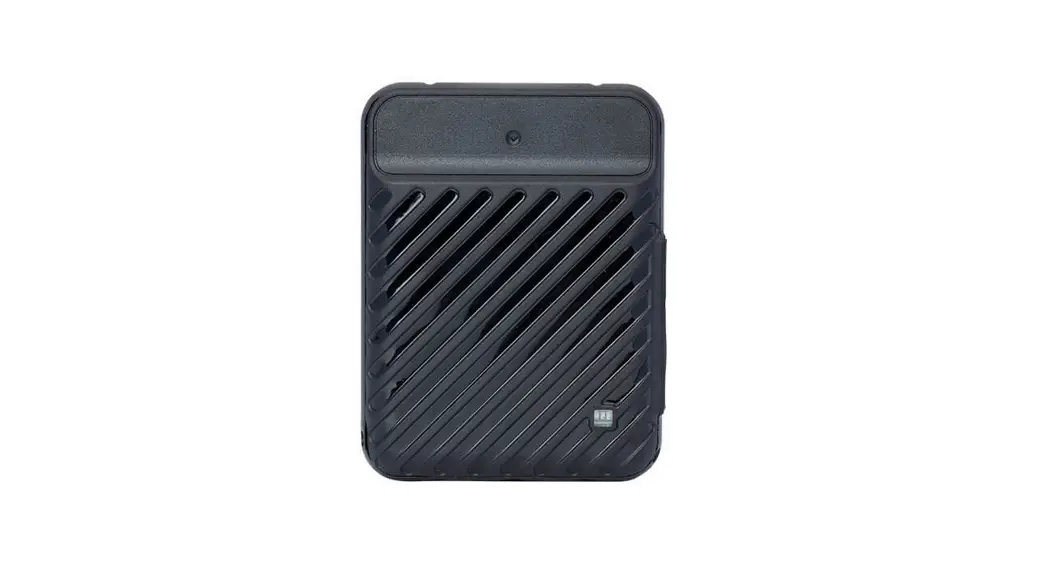
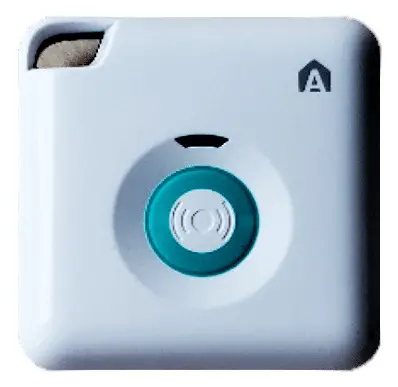
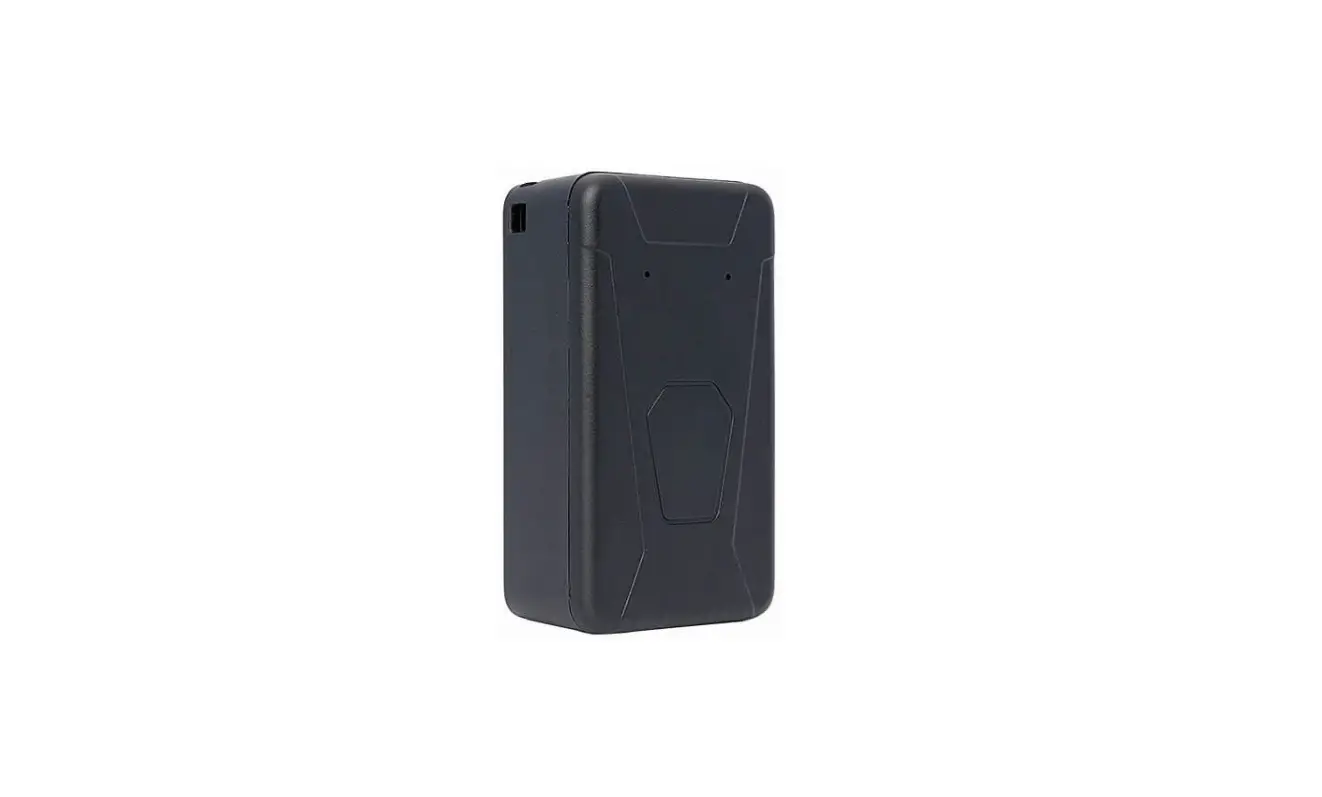
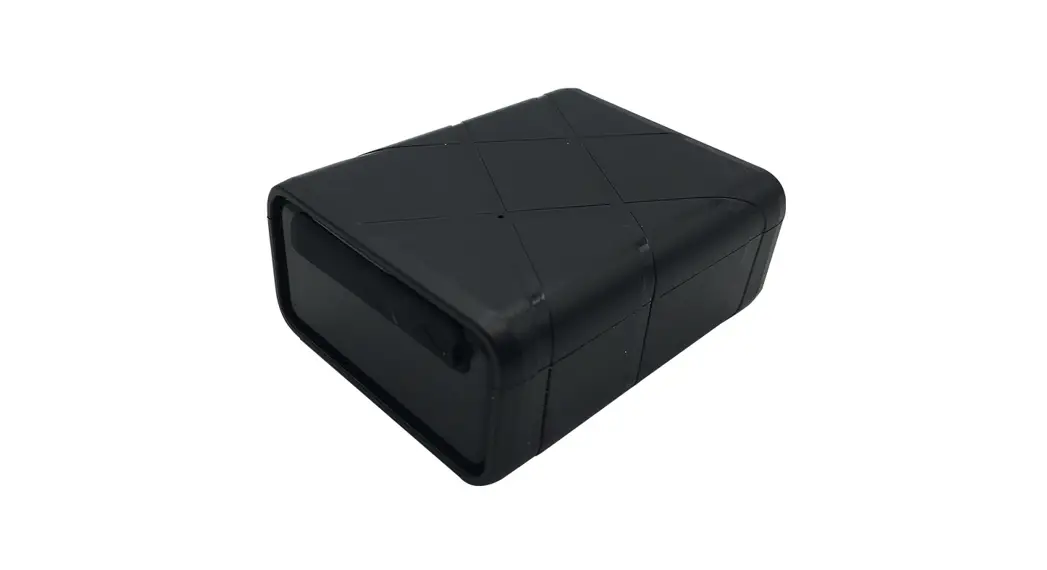
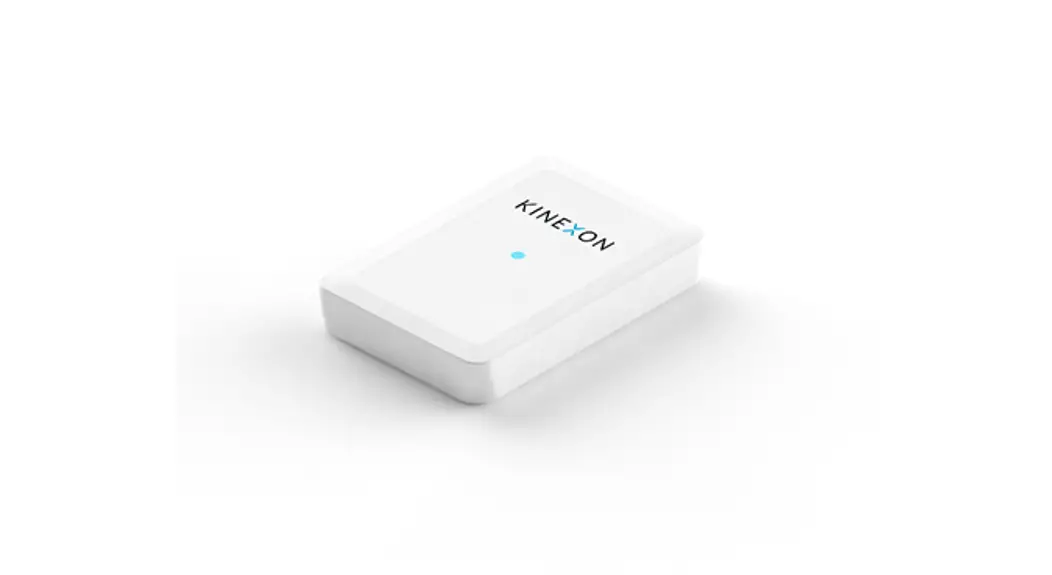
KNX-STAG1 SafeZone tracking device
KINEXON GmbH
Schellingstr. 35
80799 München
Tel.: +49 (0)89 / 200 61 65-0
[email protected]
http://www.kinexon.com
This document contains information that is the property of Kinexon GmbH. Reproduction is not permitted without the express written consent of the author. ([email protected]).
If you have any questions or suggestions concerning this document, please send the problem description by mail to KINEXON GmbH. We have taken utmost care in the preparation of this document and it contains accurate information to the best of our knowledge. KINEXON GmbH cannot however guarantee that this document is absolutely free of errors.
Copyright 2020 KINEXON GmbH. All rights reserved
THE KINEXON SafeZone Tag 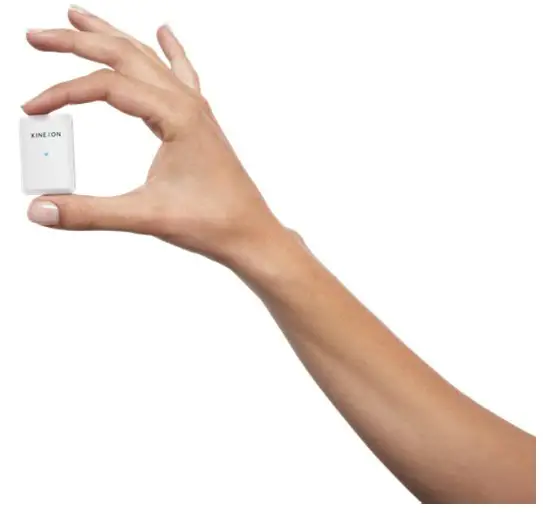
KINEXON SafeZone
The smart wearable ensures physical distancing
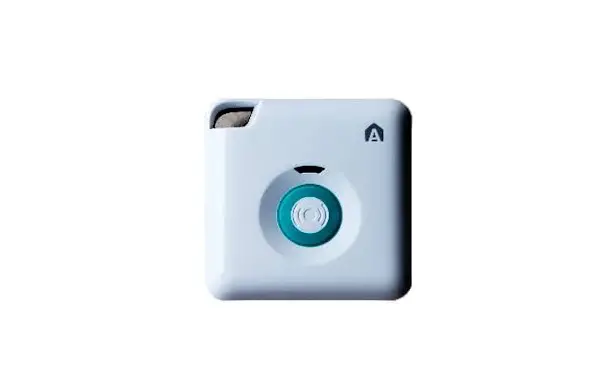
| The KINEXON SafeTag is the heart of the KINEXON SafeZone solution. KINEXON SafeZone is a data protection-compliant solution for companies to ensure physical distancing of employees in times of COVID-19 and trace contact chains in case of an infection. The sensors measure the distance and contact duration between the workers with the highest precision (10 cm) at a rate of approx. once per second. The measurement takes place in real-time. If the minimum distance between two employees is compromised for an extended period of time (customizable) the sensors will emit a light signal and an audible warning tone. Wearing options for employees:
| Use Cases Distance control and tracing of contact chains:
KINEXON SafeZone can be used both indoors and outdoors. |
KEY FACTS
| RF Specifications | |
| Distance measuring | Time-of-flight measurement (peer-to-peer), Radio-based, Ultrawideband |
| Frequency range | UWB (IEEE 802.15.4): 6.25 – 6.75 GHz |
| Update rate | Default 1 Hz (depending on battery lifetime requirements) |
| Measuring precision | 10 cm (depending on environment) |
| Physical Specifications | |
| Indicators | Bright status LED (RGB) – free color selection |
| Inertial Measurement | 9-axis, +/-16 g, +/- 2000 °/s, up to 200 Hz and Magnetometer |
| Sound Volume | up to 70 dBa (1m) – freely configurable |
| Storage Capacity | 128 MB |
| Battery | Internal rechargeable Li-battery |
| Battery Lifetime | 12 hours (typical usage) |
| Battery charging | 1.5 hours (to 100%) in the KINEXON charging cradle |
| External Power supply | 3.3 V – 5.5 V (optional) |
| Material | ABS |
| Weight | 15.4 g |
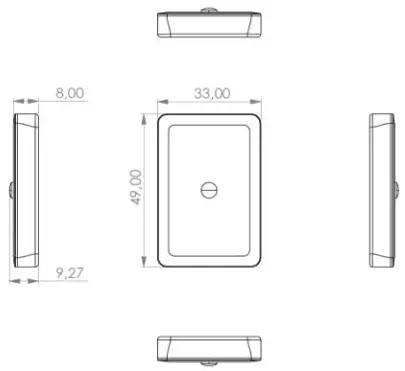
| Dimensions | 49 x 33 x 8 mm |
| Environmental Specifications | |
| Operating Temperature | Charging: 0°C to +45°C Discharging: -20°C to 60°C |
| Storage Temperature | (+10 °C to )+ 25 °C (battery) |
| Cleaning | Possible to disinfect with Ethanol-containing disinfecting solutions from 40-96% of Ethanol (only surface cleaning – no immersing!) Do not use methanol, isopropanol, or isopropyl alcohols for cleaning! |
| Water repellent | The tag can be wiped wet with water (no immersing!) |
| Protection class | IP65 |
| Regulatory compliance | US: FCC Part 15 Subpart C (15.250); European Union: ETSI EN 302 065-1, ETSI EN 303 883, ETSI EN 301489-1, ETSI EN 301489-17, ETSI EN 301489-33, EN 62311, 1999/519/EC, EN 62368-1 FCC ID: 2ALC5-KNX-STAG1 IC: 25557-KNXSTAG1 |
SPECIFICATIONS
3.1 Mechanical Drawing
 3.2 Label
3.2.1 Label backplate
| Company logo RUI Device part-no. Certification logos/signs | 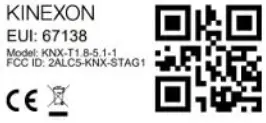 EUI:67138 | QR code |
Size: (13.8x 28.8) mm
3.3 External interfaces
3.3.1 Wireless connection
For a wireless connection, the Ultra-Wideband (UWB) interface according to IEEE 802.15.4 is implemented.
3.3.2 Tag Button
| Description | Duration | Effect |
| Short (normal) press | 150ms | Depends on configuration: 1) Nothing 2) Switches to “No alarm mode” for a configurable time (default = 5 minutes) |
| Long press | 3s | |
| Very long press | >7.5s | Hard reset / HW reset |
3.3.3 Tag LED
Please mind that tag LED behavior depends on the firmware use case one has selected. The most important versions are:
| Power-on Reset | ||
| Color | Duration | Explanation |
| Yellow (pulsating) | 6 sec | SafeTags restart after the charging pad is connected to power. |
| USB Interaction | ||
| Color | Duration | Explanation |
| Cyan | depends | During usb data read-out or usb configuration. |
| When connected to power | ||
| Color | Duration | Explanation |
| Green | Cont. | Fully charged. |
| Red | Cont. | Charging |
| LED during operation (without being in alarm mode) | ||
| Color | Duration | Explanation |
| Blue | 500ms | Every 10 sec in order to show the user, that SafeTag is still working. |
| Red | Cont. | Error (e.g. RTC not set) |
| LED in alarm mode | ||
LED behavior during proximity events (=” alarm mode”) can be configured within the Exposure Management Software:
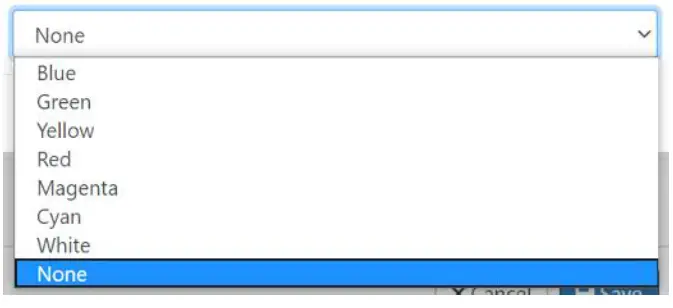
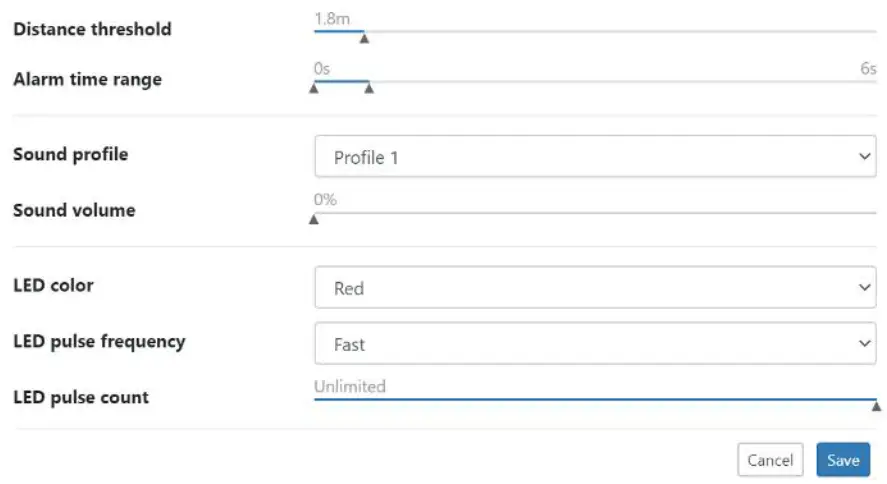 Options for field “LED color”:
3.3.4 Tag Sound
| Sound Trigger | Sound Profile | Explanation |
| Button Press | 4 different consecutive tones (approx. 1-2 sec) | Switches to “No alarm mode” for a configurable time (default = 5 minutes). Button press functionality can also be disabled within the software. |
| Alarm Mode | Sound behavior during proximity events (=” alarm mode”) can be configured within the Exposure Management Software: 3 different sound profiles are available: 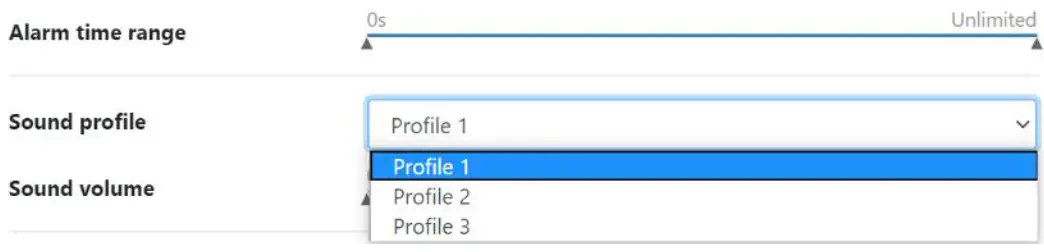 | |
3.4 Electrical Parameters
| Interface | Parameter [ Unit] | Min | Typical | Max | Comment |
| Power supply | Input Voltage [V] | 5 V | |||
| Input Current [mA] | 200 mA | Charging |
3.5 Battery
| A Lithium Polymer rechargeable battery is used | |
| Type | LP502028 |
| Nominal Voltage | 3.7V |
| Capacity | 250mAh |
| Max continuous discharge current | 500mA |
| Max charge current | 250mA |
| Max. charge voltage | 4.2V |
| Operating temperature charge | 0°C to +45°C |
| Operating temperature discharge | -20°C to +60°C |
| Size | 30.5mm x 20.5mm x 5.5mm |
3.6 Variants
| Variant | Description |
| KNX-T1.8-5.1-1 | Safework-Tag |
Accessories
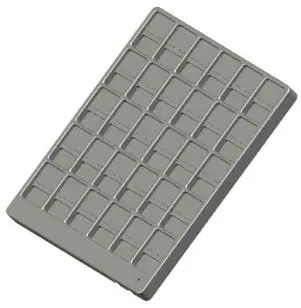
4.1 Charger 30:
 4.2 Charger 15:
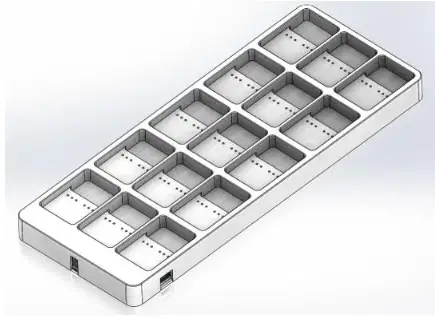 4.3 Single-Slot charger:
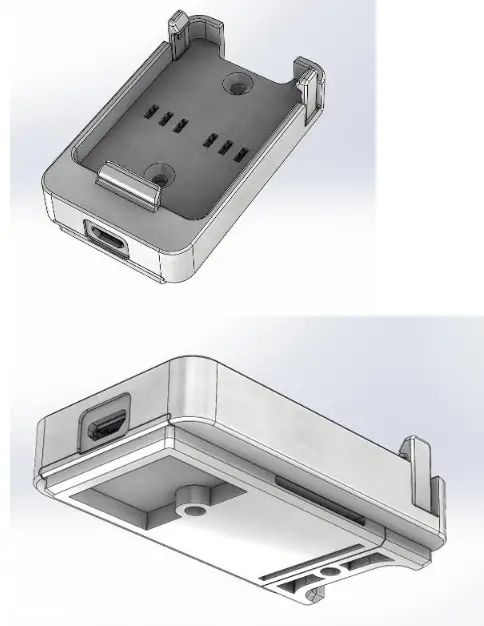 4.4 Holder:
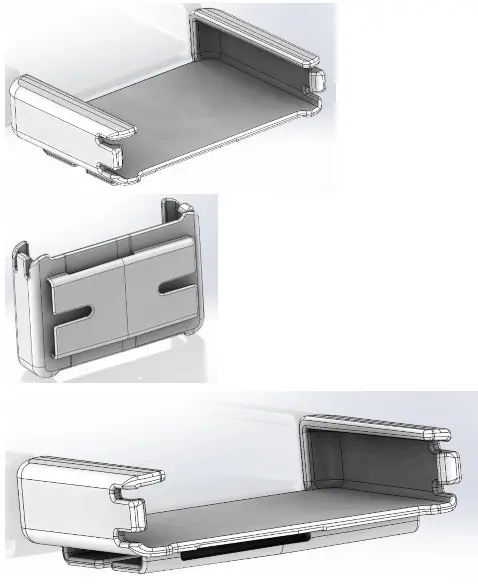
Mounting options
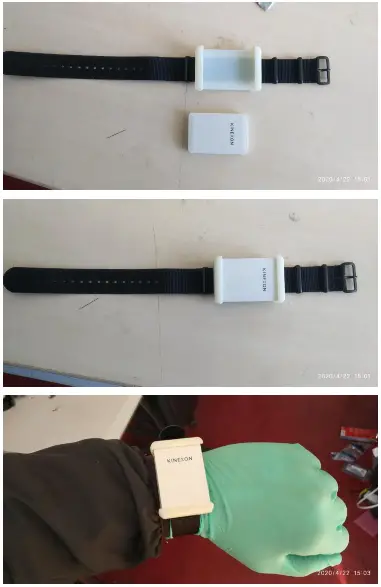
5.1 Regulatory and Legal Information
The Kinexon SafeTag has been designed to be in compliance with both the U.S. FCC Part 15 subpart F regulations, section 15.250, and with the European Union ETSI EN 302 065 standards. Two different versions of the Kinexon SafeTag are available, one version supports the FCC emissions mask (Region 1) and the second supports the ETSI
standard mask (Region 2).
5.2 Disclaimer
The information in this document is subject to change without notice. Kineton GmbH assumes no responsibility for inaccuracies or omissions and specifically disclaims any liabilities, losses, or risks, personal or otherwise, incurred as a consequence, directly or indirectly, of the use or application of any of the contents of this document. For the
latest documentation, contact Kinexon GmbH.
5.3 Intended Use
This manual describes the setup and use of the Kinexon SafeTag. Use this product only for the purpose it was designed for.
5.4 FCC Compliance
This device complies with 47 CFR Part 15 of the FCC Rules. Operation is subject to the following two conditions: (1) This device may not cause harmful interference, and (2) this device must accept any interference received, including interference that may cause undesired operation. The user is cautioned that changes or modifications not expressly approved by the party responsible for compliance could void the user’s authority to operate the equipment. This device may not be employed for the operation of toys. Operation on board an aircraft, a ship or a satellite is prohibited. The use of this device mounted on outdoor structures, e.g., on the outside of a building or on a telephone pole, or any fixed outdoor infrastructure is prohibited. Moreover, the following statements apply:
Note: This equipment has been tested and found to comply with the limits for a Class B digital device, pursuant to part 15 of the FCC Rules. These limits are designed to provide reasonable protection against harmful interference in a residential installation. This equipment generates, uses, and can radiate radio frequency energy and, if not installed and used in accordance with the instructions, may cause harmful interference to radio communications.
However, there is no guarantee that interference will not occur in a particular installation. If this equipment does cause harmful interference to radio or television reception, which can be determined by turning the equipment off and on, the user is encouraged to try to correct the interference by one or more of the following measures:
- Reorient or relocate the receiving antenna.
- Increase the separation between the equipment and receiver.
- Connect the equipment to an outlet on a circuit different from that to which the receiver is connected.
- Consult the dealer or an experienced radio/TV technician for help.
5.5 FCC Caution
Changes or modifications not expressly approved by the party responsible for compliance could void the user’s authority to operate the equipment. This device is designed not to exceed the limits for exposure to radio waves adopted by the FCC. These limits include a substantial safety margin design to assure the safety of all persons, regardless of age and health. The radio wave exposure guidelines use a unit of measurement known as the Specific Absorption Rate (SAR). SAR levels have been computed for the transmitters in this device and have been found to be below FCC limits.
5.6 ISED Caution
This device contains license-exempt transmitter(s)/receiver(s) that comply with Innovation, Science and Economic
Development Canada’s license-exempt RSS(s). Operation is subject to the following two conditions:
- This device may not cause interference
- This device must accept any interference, including interference that may cause undesired operation of the device.
These devices are not permitted for operation on board aircraft or satellites and shall also not be used for operating toys. The use of this device mounted on a fixed outdoor infrastructure, including antennas mounted on outdoor structures such as poles or buildings, is not permitted, except for operation on board ships or land vehicles.
5.7 Safety Information
- Read and follow all instructions before using the Kinexon SafeTag.
- Never open the case of the Kinexon SafeTag. There are no user-serviceable parts or replaceable parts inside the case.
- Do not use the Kinexon SafeTag if it has been damaged.
 Precise Real-time locating combined with innovative analyses