
C4D-2GEUAB_V6
INSTALLATION GUIDE
V 1.1
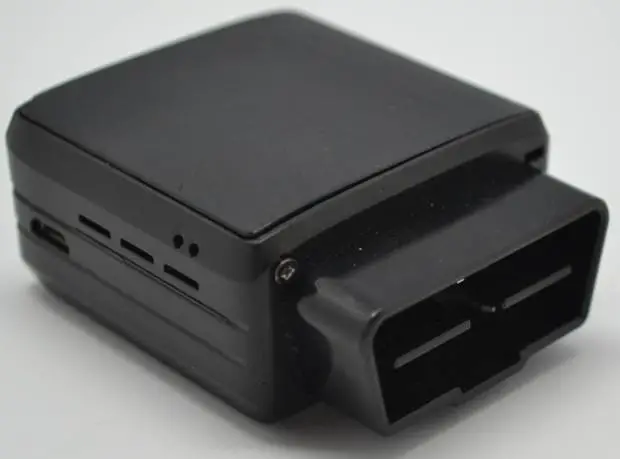
Preface
The information contained in this installation guide is subject to changes in order to improve the reliability, design, or features without prior notice. Mobile devises Ingénierie reserves the right to make changes in the content without obligation to notify any person or organization of such changes or improvements. Mobile devises Ingénierie can in no event be held liable for technical or editorial errors or omissions herein, nor for incidental, special or consequential damages from the furnishing, performance, or use of this installation guide.
Please contact our technical support for current updates and supplemental information concerning the use and operation of this or other Mobile Devices Ingénierie products.
Warnings and notices
The exclamation point within an equilateral triangle is intended to alert the user to the presence of important operating and maintenance (servicing) instructions in the literature accompanying the product.
Please read the installation guidelines, as well as the safety and operating instructions before operating your device. Follow all instructions and heed all warnings in the installation guide.
There is a risk of explosion if the battery is replaced by the wrong battery type. Please discard empty batteries according to local regulations.
FCC Regulations
This device complies with part 15 of the FCC Rules. Operation is subject to the following two conditions: (1) This device may not cause harmful interference, and (2) this device must accept any interference received, including interference that may cause undesired operation.
This device has been tested and found to comply with the limits for a Class B digital device, pursuant to Part 15 of the FCC Rules. These limits are designed to provide reasonable protection against harmful interference in a residential installation. This equipment generates, uses, and can radiate radio frequency energy and, if not installed and used in accordance with the instructions, may cause harmful interference to radio communications. However, there is no guarantee that interference will not occur in a particular installation If this equipment does cause harmful interference to radio or television reception, which can be determined by turning the equipment off and on, the user is encouraged to try to correct the interference by one or more of
the following measures:
-Reorient or relocate the receiving antenna.
-Increase the separation between the equipment and receiver.
-Connect the equipment into an outlet on a circuit different from that to which the receiver is connected.
-Consult the dealer or an experienced radio/TV technician for help.
Caution: Changes or modifications not expressly approved by the party responsible for compliance could void the user‘s authority to operate the equipment.
FCC RF Exposure Information (SAR)
This device is designed and manufactured not to exceed the emission limits for exposure to radiofrequency (RF) energy set by the Federal Communications Commission of the United States.
During SAR testing, this device is set to transmit at its highest certified power level in all tested frequency bands and placed in positions that simulate RF exposure in usage near the body with the separation of 15 mm. Although the SAR is determined at the highest certified power level, the actual SAR level while operating can be well below the maximum value. This is because the device is designed to operate at multiple power levels so as to use only the power required to reach the network. In general, the closer you are to a wireless base station antenna, the lower the power output.
The exposure standard for wireless employs a unit of measurement known as the Specific Absorption Rate or SAR. The SAR limit set by the FCC is 1.6W/kg.
The FCC has granted an Equipment Authorization for this model device with all reported SAR levels evaluated as in compliance with the FCC RF exposure guidelines. SAR information on this model device is on file with the FCC and can be found under the Display Grant section of www.fcc.gov/oet/ea/fccid after searching on FCC ID: A6GC4D-2GEUV6.
For this device, the highest reported SAR value for usage near the body is 0.97 W/kg.
While there may be differences between the SAR levels of various devices and at various positions, they all meet the government requirement.
SAR compliance for body operation is based on a separation distance of 15mm between the unit and the human body.
Hardware features
| OBD Dongle | ||
| Performance | Processor | Cortex AS – 500MHz |
| RAM | 128 Mbytes | |
| NAND Flash | 256 Mbytes | |
| Power supply | External power supply range | 8-18V |
| External voltage measurement | • | |
| Li-pol battery | 450mA.h | |
| Communication | Modem | 2G QUAD Data module (u-Blox SARA-G450) |
| Modem antenna | Internal | |
| Positioning | GNSS receiver | U-Blox M8 (GPS, GLONASS) |
| GNSS antenna | Internal | |
| Interface & Telematics features | USB (2.0 Host) | powered (100mA on 5V minimum) optional |
| 3D Accelerometer | ±2g, ±4g, ±6g, ±8g, ±16g | |
| 3 axis Gyroscope | Optional, please contact us | |
| OBD protocols | CAN, KWP2000, VPW, PWM | |
| Additional CAN interface | Optional, please contact us | |
| Environmental | Connectors | OBD connector |
| Mini USB | ||
| Operating temperature * | 25/+60°C (without battery) -25/+55°C (with battery) | |
| Dimensions | With OBD connector: 27×60,5×49,5 mm Without OBD connector: 27x48x49,5 mm | |
| SIM card | Slot |
* Please read the warnings section at the beginning of the installation guide
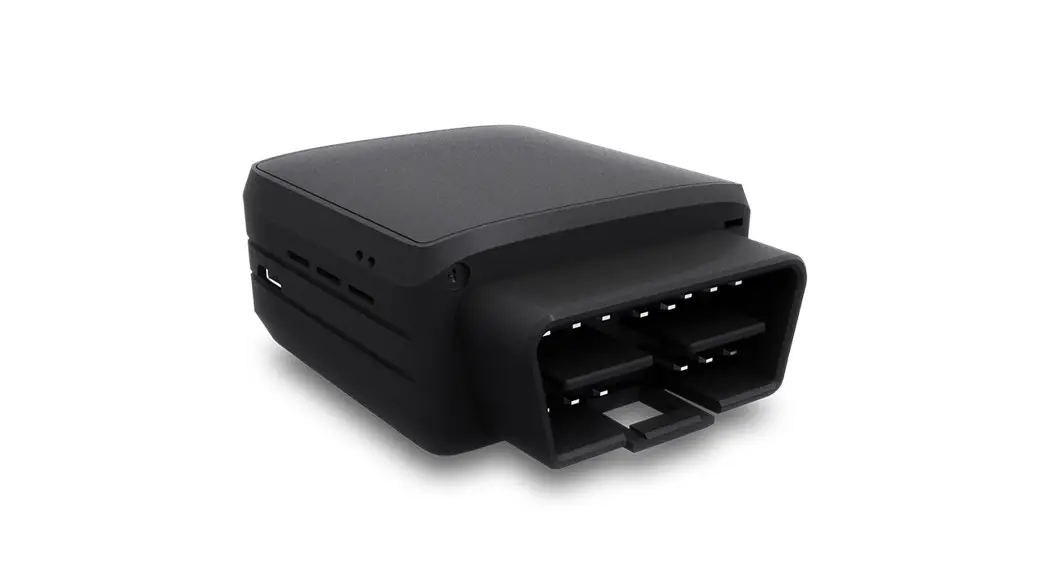
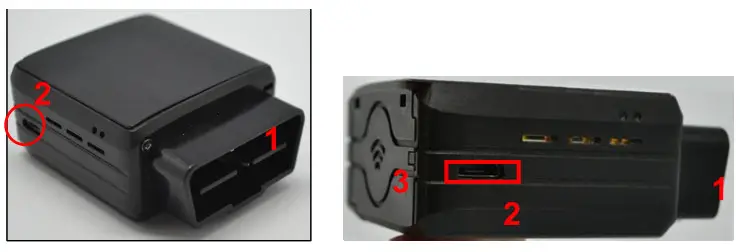
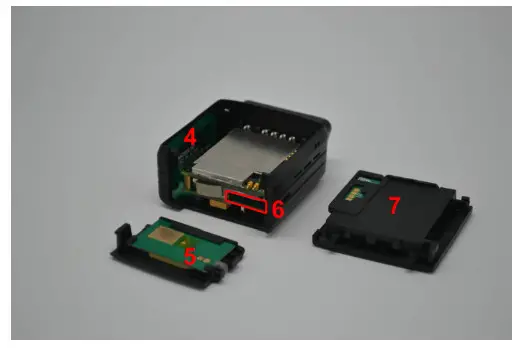
Hardware description
External view
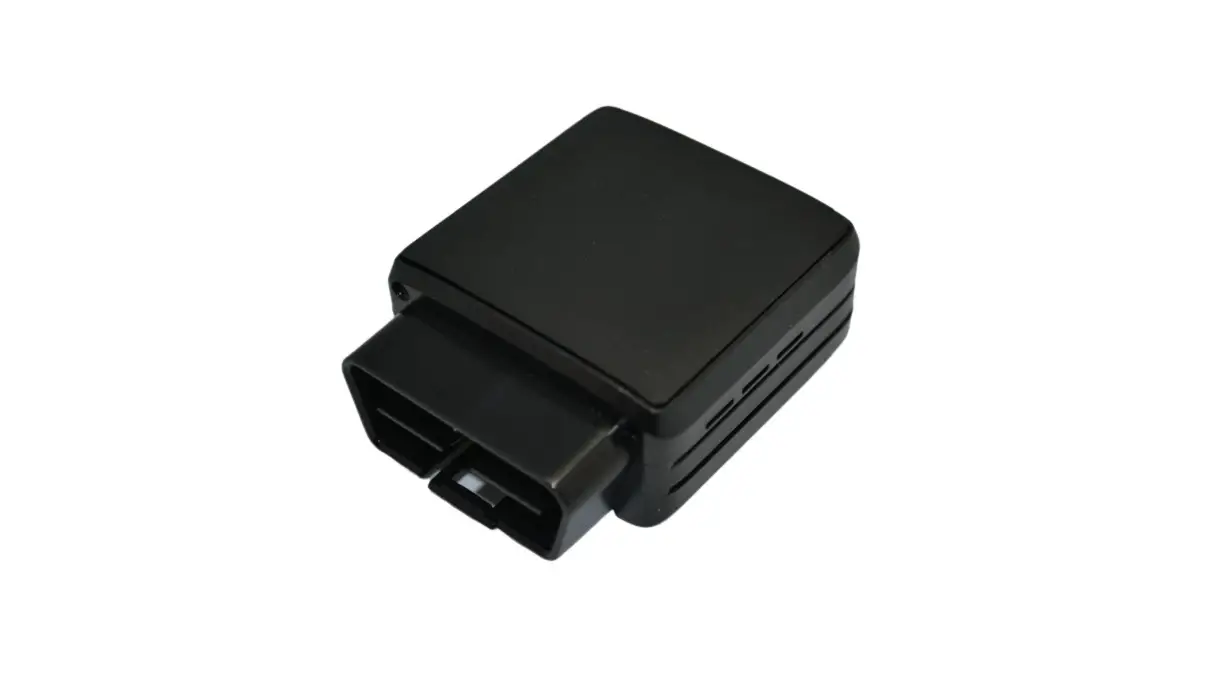
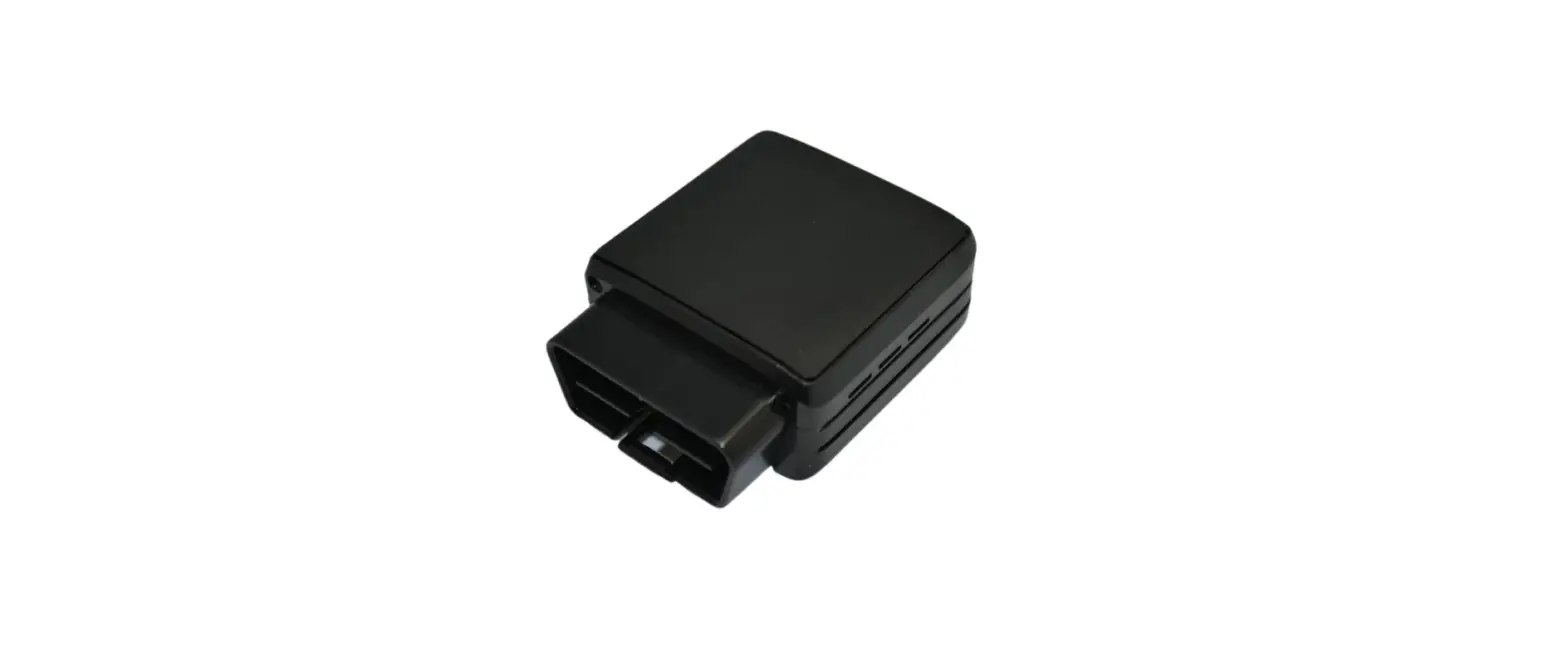
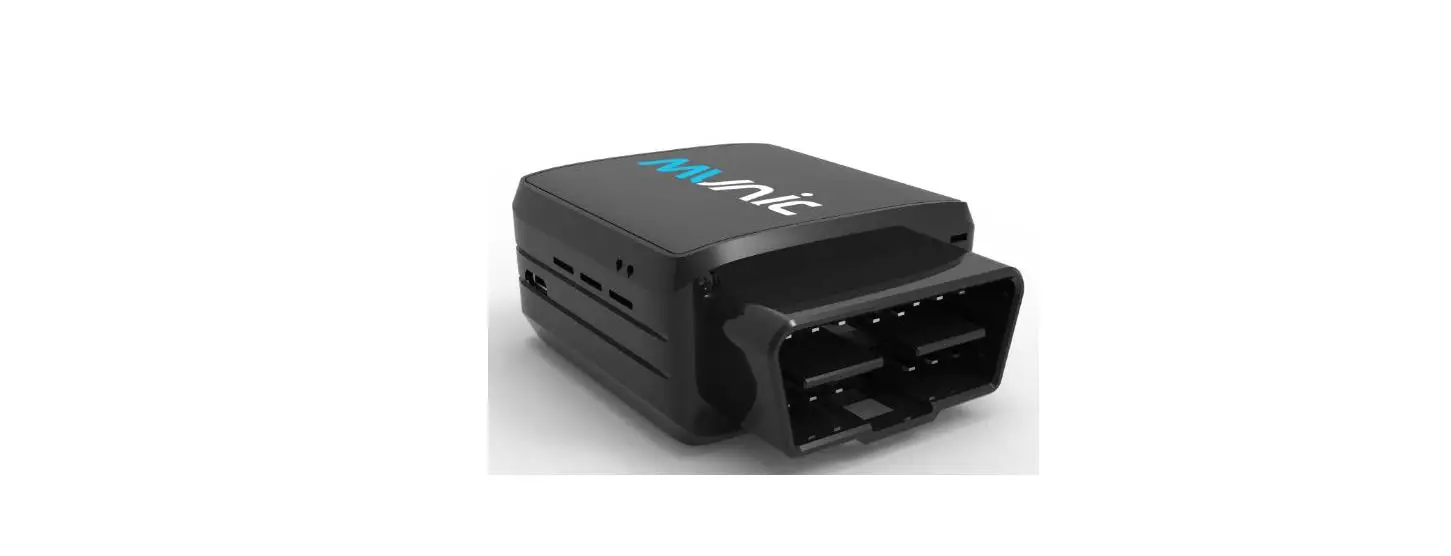
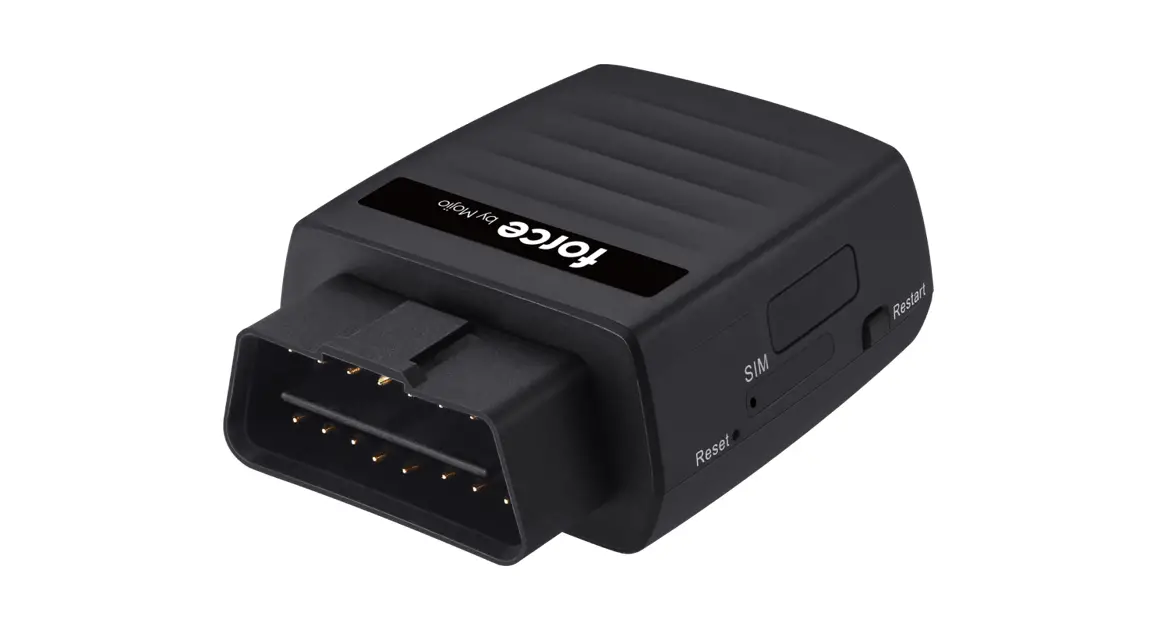
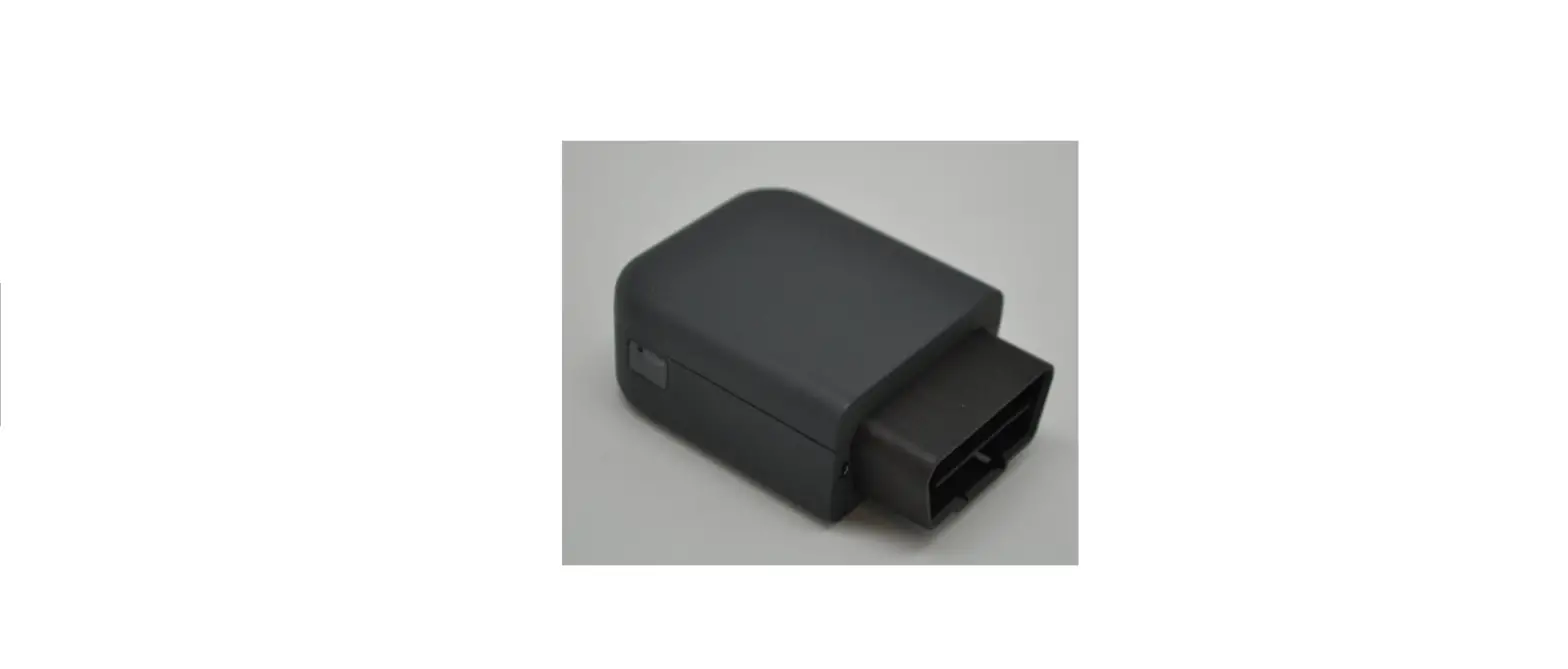
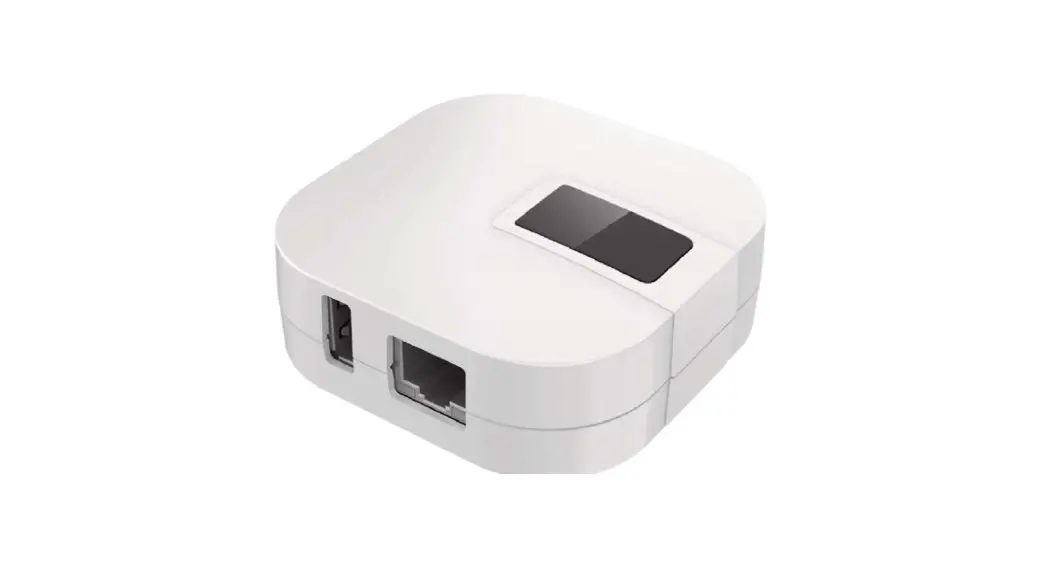
- ODB connector
- micro USB connector
- LED

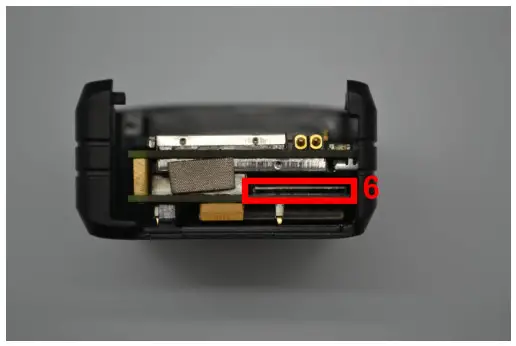
Internal view
- Modem antenna

- GNSS antenna
- SIM holder
- Internal battery*
* Please read the warnings section at the beginning of the installation guide
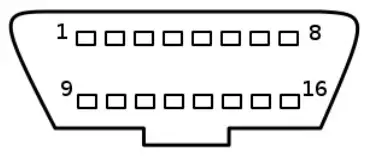
OBD connector pinout
| Pin # | Comment |
| 2 | J1850+ (PWMNPW) |
| 4 | Chassis ground |
| 5 | Signal ground |
| 6 | CAN High |
| 7 | Kline |
| 10 | J1850- (PWM) |
| 14 | CAN low |
| 15 | L line |
| 16 | Battery voltage |
Preparing/installing the device
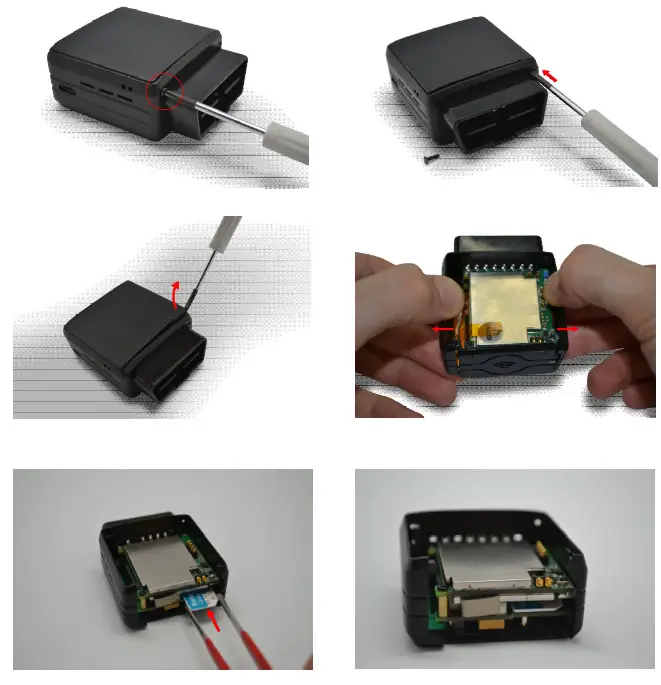
Open the device to insert a SIM card
Properly close the device
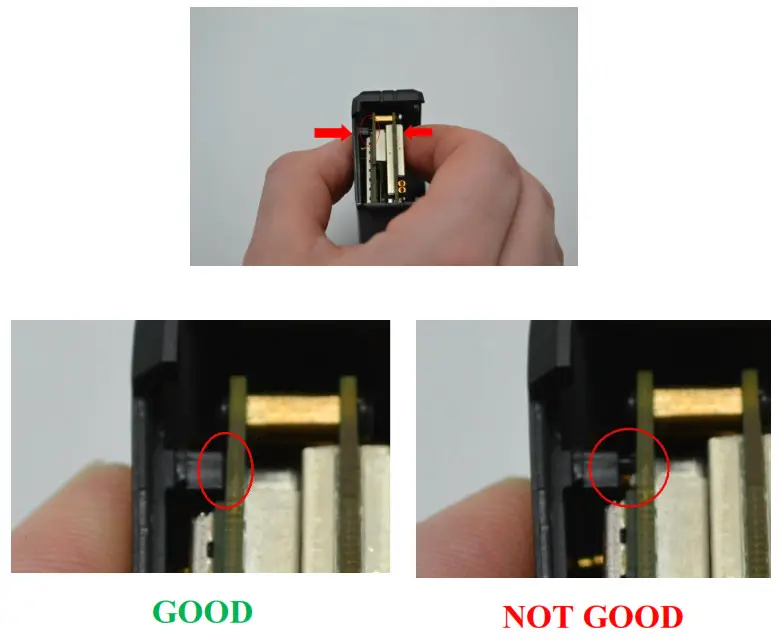
First, check that the hole of the electronic card is correctly inserted in the plastic part.
If it’s not inserted proceed as shown below.
Second, insert the GPS antenna as shown below.
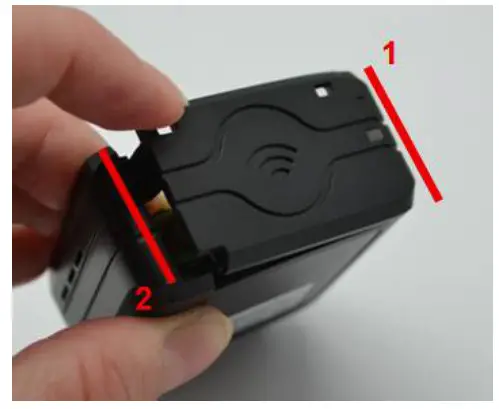
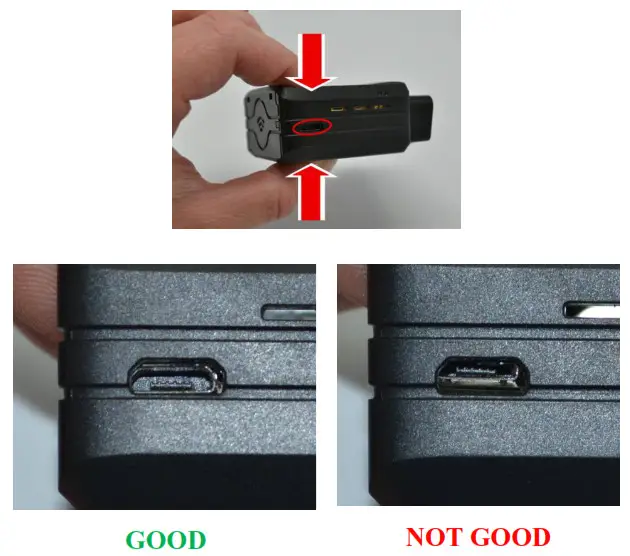
Third, check that the micro USB port is correctly inserted in its place.
If it’s not inserted proceed as shown below.
Finally, insert the battery and place the screw.
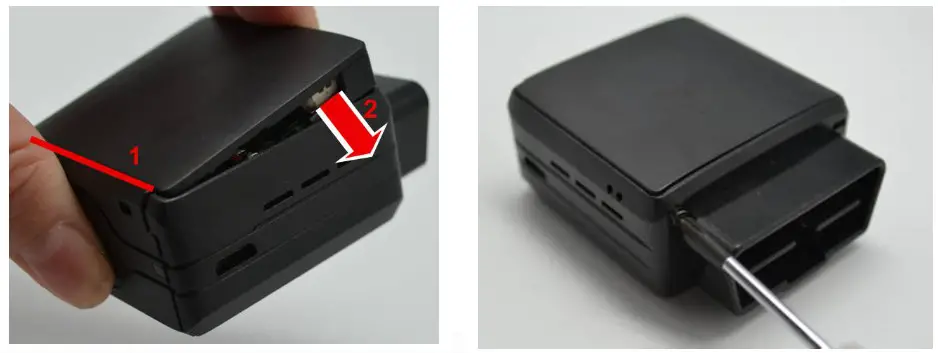
Install the OBD Dongle
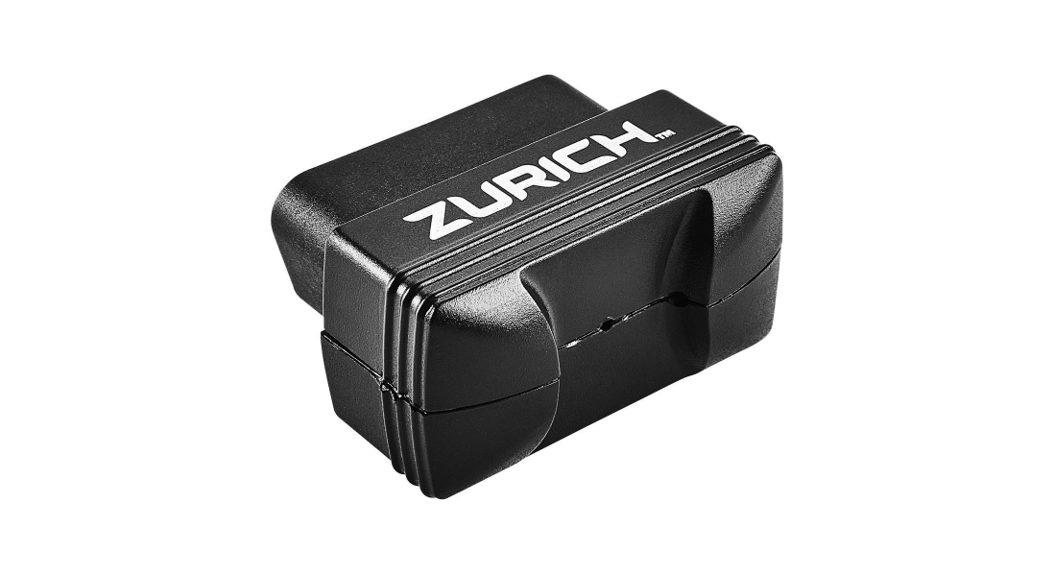
Connect the OBD Dongle to your vehicle OBD connector.
LED sequences
The Dongle has a two-colored LED, green and red.
When both colors are brightened, you can see an orange light.
| Green LED | Red LED | ||
| Sequence | Meaning | Sequence | Meaning |
| Dongle OFF | OFF | ||
| No Modem /No GNSS | 3 times (50ms ON/100ms OFF) 3550ms OFF | Ext. Power/Run ON | |
| No Modem /Fix GNSS | 2 times (50ms ON/100ms OFF) 3700ms OFF | ||
| Modem OK /No GNSS | 1 time (50ms ON/100ms OFF) 3850ms OFF | ||
| Modem OK /Fix GNSS | 2000ms ON 2000ms OFF | ||
| Shutdown/Hibernate | 30ms ON / 1 s OFF | ||
| Idle/Sleep | 30ms ON / 1 s OFF | ||
Support
For all questions not related to this installation guide, please contact the support team by email at [email protected]