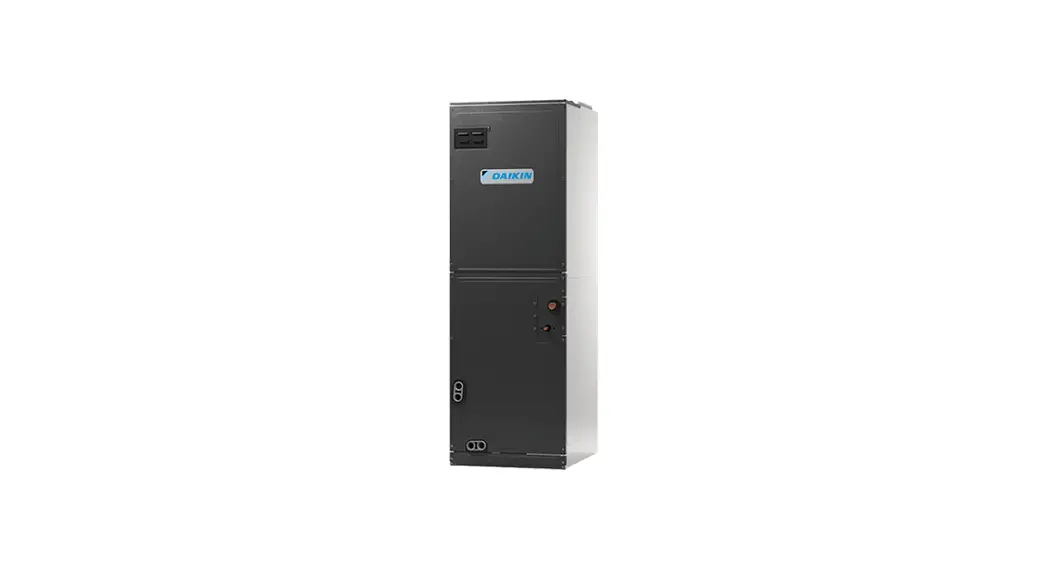
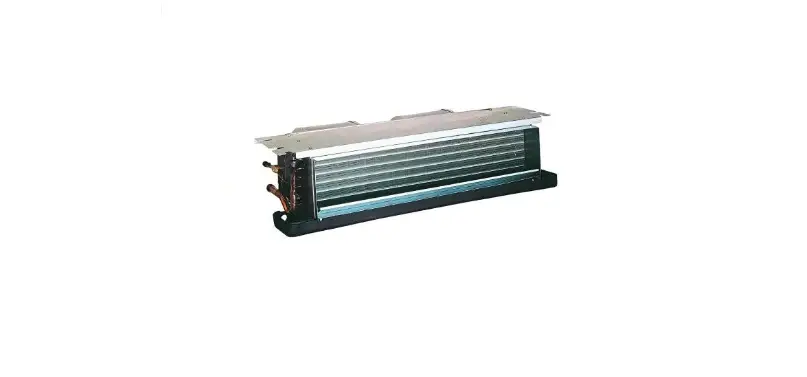
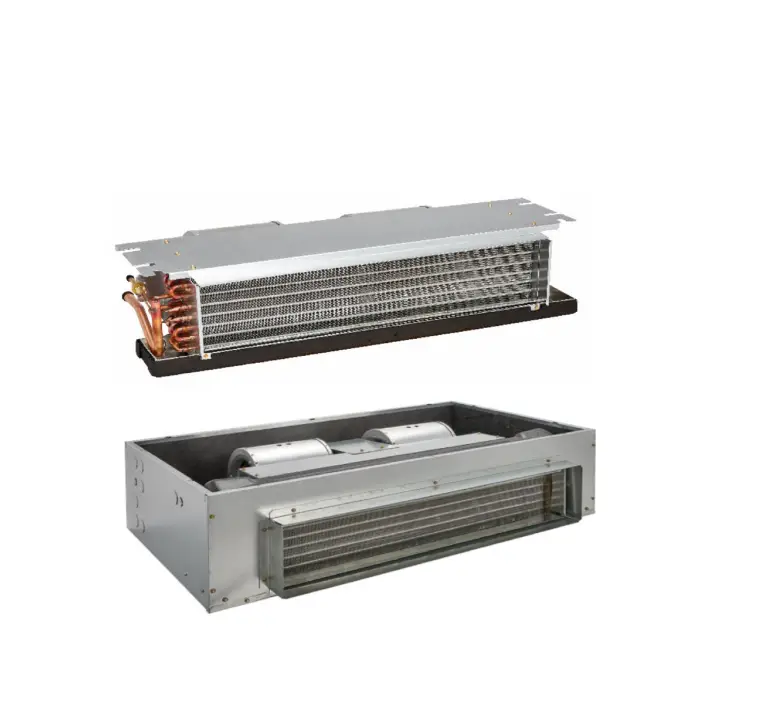
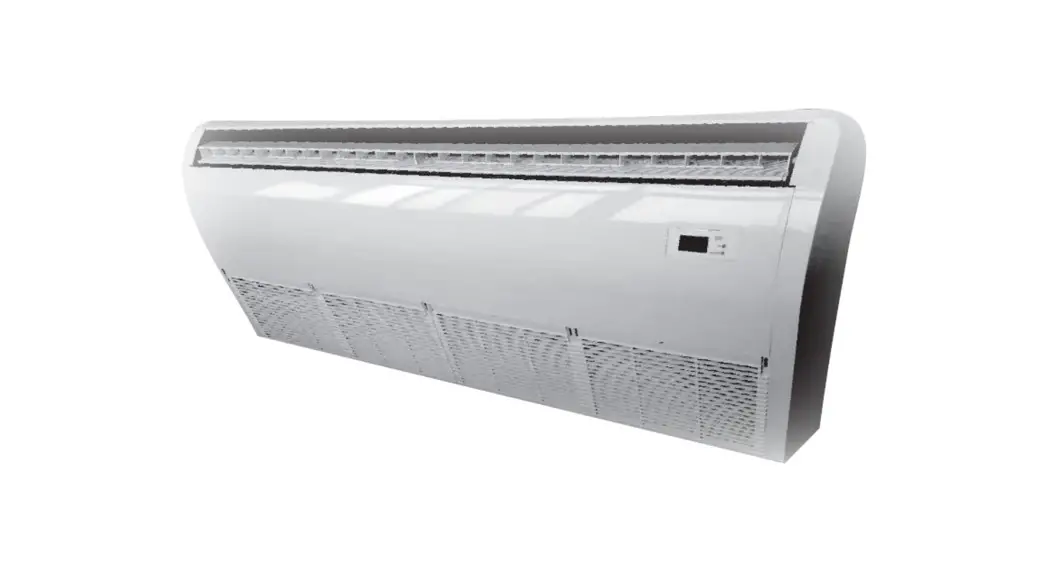
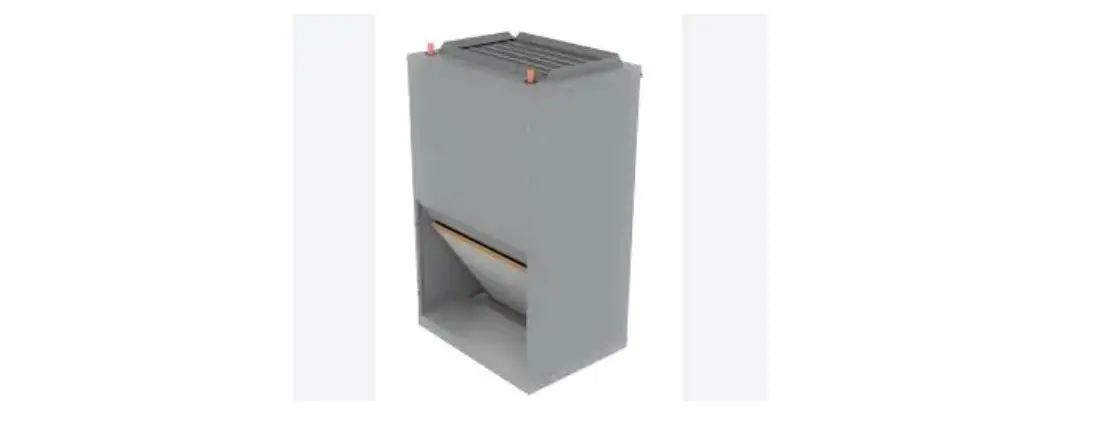
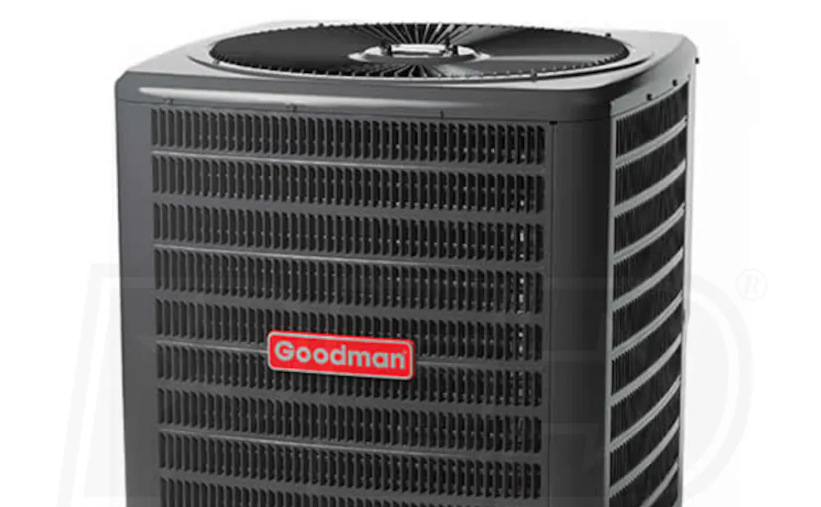
ACSF30LN1605 ACSF Ceiling Mount Air Handler
Product Information
The Ceiling Mount Air Handlers are designed to provide cooling
and heating in residential and light commercial applications. These
air handlers are available in cooling capacities of 1.5, 2, and 2.5
nominal tons of cooling with a constant torque (EEM) motor.
Electric heat models are available in capacities of 5, 6, 8, and 10
kW. The unit must only be connected to other units that have been
confirmed as complying with corresponding partial unit requirements
of the international standard.
The product is equipped with various cutoff switches and devices
that service the unit. The owner and installer should identify all
these switches and know where the switch is that will cut off
energy to the heating system in case of overheating. The appliance
is not accessible to the general public. Therefore, check the
serial plate for maximum operating conditions.
The product comes with important safety instructions that must
be followed by the owner and installer. The manual contains symbols
and labels that indicate immediate or potential safety hazards. The
owner and installer must read and comply with all safety
information and instructions accompanying these symbols to prevent
personal injury, property damage, and/or product damage.
Product Usage Instructions
Before installing the Ceiling Mount Air Handler, verify the
model number, specifications, electrical characteristics, and
accessories to ensure they are correct. The distributor or
manufacturer will not accept claims from dealers for shipping
damage.
The unit is a partial unit air conditioner that complies with
partial unit requirements of the international standard. Therefore,
connect it only to other units that have been confirmed as
complying with corresponding partial unit requirements of this
international standard.
Identify all the various cutoff switches and devices that
service this unit. Know where the switch is that will cut off
energy to the heating system in case of overheating.
Before servicing or installing the unit, disconnect all power
sources. Multiple power sources may be present, and failure to
disconnect all power may cause property damage, personal injury, or
death.
Do not connect to or use any device that is not design certified
by the manufacturer for use with this unit. Serious property
damage, personal injury, reduced unit performance, and/or hazardous
conditions may result from the use of such non-approved
devices.
If you need to order repair parts or report shortages or
damages, give the complete product model and serial numbers as
stamped on the product. Replacement parts for this product are
available through your contractor or local distributor. You can
locate your nearest distributor online at
https://partner.goodmanmfg.com/ or by contacting HOMEOWNER SUPPORT
DAIKIN COMFORT TECHNOLOGIES MANUFACTURING, L.P. at (855)
770-5678.
The Ceiling Mount Air Handler is not intended for use by persons
(including children) with reduced physical, sensory or mental
capabilities or lack of experience and knowledge unless they have
been given supervision or instruction concerning the use of the
appliance.
CEILING MOUNT AIR HANDLERS
INSTALLATION INSTRUCTIONS
IMPORTANT SAFETY INSTRUCTIONS
The following symbols and labels are used throughout this manual to indicate immediate or potential safety hazards. It is the owner’s and installer’s responsibility to read and comply with all safety information and instructions accompanying these symbols. Failure to heed safety information increases the risk of personal injury, property damage, and/or product damage.
WARNING
ONLY PERSONNEL THAT HAVE BEEN TRAINED TO INSTALL, ADJUST, SERVICE, MAINTENANCE OR REPAIR (HEREINAFTER, “SERVICE”) THE EQUIPMENT SPECIFIED IN THIS MANUAL SHOULD SERVICE THE EQUIPMENT. THE MANUFACTURER WILL NOT BE RESPONSIBLE FOR ANY INJURY OR PROPERTY DAMAGE ARISING FROM IMPROPER SERVICE OR SERVICE PROCEDURES. IF YOU SERVICE THIS UNIT, YOU ASSUME RESPONSIBILITY FOR ANY INJURY OR PROPERTY DAMAGE WHICH MAY RESULT. IN ADDITION, IN JURISDICTIONS THAT REQUIRE ONE OR MORE LICENSES TO SERVICE THE EQUIPMENT SPECIFIED IN THIS MANUAL, ONLY LICENSED PERSONNEL SHOULD SERVICE THE EQUIPMENT. IMPROPER INSTALLATION, ADJUSTMENT, SERVICING, MAINTENANCE OR REPAIR OF THE EQUIPMENT SPECIFIED IN THIS MANUAL, OR ATTEMPTING TO INSTALL, ADJUST, SERVICE OR REPAIR THE EQUIPMENT SPECIFIED IN THIS MANUAL WITHOUT PROPER TRAINING MAY RESULT IN PRODUCT DAMAGE, PROPERTY DAMAGE, PERSONAL INJURY OR DEATH.
WARNING
DO NOT BYPASS SAFETY DEVICES
WARNING
HIGH VOLTAGE! Disconnect all power before servicing or installing this unit. Multiple power sources may be present. Failure to do so may cause property damage, personal injury or death.
WARNING
Do not connect to or use any device that is not design certified by the manufacturer for use with this unit. Serious property damage, personal injury, reduced unit performance and/or hazardous conditions may result from the use of such non-approved devices.
IO-4008B 02/2023
CO can cause serious illness including permanent brain
damage or death.
B10259-216
Advertencia especial para la instalación de calentadores ó manejadoras de aire en áreas cerradas como estacionamientos ó cuartos de servicio.
Las emisiones de monóxido de carbono pueden circular a través del aparato cuando se opera en cualquier modo.
El monóxido de carbono puede causar enfermedades severas
como daño cerebral permanente ó muerte.
B10259-216
RISQUE D’EMPOISONNEMENT AU MONOXYDE DE CARBONE
Cette ventilation est nécessaire pour éviter le danger d’intoxication au CO pouvant survenir si un appareil produisant du monoxyde de carbone continue de fonctionner au sein de la zone confinée.
B10259-216
CAUTION
Identify all the various cutoff switches and devices that service this unit. Know where the switch is that will cut off energy to the heating system in the event of overheating.
WARNING
APPLIANCE NOT ACCESSIBLE TO THE GENERAL PUBLIC. CHECK SERIAL PLATE FOR MAXIMUM OPERATING CONDITIONS.
WARNING
PARTIAL UNITS SHALL ONLY BE CONNECTED TO AN APPLIANCE SUITABLE FOR THE SAME REFRIGERANT. THIS UNIT IS A PARTIAL UNIT AIR CONDITIONER, COMPLYING WITH PARTIAL UNIT REQUIREMENTS OF THIS INTERNATIONAL STANDARD, AND MUST ONLY BE CONNECTED TO OTHER UNITS THAT HAVE BEEN CONFIRMED AS COMPLYING TO CORRESPONDING PARTIAL UNIT REQUIREMENTS OF THIS INTERNATIONAL STANDARD.
WARNING
CODES & REGULATIONS
This product is designed and manufactured to comply with national codes. Installation in accordance with such codes and/or prevailing local codes/regulations is the responsibility of the installer. The manufacturer assumes no responsibility for equipment installed in violation of any codes or regulations. The standard test ambient operating conditions for cooling and heating mode are 80°F and 70°F, respectively.
The United States Environmental Protection Agency (EPA) has issued various regulations regarding the introduction and disposal of refrigerants. Failure to follow these regulations may harm the environment and can lead to the imposition of substantial fines. These regulations may vary by jurisdiction. A certified technician must perform the installation and service of this product. Should you have any questions please contact the local office of the EPA and / or refer to EPA’s website www.epa.gov.
REPLACEMENT PARTS
When reporting shortages or damages, or ordering repair parts, give the complete product model and serial numbers as stamped
on the product. Replacement parts for this product are available through your contractor or local distributor. Your nearest distributor can be located online at https://partner.goodmanmfg.com/ or by contacting:
HOMEOWNER SUPPORT DAIKIN COMFORT TECHNOLOGIES MANUFACTURING, L.P.
19001 KERMIER ROAD WALLER, TEXAS 77484
(855) 770-5678
THIS APPLIANCE IS NOT INTEDED FOR USE BY PERSONS
APPLICATION INFORMATION
(INCLUDING CHILDREN) WITH REDUCED PHYSICAL,
SENSORY OR MENTAL CAPABILITIES, OR LACK OF EXPERIENCE AND KNOWLEDGE, UNLESS THEY HAVE BEEN
CAUTION
GIVEN SUPERVISION OR INSTRUCTION CONCERNING THE USE OF THE APPLIANCE.
SHIPPING INSPECTION
Heat Pump Premature Failure Notice Running the unit without HPSK-1 kit installed on the heat pump can cause premature unit failure. A HPSK-1 kit must be installed on all heat pump applications.
Upon receiving the product, inspect it for damage from shipment. Shipping damage, and subsequent investigation is the responsibility of the carrier. Verify the model number, specifications, electrical characteristics, and accessories are correct prior to installation. The
distributor or manufacturer will not accept claims from dealers for
This ceiling mount air handler is available in cooling capacities of 1.5, 2 and 2.5 nominal tons of cooling with a constant torque (EEM) motor. Electric heat models are available in capacities of 5, 6, 8 and 10 kW.
transportation damage or installation of incorrectly shipped units. The unit is designed to be installed only in a horizontal position
Parts
Inspect the unit to verify all required components are present and intact. Report any missing components immediately to the
above a dropped ceiling. Do NOT install this unit outside the structure. These models are designed for INDOOR USE ONLY.
PRE-INSTALLATION INSTRUCTIONS
manufacturer or to the distributor. Use only factory authorized Carefully read all instructions for the installation prior to installing
replacement parts. Make sure to include the full product model product. Make sure each step or procedure is understood and
number and serial number when reporting and/or obtaining any special considerations are taken into account before starting
service parts.
installation. Assemble all tools, hardware and supplies needed to
Handling
Use caution when transporting / carrying the unit. Do not move unit using shipping straps. Do not carry unit with hooks or sharp objects. The preferred method of carrying the unit after arrival at the job site is to carry via a two-wheel hand truck.
complete the installation. Some items may need to be purchased locally. Make sure everything needed to install the product is on hand before starting.
Before attempting any installation, the following points should be considered:
· Structural strength of supporting members
Shipping Material Removal
· Clearances and provision for servicing
IMPORTANT: All Shipping Material used to protect the equipment, and the equipment’s components, during transit should be removed before final installation.
· Power supply and wiring · Air duct connections · Drain facilities and connections
2
Verify Components
Inspect the unit to verify all required components are present and intact. Report any missing components immediately to the manufacturer or to the distributor. Use only factory authorized replacement parts. Make sure to include the full product model number and serial number when reporting and/or obtaining service parts.
to ensure proper drainage. If the secondary drain line is required, run the line separately from the primary drain and end it where it can be easily seen. NOTE: Water coming from this line means the coil primary drain is plugged and needs clearing.
CAUTION
Installation Clearances
Place this unit as close to the space to be air conditioned as possible. These units are U.L. listed for installations with zero clearance to combustible materials. If this unit is installed in a removable ceiling panel, ensure adequate space is available for servicing. Run ducts as direct as possible to supply and return outlets. Use nonflammable weatherproof flexible connectors on both supply and return connections at unit to reduce noise transmission.
Ducting
Duct work should be fabricated by the installing contractor in accordance with local codes. Use industry manuals such as such as NESCA (National Environmental Systems Contractors Association, 1501 Wilson Blvd., Arlington, Virginia 22209) as a guide when sizing and designing the duct system.
If secondary drain is not installed, the secondary access must be plugged.
The installation must include a “P” style trap that is located as close as is practical to the evaporator coil. See Figure 1 for details of a typical condensate line “P” trap.
NOTE: Trapped lines are required by many local codes. In the absence of any prevailing local codes, please refer to the requirements listed in the Uniform Mechanical Building Code. In a blow-through application the drain trap prevents conditioned air from escaping. It is permissible in this application to use a shallow trap design sometimes referred to as a running trap.
Drain Connection
To ensure correct system performance, the ductwork is to be sized to accommodate 375-425 CFM per ton of cooling with the static pressure not to exceed 0.5″ W.C. Inadequate ductwork that restricts airflow can result in improper performance and compressor or heater failure.
WARNING
Air Handler
POSITIVE LIQUID SEAL REQUIRED
AT TRAP
2″ MIN. 2.75″ MIN
To prevent possible equipment damage, property damage, fire, carbon monoxide poisoning, explosion, personal injury or death, do not connect ductwork to any heat producing device such as a fireplace insert or stove.
Filters
Filters are not provided with unit, and must be supplied and installed in the return air system by the installer. A field installed filter grille is recommended for easy and convenient access to the filters for periodic inspection and cleaning. Filters must have adequate face area for the rated air quantity of the unit. The minimum filter size is 20″ x 20″ x 1″.
Condensate Drain Piping
The coil drain pan has a primary and a secondary drain with 3/4″ NPT female connections. The connectors required are 3/4″ NPT male, either PVC or metal pipe, and should be hand tightened to a torque of approximately 37 in-lbs. to prevent damage to the drain pan connection. An insertion depth between .143 to .355 inches (2-5 turns) should be expected at this torque. Use the female (3/4 NPT) threaded fitting that protrudes outside of the enclosure for external connections.
1. Ensure drain pan hole is NOT obstructed.
2. To prevent potential sweating and dripping on to finished space, it may be necessary to insulate the condensate drain line located inside the building. Use Armaflex® or similar material.
A Secondary Condensate Drain Connection has been provided for areas where the building codes require it. Pitch the drain line 1/4″ per foot to provide free drainage. Insulate drain lines located inside the building to prevent sweating. Install a condensate trap
Figure 1 The depth of a running trap (Figure 2) should be either 1″ or a depth that permits unrestricted condensate drainage without excessive air discharge. Field experience has shown condensate drain traps with an open vertical Tee between the air handler and the condensate drain trap can improve condensate drainage in some applications, but may cause excessive air discharge out of the open Tee. We do not prohibit this type of drain but we also do not recommend it due to the resulting air leakage. Regardless of the condensate drain design used, it is the installer’s responsibility to ensure the condensate drain system is of sufficient design to ensure proper condensate removal from the coil drain pan.
Figure 2
When coils are installed above ceilings, or in other locations where damage from condensate overflow may occur, it is MANDATORY to
3
install a field fabricated auxiliary drain pan under the coil cabinet enclosure. Drain lines from the auxiliary pan must be installed and terminated so that the homeowner can see water discharges. A primary condensate drain connection is located in the drain pan on the bottom of the coil / enclosure assembly. The female (3/4 fpt) threaded fitting that protrudes outside of the enclosure is used for external connections.
LAYOUT FOR CEILING MOUNT AIR HANDLERS
NOTE: These air handlers are designed for indoor installation only at a max altitude of 10,500 feet above sea level or a min altitude of -184 feet below sea level.
If the unit is located in an unconditioned area with high ambient temperature and/or high humidity, the air handler may be subject to nuisance sweating of the casing. On these installations, a wrap of 2″ fiberglass insulation with a vapor barrier is recommended. A secondary drain pan below the unit is also recommended to protect
the installation site.
1. Before locating the unit on the dropped ceiling, ensure the strength of the ceiling and beams is adequate to support the weight involved. This is an important step and the installers responsibility. See the table below for approximate weight of unit.
MODEL 1.5 TON 2 TON 2.5 TON
WEIGHT (lb.) 64 68 68
Table 2
2. Mount the unit in a horizontal position above a dropped ceiling of adequate strength. Refer to Figure 3. Refer to Figure 4 for proper mounting methods.
DROP CEILING
Figure 4
3. The location of the unit should provide proper access for inspection and servicing.
MODEL
A
B
C
1.5 TON 43 1/4 40 11/16 36
2 TON 49 1/4 46 11/16 42
2.5 TON 49 1/4 46 11/16 42
Table 3
A
B
D 6 1/2 6 1/2 6 1/2
PLENUM
TO DRAIN
Figure 3
OUTLET DUCT
4 3/8 5
GRILL FOR RETURN AIR AND SERVICE
TOP VIEW
C
11 3/8 2 ½
4
21
LIQUID LINE
CAUTION
To prevent feeder tube damage, hold the distributor body
with a 3/4″ open end wrench when removing or replacing the
¾
13/16″ flare nut.
D
10
1 SUCTION LINE
CONTROL BOX THIS END: LOW VOLTAGE WIRING OPPOSITE END: SUPPLY VOLTAGE WIRING
Figure 5 IMPORTANT: Installation of Air Handler must follow any local codes/regulations. The manufacture recommends that when a heater kit is not installed, a field supplied disconnect switch or breaker should be installed in the electrical circuit that will allow power to be shut-off for service or maintenance.
SPECIAL INSTRUCTIONS
This air handler comes equipped with an evaporator coil with a check style flowrator assembly, an indoor blower and all necessary internal electrical wiring. Remove the piston from the flowrator. For the rated performance a Thermal Expansion Valve (TXV) is required. Follow the instruction below for TXV installation and adjustment procedure.
WARNING
The evaporator coil is shipped from the factory with approximately 120 PSI tracer gas charge. Use caution when relieving pressure.
IMPORTANT NOTE: Torch heat required to braze tubes of various sizes is proportional to the size of the tube. Tubes of smaller size require less heat to bring the tube to brazing temperature before adding brazing alloy. Applying too much heat to any tube can melt the tube. Service personnel must use the appropriate heat level for the size of the tube being brazed. NOTE: The use of a heat shield when brazing is recommended to avoid burning the serial plate, insulation or the finish on the unit. Heat trap or wet rags should be used to protect heat sensitive components such as service valves and TXV valves. Use insulation present in the service kit to prevent condensation on the TXV.
Tubing Connections Note: The TXV must be adjustable to meet the outdoor unit’s target superheat value. During the superheat adjustment on the TXV, the torque applied on the nut cannot exceed 25 in-lbs. Refer to the EXPANSION VALVE TROUBLESHOOTING section of this manual for assistance with the adjustable TXV.
1. Remove the valve core to allow high pressure tracer gas to escape. No gas indicates a possible leak.
2. Remove the 13/16″ flare nut and tailpiece. 3. Unsweat the access fitting on the tailpiece 4. Remove the check piston and install the appropriate TXV. See
the TXV service kit for instructions. 5. Unsweat the cap on the suction line. 6. Slide the 13/16″ flare nut over the tailpiece. 7. Braze tailpiece to the lineset liquid tube. 8. Insert the suction line into the connection, slide the insulation
at least 18″ away from the braze joint. Braze suction line. 9. AFTER THE TAILPIECE HAS COOLED, confirm position of the
white Teflon® seal and hand tighten the 13/16″ flare nut. 10. Torque the 13/16″ flare nut to 7-25 ft-lbs. or tighten 1/6 of a
turn. Do not overtighten.
CAUTION
Excessive torque can cause orifices to stick. Use the proper torque settings when tightening orifices.
11. Replace suction line insulation. 12. After installation, evacuation and charging of the low side is
complete, check fittings for leaks.
Thermal Expansion Valve System Adjustment The following information for the indoor unit should be verified before attempting to charge system or adjust TXV if necessary.
1. Total static pressure is 0.3″ WC or less. 2. Airflow is correct for the installed unit. 3. Airflow tables are in the installation manual and Spec Sheet
for Indoor Unit. 4. Complete airflow tables and charging information are in
Service Manual RS6200006 5. The outdoor temperature must be 60°F or higher. 6. Set the room termostat to COOL, fan switch to AUTO 7. Set the temperature control well below room temperature.
Superheat adjustments should not be made until indoor ambient conditions have stabilized. This could take up to 24 hours depending on indoor temperature and humidity. Befor checking superheat run the unit cooling for 10 minutes or until refrigerant pressures stabilize. Use the following guidelines and methods to check unit operation and ensure that the refrigerant charge is within limits.
5
1. Purge gauge lines. Connect service gauge manifold to basevalve service ports.
2. Temporarily install a thermometer on the liquid line at the liquid line service valve and 4-6″ from the compressor on the suction line. Ensure the themometer makes adequeate contact and is insulated for best possible readings. Use liquid line temperature to determine subcooling and vapor temperature to determine superheat.
3. Check subcooling and superheat. The system should have a subcooling of 8°F /- 1°F. If subcooling and superheat are low, adjust TXV to 8°F /- 1°F superheat, then check subcooling. a. If subcooling is low and superheat is high, add charge to raise subcooling to 8°F /- 1°F. Then check superheat. b. If subcooling and superheat are high, adjust TXV valve to 8°F /- 1°F superheat, then check subcooling.
Superheat Adjustments (Only if necessary)
1. Attach a pipe clamp thermometer near the suction line service valve at the outdoor unit. a. Ensure the Thermometer makes adequate contact for the best possible readings.
2. TXV-based systems should have a Superheat value of 8°F /- 1°F.
3. Adjust Superheat by turning the TXV valve stem clockwise to increase and counterclockwise to decrease. Adjustments should be made opening or closing the valve by no more thatn 1/4 turn at a time. Allow the system to stabilize 15 to 20 minutes before making additional adjustments if necessary.
4. After adjustments are complete replace cap on adjustment stem and tighten 1/6 turn.
5. Remove gauges and check the Scrader ports for leaks and tighten valve cores if necessary. Install caps finger tight.
ELECTRICAL CONNECTIONS
HIGH VOLTAGE! DISCONNECT ALL POWER BEFORE SERVICING. MULTIPLE POWER SOURCES MAY BE PRESENT. FAILURE TO DO SO MAY CAUSE PROPERTY DAMAGE, PERSONAL INJURY OR DEATH DUE TO ELECTRIC SHOCK. WIRING MUST CONFORM WITH NEC OR CEC AND ALL LOCAL CODES. UNDERSIZED WIRES COULD CAUSE POOR EQUIPMENT PERFORMANCE, EQUIPMENT DAMAGE OR FIRE.
Wire Sizing Wire size is important to the operation of your equipment. Use the following check list when selecting the appropriate wire size for your unit. Wire used must carry the Minimum Circuit Ampacity (MCA) listed on the unit’s Series and Rating Plate. Refer to the NEC (USA) or CSA (Canada) for wire sizing. The unit MCA for the air handler and the optional electric heat kit can be found on the unit Series and Rating Plate. Wire must be sized to allow no more than a 2% voltage drop from the building breaker/fuse panel to the unit. Wires with different insulation temperature rating have varying ampacities – be sure to check the temperature rating used.
Refer to the latest edition of the National Electric Code or in Canada the Canadian Electric Code when determining the correct wire size. Determine the availability of sufficient power to operate the unit. The voltage at the power supply must correspond to the unit RATED VOLTAGE REQUIREMENT.
Determine wire sizes from the unit nameplate ampacity and in accordance with the National Electrical Code. Wiring should never be sized smaller than is recommended by either of these two sources.
The unit must be permanently grounded in accordance with local codes, or in the absence of local codes, with the N.E.C. ANSI/NFPA NO. 70-1987 or latest edition in the U.S.A.
MAXIMUM OVERCURRENT PROTECTION (MOP)
Every installation must include an NEC (USA) or CEC (Canada) approved overcurrent protection device. Also, check with local or state codes for any special regional requirements.
Protection can be in the form of fusing or HACR style circuit breakers. The Series and Rating Plate can be used as a guide for selecting the MAXIMUM overcurrent device.
NOTE: Fuses or circuit breakers are to be sized larger than the equipment MCA but not to exceed the MOP.
IMPORTANT NOTE: Torch heat required to braze tubes of various sizes is proportional to the size of the tube. Tubes of smaller size require less heat to bring the tube to brazing temperature before adding brazing alloy. Applying too much heat to any tube can melt the tube. Service personnel must use the appropriate heat level for the size of the tube being brazed.
NOTE: The use of a heat shield when brazing is recommended to avoid burning the serial plate or the finish on the unit. Heat trap or wet rags should be used to protect heat sensitive components such as service valves and TXV valves.
Internal Wiring A diagram of the internal wiring of this unit is located under the electrical box cover. If any of the original wire as supplied with the appliance must be replaced, the wire gauge and insulation must be same as original wiring. Transformer is factory wired for 230 volts on 208/ 230 volt models. See wiring diagram for 208 volt wiring. For 208V operation, move the red wire lead from 240V to 208V tap.
Make the following high and low voltage connections at either location to wire units.
High Voltage Wiring This unit is designed for Single phase 208/230 Volt only. Connect the two leads to terminals L1 and L2 on the disconnect in the electrical control section, using wire sizes specified in wire sizing section.
6
Low Voltage Wiring
Refer to Figure 6 for cooling unit with electric heat and refer to Figure 7 for heat pump with electric heat.
NOTE: HPSK-01 Heat Pump Shut-Off Relay Kit (C.R.I.) must be used when ACSF with electric heat installed with heat pump.
BLUE YELLOW
24 V CONNECTIONS TO CONDENSING UNIT
LEAD RED GREEN
WHITE BLUE
BROWN
THERMOSTAT R (24V) G (FAN) Y W –
E
NOTES –
TO CONDENSING UNIT 24V CONNECTIONS –
TO CONDENSING UNIT 24V CONNECTIONS
TO BE USED FOR EMERGENCY HEAT ONLY
R YGW
Table 5
CONSTANT TORQUE (EEM) MOTORS
ACSF models utilize constant torque (EEM) motors. These motors come with a separate control box which is mounted on the side of the unit as shown in Figure 8. The harness from the motor is inserted into the control box which has another harness leading into the control panel of the unit.
THERMOSTAT
Figure 6
CEILING MOUNT UNIT R BI W Br G
* W
* W
C.R.I.
2
4
5
6
1
3
Control Box
HEAT PUMP
R W2
O
Y C
* BI * Y
Figure 8 The high voltage wiring is the same as the other ACSF models. The low voltage wiring connections are shown in Figure 9. The wire from the motor, T2 (purple,) T3 (pink) or T4 (yellow), connects to “Y” from the thermostat/condenser depending on the application.
Thermostat
R O Y E G W2 C
THERMOSTAT *WIRES SUPPLIES WITH HPSK KIT
Note: in case of heat pump failure, switch to “E” on Thermostat for emergency heat. See note under Low Voltage Wiring Figure 7
Connect low voltage wires from the thermostat to the corresponding wires in the Ceiling Mount unit and outdoor unit using No. 18 AWG wires as follows:
Y R GW
#18 Gauge 24 VAC
C Y R GW
T1
T5
#18 Gauge 24 VAC
Air Handler
C Y
Note: Connect T2,T3 or T4 to the Y terminal to the outdoor unit.
Condensing Unit
CONFIRM SPEED TAP SELECTED (T2, T3, OR T4)
IS APPROPRIATE FOR THE APPLICATION BASED ON THIS TABLE.
WIRE COLOR PURPLE PINK YELLOW
BTUh 18000 24000 HIGH CFM OPTION
Figure 9
7
MAINTENANCE
Room Thermostat
The room thermostat controls the operation of your heating and/ or cooling unit. It senses the indoor temperature and signals the equipment to start or stop maintaining the temperature you have selected for your comfort. The room thermostat should be in a central, draft free inside wall location for best operation. Do not place any heat producing apparatus such as lights, radio, etc., near the thermostat as this will cause erratic operation of the comfort system.
Air Filter(s)
All central air moving comfort systems must include air filter(s). Locate these filters in either the equipment or return air duct system upstream of the equipment. The filter(s) removes dust and debris from the air thus helping to keep your conditioned space clean. More important, the filter keeps dust and debris from collecting on heat transfer surfaces thus maintaining optimum equipment efficiency and performance. Inspect and clean or replace filters every month. This routine maintenance procedure will pay big dividends in reduced operating cost and reduced service expense. Never operate comfort equipment without filter(s).
Fuses and/or Circuit breakers
This comfort equipment should be connected to the building electric service in accordance with local and National Electric codes. This electrical connection will include over current protection in the form of fuses or circuit breakers. Have your contractor identify the circuits and the location of over current protection so that you may be in a position to make inspections or replacements in the event the equipment fails to operate. Keep replacement fuses of the proper size on hand.
The primary limit and the backup protection device on ther electric heating element are the two components that can be replaced. The normal limit and backup protection device installed on this product will be the below: TOD 60TX11 Matte finish, open temperature: 140°F, close temperature: 95°F (primary limit)
TOD – Microtemp G5AM0600093C
The alternates below can be used: 5kW – (140-45 °F + limits, 93 °C fuse-links), (130-30 °F+, 84 °C), (130-30 °F+, 93 °C), (130-30 °F+, 98 °C), (130-30 °F+, 104 °C), (130-30 °F+, 110 °C), (140-45 °F+, 84 °C), (140-45 °F+, 93 °C), (140-45 °F+, 98 °C), (140-45 °F+, 104 °C), (140-45 °F+, 110 °C) (150-50 °F+, 84 °C), (150-50 °F+ , 93 °C), (150-50 °F+, 98 °C), (150-50 °F+, 104 °C), (150-50 °F+, 110 °C), (160-60 °F+, 84 °C), (160-60 °F+, 93 °C), (160-60 °F+, 98 °C), (160-60 °F+, 104 °C), (160-60 °F+, 110 °C) (170-70 °F+, 84 °C), (170-70 °F+, 93 °C), (170-70 °F+, 98 °C), (170-70 °F+, 104 °C), (170-70 °F+, 110 °C) 6kW – (140-45 °F+ limits, 93 °C fuse-links), (130-30 °F+, 84 °C), (130-30 °F+, 93 °C) (140-45 °F+, 84 °C), (140-45 °F+, 93 °C) 8kW – (140-45 °F+ limits, 93 °C fuse-links), No alternates 10kW – (140-45 °F+ limits, 93 °C fuse-links), (130-30 °F+, 93 °C)
Periodic Checkup and Service
This unit is designed to provide many years of dependable, troublefree comfort when properly maintained. Proper maintenance will consist of annual checkups and cleaning of the internal electrical and heat transfer components by a qualified service technician. Failure to provide periodic checkup and cleaning can result in excessive operating cost and/or equipment malfunction.
Aluminum Indoor Coil Cleaning (Qualified Servicer Only)
This unit is equipped with an aluminum tube evaporator coil. The safest way to clean the evaporator coil is to simply flush the coil with water. This cleaning practice remains as the recommended cleaning method for both copper tube and aluminum tube residential evaporator coils.
It has been determined that many coil cleaners and drain pan tablets contain corrosive chemicals that can be harmful to aluminum tube
and fin evaporator coils. Even a one-time application of these corrosive chemicals can cause premature aluminum evaporator
coil failure. Any cleaners that contain corrosive chemicals including, but not limited to, chlorine and hydroxides, should not be used.
An alternate cleaning method is to use one of the products listed in TP-109* to clean the coils. The cleaners listed are the only agents deemed safe and approved for use to clean round tube aluminum
coils. TP-109 is also available on the web site in Partner Link > Service Toolkit.
NOTE: Ensure coils are rinsed well after use of any chemical cleaners.
Heater Kit Service
This comfort equipment comes pre-installed with a UL 2-40 certified heater kit. In times of replacement, please ensure that only a UL 2-40 certified kit is utilized.
8
AIRFLOW DATA
Model ACSF18MN16**AA
ACSF24LN16**AA ACSF30LN16**AA
Speed Tap
T1 T2 T3 T4 T5 T1 T2 T3 T4 T5
CFM @ STATIC PRESSURE (IN W.C.)
0.1
0.2
0.3
698
645
577
698
645
577
710
677
625
842
805
746
842
805
746
781
732
668
781
732
668
856
804
755
927
877
833
927
877
833
NOTE:
1. Airflow data indicated is at 230V without air filter in place.
2. Select a speed tap that provides a minimum 300 CFM per outdoor ton. For satisfactory operation, external static pressure must not exceed 0.3″WC ( for electric heater only).
Expansion Valve Troubleshooting Before replacing an expansion valve, check the following items:
1. Bulb location: Must be tightly securred to the suction line upstream of the equalizer connection.
2. Insulation: Bulb must be properly insulated. 3. Equalizer: Must be connected to the 1/4: SAE connection on
the suction line. 4. Charge: Ensure the system is properly charged. there MUST
be a minimum of 10°F Sub-Cooled liquid at the valve inlet. If the system appears to be “starving” (low suction pressure but insufficient cooling):
1. Check the Superheat (SH) at the evaporator outlet. If SH is between 5°F – 12°F the TXV is controlling properly. -Verify that there is proper airflow to the evaporator (fan is operating and filter is unrestricted).
2. If SH is above 12°F, the setting of the TXV may be too high. -Adjust the SH by turning counter-clockwise to decrease SH. -Wait 20 minutes for the system to balance and adjust again, as required. -If adjusting the valve has no effect on the SH, the valve may be stuck because of dirt debris or it may have lost the Power Element charge.
i. After properly reclaiming the refrigerant, remove the TXV and check for dirt and debris. Clean, if possible, or replace the TXV and filter/drier.
If the system appears to be “flooding”(compressor frosting or moisture is condensing at the suction connection):
1. Check the SH at the evaporator outlet. If SH is between 5°F – 12°F, the TXV is controlling properly.
2. If SH is less than 5°F, the SH adjustment may be too low. -Adjust the SH by turning the adjustment stem clock-wise to increase the SH. -Wait 20 minutes for the system to balance and adjust again as required. -If adjusting the valve has no effect on the SH, the valve may be stuck open because of dirt of debris or moisture in the refrigerant.
i. After properly reclaiming the refrigerant, remove the TXV and check for dirt and debris. Clean, if possible, or replace the TXV and filter/drier. Add a moisture indicator to allow checking of moisture if this believed to be a probable cause.
9
START-UP CHECKLIST
Air Handler / Coil
ELECTRICAL Line Voltage (Measure L1 and L2 Voltage) Secondary Voltage (Measure Transformer Output Voltage) Blower Amps Heat Strip 1 – Amps Heat Strip 2 – Amps
BLOWER EXTERNAL STATIC PRESSURE Return Air Static Pressure Supply Air Static Pressure Total External Static Pressure (Ignoring +/- from the reading above, add total here)
TEMPERATURES Return Air Temperature (Dry bulb / Wet bulb) Cooling Supply Air Temperature (Dry bulb / Wet bulb) Heating Supply Air Temperature Temperature Rise Delta T (Difference between Supply and Return Temperatures)
Model Number Serial Number
L1 – L2 R – C
Air Handler / Coil – (Inverter Matched) INVERTER AH / COIL ONLY
Check EEV and EEV wiring is secure (no adjustment required)
Additional Checks Check wire routings for any rubbing Check product for proper draining Check screw tightness on blower wheel Check factory wiring and wire connections Check product for proper clearances as noted by installtion instructions
°F to °C formula: (°F – 32) divided by 1.8 = °C °C to °F formula: (°C multiplied by 1.8) + 32 = °F
IN. W.C. IN. W.C. IN. W.C.
DB °F DB °F DB °F DB °F DB °F
WB °F WB °F
10
PAGE LEFT INTENTIONALLY BLANK
11
CUSTOMER FEEDBACK We are very interested in all product comments.
Please fill out the feedback form on one of the following links: Daikin Products: (https://daikincomfort.com/contact-us) Goodman® Brand Products: (http://www.goodmanmfg.com/about/contact-us). Amana® Brand Products: (http://www.amana-hac.com/about-us/contact-us). You can also scan the QR code on the right for the product brand you purchased to be directed to the feedback page.
DAIKIN
GOODMAN® BRAND
AMANA® BRAND
PRODUCT REGISTRATION
Thank you for your recent purchase. Though not required to get the protection of the standard warranty, registering your product is a relatively short process, and entitles you to additional warranty protection, except that failure by California and Quebec residents to register their product does not diminish their warranty rights. The duration of warranty coverages in Texas differs in some cases.
For Product Registration, please register as follows: Daikin Products: (https://daikincomfort.com/owner-support/product-registration). Goodman® Brand products: (https://www.goodmanmfg.com/product-registration). Amana® Brand products: (http://www.amana-hac.com/product-registration). You can also scan the QR code on the right for the product brand you purchased to be directed to the Product Registration page.
DAIKIN
GOODMAN® BRAND
AMANA® BRAND
NOTE: SPECIFICATIONS AND PERFORMANCE DATA LISTED HEREIN ARE SUBJECT TO CHANGE WITHOUT NOTICE
Quality Makes the Difference!
All of our systems are designed and manufactured with the same high quality standards regardless of size or efficiency. We have designed these units to significantly reduce the most frequent causes of product failure. They are simple to service and forgiving to operate. We use quality materials and components. Finally, every unit is run tested before it leaves the factory. That’s why we know. . .There’s No Better Quality.
Visit our website at www.daikincomfort.com, www.goodmanmfg.com or www.amana-hac.com for information on:
· Products · Warranties · Customer Services
· Parts · Contractor Program and Training · Financing Options 19001 Kermier Road, Waller, TX 77484
© 2023 Daikin Comfort Technologies Manufacturing, L.P.
is a registered trademark of Maytag Corporation or its related companies and is used under license. All rights reserved.
12
References
 Quality, Durable Heating & Air Conditioning Systems From Amana
-
Contact Amana Heating & Air Conditioning
-
Register Your Amana Heating And Cooling Equipment Here
-
Daikin Comfort - Perfecting The Air We Share
-
U.S. Environmental Protection Agency | US EPA
-
Air Conditioning and Heating Systems| HVAC | Goodman
-
Contact Us | Goodman Manufacturing
-
Daikin Comfort - Perfecting The Air We Share
-
Daikin Comfort - Perfecting The Air We Share
 Login
Login-
Warranty Registration | Register Your Goodman HVAC Product
 Quality, Durable Heating & Air Conditioning Systems From Amana
 Daikin Comfort - Perfecting The Air We Share
 U.S. Environmental Protection Agency | US EPA
 Air Conditioning and Heating Systems| HVAC | Goodman
 Daikin Comfort - Perfecting The Air We Share
 Login
Login