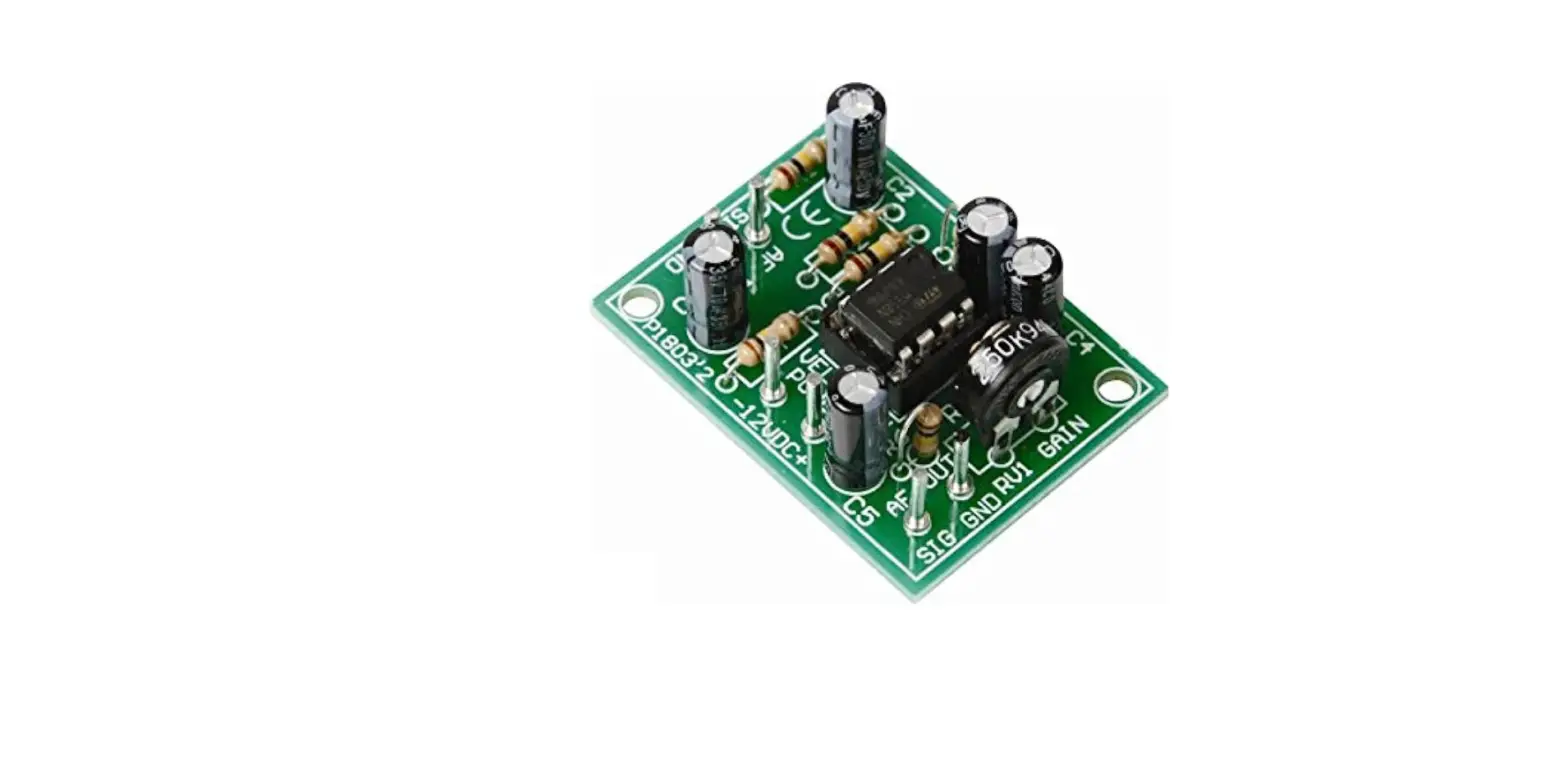
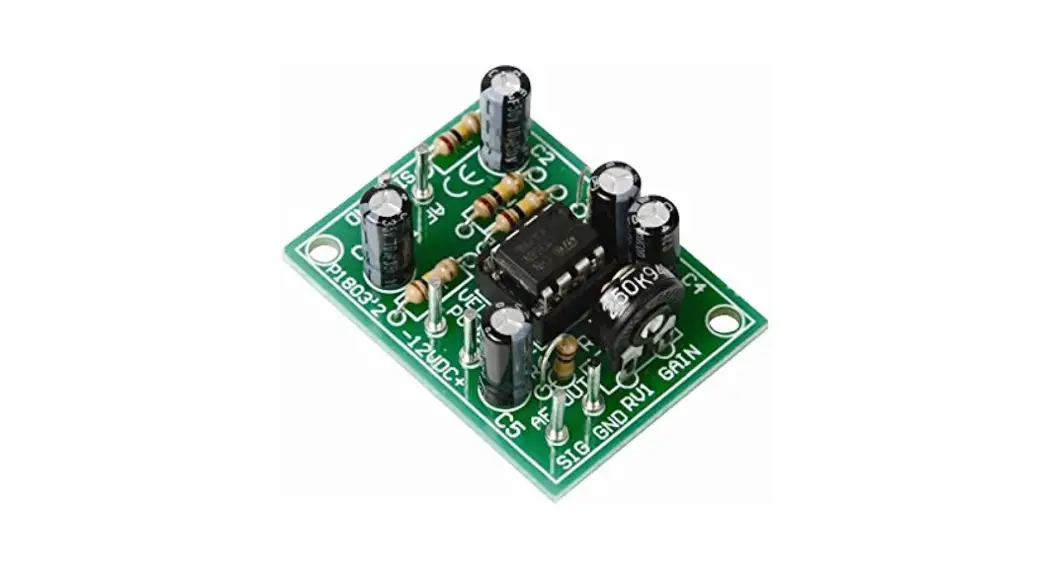
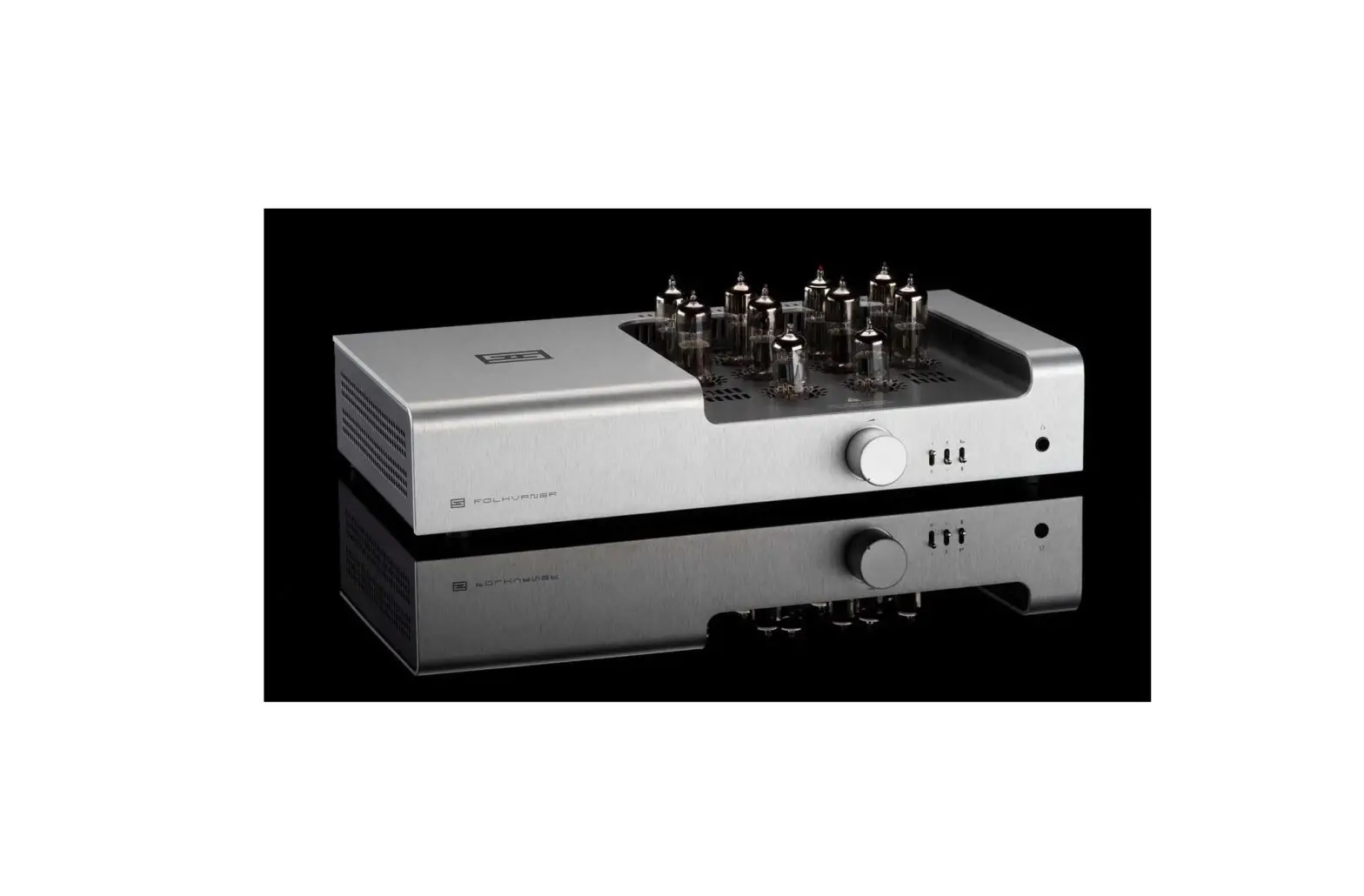
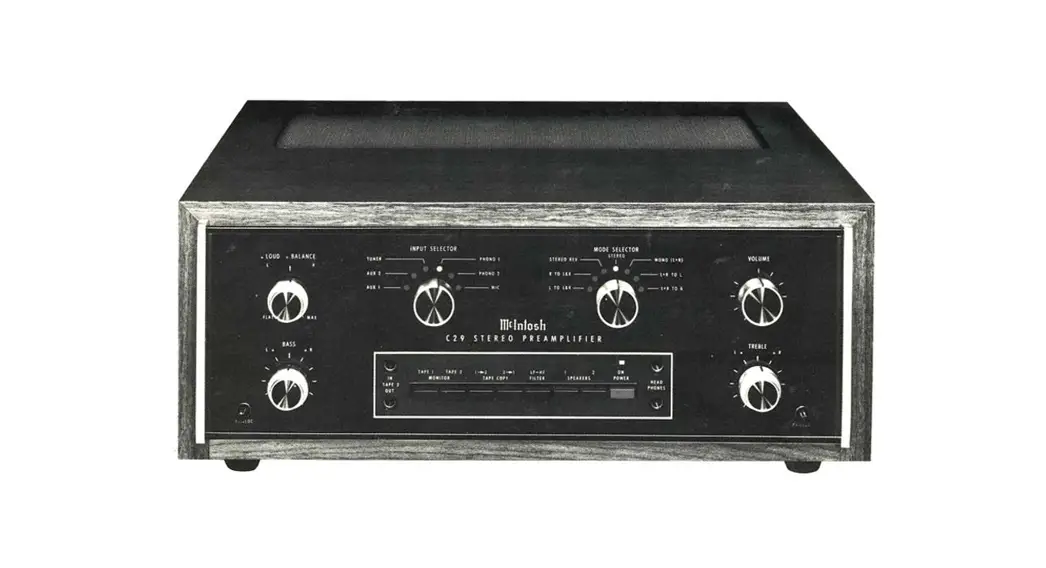
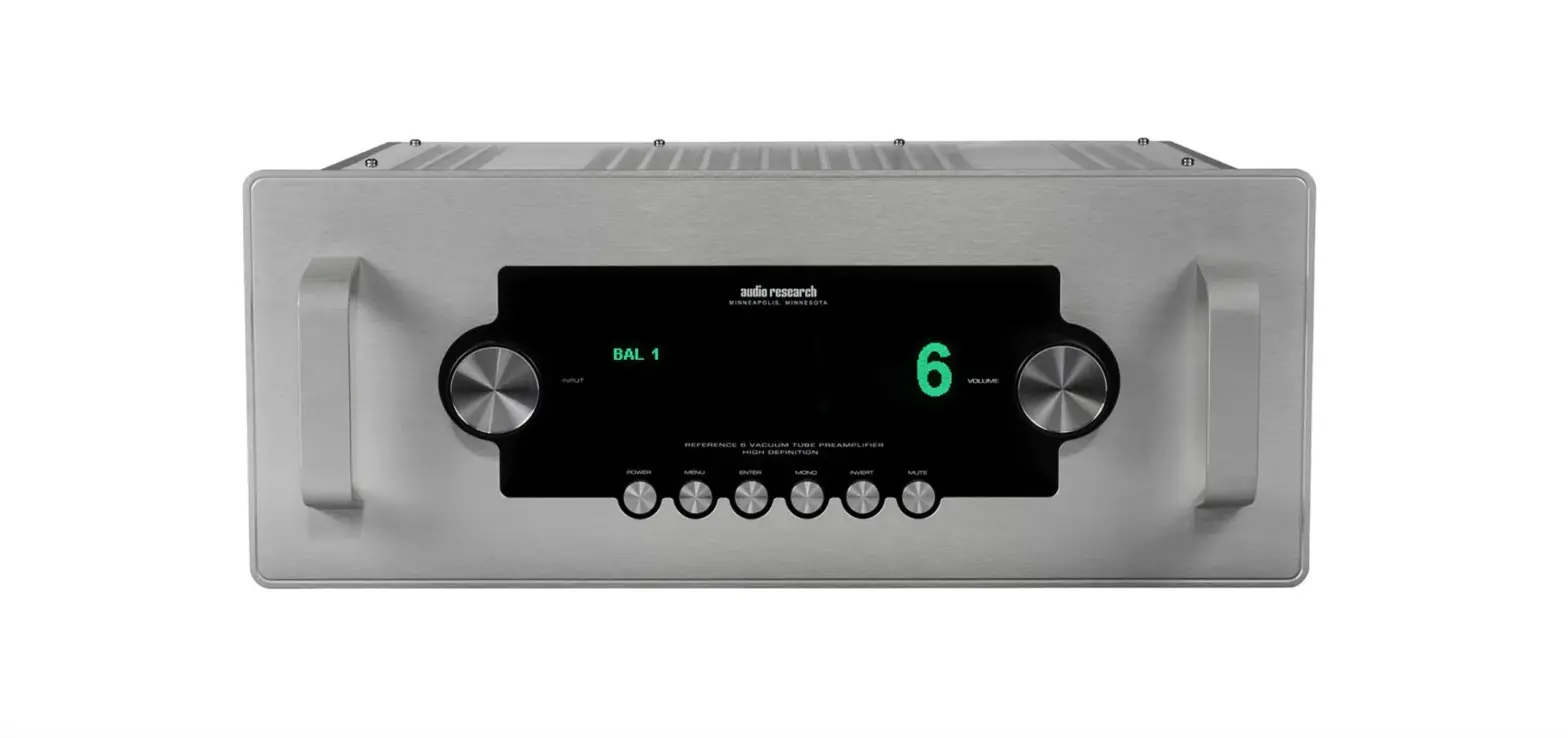
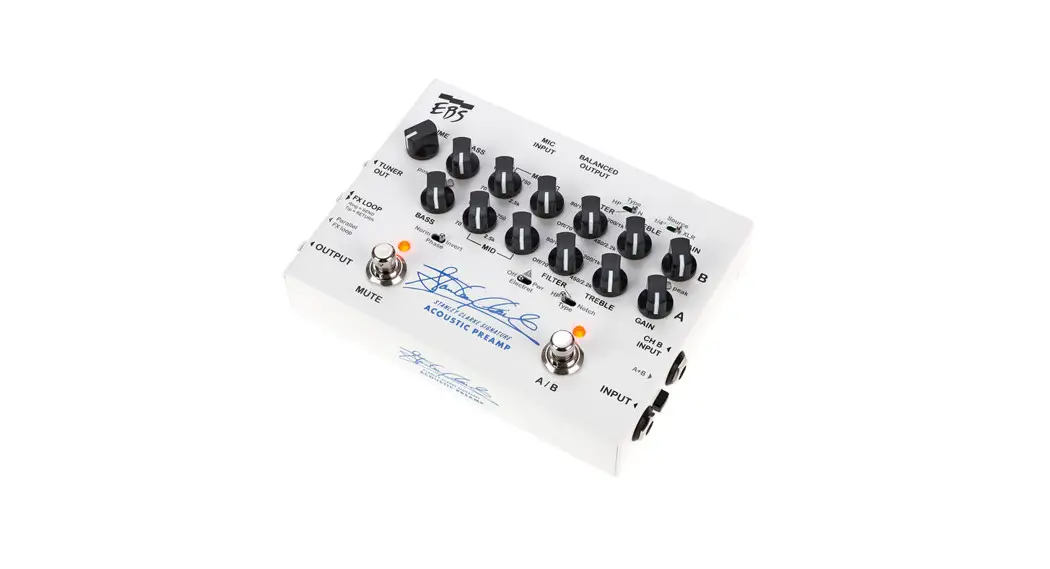
K8084 Volume and Tone Control Preamplifier
Product Information
Product Name: Volume and Tone Control –
Preamplifier
Model Number: K8084
Part Number: H8084IP-1
Description: The Volume and Tone Control
Preamplifier is a kit that provides volume and tone control for
amplifiers. It comes with all necessary input/output connections
and potentiometers. Additionally, it allows for customizable
attenuation or amplification of the input signal.
Features:
- Stereo volume control
- Stereo Baxandall bass and treble control
- Bass and treble potentiometers with center click
- Customizable attenuation or amplification
- Complete with knobs
Specifications:
- Supply Voltage: 2 x 12VAC / 100mA
- Frequency Response: 3Hz – 500kHz (-3dB)
- Standard Amplification: x1
- Signal to Noise Ratio: 98dB
- Harmonic Distortion: < 0.005% (@1KHz)
- Maximum Output: 5V RMS
- Tone Control:
- + and -15dB @ 20Hz
- + and -15dB @ 15kHz
- Input Impedance: 50k ohms
- PCB Dimensions: 105 x 70mm / 4.1 x 2.75 inches
Product Usage Instructions
- Ensure you have the right tools for assembly:
- A good quality soldering iron (25-40W) with a small tip
- Thin raisin-core solder (do not use any flux or grease)
- A diagonal cutter to trim excess wires
- Needle nose pliers
- Small blade and Phillips screwdrivers
- A basic multi-meter may be required for some projects
- Mount the component against the PCB surface and solder the
leads carefully - Ensure the solder joints are cone-shaped and shiny
- Trim excess leads as close as possible to the solder joint
- Remove components from the tape one at a time, checking their
value on the parts list
- For Zenerdiodes, watch the polarity. Mount ZD1 and ZD2 with
their cathode side as indicated - For Diodes, watch the polarity. Mount D1, D2, D3, and D4 with
their cathode side as indicated - For Resistors, mount them according to their values as listed
on the parts list
VOLUME AND TONE CONTROL – PREAMPLIFIER
K8084
H8084IP-1
Wnheeenduasivnogluomnee ocfoonutrroal amnpdlifpierersfe(rbaigblyoraslsmoaall)t,oynoeucaolnwtaroyls
Features & specifications
When using one of our amplifiers (big or small), you always need a volume control and preferably also a tone control. This kit comes complete with all input / output connections and potentiometers. Furthermore it is possible to amplify or attenuate the input signal.
FEATURES: stereo volume control stereo Baxandall bass and treble control bass and treble potentiometers with centre click customizable attenuation or amplification complete with knobs
SPECIFICATIONS: supply voltage: 2 x 12VAC / 100mA frequency response: 3Hz – 500kHz (-3dB) standard amplification: x1 signal to noise ratio: 98dB harmonic distortion: < 0.005% (@1KHz) maximum output: 5V RMS tone control:
+ and -15dB @ 20Hz + and -15dB @ 15kHz Input impedance: 50k ohms PCB dimensions: 105 x 70mm / 4,1 x 2,75″
modifications reserved
2
Assembly hints
1. Assembly (Skipping this can lead to troubles ! ) Ok, so we have your attention. These hints will help you to make this project successful. Read them carefully.
1.1 Make sure you have the right tools:
A good quality soldering iron (25-40W) with a small tip. Wipe it often on a wet sponge or cloth, to keep it clean; then apply solder to the tip, to give it a wet look. This is called `thinning’ and will
protect the tip, and enables you to make good connections. When solder rolls off the tip, it needs cleaning.
Thin raisin-core solder. Do not use any flux or grease. A diagonal cutter to trim excess wires. To avoid injury when cutting excess leads, hold the lead so they
cannot fly towards the eyes.
Needle nose pliers, for bending leads, or to hold components in place. Small blade and Phillips screwdrivers. A basic range is fine.
0.000
For some projects, a basic multi-meter is required, or might be handy
1.2 Assembly Hints :
Make sure the skill level matches your experience, to avoid disappointments. Follow the instructions carefully. Read and understand the entire step before you perform each operation. Perform the assembly in the correct order as stated in this manual Position all parts on the PCB (Printed Circuit Board) as shown on the drawings. Values on the circuit diagram are subject to changes. Values in this assembly guide are correct* Use the check-boxes to mark your progress. Please read the included information on safety and customer service
* Typographical inaccuracies excluded. Always look for possible last minute manual updates, indicated as `NOTE’ on a separate leaflet.
3
Assembly hints
1.3 Soldering Hints : 1- Mount the component against the PCB surface and carefully solder the leads
2- Make sure the solder joints are cone-shaped and shiny 3- Trim excess leads as close as possible to the solder joint
REMOVE THEM FROM THE TAPE ONE AT A TIME !
DO NOT BLINDLY FOLLOW THE ORDER OF THE COMPONENTS ONTO THE TAPE. ALWAYS CHECK
THEIR VALUE ON THE PARTS LIST!
4
Construction
1. Zenerdiodes. Watch the polarity !
CATHODE
ZD1 : 9V1 ZD2 : 9V1
ZD…
2. Diodes. Watch the polarity !
D1 : 1N4007
D2 : 1N4007 D3 : 1N4007 CATHODE
D…
D4 : 1N4007
3. Resistors
R…
R1 : 1K (1 – 0 – 2 – B) R2 : 100K (1 – 0 – 4 – B)
Hint for R2 and R4:
To weaken the input (divide)
E.g. to connect the input with an amplifier output.
Choose an inferior value for R2 and R4.
The dividing factor = (R1/R2) + 1
E.g. a value of 100 for RD (R2 and R4) will divide the input by 11.
R3 : 1K R4 : 100K R5 : 10 R6 : 10 R7 : 1K R8 : 1K R9 : 3K3 R10 : 1K R11 : 1K R12 : 10 R13 : 3K3 R14 : 3K3 R15 : 10K
(1 – 0 – 2 – B) (1 – 0 – 4 – B) (1 – 0 – 0 – B) (1 – 0 – 0 – B) (1 – 0 – 2 – B) (1 – 0 – 2 – B) (3 – 3 – 2 – B) (1 – 0 – 2 – B) (1 – 0 – 2 – B) (1 – 0 – 0 – B) (3 – 3 – 2 – B) (3 – 3 – 2 – B) (1 – 0 – 3 – B)
R16 : 10K R17 : 10K R18 : 10K R19 : 10K R20 : 10K
(1 – 0 – 3 – B) (1 – 0 – 3 – B) (1 – 0 – 3 – B) (1 – 0 – 3 – B) (1 – 0 – 3 – B)
Hint for R21 to R24
Modify the resistances marked RF and RA to increase the input sensitivity (more amplification).
The formula is:
amplification = (RF/RA) + 1
E.g. to double the amplification because the input of the connecting device is too weak, mount 100K for RF (R22 and R23).
R21 : 100K (1 – 0 – 4 – B) R22 : 1K (1 – 0 – 2 – B) R23 : 1K (1 – 0 – 2 – B) R24 : 100K (1 – 0 – 4 – B)
5
Construction
4. IC sockets, Watch the position of the notch!
IC1 : 8p IC2 : 8p
5. Capacitors.
c…
C…
C1 : 15pF (15) C2 : 15pF (15) C3 : 100pF (101)
C4 : 100pF (101) C5 : 4,7nF (472) C6 : 4,7nF (472) C7 : 4,7nF (472) C8 : 4,7nF (472) C9 : 47nF (473) C10 : 47nF (473)
6
C11 : 47nF C12 : 47nF C13 : 47nF C14 : 47nF C15 : 47nF C16 : 47nF
(473) (473) (473) (473) (473) (473)
7. Transistors T1 : BC547
T2 : BC557
8. Terminal block
C17 : 1µF / 63V
C18 : 1µF / 63V 6. LED. Watch the polarity !
COLOR= 2…5
LD…
CATHODE
LD1 : 5mm Red “Power”
SK1 : 3p AC input
9. Electrolytic capacitors
C19 : 47µF
C20 : 47µF
C…
C21 : 220µF
C22 : 220µF
10. Dual RCA Jacks
SK2 : input SK3 : output
11. Potentiometers
RV1
Construction
12. Test
Connect a 2 x 12V / min. 100mA transformer with power connector SK1 (e.g. our 212007C). This is a 2 x 12V 3-wire transformer, 1 wire is the common 0 and generally of another colour. A transformer without connecting wires will be marked 12 0 12.
100mA
RV1 : A 50K (Volume) RV2 : B 50K (Bass) RV3 : B 50K (Treble)
12V 0V
12V
7
Test
Connect the mains voltage to the transformer; mount a 100mAT security fuse in series with the transformer. Use a high-quality power cord and plug for the connection to the mains. When the transformer is live, the LED will light. Disconnect from mains. Mount the ICs into the socket (mind the position of the notch) Reconnect the mains. Check if the LED lights. Connect a device with the input e.g. MP3 player, CD player. Connect the output with a power amplifier. Turn down the volume to its minimum. Switch on the power amplifier.
Hint: you can also connect headphones instead of a power amplifier. You can use connections GND-TPR-
TPL; GND is the ground.
8
Enclosure
13. Building into a enclosure
To avoid hum, it is recommended to mount the K8084 and the transformer into a Metal housing. Drill the holes for the connections and the potentiometers.
Hint:You can drill the holes for the knobs or the potentiometers and mount the knob afterwards.
1 hole in the print (next to RV3) is provided to connect the earthing to the housing through the metal spacers or bolts.
Hint:
Mount the transformer as far away as possible from the circuit to avoid humming. It is recommended to leave this circuit under voltage; disconnect the voltage only when not in use for a
long time. Always switch off the power amplifier first before switching off the preamplifier.
9
PCB
14. PCB
10
15. Schematic diagram
AC 2 x 12V SK1
AC
0
AC
SCREW03
470 µ/25-35V 470 µ/25-35V
D1
1N4007
D2
R7
1K
1N4007
C21
D3
1N4007 D4
C22
R10
1K
1N4007
R8 ZD1 1K 9V1
ZD2 9V1
R11 1K
T1 BC547 +V
C19
C20 GND -V
T2 BC557
R12 10R +V
SK2A In L
GND
R3
C18
1K
1uF
C3 100p
R4 100K
RD
RV1A 50Klog
GND GND Lower RD for input devide
GND
4 8
C13 100nF
GND 3 2 IC1A 1
TL072
-V R23
C14 100nF
GND
1K RF R24 100K RA
Amplification= (RF/RA)+1 GND
SK2B In R
GND
R1
C17
1K
1uF
R2 C4 100K
100p RD
RV1B 50Klog
GND GND Lower RD for input devide
GND
5 7
6 IC1B TL072
R22 1K RF R21 100K RA Amplification= (RF/RA)+1 GND
+V Power LED
R9 22K
LD1 LED5RL
-V
50KLin
C5
RV3A
C6
-V
4n7
4n7
C15
R14 3K3
C1
15p
100nF
4
2
GND
3 IC2A 1
R5
R18
8
TL072
10R
10K
C9
C10
GND
47nF R20
47nF
R16 +V
C16 100nF
10K
RV2A
10K
GND
50KLin
50Klin
C7
RV3B
C8
4n7
4n7
R13
3K3
C2
15p
6
7
R6
R17
5 IC2B
10R
10K
TL072
C11
C12
GND
47nF R19
47nF R15
10K
RV2B
10K
50KLin
SK3A
Out L
GND
SK3B Out R
GND
diagram 11
VELLEMAN NV Legen Heirweg 33, B-9890 GAVERE
Belgium (Europe)
Modifications and typographical errors reserved © Velleman nv. – H8084IP’1 – 2014 (rev.3)
5 410329 374471