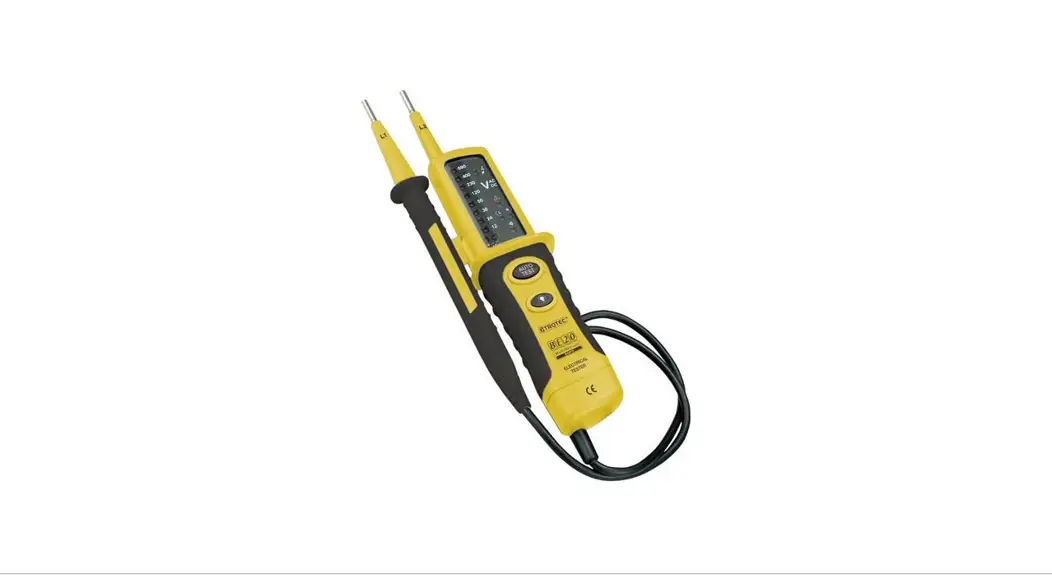
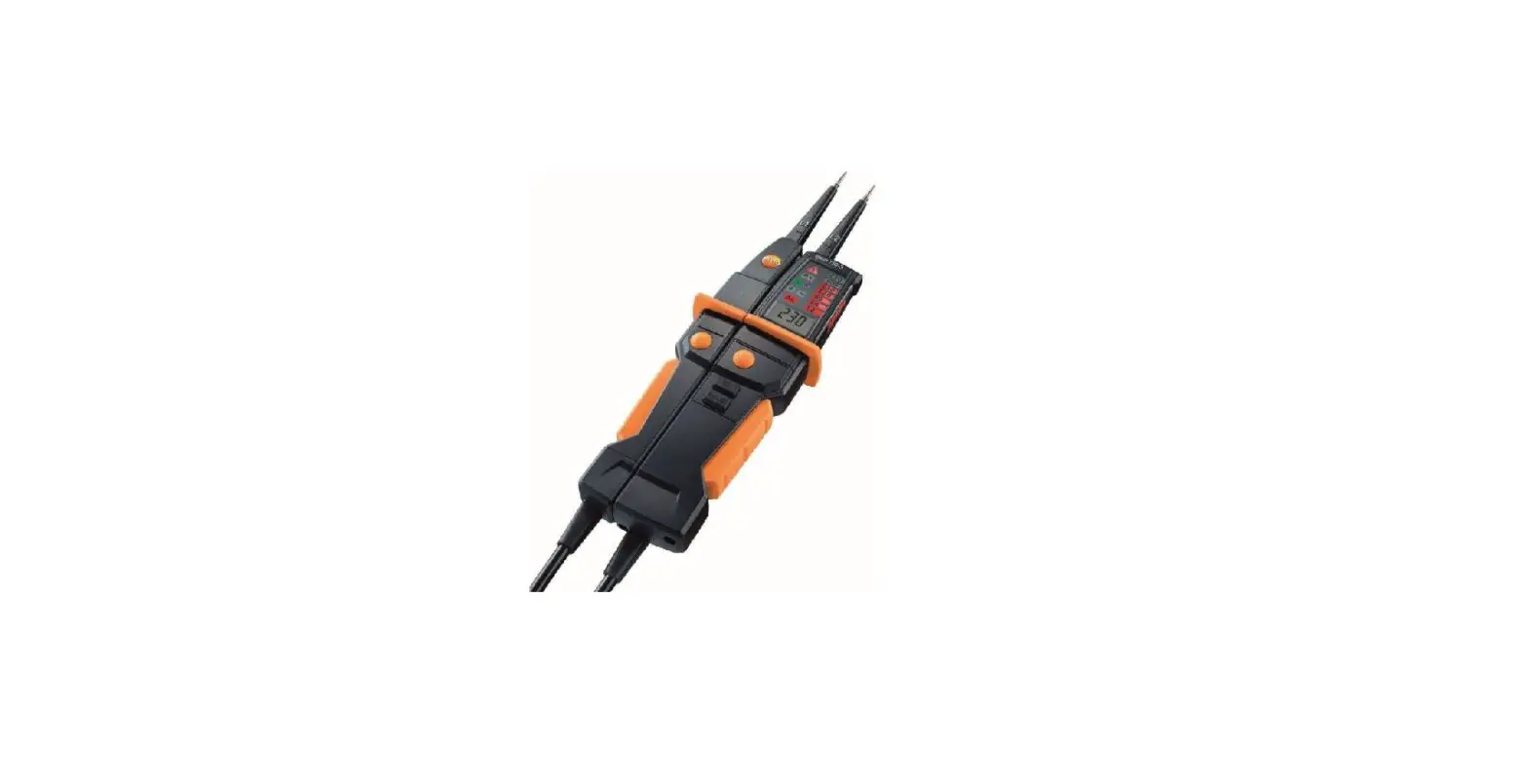
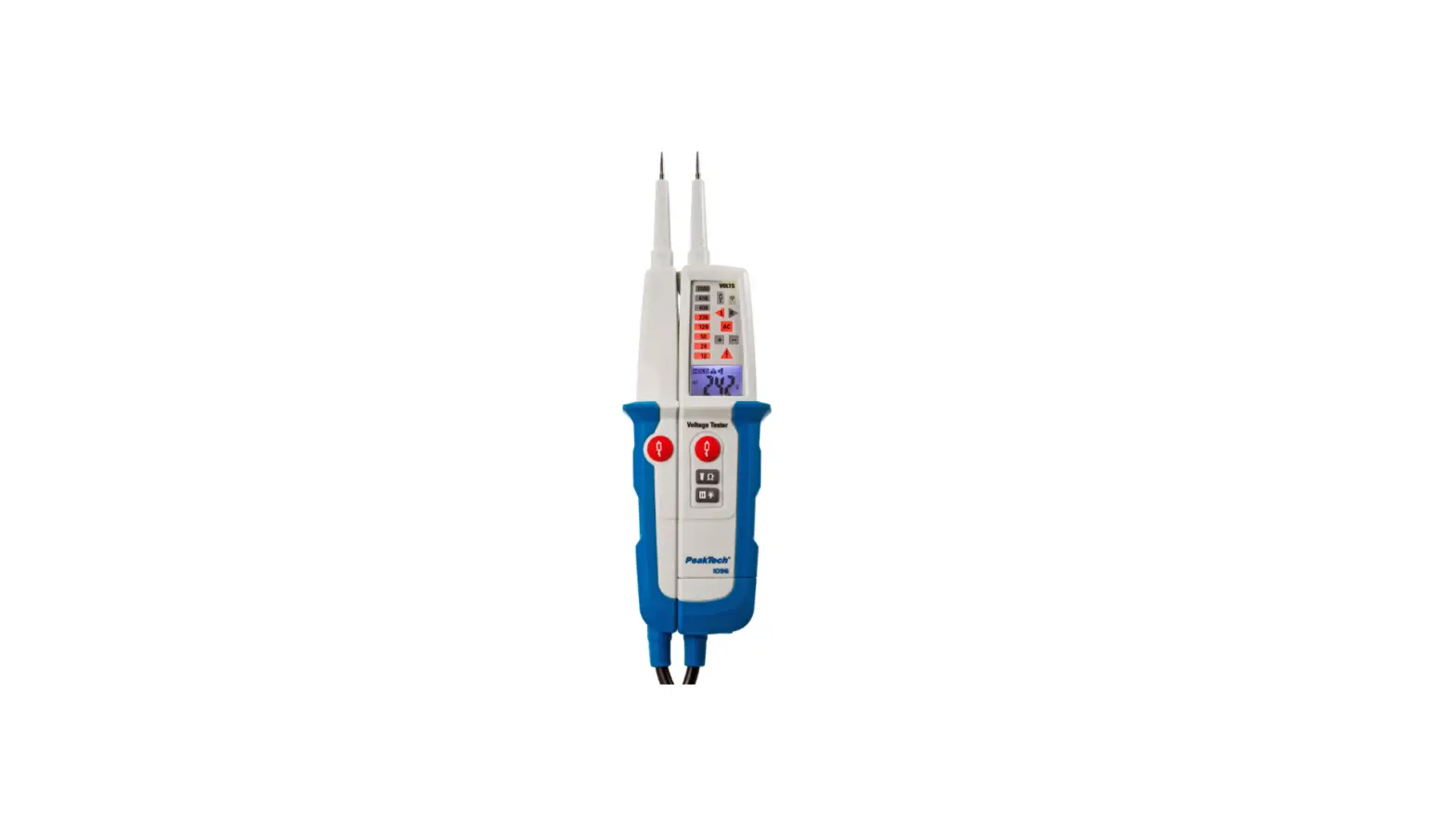
BE20 Voltage Tester
Product Information
Product Name: Voltage Detector BE20
Model Number: BE20
Language: English
Manufacturer: Trotec
Intended Use: To indicate voltage ranges
between 12 and 690 V DC or 12 and 400 V AC in facilities of
overvoltage category 3 (CAT III = domestic installations).
Power Source: Two microbatteries of type 1.5 V
AAA (required for all functions except bipolar voltage
detection)
Product Usage Instructions
- Read the entire user manual carefully before using the
device. - Ensure that the device is stored in the immediate vicinity of
its use location. - Only use the device to detect voltage ranges between 12 and 690
V DC or 12 and 400 V AC. - For bipolar voltage detection, the device operates without
battery supply. - For all other functions, insert two microbatteries of type 1.5
V AAA into the voltage detector. - Use only approved accessories and spare parts provided by
Trotec. - Avoid using the device in potentially explosive atmospheres or
when wet or very humid. - Do not make any unauthorized modifications to the device.
- Only qualified electricians should use the device, following
all safety instructions provided.
Note: This is a summary of the product usage instructions.
For detailed instructions and safety information, please refer to
the user manual provided by Trotec.
BE20
EN
ORIGINAL INSTRUCTIONS VOLTAGE DETECTOR
TRT-BA-BE20-TC220411TTRT01-003-EN
Table of contents
Notes regarding the instructions ………………………………….. 2
Safety …………………………………………………………………………. 2
Information about the device………………………………………… 4
Transport and storage………………………………………………….. 6
Operation ……………………………………………………………………. 6
Errors and faults………………………………………………………….. 9
Maintenance and repair ……………………………………………….. 9
Disposal ……………………………………………………………………… 9
Notes regarding the instructions
Symbols
Warning of electrical voltage This symbol indicates dangers to the life and health of persons due to electrical voltage.
Warning This signal word indicates a hazard with an average risk level which, if not avoided, can result in serious injury or death.
Caution This signal word indicates a hazard with a low risk level which, if not avoided, can result in minor or moderate injury.
Note This signal word indicates important information (e.g. material damage), but does not indicate hazards.
Info Information marked with this symbol helps you to carry out your tasks quickly and safely.
Follow the manual Information marked with this symbol indicates that the instructions must be observed.
You can download the current version of the instructions and the EU declaration of conformity via the following link:
BE20
https://hub.trotec.com/?id=41279
Safety
Read this manual carefully before starting or using the device. Always store the manual in the immediate vicinity of the device or its site of use.
Warning Read all safety warnings and all instructions. Failure to follow the warnings and instructions may result in electric shock, fire and / or serious injury. Save all warnings and instructions for future reference. · Do not use the device in potentially explosive rooms or areas and do not install it there. · Do not use the device in aggressive atmosphere. · Protect the device from permanent direct sunlight. · Do not remove any safety signs, stickers or labels from the device. Keep all safety signs, stickers and labels in legible condition. · Do not open the device. · Never charge batteries that cannot be recharged. · Different types of batteries and new and used batteries must not be used together. · Insert the batteries into the battery compartment according to the correct polarity. · Remove discharged batteries from the device. Batteries contain materials hazardous to the environment. Dispose of the batteries according to the national regulations. · Remove the batteries from the device if you will not be using the device for a longer period of time. · Never short-circuit the supply terminal in the battery compartment! · Do not swallow batteries! If a battery is swallowed, it can cause severe internal burns within 2 hours! These burns can lead to death! · If you think batteries might have been swallowed or otherwise entered the body, seek medical attention immediately! · Keep new and used batteries and an open battery compartment away from children.
2
voltage detector BE20
EN
· The device is only designed to display the voltage range and is not suitable for measuring purposes.
· Immediately before and after each use, test the voltage detector for proper functioning. The voltage detector must not be used if one or several indications on the voltage detector fail or if the functionality of the device cannot be clearly recognized.
· The voltage detector may only be used within the specified rated voltage range and in electrical installations of up to 400 V AC and 690 V DC.
· The voltage detector may only be used in circuits of overvoltage category CAT III with max. 600 V conductor to earth.
· When using the voltage detector, do not touch the test probes, and only hold the device by the insulated handles.
· The voltage detector must not be used when the battery compartment is open.
· At locations with load background noises, check whether the acoustic signals of the device can be perceived before using the device.
· For technical reasons, the device cannot display DC voltages within the range of approx. 0 V to 8 V.
· Observe the maximum permissible duty cycle of 30 seconds for voltage detection. The device must never be applied to voltages for more than 30 seconds.
· For technical reasons, the device must not be operated for 10 minutes after each voltage detection. The device may only be used again for the next voltage detection after the rest period of 10 minutes has elapsed.
· After each use, screw the supplied test probe protectors onto the two test probes to prevent injuries.
· Depending on the internal impedance of the voltage detector, the device may either indicate “operating voltage present” or “operating voltage not present” if an interference voltage is present.
· A voltage detector with a relatively low internal impedance will not indicate all interference voltages with an initial value above ELV, compared to the reference value of 100 k. Upon contact with the system parts to be checked, the voltage detector may temporarily reduce the interference voltages by discharging to a level below ELV; however, after the voltage detector has been removed, the interference voltage will assume its original value again.
· If the “voltage present” indication does not appear, it is highly recommended that you insert the earthing device before starting work.
· A voltage detector with a relatively high internal impedance will not clearly indicate “operating voltage not present” if an interference voltage is present, compared to the reference value of 100 k.
· If the “voltage present” indication appears for a part that is considered to be disconnected from the system, it is highly recommended that you take additional measures (e.g. using an additional suitable voltage detector, visual inspection of the disconnection point in the electric network, etc.) to check the “operating voltage not present” state of the system part to be checked, and to make sure that the voltage indicated by the voltage detector is an interference voltage.
· A voltage detector indicating two internal impedance values has passed the design test for handling interference voltages and within the technical limits is able to differentiate between operating voltage and interference voltage, and to directly or indirectly indicate the existing type of voltage.
· Observe the storage and operating conditions (see Technical data).
Intended use
Only use the device to indicate voltage ranges between 12 and 690 V DC or 12 and 400 V AC whilst adhering to the technical data. The device may be used in facilities of overvoltage category 3 (CAT III = domestic installations).
Note When used as a bipolar voltage detector, the voltage detector operates without battery supply. For all other functions, two microbatteries of type 1.5 V AAA must be inserted into the voltage detector.
To use the device for its intended use, only use accessories and spare parts which have been approved by Trotec.
Foreseeable misuse
Do not use the device in potentially explosive atmospheres, when wet or very humid.
Unauthorized modifications of the device are forbidden.
Personnel qualifications
Qualified electricians who use this device must: · master the 5 safety rules of electrical engineering
1. De-energise 2. Secure against restart 3. Verify de-energised state (bipolar) 4. Earth and short-circuit 5. Cover neighbouring live parts · use the voltage detector following safe working procedures.
· be aware of the dangers that occur when working with electric devices in damp areas.
· take measures to protect themselves from direct contact with live parts.
· have read and understood the instructions, especially the Safety chapter.
EN
voltage detector BE20
3
Electrically skilled person
Electrically skilled personnel must be able to read and understand electric circuit diagrams, to put electrical systems into service and to maintain them, to wire control cabinets, to ensure the functionality of electrical components and to identify possible hazards from electrical and electronic systems.
Residual risks
Warning of electrical voltage Risk of death due to electric shock! An electric shock can result in severe personal injury or death! The device may only be used by qualified electricians in accordance with all safety instructions listed here.
Warning of electrical voltage Electric shock due to insufficient insulation! Check the device for damages and proper functioning before each use. If you detect damages, do not use the device any longer. Do not use the device when either the device or your hands are damp or wet! Do not use the device when the battery compartment or the housing is open.
Warning of electrical voltage Electric shock due to contact with live parts! Do not touch any live parts. Secure neighbouring live parts by covering them or by switching them off.
Warning of electrical voltage There is a risk of a short-circuit due to liquids penetrating the housing! Do not immerse the device and the accessories in water. Make sure that no water or other liquids can enter the housing.
Warning of electrical voltage Work on the electrical components must only be carried out by an authorised specialist company!
Warning Risk of suffocation! Do not leave the packaging lying around. Children may use it as a dangerous toy.
Warning The device is not a toy and does not belong in the hands of children.
Warning Dangers can occur at the device when it is used by untrained people in an unprofessional or improper way! Observe the personnel qualifications!
Caution Keep a sufficient distance from heat sources.
Note To prevent damages to the device, do not expose it to extreme temperatures, extreme humidity or moisture.
Note Do not use abrasive cleaners or solvents to clean the device.
Note Before commissioning, check the function of the device at a known voltage source, e.g. on a known and safe 230 V voltage source or on a known and safe 9 V battery. Select the correct measuring range!
Information about the device
Device description The bipolar voltage detector serves to indicate voltage ranges between 12 and 690 V DC or 12 and 400 V AC. The voltage amounts are displayed in 8 sections on an LED display with their polarity being indicated. The device may be used in facilities of overvoltage category 3 (CAT III = domestic installations). The device is further equipped with a torch for easier voltage detections on poorly lit areas.
Device depiction
1
8
TAEUSTTO
2 3
4
5 6
7
No. Designation 1 Test probe L1 () 2 Test probe L2 (+) 3 LED torch 4 Display 5 Autotest button 6 LED torch power button 7 Battery compartment 8 Protection against contact
4
voltage detector BE20
EN
Display 9
14
10
11
13
12
No. Designation
9 Unipolar voltage detection phase display
10 11
Warning indication Left-turning rotary
fvieollAdtTaUdgEiTeSreOTmctoiodne
display
(L)
Right-turning rotary field direction display (R)
12 Continuity check indication
13 Polarity indicator AC + Polarity indicator AC
14 Voltage detection LED displays
Technical data
Parameter Voltage indication
Voltage detection Display tolerance
Polarity indicator Display delay Frequency range Power consumption Current consumption Maximum permissible measuring time for voltages Rest period between voltage detections LED display from Operating temperature Relative humidity Overvoltage category Type of protection Dimensions (length x width x height) Battery Weight
Value 12690 VDC 12400 VAC Automatic -30 % to 0 % of the displayed value + / – / ~ < 0.1 s LED 50 / 60 Hz approx. 2.1 W for 600 V ls < 0.2 A duty cycle = 30 s
10 minutes
> 8 V AC/DC -10 °C to +55 °C 85 % max. CAT III 600 V IP64 240 x 40 x 78 mm
2 x 1.5 V AAA 237 g
Unipolar phase testing
Voltage range Frequency range
100 to 690 V AC 50/60 Hz
Continuity test
Measuring range Test current Overvoltage protection
< 300 k < 5 µA 690 V AC/DC
Phase sequence indicator
Voltage range Frequency range Measuring principle
100 to 400 V
50/60 Hz
double-pole and contactelectrode
Scope of delivery · 1 x Voltage detector BE20
· 1 x manual
EN
voltage detector BE20
5
Transport and storage
Note If you store or transport the device improperly, the device may be damaged. Note the information regarding transport and storage of the device.
Transport When transporting the device, ensure dry conditions and and protect the device from external influences e.g. by using a suitable bag.
Storage When the device is not being used, observe the following storage conditions: · dry and protected from frost and heat · protected from dust and direct sunlight · the storage temperature complies with the values specified
in the Technical data · Batteries are removed from the device
Operation
Inserting the batteries
Note Make sure that the surface of the device is dry and the device is switched off. 1. Loosen the screw below the battery compartment cover (7) with a suitable screwdriver. 2. Remove the battery compartment cover (7). 3. Insert the batteries (2 x 1.5 V batteries AAA) into the battery compartment with correct polarity. 4. Place the battery compartment cover (7) back onto the device and retighten the screw.
Function test
Info
Check the device for reliable functioning at a known voltage source before each voltage detection.
Info
The LED is also illuminated if the battery level is low; it is lit as soon as there is a voltage exceeding 50 V. 1. Press and hold the autotest button (5) on the device for a few seconds. ð The continuity test indication (12) is illuminated. ð All voltage detection LED displays (14) are illuminated. ð If the autotest has been successful, an acoustic signal is emitted. 2. Before performing the measurement with two test probes, check the functionality of the device by holding together both test probes (1, 2). ð If the test is successful, all voltage detection LED displays (14) and the continuity test indication (12) are illuminated. An acoustic signal is emitted additionally. ð If the test has not been successful, replace the batteries as described in the Chapter “Inserting the batteries”, and repeat the function test.
Note
A defective voltage detector must not be used. If the device does not react as described when you carry out the function test, no longer use the voltage detector.
TAESUTTO
6
voltage detector BE20
EN
Measuring with one test probe
Unipolar phase testing
Note The device is only suited for unipolar phase testing if it contains charged batteries.
Warning of electrical voltage Risk of electric shock and risk of injury! Unfavourable surrounding conditions, e.g. electrostatic fields or good insulation, can have negative influences on the unipolar phase testing. Always carry out an additional bipolar voltage detection. 1. Touch the measuring point to be tested with the test probe L2 (2). ð The unipolar voltage detection phase display (9) is illuminated and an acoustic signal is emitted if there is an AC voltage exceeding 100 V.
Measuring with two test probes
Warning of electrical voltage Risk of electric shock and risk of injury! · During the measurement, make sure to observe the measuring ranges of the device specified in the technical data.
· Test the device for proper functioning at a known voltage source before each measurement.
· When holding onto the device, make sure to always hold it by the insulated handles and do not reach behind the protection against contact (8). Never reach behind the protection against contact and never touch the test probes.
TAESUTTO
TAEUSTTO
TAEUSTTO
EN
voltage detector BE20
7
Voltage detection
Info For technical reasons, the instrument cannot display DC voltages within the range of approx. 0 V to 8 V.
Note Note that the actual voltage can be up to 30 % lower than the voltage indicated on the display. For example: If a voltage value of 36 V is displayed, the actual voltage can have its range between 25.2 and 36 V (see display tolerance).
Note Before carrying out the voltage detection on the socket, screw the supplied tips onto both test probes (1, 2). This ensures an easier voltage detection on the socket.
Continuity test
Note The device is only suited for the continuity test if it contains charged batteries.
Warning of electrical voltage Risk of electric shock and risk of injury when carrying out the continuity test! Make sure that the power of the electric circuit is switched off and all capacitors are completely discharged. ü All capacitors are completely discharged. 1. Use both test probes (1, 2) to touch the measuring points of the de-energised measuring object. ð If the continuity test has been successful, an acoustic signal is emitted and the continuity test indication (12) is illuminated.
TAESUTTO
1. Use both test probes (1, 2) to touch the measuring points of the voltage source you would like to test. ð According to the existing voltage, the respective voltage detection LED displays (14) are illuminated on the display (4). ð The respective polarity indicator (13) is illuminated. ð If both polarity indicators AC + and AC (13) are illuminated simultaneously, there is an AC voltage.
Rotary field direction display
Note The device is only suited for rotary field direction display if it contains charged batteries.
1. Use both test probes (1, 2) to touch the measuring points of the voltage source you would like to test. ð According to the measurement result, the leftturning (L) or right-turning (R) rotary field direction display (11) is illuminated on the display (4).
TAEUSTTO
8
voltage detector BE20
EN
Further functions Switching on the torch Please proceed as follows to use the torch: ü Charged batteries have been inserted into the device. 1. Press and hold the LED torch power button (6).
ð The LED torch (3) will be illuminated for as long as the LED torch power button (6) is pressed.
2. Let go of the LED torch power button (6) to switch off the LED torch.
Errors and faults
The device has been checked for proper functioning several times during production. If malfunctions occur nonetheless, check the device according to the following list.
The device does not respond: · The battery voltage is too low. Exchange the batteries
immediately.
The voltage detection results in the LED display being inexplicable: · The battery voltage is too low. Exchange the batteries
immediately. · Check all cable connections for potential defects. In case
of defective connections/cables, you must not continue using the device.
The device still does not operate correctly after these checks? Please contact the Trotec customer service.
Maintenance and repair
Battery change A battery change is required if the continuity test indication (12) is no longer illuminated and no acoustic signal is emitted when holding both test probes together.
Cleaning Clean the device with a soft, damp and lint-free cloth. Make sure that no moisture enters the housing. Do not use any sprays, solvents, alcohol-based cleaning agents or abrasive cleaners, but only clean water to moisten the cloth.
Repair Do not modify the device or install any spare parts. For repairs or device testing, contact the manufacturer.
Disposal
Always dispose of packing materials in an environmentally friendly manner and in accordance with the applicable local disposal regulations.
The icon with the crossed-out waste bin on waste electrical or electronic equipment is taken from Directive 2012/19/EU. It states that this device must not be disposed of with the household waste at the end of its life. You will find collection points for free return of waste electrical and electronic equipment in your vicinity. The addresses can be obtained from your municipality or local administration. You can also find out about other return options that apply for many EU countries on the website https://hub.trotec.com/?id=45090. Otherwise, please contact an official recycling centre for electronic and electrical equipment authorised for your country.
The separate collection of waste electrical and electronic equipment aims to enable the re-use, recycling and other forms of recovery of waste equipment as well as to prevent negative effects for the environment and human health caused by the disposal of hazardous substances potentially contained in the equipment.
In the European Union, batteries and accumulators must not be treated as domestic waste, but must be disposed of professionally in accordance with Directive 2006/66/EC of the European Parliament and of the Council of 6 September 2006 on batteries and accumulators. Please dispose of batteries and accumulators according to the relevant legal requirements.
Only for United Kingdom
According to Waste Electrical and Electronic Equipment Regulations 2013 (SI 2013/3113) (as amended) and the Waste Batteries and Accumulators Regulations 2009 (SI 2009/890) (as amended), devices that are no longer usable must be collected separately and disposed of in an environmentally friendly manner.
EN
voltage detector BE20
9
Trotec GmbH
Grebbener Str. 7 D-52525 Heinsberg
+49 2452 962-400 +49 2452 962-200
[email protected] www.trotec.com
 WEEE-Annahmestellen | Interzero - zero waste solutions