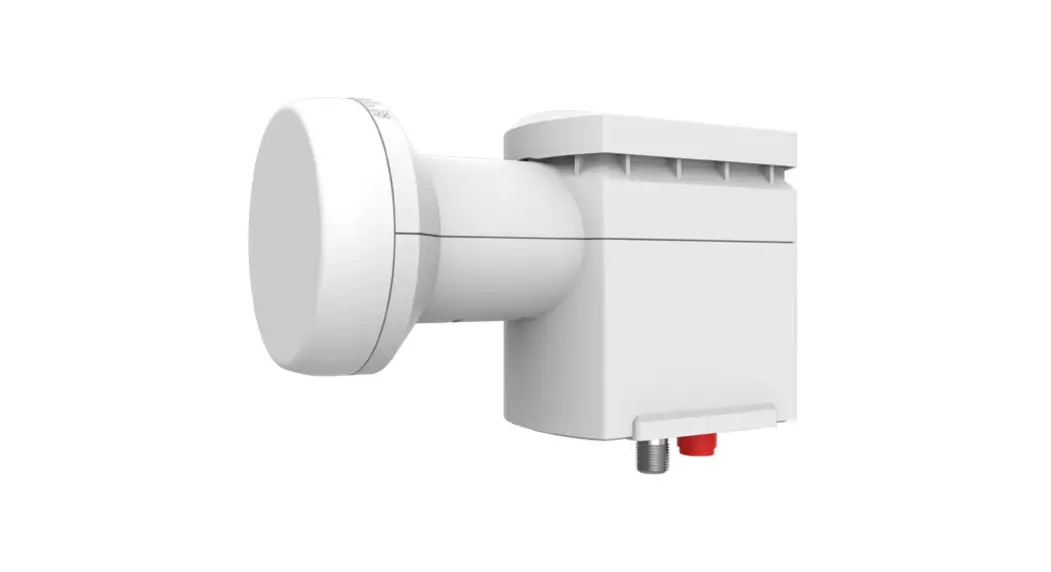
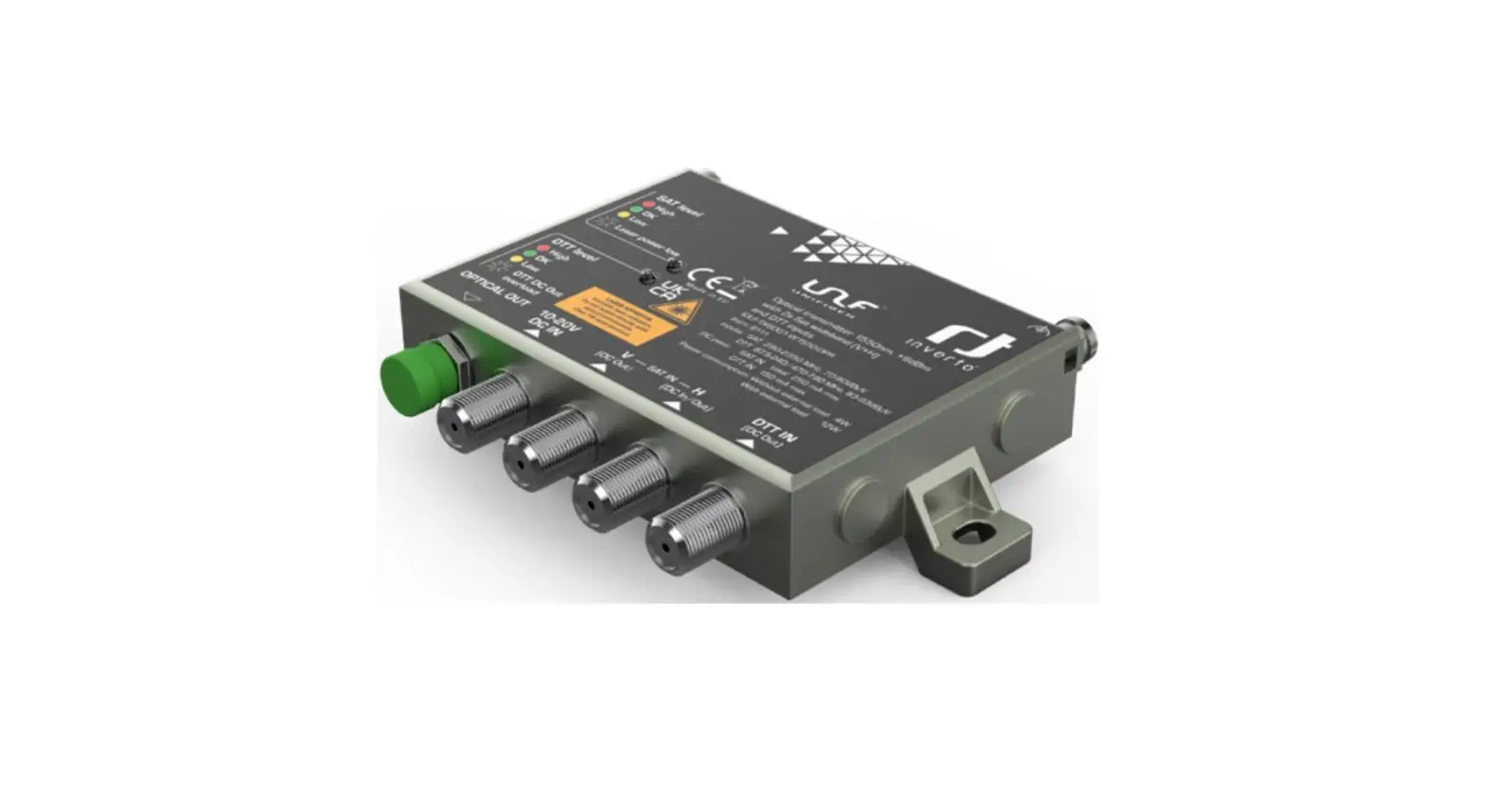
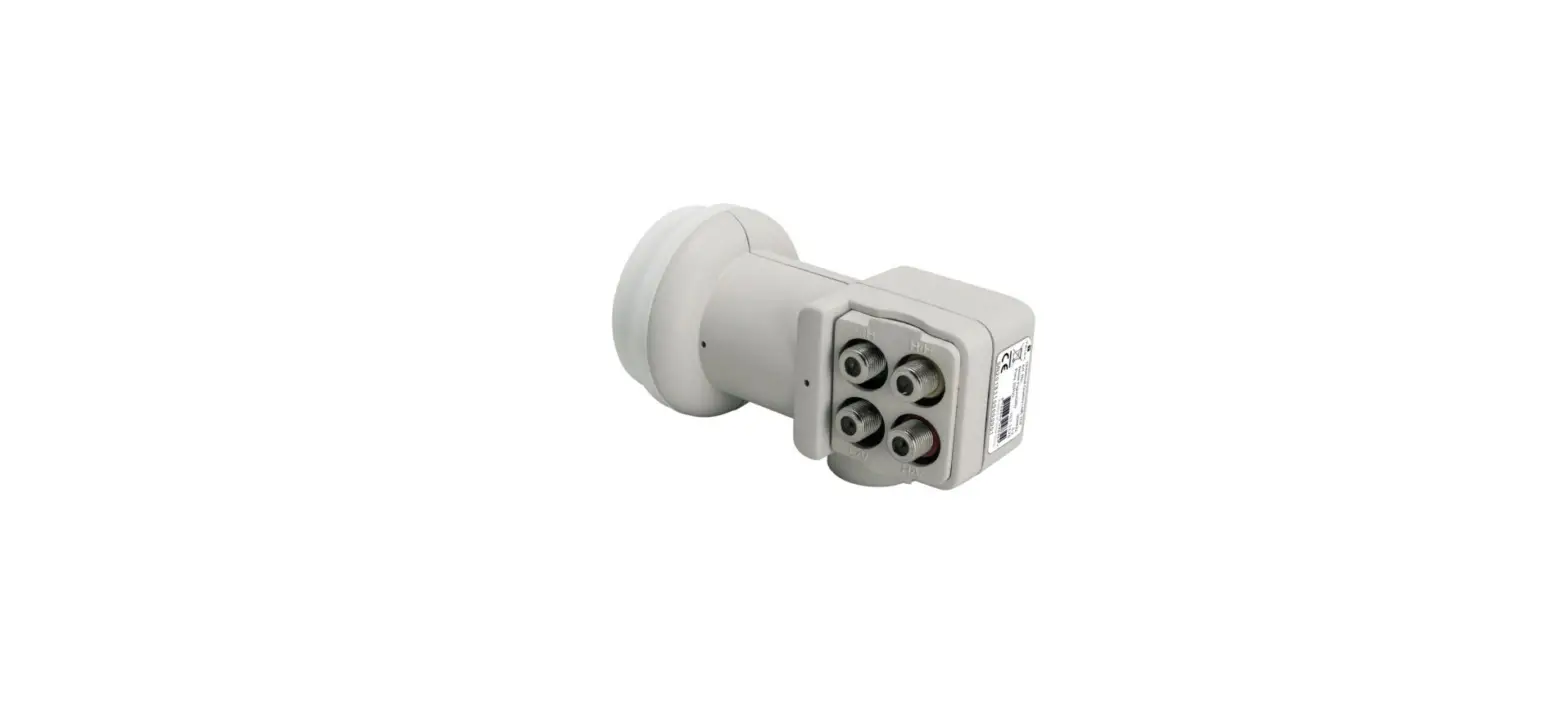
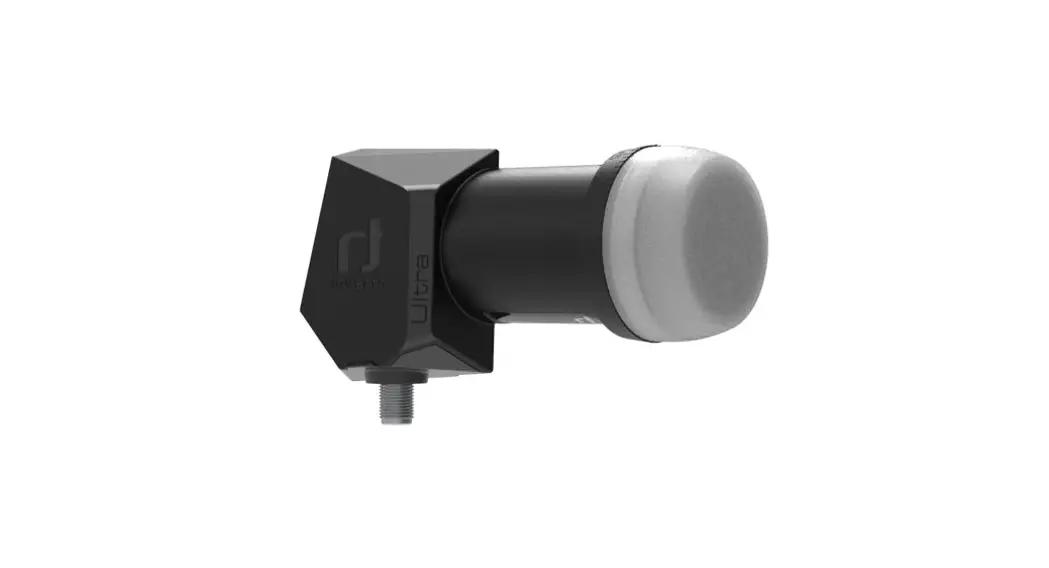
5520 LNBs Unicable II dCSS
Product Information:
Unicable II (dCSS) LNBs
The Unicable II (dCSS) LNBs are satellite signal receivers
designed to be used with a satellite dish antenna equipped with a
40mm LNB holder for mounting. These LNBs allow users to receive
satellite signals in the Ku band.
Models:
- 5520 Unicable II Programmable 32UB dCSS LNB
(IDLU-32L412-UNBRR-OPN) - 5521 Unicable II Programmable 24UB dCSS LNB
(IDLU-24L412-UNMXM-OPN)
Technical Data:
| Frequency Range (GHz) | Frequency Range (MHz) | Oscillator Frequency (GHz) | Gain (dB) | Connector Type | Supply Voltage (VDC) | Current Consumption (mA) | Dimensions (mm) | Weight (g) |
|---|---|---|---|---|---|---|---|---|
| 10.7 ~ 12.75 | 950 ~ 2150 | 10.40 | 23dB typical | F-type port / 75 | 11 ~ 20 | 450 max. | 40 | 158 |
Product Usage Instructions:
Installing the LNB on the dish antenna
- Place the LNB in the LNB holder/clamp of the dish antenna.
Close the LNB holder handle and lightly tighten the clamp screw so
that the LNB can still rotate. - Set the correct tilt angle of the LNB by rotating it clockwise
or counterclockwise. The tilt angle depends on the location of the
satellite dish antenna installation and the satellite to adjust.
Use a satellite signal meter or a satellite receiver measurement
indications for precise adjustment. - After determining the correct position of the LNB, tighten the
screws that secure the LNB clamp so that the LNB is fixed in its
place. - If the satellite dish is not correctly installed and aligned
towards the desired satellite, complete the installation and
alignment of your satellite dish first. - We strongly recommend that the satellite dish antenna is
installed by a qualified satellite antenna installer.
Connecting the antenna cable to the LNB
- Attach the protective rubber boot to the antenna cable.
- Strip the cable insulation and screw the F-plug onto the end of
the cable. - Make sure the braided wires and the center conductor are not
touching each other as this degrades signal quality. - Screw in the F-plug to connect the antenna cable to the
LNB. - Slide the protective rubber boot into its collar tip at the LNB
housing.
Note: The F plug is sold separately and is not included with the
LNB.
Simplified EU Declaration of Conformity: The Unicable II (dCSS)
LNBs comply with the essential requirements of the RED 2014/53/EU
and RoHS 2011/65/EU directives. The full text of the EU declaration
of conformity can be found at: www.inverto.tv/support_dc
Unicable II (dCSS) LNBs
User Manual
2
Gebrauchsanweisung
6
Manuel d’installation
10
Instrukcja Obslugi
14
1
Unicable II (dCSS) LNBs
User Manual
Models
5520 Unicable II Programmable 32UB dCSS LNB 5521 Unicable II Programmable 24UB dCSS LNB
IDLU-32L412-UNBRR-OPN IDLU-24L412-UNMXM-OPN
General Information
Please read the information contained in this manual before installing the LNB. The operations described in the instructions must be carried out in the order presented.
Product Description
The LNB is intended for use with a satellite dish antenna equipped with a 40mm LNB holder for mounting. The LNB allows receiving satellite signals in the Ku band.
Installation & Safety
Warning! The LNB and the satellite dish antenna shall be installed by a qualified satellite antenna installer, and in compliance with safety regulations.
Do not install the LNB during a storm or other extreme weather conditions. Connect the coaxial cable to the LNB before connecting the set top box. Carry out your satellite dish and LNB installation with tools and accessories intended for this purpose
only.
En 2
Installing the LNB on the dish antenna
1.
Place the LNB in the LNB holder/clamp of the dish antenna. Close the
LNB holder handle and lightly tighten the clamp screw so that the
LNB can still rotate (Fig. 1).
2.
Set the correct tilt angle of the LNB by rotating the LNB clockwise
or counterclockwise: The tilt angle of the LNB (K) depends on the
location of the satellite dish antenna installation and the satellite to
be received. For example, for receiving Hotbird at 13°E in Warsaw, the tilt angle of the LNB should be 6° counterclockwise. Fine angle
adjustment turning should be done using a satellite signal meter or
a satellite receiver measurement indications (Fig. 2).
3.
After determining the correct position of the LNB, tighten screws
that secure the LNB clamp so that the LNB is fixed in its place (Fig. 3).
4.
The above description of the LNB installation applies to the case
when the satellite dish is correctly installed and aligned towards the desired satellite. In other cases, you must complete the installation
and correct alignment of your satellite dish first.
5.
We strongly recommend that the satellite dish antenna is installed
by a qualified satellite antenna installer.
Note: Product images are for illustrative purposes only and may differ from the actual product.
Fig. 1 Fig. 2
En
Fig. 3 3
Connecting the antenna cable to the LNB
1.
Attach the protective rubber boot to the antenna cable.
2.
Strip the cable insulation and screw the F-plug* onto the end
of the cable (Fig. 4).
3.
Make sure the braided wires and the center conductor are not
touching each other as this degrades signal quality.
4.
Screw in the F-plug to connect the antenna cable to the LNB.
5.
Slide the protective rubber boot into its collar tip at the LNB
housing.
* F plug is sold separately. It is not included with the LNB.
10mm
7 mm
Technical data
Parameter Input signal Output signal Local Oscillator (L.O.) Cross polarization isolation Output ports / impedance Input DC voltage level DC current consumption Neck diameter (Ø) Weight
GHz MHz GHz dB -/ VDC mA mm g
Item# 5520 / 5521 10.7 ~ 12.75 950 ~ 2150 10.40 GHz 23dB typical F-type port / 75 11 ~ 20 450 max. 40 158
Fig. 4
En
Simplified EU Declaration of Conformity
FTA Communication Technologies S.á r.l hereby declares that the LNB converter type 5520, 5521 meets the
essential requirements of the following directives: – RED 2014/53 / EU – RoHS 2011/65 / EU
A copy of the full text of the EU declaration of conformity can be found at: www.inverto.tv/support_dc
4
WEEE Notice
Environmental protection is an important objective of our company. The crossed out waste container means that this product cannot be disposed of as waste after it has ended from the household, but must be disposed of in a special place. We hereby inform you that the main purpose of the regulation European and the Act of 11 September 2015 on waste electrical and electronic equipment is to limit the amount of waste arising from equipment, ensuring an appropriate level of collection, recovery and recycling of used equipment, and increasing public awareness of its harmfulness to the natural environment at every stage of its use. Pursuant to art. 36 above of the Act, the user of equipment intended for households is obliged to return used equipment to the collector waste equipment or the entity authorized to collect waste equipment referred to in art. 45 item 1 point 1 of the Act of December 14 2012 on waste. With all this in mind, it should be stated that in the above process, households have to meet very important role. However, it should be remembered that products belonging to the group of electrical or electronic equipment should be utilized in the right way and in the right places. Information on local collection points (storage site, collection point, etc.) can be provided by local authorities or the distributor. At the same time, it should be emphasized that distributors are obliged to take back waste equipment from households free of charge at the point of sale, provided that the waste equipment is of the same type and performed the same functions as the equipment sold. In addition, the distributor, providing the En buyer with equipment intended for households, is obliged to take back free used equipment from households at the place of delivery of that equipment, provided that the waste equipment is of the same type and has the same functions as the equipment supplied. In this way you can participate in the process of reusing raw materials and supporting the electrical and electronic waste management program, which may affect environment and public health. It should be remembered that the correct disposal of equipment allows saving valuable resources and avoiding negative effects on health and the environment, which may be threatened by inappropriate handling of waste and components dangerous.
Importer
FTA Communication Technologies S.à r.l 17 Route de Luxembourg, Gonderange L-6182 Luxembourg
For further details contact: [email protected]
FTA Communication Technologies S.á r.l Tel. +352 264 367 1 Fax. +352 264 313 68 17 Route de Luxembourg, Gonderange, L-6182, Luxembourg
5
Unicable II (dCSS) LNBs
Gebrauchsanweisung
Modelle
5520 Unicable II Programmable 32UB dCSS LNB 5521 Unicable II Programmable 24UB dCSS LNB
IDLU-32L412-UNBRR-OPN IDLU-24L412-UNMXM-OPN
Allgemeine Informationen
Bitte lesen Sie die in diesem Handbuch enthaltenen Informationen, bevor Sie den LNB installieren. Die in der Anleitung beschriebenen Vorgänge müssen in der angegebenen Reihenfolge ausgeführt werden.
Produktbeschreibung
Diese LNBs sind für die Verwendung mit einer Satellitenantenne vorgesehen, die mit einem 40mm LNB-Halter zur LNBMontage ausgestattet ist. Die LNBs ermöglichen den Empfang von Satellitensignalen im Ku-Band.
Installation & Sicherheit
Achtung! LNBs und Satellitenantennen müssen von einem qualifizierten Satellitenantennen-Installateur und unter Einhaltung der Sicherheitsvorschriften installiert werden.
Installieren Sie ein LNB nicht während eines Sturms oder anderer extremer Wetterbedingungen. Schließen Sie das Koaxialkabel an ein LNB an, bevor Sie eine Set-Top-Box oder ein TV-Gerät anschließen. Führen Sie Ihre Satellitenantennen- und LNB-Installation mit Werkzeugen und Zubehör durch, die für
diesen Zweck vorgesehen sind.
De 6
Installieren eines LNBs an dem LNB-Halter der Satellitenantenne
1.
Platzieren Sie ein LNB in der einen Hälfte der LNB-Halterung/
Klemme der Satellitenantenne. Legen Sie die zweite Hälfte um
ein LNB indem die beiden oberen Hälften zusammengesteckt
werden und ziehen Sie die Klemmschraube leicht an, so dass sich
ein LNB noch leicht drehen kann (Abb. 1).
2.
Stellen Sie den richtigen Neigungswinkel (Skew) des LNBs
ein, indem Sie das LNB im oder gegen den Uhrzeigersinn
drehen: Der Neigungswinkel des LNB (K) hängt vom Standort der Satellitenantennenanlage und dem zu empfangenden Satelliten ab. Zum Beispiel sollte für den Empfang von Hotbird bei 13°Ost in Warschau der Neigungswinkel eines LNBs 6° gegen den Uhrzeigersinn betragen. Die Feineinstellung des Neigungswinkels kann mit Hilfe der Signalanzeigen eines STBs
oder TVs vorgenommen werden, am besten mit einem dafür geeigneten Messgerät für SAT Empfang im Ku Band (Abb. 2).
3.
Nachdem Sie die korrekte Position eines LNBs eingestellt haben,
ziehen Sie die Schraube an, mit der die LNB-Klammer befestigt
wird, so dass der eingesetzte LNB fixiert ist (Abb. 3).
4.
Die obige Beschreibung einer LNB-Installation gilt für den
Fall, dass die Satellitenantenne korrekt installiert und auf den
gewünschten Satelliten ausgerichtet ist. In anderen Fällen müssen Sie zuerst die Installation und die korrekte Ausrichtung
Ihrer Satellitenschüssel abschließen.
5.
Wir empfehlen, dass die Satellitenantenne von einem
qualifizierten Satellitenantenneninstallateur installiert wird.
Hinweis: Produktabbildungen dienen nur zu Illustrationszwecken und können vom tatsächlichen Produkt abweichen.
Fig. 1 Fig. 2
De
Fig. 3 7
Anschließen eines Antennenkabels an den LNB
1.
Schieben Sie die Gummimanschette zum Schutz der
Verbindung über das Antennenkabel.
2.
Entfernen Sie die Isolierung vom Koaxialkabel und schrauben
danach den F-Stecker* auf das Kabelende (Abb. 4).
3.
Achten Sie darauf, dass sich die geflochtenen Drähte und der
Mittelleiter nicht berühren, da dies ein Kurzschluss und somit
ein Verlust des Signals verursachen kann.
4.
Schrauben Sie den F-Stecker an den montierten LNB, um das
Antennenkabel mit dem LNB zu verbinden. Schieben Sie die
Gummimanschette in die Kragenspitze am LNB-Gehäuse.
* F-Stecker ist separat erhältlich. Er ist nicht im Lieferumfang eines LNBs enthalten.
Technische Daten
Parameter Eingangsfrequenzbereich Ausgangsfrequenzbereich Oszillatorfrequenz (LO) Tiefband Kreuzpolarisationsunterdrückung Ausgänge/Impedanz Eingangsspannung
Stromaufnahme
Feedhorndurchmesser (Ø)
Gewicht
GHz MHz GHz dB -/ VDC mA mm g
Item# 5520 / 5521 10.7 ~ 12.75 950 ~ 2150 10.40 GHz 23dB typical F-type port / 75 11 ~ 20 450 max. 40 158
10mm
7 mm
De Fig. 4
Vereinfachte EU-Konformitätserklärung
FTA Communication Technologies S.á r.l. erklärt, dass die LNB-Konverter Artikel 5520, 5521 die grundlegenden Anforderungen der folgenden Richtlinien erfüllt: – RED 2014/53 / EU – RoHS 2011/65 / EU
Eine Kopie des vollständigen Textes der EUKonformitätserklärung finden Sie unter: www.inverto.tv/ support_dc
8
WEEE-Hinweis
Der Umweltschutz ist ein wichtiges Ziel unseres Unternehmens. Der durchgestrichene Abfallbehälter bedeutet, dass dieses Produkt nach dem Auslaufen aus dem Haushalt nicht als Abfall entsorgt werden darf, sondern an einem speziellen Ort entsorgt werden muss. Wir informieren Sie hiermit darüber, dass der Hauptzweck der europäischen Verordnung und des Gesetzes vom 11. September 2015 über Elektro- und ElektronikAltgeräte darin besteht, die Menge des aus den Geräten entstehenden Abfalls zu begrenzen, ein angemessenes Niveau der Sammlung, Rückgewinnung und des Recyclings von Altgeräten zu gewährleisten und das öffentliche Bewusstsein für die Schädlichkeit dieser Geräte für die natürliche Umwelt in jeder Phase ihrer Nutzung zu erhöhen. Gemäß Art. 36 des Gesetzes ist der Benutzer von Geräten, die für Haushalte bestimmt sind, verpflichtet, die gebrauchten Geräte an die Sammelstelle für Altgeräte oder an die autorisierte Stelle zum Sammeln zurückzugeben gemäß Abschnitt 45 Artikel 1, Punkt 1 des Gesetzes vom 14. Dezember 2012 über Abfälle. In diesem Zusammenhang ist darauf hinzuweisen, dass den Haushalten in dem oben genannten Prozess eine sehr wichtige Rolle zukommt. Es sollte jedoch daran erinnert werden, dass Produkte, die zur Gruppe der elektrischen oder elektronischen Geräte gehören, auf die richtige Art und Weise und an den richtigen Orten entsorgt werden sollen. Informationen über lokale Sammelstellen (Lagerort, Sammelstelle usw.) können von den lokalen Behörden oder dem Vertreiber zur Verfügung gestellt werden. Gleichzeitig ist hervorzuheben, dass die Vertreiber verpflichtet sind, Altgeräte aus Haushalten an der Verkaufsstelle kostenlos zurückzunehmen, vorausgesetzt, dass die Altgeräte vom gleichen Typ sind und die gleichen Funktionen erfüllen wie die verkauften Geräte. Darüber hinaus ist der Vertreiber, der dem Käufer für den Haushalt bestimmte De Geräte zur Verfügung stellt, verpflichtet, gebrauchte Geräte aus den Haushalten am Lieferort dieser Geräte kostenlos zurückzunehmen, sofern die Altgeräte vom gleichen Typ sind und dieselben Funktionen erfüllen wie die gelieferten Geräte. Auf diese Weise können Sie sich am Prozess der Wiederverwendung von Rohstoffen und der Unterstützung des Programms zur Entsorgung von Elektro- und Elektronikabfällen beteiligen, die sich auf die Umwelt und die öffentliche Gesundheit auswirken können. Es ist zu bedenken, dass die korrekte Entsorgung von Geräten es ermöglicht, wertvolle Ressourcen zu sparen und negative Auswirkungen auf Gesundheit und Umwelt zu vermeiden, die durch unsachgemäßen Umgang mit Abfall und gefährlichen Komponenten
bedroht sein können.
Importeur
FTA Communication Technologies S.à r.l 17 Route de Luxembourg, Gonderange L-6182
Luxembourg
FWoer iftuertehIenrfodremtaailtsiocnoenntaucnt:tsear:lessa@[email protected]
FTA Communication Technologies S.á r.l Tel. +352 264 367 1 Fax. +352 264 313 68 17 Route de Luxembourg, Gonderange, L-6182, Luxembourg
9
Unicable II (dCSS) LNBs
Manuel d’installation
Modèles
5520 Unicable II Programmable 32UB dCSS LNB
5521 Unicable II Programmable 24UB dCSS LNB
IDLU-32L412-UNBRR-OPN IDLU-24L412-UNMXM-OPN
Informations générales
Veuillez lire les informations contenues dans ce manuel avant d’installer le LNB. Les opérations décrites dans les instructions doivent être effectuées dans l’ordre suggéré.
Description du produit
Le LNB est destiné à être utilisé avec une antenne parabolique équipée d’un support LNB de 40 mm pour le montage. Le LNB permet de recevoir des signaux satellites dans la bande Ku.
Installation et sécurité
Avertissement! Le LNB et l’antenne parabolique doivent être installés par un installateur d’antennes par satellite qualifié et conformément aux règles de sécurité.
N’installez pas le LNB pendant une tempête ou d’autres conditions météorologiques extrêmes. Connectez le câble coaxial au LNB avant de connecter le décodeur. Effectuez l’installation de votre antenne parabolique et de votre LNB avec les outils et accessoires prévus
à cet effet uniquement.
Fr 10
Installation du LNB sur l’antenne
1.
Placez le LNB dans le support / pince LNB de l’antenne
parabolique. Fermez la poignée du support du LNB et serrez
légèrement la vis de serrage pour que le LNB puisse toujours
tourner (Fig. 1).
2.
Réglez l’angle d’inclinaison correct du LNB en tournant le LNB
dans le sens horaire ou antihoraire: L’angle d’inclinaison du LNB (K) dépend de l’emplacement de l’installation de l’antenne parabolique et du satellite à recevoir. Par exemple, pour recevoir Hotbird à 13 ° E à Varsovie, l’angle d’inclinaison du LNB doit être de 6 ° dans le sens antihoraire. La rotation de réglage de l’angle
fin doit être effectuée à l’aide d’un appareil de mesure de signal satellite, ou par le biais des informations de mesure de signal d’un
récepteur satellite (Fig. 2).
3.
Après avoir déterminé la position correcte du LNB, serrez les vis
qui fixent la pince du LNB afin que le LNB soit fixé fermement
(Fig. 3).
4.
La description ci-dessus de l’installation du LNB s’applique au cas
où l’antenne parabolique est correctement installée et alignée
vers le satellite souhaité. Dans d’autres cas, vous devez d’abord terminer l’installation et corriger l’alignement de votre antenne
parabolique.
5.
Nous recommandons fortement que l’antenne parabolique soit
installée par un installateur d’antenne satellite qualifié.
Remarque: les images du produit sont à titre indicatif uniquement et peuvent différer du produit réel.
Fig. 1 Fig. 2
Fr
Fig. 3 11
Connexion du câble d’antenne au LNB
1.
Fixez la gaine de protection en caoutchouc au câble d’antenne.
2.
Dénudez l’isolation du câble et vissez la fiche F * sur l’extrémité
du câble (Fig. 4).
3.
Assurez-vous que les fils tressés et le conducteur central ne se
touchent pas car cela dégrade la qualité du signal.
4.
Vissez la fiche F pour connecter le câble d’antenne au LNB.
5.
Faites glisser la gaine de protection en caoutchouc dans son
embout de collier au niveau du boîtier du LNB.
* La fiche F est vendue séparément. Elle n’est pas incluse avec le LNB.
10mm
7 mm
Données techniques
Paramètre Signal d’entrée Signal de sortie Oscillateur local (L.O.) Isolation de polarisation croisée Ports de sortie / impédance Niveau de tension CC d’entrée Consommation de courant continu Diamètre du col (Ø) Poids
GHz MHz GHz dB -/ VDC mA mm g
Item# 5520 / 5521 10.7 ~ 12.75 950 ~ 2150 10.40 GHz 23dB typical F-type port / 75 11 ~ 20 450 max. 40 158
Fig. 4
Fr
Déclaration de conformité UE simplifiée
FTA Communication Technologies S.á r.l par la présente déclare que le convertisseur LNB type 5520, 5521 satisfait aux
exigences essentielles des directives suivantes: – RED 2014/53 / EU – RoHS 2011/65 / EU
Une copie du texte intégral de la déclaration de conformité UE est disponible sur: www.inverto.tv/support_dc
12
WEEE Notice
La protection de l’environnement est un objectif important de notre entreprise.
Le conteneur à déchets barré signifie que ce produit ne peut pas être éliminé en tant que déchet après avoir quitté la maison, mais doit être
éliminé dans un endroit spécial. Nous vous informons que la finalité principale du règlement européen et de la loi du 11 septembre 2015 sur
les déchets d’équipements électriques et électroniques est de limiter la quantité de déchets issus des équipements, en garantissant un niveau
approprié de collecte, de valorisation et de recyclage des équipements usagés, et accroître la sensibilisation du public à sa nocivité pour
l’environnement naturel à chaque étape de son utilisation. Conformément à l’art. 36 ci-dessus de la loi, l’utilisateur des équipements destinés
aux ménages est tenu de restituer les équipements usagés au récupérateur d’équipements ou à l’entité habilitée pour collecter les équipements
usagés visés à l’art. 45 article 1 point 1 de la loi du 14 décembre 2012 relative aux déchets. Avec tout cela à l’esprit, il faut dire que dans le processus ci-dessus,
les ménages doivent jouer un rôle très important. Cependant, il ne faut pas oublier que les produits appartenant au groupe des équipements électriques
ou électroniques doivent être utilisés de la bonne manière et aux bons endroits. Les informations sur les points de collecte locaux (site de stockage, point de
collecte, etc.) peuvent être fournies par les autorités locales ou le distributeur.
Dans le même temps, il convient de souligner que les distributeurs sont tenus de reprendre gratuitement les équipements usagés des ménages au point de
vente, à condition que les équipements usagés soient du même type et remplissent les mêmes fonctions que les équipements vendus. De plus, le distributeur, qui met à disposition de l’acheteur des équipements destinés aux ménages, est tenu de reprendre gratuitement les équipements usagés aux ménages sur
Fr
le lieu de livraison de ces équipements, à condition que les équipements usagés soient du même type et remplissent les mêmes fonctions que l’équipement
fourni. De cette façon, vous pouvez participer au processus de réutilisation des matières premières et soutenir le programme de gestion des déchets
électriques et électroniques, ce qui peut affecter l’environnement et la santé publique. Il convient de rappeler que l’élimination correcte des équipements
permet d’économiser des ressources précieuses et d’éviter les effets négatifs sur la santé et l’environnement, qui peuvent être menacés par une manipulation
inappropriée des déchets et des composants dangereux.
Importer
FTA Communication Technologies S.à r.l 17 Route de Luxembourg, Gonderange L-6182
Luxembourg
FPorufruprltuhsedr ededtéatialsilcso, cnotanctat:cstaezle: ss@[email protected]
FTA Communication Technologies S.á r.l Tel. +352 264 367 1 Fax. +352 264 313 68 17 Route de Luxembourg, Gonderange, L-6182, Luxembourg
13
Unicable II (dCSS) LNBs
Instrukcja Obslugi
Modele
5520 Unicable II Programmable 32UB dCSS LNB 5521 Unicable II Programmable 24UB dCSS LNB
IDLU-32L412-UNBRR-OPN IDLU-24L412-UNMXM-OPN
Informacje Ogólne
Przed instalacj konwertera naley zapozna si z informacjami zawartymi w instrukcji.
Opis Produktu
Konwerter satelitarny jest przeznaczony do uytku z antena satelitarna wyposaon w uchwyt o rednicy 40mm umoliwiajcy jego monta. Sluy do odbioru sygnalu satelitarnego w pamie Ku.
Instalacja i zasady bezpieczen, stwa
Uwaga! Konwerter i antena satelitarna powinny zosta zainstalowane przez wykwalifikowanego instalatora i z zachowaniem zasad bezpieczestwa.
Nie naley instalowa konwertera podczas burzy lub innych gwaltownych zjawisk pogodowych. Polaczenie kabla koncentrycznego z konwerterem nalezy wykonac przed podlaczeniem zasilania
dekodera. Do montazu i podlaczenia nalezy uzywac wylacznie narzedzi i akcesoriow przeznaczonych do tego celu.
Pl 14
Instalacja konwertera na antenie
1.
Umiesc konwerter w uchwycie antenowym. Zamknij uchwyt i
dokrec lekko wkret obejmy, tak aby moc obracac konwerterem
(Fig. 1).
2.
Ustaw wlaciwy kt skrtu konwertera, obracajc konwerter
w uchwycie w kierunku zgodnym lub przeciwnym do ruchu
wskazówek zegara: kt skrtu konwertera (K) jest zaleny od
miejsca instalacji anteny satelitarnej i satelity, który ma by
odbierany. Przykladowo do odbioru Hotbird 13°E w Warszawie,
wynosi on 6° zgodnie z ruchem przeciwnym do ruchu wskazówek
zegara. Dokladn regulacj ustawienia kta skrtu, naley
wykona poslugujc si miernikiem sygnalu satelitarnego lub
wskazaniami pomiaru sygnalu z dekodera (Rys. 2).
3.
Po ustaleniu wlasciwego polozenia konwertera, dokrec sruby
mocujace obejme konwertera, tak aby konwerter byl nieruchomy
4.
Powyzszy opis instalacji konwertera, dotyczy przypadku, kiedy
antena satelitarna jest poprawnie zainstalowana i ustawiona.
W innych przypadkach nalezy najpierw wykonac poprawna
instalacje anteny satelitarnej
5.
Rekomendujemy, aby instalacje anteny satelitarnej wykonal
wykwalifikowany instalator
Uwaga: Zdjcia i rysunki slu wylcznie do celów pogldowych i mog róni si od rzeczywistego produktu.
Fig. 1 Fig. 2
Pl
Fig. 3 15
Podlaczanie przewodu antenowego do konwertera
,
1.
Naloz gumowa koncowke ochronna na kabel antenowy
2.
Usun izolacje z kabla i nakrec wtyk typu F* na koniec kabla
(Rys.4).
3.
Upewnij sie, ze druty oplotu kabla i zyla wewnetrzna nie
stykaja sie, poniewa pogarsza to jako sygnalu.
4.
Nakrecajac wtyk F, podlacz kabel antenowy do konwertera.
5.
Nasun gumowa koncowke ochronna mozliwie daleko tak, by
kolnierz koncowki wszedl w obudowe konwertera
* Wtyk F jest sprzedawany oddzielnie. Nie jest w zestawie z konwerterem.
Dane techniczne
Parametr Sygnal wejsc iowy Sygnal wyjsc iowy Lokalny oscylator (L.O.) Separacja H/V Ilo wyj / Impedancja wyjsc iowa Zr od lo napiec ia konwertera Pobor prad u rednica szyjki konwertera (Ø) Waga
GHz MHz GHz dB -/ VDC mA mm g
przedmiot# 5520 / 5521 10.7 ~ 12.75 950 ~ 2150 10.40 GHz 23dB typical F-type port / 75 11 ~ 20 450 max. 40 158
10mm
7 mm
Fig. 4
Pl
, Uproszczona deklaracja zgodnosci UE
FTA Communication Technologies S.a r.l niniejszym oswiadcza, ze konwertery LNB typu 5520, 5521 spelniaj wymagania zasadnicze nastpujcych dyrektyw: – RED 2014/53 / EU – RoHS 2011/65 / EU
Pelny tekst deklaracji zgodnosci UE jest dostepny pod nastepujacym adresem internetowym: www.inverto.tv/support_dc
16
Uwaga dotyczaca dyrektywy WEEE
,
Ochrona rodowiska jest wanym celem naszej firmy.
Przekreslony pojemnik na smieci oznacza, ze po zakonczeniu eksploatacji produkt ten nie moze byc wyrzucony do smieci pochodzacych z
gospodarstwa domowego, lecz musi byc zutylizowany w specjalnym miejscu Niniejszym informujemy, iz glownym celem regulacji europejskich
oraz ustawy z dnia 11 wrzesnia 2015 r. o zuzytym sprzecie elektrycznym i elektronicznym jest ograniczenie ilosci odpadow powstalych ze
sprzetu, zapewnienie odpowiedniego poziomu zbierania, odzysku i recyklingu zuzytego sprzetu oraz zwiekszenie swiadomosci spolecznej o
jego szkodliwosci dla srodowiska naturalnego na kazdym etapie jego uzytkowania Stosownie do art. 36 ww. ustawy uzytkownik sprzetu
przeznaczonego dla gospodarstw domowych jest obowiazany do oddania zuzytego sprzetu zbierajacemu zuzyty sprzet lub podmiotowi
uprawnionemu do zbierania zuzytego sprzetu, o ktorym mowa w art. 45 ust. 1 pkt 1 ustawy z dnia 14 grudnia 2012 r. o odpadach. Majac to
wszystko na uwadze nalezy stwierdzic, iz w powyzszym procesie gospodarstwa domowe maja do spelnienia bardzo wazna role. Pamietac jednak nalezy, aby
produkty nalezace do grupy sprzetu elektrycznego lub elektronicznego byly utylizowane w odpowiedni sposob i w odpowiednich miejscach. Informacje na
temat lokalnych punktow zbioru (skladowisko, punkt zbiorki itp.) mozna uzyskac od wladz lokalnych badz od dystrybutora. Jednoczesnie nalezy podkreslic,
ze dystrybutorzy zobowiazani sa do nieodplatnego odbioru zuzytego sprzetu pochodzacego z gospodarstw domowych w punkcie sprzedazy, o ile zuzyty
sprzet jest tego samego rodzaju i pelnil te same funkcje, co sprzet sprzedawany. Nadto, dystrybutor, dostarczajac nabywcy sprzet przeznaczony dla gospodarstw domowych, obowiazany jest do nieodplatnego odbioru zuzytego sprzetu pochodzacego z gospodarstw domowych w miejscu dostawy tego
Pl
sprzetu, o ile zuzyty sprzet jest tego samego rodzaju i pelnil te same funkcje, co sprzet dostarczony. W ten sposob mozesz uczestniczyc w procesie ponownego
wykorzystywania surowcow i wspierac program utylizacji odpadow elektrycznych i elektronicznych, co moze miec wplyw na srodowisko i zdrowie publiczne.
Pamietac nalezy, iz prawidlowa utylizacja sprzetu umozliwia zachowanie cennych zasobow i unikniecie negatywnego wplywu na zdrowie i srodowisko, ktore
moze byc zagrozone przez nieodpowiednie postepowanie z odpadami i skladnikami niebezpiecznymi.
Importer
FTA Communication Technologies S.à r.l 17 Route de Luxembourg, Gonderange L-6182
Luxembourg
V180423
Fwoir cfuejrtihneforrdmeatacijlis: scaolnetsa@cti:[email protected]
F1F1TT77AARRCCoooouummtteemmddeeuunnLLiiuuccxxaaeettiimmoonnbbooTTuueeccrrgghh,,nnGGoooolloonnggddiieeeessrraaSSnn..áággeerr..,,ll LL–66TT11ee88ll..22++,,33LL55uu22xxee22mm6644bboo33uu66rr77gg11 FFaaxx.. ++335522 226644 331133 6688
17
 Inverto.tv