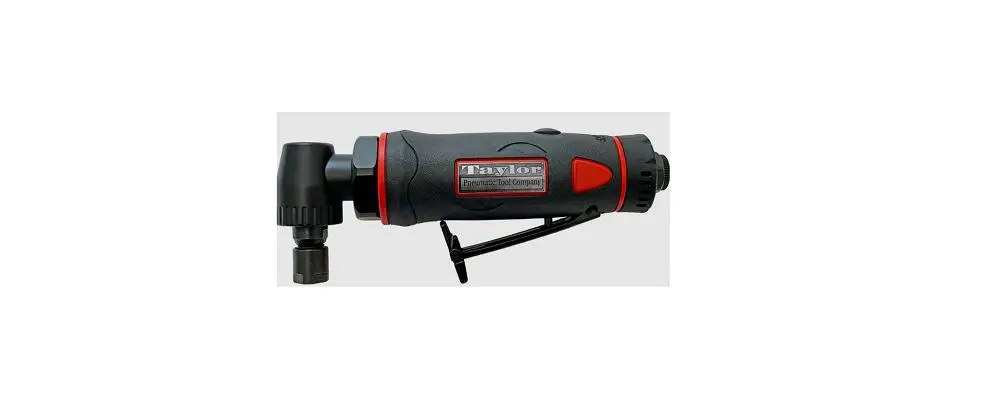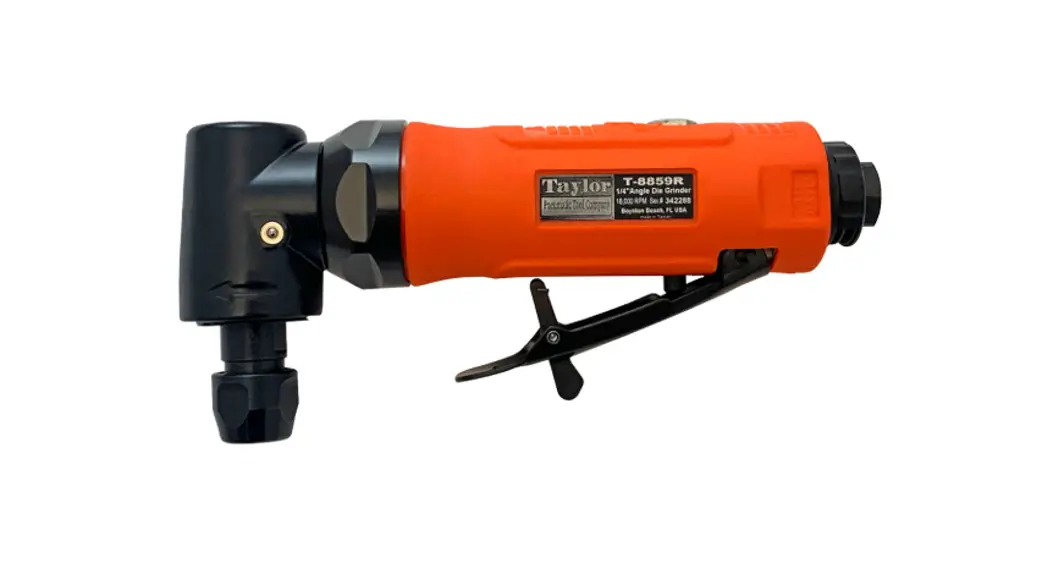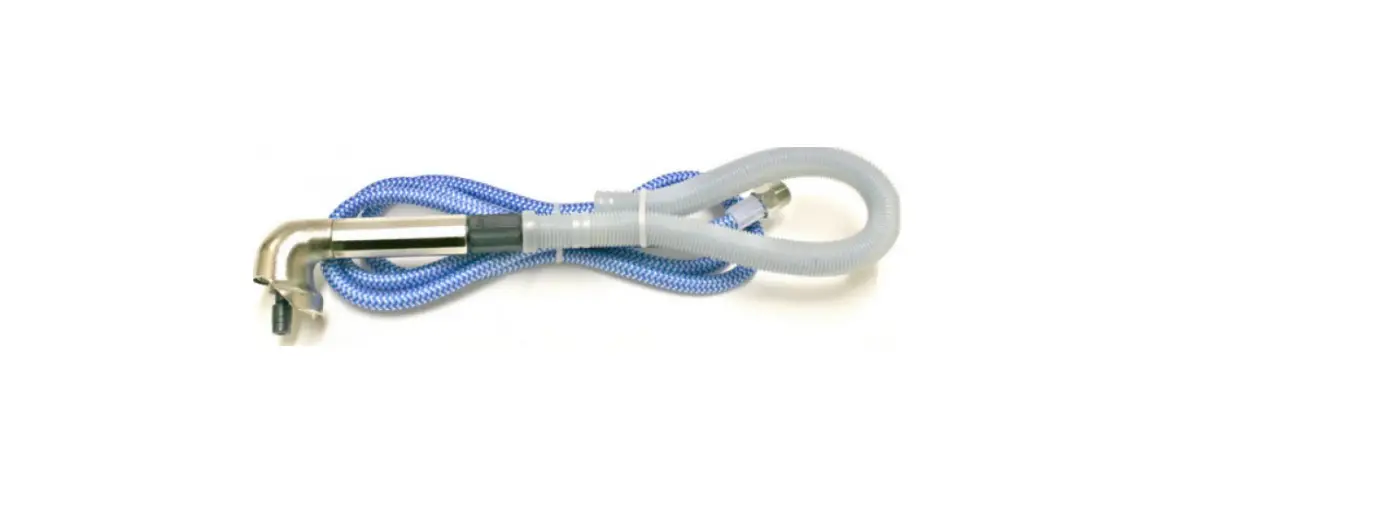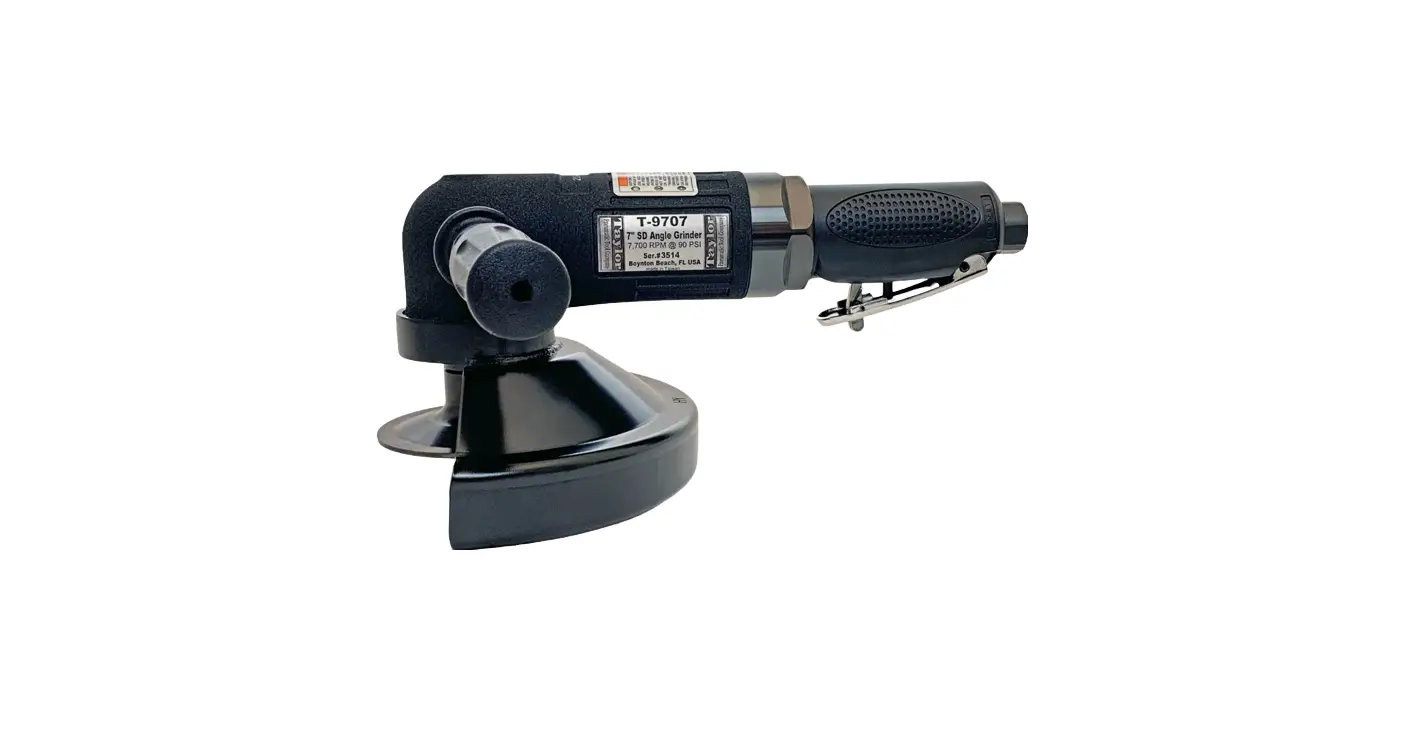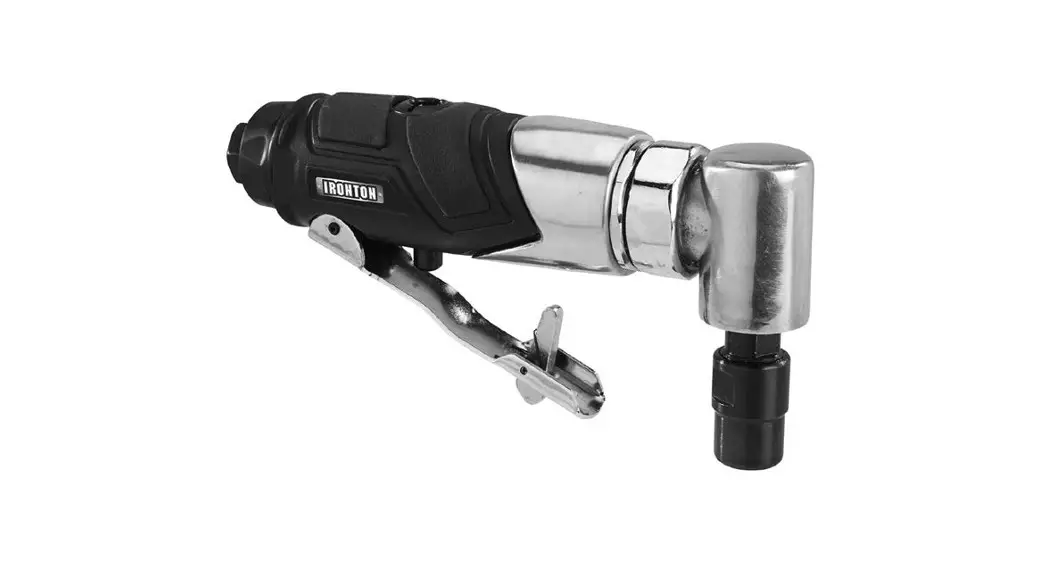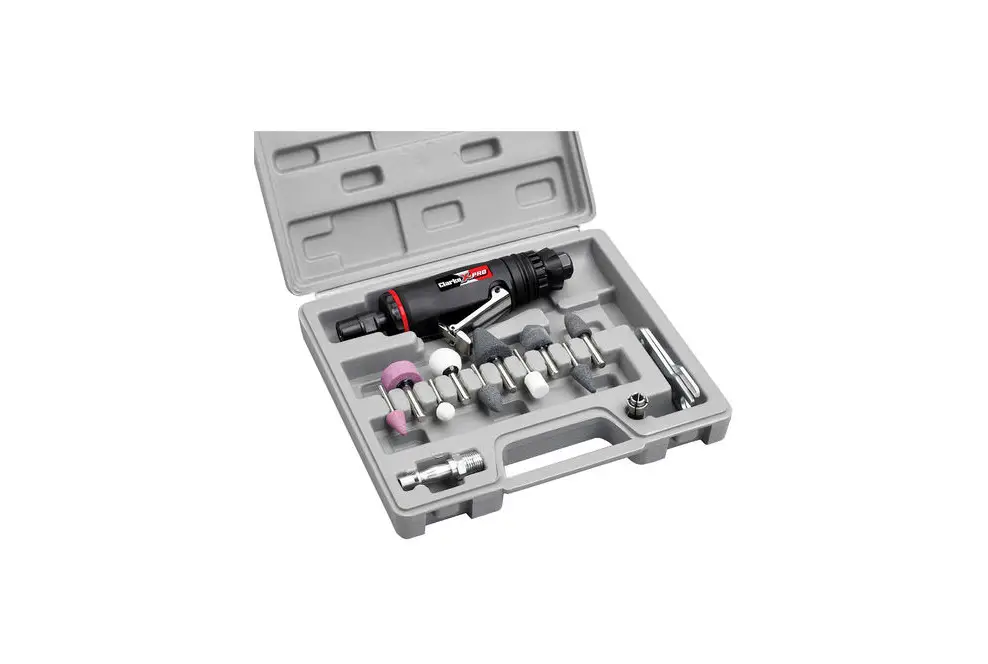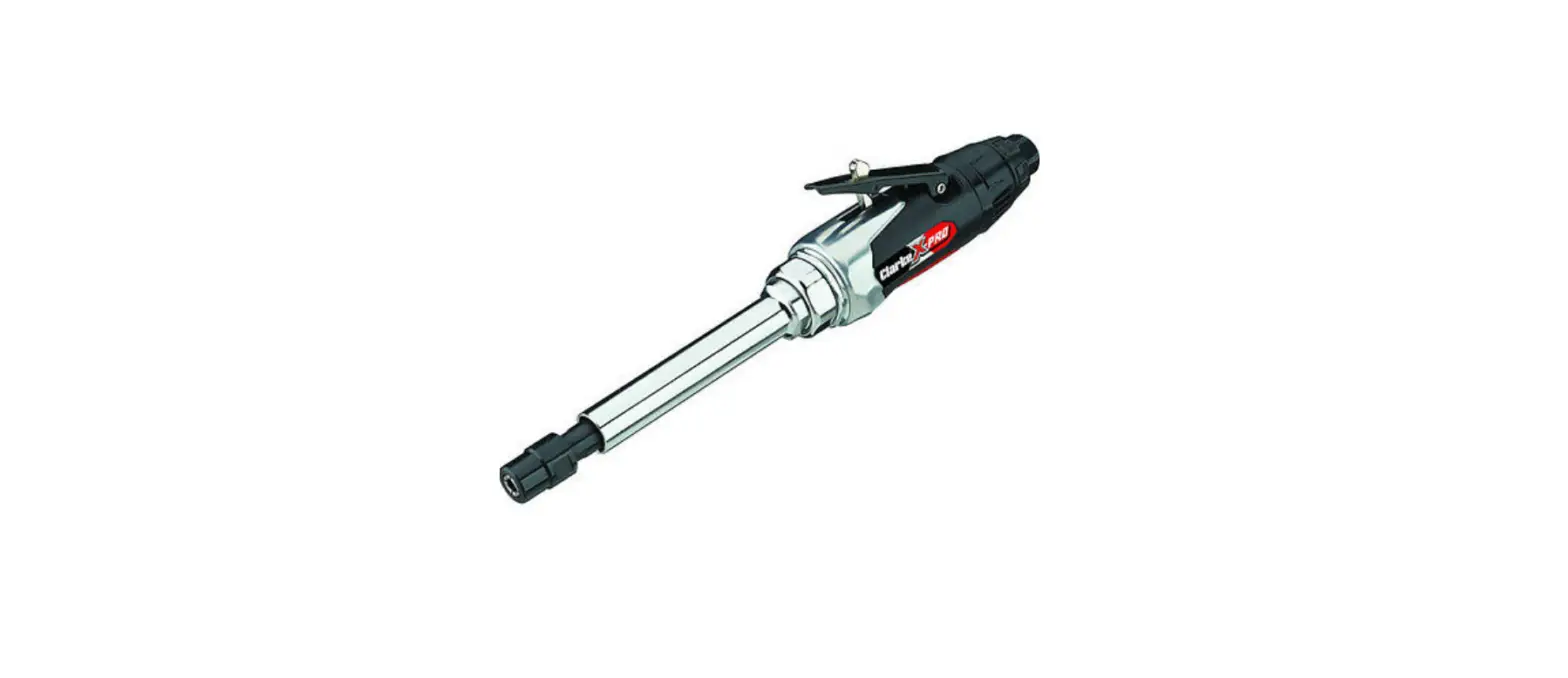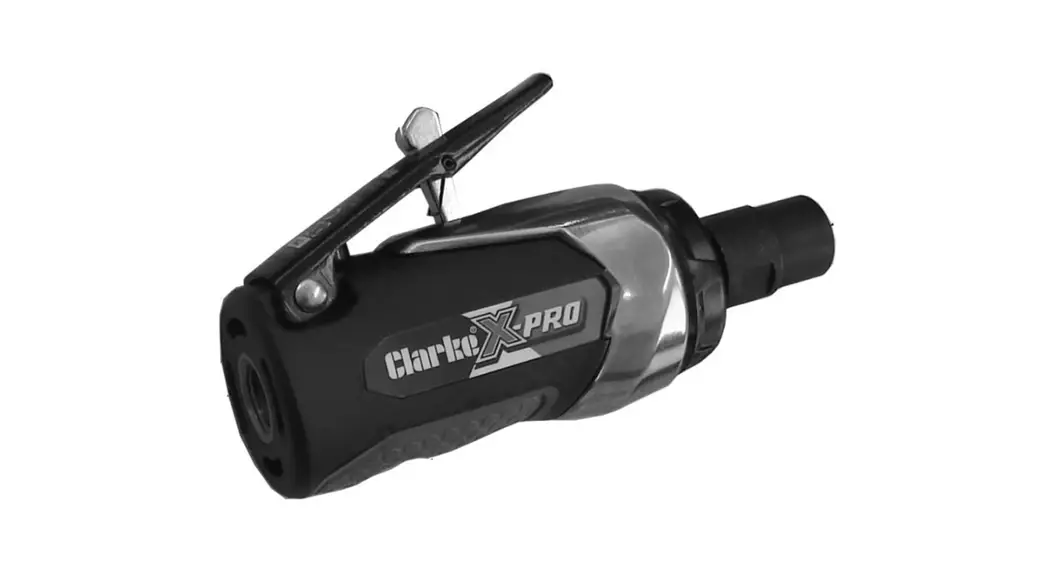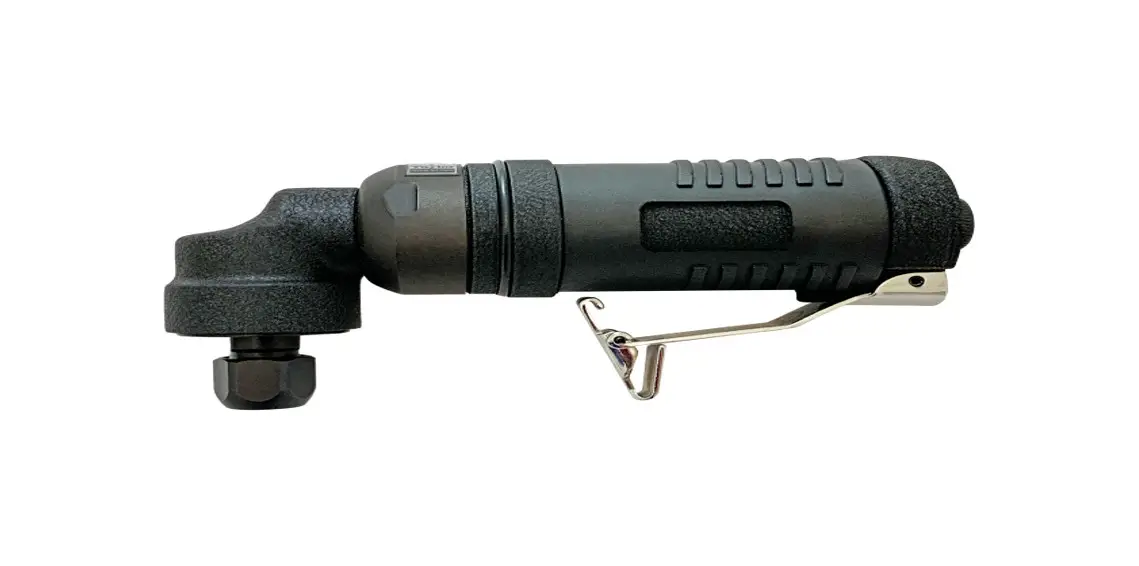
 T-9959R Heavy Duty
1/4” Right Angle
Die Grinder
Instruction Manual
T-9959R Heavy Duty 1/4 Inch Right Angle Die Grinder
OILING INSTRUCTIONS:
OIL AFTER EACH USE WITH 1/2 TEASPOON OF AIR TOOL OIL THROUGH THE AIR INLET. RUN FOR ONE SECOND TO COAT ALL INTERNAL PARTS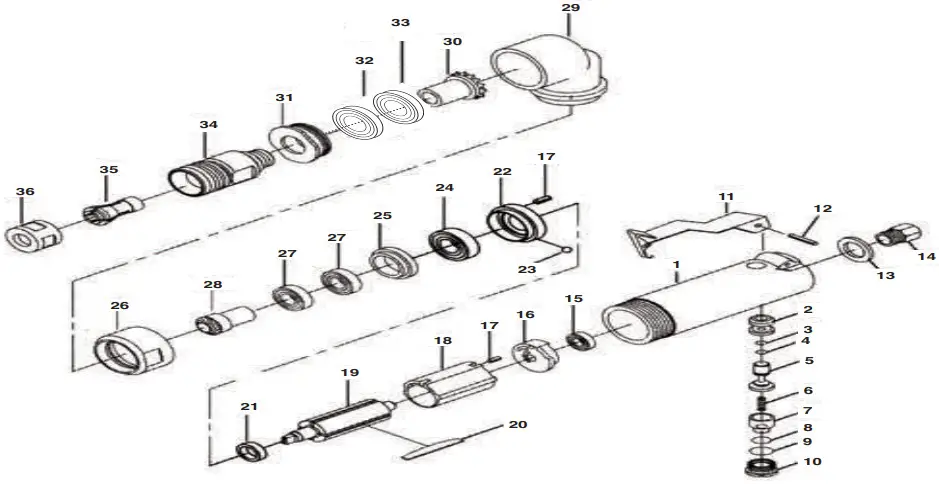
USE 90 PSI MAXIMUM
| Ref # | Part # | Description | Qty. |
| 1 | 9959R01 | Motor Housing | 1 |
| 2 | 9959R02 | Valve Bushing | 1 |
| 3 | 9959R03 | O-Ring | 1 |
| 4 | 9959R04 | O-Ring | 1 |
| 5 | 9959R05 | Throttle Valve | 1 |
| 6 | 9959R06 | Spring | 1 |
| 7 | 9959R07 | Air Regulator | 1 |
| 8 | 9959R08 | O-Ring | 1 |
| 9 | 9959R09 | O-Ring | 1 |
| 10 | 9959R10 | Valve Screw | 1 |
| 11 | 9959R11 | Throttle Lever | 1 |
| 12 | 9959R12 | Pin | 1 |
| 13 | 9959R13 | Exhaust Sleeve | 1 |
| 14 | 9959R14 | Inlet Bushing | 1 |
| 15 | 9959R15 | Bearing | 1 |
| 16 | 9959R16 | Rear End Plate | 1 |
| 17 | 9959R17 | Pin (2) | 1 |
| 18 | 9959R18 | Cylinder | 1 |
| 19 | 9959R19 | Rotor | 1 |
| 20 | 9959R20 | Rotor Blades (4) | 1set |
| 21 | 9959R21 | Rotor Collar | 1 |
| 22 | 9959R22 | Front End Plate | 1 |
| 23 | 9959R23 | Ball | 1 |
| 24 | 9959R24 | Bearing | 1 |
| 25 | 9959R25 | Motor Washer | 1 |
| 26 | 9959R26 | Housing Lock Ring | 1 |
| 27 | 9959R27 | Bearing (2) | 1 |
| 28 | 9959R28 | Pinion | 1 |
| 29 | 9959R29 | Angle Housing | 1 |
| 30 | 9959R30 | Spindle Gear | 1 |
| 31 | 9959R31 | Spindle Nut | 1 |
| 32 | 9959R32 | Bearing | 1 |
| 33 | 9959R33 | Bearing | 1 |
| 34 | 9959R34 | Collect Spindle | 1 |
| 35 | 9959R35 | Collect | 1 |
| 36 | 9959R36 | Spindle Nut | 1 |
| 37 | 9959R37 | Spanner Wrench (2) | 1 |
Operating Instructions for Die Grinders
GENF kl INFORM AI ION-
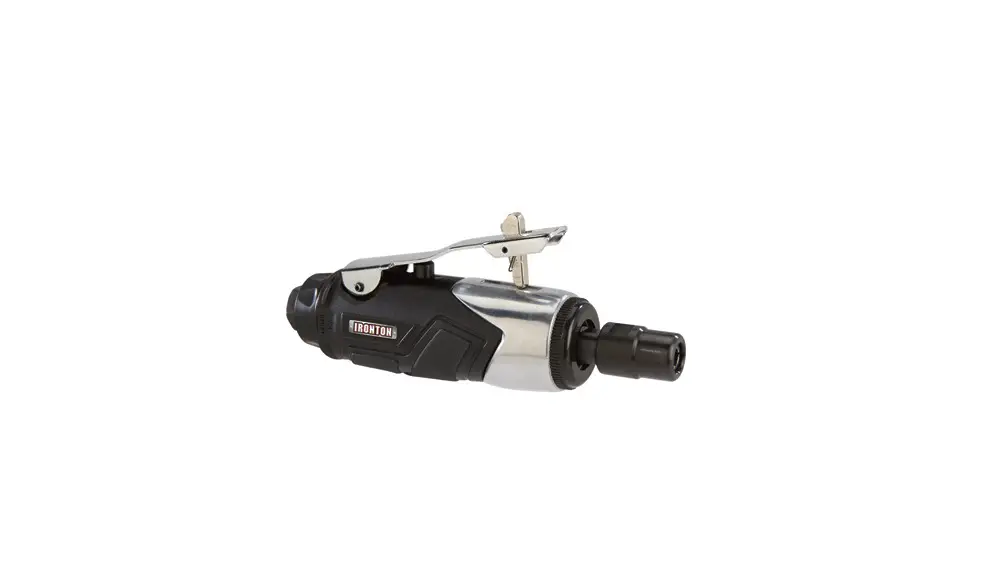
When a collet is attached to the output shaft of an air tool it is called a die grinder. It can have a straight handle or a pistol grip handle. Most of our die grinders will accept 1/4″ or 1/8″ collets. The exceptions are the T-9930B Sc. T-9930EXBs that have 3/8″ collets. The four-jawed collet we use on most dies grinders gives the best grip and keeps the bit centered to minimize vibration. Make sure that the collet and col-let holder is clean when installing a new bit, as chips and dirt in the collet can cause the tool to vibrate from being off-center. The wrenches provided are used to tighten and loosen the collet nut. Check the collet nut periodically to keep it tight. When installing the bit (grinding stone, carbide burr, or cutoff wheel mandrel) push it in as far as it will go so that the actual working part of the bit is as close as possible to the collet nut, this ensures the best grip and minimizes vibration. Most die grinders have a built-in regulator. Turning the valve with a flat-bladed screwdriver will increase or decrease the amount of air going into the tool and increase or decrease the RPM. The use of a 3/8″ air hose is recommended. Use the fewest number of quick disconnects possible to minimize air pressure drop. Air pressure at the tool should be 90 PSI or less. Using the least amount of pres-sure possible will allow you to get the maximum life from your tool. Small air compressors with tanks under 20 gallons may not provide enough air to maintain a constant 90 PSI.
Using too much air pressure is like driving your car at 200 MPH. Your car may go that fast, ut will the tires, engine, and earnings hold up? Excess air pressure can cause premature wear or tool failure. Most of our tools have safety levers that can prevent accidental starts. Removal is not recommended. Never drag a tool by the air hose, doing so can bend the rotor shaft causing permanent damage. Always check a die grinder, if it is dropped, for damage to the bit or a bent rotor shaft. The differences in die grinders are treatment-does – pencil dies grinders are Used for fine work where size and weight are important. They come standard with 1/8″ collets but 3/32″ and 3mm collets are vailable. These tools also have verses for directing the exhaust away from the operator. The size of your job, as well as the amount of material to be removed, dictates the size of the die grinder you need to use. Pen-Iinil Grinders for light work in night areas, the .25HP tools for light to medium material removal, the .45HP and .5HP units, or heavy material removal. For really heavy-duty jobs, use the .9HP tools. To keep dirt and grinding dust out of your tools, store them in plastic ziplock bags questions oiling. If you have specific questions call us at 800-805- E8665.
SAFETY FIRST
Wearing safety glasses and the right clothing is important. Die grinders are usually high-speed tools that can throw sparks and grinding dust over several feet. Goggles and glees are needed to protect your eyes, long sleeves will help protect your rms. The use of a full face shield ay also is required. It is recommended that you remove jewelry such as rings and watches. Depending on how you use the tool, you may need to wear protective gloves. Hearing protection is needed when using a die grinder for extended periods of time. The stream of sparks (in the case of steel) or removed material (in the case of aluminum, wood, or non-ferrous materials) can cause a fire or injury to a bystander. Pay attention to people around you and to the direction of the spark stream.
OILING
Oiling your tool at the end of every day is extremely important. Add one or two tablespoons of a commercial air tool oil like our T-8004, T-8032, or -8128 through the air inlet. Run the tool for a second or two to coat all internal parts. This will help prevent rust from forming.
TAYLOR Air – tool oil is cus torn blended to improve the life and performance of air tools. It will emulsify with water to protect against rust. and will loosen and flush out built sludge and dirt.
 |  |  |
 TaylorPneumatic.com – Taylor Pneumatic Tool Company