1329196 Field Sense Alarm Device
Product Information
| Product Name | iWAREHOUSE Field Sense System Personal Alarm Device |
|---|---|
| Model | 1329196/001 |
| Manufacturer | FREDERICK ENERGY PRODUCTS, LLC |
| Address | 1769 Jeff Road, Huntsville, AL 35806 |
| Contact Number | 1.800.489.6915 |
| Patent Information | US7,420,471; US8,169,335; US8,232,888; US5,939,986; US6,810,353; AU2005289704; ZA2007/02919; ZA2008/02673; ZA2010/06816, ZA2010/09068 Patent Pending |
| FCC ID | QUI-BC-PAD-2 |
Product Usage Instructions
1. Overview
The iWAREHOUSE Field Sense System Personal Alarm Device is
designed to provide personal safety alerts. It operates based on a
specific theory of operation and frequency.
1.1 Theory of Operation
The Personal Alarm Device functions include:
- To receive and transmit signals for personal safety
alerts.
1.2 Frequency of Operation
The Personal Alarm Device operates on the following
frequencies:
- Reception Frequency: 73 kHz
- Transmission Frequency: 916.48 MHz
1.3 FCC/IC Information
The Personal Alarm Device complies with Part 15 of the FCC
Rules. The FCC ID for the device is QUI-BC-PAD-2. The operation of
the device is subject to the following conditions:
- The device must not cause harmful interference.
- The device must accept any interference received, including
interference that may cause undesired operation.
Any changes or modifications to the configuration of the
Personal Alarm Device, not approved by Frederick Energy Products
LLC, may void the user’s authority to operate the equipment.
2. Operation
2.1 Installation Information
The Personal Alarm Device (PAD) consists of two parts: a Warning
Module and a Base Module connected via a flexible electronic cable.
The Warning Module has a metal clip for easy attachment to clothing
or a safety vest near the chest area. It is recommended to wear the
PAD on a Safety Vest. The PAD remains powered at all times except
when its battery is being charged.
Exhibit: 9
iWAREHOUSE Field Sense System
Personal Alarm Device
Model: 1329196/001 User’s Manual v1.0
FREDERICK ENERGY PRODUCTS, LLC 1769 Jeff Road
Huntsville, AL 35806 1.800.489.6915
US7,420,471; US8,169,335; US8,232,888; US5,939,986; US6,810,353; AU2005289704; ZA2007/02919; ZA2008/02673;
ZA2010/06816, ZA2010/09068 Patent Pending
Table of Contents
1. Overview………………………………………………………………………………………………………….. 2-4 1.1 Theory of Operation……………………………………………………………………………… 2 1.2 Frequency of Operation………………………………………………………………………… 2 1.3 FCC/IC Information………………………………………………………………………………. 3-4
2. Operation…………………………………………………………………………………………………………. 4-6 2.1 Installation Information………………………………………………………………………… 4 2.1.1 Interoperability Warning………………………………………………………………… 5 2.2 Charging……………………………………………………………………………………………….. 5 2.3 Alerts……………………………………………………………………………………………………. 5 2.4 Maintenance………………………………………………………………………………………… 5 2.5 Adjustments…………………………………………………………………………………………. 6 2.6 Interferences……………………………………………………………………………………….. 6 2.7 PAD Specifications……………………………………………………………………………….. 6
3. Revision History……………………………………………………………………………………………….. 7
US7,420,471; US8,169,335; US8,232,888; US5,939,986; US6,810,353; AU2005289704; ZA2007/02919; ZA2008/02673;
1
ZA2010/06816, ZA2010/09068 Patent Pending
1 Overview
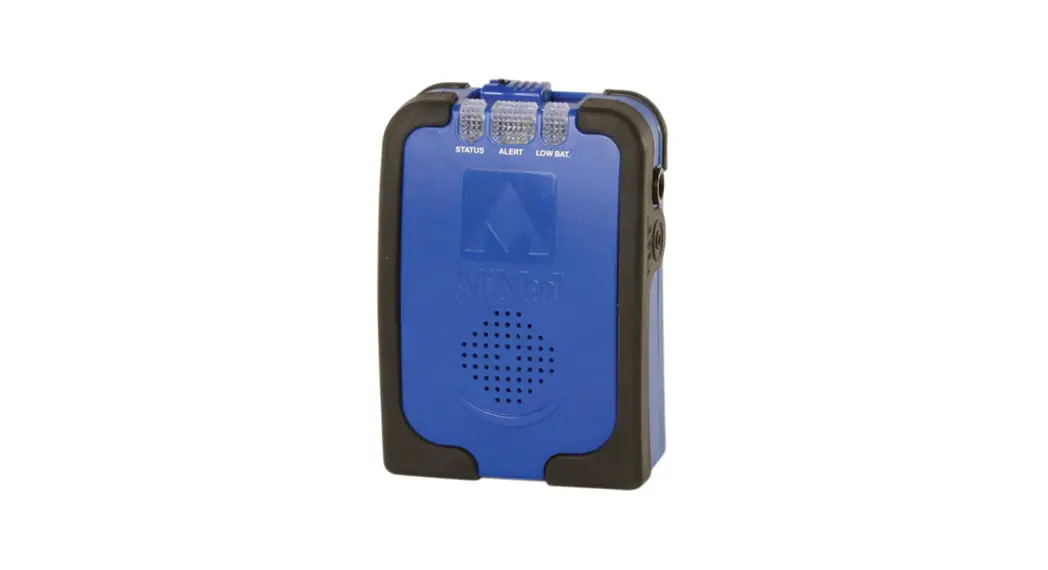
The Personal Alarm Device, model #1329196/001, is part of a complete iWAREHOUSE Field Sense System. This device built by Frederick Energy Products provides warnings to both individuals and to vehicle operators to alert them that the individual has entered too close to an operating piece of equipment and is in a dangerous situation. The Personal Alarm Device is worn by the pedestrian to alert them of impending danger. It comprises two components: the base PAD module and a warning module permanently connected to the base module by an electrical cable.
1.1 Theory of Operation
Functions of the Personal Alarm Device are:
· To sense the 73 kHz field generated around a vehicle or piece of machinery equipped with a Magnetic Field Generator.
· To echo a signal back to the Magnetic Field Generator to confirm signal recognition. · To transmit a 916.48 MHz RF signal to the Magnetic Field Generator. · Turn on its own alarm when the 73 kHz signal from the Magnetic Field Generator is
confirmed.
When a Personal Alarm Device (PAD) is in close proximity of the Magnetic Field Generator, the PAD will detect the 73 kHz magnetic field from the generator and analyze its field strength. When the 73 kHz field strength received by the PAD is above a certain threshold it will indicate that the distance of the Magnetic Field Generator is close enough to the PAD to signify a Warning or Danger condition. The PAD is calibrated to differentiate the magnetic field into two zones: Warning and Danger. The PAD will echo back to the Magnetic Field Generator with a 916.48 MHz transmission to confirm the signal recognition and then send the alert to the Magnetic Field Generator. The Magnetic Field Generator has its 916.48 MHz receiver ON when it is transmitting the 73 kHz field and is “listening” to receive any 916.48 MHz transmissions from a pedestrian with a PAD to indicate the individual is too close to the vehicle and warrants a warning or danger condition. When an alert condition has been confirmed between the PAD and Magnetic Field Generator, the PAD will activate its own alarm. The signal in the Warning Zone will activate an LED light a sounder as a continuing series of 3 rapid flashes/beeps followed by an OFF period every three seconds. If the pedestrian is in the Danger Zone, the alarm will change to a continuing pattern of alternating ON/OFF flashes/beeps (0.5 sec ON and 0.5 sec OFF).
1.2 Frequency of Operation
The Personal Alarm Device will receive on a frequency of 73 kHz and transmit on a frequency of
916.48 MHz.
www.hitnot.com
US7,420,471; US8,169,335; US8,232,888; US5,939,986;
US6,810,353; AU2005289704; ZA2007/02919; ZA2008/02673;
2
ZA2010/06816, ZA2010/09068 Patent Pending
1.3 FCC/IC Information
The FCC ID for the Personal Alarm Device is QUI-BC-PAD-2. This device complies with Part 15 of the FCC Rules. Operation is subject to the following conditions:
1. This device may not cause harmful interference. 2. This device must accept any interference received including interference that may cause
undesired operation.
Any intentional or unintentional changes or modifications to the configuration of the Personal Alarm Device, not expressly approved by Frederick Energy Products LLC, could void the user’s authority to operate the equipment.
Note: This equipment has been tested and found to comply with the limits for a Class B digital device, pursuant to Part 15 of the FCC Rules. These limits are designed to provide reasonable protection against harmful interference in a residential installation. This equipment generates, uses, and can radiate radio frequency energy and, if not installed and used in accordance with the instructions, may cause harmful interference to radio communications. However, there is not guarantee that interference will not occur in a particular installation. If this equipment does cause harmful interference to radio or television reception, which can be determined by turning the equipment off and on, the user is encouraged to try to correct the interference by one or more of the following measures: –Reorient or relocate the receiving antenna. –Increase the separation between the equipment and receiver. –Connect the equipment into an outlet on a circuit different from that to which the receiver is
connected. –Consult the dealer or an experienced radio/TV technician for help.
Conformité aux normes FCC Cet équipement a été testé trouvé conforme aux limites pour un dispositif numérique de classe B, conformément à la Partie 15 des règlements de la FCC. Ces limites sont conçues pour fournir une protection raisonnable contre les interférences nuisibles dans une installation résidentielle.
Cet équipement génère, utilise et peut émettre des fréquences radio et, s’il n’est pas installé et utilisé conformément ment aux instructions du fabricant, peut causer des interférences nuisibles aux communications radio.
Rien ne garantit cependant que l’interférences ne se produira pas dans une installation particulière. Si cet équipement provoque des interférences nuisibles à la réception radio ou de télévision, qui peut être déterminé en comparant et en l’éteignant, l’utilisateur est encouragé à essayer de corriger les interférence par une ou plusieurs des mesures suivantes: –Réorienter ou déplacer l’antenne de réception. –Augmenter la distance entre l’équipement et le récepteur.
US7,420,471; US8,169,335; US8,232,888; US5,939,986;
US6,810,353; AU2005289704; ZA2007/02919; ZA2008/02673;
3
ZA2010/06816, ZA2010/09068 Patent Pending
–Branchez l’appareil dans une prise sur un circuit différent de celui auquel le récepteur est connecté.
–Consulter le vendeur ou un technicien radio / expérimenté.
Les changements ou modififications à cet appareil sans expressément approuvée par la partie responsable de conformité pourraient annuler l’autorité de l’utilisateur de faire fonctionner cet équipement.
The required notices are specified in the RSS documents (including RSS-Gen) applicable to the equipment model. These notices are required to be shown in a conspicuous location in the user manual for the equipment, or to be displayed on the equipment model. If more than one notice is required, the equipment model(s) to which each notice pertains should be identified. Suppliers of radio apparatus shall provide notices and user information in both English and French.
This device complies with Industry Canada license-exempt RSS-standards(s). Operation is subject to the following two conditions: (1) this device may not cause interference, and (2) this device must accept any interference, including interference that may cause undesired operation of the device.
Cet appareil est conforme avecx Industrie Canada exempt de licence Rss standard(s). Son fonctionnement est soumis aux deux conditions suivantes: (1) cet appareil ne peut causer d’interférence, et (2) cet appareil doit accepter toute interférence, y compris des interférences qui peuvent provoquer un fonctionnement indésirable du périphérique.
2 Operation
2.1 Installation Information
The Personal Alarm Device (PAD) is a two-part device that includes a Warning Module permanently connected to a Base Module via a flexible electronic cable. The Warning Module has a metal clip that allows the user to clip the Warning Module to clothing or safety vest near the chest where the user can better hear the audible alert and see the LED light. The preferred way to wear a PAD is on a Safety Vest. THE PAD IS POWERED AT ALL TIMES EXCEPT WHEN ITS BATTERY IS BEING CHARGED.
US7,420,471; US8,169,335; US8,232,888; US5,939,986;
US6,810,353; AU2005289704; ZA2007/02919; ZA2008/02673;
4
ZA2010/06816, ZA2010/09068 Patent Pending
2.1.1 Inoperability Warning
When a PAD battery voltage drops to approximately 3.5 Vdc or below while connected to a PAD, the PAD will signal a low battery condition. This alert is two rapid beeps of the sounder every 1.6 seconds. When the PAD determines the battery to have low voltage, the PAD will cease to give zone warnings and will give only a low battery alert. CAUTION: WHEN A LOW BATTERY IS SIGNALED, THAT PAD SHOULD NOT BE USED UNTIL ITS BATTERY IS RECHARGED.
2.2 Charging
The 3.7V Li-ion PAD battery is charged from a special charging cable provided with each PAD. The special charging cable has a USB male connector on one end and a plug on the other end that magnetically attaches to the PAD. The charging cable provided with each PAD includes a 100-240 Vac Wall Charger. The Wall Adapter provides an output current of 0.1 A at a voltage of 5 Vdc. A LED light on the PAD displays a solid red light while the battery is charging and changes to solid green when the battery is fully charged. When the charging cable is disconnected, the sounder on the PAD will activate for approx. 2 seconds to indicate it is in proper working order.
The PAD should to be charged daily and connected to the charger over weekends and holidays.
2.3 Alerts
The Personal Alarm Device is to be worn on the chest of the pedestrian. The PAD has an LED visual indicator and an 80 dBA sounder to alert the user. If the battery voltage in the PAD drops to approximately 3.5 Vdc the PAD will signal a low battery condition with two rapid beeps every 1.6 seconds. NOTE: THE PAD WILL CEASE TO GIVE WARNINGS TO THE WEARER WHILE SENDING THE LOW BATTERY ALERT.
2.4 Maintenance
The Lithium Ion Battery in the Personal Alarm Device has a finite life and eventually will need replacement. Battery life is based on the number of times recharged. There are no published data about the exact number of charges the battery can undergo before its life is over, but literature suggests it’s at least 300 charges. Batteries in the PAD are designed to be replaced by the user. Only use an approved, protected Lithium Ion replacement battery. Contact FEP for the approved replacement battery list.
A daily check to verify the PAD is functioning visually and audibly is advised. Any PAD can be shown to be working properly by an approaching truck with a generator and verify that a warning is given at the expected distance.
US7,420,471; US8,169,335; US8,232,888; US5,939,986;
US6,810,353; AU2005289704; ZA2007/02919; ZA2008/02673;
5
ZA2010/06816, ZA2010/09068 Patent Pending
2.5 Adjustments
Factory settings of the Personal Alarm Device are expected to be stable and change very little with time. Adjustment capability of the PAD by the user is not available for field use.
2.6 Interferences
There are instances when the magnetic field generated from other sources such as an electrical panel, motorized machinery, large conductor cables etc. can generate intermittent alarm signals that are picked up by the Personal Alarm Device. The PAD is designed to be fairly sensitive to pick up the energy from the Magnetic Field Generator though it is also fairly selective. This sensitivity can cause the PAD to be triggered by some sources that are producing a strong magnetic frequency (that happen to fall within our guidelines) if the PAD is very close to the sources usually within a few inches.
If a user stands against a wall near a vehicle path, it is advisable that they do so with the PAD sticking furthest away from the wall as the wall may have interference sources such as high current cables or power panels etc. that may silence the PAD.
2.7 PAD Specifications
Part Number: 1329196/001 Size: 3.58″ x 2.35″ x 1.14″ / 91mm x 60mm x 29mm Weight: 7oz./ 198g Input Voltage: 3.5 to 4.2 VDC Magnetic Field Frequency: none Receiver Frequency: 73 kHz signal Transmitter Frequency: 916.48 MHz Transmitter Power: 0.001W (typical) PAD Battery: 3.7 VDC Lithium Ion PAD Battery Capacity: 900 mAh Charging Specifications: 0.75A at 5V max Only use Lithium Ion Battery Charger Operating Temperature Range: -30°C to + 70°C ; -22°F to 158°F Environmental Considerations: 80 dBa minimum Shipping Considerations: Contains a Lithium Ion Battery (packed in equipment)
US7,420,471; US8,169,335; US8,232,888; US5,939,986;
US6,810,353; AU2005289704; ZA2007/02919; ZA2008/02673;
6
ZA2010/06816, ZA2010/09068 Patent Pending
3 Revision History
3.1 Version 1.0 March 5, 2020
Original Release. No revision history.
US7,420,471; US8,169,335; US8,232,888; US5,939,986; US6,810,353; AU2005289704; ZA2007/02919; ZA2008/02673;
7
ZA2010/06816, ZA2010/09068 Patent Pending
 Warehouse Pedestrian Detection System