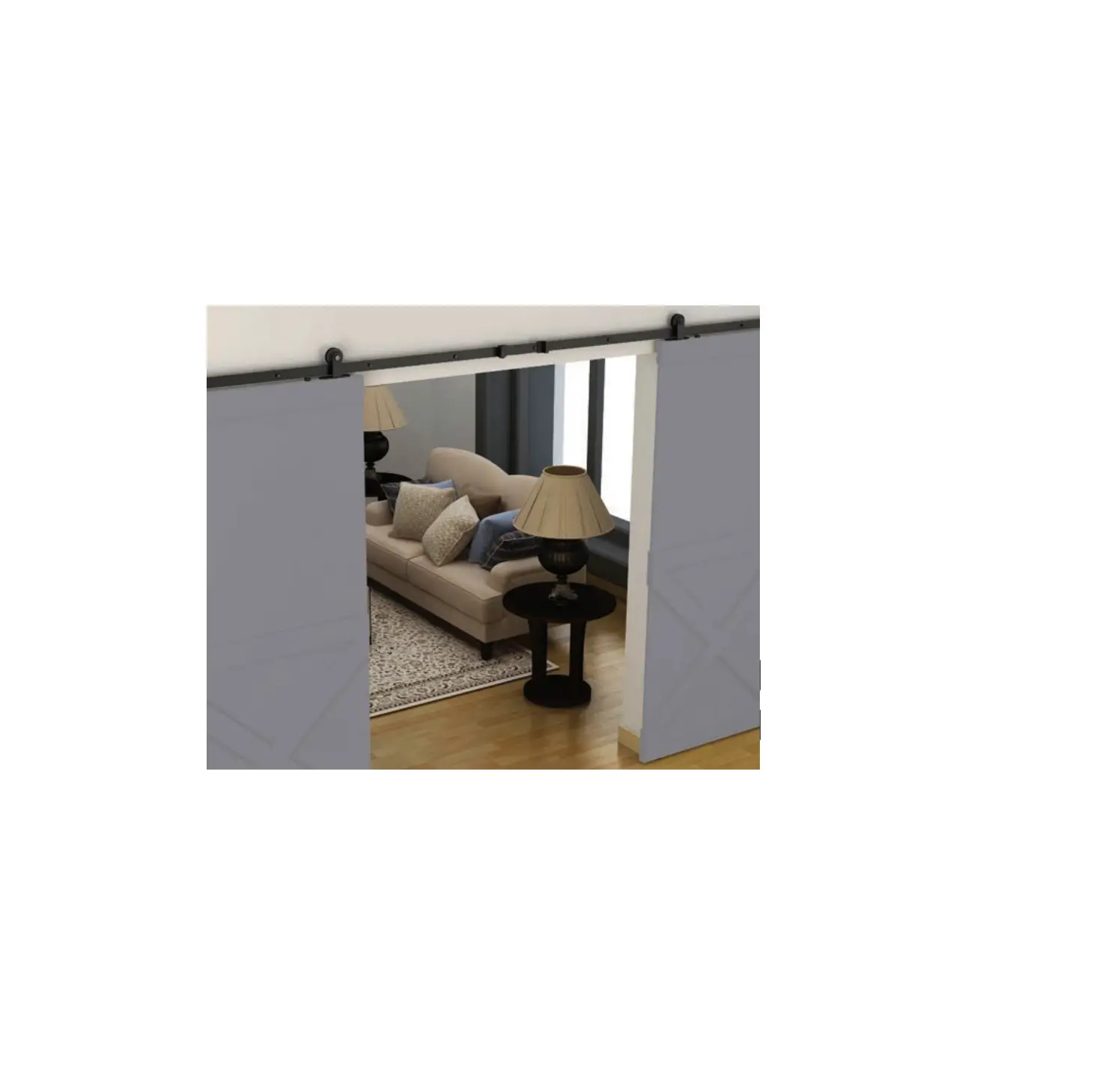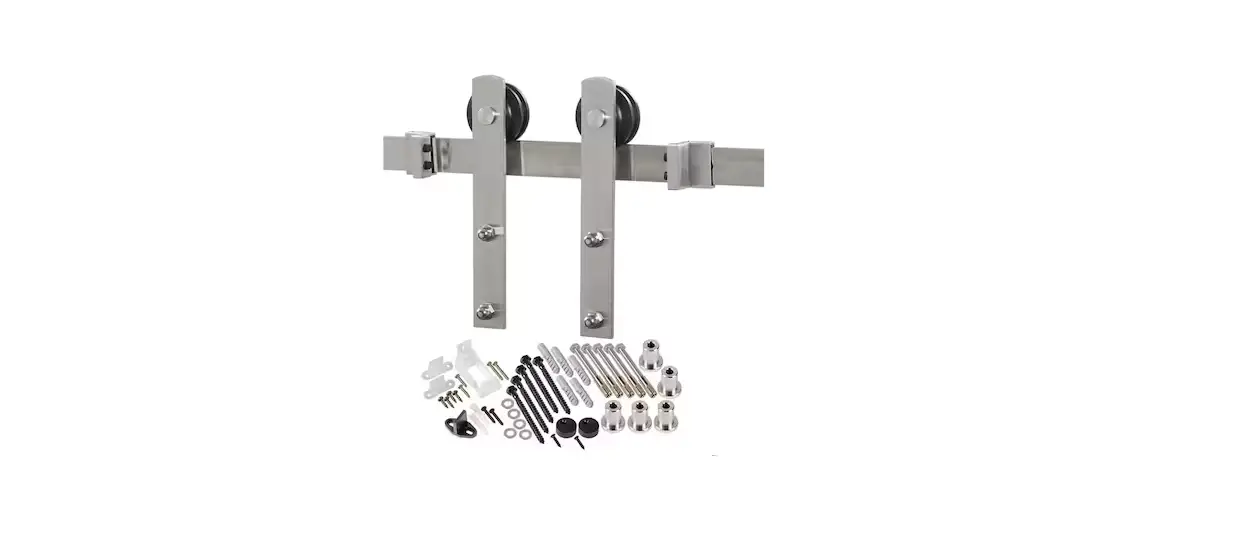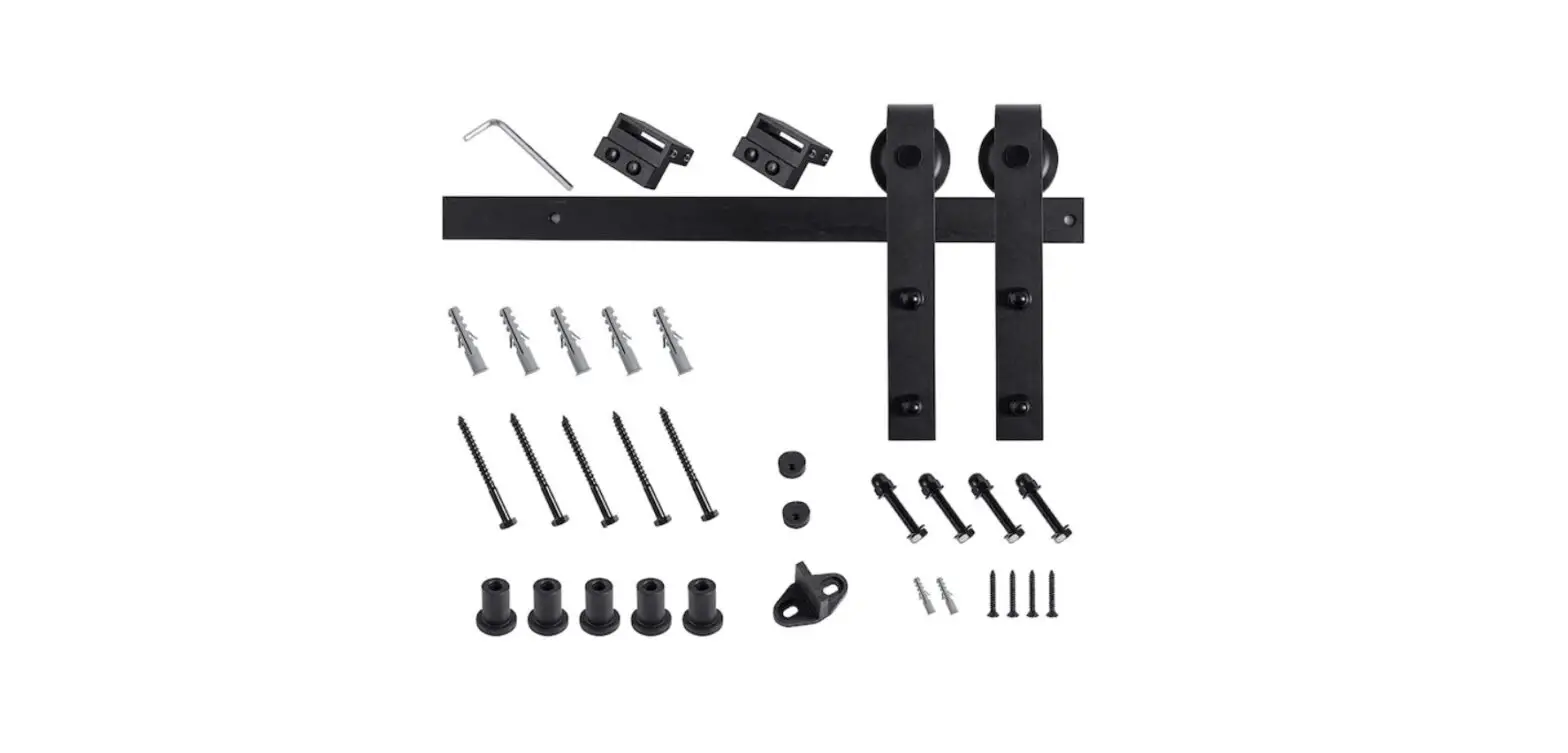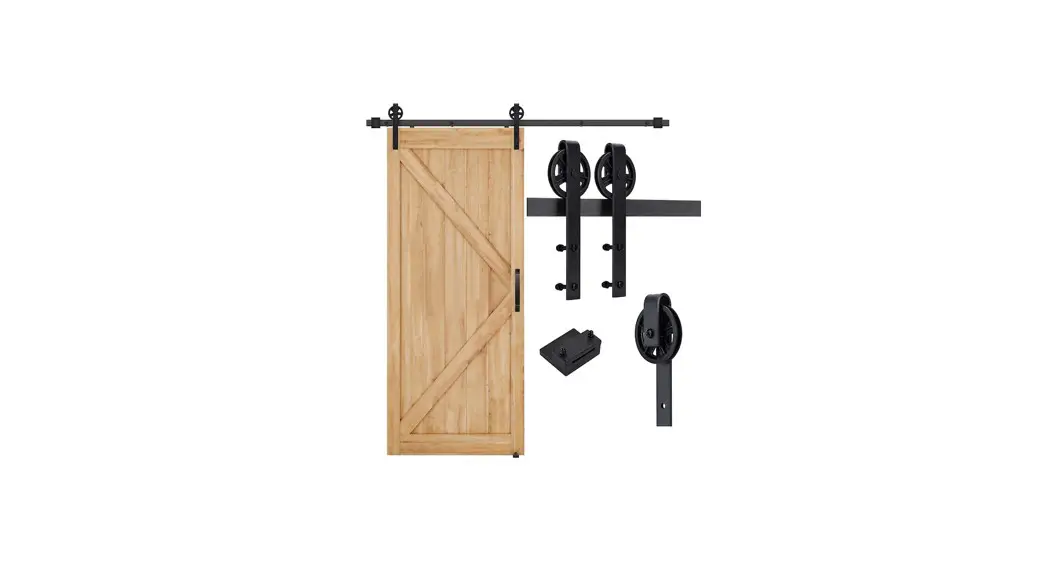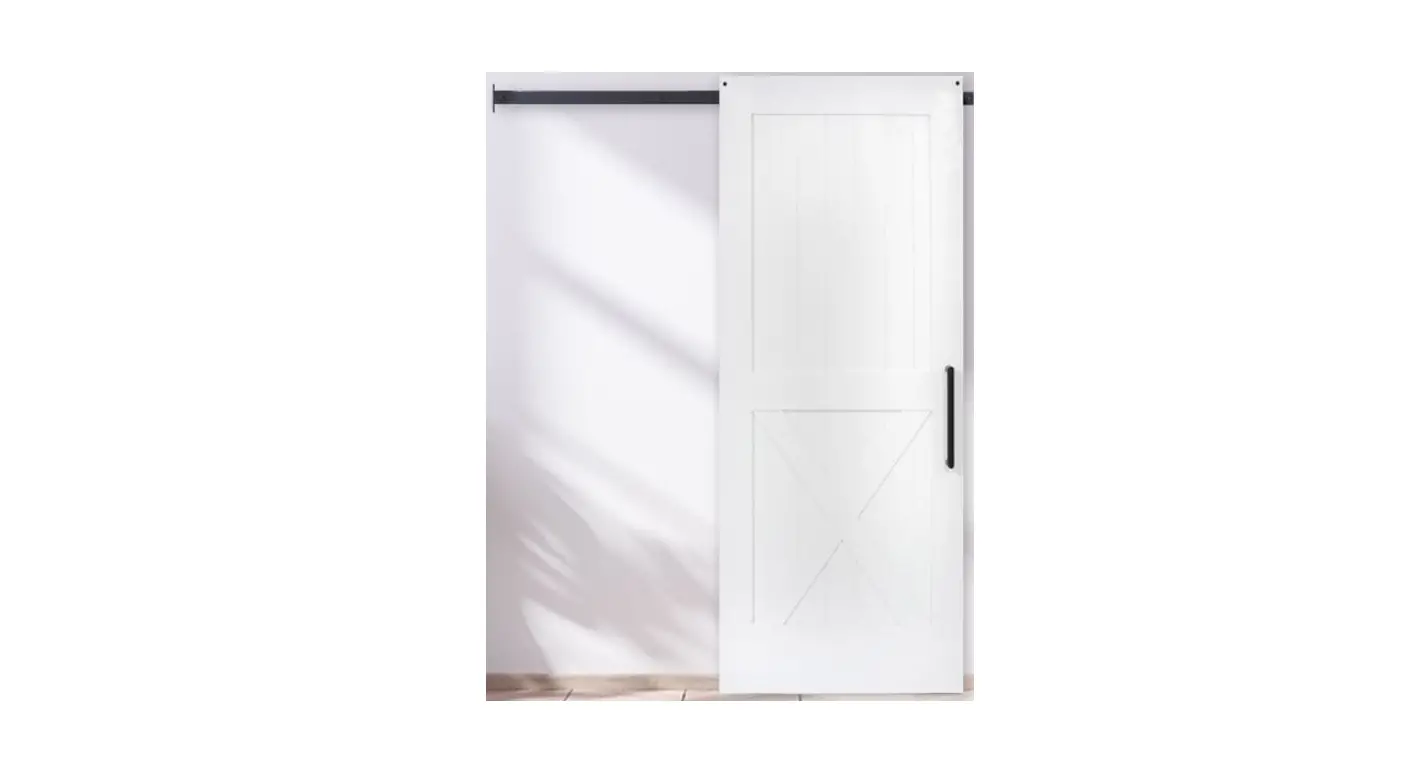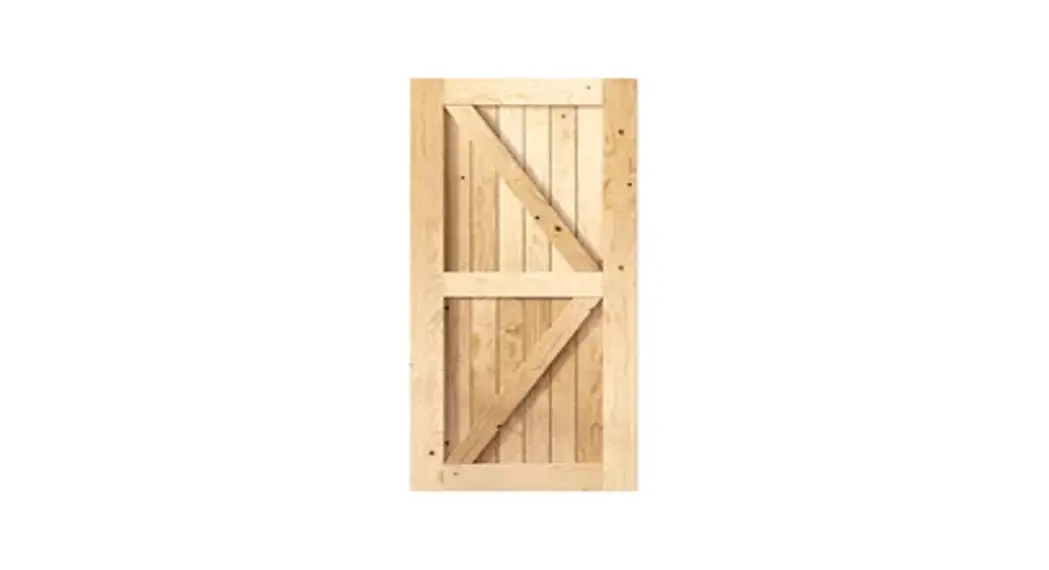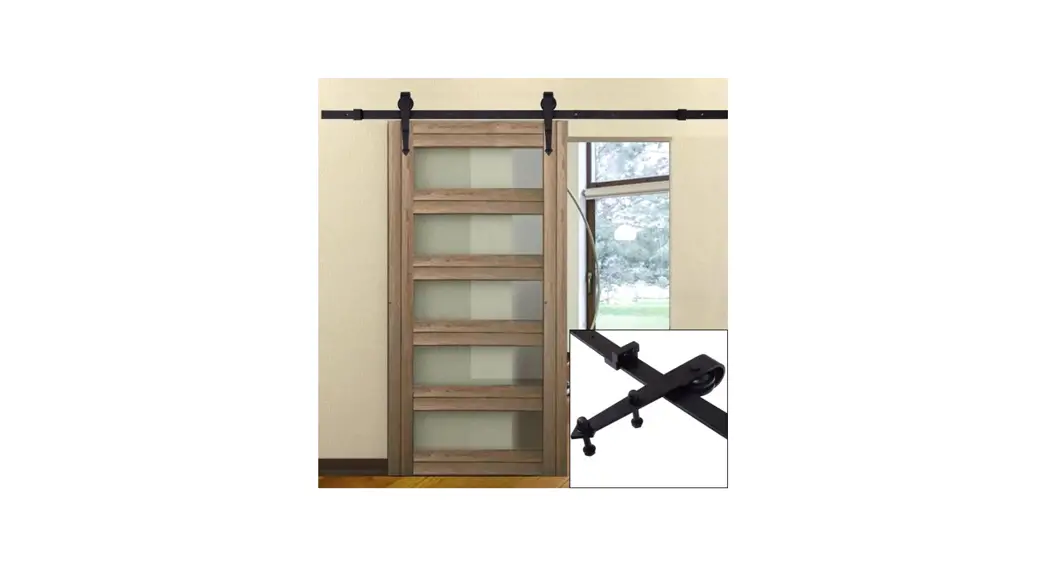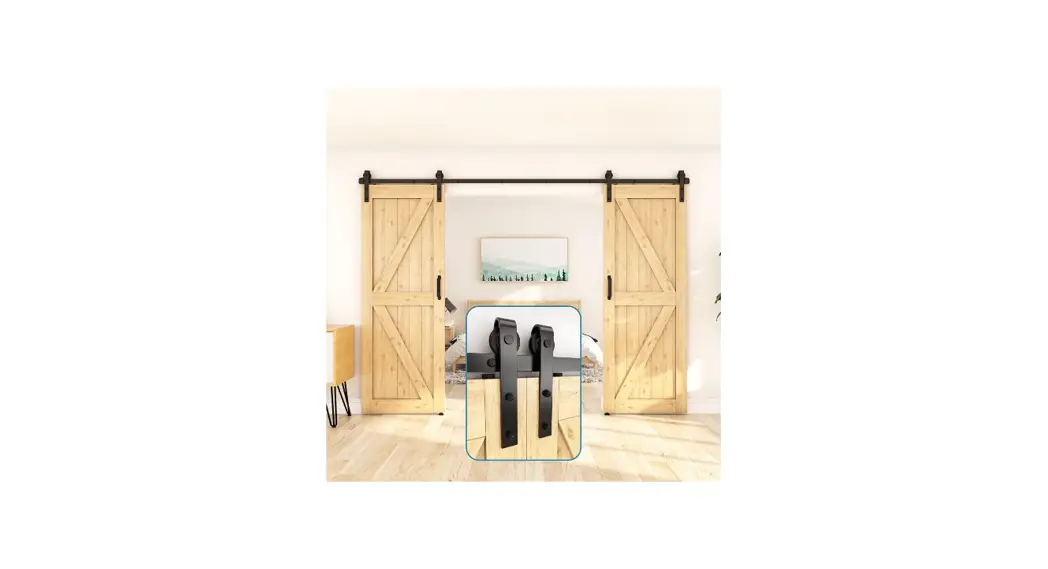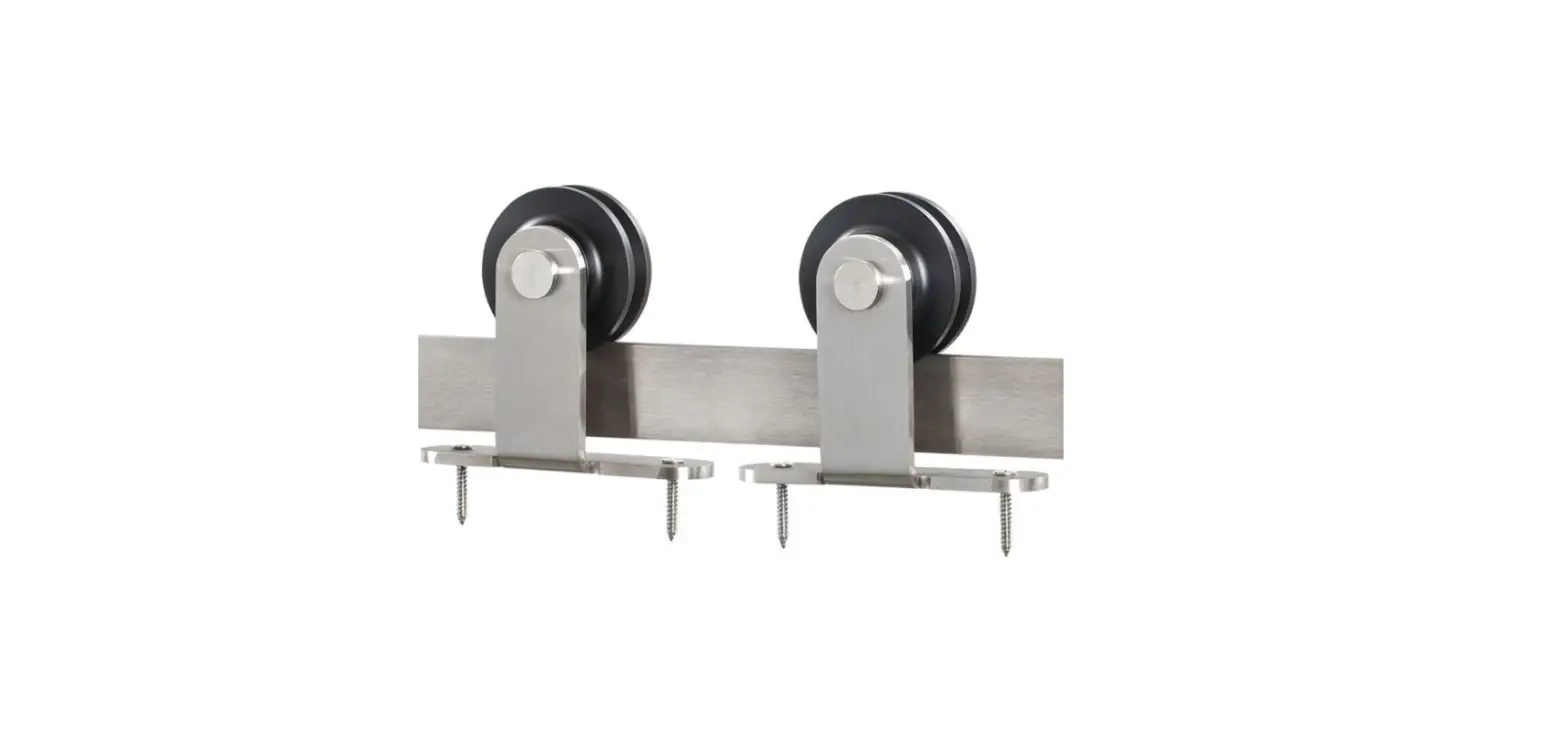

Masonite barn door hardware top mount kit
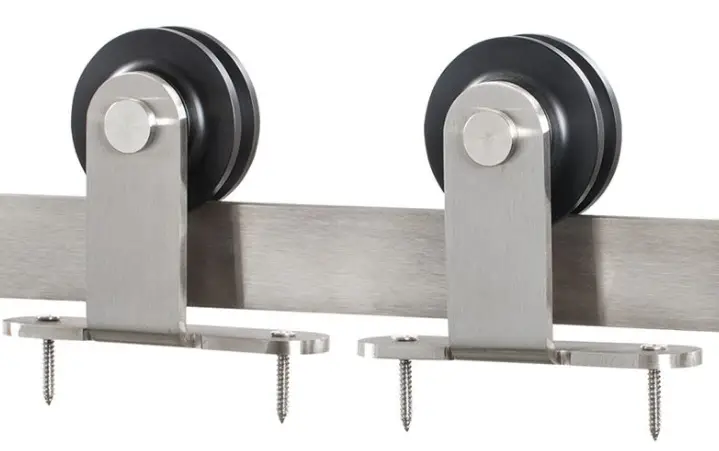
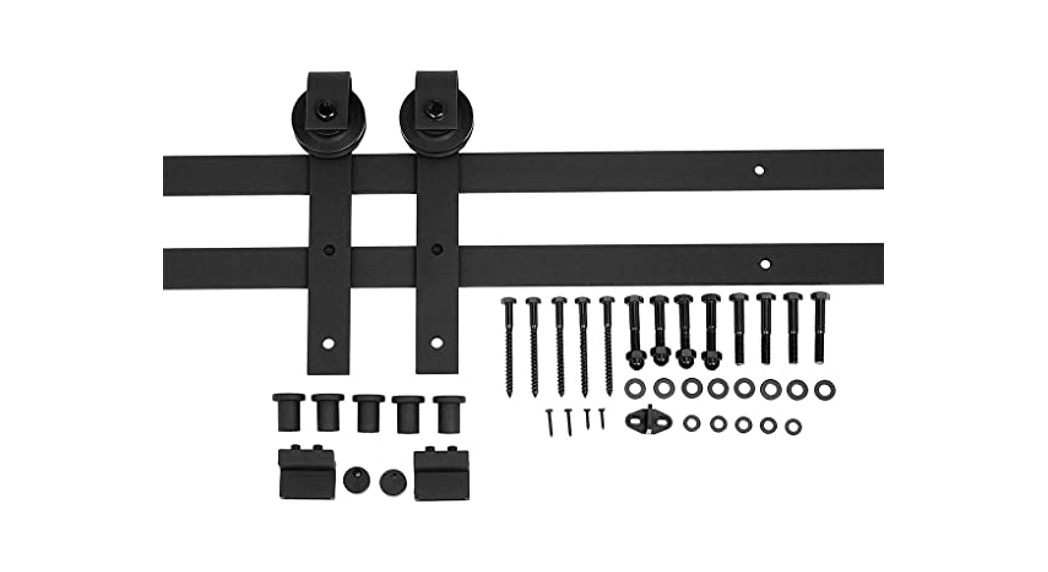
COMMON COMPONENTS

- 1x Right Stopper
- 1x Left Stopper
- 2x Top Mount Roller
- 2x Anti-jump Block
- 2x #8 (4.2mm x 25mm) Floor Screws
- 2x 1/4 (6mm) Floor Anchor

- 1x Internal Floor-Mounted Door Guide
- 1x Wall-Mounted Door Guide Optional
- 2x Floor-Mounted Door Guide optional
- # 10 x 2-1/2 Wood Screws For mounting wood block for drywall installation

TRACK COMPONENTS

- 1x 78-3/4″ or 83-3/4″ Track (5 holes) Track depending on model
- 5x Wall Spacer
- 5x 5/16″ (8mm x 60mm) Carriage Bolt and 5/16″ (8mm x 25mm) Anchor (Pre-mounted to Carriage Bolt) For concrete wall installation only
- 5x 3/8″ Washer
- 5x 5/16″ (8mm x 90mm) Track Mount Lag Bolts For drywall installation with wood blocking
TOOLS REQUIRED

- Tape Measure
- Pencil
- Phillips Screwdriver
- Cordless Drill
- Drill bit (1/8″, 1/4″, 5/16″ and 3/8″)
- Wrench (13 mm)
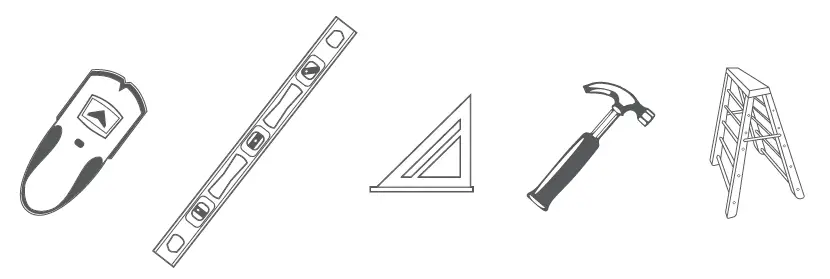
- Stud Finder
- Level
- Speed Square
- Hammer
- Step Ladder
IMPORTANT BEFORE YOU BEGIN
- Read the instructions fully before starting the installation of your barn door. Not following the installation instructions can cause the unit to work in an unsafe manner and cause injury.
- The barn door kit has been designed to work as a total system. Any modification to the door or the hardware will void the warranty and may cause the unit to work improperly.
- The weight of the barn door requires 2 people during installation.
- Always wear appropriate personal protection equipment when using tools and follow the manufacturer’s operating instructions.
- When installing directly into a non-concrete wall, do not attempt to install the track solely to the drywall or any wall surface as this may not support the weight of the track and mounted door.
- The track must be installed onto a piece of solid wood blocking using mounting screws (included in some complete kits).
- Ensure the solid wood blocking is secured to the structural surface. Using a stud finder was necessary to locate studs and secure them safely.
- Typical solid wood blocking should be a 1″x4″ solid wood board the length of the track.
Depending on the model and mounting application
NOTE: if installing in concrete, masonry bits will be needed.
HARDWARE MATCH-UP GUIDE
Refer to the following full-scale hardware drawings to quickly match up the hardware.
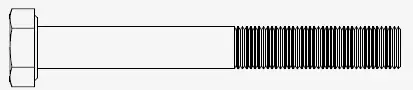
- 5/16″ (8mm x 60mm) Carriage Bolt

- # 10 x 2-1/ 2″ Wood Screws

- 5/16″ (8mm x 90mm) Track Mount Lag Bolt


ATTACHING ROLLER TO DOOR PANEL
- Tape Measure

- Speed Square

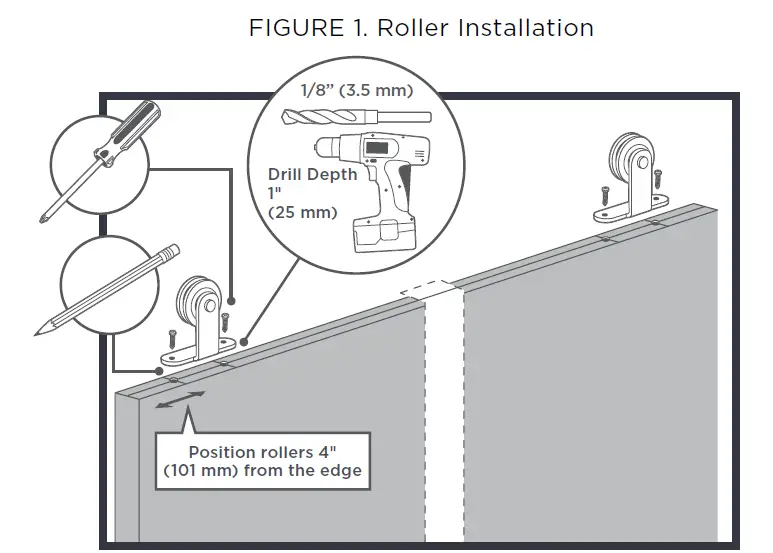
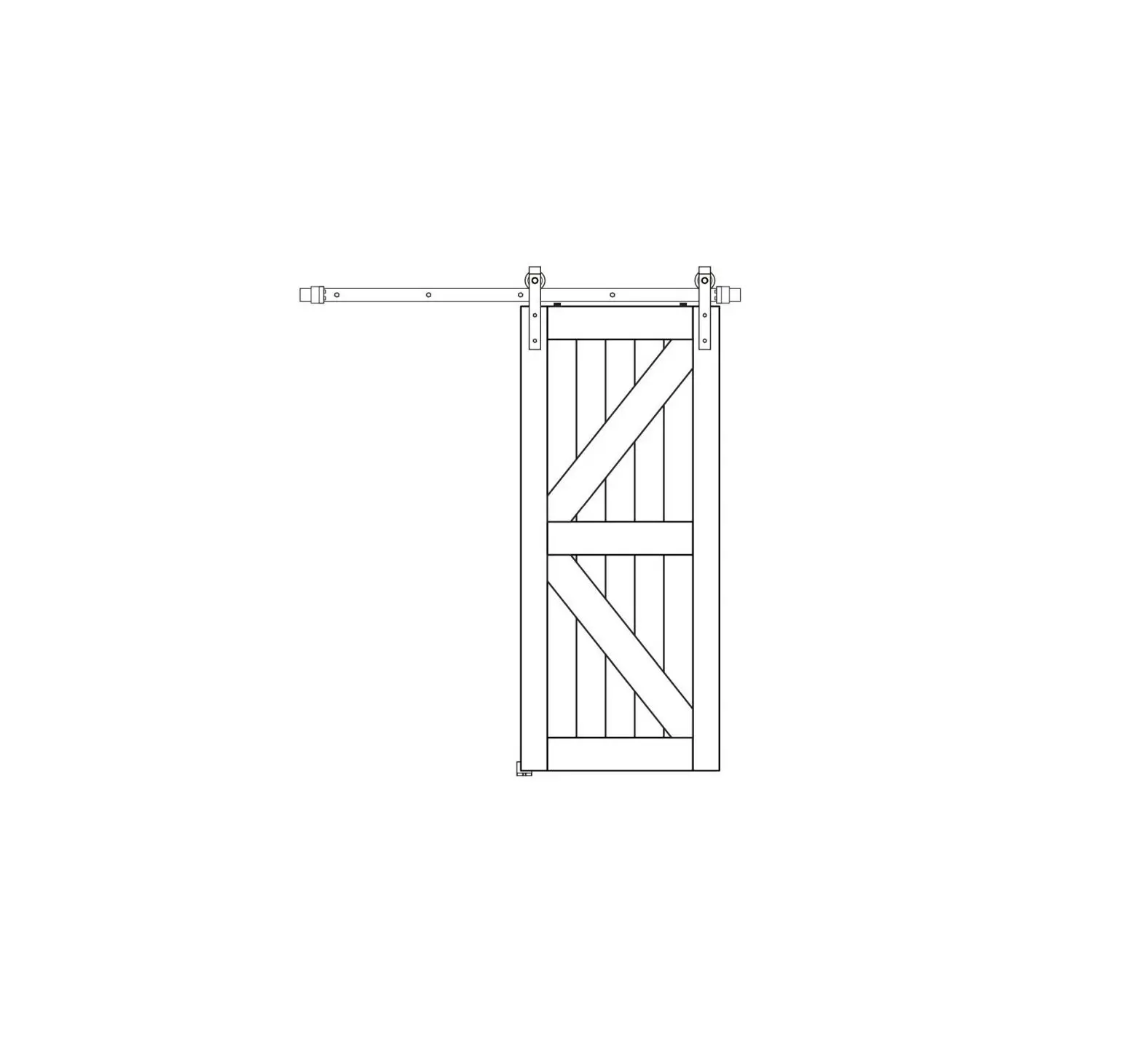
Position each roller 4″ from the edge of the door and center. Mark the first hole with a pencil and pre-drill 1/8″ holes, then secure into place. Mark the second hole with the roller in place to ensure the roller is secure and straight on the door.
DOOR PREPARATION – ANTI-JUMP BLOCK INSTALLATION
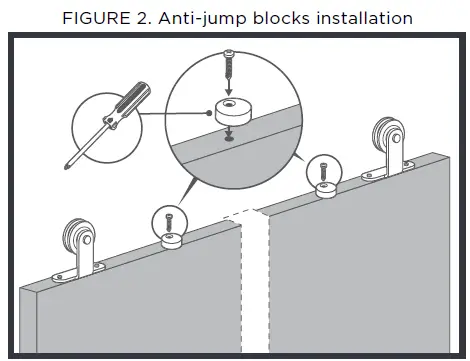
Position each anti-jump block at least 1″ from the edge of the rollers. The hole for the anti-jump blocks should be offset from the center of the door so the block can be rotated out of the way to be able to hang the door on the track. (FIGURE 2)
NOTE: For concrete wall installation proceed to step 3. For Drywall installation proceed to step 6.
MARKING TRACK LOCATION FOR CONCRETE WALL INSTALLATION
- Tape Measure
- Speed Square
IF INSTALLING INTO DRYWALL PLEASE PROCEED TO STEP 6
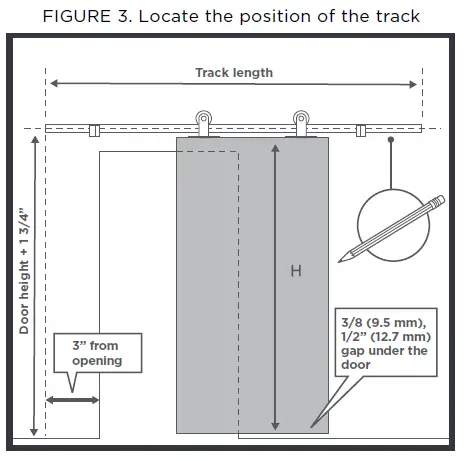
Using a ladder, tape measure and speed square, find the center line position of the track by adding 1-3/4″ to the door height and measuring up from the floor. Mark with a pencil. To find end location of the track, measure 3″ over from edge of opening. Mark with a pencil. (FIGURE 3) When installing with a standard 80″ height opening, the top trim will need to be removed and the top of the side trim cut horizontally along the height of the opening. (NOT SHOWN)
CONCRETE WALL PREPARATION

- Hammer
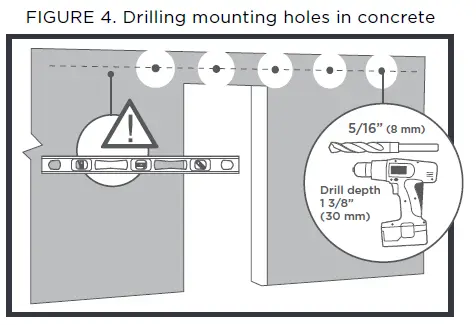
Position the track in place using the marks in previous step. Ensuring it is level and using the track as a template, mark mounting hole locations for the track using a pencil. (FIGURE 4) See installation tip below. Predrill the concrete at marked location using 5/16″ masonry drill bit. Remove metal anchors from bolts and install into holes using a hammer. (FIGURE 5)
INSTALLATION TIP: locate and temporarily install track with one end bolt without spacer. This will hold one end of the track up so you can move the free end to ensure the track will be level then proceed to mark the other locations of mounting holes.
CONCRETE TRACK PREPARATION
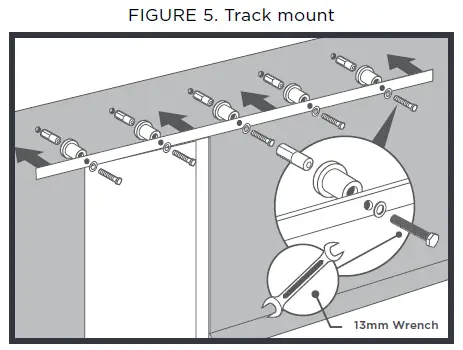

- 5x 5/16″ (8mm x 60mm) Carriage Bolt

- 5x 3/8″ Washer

- 5x 5/16″ (8mm x 25mm) Anchor


DRY WALL PREPARATION
- Tape Measure
- Speed Square
When installing on drywall or plaster, a 1×4 wood board must first be fastened to the structural wall members (studs) behind the drywall before mounting the track. Using a ladder, tape measure and speed square, find the center line position of the track by adding 1-3/4″ to the door height and measuring up from the floor. Mark with a pencil. To find end location of the track, measure 3″ over from the opening. Mark with a pencil. (FIGURE 6)
NOTE: Mounting board to have same center as track. The end of mounting board may vary from track end. See Step 7.
When installing with a standard 80″ height opening, the top trim will need to be removed and the top of the side trim cut horizontally along the height of the opening. (NOT SHOWN)
MARKING MOUNTING HOLES
- Tape Measure
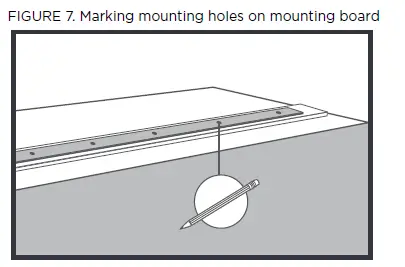
On a flat surface, center the track on the mounting board (insure the track is straight on the board). Mark locations of track mounting holes onto board. (FIGURE 7)
NOTE: If using the Soft Close feature, refer to Soft Close instruction sheet before proceeding.
ATTACHING MOUNTING BOARD
- Pencil

- Phillips Screwdriver

- Stud Finder

- # 10 x 2-1/2 Wood Screws
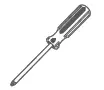


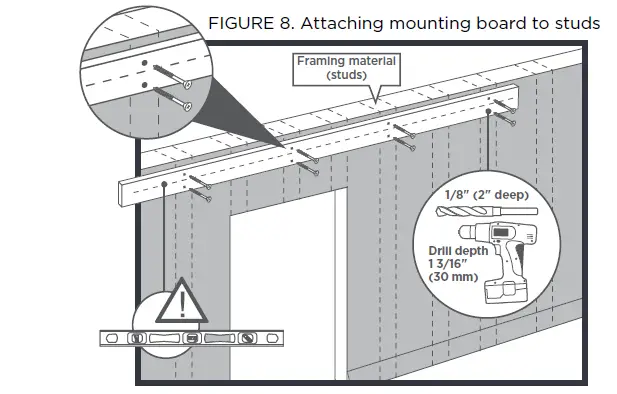
Use the stud finder to find the framing material (studs) behind the drywall. Mark locations. (Remember to mark the location so that you will be able to see them when mounting 1×4 board.) Position the mounting board on the wall ensuring it is level. Attach through the drywall into studs using #10 x 2-1/2 screws (2 per stud location). Predrill with 1/8” drill bit. Position screws so they do not interfere with track mounting holes. (FIGURE 8)
INSTALLATION TIP: Locate and install one screw at end of board first. This will hold one end of the board so you can move the free end and ensure the board is level as you install the other #10 x 2-1/2” screws.
MOUNTING TRACK TO BOARD
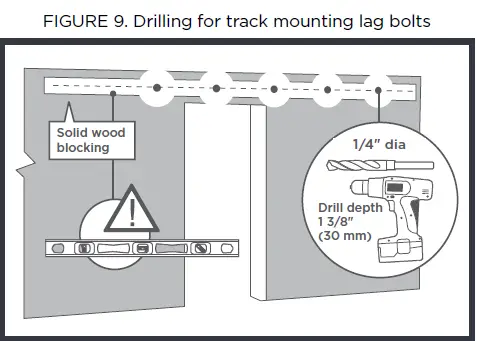
Drill 1/4″ dia pilot holes for track mounting lag bolts into board at marked locations from Step 7. (FIGURE 9)
ATTACHING TRACK TO MOUNTING BOARD

- 5/16″ (8mm x 90mm) Track Mount Lag Bolts
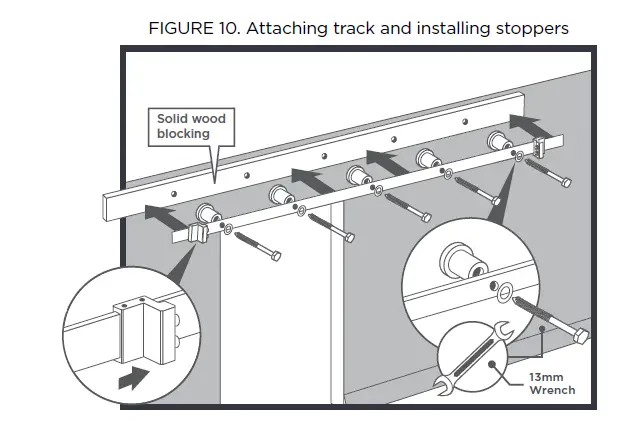
Attach track to mounting board with 3-3/4″ lag bolts with spacers and washers using 13 mm wrench. (FIGURE 10) Washers can be found on concrete bolts.
Slide stoppers on both ends of track (note the stoppers are handed). Secure with set screws using the allen wrench that is included with stoppers.
HANGING DOOR AND ADJUSTING STOPPERS
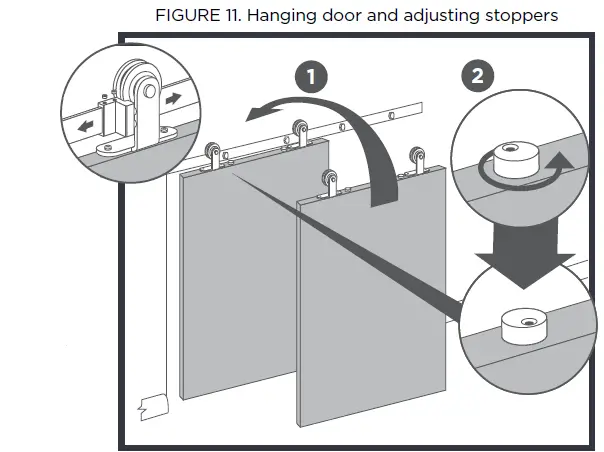
Place assembled door with roller onto track and rotate the anti-jump block. Slide door back and forth to test how well the door covers the opening. Reposition stoppers as needed. (FIGURE 11) If less travel of the door is required, the stoppers can be moved inside end mounting bolts. Remove the end mounting bolts and spacers, slide the stopper to the new location and reinstall bolt and spacer.
FLOOR-MOUNTED DOOR GUIDE INSTALLATION
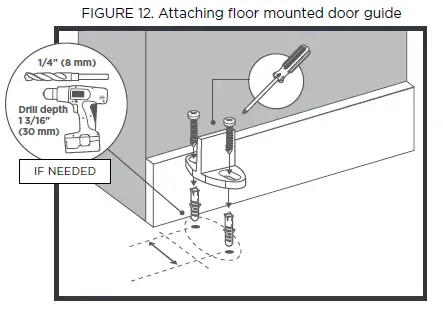
Used for standard doors that are grooved in the bottom of the panel for the guide. With the door hanging straight, position the floormount door guide inside groove in the bottom of the door. Slide the door side to side to ensure the guide is properly placed. Mark the location of guide. Attached guide with supplied screws. If needed, supplied anchors can be used by drilling 1/4″ dia holes. (FIGURE 12) To fasten guide, the door may need to be removed or slide out of the way by loosening one of the stoppers. If Soft Close units have been installed, refer to Soft Close instructions for mounting activation brackets.
OPTIONAL WALL-MOUNTED DOOR GUIDE INSTALLATION
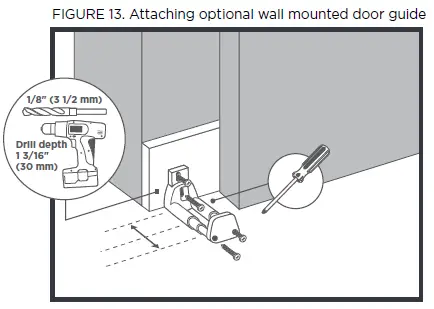
The Wall-Mounted Guide can be used if the floor condition makes it difficult to attach the floor-mounted guide. Close to the opening, position and secure the wall-mounted door guide directly into the wall or trim, extending the guide as necessary to allow the door to travel side-to-side. Tighten to secure in place.
NOTE: Adjust correctly for 1-3/8″ or 1-3/4″ thick doors for smooth opening and closing operation. To fasten guide, the door may need to be removed or slide out of the way by loosening one of the stoppers.
ATTACHING OPTIONAL FLOOR GUIDES USING SIDE METHOD
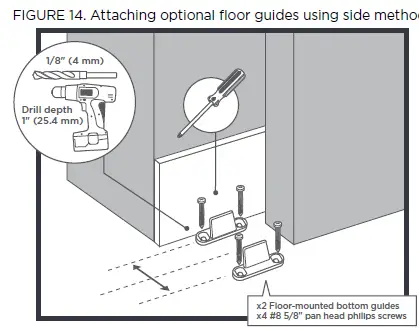
For custom doors that are not grooved on the bottom, the side guides can be used. Close to the opening, position both the floor-mounted door guides to allow the door to travel side-to-side on both sides of the door. Screw into place directly into the floor.
Note: Measure correctly for 1-3/8″ or 1-3/4″ thick doors for smooth opening and closing operation. To fasten guide, the door may need to be removed or slide out of the way by loosening one of the stoppers.
FINAL CHECK OF STOPPERS AND ANTI-JUMP BLOCKS
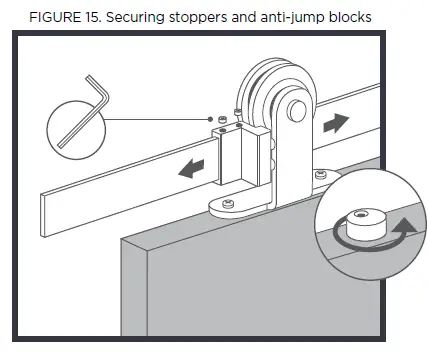
Check to see that stoppers are properly located and tightened in place. Also check to see if anti-jump blocks are rotated correctly and tightened.
©2017 Masonite International Corporation. HMD-17502