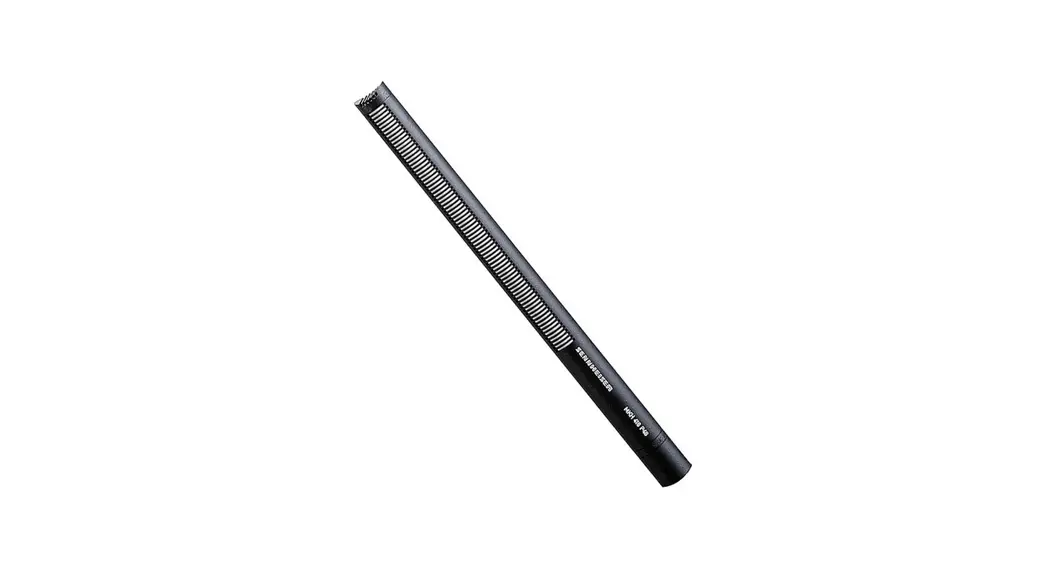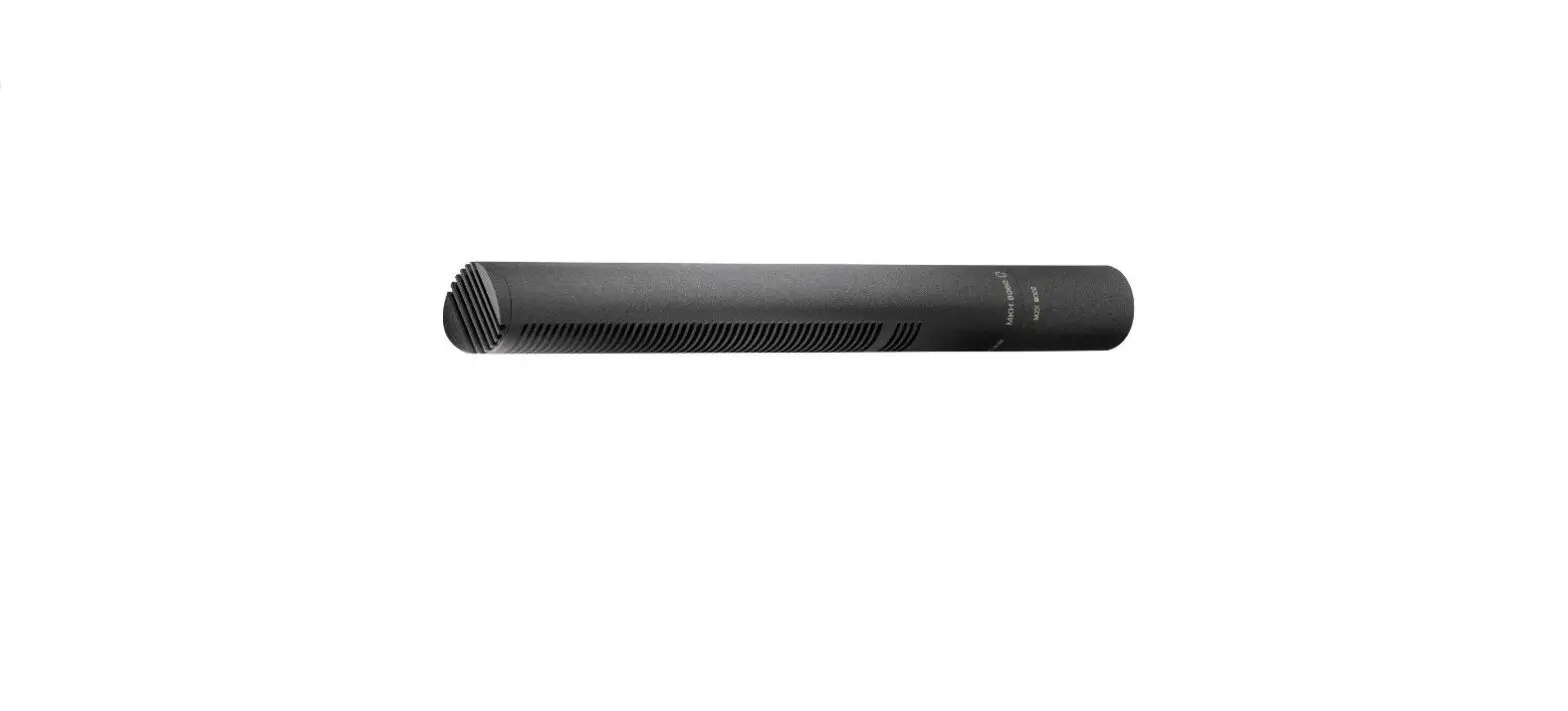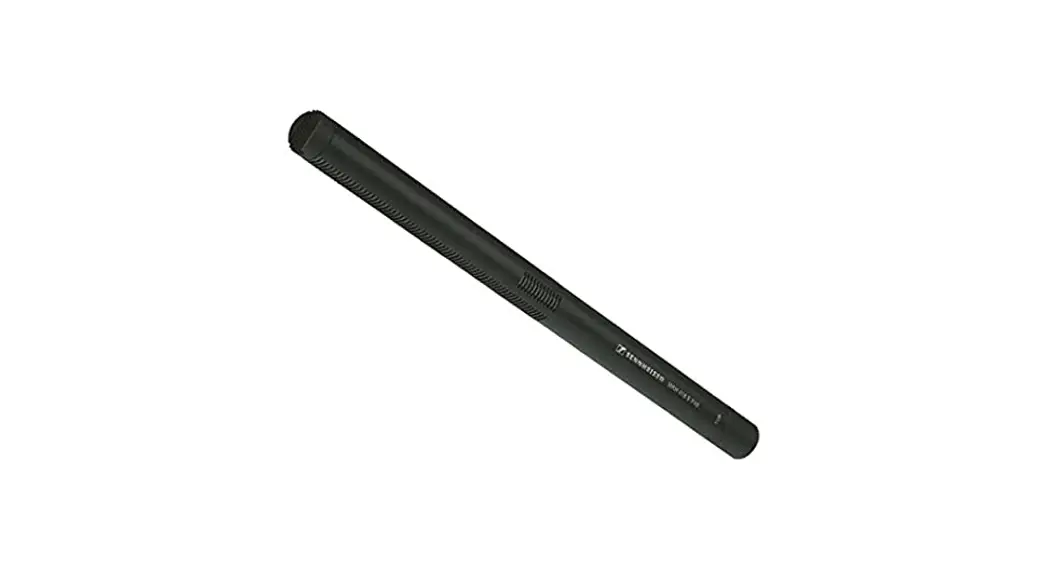
SENNHEISER MKH 416 Moisture Resistant Shotgun Microphone Instruction Manual

Important safety instructions
- Read these safety instructions and the instruction manual of the product.
- Keep these safety instructions and the instruction manual of the product. Always include all instructions when passing the product on to third parties.
- Only use attachments, accessories and spare parts specified by the manufacturer.
- Caution: The protective basket and pop shield must be completely dry when you mount them on the microphone. Moisture can cause malfunctions or damage to the capsule
- Connect the microphone only to microphone inputs and supply units that provide 48 V phantom powering in accordance with IEC 61938.
- Do not attempt to open the product housing on your own.
The warranty is voided for products opened by the customer. - Refer all servicing to qualified service personnel. Servicing is required when the product has been damaged in any way, liquid has been spilled or objects have fallen into the product, when the product has been exposed to rain or moisture, does not operate normally, or has been dropped.
- Use the product only under the conditions of use listed in the specifications.
- Let the product come to ambient temperature before switching it on.
- Do not operate the product if it was damaged during transportation.
- Always run cables so that no one can trip over them.
- Keep the product and its connections away from liquids and electrically conductive objects that are not necessary for operating the product.
- Do not use any solvents or aggressive cleaning agents to clean the product.
- Caution: Very high signal levels can damage your hearing and your loudspeakers. Reduce the volume on the connected audio devices before switching on the product; this will also help prevent acoustic feedback.
Intended use
The product is designed for indoor and outdoor use. The product can be used for commercial purposes. It is considered improper use when the product is used for any
application not named in the corresponding instruction manual. Sennheiser does not accept liability for damage arising from improper use or misuse of this product and its attachments/ accessories.
Before putting the products into operation, please observe the respective country-specific regulations!
Package contents
- MKH 416-P48U3 directional studio microphone
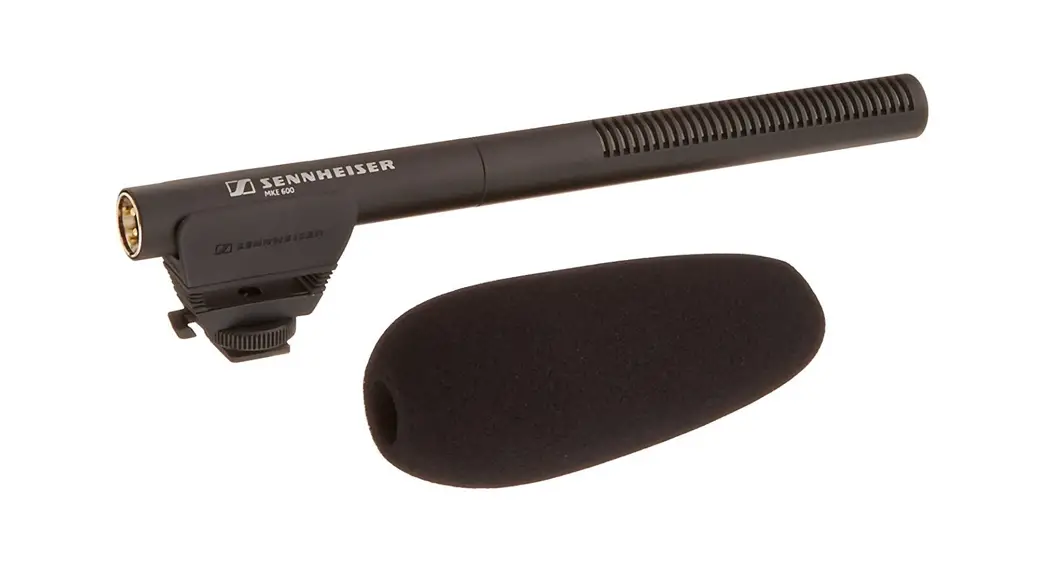
- MZW 415 foam windshield
- MZQ 100 microphone clamp
- Instruction manual
- Carry bag
The MKH 416-P48U3 directional studio microphone
Brief description
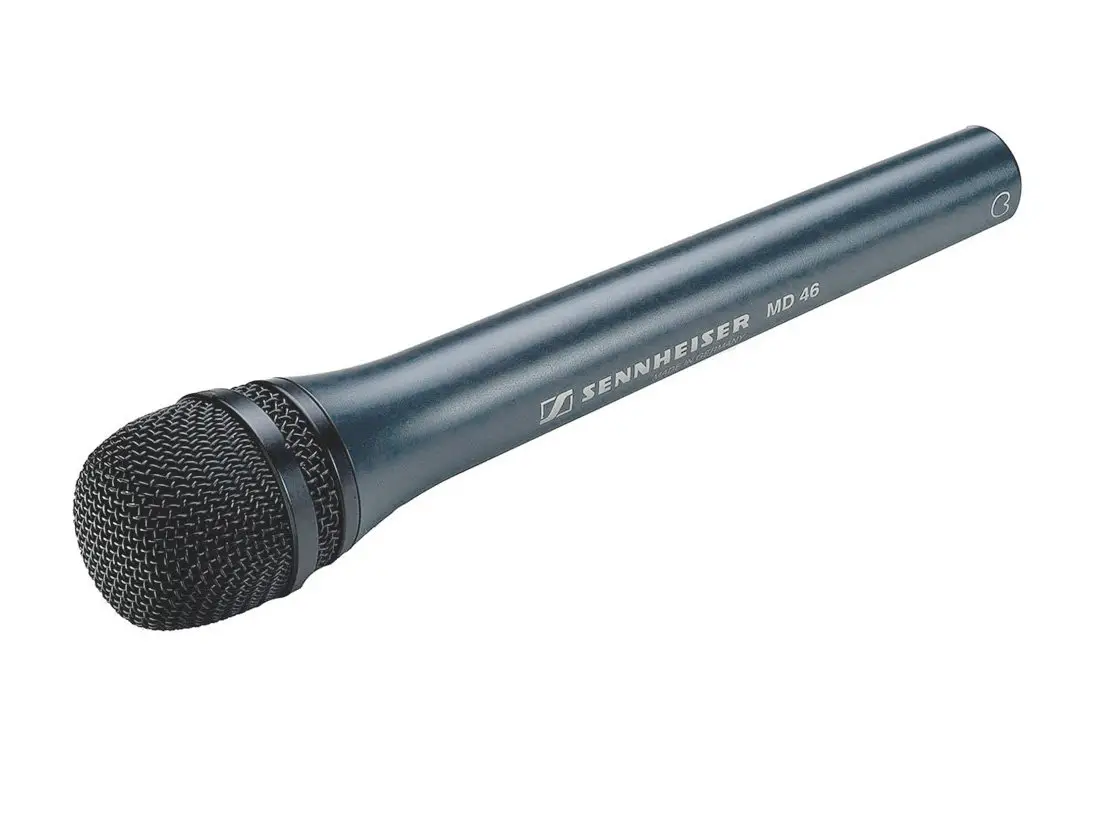
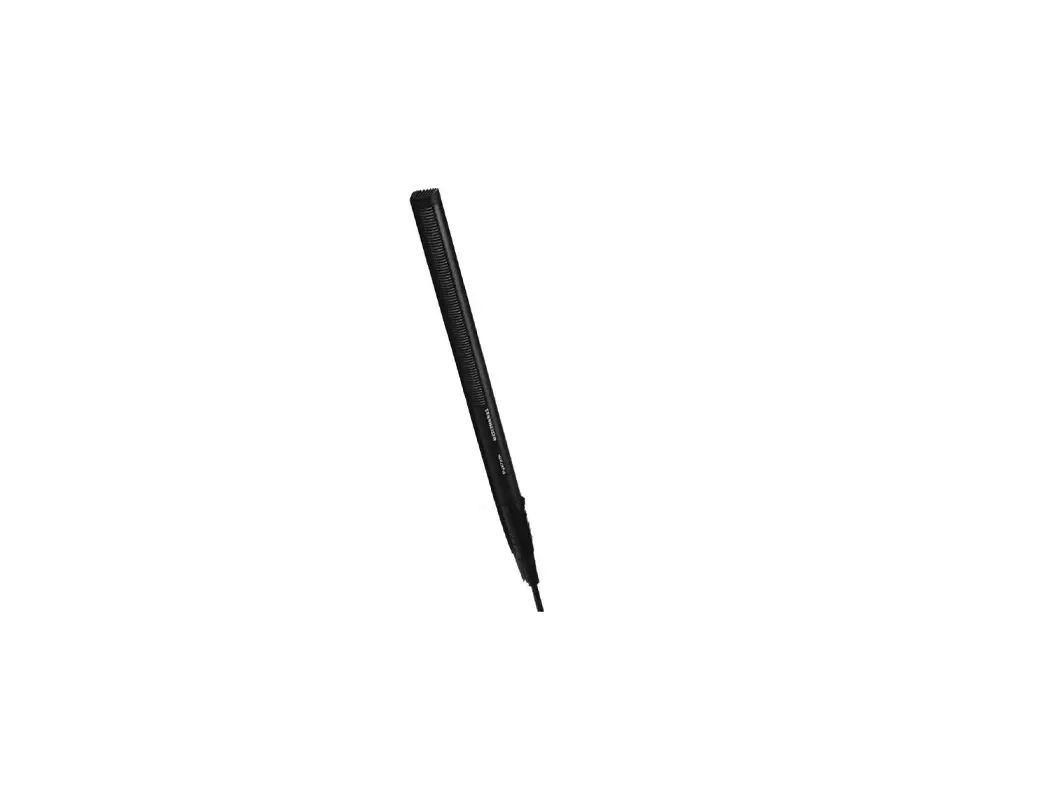
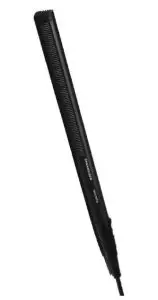
The MKH 416 is a directional studio microphone which is also especially suited to outdoor applications. Its high degree of directivity makes the MKH 416 a superb microphone for film and television, including outside broadcast applications. The microphone operates on the proven RF principle and is desi- gned for 48 V phantom powering.
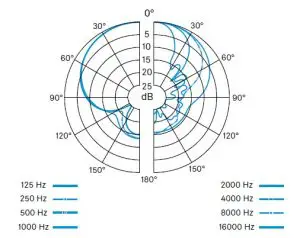
The MKH 416 is a combination of a pressure gradient trans- ducer and an interference tube microphone. It has a super-car- dioid pick-up pattern at low and medium frequencies, whereas at higher frequencies there is a transition to a lobar characte- ristic. Due to its operating principle, the MKH 416 is relatively insensitive to wind and pop noise and can therefore often be used as a soloist and broadcast microphone, without the need for an additional wind- or popshield. However, for outdoor re- cordings the use of an additional windshield is recommended.
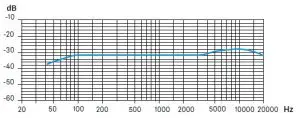
The frequency response intentionally has a slightly rising characteristic at high frequencies. The microphone has a low proximity effect and therefore provides a well balanced sound even when used close to the sound source.
Principle of the RF circuit
In contrast to the high impedance of the capsules in conventio- nal “DC biased” condenser microphones, the capsule of an RF condenser microphone has a low impedance. The high polari- zation voltages normally required in condenser microphones are not necessary in the RF condenser microphone. RF con- denser microphones use a comparatively low RF bias voltage of less than 10 V, generated by a built-in low-noise oscillator (8 MHz). The RF principle ensures increased operational reli- ability, particularly for outdoor recordings under extreme cli- matic conditions.
Features
- Increased directivity due to interference tube principle
- Very low inherent self-noise
- High sensitivity
- Transformerless and fully floating balanced output
- Rugged, suitable for adverse climatic conditions
- Matt black all-metal body
Cleaning and maintaining the MKH 416-P48U3
CAUTION
DAMAGE TO THE PRODUCT DUE TO LIQUIDS! Liquids entering the product can short-circuit the electronics or damage the mechanics. Solvents or cleansing agents can
damage the surface of the product.
- Keep all liquids away from the product.
- Only use a soft, dry cloth to clean the product.
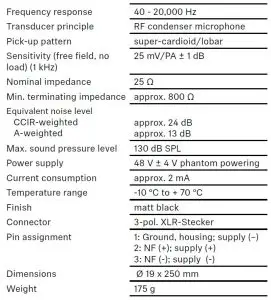
Specifications
Polar pattern
Frequency response
Warranty
Sennheiser electronic GmbH & Co. KG gives a warranty of 24 months on these products.
For the current warranty conditions, please visit our website at www.sennheiser.com or contact your Sennheiser partner.
In compliance with the following requirements
EU: • WEEE Directive (2012/19/EU)
UK: • WEEE Regulations (2013)
Notes on disposal
The symbol of the crossed-out dumpster on the product, the (rechargeable) battery (if applicable) and/or the packaging in- dicates that these products must not be disposed of with nor- mal household waste, but must be disposed of separately at the end of their service life. For the packaging, follow the regu- lations in your country for separating waste. Improper disposal of packaging materials can be harmful to your health and the environment.
The separate collection of waste electrical and electronic equipment, (rechargeable) batteries (if applicable) and packa- ging is intended to promote reuse and recycling and to pre- vent negative impacts on public health and the environment, for example due to hazardous substances contained in these products. At the end of their service life, recycle electrical and electronic equipment and (rechargeable) batteries so that their materials can be reused and to prevent environmental pollu- tion.
If (rechargeable) batteries can be removed without destroying them, you are obliged to dispose of them separately (see the product’s operating instructions for information on how to re- move the batteries safely). Be especially careful when handling (rechargeable) batteries containing lithium, as these pose spe- cial hazards, such as the risk of fire and/or health risks if but- ton cells are swallowed. Reduce battery waste as much as pos- sible by using longer-life batteries or rechargeable batteries.
Further information on the recycling of these products can be obtained from your municipal administration, from the munici- pal collection points, or from your Sennheiser partner. You may also be able to return electrical or electronic equipment to your distributor, if they are legally required to do so. By disposing of your batteries properly, you are helping to protect public health and the environment.
UK Declaration of conformity
- RoHS Regulations (2012)
- EMC Regulations (2016)
EU Declaration of conformity
- RoHS Directive (2011/65/EU)
- EMC Directive (2014/30/EU)
The full text of the EU declaration of conformity is available at the following internet address: www.sennheiser.com/download
Compliance
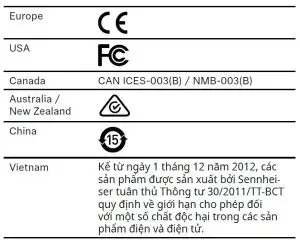
 health.eu
 Sennheiser — Headphones, Microphones, Wireless Systems