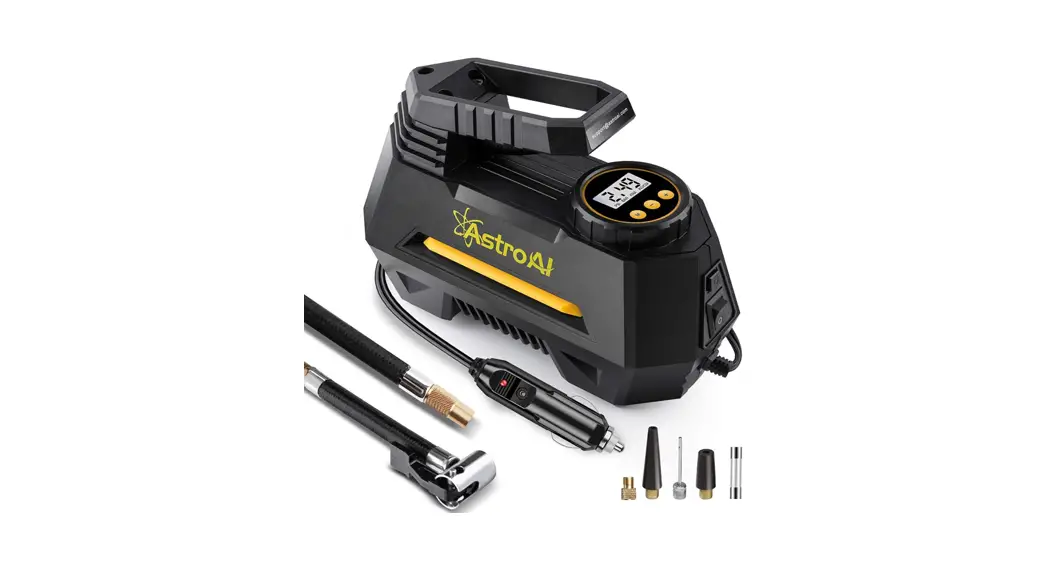
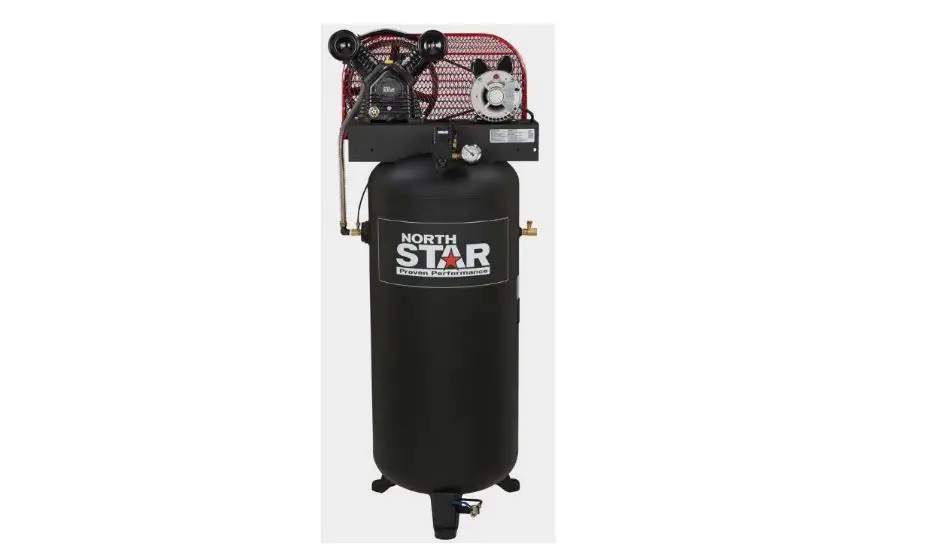
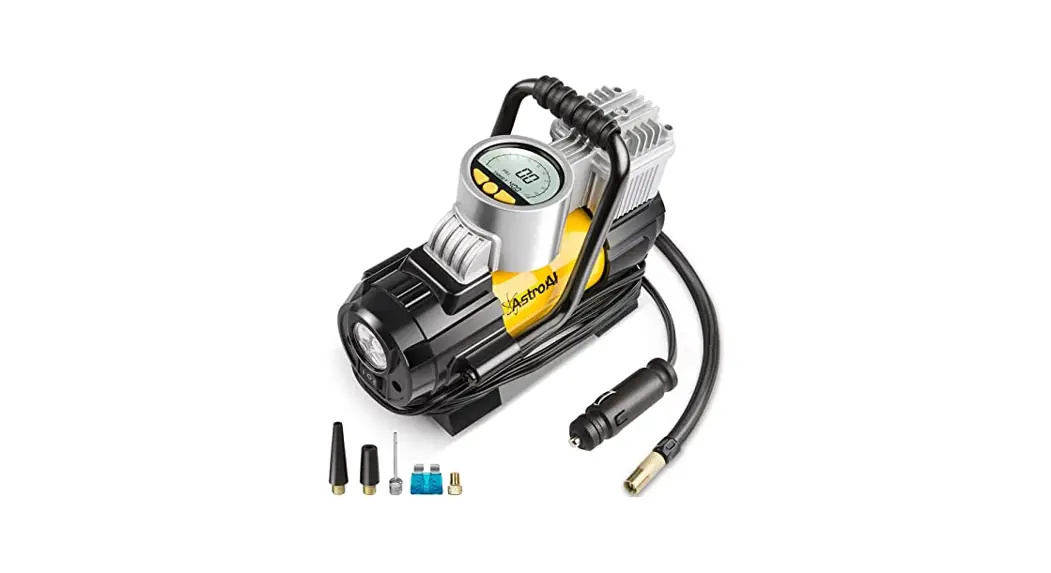
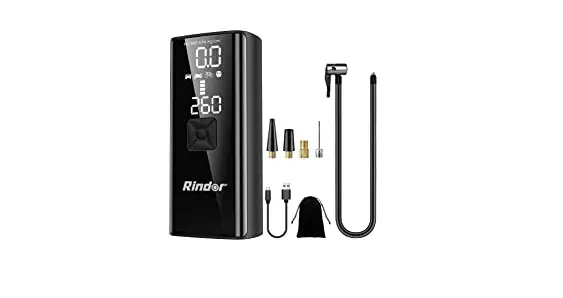
Air Compressor
Product Information
The Air Compressor is a powerful tool designed for various
applications. It is important to follow the instructions provided
in this manual to ensure safe and efficient operation of the
compressor. Failure to do so may result in personal injury,
property damage, and voiding of the warranty.
Important Safety Information:
- Motor brushes and oil are consumable items that need to be
periodically replaced and added, respectively. - Compressor and motor surfaces become extremely hot during
operation. Avoid touching any part of the equipment (except the
on/off switch) with bare hands during or for 30 minutes after use
to prevent burns. - This compressor should only be operated by individuals who have
read and understood these instructions. - The air produced by this compressor is not suitable for human
or animal consumption and should not be used as a breathing air
supply. - Do not use the compressor with damaged hoses or after it has
been dropped or damaged. - Avoid using the compressor while sleepy or drowsy, near flames,
or for purposes other than pumping air. - Never point any air nozzle at a person or animal to prevent
serious injury. - Do not leave the compressor unattended during use.
- Use an appropriately sized fuse to protect both the vehicle and
compressor from short circuit conditions. Circuit breakers are not
recommended. - Do not rely on a safety valve alone for protection. A pressure
switch must be used to control the compressor. - Inadequate wiring can lead to overheating, short circuiting,
and fire damage. - If the equipment vibrates abnormally, slows down, or stalls,
stop the motor immediately. - Avoid operating the compressor near flammable gases or liquids
and do not store flammable liquids or gases in its vicinity. - Keep the exterior of the compressor clean and free of oil,
solvent, and grease to reduce fire hazard. - Disconnect power and release all pressure from the system
before installing or performing maintenance. - Ensure that any tools or attachments used are compatible with
the pressure and flow rate of the compressor. - Regularly check fasteners and electrical connections for proper
tightness and cleanliness. - Do not attempt to disassemble, modify, or repair the
equipment.
Product Usage Instructions
- Before using the compressor, ensure that motor brushes and oil
are in good condition. Replace brushes and add oil as
necessary. - Position the compressor temporarily in the desired mounting
location to check for fit and clearance. Ensure that the location
can properly support the compressor. - Refer to the parts list included in the package to verify that
all required components are present. The package should include the
compressor, air filter, 3/8 studs, nuts, flat washers, lock
washers, fuse, fuse block, cable lugs, and heat shrink.
Following these instructions will help you safely install and
use the Air Compressor for your desired applications. For
additional information or troubleshooting, refer to this manual or
contact our customer support.
Air Compressor
Owner’s Manual
Warning!!!
Warranty is void if unit is disassembled or operated without proper lubrication!
Please note: Motor brushes and oil are consumable items – oil must be added periodically, and brushes must be replaced periodically. Read these instructions carefully before installing or using this product. Failure to follow instructions may result in personal injury, death and/or property damage and may void warranty! Save these instructions for future reference.
SAFETY INFORMATION
WARNING!!!
You are completely responsible for your own safety and the safety of those with you. Oasis Mfg. will not be responsible and will not assume any liability for indirect, incidental, or consequential loss, damage, injury, expense or inconvenience to property or persons as a result of use or misuse of this product.
Compressor and motor surfaces become extremely hot during use! To avoid serious burns, do not touch any part of this equipment, except for the on/off switch, with bare hands during or for 30 minutes immediately following operation.
1. Only persons who have read and understand these instructions should be allowed to use this compressor.
2. The air produced by this compressor is not fit for human or animal consumption and it must not be used to provide a breathing air supply.
3. Do not operate compressor with any damaged hose(s) or after the compressor or attachments have been dropped or damaged.
4. Never use while sleepy or drowsy. 5. Do not use near flames. 6. Do not pump anything but air. 7. Never point any air nozzle at any person or animal. Serious injury may result. 8. Do not leave unattended during use. 9. Use an appropriately sized fuse to protect both vehicle and compressor from a short
circuit condition. We DO NOT recommend the use of circuit breakers. 10. Never rely on a safety valve to protect this compressor in place of a pressure switch. A
pressure switch must be used to control the compressor. 11. Overheating, short circuiting and fire damage will result from inadequate wiring. 12. If the equipment starts to vibrate abnormally, slows down or stalls, STOP the motor
immediately. 13. Never operate near a flammable gas or liquid. Never store flammable liquids or gasses
in the vicinity of the compressor. 14. Keep this equipment’s exterior clean and free of oil, solvent and grease to reduce fire
hazard. 15. Disconnect power and release all pressure from the system before attempting to install
or perform maintenance to the system (tank, air lines, etc.). 16. Be sure any tools or attachments are compatible with the pressure and flow rate of this
equipment. 17. Check all fasteners and electrical connections at frequent intervals for proper tightness
and cleanliness. 18. Do not attempt to disassemble, modify or repair this equipment.
INSTALLATION
Mounting location should be:
Upright Mount the compressor so the intake and output fittings are located on top of the compressor for proper lubrication, do not mount the unit on its side.
Dry Avoid mounting in a location that may become submerged if possible. The air intake filter must be mounted in a dry location. Use a length of 5/8″ heater hose to remotely mount it if necessary. If unit is submerged, allow motor to drain thoroughly before use!
Cool and well ventilated This will allow the compressor to run for longer periods.
Away from materials that can melt or are combustible Compressor gets extremely hot during operation.
Level Compressor must be as level as possible during operation for proper lubrication.
Close to battery The shorter the power cables are, the better your performance will be. New ring terminals and heat shrink are available from the manufacturer if you wish to shorten the power cables. Mounting an isolated auxiliary battery next to the compressor and cutting the cables down to minimum length will provide maximum performance. Use a deep cycle battery. If you must mount the compressor farther away than the 10′ power cables will allow, use #0AWG wire for runs up to 20′ instead of #4AWG cable provided. Be sure charging system is in top condition, and optimized to deliver maximum charge current to battery. Some applications may require an upgrade to the charging system and/or multiple batteries.
Caution: Do not change power cables to a smaller gauge size. Extreme fire danger will result!
Protect from corrosive environments Exposure to de-icing chemicals used on winter roadways, marine environments, etc., will cause corrosion and failure if left unprotected. If possible, mount compressor in an enclosure that also prevents heat build-up. If the compressor is mounted to the chassis of the vehicle, use an adequate splash guard along with preventive maintenance (see note about corrosion in the Maintenance section).
Parts list
This package should contain the following:
Compressor, air filter,
3/8″ studs, nuts, flat washers, lock washers,
Fuse, fuse block, cable lugs and heat shrink.
1. Temporarily position the compressor in the mounting location to ensure fit and adequate clearance. Be sure location can support compressor properly.
2. Using the template, drill four 7/16″ diameter holes.
3. Mount compressor using the four 3/8″ studs on the bottom of the compressor (finger tight ONLY into compressor), and secure with nuts and lock washers.
4. Turn compressor switch off. Connect the black cable to the battery’s negative terminal, and the red cable through an appropriate size fuse to the battery’s positive terminal. Warning: Reverse polarity (red to negative and black to positive) WILL DAMAGE THE MOTOR CONTROLLER!
5. Install a pressure switch rated at 200 psi or less, on the tank (if using one) or air line (if not) coming from compressor, to automatically control the compressor as pressure is used from the system. A dash mounted switch may also be used to provide manual control as well. Refer to the wiring diagram for details.
Note: The compressor can be controlled by two methods: either by connecting terminal +C (positive control) on the motor controller to a positive battery source (12 or 24 volt) such as an upfitter dash mounted switch, or by connecting terminal C (negative control) to a ground source such as the chassis, see wiring diagram.
6. Be sure all electrical connections are clean and secure. Loose or dirty connections will result in poor performance.
7. Install air filter or fitting for a filtered intake line into the suction port. Do not use Teflon tape! Pieces of tape can get sucked into the compressor valves. Note that inside the suction port is a filter that has the appearance of metal shavings. Do not remove it, it is supposed to be there!
8. Compressor is shipped with oil. Check oil sight glass after compressor has been sitting level for at least one hour. Hold a spirit level next to the unit if necessary to ensure it is level. If no oil is visible in window, remove the oil plug from the side of compressor (the suction side). This will relieve the crankcase and allow oil in the overflow reservoir to drain back into the crankcase. If oil level is not visible within a few minutes, add oil until it is visible in window. Use a full synthetic 30 weight (ISO 100) air compressor oil.
Proper oil level in sight glass
9. Install a high temperature air line from discharge port in the head of the compressor to a tank or point of use fitting. Warning: Do not tighten fitting to more that 20 ft/lbs (finger tight plus no more than one full turn) into the compressor head. Doing so may crack the head! We recommend the use of Loctite #567 high temp pipe sealant.
We recommend the use of an unloader valve if the compressor will be operated at pressures of 150 psi or greater. Unloader valves are available from the manufacturer.
For installations involving tanks, some applications may require the use of a one way check valve at the output of the compressor to prevent air flow back into the compressor, and an air line filter at the output of the tank to separate oil mist and moisture out of the air line. Both items are available from the manufacturer.
If you are unsure about any part of installation or operation, contact the manufacturer for clarification.
For POSITIVE control, connect this end of the control wire to + C, For NEGATIVE control connect it to -C
Use ¼” female quick connect wire terminals to make these connections
For POSITIVE control, connect this end of the control wire to a positive battery source (12 or 24 volts), such as V+ on the control module, or a dash mounted switch.
For NEGATIVE control, connect it to any convenient ground location on the vehicle, or to GND on the control module.
V+
OPERATING INSTRUCTIONS
Turning the on/off switch to the “on” position will start the compressor. It may now be used to inflate tires, operate air tools, etc.
Occasionally small amounts of smoke can be seen coming from the unit as it warms up. This is normal.
Since this is an oil bath type compressor, some oil discharge is normal. If an application requires oil free air delivery, a coalescing air line filter may be required. Filters are available from the manufacturer.
This equipment draws large amounts of current during operation. We recommend your vehicle engine be left running to prevent excessive discharge of your battery, and to maximize compressor performance. Some applications may require the use of a throttle positioning device to maintain engine RPM at a point where the alternator delivers maximum output.
Note: This unit is equipped with microprocessor motor control module. It monitors voltage level, motor current, and controller temperature. It will shut the compressor off if any of the following conditions exist: voltage too high or low, current too high or low, or controller too hot. If the controller goes into any of these protection modes, the lamp in the rocker switch will flash per the following chart. If multiple faults are present, there will be one long pause between each sequence. To reset the circuit, turn the rocker switch to the off position, then back to the on position. This circuit is designed to protect the compressor motor from damage due to stalling. It is not designed to protect a battery!
Condition On
Open Load Over Current Short Circuit Under Voltage Over Voltage Over Temperature
Stuck On
Fault None Current less than 1A Current greater than 190A for more than 2 seconds Current greater than 750A Battery voltage under 9V (12V model) or 16V (24V model) Battery voltage over 16V (12V model) or 32V (24V model) Controller temperature over 120 deg C Compressor is ON when it should be OFF
Flashes Steady On
1 2 3 4 5 6 7
MAINTENANCE
Check oil level daily. If no oil is visible in window, remove the oil plug from the side of compressor (the suction side) and add oil until visible in window. Use a full synthetic 30 weight (ISO 100) air compressor oil.
If compressor is exposed to a corrosive environment, all exposed electrical components, especially the motor brushes and motor terminals, should be treated with protective products such as DeoxIT or Fluid Film on a regular basis.
Change air filter element annually. Elements are available from the manufacturer.
All repairs should be performed by the manufacturer. Any attempt to disassemble or repair the unit may void warranty.
TROUBLESHOOTING CHART
Symptom
Open Load indication Over Current or Short Circuit indication
Under Voltage indication or unit
runs slowly
Possible Cause Motor brushes worn or not making contact with armature Power cable damaged
Motor damaged Battery voltage low
Dirty or loose connection
Low oil level
Over Voltage indication
Compressor damaged or worn Possible electrical system malfunction
Over Temperature Controller is too hot indication
Stuck on indication Motor controller failed Low discharge Air leaks pressure
Restricted air intake
Compressor damaged or worn Excessive noise Loose hardware
Low oil level
Compressor damaged or worn
Oil in the discharge A small amount is normal,
air
especially at initial start up.
Output open
Restricted air intake Excessive oil level Compressor damaged or worn
Corrective Action Clean or replace brushes, be sure they move freely. Check cables for nicks and cuts, repair if necessary
Contact manufacturer Check battery, alternator and regulator condition, repair if necessary.
Check all electrical connections, clean and tighten if necessary.
Check oil level. Fill if necessary.
Contact manufacturer Check battery, alternator and regulator condition, repair if necessary. Wait for unit to cool down
Be sure compressor is well ventilated Contact manufacturer Tighten or replace any leaking connections.
Replace air filter element
Contact manufacturer Tighten hardware
Check oil level. Fill if necessary.
Contact manufacturer Install an air line filter/separator.
Do not run compressor with an open output and no back pressure.
Replace air filter element.
Drain oil to proper level.
Contact manufacturer
LIMITED WARRANTY:
This product is warranted against defects in workmanship or materials for the period of one year from the date of purchase by the original owner.
What is not covered under this Warranty:
1.
Fitness for a particular purpose, including but not limited to the following examples:
exposure to corrosive environments (such as saltwater, road de-icing chemicals,
etc.), or extreme temperatures, or for use as an airlift water pump or pond aeration.
2.
Any indirect, incidental or consequential loss, damage or expense that may result
from any defect, failure or malfunction of this product.
3.
Any failure that results from accident, abuse, corrosion, neglect, lack of
maintenance, attempts to disassemble or repair, or failure to operate in accordance
with instructions.
4.
Items or service normally required to maintain the product: i.e. lubricants and filters.
Warning: Warranty is void if unit is disassembled or operated without proper lubrication!
Oasis Mfg. will replace or repair at its discretion, products or components which have failed during the warranty period.
Purchaser shall contact Oasis Mfg. before sending any product back for warranty service for instructions. KEEP YOUR ORIGINAL RECEIPT!
Purchaser is responsible to deliver product to Oasis Mfg. at purchaser’s own expense at the address below, via traceable carrier, package insured. Please include the following:
Contact information (name, return address, phone number) Copy of receipt showing date of purchase Model number and serial number Description of compressor failure
This Limited Warranty gives you specific legal rights and you may also have other rights that vary from state to state.
Oasis Manufacturing 23011 Alcalde #P Laguna Hills, CA 92653 888-96-OASIS (Toll Free) 949-768-4311 Tel. 949-768-4677 Fax www.oasismfg.com
06/23
 Oasis Manufacturing | DC Air Compressors | Air System Components