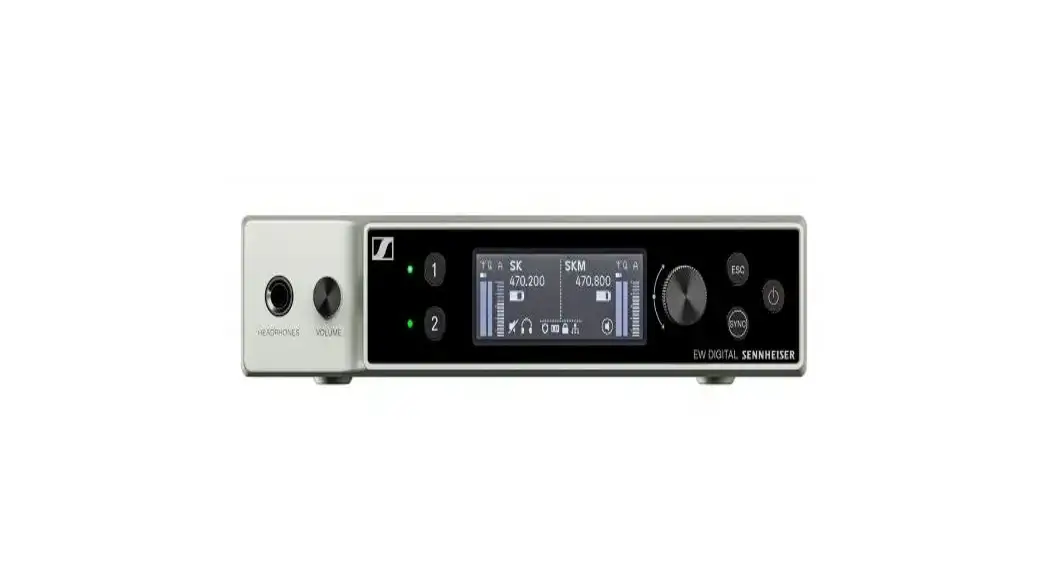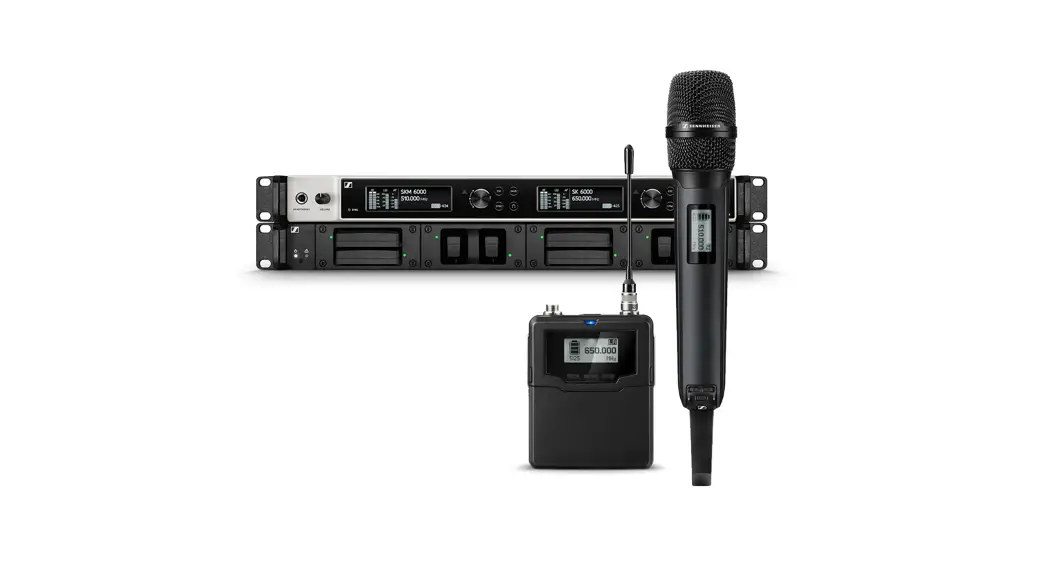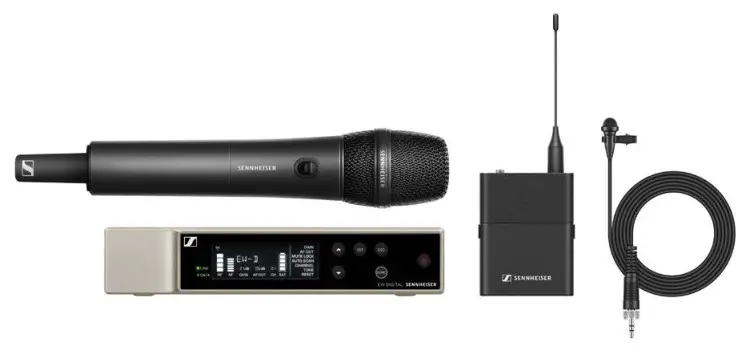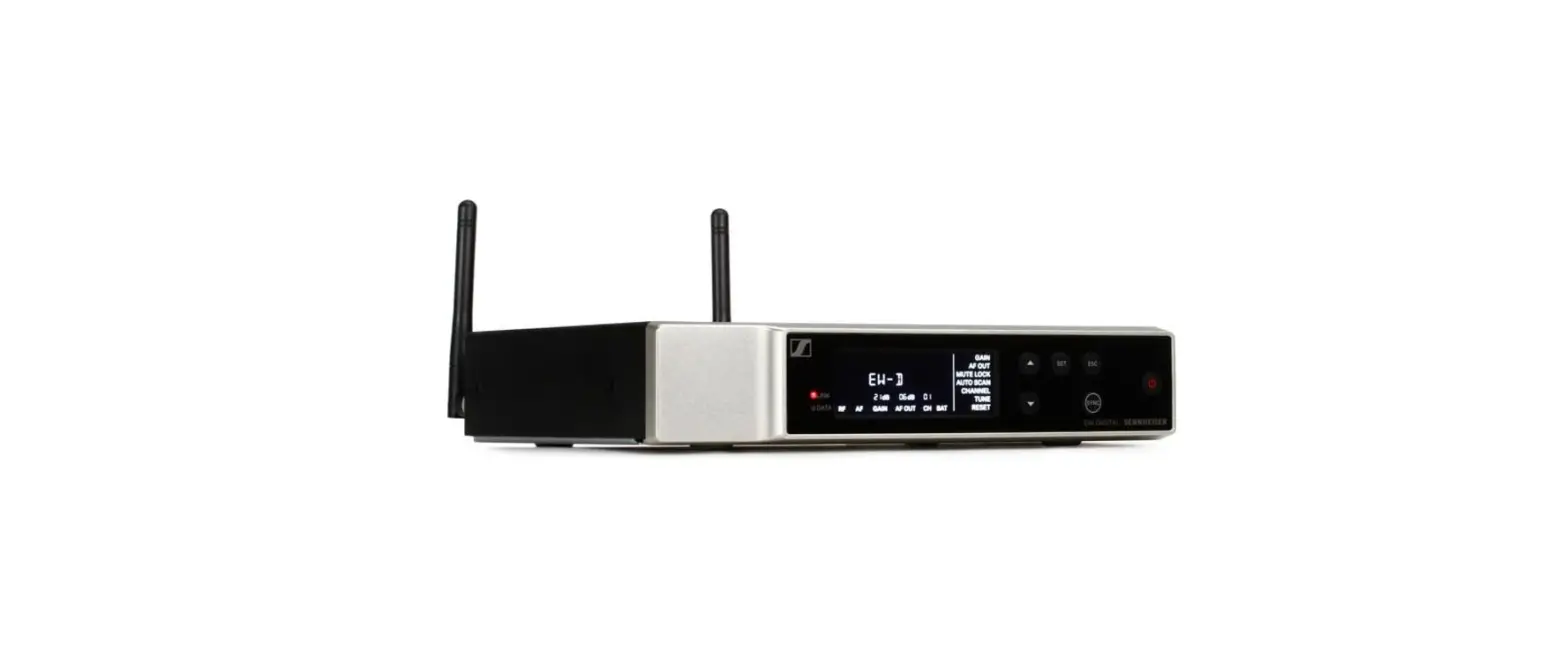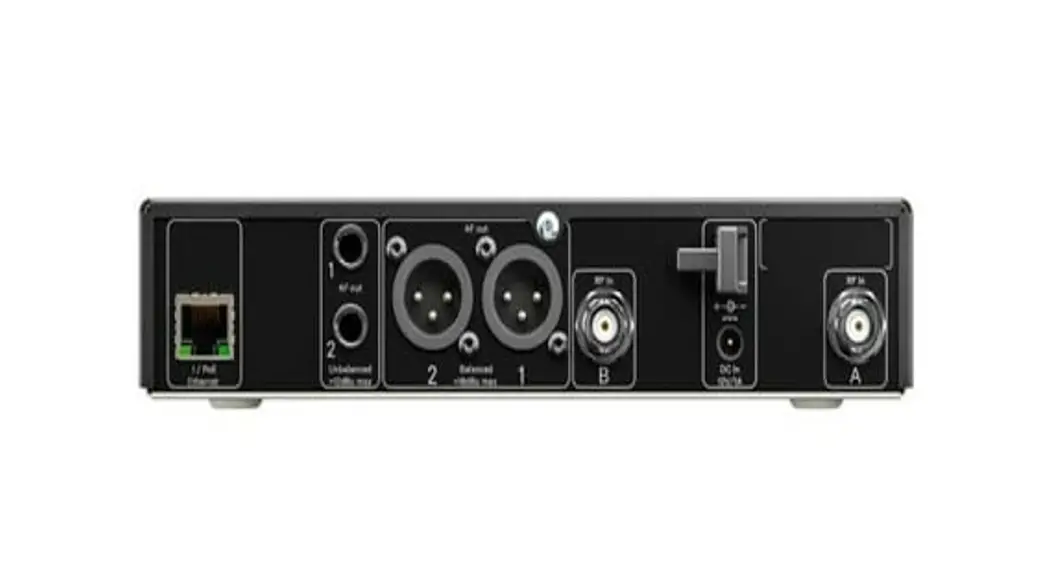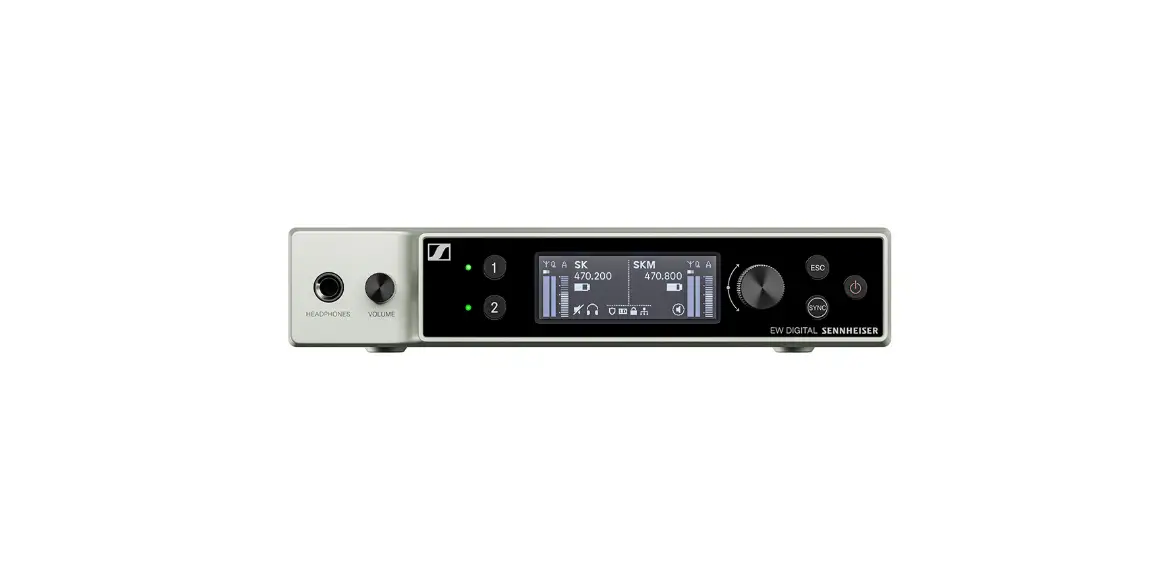

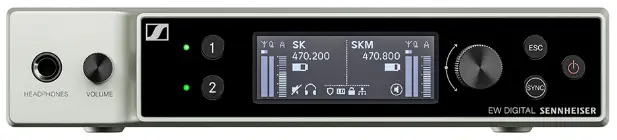
SENNHEISER EW-DX EM 2 Dante Wireless Receiver
Important safety instructions
- Read these safety instructions and the instruction manual of the product.
- Keep these safety instructions and the instruction manual of the product. Always include all instructions when passing the product on to third parties.
- Heed all warnings.
- Follow all instructions.
- Do not use this apparatus near water.
- Only clean the product when it is not connected to the power supply system. Clean only with a dry cloth.
- Do not block any ventilation openings. Install in accordance with the manufacturer‘s instructions.
- Do not install near any heat sources such as radiators, heat registers, stoves, or other apparatus (including amplifiers) that produce heat.
- Only operate the product from the type of power source specified in the chapter „Specifications“ and indicated on the power supply unit.
- Protect the power cord from being walked on or pinched, particularly at plugs, convenience receptacles, and the point where it exits from the apparatus.
- Only use attachments/accessories specified by the manufacturer.
- Use only with the cart, stand, tripod, bracket, or table specified by the manufacturer, or sold with the apparatus. When a cart is used, use caution when moving the cart/apparatus combination to avoid injury from tip-over.
- Unplug the power supply unit from the wall socket,
- to completely disconnect the product from the power supply system,
- during lightning storms,
- when not using the product for long periods of time.
- Refer all servicing to qualified service personnel. Servicing is required when the apparatus has been damaged in any way, such as power-supply cord or plug is damaged, liquid has been spilled or objects have fallen into the apparatus, when the apparatus has been exposed to rain or moisture, does not operate normally, or has been dropped.
- Only use the supplied power supply unit.
- Warning: To reduce the risk of fire or electric shock, do not expose this apparatus to rain or moisture and objects filled with liquids, such as vases, should not be placed on this apparatus.
- When using the supplied device feet, do not place the product on delicate surfaces. Delicate surfaces can become discolored or stained when they come into contact with the plastic of the device feet.
- Always ensure that the power supply unit
- and the AC receptacle are in a safe operating condition and easily accessible,
- is properly plugged into the wall socket,
- is only operated within the permissible temperature range,
- is not covered or exposed to direct sunlight for longer periods of time in order to prevent heat accumulation.
Danger due to high volume levels
This product is used for commercial purposes. Commercial use is subject to the rules and regulations of the trade association responsible. Sennheiser, as the manufacturer, is therefore obliged to expressly point out possible health risks arising from use. This product is capable of producing sound pressure levels exceeding 85 dB (A). 85 dB (A) is the sound pressure corresponding to the maximum permissible volume which is by law (in some countries) allowed to affect your hearing for the duration of a working day. It is used as a basis according to the specifications of industrial medicine. Higher volumes or longer durations can damage your hearing. At higher volumes, the duration must be shortened in order to prevent hearing damage. The following are sure signs that you have been subjected to excessive noise for too long a time:
- You can hear ringing or whistling sounds in your ears.
- You have the impression (even for a short time only) that you can no longer hear high notes.
Inform all users of these risks and ask them to set the volume to a moderate level if necessary.
Risk of fire due to overloading
Do not overload wall outlets and extension cables as this may result in fire and electric shock.
Safety instructions for antennas
Use safety wires to protect the antennas against tipping/dropping. The safety wires, rope terminations and coupling links must comply in their dimensioning and condition with the regulations and standards of the country in which they are used!
Safety instructions for lithium-ion rechargeable batteries
- Do not dismantle, open or shred secondary cells or batteries.
- Keep batteries out of the reach of children. Battery usage by children should be supervised. Especially keep small batteries out of reach of small children.
- Do not expose cells or batteries to heat or fire. Avoid storage in direct sunlight.
- Do not short-circuit a cell or a battery. Do not store cells or batteries haphazardly in a box or drawer where they may short-circuit each other or be short-circuited by other metal objects.
- Do not remove a cell or battery from its original packaging until required for use.
- Do not use any charger other than that specifically provided for use with the equipment.
- Do not use any cell or battery which is not designed for use with the equipment.
- Always purchase the battery recommended by Sennheiser for the equipment.
- Keep cells and batteries clean and dry.
- Wipe the cell or battery terminals with a clean dry cloth if they become dirty.
- Do not leave a battery on prolonged charge when not in use.
- Retain the original product literature for future reference.
- Dispose of properly.
- When not using rechargeable batteries for extended periods of time, charge them regularly (about every three months).
- Immediately remove rechargeable batteries from obviously defective products.
- Do not continue to use defective rechargeable batteries
Safety instructions for standard/rechargeable batteries
- Caution: Risk of explosion if you use or replace a battery by an incorrect type.
- Do not short-circuit a cell or battery.
- Do not expose cells or batteries to heat or fire. Avoid storage in sunlight.
- Do not subject cells or batteries to mechanical shock.
- Do not touch leaking/defective batteries unprotected.
- Observe correct polarity.
- Do not use different battery types.
- Charge rechargeable batteries at ambient temperatures between +10 °C and +40 °C (+50 °F and +104 °F).